What does the Bible say about a spouse who is not a believer?

1 Peter 3:1-2
1 Wives, in the same way submit yourselves to your own husbands so that, if any of them do not believe the word, they may be won over without words by the behavior of their wives,
2 when they see the purity and reverence of your lives.
New International Version (NIV)
The answer
A believer who is already married to an unbeliever should not end the marriage merely because of that unbelief. If the unbelieving spouse is willing to remain, the believer is called to remain faithful and provide a holy, loving witness. If the unbeliever chooses to depart, the believer is to allow the separation. For someone not yet married, Scripture directs marriage “only in the Lord” (1 Corinthians 7:39).
When the marriage already exists
- Remain when the unbelieving spouse is willing. Paul addresses both directions: a Christian husband must not leave an unbelieving wife who is content to live with him, and a Christian wife must not leave an unbelieving husband who is content to live with her (1 Corinthians 7:12-13).
- The marriage is not defiled by the spouse’s unbelief. The unbelieving spouse is “sanctified” in the believing spouse, and the children are “holy” rather than unclean (1 Corinthians 7:14). This is not a promise that either spouse or children are automatically saved: Paul immediately speaks of the possibility that the believing husband or wife may save the other (1 Corinthians 7:16).
- If the unbeliever departs, do not try to force the marriage to continue. “Yet if the unbeliever departs, let there be separation. The brother or the sister is not under bondage in such cases, but God has called us in peace” (1 Corinthians 7:15). This concerns the unbeliever’s decision to leave; it does not overturn the command to remain when that spouse is willing.
How the believing spouse should live
Peter says that husbands who do not obey the Word may be won “by the behavior of their wives without a word,” as they observe their “pure behavior in fear” (1 Peter 3:1-2). The emphasis is on faithful conduct rather than persistent argument or pressure. Reverent submission and “a gentle and quiet spirit” are precious in God’s sight (1 Peter 3:3-4). Husbands are likewise commanded to live considerately with their wives and give them honor (1 Peter 3:7).
Conversion is therefore a real hope, but not a guaranteed outcome: “For how do you know, wife, whether you will save your husband? Or how do you know, husband, whether you will save your wife?” (1 Corinthians 7:16). The believer’s calling is faithful love and witness, not manipulation or compromise.
When considering marriage
The instruction to marry “only in the Lord” is joined by the warning, “Don’t be unequally yoked with unbelievers” (2 Corinthians 6:14). Although that warning concerns binding partnerships broadly, together with the marriage-specific instruction it gives clear direction: a believer should not deliberately enter marriage with an unbeliever. That is different from someone becoming a Christian after marriage, where God’s command is to remain if the unbelieving spouse is willing.
Answered from Scripture · reviewed November 11, 2026
Scripture directly addresses believers who find themselves married to an unbelieving spouse, establishing that differing faith is never a biblical ground for divorce. God calls the Christian partner to remain faithfully in the marriage, honoring the covenant while living out a quiet, holy witness that may win the other to Christ. Where the unbelieving partner refuses to stay and departs, God releases the believer in peace.
The Covenant Holds
Difference in faith does not dissolve the marital bond

To the rest I say this (I, not the Lord): If any brother has a wife who is not a believer and she is willing to live with him, he must not divorce her. And if a woman has a husband who is not a believer and he is willing to live with her, she must not divorce him.
1 Corinthians 7:12-13 (NIV)
Paul explicitly commands believers not to divorce an unbelieving spouse who is willing to remain in the marriage.
In 1 Corinthians 7:12-13, the apostle Paul establishes an unyielding principle: a difference in spiritual allegiance does not dissolve the marital bond. Addressing believers in Corinth whose spouses had not embraced the gospel, Paul gives an authoritative apostolic command: if an unbelieving wife is content to dwell with her Christian husband, he must not divorce her (1 Corinthians 7:12). Likewise, if an unbelieving husband consents to live with his Christian wife, she must not divorce him (1 Corinthians 7:13). The early church had wondered whether staying with a pagan spouse contaminated the believer, but Scripture answers with an absolute prohibition against initiating divorce on grounds of religious difference.
This instruction rests directly upon the foundational permanence of marriage rooted in the Old Testament and confirmed by Christ Himself. In Malachi 2:14-16, the Lord reminds His people that marriage is a holy covenant witnessed by God Himself, declaring His hatred for covenant-breaking divorce and unfaithfulness. When Jesus confronted the Pharisees regarding marital separation in Matthew 19:4-6, He returned to the creation order of Genesis, affirming that God joins two persons into one flesh and commanding, "What therefore God has joined together, let not man separate." The marriage covenant remains binding, objective, and holy before God, regardless of whether both partners bow the knee to Jesus Christ.
| Passage | What it says |
|---|---|
| 1 Corinthians 7:12 | Paul instructs that if a brother has an unbelieving wife willing to dwell with him, he must not divorce her. |
| 1 Corinthians 7:13 | A Christian woman with an unbelieving husband who consents to live with her must not leave him. |
| Malachi 2:14-16 | God declares marriage a binding covenant witnessed by Him and states His hatred of covenant-breaking divorce. |
| Matthew 19:4-6 | Jesus affirms the creation ordinance of marriage, commanding that what God has joined together, man must not separate. |
Sanctified Household
God sets apart the marriage through the believer's presence
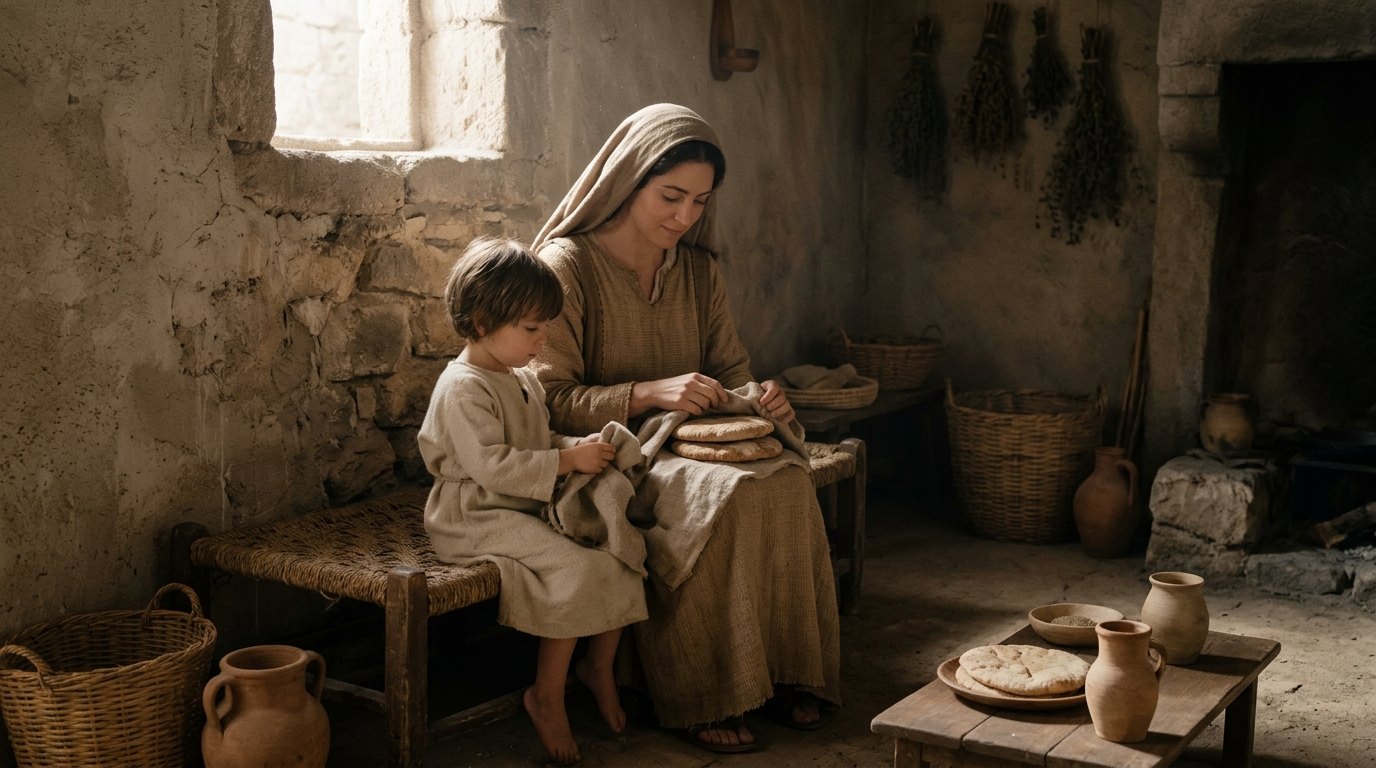
For the unbelieving husband has been sanctified through his wife, and the unbelieving wife has been sanctified through her believing husband. Otherwise your children would be unclean, but as it is, they are holy.
1 Corinthians 7:14 (NIV)
The verse reveals that the unbelieving partner and children are consecrated and brought under covenant blessing through the believer.
Rather than the unbeliever contaminating the Christian, 1 Corinthians 7:14 declares that the unbelieving spouse is sanctified through the presence of the believer. Paul explains that the marriage relationship and the family unit are consecrated in God's sight: the unbelieving husband is set apart through his believing wife, and the unbelieving wife is set apart through her believing husband. Consequently, their children are not considered ritually unclean or outside the sphere of covenantal favor; instead, God regards them as holy, brought under the spiritual umbrella and protection of the home's Christian witness.
This covenantal dynamic reflects a long-standing biblical pattern of God extending broad domestic favor on account of one righteous servant. In Genesis 39:5, the Lord blessed the entire Egyptian household of Potiphar specifically for the sake of Joseph, prospering everything in the house and field. Paul immediately grounds this sanctifying presence in an even greater evangelistic longing in 1 Corinthians 7:16, asking, "For how do you know, wife, whether you will save your husband? Or how do you know, husband, whether you will save your wife?" The Christian partner serves as God's stationed ambassador of grace within the home.
| Passage | What it says |
|---|---|
| 1 Corinthians 7:14 | Paul explains that the unbelieving spouse and their children are sanctified through the presence of the Christian spouse. |
| Genesis 39:5 | The Lord blessed Potiphar's entire household on account of Joseph, demonstrating God's covenantal blessing through one faithful believer. |
| 1 Corinthians 7:16 | Paul encourages perseverance by holding out the real hope that the believer might lead the unbelieving spouse to salvation. |
Witness in Conduct
A holy life wins an unbeliever without words
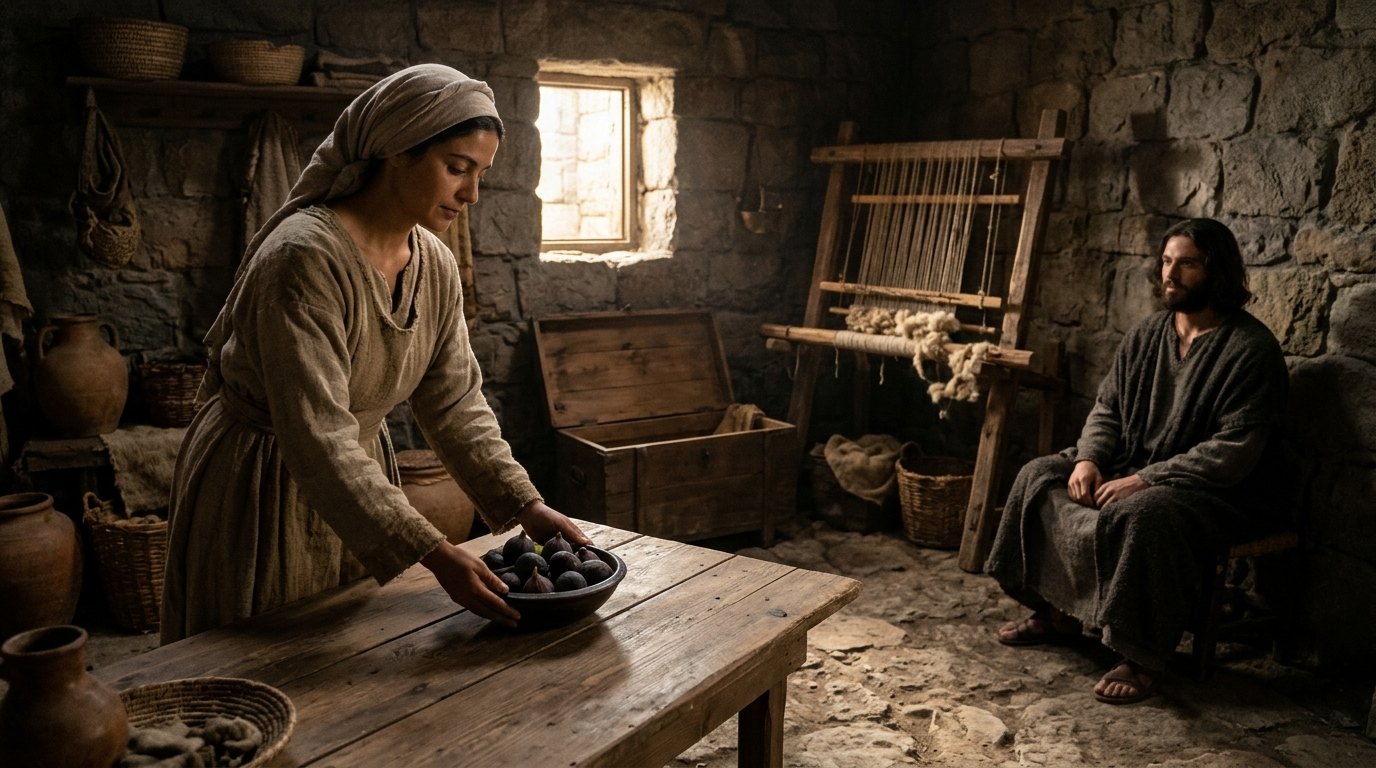
Wives, in the same way submit yourselves to your own husbands so that, if any of them do not believe the word, they may be won over without words by the behavior of their wives, when they see the purity and reverence of your lives.
1 Peter 3:1-2 (NIV)
Peter highlights that pure, reverent conduct is God's instrument to win over a spouse who disobeys the Word.
In 1 Peter 3:1-2, the apostle gives profound counsel to wives facing spiritual opposition at home: an unbelieving spouse is won not through relentless arguing, but by observing a quiet and holy life. Peter writes that even if husbands "do not obey the word, they may be won without a word by the conduct of their wives" when they behold their chaste, respectful, and reverent behavior (1 Peter 3:1-2). This mirrors the broader pattern of domestic order described in Ephesians 5:22-24 and Colossians 3:18, where submission to one's husband is rendered as an act of obedience fitting in the Lord. Likewise, Titus 2:3-5 urges women to demonstrate pure, kind, and faithful homemaking so that God's word is never blasphemed by their conduct.
True spiritual adornment lies inward. In 1 Peter 3:3-4, Peter directs wives away from external ostentation toward "the hidden person of the heart with the imperishable beauty of a gentle and quiet spirit, which in God's sight is very precious." Drawing upon the historic heritage of the covenant, 1 Peter 3:5-6 points to Sarah and the holy women of old who trusted in God and were not paralyzed by fear. Such steadfast godliness produces the lasting fruit celebrated in Proverbs 31:11-12, where a husband safely trusts in his wife because she does him good and not harm all the days of her life.
| Passage | What it says |
|---|---|
| 1 Peter 3:1 | Wives are commanded to be subject to their husbands so disobedient spouses may be won without a word. |
| 1 Peter 3:2 | Unbelieving husbands are impacted directly by observing the chaste and reverent conduct of their believing wives. |
| Ephesians 5:22-24 | Wives are instructed to submit to their husbands as unto Christ, mirroring the church's submission to the Lord. |
| Colossians 3:18 | Paul directs wives to submit to their husbands as is fitting in the Lord. |
| Titus 2:3-5 | Paul commands godly, reverent domestic conduct so that the word of God may not be blasphemed or dishonored. |
| 1 Peter 3:3-4 | A gentle and quiet spirit within adorns an unbelieving spouse's home more persuasively than external beauty. |
| 1 Peter 3:5-6 | Holy women of old trusted God without terror, providing a model for wives facing difficult or unbelieving spouses. |
| Proverbs 31:11-12 | A faithful spouse does good and brings blessing to their husband all the days of her life. |
Honor and Love
Christian husbands must dwell with understanding and self-giving honor

Husbands, in the same way be considerate as you live with your wives, and treat them with respect as the weaker partner and as heirs with you of the gracious gift of life, so that nothing will hinder your prayers.
1 Peter 3:7 (NIV)
Husbands are warned to honor and understand their wives so their own communion with God remains unhindered.
The call to the Christian husband married to an unbeliever is equally exacting, demanding a shepherd-like posture of selfless honor, gentle understanding, and spiritual integrity. In 1 Peter 3:7, the apostle commands husbands to dwell with their wives according to knowledge, showing honor to the woman as the weaker vessel and as a fellow heir of the grace of life, warning that failure to do so will directly hinder their own prayers before God. A husband cannot expect communion with God while treating his wife with disregard, coldness, or tyranny.
This respectful care flows from the supreme pattern of Christ's love for His people. In Ephesians 5:25-28, Paul commands husbands to love their wives just as Christ loved the church and gave Himself up for her, nourishing and cherishing her as his own body. Ephesians 5:33 summarizes this duty as a dual mandate: let each husband love his wife as himself, and let the wife see that she respects her husband. In Colossians 3:19, Paul adds an emphatic warning: "Husbands, love your wives, and do not be harsh with them." When a Christian man bears the weight of leading an unbelieving spouse, he is called to reflect the patience, gentleness, and sacrificial forbearance of Christ Himself.
| Passage | What it says |
|---|---|
| 1 Peter 3:7 | Husbands must live considerately with their wives, giving them honor as co-heirs so prayers are not hindered. |
| Ephesians 5:25-28 | Husbands are commanded to love their wives self-sacrificially, just as Christ loved the church and gave Himself for her. |
| Ephesians 5:33 | Each husband must love his wife as himself, and each wife must see that she respects her husband. |
| Colossians 3:19 | Paul commands husbands to love their wives and never deal with them harshly or with bitterness. |
Peace in Abandonment
The believer is released if the unbeliever departs

But if the unbeliever leaves, let it be so. The brother or the sister is not bound in such circumstances; God has called us to live in peace.
1 Corinthians 7:15 (NIV)
Scripture explicitly provides that if an unbelieving spouse leaves, the Christian partner is no longer bound.
Paul provides crucial pastoral clarity in 1 Corinthians 7:15, writing that if the unbelieving partner departs, the Christian husband or wife is not enslaved, because God has called us to peace. The believer is never permitted to initiate the dissolution of the marriage simply because of spiritual divergence; however, if the unbeliever refuses to remain in the covenant and walks away, the abandoned spouse is released from the marital bond. This aligns with the broader Christian mandate in Romans 12:18, where believers are charged, so far as it depends on them, to live peaceably with everyone, recognizing that peace cannot be unilaterally coerced.
This release from abandonment stands alongside the general permanence of marriage affirmed in 1 Corinthians 7:39, where marriage binds two people until death, with the strict qualification that any future marriage for a believer must be only in the Lord. That requirement connects directly with Paul's strong prohibition in 2 Corinthians 6:14-15 against becoming unequally yoked with unbelievers, a command intended to preserve Christians from entering spiritually fraught unions in the first place. Yet for those already married, 1 Corinthians 7:17 instructs each person to lead the life assigned to them by the Lord, honoring their current station unless severed by abandonment.
This New Covenant posture marks a notable shift from Old Testament theocratic civil law. In Deuteronomy 7:3-4, God explicitly commanded Israel not to intermarry with the surrounding pagan nations because those foreign spouses would draw their sons and daughters toward idolatry. Following the exile, Ezra 10:1-3 recorded the drastic dissolution of pagan marriages to preserve the physical and religious purity of the post-exilic nation. Under Christ, however, the gospel does not sever marriages by command, but redeems them through the transforming power of holy witness, granting release only when the unbeliever departs.
| Passage | What it says |
|---|---|
| 1 Corinthians 7:15 | Paul states that if the unbelieving partner separates, the brother or sister is not bound, for God called us to peace. |
| Romans 12:18 | Believers are instructed to live peaceably with all people as far as it depends on them. |
| 1 Corinthians 7:39 | Paul reaffirms the general marital obligation while establishing that any remarriage must be only in the Lord. |
| 2 Corinthians 6:14-15 | Paul warns against entering into an unequal yoke with unbelievers, underscoring the spiritual tension that mixed unions experience. |
| 1 Corinthians 7:17 | Each believer is called to remain in the marital status assigned by God unless abandonment breaks it. |
| Ezra 10:1-3 | Under the Old Covenant theocratic community, foreign pagan marriages were severed, contrasting New Covenant sanctification through continued witness. |
| Deuteronomy 7:3-4 | Israel was forbidden to marry unbelieving pagans because they would turn their children away to serve other gods. |
Divided Homes
God nurtures faith even under spiritually divided homes

I am reminded of your sincere faith, which first lived in your grandmother Lois and in your mother Eunice and, I am persuaded, now lives in you also.
2 Timothy 1:5 (NIV)
It shows that an unbelieving father could not hinder the spiritual fruitfulness passed through a faithful mother.
In 2 Timothy 1:5, the apostle Paul reflects on the sincere faith dwelling within Timothy, a faith that dwelt first in your grandmother Lois and your mother Eunice. This single verse stands as an enduring encouragement to every Christian parent raising children beside an unbelieving spouse. The historical reality of Timothy's household is laid bare in Acts 16:1-3, which records that his mother was a Jewish woman who believed in Christ, while his father was an unbelieving Greek. Despite the spiritual division of his home and the pagan influence of his father, the spiritual instruction of two faithful women shaped Timothy into one of the early church's greatest pastors.
Paul underscores this reality in 2 Timothy 3:14-15, reminding Timothy that from infancy he had been acquainted with the sacred writings that are able to make one wise for salvation through faith in Jesus Christ. The home was divided, yet the word of God proved unhindered, displaying how the sovereign grace of God operates through the quiet diligence of a single faithful parent.
This pattern of godliness sustained alongside an ungodly spouse is vividly mirrored in the Old Testament account of Abigail. In 1 Samuel 25:2-3, Scripture describes Abigail as discerning and beautiful, while her husband Nabal is characterized as harsh, ill-mannered, and foolish. When Nabal's reckless hostility threatened to destroy their entire estate, Abigail intervened with courage and grace. In 1 Samuel 25:32-35, David blesses Abigail for her prudence, honoring the integrity of a godly woman who navigated marriage to a foolish partner with deep wisdom, dignity, and unwavering reverence for God.
| Passage | What it says |
|---|---|
| Acts 16:1-3 | Timothy was raised in a home where his mother believed while his Greek father did not. |
| 2 Timothy 1:5 | The sincere faith of Timothy was nurtured first by his grandmother Lois and his mother Eunice. |
| 2 Timothy 3:14-15 | Timothy learned the sacred scriptures from infancy despite being reared under an unbelieving father. |
| 1 Samuel 25:2-3 | Abigail's marriage to harsh and foolish Nabal illustrates godliness sustained alongside an unbelieving, hostile spouse. |
| 1 Samuel 25:32-35 | David blesses Abigail for her wisdom and discernment in protecting her household despite her husband's folly. |
Where in the Bible
| Book | Passages |
|---|---|
| Genesis | 1 · Genesis 39:5 |
| Deuteronomy | 1 · Deuteronomy 7:3-4 |
| 1 Samuel | 2 · 1 Samuel 25:2-3, 1 Samuel 25:32-35 |
| Ezra | 1 · Ezra 10:1-3 |
| Proverbs | 1 · Proverbs 31:11-12 |
| Malachi | 1 · Malachi 2:14-16 |
| Matthew | 1 · Matthew 19:4-6 |
| Acts | 1 · Acts 16:1-3 |
| Romans | 1 · Romans 12:18 |
| 1 Corinthians | 7 · 1 Corinthians 7:12, 1 Corinthians 7:13, 1 Corinthians 7:14, 1 Corinthians 7:16, 1 Corinthians 7:15, 1 Corinthians 7:39, 1 Corinthians 7:17 |
| 2 Corinthians | 1 · 2 Corinthians 6:14-15 |
| Ephesians | 3 · Ephesians 5:22-24, Ephesians 5:25-28, Ephesians 5:33 |
| Colossians | 2 · Colossians 3:18, Colossians 3:19 |
| 2 Timothy | 2 · 2 Timothy 1:5, 2 Timothy 3:14-15 |
| Titus | 1 · Titus 2:3-5 |
| 1 Peter | 5 · 1 Peter 3:1, 1 Peter 3:2, 1 Peter 3:3-4, 1 Peter 3:5-6, 1 Peter 3:7 |
The story in order
- Creation ordinance of marriage (c. 1 BC) · Matthew 19:4-6 · Jesus affirms marriage as a lifelong, inseparable union ordained by God.
- Joseph blessed Potiphar's household (c. 1800 BC) · Genesis 39:5 · God's blessing extends to a household through one faithful believer.
- Israel forbidden to marry pagans (c. 1400 BC) · Deuteronomy 7:3-4 · Under the Old Covenant, intermarriage with unbelievers was prohibited to protect faith.
- Abigail's godly conduct (c. 1000 BC) · 1 Samuel 25:2-3 · A godly woman lived faithfully despite her foolish and harsh unbelieving husband.
- Malachi condemns divorce (c. 450 BC) · Malachi 2:14-16 · God hates covenant-breaking divorce and upholds marriage as a sacred covenant.
- Ezra commands foreign marriages severed (c. 450 BC) · Ezra 10:1-3 · In the Old Covenant community, mixed marriages were dissolved to preserve purity.
- Paul on marriage and divorce (c. AD 55) · 1 Corinthians 7:12-16 · Believers should not initiate divorce but may remain if the unbeliever departs.
- Wives' conduct wins husbands (c. AD 60) · 1 Peter 3:1-2 · Chaste and reverent conduct can win an unbelieving spouse without words.
- Husbands' loving conduct (c. AD 60) · 1 Peter 3:7 · Husbands must live with understanding and honor their wives for prayer to be unhindered.
- Submission in marriage (c. AD 60) · Ephesians 5:22-24 · Wives are called to submit to their husbands as the church submits to Christ.
- Christ-like love for wives (c. AD 60) · Ephesians 5:25-28 · Husbands are commanded to love their wives sacrificially, as Christ loved the church.
- Timothy's divided home (c. AD 50) · Acts 16:1-3 · Timothy was raised in a home with a believing mother and an unbelieving father.
- Faith nurtured in mixed home (c. AD 67) · 2 Timothy 1:5 · Timothy's faith was nurtured by his mother and grandmother, despite his father's unbelief.
Key words
- Covenant (berit, בְּרִית)
- A solemn, binding agreement or promise, often involving God. · Malachi 2:14
- Sanctified (hagiazo, ἁγιάζω)
- Set apart as holy or consecrated to God. · 1 Corinthians 7:14
- Witness (marturia, μαρτυρία)
- Testimony or evidence of something, especially of Christ. · 1 Peter 3:1
- Submission (hypotasso, ὑποτάσσω)
- Yielding to the authority or control of another. · Ephesians 5:22
- Love (agape, ἀγάπη)
- Self-sacrificial, unconditional devotion and care. · Ephesians 5:25
- Peace (eirene, εἰρήνη)
- Tranquility, harmony, and freedom from disturbance. · 1 Corinthians 7:15
Navigating marriage with an unbelieving spouse requires persistent prayer, patient endurance, and unwavering reliance on God's grace. By honoring your marital vows and adorning the gospel through selfless love and respect, you set apart your home and reflect Christ to your spouse. Rest in the knowledge that God preserves your peace, whether He grants the salvation of your spouse or sustains you through every trial.
31 passages, each cited once.
Scripture cited
- 1 Peter 3:1-2
- 1 Corinthians 7:16
- 1 Corinthians 7:10-16
- 1 Peter 3:1-7
- 1 Corinthians 7:39
- 2 Corinthians 6:14-18