What does the Bible say about adultery?

Exodus 20:14
14 “You shall not commit adultery.
New International Version (NIV)
The answer
The Bible condemns adultery as sin, commands faithfulness in marriage and purity in the heart, warns of God’s judgment, and offers forgiveness and new life through Christ to those who repent. The command is plain: “You shall not commit adultery” (Exodus 20:14).
Marriage and sexual purity
Adultery is sexual unfaithfulness that violates the marriage covenant. Hebrews 13:4 declares, “Marriage is honourable in all, and the bed undefiled: but whoremongers and adulterers God will judge.” Sexual union within marriage is honorable before God; adultery and every other form of sexual immorality are not. God’s will is that people abstain from sexual immorality and exercise self-control “in sanctification and honor” (1 Thessalonians 4:3-4).
Adultery includes the heart
Jesus exposes the sin beneath the outward act: “Everyone who gazes at a woman to lust after her has committed adultery with her already in his heart” (Matthew 5:28). This concerns deliberately looking in order to lust, not merely experiencing an unwanted temptation. His warning about removing the eye or hand that causes stumbling shows how decisively every occasion of sin must be rejected (Matthew 5:29-30).
Its seriousness and consequences
Proverbs 6:32-33 says that the adulterer “destroys his own soul” and brings wounds, dishonor and lasting reproach upon himself. Under the law given to Israel, adultery carried the death penalty (Leviticus 20:10). The New Testament warns that those who persist unrepentantly in adultery will not inherit God’s kingdom (1 Corinthians 6:9-10). Adultery is therefore neither a harmless private choice nor a sin God overlooks.
Forgiveness and new life in Christ
Adultery is serious, but it is not beyond Christ’s grace. Romans 5:8 declares that “while we were yet sinners, Christ died for us.” After naming adultery among the sins that exclude people from God’s kingdom, Paul tells believers: “Some of you were such, but you were washed. You were sanctified. You were justified in the name of the Lord Jesus, and in the Spirit of our God” (1 Corinthians 6:11).
The response to adultery is therefore confession, repentance and a decisive break with the sin—not concealment, excuses or continuation in it. “If we confess our sins, he is faithful and righteous to forgive us the sins and to cleanse us from all unrighteousness” (1 John 1:9). The command is to “Flee sexual immorality!” (1 Corinthians 6:18), trusting Christ both to forgive and to produce a new, holy life.
Answered from Scripture · reviewed November 11, 2026
From Mount Sinai to the teachings of Jesus and the epistles, Scripture speaks on adultery with absolute moral clarity: God strictly forbids it, judges it, and commands His people to guard the sacred covenant of marriage. Far from being merely a private breach between two people, adultery is a grave sin against God Himself that ravages souls, destroys families, and distorts the holy union designed to mirror Christ and His church.
The Law of God
God Commands Absolute Faithfulness in the Covenant

“You shall not commit adultery.
Exodus 20:14 (NIV)
This absolute prohibition forms the moral bedrock of marriage across the entire biblical witness.
The bedrock of God's design for human marriage is declared in unmistakable simplicity at Sinai: You shall not commit adultery (Exodus 20:14). This seventh word of the Decalogue is renewed verbatim in Deuteronomy 5:18 as Israel prepares to inherit the land, establishing marital exclusivity not as a transient cultural convention, but as a perpetual moral command rooted in God's holy character. Because holy matrimony mirrors covenant life before the Lord, sexual intimacy outside the marriage covenant is an assault against both God and one's neighbor. In the holiness code of Leviticus 18:20, the Lord explicitly forbids lying carnally with a neighbor's wife, declaring such an act inherently defiling and an utter desecration of community purity.
Under the civil code of ancient Israel, the gravity of this breach demanded severe justice. Leviticus 20:10 stipulates that the adulterer and the adulteress must both be put to death, underscoring that both parties share equal moral culpability before the Law. Deuteronomy 22:22 repeats this statute, commanding capital punishment when a man is discovered lying with another man's wife in order to purge the evil from Israel. Deuteronomy 22:23-24 applies the identical standard of judgment to betrothed virgins within the city gate, recognizing that betrothal carries the binding sanctity of marriage itself. Even where physical proof remained absent, Numbers 5:11-31 established the solemn ordeal of jealousy, an institutionalized trial before the priest where the Lord alone acted as witness, judge, and exposer of secret marital treachery.
| Passage | What it says |
|---|---|
| Exodus 20:14 | Delivers the seventh commandment of the Decalogue, strictly prohibiting adultery. |
| Deuteronomy 5:18 | Reiterates the seventh commandment to Israel before they enter the promised land. |
| Leviticus 18:20 | Forbids sexual relations with a neighbor's wife, declaring such an act defiling. |
| Leviticus 20:10 | Prescribes the death penalty for both the adulterer and the adulteress under Israel's civil law. |
| Deuteronomy 22:22 | Commands that a man found lying with a married woman must die alongside her to purge evil from Israel. |
| Deuteronomy 22:23-24 | Mandates capital punishment when a betrothed virgin lies willingly with another man inside the city. |
| Numbers 5:11-31 | Prescribes the ordeal of jealousy before the priest when a husband suspects an unfaithful wife. |
Heart and Conscience
Jesus Exposes the Inner Roots of Lust

“You have heard that it was said, ‘You shall not commit adultery.’ But I tell you that anyone who looks at a woman lustfully has already committed adultery with her in his heart.
Matthew 5:27-28 (NIV)
Christ reveals that adultery begins in the hidden affections of the heart long before the physical act occurs.
In the Sermon on the Mount, the Lord Jesus Christ penetrates beneath external behavior to unmask the secret workings of the heart. Christ declares, "Whoever looks at a woman to lust for her has already committed adultery with her in his heart" (Matthew 5:27-28). With these words, our Lord sweeps aside legalistic self-righteousness, proving that sinful desire cultivated in the imagination carries the same moral stain before God as the physical transgression. Later, in Matthew 15:19 and Mark 7:21-22, Jesus specifies that adulteries and evil thoughts do not originate from external ceremonial contamination, but proceed directly out of the fallen human heart, rendering the person defiled before a holy God.
This uncompromising standard extends directly into marriage, divorce, and remarriage. In Matthew 5:31-32, Christ warns that anyone who divorces his wife, except on the ground of sexual immorality, makes her commit adultery, and whoever marries a divorced woman commits adultery. He reinforces this standard in Matthew 19:9, Mark 10:11-12, and Luke 16:18, teaching that unlawful divorce and remarriage constitutes ongoing adultery against one's spouse, tearing apart what God Himself joined. Finally, Christ exposes the spiritual rot of covenant infidelity in Matthew 12:39, rebuking an evil and adulterous generation that clamored for signs while remaining entirely unfaithful to the God standing right before them.
| Passage | What it says |
|---|---|
| Matthew 5:27-28 | Teaches that looking at someone with lustful intent constitutes committing adultery in the heart. |
| Matthew 5:31-32 | States that unbiblical divorce causes a spouse to commit adultery and makes subsequent remarriage adulterous. |
| Matthew 15:19 | Names adulteries among the defiling sins that proceed directly out of the human heart. |
| Matthew 19:9 | Affirms that divorcing a spouse except for sexual immorality and marrying another constitutes adultery. |
| Mark 10:11-12 | Declares that divorcing one's spouse to marry another is committing adultery against them. |
| Luke 16:18 | States that divorcing and remarrying, or marrying a divorced person, constitutes committing adultery. |
| Mark 7:21-22 | Names adulteries alongside evils that proceed out of the human heart to defile a person. |
| Matthew 12:39 | Rebukes an evil and adulterous generation seeking a sign rather than repenting before the Messiah. |
Wisdom's Warning
The Deceptive Allure and Bitter Ruin of Adultery

Can a man scoop fire into his lap without his clothes being burned? Can a man walk on hot coals without his feet being scorched? So is he who sleeps with another man’s wife; no one who touches her will go unpunished.
Proverbs 6:27-29 (NIV)
This vivid metaphor demonstrates that no one can indulge in adulterous relations without inevitable, self-inflicted ruin.
Wisdom literature presents the bitter end of marital treachery with terrifying realism. In Proverbs 6:27-29, Solomon asks the searching question: "Can a man take fire to his bosom, and his clothes not be burned?" Just as hot coals inevitably scorch the feet of anyone who walks on them, so whoever touches his neighbor's wife will not go unpunished. Proverbs 6:24-26 warns against being captivated by alluring beauty, while Proverbs 6:32-35 concludes that whoever commits adultery with a woman entirely lacks understanding, destroys his own soul, and incurs the unyielding, furious vengeance of an outraged husband who will accept no compensation.
The early chapters of Proverbs repeatedly expose the deceptive seduction that precedes destruction. Proverbs 5:3-14 cautions that while the lips of an immoral woman drip honey, her end is as bitter as wormwood and sharp as a two-edged sword, leading straight down to the chambers of death. In Proverbs 7:6-27, Solomon observes a foolish young man lured by flattering speech, following like an ox going to the slaughter. Proverbs 2:16-19 and Proverbs 9:13-18 emphasize that the adulteress forgets the covenant of her youth, offering stolen waters that lead directly to the dead in Sheol. Proverbs 22:14 and Proverbs 23:27-28 compare her enticing mouth to a deep pit and a narrow well that ensnares those under God's indignation, while Proverbs 30:20 captures the terrifying delusion of the unrepentant who eats, wipes her mouth, and declares she has done no wrong. Job 31:9-12 confirms this ancient wisdom, calling adulterous enticement a heinous crime and a devastating fire that consumes to destruction, echoed in Ecclesiastes 7:26 as an ensnaring trap more bitter than death itself.
| Passage | What it says |
|---|---|
| Proverbs 5:3-14 | Warns of the seductive woman whose speech is smooth but ends in bitter ruin and death. |
| Proverbs 6:24-29 | Warns against lusting after a neighbor's wife, comparing the act to carrying fire in one's lap. |
| Proverbs 6:32-35 | States that he who commits adultery lacks understanding, destroys his soul, and faces unrelenting rage from the betrayed husband. |
| Proverbs 7:6-27 | Details the craft of seduction leading a foolish young man like an ox to the slaughterhouse of death. |
| Proverbs 30:20 | Describes the callous deceit of an adulteress who wipes her mouth and claims she has done no wickedness. |
| Job 31:9-12 | Job describes being enticed by another woman as a heinous crime and a fire that burns to destruction. |
| Proverbs 2:16-19 | Warns against the seductive adulteress who forgets the covenant of her God, whose paths lead to death. |
| Proverbs 9:13-18 | Depicts foolishness calling men to stolen waters while concealing that her guests lie in the depths of Sheol. |
| Proverbs 22:14 | Declares that the mouth of an adulteress is a deep pit under the Lord's wrath. |
| Proverbs 23:27-28 | Compares an adulteress to a narrow well who increases the unfaithful among mankind. |
| Ecclesiastes 7:26 | Describes an alluring ensnaring woman as more bitter than death to those who displease God. |
The Positive Calling
Rejoicing in the Pure Waters of Marital Love

May your fountain be blessed, and may you rejoice in the wife of your youth. A loving doe, a graceful deer— may her breasts satisfy you always, may you ever be intoxicated with her love.
Proverbs 5:18-19 (NIV)
God provides the true safeguard against sexual sin: the passionate, continuous, and exclusive delight in one's own spouse.
Scripture does not merely issue prohibitions against adultery; it provides a glorious, positive calling to pure and joyful marital love. In Proverbs 5:18-19, the inspired sage commands: "Let your fountain be blessed, and rejoice with the wife of your youth." God intends for a husband to be perpetually intoxicated with the love of his own wife, celebrating intimacy as a good and holy gift from the Creator. Proverbs 5:15-17 commands a man to drink fresh water from his own cistern and running water from his own well, ensuring that the streams of affection are shared exclusively between husband and wife rather than dispersed promiscuously into the public square.
This sacred design traces back to creation itself, where Genesis 2:24 establishes that a man shall leave his father and mother and hold fast to his wife, and they shall become one flesh. In Malachi 2:13-16, the prophet proclaims God's intense hatred of treacherous divorce, declaring that the Lord witnessed the covenant between a man and the wife of his youth. In 1 Thessalonians 4:3-5, Paul reminds believers that the will of God is their sanctification, charging each person to control their own body in holiness and honor rather than in the passion of lust. The apostle reinforces this mutual safeguarding in 1 Corinthians 7:2-5, directing spouses to fulfill their conjugal duties so Satan cannot tempt them through lack of self-control. Ultimately, Ephesians 5:25-33 reveals that this earthly covenant mirrors a cosmic reality: Christ's sacrificial, self-giving love for His bride, the church, displaying a pure union where marital fidelity becomes a living sermon of the gospel.
| Passage | What it says |
|---|---|
| Proverbs 5:15-17 | Exhorts a man to drink water from his own cistern rather than letting springs scatter abroad. |
| Proverbs 5:18-19 | Calls a husband to rejoice in the wife of his youth and remain captivated always by her love. |
| 1 Corinthians 7:2-5 | Instructs husbands and wives to fulfill their conjugal duties to guard against temptation and lack of self-control. |
| Ephesians 5:25-33 | Portrays sacrificial marital love as a profound mystery pointing directly to Christ and His church. |
| Genesis 2:24 | Establishes God's foundational design for marriage as two becoming one flesh in sacred covenant unity. |
| Malachi 2:13-16 | Condemns treachery against the wife of one's youth and warns that God hates marital betrayal. |
| 1 Thessalonians 4:3-5 | Exhorts believers to possess their vessels in sanctification and honor rather than sinful passion. |
Judgment and Grace
Apostolic Warnings, Eternal Accountability, and Forgiving Mercy
Marriage should be honored by all, and the marriage bed kept pure, for God will judge the adulterer and all the sexually immoral.
Hebrews 13:4 (NIV)
This verse establishes that the marriage bed is undefiled in God's eyes, while adulterers remain subject to His certain judgment.
The New Testament holds marriage in the highest esteem while warning of eternal accountability for those who desecrate it. In Hebrews 13:4, Scripture declares with uncompromising clarity that marriage must be held in honor among all, and the marriage bed kept undefiled, for God will judge the sexually immoral and adulterous. The marital covenant is a sacred sphere established by God, not a human contract to be dissolved or violated at will. Paul unpacks this binding reality in Romans 7:2-3, demonstrating that a woman is legally bound to her husband as long as he lives, and is marked as an adulteress if she joins herself to another while her spouse survives. Far from a harmless personal choice, violating this bond attacks the moral fabric of love itself; thus Romans 13:9 affirms that the prohibition against adultery is essential to loving one's neighbor as oneself, while James 2:11 notes that breaking this single decree renders one a transgressor of God's entire moral law.
Apostolic warnings make clear that unrepentant sexual sin carries catastrophic eternal weight. Paul writes in 1 Corinthians 6:9-11 and Galatians 5:19-21 that adulterers and those living in the works of the flesh will not inherit the kingdom of God, yet he offers immense hope to the repentant: 'And that is what some of you were. But you were washed, you were sanctified, you were justified in the name of the Lord Jesus Christ.' Believers are urged to flee sexual immorality (1 Corinthians 6:18-20) because their bodies are temples of the Holy Spirit, purchased at a price. By contrast, false teachers whose eyes are full of adultery (2 Peter 2:14) face swift ruin. Worldly duplicity is indicted in James 4:4 as spiritual adultery against God, a rebellion mirrored in the solemn rebukes of Revelation 2:20-22 against Jezebel's enticements. The final vision of judgment in Revelation 21:8 and Revelation 22:15 bars unrepentant adulterers from the holy city, even as Jesus demonstrates in John 8:10-11 the tender balance of divine grace and holiness, declaring to the woman caught in the act: 'Neither do I condemn you; go, and from now on sin no more.'
| Passage | What it says |
|---|---|
| Hebrews 13:4 | Exhorts all to honor marriage and keep the bed undefiled, declaring that God will judge adulterers. |
| Romans 7:2-3 | Explains that a married woman is bound by law until her husband dies; marrying another while he lives makes her an adulteress. |
| Romans 13:9 | Summarizes the commandment against adultery as an essential aspect of loving one's neighbor as oneself. |
| 1 Corinthians 6:9-11 | Warns that adulterers will not inherit God's kingdom, but reminds believers they were washed, sanctified, and justified. |
| Galatians 5:19-21 | Lists adultery and sexual immorality among the works of the flesh that bar one from inheriting God's kingdom. |
| James 4:4 | Rebukes spiritual adultery, declaring that friendship with the world is hostility toward God. |
| John 8:10-11 | Jesus extends mercy to a woman caught in adultery while commanding her to go and sin no more. |
| 1 Corinthians 6:18-20 | Commands believers to flee sexual immorality because their bodies are temples of the Holy Spirit. |
| James 2:11 | Observes that breaking the command against adultery transgresses God's whole moral law. |
| 2 Peter 2:14 | Denounces false teachers whose eyes are full of adultery and never cease from sin. |
| Revelation 2:20-22 | Pronounces severe tribulation upon Jezebel and those committing adultery with her unless they repent. |
| Revelation 21:8 | States that the sexually immoral and unrepentant will have their portion in the lake of fire. |
| Revelation 22:15 | Lists the sexually immoral outside the gates of the New Jerusalem. |
The Prophetic Indictment
The Prophets Denounce Physical Betrayal and Spiritual Apostasy
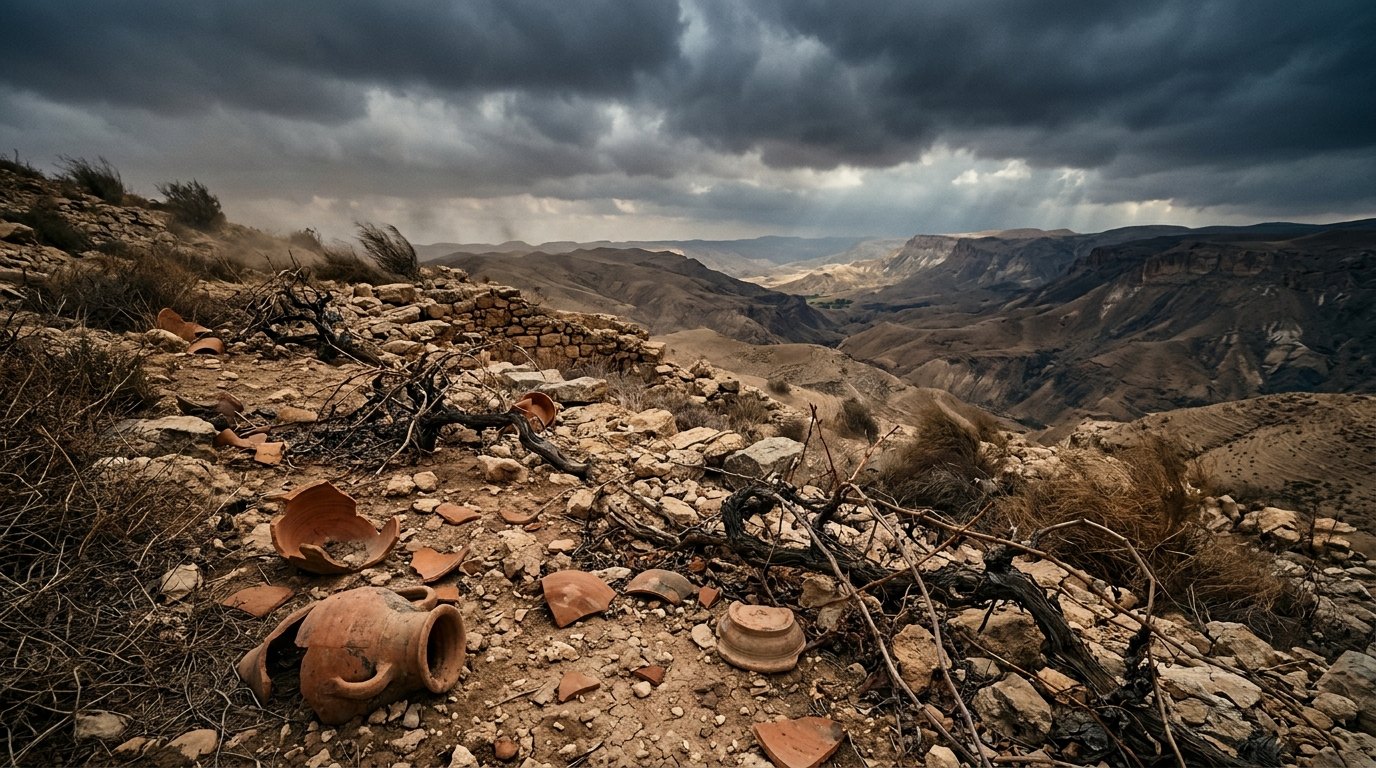
I gave faithless Israel her certificate of divorce and sent her away because of all her adulteries. Yet I saw that her unfaithful sister Judah had no fear; she also went out and committed adultery. Because Israel’s immorality mattered so little to her, she defiled the land and committed adultery with stone and wood.
Jeremiah 3:8-9 (NIV)
Jeremiah explicitly links the breach of marital fidelity to the grievous sin of spiritual idolatry.
Throughout the prophetic books, physical adultery serves as both a literal scourge in the community and a vivid picture of Israel's spiritual treason against her Maker. In Jeremiah 3:8-9, the Lord reveals the gravity of covenant betrayal: because of all the adulteries of that faithless one, Israel, God gave her a certificate of divorce, exposing how her unfaithfulness with idols of wood and stone polluted the entire land. Physical infidelity and idolatrous worship sprang from the same corrupt root of covenant unfaithfulness. Jeremiah weeps over this rampant degradation in Jeremiah 13:27 and Jeremiah 23:10-14, grieving that the nation is full of adulterers and corrupt prophets whose reckless passions resemble the uncontrolled neighings of wild beasts upon the hills.
Ezekiel intensifies this divine indictment, painting unfaithful Jerusalem in Ezekiel 16:32-38 as an adulterous wife who despises her true husband to welcome strangers, and portraying the two kingdoms in Ezekiel 23:37-45 under the names Oholah and Oholibah, who mingled marital treachery with idolatry and shed innocent blood. Yet God's posture toward His wayward bride is nowhere more vividly dramatized than in the life of the prophet Hosea. In Hosea 4:1-2 and Hosea 4:13-14, the Lord indicts the land for swearing, lying, stealing, and rampant adultery, tracing the people's sexual corruption directly to their abandonment of God's truth. Even amid this national rebellion, the Lord issues a tender summons in Hosea 2:2-5, pleading with His bride to put away her adulteries. In Hosea 3:1, God commands the prophet to love a woman who is loved by another man and is an adulteress, mirroring the astonishing, persistent covenant love of the Lord for unfaithful Israel.
| Passage | What it says |
|---|---|
| Jeremiah 3:8-9 | Records God giving backsliding Israel a certificate of divorce because of her spiritual adultery with idols. |
| Jeremiah 13:27 | Pronounces woe upon Jerusalem for her adulteries, neighings, and lewdness upon the hills. |
| Jeremiah 23:10-14 | Laments that the land is full of adulterers and prophets who commit adultery and walk in lies. |
| Ezekiel 16:32-38 | Condemns unfaithful Jerusalem as an adulterous wife who receives strangers instead of her husband. |
| Ezekiel 23:37-45 | Judges Oholah and Oholibah as adulteresses who have committed spiritual adultery and shed innocent blood. |
| Hosea 2:2-5 | Pleads with unfaithful Israel to put away her adulteries and return to her true husband. |
| Hosea 3:1 | Commands Hosea to love an adulteress again, mirroring the Lord's enduring love for unfaithful Israel. |
| Hosea 4:1-2 | Charges the land with breaking bounds through swearing, lying, killing, stealing, and committing adultery. |
| Hosea 4:13-14 | Describes daughters and brides turning to adultery as the consequence of worshipping false gods. |
Historical Narratives
Scripture Records Real Transgressions, Consequences, and Contrition

No one is greater in this house than I am. My master has withheld nothing from me except you, because you are his wife. How then could I do such a wicked thing and sin against God?”
Genesis 39:9 (NIV)
Joseph perceives that violating another man's marriage bed is ultimately a grave offense against God.
The historical narratives of Scripture show that adultery is never hidden from the sight of the Almighty and always leaves devastating wreckage in its wake. In Genesis 39:9, when Potiphar's wife persistently enticed Joseph, he provided the foundational biblical understanding of marital integrity: 'How then could I do such a wicked thing and sin against God?' Joseph recognized that violating another man's wife was not merely an interpersonal betrayal, but a supreme offense against the holy God who instituted the marital boundary. Long before the Mosaic covenant was penned, God intervened to protect this boundary in Genesis 20:2-7, warning King Abimelech in a dream of death if he touched Abraham's wife Sarah, a standard of righteousness echoed in Genesis 26:10 when Abimelech rebuked Isaac for exposing his people to profound guilt.
Conversely, the tragic fall of King David illustrates the catastrophic cost of failing to guard one's eyes and heart. In 2 Samuel 11:2-5, David indulged in lust from his rooftop, sent for Bathsheba, the wife of Uriah the Hittite, and committed adultery with her, attempting to conceal his crime through manipulation and murder. God's response through Nathan the prophet in 2 Samuel 12:7-14 shattered David's self-deception, bringing devastating temporal consequences upon his household even while extending divine forgiveness upon his heartfelt confession. David's profound contrition is permanently preserved in Psalms 51:1-4, where the broken king acknowledges the true nature of his transgression: 'Against you, you only, have I sinned and done what is evil in your sight.' God hears the cry of the truly brokenhearted, yet the historical record stands as an enduring warning that sin's pleasure is fleeting while its harvest is bitter.
| Passage | What it says |
|---|---|
| Genesis 20:2-7 | God warns Abimelech in a dream that taking Abraham's wife Sarah brings death. |
| Genesis 26:10 | Abimelech rebukes Isaac for exposing the Philistines to guilt by concealing Rebekah's marital status. |
| Genesis 39:7-10 | Joseph refuses Potiphar's wife, calling adultery a great wickedness and a sin against God. |
| 2 Samuel 11:2-5 | Records David's adulterous transgression with Bathsheba, the wife of Uriah the Hittite. |
| 2 Samuel 12:7-14 | Nathan confronts David with God's severe judgment and declares the Lord's pardon after David repents. |
| Psalms 51:1-4 | David confesses his moral failure and pleads for God's cleansing after Nathan confronts his adultery. |
Where in the Bible
| Book | Passages |
|---|---|
| Genesis | 4 · Genesis 2:24, Genesis 20:2-7, Genesis 26:10, Genesis 39:7-10 |
| Exodus | 1 · Exodus 20:14 |
| Leviticus | 2 · Leviticus 18:20, Leviticus 20:10 |
| Numbers | 1 · Numbers 5:11-31 |
| Deuteronomy | 3 · Deuteronomy 5:18, Deuteronomy 22:22, Deuteronomy 22:23-24 |
| 2 Samuel | 2 · 2 Samuel 11:2-5, 2 Samuel 12:7-14 |
| Job | 1 · Job 31:9-12 |
| Psalms | 1 · Psalms 51:1-4 |
| Proverbs | 11 · Proverbs 5:3-14, Proverbs 6:24-29, Proverbs 6:32-35, Proverbs 7:6-27, Proverbs 30:20, Proverbs 2:16-19, Proverbs 9:13-18, Proverbs 22:14, Proverbs 23:27-28, Proverbs 5:15-17, Proverbs 5:18-19 |
| Ecclesiastes | 1 · Ecclesiastes 7:26 |
| Jeremiah | 3 · Jeremiah 3:8-9, Jeremiah 13:27, Jeremiah 23:10-14 |
| Ezekiel | 2 · Ezekiel 16:32-38, Ezekiel 23:37-45 |
| Hosea | 4 · Hosea 2:2-5, Hosea 3:1, Hosea 4:1-2, Hosea 4:13-14 |
| Malachi | 1 · Malachi 2:13-16 |
| Matthew | 5 · Matthew 5:27-28, Matthew 5:31-32, Matthew 15:19, Matthew 19:9, Matthew 12:39 |
| Mark | 2 · Mark 10:11-12, Mark 7:21-22 |
| Luke | 1 · Luke 16:18 |
| John | 1 · John 8:10-11 |
| Romans | 2 · Romans 7:2-3, Romans 13:9 |
| 1 Corinthians | 3 · 1 Corinthians 7:2-5, 1 Corinthians 6:9-11, 1 Corinthians 6:18-20 |
| Galatians | 1 · Galatians 5:19-21 |
| Ephesians | 1 · Ephesians 5:25-33 |
| 1 Thessalonians | 1 · 1 Thessalonians 4:3-5 |
| Hebrews | 1 · Hebrews 13:4 |
| James | 2 · James 4:4, James 2:11 |
| 2 Peter | 1 · 2 Peter 2:14 |
| Revelation | 3 · Revelation 2:20-22, Revelation 21:8, Revelation 22:15 |
The story in order
- Marriage Covenant Established (c. 4000 BC) · Genesis 2:24 · God's foundational design for marriage as two becoming one flesh.
- Adultery Prohibited by Law (c. 1450 BC) · Exodus 20:14 · The seventh commandment strictly prohibits adultery.
- Law Reiterated Before Entering Land (c. 1400 BC) · Deuteronomy 5:18 · Israel is commanded to uphold the prohibition of adultery.
- David's Adultery with Bathsheba (c. 1000 BC) · 2 Samuel 11:2-5 · Scripture records David's transgression and its consequences.
- David Repents of Adultery (c. 990 BC) · Psalms 51:1-4 · David confesses his sin and seeks God's cleansing.
- Proverbs Warn Against Adultery (c. 950 BC) · Proverbs 5:3-14 · Wisdom literature warns of adultery's deceptive allure and ruin.
- Prophets Denounce Adultery (c. 600 BC) · Jeremiah 3:8-9 · Prophets condemn spiritual and physical adultery.
- Jesus Defines Adultery of the Heart (c. AD 30) · Matthew 5:27-28 · Lustful looking is defined as adultery in the heart.
- Jesus on Divorce and Remarriage (c. AD 30) · Matthew 19:9 · Divorce except for immorality and remarriage is adultery.
- Apostles Warn Against Adultery (c. AD 55) · 1 Corinthians 6:9-11 · Adulterers will not inherit God's kingdom but can find mercy.
- Marriage as Christ and Church (c. AD 60) · Ephesians 5:25-33 · Marital love mirrors Christ's love for the church.
- Jesus Shows Mercy in Adultery (c. AD 30) · John 8:10-11 · Jesus extends mercy to a woman caught in adultery.
- Final Judgment for the Unrepentant (c. AD 95) · Revelation 21:8 · The sexually immoral and unrepentant face the lake of fire.
Key words
- Adultery (mo'aph (Hebrew), moicheia (Greek))
- Sexual intercourse between a married person and someone other than their spouse. · Exodus 20:14
- Lust (epithymia (Greek))
- Intense desire, often illicit or sinful, particularly sexual desire. · Matthew 5:28
- Covenant (berit (Hebrew), diatheke (Greek))
- A solemn agreement or promise, especially between God and humans or between spouses. · Malachi 2:14
- Sanctification (hagiasmos (Greek))
- The process of being made holy or set apart for God's service. · 1 Thessalonians 4:3
- Judgment (mishpat (Hebrew), krima (Greek))
- The divine sentence or condemnation upon sin. · Hebrews 13:4
- Mercy (ḥesed (Hebrew), eleos (Greek))
- Compassionate or forgiving treatment of an offender or someone in distress. · John 8:11
Scripture never softens the reality of adultery, yet it holds out profound hope for every repentant sinner through the cleansing blood of Jesus Christ. For those walking in marriage, God calls for deliberate, joyful fidelity; for those who have stumbled, He offers true forgiveness, restoration, and the power to walk in purity.
61 passages, each cited once.
Scripture cited
- Exodus 20:14
- Hebrews 13:4
- Leviticus 20:10
- Matthew 5:27-30
- 1 Corinthians 6:9-20
- Proverbs 6:24-35
- Romans 5:8
- 1 John 1:9
- 1 Thessalonians 4:3-5