What does the Bible say about choosing friends?

Proverbs 13:20
20 Walk with the wise and become wise, for a companion of fools suffers harm.
New International Version (NIV)
The answer
The Bible teaches that friendship is a choice with spiritual consequences: choose companions who draw you toward wisdom and God, and be careful about the company that shapes your character.
What the Bible says
- Wisdom grows through wise company. Proverbs 13:20 says, “One who walks with wise men grows wise, but a companion of fools suffers harm.”
- Sinful company corrupts. First Corinthians 15:33 warns, “Don’t be deceived! ‘Evil companionships corrupt good morals.’”
- Some people are spiritually dangerous. Proverbs 22:24-25 instructs, “Don’t befriend a hot-tempered man. Don’t associate with one who harbors anger, lest you learn his ways and ensnare your soul.”
- God calls believers to separate from unbelieving influence. Second Corinthians 6:14-18 asks, “What fellowship does righteousness and iniquity have? Or what fellowship does light have with darkness?” and commands, “Come out from among them, and be separate.”
- Friendship with the world is hostility toward God. James 4:4 says, “Friendship with the world is hostility toward God. Whoever therefore wants to be a friend of the world makes himself an enemy of God.”
How to apply this
- Look at their character, not only their personality. Proverbs 6:16-19 lists characteristics God hates, including a heart that devises wicked schemes and a person who sows discord.
- Notice what your friendships produce in you. Ask whether your closest companions strengthen honesty, faith, purity, and love—or pressure you to compromise them.
- Choose fellowship that helps you draw near to God. James 4:8 promises, “Draw near to God, and He will draw near to you.”
- Do not confuse closeness with obedience. Jesus commands love for enemies, blessing those who curse you, and praying for those who mistreat you (Luke 6:27-28). You can love someone without entering an alliance that draws you away from God.
The central principle is simple: choose friends whose influence moves you closer to God—not merely people who are fun, convenient, or popular.
Answered from Scripture · reviewed November 10, 2026
Scripture treats friendship not as a harmless social accident, but as a deliberate moral choice with eternal stakes. Because intimate companions inevitably shape our loves, speech, and habits, God instructs His people to walk with the wise and guard their hearts against corrupting alliances.
Wisdom by Association
Walking with the Wise Imparts Life and Prudence

Walk with the wise and become wise, for a companion of fools suffers harm.
Proverbs 13:20 (NIV)
It contrasts two paths of association, proving that our company inevitably shapes our character and final outcome.
Proverbs 13:20 sets forth an unbending spiritual reality: whoever walks with the wise becomes wise, but the companion of fools will suffer harm. Scripture treats friendship as an active, formative discipline rather than passive proximity. Daily companions function as a furnace that quietly shapes desires, language, and moral reflexes. In Proverbs 27:17, Solomon pictures this dynamic through the clash of metals, showing that iron sharpens iron, and one man sharpens another. Genuine companionship demands intentional friction, where godly peers hone each other’s clarity, vigilance, and devotion. Those who desire discernment must welcome correction, for Proverbs 15:31 promises that the ear that listens to life-giving reproof will abide gladly among the wise.
This deliberate alignment of life with the righteous is voiced in Psalm 119:63, where David declares, "I am a companion of all who fear you, of those who keep your precepts." True solidarity is rooted not in temperament or circumstance, but in shared reverence for the living God. Ecclesiastes 4:9-10 underlines the sheer practical necessity of this bond, explaining that two are better than one because when one stumbles, his partner will lift him up. A solitary traveler possesses no defense against collapse. Proverbs 27:9 observes that the sweetness of a friend comes from heartfelt counsel, offering joy and stability through candid, godly wisdom. In the New Testament, this Old Testament principle matures into corporate responsibility: Hebrews 10:24-25 commands believers to gather faithfully and stir one another up to love and good works, fortifying each other until the day of Christ's return.
| Passage | What it says |
|---|---|
| Proverbs 13:20 | Walking with wise companions produces wisdom, while association with fools brings destruction. |
| Proverbs 27:17 | Mutual fellowship between friends sharpens each person just as iron sharpens iron. |
| Proverbs 15:31 | The person who heeds life-giving reproof makes their home among the wise. |
| Psalms 119:63 | The psalmist declares himself a companion of all who fear the Lord and keep His precepts. |
| Ecclesiastes 4:9-10 | Two are better than one, providing mutual help and lifting each other up when one falls. |
| Proverbs 27:9 | Sweetness of a friend springs from earnest counsel that gladdens the heart. |
| Hebrews 10:24-25 | Believers are commanded to gather and stir up one another to love and good deeds. |
The Danger of Corruption
Foolish and Ungodly Companions Lead into Ruin
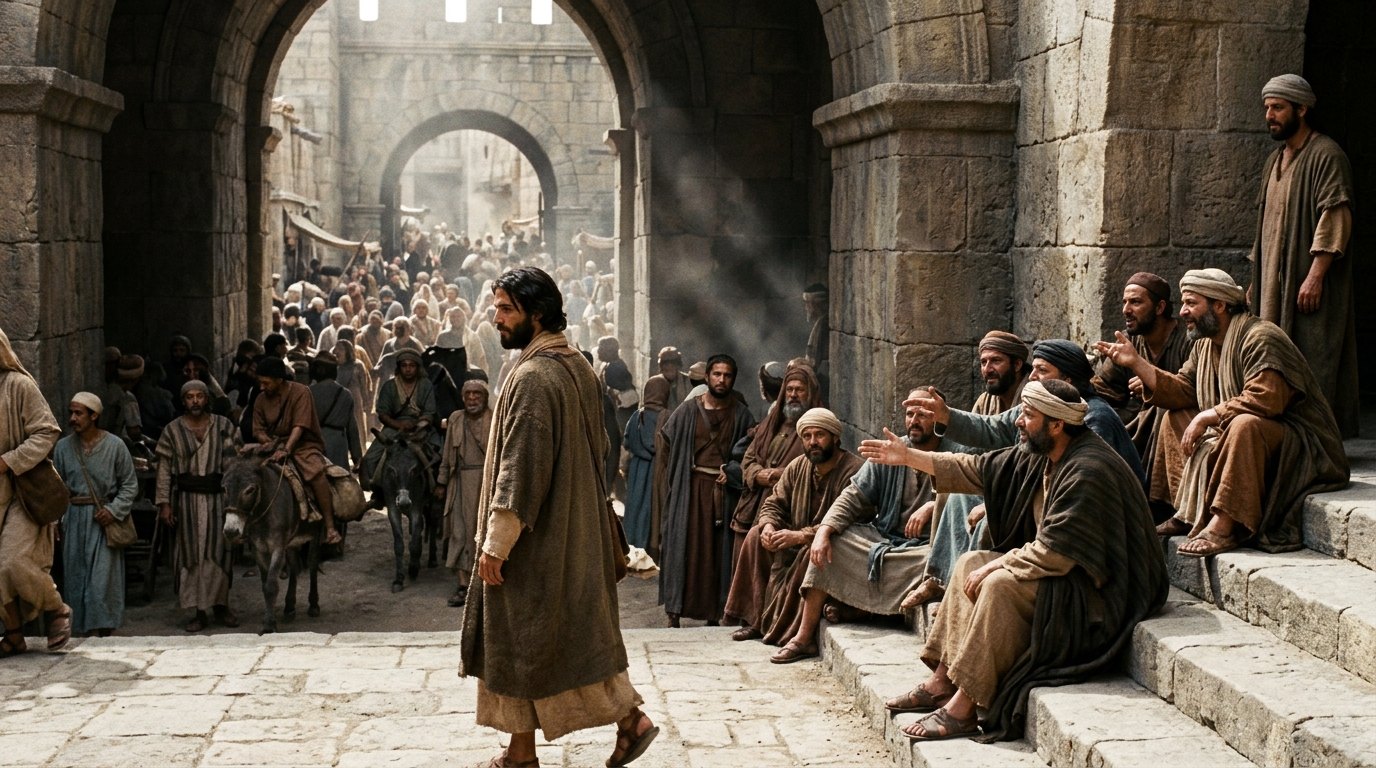
Do not be misled: “Bad company corrupts good character.”
1 Corinthians 15:33 (NIV)
Paul issues a direct apostolic warning that bad company actively deteriorates good character.
Paul dispels all moral complacency in 1 Corinthians 15:33 with an uncompromising apostolic command: do not be deceived: bad company ruins good morals. Sin is communicative, and believers who imagine themselves immune to the slow drip of ungodly influence deceive their own souls. Proverbs 22:24-25 warns explicitly against forging ties with an angry man, lest one learn his ways and entangle his soul in a snare. From the very opening of wisdom literature, Proverbs 1:10-15 pleads with the simple to reject the enticements of sinners and keep their feet from their violent paths. To walk in wisdom requires active severance; Proverbs 9:6 urges us to leave foolishness behind and live, while Psalm 1:1 pronounces supreme blessing upon the man who refuses to walk in the counsel of the ungodly, stand in the way of sinners, or sit in the seat of scoffers.
Scripture directs an immediate departure from corrupted speech. Proverbs 14:7 instructs the believer to leave the presence of a fool, for there you do not meet words of knowledge. Gossips and conspirators dismantle the peace of communities: Proverbs 16:28 warns that a whisperer separates close friends, Proverbs 20:19 forbids association with babblers who betray secrets, and Proverbs 24:21-22 cautions against joining those given to rebellion. Proverbs 28:7 adds that keeping company with riotous men brings profound shame upon a household. Within the church itself, the standard is even more urgent. In 1 Corinthians 5:11, Paul commands not even to eat with anyone claiming the name of brother who persists in unrepentant immorality, and 2 Thessalonians 3:14-15 directs believers to withdraw intimate fellowship from the disobedient while admonishing them in truth.
| Passage | What it says |
|---|---|
| 1 Corinthians 15:33 | Believers are warned not to be deceived, because evil company corrupts good morals. |
| Proverbs 22:24-25 | Scripture forbids making friends with an angry person, lest one learn their ways and snare their soul. |
| Proverbs 1:10-15 | Solomon urges his son to refuse the invitations of sinners and keep his feet from their path. |
| Proverbs 9:6 | The simple are commanded to forsake foolishness and walk in the way of understanding. |
| Psalms 1:1 | Blessedness belongs to the one who walks not in the counsel of the ungodly nor sits among scoffers. |
| Proverbs 14:7 | Scripture directs believers to leave the presence of a fool lacking words of knowledge. |
| Proverbs 16:28 | A dishonest person spreads strife and a whisperer separates intimate friends. |
| Proverbs 20:19 | Warning not to associate with simple babblers who reveal secrets through gossip. |
| Proverbs 24:21-22 | Admonition not to join with those given to rebellion against God and king. |
| Proverbs 28:7 | A companion of gluttons and riotous men brings shame upon his father. |
| 1 Corinthians 5:11 | Paul commands not to associate with any so-called brother living in gross unrepentant sin. |
| 2 Thessalonians 3:14-15 | Instruction to avoid close fellowship with disobedient brethren while admonishing them as brothers. |
Spiritual Separation
Believers Cannot Share Deep Covenant Fellowship with Darkness
Do not be yoked together with unbelievers. For what do righteousness and wickedness have in common? Or what fellowship can light have with darkness? What harmony is there between Christ and Belial? Or what does a believer have in common with an unbeliever?
2 Corinthians 6:14-15 (NIV)
It draws the stark boundary between holy fellowship and unrighteous partnerships.
In 2 Corinthians 6:14-18, the apostle Paul draws the sharpest boundary in Scripture regarding intimate allegiances: do not be unequally yoked with unbelievers, for what partnership has righteousness with lawlessness? Just as mismatched beasts cannot pull a plow together without tearing the furrow, a disciple cannot bind their heart and life to those who serve darkness. James 4:4 strips away all neutrality, warning that friendship with the world is enmity with God, meaning whoever chooses worldly alliance makes himself God's enemy. Ephesians 5:6-11 commands believers not to be partakers with the sons of disobedience, but rather to walk as children of light and expose unfruitful deeds. Revelation 18:4 repeats this eternal summons, bidding God's people to come out from Babylon lest they take part in her sins and receive her plagues.
This New Testament standard mirrors Israel's foundational statutes. In Exodus 23:32-33, God strictly forbade treaties with the inhabitants of Canaan because their idolatry would snare God's people. Deuteronomy 13:6-8 warns that even if one's closest companion, dear as one's own soul, secretly entices one toward false gods, no mercy or pity may soften the rebuke. In 2 Chronicles 19:2, the prophet Jehu confronts King Jehoshaphat with searing clarity: "Should you help the wicked and love those who hate the Lord?" David demonstrates this uncompromising alignment throughout the Psalms. Psalm 26:4-5 records his refusal to sit with hypocrites or consort with evildoers. In Psalm 101:4-7, he vows to purge slanderers and deceitful men from his presence, culminating in Psalm 139:21-22 with his complete, fierce devotion to God's holiness against all who rise maliciously against Him.
| Passage | What it says |
|---|---|
| 2 Corinthians 6:14-18 | Paul commands believers not to be unequally yoked with unbelievers, calling them to spiritual holiness. |
| James 4:4 | Friendship with the world is hostility toward God, making whoever chooses it an enemy of God. |
| Ephesians 5:6-11 | Paul instructs believers not to be partakers with the disobedient, but to expose the unfruitful works of darkness. |
| Revelation 18:4 | A voice from heaven calls God's people out of Babylon to avoid partaking in her sins. |
| Exodus 23:32-33 | Israel was forbidden to make covenants with idolatrous inhabitants lest they become a snare. |
| Deuteronomy 13:6-8 | Warning against being enticed into idolatry even by one's closest companion or friend. |
| 2 Chronicles 19:2 | The prophet rebukes King Jehoshaphat for allying with wicked King Ahab who hated God. |
| Psalms 26:4-5 | David declares he does not sit with hypocrites or keep company with the wicked. |
| Psalms 101:4-7 | The psalmist vows to banish slanderers, the arrogant, and deceivers from his close house. |
| Psalms 139:21-22 | David expresses absolute alignment with God by rejecting those who maliciously rise against Him. |
Marks of Faithful Friendship
Covenant Loyalty, Truthful Rebuke, and God-Centered Love
Wounds from a friend can be trusted, but an enemy multiplies kisses.
Proverbs 27:6 (NIV)
It defines authentic love as the willingness to wound with truth rather than flatter with deceit.
Biblical love refuses cheap flattery; Proverbs 27:6 declares that faithful are the wounds of a friend, but profuse are the kisses of an enemy. A genuine friend risks personal comfort to speak hard, corrective truth that rescues from sin. Proverbs 17:17 defines this constancy by affirming that a friend loves at all times, standing as a brother born specifically for adversity, while Proverbs 18:24 notes that though superficial acquaintances may ruin a man, there is a true friend who sticks closer than a brother. This unwavering devotion was demonstrated in 1 Samuel 23:16, where Jonathan arose and went to David at Horesh, and strengthened his hand in God. True friendship always directs the heart back to the living God.
The pinnacle of this virtue appears in John 15:13-15, where the Lord Jesus declares, "Greater love has no one than this, that someone lay down his life for his friends." Christ redefines friendship from casual association into sacrificial covenant. In the Old Testament, Jonathan modeled this self-emptying affection when he stripped off his royal robe and armor in 1 Samuel 18:1-4 to seal a covenant with David, loving him as his own soul, and later weeping with him in sacred grief in 1 Samuel 20:41-42. Ruth displayed the same steadfast loyalty in Ruth 1:16-17, forsaking her homeland to bind her life to Naomi and Naomi's God. While Job's companions initially offered silent, tender grief in Job 2:11, their failure to show true kindness in his despair (Job 6:14; 16:20-21) reveals how deeply a crushed spirit needs an advocate. God ultimately restored Job's losses when he prayed for those very friends in Job 42:10, underscoring Proverbs 27:10: never abandon your friend in the day of calamity.
| Passage | What it says |
|---|---|
| Proverbs 27:6 | Faithful are the wounds of a friend, while the kisses of an enemy are deceitful. |
| Proverbs 17:17 | A friend loves at all times, and a brother is born for adversity. |
| Proverbs 18:24 | A man of many companions may suffer harm, but there is a friend who sticks closer than a brother. |
| 1 Samuel 23:16 | Jonathan went to David in the wilderness and strengthened his hand in God. |
| John 15:13-15 | Jesus defines ultimate friendship as laying down one's life, calling His disciples friends if they obey His commands. |
| 1 Samuel 18:1-4 | Jonathan makes a solemn covenant of selfless devotion with David, loving him as himself. |
| 1 Samuel 20:41-42 | David and Jonathan weep together and reaffirm peace before God in covenant friendship. |
| Ruth 1:16-17 | Ruth pledges unbreakable loyalty to Naomi and embraces Naomi's God as her own. |
| Job 2:11 | Job's friends initially come together to mourn with him and offer true comfort. |
| Job 6:14 | Scripture observes that a despairing man should receive kindness from his friend. |
| Job 16:20-21 | Job cries out that an advocate would plead for a man with God as a friend does. |
| Job 42:10 | The Lord restores Job's fortunes when he intercedes in prayer for his friends. |
| Proverbs 27:10 | Wisdom urges not forsaking one's friend or a father's friend in adversity. |
Where in the Bible
| Book | Passages |
|---|---|
| Exodus | 1 · Exodus 23:32-33 |
| Deuteronomy | 1 · Deuteronomy 13:6-8 |
| Ruth | 1 · Ruth 1:16-17 |
| 1 Samuel | 3 · 1 Samuel 23:16, 1 Samuel 18:1-4, 1 Samuel 20:41-42 |
| 2 Chronicles | 1 · 2 Chronicles 19:2 |
| Job | 4 · Job 2:11, Job 6:14, Job 16:20-21, Job 42:10 |
| Psalms | 5 · Psalms 119:63, Psalms 1:1, Psalms 26:4-5, Psalms 101:4-7, Psalms 139:21-22 |
| Proverbs | 16 · Proverbs 13:20, Proverbs 27:17, Proverbs 15:31, Proverbs 27:9, Proverbs 22:24-25, Proverbs 1:10-15, Proverbs 9:6, Proverbs 14:7, Proverbs 16:28, Proverbs 20:19, Proverbs 24:21-22, Proverbs 28:7, Proverbs 27:6, Proverbs 17:17, Proverbs 18:24, Proverbs 27:10 |
| Ecclesiastes | 1 · Ecclesiastes 4:9-10 |
| John | 1 · John 15:13-15 |
| 1 Corinthians | 2 · 1 Corinthians 15:33, 1 Corinthians 5:11 |
| 2 Corinthians | 1 · 2 Corinthians 6:14-18 |
| Ephesians | 1 · Ephesians 5:6-11 |
| 2 Thessalonians | 1 · 2 Thessalonians 3:14-15 |
| Hebrews | 1 · Hebrews 10:24-25 |
| James | 1 · James 4:4 |
| Revelation | 1 · Revelation 18:4 |
The story in order
- Creation and the Fall (c. 4000 BC) · Genesis 3:1-7 · The first human relationship is corrupted by deceit, leading to ruin.
- Cain and Abel (c. 3800 BC) · Genesis 4:1-8 · Sibling rivalry and jealousy lead to murder, showing the destructive potential of relationships.
- Abraham's Covenant Friendship (c. 2000 BC) · Genesis 15:1-6 · God establishes a covenant relationship with Abraham, a model of faithful commitment.
- Jonathan and David's Covenant (c. 1050 BC) · 1 Samuel 18:1-4 · A profound friendship marked by selfless devotion and covenant loyalty.
- Wisdom Literature Begins (c. 950 BC) · Proverbs 1:1-6 · Proverbs begins to teach the principles of wise association and the dangers of folly.
- Elijah and Elisha (c. 850 BC) · 2 Kings 2:1-15 · A mentorship and spiritual succession, showing a deep bond of discipleship.
- Ruth's Loyalty (c. 1100 BC) · Ruth 1:16-17 · Unwavering loyalty to family and adoption of God as one's own.
- Job's Friends (c. 2000 BC) · Job 2:11 · Friends initially offer comfort in suffering, though their counsel later falters.
- Psalmist's Companionship (c. 1000 BC) · Psalms 119:63 · The psalmist identifies with those who fear God and obey His commands.
- Prophetic Rebuke (c. 870 BC) · 2 Chronicles 19:2 · A prophet rebukes a king for ungodly alliances, highlighting spiritual separation.
- Jesus' Disciples (AD 30) · John 15:13-15 · Jesus defines friendship by sacrificial love and obedience to His commands.
- Apostolic Instruction (AD 55) · 1 Corinthians 15:33 · Warning against corrupting influences of evil company.
- Church Fellowship (AD 65) · Hebrews 10:24-25 · Command to gather and encourage one another toward love and good deeds.
- Separation from the World (AD 57) · 2 Corinthians 6:14 · Exhortation against being unequally yoked with unbelievers.
The Consequences of Association
| Wise Companionship | Foolish Companionship | Passage |
|---|---|---|
| Produces wisdom | Leads to destruction | Proverbs 13:20 |
| Sharpens like iron | Corrupts good morals | |
| Makes one live among the wise | Leads to learning evil ways | |
| Blessedness | Ruin |
Spiritual Separation
| Command | Reason | Consequence of Disobedience | Passage |
|---|---|---|---|
| Do not be unequally yoked with unbelievers | Holiness and righteousness have no fellowship with darkness | Become a snare, enemy of God | |
| Come out of Babylon | Lest you partake in her sins | Receive her plagues | Revelation 18:4 |
| Do not associate with gross sinners | To maintain the purity of the church | Shame upon the family |
Key words
- Wisdom (ḥokmah, חָכְמָה)
- Skillful living and understanding that comes from God, often gained through wise counsel. · Proverbs 13:20
- Folly/Foolishness ('ivvelet, אִיוֶּלֶת)
- Lack of understanding, imprudence, and rebellion against God's ways. · Proverbs 1:7
- Corruption (phthheirō, φθείρω)
- Moral decay or ruin caused by bad influences and associations. · 1 Corinthians 15:33
- Fellowship/Association (koinōnia, κοινωνία)
- Close companionship, partnership, or sharing in common life and activities. · 2 Corinthians 6:14
- Loyalty/Faithfulness (ḥesed, חֶסֶד)
- Steadfast commitment, devotion, and reliability, especially in difficult times. · Proverbs 17:17
- Rebuke/Counsel (tochechah, תּוֹכַחַת)
- Correction or advice given to guide someone toward a better path. · Proverbs 27:6
Choosing godly friends requires intentionality, discernment, and sometimes the courage to step away from destructive influences. As you seek companions who love Christ and sharpen your devotion, remember that true Christian friendship is grounded in the covenant love of Christ Himself.
42 passages, each cited once.
Scripture cited
- Proverbs 13:20
- 2 Corinthians 6:14-18
- 1 Corinthians 15:33-34
- James 4:1-10
- Proverbs 6:14-19
- Proverbs 22:24-25
- Luke 6:27-36