What does the Bible say about demons and possession?

Mark 5:1-20
1 They went across the lake to the region of the Gerasenes.
2 When Jesus got out of the boat, a man with an impure spirit came from the tombs to meet him.
3 This man lived in the tombs, and no one could bind him anymore, not even with a chain.
4 For he had often been chained hand and foot, but he tore the chains apart and broke the irons on his feet. No one was strong enough to subdue him.
5 Night and day among the tombs and in the hills he would cry out and cut himself with stones.
6 When he saw Jesus from a distance, he ran and fell on his knees in front of him.
7 He shouted at the top of his voice, “What do you want with me, Jesus, Son of the Most High God? In God’s name don’t torture me!”
8 For Jesus had said to him, “Come out of this man, you impure spirit!”
9 Then Jesus asked him, “What is your name?” “My name is Legion,” he replied, “for we are many.”
10 And he begged Jesus again and again not to send them out of the area.
11 A large herd of pigs was feeding on the nearby hillside.
12 The demons begged Jesus, “Send us among the pigs; allow us to go into them.”
13 He gave them permission, and the impure spirits came out and went into the pigs. The herd, about two thousand in number, rushed down the steep bank into the lake and were drowned.
14 Those tending the pigs ran off and reported this in the town and countryside, and the people went out to see what had happened.
15 When they came to Jesus, they saw the man who had been possessed by the legion of demons, sitting there, dressed and in his right mind; and they were afraid.
16 Those who had seen it told the people what had happened to the demon-possessed man—and told about the pigs as well.
17 Then the people began to plead with Jesus to leave their region.
18 As Jesus was getting into the boat, the man who had been demon-possessed begged to go with him.
19 Jesus did not let him, but said, “Go home to your own people and tell them how much the Lord has done for you, and how he has had mercy on you.”
20 So the man went away and began to tell in the Decapolis how much Jesus had done for him. And all the people were amazed.
New International Version (NIV)
The answer
The Bible presents demons as real, personal spirit beings — "unclean spirits" — who oppose God and can possess people by entering and controlling them, yet they are completely subject to Christ's authority. Jesus casts them out with a word, and believers who stand in Him are safe and equipped against them; this account in Mark 5:1-20 shows both their terror and their powerlessness before the Son of God.
What demons are
- They are evil spiritual beings, distinct from humans, who serve Satan and destroy people. Scripture warns against worshiping them, because they stand behind the idols of the nations (Leviticus 17:7; Deuteronomy 32:17).
- They know God exists and tremble at that knowledge (James 2:19), and they know exactly who Jesus is — here they call Him "Jesus, you Son of the Most High God" (Mark 5:7; Luke 8:28). But that knowledge is recognition without love or trust; it makes them cower, not saved.
- They know their doom is settled. In Matthew 8:29 they ask, "Have you come here to torment us before the time?" and in Luke 8:31 they beg not to be sent to the abyss. Their power is real but already losing; judgment awaits them.
What possession looked like in this account
The demonized man of the Gadarenes shows the hallmarks visible in Mark 5:2-5 and Luke 8:26-29:
- Isolation and ruin: he lived among tombs and wore no clothes; demonic presence drives people away from life, community, and dignity.
- Superhuman strength: chains and fetters were snapped by him, and "nobody had the strength to tame him" (Mark 5:4).
- Torment and self-destruction: he cried out night and day and cut himself with stones (Mark 5:5). Demons harm the people they inhabit.
- Violence toward others: the two demoniacs in Matthew's parallel are described as "exceedingly fierce, so that nobody could pass that way" (Matthew 8:28).
- Multiplicity: many demons inhabited him — "we are many" (Mark 5:9) — a legion. Many possessed people at Jesus' time were tormented by one or many evil spirits in this way.
Christ's absolute authority over demons
- His word is enough. Jesus does not struggle, chant, or bind the man tighter; He simply says, "Come out of the man, you unclean spirit!" (Mark 5:8), and "Go!" in Matthew 8:32. The spirits obey immediately — authority, not force.
- They must ask permission even to enter pigs (Mark 5:12-13; Luke 8:32). Every move a demon makes is under God's allowance; they can do nothing without leave.
- Deliverance is complete, not partial. The man previously untamable now sits "clothed and in his right mind" (Mark 5:15; Luke 8:35). Jesus fully restores what the demons ruined.
- But deliverance alone is not enough. In Matthew 12:43-45 Jesus warns that an "empty, swept, and put in order" person — cleaned out but not filled with God — invites seven worse spirits, and the final state is worse than the first. Freedom from demons must be filled with the Holy Spirit, else the vacancy invites the enemy back.
How believers stand against the evil one
- Know the battle. "Our wrestling is not against flesh and blood, but against the principalities, against the powers, against the world's rulers of the darkness of this age, and against the spiritual forces of wickedness" (Ephesians 6:12). The enemy is spiritual, so the armor must be spiritual too: truth, righteousness, the Gospel of peace, faith, salvation, the word of God, and prayer (Ephesians 6:13-18).
- The devil is a roaring lion seeking whom he may devour — be sober and watchful, and "withstand him steadfast in your faith" (1 Peter 5:8-9).
- Resist, submitted to God, and he flees (James 4:7). Never resist in your own strength; resistance flows from first being subject to God.
- The one in you is greater than the one in the world (1 John 4:4). A believer who belongs to Christ and is indwelt by His Spirit is kept by a stronger one; because Christ has already overcome, the devil cannot possess what God protects.
The two responses to the miracle worth noting
- The townspeople begged Jesus to leave (Mark 5:17; Luke 8:37) — they valued the lost pigs and their own comfort above a man set free and God's power in their midst. Theirs is the warning: beware despising Christ's work because it costs something.
- The healed man wanted only to stay with Jesus, but Jesus sent Him instead to tell what the Lord had done (Mark 5:19-20), and he proclaimed throughout the Decapolis. The freed man is a living testimony; his message is simply what Jesus did for him, and "everyone marveled."
Answered from Scripture · reviewed November 11, 2026
Scripture presents demons not as mythological symbols or mere metaphors for psychological distress, but as real, personal, malignant spiritual beings actively engaged in rebellion against God. Throughout the Old and New Testaments, demon possession is treated as a horrific spiritual subjugation that Christ confronts, commands, and decisively shatters with absolute sovereign authority.
Identity and Nature
Unclean spirits operating in deliberate rebellion against God

You believe that there is one God. Good! Even the demons believe that—and shudder.
James 2:19 (NIV)
Demonstrates that demons possess intellectual knowledge of the true God and tremble before His majesty.
In James 2:19, Scripture cuts through every speculative theory about the spiritual realm with a stark factual observation: demons believe and shudder. These unclean entities are neither impersonal negative energies nor fictional projections of ancient superstition; they are rational, personal, malignant beings possessing acute theological awareness of their Creator. When Jesus entered the country of the Gerasenes in Mark 5:2, He was met by an individual dominated by an actual unclean spirit. That spiritual intelligence demonstrated strategic self-organization in Mark 5:9, identifying itself as "Legion" to signify an occupying host of thousands entrenched within one human life. Their nature is defined by ancient rebellion against the living God. In Matthew 25:41, Christ speaks of the lake of unquenchable fire prepared specifically for the devil and his rebel angels, identifying demons with those celestial hosts who abandoned their allegiance to their Maker. Both 2 Peter 2:4 and Jude 1:6 recount how God cast these rebelling angels down into pits of gloomy darkness, reserving them under restraint for final judgment after they abandoned their proper domain. The Lord Jesus affirmed this cosmic reality in Luke 10:18 when He declared, "I saw Satan fall like lightning from heaven," marking the decisive downfall of the adversary's heavenly position. John's vision in Revelation 12:7 and Revelation 12:9 unmasks the architecture of this unseen warfare, detailing the conflict where Michael and his angels warred against the great dragon, that ancient serpent who deceived the whole world, and cast him down to the earth together with his rebellious angels. Scripture leaves no ambiguity: demons are fallen spiritual creatures whose rebellion is deliberate, whose intellect is intact, and whose doom is unalterably fixed.
| Passage | What it says |
|---|---|
| Mark 5:2 | Identifies the occupying agent inside the tormented man as an actual unclean spiritual entity. |
| Mark 5:9 | Reveals the demonic host organizing within one victim under the military unit name Legion. |
| James 2:19 | Affirms that demons hold monotheistic belief about God and shudder in terrified awareness. |
| Matthew 25:41 | Declares that the eternal fire is prepared specifically for the devil and his fallen angels. |
| 2 Peter 2:4 | Recounts God casting rebellious angels down to gloomy pits of darkness to await judgment. |
| Jude 1:6 | Describes rebel angels who abandoned their proper domain kept in chains under darkness. |
| Luke 10:18 | Jesus sees Satan falling like lightning from heaven, indicating the primordial fall and judgment of evil powers. |
| Revelation 12:7 | Michael and his angels fight against the dragon and his fallen angels in heavenly conflict. |
| Revelation 12:9 | The ancient serpent called the devil and Satan is cast down to the earth with his deceived angels. |
Old Testament Warnings
False gods and the prohibition of demonic sacrifices
They sacrificed to false gods, which are not God— gods they had not known, gods that recently appeared, gods your ancestors did not fear.
Deuteronomy 32:17 (NIV)
Unmasks the reality behind pagan idolatry as genuine sacrifices offered directly to destructive demons.
Deuteronomy 32:17 pulls back the veil on ancient idolatry, declaring plainly that apostate worshippers sacrificed to demons that were no gods. The Old Testament never views pagan religion as harmless superstition or empty ceremony; behind the stone carvings, golden calves, and wooden totems stood living demonic entities eagerly soliciting human devotion. In Leviticus 17:7, Yahweh issued strict commands to the wilderness generation, prohibiting sacrifices to goat demons in open fields and cutting off spiritual adultery at its source. Psalm 106:37 exposes the ultimate, murderous trajectory of this demonic attraction: Israel tragicallly mimicked the surrounding nations, sacrificing their own sons and daughters directly to territorial false gods. The Old Testament also demonstrates how the sovereign God exercises complete supremacy over this spiritual realm, permitting unclean spirits to execute judgment upon unrepentant rulers. In 1 Samuel 16:14, an oppressive spirit from Yahweh troubled King Saul after the Holy Spirit departed from him, leaving the disobedient monarch in restless agony as divine protection lifted. Similarly, 1 Kings 22:22 records the dramatic heavenly council where a lying spirit volunteered before the throne of God to entice King Ahab through the mouths of his court prophets. In every instance, Scripture maintains that demons hold neither parity with God nor independent autonomy; they operate under divine restraint, lurking behind counterfeit worship, yet remaining utterly subordinate to the sovereign decrees of the Lord Almighty.
| Passage | What it says |
|---|---|
| Leviticus 17:7 | Forbids Israel from offering any further sacrifices to goat demons in open fields. |
| Deuteronomy 32:17 | Warns that pagan sacrifices were made to demons rather than to the living God. |
| Psalms 106:37 | Laments that apostate Israelites sacrificed their own sons and daughters to demons. |
| 1 Samuel 16:14 | Records a distressing spirit permitted by Yahweh troubling King Saul after his disobedience. |
| 1 Kings 22:22 | Details a lying spirit volunteering to entice Ahab through false prophets under divine sovereignty. |
The Horror of Possession
Torment, isolation, and destructive spiritual subjugation
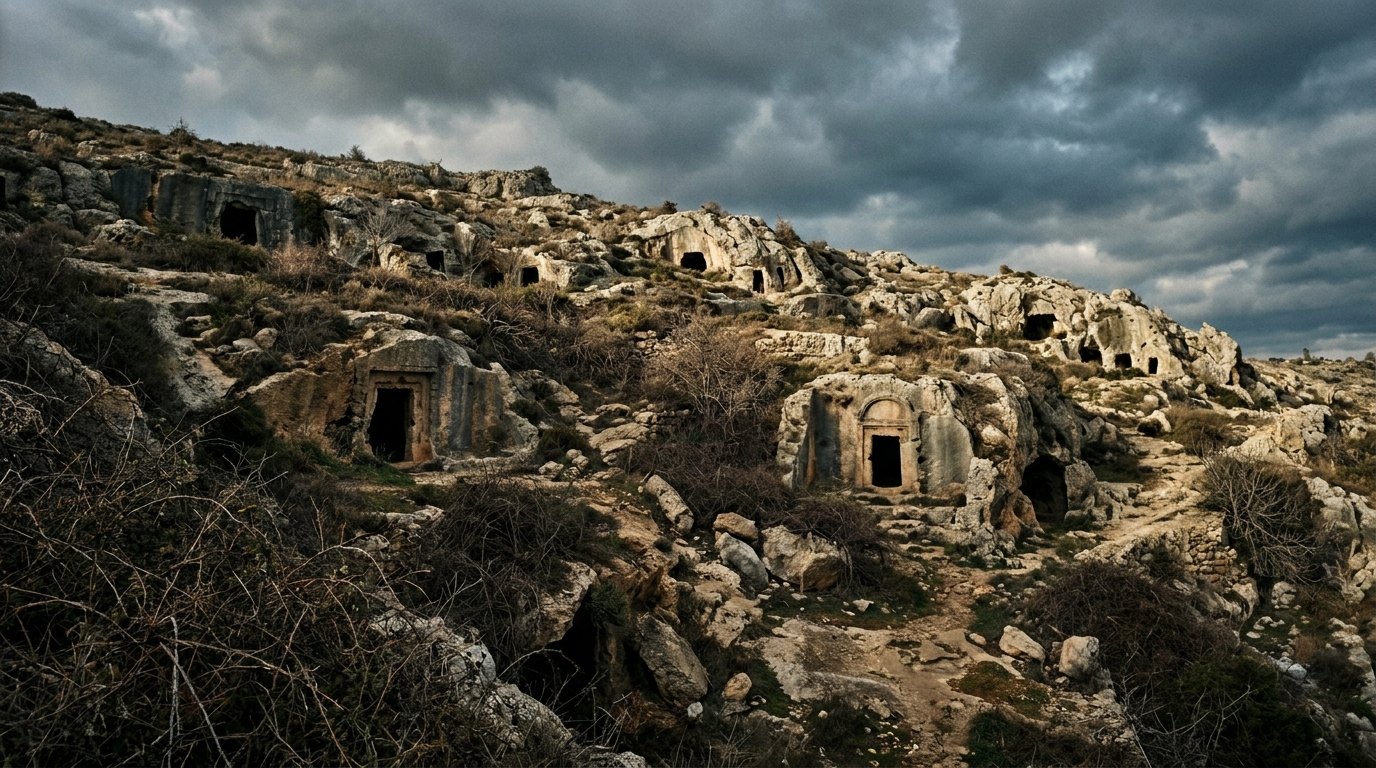
Night and day among the tombs and in the hills he would cry out and cut himself with stones.
Mark 5:5 (NIV)
Portrays the unrelenting, self-destructive torment inflicted upon a human being possessed by demonic powers.
Mark 5:5 paints a horrifying portrait of spiritual subjugation: night and day among the tombs and on the mountains he was always crying out and cutting himself with stones. Demonic possession is never benign; its singular objective is the systematic degradation and destruction of God's image in man. In Mark 5:3, the afflicted Gerasene was driven into utter societal isolation, dwelling among the dead where human society could no longer reach him. Mark 5:4 records the terrifying, unnatural physical strength supplied by the unclean spirit, snapping iron fetters and shattering chains into pieces. In Matthew 8:28, the demonized men of the Gadarenes were so fiercely violent that no traveler could safely journey down their road. Possession routinely manifests in brutal physical afflictions designed to snuff out human life. In Matthew 17:15, a frantic father pleaded for his son, whom a demon repeatedly hurled into open hearth fires and deep water to drown him, a cruelty echoed in Mark 9:18 and Mark 9:22 where the mute spirit seized the boy, threw him to the earth, and caused him to foam at the mouth. Scripture records demonic suppression binding human faculties directly: in Luke 13:16, a spirit of infirmity left a daughter of Abraham bent double for eighteen years; in Matthew 9:32, an unclean spirit produced absolute muteness; and in Matthew 12:22, an oppressed man was left both blind and mute until delivered. In Matthew 15:22, a Canaanite woman cried out in raw grief for her daughter who was cruelly tormented by a demon. Across every account, the presence of an invading spirit produces terror, bodily ruin, and relational separation.
| Passage | What it says |
|---|---|
| Mark 5:3 | Shows the possessed man driven into isolating tombs where no chains could bind him. |
| Mark 5:4 | Depicts unnatural physical strength shattering irons and chains under fierce demonic manipulation. |
| Mark 5:5 | Describes night and day agony as the man cried out and cut himself. |
| Matthew 8:28 | Notes the extreme violence of possessed men who blocked travelers from passing along the way. |
| Matthew 17:15 | Records a demon repeatedly throwing an afflicted young boy into fire and water. |
| Luke 13:16 | Names a spirit of infirmity that kept an afflicted daughter of Abraham bent double. |
| Matthew 9:32 | A mute demon-possessed man is brought to Jesus, unable to speak until the demon is cast out. |
| Matthew 12:22 | A demon-oppressed man who is both blind and mute is brought to Jesus for healing. |
| Matthew 15:22 | A Canaanite mother cries out concerning her daughter who is severely oppressed by a demon. |
| Mark 9:18 | A mute spirit seizes a boy, throwing him down, causing him to foam and grind his teeth. |
| Mark 9:22 | The unclean spirit repeatedly casts the child into fire and water to destroy him. |
Christ's Absolute Sovereign Authority
Unclean spirits subdued, silenced, and driven out instantly

The people were all so amazed that they asked each other, “What is this? A new teaching—and with authority! He even gives orders to impure spirits and they obey him.”
Mark 1:27 (NIV)
Highlights the crowd's amazement at Christ commanding unclean spirits with direct sovereign authority.
In Mark 1:27, the synagogue crowd stood stunned by an unprecedented spectacle: He commands even the unclean spirits, and they obey Him. Unlike the elaborate, uncertain rituals of human exorcists, the Lord Jesus exercised immediate, effortless mastery over every demonic principality. In Mark 1:24, the demon recognized Him instantly, crying out, "I know who You are—the Holy One of God!" When Christ arrived among the tombs in Mark 5:6, the terrifying legion ran to fall prostrate before His feet in absolute terror. The demons in Mark 5:7 and Matthew 8:29 begged Him not to torment them before their appointed day of judgment, acutely aware that their ultimate destruction is fixed by His sovereign decree. In Luke 8:31, they pleaded repeatedly that Jesus would not dispatch them straight into the bottomless abyss, and in Mark 5:13, they could not touch a single swine without His explicit permission. Mark 5:8 demonstrates that Christ's spoken word alone shattered their grip: "Come out of the man, you unclean spirit!" Luke 4:35 and Luke 4:41 show Jesus rebuking these unclean entities, silencing their testimony, and delivering victims without harm. In Mark 1:34, He drove out multitudes of demons with a single command, forbidding them to speak. In Matthew 12:28, Jesus announced the cosmic consequence of these expulsions: "If it is by the Spirit of God that I cast out demons, then the kingdom of God has come upon you." The apostle John confirms this decisive triumph in 1 John 3:8: the Son of God appeared for this singular purpose, to destroy the works of the devil forever.
| Passage | What it says |
|---|---|
| Mark 1:24 | Demon cries out acknowledging Jesus as the Holy One of God before being expelled. |
| Mark 1:27 | Witnesses marvel that Jesus commands unclean spirits with absolute authority and they obey. |
| Mark 5:6 | Shows the possessed man running from afar to fall prostrate before the Son of God. |
| Mark 5:7 | Demons beg Jesus by God not to torment them before their appointed time. |
| Mark 5:8 | Jesus directly orders the unclean spirit to come out of the man. |
| Matthew 8:29 | Demons ask if Jesus has arrived to execute their final torment before the time. |
| Luke 8:31 | Demons repeatedly plead not to be commanded into the bottomless abyss. |
| Mark 5:13 | Demons enter swine only by Christ's explicit permission, drowning the herd immediately. |
| Matthew 12:28 | Declares that casting out demons by God's Spirit proves God's kingdom has arrived. |
| Mark 1:34 | Jesus heals many and drives out many demons, refusing to allow them to speak because they know Him. |
| Luke 4:35 | Jesus rebukes the unclean demon with authority, commanding it to come out without harming the man. |
| Luke 4:41 | Demons come out of many crying that He is the Son of God, but Jesus silences them. |
| 1 John 3:8 | The Son of God appeared for this express purpose: to destroy the works of the devil. |
Full Deliverance and Wholeness
Restored humanity clothed, seated, and sent in sanity
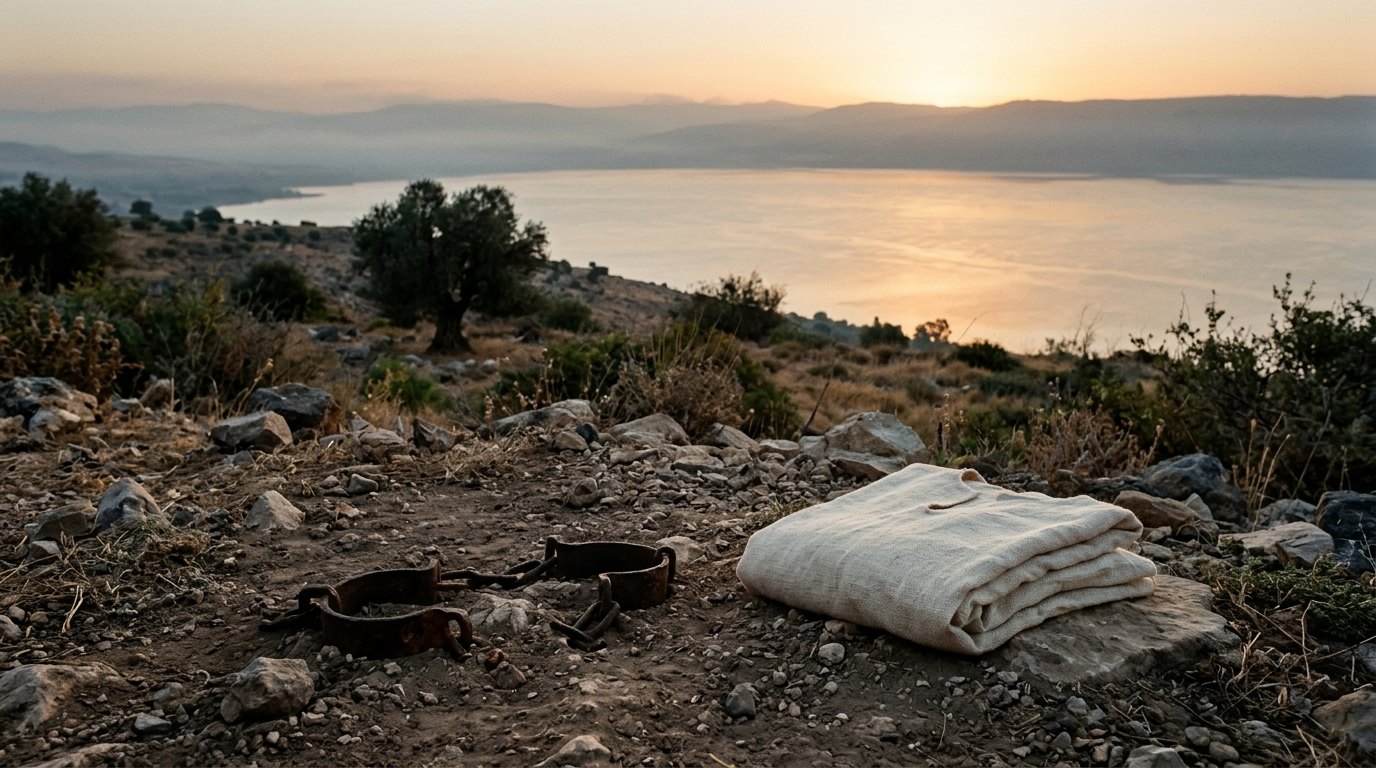
When they came to Jesus, they saw the man who had been possessed by the legion of demons, sitting there, dressed and in his right mind; and they were afraid.
Mark 5:15 (NIV)
Provides the unmistakable contrast of complete restoration: the formerly wild man sitting clothed and sane.
When Christ confronts demonic power, the goal is never mere display; it is total, merciful restoration. In Mark 5:15, the terrifying spectacle of the Gerasene demoniac—who had lived among tombs, howling and cutting himself with stones—is replaced by an astonishing picture of wholeness: the people find him sitting at the feet of Jesus, clothed and in his right mind. The contrast is absolute. Demonic occupation strips a human being of dignity, peace, and reason; the authority of Christ restores all three in an instant.
Deliverance immediately redirects the human life toward holy purpose. In Mark 5:19, Jesus refuses to let the man withdraw into seclusion or even accompany Him across the sea, commanding him instead: "Go home to your friends and tell them how much the Lord has done for you, and how he has had mercy on you." The man obeys with unhindered zeal; according to Mark 5:20, he proclaimed throughout the Decapolis what Jesus had accomplished, leaving everyone who heard him astonished. This transformative grace is equally evident in the early church's witness. In Luke 8:2, Scripture records Mary Magdalene as one from whom seven demons had been driven out. Far from remaining tainted by her dark past, she became an honored patron and devoted follower of Christ, illustrating that the deliverance of Jesus completely cleanses and enlists the broken into joyful discipleship.
| Passage | What it says |
|---|---|
| Mark 5:15 | The townspeople find the delivered man sitting quietly, fully clothed, in his right mind. |
| Mark 5:19 | Jesus directs the healed man home to proclaim the Lord's great mercy to friends. |
| Mark 5:20 | The restored man preaches throughout the Decapolis, leaving all who heard him marveling. |
| Luke 8:2 | Lists Mary Magdalene as delivered from seven demons and faithfully following Jesus. |
Apostolic Commission and Warnings
Delegated power, false exorcisms, and spiritual boundaries
The seventy-two returned with joy and said, “Lord, even the demons submit to us in your name.”
Luke 10:17 (NIV)
Records the disciples marveling that demons were subjected to them through the name of Jesus.
Christ did not hoard His authority over evil spirits; He delegated it to His church while anchoring it in humble truth. In Luke 10:17, the seventy return from their missionary journey overflowing with amazement, declaring that even the demons are subject to us in your name. Jesus had previously endowed the twelve with this precise dominion in Matthew 10:1, granting them power to cast out unclean spirits and heal every affliction, a commission reaffirmed in Mark 16:17 where driving out demons stands as an accompanying sign of the gospel's advance. Yet Christ immediately tempers their exuberance in Luke 10:20, warning them not to rejoice merely because spirits submit, but rather that their names are written in heaven.
The book of Acts demonstrates this delegated power in action. In Acts 5:16, whole multitudes gathered in Jerusalem bringing those afflicted by unclean spirits, and every single one was healed. In Samaria, Acts 8:7 recounts unclean spirits shrieking as they came out of many through Philip’s preaching. Later, in Acts 16:18, Paul grows grieved by a spirit of divination possessing a slave girl and commands it directly in the name of Jesus Christ to depart. But Scripture also gives a terrifying warning against treating Christ's name as a magical formula. In Acts 19:15-16, when the seven sons of Sceva attempt an unauthorized exorcism, the evil spirit retorts, "Jesus I know, and Paul I recognize, but who are you?" before violently mastering and stripping them. True liberation requires the indwelling Holy Spirit; as Christ warned in Matthew 12:43-45, an unclean spirit driven from a soul can return with seven other spirits more evil than itself if the house is merely swept clean rather than inhabited by God.
| Passage | What it says |
|---|---|
| Matthew 10:1 | Jesus gives the twelve disciples authority to cast out unclean spirits and heal. |
| Luke 10:17 | The seventy return rejoicing that even the demons submit to them in Jesus' name. |
| Luke 10:20 | Jesus instructs disciples to rejoice that their names are written in heaven instead. |
| Acts 16:18 | Paul commands a spirit of divination to come out of a slave girl. |
| Acts 19:15 | An evil spirit overpowers unauthorized exorcists, declaring it knows Jesus and Paul. |
| Matthew 12:43 | Warns of an unclean spirit returning to an empty, swept, but unindwelt house. |
| Mark 16:17 | Jesus promises that accompanying signs for believers will include driving out demons in His name. |
| Acts 5:16 | Crowds gather in Jerusalem bringing those afflicted by unclean spirits, and all are completely healed. |
| Acts 8:7 | Unclean spirits come out of many people crying with loud voices through the preaching of Philip. |
| Acts 19:16 | The evil spirit overpowers and violently subdues the seven sons of Sceva who attempted unauthorised exorcism. |
| Matthew 12:44 | The unclean spirit seeks to return to its swept house when left empty without the Holy Spirit. |
| Matthew 12:45 | The spirit brings seven other spirits more evil than itself, leaving the person worse off than before. |
The Believer's Warfare and Final Victory
Standing firm in Christ against defeated spiritual hosts

And having disarmed the powers and authorities, he made a public spectacle of them, triumphing over them by the cross.
Colossians 2:15 (NIV)
Proclaims Christ's definitive triumph over every ruler and authority through His work on the cross.
The decisive victory over all demonic rebellion was achieved at Calvary. As Colossians 2:15 triumphantly declares, God disarmed the rulers and authorities and put them to open shame, by triumphing over them in him. The cross stripped the powers of darkness of their ultimate weapon—the accusation of sin—and sealed their inevitable doom. Because Christ reigns, the Christian is given both clear battle lines and infallible assurance. Paul warns in 1 Corinthians 10:20 that pagan idolatry participates with demons, and in 1 Timothy 4:1 that deceptive spirits will spread demonic doctrines in the latter days. Furthermore, Ephesians 6:12 reminds believers that their true struggle is not against flesh and blood, but against the cosmic powers over this present darkness.
Yet this warfare is waged from a position of settled triumph. John comforts the flock in 1 John 4:4, reminding them: "He who is in you is greater than he who is in the world." Believers are therefore charged in James 4:7 to submit to God and resist the devil, who will flee from them. While Peter warns in 1 Peter 5:8 that the adversary prowls like a roaring lion seeking someone to devour, 1 Peter 5:9 commands Christians to stand firm in faith alongside the worldwide brotherhood. Though demonic spirits will gather earthly kings for final defiance (Revelation 16:14) and Babylon will become a cage for every unclean spirit (Revelation 18:2), their end is certain. In Revelation 20:10, the devil and his rebellion are cast forever into the lake of fire, establishing God's uncontested, everlasting reign.
| Passage | What it says |
|---|---|
| 1 Corinthians 10:20 | Instructs Christians that pagan sacrifices are offered to demons and warns against demonic partnership. |
| Ephesians 6:12 | Reminds believers their struggle is against rulers and spiritual cosmic powers of darkness. |
| Colossians 2:15 | Asserts Christ disarmed the spiritual rulers, publicly shaming them in triumphal cross victory. |
| 1 John 4:4 | Assures believers that the Spirit within them is greater than he in the world. |
| Revelation 18:2 | Foresees the fall of Babylon the great, becoming a haunt for every foul spirit. |
| Revelation 20:10 | Depicts the ultimate doom of the devil and demonic rebellion in the lake of fire. |
| 1 Timothy 4:1 | Paul warns that in later times some will depart from the faith by devoting themselves to deceitful spirits and demonic teachings. |
| James 4:7 | Believers are instructed to submit themselves to God and resist the devil, who will flee from them. |
| 1 Peter 5:8 | The apostle commands sobriety and vigilance against the adversary who prowls around like a roaring lion seeking someone to devour. |
| 1 Peter 5:9 | Believers are called to resist him firm in their faith, knowing brothers across the world experience similar afflictions. |
| Revelation 16:14 | Demonic spirits performing signs go abroad to assemble earthly rulers for battle on the great day of God Almighty. |
Where in the Bible
| Book | Passages |
|---|---|
| Leviticus | 1 · Leviticus 17:7 |
| Deuteronomy | 1 · Deuteronomy 32:17 |
| 1 Samuel | 1 · 1 Samuel 16:14 |
| 1 Kings | 1 · 1 Kings 22:22 |
| Psalms | 1 · Psalms 106:37 |
| Matthew | 12 · Matthew 25:41, Matthew 8:28, Matthew 17:15, Matthew 9:32, Matthew 12:22, Matthew 15:22, Matthew 8:29, Matthew 12:28, Matthew 10:1, Matthew 12:43, Matthew 12:44, Matthew 12:45 |
| Mark | 18 · Mark 5:2, Mark 5:9, Mark 5:3, Mark 5:4, Mark 5:5, Mark 9:18, Mark 9:22, Mark 1:24, Mark 1:27, Mark 5:6, Mark 5:7, Mark 5:8, Mark 5:13, Mark 1:34, Mark 5:15, Mark 5:19, Mark 5:20, Mark 16:17 |
| Luke | 8 · Luke 10:18, Luke 13:16, Luke 8:31, Luke 4:35, Luke 4:41, Luke 8:2, Luke 10:17, Luke 10:20 |
| Acts | 5 · Acts 16:18, Acts 19:15, Acts 5:16, Acts 8:7, Acts 19:16 |
| 1 Corinthians | 1 · 1 Corinthians 10:20 |
| Ephesians | 1 · Ephesians 6:12 |
| Colossians | 1 · Colossians 2:15 |
| 1 Timothy | 1 · 1 Timothy 4:1 |
| James | 2 · James 2:19, James 4:7 |
| 1 Peter | 2 · 1 Peter 5:8, 1 Peter 5:9 |
| 2 Peter | 1 · 2 Peter 2:4 |
| 1 John | 2 · 1 John 3:8, 1 John 4:4 |
| Jude | 1 · Jude 1:6 |
| Revelation | 5 · Revelation 12:7, Revelation 12:9, Revelation 18:2, Revelation 20:10, Revelation 16:14 |
The story in order
- Rebel angels fall from heaven (c. Before Creation) · Luke 10:18 · Shows the primordial fall and judgment of evil powers.
- Israel warned against demon sacrifice (c. 1400 BC) · Leviticus 17:7 · Prohibition of offering sacrifices to goat demons.
- Distressing spirit troubles Saul (c. 1000 BC) · 1 Samuel 16:14 · A distressing spirit permitted by Yahweh.
- Lying spirit deceives Ahab (c. 850 BC) · 1 Kings 22:22 · A lying spirit under divine sovereignty.
- Jesus confronts demon possession (AD 30) · Mark 5:2 · Demon possession treated as spiritual subjugation.
- Jesus casts out Legion (AD 30) · Mark 5:9 · Reveals demonic host organizing within one victim.
- Jesus' authority over demons (AD 30) · Mark 1:27 · Unclean spirits obey Jesus' command.
- Disciples commissioned to cast out demons (AD 30) · Matthew 10:1 · Delegated power to cast out unclean spirits.
- Seventy return with joy over demons submitting (AD 30) · Luke 10:17 · Even demons submit in Jesus' name.
- Paul casts out spirit of divination (c. AD 50) · Acts 16:18 · Apostolic commission in action.
- Unauthorized exorcists overpowered (c. AD 55) · Acts 19:15 · Evil spirit overpowers unauthorized exorcists.
- Believers' spiritual warfare (c. AD 60) · Ephesians 6:12 · Struggle against cosmic powers of darkness.
- Christ's victory over spiritual rulers (c. AD 60) · Colossians 2:15 · Christ disarmed and shamed demonic powers.
- Warning of deceitful spirits (c. AD 65) · 1 Timothy 4:1 · Departure from faith due to demonic teachings.
Christ's Authority Over Demons
| Demonic Acknowledgment/Plea | Christ's Action | Outcome | Passage |
|---|---|---|---|
| Acknowledges Jesus as Holy One of God | Jesus rebukes the demon | Demon expelled | Mark 1:24 |
| Beg Jesus not to torment them | Jesus orders the spirit out | Demon obeys | Mark 5:7-8 |
| Ask if Jesus is there to torment them | Jesus permits them to enter swine | Demons enter swine and drown | |
| Plead not to be sent into the abyss | Jesus commands them out | Demons obey | Luke 8:31 |
| Know Jesus and Paul | Paul commands the spirit out | Spirit expelled | Acts 19:15 |
| Cry out that He is the Son of God | Jesus silences them | Demons expelled without speaking | Luke 4:41 |
Deliverance and Restoration
| State Before Deliverance | State After Deliverance | Christ's Instruction | Passage |
|---|---|---|---|
| Tormented, isolated, violent | Sitting, clothed, in right mind | Go home and proclaim mercy | Mark 5:15-19 |
| Oppressed by seven demons | Delivered and faithfully following Jesus | Follow Jesus | Luke 8:2 |
| Demon-possessed, mute | Able to speak | Healed | Matthew 9:32 |
| Demon-oppressed, blind and mute | Healed | Healed | Matthew 12:22 |
| Severely oppressed by a demon | Restored | Healed | Matthew 15:22 |
Key words
- Unclean spirit (pneuma akatharton (πνεῦμα ἀκάθαρτον))
- A malevolent spiritual being in rebellion against God, associated with possession and torment. · Mark 1:24
- Demon (daimonion (δαиμόνιον))
- A fallen angel, a spiritual being actively opposing God and oppressing humanity. · Mark 5:9
- Legion (Legion (Λεγιὼν))
- A large military unit, used by demons to indicate their numerous and organized nature. · Mark 5:9
- Spirit of infirmity (pneuma astheneias (πνεῦμα ἀσθενείας))
- A spiritual affliction causing physical weakness and inability to stand upright. · Luke 13:16
- Devil (diabolos (διάβολος))
- The chief adversary of God and humanity, the leader of fallen angels. · Matthew 25:41
- Satan (Satanas (Σατανᾶς))
- The accuser, the adversary, another name for the chief demonic power. · Revelation 12:9
- Spiritual warfare (pale (πάλη))
- The ongoing conflict believers face against demonic forces and their influence. · Ephesians 6:12
Believers are never instructed to live in terror of demonic forces, because Christ has disarmed every hostile power through His cross and triumphant resurrection. Rooted in His victory, the church stands guarded by the Holy Spirit, clad in the whole armor of God, confident that no dark power can separate us from His love.
65 passages, each cited once.
Scripture cited
- Mark 5:1-20
- Luke 8:26-39
- Matthew 8:28-34
- Matthew 12:43-45
- James 2:19
- 1 John 4:4
- Ephesians 6:10-18
- 1 Peter 5:8-9
- James 4:7