What does the Bible say about divorce?

Matthew 19:3-9
3 Some Pharisees came to him to test him. They asked, “Is it lawful for a man to divorce his wife for any and every reason?”
4 “Haven’t you read,” he replied, “that at the beginning the Creator ‘made them male and female,’
5 and said, ‘For this reason a man will leave his father and mother and be united to his wife, and the two will become one flesh’?
6 So they are no longer two, but one flesh. Therefore what God has joined together, let no one separate.”
7 “Why then,” they asked, “did Moses command that a man give his wife a certificate of divorce and send her away?”
8 Jesus replied, “Moses permitted you to divorce your wives because your hearts were hard. But it was not this way from the beginning.
9 I tell you that anyone who divorces his wife, except for sexual immorality, and marries another woman commits adultery.”
New International Version (NIV)
The answer
Scripture teaches that God intends marriage to be a lifelong, one-flesh union between a man and a woman; divorce is not a matter of personal preference, and Jesus calls divorce followed by remarriage adultery except in the case of sexual immorality (Matthew 19:4-9). Paul also permits separation when an unbelieving spouse abandons the marriage, saying that the believer is “not under bondage” (1 Corinthians 7:15).
God’s design for marriage
Jesus answers questions about divorce by returning to creation. God made humanity male and female, and marriage joins a man and his wife as “one flesh.” Jesus therefore commands, “What therefore God has joined together, don’t let man tear apart” (Matthew 19:4-6).
Marriage is also a covenant. Malachi 2:14-16 describes a wife as a man’s “companion and the wife of your covenant,” condemns treachery against her, and connects hating and divorcing with violence. Divorce therefore cannot be treated as a morally neutral way to end an inconvenient relationship.
Death, rather than personal preference, plainly ends the marriage bond. Romans 7:2-3 says that a woman is bound to her husband while he lives but is released when he dies. Likewise, 1 Corinthians 7:39 says that a widow may marry again, “only in the Lord.”
What Moses permitted
Deuteronomy 24:1-4 describes a certificate of divorce and forbids a former husband from taking his wife back after she has subsequently married another man. This was not blanket approval of divorce for any reason.
When the Pharisees appealed to Moses, Jesus answered that Moses allowed divorce “because of the hardness of your hearts,” adding, “but from the beginning it has not been so” (Matthew 19:7-8). Moses’ concession therefore cannot overturn God’s created design or Jesus’ command.
Jesus’ command and exception
Jesus states the rule directly: “Whoever divorces his wife, except for sexual immorality, and marries another, commits adultery; and he who marries her when she is divorced commits adultery” (Matthew 19:9). Sexual immorality is the exception Jesus states here; dissatisfaction, incompatibility, or simply desiring another spouse does not make divorce and remarriage righteous.
Mark 10:11-12 applies the same warning to both husbands and wives, and Luke 16:18 also condemns divorcing and marrying another. Those accounts do not repeat Matthew’s exception, so they must be read together with Matthew rather than set against it.
Separation and abandonment
Paul gives several distinct commands in 1 Corinthians 7:10-16:
- Believing spouses: Neither husband nor wife is to leave the other. If separation has occurred, the separated believer is to remain unmarried or be reconciled to the spouse (1 Corinthians 7:10-11).
- An unbelieving spouse willing to remain: The believing husband or wife is not to initiate divorce (1 Corinthians 7:12-14).
- An unbelieving spouse who departs: The believer may let that separation occur and is “not under bondage in such cases,” because God has called His people in peace (1 Corinthians 7:15).
There are two main Christian readings of whether that last statement also permits remarriage. One understands “not under bondage” as release from the marriage bond itself. The other understands it as freedom to let the deserter go and live in peace, while 1 Corinthians 7:11 and 1 Corinthians 7:39 continue to govern remarriage. The permission for the separation is explicit; whether this verse adds another permission to remarry is the disputed point.
Forgiveness and new obedience
Adultery is serious sin: 1 Corinthians 6:9-10 names adulterers among the unrighteous who will not inherit God’s kingdom. Yet the next verse says, “Some of you were such, but you were washed. You were sanctified. You were justified in the name of the Lord Jesus, and in the Spirit of our God” (1 Corinthians 6:11). The hope of adulterers, divorced people, and every other sinner is the cleansing won by Christ crucified, received through repentance and faith.
First John 1:9 promises, “If we confess our sins, he is faithful and righteous to forgive us the sins and to cleanse us from all unrighteousness.” That grace never grants permission to continue in sin: Romans 6:1-2 rejects the idea of continuing in sin so that grace may abound. Christ forgives repentant sinners and calls them to new obedience.
Answered from Scripture · reviewed November 11, 2026
Scripture presents marriage as a lifelong, sacred covenant established by God at creation, uniting a husband and wife into one flesh. While God's design leaves no room for tearing apart what He has joined, Scripture addresses divorce as a tragic concession to human hardness of heart and sets rigorous boundaries around it.
The Creation Pattern
God designed marriage as a lifelong one-flesh union.

That is why a man leaves his father and mother and is united to his wife, and they become one flesh.
Genesis 2:24 (NIV)
This creation baseline defines marriage as a permanent union forged by God, establishing the pattern for all subsequent biblical teaching.
In Genesis 2:24, Scripture establishes the foundational pattern for every marriage: "Therefore a man shall leave his father and his mother and hold fast to his wife, and they shall become one flesh." This primordial decree anchors the marital bond not in mere cultural custom or human contract, but in the creative design of God Himself.
From the very beginning, human sexuality and companionship reflect divine purpose. Genesis 1:27 records that God created mankind in His own image, male and female, establishing complementary equality and polar distinction. When God presents Eve to Adam, the first man erupts in joyful covenant recognition in Genesis 2:23, declaring her "bone of my bones and flesh of my flesh." Marriage is thus defined as an ontological union where two distinct persons are united into a singular, permanent organic bond.
Because God forms this sacred bond, breaking faith with a spouse is an assault on divine order. Proverbs 2:17 warns against the unfaithful person who "forsakes the companion of her youth and forgets the covenant of her God." The horizontal pledge made between husband and wife is witnessed and sanctified vertically by God. Consequently, the Old Testament wisdom literature and the Torah unite in viewing marriage as an enduring covenant intended to last as long as both partners live.
| Passage | What it says |
|---|---|
| Genesis 1:27 | God creates humanity as male and female in His image, establishing sexual polarity and complementary design for marriage. |
| Genesis 2:23 | Adam recognizes Eve as bone of his bones and flesh of his flesh in joyful covenant recognition. |
| Genesis 2:24 | A man leaves his parents and cleaves to his wife, and the two become one flesh. |
| Proverbs 2:17 | Describes an unfaithful spouse who forsakes the guide of her youth and forgets the covenant of her God. |
The Mosaic Concession
The law regulated divorce to protect the vulnerable.
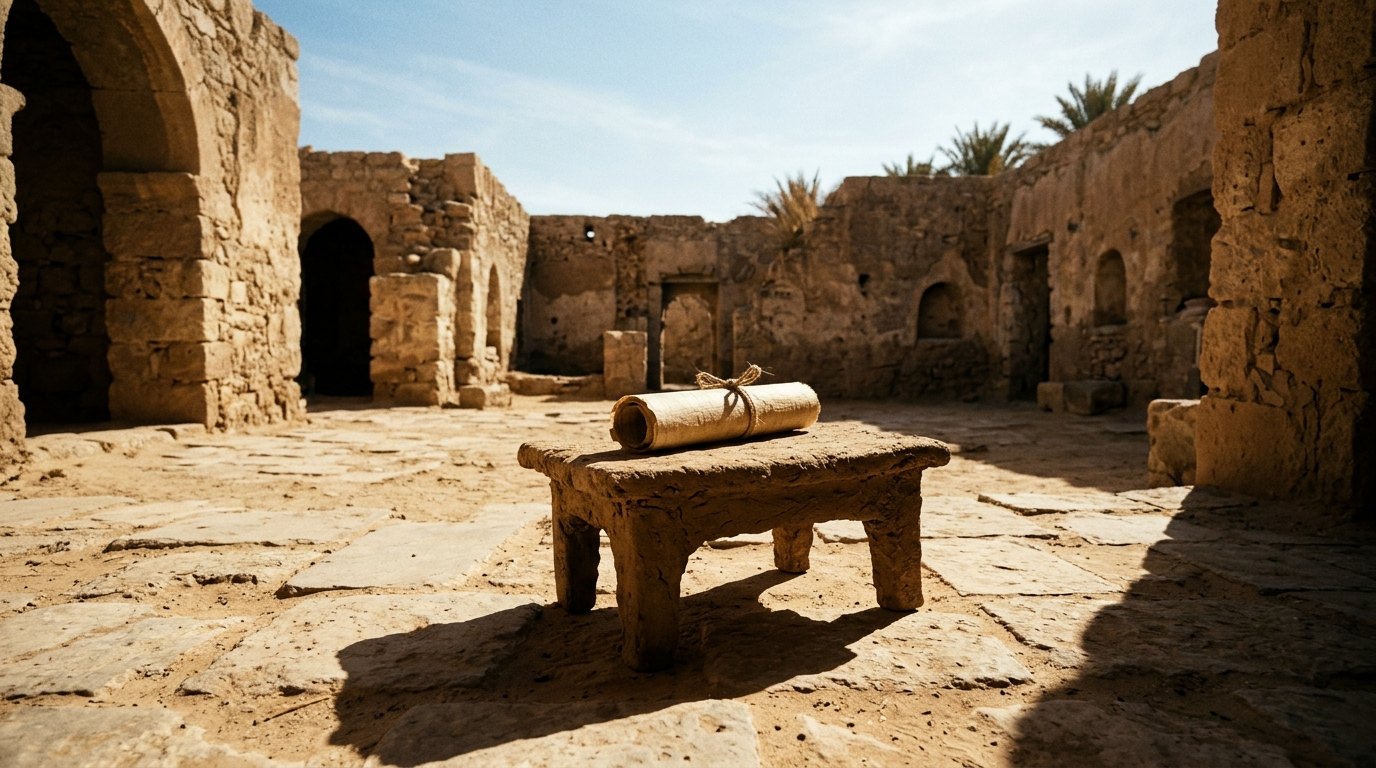
If a man marries a woman who becomes displeasing to him because he finds something indecent about her, and he writes her a certificate of divorce, gives it to her and sends her from his house, and if after she leaves his house she becomes the wife of another man, and her second husband dislikes her and writes her a certificate of divorce, gives it to her and sends her from his house, or if he dies, then her first husband, who divorced her, is not allowed to marry her again after she has been defiled. That would be detestable in the eyes of the LORD. Do not bring sin upon the land the LORD your God is giving you as an inheritance.
Deuteronomy 24:1-4 (NIV)
Moses requires a formal legal certificate of divorce to curb arbitrary abandonment and forbid returning to a defiled union.
The Mosaic law addresses divorce not as a divine ideal, but as an existing reality born of human sinfulness. In Deuteronomy 24:1-4, the law intervenes to govern divorce by requiring a formal, written "certificate of divorce" (sepher kerithuth). This legal instrument was designed to protect abandoned women from slander, certify their freedom, and prevent predatory men from treating wives as disposable commodities. Furthermore, the statute strictly forbids a man from remarrying his former wife if she has married another man in the interim and that second husband has died or divorced her, branding such behavior as an abomination before the Lord.
Throughout the Torah, God placed stringent guardrails around divorce to shield the defenseless and safeguard sacred callings. In Exodus 21:10-11, the law protects a servant wife; if her husband denies her food, clothing, or marital rights, she goes out free without paying money. In Deuteronomy 22:19 and Deuteronomy 22:28-29, men who committed severe sexual offenses—such as falsely slandering a bride's virginity or violating an unbetrothed virgin—forfeited the right to ever divorce that woman.
Priestly regulations also underscored the gravity of marital dissolution. Under Leviticus 21:7 and Leviticus 21:14, priests and the high priest were forbidden from marrying divorced women, preserving the sanctified purity of God's sanctuary. Numbers 30:9 confirms that a divorced woman's vows stand firm upon her soul, recognizing her independent legal standing, while Leviticus 22:13 mercifully permits a childless divorced daughter of a priest to return to her father's household to eat his holy food.
| Passage | What it says |
|---|---|
| Exodus 21:10-11 | Protects a female servant wife, requiring food, clothing, and marital rights, permitting her free departure if denied. |
| Leviticus 21:7 | Forbids priests from marrying women who are divorced, maintaining the ritual holiness of the priesthood. |
| Leviticus 21:14 | Forbids the high priest specifically from marrying a widow, a divorced woman, or an impure woman. |
| Numbers 30:9 | Affirms that vows made by a widow or a divorced woman remain binding upon her soul. |
| Deuteronomy 22:19 | Forbids a man who falsely slandered his bride's virginity from ever divorcing her all his days. |
| Deuteronomy 22:28-29 | Forbids a man who seized and lay with an unbetrothed virgin from ever divorcing her after paying her bride price. |
| Deuteronomy 24:1-4 | Regulates civil divorce through a written certificate and forbids remarrying an ex-wife after she married another man. |
| Leviticus 22:13 | A priest's daughter who is divorced without children may return to eat her father's food. |
The Prophetic Witness
God decries faithless divorce and remembers His covenant.

“The man who hates and divorces his wife,” says the LORD, the God of Israel, “does violence to the one he should protect,” says the LORD Almighty. So be on your guard, and do not be unfaithful.
Malachi 2:16 (NIV)
The Lord explicitly denounces divorce as an act of violent treachery against the wife of one's covenant.
The prophetic witness confronts marital betrayal with uncompromising moral urgency, nowhere more forcefully than in Malachi 2:16, where the Lord God of Israel declares that "he hates divorce" and him who covers his garment with violence. Malachi rebukes the men of Judah for dealing treacherously with "the wife of your youth," reminding them in Malachi 2:14-15 that she is their covenant companion and that God seeks godly offspring through the one-flesh bond.
The prophets frequently use the tragedy of divorce to illustrate the catastrophic nature of idolatry. In Isaiah 50:1, the Lord challenges exiled Israel to show a bill of divorce proving He abandoned them, asserting that their own transgressions brought about separation, not His lack of covenant love. In Jeremiah 3:8, God speaks of having sent apostate northern Israel away with a certificate of divorce because of her relentless spiritual adulteries, yet He simultaneously calls treacherous Judah to repent.
Similarly, Ezekiel 16:32 exposes Jerusalem's perfidy as an unfaithful wife who takes strangers instead of her true Lord, while Hosea 2:2 depicts the agonizing reality of marital betrayal through Hosea's own marriage to Gomer. Through these vivid, heart-rending depictions, the prophets reveal that divorce is never neutral; it is a manifestation of broken covenant, spiritual treachery, and violent disruption of God's holy design.
| Passage | What it says |
|---|---|
| Isaiah 50:1 | The Lord asks Israel where her mother's bill of divorce is, declaring their exile resulted from iniquities, not His unfaithfulness. |
| Jeremiah 3:8 | The Lord recounts giving backsliding Israel a writ of divorce for spiritual adultery, calling Judah to take warning. |
| Ezekiel 16:32 | God portrays Jerusalem as an adulterous wife who receives strangers instead of her true husband. |
| Hosea 2:2 | The prophet calls Israel to put away adulteries, illustrating God's redemptive pursuit of His wayward covenant people. |
| Malachi 2:14-16 | God rebukes Judah for breaking faith with the wife of youth, declaring He hates divorce and violent faithlessness. |
The Teaching of Jesus
Jesus restores God's standard and condemns unlawful divorce.

So they are no longer two, but one flesh. Therefore what God has joined together, let no one separate.”
Matthew 19:6 (NIV)
Christ establishes that humans must never tear apart what God Himself has joined together in one flesh.
When Jesus confronted first-century debates over divorce, He swept aside rabbinic loopholes by pointing directly back to Eden. In Matthew 19:6, Christ issues His definitive verdict: "What therefore God has joined together, let not man separate." When the Pharisees inquired in Matthew 19:3-5 whether a man could divorce his wife "for any cause," Jesus grounded marriage in creation itself, affirming that God made them male and female to become an indissoluble one flesh.
When questioned why Moses mandated a certificate of divorce, Jesus responded in Matthew 19:7-9 that Moses permitted divorce only because of the "hardness of your heart," but insisted that "from the beginning it was not so." Here Jesus delivers His rigorous standard: whoever divorces his wife, except for sexual immorality (porneia), and marries another, commits adultery. In the Sermon on the Mount (Matthew 5:31-32), Jesus similarly teaches that divorcing a spouse without the cause of sexual unfaithfulness drives both parties toward adultery.
The Gospel accounts of Mark 10:2-12 and Luke 16:18 record this same uncompromising teaching. In Mark, Jesus explicitly applies the standard symmetrically to both husbands and wives, declaring that whoever divorces a spouse and marries another commits adultery against them. By holding marriage to its original creation baseline, Christ stripped away convenient excuses and revealed the lifelong sanctity of the marital bond under the reign of God.
| Passage | What it says |
|---|---|
| Matthew 5:31-32 | Jesus teaches that putting away a wife except for sexual immorality causes her and her second husband to commit adultery. |
| Matthew 19:3-6 | Jesus answers the Pharisees by citing Genesis, declaring that God joins couples into one flesh and man must not separate them. |
| Matthew 19:7-9 | Jesus explains Moses allowed divorce because of hard hearts, but whoever divorces except for sexual immorality commits adultery upon remarrying. |
| Mark 10:2-12 | Jesus teaches that divorcing and remarrying constitutes adultery, applying the standard equally to husbands and wives. |
| Luke 16:18 | Jesus warns that everyone who divorces his wife and marries another commits adultery, as does the man who marries her. |
Apostolic Instruction
The apostles call believers to peace, fidelity, and reconciliation.
But if the unbeliever leaves, let it be so. The brother or the sister is not bound in such circumstances; God has called us to live in peace.
1 Corinthians 7:15 (NIV)
Paul instructs that if an unbelieving spouse departs, the Christian is not bound, for God has called believers to peace.
In 1 Corinthians 7:15, Paul addresses a painful reality in mixed households: if the unbelieving partner departs, the brother or sister is not enslaved. God has called His people to peace, meaning a believer abandoned by an unbeliever because of Christ is not held in marital bondage. This pastoral allowance stands beside the apostle's firm reaffirmation of the creation standard. In Romans 7:2-3 and 1 Corinthians 7:39, Paul reminds the church that marriage is inherently lifelong, legally binding a spouse until physical death severs the bond, leaving the surviving partner free to remarry only in the Lord.
To Christian couples, Paul relays Christ's explicit command in 1 Corinthians 7:10-11: a wife must not separate from her husband, and a husband must not divorce his wife. If brokenness causes a separation, the biblical path requires remaining unmarried or pursuing full reconciliation. Where one spouse has come to faith while the other remains an unbeliever, 1 Corinthians 7:12-14 forbids initiating divorce; if the unbelieving partner is willing to live together, the home and children are consecrated under God's covenant grace rather than abandoned. The believer remains in hope, as 1 Corinthians 7:16 asks whether one might save their spouse through quiet faithfulness.
This high view of marriage flows directly from theology. Paul unveils in Ephesians 5:31-32 that earthly marriage mirrors the unbreakable union between Christ and the church. Because domestic integrity reflects the gospel, leadership in the house of God requires exemplary marital fidelity. Paul mandates in 1 Timothy 3:2, 1 Timothy 3:12, and Titus 1:6 that overseers and deacons must be the husband of one wife, just as 1 Timothy 5:9 honors the devoted widow who was the wife of one husband. Finally, Hebrews 13:4 commands all believers to hold marriage in honor and keep the bed undefiled, warning that God will judge sexual immorality.
| Passage | What it says |
|---|---|
| Romans 7:2-3 | Paul explains that the law binds a married woman to her husband while he lives, freeing her only upon his death. |
| 1 Corinthians 7:10-11 | Paul delivers the Lord's command that spouses not separate, and if separation occurs, to remain unmarried or reconcile. |
| 1 Corinthians 7:12-14 | A believer is instructed not to divorce an unbelieving spouse who consents to live with them, sanctifying the household. |
| 1 Corinthians 7:15-16 | If the unbelieving partner departs, the believer is not enslaved, preserving peace while trusting God for salvation. |
| 1 Corinthians 7:39 | A wife is bound as long as her husband lives; if he dies, she is free to marry whom she wishes, only in the Lord. |
| Ephesians 5:31-32 | Paul reveals marriage as a profound mystery pointing directly to the unbreakable bond between Christ and His church. |
| 1 Timothy 3:2 | An overseer must be the husband of one wife, demonstrating marital fidelity. |
| 1 Timothy 3:12 | Deacons must each be the husband of one wife and manage their households well. |
| Titus 1:6 | An elder must be blameless and the husband of one wife. |
| 1 Timothy 5:9 | A widow enrolled for church support must have been the wife of one husband. |
| Hebrews 13:4 | Marriage must be held in honor among all, and the marriage bed kept undefiled. |
Post-Exilic Separations
Covenant purity demands separation from idolatrous unions.

Now honor the LORD, the God of your ancestors, and do his will. Separate yourselves from the peoples around you and from your foreign wives.”
Ezra 10:11 (NIV)
It shows a unique historic moment where divorce was enacted to purge idolatry from the post-exilic community.
In Ezra 10:11, Ezra confronts a severe spiritual crisis, crying out to the assembled remnant: make confession to the Lord, the God of your fathers, and do his will; separate yourselves from the peoples of the land and from the foreign wives. This dramatic historical episode stands as a singular covenant emergency rather than a standard precedent for marital dissolution. The returned exiles, who had been preserved by God's mercy from Babylon, immediately repeated the exact sin that caused their national destruction centuries earlier.
According to Ezra 9:1-2, the leaders came weeping to Ezra because the holy race had intermarried with pagan nations devoted to abominations, with priests and Levites leading the trespass. This was not ethnic prejudice, but spiritual survival; foreign idolatry threatened to swallow the fragile messianic seedline. In response, Shecaniah approached Ezra in Ezra 10:2-3, proposing a radical step: let us make a covenant with our God to put away all these wives and their children, following the law of God to excise destructive spiritual contagion.
Decades later, Nehemiah encountered the identical spiritual peril in Nehemiah 13:23-27. Jewish men had again married women of Ashdod, Ammon, and Moab, resulting in children who could not even speak the language of Judah. Nehemiah confronted them fiercely, reminding the people that even King Solomon, beloved by God, was dragged into horrific apostasy by foreign women. The severe corporate separations recorded in Ezra and Nehemiah underscore Scripture's unyielding demand for absolute covenant loyalty to God above every earthly tie.
| Passage | What it says |
|---|---|
| Ezra 9:1-2 | The leaders report that the people and priests have intermarried with surrounding pagan nations. |
| Ezra 10:2-3 | Shecaniah proposes making a covenant with God to put away all foreign pagan wives. |
| Ezra 10:11 | Ezra commands the assembly to separate themselves from pagan peoples and foreign wives. |
| Nehemiah 13:23-27 | Nehemiah rebukes Judeans who married foreign women, threatening covenant faithfulness. |
Where in the Bible
| Book | Passages |
|---|---|
| Genesis | 3 · Genesis 1:27, Genesis 2:23, Genesis 2:24 |
| Exodus | 1 · Exodus 21:10-11 |
| Leviticus | 3 · Leviticus 21:7, Leviticus 21:14, Leviticus 22:13 |
| Numbers | 1 · Numbers 30:9 |
| Deuteronomy | 3 · Deuteronomy 22:19, Deuteronomy 22:28-29, Deuteronomy 24:1-4 |
| Ezra | 3 · Ezra 9:1-2, Ezra 10:2-3, Ezra 10:11 |
| Nehemiah | 1 · Nehemiah 13:23-27 |
| Proverbs | 1 · Proverbs 2:17 |
| Isaiah | 1 · Isaiah 50:1 |
| Jeremiah | 1 · Jeremiah 3:8 |
| Ezekiel | 1 · Ezekiel 16:32 |
| Hosea | 1 · Hosea 2:2 |
| Malachi | 1 · Malachi 2:14-16 |
| Matthew | 3 · Matthew 5:31-32, Matthew 19:3-6, Matthew 19:7-9 |
| Mark | 1 · Mark 10:2-12 |
| Luke | 1 · Luke 16:18 |
| Romans | 1 · Romans 7:2-3 |
| 1 Corinthians | 4 · 1 Corinthians 7:10-11, 1 Corinthians 7:12-14, 1 Corinthians 7:15-16, 1 Corinthians 7:39 |
| Ephesians | 1 · Ephesians 5:31-32 |
| 1 Timothy | 3 · 1 Timothy 3:2, 1 Timothy 3:12, 1 Timothy 5:9 |
| Titus | 1 · Titus 1:6 |
| Hebrews | 1 · Hebrews 13:4 |
The story in order
- God creates marriage (c. 4000 BC) · Genesis 1:27 · Establishes male and female for one-flesh union.
- Adam and Eve unite (c. 4000 BC) · Genesis 2:24 · The first marriage as one flesh.
- Mosaic Law regulates divorce (c. 1400 BC) · Deuteronomy 24:1-4 · A concession to hardness of heart.
- Prophets decry faithless divorce (c. 400 BC) · Malachi 2:14-16 · God hates divorce and faithlessness.
- Jesus restores God's standard (AD 30) · Matthew 19:3-6 · Marriage is a lifelong, God-joined union.
- Jesus condemns unlawful divorce (AD 30) · Matthew 19:7-9 · Divorce except for immorality leads to adultery.
- Apostles teach marital fidelity (c. AD 55) · 1 Corinthians 7:10-11 · Spouses should not separate; reconcile if they do.
- Paul on remarriage after death (c. AD 55) · 1 Corinthians 7:39 · Free to remarry only after a spouse's death.
- Marriage as Christ and Church (c. AD 60) · Ephesians 5:31-32 · A profound mystery of unbreakable union.
- Post-exilic separation from pagans (c. 450 BC) · Ezra 10:11 · Purity demands separation from foreign wives.
Faithlessness in marriage and covenant
| Human Faithlessness | God's Response | Consequences | Passage |
|---|---|---|---|
| Spouse forsakes covenant partner | God gives a bill of divorce | Exile | |
| Spiritual adultery against God | God recounts divorce for unfaithfulness | Judgment and warning | |
| Breaking faith with wife of youth | God hates divorce | Divine displeasure | Malachi 2:14-16 |
Marital requirements for leaders
| Office | Requirement | Rationale | Passage |
|---|---|---|---|
| Overseer | Husband of one wife | Demonstrates marital fidelity | 1 Timothy 3:2 |
| Deacon | Husband of one wife | Manages household well | 1 Timothy 3:12 |
| Elder | Husband of one wife | Blameless character | Titus 1:6 |
| Widow (for support) | Wife of one husband | Demonstrates lifelong fidelity | 1 Timothy 5:9 |
Key words
- One Flesh (basar 'eḥāḏ (בָּשָׂר אֶחָד))
- The profound union of husband and wife, becoming a single entity. · Genesis 2:24
- Covenant (berît (בְּרִית))
- A solemn, binding agreement, often sealed by an oath or ceremony. · Malachi 2:14
- Bill of Divorce (sêp̄er kərût (סֵפֶר כְּרֻת))
- A legal document formally dissolving a marriage under Mosaic Law. · Deuteronomy 24:1
- Sexual Immorality (porneía (πορνεία))
- Broad term for illicit sexual relations, including adultery and fornication. · Matthew 5:32
- Adultery (moikheía (μοιχεία))
- Sexual intercourse between a married person and someone other than their spouse. · Matthew 19:9
Throughout Scripture, God's unchanging heart is for reconciliation, marital faithfulness, and the protection of the vulnerable from unjust betrayal. For believers navigating brokenness, God's Word offers clear moral reality, merciful boundaries, and the healing power of His steadfast covenant love.
37 passages, each cited once.
How the major Christian traditions read this
All major Christian traditions confess that God designed marriage as a lifelong, sacred covenant between a man and a woman that should never be dissolved lightly (Matthew 19:4-6; Malachi 2:14-16).
Catholic
We hold that a valid, consummated sacramental marriage can never be dissolved by any human power, for what God has joined together no man may put asunder (Matthew 19:6). Jesus teaches without ambiguity that whoever divorces and marries another commits adultery (Mark 10:11-12; Luke 16:18). A spouse may separate physically to escape grave harm or marital infidelity, but the marriage bond remains until death (1 Corinthians 7:10-11; Romans 7:2-3). Remarriage while a true spouse lives is impossible; the Church may only investigate whether an impediment existed from the start, declaring a nullity if true consent was never formed.
Scripture: Matthew 19:6, Mark 10:11-12, Luke 16:18, 1 Corinthians 7:10-11, Romans 7:2-3
Orthodox
We recognize marriage as a holy mystery reflecting Christ and His Church, meant to endure for eternity (Ephesians 5:31-32; Matthew 19:6). Yet the Church, exercising pastoral economy (oikonomia) in a fallen world, acknowledges that sin can spiritually destroy a marriage union. As our Lord acknowledged adultery as a tearing of the bond (Matthew 19:9), ecclesiastical divorce is recognized with grief when a marriage has truly died. The Church may permit a penitent second or third marriage through a service marked by prayers of repentance, tempering strict law with Christ's mercy for human frailty.
Scripture: Matthew 19:6, Matthew 19:9, Ephesians 5:31-32
Lutheran
We confess marriage as an honourable ordinance of creation established by God (Genesis 2:24; Matthew 19:4-5). God hates divorce (Malachi 2:16), yet our Lord explicitly permits divorce in the case of marital unfaithfulness or adultery (Matthew 5:32; Matthew 19:9). Furthermore, the Apostle Paul teaches that if an unbelieving spouse departs, the deserted Christian is no longer bound (1 Corinthians 7:15). In these tragic instances where the marriage covenant has already been broken by sin, the innocent party is permitted to divorce and may remarry in the Lord, receiving God's restoring grace.
Scripture: Genesis 2:24, Matthew 19:4-5, Matthew 19:9, 1 Corinthians 7:15, Malachi 2:16
Reformed & Presbyterian
We hold that marriage is a holy covenant joined by God, intended to endure for life (Matthew 19:6). According to the Westminster Confession, nothing but adultery or such willful desertion as can no way be remedied by the church or civil magistrate is cause sufficient of dissolving the bond of marriage (Westminster Confession 24.6). Scripture provides these explicit exceptions: sexual immorality (Matthew 19:9) and malicious abandonment by an unbelieving spouse (1 Corinthians 7:15). In such cases, the innocent party has biblical warrant to obtain a divorce and is entirely free to remarry in the Lord.
Scripture: Matthew 19:6, Matthew 19:9, 1 Corinthians 7:15
Anglican & Episcopal
We confess that marriage is an enduring covenant established by God at creation (Mark 10:6-9). Because Christ warned against tearing apart what God joined, divorce is a tragic rupture of God's holy intention. Historically our canons held strictly to separation without remarriage (1 Corinthians 7:10-11). Today, recognizing the scriptural exception for sexual immorality (Matthew 19:9) and abandonment (1 Corinthians 7:15), the pastoral practice across our provinces permits divorce when a union is broken beyond repair. Pastors provide pastoral care, examining genuine repentance and spiritual healing before solemnizing a subsequent marriage.
Scripture: Mark 10:6-9, Matthew 19:9, 1 Corinthians 7:10-11, 1 Corinthians 7:15
Baptist
We look strictly to the authority of Scripture, which reveals God's original creation design for marriage as a lifelong covenant between one man and one woman (Matthew 19:4-6). God detests divorce (Malachi 2:16), yet Christ explicitly grants an exception for sexual immorality (Matthew 19:9), and Paul grants freedom when an unbeliever deserts the marriage (1 Corinthians 7:15). While divorce is always the tragic consequence of sin, Scripture releases the innocent party from marital bondage in these specific circumstances, allowing remarriage within the faith while holding local church members accountable to biblical fidelity.
Scripture: Matthew 19:4-6, Matthew 19:9, Malachi 2:16, 1 Corinthians 7:15
Methodist & Wesleyan
We teach that marriage is a sacred covenant ordained by God, designed to be a lifelong union of mutual love and support (Matthew 19:5-6). While Jesus calls us to marital steadfastness and warns against treating divorce lightly (Matthew 5:31-32), we affirm that marital hardness of heart and destructive sin can fundamentally shatter the covenant bond. Where unfaithfulness, abandonment, or unrepentant cruelty destroys the relationship, divorce may be a tragic necessity. God's redeeming grace offers forgiveness, healing, and the possibility of a new beginning through a second marriage lived in holiness.
Scripture: Matthew 19:5-6, Matthew 5:31-32, 1 Corinthians 7:15
Pentecostal & Charismatic
We proclaim God's Word as living and active: God designed marriage as a holy, lifelong covenant between a husband and wife (Matthew 19:6). Divorce grieves God's heart (Malachi 2:16), but Jesus recognized the exception of sexual immorality (Matthew 19:9), and the Apostle Paul granted freedom in cases of abandonment (1 Corinthians 7:15). While we urgently pray for reconciliation and Spirit-empowered restoration in struggling homes, we recognize that severe sin sometimes shatters a marriage. Where biblical grounds exist, the Spirit provides comfort, forgiveness, and the freedom for the innocent believer to remarry.
Scripture: Matthew 19:6, Matthew 19:9, Malachi 2:16, 1 Corinthians 7:15
Non-denominational & Evangelical
We take Jesus' words in the Gospels as our direct rule of faith: God made marriage a permanent, one-flesh union from creation (Matthew 19:4-6). Divorce is never God's desire, but Scripture clearly outlines two valid grounds: marital unfaithfulness (Matthew 19:9) and abandonment by an unbelieving spouse (1 Corinthians 7:15). Where these occur, the covenant bond is severed by sin, releasing the believer from marital obligation. In every situation, evangelical churches urge repentance, pursuit of marital reconciliation when possible, and extending Christ's grace and restoration to those who have suffered divorce.
Scripture: Matthew 19:4-6, Matthew 19:9, 1 Corinthians 7:15
Where they differ
Possibility of dissolving the marriage bond
- Catholic
- Consummated sacramental marriage cannot be dissolved until death.
- Orthodox
- The bond can spiritually die and be dissolved by pastoral economy.
- Lutheran
- Dissoluble only on biblical grounds of adultery and desertion.
- Reformed & Presbyterian
- Dissoluble only on biblical grounds of adultery and willful desertion.
- Anglican & Episcopal
- Dissoluble pastorally when a union has irretrievably broken down.
- Baptist
- Dissoluble only upon marital unfaithfulness or abandonment.
- Methodist & Wesleyan
- Dissoluble when sin irreversibly destroys the covenant relationship.
- Pentecostal & Charismatic
- Dissoluble when severed by adultery or unrepentant abandonment.
- Non-denominational & Evangelical
- Dissoluble only on the explicit biblical exceptions Jesus and Paul gave.
Scripture: Matthew 19:6, Matthew 19:9, 1 Corinthians 7:15, Romans 7:2
Remarriage after divorce
- Catholic
- Forbidden while a spouse lives unless the first was declared null.
- Orthodox
- Permitted penitentially up to three times through pastoral economy.
- Lutheran
- Permitted to the innocent party following a biblical divorce.
- Reformed & Presbyterian
- Permitted only to the innocent party on scriptural grounds.
- Anglican & Episcopal
- Permitted pastorally after careful discernment of repentance and readiness.
- Baptist
- Permitted to the innocent party who divorced on biblical grounds.
- Methodist & Wesleyan
- Permitted under God's restoring grace with pastoral guidance.
- Pentecostal & Charismatic
- Permitted for the innocent spouse following a biblical divorce.
- Non-denominational & Evangelical
- Permitted when divorce occurred under biblically warranted grounds.
Scripture: Matthew 5:32, Matthew 19:9, Mark 10:11-12, 1 Corinthians 7:15, Romans 7:3
Your pastor can tell you where your church stands.
Scripture cited
- Mark 10:2-12
- Luke 16:18
- 1 Corinthians 7:10-16
- 1 Corinthians 7:25-40
- Romans 7:1-3
- Deuteronomy 24:1-4
- Malachi 2:13-16
- 1 John 1:9
- 1 Corinthians 6:9-11
- Romans 6:1-2