What does the Bible say about failure?
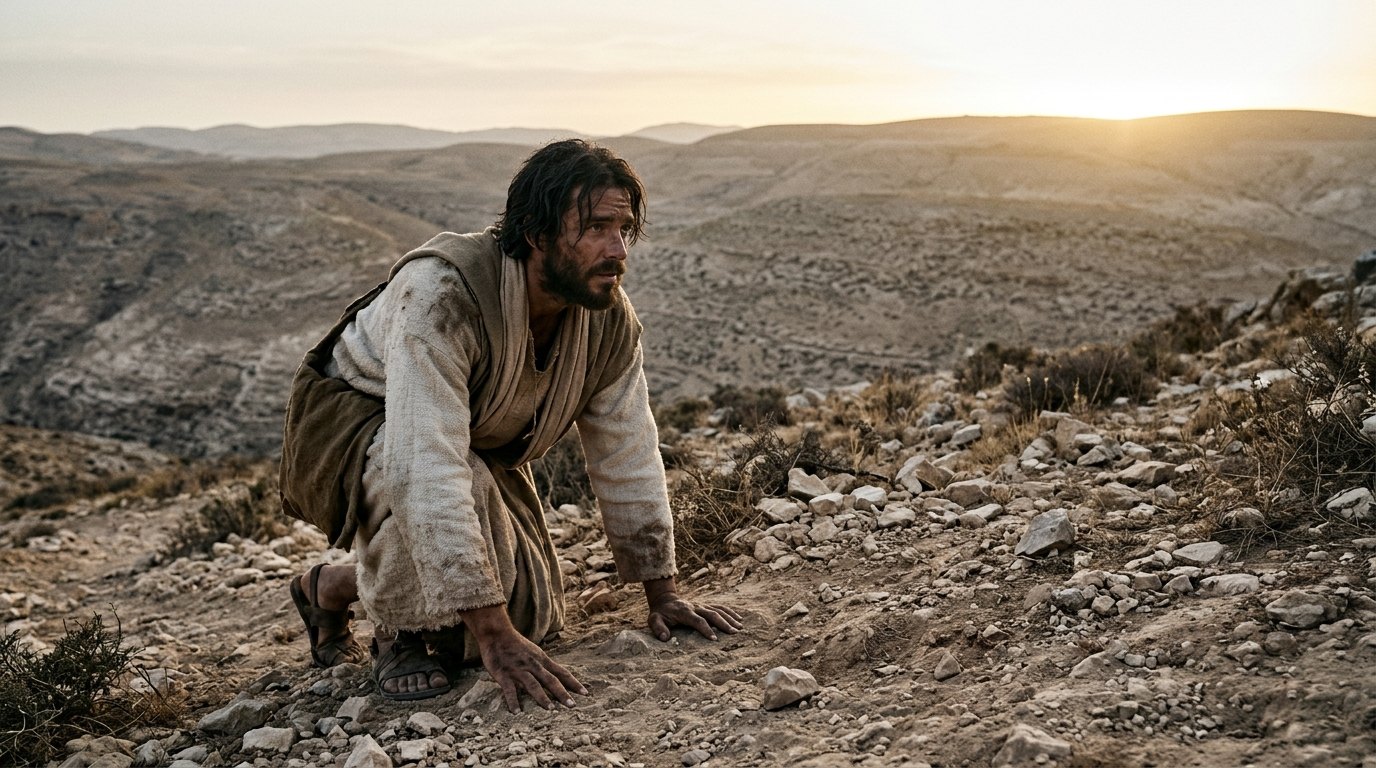
Proverbs 24:16
16 for though the righteous fall seven times, they rise again, but the wicked stumble when calamity strikes.
New International Version (NIV)
The answer
The Bible says failure is real, but it is not always sin, and it need not have the final word. God upholds His people in affliction, forgives and cleanses those who confess their sins, and calls them to rise and press on in Christ—not to hide, despair, or make peace with sin.
Failure and affliction are not the same as sin
Proverbs 24:16 says:
for a righteous man falls seven times and rises up again, but the wicked are overthrown by calamity.
A righteous person is therefore not someone who never falls. Even repeated falls are met with rising again. That rising is not merely self-reliance: Psalms 37:24 explains that although the righteous person falls, he is not utterly cast down, “for the LORD upholdeth him with his hand.”
Faithfulness also does not guarantee a trouble-free life or success in every undertaking. Psalms 34:19 says, “Many are the afflictions of the righteous: but the LORD delivereth him out of them all.” Paul likewise describes being pressed, perplexed, pursued, and struck down, yet not crushed, forsaken, or destroyed (2 Corinthians 4:8-9). Severe hardship can coexist with genuine faithfulness; it is not, by itself, evidence that God has abandoned someone.
Sinful failure requires repentance, not excuses
Some failures do involve sin, and sin must not be softened into a mere mistake. Proverbs 28:13 gives the clear alternative:
He who conceals his sins doesn’t prosper, but whoever confesses and renounces them finds mercy.
Concealing, excusing, or continuing in sin is not the way forward. Confession includes renouncing it. God’s promise is equally clear: “If we confess our sins, he is faithful and righteous to forgive us the sins and to cleanse us from all unrighteousness” (1 John 1:9).
That forgiveness rests on Jesus Christ. He is the righteous Counselor with the Father and “the atoning sacrifice for our sins” (1 John 2:1-2). His grace is not permission to remain in sin: the same passage says its purpose is that believers not sin. The response to sinful failure is therefore confession, turning away from the sin, receiving God’s cleansing, and walking in renewed obedience.
Rise and press on
Micah 7:8 expresses the hope of someone in darkness: “when I fall, I shall arise; when I sit in darkness, the LORD shall be a light unto me.” The ground of hope is the Lord, not an flawless record or an extraordinary capacity for recovery.
Philippians 3:13-14 describes Paul forgetting what lies behind, stretching toward what lies ahead, and pressing on toward God’s call in Christ Jesus. Practically, that means refusing both despair and complacency: acknowledge what happened, confess and forsake any sin involved, trust Christ’s atoning work, and take the next faithful step. A failed attempt does not define a believer’s identity; Christ and God’s upholding hand do.
Answered from Scripture · reviewed November 11, 2026
Scripture does not present God's people as immune to stumbling, defeat, or affliction, but reveals that failure is never final for those who trust in the Lord. While persistent wickedness ends in ruin, the righteous are characterized by rising again through divine deliverance, genuine repentance, and sustaining grace. Understanding how God treats our falls rescues the believer from crippling despair while barring the door to presumption.
The Defining Mark
The Righteous Stumble but Rise Again
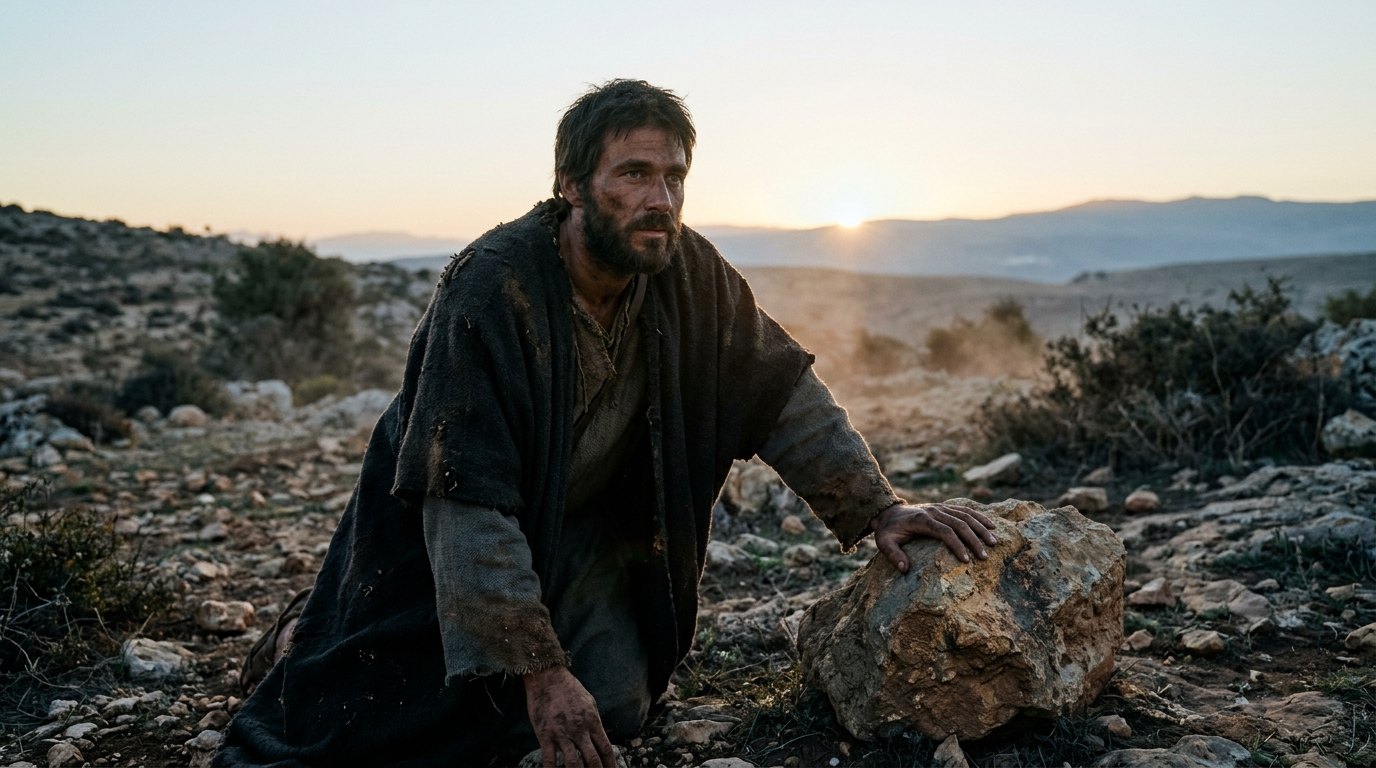
for though the righteous fall seven times, they rise again, but the wicked stumble when calamity strikes.
Proverbs 24:16 (NIV)
This verse contrasts the resilient recovery of the righteous with the final, catastrophic ruin of the ungodly.
A righteous man falls seven times and rises up again, as Proverbs 24:16 plainly declares, marking the fundamental boundary between the believer and the wicked. The text does not pretend that righteousness insulates an individual from disaster, defeat, or repeated hardship. Instead, it recognizes that adversity comes to all, yet it establishes resilience as the work of God within the faithful. While the ungodly are overthrown by calamity and remain broken beneath their judgment, the righteous are preserved through every collapse.
This unyielding hope rings clear in Micah 7:8, where the prophet cries out against a gloating adversary: "Rejoice not over me, O my enemy; when I fall, I shall rise; when I sit in darkness, the Lord will be a light to me." The posture of faith never denies the reality of the darkness or the humiliation of the fall, but it looks directly through the gloom to God's unfailing character. Defeat is treated not as a permanent destination, but as a temporary valley through which the Lord shepherds His people.
Eliphaz captures this truth in Job 5:19, observing that God delivers the righteous out of six troubles, and in seven no lasting evil shall touch them. The repeated number signifies completeness; no matter how extensive, layered, or frequent the trial may be, God's capacity to deliver far exceeds the trouble. True failure in Scripture is not the stumble of the servant, but the final, unrepentant overthrow of those who refuse God's mercy.
| Passage | What it says |
|---|---|
| Proverbs 24:16 | Affirms that a righteous man falls seven times and rises up again, while the wicked stumble into calamity. |
| Micah 7:8 | Declares that when the believer falls, they will arise, and the Lord will be a light in darkness. |
| Job 5:19 | Promises that God delivers from six troubles, and in seven no evil shall ultimately touch the righteous. |
Sustained by God
The Divine Hand Upholds the Fallen
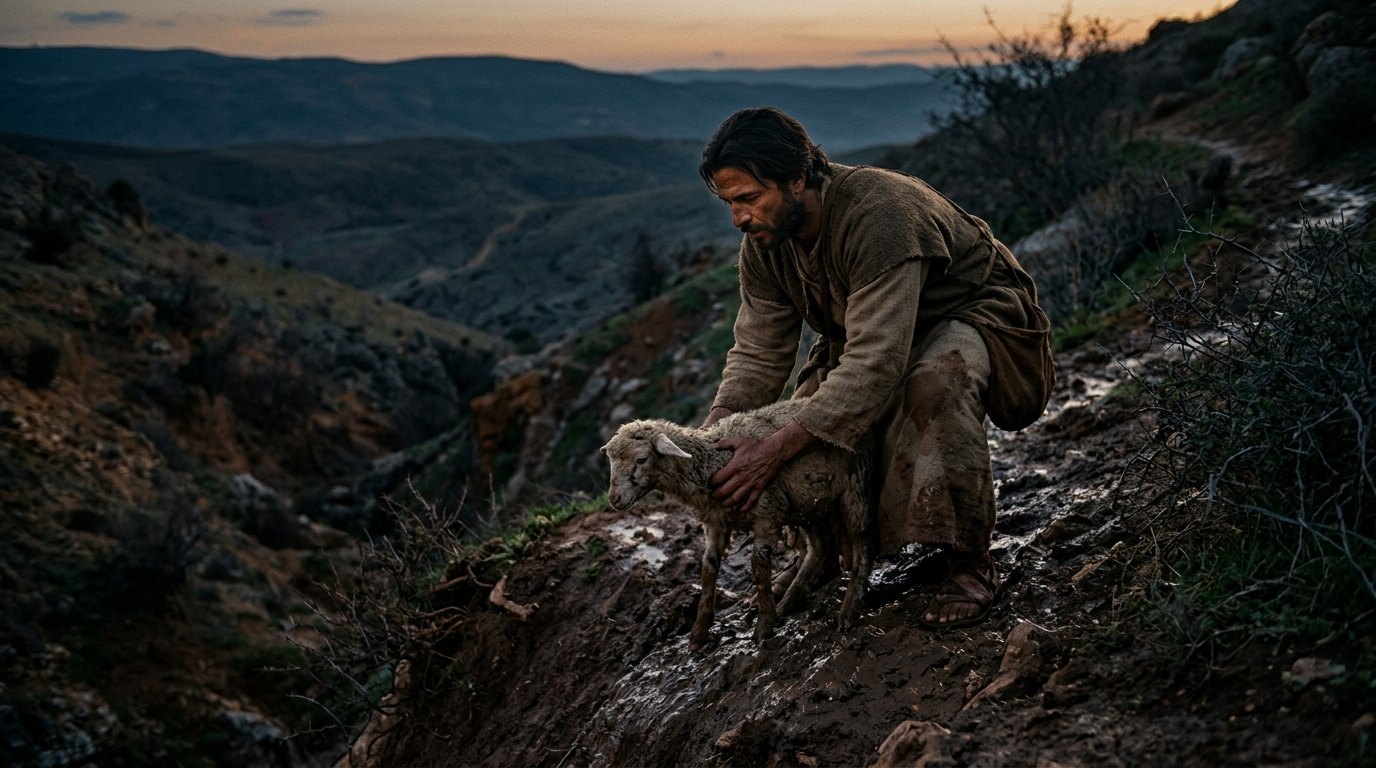
though he may stumble, he will not fall, for the LORD upholds him with his hand.
Psalms 37:24 (NIV)
It assures believers that their falls are never fatal because the Lord Himself grasps their hand.
Though he fall, he shall not be utterly cast down, for the Lord upholds him with His hand, according to the steady promise of Psalms 37:24. The believer's preservation rests not on the strength of their own grip, but on the unbreakable hold of Almighty God. As Psalms 37:23 affirms, the steps of a man are established by the Lord when he delights in His way; even when those steps falter, the fall is neither fatal nor final because divine omnipotence breaks the plunge.
Scripture consistently confronts our frailty with God's sovereign endurance. In Psalms 34:19, David acknowledges that "many are the afflictions of the righteous, but the Lord delivers him out of them all." God does not offer a superficial exemption from suffering, but a guaranteed rescue through it. Similarly, Psalms 145:14 proclaims that the Lord upholds all who are falling and raises up all who are bowed down under burdens too heavy to bear. When human vitality evaporates, faith finds its anchor: "My flesh and my heart may fail, but God is the strength of my heart and my portion forever" (Psalms 73:26).
Even amid the catastrophic wreckage of Jerusalem, Jeremiah could confess that the Lord's steadfast love never ceases and His mercies are new every morning (Lamentations 3:22-23). This enduring preservation stretches into eternity, celebrated in Jude 1:24-25, which praises the only God our Savior, who is able to keep us from stumbling and to present us blameless before the presence of His glory with great joy.
| Passage | What it says |
|---|---|
| Psalms 37:23-24 | Establishes that the steps of a good man are ordered by God, who upholds him even when he falls. |
| Psalms 34:19 | Confirms that though the afflictions of the righteous are many, the Lord delivers him out of them all. |
| Psalms 145:14 | Testifies that the Lord upholds all who fall and raises up all who are bowed down. |
| Jude 1:24-25 | Praises the God who is able to keep believers from stumbling and present them faultless with exceeding joy. |
| Psalms 73:26 | Though flesh and heart fail, God remains the strength of the heart and portion forever. |
| Lamentations 3:22-23 | The Lord's steadfast love never ceases; His mercies are new every morning despite human collapse. |
Moral Failure
Confession Restores What Sin Destroys

If we confess our sins, he is faithful and just and will forgive us our sins and purify us from all unrighteousness.
1 John 1:9 (NIV)
This promise anchors forgiveness and total cleansing to God's faithful justice upon confession.
If we confess our sins, He is faithful and just to forgive us our sins and to cleanse us from all unrighteousness, writes the apostle in 1 John 1:9. Moral failure is the most devastating collapse a human being can experience, bringing guilt, shame, and the righteous judgment of God. Yet Scripture refuses to leave the penitent in despair. In 1 John 1:8-10, the Spirit tears away all self-deceiving claims of sinlessness, demanding absolute honesty before God, while simultaneously holding out Christ's blood as the complete remedy for every stain.
Attempting to conceal moral wreckage only deepens ruin, for Proverbs 28:13 warns that whoever conceals his transgressions will not prosper, but he who confesses and forsakes them will obtain mercy. When David was confronted in his grievous adultery and murder, he hid nothing, crying out in Psalms 51:1-4 for clean hands, blotted transgressions, and inward renewal. Forgiveness is not a casual overlooking of sin, but an act grounded in the cross, where Jesus Christ the righteous serves as our faithful advocate before the Father (1 John 2:1-2).
This restorative grace is vividly displayed in Peter's life. Foreseeing Peter's bitter collapse, the Lord warned him in Luke 22:31-32: "Simon, Simon, behold, Satan demanded to have you, that he might sift you like wheat, but I have prayed for you that your faith may not fail. And when you have turned again, strengthen your brothers." After the resurrection, on the shores of Galilee, Jesus met Peter not with recrimination, but with three direct questions that healed his threefold denial and recommissioned him to feed His sheep (John 21:15-17).
| Passage | What it says |
|---|---|
| 1 John 1:8-10 | Promises that confessing sin results in faithful forgiveness and thorough cleansing from all unrighteousness. |
| Psalms 51:1-4 | Records David's brokenhearted plea for mercy, blotted transgressions, and inward cleansing after severe failure. |
| Proverbs 28:13 | Warns that concealing sin prevents prosperity, but confessing and forsaking it yields mercy. |
| Luke 22:31-32 | Shows Jesus praying for Peter's faith not to fail completely and charging him to strengthen his brothers upon turning. |
| John 21:15-17 | Jesus restores Peter after his threefold denial, commissioning him to feed His sheep. |
| 1 John 2:1-2 | Jesus Christ the righteous acts as an advocate with the Father when a believer sins. |
Strength in Weakness
Hardship Becomes a Theater for Grace
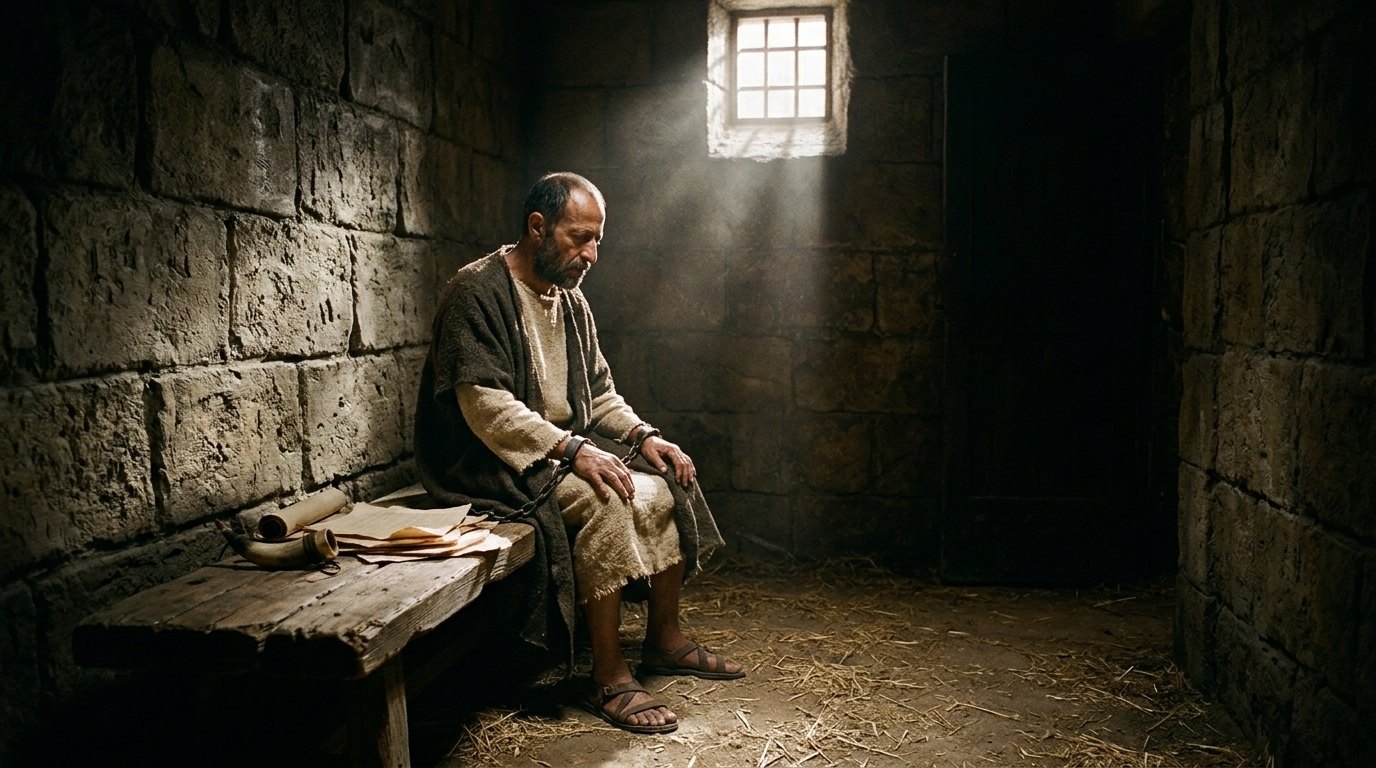
But he said to me, “My grace is sufficient for you, for my power is made perfect in weakness.” Therefore I will boast all the more gladly about my weaknesses, so that Christ’s power may rest on me.
2 Corinthians 12:9 (NIV)
The Lord reveals that human infirmity and collapse are the precise places where His power is perfected.
My grace is sufficient for you, for My power is made perfect in weakness, the Lord answered Paul in 2 Corinthians 12:9. When the apostle pled repeatedly for the removal of his painful thorn in the flesh, God did not eliminate the struggle; instead, He revealed that human limitation is the chosen theater for divine power. Paul's conclusion in 2 Corinthians 12:10 radically redefines earthly failure: "For the sake of Christ, then, I am content with weaknesses, insults, hardships, persecutions, and calamities. For when I am weak, then I am strong."
This theology of the cross governs the entirety of Christian suffering. In 2 Corinthians 4:8-10, Paul describes the paradoxical existence of Gospel ministers: afflicted in every way, but not crushed; perplexed, but not driven to despair; persecuted, but not forsaken; struck down, but not destroyed. The believer carries in the body the dying of Jesus so that the life of Jesus may be visibly manifested. Human resources are repeatedly exhausted so that the surpassing glory belongs undeniably to God.
Paul knew this reality by experience, enduring imprisonments, beatings, shipwrecks, sleepless nights, and constant hazards (2 Corinthians 11:23-28). None of these hardships signaled God's abandonment or the failure of the mission. On the contrary, Paul triumphantly concludes in Romans 8:35-37 that tribulation, distress, persecution, famine, nakedness, peril, and sword can never sever the believer from the love of Christ. In all these crushing defeats, we are overwhelmingly more than conquerors through Him who loved us.
| Passage | What it says |
|---|---|
| 2 Corinthians 12:9-10 | Teaches that Christ's grace is sufficient and that divine strength reaches perfection in human weakness. |
| 2 Corinthians 4:8-10 | Describes being afflicted, perplexed, and struck down, yet never crushed, despairing, or abandoned. |
| 2 Corinthians 11:23-28 | Catalogues Paul's profound apostolic distresses, imprisonments, beatings, and dangers undergone for Christ. |
| Romans 8:35-37 | Declares that tribulation, distress, or peril cannot separate believers from Christ's love, making them more than conquerors. |
The Call Forward
Repentance Abandons Sin for Holy Living

What shall we say, then? Shall we go on sinning so that grace may increase? By no means! We are those who have died to sin; how can we live in it any longer?
Romans 6:1-2 (NIV)
It decisively refutes the abuse of God's abundant mercy as an excuse to remain in sin.
In Romans 6:1-2, the Apostle Paul asks the sharpest question concerning grace and failure: "What shall we say then? Shall we continue in sin, that grace may abound? God forbid. How shall we, that are dead to sin, live any longer therein?" God’s abundant mercy is never a license to persist in wrongdoing, nor does biblical pardon leave a person where it found them. Genuine repentance means putting away sin entirely, refusing to make peace with the failures that crucified the Lord of glory.
Paul underscores this radical transfer of allegiance in Romans 6:15-18. Once slaves to sin, believers have been delivered through the cross to become "servants of righteousness." We do not walk back into the prison from which Christ died to set us free; freedom from sin is never freedom to sin. Where a brother or sister is overtaken in a fault, Galatians 6:1 shows the household of faith how to respond: those who are spiritual must restore such an one in the spirit of meekness, considering their own weakness and guarding against pride.
Restoration also demands unsparing honesty within the body of Christ. James 5:16 charges us, "Confess your faults one to another, and pray one for another, that ye may be healed." Healing follows open confession and righteous intercession, breaking the isolation in which defeat festered. Cleansed and restored, the believer is not held captive by yesterday's guilt. In Philippians 3:13-14, Paul models this holy resolve: "forgetting those things which are behind, and reaching forth unto those things which are before, I press toward the mark for the prize of the high calling of God in Christ Jesus." Christ takes away the condemnation of past ruin so that our feet may run without hindrance in the way of his commandments.
| Passage | What it says |
|---|---|
| Romans 6:1-2 | Prohibits continuing in sin that grace may abound, because believers have died to sin. |
| Romans 6:15-18 | Urges believers to yield their members as servants to righteousness rather than returning to sin's dominion. |
| Galatians 6:1 | Commands the spiritual to restore anyone caught in a transgression with gentleness, watching themselves. |
| James 5:16 | Exhorts believers to confess faults one to another and pray for healing, noting the power of righteous prayer. |
| Philippians 3:13-14 | Forgetting past failures and achievements, the apostle presses toward the prize of God's upward call. |
Where in the Bible
| Book | Passages |
|---|---|
| Job | 1 · Job 5:19 |
| Psalms | 5 · Psalms 37:23-24, Psalms 34:19, Psalms 145:14, Psalms 73:26, Psalms 51:1-4 |
| Proverbs | 2 · Proverbs 24:16, Proverbs 28:13 |
| Lamentations | 1 · Lamentations 3:22-23 |
| Micah | 1 · Micah 7:8 |
| Luke | 1 · Luke 22:31-32 |
| John | 1 · John 21:15-17 |
| Romans | 3 · Romans 8:35-37, Romans 6:1-2, Romans 6:15-18 |
| 2 Corinthians | 3 · 2 Corinthians 12:9-10, 2 Corinthians 4:8-10, 2 Corinthians 11:23-28 |
| Galatians | 1 · Galatians 6:1 |
| Philippians | 1 · Philippians 3:13-14 |
| James | 1 · James 5:16 |
| 1 John | 2 · 1 John 1:8-10, 1 John 2:1-2 |
| Jude | 1 · Jude 1:24-25 |
The story in order
- Righteous man falls, wicked stumble (c. 700 BC) · Proverbs 24:16 · Contrasts the outcome of righteous falling with wicked calamity.
- Lord upholds the falling (c. 1000-450 BC) · Psalms 37:23-24 · God orders and upholds the steps of the righteous.
- God delivers from many afflictions (c. 1000-450 BC) · Psalms 34:19 · Afflictions are many, but the Lord delivers the righteous.
- God upholds and raises the bowed (c. 1000-450 BC) · Psalms 145:14 · God's sustaining power for those who fall and are bowed down.
- Mercies new every morning (c. 580 BC) · Lamentations 3:22-23 · Steadfast love and new mercies despite human failure.
- David confesses severe failure (c. 1000-450 BC) · Psalms 51:1-4 · A plea for mercy and cleansing after sin.
- Jesus prays for Peter's faith (AD 30) · Luke 22:31-32 · Jesus intercedes for Peter and predicts his restoration.
- Jesus restores Peter (AD 30) · John 21:15-17 · Jesus commissions Peter after his denial.
- Christ's grace is sufficient in weakness (AD 55) · 2 Corinthians 12:9-10 · Divine strength is perfected in human weakness.
- Believers are more than conquerors (AD 57) · Romans 8:35-37 · Nothing separates believers from God's love, making them conquerors.
- Do not continue in sin (AD 57) · Romans 6:1-2 · Believers have died to sin and should not live in it.
- Restore the fallen gently (AD 55) · Galatians 6:1 · The spiritual are to restore those caught in sin.
- Press toward the upward call (AD 60) · Philippians 3:13-14 · Forgetting past failures to pursue God's calling.
- God keeps us from stumbling (AD 65) · Jude 1:24-25 · God is able to keep believers from falling and present them blameless.
Key words
- Righteous (tsaddîyq (צַדִּיק))
- One who is declared right with God, characterized by obedience and integrity. · Proverbs 24:16
- Wicked (râshā‘ (רָשָׁע))
- One who is morally corrupt, defiant of God's law, and ultimately faces judgment. · Proverbs 24:16
- Afflictions (râ‘âh (רָעָה))
- Hardships, troubles, or suffering, often seen as tests or chastisements. · Psalms 34:19
- Confess (homologéō (ὁμολογέω))
- To admit, acknowledge, and agree with God about one's sins. · 1 John 1:9
- Grace (charis (χάρις))
- God's unmerited favor and divine assistance given to humanity. · 2 Corinthians 12:9
- Repentance (metánoia (μετάνοια))
- A change of mind and heart leading to a turning away from sin. · Romans 6:1
Your stumbling does not place you beyond the reach of God's restoring hand, but it demands an honest return to Him in faith and obedience. Lay aside despair, confess every transgression, and look to Christ whose grace is sufficient to lift you up and keep you from falling.
24 passages, each cited once.
Scripture cited
- Proverbs 24:16
- Psalms 34:19
- Psalms 37:24
- Micah 7:8-10
- 2 Corinthians 4:8-12
- Proverbs 28:13
- 1 John 1:9
- 1 John 2:1-2
- Philippians 3:13-14