What does the Bible say about food and what we eat?

Mark 7:18-19
18 “Are you so dull?” he asked. “Don’t you see that nothing that enters a person from the outside can defile them?
19 For it doesn’t go into their heart but into their stomach, and then out of the body.” (In saying this, Jesus declared all foods clean.)
New International Version (NIV)
The answer
Under the new covenant, Scripture teaches that no food is morally unclean — what defiles a person comes from the heart, not the stomach, and every creature of God is good when received with thanksgiving.
The Old Testament background
After the flood, God gave Noah permission to eat meat, but drew one hard line: "You shall not eat flesh with its life, that is, its blood" (Genesis 9:4). Later, the Mosaic Law added detailed distinctions between clean and unclean animals (Leviticus 11), and Israel was bound to observe them as part of the covenant.
Jesus declared all foods clean
When the Pharisees accused the disciples of eating with unwashed hands, Jesus cut to the heart of the matter: "There is nothing from outside of the man that going into him can defile him; but the things which proceed out of the man are those that defile the man" (Mark 7:15). He pressed the point privately to the disciples — food goes into the stomach and out, "making all foods clean" (Mark 7:19). The real defilements come from inside: evil thoughts, sexual sin, theft, envy, pride (Mark 7:21-23). Matthew records the same teaching when Jesus tells them, "Do you not yet understand that whatever enters the mouth goes into the stomach and is expelled?" (Matthew 15:17).
Peter saw this confirmed from heaven
On the rooftop in Joppa, a sheet of unclean animals was lowered and a voice said, "What God has cleansed, you must not call unclean" (Acts 10:15). Peter argued with God — "I have never eaten anything common or unclean" — and the church took the vision as the Spirit's signal that the old food boundaries were over, especially for the Gentiles coming into faith (Acts 11:5-10).
The apostolic teaching for the church
Paul worked this out in three directions:
- Food is morally neutral. "I know and am persuaded in the Lord Jesus that nothing is unclean of itself" (Romans 14:14), and "every creature of God is good, and nothing is to be rejected if it is received with thanksgiving; for it is sanctified through the word of God and prayer" (1 Timothy 4:4-5). Paul tells Timothy this directly because some were falling away to "commanding to abstain from foods which God created to be received with thanksgiving" (1 Timothy 4:3).
- What we eat does not commend us to God. "Food will not commend us to God. For neither, if we don't eat are we the worse, nor if we eat are we the better" (1 Corinthians 8:8). The Kingdom is "not eating and drinking, but righteousness, peace, and joy in the Holy Spirit" (Romans 14:17).
- Love limits our freedom. This is where Romans 14 cuts deepest. "Don't overthrow God's work for food's sake. All things indeed are clean, however it is evil for that man who creates a stumbling block by eating" (Romans 14:20). And the test: "if food causes my brother to stumble, I will eat no meat forever more, that I don't cause my brother to stumble" (1 Corinthians 8:13). Faith matters — "whatever is not of faith is sin" (Romans 14:23) — so if a believer is still bound by conscience to old food scruples, pressing him to eat against his conscience wounds him.
How this lands at the table
Three guards frame a Christian's freedom over food. Receive with thanksgiving — every meal is a gift from the Father who gives every good thing (James 1:17). Honour your conscience — if you are persuaded a thing is unclean to you, it is unclean to you; do not eat against your faith. Love your brother — never use your freedom to make a weaker believer stumble, and never judge a stronger one for what he eats; both stand before the Lord (Romans 14:4, 10).
Blood is still out of bounds
Even after Mark 7 and Acts 10, Acts 15:20, 29 and Acts 21:25 still direct Gentile believers to "abstain from blood" — the one food line drawn at Noah's ark is not casually set aside. Health, too, is not beneath the Bible's concern; gluttony is named among fleshly sins (Proverbs 23:20-21; Philippians 3:19), and self-control carries over into what and how we eat. The freedom is real, and it is to be used to the glory of God (1 Corinthians 10:31).
A verse to carry
"For every creature of God is good, and nothing is to be rejected if it is received with thanksgiving, for it is sanctified through the word of God and prayer" (1 Timothy 4:4-5).
Answered from Scripture · reviewed November 7, 2026
From the garden of Eden to the new covenant, Scripture reveals that food is God's good provision, yet what we eat has never been the source of moral holiness. Under the new covenant in Jesus Christ, all foods are declared clean, shifting the focus entirely from dietary regulations to inward purity of heart and loving consideration for one's brother.
Creation and Covenant
God Gives Food and Sets Early Boundaries

Everything that lives and moves about will be food for you. Just as I gave you the green plants, I now give you everything.
Genesis 9:3 (NIV)
God expands humanity's diet after the flood to include every living creature, establishing that animal life is granted for human sustenance.
In Genesis 9:3, the Lord establishes a vital expansion in human dietary history: every moving thing that lives shall be food for you, granted just as the green plants were previously given. At the dawn of creation, God assigned vegetation and fruit trees to sustain Adam and Eve in Eden, as recorded in Genesis 1:29. Yet even amidst unhindered bounty, the Creator placed a boundary. In Genesis 2:16-17, humanity was commanded not to eat of the tree of the knowledge of good and evil, establishing that obedience to God's word, rather than dietary consumption itself, is the primary test of human trust. The tragic breach of this command in Genesis 3:6 plunged mankind into fallenness, illustrating how consumption separated from divine trust brings spiritual ruin. After the deluge, the global landscape shifted. In Genesis 8:20, Noah offered burnt offerings from the clean animals that had been brought aboard the ark, demonstrating an early awareness of ritual distinction even before the giving of the formal law. Following this act of worship, God delivered the expansive grant of Genesis 9:3, officially permitting animal flesh for nourishment. Alongside this grant, however, the Lord enacted a perpetual boundary in Genesis 9:4, prohibiting the consumption of flesh with its lifeblood. Food was thereby consecrated as an ongoing gift of divine mercy, marked by reverence for life.
| Passage | What it says |
|---|---|
| Genesis 1:29 | God gives seed-bearing plants and fruit-bearing trees to Adam and Eve for food at creation. |
| Genesis 9:3 | God permits Noah and his descendants to eat moving animals just as green herbs were previously given. |
| Genesis 9:4 | God commands Noah not to eat flesh with its life, which is its blood. |
| Genesis 2:16-17 | God permits eating freely from every garden tree except the tree of the knowledge of good and evil. |
| Genesis 3:6 | Eve and Adam eat the forbidden fruit, bringing sin and death into the world. |
| Genesis 8:20 | Noah distinguishes between clean and unclean animals prior to the formal Mosaic code. |
The Levitical Law
Distinctions Between Clean and Unclean for Israel
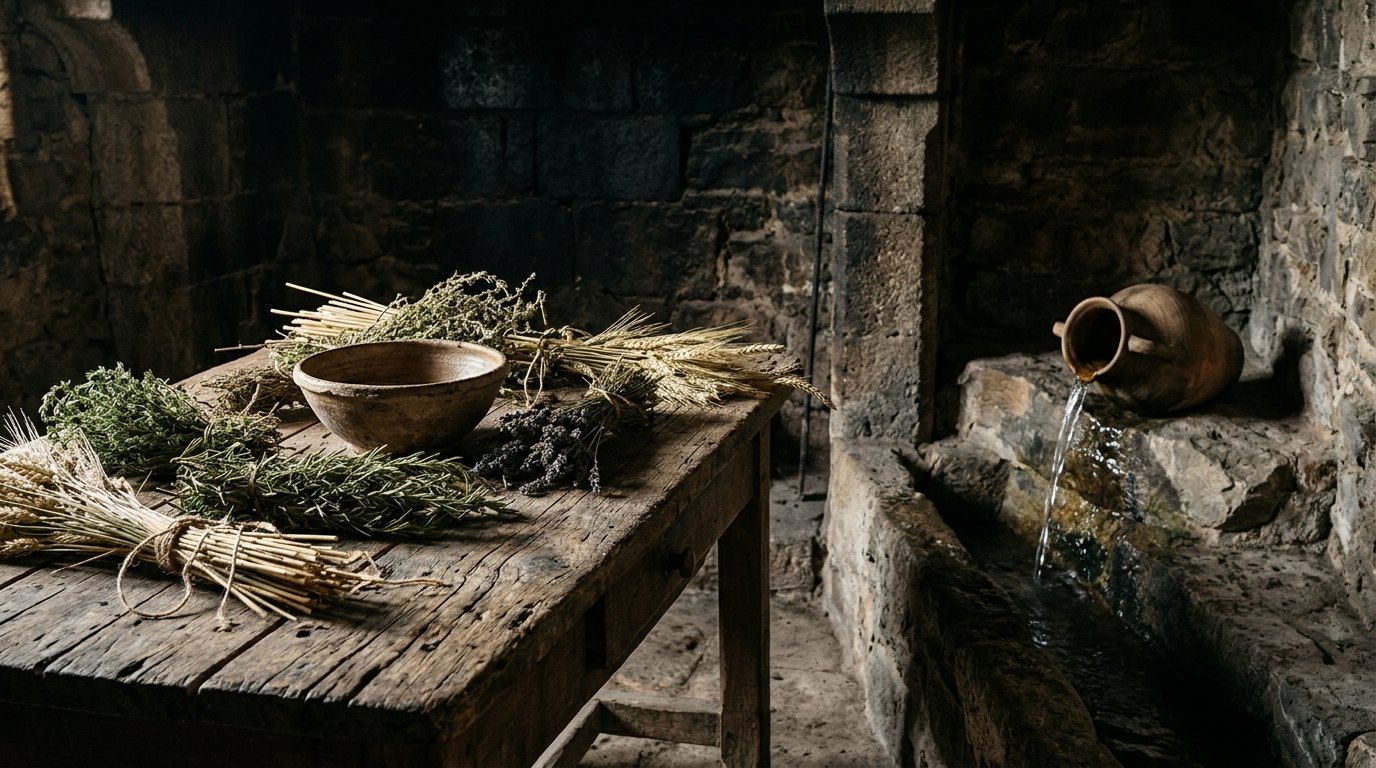
“ ‘These are the regulations concerning animals, birds, every living thing that moves about in the water and every creature that moves along the ground. You must distinguish between the unclean and the clean, between living creatures that may be eaten and those that may not be eaten.’ ”
Leviticus 11:46-47 (NIV)
This summary states the Mosaic mandate to distinguish between clean and unclean beasts, setting Israel apart from the nations.
The comprehensive summary in Leviticus 11:46-47 reveals the core intent of the Mosaic dietary statutes: to make a distinction between the unclean and the clean, setting apart a holy nation to Yahweh. Under the old covenant, Israel's dinner table became a daily testimony of their separation from pagan cultures. In Leviticus 11:1-8 and Deuteronomy 14:3-21, the law permitted only land animals with split hooves that chew the cud, while marine life was strictly limited by Leviticus 11:9-12 to creatures bearing both fins and scales. Ritual holiness also demanded the complete abstention from blood; Leviticus 17:10-14, Deuteronomy 12:15-16, and Deuteronomy 12:23-25 strictly forbade consuming blood because the life of the flesh resides in it, commanding Israel to pour it onto the ground like water. Similar prohibitions preserved ritual purity: Exodus 22:31 forbade eating animals torn by wild predators, Leviticus 3:17 and Leviticus 7:23-27 barred the eating of animal fat under pain of being cut off from the covenant community, and Exodus 23:19 prohibited boiling a young goat in its mother's milk. Even agricultural produce bore covenantal discipline, as Leviticus 19:23-25 deemed the fruit of newly planted trees uncircumcised for three initial years. These detailed boundaries continually reminded Israel of their holy calling before an unblemished God.
| Passage | What it says |
|---|---|
| Leviticus 11:1-8 | The law defines clean land animals as those that chew the cud and part the hoof, forbidding the rest. |
| Leviticus 11:9-12 | The law allows aquatic creatures with fins and scales while declaring all others an abomination to Israel. |
| Leviticus 11:46-47 | Moses sums up the dietary statutes designed to separate between the holy and the unholy. |
| Leviticus 17:10-14 | Israel is strictly forbidden from consuming blood because the life of the flesh is in the blood. |
| Deuteronomy 14:3-21 | Moses reiterates Israel's dietary laws as a distinctive mark of a holy and chosen people. |
| Exodus 22:31 | Israel is forbidden to eat flesh torn by beasts in the field, casting it to dogs instead. |
| Exodus 23:19 | God prohibits boiling a young goat in its mother's milk. |
| Leviticus 3:17 | A perpetual statute prohibits Israel from eating any animal fat or any blood. |
| Leviticus 7:23-27 | Eating fat of ox, sheep, or goat or any blood carries the penalty of being cut off. |
| Leviticus 19:23-25 | Fruit from newly planted trees is forbidden for three years and consecrated in the fourth. |
| Deuteronomy 12:15-16 | Meat may be slaughtered and eaten within towns, but blood must be poured out like water. |
| Deuteronomy 12:23-25 | The command not to eat blood is reiterated because the life is in the blood. |
Christ's Declaration
Jesus Declares All Foods Clean
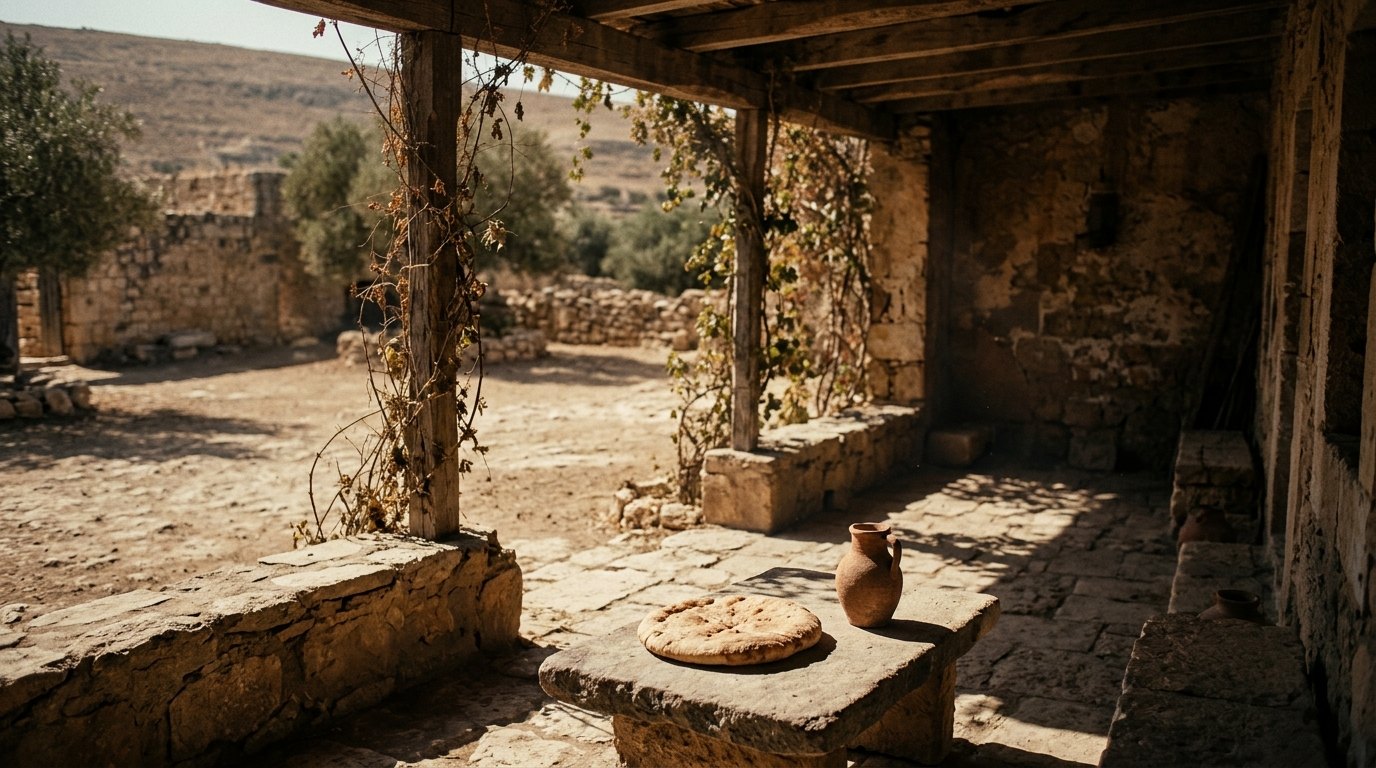
“Are you so dull?” he asked. “Don’t you see that nothing that enters a person from the outside can defile them? For it doesn’t go into their heart but into their stomach, and then out of the body.” (In saying this, Jesus declared all foods clean.)
Mark 7:18-19 (NIV)
Jesus clarifies that bodily food passes through the digestive tract into the latrine, thereby making all foods clean.
In Mark 7:18-19, Jesus revolutionizes humanity's understanding of righteousness by declaring that food enters not the heart but the stomach, thus declaring all foods clean. Addressing the legalistic additions of the Pharisees who prioritized ceremonial handwashing, Christ pointed the crowd back to reality in Mark 7:14-16 and Matthew 15:10-11, explaining that external substances cannot produce spiritual contamination. Food merely enters the digestive tract and passes into the latrine; it possesses no moral power to alter a soul's standing before a holy God. Confronting the perplexity of the disciples in Matthew 15:16-20, Jesus explained that unwashed hands leave the conscience intact. Real defilement proceeds entirely from within. As Mark 7:20-23 catalogs, the human heart is the wellspring of evil thoughts, sexual immorality, theft, murder, adultery, coveting, and deceit. By redirecting moral scrutiny from dietary menus to inward corruption, the Lord Jesus stripped away the external shadows of the ceremonial law, preparing His disciples for the inauguration of the new covenant where holiness is wrought by the regenerating power of the Holy Spirit rather than culinary avoidance.
| Passage | What it says |
|---|---|
| Mark 7:14-16 | Jesus proclaims that nothing entering a man from the outside has power to defile him spiritually. |
| Mark 7:18-19 | Jesus explains that food goes into the stomach rather than the heart, purifying all foods. |
| Mark 7:20-23 | Jesus identifies evil thoughts, adulteries, murders, and pride originating within the human heart as true defilements. |
| Matthew 15:10-11 | Jesus instructs the multitude that what goes into the mouth does not defile, but what proceeds out. |
| Matthew 15:16-20 | Jesus rebukes the disciples' dullness and explains that unwashed hands do not render a person spiritually unclean. |
The Apostolic Vision
Heaven Confirms the Cleansing of All Things

The voice spoke to him a second time, “Do not call anything impure that God has made clean.”
Acts 10:15 (NIV)
The heavenly voice directly overturns ritual distinctions by declaring that what God has cleansed must not be called common.
The dramatic revelation in Acts 10:15 marks the formal dismantling of old covenant dietary barriers: what God has cleansed, no longer consider unholy. In Acts 10:9-16, the apostle Peter was praying upon a rooftop in Joppa when he fell into a trance and saw heaven opened. A great sheet descended, filled with all kinds of four-footed animals, reptiles, and birds of the air, accompanied by the divine command to rise, kill, and eat. Peter's instinctive refusal—grounded in lifelong adherence to the Mosaic code—was answered three times by the heavenly voice, which established that ritual distinctions had reached their divine terminus in Christ. When Peter later rehearsed this encounter before the Jerusalem church in Acts 11:5-10, the apostles recognized that the cleansing of all foods directly prefigured God's gracious inclusion of Gentile believers into one body without requiring their submission to the Mosaic ceremonial code. When questions of communal fellowship later surfaced among Jewish and Gentile Christians, the Jerusalem Council issued pastoral guidance in Acts 15:19-20 and Acts 15:28-29, asking Gentile believers to abstain from meat sacrificed to idols, blood, and things strangled. This provision was not a reimposition of Levitical law for salvation, but a loving concession to maintain peace in mixed congregations.
| Passage | What it says |
|---|---|
| Acts 10:9-16 | Peter sees a sheet of unclean animals and is commanded to kill and eat three distinct times. |
| Acts 10:15 | A voice from heaven forbids Peter from calling common or unclean what God has cleansed. |
| Acts 11:5-10 | Peter recounts the heavenly vision to the Jerusalem church to explain fellowship with Gentile believers. |
| Acts 15:19-20 | The Jerusalem Council asks Gentile converts to abstain from things sacrificed to idols, blood, and strangled meat for communal peace. |
| Acts 15:28-29 | The apostolic letter records these pastoral restrictions as necessary to preserve unity between Jewish and Gentile believers. |
Christian Liberty and Conscience
Food Received with Thanksgiving and Governed by Love

For everything God created is good, and nothing is to be rejected if it is received with thanksgiving, because it is consecrated by the word of God and prayer.
1 Timothy 4:4-5 (NIV)
Paul affirms that every creature of God is good when received with thanksgiving and sanctified through prayer.
In 1 Timothy 4:4–5, the apostle Paul proclaims that every creature of God is good, rejecting ascetic legalism because physical food is sanctified through the word of God and prayer. Paul warns in 1 Timothy 4:1–3 that forbidding foods is a demonic deception, a theme echoed in Colossians 2:16–17, where dietary rules are shown to be mere shadows that point to Christ. Hebrews 13:9 confirms that the heart is strengthened by grace, not by ceremonial foods that offer no true profit. Writing to Corinth, Paul notes in 1 Corinthians 6:12–13 that food and the stomach will both pass away, and in 1 Corinthians 8:8 he stresses that what we eat neither commends us to God nor diminishes us spiritually. In the public market, believers may eat without scruple (1 Corinthians 10:25–27), for as Titus 1:15 states, to the pure all things are pure.
Yet Christian freedom must always be governed by love for others. Paul declares in Romans 14:14 that nothing is unclean in itself, yet he urges mutual charity between the strong and the weak (Romans 14:1–3, 6). The kingdom of God consists not in eating and drinking, but in righteousness, peace, and joy in the Holy Spirit (Romans 14:17). Consequently, Paul warns believers never to destroy a brother for whom Christ died (Romans 14:15, 20–21; 1 Corinthians 8:13). Conscience matters deeply; if one eats with doubt, he sins, because whatever does not proceed from faith is sin (Romans 14:22–23). When sitting at a pagan neighbor's table, Christians abstain if someone points out an idol sacrifice, guarding the neighbor's conscience (1 Corinthians 10:28–30). The overarching rule remains simple: whatever you eat or drink, do all to the glory of God (1 Corinthians 10:31).
| Passage | What it says |
|---|---|
| Romans 14:1-3 | Paul urges the church not to judge or despise fellow believers over eating vegetables versus all foods. |
| Romans 14:14 | Paul declares his conviction in Christ Jesus that no food is unclean in itself. |
| Romans 14:17 | The kingdom of God is defined not by food and drink, but by righteousness, peace, and joy in the Holy Spirit. |
| Romans 14:20-21 | Believers are warned not to destroy God's work for food or cause a brother to stumble. |
| 1 Corinthians 8:8 | Paul teaches that food does not commend us to God, making us neither better nor worse. |
| 1 Corinthians 8:13 | Paul resolves to forgo meat permanently if eating it causes a brother to fall into sin. |
| 1 Corinthians 10:25-27 | Believers may eat whatever is sold in the meat market without raising questions of conscience. |
| 1 Corinthians 10:31 | Whatever a Christian eats or drinks should be done entirely to the glory of God. |
| 1 Timothy 4:1-3 | Paul warns that false teachers will depart from the faith by commanding abstinence from created foods. |
| 1 Timothy 4:4-5 | Paul confirms that every creature is good and sanctified through God's word and prayer. |
| Colossians 2:16-17 | Believers must let no one judge them regarding food or drink, which were shadows of Christ. |
| Hebrews 13:9 | The heart is strengthened by divine grace rather than by dietary regulations that bring no spiritual benefit. |
| Romans 14:6 | The one who eats does so in honor of the Lord, giving thanks to God. |
| Romans 14:15 | Believers must not destroy with their food someone for whom Christ died. |
| Romans 14:22-23 | Whoever eats with doubt is condemned, because whatever does not proceed from faith is sin. |
| 1 Corinthians 6:12-13 | Food is for the stomach and the stomach for food, but God will destroy both. |
| 1 Corinthians 10:28-30 | If told food was offered in sacrifice, refrain for the sake of the informer's conscience. |
| Titus 1:15 | To the pure all things are pure, but to the defiled and unbelieving nothing is pure. |
Wilderness Provision
God Feeds Israel in the Wilderness with Bread from Heaven

He humbled you, causing you to hunger and then feeding you with manna, which neither you nor your ancestors had known, to teach you that man does not live on bread alone but on every word that comes from the mouth of the LORD.
Deuteronomy 8:3 (NIV)
Moses identifies the central theological purpose of physical hunger and supernatural food as reliance on God's word.
Moses reveals the true heart of God's wilderness miracles in Deuteronomy 8:3, explaining that God fed Israel to teach that man does not live by bread alone, but by every word from the mouth of the Lord. When the assembly hungered in the desert, the Lord rained bread from heaven each morning (Exodus 16:4), testing their obedience and training them to depend daily on His grace. In Exodus 16:16–18, God commanded every family to gather according to their need, ensuring that he who gathered much had nothing over, and he who gathered little had no lack. In this supernatural provision, God displayed His fatherly tenderness toward an unsteady people.
Yet Israel's appetites quickly turned into rebellion. Numbers 11:4–6 recounts how the mixed multitude lusted for the fish, cucumbers, and garlic of Egypt, despising the heavenly gift. In righteous response, God sent windblown quail in astonishing abundance, but struck the greedy with a severe plague while the meat was still between their teeth (Numbers 11:31–34). Centuries later, Israel remembered these wilderness works with wonder. Nehemiah 9:15 celebrates the bread from heaven and water from the rock, while Psalms 78:24–25 honors the manna as the grain of heaven and the food of angels. As Psalm 105:40 affirms, God remained ever faithful to satisfy His wandering flock.
| Passage | What it says |
|---|---|
| Exodus 16:4 | The Lord rains bread from heaven to feed Israel and test their obedience. |
| Exodus 16:16-18 | Each household gathers manna according to need, leaving none behind for greed. |
| Numbers 11:4-6 | The rabble craves the meat, fish, and produce of Egypt, despising God's manna. |
| Numbers 11:31-34 | God sends quail to satisfy their craving, striking them with a plague while chewing. |
| Deuteronomy 8:3 | God fed Israel manna to teach that man does not live by bread alone. |
| Nehemiah 9:15 | God provided bread from heaven for their hunger and water from the rock. |
| Psalms 78:24-25 | God rained down manna to eat and gave them the grain of heaven, angels' food. |
| Psalms 105:40 | The people asked, and God brought quail and satisfied them with the bread of heaven. |
Exile and Defilement
Faithful Israelites Maintain Holy Distinction Amid Pagan Defilement

But Daniel resolved not to defile himself with the royal food and wine, and he asked the chief official for permission not to defile himself this way.
Daniel 1:8 (NIV)
Daniel's resolve highlights how dietary faithfulness in exile guarded covenant identity and wholehearted devotion to God.
In Daniel 1:8, the young prophet Daniel resolved not to defile himself with the king's rich food or the wine of Babylon. Placed in a pagan court, Daniel and his companions understood that sharing the royal table meant partaking in food sacrificed to idols and transgressing the Levitical dietary boundaries God had established for Israel. Daniel requested a ten-day test of water and vegetables alone (Daniel 1:12–16), and the Lord rewarded their holy distinction: the young men appeared healthier and better nourished than all who consumed the royal fare.
Dietary compromise was frequently the tragic consequence of Israel's covenant unfaithfulness. In Hosea 9:3, the prophet foretold that rebellious Ephraim would return to exile and eat unclean food in Assyria, stripped of their clean land and sacred sacrifices. Similarly, in Ezekiel 4:9–17, the Lord commanded the prophet to bake bread composed of mixed grains, cooked over dung and eaten by weight, acting as a vivid sign of the terrible famine and ritual uncleanness coming upon Jerusalem during the Babylonian siege. In every era, God called His people to guard their spiritual and bodily fidelity amidst a defiled culture.
| Passage | What it says |
|---|---|
| Daniel 1:8 | Daniel resolves not to defile himself with the king's royal food or wine. |
| Daniel 1:12-16 | Daniel and his friends thrive on a ten-day diet of vegetables and water alone. |
| Ezekiel 4:9-17 | Ezekiel bakes mixed-grain bread measured by weight to depict coming famine and siege. |
| Hosea 9:3 | In exile, Ephraim will return to Egypt and eat unclean food in Assyria. |
Gluttony and Temperance
Scripture Warns Against Gluttony and Commends Temperance and Joy
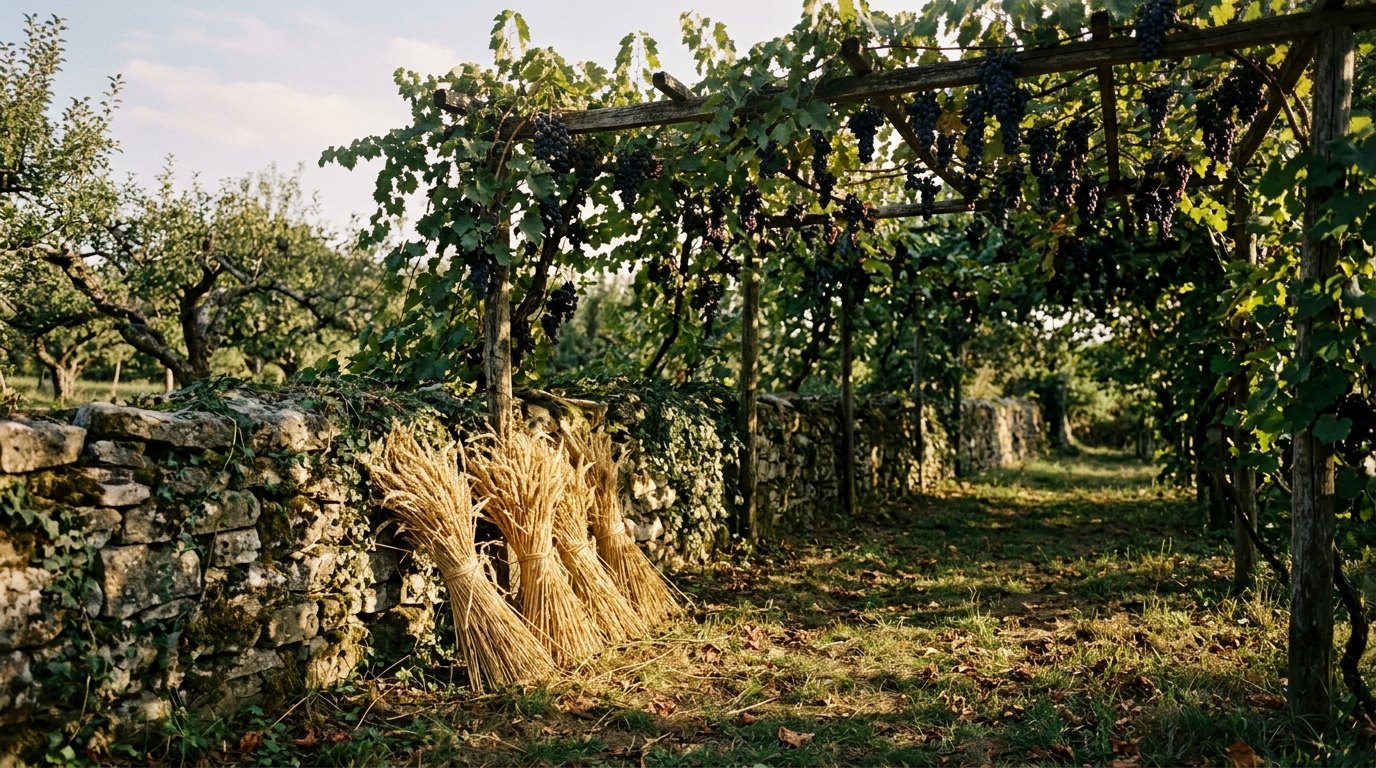
Do not join those who drink too much wine or gorge themselves on meat, for drunkards and gluttons become poor, and drowsiness clothes them in rags.
Proverbs 23:20-21 (NIV)
Wisdom connects uncontrolled appetite and gluttony directly to spiritual ruin and poverty.
Proverbs 23:20–21 warns believers never to keep company with drunkards or gluttonous eaters of meat, for the drunkard and the glutton will come to poverty and drowsiness will clothe a man with rags. God gives physical appetite as a blessing, but uncontrolled indulgence destroys both body and soul. Proverbs 23:1–3 advises dining with rulers with extreme caution, urging self-restraint as if putting a knife to one's throat. Solomon warns in Proverbs 25:16 to eat only enough honey as is sufficient, lest overindulgence lead to vomiting, and repeats in Proverbs 25:27 that excess honey brings no honor. While Proverbs 28:7 notes that a companion of gluttons shames his father, Philippians 3:19 issues the ultimate New Testament warning against apostates whose god is their belly and who set their minds on earthly things.
Yet Scripture never embraces harsh asceticism. Food is meant to be received with thanksgiving and delight. Ecclesiastes 2:24 commends eating, drinking, and finding joy in one's labor as gifts from the hand of God. The Preacher calls the believer in Ecclesiastes 9:7 to eat your bread with joy, knowing that God approves such honest gladness. Finally, Ecclesiastes 10:16–17 blesses the nation whose leaders feast at proper times for strength, not drunkenness, exalting a balanced, temperate life that honors the Lord in every meal.
| Passage | What it says |
|---|---|
| Proverbs 23:1-3 | Put a knife to your throat if given to appetite when dining with a ruler. |
| Proverbs 23:20-21 | Do not join with heavy drinkers or gluttonous eaters of meat, which bring poverty. |
| Proverbs 25:16 | Eat only enough honey as is sufficient, lest you become full and vomit it. |
| Proverbs 25:27 | It is not good to eat much honey, nor is it glorious to seek one's own glory. |
| Proverbs 28:7 | A companion of gluttons shames his father, while an obedient son keeps the law. |
| Ecclesiastes 2:24 | There is nothing better than that a person should eat and drink and find enjoyment in toil. |
| Ecclesiastes 9:7 | Eat bread with joy and drink wine with a merry heart, for God approves your deeds. |
| Ecclesiastes 10:16-17 | Blessed is the land whose leaders feast at the proper time for strength, not drunkenness. |
| Philippians 3:19 | Paul warns of enemies of the cross whose god is their belly and glory in their shame. |
The Eschatological Feast
Physical Feasting Prefigures the Eternal Banquet and the Bread of Life

Then Jesus declared, “I am the bread of life. Whoever comes to me will never go hungry, and whoever believes in me will never be thirsty.
John 6:35 (NIV)
Christ reveals that all physical food ultimately points to Himself as the true, eternal sustenance for the soul.
In John 6:35, Jesus identifies Himself as the true, eternal sustenance that every earthly meal merely foreshadows: "I am the bread of life; whoever comes to me shall not hunger, and whoever believes in me shall never thirst." Physical bread preserves mortal life for a few fleeting hours, but Christ offers Himself as living nourishment that satisfies the soul forever. This glorious announcement fulfills centuries of prophetic anticipation. Through the prophet Isaiah, God promised that on His holy mountain He would make for all peoples a lavish feast of rich food and well-aged wine (Isaiah 25:6). Centuries later, the same prophet issued the gracious, sovereign invitation to come, buy wine and milk without money, and delight in rich food rather than spending labor on that which cannot satisfy (Isaiah 55:1-2).
When the Son of God took on human flesh, He continually framed the arrival of His kingdom as an extravagant feast. In Matthew 22:1-4, Jesus compares the kingdom of heaven to a king's wedding banquet for his son, where fattened cattle are prepared and all things stand ready. When the originally invited guests offer hollow excuses, the master extends grace to the outcasts, commanding his servants to bring in the poor, crippled, blind, and lame so that his banquet hall might be entirely filled (Luke 14:15-24).
Earthly eating reaches its ultimate earthly transformation in the Upper Room. Anticipating His coming passion, the Lord earnestly desired to share the Passover meal with His disciples, declaring that He would not eat it again until it finds fulfillment in the kingdom of God (Luke 22:15-18). In Matthew 26:26-29, He broke bread and poured wine, instituting the Lord's Supper to anchor His church in His broken body and shed blood. Christ explained the profound reality behind this table in John 6:53-58, teaching that whoever feeds on His flesh and drinks His blood abides in Him and will be raised on the last day. Every physical bite and sip believers take points beyond itself to the climactic culmination of redemptive history: the marriage supper of the Lamb, where the redeemed will feast in the unhindered presence of their King forever (Revelation 19:9).
| Passage | What it says |
|---|---|
| Isaiah 25:6 | The Lord of hosts prepares a lavish feast of rich food and well-aged wine for all peoples. |
| Isaiah 55:1-2 | The Lord invites the thirsty and poor to buy wine and milk without money and eat what is good. |
| Matthew 22:1-4 | The kingdom of heaven is compared to a wedding banquet prepared with prime oxen and calves. |
| Matthew 26:26-29 | Jesus institutes the Lord's Supper with bread and cup, pointing forward to the kingdom feast. |
| Luke 14:15-24 | A master invites the poor, crippled, blind, and lame to fill his great banquet feast. |
| Luke 22:15-18 | Jesus earnestly desires to eat the Passover before suffering, looking to fulfillment in God's kingdom. |
| John 6:35 | Jesus declares He is the bread of life; whoever comes to Him will never hunger. |
| John 6:53-58 | Jesus teaches that eating His flesh and drinking His blood yields eternal life and resurrection. |
| Revelation 19:9 | Blessed are those who are invited to the marriage supper of the Lamb. |
Where in the Bible
| Book | Passages |
|---|---|
| Genesis | 6 · Genesis 1:29, Genesis 9:3, Genesis 9:4, Genesis 2:16-17, Genesis 3:6, Genesis 8:20 |
| Exodus | 4 · Exodus 22:31, Exodus 23:19, Exodus 16:4, Exodus 16:16-18 |
| Leviticus | 7 · Leviticus 11:1-8, Leviticus 11:9-12, Leviticus 11:46-47, Leviticus 17:10-14, Leviticus 3:17, Leviticus 7:23-27, Leviticus 19:23-25 |
| Numbers | 2 · Numbers 11:4-6, Numbers 11:31-34 |
| Deuteronomy | 4 · Deuteronomy 14:3-21, Deuteronomy 12:15-16, Deuteronomy 12:23-25, Deuteronomy 8:3 |
| Nehemiah | 1 · Nehemiah 9:15 |
| Psalms | 2 · Psalms 78:24-25, Psalms 105:40 |
| Proverbs | 5 · Proverbs 23:1-3, Proverbs 23:20-21, Proverbs 25:16, Proverbs 25:27, Proverbs 28:7 |
| Ecclesiastes | 3 · Ecclesiastes 2:24, Ecclesiastes 9:7, Ecclesiastes 10:16-17 |
| Isaiah | 2 · Isaiah 25:6, Isaiah 55:1-2 |
| Ezekiel | 1 · Ezekiel 4:9-17 |
| Daniel | 2 · Daniel 1:8, Daniel 1:12-16 |
| Hosea | 1 · Hosea 9:3 |
| Matthew | 4 · Matthew 15:10-11, Matthew 15:16-20, Matthew 22:1-4, Matthew 26:26-29 |
| Mark | 3 · Mark 7:14-16, Mark 7:18-19, Mark 7:20-23 |
| Luke | 2 · Luke 14:15-24, Luke 22:15-18 |
| John | 2 · John 6:35, John 6:53-58 |
| Acts | 5 · Acts 10:9-16, Acts 10:15, Acts 11:5-10, Acts 15:19-20, Acts 15:28-29 |
| Romans | 7 · Romans 14:1-3, Romans 14:14, Romans 14:17, Romans 14:20-21, Romans 14:6, Romans 14:15, Romans 14:22-23 |
| 1 Corinthians | 6 · 1 Corinthians 8:8, 1 Corinthians 8:13, 1 Corinthians 10:25-27, 1 Corinthians 10:31, 1 Corinthians 6:12-13, 1 Corinthians 10:28-30 |
| Philippians | 1 · Philippians 3:19 |
| Colossians | 1 · Colossians 2:16-17 |
| 1 Timothy | 2 · 1 Timothy 4:1-3, 1 Timothy 4:4-5 |
| Titus | 1 · Titus 1:15 |
| Hebrews | 1 · Hebrews 13:9 |
| Revelation | 1 · Revelation 19:9 |
The story in order
- God provides food at creation (c. 4000 BC) · Genesis 1:29 · God's initial provision for humanity.
- Noahic covenant permits animal food (c. 2350 BC) · Genesis 9:3 · Expanded permission for human diet after the flood.
- Israel's dietary laws established (c. 1450 BC) · Leviticus 11:1-8 · Distinctions between clean and unclean for holiness.
- Command against eating blood (c. 1450 BC) · Leviticus 17:10-14 · Life is in the blood; a perpetual statute.
- Israel fed manna in the wilderness (c. 1450 BC) · Exodus 16:4 · God's provision and test of obedience.
- Daniel's faithful diet (c. 605 BC) · Daniel 1:8 · Maintaining holiness amidst pagan defilement.
- Jesus declares all foods clean (c. AD 30) · Mark 7:19 · Inward purity, not outward diet, defiles.
- Peter's vision of clean and unclean (c. AD 40) · Acts 10:15 · Heaven confirms the cleansing of all things.
- Jerusalem Council on Gentile converts (c. AD 49) · Acts 15:28-29 · Pastoral restrictions for communal peace.
- Paul on Christian liberty in food (c. AD 57) · Romans 14:14 · No food is unclean in itself.
- Eschatological feast announced (c. 700 BC) · Isaiah 25:6 · A future banquet for all peoples.
- Jesus is the Bread of Life (c. AD 30) · John 6:35 · Spiritual sustenance found in Christ.
Key words
- Clean and Unclean (ṭāhôr / ṭāmēʾ (Hebrew))
- Categories in Levitical law distinguishing permitted from forbidden foods, signifying holiness or unholiness. · Leviticus 11:46-47
- Defilement (koinóō (Greek))
- Spiritual impurity that separates from God, originating from within the heart, not from external food. · Mark 7:20-23
- Blood (dām (Hebrew))
- The life of the flesh, forbidden for consumption as it represents life and atonement. · Leviticus 17:10-14
- Food (brōma (Greek))
- Physical sustenance, but also a metaphor for spiritual nourishment and Christ himself.
- Kingdom of God (basileia tou theou (Greek))
- God's reign, characterized by righteousness, peace, and joy in the Holy Spirit, not by dietary matters. · Romans 14:17
- Conscience (syneidēsis (Greek))
- Inner moral sense that must be respected in matters of food to avoid causing a brother to stumble. · 1 Corinthians 10:25-30
Believers today receive every good creature of God with thanksgiving, knowing that food neither commends us to Him nor possesses power to defile our souls. Our dietary liberty is sanctified by the word of God and prayer, and it is guided always by brotherly love so that nothing we eat becomes a stumbling block to another.
76 passages, each cited once.
Scripture cited
- Matthew 15:17
- Acts 10:15
- Mark 7:14-23
- Acts 10:9-16
- Romans 14:1-23
- 1 Timothy 4:1-5
- 1 Corinthians 8:1-13
- Genesis 9:1-4