What does the Bible say about losing a child?

2 Samuel 12:22-23
22 He answered, “While the child was still alive, I fasted and wept. I thought, ‘Who knows? The LORD may be gracious to me and let the child live.’
23 But now that he is dead, why should I go on fasting? Can I bring him back again? I will go to him, but he will not return to me.”
New International Version (NIV)
The answer
The Bible says that losing a child causes deep grief, but believers are not left without comfort or hope. Scripture does not say every child’s death is divine punishment. Sometimes a child’s death is explicitly a consequence of a parent’s sin, as in David’s case; in other passages, God teaches that death can come as a refining or purifying judgment, and still in others He simply gives a sign of the brevity of human life. The Bible calls people to grieve honestly, to seek God, and to hold onto Christ and the promise of resurrection.
Your grief is real
“Blessed are those who mourn, for they shall be comforted” (Matthew 5:4). Mourning is not rebellion or hopelessness; it is a response to suffering that God promises to comfort. Even Jesus wept at the tomb of Lazarus (John 11:35).
David’s grief was physical and public: he fasted, lay on the ground, and refused food while his child was alive (2 Samuel 12:16-17). Scripture does not shame a grieving parent for those actions. But when the child died, David rose, washed, changed his clothes, ate, and went to worship (2 Samuel 12:20).
God is present in the darkest valley
“Even though I walk through the valley of the shadow of death, I will fear no evil, for you are with me. Your rod and your staff, they comfort me” (Psalm 23:4). The Shepherd does not promise a valley without darkness. He promises His presence and comfort within it.
Hope rests on Christ’s resurrection
Paul instructs believers not to grieve “like the rest, who have no hope” (1 Thessalonians 4:13). He grounds that hope in Christ’s death and resurrection: “if we believe that Jesus died and rose again, even so God will bring with him those who have fallen asleep in Jesus” (1 Thessalonians 4:14). The child’s death does not mean the child is lost to Christ. For those who die in Him, death is a sleep from which He will raise them.
David expressed this confidence plainly: “I will go to him, but he will not return to me” (2 Samuel 12:23). His child’s death ended their earthly relationship, but David trusted that he himself would go to his child.
A child’s death does not necessarily mean condemnation
When David confessed, “I have sinned against Yahweh,” Nathan told him that God had put away his sin (2 Samuel 12:13). Then the Lord specifically said that because David had given great occasion to God’s enemies to blaspheme, the child born to him would die (2 Samuel 12:14), and Scripture records that the Lord struck the child (2 Samuel 12:15). That is a particular case in which the child’s death was divine judgment connected to the father’s sin.
By contrast, when Hezekiah was near death, Isaiah told him to set his house in order because he would die (Isaiah 38:1). Hezekiah prayed, and the Lord promised him fifteen more years (Isaiah 38:2-5). Isaiah 38:7-8 then describes the sign given to Hezekiah: the shadow on the sundial moved backward ten steps. It says nothing about writing his children’s names before the Lord. This passage shows the Lord responding to a king’s prayer, not explaining every death through a child’s death.
Grief can end in worship and renewed life
After the death of his child, David worshipped and then ate (2 Samuel 12:20). The biblical pattern is not denial of sorrow but trust that God remains sovereign and faithful. Scripture’s final promise is that God will dwell with His people, wipe away every tear, and remove death, mourning, crying, and pain (Revelation 21:3-4).
So the Bible answers bereavement with three firm truths: your sorrow matters to God; your child belongs to Christ; and death is not the final word. The Lord’s promise is that “death will be no more; neither will there be mourning, nor crying, nor pain any more” (Revelation 21:4).
Answered from Scripture · reviewed November 11, 2026
Scripture acknowledges the loss of a child as one of the deepest agonies a human heart can bear, recording the honest tears of bereaved parents across generations. Yet the Bible never abandons grieving families to despair, anchoring parental sorrow in God's near presence, His tender mercy, and the sure hope of the resurrection.
Deep Grief
Scripture honors the raw sorrow of bereaved parents

Blessed are those who mourn, for they will be comforted.
Matthew 5:4 (NIV)
Jesus explicitly pronounces a divine blessing and the guarantee of comfort upon those who mourn.
In Matthew 5:4, the Lord Jesus speaks directly to the crushing weight of bereavement: "Blessed are those who mourn, for they shall be comforted." Scripture never treats the loss of a child as a trifle or expects believers to suppress natural tears. Instead, God's Word honors profound heartache by recording the unvarnished cries of parents across the ages.
When death confronts human life, God's own Son enters into that sorrow. At the grave of Lazarus, John 11:35 records the shortest and most tender verse in the New Testament: Jesus wept openly, feeling the sting of mortality and compassion for those who grieved. Long before the incarnation, the prophets captured maternal agony with unforgettable clarity. Jeremiah 31:15 portrays Rachel weeping inconsolably for her children, refusing comfort because they are gone. In Genesis 37:34-35, Jacob tears his clothes and puts on sackcloth, declaring he will go down to the grave mourning his presumed dead son Joseph.
Similarly, royal power cannot shield a parent from despair. In 2 Samuel 18:33, King David weeps uncontrollably over Absalom, crying out from the depth of his soul, wishing he had died instead of his boy. Maternal devotion shines through raw sorrow in 2 Samuel 21:10, where Rizpah spreads sackcloth upon a rock and guards the bodies of her slain sons night and day against scavengers. Job also models godly sorrow amid sudden catastrophe; after losing all ten children in Job 1:18-20, he tears his robe, shaves his head, falls to the earth, and worships God in holy grief. When Christ walked the earth, He met this same desolation outside the town gate in Luke 7:12-13, showing deep compassion to the weeping widow of Nain who had lost her only son. Scripture sanctifies tears; the sorrow of a grieving parent is neither forgotten nor condemned by the God who sees every sorrow.
| Passage | What it says |
|---|---|
| Matthew 5:4 | Christ promises that those who mourn will receive divine comfort. |
| John 11:35 | Jesus weeps openly at the tomb of His beloved friend Lazarus. |
| Jeremiah 31:15 | Rachel weeps inconsolably for her lost children, refusing earthly consolation. |
| Genesis 37:34-35 | Jacob tears his garments and mourns deeply over the presumed loss of Joseph. |
| 2 Samuel 18:33 | David expresses heart-wrenching anguish upon learning of his son Absalom's death. |
| 2 Samuel 21:10 | Rizpah guards the bodies of her slain sons, displaying maternal grief and devotion. |
| Job 1:18-20 | Job mourns the sudden death of all his children by tearing his robe and falling down in worship. |
| Luke 7:12-13 | Jesus has compassion on the weeping widow of Nain who had lost her only son. |
David's Sorrow
David models earnest prayer and worship through bereavement
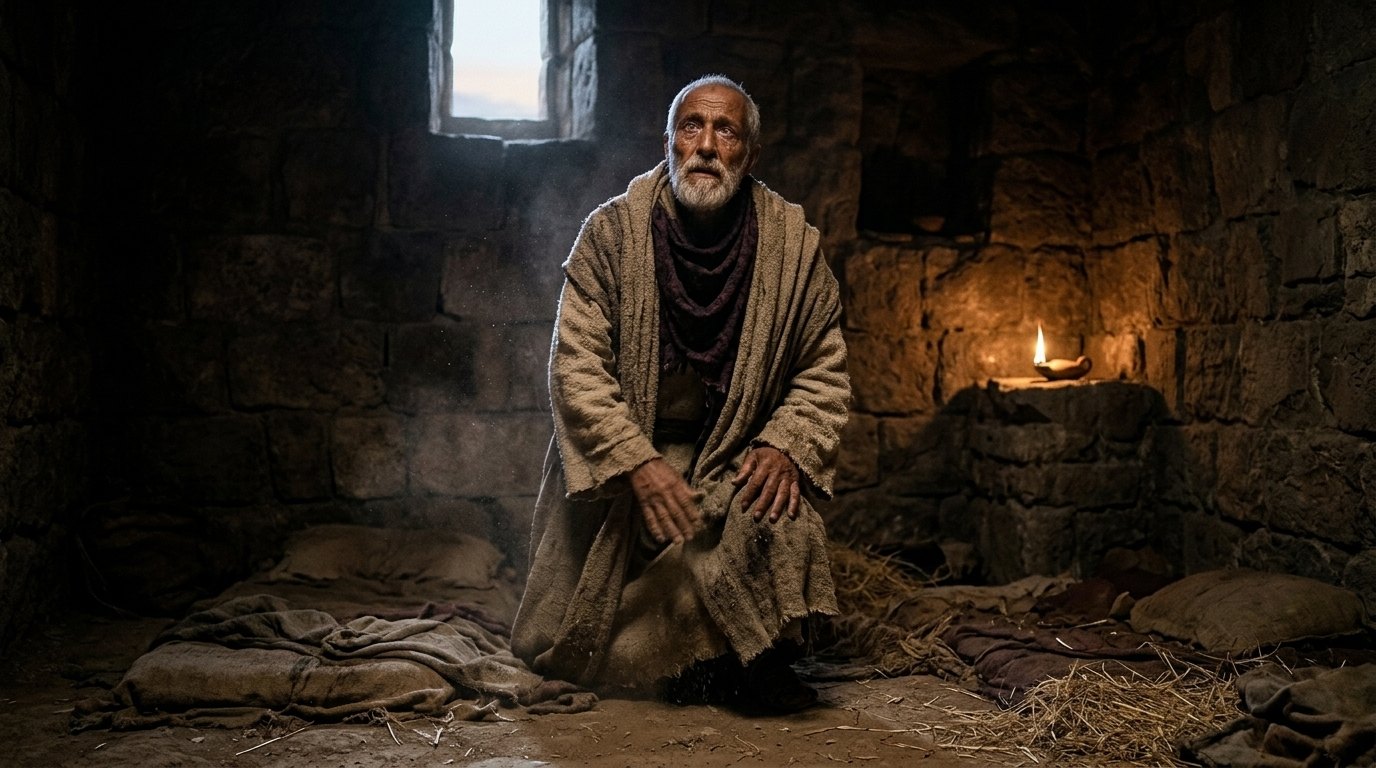
But now that he is dead, why should I go on fasting? Can I bring him back again? I will go to him, but he will not return to me.”
2 Samuel 12:23 (NIV)
David anchors his soul in the certainty that he will go to his departed child.
When David’s infant son was struck with fatal illness, the king gave himself entirely to supplication before God. Yet when the worst came to pass, David uttered words that have anchored mourning families for millennia in 2 Samuel 12:23: "I shall go to him, but he will not return to me." In this simple, resolute confession, David rested in the absolute confidence of a future reunion beyond the grave.
While the child lived, David pleaded earnestly with the Lord. In 2 Samuel 12:16-17, David fasted, lay upon the cold earth throughout the night, and refused the food his elders offered, knowing that God is merciful and sovereign over life. He held nothing back in prayer, seeking God’s intervention until the child breathed his last. But when news came that the child had died, 2 Samuel 12:20 captures a remarkable turn: David arose from the ground, washed his face, changed his apparel, and went into the house of the Lord to worship before returning home to eat.
His servants were bewildered by this response, leading David to clarify the posture of biblical faith. In 2 Samuel 12:22, he explained that while the child was alive, he wept and fasted because he thought, "Who knows whether the Lord will be gracious to me, that the child may live?" But now that the child was taken, fasting could not alter the earthly outcome. As 2 Samuel 12:23 makes clear, David did not surrender to despair, nor did he believe his infant son had vanished into nothingness. He recognized that while the child could never return to earthly life, David himself would one day follow him into the presence of God. This passage provides sweet, enduring comfort to Christian parents: their departed little ones are kept safely in the Lord’s presence, where loving reunions await in eternity.
| Passage | What it says |
|---|---|
| 2 Samuel 12:16-17 | David fasts and lies on the ground pleading for his critically ill child. |
| 2 Samuel 12:20 | Upon the child's passing, David washes, changes clothes, and enters God's house to worship. |
| 2 Samuel 12:22 | David explains he fasted and wept while hoping the Lord might show mercy. |
| 2 Samuel 12:23 | David affirms he cannot bring the child back but will go to him. |
Divine Comfort
The Lord remains near to the brokenhearted

The LORD is close to the brokenhearted and saves those who are crushed in spirit.
Psalms 34:18 (NIV)
The text assures grieving souls that God draws especially close in moments of deep crushed spirit.
For parents walking through the hollow shock of child loss, Psalms 34:18 shines as an essential promise of the Lord's special nearness: "The Lord is near to the brokenhearted and saves the crushed in spirit." God does not abandon grieving believers to traverse their agony alone; He draws intimately close precisely when human strength is utterly extinguished.
David experienced this companioning grace during his darkest days, singing in Psalms 23:4 that even in the valley of the shadow of death, fear cannot conquer because the Shepherd Himself walks alongside His sheep with protective rod and staff. The Lord's heart toward the afflicted is tenderly restorative. According to Psalms 147:3, He heals the brokenhearted and gently binds up their painful wounds. In 2 Corinthians 1:3-4, the apostle Paul celebrates God as the "Father of mercies and God of all comfort," who meets believers in every tribulation so that they can extend that very same divine comfort to others walking through deep sorrow.
Every sigh of grief is noticed in heaven. Psalms 56:8 reminds the suffering soul that God keeps count of every wandering and stores every tear inside His bottle, recording them in His book. To those who wonder if their grief has been overlooked, the Lord speaks through Isaiah 49:15, declaring that even if a nursing mother could somehow forget her child, He will never forget His people. Above all, the believer's grief is held fast by Christ’s triumphant victory over the grave. As Romans 8:38-39 proclaims, neither death nor life, nor any present tragedy, can ever sever the Lord's children from the indestructible love of God revealed in Christ Jesus our Lord.
| Passage | What it says |
|---|---|
| Psalms 34:18 | The Lord is near to the brokenhearted and saves those crushed in spirit. |
| Psalms 23:4 | The Shepherd accompanies His sheep through the darkest valley with His rod and staff. |
| Psalms 147:3 | The Lord heals the brokenhearted and binds up their painful wounds. |
| 2 Corinthians 1:3-4 | The Father of mercies comforts believers in all affliction so they may comfort others. |
| Psalms 56:8 | God counts our wanderings and gathers every tear of grief into His bottle. |
| Isaiah 49:15 | The Lord assures His people that His compassion exceeds even a mother's tender love for her nursing child. |
| Romans 8:38-39 | Death cannot separate believers or their little ones from the enduring love of God in Christ Jesus. |
Kingdom Promise
Christ cherishes the little ones in His kingdom
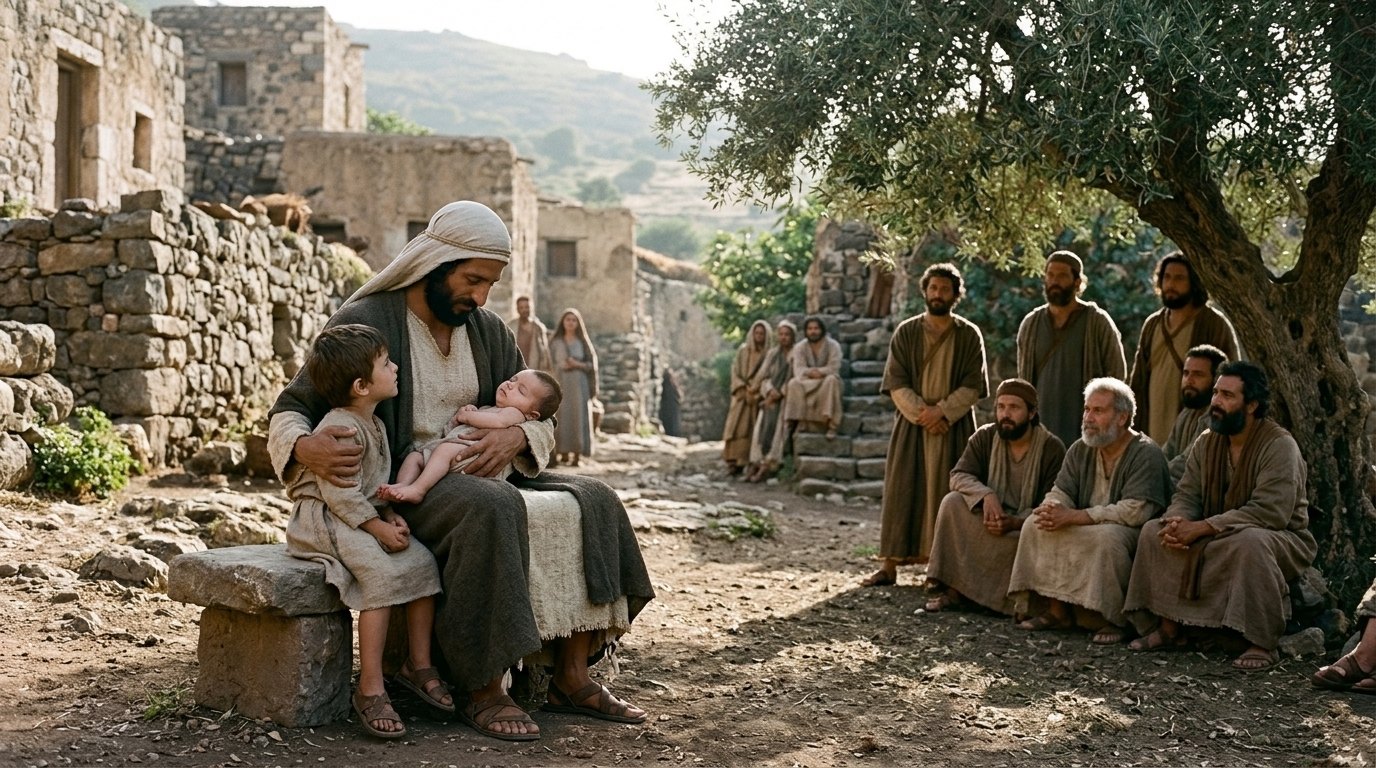
When Jesus saw this, he was indignant. He said to them, “Let the little children come to me, and do not hinder them, for the kingdom of God belongs to such as these.
Mark 10:14 (NIV)
Jesus declares that the kingdom of God belongs to children, taking them into His arms.
When disciples sought to turn away families bringing their infants to Jesus, the Lord gave an emphatic declaration that provides immense hope regarding children: in Mark 10:14, He declared, "Let the children come to me; do not hinder them, for to such belongs the kingdom of God." Christ did not merely tolerate little ones; He welcomed them into His arms, blessed them, and identified them as heirs of divine grace.
This tender regard is consistently emphasized throughout the Gospels. In Matthew 18:10, Jesus delivers a stern warning to anyone tempted to treat the young with indifference: "See that you do not despise one of these little ones. For I tell you that in heaven their angels always see the face of my Father who is in heaven." The text reflects the unceasing care and honor that heaven bestows upon young children, whose vulnerable lives are watched over by God Himself.
Again in Matthew 19:14, Jesus sternly rebuked His followers when they attempted to dismiss young children, reasserting that the kingdom of heaven belongs to such as these. The sovereign grace of God extends fully to those who die in infancy or before reaching an age of moral understanding. Trusting in the boundless mercy of the Savior who died upon the cross for sinners, Christian parents can rest assured that their little ones rest in the eternal embrace of Christ. Because Jesus took the curse of sin upon Himself and conquered the grave, death does not have the final word. The children of God belong to the King who gathers the lambs in His arms and carries them safely home.
| Passage | What it says |
|---|---|
| Mark 10:14 | Jesus invites the little children, declaring the kingdom of God belongs to such. |
| Matthew 18:10 | Christ warns against despising little ones whose angels behold the Father's face. |
| Matthew 19:14 | Jesus rebukes the disciples and commands them not to hinder the children. |
Living Hope
Resurrection faith transforms our grief into eternal assurance

Brothers and sisters, we do not want you to be uninformed about those who sleep in death, so that you do not grieve like the rest of mankind, who have no hope. For we believe that Jesus died and rose again, and so we believe that God will bring with Jesus those who have fallen asleep in him.
1 Thessalonians 4:13-14 (NIV)
Paul shows that Christ's resurrection ensures believers grieve not as those without hope.
In 1 Thessalonians 4:13-14, the apostle Paul does not forbid grief, but grounds our mourning in the resurrection of Jesus Christ. Scripture never commands bereaved believers to suppress genuine heartbreak; instead, it establishes an unshakeable boundary against despair. Because Christ died and bodily rose again, those who have fallen asleep in Him are securely held, and God will bring them with Him at His return. This living hope transforms bereavement from an eternal separation into a temporary parting governed by divine mercy.
Paul expands on this climactic victory in 1 Corinthians 15:54-55, declaring that when the perishable puts on the imperishable, death is swallowed up in absolute victory. The sting of death, which leaves such a devastating wound in a parent's heart, is definitively broken through our Lord Jesus Christ. Grief is heavy, but it no longer has the final word.
The full consummation of this assurance is revealed in Revelation 21:4, where God Himself will wipe away every tear from their eyes. In the new heavens and the new earth, the former things will pass away entirely: death will be no more, and sorrow, crying, and pain will never again invade God’s people. The Lord who numbers our tears will Personally dry them forever.
| Passage | What it says |
|---|---|
| 1 Thessalonians 4:13-14 | Believers grieve with hope because God will bring with Jesus those asleep in Him. |
| 1 Corinthians 15:54-55 | Death is swallowed up in victory through the resurrection triumph of Christ. |
| Revelation 21:4 | God will wipe away every tear, ending mourning, crying, pain, and death forever. |
Resurrection Power
God demonstrates His ultimate sovereign power over death

Run to meet her and ask her, ‘Are you all right? Is your husband all right? Is your child all right?’ ” “Everything is all right,” she said.
2 Kings 4:26 (NIV)
The Shunammite mother answers that all is well even in the agony of bereavement, resting in God's mercy.
When asked of her welfare while rushing toward the prophet on Mount Carmel, the grieving mother in 2 Kings 4:26 speaks the extraordinary confession, "It is well," demonstrating a steadfast trust in God amidst overwhelming sorrow. Her son had died suddenly in her arms, yet she laid him on the bed of the man of God and rode urgently to seek the Lord's servant, anchoring her broken heart in God's mercy rather than surrender to despair.
This miraculous restoration echoes the compassion displayed in 1 Kings 17:17-24, where Elijah cried out over the widow of Zarephath’s dead son. There, God heard the prophet's pleading prayer and returned the breath of life to the boy, proving that God marks the agony of a grieving mother and possesses total authority over the grave.
God demonstrated this same resurrection power through the prophet Elisha in 2 Kings 4:18-37, reviving the Shunammite's child and placing him living back into his mother's trembling arms. These Old Testament awakenings pointed directly to Christ Himself, who walked into the weeping home of a despairing ruler of the synagogue in Mark 5:38-42. Taking the lifeless twelve-year-old girl by the hand, Jesus commanded her to arise, shattering the finality of death with a single word. Christ remains Lord over death, holding life and eternity in His sovereign hands.
| Passage | What it says |
|---|---|
| 1 Kings 17:17-24 | Elijah cries out over the widow of Zarephath's dead son, and the Lord restores his life. |
| 2 Kings 4:18-37 | The Shunammite woman seeks Elisha after her son's sudden death, and God raises him. |
| Mark 5:38-42 | Jesus enters the house of mourning and raises Jairus's twelve-year-old daughter from death. |
Where in the Bible
| Book | Passages |
|---|---|
| Genesis | 1 · Genesis 37:34-35 |
| 2 Samuel | 6 · 2 Samuel 18:33, 2 Samuel 21:10, 2 Samuel 12:16-17, 2 Samuel 12:20, 2 Samuel 12:22, 2 Samuel 12:23 |
| 1 Kings | 1 · 1 Kings 17:17-24 |
| 2 Kings | 1 · 2 Kings 4:18-37 |
| Job | 1 · Job 1:18-20 |
| Psalms | 4 · Psalms 34:18, Psalms 23:4, Psalms 147:3, Psalms 56:8 |
| Isaiah | 1 · Isaiah 49:15 |
| Jeremiah | 1 · Jeremiah 31:15 |
| Matthew | 3 · Matthew 5:4, Matthew 18:10, Matthew 19:14 |
| Mark | 2 · Mark 10:14, Mark 5:38-42 |
| Luke | 1 · Luke 7:12-13 |
| John | 1 · John 11:35 |
| Romans | 1 · Romans 8:38-39 |
| 1 Corinthians | 1 · 1 Corinthians 15:54-55 |
| 2 Corinthians | 1 · 2 Corinthians 1:3-4 |
| 1 Thessalonians | 1 · 1 Thessalonians 4:13-14 |
| Revelation | 1 · Revelation 21:4 |
The story in order
- Job mourns his children (c. 2000 BC) · Job 1:18-20 · Shows deep grief and worship amid loss.
- Jacob mourns for Joseph (c. 1700 BC) · Genesis 37:34-35 · Illustrates inconsolable parental sorrow.
- Elijah raises a child (c. 870 BC) · 1 Kings 17:17-24 · Demonstrates God's power over death.
- Elisha raises a child (c. 840 BC) · 2 Kings 4:18-37 · Shows God's restorative power through His prophet.
- David grieves for his son (c. 980 BC) · 2 Samuel 12:16-20 · Models prayer, fasting, and worship in grief.
- David's hope in death (c. 980 BC) · 2 Samuel 12:23 · Affirms going to be with the lost child.
- Rachel weeps for her children (c. 720 BC) · Jeremiah 31:15 · Symbolizes profound, inconsolable grief.
- Jesus weeps for Lazarus (c. AD 30) · John 11:35 · Shows Jesus' empathy with human sorrow.
- Jesus raises Jairus's daughter (c. AD 30) · Mark 5:38-42 · Demonstrates Jesus' authority over death.
- Jesus comforts the widow of Nain (c. AD 30) · Luke 7:12-13 · Shows Jesus' compassion for the bereaved.
- Jesus welcomes children (c. AD 30) · Mark 10:14 · Declares the kingdom belongs to the little ones.
- Paul on resurrection hope (c. AD 50) · 1 Thessalonians 4:13-14 · Grief is tempered by hope of reunion.
- Paul on victory over death (c. AD 55) · 1 Corinthians 15:54-55 · Death's sting is overcome by resurrection.
- John sees new creation (c. AD 95) · Revelation 21:4 · Promises an end to all sorrow and death.
Parental Grief and Worship
| Grief Response | Action/Attitude | Outcome/Explanation | Passage |
|---|---|---|---|
| Job's children die | Tears, mourns, worships | God is sovereign and worthy | Job 1:18-20 |
| Jacob's son lost | Tears garments, mourns deeply | Inconsolable sorrow | Genesis 37:34-35 |
| David's child ill | Fasted, wept, lay on ground | Hoped for mercy | 2 Samuel 12:16-17 |
| David's child dies | Washed, changed clothes, worshipped | Will go to him | |
| Rachel's children taken | Weeps inconsolably | Refuses consolation | Jeremiah 31:15 |
Resurrection Life Over Death
| Prophet/Jesus | Child Raised | Parental Response | Passage |
|---|---|---|---|
| Elijah | Widow of Zarephath's son | Believes God's word | 1 Kings 17:17-24 |
| Elisha | Shunammite woman's son | Seeks prophet, trusts God | 2 Kings 4:18-37 |
| Jesus | Jairus's daughter | Faith and worship | Mark 5:38-42 |
| Jesus | Widow of Nain's son | Compassion and restoration | Luke 7:12-13 |
God's Comfort vs. Human Grief
| Source of Grief | Human Response | Divine Comfort/Response | Passage |
|---|---|---|---|
| Loss of children | Rachel weeps inconsolably | God's compassion exceeds mother's love | |
| Brokenheartedness | Crushed in spirit | Lord is near, saves, heals | |
| Affliction | Mourning | God comforts to enable comforting others | 2 Corinthians 1:3-4 |
| Death | Sorrow | God brings believers with Jesus; death is victory | |
| Pain and Death | Tears | God wipes away every tear | Revelation 21:4 |
Key words
- Mourn
- To grieve deeply, express sorrow, especially for loss. · Matthew 5:4
- Comfort (parakaleō, παρακαλέω)
- To give strength and hope to someone in distress. · Matthew 5:4
- Brokenhearted
- Crushed in spirit by sorrow or disappointment. · Psalms 34:18
- Resurrection
- The act of rising from the dead; Christ's rising guarantees ours. · 1 Corinthians 15:54-55
- Hope
- Confident expectation of future good, especially eternal life. · 1 Thessalonians 4:13-14
Though earthly farewells bring wrenching sorrow, the believer's grief is held fast by a living Redeemer. Because Jesus conquered the grave, death does not hold the final word, offering brokenhearted parents the eternal promise of reunion and everlasting peace in the presence of God.
28 passages, each cited once.
Scripture cited
- 2 Samuel 12:13-23
- Psalms 23:4-6
- Matthew 5:4
- 1 Thessalonians 4:13-18
- Isaiah 38:1-8
- Romans 8:38-39
- Revelation 21:3-5