What does the Bible say about parenting?

Deuteronomy 6:4-9
4 Hear, O Israel: The LORD our God, the LORD is one.
5 Love the LORD your God with all your heart and with all your soul and with all your strength.
6 These commandments that I give you today are to be on your hearts.
7 Impress them on your children. Talk about them when you sit at home and when you walk along the road, when you lie down and when you get up.
8 Tie them as symbols on your hands and bind them on your foreheads.
9 Write them on the doorframes of your houses and on your gates.
New International Version (NIV)
The answer
Scripture treats parenting as the daily handing down of faithful love for the one true God. Deuteronomy 6:4-9 is the charter text: Israel is to love Yahweh with all the heart (Deuteronomy 6:5), and that love is meant to move from parent to child in every part of ordinary life — at home, on the road, at bedtime, at sunrise, on the doorposts. Ephesians 6:1-4 then gives the New Testament shape: children obey and honor, and fathers (parents) raise them in the discipline and instruction of the Lord without provoking them. Every parenting picture in the Bible lines up under those two passages.
What the Old Testament teaches parents to do
- Love God first, so the children can see it. The Shema opens with 'Yahweh is one' and then commands wholehearted love (Deuteronomy 6:4-5). Jesus called this the first and greatest commandment (Mark 12:29-30). A parent who loves God above all is the picture the child imitates.
- Teach God's words deliberately and constantly. 'You shall teach them diligently to your children, and shall talk of them when you sit in your house, and when you walk by the way, and when you lie down, and when you rise up' (Deuteronomy 6:7). The repetition isn't ritual — it's forming the child's inner world. Psalm 78:4-8 gives the same picture: each generation is to 'tell to the generation to come the praises of Yahweh, his strength, and his wondrous deeds,' so that the children 'set their hope in God' and 'keep his commandments.'
- Lead your household in God's ways. God said of Abraham, 'I have known him, to the end that he may command his children and his household after him, that they may keep the way of Yahweh, to do righteousness and justice' (Genesis 18:19). Parenting here is shepherding — taking responsibility for the spiritual direction of the home.
- Dedicate your children to the Lord. Hannah gave Samuel back to God's house for life: 'I have also given him to Yahweh. As long as he lives he is given to Yahweh' (1 Samuel 1:28). Children belong to God; parents steward them for Him.
- Discipline in love. 'One who spares the rod hates his son, but one who loves him is careful to discipline him' (Proverbs 13:24). The saying assumes discipline is hard and costly; it warns against the drift of letting a child run untethered out of comfort.
- Train the will, and trust God for the outcome. 'Train up a child in the way he should go, and when he is old he will not depart from it' (Proverbs 22:6). Parents do the training; the 'depart' part is God's work over time.
What the New Testament adds
- Mutual duties in the home. 'Children, obey your parents in the Lord, for this is right. Honor your father and mother, which is the first commandment with a promise' (Ephesians 6:1-2). The home is the first discipleship classroom for both sides.
- Parents, do not break your children. 'You fathers, don't provoke your children to wrath, but nurture them in the discipline and instruction of the Lord' (Ephesians 6:4). Authority is real, but it serves the child's soul — never rules by anger, never crushes.
- Faith often travels through a believing family. Paul writes to Timothy, 'having been reminded of the sincere faith that is in you, which lived first in your grandmother Lois and your mother Eunice and, I am persuaded, in you also' (2 Timothy 1:5). Real faith in a child's life is frequently the fruit of a parent's steady prayer and example.
What this looks like in an ordinary week
- Talk about God in everyday moments. Deuteronomy 6:7 assumes the kitchen, the walk, the bedtime, the morning — not just Sunday school.
- Make the words visible in the home. 'You shall write them on the door posts of your house and on your gates' (Deuteronomy 6:9) — symbols that say, this household belongs to the Lord.
- Pray for your children by name and dedicate them. Hannah is the model (1 Samuel 1:27-28).
- Discipline, don't provoke; correct, don't crush. Hold the line of Proverbs 13:24 and the gentleness of Ephesians 6:4 together.
A verse to carry
'For I have known him, to the end that he may command his children and his household after him, that they may keep the way of Yahweh' (Genesis 18:19).
Answered from Scripture · reviewed November 7, 2026
Scripture frames parenting not as an accessory to life or a set of secular techniques, but as the sacred, daily discipleship of the next generation in the knowledge and love of the living God. From the covenant charter of the Shema to apostolic household instruction, God calls mothers and fathers to shepherd the hearts of their children through active teaching, loving correction, and living faith. Tracing the Bible's full counsel reveals that parents are stewards entrusted with God's heritage, charged to nurture souls who place their hope in Christ.
The Covenant Charter
Passing Down Wholehearted Love for God

These commandments that I give you today are to be on your hearts. Impress them on your children. Talk about them when you sit at home and when you walk along the road, when you lie down and when you get up.
Deuteronomy 6:6-7 (NIV)
It defines parenting as the continual, organic transmission of God's Word woven into every rhythm of daily domestic life.
In Deuteronomy 6:6-7, God commands His covenant people that His words must be in their hearts and diligently taught to their children, woven seamlessly into the rising, walking, resting, and rising again of ordinary family life. Parenting is the daily, organic discipleship of children in the fear and love of God, established upon the great confession of Deuteronomy 6:4-5 that Yahweh our God is one, commanding our total allegiance with heart, soul, and strength. These truths are not an occasional lecture; they are to be bound visibly upon hand and forehead and inscribed on the doorposts of the home (Deuteronomy 6:8-9).
Moses emphasizes this enduring duty in Deuteronomy 11:18-21, warning that keeping and imparting these commands sustains life and multiplies the days of future generations. Parents must actively guard against spiritual forgetfulness, taking diligent care to teach their children and grandchildren the awe of Horeb where God spoke from the fire (Deuteronomy 4:9-10). This covenant responsibility reaches back to the patriarchs; in Genesis 18:19, the Lord chose Abraham precisely so that he would charge his children and household to keep the way of the Lord by doing righteousness and justice. It culminates in Deuteronomy 32:46-47, where Moses declares that these statutes are no empty word, but the very life of the people, requiring all the assembly, including the little children, to gather, hear, learn, and revere the Lord (Deuteronomy 31:12-13).
| Passage | What it says |
|---|---|
| Deuteronomy 6:4-5 | Israel is commanded to confess Yahweh as the one true God and to love Him with heart, soul, and might. |
| Deuteronomy 6:6-7 | Parents must carry God's words in their hearts and diligently teach them at home, along the road, and at bedtimes. |
| Deuteronomy 6:8-9 | God's commands are to be bound on hands, forehead, doorposts, and city gates as a perpetual visible standard. |
| Deuteronomy 11:18-21 | Moses reiterates that teaching God's commands to children prolongs the days of families upon the promised land. |
| Deuteronomy 4:9-10 | Israel is warned not to forget God's wonders but to make them known to their children and grandchildren. |
| Genesis 18:19 | God chooses Abraham so that he will direct his children and household to keep the way of the Lord in righteousness. |
| Deuteronomy 32:46-47 | Moses charges parents to command their children to observe all the words of the law, for it is their very life. |
| Deuteronomy 31:12-13 | Children must be gathered alongside adults to hear, learn, fear the Lord, and observe all His words. |
Generational Heritage
Recounting God's Deeds to Children
We will not hide them from their descendants; we will tell the next generation the praiseworthy deeds of the LORD, his power, and the wonders he has done.
Psalms 78:4 (NIV)
It establishes the non-negotiable duty of declaring the glorious deeds and wonders of God to the next generation.
Asaph proclaims in Psalm 78:4 that believers will not hide the praise, strength, and wonders of God from their children, but will recount them to the generation to come. The faithful parent acts as a living bridge between ancestral mercies and future generations, receiving the sacred testimony described in Psalm 78:1-3 so that children might never forget the works of God, but place their unwavering hope in Him and refuse the stubborn rebellion of their ancestors (Psalm 78:4-8).
Far from viewing children as an encumbrance, Psalm 127:3-5 celebrates them as a heritage and reward from Yahweh, likening them to sharp arrows in the hand of a skilled warrior aimed into the world. Those who fear the Lord see their tables graced with vibrant young life, their children flourishing like robust olive shoots around them (Psalm 128:1-4). This generational praise rings through Psalm 145:4, which commands one age to commend God's mighty acts to the next. Such active remembrance was memorialized at the river Jordan, where Joshua set twelve stones so fathers could answer their children's curious inquiries with the story of God drying up the waters (Joshua 4:21-24). God likewise structured the wonders in Egypt so that fathers would recount His power (Exodus 10:1-2), a heritage to be transmitted from fathers to children and children to grandchildren across every trial (Joel 1:3), since the living praise Him and declare His faithfulness (Isaiah 38:19).
| Passage | What it says |
|---|---|
| Psalms 78:1-3 | Asaph calls the assembly to hear parables and dark sayings handed down from ancestral fathers. |
| Psalms 78:4-8 | Fathers must teach children God's praise and law so that they set their hope in God and avoid rebellion. |
| Psalms 127:3-5 | Children are described as an inheritance from Yahweh, a reward, and arrows in the hand of a warrior. |
| Psalms 128:1-4 | The person who fears the Lord is blessed with a fruitful wife and children like olive shoots around the table. |
| Psalms 145:4 | One generation shall praise God's works to another and declare His mighty acts. |
| Joshua 4:21-24 | Memorial stones from the Jordan are placed so parents can explain God's dry-ground crossing to their inquiring children. |
| Exodus 10:1-2 | God explains that signs were wrought in Egypt so fathers could tell their children and grandchildren of His power. |
| Joel 1:3 | The prophet instructs the people to tell the message to their children, grandchildren, and subsequent generations. |
| Isaiah 38:19 | King Hezekiah proclaims that living fathers make known God's enduring faithfulness to their children. |
Wisdom and Discipline
Guiding the Heart with Prudent Correction
Start children off on the way they should go, and even when they are old they will not turn from it.
Proverbs 22:6 (NIV)
It shows that early moral and spiritual training shapes a lifetime of walking in wisdom before God.
Proverbs 22:6 charges parents to train up a child in the way he should go, promising that this early grounding in divine wisdom will not be abandoned in old age. Scriptural discipline is tender, steadfast rescue driven by holy love, steering a young heart away from self-destruction. A youth must attend to the instruction of his father and not forsake the law of his mother, for this teaching serves as a graceful garland upon the head (Proverbs 1:8-9). This mirror of divine care is spelled out in Proverbs 3:11-12, where the Lord reproves the child in whom He delights, teaching parents that correction is a badge of sonship.
True love does not indulge rebellion; Proverbs 13:24 explains that sparing the rod of discipline manifests hatred, while genuine love corrects early and diligently. Correction must be applied while there is yet hope, refusing to abandon a child to unchecked folly (Proverbs 19:18). Because foolishness is naturally bound up in the heart of a youth, loving discipline is required to drive it far away (Proverbs 22:15). Refusing correction endangers the soul, whereas faithful reproof rescues from Sheol (Proverbs 23:13-14). When left entirely to himself, a child brings disgrace, but the rod and reproof bestow wisdom and lasting peace (Proverbs 29:15, 17). Solomon reminds us of the gentle nurture he received from both his father and mother (Proverbs 4:1-4), urging children to bind those words around the heart (Proverbs 6:20-23). A grandfather's crown is his grandchildren (Proverbs 17:6), and the righteous man walking in integrity leaves an enduring blessing upon his offspring (Proverbs 20:7).
| Passage | What it says |
|---|---|
| Proverbs 1:8-9 | A youth is instructed to hear his father's instruction and not forsake his mother's teaching as a graceful crown. |
| Proverbs 3:11-12 | The Lord's discipline is not to be despised, for He reproves the son in whom He delights, like a father. |
| Proverbs 13:24 | He who spares the rod hates his son, but he who loves him disciplines him diligently. |
| Proverbs 19:18 | Parents are commanded to discipline their child while there is hope, and not set their heart on his destruction. |
| Proverbs 22:6 | Train up a child in the way he should go, and when he is old he will not depart from it. |
| Proverbs 22:15 | Folly is bound up in the heart of a child, but the rod of discipline drives it far away. |
| Proverbs 23:13-14 | Correction must not be withheld, for faithful discipline rescues a youth's soul from Sheol. |
| Proverbs 29:15 | The rod and reproof give wisdom, but a child left to himself brings shame to his mother. |
| Proverbs 29:17 | Disciplining one's son yields rest and delights the parent's soul. |
| Proverbs 4:1-4 | Solomon recounts how his own father and mother tenderly taught him wisdom and commandments. |
| Proverbs 6:20-23 | Children are urged to bind parental instruction continually upon their hearts for continual guidance and light. |
| Proverbs 17:6 | Scripture calls grandchildren the crown of the aged and parents the glorious pride of their children. |
| Proverbs 20:7 | The righteous man who walks with steadfast integrity leaves children who are blessed after him. |
Stewards of God
Dedicating Children to the Lord
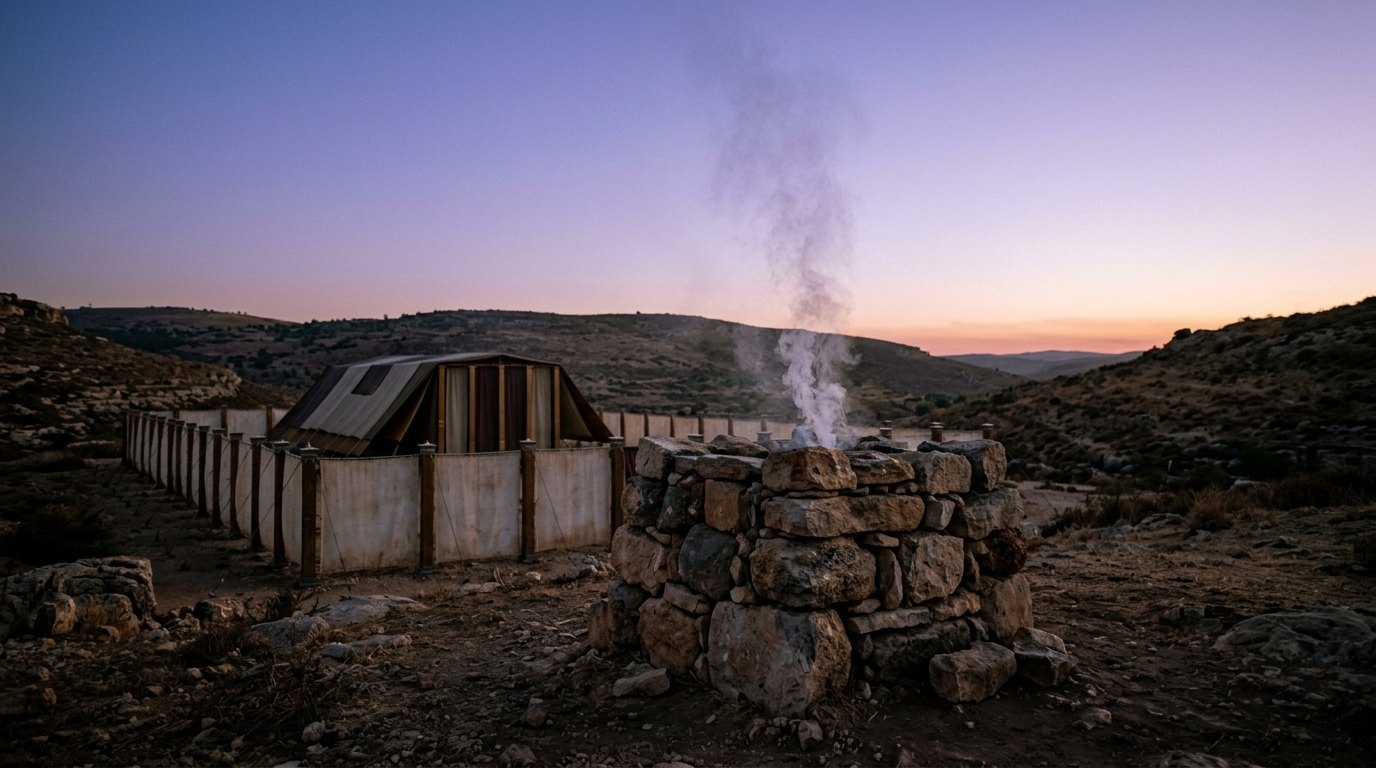
I prayed for this child, and the LORD has granted me what I asked of him. So now I give him to the LORD. For his whole life he will be given over to the LORD.” And he worshiped the LORDthere.
1 Samuel 1:27-28 (NIV)
Hannah exemplifies surrender by dedicating the child she prayed for entirely back to the service of Yahweh.
Hannah embodies the ultimate surrender of parenthood in 1 Samuel 1:27-28, declaring before the priest that she prayed for this child, and now lends him entirely back to the Lord for as long as he lives. Godly stewardship recognizes that our children belong completely to God, given to our care so that they might be dedicated to His kingdom. Hannah brought her young son Samuel to the sanctuary at Shiloh, offering him with full devotion (1 Samuel 1:26-28), and bursting into triumphant prayer in 1 Samuel 2:1-2, rejoicing in the holy power and deliverance of Yahweh.
Scripture juxtaposes Hannah's consecrated obedience with the sobering failure of high priest Eli. In 1 Samuel 3:12-13, God executed severe judgment on Eli's household because his sons treated holy things with contempt and he failed to restrain them, demonstrating that passive indulgence is spiritual negligence. In contrast, covenant parents actively disciple through the sacred calendar. When children observe the Passover and ask its meaning, parents must recount how the Lord spared their houses when He struck Egypt (Exodus 12:26-27). Whenever a child asks why the firstborn are consecrated, the father points back to God's mighty arm delivering Israel from bondage (Exodus 13:14-15), pointing every generation to the God who redeems.
| Passage | What it says |
|---|---|
| 1 Samuel 1:26-28 | Hannah presents Samuel at Shiloh, testifying that she has lent him to Yahweh for all his days. |
| 1 Samuel 2:1-2 | Hannah exults in the Lord in holy prayer, rejoicing in His salvation after committing her young son. |
| 1 Samuel 3:12-13 | God judges Eli's house because Eli knew his sons blasphemed God yet failed to restrain them. |
| Exodus 12:26-27 | Parents are instructed to explain the Passover sacrifice and redemption from Egypt whenever their children ask. |
| Exodus 13:14-15 | Fathers must tell their sons how the Lord redeemed Israel's firstborn when Pharaoh refused to let them go. |
New Covenant Order
Nurturing Without Provocation in Christ

Fathers, do not exasperate your children; instead, bring them up in the training and instruction of the Lord.
Ephesians 6:4 (NIV)
It balances parental authority with gospel tenderness, forbidding harsh exasperation while commanding Christian instruction.
The New Testament transforms household authority by anchoring family relationships directly in the Lord Jesus. Fathers are commanded not to provoke their children to anger, but to bring them up in the discipline and instruction of the Lord (Ephesians 6:4). This command strikes a revolutionary balance between authority and tenderness. While children are called to obey and honor their parents in the Lord as the first commandment carrying a specific promise (Ephesians 6:1-3), parents are forbidden from arbitrary tyranny or harshness. The parallel instruction in Colossians reinforces this symmetry: children are to obey their parents in everything to please God (Colossians 3:20), while fathers must take care never to embitter, discourage, or break the spirit of their children (Colossians 3:21).
Christ Himself elevates and dignifies the place of children within the covenant community. Even as the Son of God, the young Jesus submitted to His earthly parents in Nazareth, growing in wisdom, stature, and favor with both God and man (Luke 2:51-52). When disciples viewed young children as an interruption to important ministry, Jesus indignantly rebuked them, gathered the children into His arms, and laid His hands on them in blessing (Mark 10:13-16).
Jesus repeatedly appeals to the natural tender instincts of parenthood to teach the greater benevolence of God. Earthly parents know how to provide bread and fish rather than stones or serpents to their offspring (Matthew 7:9-11; Luke 11:11-13). In the parable of the prodigal son, the heart of God is captured in the image of a father who runs to meet his repentant child, covering him with kisses, restoring his dignity, and celebrating his return (Luke 15:20-24). Gospel-shaped parenting mirrors this patient, welcoming grace.
| Passage | What it says |
|---|---|
| Ephesians 6:1-3 | Children are told to obey and honor their parents in the Lord as the first commandment with promise. |
| Ephesians 6:4 | Fathers are forbidden from provoking children to anger and commanded to nurture them in the Lord's discipline. |
| Colossians 3:20 | Children must obey their parents in everything, for this is well-pleasing to the Lord. |
| Colossians 3:21 | Fathers must not embitter or discourage their children, lest they lose heart. |
| Luke 2:51-52 | Jesus submitted to His earthly parents in Nazareth, growing in wisdom, stature, and favor with God and man. |
| Mark 10:13-16 | Jesus rebukes the disciples, welcomes the little children into His arms, and blesses them. |
| Matthew 7:9-11 | Jesus contrasts earthly parents giving good gifts to their children with the Father giving good things from heaven. |
| Luke 11:11-13 | Jesus affirms that even flawed human parents naturally seek to provide bread and protection rather than harm. |
| Luke 15:20-24 | The waiting father rushes to embrace, forgive, and restore his repentant prodigal son with joyous celebration. |
Living Example
Passing on Sincere, Unhypocritical Faith

I am reminded of your sincere faith, which first lived in your grandmother Lois and in your mother Eunice and, I am persuaded, now lives in you also.
2 Timothy 1:5 (NIV)
It shows how genuine personal faith in a mother and grandmother directly shapes the spiritual life of a child.
Biblical instruction in the home relies fundamentally on the authenticity of a parent's walk with the Lord. The generational transmission of the gospel flows through sincere, unhypocritical faith lived out before children every day (2 Timothy 1:5). Paul reflects with deep gratitude on how the genuine faith that dwelt first in Timothy’s grandmother Lois and his mother Eunice had taken deep root in Timothy himself. Because Timothy had known the sacred Scriptures from his earliest infancy, he possessed the wisdom that leads to salvation through faith in Christ Jesus (2 Timothy 3:14-15). Godly parenting is sustained through the broader communion of believers, where mature women mentor younger mothers to love their husbands and nurture their children in holiness (Titus 2:3-5).
Apostolic care often borrows its warmest metaphors from faithful domestic devotion. Paul compares his pastoral labor to a dedicated father who personally encourages, comforts, and urges his own children to walk in a manner worthy of God (1 Thessalonians 2:11-12). This faithful guidance includes consistent, loving correction. Human fathers discipline their sons for a brief season according to their best wisdom, a pattern that points to God’s perfect, refining discipline, which yields the peaceful fruit of righteousness to those trained by it (Hebrews 12:7-11).
Finally, Scripture places practical stewardship upon the household head. Faithful home management and children who walk in respectful dignity are essential qualifications for spiritual leadership in the church (1 Timothy 3:4-5). Loving one's children demands steady, sacrificial provision; those who neglect the basic daily needs of their own household have denied the faith and are worse than unbelievers (1 Timothy 5:8). Parents naturally lay up resources to bless and establish their children, mirroring the selfless care of Christ for His people (2 Corinthians 12:14).
| Passage | What it says |
|---|---|
| 2 Timothy 1:5 | Paul remembers the sincere faith dwelling first in Timothy's grandmother Lois and mother Eunice. |
| 2 Timothy 3:14-15 | Timothy is urged to abide in the sacred writings taught to him from childhood, which lead to salvation. |
| Titus 2:3-5 | Older women are instructed to train younger women to love their husbands and children in godliness. |
| 1 Thessalonians 2:11-12 | Paul compares his apostolic ministry to a father encouraging, comforting, and charging his children to walk worthily. |
| Hebrews 12:7-10 | Earthly fathers discipline for a short time, serving as a pattern of God's holy discipline for our good. |
| Hebrews 12:11 | All discipline seems painful in the moment, but later yields the peaceful fruit of righteousness to the trained. |
| 1 Timothy 3:4-5 | Paul requires church overseers to manage their own household well, keeping children submissive with all dignity. |
| 1 Timothy 5:8 | Anyone who fails to provide for relatives, especially members of his immediate household, has denied the faith. |
| 2 Corinthians 12:14 | Paul notes the natural parental duty that parents ought to save up and provide for their children. |
Where in the Bible
| Book | Passages |
|---|---|
| Genesis | 1 · Genesis 18:19 |
| Exodus | 3 · Exodus 10:1-2, Exodus 12:26-27, Exodus 13:14-15 |
| Deuteronomy | 7 · Deuteronomy 6:4-5, Deuteronomy 6:6-7, Deuteronomy 6:8-9, Deuteronomy 11:18-21, Deuteronomy 4:9-10, Deuteronomy 32:46-47, Deuteronomy 31:12-13 |
| Joshua | 1 · Joshua 4:21-24 |
| 1 Samuel | 3 · 1 Samuel 1:26-28, 1 Samuel 2:1-2, 1 Samuel 3:12-13 |
| Psalms | 5 · Psalms 78:1-3, Psalms 78:4-8, Psalms 127:3-5, Psalms 128:1-4, Psalms 145:4 |
| Proverbs | 13 · Proverbs 1:8-9, Proverbs 3:11-12, Proverbs 13:24, Proverbs 19:18, Proverbs 22:6, Proverbs 22:15, Proverbs 23:13-14, Proverbs 29:15, Proverbs 29:17, Proverbs 4:1-4, Proverbs 6:20-23, Proverbs 17:6, Proverbs 20:7 |
| Isaiah | 1 · Isaiah 38:19 |
| Joel | 1 · Joel 1:3 |
| Matthew | 1 · Matthew 7:9-11 |
| Mark | 1 · Mark 10:13-16 |
| Luke | 3 · Luke 2:51-52, Luke 11:11-13, Luke 15:20-24 |
| 2 Corinthians | 1 · 2 Corinthians 12:14 |
| Ephesians | 2 · Ephesians 6:1-3, Ephesians 6:4 |
| Colossians | 2 · Colossians 3:20, Colossians 3:21 |
| 1 Thessalonians | 1 · 1 Thessalonians 2:11-12 |
| 1 Timothy | 2 · 1 Timothy 3:4-5, 1 Timothy 5:8 |
| 2 Timothy | 2 · 2 Timothy 1:5, 2 Timothy 3:14-15 |
| Titus | 1 · Titus 2:3-5 |
| Hebrews | 2 · Hebrews 12:7-10, Hebrews 12:11 |
The story in order
- God chooses Abraham to lead his household (c. 2000 BC) · Genesis 18:19 · Establishes the principle of parental responsibility for godly living.
- Israel commanded to love and teach God's law (c. 1400 BC) · Deuteronomy 6:4-7 · The Shema emphasizes wholehearted devotion and diligent instruction.
- Memorial of God's deliverance for children's questions (c. 1350 BC) · Joshua 4:21-24 · Tangible reminders prompt parents to explain God's mighty acts.
- God's judgment on Eli's failure to discipline sons (c. 1100 BC) · 1 Samuel 3:12-13 · Highlights the serious consequences of neglecting parental correction.
- Solomon recounts parental teaching of wisdom (c. 950 BC) · Proverbs 4:1-4 · Illustrates the tender and foundational nature of parental instruction.
- Children are an inheritance from the Lord (c. 900 BC) · Psalms 127:3-5 · Portrays children as a blessing and a divine provision.
- Parents must tell of God's deeds to children (c. 700 BC) · Psalms 78:4-8 · Emphasizes teaching God's law to foster hope and obedience.
- Hezekiah proclaims God's faithfulness to children (c. 700 BC) · Isaiah 38:19 · Demonstrates passing on personal testimony of God's enduring love.
- Hannah dedicates Samuel to the Lord (c. 1050 BC) · 1 Samuel 1:26-28 · Shows consecrating children to God's service.
- Jesus welcomes and blesses little children (AD 30) · Mark 10:13-16 · Jesus affirms the value and importance of children in God's kingdom.
- Paul instructs fathers not to provoke children (c. AD 60) · Ephesians 6:4 · Calls for nurturing discipline that honors Christ.
- Paul recalls Timothy's sincere, inherited faith (c. AD 65) · 2 Timothy 1:5 · Highlights the impact of multi-generational godly influence.
Key words
- Shema (Shema, שְׁמַע)
- Hear, O Israel: The Lord our God, the Lord is one. · Deuteronomy 6:4
- Heritage (naḥalah, נַחֲלָה)
- A possession or legacy from an ancestor or God. · Psalms 127:3
- Discipline (mûsār, מוּסָר)
- Instruction, correction, or training to instill obedience and knowledge. · Proverbs 3:11
- Nurture (paideía, παιδεία)
- To bring up, care for, and encourage growth and development. · Ephesians 6:4
- Faith (pístis, πίστις)
- Trust, belief, and conviction in God and His promises. · 2 Timothy 1:5
Biblical parenting is sustained not by human perfection, but by resting in the covenant faithfulness of God. As parents diligently teach, patiently correct, and embody the grace of the Gospel, they point their children toward their true heavenly Father. In every season of the home, God's Word equips families to walk in truth and hand down the praises of the Lord to generations yet unborn.
53 passages, each cited once.
Scripture cited
- Deuteronomy 6:4-9
- Ephesians 6:4
- Genesis 18:19
- Proverbs 22:6
- Ephesians 6:1-4
- Psalms 78:1-8
- Proverbs 13:24
- Genesis 18:17-19
- 2 Timothy 1:5
- 1 Samuel 1:21-28