What does the Bible say about raising children in the faith?

Proverbs 22:6
6 Start children off on the way they should go, and even when they are old they will not turn from it.
New International Version (NIV)
The answer
God gives parents the daily responsibility of teaching their children His word, showing them sincere faith, correcting them lovingly, and nurturing them “in the discipline and instruction of the Lord” (Ephesians 6:4). The goal is not merely well-behaved or religious children, but children who know the Scriptures, set their hope in God, and find salvation through faith in Christ Jesus (Psalm 78:7; 2 Timothy 3:15).
Teach God’s word throughout ordinary life
Before instructing their children, parents are to love God wholeheartedly and keep His words on their own hearts (Deuteronomy 6:5-6). They are then commanded to teach those words diligently, speaking of them at home, while travelling, at bedtime and when rising (Deuteronomy 6:7). Spiritual training therefore belongs in everyday conversation and family life, not only in formal lessons or church gatherings.
This teaching also includes recounting God’s works, strength and wonderful deeds, so that one generation will tell the next and children will hope in God, remember His works and keep His commandments (Psalm 78:4-7). Deuteronomy 4:9 joins this responsibility with careful attention to one’s own soul: parents must not forget what God has done while teaching their children and grandchildren.
Model a sincere faith
Children need more than instruction spoken at them. Timothy’s faith was first present in his grandmother Lois and his mother Eunice, and he had known the holy Scriptures from infancy (2 Timothy 1:5; 2 Timothy 3:15). A parent’s sincere faith, obedience, repentance and continuing in God’s word give practical shape to what is taught. Parents cannot manufacture faith in a child, but they are responsible to teach faithfully and live consistently with that teaching.
Correct with love, without discouraging
Scripture treats loving correction as necessary, not optional. Proverbs 13:24 says that a loving parent is careful to discipline, while Proverbs 29:15 warns against leaving a child to himself. Children are also commanded to obey and honour their parents (Ephesians 6:1-3).
At the same time, discipline must not become exasperating or crushing. Fathers are specifically commanded not to provoke their children to wrath or discourage them (Ephesians 6:4; Colossians 3:21). God’s own discipline supplies the pattern: it is for His children’s good, trains them in holiness and ultimately produces righteousness (Hebrews 12:10-11). Parental correction should likewise seek the child’s restoration and training, rather than venting anger or asserting control.
Direct children to Christ
The Scriptures make a person “wise for salvation through faith which is in Christ Jesus” and equip God’s people for every good work (2 Timothy 3:15-17). Bible knowledge and outward morality are therefore not the finish line; children need to know Christ Himself and continue in what they have learned.
Jesus welcomed little children, took them in His arms and blessed them (Mark 10:13-16). He also gave a severe warning against causing little ones who believe in Him to stumble (Matthew 18:5-6). A child’s spiritual welfare must never be treated as unimportant.
Persevere in faithful training
Proverbs 22:6 calls parents to purposeful, lifelong training: “Train up a child in the way he should go, and when he is old he will not depart from it.” This gives real encouragement to begin early and persevere. It is not a parenting technique that bypasses a child’s own need to remain in the faith: Timothy, though taught from infancy, was still exhorted to continue in what he had learned (2 Timothy 3:14-15). Faithful parents keep teaching, correcting and exemplifying God’s truth, while looking to Christ—not their own performance—as the source of salvation.
Answered from Scripture · reviewed November 11, 2026
Scripture places the spiritual instruction of children squarely in the hands of parents, calling them to intentional, daily discipleship within the home. From the foundational commands of the Torah to the practical wisdom of the Epistles, raising children in the faith is presented not as a passive hope but as an active, diligent stewarding of souls toward Christ.
The Household Command
God Commands Intentional Instruction in Daily Living

Impress them on your children. Talk about them when you sit at home and when you walk along the road, when you lie down and when you get up.
Deuteronomy 6:7 (NIV)
This verse establishes that teaching God's commands to children is woven into every ordinary rhythm of family life rather than isolated to formal ceremony.
Deuteronomy 6:7 establishes that teaching God's commands is woven into the ordinary fabric of daily life rather than confined to isolated rituals. Long before Sinai, God noted of Abraham in Genesis 18:19 that he would direct his children and household to pursue the way of the Lord in justice and judgment. Moses reiterated this sacred calling in Deuteronomy 4:9, warning the people to keep their souls diligently lest they forget what their eyes had seen, charging them to make God's deeds known to children and grandchildren. In Deuteronomy 6:6-9, the Lord commands that His words first dwell within the parents' own hearts before they are spoken while sitting at home, walking along the path, lying down, and waking up. This rhythm is repeated in Deuteronomy 11:18-21, where parents are commanded to bind God's words upon their hands and foreheads, teaching them in the household so their days may be multiplied. In Deuteronomy 31:12-13, the entire congregation—including the very young—is gathered to hear the law so they learn to fear the Lord, an imperative reaffirmed in Deuteronomy 32:46 when Moses commands them to observe all the words of the law faithfully. Tangible memorials also served this purpose; when children saw the stones taken from the riverbed in Joshua 4:21-24, fathers were to tell of God drying up the Jordan so all nations might know His mighty hand. This resolute stewardship is crowned in Joshua 24:15, where Joshua announces that, regardless of the world around them, he and his house will serve the Lord.
| Passage | What it says |
|---|---|
| Genesis 18:19 | God chooses Abraham knowing he will command his children and household to keep the way of the Lord by doing justice and judgment. |
| Deuteronomy 4:9 | Israel is warned to guard their own souls diligently and teach God's wondrous works to their children and grandchildren. |
| Deuteronomy 6:6-9 | The words of God must be upon parents' hearts and taught diligently when sitting, walking, lying down, and rising. |
| Deuteronomy 11:18-21 | Parents are commanded to fix God's words in heart and soul, speaking them to their children throughout the home. |
| Deuteronomy 32:46 | Moses urges parents to set their hearts on all God's words and command their children to observe them carefully. |
| Joshua 4:21-24 | Fathers must explain the memorial stones of the Jordan crossing to their children so all peoples may fear the Lord. |
| Deuteronomy 31:12-13 | God commands the gathering of little children to hear the law read, so they learn to fear the Lord. |
| Joshua 24:15 | Joshua declares as head of his house that he and his household will serve the Lord together. |
Generational Remembrance
Recounting God's Mighty Acts to the Coming Generation

We will not hide them from their descendants; we will tell the next generation the praiseworthy deeds of the LORD, his power, and the wonders he has done.
Psalms 78:4 (NIV)
Asaph emphasizes that hiding God's deeds from children is a failure of covenant stewardship, setting forth the sacred duty to recount His praise.
In Psalms 78:4, Asaph declares that concealing God's glorious deeds from our children constitutes a failure of covenant faithfulness. Spiritual heritage depends on the faithful telling of history. In Exodus 10:2, the Lord directed Moses to record the judgments upon Egypt precisely so fathers could recount them to their sons and grandsons. This intentional narration framed Israel's defining ordinances; when children asked the meaning of the Passover in Exodus 12:26-27, parents explained how God passed over their homes and spared them. Similarly, in Exodus 13:14-15, the redemption of the firstborn became an ongoing occasion to explain God's mighty deliverance from Pharaoh's bondage. Psalms 78:3-7 emphasizes that fathers must teach the testimonies of God so the rising generation will set their hope in God and not forget His works. David echoes this generational mantle in Psalms 34:11, inviting children to listen so he might teach them the fear of the Lord, while in Psalms 71:17-18 he prays for vitality in old age specifically to declare God's might to the generation to come. Psalms 145:4 promises that one generation will continually commend God's works to the next, just as Joel 1:3 urges the transmission of God's Word through three successive generations. Hezekiah summarizes this rhythm in Isaiah 38:19, declaring that the living father makes known God's steadfast truth and faithfulness to his children.
| Passage | What it says |
|---|---|
| Exodus 10:2 | Moses recounts the plagues so fathers can tell sons and grandsons what the Lord did in Egypt. |
| Exodus 12:26-27 | Parents are instructed to explain the sacrificial Passover service when their children ask for its meaning. |
| Exodus 13:14-15 | A father must explain the redemption of the firstborn to his son as a reminder of God's deliverance. |
| Psalms 78:3-7 | Fathers must pass down God's testimonies so the next generation sets their hope in God and keeps His commands. |
| Psalms 145:4 | One generation shall commend the Lord's works to another and declare His mighty acts. |
| Joel 1:3 | The community is urged to tell God's message to their children, and their children to the next generation. |
| Psalms 34:11 | David invites children to come and listen, promising to teach them the fear of the Lord. |
| Psalms 71:17-18 | The psalmist asks for strength into old age to declare God's wondrous works to the next generation. |
| Isaiah 38:19 | Hezekiah affirms that the living thank God, and fathers make known God's truth and faithfulness to their children. |
Wisdom and Discipline
Guiding Hearts Through Faithful Instruction and Correction
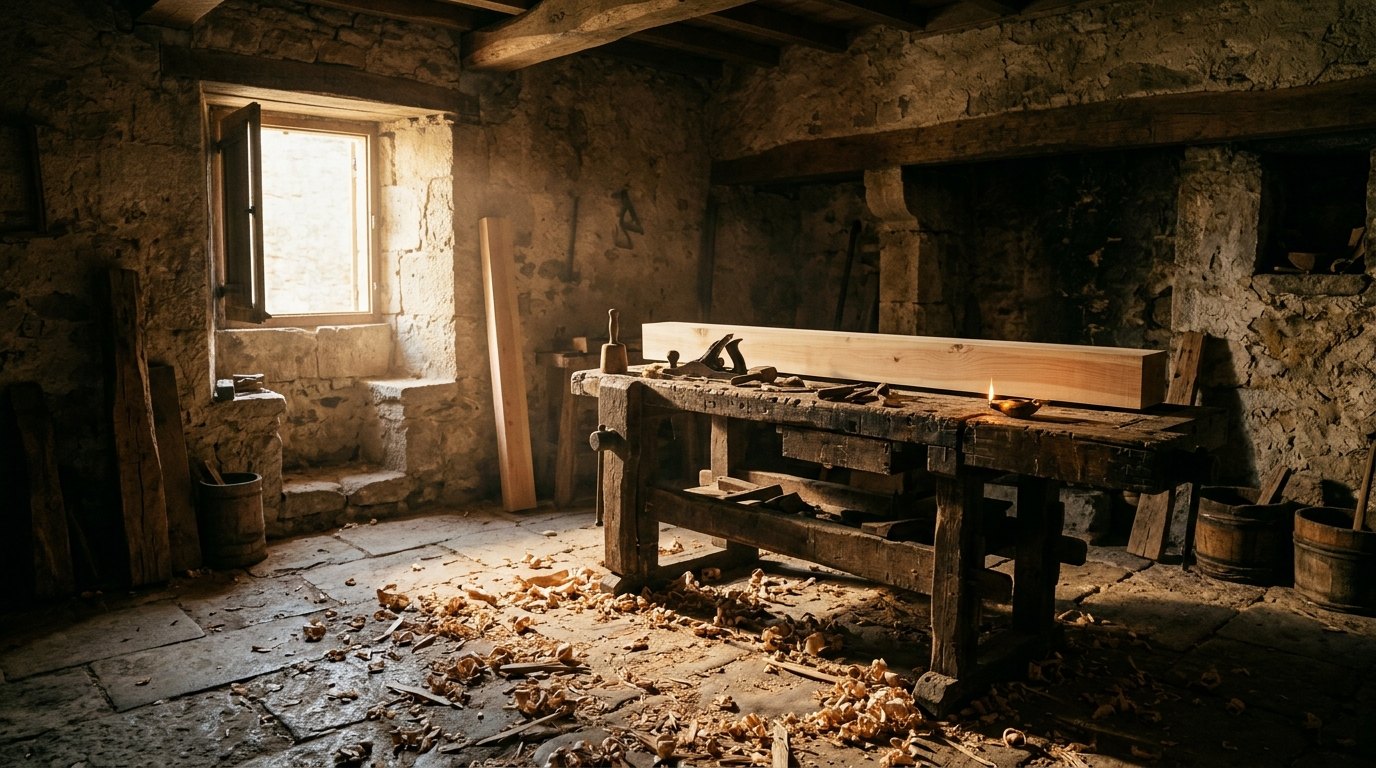
Start children off on the way they should go, and even when they are old they will not turn from it.
Proverbs 22:6 (NIV)
This famous proverb underscores the lifelong impact of early, directed moral and spiritual formation.
Proverbs 22:6 teaches that intentional moral training directed early in life yields lasting righteousness. Wisdom literature presents parenting not as emotional impulse but as patient, structured formation. Proverbs 1:8-9 urges children to heed a father's instruction and cherish a mother's law, portraying these teachings as a graceful garland for the head. True parental love mirrors divine love; Proverbs 3:11-12 reveals that the Lord disciplines those He loves, just as a father corrects the son in whom he delights. Solomon himself remembers this heritage in Proverbs 4:1-4, recounting how his father tenderly charged him to keep God's commands and guard understanding. Scripture does not shy away from the necessity of correction; Proverbs 13:24 notes that genuine love is diligent to discipline, while Proverbs 19:18 urges discipline while hope remains. In Proverbs 20:7, the father who walks with integrity provides a secure legacy for the children who follow his steps. Because folly is naturally bound in a young heart according to Proverbs 22:15, faithful discipline is required to remove it. Proverbs 23:13-14 insists that loving reproof delivers a child's soul from ruin, and Proverbs 29:15 warns that a child left to himself brings shame to his family. Ultimately, Proverbs 29:17 assures parents that faithful discipline yields peace, rest, and deep joy within the home.
| Passage | What it says |
|---|---|
| Proverbs 1:8-9 | A son is urged to hear his father's instruction and not forsake his mother's teaching. |
| Proverbs 3:11-12 | The Lord disciplines those He loves, just as a father delights in correcting his son. |
| Proverbs 4:1-4 | Solomon recalls receiving tender, foundational instruction from his father David to retain God's commandments. |
| Proverbs 13:24 | He who loves his son is diligent to discipline him rather than withholding loving correction. |
| Proverbs 19:18 | Parents are commanded to discipline their child while there is hope. |
| Proverbs 22:6 | Training up a child in the way he should go bears steadfast fruit into his old age. |
| Proverbs 23:13-14 | Withholding correction harms a child, while faithful discipline delivers his soul from death. |
| Proverbs 29:17 | Disciplining a son brings rest to the household and delight to the parent's soul. |
| Proverbs 20:7 | The righteous man walks with integrity, leaving blessed children in his footsteps. |
| Proverbs 22:15 | Folly is bound up in a youth's heart, but the rod of discipline removes it. |
| Proverbs 29:15 | The rod and reproof give wisdom, while a child left undisciplined brings shame to his mother. |
Nurture in Christ
Bringing Children Up in the Lord Without Harshness

Fathers, do not exasperate your children; instead, bring them up in the training and instruction of the Lord.
Ephesians 6:4 (NIV)
Paul balances the authority of Christian fathers with a clear prohibition against exasperation, demanding Gospel-centered instruction.
In Ephesians 6:4, Paul commands fathers to bring their children up in the nurture and instruction of the Lord without provoking them to anger. This balanced charge anchors household leadership in grace rather than tyranny. Ephesians 6:1-3 affirms that children are called to honor and obey their parents in the Lord, fulfilling the first commandment accompanied by a promise of blessing. Colossians 3:20 confirms that a child's obedience is pleasing to the Lord, while Colossians 3:21 warns fathers not to embitter or discourage their children through harsh, arbitrary demands. In 1 Thessalonians 2:11-12, Paul models this pastoral gentleness on faithful fatherhood, reminding believers how he encouraged, comforted, and urged them forward to walk worthily of God. Discipline, as explained in Hebrews 12:7-10, is painful in the moment but produces the peaceful fruit of righteousness, reflecting God's own paternal heart for our sanctification. Christ's own actions underscore the supreme worth of children; in Matthew 18:5-6, He welcomes the vulnerable and delivers a severe warning against anyone who causes a believing little one to stumble. When the disciples sought to turn children away, Jesus rebuked them in Matthew 19:13-14, declaring that the kingdom of heaven belongs to such as these. Finally, Titus 2:4 demonstrates that this care extends to community mentorship, as mature women are tasked with training younger mothers to love their husbands and their children with Christ-centered devotion.
| Passage | What it says |
|---|---|
| Ephesians 6:1-3 | Children are commanded to obey and honor their parents in the Lord as the first commandment with promise. |
| Ephesians 6:4 | Fathers must not provoke their children to anger, but bring them up in the discipline and instruction of the Lord. |
| Colossians 3:20 | Children are to obey parents in all things, for this is well-pleasing to the Lord. |
| Colossians 3:21 | Fathers are warned not to exasperate their children, lest they become discouraged. |
| 1 Thessalonians 2:11-12 | Paul compares his apostolic ministry to a father encouraging, comforting, and urging his own children to walk worthily. |
| Hebrews 12:7-10 | Earthly fathers discipline their children for a time, reflecting how God disciplines His children for their holiness. |
| Matthew 18:5-6 | Jesus welcomes little ones and warns of severe judgment against anyone who causes a believing child to stumble. |
| Matthew 19:13-14 | Jesus rebukes the disciples and commands that little children come to Him without hindrance. |
| Titus 2:4 | Older women are instructed to train younger women to love their husbands and love their children. |
Living Examples
Generations Grounded in the Holy Scriptures
and how from infancy you have known the Holy Scriptures, which are able to make you wise for salvation through faith in Christ Jesus.
2 Timothy 3:15 (NIV)
Paul highlights that childhood knowledge of Scripture provides the foundational wisdom leading to salvation through faith in Christ.
In 2 Timothy 3:15, Paul points to a profound spiritual reality: from childhood you have known the sacred writings, which are able to make you wise for salvation through faith in Christ Jesus. Timothy’s enduring ministry was built upon the bedrock of early biblical training, demonstrating that the steady immersion of young minds in the Word of God bears eternal fruit. Paul traces this living heritage directly back to household devotion in 2 Timothy 1:5, recalling the sincere faith that resided first in Timothy's grandmother Lois and his mother Eunice. In 2 Timothy 3:14-15, the apostle urges his young co-worker to remain firmly rooted in the sacred truths he learned at their knees, proving that generational fidelity is God’s primary vehicle for passing the torch of truth.
This pattern echoes across the entire biblical witness. In Genesis 17:7, God establishes His everlasting covenant not merely with Abraham individually, but with his offspring throughout their generations. In 1 Samuel 1:27-28, Hannah models the surrender every godly parent is called to make, declaring that for this child she prayed, and therefore lending him completely to the Lord. A generation later, David issues a solemn charge to his son in 1 Chronicles 28:9, commanding Solomon to know the God of his father and serve Him with a loyal heart and willing mind.
The New Testament deepens this covenantal rhythm. Mary and Joseph model faithful observance in Luke 2:41-42, taking Jesus to the Passover feast in Jerusalem according to the custom. Psalm 127:3-5 frames children not as burdens, but as arrows in the hand of a warrior, purposefully shaped and aimed at the world. Peter reinforces this redemptive continuity at Pentecost in Acts 2:39, proclaiming that the divine promise belongs to believers and their children, while 1 Corinthians 7:14 assures that even in a divided home, the presence of one believing parent brings a holy covenantal covering over the children.
| Passage | What it says |
|---|---|
| 1 Samuel 1:27-28 | Hannah dedicates the child she prayed for to the Lord's service for his entire life. |
| 1 Chronicles 28:9 | David charges his son Solomon to know the God of his father and serve Him with a loyal heart. |
| Luke 2:41-42 | Mary and Joseph faithfully bring young Jesus up to Jerusalem for the Feast of the Passover according to custom. |
| 2 Timothy 1:5 | Paul remembers the sincere faith that dwelt first in Timothy's grandmother Lois and mother Eunice. |
| 2 Timothy 3:14-15 | Timothy is commanded to continue in the sacred Scriptures taught to him from early childhood. |
| Genesis 17:7 | God establishes His everlasting covenant with Abraham and with his offspring after him through their generations. |
| Psalms 127:3-5 | Children are declared a heritage from the Lord and arrows in the hand of a warrior. |
| Acts 2:39 | Peter proclaims that the promise of the Holy Spirit is for believers and for their children. |
| 1 Corinthians 7:14 | Paul explains that the faith of a believing parent sets their children apart as holy before God. |
Where in the Bible
| Book | Passages |
|---|---|
| Genesis | 2 · Genesis 18:19, Genesis 17:7 |
| Exodus | 3 · Exodus 10:2, Exodus 12:26-27, Exodus 13:14-15 |
| Deuteronomy | 5 · Deuteronomy 4:9, Deuteronomy 6:6-9, Deuteronomy 11:18-21, Deuteronomy 32:46, Deuteronomy 31:12-13 |
| Joshua | 2 · Joshua 4:21-24, Joshua 24:15 |
| 1 Samuel | 1 · 1 Samuel 1:27-28 |
| 1 Chronicles | 1 · 1 Chronicles 28:9 |
| Psalms | 5 · Psalms 78:3-7, Psalms 145:4, Psalms 34:11, Psalms 71:17-18, Psalms 127:3-5 |
| Proverbs | 11 · Proverbs 1:8-9, Proverbs 3:11-12, Proverbs 4:1-4, Proverbs 13:24, Proverbs 19:18, Proverbs 22:6, Proverbs 23:13-14, Proverbs 29:17, Proverbs 20:7, Proverbs 22:15, Proverbs 29:15 |
| Isaiah | 1 · Isaiah 38:19 |
| Joel | 1 · Joel 1:3 |
| Matthew | 2 · Matthew 18:5-6, Matthew 19:13-14 |
| Luke | 1 · Luke 2:41-42 |
| Acts | 1 · Acts 2:39 |
| 1 Corinthians | 1 · 1 Corinthians 7:14 |
| Ephesians | 2 · Ephesians 6:1-3, Ephesians 6:4 |
| Colossians | 2 · Colossians 3:20, Colossians 3:21 |
| 1 Thessalonians | 1 · 1 Thessalonians 2:11-12 |
| 2 Timothy | 2 · 2 Timothy 1:5, 2 Timothy 3:14-15 |
| Titus | 1 · Titus 2:4 |
| Hebrews | 1 · Hebrews 12:7-10 |
The story in order
- God establishes covenant with Abraham (c. 2000 BC) · Genesis 17:7 · Establishes a generational promise and command.
- God commands Israel to teach children (c. 1400 BC) · Deuteronomy 6:6-9 · Instruction in God's word is a daily, constant duty.
- Israel warned to teach children works of God (c. 1400 BC) · Deuteronomy 4:9 · Guard souls and recount God's mighty deeds.
- Joshua commits to serve the Lord (c. 1380 BC) · Joshua 24:15 · A declaration of household faith and service.
- Hannah dedicates Samuel to the Lord (c. 1100 BC) · 1 Samuel 1:27-28 · A mother's prayer and dedication of her child.
- David instructs Solomon to serve God (c. 970 BC) · 1 Chronicles 28:9 · A father's charge to his son about knowing God.
- Solomon teaches wisdom (c. 950 BC) · Proverbs 1:8-9 · Instruction from father and mother is vital.
- Psalmist recounts God's works to generations (c. 700 BC) · Psalms 78:3-7 · Passing down testimonies to secure hope in God.
- Hezekiah affirms teaching truth to children (c. 700 BC) · Isaiah 38:19 · The living thank God and fathers make truth known.
- Jesus welcomes little children (c. AD 30) · Matthew 19:13-14 · Children are to come to Jesus without hindrance.
- Paul instructs fathers in child-rearing (c. AD 60) · Ephesians 6:4 · Bring children up in the discipline and instruction of the Lord.
- Paul recalls Timothy's heritage of faith (c. AD 67) · 2 Timothy 1:5 · Sincere faith passed down through generations.
- Peter proclaims the promise for children (c. AD 33) · Acts 2:39 · The promise of the Spirit is for believers and their children.
Key words
- Instruction (Hebrew: yarah (יָרָה), Greek: paideia (παιδεία))
- Teaching, guidance, and correction for spiritual growth. · Deuteronomy 6:7
- Discipline (Greek: paideia (παιδεία))
- Training, correction, and guidance to foster obedience and wisdom. · Proverbs 22:15
- Heritage (Hebrew: naḥalah (נַחֲלָה))
- Children are a gift and blessing from the Lord. · Psalms 127:3
- Fear of the Lord (Hebrew: yir'at YHWH (יִרְאַת יְהוָה))
- Reverence, awe, and obedience towards God. · Deuteronomy 6:2
- Faith (Greek: pistis (πίστις))
- Trust and belief in God, passed down through generations. · 2 Timothy 1:5
Raising children in the faith is a generational calling rooted in the steady proclamation of God's truth and lived out in daily grace. As parents faithfully teach, model, and shepherd their households without harshness, they entrust the fruit of their labors to the sovereign mercy of God.
46 passages, each cited once.
Scripture cited
- Proverbs 22:6
- Ephesians 6:4
- Deuteronomy 6:7
- 2 Timothy 3:15
- Deuteronomy 4:9
- Deuteronomy 6:4-9
- Psalms 78:1-8
- Ephesians 6:1-4
- Colossians 3:20-21
- 2 Timothy 1:3-5
- 2 Timothy 3:14-17
- Proverbs 13:24