What does the Bible say about widows and widowers?

1 Timothy 5:3-5
3 Give proper recognition to those widows who are really in need.
4 But if a widow has children or grandchildren, these should learn first of all to put their religion into practice by caring for their own family and so repaying their parents and grandparents, for this is pleasing to God.
5 The widow who is really in need and left all alone puts her hope in God and continues night and day to pray and to ask God for help.
New International Version (NIV)
The answer
God defends widows, condemns their exploitation, and makes their practical care a duty of both family and church. Death ends the marriage bond: a widow is expressly free to remarry “only in the Lord,” while widowers are included in the instruction given to the unmarried. Bereaved believers are not denied grief, but they are given resurrection hope.
God’s special care and justice
Psalm 68:5 calls God “A father of the fatherless, and a defender of the widows,” and Psalm 146:9 says that he upholds the fatherless and widow. His concern is both compassionate and judicial.
- Exploitation brings judgment: Exodus 22:22-24 forbids taking advantage of any widow, promises that God will hear her cry, and warns that his wrath will grow hot against the oppressor. Deuteronomy 27:19 pronounces a curse on anyone who perverts justice for the stranger, fatherless or widow.
- Provision is part of that justice: Deuteronomy 10:18 says that God executes judgment for the fatherless and widow, while Deuteronomy 14:29 includes them among those who were to come, eat and be satisfied through Israel’s worship and provision.
- Jesus showed the same compassion: when he met the widow of Nain whose only son had died, he had compassion on her, raised the young man and gave him back to his mother (Luke 7:13-15).
Family responsibility first, church responsibility alongside it
First Timothy 5:3-4 commands the church to honor genuine widows and directs children and grandchildren to show godliness toward their own family and repay their parents. This is practical care, not merely respectful language. The warning is severe: failing to provide for one’s own household is a denial of the faith and makes a person worse than an unbeliever (1 Timothy 5:8).
Believing relatives are therefore to relieve the widows in their family, so that the assembly is not unnecessarily burdened and can relieve those who are genuinely without support (1 Timothy 5:16). This is not permission for the church to neglect anyone; it establishes an ordered, shared responsibility.
The early church treated neglected widows as a serious practical problem. When Hellenist widows were overlooked in the daily service, seven qualified men were appointed to ensure that the work was done (Acts 6:1-6). James 1:27 likewise names visiting the fatherless and widows in their affliction as pure and undefiled religion. Such care includes food and material relief, companionship, protection and a genuine place within the believing community.
The life and calling of widows
The “widow indeed” is desolate, sets her hope on God and continues in prayer night and day (1 Timothy 5:5). By contrast, the woman who gives herself to pleasure is described as dead while she lives (1 Timothy 5:6). Those enrolled for the church’s special responsibility were to be marked by faithfulness in marriage and a proven pattern of good works, hospitality and care for the afflicted (1 Timothy 5:9-10).
Paul also condemns idleness, gossip and interfering in other people’s affairs, and specifically desires that younger widows marry, bear children and manage their households (1 Timothy 5:13-14). Widowhood is therefore neither a reason for idleness nor a barrier to continued usefulness, family life and devoted service.
Widowers, singleness and remarriage
Most of the detailed instructions name widows because their particular vulnerability required explicit protection, but widowers are not left without direction. First Corinthians 7:8-9 addresses the unmarried and widows together: remaining unmarried is good, but those who lack self-control should marry, for it is better to marry than to burn with passion. That instruction gives widowers a holy path either in continued singleness or in marriage.
Romans 7:2-3 teaches that death releases a spouse from the marriage law, so that a widow is not an adulteress if she marries another man. First Corinthians 7:39-40 says that she is free to marry whom she desires, “only in the Lord,” although Paul judges that she is happier if she remains as she is. Scripture therefore neither forbids remarriage after bereavement nor makes it compulsory for everyone; age, circumstances, self-control and faithfulness to Christ shape the counsel given.
Comfort for bereaved believers
First Thessalonians 4:13-18 does not tell Christians that they must not grieve. It says that they do not grieve like those who have no hope. Because Jesus died and rose again, God will bring with him those who have fallen asleep in Jesus; the dead in Christ will rise, and his people will be together with the Lord forever. That promise concerns those who died in Christ, and believers are expressly told to comfort one another with these words.
Answered from Scripture · reviewed November 11, 2026
Scripture reveals God as the steadfast defender of widows, placing their protection at the very center of true covenant righteousness and church care. While widowers receive attention within the broader duties of family provision and godly remarriage, the vulnerability of widows makes them a primary test of a community's genuine faith. From the statutes of Moses to the pastoral epistles, the Bible establishes an unyielding standard: God hears their cry, and his people must honor and sustain them.
The Divine Defender
God executes justice and defends the widow

A father to the fatherless, a defender of widows, is God in his holy dwelling.
Psalms 68:5 (NIV)
David anchors the widow's security not in human charity alone, but in the character and holy dwelling of God himself.
In Psalm 68:5, the inspired text declares God to be a father to the fatherless and a defender of the widows in his holy habitation. Scripture does not present the care of the bereaved as a mere civic suggestion or an incidental virtue, but as an expression of the very character and holiness of God himself. Because the Lord rules from a throne of absolute righteousness, his holiness is directly displayed in vindicating those who have lost earthly protectors.
From the earliest giving of the Law, God issued direct and terrifying warnings against anyone who would harm them. In Exodus 22:22, the Lord establishes a baseline prohibition: no widow or fatherless child may be afflicted. The guarantee that follows in Exodus 22:23 is absolute: if an afflicted widow cries out to the Lord, he will surely hear her voice. God warns in Exodus 22:24 that his holy wrath will burn against exploiters, bringing sword and judgment so that the wives of the abusers become widows themselves. Deuteronomy 10:18 reaffirms that the sovereign God, who shows no partiality and takes no bribe, actively executes justice for the orphan and the widow, furnishing them with food and clothing.
This divine vigilance continues across the wisdom literature and prophets. In Psalm 146:9, the psalmist sings that the Lord watches over strangers and upholds the fatherless and the widow, while overturning the way of the wicked. God takes personal interest in the material security of the helpless; Proverbs 15:25 notes that while the Lord tears down the house of the proud, he firmly establishes and maintains the boundary stone of the widow. Even in times of national judgment, God extends a direct sanctuary to the desolate, commanding in Jeremiah 49:11 that the vulnerable leave their orphans with him and urging widows to place their trust in his unfailing provision.
| Passage | What it says |
|---|---|
| Exodus 22:22 | God strictly forbids the mistreatment of any widow or fatherless child. |
| Exodus 22:23 | The Lord guarantees that if an afflicted widow cries out to him, he will surely hear her voice. |
| Exodus 22:24 | God warns that his wrath will burn against oppressors, leaving their own wives widows. |
| Deuteronomy 10:18 | The Lord executes justice for the fatherless and the widow while providing food and clothing. |
| Psalms 68:5 | God is declared a father to the fatherless and a defender of the widows in his holy habitation. |
| Psalms 146:9 | The Lord watches over strangers and upholds the fatherless and the widow, but frustrates the wicked. |
| Proverbs 15:25 | The Lord tears down the house of the proud but maintains the boundary lines of the widow. |
| Jeremiah 49:11 | The Lord commands the vulnerable to leave their fatherless children with him and urges widows to trust him. |
Covenant Law
Israel was commanded to protect and provide

When you are harvesting in your field and you overlook a sheaf, do not go back to get it. Leave it for the foreigner, the fatherless and the widow, so that the LORD your God may bless you in all the work of your hands.
Deuteronomy 24:19 (NIV)
The law commanded harvesters to leave forgotten grain in the field so that the widow could eat with dignity.
In Deuteronomy 24:19, Moses commands the reapers who overlook a sheaf in the open field not to turn back and retrieve it, for it belongs by divine right to the stranger, the orphan, and the widow. Israel’s covenant law embedded structural provision for the vulnerable into the everyday rhythms of agriculture, worship, and family duty, ensuring that those without an inheritance could eat with dignity.
The gleaning statutes extended across all staple harvests. In Deuteronomy 24:20, landowners were forbidden from beating their olive trees a second time, leaving the remaining fruit for the widow, and Deuteronomy 24:21 prohibited stripping the vineyard of fallen grapes. Beyond field remnants, the triennial tithe outlined in Deuteronomy 14:29 and Deuteronomy 26:12 gathered food within the town gates so that the Levite, foreigner, orphan, and widow could eat and be satisfied. Faithful Israelites made a solemn declaration before the Lord in Deuteronomy 26:13 that they had not withheld these sacred portions. Furthermore, worship itself included them: under Deuteronomy 16:11 and Deuteronomy 16:14, widows were explicitly commanded to feast and rejoice with the covenant community at the sanctuary during the Feast of Weeks and the Feast of Booths.
The law guarded their legal standing and lineage with equal rigor. Deuteronomy 24:17 barred taking a widow's garment as a pledge, and Deuteronomy 27:19 pronounced a curse from Mount Ebal upon anyone perverting justice for the vulnerable. In Numbers 30:9, the vows of a widow stood binding without spousal veto. Leviticus 22:13 permitted a childless widowed daughter to return to her father’s house for bread, while Leviticus 21:14 preserved priestly holiness by requiring the high priest to marry an Israelite virgin rather than a widow. Finally, through the levirate law of Deuteronomy 25:5 and Deuteronomy 25:6, a deceased brother’s name was preserved in Israel by providing marriage and security for his surviving widow.
| Passage | What it says |
|---|---|
| Deuteronomy 14:29 | Tithes were set aside so Levites, foreigners, orphans, and widows within the gates could eat and be satisfied. |
| Deuteronomy 16:11 | Widows and orphans were commanded to rejoice alongside families during the Feast of Weeks at the sanctuary. |
| Deuteronomy 16:14 | The Feast of Booths specifically included the stranger, the fatherless, and the widow in Israel's celebration. |
| Deuteronomy 24:17 | Justice toward the alien or fatherless could not be perverted, nor a widow's garment taken in pledge. |
| Deuteronomy 24:19 | Forgotten sheaves in the harvest field belonged to the stranger, fatherless, and widow by divine decree. |
| Deuteronomy 24:20 | Olive boughs were not to be stripped a second time; remnants were reserved for the widow. |
| Deuteronomy 24:21 | Vineyard owners were commanded not to glean fallen grapes, leaving them for the fatherless and widow. |
| Deuteronomy 26:12 | The third-year tithe was dedicated to feeding the Levite, stranger, fatherless, and widow in every town. |
| Deuteronomy 26:13 | Covenant keepers declared before God that sacred portions had not been withheld from the widow. |
| Deuteronomy 27:19 | A curse was pronounced from Mount Ebal upon anyone who perverted justice for the stranger, fatherless, or widow. |
| Leviticus 21:14 | The high priest was prohibited from marrying a widow, divorcee, or defiled woman, taking only an Israelite virgin. |
| Leviticus 22:13 | A priest's widowed or divorced daughter who had no children was permitted to return and eat her father's food. |
| Numbers 30:9 | Every vow and binding obligation made by a widow or divorced woman stood firm without parental or spousal veto. |
| Deuteronomy 25:5 | Prescribes that a deceased husband's brother shall take the childless widow to preserve his name. |
| Deuteronomy 25:6 | Specifies that the firstborn child shall succeed in the deceased brother's name. |
Prophetic Indictment
The prophets condemned the neglect of widows

Learn to do right; seek justice. Defend the oppressed. Take up the cause of the fatherless; plead the case of the widow.
Isaiah 1:17 (NIV)
Isaiah calls rebellious Judah back to true worship by demanding justice for the oppressed and defense for the widow.
In Isaiah 1:17, the prophet issues God's uncompromising summons to a rebellious nation: learn to do good, seek justice, relieve the oppressed, and plead the case of the widow. The prophetic literature measures Israel’s moral standing not by ceremonial performance, but by whether the vulnerable were defended or exploited. When justice failed at the city gates, God regarded their solemn assemblies as hypocrisy.
Throughout the Old Testament, the mistreatment of widows marks the pinnacle of ungodliness. In Job 22:9, Eliphaz attempts to explain Job's suffering by accusing him of turning widows away empty-handed, but Job vindicates himself in Job 29:13 and Job 31:16, swearing that he caused the widow's heart to sing for joy and never allowed her eyes to fail with weeping. Job laments the cruelty of the unrighteous in Job 24:3 and Job 24:21, who confiscate a widow’s draft animals and show no mercy to the desolate, while Job 27:15 portrays the bitter end of the wicked where no surviving widows remain to mourn. Psalm 94:6 indicts lawless judges who slay the stranger and murder the widow, and Psalm 109:9 cries out that the deceitful betrayer's wife be left a widow.
The major prophets repeatedly leveled divine indictments against Jerusalem for failing this standard. Isaiah 1:23 and Isaiah 10:2 pronounce woe upon leaders who legislate robbery and refuse the plea of the widow, while Jeremiah 7:6 and Jeremiah 22:3 condition Israel’s survival in the land on ceasing violence against the fatherless and the widow. Ezekiel 22:7 and Ezekiel 22:25 denounce Jerusalem for multiplying widows through extortion and blood. In the post-exilic era, Zechariah 7:10 reiterates that covenant faithfulness demands protection of the widow, and Malachi 3:5 warns that God will bring swift judgment against those who oppress her. When judgment fell, Lamentations 1:1 grieved over Jerusalem sitting desolate like a widow, even as God promised in Isaiah 54:4 to wipe away the reproach of her widowhood, while casting down arrogant empires that boasted they would never know loss, as recorded in Isaiah 47:8.
| Passage | What it says |
|---|---|
| Job 22:9 | Eliphaz falsely accuses Job of sending widows away empty-handed and crushing the strength of orphans. |
| Job 24:3 | Job describes the wickedness of the ungodly who seize the donkey of orphans and take a widow's ox in pledge. |
| Job 29:13 | Job recounts his integrity, noting that he caused the heart of the desolate widow to sing for joy. |
| Job 31:16 | Job affirms that he never denied the poor their desire nor caused the eyes of the widow to weep. |
| Psalms 94:6 | The psalmist laments that wicked rulers slay the widow, the stranger, and murder the fatherless. |
| Psalms 109:9 | The imprecation asks that the deceitful enemy's children be fatherless and his wife a widow. |
| Isaiah 1:17 | The prophet instructs Israel to learn to do good, seek justice, relieve the oppressed, and plead for the widow. |
| Isaiah 1:23 | Corrupt rulers are rebuked for pursuing bribes while refusing to defend the fatherless or hear the widow's case. |
| Isaiah 10:2 | God pronounces woe on those who draft oppressive laws to rob the poor and make widows their spoil. |
| Jeremiah 7:6 | The Lord conditions national survival in the land on not oppressing the stranger, the fatherless, or the widow. |
| Jeremiah 22:3 | The royal house is warned to deliver the plundered and do no wrong or violence to the widow. |
| Ezekiel 22:7 | Ezekiel charges Jerusalem with scorning parents, oppressing the foreigner, and mistreating the fatherless and widow. |
| Ezekiel 22:25 | False prophets are denounced for devouring lives, seizing treasures, and multiplying the number of widows within Jerusalem. |
| Zechariah 7:10 | The Lord commands the post-exilic community not to oppress the widow, orphan, stranger, or poor. |
| Malachi 3:5 | God promises swift judgment against sorcerers, adulterers, perjurers, and those who cheat wage earners, widows, and orphans. |
| Job 24:21 | Indicts the wicked for wronging the barren and showing no kindness to the widow. |
| Job 27:15 | Warns that those who survive the wicked shall be buried by pestilence without widows weeping. |
| Isaiah 47:8 | Condemns proud Babylon for claiming she will never sit as a widow or know loss. |
| Isaiah 54:4 | Promises redeemed Zion that she will forget the shame of her youth and widowhood. |
| Lamentations 1:1 | Mourns deserted Jerusalem, once great among the nations, now become like a widow. |
Gospel Care
Jesus ministers to widows and commends faith
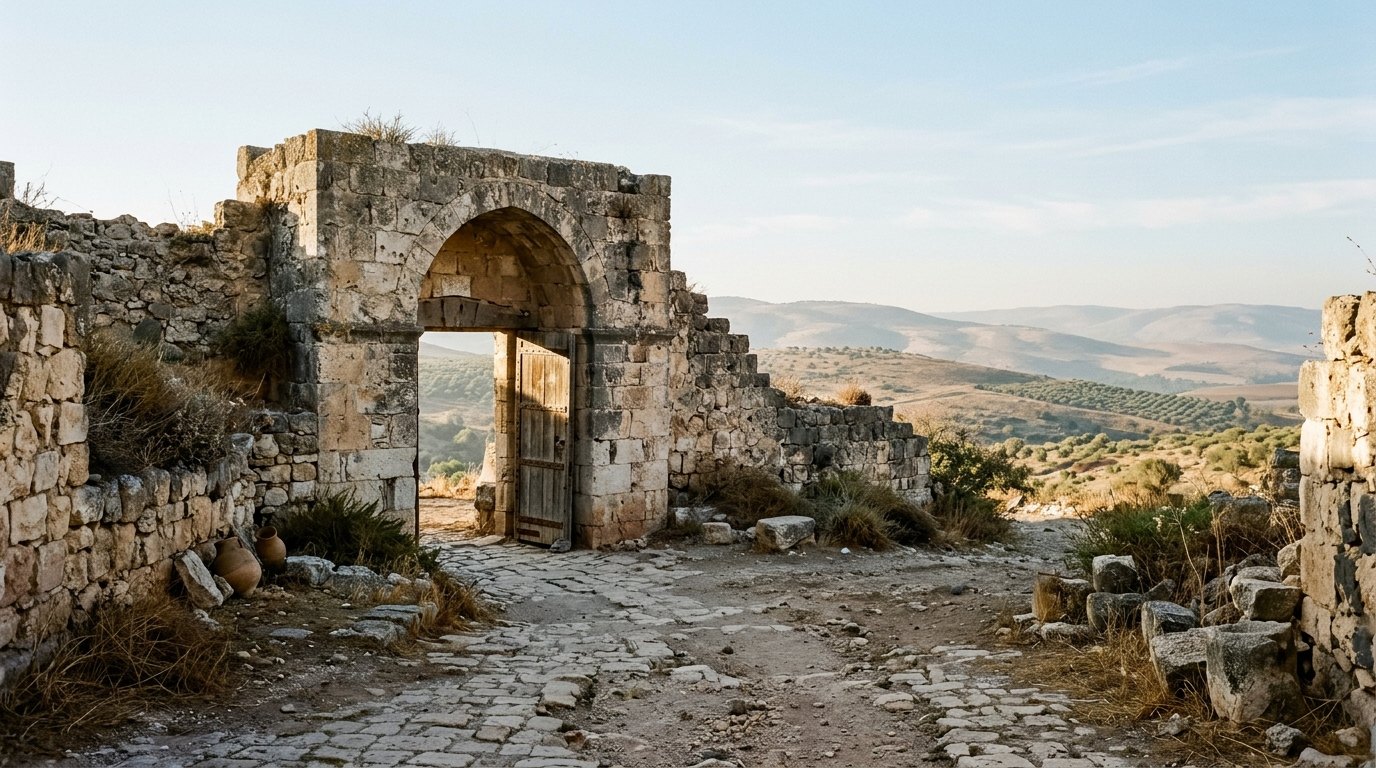
When the Lord saw her, his heart went out to her and he said, “Don’t cry.”
Luke 7:13 (NIV)
Christ's compassion for the weeping widow of Nain demonstrates God's personal intervention in human sorrow.
In Luke 7:13, the Lord Jesus arrived at the gate of Nain, saw a weeping mother whose only son was being carried to the grave, and had deep compassion on her, saying plainly, "Do not weep." Being a widow already, the loss of her only son stripped away her remaining support and hope. By raising the young man to life in Luke 7:12, Christ manifested the sovereign tenderness of God toward the desolate, mirroring the prophetic care of old.
This pattern of divine favor echoes throughout salvation history. In Luke 4:25 and Luke 4:26, Jesus reminded his hearers of 1 Kings 17:9 and 1 Kings 17:20, where Elijah was sent past all the widows in Israel to preserve a starving Gentile widow in Zarephath, whose dying son God restored. Similarly, 2 Kings 4:1 records Elisha rescuing a prophet’s widow from creditors by miraculously multiplying her jar of oil. In the temple, Luke 2:36 and Luke 2:37 honor Anna the prophetess, who lived as a widow until eighty-four, devoting her life to fasting and prayer and proclaiming the redemption of Jerusalem upon seeing the infant Christ.
Jesus severely rebuked religious hypocrites who preyed upon the vulnerable. In Mark 12:40, Luke 20:47, and Matthew 23:14, he pronounced the severest condemnation upon the scribes who devoured widows' houses under the cover of long, pious prayers. By contrast, Jesus honored the pure devotion of the poor widow in Mark 12:42, Mark 12:43, Mark 12:44, Luke 21:2, and Luke 21:3, declaring that her two copper mites, given out of poverty, exceeded the lavish contributions of the wealthy. In the parable of Luke 18:3 and Luke 18:5, he used a persistent widow demanding justice from an unjust judge to teach unwavering faith. Finally, dying on the cross in John 19:26 and John 19:27, Jesus fulfilled filial righteousness by commending his widowed mother Mary into the direct care and household of the apostle John.
| Passage | What it says |
|---|---|
| 1 Kings 17:9 | The Lord commands Elijah to dwell in Zarephath, where a poor Gentile widow provides for him during famine. |
| 1 Kings 17:20 | Elijah cries out to God on behalf of the grieving Zarephath widow whose only son fell critically ill. |
| 2 Kings 4:1 | A prophet's widow cries out to Elisha when a creditor comes to take her two sons as slaves. |
| Luke 2:36 | Anna, a prophetess of the tribe of Asher, advanced in years after losing her husband in youth, worships constantly. |
| Luke 2:37 | Having lived as a widow to eighty-four, Anna departs not from the temple, serving God with prayer and fasting. |
| Luke 4:25 | Jesus recalls that although many widows lived in Israel, Elijah was sent exclusively to the widow of Zarephath. |
| Luke 4:26 | Christ emphasizes God's sovereign grace shown beyond Israel's borders to the Sidonian widow. |
| Luke 7:12 | At Nain, Jesus meets a funeral procession for the only son of a woman who was already a widow. |
| Luke 7:13 | The Lord is moved with compassion toward the weeping widow and commands her not to weep. |
| Luke 18:3 | Jesus portrays a persistent widow repeatedly approaching an unjust judge demanding justice against her legal adversary. |
| Luke 20:47 | Jesus condemns scribes who devour widows' houses while making lengthy public prayers to justify themselves. |
| Mark 12:40 | Christ denounces religious hypocrites who exploit helpless widows under pretense of piety and face greater condemnation. |
| Mark 12:42 | A destitute widow casts two copper mites into the treasury before Jesus and the watching disciples. |
| Mark 12:43 | Jesus declares that the poor widow gave more into the treasury than all wealthy contributors combined. |
| Mark 12:44 | Christ explains that others gave from their abundance, while she surrendered all her living to God. |
| Luke 21:2 | Luke records Jesus noticing the impoverished widow dropping her two small coins into the temple treasury. |
| Luke 21:3 | Jesus confirms that the poor widow's humble offering surpassed the substantial gifts of the rich. |
| John 19:26 | From the cross, Jesus honors filial duty by committing his soon-to-be-bereaved mother to the apostle John. |
| John 19:27 | John receives Mary into his own home, providing for her following the earthly departure of Jesus. |
| Matthew 23:14 | Jesus pronounces woe against scribes and Pharisees who devour widows' houses. |
| Luke 18:5 | The unjust judge resolves to grant justice to the persistent widow to stop her continual coming. |
Apostolic Order
The early church established relief and qualifications
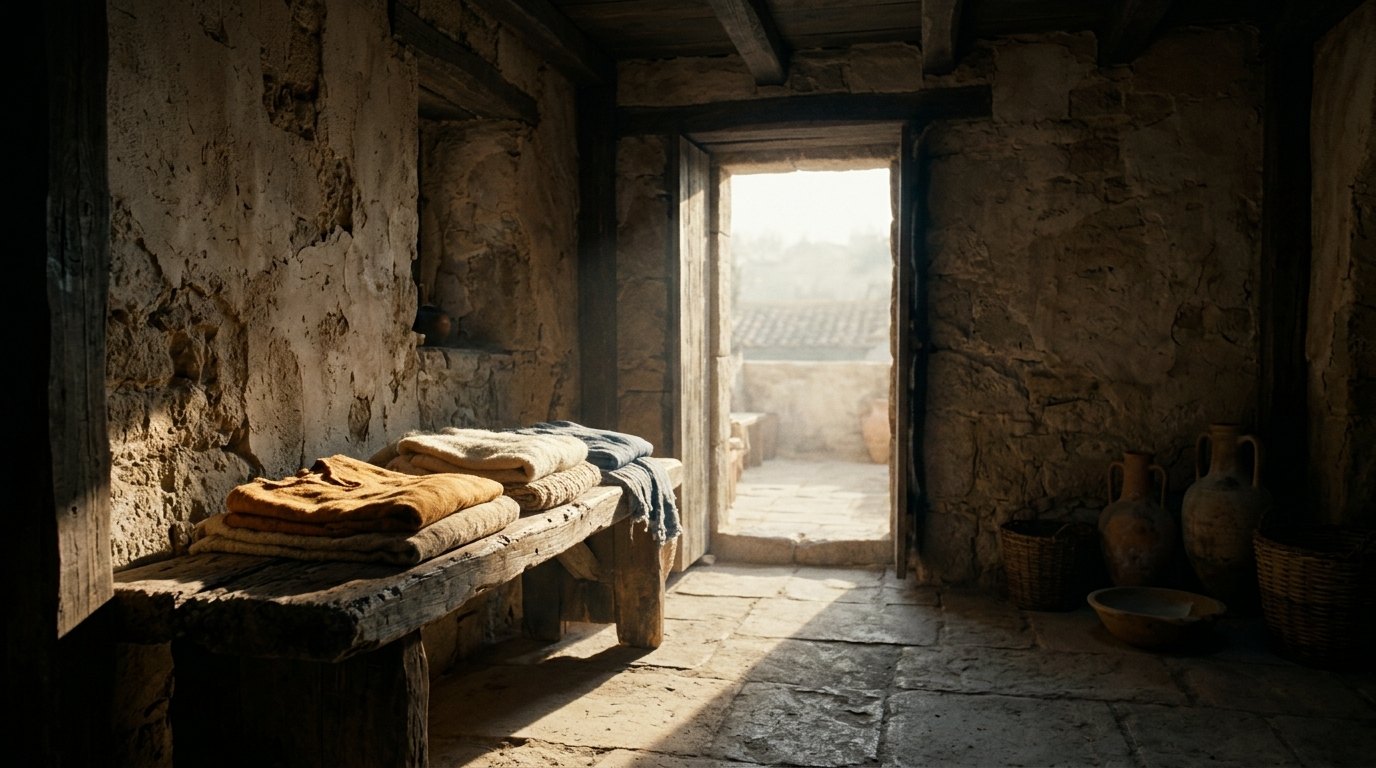
Give proper recognition to those widows who are really in need.
1 Timothy 5:3 (NIV)
Paul sets forth the foundational rule that the church must honor and financially sustain those widows who are truly destitute.
Paul instructs Timothy to honor widows who are truly widows (1 Timothy 5:3), establishing church stewardship as both an act of deep reverence and disciplined charity. From its earliest days in Jerusalem, the assembly prioritized material relief, appointing seven men full of the Spirit when Greek-speaking believers noticed their widows overlooked in the daily distribution (Acts 6:1). In Joppa, this practical affection was embodied by Dorcas, whose death brought weeping widows to Peter displaying the tunics and robes she made for them, before he presented her alive to the assembly (Acts 9:39, 41).
The pastoral epistles carefully distinguish between private family responsibility and congregational support. Paul insists that children or grandchildren must first demonstrate godliness at home by repaying their forebears, for neglecting one's own household amounts to denying the faith (1 Timothy 5:4, 8, 16). The congregational roll was reserved for those truly desolate: women of at least sixty years who placed their hope in God, praying night and day rather than living in self-indulgent dissipation (1 Timothy 5:5–6, 9). Such enrolled widows had to possess a proven reputation for good works, hospitality, washing the saints' feet, and assisting the afflicted (1 Timothy 5:10). Conversely, younger widows were not enrolled, but counseled to remarry, bear children, and manage households to avoid idleness and spiritual reproach (1 Timothy 5:11, 14). Pure, undefiled religion before God thus requires visiting orphans and widows in their affliction while remaining unstained by the world (James 1:27).
| Passage | What it says |
|---|---|
| Acts 6:1 | Hellenistic believers complain that their Greek-speaking widows are being overlooked in the church's daily distribution. |
| Acts 9:39 | Weeping widows show Peter the tunics and garments Dorcas had faithfully made for them prior to her death. |
| Acts 9:41 | Peter calls the believers and widows into the room and presents Dorcas alive after raising her. |
| 1 Timothy 5:3 | Paul instructs the church to honor widows who are genuinely left alone and without support. |
| 1 Timothy 5:4 | Children and grandchildren are commanded to show godliness by repaying their parents and caring for widowed relatives. |
| 1 Timothy 5:5 | A widow indeed places her hope in God and devotes herself to petitions and prayers night and day. |
| 1 Timothy 5:6 | A widow who abandons herself to self-indulgence and worldly pleasure is dead even while she lives. |
| 1 Timothy 5:8 | Anyone who fails to provide for relatives and household members has denied the faith and is worse than an unbeliever. |
| 1 Timothy 5:9 | Enrollment for church support requires a widow to be at least sixty years old and faithful to one husband. |
| 1 Timothy 5:10 | A widow on the church list must be known for good works, hospitality, washed saints' feet, and relieved the afflicted. |
| 1 Timothy 5:11 | Younger widows are not to be enrolled, as sensual desires may alienate them from their dedication to Christ. |
| 1 Timothy 5:14 | Paul counsels younger widows to marry, bear children, and manage households to give adversaries no occasion for reproach. |
| 1 Timothy 5:16 | Believing family members must relieve their own widowed relatives so the assembly is not burdened for true widows. |
| James 1:27 | Pure and undefiled religion before God requires visiting orphans and widows in their affliction while staying unpolluted. |
Bereavement and Remarriage
Scripture directs both widowers and widows in loss

A woman is bound to her husband as long as he lives. But if her husband dies, she is free to marry anyone she wishes, but he must belong to the Lord.
1 Corinthians 7:39 (NIV)
Paul affirms that the marriage bond ends at death, freeing a surviving spouse to remarry only in the Lord.
Paul affirms that a wife is bound as long as her husband lives, but if her husband dies, she is entirely free to remarry, provided it is only in the Lord (1 Corinthians 7:39). Scripture treats the rupture of death with solemn honesty across both testaments. Abraham wept and mourned for Sarah at Hebron before purchasing Machpelah for her burial (Genesis 23:2), and later took Keturah as his wife (Genesis 25:1). Jacob similarly grieved Rachel's passing on the road to Ephrath, setting a stone pillar over her tomb (Genesis 35:19–20). After Judah's wife died and his period of mourning concluded, he returned to the duties of his flocks (Genesis 38:12), though earlier he had commanded Onan to perform levirate duty for the widowed Tamar (Genesis 38:8).
Loss visits families with sharp affliction. Naomi and her daughters-in-law were left bereft in Moab without husbands or sons (Ruth 1:3, 5), yet Boaz acted as kinsman-redeemer to restore the line through Mahlon's widow Ruth (Ruth 4:10). Bathsheba observed mourning rituals upon Uriah's death before David brought her to his house (2 Samuel 11:26–27), while the wise woman of Tekoa grounded her plea to David in the vulnerable plight of widowhood (2 Samuel 14:5). Ezekiel was forbidden outward mourning when his beloved wife died, making his sudden widowerhood a prophetic sign to Israel (Ezekiel 24:16, 18). Under New Covenant instruction, death dissolves the marital law, precluding any charge of adultery (Romans 7:2–3). Paul counsels that while celibacy allows undivided devotion, those lacking self-control ought to marry rather than burn, even as he notes the quiet peace of remaining single (1 Corinthians 7:8–9, 40).
| Passage | What it says |
|---|---|
| Genesis 23:2 | Abraham mourns and weeps for his deceased wife Sarah before negotiating a proper burial plot at Machpelah. |
| Genesis 25:1 | Following Sarah's death, Abraham as a widower takes Keturah as his wife and fathers further children. |
| Genesis 38:8 | Judah commands Onan to perform brother-in-law duty by marrying Er's childless widow Tamar to raise up offspring. |
| Genesis 38:12 | After Judah's wife dies and his period of mourning concludes, he travels up to Timnah to shear his sheep. |
| Ruth 1:3 | Naomi is left a widow in Moab after the death of her husband Elimelech. |
| Ruth 1:5 | Both Mahlon and Chilion die, leaving Orpah, Ruth, and Naomi bereft of both husbands and children. |
| Ruth 4:10 | Boaz redeems the estate of Elimelech and acquires Ruth the Moabitess, Mahlon's widow, to raise up his name. |
| 2 Samuel 11:26 | The wife of Uriah mourns for her husband upon learning that he has died in battle outside the city. |
| 2 Samuel 11:27 | When her mourning ends, David brings Uriah's widow Bathsheba to his palace and takes her as his wife. |
| Ezekiel 24:16 | God tells Ezekiel his beloved wife will die suddenly, yet he is forbidden from public weeping or lamentation. |
| Ezekiel 24:18 | Ezekiel speaks to the people in the morning, his wife dies that evening, and he obeys God's instructions next day. |
| Romans 7:2 | A married woman is bound by law to her husband while he lives, but released from the law if he dies. |
| Romans 7:3 | If a woman marries another man while her husband lives she is an adulteress, but if he dies she is free. |
| 1 Corinthians 7:8 | Paul advises unmarried persons and widows that it is good for them to remain single as he is. |
| 1 Corinthians 7:9 | If the unmarried and widowed cannot exercise self-control, they should marry, for it is better to marry than burn. |
| 1 Corinthians 7:39 | A wife is bound as long as her husband lives, but if he dies she is free to remarry anyone, only in the Lord. |
| 1 Corinthians 7:40 | Paul gives his pastoral judgment that a widow is happier if she remains unmarried, having the Spirit of God. |
| Genesis 35:19 | Records Rachel's death and burial in Bethlehem, leaving Jacob a grieving widower. |
| Genesis 35:20 | Describes Jacob setting up a pillar at Rachel's grave to mark her burial place. |
| 2 Samuel 14:5 | The woman of Tekoa appeals to King David as a widow whose husband has died. |
Where in the Bible
| Book | Passages |
|---|---|
| Genesis | 6 · Genesis 23:2, Genesis 25:1, Genesis 38:8, Genesis 38:12, Genesis 35:19, Genesis 35:20 |
| Exodus | 3 · Exodus 22:22, Exodus 22:23, Exodus 22:24 |
| Leviticus | 2 · Leviticus 21:14, Leviticus 22:13 |
| Numbers | 1 · Numbers 30:9 |
| Deuteronomy | 13 · Deuteronomy 10:18, Deuteronomy 14:29, Deuteronomy 16:11, Deuteronomy 16:14, Deuteronomy 24:17, Deuteronomy 24:19, Deuteronomy 24:20, Deuteronomy 24:21, Deuteronomy 26:12, Deuteronomy 26:13, Deuteronomy 27:19, Deuteronomy 25:5, Deuteronomy 25:6 |
| Ruth | 3 · Ruth 1:3, Ruth 1:5, Ruth 4:10 |
| 2 Samuel | 3 · 2 Samuel 11:26, 2 Samuel 11:27, 2 Samuel 14:5 |
| 1 Kings | 2 · 1 Kings 17:9, 1 Kings 17:20 |
| 2 Kings | 1 · 2 Kings 4:1 |
| Job | 6 · Job 22:9, Job 24:3, Job 29:13, Job 31:16, Job 24:21, Job 27:15 |
| Psalms | 4 · Psalms 68:5, Psalms 146:9, Psalms 94:6, Psalms 109:9 |
| Proverbs | 1 · Proverbs 15:25 |
| Isaiah | 5 · Isaiah 1:17, Isaiah 1:23, Isaiah 10:2, Isaiah 47:8, Isaiah 54:4 |
| Jeremiah | 3 · Jeremiah 49:11, Jeremiah 7:6, Jeremiah 22:3 |
| Lamentations | 1 · Lamentations 1:1 |
| Ezekiel | 4 · Ezekiel 22:7, Ezekiel 22:25, Ezekiel 24:16, Ezekiel 24:18 |
| Zechariah | 1 · Zechariah 7:10 |
| Malachi | 1 · Malachi 3:5 |
| Matthew | 1 · Matthew 23:14 |
| Mark | 4 · Mark 12:40, Mark 12:42, Mark 12:43, Mark 12:44 |
| Luke | 11 · Luke 2:36, Luke 2:37, Luke 4:25, Luke 4:26, Luke 7:12, Luke 7:13, Luke 18:3, Luke 20:47, Luke 21:2, Luke 21:3, Luke 18:5 |
| John | 2 · John 19:26, John 19:27 |
| Acts | 3 · Acts 6:1, Acts 9:39, Acts 9:41 |
| Romans | 2 · Romans 7:2, Romans 7:3 |
| 1 Corinthians | 4 · 1 Corinthians 7:8, 1 Corinthians 7:9, 1 Corinthians 7:39, 1 Corinthians 7:40 |
| 1 Timothy | 10 · 1 Timothy 5:3, 1 Timothy 5:4, 1 Timothy 5:5, 1 Timothy 5:6, 1 Timothy 5:8, 1 Timothy 5:9, 1 Timothy 5:10, 1 Timothy 5:11, 1 Timothy 5:14, 1 Timothy 5:16 |
| James | 1 · James 1:27 |
The story in order
- Abraham mourns Sarah (c. 2000 BC) · Genesis 23:2 · Shows grief and the need for burial after loss.
- Jacob's wives die (c. 1700 BC) · Genesis 35:19 · Jacob is left a widower, highlighting personal bereavement.
- Moses commands care for widows (c. 1400 BC) · Deuteronomy 14:29 · Covenant law mandates provision for widows through tithes.
- Elijah and the Zarephath widow (c. 870 BC) · 1 Kings 17:9 · God provides for a Gentile widow in famine.
- Elisha helps a prophet's widow (c. 840 BC) · 2 Kings 4:1 · Shows divine provision for widows in debt.
- Job's integrity with widows (c. 1500 BC) · Job 29:13 · Job recounts his compassion for widows.
- Isaiah calls for justice (c. 740 BC) · Isaiah 1:17 · Prophetic call to defend the widow.
- Jeremiah warns against oppression (c. 600 BC) · Jeremiah 22:3 · Royal house warned against harming widows.
- Jesus at Nain (AD 30) · Luke 7:12 · Jesus compassionately raises a widow's son.
- Jesus and the persistent widow (AD 30) · Luke 18:3 · Parable teaching on persistent prayer for justice.
- Jesus commends the widow's mite (AD 30) · Mark 12:42 · Her sacrifice was greater than the rich.
- Anna worships (c. 5 BC) · Luke 2:36 · A devout widow devoted to temple service.
- Early church care for widows (AD 30) · Acts 6:1 · Establishment of deacons to serve widows.
- Paul's instructions on widows (AD 60) · 1 Timothy 5:3 · Guidelines for honoring and supporting widows.
Key words
- Widow
- A woman whose spouse has died. · Genesis 23:2
- Widower
- A man whose spouse has died. · Genesis 25:1
- Fatherless
- An orphan, a child without a father. · Exodus 22:22
- Justice
- Fairness and righteousness in judgment and treatment. · Deuteronomy 10:18
- Oppression
- Cruel or unjust exercise of authority or power. · Isaiah 10:2
- Provision
- The action of providing or supplying something for use. · Deuteronomy 14:29
- Compassion
- Sympathetic pity and concern for the sufferings of others. · Luke 7:13
The biblical witness leaves no room for neglect, defining pure religion by how God's household cares for those left alone. For the widow, God offers his unfailing presence as protector and husband; for families and congregations, he issues an urgent call to practical honor and provision. By sheltering the desolate and upholding faithful families, the church displays the compassionate heart of God to a watching world.
98 passages, each cited once.
Scripture cited
- Deuteronomy 27:19
- Deuteronomy 10:18
- Deuteronomy 14:29
- Acts 6:1
- 1 Timothy 5:3-16
- Exodus 22:22-24
- Psalms 68:5
- Psalms 146:9
- James 1:27
- 1 Corinthians 7:8-9
- 1 Corinthians 7:39-40
- Romans 7:2-3