What does the Bible say about witchcraft and the occult?
Deuteronomy 18:10-12
10 Let no one be found among you who sacrifices their son or daughter in the fire, who practices divination or sorcery, interprets omens, engages in witchcraft,
11 or casts spells, or who is a medium or spiritist or who consults the dead.
12 Anyone who does these things is detestable to the LORD; because of these same detestable practices the LORD your God will drive out those nations before you.
New International Version (NIV)
The answer
Scripture forbids witchcraft and the occult outright, calls them abominations to God, and treats turning to them as a turning away from Him.
What Scripture forbids
Deuteronomy 18:10-11 lists nine practices that are expressly banned for God's people: making a child pass through the fire (child sacrifice to idols), divination, fortune-telling, enchantment, sorcery, charming, consulting a familiar spirit, wizardry, and necromancy (communicating with the dead). Leviticus 19:31 adds, "Regard not them that have familiar spirits, neither seek after wizards, to be defiled by them." The Old Testament law treated practicing witchcraft as a capital crime: Exodus 22:18 says, "Thou shalt not suffer a witch to live." Leviticus 20:27 reinforces that a medium or necromancer was to be put to death.
Why God forbids it
Deuteronomy 18:12 gives the reason in one line: "whoever does these things is an abomination to Yahweh. Because of these abominations, Yahweh your God drives them out from before you." The pagan nations of Canaan were judged and expelled from the land for these very sins — Deuteronomy 12:31 says they even burned their sons and daughters in the fire to their gods. To practice the occult was to participate in the religion that God had sentenced. It is also, at root, a turning away from Him: trust in a fortune-teller or familiar spirit is trust placed somewhere other than the living God, who alone knows the future (Isaiah 45:7; 46:10) and alone can speak to the dead.
What the Old Testament shows it does
2 Chronicles 33:6 records that King Manasseh "observed times, and used enchantments, and used witchcraft, and dealt with a familiar spirit, and with wizards: he wrought much evil in the sight of the LORD, to provoke him to anger." The story of Saul at Endor (1 Samuel 28:7-25) is the clearest warning. Saul had driven the mediums out of the land, but on the night before his death, with God's prophets silent, he disguised himself and sought out the witch of Endor. Samuel's word through her was judgment, not help; Saul fell "his full length on the earth" and was "terrified," and died the next day. Scripture records the episode as a warning, not as a portrait of occult power saving someone — the king who turned to a medium met his end.
The New Testament witness
The New Testament continues the same stance. Acts 19:19 reports that at Ephesus, "Many of them also which used curious arts brought their books together, and burned them before all men: and they counted the price of them, and found it fifty thousand pieces of silver." Believers who had practiced magic publicly destroyed their books; the sorceries of Simon (Acts 8:9-24) and Bar-jesus (Acts 13:6-12) are confronted and exposed. Revelation 21:8 and 22:15 place sorcerers outside the holy city. The Greek word the New Testament uses most often, pharmakeia (Galatians 5:20; Revelation 9:21), covers sorcery in every form — from ancient potions to modern occult practices.
What this means for the Christian today
Because "our God is a consuming fire" (Hebrews 12:29) and because He is "the God of the spirits of all flesh" (Numbers 27:16), the only safe and right way to know His will is through His word, His Spirit, and the prayers of His people. A believer is to avoid divination, fortune-telling, ouija boards, astrology for guidance, séances, necromancy, occult rituals, sorcery in fiction worn as reality, and any practice that promises to reveal what God has hidden. If something supernatural appears to come from such a source, Scripture treats it as dangerous deception (1 John 4:1), not as a gift. For anyone already entangled, the way out is the same as at Ephesus — open repentance, renouncing the practice, and entrusting your life to Christ, who alone "delivers us from the power of darkness and translates us into the kingdom of his dear Son" (Colossians 1:13).
Answered from Scripture · reviewed November 7, 2026
Scripture speaks with absolute clarity and unbroken consistency regarding witchcraft, divination, and every form of the occult: they are abominations before God and an explicit betrayal of covenant faithfulness. From the strict legal prohibitions of the Torah to the apostolic confrontations in the book of Acts, seeking power, knowledge, or protection apart from the living God aligns one with demonic deception. Understanding this biblical catalogue exposes the spiritual peril of occult practices and highlights Christ's definitive victory over all the powers of darkness.
The Law's Ban
God Commands Absolute Separation from Occult Arts
Let no one be found among you who sacrifices their son or daughter in the fire, who practices divination or sorcery, interprets omens, engages in witchcraft, or casts spells, or who is a medium or spiritist or who consults the dead. Anyone who does these things is detestable to the LORD; because of these same detestable practices the LORD your God will drive out those nations before you.
Deuteronomy 18:10-12 (NIV)
This comprehensive passage enumerates the varied occult arts practiced by pagan nations, declaring every one an abomination that provokes God's holy judgment.
In Deuteronomy 18:10-12, God sets forth a sweeping decree that exposes pagan spiritualism as an absolute abomination before His holy throne. There shall not be found among you anyone who burns his son or his daughter as an offering, anyone who practices divination or tells fortunes or interprets omens, or a sorcerer or a charmer or a medium or a necromancer or one who inquires of the dead. The Lord drove out the Canaanite nations precisely because of these monstrous practices, and He commanded Israel to maintain blameless covenant purity (Deuteronomy 18:9-14). Far from dismissing these arts as benign folklore, the Torah confronts them as profound spiritual treason.
From the earliest legislation given at Mount Sinai, the law established uncompromising boundaries. Exodus 22:18 solemnly commands capital punishment for any who practice sorcery within the camp. Leviticus 19:26 warns the covenant community not to practice divination or interpret omens, while Leviticus 19:31 forbids turning to mediums or necromancers, which leaves a worshiper ceremonially and spiritually defiled. Leviticus 20:6 declares that the Lord Himself will set His face against any soul who prostitutes after such entities, cutting them off from His people, and Leviticus 20:27 commands death by stoning for those who traffic with spirits.
Moses reiterated these solemn warnings across the wilderness wanderings. Israel was explicitly forbidden to adopt the grotesque religious practices of the surrounding nations, including passing children through the fire to Molech (Leviticus 18:21) or worshiping God through magical and sacrificial rites native to Canaan (Deuteronomy 12:31). Yet even in the face of pagan curses, God's sovereign protection remained absolute: when Balak sought to place a demonic hex upon the encampment of Israel, Balaam was compelled to confess that there is no enchantment against Jacob, no divination against Israel (Numbers 23:23). God's spoken word completely disarms every occult scheme aimed at His elect.
| Passage | What it says |
|---|---|
| Exodus 22:18 | Forbids sorcery within the covenant community under penalty of death. |
| Leviticus 19:26 | Prohibits the practice of divination, omens, and interpreting signs. |
| Leviticus 19:31 | Warns God's people not to turn to mediums or necromancers, which brings spiritual defilement. |
| Leviticus 20:6 | Declares that the Lord sets His face against anyone who prostitutes themselves to mediums. |
| Leviticus 20:27 | Orders the capital execution of anyone serving as a medium or spiritist. |
| Deuteronomy 12:31 | Warns Israel never to worship Yahweh using the abominable magical and sacrificial customs of Canaan. |
| Deuteronomy 18:9-14 | Catalogues nine forbidden occult practices and contrasts them with listening to God's true prophet. |
| Leviticus 18:21 | Forbids offering offspring to Molech, an idolatrous and occult Canaanite rite. |
| Numbers 23:23 | Declares that no enchantment or divination can prevail against God's covenant people. |
Historical Consequences
The Tragic Cost of Turning to Darkness
Saul then said to his attendants, “Find me a woman who is a medium, so I may go and inquire of her.” “There is one in Endor,” they said. So Saul disguised himself, putting on other clothes, and at night he and two men went to the woman. “Consult a spirit for me,” he said, “and bring up for me the one I name.” But the woman said to him, “Surely you know what Saul has done. He has cut off the mediums and spiritists from the land. Why have you set a trap for my life to bring about my death?” Saul swore to her by the LORD, “As surely as the LORD lives, you will not be punished for this.” Then the woman asked, “Whom shall I bring up for you?” “Bring up Samuel,” he said. When the woman saw…
1 Samuel 28:7-19 (NIV)
Saul's desperate visit to the medium at Endor illustrates the spiritual bankruptness and judgment that follow seeking secret knowledge outside God's revealed will.
The tragic downfall of King Saul culminates in the shadowed chamber of Endor, where Saul disguised himself and put on other garments and went, he and two men with him, and they came to the woman by night (1 Samuel 28:7-19). Having broken faith with God, the rejected monarch sought comfort from a necromancer, only to hear Samuel pronounce his impending defeat and death. Scripture later provides the divine verdict on this encounter: Saul died for his breach of faith which he broke against the Lord, because he did not keep the command of the Lord, and also consulted a medium, seeking guidance (1 Chronicles 10:13-14). Years earlier, the prophet had warned him that rebellion against God's voice carries the exact spiritual guilt of divination (1 Samuel 15:23).
Whenever Israel abandoned the living God for secret arts, catastrophe followed. In Egypt, Pharaoh’s sorcerers replicated Moses’ early signs through demonic mimicry (Exodus 7:11-12), but were quickly silenced when their enchantments failed against the dust-turned-gnats, forcing them to concede the finger of God (Exodus 8:18-19). Centuries later, Queen Jezebel corrupted the northern kingdom through her rampant sorceries and idolatries (2 Kings 9:22), and the ten tribes were eventually swept into Assyrian exile because they used divination and omens and sold themselves to do evil in the sight of the Lord (2 Kings 17:17).
In the southern kingdom, King Ahaz imitated pagan horrors by burning his sons in sacrifice (2 Chronicles 28:3). His grandson Manasseh pursued occult darkness with reckless abandon, practicing witchcraft, consulting spiritists, and offering children in the Valley of Hinnom (2 Kings 21:6; 2 Chronicles 33:6). Only the radical reforms of King Josiah brought true spiritual cleansing, as he put away the mediums and the necromancers and the household gods and the idols and all the abominations that were seen in the land of Judah (2 Kings 23:24).
| Passage | What it says |
|---|---|
| 1 Samuel 15:23 | Equates willful rebellion against God with the sin of divination. |
| 1 Samuel 28:7-25 | Narrates King Saul consulting a necromancer at Endor, which results in the pronouncement of his doom. |
| 1 Chronicles 10:13-14 | States that Saul died because he broke faith with God and consulted a medium for guidance. |
| 2 Kings 9:22 | Condemns Queen Jezebel for her extensive harlotries and sorceries that corrupted Israel. |
| 2 Kings 17:17 | Lists divination and sorcery among the catastrophic sins that caused the northern kingdom's exile. |
| 2 Kings 21:6 | Records King Manasseh practicing witchcraft, divination, and consulting mediums, provoking the Lord's fierce anger. |
| 2 Kings 23:24 | Commends King Josiah for purging Judah of mediums, spiritists, household idols, and all occult abominations. |
| 2 Chronicles 33:6 | Documents Manasseh's occult transgressions in the Valley of Hinnom before his later humbling and repentance. |
| Exodus 7:11-12 | Egyptian sorcerers mimic signs through secret arts until Aaron's staff swallows theirs. |
| Exodus 8:18-19 | The magicians fail to replicate the gnats and confess the finger of God. |
| 2 Chronicles 28:3 | King Ahaz burns offerings and practices abominations of nations the Lord drove out. |
Prophetic Indictment
Prophets Expose the Folly of Occult Trust
When someone tells you to consult mediums and spiritists, who whisper and mutter, should not a people inquire of their God? Why consult the dead on behalf of the living? Consult God’s instruction and the testimony of warning. If anyone does not speak according to this word, they have no light of dawn.
Isaiah 8:19-20 (NIV)
Isaiah rebukes the absurdity of inquiring of the dead on behalf of the living rather than consulting God's authoritative law and testimony.
The prophet Isaiah exposed the sheer absurdity of occult consultation by directing God’s people back to divine revelation: And when they say to you, 'Inquire of the mediums and the necromancers who chirp and mutter,' should not a people inquire of their God? Should they inquire of the dead on behalf of the living? To the teaching and to the testimony! If they will not speak according to this word, it is because they have no dawn (Isaiah 8:19-20). Isaiah announced that the Lord shatters the proud spiritualists of Egypt (Isaiah 19:3) and revealed Yahweh as the One who frustrates the signs of liars and makes fools of diviners (Isaiah 44:24-25). Babylon’s star-gazers, monthly prognosticators, and sorcerers would be utterly consumed like stubble before divine fire (Isaiah 47:9-15).
Other prophets stood equally firm against occult deception. Jeremiah cautioned the nations not to heed their diviners, sorcerers, and false dreamers, declaring that their omens were lying vanities leading directly to slaughter (Jeremiah 27:9-10). Ezekiel fiercely condemned false prophetesses who sewed magic bands on wrists and fashioned veils to hunt souls through divination (Ezekiel 13:17-23), while noting how Babylon’s king vainly shook arrows and inspected animal livers to determine battle plans (Ezekiel 21:21-22). Zechariah later reminded post-exilic Judah that household idols speak wickedness and diviners see deceptive lies (Zechariah 10:2).
In Babylon’s royal court, Daniel and his companions proved ten times wiser than every enchanter (Daniel 1:20). When Nebuchadnezzar and Belshazzar demanded interpretations, the imperial magicians stood completely paralyzed (Daniel 2:27-28; 4:7; 5:7-8), forcing Daniel to proclaim that there is a God in heaven who reveals mysteries. The prophets conclude with an unyielding promise: the Messiah will cut off all sorceries from the land (Micah 5:12), and the Lord will draw near in swift judgment against every practitioner of magic (Malachi 3:5).
| Passage | What it says |
|---|---|
| Isaiah 8:19-20 | Directs believers to God's written word instead of whispering mediums and muttering spiritists. |
| Isaiah 19:3 | Prophesies that God will confound Egypt's spirit so that they consult worthless idols, sorcerers, and mediums. |
| Isaiah 44:24-25 | Praises Yahweh as the Creator who frustrates the omens of liars and makes diviners look foolish. |
| Isaiah 47:9-15 | Proclaims sudden ruin upon Babylon despite its multitude of sorceries, enchantments, and astrologers. |
| Jeremiah 27:9-10 | Warns nations not to listen to their false prophets, diviners, dreamers, or sorcerers who prophesy lies. |
| Ezekiel 13:17-23 | Denounces false prophetesses who sew magic charms on wrists and hunt souls through divination. |
| Daniel 2:27-28 | Contrasts the helplessness of magicians, enchanters, and astrologers with the God in heaven who reveals mysteries. |
| Micah 5:12 | Promises that Messiah's kingdom will cut off sorceries and fortune-tellers from the land. |
| Nahum 3:4 | Identifies Nineveh's doom with her seductive sorceries that enslaved surrounding nations. |
| Malachi 3:5 | Announces that the Lord will draw near in swift judgment against all practitioners of sorcery. |
| Ezekiel 21:21-22 | Babylon's king uses divination, shaken arrows, and liver inspection to determine military moves. |
| Daniel 1:20 | Daniel and his companions prove far wiser than all magicians and enchanters. |
| Daniel 4:7 | Babylonian magicians, enchanters, and astrologers are unable to interpret Nebuchadnezzar's dream. |
| Daniel 5:7-8 | The enchanters and diviners fail to read or interpret the supernatural handwriting. |
| Zechariah 10:2 | Denounces household gods and diviners who speak deceptive visions and false dreams. |
Apostolic Confrontation
The Gospel Overcomes Demonic Magic and Deceit
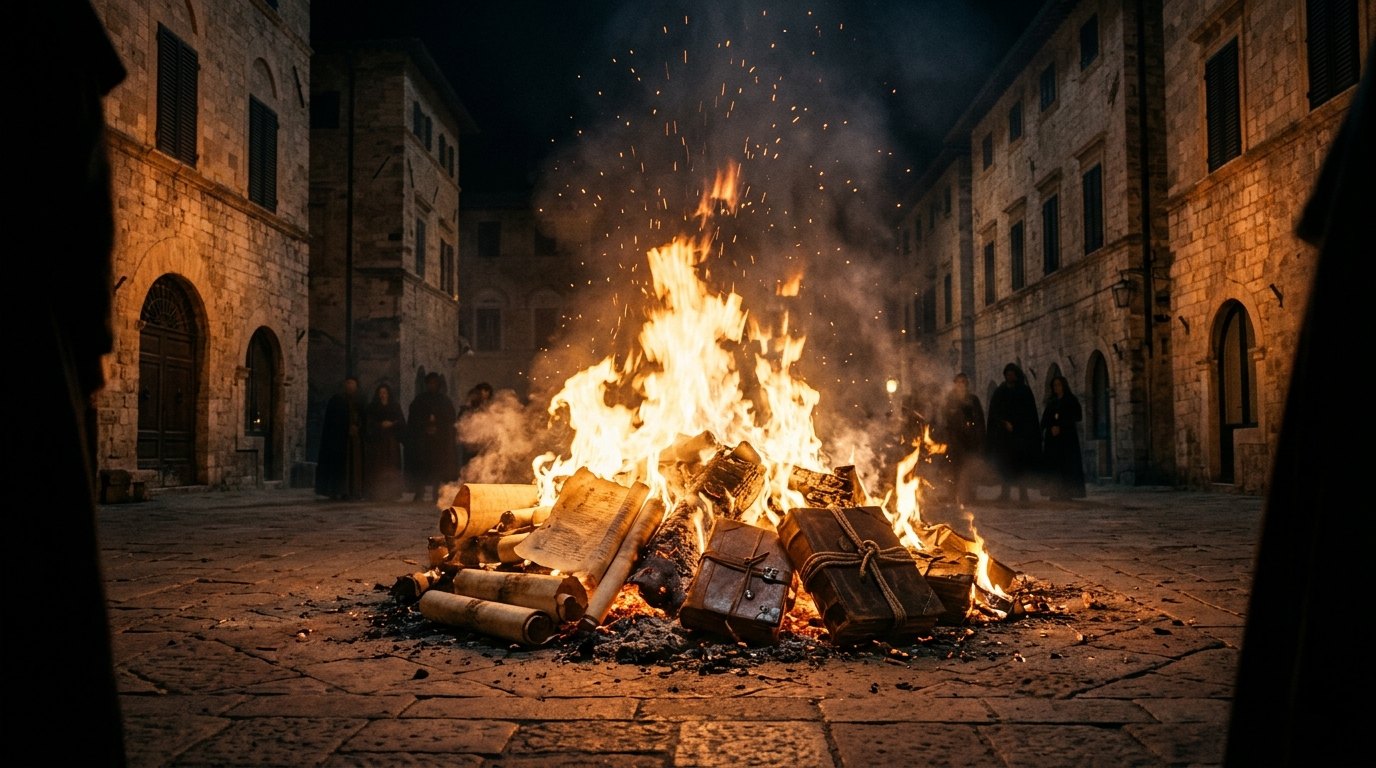
Many of those who believed now came and openly confessed what they had done. A number who had practiced sorcery brought their scrolls together and burned them publicly. When they calculated the value of the scrolls, the total came to fifty thousand drachmas. In this way the word of the Lord spread widely and grew in power.
Acts 19:18-20 (NIV)
New believers in Ephesus publicly burn their expensive magic scrolls, illustrating true repentance and the word of God prevailing mightily.
When the gospel entered the pagan stronghold of Ephesus, the supernatural power of the living God broke the stranglehold of the occult. In Acts 19:18-20, many of those who were now believers came, confessing and divulging their practices. And a number of those who had practiced magic arts brought their books together and burned them in the sight of all. And they counted the value of them and found it came to fifty thousand pieces of silver. So the word of the Lord continued to increase and prevail mightily. The converts did not sell their magical scrolls or give them away; they incinerated them publicly, demonstrating radical repentance and the total supremacy of Christ.
Throughout the book of Acts, the apostles repeatedly confronted and dismantled demonic sorcery through the power of the Holy Spirit. In Samaria, Philip preached Christ to a population long held captive by Simon, who had bewitched the city with magic arts. When Simon attempted to purchase the gift of the Holy Spirit with money, Peter sharply condemned his wicked heart, calling him to bitter repentance (Acts 8:9-24). The gospel severed the city from Simon’s sorcery and filled it with great joy.
On the island of Cyprus, the apostle Paul encountered Elymas the sorcerer, who actively opposed the faith and sought to turn the proconsul away from truth. Paul, filled with the Holy Spirit, denounced him as an enemy of all righteousness and struck him with temporary physical blindness (Acts 13:6-12). Later in Philippi, Paul grew grieved by a slave girl possessing a spirit of divination whose owners profited from her fortune-telling; he commanded the spirit to depart in the name of Jesus Christ (Acts 16:16-18). The apostolic witness proves that the name of Jesus disarms, exposes, and overthrows every demonic stronghold, securing total freedom for all who trust in Him.
| Passage | What it says |
|---|---|
| Acts 8:9-24 | Peter sharply rebukes Simon the sorcerer of Samaria, exposing his unregenerate heart and covetousness. |
| Acts 13:6-12 | Paul denounces Elymas the magician as a son of the devil and strikes him with temporary blindness. |
| Acts 16:16-18 | Paul casts out a spirit of divination from a slave girl who brought her masters profit by fortune-telling. |
| Acts 19:18-20 | Ephesian converts burn fifty thousand pieces of silver worth of magic books as the gospel triumphs. |
The Final Verdict
Unrepentant Sorcery is Excluded from Eternal Life
But the cowardly, the unbelieving, the vile, the murderers, the sexually immoral, those who practice magic arts, the idolaters and all liars—they will be consigned to the fiery lake of burning sulfur. This is the second death.”
Revelation 21:8 (NIV)
The final book of Scripture explicitly lists practitioners of magic arts among those whose portion is the lake of fire.
The culmination of Scripture renders an inescapable judgment against every form of the occult: unrepentant practitioners of magic arts face eternal exclusion from the presence of God. John records in Revelation 21:8 that among the cowardly, the unbelieving, and murderers, sorcerers have their portion assigned directly in the lake that burns with fire and sulfur, which is the second death. This solemn warning is not unique to apocalyptic vision; it confirms the consistent teaching of the apostles. In Galatians 5:19-21, Paul explicitly names sorcery (pharmakeia) among the evident works of the flesh, delivering the sober decree that those who make a practice of such things will not inherit the kingdom of God.
As history advances toward its consummation, occult deception intensifies rather than diminishes. Paul warns in 2 Thessalonians 2:9-10 that the coming of the lawless one will be accompanied by Satan's counterfeit power, signs, and lying wonders to seduce those who perish. John echoes this reality in Revelation 13:13-14 and Revelation 16:13-14, describing demonic spirits performing miraculous signs to seduce the earth and rally earthly rulers to wage war against the Almighty. Yet even under devastating wrath, Revelation 9:20-21 reveals the obstinate blindness of unregenerate hearts that refuse to repent of their idols, thefts, and sorceries.
Ultimately, God's justice is total and decisive. Babylon the Great falls irrecoverably because all nations were seduced and led astray by her sorceries, as declared in Revelation 18:23. Her seductions meet their end when the false prophet who worked those deceiving signs is seized and cast alive into the lake of fire in Revelation 19:20. When the New Jerusalem descends in radiant purity, Revelation 22:15 confirms that outside its pearl gates remain the dogs, the sexually immoral, the murderers, and everyone who loves and practices falsehood and sorcery. Deliverance and safety are found solely in repentance and eternal refuge under the blood of Jesus Christ.
| Passage | What it says |
|---|---|
| Galatians 5:19-21 | Lists sorcery (pharmakeia) among the works of the flesh, warning that those who practice such will not inherit the kingdom. |
| Revelation 9:20-21 | Depicts unrepentant mankind clinging stubbornly to their idols, murders, and sorceries amid end-times judgments. |
| Revelation 18:23 | Declares Babylon's final destruction because all the nations were deceived by her sorceries. |
| Revelation 21:8 | Assigns sorcerers to the lake that burns with fire and sulfur, which is the second death. |
| Revelation 22:15 | Shuts outside the gates of the New Jerusalem everyone who practices sorcery, idolatry, and deceit. |
| 2 Thessalonians 2:9-10 | The lawless one arrives with Satan's counterfeit power, signs, and deceiving wonders. |
| Revelation 13:13-14 | The second beast performs deceptive signs to lead earth's inhabitants into idol worship. |
| Revelation 16:13-14 | Demonic spirits perform signs to assemble world kings for battle against God Almighty. |
| Revelation 19:20 | The false prophet who deceived people through occult signs is thrown into fire. |
Where in the Bible
| Book | Passages |
|---|---|
| Exodus | 3 · Exodus 22:18, Exodus 7:11-12, Exodus 8:18-19 |
| Leviticus | 5 · Leviticus 19:26, Leviticus 19:31, Leviticus 20:6, Leviticus 20:27, Leviticus 18:21 |
| Numbers | 1 · Numbers 23:23 |
| Deuteronomy | 2 · Deuteronomy 12:31, Deuteronomy 18:9-14 |
| 1 Samuel | 2 · 1 Samuel 15:23, 1 Samuel 28:7-25 |
| 2 Kings | 4 · 2 Kings 9:22, 2 Kings 17:17, 2 Kings 21:6, 2 Kings 23:24 |
| 1 Chronicles | 1 · 1 Chronicles 10:13-14 |
| 2 Chronicles | 2 · 2 Chronicles 33:6, 2 Chronicles 28:3 |
| Isaiah | 4 · Isaiah 8:19-20, Isaiah 19:3, Isaiah 44:24-25, Isaiah 47:9-15 |
| Jeremiah | 1 · Jeremiah 27:9-10 |
| Ezekiel | 2 · Ezekiel 13:17-23, Ezekiel 21:21-22 |
| Daniel | 4 · Daniel 2:27-28, Daniel 1:20, Daniel 4:7, Daniel 5:7-8 |
| Micah | 1 · Micah 5:12 |
| Nahum | 1 · Nahum 3:4 |
| Zechariah | 1 · Zechariah 10:2 |
| Malachi | 1 · Malachi 3:5 |
| Acts | 4 · Acts 8:9-24, Acts 13:6-12, Acts 16:16-18, Acts 19:18-20 |
| Galatians | 1 · Galatians 5:19-21 |
| 2 Thessalonians | 1 · 2 Thessalonians 2:9-10 |
| Revelation | 7 · Revelation 9:20-21, Revelation 18:23, Revelation 21:8, Revelation 22:15, Revelation 13:13-14, Revelation 16:13-14, Revelation 19:20 |
The story in order
- God's Law forbids occult practices (c. 1450 BC) · Exodus 22:18 · Establishes a clear prohibition against sorcery within the covenant community.
- Canaanite occult rites are forbidden (c. 1400 BC) · Deuteronomy 12:31 · Warns Israel against adopting the abominable magical practices of the surrounding nations.
- Egyptian sorcerers mimic God's power (c. 1450 BC) · Exodus 7:11-12 · Demonstrates the limitations of human magic against divine power.
- Saul's doom from consulting a medium (c. 1050 BC) · 1 Samuel 28:7-25 · Highlights the tragic consequences of seeking guidance from forbidden sources.
- Manasseh's occult transgressions (c. 690 BC) · 2 Kings 21:6 · Records severe sin that provoked the Lord's anger, leading to judgment.
- Josiah purges Judah of occult practices (c. 620 BC) · 2 Kings 23:24 · Shows a king's effort to restore faithfulness by removing abominations.
- Prophets denounce divination and sorcery (c. 740 BC) · Isaiah 8:19-20 · Directs people to God's word, contrasting it with occult mediums.
- Babylon's occult practices lead to ruin (c. 700 BC) · Isaiah 47:9-15 · Foretells the downfall of a nation reliant on sorceries and astrology.
- Daniel excels over Babylonian magicians (c. 600 BC) · Daniel 1:20 · Demonstrates the superiority of God's wisdom over occult knowledge.
- Paul confronts Elymas the magician (AD 40s) · Acts 13:6-12 · The gospel's power directly opposes and overcomes demonic deception.
- Ephesian converts burn magic books (AD 50s) · Acts 19:18-20 · Illustrates the decisive renunciation of occult practices by new believers.
- Sorcery listed as a work of the flesh (AD 50s) · Galatians 5:19-21 · Warns that practicing sorcery excludes one from inheriting God's kingdom.
- Occult deception in end-times judgments (c. AD 95) · Revelation 9:20-21 · Depicts humanity's stubborn persistence in sorcery despite divine warnings.
- Sorcerers excluded from New Jerusalem (c. AD 95) · Revelation 22:15 · Defines the eternal fate of those who practice sorcery and deceit.
Occult Practices vs. God's Way
| Forbidden Occult Practice | God's Command or Provision | Consequence or Outcome | Passage |
|---|---|---|---|
| Sorcery (Exodus 22:18) | Listen to God's prophet (Deuteronomy 18:15) | Death penalty (Exodus 22:18) | Exodus 22:18 |
| Divination, omens (Leviticus 19:26) | Trust in the Lord (Numbers 23:23) | Worthless and foolish (Isaiah 44:25) | Leviticus 19:26 |
| Mediums, spiritists (Leviticus 19:31) | Seek God's written word (Isaiah 8:19-20) | Spiritual defilement (Leviticus 19:31) | Leviticus 19:31 |
| Astrology, enchantments (Daniel 2:2) | God reveals mysteries (Daniel 2:27-28) | Inability to interpret (Daniel 2:10) | Daniel 2:2 |
| Consulting necromancer (1 Samuel 28:7) | Obey God's commands (1 Samuel 15:23) | Pronouncement of doom (1 Samuel 28:16) | 1 Samuel 28:7 |
The Progression of Occult Deception
| Era | Manifestation | Biblical Response/Outcome | Passage |
|---|---|---|---|
| Torah Period | Legal prohibitions, Canaanite rites | Law establishes separation (Exodus 22:18, Deuteronomy 12:31) | Exodus 22:18 |
| Monarchy Period | Idolatry, mediums, sorcery | Historical consequences, judgment (1 Samuel 15:23, 2 Kings 17:17) | 1 Samuel 15:23 |
| Prophetic Period | False prophets, divination, astrology | Prophetic indictment, exposure of folly (Isaiah 47:9, Jeremiah 27:9) | Isaiah 47:9 |
| Apostolic Period | Magic, sorcery, demonic spirits | Gospel confronts and overcomes (Acts 13:6-12, Acts 19:19) | Acts 13:6-12 |
| End Times/Final Verdict | Deceptive signs, sorceries | Exclusion from God's kingdom, eternal judgment (Revelation 21:8, Galatians 5:21) | Revelation 21:8 |
Key words
- Witchcraft/Sorcery (pharmakeia (Grk. φαρμακεία))
- The practice of magic, often involving spells, potions, and incantations, seeking supernatural power. · Galatians 5:20
- Divination (qesem (Heb. קֶסֶם))
- The practice of seeking knowledge of the future or the unknown by supernatural means. · Deuteronomy 18:10
- Medium/Spiritist (yidde'oni (Heb. יִדְּעֹנִי))
- One who claims to communicate with the spirits of the dead. · Leviticus 19:31
- Occult (chashaph (Heb. חָשַׁף))
- Practices related to supernatural, mystical, or magical powers and phenomena. · Exodus 22:18
- Enchantment (laḥash (Heb. לַחַשׁ))
- The use of spells or charms to invoke supernatural forces. · Deuteronomy 18:11
The testimony of Scripture leaves no middle ground: every attempt to access the spiritual realm outside of Christ is dangerous rebellion against the Lord who loves and redeems us. Believers are called to absolute separation from these practices, casting aside fear and curiosity in light of Christ's supreme authority. In Jesus, we possess full spiritual protection, peace, and the gift of the Holy Spirit, making any recourse to occult power both empty and unnecessary.
48 passages, each cited once.
Scripture cited
- Deuteronomy 18:10-12
- Leviticus 19:31
- Exodus 22:18
- Leviticus 19:26
- Deuteronomy 12:31
- 2 Chronicles 33:6
- Acts 19:19
- 1 Samuel 28:7-25