What does the Bible say about work?

Colossians 3:23-24
23 Whatever you do, work at it with all your heart, as working for the Lord, not for human masters,
24 since you know that you will receive an inheritance from the Lord as a reward. It is the Lord Christ you are serving.
New International Version (NIV)
The answer
Work is part of God’s good design, not a punishment introduced by sin. Sin makes labor painful and frustrating, but work itself remains good. For a Christian, work is to be done wholeheartedly for Christ, with diligence, honesty, justice and generosity—without becoming either lazy or enslaved to work.
Work began before the fall
God placed Adam in Eden “to cultivate and keep it” before sin entered the world (Genesis 2:15). Humanity was also commissioned to fill and subdue the earth and exercise dominion over its creatures (Genesis 1:28). Cultivating, building, organizing, producing and caring for creation therefore reflect God’s purposes.
After Adam sinned, God cursed the ground, bringing thorns, painful labor and sweaty toil (Genesis 3:17-19). The curse did not create work; it made work harder. That explains why good effort can meet frustration, injustice, exhaustion and disappointing results.
Work is service to Christ
Colossians 3:23 says, “And whatever you do, work heartily, as for the Lord and not for men,” and Colossians 3:24 adds that the Lord gives “the reward of the inheritance.” The ultimate audience is Christ, not a supervisor, customer or audience.
Ephesians 6:6-7 applies this by rejecting mere “eyeservice” and people-pleasing in favor of doing God’s will sincerely, as servants of Christ. Ordinary tasks consequently have spiritual significance. This does not make dishonest or sinful work acceptable; it means lawful work should be done faithfully rather than only when someone is watching.
Diligence should produce honest provision and generosity
“In all hard work there is profit, but the talk of the lips leads only to poverty” (Proverbs 14:23). Scripture opposes irresponsible idleness: “If anyone is not willing to work, don’t let him eat” (2 Thessalonians 3:10), followed by an instruction to work quietly and earn one’s own bread (2 Thessalonians 3:11-12). That command targets unwillingness, and should not be turned into condemnation of everyone who is unable to work or unable to find employment.
Work also serves other people. Ephesians 4:28 tells the former thief to labor honestly so “that he may have something to give to him who has need.” The goal moves beyond taking, or merely accumulating, toward providing and giving. Those with authority over workers must likewise give what is “just and equal,” remembering that they answer to their Master in heaven (Colossians 4:1).
Work must not take God’s place
Unless the Lord builds the house, the builders labor in vain; anxious rising early and staying up late cannot replace His care (Psalm 127:1-2). Jesus therefore directs people away from anxiety about food and clothing and toward seeking God’s kingdom and righteousness first (Matthew 6:31-33).
Exodus 20:9-10 joins six days of labor with Sabbath rest. Without imposing Israel’s particular Sabbath regulation as a universal workplace rule, its pattern shows that ceaseless productivity was never God’s purpose. Rest and sleep acknowledge that human effort is limited and that God remains the provider.
Answered from Scripture · reviewed November 11, 2026
Scripture reveals that work is neither a punishment nor an arbitrary human burden, but an essential part of God's holy design for mankind before and after the fall. Every task given to human hands is transformed when viewed as service directly rendered to Christ our Master. Understanding God's pattern for labor redeems daily toil from empty drudgery and establishes it as an offering of faithful worship.
Created Purpose
Work Is Part of God's Original Good Creation

The LORD God took the man and put him in the Garden of Eden to work it and take care of it.
Genesis 2:15 (NIV)
This verse reveals that work was instituted in unfallen Eden as a good, noble stewardship before sin ever entered the world.
Before sin ever entered human history, God established labor as a noble, vital calling. In Genesis 2:15, the Lord God took the man He had created and placed him in the Garden of Eden specifically to cultivate and keep it, demonstrating that productive human stewardship is an original blessing rather than a penalty for transgression. This vocational mandate echoes the overarching commission of Genesis 1:28, where God blessed the man and woman and directed them to be fruitful, multiply, fill the earth, and exercise dominion over every living thing. Humanity was made to reflect the divine Maker, whose own active labor is seen in Genesis 2:2, when God completed the magnificent work of the heavens and the earth before sanctifying the seventh day.
Work remains deeply woven into the moral and cosmic fabric of the world God ordered. The Fourth Commandment in Exodus 20:9 directly codifies six days of diligent labor as an absolute covenant duty alongside the Sabbath rest. Daily human effort harmonizes with creation's rhythms, as Psalm 104:23 observes that man goes forth to his work and to his labor until the evening under God's sovereign gaze. Skilled labor is also uniquely dignified by the Holy Spirit; in Exodus 31:1-5, the Lord sovereignly endowed Bezalel with divine wisdom, understanding, and craftsmanship in artistic metalwork, stone cutting, and wood carving for the holy tabernacle. Because every temporal task requires the favor of heaven to endure, Moses prays in Psalm 90:17 that the beauty of the Lord our God may rest upon us and establish the work of our hands.
| Passage | What it says |
|---|---|
| Genesis 1:28 | God commands humanity to be fruitful, multiply, fill the earth, and exercise dominion over creation. |
| Genesis 2:2 | God Himself sets the divine pattern of productive labor by creating the heavens and earth before resting. |
| Genesis 2:15 | The Lord God places man in the Garden of Eden specifically to cultivate and keep it. |
| Exodus 20:9 | The Fourth Commandment directly ordains six days of human labor alongside the seventh day of rest. |
| Psalms 104:23 | Scripture describes the daily rhythm of man going out to his work and labor until evening as part of creation's order. |
| Exodus 31:1-5 | The Lord fills Bezalel with the Spirit of God in craftsmanship, carving, and artistic design for sacred construction. |
| Psalms 90:17 | Moses petitions the Lord God to establish and prosper the work of human hands. |
The Fallen World
The Fall Brought Toil, Frustration, and Futility

To Adam he said, “Because you listened to your wife and ate fruit from the tree about which I commanded you, ‘You must not eat from it,’ “Cursed is the ground because of you; through painful toil you will eat food from it all the days of your life. It will produce thorns and thistles for you, and you will eat the plants of the field. By the sweat of your brow you will eat your food until you return to the ground, since from it you were taken; for dust you are and to dust you will return.”
Genesis 3:17-19 (NIV)
This text explains why daily labor is marked by sweat, physical frustration, and difficulty under the curse of sin.
Daily labor underwent a catastrophic fracture when humanity fell into rebellion against God. In Genesis 3:17-19, the Lord judged Adam's disobedience by cursing the very soil beneath his feet, decreeing that man would eat bread by the sweat of his face amid thorns and thistles until returning to the dust. The ground no longer yields its fruit with unhindered generosity; instead, human work is now constantly beleaguered by physical exhaustion, resistance, and frustration. Solomon ponders this fallen reality throughout his wisdom writings. Ecclesiastes 1:3 asks what real profit a man possesses from all his labor under the sun, while Ecclesiastes 2:22-23 recounts the painful sorrow and sleepless nights that attend temporal ambition when pursued without reference to the eternal God.
Yet the reality of earthly brevity does not excuse indolence. Ecclesiastes 9:10 charges the believer to pursue whatever hand finds to do with all might, since the grave soon terminates every earthly endeavor. Christ cuts straight to the root of human striving in John 6:27, commanding His disciples not to labor merely for perishable earthly food, but for the true spiritual food that endures to everlasting life through the Son of Man. Paul clarifies in Romans 8:20-22 that creation itself was subjected to futility and groans in bondage, awaiting final redemption. Labor is also actively frustrated when spiritual priorities are inverted, as Haggai 1:5-6 warns that working for money puts wages into bags with holes when God's kingdom and house are left desolate.
| Passage | What it says |
|---|---|
| Genesis 3:17-19 | The ground is cursed because of sin, making labor painful and sweaty until death returns man to the dust. |
| Ecclesiastes 1:3 | Solomon observes the earthly vanity of labor when done merely under the sun apart from eternal purpose. |
| Ecclesiastes 2:22-23 | Human striving under the curse often produces grief, sorrow, and restless nights of anxiety. |
| Ecclesiastes 9:10 | Believers are urged to work with their might because the grave brings an end to earthly opportunity. |
| John 6:27 | Jesus warns not to labor solely for food that perishes, but for the food enduring to eternal life. |
| Romans 8:20-22 | Creation was subjected to futility and groans in bondage until the redemption of God's children. |
| Haggai 1:5-6 | Labor yields frustration and empty pockets when the house and honor of God are neglected. |
Wisdom and Industry
God Condemns Sloth and Honors Diligent Hands

Go to the ant, you sluggard; consider its ways and be wise! It has no commander, no overseer or ruler, yet it stores its provisions in summer and gathers its food at harvest. How long will you lie there, you sluggard? When will you get up from your sleep? A little sleep, a little slumber, a little folding of the hands to rest— and poverty will come on you like a thief and scarcity like an armed man.
Proverbs 6:6-11 (NIV)
The sage points to the ant to expose the folly of laziness and the certain poverty that overtakes the sluggard.
God's Word relentlessly condemns laziness while honoring the fruit of disciplined, energetic industry. In Proverbs 6:6-11, the wise father commands the sluggard to go to the ant and consider her ways, observing how this tiny creature prepares her bread in summer and gathers food at harvest without needing an overseer, while reckless sleep invites sudden poverty like an armed bandit. Proverbs 10:4 confirms that slack hands produce destitution, while diligent hands steadily acquire wealth under God's ordinary providence. Hard work positions a person for fruitful service and leadership; Proverbs 12:24 declares that the hand of the diligent will rule, whereas the lazy man will be subjected to forced labor.
Scripture makes no allowance for pious excuses that mask passive neglect. Proverbs 14:23 establishes that in all labor there is profit, but mere chatter leads strictly to impoverishment. Skill and perseverance open doors before the highest authorities, as Proverbs 22:29 promises that a man diligent in his business will stand before kings rather than obscure men. This energetic ethic is wonderfully embodied in the virtuous woman of Proverbs 31:13-17, who seeks wool and flax, works willingly with her hands, manages her household with strength, and tastes that her enterprise is good. While Proverbs 13:4 warns that the sluggard craves and gets nothing, it assures that the soul of the diligent is richly satisfied. Conversely, Proverbs 24:30-34 paints a sobering portrait of the overgrown vineyard, where a little folding of the hands to sleep ruins the stone wall and surrenders the field to nettles.
| Passage | What it says |
|---|---|
| Proverbs 6:6-11 | The sluggard is directed to learn from the ant who works diligently without needing an overseer. |
| Proverbs 10:4 | Slack hands bring poverty, but diligent hands bring wealth under God's general providence. |
| Proverbs 12:24 | The hand of the diligent will rule, while the lazy person will be put to forced labor. |
| Proverbs 14:23 | All hard work brings profit, but mere talk leads only to poverty. |
| Proverbs 22:29 | A person skilled and diligent in his work will stand before kings rather than obscure men. |
| Proverbs 31:13-17 | The virtuous woman works willingly with her hands, providing for her household with vigor and enterprise. |
| Proverbs 13:4 | The sluggard desires and gets nothing, while the diligent soul is richly satisfied. |
| Proverbs 24:30-34 | Neglect and love of sleep allow thorns, nettles, and ruins to overrun the field. |
Heart and Integrity
Honest Labor Demands Justice and Total Sincerity
In everything that he undertook in the service of God’s temple and in obedience to the law and the commands, he sought his God and worked wholeheartedly. And so he prospered.
2 Chronicles 31:21 (NIV)
King Hezekiah's labor models wholehearted devotion to God's commandments as the foundation of true prosperity.
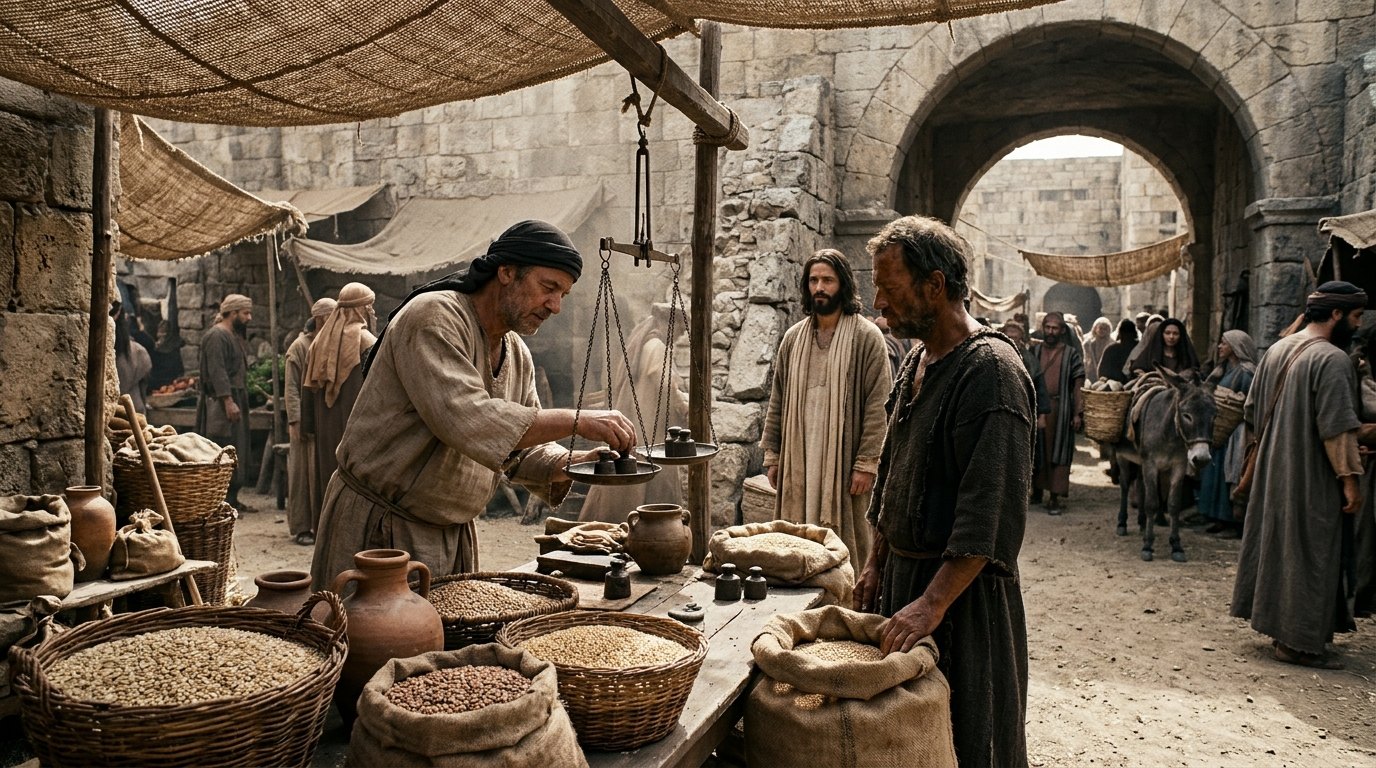
Because labor is performed before the face of an all-seeing God, workplace ethics demand unimpeachable honesty, justice, and sincere devotion. In 2 Chronicles 31:21, Scripture records that King Hezekiah worked with all his heart and prospered because his labor was rooted in the law, the commandments, and the pure service of God. Worldly success detached from righteousness is an offense to heaven. Leviticus 19:13 explicitly commands employers never to defraud a neighbor or rob him, specifically prohibiting holding back a hired laborer's daily wages overnight. God requires that commercial enterprise be handled with uncompromising equity; Deuteronomy 25:13-15 mandates perfectly accurate weights and measures, declaring dishonest trade to be an abomination to the Lord.
Exploitative workplace practices incur swift divine retribution. Through the prophet in Jeremiah 22:13, the Lord pronounces woe upon anyone who builds his house by unrighteousness and compels his neighbor to serve without wages. The apostle James gives a terrifying warning in James 5:4, revealing that the withheld wages of field hands cry out, and the cries of the reapers have reached the ears of the Lord of Sabaoth. Proverbs 11:1 restates that a false scale is an abomination, but a just weight is God's delight. Jesus Himself reinforces the fundamental fairness due to workers in Luke 10:7, affirming that the laborer is worthy of his wages as he undertakes kingdom labor. Paul quotes this same enduring moral principle in 1 Timothy 5:18, joining the Mosaic law regarding the unmuzzled ox with the Lord's teaching to vindicate the right of laborers to receive their rightful compensation.
| Passage | What it says |
|---|---|
| Leviticus 19:13 | God forbids withholding the wages of a hired worker overnight, commanding prompt and fair payment. |
| Deuteronomy 25:13-15 | The law mandates honest scales and accurate weights, condemning commercial deceit as an abomination. |
| 2 Chronicles 31:21 | Hezekiah did every work in God's service with all his heart and prospered through obedience. |
| Jeremiah 22:13 | God pronounces woe on anyone who builds his house by unrighteousness and uses his neighbor's labor unpaid. |
| James 5:4 | The cries of unpaid laborers defrauded of their harvest reach the ears of the Lord of Hosts. |
| Proverbs 11:1 | A false balance is an abomination to the Lord, but a just weight is His delight. |
| Luke 10:7 | Jesus affirms that the laborer is worthy of his wages as he conducts his work. |
| 1 Timothy 5:18 | Scripture commands not to muzzle the ox treading grain, affirming the worker's right to wages. |
Service to Christ
Every Christian Vocation Is Service to the Lord

Whatever you do, work at it with all your heart, as working for the Lord, not for human masters, since you know that you will receive an inheritance from the Lord as a reward. It is the Lord Christ you are serving.
Colossians 3:23-24 (NIV)
This central command establishes that all daily work is rendered to Christ Himself, who bestows the eternal inheritance.
Colossians 3:23-24 fundamentally reorders the purpose of human labor: "Whatever you do, work heartily, as for the Lord and not for men, knowing that from the Lord you will receive the inheritance as your reward. You are serving the Lord Christ." Daily employment is not a detached, secular compartment of life; it is direct worship rendered to the risen King. Because our total existence belongs exclusively to Him (Romans 14:8), every ordinary activity—whether eating, drinking, or executing one's trade—carries the joyful imperative to be carried out wholly for God's glory (1 Corinthians 10:31).
This reality transforms relationships within the workplace. Writing to Christian servants under the harsh realities of the Roman world, Paul commanded obedience from the heart with sincere devotion, laboring "as bondservants of Christ, doing the will of God from the heart" rather than offering mere eye-service to appease earthly overseers (Ephesians 6:5-8). Simultaneously, those in positions of leadership and authority are warned to cease threatening and deal justly, sobered by the truth that their own Master sits in heaven with no partiality (Ephesians 6:9). Every word spoken and task executed is consecrated under His lordship (Colossians 3:17).
When a believer works with honest diligence, integrity, and cheerful fidelity, they visibly adorn the doctrine of God their Savior before a watching world (Titus 2:9-10). Because Christ has conquered the grave, our vocational and spiritual labors are never empty, futile, or forgotten: we remain steadfast and immovable, assured that no labor in the Lord is ever in vain (1 Corinthians 15:58).
| Passage | What it says |
|---|---|
| Romans 14:8 | Whether believers live or die, every aspect of life belongs wholly unto the Lord. |
| 1 Corinthians 10:31 | Whatever Christians do, whether eating, drinking, or working, must be done to the glory of God. |
| Ephesians 6:5-8 | Bondservants are told to obey their earthly masters from the heart, rendering service as unto Christ. |
| Ephesians 6:9 | Masters are commanded to treat laborers fairly without threatening, knowing their Master is in heaven. |
| Colossians 3:17 | Whatever believers do in word or deed is to be done in the name of the Lord Jesus. |
| Colossians 3:23-24 | Believers are commanded to work heartily as for the Lord, serving Christ and receiving His reward. |
| Titus 2:9-10 | Bondservants are urged to show all good fidelity to adorn the doctrine of God their Savior. |
| 1 Corinthians 15:58 | Believers are commanded to be steadfast and abound in the Lord's work, knowing it is not in vain. |
Generosity and Witness
Productive Labor Serves Others and Silences Critics
and to make it your ambition to lead a quiet life: You should mind your own business and work with your hands, just as we told you, so that your daily life may win the respect of outsiders and so that you will not be dependent on anybody.
1 Thessalonians 4:11-12 (NIV)
Paul connects quiet, diligent handiwork directly to earning the respect of outsiders and maintaining financial independence.
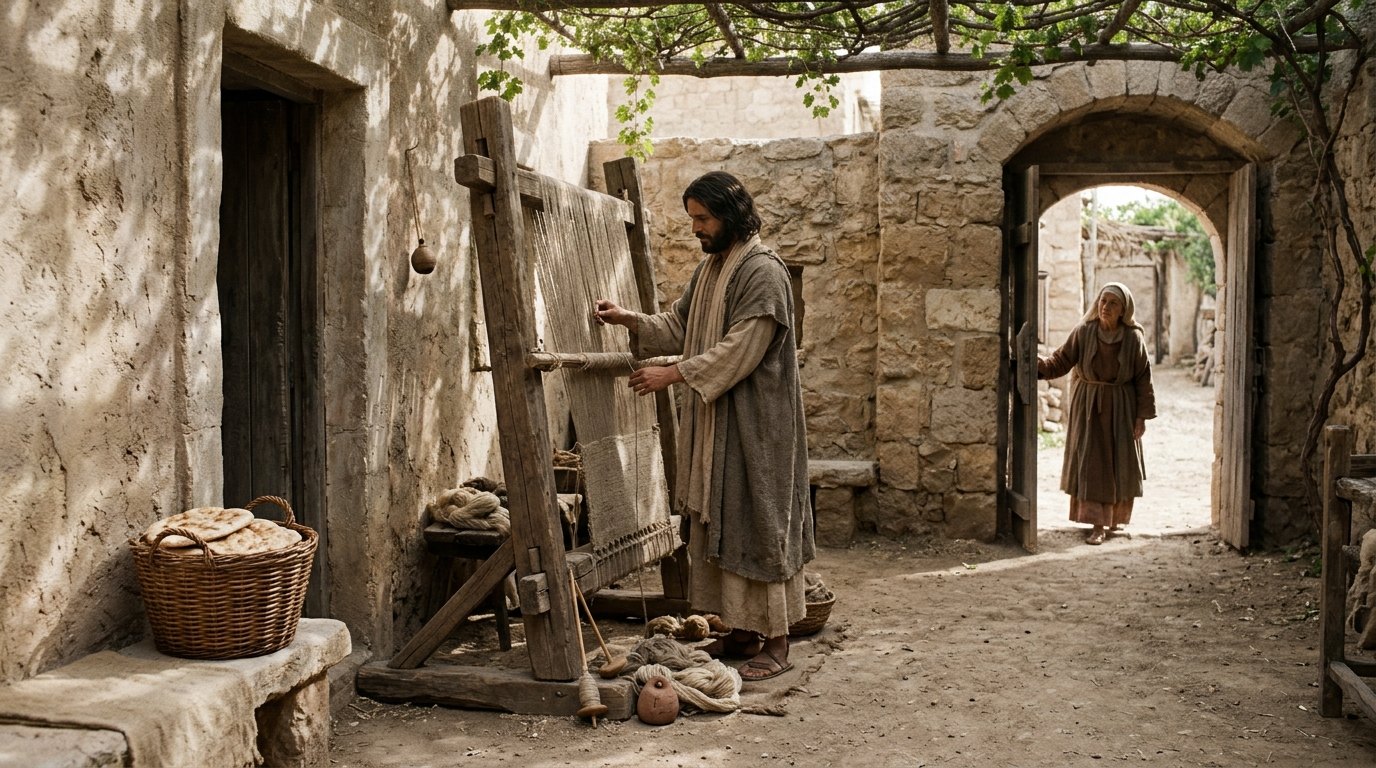
In 1 Thessalonians 4:11-12, the apostle establishes a foundational rule for public Christian life: believers are to aspire to live quietly, mind their own affairs, and work with their hands, so that they may walk properly before outsiders and be dependent on no one. Labor is a tangible apologetic. As the Lord Jesus declared in the Sermon on the Mount, our visible good works shine before the world not to bring praise to ourselves, but so that unbelieving observers give glory to our Father who is in heaven (Matthew 5:16).
Godly labor also provides the vital means for self-sacrificing generosity. Paul reminded the Ephesian elders of his own diligent tradecraft in tentmaking, demonstrating that true labor enables the strong to help the weak, remembering Christ's words that giving is far more blessed than receiving (Acts 20:34-35). For this reason, the transformed convert who once stole must steal no longer, but must labor with honest hands in order to share with anyone in need (Ephesians 4:28).
Scripture has no room for willful indolence. The church is expressly instructed that "if anyone is not willing to work, let him not eat," calling busybodies to quiet discipline and productive self-sustenance (2 Thessalonians 3:10-12). Neglecting one's household responsibilities is a betrayal of the gospel so severe that Paul describes an irresponsible provider as having denied the faith and being worse than an unbeliever (1 Timothy 5:8). Through steady, honorable productivity, believers effectively silence the ignorant slander of foolish critics (1 Peter 2:15).
| Passage | What it says |
|---|---|
| Matthew 5:16 | Believers are to let their good works shine before men so that their heavenly Father is glorified. |
| Acts 20:34-35 | Paul worked with his hands to provide for needs, showing that it is more blessed to give than receive. |
| Ephesians 4:28 | Former thieves must labor honestly with their hands so they have something to share with those in need. |
| 1 Thessalonians 4:11-12 | Christians are instructed to work with their hands to win the respect of outsiders and be dependent on nobody. |
| 2 Thessalonians 3:10-12 | Paul commands that anyone unwilling to work should not eat, directing idlers to work quietly and earn their bread. |
| 1 Timothy 5:8 | Anyone who fails to provide for his relatives and household has denied the faith and is worse than an unbeliever. |
| 1 Peter 2:15 | God's will is that by doing good, Christians put to silence the ignorant accusations of foolish men. |
Rhythm of Rest
God Institutes Rest and Sabbath Alongside Faithful Labor

“Remember the Sabbath day by keeping it holy. Six days you shall labor and do all your work, but the seventh day is a sabbath to the LORD your God. On it you shall not do any work, neither you, nor your son or daughter, nor your male or female servant, nor your animals, nor any foreigner residing in your towns. For in six days the LORD made the heavens and the earth, the sea, and all that is in them, but he rested on the seventh day. Therefore the LORD blessed the Sabbath day and made it holy.
Exodus 20:8-11 (NIV)
Work is framed by God's own rhythm of six days of diligent labor followed by consecrated rest.
Work finds its boundaries and divine blessing in the pattern of sacred rest. In the fourth commandment, God rooted human labor within His own created order: "Six days you shall labor, and do all your work, but the seventh day is a Sabbath to the Lord your God" (Exodus 20:8-11). Labor is commanded for six days, but it is bounded by a day consecrated to the Creator, reflecting the very dawn of creation when God rested from His finished creative work and sanctified the seventh day (Genesis 2:3). Faithful work is sustained by worshipful cessation.
Rest is neither laziness nor a concession to failure; it is God's appointed gift to fragile creatures who depend entirely upon His providence. During His earthly ministry, when the disciples were overwhelmed by the ceaseless demands of ministry, the Lord Jesus Himself commanded them to withdraw: "Come away by yourselves to a desolate place and rest a while" (Mark 6:31). A life of perpetual striving denies our creaturely limits and functionally doubts God's sovereign care.
Ultimately, the weekly rhythm of faithful labor and physical replenishment points beyond this present world to our eternal home. The author of Hebrews reminds us that "there remains a Sabbath rest for the people of God" (Hebrews 4:9-11). Every earthly week of diligent work followed by sacred rest serves as a living shadow of the everlasting rest that believers will enter when our earthly pilgrimage is finished and we rest forever in the presence of Christ our Redeemer.
| Passage | What it says |
|---|---|
| Genesis 2:3 | God rests on the seventh day from all His work, blessing it and sanctifying it. |
| Exodus 20:8-11 | The fourth commandment establishes weekly Sabbath rest after six days of regular labor. |
| Mark 6:31 | Jesus commands His disciples to come apart to a desolate place and rest a while. |
| Hebrews 4:9-11 | A Sabbath rest remains for the people of God, pointing to eternal rest from earthly labors. |
Where in the Bible
| Book | Passages |
|---|---|
| Genesis | 5 · Genesis 1:28, Genesis 2:2, Genesis 2:15, Genesis 3:17-19, Genesis 2:3 |
| Exodus | 3 · Exodus 20:9, Exodus 31:1-5, Exodus 20:8-11 |
| Leviticus | 1 · Leviticus 19:13 |
| Deuteronomy | 1 · Deuteronomy 25:13-15 |
| 2 Chronicles | 1 · 2 Chronicles 31:21 |
| Psalms | 2 · Psalms 104:23, Psalms 90:17 |
| Proverbs | 9 · Proverbs 6:6-11, Proverbs 10:4, Proverbs 12:24, Proverbs 14:23, Proverbs 22:29, Proverbs 31:13-17, Proverbs 13:4, Proverbs 24:30-34, Proverbs 11:1 |
| Ecclesiastes | 3 · Ecclesiastes 1:3, Ecclesiastes 2:22-23, Ecclesiastes 9:10 |
| Jeremiah | 1 · Jeremiah 22:13 |
| Haggai | 1 · Haggai 1:5-6 |
| Matthew | 1 · Matthew 5:16 |
| Mark | 1 · Mark 6:31 |
| Luke | 1 · Luke 10:7 |
| John | 1 · John 6:27 |
| Acts | 1 · Acts 20:34-35 |
| Romans | 2 · Romans 8:20-22, Romans 14:8 |
| 1 Corinthians | 2 · 1 Corinthians 10:31, 1 Corinthians 15:58 |
| Ephesians | 3 · Ephesians 6:5-8, Ephesians 6:9, Ephesians 4:28 |
| Colossians | 2 · Colossians 3:17, Colossians 3:23-24 |
| 1 Thessalonians | 1 · 1 Thessalonians 4:11-12 |
| 2 Thessalonians | 1 · 2 Thessalonians 3:10-12 |
| 1 Timothy | 2 · 1 Timothy 5:18, 1 Timothy 5:8 |
| Titus | 1 · Titus 2:9-10 |
| Hebrews | 1 · Hebrews 4:9-11 |
| James | 1 · James 5:4 |
| 1 Peter | 1 · 1 Peter 2:15 |
The story in order
- God creates and commands work (c. 4000 BC) · Genesis 1:28 · Work is part of God's good design for humanity from the beginning.
- Man placed in Garden to work (c. 4000 BC) · Genesis 2:15 · Cultivating and keeping the Garden was man's first vocation.
- Sabbath Command ordains work (c. 1446 BC) · Exodus 20:9 · Six days of labor are divinely mandated alongside the seventh day of rest.
- Spirit empowers skilled labor (c. 1446 BC) · Exodus 31:1-5 · God equips individuals with skills for His purposes.
- The Fall curses the ground (c. 4000 BC) · Genesis 3:17-19 · Sin brought toil, frustration, and futility to human labor.
- Wisdom condemns sloth (c. 950 BC) · Proverbs 6:6-11 · Diligence is praised, sloth is condemned, using the ant as an example.
- Justice in labor demanded (c. 1445 BC) · Leviticus 19:13 · Prompt and fair payment for workers is a divine command.
- Work done to God's glory (c. AD 55) · 1 Corinthians 10:31 · All activities, including work, should be done for God's glory.
- Work as service to Christ (c. AD 60) · Colossians 3:23-24 · Serve heartily as for the Lord, not men, for His reward.
- Work to provide and share (c. AD 57) · Acts 20:34-35 · Productive labor enables generosity and helps the needy.
- Work earns respect and independence (c. AD 51) · 1 Thessalonians 4:11-12 · Honest work gains respect from outsiders and avoids dependency.
- Eternal rest promised (c. AD 65) · Hebrews 4:9-11 · A Sabbath rest remains, pointing to eternal rest in Christ.
Key words
- Work (עֲבוֹדָה (ʿăḇōḏâ))
- Productive activity, labor, toil, service. · Genesis 2:15
- Dominion (רָדָה (râḏâ))
- Authority and responsibility to rule over creation. · Genesis 1:28
- Cultivate (עָבַד (ʿāḇaḏ))
- To till, dress, or work the ground. · Genesis 2:15
- Diligence (חָרוּץ (ḥārûṣ))
- Earnest and steady effort; industry. · Proverbs 6:6
- Sloth (עָצֵל (ʿāṣēl))
- Laziness, idleness, aversion to work. · Proverbs 6:6
- Futility (הֶבֶל (hēḇel))
- Pointlessness, vanity, emptiness. · Ecclesiastes 1:3
- Vocation (κλῆσις (klēsis))
- A calling or destiny, especially a religious one; one's work. · 1 Corinthians 7:20
Whatever your hands find to do today, your true Master in heaven watches, equips, and promises an eternal reward. When labor is offered wholeheartedly to Christ, ordinary tasks become sacred service that honors God and blesses the world around you.
49 passages, each cited once.
Scripture cited
- Ephesians 6:6-7
- Genesis 1:27-28
- Genesis 2:15
- Genesis 3:17-19
- Exodus 20:9-10
- Psalms 127:1-2
- Proverbs 14:23
- Matthew 6:31-33
- Ephesians 4:28
- 2 Thessalonians 3:10-12
- Colossians 4:1