What does the Bible say about working on Sunday?
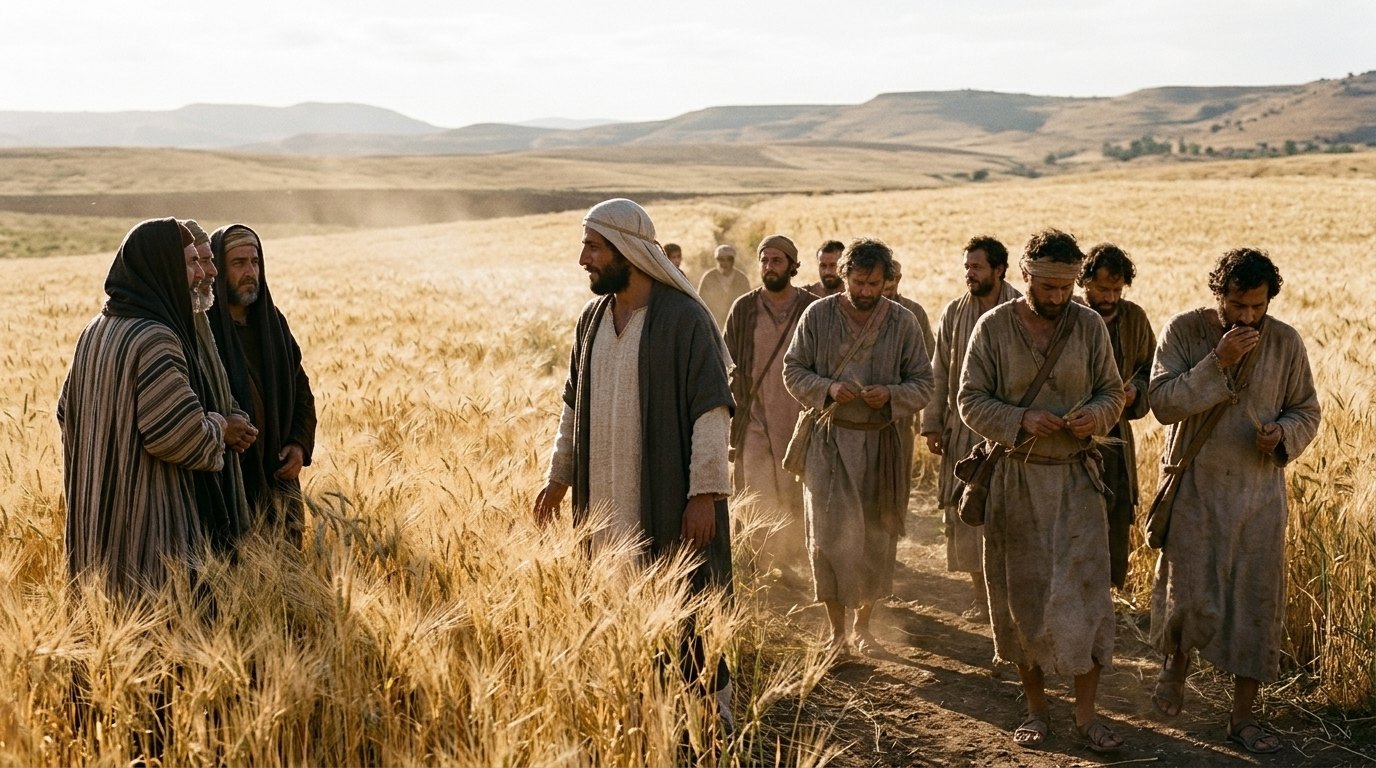
Mark 2:27-28
27 Then he said to them, “The Sabbath was made for man, not man for the Sabbath.
28 So the Son of Man is Lord even of the Sabbath.”
New International Version (NIV)
The answer
The Bible does not call it “Sunday”; it calls the seventh day “the Sabbath” and the first day “the Lord’s day” (Revelation 1:10). Scripture does not say that ordinary work on Sunday is inherently sinful. Rather, it presents the Lord’s Day as a day belonging to the Lord, for worship, rest, and doing good.
What remains binding
God established the seventh day at creation: “And on the seventh day God ended his work… and sanctified it” (Genesis 2:3). Israel also received the Sabbath command: “Remember the Sabbath day, to keep it holy” (Exodus 20:8-11). Jesus clarified its purpose: “The Sabbath was made for man, not man for the Sabbath” and “the Son of Man is lord even of the Sabbath” (Mark 2:27-28). It was given as a provision for humanity’s good, including the rest of workers, servants, animals, and strangers (Deuteronomy 5:14; Exodus 23:12).
What changed in Christ
In Christ, believers are no longer judged for observing or not observing festival days: “Let no man therefore judge you… in respect of an holyday… or of the sabbath days” (Colossians 2:16). The old covenant’s observance was a sign between God and Israel (Ezekiel 20:12); Christ has brought a new covenant and a new day of worship.
The New Church gathered on the first day of the week: “On the first day of the week, when the disciples were gathered together to break bread…” (Acts 20:7). Paul also directed believers to give money “on the first day of the week” (1 Corinthians 16:2). These passages do not require every believer to work six days and rest all of Sunday, but they establish the first day as the gathering day of the Christian church.
How to treat the day
Christ remains Lord of the day. The question is not merely, “What work may I do?” but, “How can this day serve God and others?” Jesus asked, “Is it lawful on the sabbath days to do good, or to do evil? to save life, or to destroy it?” (Luke 6:9). Therefore:
- Set time aside for worship and the Lord’s Day.
- Do not make unnecessary work prevent worship or become an occasion for cruelty and injustice.
- Regard the day as belonging to the Lord, while neither judging others nor trying to earn salvation by rigid observance.
In short: Scripture does not declare all Sunday work sinful. It calls the first day the Lord’s Day and directs believers to gather, worship, rest, and do good. Freedom from the old Sabbath rule must never become freedom to disregard Christ or disregard other people.
Answered from Scripture · reviewed November 11, 2026
Scripture nowhere declares ordinary labor on the first day of the week to be inherently sinful, but it unfolds God's enduring pattern of sanctified rest and corporate worship. From creation's seventh-day rest to the resurrection morning that inaugurated the Lord's Day, God summons His people to honor Him, gather with His saints, and do good rather than being consumed by ceaseless toil. Understanding what the Bible says about Sunday requires tracing the Sabbath from the Old Covenant shadow to its fulfillment in Christ and the New Testament church's weekly rhythm.
Creation Foundation
God Established a Rhythm of Rest from the Beginning

Then God blessed the seventh day and made it holy, because on it he rested from all the work of creating that he had done.
Genesis 2:3 (NIV)
Before the Mosaic law was ever given, God blessed and set apart the seventh day as a permanent pattern of sacred rest.
In Genesis 2:3, before human sin entered the cosmos and long before the law was given at Sinai, God blessed the seventh day and sanctified it. Having completed the universe through His sovereign word, God ceased from His labor in Genesis 2:2, establishing an enduring rhythm of work and rest woven directly into the fabric of creation. He did not rest because of exhaustion, but to set apart a hallowed pattern for mankind whom He formed in His own image.
When the Lord delivered the Ten Commandments on Mount Sinai, this foundational principle was codified for His redeemed community. Exodus 20:8 explicitly commands His people to remember the Sabbath day to keep it holy. Human industry is given its proper dignity across six days in Exodus 20:9, but Exodus 20:10 establishes that the seventh day belongs distinctively to the Lord, requiring complete cessation from customary labor for every household member, laborer, and domestic animal. The moral grounding for this command reaches back explicitly to the primordial week in Exodus 20:11, reminding every generation that God labored for six days and rested on the seventh.
This restorative design permeates the broader covenant statutes. In Exodus 23:12, God commands six days of labor alongside a weekly seventh-day pause so that even servants, resident aliens, and working animals may be refreshed. When Moses restates the Decalogue to the generation entering Canaan, Deuteronomy 5:12 and Deuteronomy 5:14 repeat the obligation to protect workers and beasts from merciless exploitation. Deuteronomy 5:15 adds a profound spiritual incentive: Israel was once a brutalized slave in Egypt with no day of relief, but their Redeemer brought them out with a mighty hand. Rest is therefore both an ordinance of creation and an enduring testimony of divine rescue.
| Passage | What it says |
|---|---|
| Genesis 2:2 | God finished His creative work on the seventh day and rested from all the labor He had done. |
| Genesis 2:3 | God blessed the seventh day and sanctified it, having rested from all His work of creation. |
| Exodus 20:8 | The Fourth Commandment instructs God's people to remember the Sabbath day to keep it holy. |
| Exodus 20:9 | Six days are appointed for man to labor and accomplish all his regular work. |
| Exodus 20:10 | The seventh day is the Sabbath of the Lord, requiring cessation from ordinary work for household, servants, and beasts. |
| Exodus 20:11 | The Sabbath commandment grounds human rest directly in the six days of divine creation and God resting the seventh. |
| Exodus 23:12 | Six days of work are paired with seventh-day rest so that servants, animals, and strangers may be refreshed. |
| Deuteronomy 5:12 | Moses reiterates the command to observe the Sabbath day and keep it holy as the Lord commanded. |
| Deuteronomy 5:14 | The Sabbath rest explicitly guarantees relief from labor for male and female servants as well as working livestock. |
| Deuteronomy 5:15 | Israel's redemption from Egyptian bondage provides a second motivation for keeping the weekly Sabbath rest. |
Covenant Sign
The Seventh-Day Sabbath Was Israel's Specific Covenant Sign
Also I gave them my Sabbaths as a sign between us, so they would know that I the LORD made them holy.
Ezekiel 20:12 (NIV)
God explicitly identifies the weekly Sabbath as a covenant sign given uniquely between Him and Israel.
Through the prophet Ezekiel, the Lord revealed the distinctive purpose of the weekly rest within Israel's national life: God gave them His Sabbaths as a covenant sign between Himself and His people, as declared in Ezekiel 20:12. This ordinance distinguished Israel from the idolatrous nations around them, demonstrating that their sanctification came directly from Jehovah. Ezekiel 20:20 repeats that keeping the holy day served as a living testimony of covenant loyalty.
This principle was firmly laid during the wilderness wanderings. In Exodus 31:13 and Exodus 31:17, God declared the Sabbath an everlasting sign throughout their generations, reflecting His own rest following creation. Because it was tied to the civil and ceremonial covenant of Israel, violating it carried severe civil consequences; Exodus 31:14 warned that profaning the holy day meant being cut off from the assembly.
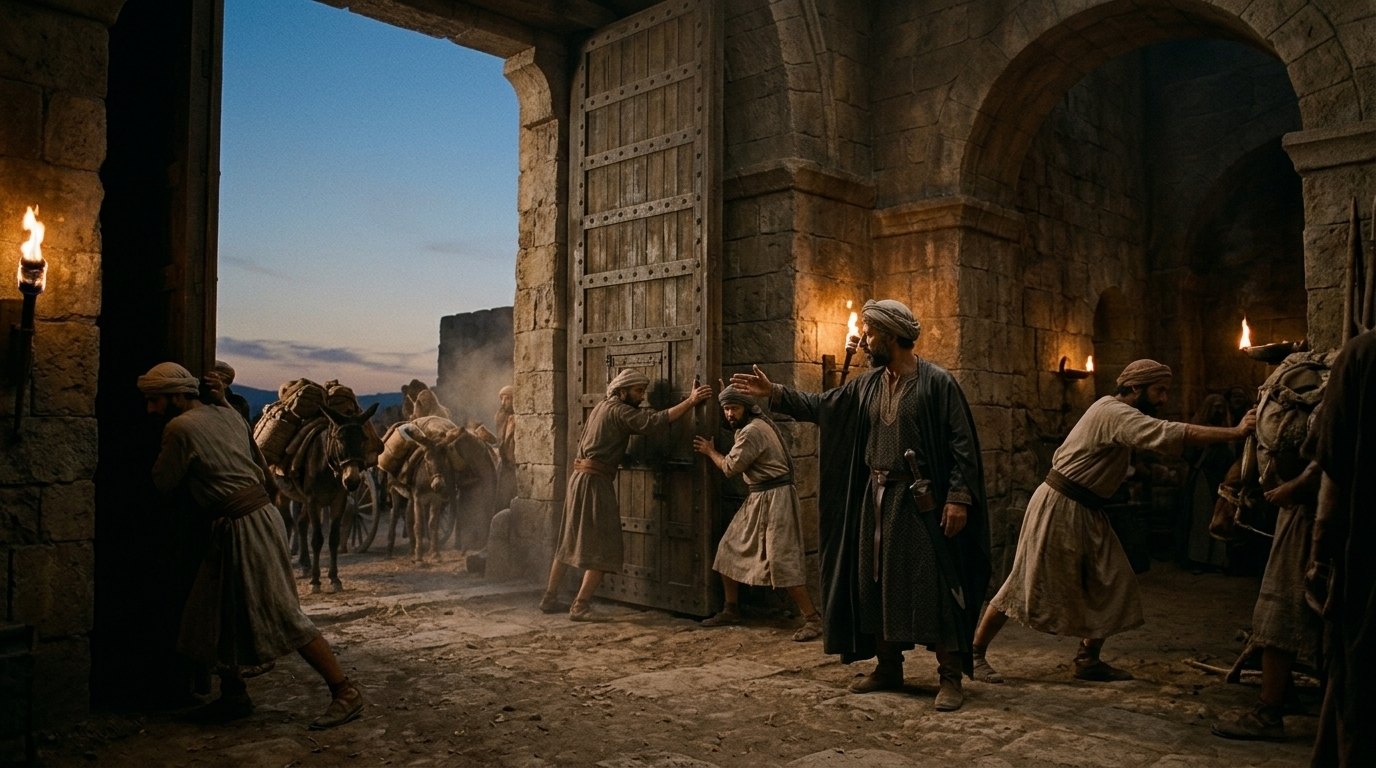
God intended the day to be far more than a legalistic cessation of activity. Through Isaiah 58:13-14, the Lord called His people to turn away from mere commercial self-interest and esteem the sacred day as an authentic delight, promising rich spiritual heritage to those who honored His ways rather than speaking idle words. Yet when Israel lost its reverence for God, commercial greed quickly invaded. In Nehemiah 13:15, the governor returned to Jerusalem to find Judah treading winepresses and hauling grain on the holy day. In Nehemiah 13:19, Nehemiah ordered the massive timber city gates closed and guarded before sunset so no merchants could buy or sell within the holy city, vigorously defending the sacred boundary God had set around His people.
| Passage | What it says |
|---|---|
| Exodus 31:13 | The Sabbath is commanded as a perpetual sign between the Lord and Israel to signify their sanctification. |
| Exodus 31:14 | Israel was warned that profaning the Sabbath carried the civil penalty of being cut off from the covenant assembly. |
| Exodus 31:17 | The Sabbath is declared an everlasting covenant sign for the children of Israel throughout their generations. |
| Ezekiel 20:12 | God gave Israel His Sabbaths as a sign that they might know He is the Lord who sanctifies them. |
| Ezekiel 20:20 | Israel is summoned to hallow God's Sabbaths as an enduring sign of covenant fellowship. |
| Isaiah 58:13 | God calls His people to turn from selfish pursuits and honor His holy day as a sacred delight. |
| Isaiah 58:14 | Delighting in the Lord on His holy day brings the promise of spiritual joy and heritage. |
| Nehemiah 13:15 | Nehemiah confronted the men of Judah for treading winepresses and conducting commercial market trade on the Sabbath. |
| Nehemiah 13:19 | City gates were shut during the Sabbath to prevent merchants from importing merchandise for sale. |
Christ's Lordship
Jesus Reclaimed the Purpose of Rest and Mercy
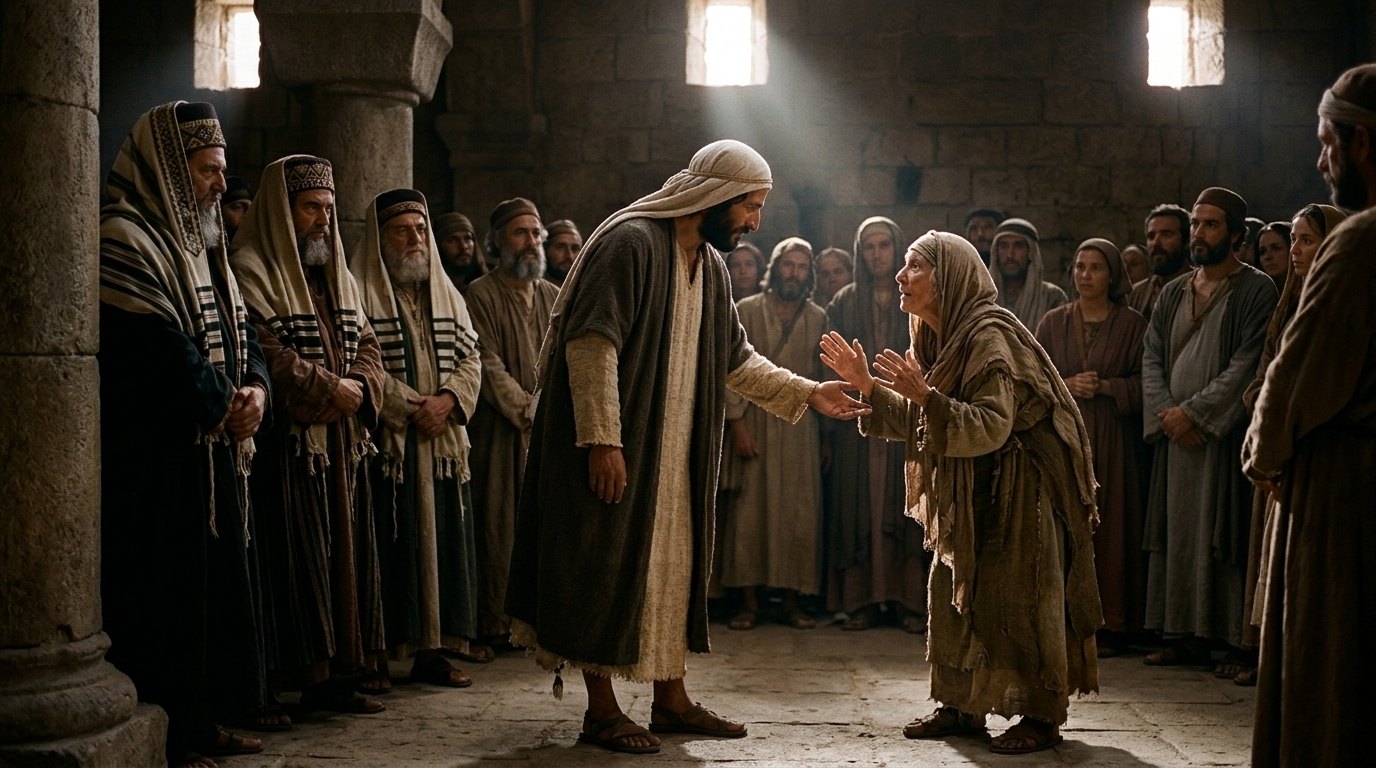
Then he said to them, “The Sabbath was made for man, not man for the Sabbath.
Mark 2:27 (NIV)
Jesus dismantles man-made legalism by declaring that the Sabbath was created for humanity's benefit, not human oppression.
When religious leaders weaponized the Sabbath into a burden of man-made regulations, Jesus confronted their legalism directly. In Mark 2:27, Jesus proclaimed that the Sabbath was made for man, not man for the Sabbath, restoring God's original purpose of mercy, refreshment, and worship. Because He is the sovereign Creator, Mark 2:28 and Matthew 12:8 declare that the Son of Man is Lord even of the Sabbath.
Our Lord consistently exposed the hypocrisy of those who prioritized outward ritual over genuine compassion. When His critics attacked His hungry disciples, Jesus reminded them in Matthew 12:11-12 that anyone would rescue a trapped sheep on the Sabbath, and human beings possess far greater value than livestock. In Luke 6:9, He challenged their stony hearts by asking whether the day was meant for doing good or doing harm, for saving life or destroying it. Faced with an indignant synagogue leader in Luke 13:14 who insisted people should only seek healing on regular workdays, Jesus in Luke 13:16 indignantly liberated a suffering daughter of Abraham who had been bound by Satan for eighteen years.
Again in Luke 14:3-5, Jesus silenced the lawyers and Pharisees before healing a man suffering from dropsy, questioning if any father would hesitate to pull a son or an ox out of a pit on a holy day. When religious authorities persecuted Him in John 5:16 for curing an invalid at Bethesda, Christ replied in John 5:17 that His Father is working continually in providence and grace, and the Son works likewise. As John 7:23 demonstrates, if the Mosaic ritual of circumcision could be administered on the Sabbath without violating the law, making an entire man well was entirely lawful. Jesus demonstrated that acts of necessity, worship, and mercy never violate God's heart.
| Passage | What it says |
|---|---|
| Mark 2:27 | Jesus teaches that the Sabbath was made for man and not man for the Sabbath. |
| Mark 2:28 | Jesus proclaims that the Son of Man is Lord even of the Sabbath day. |
| Matthew 12:8 | Christ affirms His sovereign authority over the Sabbath after His hungry disciples plucked grain. |
| Matthew 12:11 | Jesus points out that even strict Pharisees rescue a fallen sheep on the Sabbath day. |
| Matthew 12:12 | Jesus affirms that a man is worth far more than a sheep, proving it lawful to do good on the Sabbath. |
| Luke 6:9 | Jesus asks the religious leaders whether it is lawful on the Sabbath to do good or evil, to save life or destroy it. |
| Luke 13:14 | A synagogue ruler indignant over Jesus healing a disabled woman demands that people only seek healing on regular work days. |
| Luke 13:16 | Jesus justifies releasing a daughter of Abraham from Satan's bondage on the Sabbath day. |
| Luke 14:3 | Jesus directly questions the lawyers and Pharisees whether healing on the Sabbath is lawful. |
| Luke 14:5 | Jesus challenges the leaders on whether anyone would hesitate to pull a son or an ox out of a pit on the Sabbath. |
| John 5:16 | Persecution arose against Jesus because He healed an invalid at Bethesda on the Sabbath. |
| John 5:17 | Jesus answers His accusers by stating that His Father is working until now, and He Himself is working. |
| John 7:23 | Jesus argues that if circumcision is performed on the Sabbath without breaking law, an entire person may be healed. |
New Covenant Freedom
Christians Are Freed from Ceremonial Judgment Over Days
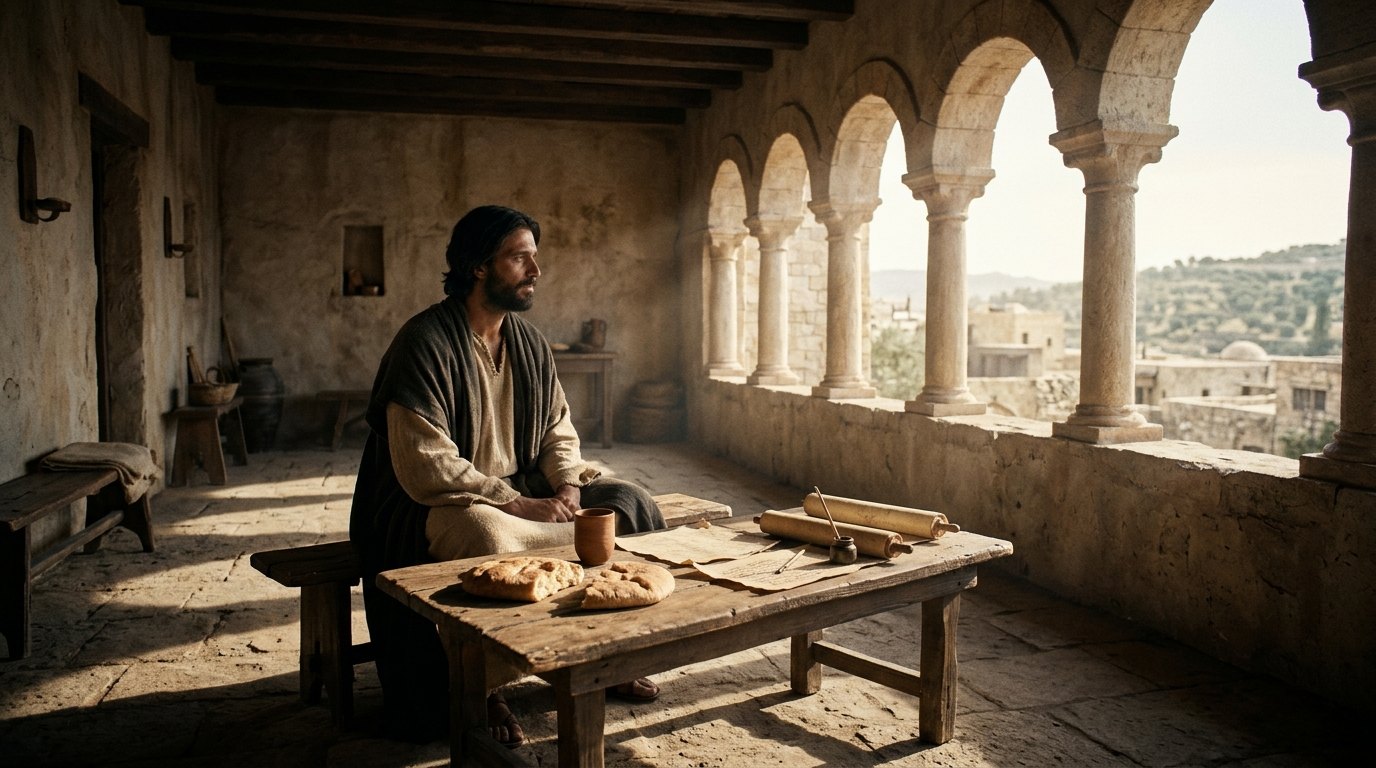
Therefore do not let anyone judge you by what you eat or drink, or with regard to a religious festival, a New Moon celebration or a Sabbath day.
Colossians 2:16 (NIV)
Paul instructs believers not to allow anyone to pass judgment on them regarding holy days, new moons, or Sabbath days.
In the New Covenant, the ceremonial framework of the Mosaic Sabbath reaches its true fulfillment in Jesus Christ. In Colossians 2:16, the apostle Paul commands believers: let no one sit in judgment on you regarding food, drink, a festival, a new moon, or a Sabbath day. These observances were never the ultimate reality; Colossians 2:17 explains they were merely a shadow pointing ahead to the coming redeemer, while the solid substance belongs to Christ, an truth confirmed in Hebrews 10:1 where the Mosaic system is shown to be an imperfect anticipation of the gospel.
Writing to a mixed assembly of Jewish and Gentile believers in Rome, Paul addressed the matter of sacred calendar days with pastoral charity. Romans 14:5 acknowledges that one person esteems one day above another while another esteems every day alike, exhorting each person to be fully convinced in their own mind. As Romans 14:6 insists, whether a believer observes a dedicated day of rest or treats all days as consecrated to honest labor, both do so unto the Lord, fulfilling the overarching command of 1 Corinthians 10:31 to do all things to the glory of God.
Paul fiercely opposed any notion that keeping sacred days could earn righteousness before God. In Galatians 4:9-10, he warned the Galatian believers against returning to weak, bankrupt legalism by scrupulously observing days, months, seasons, and years, pointing out in Galatians 5:1 and Galatians 5:4 that seeking justification through such ordinances forfeits the freedom of grace. Ultimately, the Old Testament weekly rest finds its grand conclusion in Christ. Hebrews 4:9-10 reveals that there remains an eternal spiritual rest for the people of God, wherein the believer rests from striving after self-justification, answering the invitation of Jesus in Matthew 11:28 to find true soul-rest in Him rather than relying on works of human righteousness as Titus 3:5 affirms.
| Passage | What it says | Fulfilled |
|---|---|---|
| Colossians 2:16 | Paul forbids judgment regarding food, drink, religious festivals, new moons, or Sabbath observances. | Colossians 2:17 |
| Colossians 2:17 | Ceremonial days are identified as a shadow of things to come, while the substance belongs to Christ. | Hebrews 10:1 |
| Romans 14:5 | Paul notes that one person considers one day more sacred than another, while another considers every day alike. | Romans 14:6 |
| Romans 14:6 | Whoever observes a particular day does so unto the Lord, and whoever does not observe it also honors God. | 1 Corinthians 10:31 |
| Galatians 4:9 | Paul challenges believers who turn back to weak and beggarly elements after knowing God. | Galatians 5:1 |
| Galatians 4:10 | Paul expresses concern that the Galatians were observing legalistic days, months, seasons, and years for justification. | Galatians 5:4 |
| Hebrews 4:9 | Scripture declares that there remains a Sabbath rest for the people of God, fulfilled ultimately in Christ. | Matthew 11:28 |
| Hebrews 4:10 | The believer who enters God's promised spiritual rest has also rested from his own self-justifying works. | Titus 3:5 |
The Lord's Day
The Early Church Gathered on the First Day of the Week
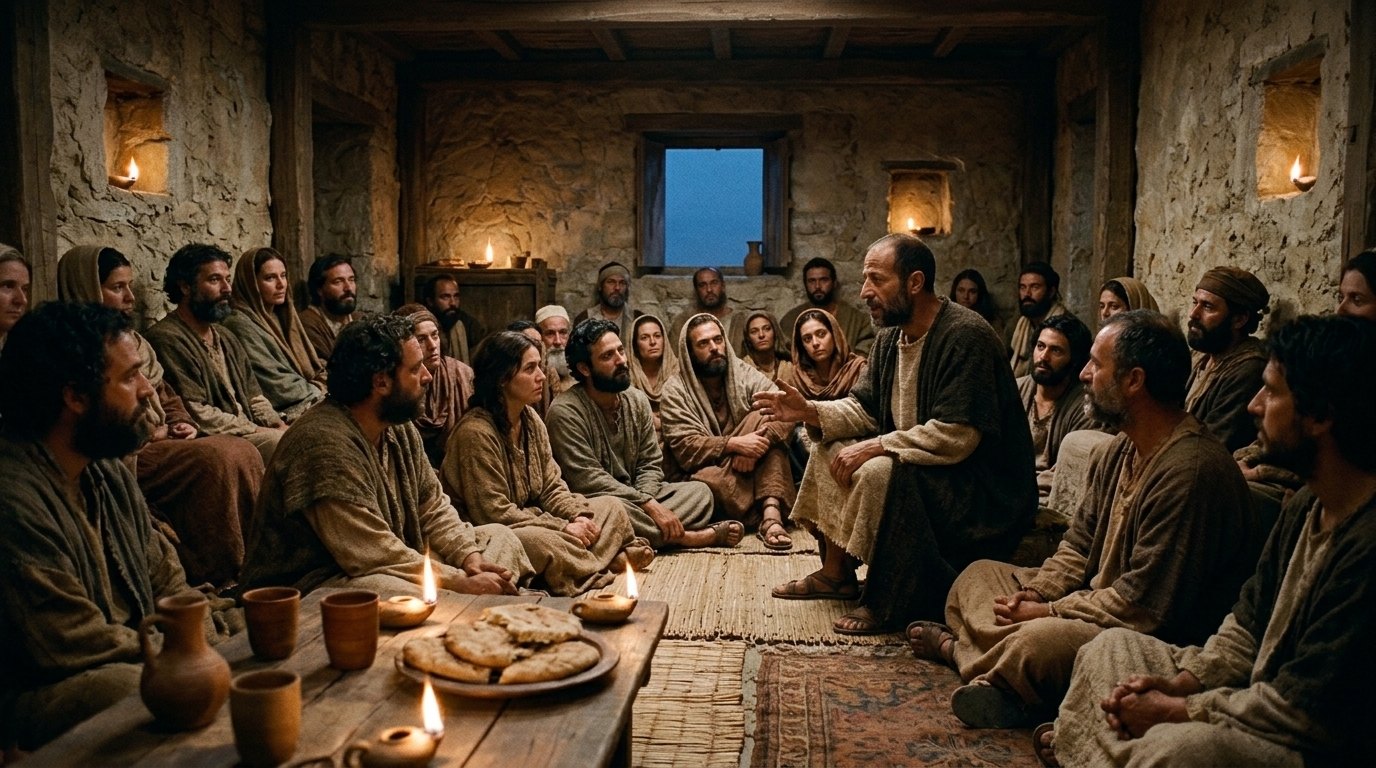
On the Lord’s Day I was in the Spirit, and I heard behind me a loud voice like a trumpet,
Revelation 1:10 (NIV)
John identifies the first day of the week by its distinctive New Covenant name: the Lord's Day.
In Revelation 1:10, the apostle John speaks of being in the Spirit on the Lord's Day, a title that marked the first day of the week as uniquely consecrated to Jesus Christ across the earliest generations of the church. This weekly rhythm did not arise from human tradition but from the supreme event of redemption: Jesus rising from the dead on the first day of the week, as recorded in Matthew 28:1, Mark 16:2, and Luke 24:1. The women reached the open tomb at daybreak on that first day, and the empty sepulchre permanently reshaped the calendar for God's redeemed people.
On that very evening, the risen Lord instituted the pattern of meeting His gathered disciples. According to John 20:19, Jesus stood among the believers on that first day, offering peace and breathing the Holy Spirit upon them. Exactly eight days later, reckoning inclusively to the next first day of the week, John 20:26 records that Jesus appeared once more to the assembled disciples to show His wounds to Thomas. This foundational cadence carried straight into apostolic practice. In Acts 20:7, Luke notes that on the first day of the week, when we were gathered together to break bread, the church at Troas assembled for the Lord's Supper and preaching. Likewise, Paul directed in 1 Corinthians 16:2 that each believer put aside funds on the first day of every week. The New Testament church did not treat this day under the punitive civil penalties of Old Covenant Sinai, yet they gladly claimed the first day as their regular, joy-filled sanctuary for corporate gathering around the risen King.
| Passage | What it says |
|---|---|
| Matthew 28:1 | The resurrection of Jesus Christ occurred at dawn on the first day of the week. |
| Mark 16:2 | The women came to the tomb very early on the first day of the week at sunrise. |
| Luke 24:1 | The empty tomb was discovered early on the first day of the week, unveiling Christ's triumph. |
| John 20:19 | On the evening of that first day of the week, the risen Jesus appeared among His gathered disciples. |
| John 20:26 | Eight days later, on the next first day of the week, Jesus appeared again to His gathered disciples and Thomas. |
| Acts 20:7 | On the first day of the week, the disciples came together in Troas to break bread and hear Paul preach. |
| 1 Corinthians 16:2 | Paul instructed the Corinthian believers to set aside their charitable contributions on the first day of every week. |
| Revelation 1:10 | The apostle John was in the Spirit on the Lord's Day when he received his heavenly vision. |
Honoring God
Balancing Necessary Work, Regular Worship, and Mercy
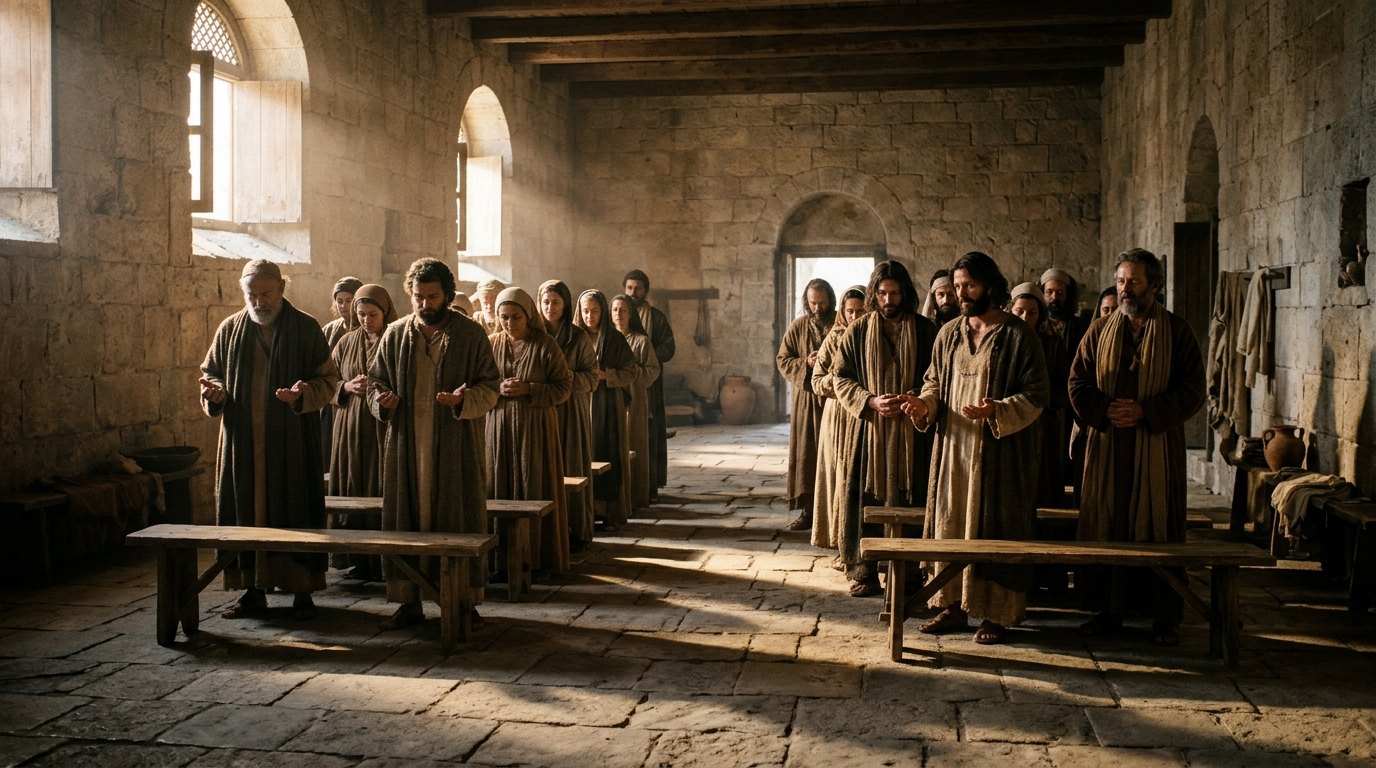
not giving up meeting together, as some are in the habit of doing, but encouraging one another—and all the more as you see the Day approaching.
Hebrews 10:25 (NIV)
Scripture explicitly commands believers not to neglect corporate gathering together as the day of the Lord draws near.
Hebrews 10:25 delivers an unmistakable apostolic mandate: believers must not neglect meeting together, as is the habit of some, but encouraging one another, especially as the final day of redemption approaches. Corporate assembly is neither an optional luxury nor a casual preference; it is the vital environment where saints obey Hebrews 10:24 by stirring up one another to love and good works. Consequently, any employment schedule or voluntary labor that perpetually tears a Christian away from the life and fellowship of the local church damages spiritual health and runs contrary to God's revealed will.
At the same time, Scripture honors diligent labor and never presents work itself as ungodly. Paul commands in 1 Thessalonians 4:11 that believers work with their hands, establishing the firm rule in 2 Thessalonians 3:10 that if anyone will not work, neither shall he eat. Deeds of genuine mercy and necessary care—such as healing the sick, protecting the vulnerable, or providing vital public safety—reflect the heart of Christ, who repeatedly demonstrated that doing good on holy days aligns with God's law. In every station, 1 Corinthians 10:31 commands that whatever you do, do all to the glory of God, while Colossians 3:23 reminds us to work heartily as unto the Lord rather than men. These callings operate under the great commandments: loving God with all one's heart, soul, and mind (Matthew 22:37) and loving our neighbor as ourselves (Matthew 22:39). Sunday labor is not an abstract legal sin, yet faithful believers must never permit the demands of employment to eclipse the non-negotiable worship of God and the sacred gathering of His people.
| Passage | What it says |
|---|---|
| Hebrews 10:24 | Believers are instructed to stir up one another toward love and good deeds in community. |
| Hebrews 10:25 | Christians must not forsake gathering together, as is the habit of some, but encourage one another continually. |
| 1 Thessalonians 4:11 | Believers are commanded to aspire to lead a quiet life, mind their own business, and work with their hands. |
| 2 Thessalonians 3:10 | The apostolic rule establishes that if anyone is unwilling to work, neither shall he eat. |
| 1 Corinthians 10:31 | Whether eating, drinking, or engaging in whatever work we do, all must be done to God's glory. |
| Colossians 3:23 | Whatever task believers undertake, they are to work heartily as unto the Lord and not unto men. |
| Matthew 22:37 | Jesus identifies the greatest commandment as loving the Lord God with all the heart, soul, and mind. |
| Matthew 22:39 | The second great commandment requires loving one's neighbor as oneself in everyday action and consideration. |
Where in the Bible
| Book | Passages |
|---|---|
| Genesis | 2 · Genesis 2:2, Genesis 2:3 |
| Exodus | 8 · Exodus 20:8, Exodus 20:9, Exodus 20:10, Exodus 20:11, Exodus 23:12, Exodus 31:13, Exodus 31:14, Exodus 31:17 |
| Deuteronomy | 3 · Deuteronomy 5:12, Deuteronomy 5:14, Deuteronomy 5:15 |
| Nehemiah | 2 · Nehemiah 13:15, Nehemiah 13:19 |
| Isaiah | 2 · Isaiah 58:13, Isaiah 58:14 |
| Ezekiel | 2 · Ezekiel 20:12, Ezekiel 20:20 |
| Matthew | 6 · Matthew 12:8, Matthew 12:11, Matthew 12:12, Matthew 28:1, Matthew 22:37, Matthew 22:39 |
| Mark | 3 · Mark 2:27, Mark 2:28, Mark 16:2 |
| Luke | 6 · Luke 6:9, Luke 13:14, Luke 13:16, Luke 14:3, Luke 14:5, Luke 24:1 |
| John | 5 · John 5:16, John 5:17, John 7:23, John 20:19, John 20:26 |
| Acts | 1 · Acts 20:7 |
| Romans | 2 · Romans 14:5, Romans 14:6 |
| 1 Corinthians | 2 · 1 Corinthians 16:2, 1 Corinthians 10:31 |
| Galatians | 2 · Galatians 4:9, Galatians 4:10 |
| Colossians | 3 · Colossians 2:16, Colossians 2:17, Colossians 3:23 |
| 1 Thessalonians | 1 · 1 Thessalonians 4:11 |
| 2 Thessalonians | 1 · 2 Thessalonians 3:10 |
| Hebrews | 4 · Hebrews 4:9, Hebrews 4:10, Hebrews 10:24, Hebrews 10:25 |
| Revelation | 1 · Revelation 1:10 |
The story in order
- Creation's Rest (c. 4000 BC) · Genesis 2:2 · God rested on the seventh day, establishing a pattern of rest.
- Sabbath Command (c. 1446 BC) · Exodus 20:8 · Israel commanded to remember and keep the Sabbath day holy.
- Covenant Sign (c. 1446 BC) · Exodus 31:13 · Sabbath given as a perpetual sign of Israel's sanctification.
- Sabbath Relief (c. 1406 BC) · Deuteronomy 5:14 · Sabbath rest guaranteed relief for servants and livestock.
- Prophetic Rebuke (c. 430 BC) · Nehemiah 13:15 · Nehemiah confronted commercial activity on the Sabbath.
- Jesus' Lordship (c. AD 28) · Mark 2:27 · Jesus declared the Sabbath was made for man's benefit.
- Healing on Sabbath (c. AD 30) · Luke 13:16 · Jesus healed on the Sabbath, freeing a daughter of Abraham.
- Christ's Work (c. AD 31) · John 5:17 · Jesus stated His Father works and He works, even on Sabbath.
- Shadows Fulfilled (c. AD 60) · Colossians 2:16 · Paul forbids judgment on Sabbath observances as shadows of Christ.
- Sabbath Rest Remains (c. AD 67) · Hebrews 4:9 · A spiritual Sabbath rest remains for believers in Christ.
- Resurrection Morning (AD 30) · Matthew 28:1 · Jesus rose on the first day of the week, inaugurating the Lord's Day.
- Disciples Gather (c. AD 57) · Acts 20:7 · Early church gathered on the first day to break bread and preach.
- Lord's Day Vision (c. AD 95) · Revelation 1:10 · John received his vision on the Lord's Day.
Sabbath: Shadow to Substance
| Old Covenant Shadow | New Testament Substance | Passage |
|---|---|---|
| Seventh-day observance for Israel | Spiritual rest in Christ | Exodus 31:13 |
| Ceremonial food, drink, festivals | Christ is the substance | Colossians 2:17 |
| Day specific observance | Every day is the Lord's | Romans 14:5 |
| Rest from physical labor | Rest from self-righteous works | Hebrews 4:10 |
The Lord's Day: Resurrection and Gathering
| Event | Day | Significance | Passage |
|---|---|---|---|
| Jesus' resurrection | First day of the week | Christ's triumph over death | Matthew 28:1 |
| Jesus appears to disciples | Evening of the first day | Confirmation of resurrection | John 20:19 |
| Jesus appears again | Next first day of the week | Strengthening faith | John 20:26 |
| Church gathers for worship | First day of the week | Breaking bread, hearing Word | Acts 20:7 |
| Church collects offerings | First day of every week | Generosity for the saints | 1 Corinthians 16:2 |
| Apostle John's vision | The Lord's Day | Divine revelation | Revelation 1:10 |
Key words
- Sabbath (šabbāṯ, שַׁבָּת)
- A day of rest and worship commanded by God, rooted in creation and covenant. · Exodus 20:8
- Holy (qāḏôš, קָדוֹשׁ)
- Set apart by God for His purposes; consecrated and sanctified. · Genesis 2:3
- Lord's Day (kyriakē hēmera, κυριακὴ ἡμέρα)
- The first day of the week, observed by early Christians in remembrance of Christ's resurrection. · Revelation 1:10
- Rest (šāḇaṯ, שָׁבַת)
- Cessation from ordinary labor, providing refreshment and a focus on God. · Genesis 2:2
- Substance (sōma, σῶμα)
- The reality or fulfillment found in Christ, contrasted with Old Testament shadows. · Colossians 2:17
Believers are not under Old Covenant legal condemnation regarding days, but we are called to honor the Lord who bought us with our time, bodies, and worship. Let Sunday be welcomed as a weekly delight—a joyful day set apart to encounter Christ in the assembly of the saints, refresh our souls, and show mercy to others. Rather than treating our freedom as an excuse for neglect or endless secular pursuit, we steward the Lord's Day in devotion, love, and eager anticipation of our final eternal rest.
56 passages, each cited once.
How the major Christian traditions read this
All major Christian traditions agree that believers are called to gather corporately for worship and holy communion, especially on the Lord's Day celebrating Christ's resurrection, and that doing acts of mercy and necessity on this day honours God (Acts 20:7; Luke 6:9).
Catholic
We hold that Sunday is the fulfillment of the Sabbath, consecrated by the resurrection of Jesus Christ. The Church teaches that Sunday is a holy day of obligation: believers are bound to participate in the Sacrifice of the Mass and to abstain from servile labor and secular business that would hinder worship, the joy proper to the Lord's Day, or the necessary relaxation of mind and body. Works of necessity, family duty, and urgent charity are fully permitted, following Christ's example (Luke 6:9). We honor the moral essence of the Third Commandment by dedicating this day to God and rest (Exodus 20:8-10; Revelation 1:10).
Scripture: Exodus 20:8-10, Luke 6:9, Revelation 1:10, Acts 20:7
Orthodox
In Orthodox life, the seventh-day Sabbath (Saturday) retains its historical character of remembrance, while Sunday is the 'Eighth Day,' the day of the new creation inaugurated by Christ's resurrection. We gather on Sunday for the Divine Liturgy and treat the day as consecrated unto the Lord. While we avoid unnecessary labor and worldly commerce that detract from spiritual life and corporate worship, our tradition does not impose legalistic prohibitions on activities. Rather, we emphasize entering into the joy and rest of Christ's triumph over death, keeping works of love, mercy, and unavoidable daily duty blameless (Mark 2:27-28; Colossians 2:16).
Scripture: Mark 2:27-28, Colossians 2:16, Acts 20:7
Lutheran
We confess that the ceremonial law of the Old Testament Sabbath is entirely fulfilled in Christ and no longer binds consciences to a specific day, as Scripture teaches in Colossians 2:16. The Third Commandment teaches us that we should fear and love God so that we do not despise preaching and His Word, but hold it sacred and gladly hear and learn it. Sunday is observed by the church for the sake of order, peace, and mutual assembly to hear God's Word and receive the sacraments. Working on Sunday is not a sin in itself, provided it does not cause one to neglect preaching and God's Word (Hebrews 10:25).
Scripture: Colossians 2:16, Hebrews 10:25, Mark 2:27-28
Reformed & Presbyterian
We hold to the Christian Sabbath or Lord's Day as a moral command instituted at creation (Genesis 2:3) and codified in the fourth commandment (Exodus 20:8-11). When Christ rose, the day shifted to the first day of the week (Acts 20:7; Revelation 1:10). We believe the entire day is to be sanctified unto God, resting from ordinary employments and recreations that are lawful on other days, and spending the whole time in public and private worship, excepting only works of necessity and mercy. Pursuing ordinary worldly labor or secular recreation on Sunday violates God's holy law (Isaiah 58:13-14).
Scripture: Exodus 20:8-11, Genesis 2:3, Isaiah 58:13-14, Revelation 1:10, Acts 20:7
Anglican & Episcopal
We revere Sunday as the weekly feast of the resurrection, rooted in apostolic custom (Acts 20:7; 1 Corinthians 16:2). In our classic formularies, the moral substance of the fourth commandment remains binding on all Christians, directing us to set apart regular time for public worship, prayer, and bodily rest. We encourage our people to cease from ordinary secular toil on the Lord's Day to give attendance to divine service and family refreshment, while recognizing that necessary works of public welfare, charity, and emergency must go forward under Christ's law of love (Mark 2:27-28).
Scripture: Acts 20:7, 1 Corinthians 16:2, Mark 2:27-28
Baptist
Historic Confessional Baptists hold that the fourth commandment remains a perpetual moral duty, transferring the Sabbath rest to the first day of the week as the Lord's Day (Exodus 20:8; Revelation 1:10). Under this view, believers refrain from ordinary secular labor except for works of necessity and mercy. However, many modern Baptists emphasize individual conscience and the freedom declared in Colossians 2:16 and Romans 14:5, urging every believer to prioritize gathering with the local church without imposing Old Testament legal penalties on those whose employment requires work on Sunday.
Scripture: Exodus 20:8-11, Romans 14:5, Colossians 2:16, Revelation 1:10, Exodus 20:8
Methodist & Wesleyan
We see the Lord's Day as a gift of grace and a means to pursue personal and social holiness. Following John Wesley's emphasis on God's moral law, the fourth commandment remains a vital pattern for our rhythm of life: six days for labor and one day consecrated to God (Exodus 20:8-11). We urge believers to refrain from unnecessary commerce and secular business on Sunday so that time is reserved for public worship, reading the Scriptures, and practical deeds of charity and mercy toward those in need (Luke 6:9).
Scripture: Exodus 20:8-11, Luke 6:9, Isaiah 58:13-14
Pentecostal & Charismatic
We celebrate the Lord's Day as the day of Christ's resurrection and the ongoing outpouring of the Holy Spirit. While we stress the freedom we have in Christ and reject rigid legalism regarding calendar days (Colossians 2:16; Galatians 4:10), we strongly prioritize corporate worship, prayer, and fellowship with the body of Christ on Sunday (Acts 2:42-46). Working on Sunday is not inherently sinful, particularly when required for one's livelihood, though believers are urged to order their lives so that the Spirit's ministry and corporate assembly are never neglected (Hebrews 10:25).
Scripture: Colossians 2:16, Hebrews 10:25, Acts 2:42-46, Galatians 4:10
Non-denominational & Evangelical
We believe that Jesus Christ is our true Sabbath rest (Matthew 11:28; Hebrews 4:9-10). According to the New Testament, believers are not under the Mosaic ceremonial law, and we must not judge one another regarding sabbaths or holy days (Colossians 2:16; Romans 14:5-6). We gather on Sunday because the early church did so to celebrate the resurrection (Acts 20:7). Working on Sunday is a matter of personal conscience and economic necessity, not a sin, though believers should faithfully seek to rest and regularly gather with a local body of believers (Hebrews 10:25).
Scripture: Romans 14:5-6, Colossians 2:16, Matthew 11:28, Hebrews 10:25, Hebrews 4:9-10
Where they differ
Binding nature of fourth commandment rest
- Catholic
- Obligatory moral rest fulfilled on Sunday, requiring abstention from unnecessary servile labor.
- Orthodox
- Spiritual observance centering on Eucharistic joy without legalistic prescriptions against labor.
- Lutheran
- Ceremonial Sabbath abolished; the moral duty is solely not despising God's Word.
- Reformed & Presbyterian
- Perpetual moral law binding all men to full-day cessation from secular employment.
- Anglican & Episcopal
- Moral command binding regular worship and rest, practiced on the Lord's Day.
- Baptist
- Divided between strict confessional Sabbath-keeping and broad freedom of conscience.
- Methodist & Wesleyan
- Moral law directing believers to set apart Sunday for worship and mercy.
- Pentecostal & Charismatic
- Christians are free from legal Sabbath commands but called to honor corporate worship.
- Non-denominational & Evangelical
- Old Testament Sabbath is fulfilled in Christ; Sunday labor is matter of conscience.
Scripture: Exodus 20:8-11, Colossians 2:16, Romans 14:5-6
Sinfulness of ordinary secular work
- Catholic
- Sinful if unnecessary servile work impedes worship or Sunday rest.
- Orthodox
- Not sinful in itself, but subordinate to worship and spiritual life.
- Lutheran
- Not sinful unless it causes a person to neglect preaching and Scripture.
- Reformed & Presbyterian
- Sinful unless the labor is genuinely a work of necessity or mercy.
- Anglican & Episcopal
- Discouraged as inconsistent with the Lord's Day, except for genuine necessities.
- Baptist
- Sinful in strict sabbatarianism; permissible as a conscience issue in modern practice.
- Methodist & Wesleyan
- Inappropriate when unnecessary, distracting from spiritual devotion and works of mercy.
- Pentecostal & Charismatic
- Not inherently sinful; believers should faithfully balance livelihood with fellowship.
- Non-denominational & Evangelical
- Not a sin; believers evaluate work by conscience and church commitment.
Scripture: Isaiah 58:13-14, Luke 6:9, Hebrews 10:25
Your pastor can tell you where your church stands.
Scripture cited
- Mark 2:27-28
- Colossians 2:16
- Luke 6:9
- Deuteronomy 5:14
- Ezekiel 20:12
- Exodus 23:12