What does the Holy Spirit do?

John 16:7-15
7 But very truly I tell you, it is for your good that I am going away. Unless I go away, the Advocate will not come to you; but if I go, I will send him to you.
8 When he comes, he will prove the world to be in the wrong about sin and righteousness and judgment:
9 about sin, because people do not believe in me;
10 about righteousness, because I am going to the Father, where you can see me no longer;
11 and about judgment, because the prince of this world now stands condemned.
12 “I have much more to say to you, more than you can now bear.
13 But when he, the Spirit of truth, comes, he will guide you into all the truth. He will not speak on his own; he will speak only what he hears, and he will tell you what is yet to come.
14 He will glorify me because it is from me that he will receive what he will make known to you.
15 All that belongs to the Father is mine. That is why I said the Spirit will receive from me what he will make known to you.”
New International Version (NIV)
The answer
The Holy Spirit carries out God’s saving work in the world and in everyone who belongs to Christ. He convicts people of sin, gives new life, dwells within believers, assures them that they are God’s children, transforms their character, helps them pray, and equips them for witness and service. Central to all His work is this purpose: He glorifies Jesus Christ (John 16:14).
His work in the world
- He convicts people concerning sin, righteousness, and judgment. Jesus explains that this means exposing the sin of unbelief, demonstrating righteousness through His return to the Father, and showing that judgment is real because the ruler of this world has been judged (John 16:8-11).
- He brings people to Christ rather than drawing attention away from Him. He is the Spirit of truth who declares Christ’s truth, speaks what He receives, and glorifies the Son (John 16:13-15).
- He gives new life. Salvation does not come through righteous works people perform; God saves according to His mercy through regeneration and renewal by the Holy Spirit, poured out through Jesus Christ (Titus 3:5-6).
His work in believers
- He dwells within them and remains with them. Jesus promises another Counselor who will be with His disciples forever, living with them and in them (John 14:16-17). Romans 8:9 makes belonging to Christ inseparable from having His Spirit.
- He assures believers of their adoption. Those led by the Spirit are God’s children; He enables them to cry, “Abba! Father!” and Himself testifies with their spirit that they belong to God (Romans 8:14-16).
- He seals them for their future inheritance. Believers are sealed with the promised Holy Spirit, who is the pledge of their inheritance until God’s redemption is complete (Ephesians 1:13-14).
- He teaches and guides. Jesus promised that the Spirit would teach the apostles and remind them of His words (John 14:26). He guides into truth while speaking in perfect harmony with the Father and the Son (John 16:13-15).
- He produces holiness and Christlike character. Through the Spirit, believers put the deeds of the body to death (Romans 8:13). His fruit includes love, joy, peace, patience, kindness, goodness, faith, gentleness, and self-control (Galatians 5:22-23).
- He empowers witness and distributes spiritual gifts. Jesus promises power to be His witnesses through the Holy Spirit (Acts 1:8). The Spirit gives different gifts for the benefit of the whole church, distributing them to each person as He desires (1 Corinthians 12:7-11).
- He helps believers pray. When they do not know how to pray as they ought, the Spirit intercedes for them according to God’s will (Romans 8:26-27).
- He gives the hope of resurrection. The Spirit of the One who raised Jesus dwells in believers, and God will give life to their mortal bodies through Him (Romans 8:11).
The fitting response to His work is willing obedience and continued dependence: “If we live by the Spirit, let’s also walk by the Spirit” (Galatians 5:25).
Answered from Scripture · reviewed November 11, 2026
On the night before His crucifixion, Jesus unveiled the distinct mission of the Holy Spirit to His disciples in John 16:7-15. As the third Person of the Trinity sent by the Father and the Son, the Spirit convicts the unbelieving world, guides the church into all truth, and relentlessly glorifies Jesus Christ.
Advocate Sent
The Counselor arrives upon Christ's departure
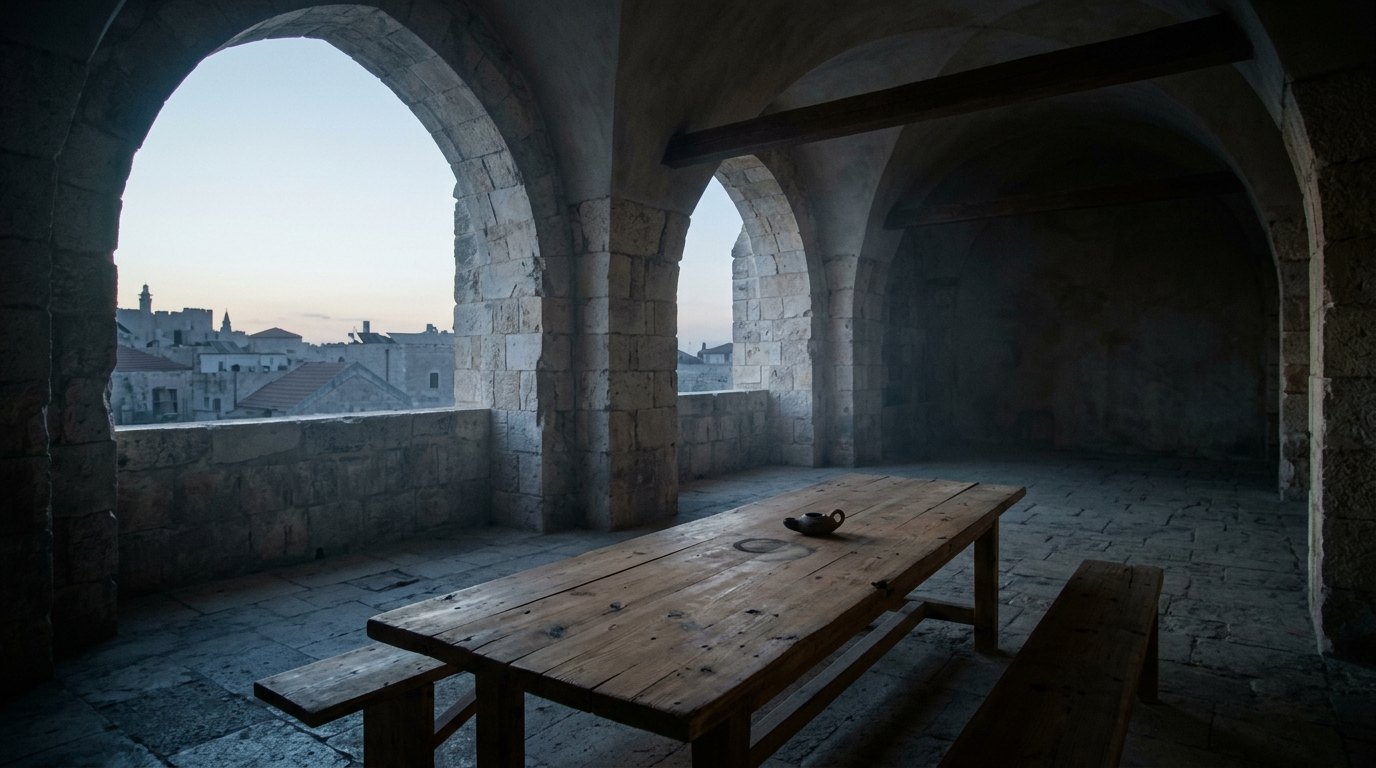
But very truly I tell you, it is for your good that I am going away. Unless I go away, the Advocate will not come to you; but if I go, I will send him to you.
John 16:7 (NIV)
Jesus declares that His bodily departure is necessary so the divine Helper can dwell permanently with all believers.
In John 16:7, Jesus makes a startling statement to His grieving disciples: it is actually for their advantage that He departs, because unless He goes away, the Helper will not come. In His earthly incarnation, Jesus walked alongside His disciples in localized bodily form, but through His departure, death, resurrection, and ascension, He would send the Counselor to dwell within every believer permanently across all time and geography.
Earlier that evening, Jesus assured the eleven that He would ask the Father, who would grant another Comforter of the exact same divine essence to abide with them forever (John 14:16). This Person is the Spirit of truth, whom the unbelieving world can neither recognize nor welcome, yet who makes His home in the saints (John 14:17). Before His ascension, the risen Lord ordered His followers to wait in Jerusalem until clothed with power from on high (Luke 24:49). Having ascended to the right hand of God, Christ received the promised Holy Spirit and poured Him out richly at Pentecost (Acts 2:33), inaugurating the ongoing age of the indwelling Helper.
| Passage | What it says |
|---|---|
| John 14:16 | Jesus petitions the Father to give another Comforter who will abide with believers forever. |
| John 14:17 | The Spirit of truth dwells with believers and will be in them, unseen by the world. |
| John 16:7 | Jesus explains that His leaving is advantageous because it enables Him to send the Counselor. |
| Luke 24:49 | Jesus instructs the disciples to tarry in Jerusalem until clothed with power from on high. |
| Acts 2:33 | Exalted at the Father's right hand, Jesus pours out the promised Holy Spirit upon the church. |
Convicting the World
The Spirit exposes sin, righteousness, and judgment

When he comes, he will prove the world to be in the wrong about sin and righteousness and judgment:
John 16:8 (NIV)
The Holy Spirit confronts the unbelieving world by exposing its fatal guilt, Christ's vindicated righteousness, and the devil's defeat.
When the Counselor arrives, His outward ministry toward the cosmos is one of severe legal exposure. In John 16:8, Jesus declares that the Spirit will convict the world of sin, righteousness, and judgment, shattering human complacency and stripping away every false defense before God.
The Spirit first exposes the root of human condemnation, which is unbelief: men remain dead in their sins because they refuse to trust in the only begotten Son of God (John 16:9). He convicts the world of righteousness, not by commending human merit, but by pointing to the vindication of Christ, who ascended to the Father, out of mortal sight, proving His spotless perfection (John 16:10). Finally, the Spirit heralds decisive judgment because Satan, the prince of this world, stands already condemned at the cross (John 16:11). The world’s systems and rebellion have already been weighed, found wanting, and sentenced under God's sovereign rule.
| Passage | What it says |
|---|---|
| John 16:8 | The Spirit convicts the world concerning sin, righteousness, and coming divine judgment. |
| John 16:9 | The Spirit convicts the world of sin specifically because it refuses to believe in Jesus. |
| John 16:10 | He proves righteousness because Jesus ascends to the Father and is seen no more. |
| John 16:11 | He executes conviction regarding judgment because the ruler of this world has already been judged. |
Guiding Into Truth
The Spirit teaches and reveals what is to come
But when he, the Spirit of truth, comes, he will guide you into all the truth. He will not speak on his own; he will speak only what he hears, and he will tell you what is yet to come.
John 16:13 (NIV)
The Spirit acts as the infallible teacher of the apostles, speaking only what He hears from God and unveiling truth.
Jesus did not leave His church to wander in theological speculation or human tradition. According to John 16:13, the Spirit of truth guides believers into all truth, acting not on independent authority, but speaking only what He hears from heaven and unveiling things to come.
During His earthly ministry, Christ guarded His disciples patiently, knowing that prior to the resurrection they were entirely unable to bear the full weight and scope of redemption (John 16:12). To bridge this gap, the Father sent the Holy Spirit to teach the apostles all things and bring to remembrance every word Christ had uttered (John 14:26). The Spirit then superintended the writing of Scripture and illuminated the prophetic mysteries of the new covenant age, establishing the inerrant apostolic deposit that sustains the church.
| Passage | What it says |
|---|---|
| John 14:26 | The Father sends the Spirit to teach all things and bring Christ's words to remembrance. |
| John 16:12 | Jesus notes that the disciples cannot yet bear the full weight of His teaching. |
| John 16:13 | The Spirit of truth guides believers into all truth and declares things that are coming. |
Glorifying the Son
Every work of the Spirit exalts Jesus Christ

He will glorify me because it is from me that he will receive what he will make known to you.
John 16:14 (NIV)
The crowning hallmark of the Spirit's ministry is taking the things of Christ and declaring them to believers to glorify the Son.
The Holy Spirit never draws attention to Himself; His constant aim is the exaltation of the Son. In John 16:14, Jesus reveals the supreme purpose of the Spirit's work: He will glorify Me, taking what belongs to Christ and declaring it to His disciples.
Throughout redemption, the Spirit's outpouring awaited the full vindication of the Son; as the Gospel notes, the Spirit was not yet given in Pentecostal fullness because Jesus was not yet glorified (John 7:39). Proceeding from the Father, the Spirit serves as the faithful witness who bears unyielding testimony to Jesus Christ (John 15:26). Because all that the Father possesses belongs fully and eternally to the Son (John 16:15), the Spirit opens the unsearchable riches of Christ to the eyes of faith, prompting adoration, joyful obedience, and Christ-centered worship across the church.
| Passage | What it says |
|---|---|
| John 7:39 | The Spirit was not yet given in fullness because Jesus was not yet glorified. |
| John 15:26 | The Spirit of truth proceeding from the Father testifies directly and faithfully of Jesus. |
| John 16:14 | The Spirit glorifies Jesus by taking what belongs to Christ and disclosing it to the disciples. |
| John 16:15 | All that the Father possesses belongs to the Son, which the Spirit declares to believers. |
Creation and Life
The Holy Spirit brings life and order to creation

Now the earth was formless and empty, darkness was over the surface of the deep, and the Spirit of God was hovering over the waters.
Genesis 1:2 (NIV)
It introduces the third person of the Trinity actively brooding over creation to bring light, form, and life.
Before the first light pierced the dark, the Spirit of God moved upon the face of the waters as recorded in Genesis 1:2. The Hebrew verb portrays an active, hovering presence, preparing the unformed deep to burst forth with life, beauty, and structure. Creation is an act of the triune God, and the Holy Spirit serves as the divine agent bringing vitality and divine order out of formless emptiness. Every living creature draws its initial spark and ongoing sustenance from His direct superintendence.
This life-giving power becomes intimate in Genesis 2:7, where God fashions man from the dust and breathes the breath of life directly into his nostrils. Job acknowledges this very reality when Elihu confesses that the Spirit of God made him and the breath of the Almighty gave him life (Job 33:4). The Spirit’s reach extends from the human chest to the cosmic expanse, as Job 26:13 affirms that by His Spirit the heavens are adorned and garnished. Nothing in the natural world continues to exist on its own independent reserves. Psalm 104:30 confirms that whenever God sends forth His Spirit, creatures are created and the face of the ground is renewed. Creation is not merely launched into motion; it is sustained continually by the Spirit who brings forth life.
| Passage | What it says |
|---|---|
| Genesis 1:2 | The Spirit of God hovers over the waters at the primordial dawn of creation. |
| Genesis 2:7 | God breathes the breath of life into man, forming a living soul. |
| Job 26:13 | By His Spirit God adorns and gives order to the heavens. |
| Job 33:4 | The Spirit of God makes man and gives him life. |
| Psalms 104:30 | God sends forth His Spirit to create creatures and renew the earth. |
Empowering for Service
The Holy Spirit equips God's servants for leadership and craft

So Samuel took the horn of oil and anointed him in the presence of his brothers, and from that day on the Spirit of the LORD came powerfully upon David. Samuel then went to Ramah.
1 Samuel 16:13 (NIV)
It marks the decisive empowering of God's chosen king by the Spirit from that day forward.
When Samuel poured the oil over the youngest son of Jesse, the Spirit of the Lord rushed upon David from that day forward (1 Samuel 16:13). Throughout the Old Covenant, the Holy Spirit sovereignly came upon chosen men to furnish them with divine authority, martial strength, and executive wisdom for specific callings. This divine equipping was not uniform indwelling for every Israelite, but a strategic empowerment to preserve, guide, and defend the covenant community through perilous seasons.
We see this selective endowment throughout Israel’s foundational history. In Numbers 11:25, the Lord placed the Spirit who was on Moses upon the seventy elders, enabling them to prophesy and share the heavy burden of governance. Joshua was selected to succeed Moses specifically because he was a man in whom the Spirit resided (Numbers 27:18). During the turbulent era of the judges, the Spirit of the Lord came upon Othniel to secure victory over foreign kings (Judges 3:10), clothed Gideon to summon the tribes against Midian (Judges 6:34), and came mightily upon Samson to grant supernatural strength against the Philistines (Judges 14:6). Nor was this empowerment limited to warfare: Exodus 31:3 records that God filled Bezalel with the Spirit of God in wisdom, understanding, and knowledge for all manner of artistic craftsmanship in constructing the sacred tabernacle.
| Passage | What it says |
|---|---|
| Numbers 11:25 | The Spirit rests upon seventy elders, causing them to prophesy. |
| Numbers 27:18 | Joshua is identified as a man in whom the Spirit resides to lead. |
| Judges 3:10 | The Spirit comes upon Othniel to deliver Israel from oppression. |
| Judges 6:34 | The Spirit of the Lord clothes Gideon to rally the tribes. |
| Judges 14:6 | The Spirit rushes upon Samson, giving supernatural physical strength. |
| 1 Samuel 16:13 | The Spirit rushes upon David upon his anointing as king. |
| Exodus 31:3 | God fills Bezalel with the Spirit for artistic craftsmanship on the tabernacle. |
Inspiration of Scripture
The Holy Spirit breathes out Scripture through chosen prophets
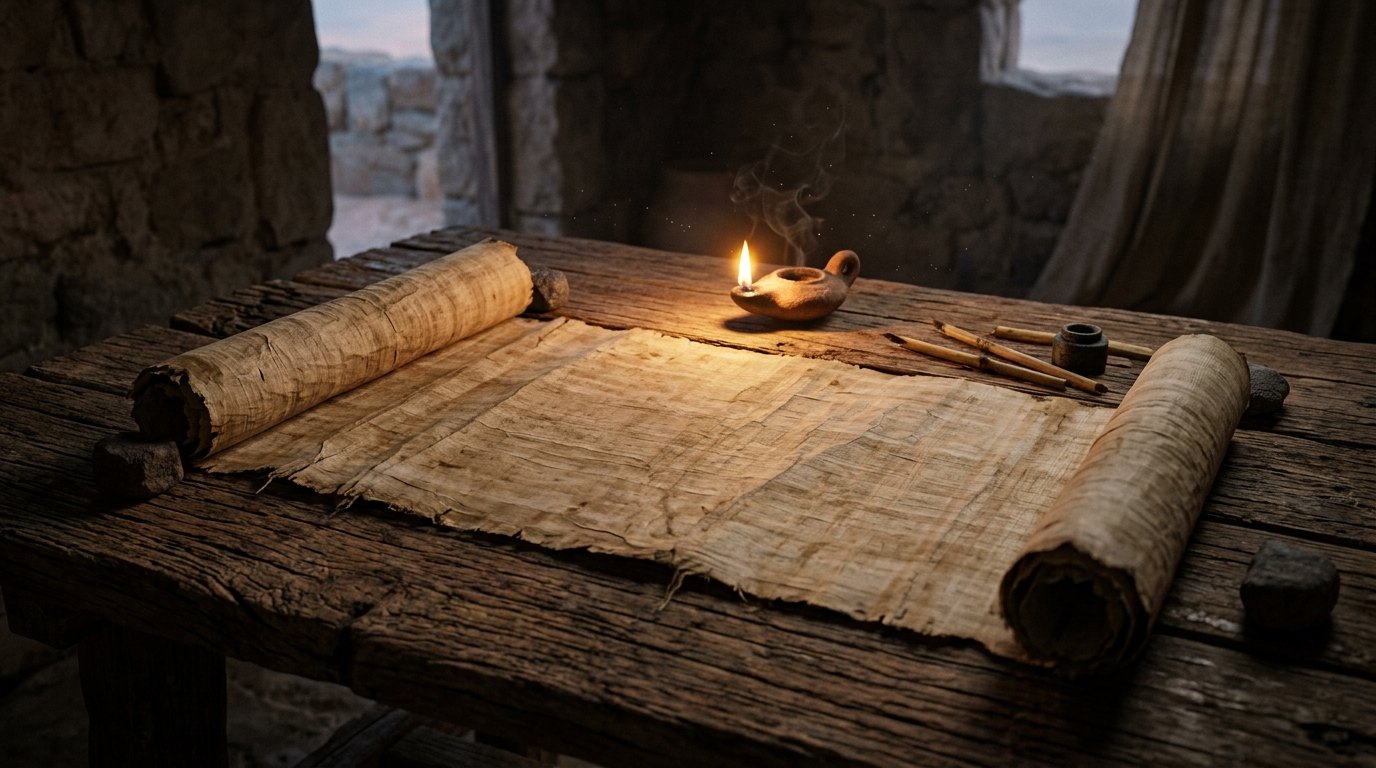
For prophecy never had its origin in the human will, but prophets, though human, spoke from God as they were carried along by the Holy Spirit.
2 Peter 1:21 (NIV)
It explains the precise mechanics of divine inspiration behind all prophetic Scripture.
The authoritative origin of the written Word rests entirely on the fact that men spoke from God as they were carried along by the Holy Spirit (2 Peter 1:21). The Holy Spirit did not bypass the faculties, vocabularies, or historical circumstances of the biblical authors; rather, He actively carried them, ensuring that every word recorded was precisely what God intended to communicate. Because of this divine carriage, the resulting text does not represent human ingenuity or religious reflection, but the pure, infallible disclosure of God’s own mind.
King David recognized this supernatural dynamic, declaring at the close of his life that the Spirit of the Lord spoke through him and His word was on his tongue (2 Samuel 23:2). In the same way, the prophet Micah drew a sharp contrast with the false prophets of his era, testifying that he was filled with power, with the Spirit of the Lord, to declare Israel's transgressions (Micah 3:8). When Ezekiel was called to confront an obstinate house, the Spirit entered him and set him upon his feet to hear the divine decree (Ezekiel 2:2). Isaiah likewise declared that the Spirit of the Lord God was upon him to announce glad tidings to the poor (Isaiah 61:1). As 2 Timothy 3:16 crowns this biblical witness, every single passage of Scripture is God-breathed, having been produced by the Holy Spirit to teach, reprove, correct, and train the people of God in complete righteousness.
| Passage | What it says |
|---|---|
| 2 Samuel 23:2 | David declares that the Spirit of the Lord spoke through his mouth. |
| Isaiah 61:1 | The Spirit of the Lord God rests on the Prophet to preach good news. |
| Ezekiel 2:2 | The Spirit enters Ezekiel, setting him upon his feet to hear God's word. |
| Micah 3:8 | Micah is filled with power by the Spirit to declare Israel's transgressions. |
| 2 Peter 1:21 | Prophets spoke from God as they were carried along by the Holy Spirit. |
| 2 Timothy 3:16 | All Scripture is breathed out by God for teaching, reproof, and training. |
Anointing the Messiah
The Holy Spirit conceives, anoints, and empowers Christ

As soon as Jesus was baptized, he went up out of the water. At that moment heaven was opened, and he saw the Spirit of God descending like a dove and alighting on him.
Matthew 3:16 (NIV)
It displays the visual, public anointing of Jesus by the Spirit as Messiah at His baptism.
At the waters of the Jordan, the heavens parted and the Spirit of God descended like a dove and rested upon Jesus (Matthew 3:16). While the eternal Son was never without the Spirit, this public anointing formally consecrated Him for His messianic office as the Prophet, Priest, and King promised throughout the Scriptures. From His miraculous conception to His bodily resurrection, the earthly life and redemptive labor of Jesus Christ were sustained and executed in total communion with the Holy Spirit.
The incarnation itself was an act of the Spirit: the angel Gabriel announced that the Holy Spirit would overshadow Mary so that the child born would be called the Son of God (Luke 1:35; Matthew 1:18). Following His baptism, Jesus was filled with the Holy Spirit and led by the Spirit into the Judean wilderness to defeat the tempter (Luke 4:1). Returning in power, Jesus entered the synagogue of Nazareth and announced the fulfillment of Isaiah’s prophecy, declaring that the Spirit of the Lord was upon Him to preach deliverance and proclaim the acceptable year of the Lord (Luke 4:18). Peter later summarized Christ's entire earthly mission by explaining how God anointed Jesus of Nazareth with the Holy Spirit and with power, enabling Him to do good and heal all oppressed by the devil (Acts 10:38). Ultimately, Christ offered Himself unblemished to God through the eternal Spirit at Calvary (Hebrews 9:14), and that same Spirit raised Jesus triumphantly from the dead (Romans 8:11).
| Passage | What it says |
|---|---|
| Matthew 1:18 | Mary is found to be with child from the Holy Spirit. |
| Luke 1:35 | The Holy Spirit overshadows Mary so the child will be called holy. |
| Matthew 3:16 | The Spirit of God descends like a dove and rests on Jesus at baptism. |
| Luke 4:1 | Jesus, full of the Holy Spirit, is led by the Spirit into the wilderness. |
| Luke 4:18 | Jesus reads Isaiah, proclaiming the Spirit has anointed Him to preach deliverance. |
| Acts 10:38 | God anointed Jesus of Nazareth with the Holy Spirit and with power. |
| Hebrews 9:14 | Christ offered Himself without blemish to God through the eternal Spirit. |
| Romans 8:11 | The Spirit of Him who raised Jesus from the dead dwells in believers. |
Regeneration and Rebirth
The Holy Spirit imparts new spiritual life to believers

Jesus answered, “Very truly I tell you, no one can enter the kingdom of God unless they are born of water and the Spirit.
John 3:5 (NIV)
It defines the absolute necessity of supernatural rebirth operated solely by the Holy Spirit.
In John 3:5, Jesus establishes the non-negotiable threshold of redemption: unless one is born of water and the Spirit, he cannot enter the kingdom of God. Fallen humanity cannot reform its own dead heart or ascend to God by moral effort; entrance into life demands a supernatural, sovereign rebirth from above. Centuries before Christ's nighttime dialogue with Nicodemus, God had anticipated this inner transformation through the prophet Ezekiel. In Ezekiel 36:26, the Lord pledged to remove the intractable heart of stone and replace it with a living heart of flesh, giving His people a responsive, transformed nature. Immediately following that promise, Ezekiel 36:27 explains how this internal miracle bears fruit in concrete holiness: God puts His own Spirit within believers to cause them to walk in His statutes and obey His rules.
Jesus clarifies the sovereign and unseen character of this divine work in John 3:8, comparing the Holy Spirit to the wind that blows where it wishes. A person hears the sound of the wind and sees its effects, yet cannot direct or track its origin; in precisely that way, the Spirit breathes life into spiritually dead souls by His own secret counsel and mighty grace. Writing to Titus, the apostle Paul celebrates this unmerited deliverance in Titus 3:5, declaring that God saved us not because of works done by us in righteousness, but according to His own mercy, by the washing of regeneration and renewal of the Holy Spirit. The third Person of the Trinity does not merely improve the sinner; He enacts a brand-new creation.
| Passage | What it says |
|---|---|
| Ezekiel 36:26 | God promises a new heart and a new spirit placed within His people. |
| Ezekiel 36:27 | God promises His Spirit inside believers to cause obedience to His statutes. |
| John 3:5 | Jesus declares that entrance into God's kingdom requires rebirth of water and Spirit. |
| John 3:8 | The wind blows where it wishes; so it is with everyone born of the Spirit. |
| Titus 3:5 | God saves believers through the washing of regeneration and renewal by the Holy Spirit. |
Power and Mission
The Holy Spirit establishes and directs the missionary church

But you will receive power when the Holy Spirit comes on you; and you will be my witnesses in Jerusalem, and in all Judea and Samaria, and to the ends of the earth.”
Acts 1:8 (NIV)
It frames the primary purpose of the Spirit's outpoured power: worldwide witness to the gospel.
Before ascending to the Father's right hand, Jesus gave His disciples their definitive commission in Acts 1:8, declaring, you will receive power when the Holy Spirit has come upon you, and you will be my witnesses. The Holy Spirit is the divine engine of the global mission, supplying ordinary believers with the courage, speech, and stamina required to proclaim Christ across every cultural boundary. That promised outpouring arrived violently and visibly on the day of Pentecost in Acts 2:4, when the gathered disciples were filled with the Holy Spirit and began to speak in other tongues as the Spirit gave them utterance, declaring God's mighty acts to pilgrims from every nation under heaven.
This empowerment was not an isolated event but the ongoing rhythm of the early church. When facing threats and state opposition in Acts 4:31, the believers gathered in prayer, the place was shaken, and they were all filled with the Holy Spirit and continued to speak the word of God with boldness. The Spirit dynamically directed the expansion of the gospel into uncharted territory. In Acts 8:17, the Samaritan converts received the Spirit through the apostles' hands, visibly joining historic rivals into one body. In Acts 10:44, the Holy Spirit fell upon Cornelius and his Gentiles while Peter was still speaking, decisively authenticating the global scope of salvation. The Spirit continues as absolute strategist of the harvest: in Acts 13:2, He specifically commanded the Antioch church to set apart Barnabas and Saul for their missionary journeys, and in Acts 16:6, He forbade Paul and his companions from preaching in Asia, sovereignly steering the gospel onward into Europe.
| Passage | What it says |
|---|---|
| Acts 1:8 | Believers receive power when the Holy Spirit comes to be witnesses globally. |
| Acts 2:4 | The disciples are filled with the Spirit and speak in other tongues. |
| Acts 4:31 | The gathered church is filled with the Spirit and speaks God's word boldly. |
| Acts 8:17 | Samaritan believers receive the Holy Spirit through the laying on of hands. |
| Acts 10:44 | The Holy Spirit falls upon all Gentiles hearing the message in Cornelius's house. |
| Acts 13:2 | The Holy Spirit directs the church to set apart Barnabas and Saul. |
| Acts 16:6 | The Holy Spirit forbids Paul and his companions from preaching in Asia. |
Indwelling and Sealing
The Holy Spirit permanently indwells and seals the believer

And you also were included in Christ when you heard the message of truth, the gospel of your salvation. When you believed, you were marked in him with a seal, the promised Holy Spirit,
Ephesians 1:13 (NIV)
It provides the bedrock assurance that faith in Christ is immediately ratified by the Spirit's seal.
In Ephesians 1:13, the apostle Paul discloses the believer's irrevocable security: in Him you also, when you heard the word of truth, the gospel of your salvation, and believed in Him, were sealed with the promised Holy Spirit. In the ancient world, an unbroken royal seal signified three undeniable realities: legal ownership, absolute authority, and guaranteed protection against tampering. The moment a sinner rests by faith in the crucified and risen Christ, God stamps that soul with the Holy Spirit Himself. This divine indwelling is not a secondary tier of discipleship; as Romans 8:9 bluntly states, anyone who does not have the Spirit of Christ does not belong to Him. To be a Christian is to be inhabited by God.
This indwelling redefines the holy ground of redemption. Paul reminds the local congregation in 1 Corinthians 3:16 that they corporately constitute God's temple because the Spirit dwells within them, and he extends that truth to personal conduct in 1 Corinthians 6:19, warning that the believer's physical body is a sanctuary of the Holy Spirit bought with a price. Furthermore, the Spirit's presence acts as an advance guarantee. Paul explains in 2 Corinthians 1:22 and Ephesians 1:14 that God has given us the Spirit in our hearts as a pledge or down payment—an earnest guarantee of our full future inheritance until we acquire final possession of it. Because believers are so intimately united to this holy resident, Paul pleads in Ephesians 4:30 never to grieve the Holy Spirit of God, by whom we were sealed for the day of redemption.
| Passage | What it says |
|---|---|
| Romans 8:9 | Anyone who does not have the Spirit of Christ does not belong to Him. |
| 1 Corinthians 3:16 | The church community is God's temple because God's Spirit dwells within it. |
| 1 Corinthians 6:19 | The believer's physical body is a temple of the Holy Spirit within them. |
| 2 Corinthians 1:22 | God seals believers and gives the Spirit in their hearts as a guarantee. |
| Ephesians 1:13 | Believers who trusted the gospel are sealed with the promised Holy Spirit. |
| Ephesians 1:14 | The Spirit is the guarantee of our inheritance until final redemption. |
| Ephesians 4:30 | Believers are exhorted not to grieve the Holy Spirit by whom they were sealed. |
Adoption and Assurance
The Holy Spirit assures believers of their divine adoption

The Spirit himself testifies with our spirit that we are God’s children.
Romans 8:16 (NIV)
It shows the inner personal testimony the Spirit gives directly to the believer's spirit regarding adoption.
The Holy Spirit does not leave God's redeemed children in perpetual dread or legal uncertainty, for Romans 8:16 announces that the Spirit Himself bears witness with our spirit that we are children of God. Rather than depending on fleeting emotions or fluctuating personal performance, the believer possesses the inward, unwavering testimony of God's own Spirit confirming their royal standing before the Father. This divine witness dispels the paralyzing terror of condemnation. As Paul teaches in Romans 8:14, all who are led by the Spirit of God are sons of God, evidencing their new nature through persistent pursuit of holiness.
This relational transformation overturns the slavish mindset of the old life. According to Romans 8:15, believers did not receive a spirit of slavery to fall back into fear, but the Spirit of adoption as sons, by whom we cry, 'Abba! Father!' The Spirit takes what Christ secured at the cross and makes it an experienced reality within the believer's inner life. Paul echoes this profound freedom in Galatians 4:6, showing that because we are truly sons, God has sent the Spirit of His Son into our hearts, crying, 'Abba! Father!' The very cry of intimacy that Jesus uttered in the garden of Gethsemane is placed upon the lips and deep within the affections of those who were once rebels and strangers, binding them forever to the Father's heart.
| Passage | What it says |
|---|---|
| Romans 8:14 | All who are being led by the Spirit of God are sons of God. |
| Romans 8:15 | Believers receive the Spirit of adoption, by whom we cry, 'Abba! Father!' |
| Romans 8:16 | The Spirit Himself bears witness with our spirit that we are children of God. |
| Galatians 4:6 | God sends the Spirit of His Son into hearts crying, 'Abba! Father!' |
Sanctification and Fruit
The Holy Spirit produces Christlike character and holiness

But the fruit of the Spirit is love, joy, peace, forbearance, kindness, goodness, faithfulness,
Galatians 5:22 (NIV)
It lists the comprehensive ethical harvest generated exclusively by the Spirit's life within.
Galatians 5:22 reveals that genuine Christian virtue is not the strained product of self-reliance, but the supernatural harvest of the indwelling Third Person: the fruit of the Spirit is love, joy, peace, patience, kindness, goodness, faithfulness, completed in Galatians 5:23 with gentleness and self-control. This inward transformation begins as believers actively depend on His strength to mortify remaining sin, for Romans 8:13 declares that if by the Spirit you put to death the deeds of the body, you will live. Rather than succumbing to corrupted inclinations, Galatians 5:16 promises that walking by the Spirit prevents gratifying the desires of the flesh, establishing an active daily fellowship described in Galatians 5:25 as keeping in step with the Spirit who imparted life to us.
This lifelong renewal steadily conforms redeemed sinners to the moral perfection of their Lord. As Paul writes in 2 Corinthians 3:18, beholding the glory of the Lord leads believers to be transformed into the same image from one degree of glory to another, a glorious work accomplished entirely by the Spirit of the Lord. Such ongoing purification is essential to God’s eternal design; 2 Thessalonians 2:13 explains that God chose His people from the beginning to be saved through sanctification by the Spirit and belief in the truth. Echoing this covenantal reality, 1 Peter 1:2 assures Christians that they are chosen according to the foreknowledge of the Father, in the sanctification of the Spirit, for obedience to Jesus Christ and sprinkling with His blood.
| Passage | What it says |
|---|---|
| Romans 8:13 | By the Spirit believers put to death the deeds of the body to live. |
| Galatians 5:16 | Walking by the Spirit prevents gratifying the desires of the flesh. |
| Galatians 5:22 | The fruit of the Spirit is love, joy, peace, patience, kindness, goodness, faithfulness. |
| Galatians 5:23 | The fruit of the Spirit concludes with gentleness and self-control. |
| Galatians 5:25 | If believers live by the Spirit, they must also keep in step with Him. |
| 2 Corinthians 3:18 | Believers are transformed into Christ's image from glory to glory by the Spirit. |
| 2 Thessalonians 2:13 | God chose believers for salvation through sanctification by the Spirit and faith. |
| 1 Peter 1:2 | Believers are chosen in the sanctifying work of the Spirit for obedience. |
Spiritual Gifts and Unity
The Holy Spirit distributes spiritual gifts to unify the Church

All these are the work of one and the same Spirit, and he distributes them to each one, just as he determines.
1 Corinthians 12:11 (NIV)
It underscores the sovereign personal agency of the Holy Spirit distributing gifts according to His own will.
In 1 Corinthians 12:11, the Apostle Paul magnifies the sovereign prerogative of the Holy Spirit in building up the household of God, declaring that all these are empowered by one and the same Spirit, who apportions to each one individually as he wills. Spiritual abilities are neither human achievements nor random accidents; rather, 1 Corinthians 12:4 emphasizes that although there are varieties of gifts, there is the same Spirit who animates them all. He equips every believer intentionally, as 1 Corinthians 12:7 states that the manifestation of the Spirit is granted to each person not for private status, but for the common good of the assembly.
This divine distribution of gifts serves the overarching goal of cohesive, loving communion among God's people. According to 1 Corinthians 12:13, in one Spirit we were all baptized into one body, dissolving historical divides between Jews and Greeks, slaves and free, and making all drink of one Spirit. Spiritual gifts exist to knit the church together rather than tear it apart, compelling the admonition of Ephesians 4:3 to be eager to maintain the unity of the Spirit in the bond of peace.
| Passage | What it says |
|---|---|
| 1 Corinthians 12:4 | There are varieties of spiritual gifts, but the same Spirit grants them. |
| 1 Corinthians 12:7 | To each is given the manifestation of the Spirit for the common good. |
| 1 Corinthians 12:11 | The one and the same Spirit apportions gifts to each individually as He wills. |
| 1 Corinthians 12:13 | In one Spirit all believers were baptized into one body, whether Jews or Greeks. |
| Ephesians 4:3 | Believers are urged to maintain the unity of the Spirit in peace. |
Intercession and Prayer
The Holy Spirit aids and intercedes in believer's prayers

In the same way, the Spirit helps us in our weakness. We do not know what we ought to pray for, but the Spirit himself intercedes for us through wordless groans.
Romans 8:26 (NIV)
It shows the Spirit actively bridging human limitation by making intercession aligned with God's will.
Romans 8:26 offers profound comfort to afflicted saints, disclosing that the Spirit helps us in our weakness, for we do not know what to pray for as we ought, but the Spirit himself intercedes for us with groanings too deep for words. In seasons of intense sorrow, trial, or spiritual exhaustion, human understanding falters, yet the believer is never left stranded in silence. The Holy Spirit takes up the infirmities of the saints, lifting their unutterable burdens directly to the throne of grace with perfect clarity and divine compassion.
This ministry of advocacy is entirely effective because it operates in perfect harmony with the divine will. Romans 8:27 explains that he who searches hearts knows what is the mind of the Spirit, because the Spirit intercedes for the saints according to the will of God, ensuring that every petition harmonizes with the Father's eternal purposes. Because true communion with God depends upon this spiritual enablement, Ephesians 6:18 commands the church to pray at all times in the Spirit, with all prayer and supplication, while Jude 1:20 urges believers to build themselves up on their most holy faith by continually praying in the Holy Spirit.
| Passage | What it says |
|---|---|
| Romans 8:26 | The Spirit helps in our weakness and intercedes with groanings too deep for words. |
| Romans 8:27 | He who searches hearts knows the Spirit's mind, interceding for saints according to God. |
| Ephesians 6:18 | Praying at all times in the Spirit with all prayer and supplication. |
| Jude 1:20 | Believers build themselves up on their most holy faith, praying in the Holy Spirit. |
Where in the Bible
| Book | Passages |
|---|---|
| Genesis | 2 · Genesis 1:2, Genesis 2:7 |
| Exodus | 1 · Exodus 31:3 |
| Numbers | 2 · Numbers 11:25, Numbers 27:18 |
| Judges | 3 · Judges 3:10, Judges 6:34, Judges 14:6 |
| 1 Samuel | 1 · 1 Samuel 16:13 |
| 2 Samuel | 1 · 2 Samuel 23:2 |
| Job | 2 · Job 26:13, Job 33:4 |
| Psalms | 1 · Psalms 104:30 |
| Isaiah | 1 · Isaiah 61:1 |
| Ezekiel | 3 · Ezekiel 2:2, Ezekiel 36:26, Ezekiel 36:27 |
| Micah | 1 · Micah 3:8 |
| Matthew | 2 · Matthew 1:18, Matthew 3:16 |
| Luke | 4 · Luke 24:49, Luke 1:35, Luke 4:1, Luke 4:18 |
| John | 16 · John 14:16, John 14:17, John 16:7, John 16:8, John 16:9, John 16:10, John 16:11, John 14:26, John 16:12, John 16:13, John 7:39, John 15:26, John 16:14, John 16:15, John 3:5, John 3:8 |
| Acts | 9 · Acts 2:33, Acts 10:38, Acts 1:8, Acts 2:4, Acts 4:31, Acts 8:17, Acts 10:44, Acts 13:2, Acts 16:6 |
| Romans | 8 · Romans 8:11, Romans 8:9, Romans 8:14, Romans 8:15, Romans 8:16, Romans 8:13, Romans 8:26, Romans 8:27 |
| 1 Corinthians | 6 · 1 Corinthians 3:16, 1 Corinthians 6:19, 1 Corinthians 12:4, 1 Corinthians 12:7, 1 Corinthians 12:11, 1 Corinthians 12:13 |
| 2 Corinthians | 2 · 2 Corinthians 1:22, 2 Corinthians 3:18 |
| Galatians | 5 · Galatians 4:6, Galatians 5:16, Galatians 5:22, Galatians 5:23, Galatians 5:25 |
| Ephesians | 5 · Ephesians 1:13, Ephesians 1:14, Ephesians 4:30, Ephesians 4:3, Ephesians 6:18 |
| 2 Thessalonians | 1 · 2 Thessalonians 2:13 |
| 2 Timothy | 1 · 2 Timothy 3:16 |
| Titus | 1 · Titus 3:5 |
| Hebrews | 1 · Hebrews 9:14 |
| 1 Peter | 1 · 1 Peter 1:2 |
| 2 Peter | 1 · 2 Peter 1:21 |
| Jude | 1 · Jude 1:20 |
The story in order
- Creation and Life (c. 4000 BC) · Genesis 1:2 · The Spirit brings order and life to the unformed earth.
- Empowering Judges and Kings (c. 1375 BC) · Judges 3:10 · The Spirit empowers leaders to deliver and rule Israel.
- Inspiration of Scripture (c. 970 BC) · 2 Samuel 23:2 · The Spirit speaks through prophets, conveying God's word.
- Anointing the Messiah (c. 6 BC) · Matthew 1:18 · The Spirit conceives Jesus, setting Him apart for His mission.
- Jesus' Baptism and Temptation (AD 26) · Matthew 3:16 · The Spirit descends on Jesus and leads Him into the wilderness.
- Jesus' Ministry (AD 27-30) · Luke 4:18 · The Spirit anoints Jesus to preach and deliver.
- The Promise of the Spirit (AD 30) · John 16:7 · Jesus explains His departure is necessary to send the Spirit.
- Pentecost: The Spirit Poured Out (AD 30) · Acts 2:33 · Jesus exalts the Spirit's coming upon the church.
- Empowering the Early Church (AD 30-33) · Acts 4:31 · The Spirit fills believers, enabling bold witness.
- Missionary Guidance (AD 47) · Acts 13:2 · The Spirit directs the church's missionary endeavors.
- Indwelling and Sealing (c. AD 55) · 1 Corinthians 3:16 · The Spirit permanently indwells believers and the church.
- Sanctification and Transformation (c. AD 56) · 2 Corinthians 3:18 · The Spirit transforms believers into Christ's image.
Key words
- Spirit (pneuma, πνεῦμα)
- The third Person of the Trinity, God's active presence and power. · John 14:16
- Comforter/Counselor (paraklētos, παράκλητος)
- One who stands by to help, teach, and advocate. · John 14:16
- Spirit of Truth (pneuma tēs alētheias, πνεῦμα τῆς ἀληθείας)
- The Spirit who guides into all truth and speaks God's truth. · John 14:17
- Convicts (elegchō, ἐλέγχω)
- To convince or expose the reality of sin, righteousness, and judgment. · John 16:8
- Glorifies (doxazō, δοξάζω)
- To reveal the glory and worth of Jesus Christ. · John 16:14
- Regeneration (paliggenesia, παλιγγενεσία)
- Spiritual rebirth; the impartation of new life by the Spirit. · Titus 3:5
- Fruit of the Spirit (karpos tou pneumatos, καρπὸς τοῦ πνεύματος)
- The Christlike character produced in believers by the Spirit's work. · Galatians 5:22
- Seal (sphragizō, σφραγίζω)
- A mark of ownership and a guarantee of future inheritance. · Ephesians 1:13
Understanding the ministry of the Holy Spirit anchors the believer in the certainty that we are neither abandoned nor left without guidance. Because the Spirit dwells within the church to reveal Christ and convict the world, we walk in absolute assurance of God's present, sanctifying power.
82 passages, each cited once.
Scripture cited
- John 14:26
- John 14:16-17
- Acts 1:8
- Romans 8:9-16
- Romans 8:26-27
- Galatians 5:22-25
- 1 Corinthians 12:4-11
- Ephesians 1:13-14
- Titus 3:4-6