What does 'the joy of the Lord is your strength' mean?
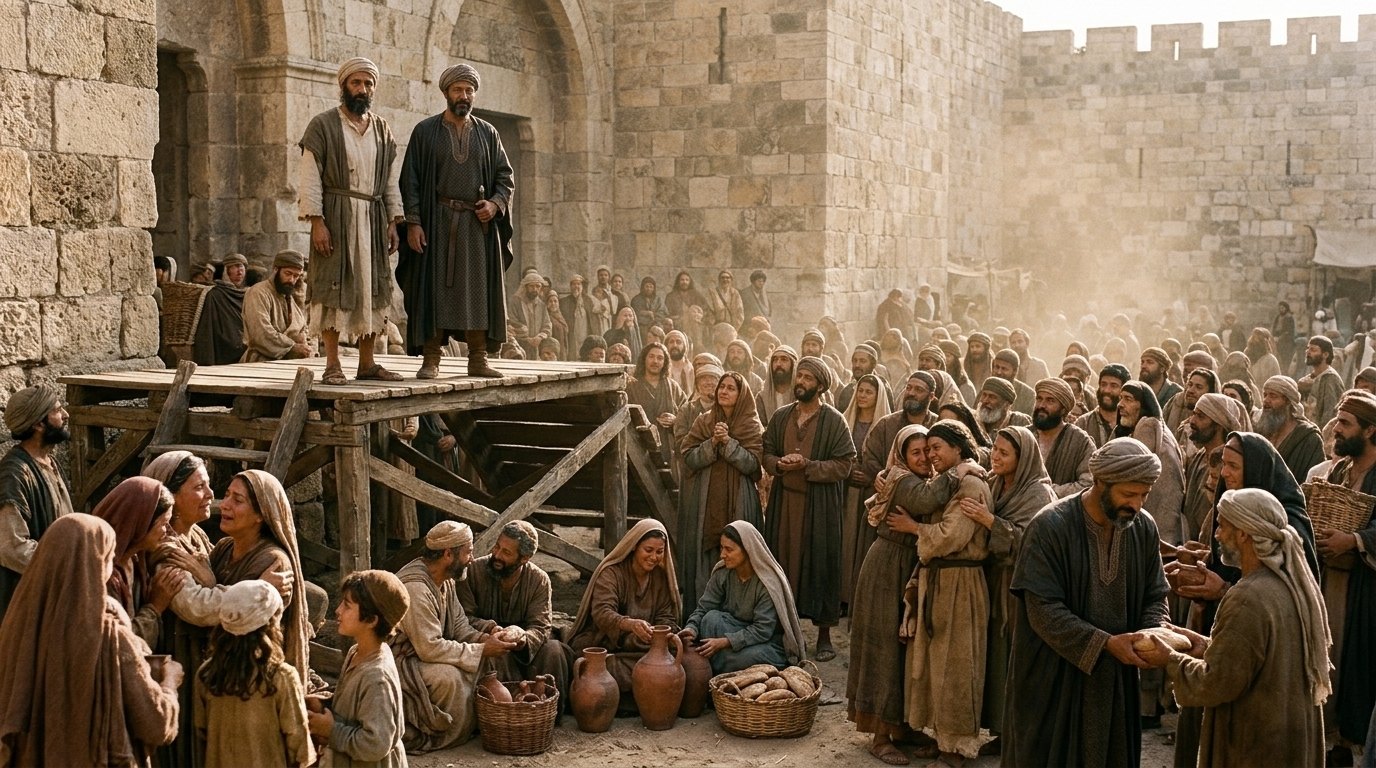
Nehemiah 8:10
10 Nehemiah said, “Go and enjoy choice food and sweet drinks, and send some to those who have nothing prepared. This day is holy to our Lord. Do not grieve, for the joy of the LORD is your strength.”
New International Version (NIV)
The answer
“The joy of the Lord is your strength” means that rejoicing in God—who He is, what He says, and the salvation He gives—becomes His people’s secure refuge and enables them to obey Him. It is not a command to pretend to be happy, nor a promise that believers will never grieve.
What was happening in Nehemiah 8?
Ezra had read God’s law publicly, and the people wept when they understood how far they had departed from it (Nehemiah 8:8-9). Their conviction of sin was real, but Nehemiah would not let it end in despair. Because the day was holy to the Lord, he told them to stop grieving, celebrate, and “send portions to him for whom nothing is prepared” (Nehemiah 8:10).
Their joy therefore did not come from ignoring sin or lowering God’s standards. It came from hearing and understanding God’s Word: Nehemiah 8:12 says they celebrated “because they had understood the words that were declared to them.” Having been convicted, they were now called to receive God’s provision, keep His feast, and respond with obedience.
Why is joy called “strength”?
The Hebrew word translated “strength” means a fortified place or stronghold. Joy in the Lord is therefore more than a pleasant emotion: it is a spiritual refuge. Confidence in God guards His people from being crushed by guilt, fear, or circumstances and strengthens them to do what He commands.
Psalm 28:7 makes the same connection between trust, help, joy, and praise: “The LORD is my strength and my shield; my heart trusted in him, and I am helped: therefore my heart greatly rejoiceth.”
Isaiah 12:1-3 likewise grounds this joy in salvation. God’s anger has turned away, He comforts His people, and He becomes their salvation. Consequently, they can trust without fear and “with joy … draw water out of the wells of salvation.” The strength comes from God Himself, not from forcing a cheerful mood.
What this means in practice
- Repent without despairing: sin must be taken seriously, as the people’s tears show, but conviction is meant to lead back to God rather than leave a believer hopeless.
- Rejoice in God rather than circumstances: His character, Word, and saving grace remain firm when outward conditions do not.
- Let joy produce obedience: the people went on to keep the feast according to God’s Word (Nehemiah 8:13-18).
- Let joy become generosity: Nehemiah immediately joined celebration with providing for those who had nothing prepared (Nehemiah 8:10).
Answered from Scripture · reviewed November 11, 2026
When Nehemiah proclaimed that the joy of the Lord is our strength, he was not offering a light slogan or a call to worldly merriment. He spoke to a grieving, broken people who had just encountered God's holy law, directing them to find fortitude in God's pardoning character and gracious presence. Biblical joy in God is the living fuel that sustains endurance, empowers cheerful obedience, and pours itself out in love to others.
The Historical Setting
Sorrow over sin gives way to holy gladness
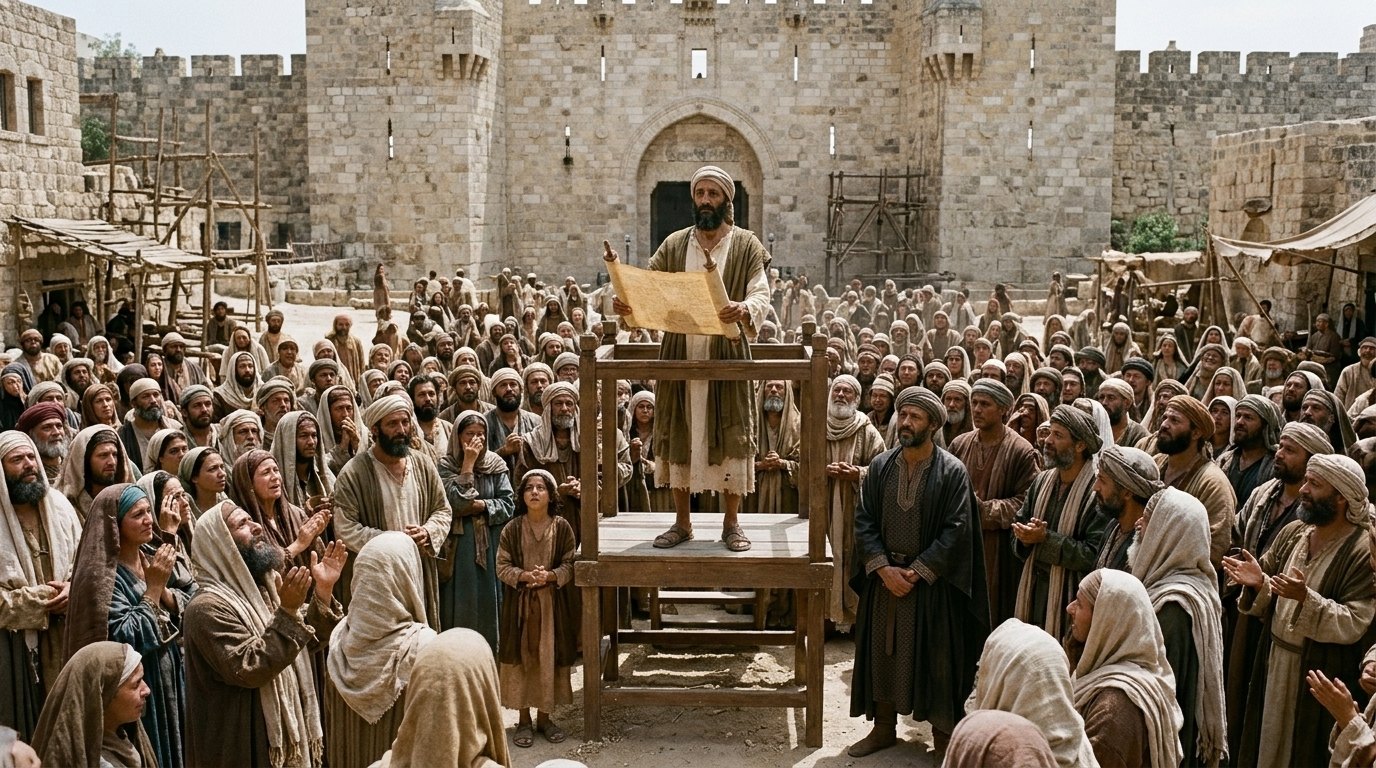
Nehemiah said, “Go and enjoy choice food and sweet drinks, and send some to those who have nothing prepared. This day is holy to our Lord. Do not grieve, for the joy of the LORD is your strength.”
Nehemiah 8:10 (NIV)
Nehemiah redirects a weeping congregation from grief to joy, declaring God's joy to be their true refuge and strength.
In Nehemiah 8:10, Nehemiah lifts the bowed heads of a weeping remnant with a startling summons: go, eat the fat, drink the sweet, and mourn no longer, because the joy of the Lord is your strength. Ezra had opened the book of the Law before the Water Gate, reading from early morning until midday. As the holy demands of the covenant rang out, conviction pierced the assembly. In Nehemiah 8:9, the people wept aloud, shattered by how far they and their fathers had drifted from God's commands. Yet Ezra, Nehemiah, and the Levites silenced their cries, reminding them that the day was holy to Yahweh, and holiness under grace must be greeted with glad adoration rather than despair. Holy grief has its necessary season, but it must give way to thanksgiving when God draws near in mercy. True spiritual fortitude does not stem from human resolve or self-chastisement, but from resting in Yahweh's covenant delight over His redeemed. In Nehemiah 8:12, the congregation obeyed: they went away to feast, send portions to those with nothing prepared, and celebrate with great joy, because they finally understood the words declared to them. God's truth, once comprehended, leaves the soul not paralyzed by guilt, but energized by the glad reality of His pardoning love.
| Passage | What it says |
|---|---|
| Nehemiah 8:9 | Ezra, Nehemiah, and the Levites instruct the weeping people not to mourn because the day is consecrated and holy unto the Lord. |
| Nehemiah 8:10 | The leaders command the people to feast, share with those who have nothing, and rejoice because the Lord's joy is their strength. |
| Nehemiah 8:12 | The assembly departs to eat, drink, send portions, and celebrate with great mirth because they understood the words declared to them. |
Generosity and Covenant Feast
Godly joy pours itself out toward the needy
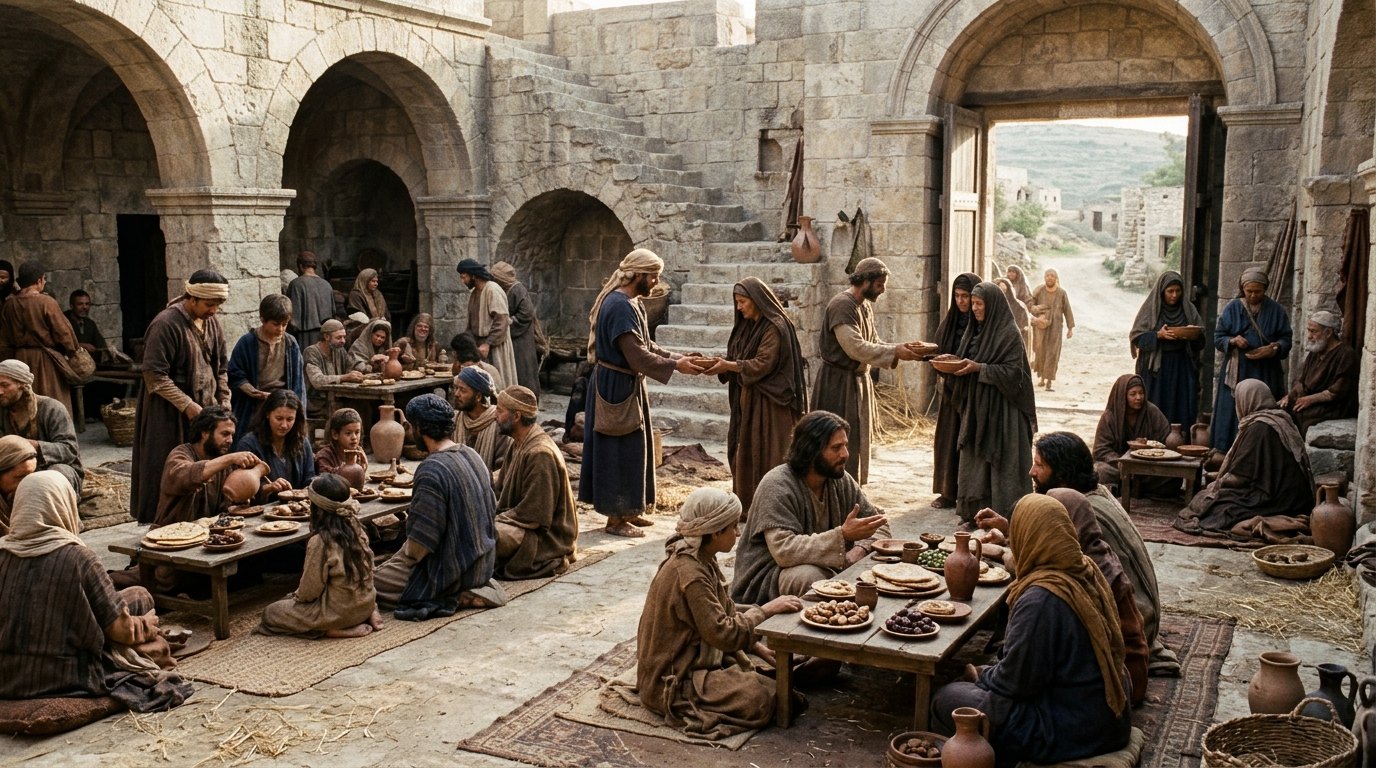
And rejoice before the LORD your God at the place he will choose as a dwelling for his Name—you, your sons and daughters, your male and female servants, the Levites in your towns, and the foreigners, the fatherless and the widows living among you.
Deuteronomy 16:11 (NIV)
God commands that festival joy before Him must always include the Levite, the stranger, the fatherless, and the widow.
In Deuteronomy 16:11, Moses reveals that genuine gladness in God is never a solitary indulgence; rather, covenant joy overflows in lavish generosity toward the vulnerable. When Israel gathered at the place Yahweh chose for His name, their feasts were commanded to include the son, the daughter, the manservant, the maidservant, the Levite who had no land, and the stranger, orphan, and widow dwelling in their midst. Worship that ignores the needy is hollow, but joy anchored in God's abundance naturally opens the hand. Centuries later, Ecclesiastes 9:7 echoes this covenant freedom, urging the believer to eat bread with joy and drink wine with a merry heart, knowing that God has already approved one's faithful labors. Shared joy also marked God's deliverance in Persia: Esther 9:22 records that when mourning was transformed into dancing, the Jews marked the days of Purim by feasting, mutual gift-giving, and sending relief to the poor. Nehemiah's command to send portions to those for whom nothing was prepared was therefore no novel invention, but the very rhythm of biblical redemption. When God's people grasp His infinite grace, their strength is proven by how quickly they invite the hungry to share in the feast.
| Passage | What it says |
|---|---|
| Deuteronomy 16:11 | Israel is commanded to rejoice before the Lord alongside sons, daughters, servants, strangers, orphans, and widows at the place of worship. |
| Ecclesiastes 9:7 | The preacher bids the believer to eat bread with joy and drink wine with a merry heart, since God accepts his works. |
| Esther 9:22 | Days of sorrow turned into days of feasting, joy, sending presents to one another, and bestowing gifts on the poor. |
God Our Fortress
Rejoicing in Yahweh secures spiritual refuge and help

The LORD is my strength and my shield; my heart trusts in him, and he helps me. My heart leaps for joy, and with my song I praise him.
Psalms 28:7 (NIV)
David identifies Yahweh as his strength and shield, linking trust and glad praise to receiving divine help.
David proclaims in Psalms 28:7 that Yahweh is my strength and my shield, testifying that when the heart trusts in Him, divine help arrives and turns fearful trembling into triumphant song. This joy is not a passive emotion dependent on comfortable circumstances, but an active, fortified confidence in the living God. In Psalms 28:8, David extends this truth from his own soul to the entire covenant community: Yahweh is the saving refuge of His anointed king and the enduring defense of His heritage. The wisdom of Proverbs 17:22 observes the bodily fruit of this spiritual posture, noting that a cheerful heart works good medicine like a balm, whereas a crushed spirit withers the very bones. This supernatural vitality shines brightest in the dark. In Habakkuk 3:18, even as the prophet envisions total agricultural collapse—the fig tree barren, the vines empty, the olive harvest failing, and the sheep cut off from the fold—he resolutely declares, 'Yet I will rejoice in the Lord; I will take joy in the God of my salvation.' In Habakkuk 3:19, this unwavering delight secures sure-footed stability: Yahweh God becomes his strength, giving him deer's feet to leap securely upon the highest crags.
| Passage | What it says |
|---|---|
| Psalms 28:7 | David declares the Lord to be his strength and shield, rejoicing with heart and song because he was helped. |
| Psalms 28:8 | The Lord is proclaimed as the strength of His people and the saving stronghold of His anointed. |
| Proverbs 17:22 | Solomon observes that a merry heart provides bodily healing like medicine, whereas a crushed spirit dries up the bones. |
| Habakkuk 3:18 | The prophet resolves to rejoice in the Lord and take joy in the God of his salvation even amidst total earthly deprivation. |
| Habakkuk 3:19 | The Lord God is declared to be the prophet's strength, making his feet like deer's feet upon high places. |
The Joy of Salvation
Deliverance from wrath produces deep abiding praise

With joy you will draw water from the wells of salvation.
Isaiah 12:3 (NIV)
Isaiah envisions redeemed believers drawing life-giving water with joy from the deep springs of God's salvation.
Isaiah looks ahead to the ultimate restoration of God's people in Isaiah 12:3, prophesying that with joy you will draw water from the wells of salvation. This gladness is rooted squarely in reconciliation with God. In Isaiah 12:1, the redeemed soul gives thanks because the Lord's righteous wrath against sin has turned away, replaced by the profound tender comfort of His peace. Because guilt has been atoned for, Isaiah 12:2 confesses with bold assurance that God Himself is our salvation, our trust, our song, and our unassailable strength, banishing every dread of judgment. The wells of divine favor never run dry; they continually refresh believers parched by trials and weary from their own shortcomings. This salvation is neither partial nor fragile; it completely clothes the believer in dignity and divine approval. In Isaiah 61:10, the prophet bursts into exultant praise, rejoicing greatly in Yahweh because He has dressed His servant in garments of deliverance and wrapped him in the spotless robe of righteousness, like a bridegroom decked with a priestly garland or a bride adorned with jewels. The joy of the Lord is our strength because our salvation is wholly grounded in His unfailing righteousness.
| Passage | What it says |
|---|---|
| Isaiah 12:1 | The redeemed praise the Lord because His righteous anger is turned away and His comfort has been bestowed. |
| Isaiah 12:2 | Yahweh God is proclaimed as salvation, trust, strength, and song, banishing all fear from His people. |
| Isaiah 12:3 | Believers are promised that with joyful hearts they will draw living waters from the wells of salvation. |
| Isaiah 61:10 | The prophet greatly rejoices in the Lord, clothed with garments of salvation and covered in robes of righteousness. |
Endurance in Weakness
Christ's all-sufficient grace turns weakness into triumph

But he said to me, “My grace is sufficient for you, for my power is made perfect in weakness.” Therefore I will boast all the more gladly about my weaknesses, so that Christ’s power may rest on me.
2 Corinthians 12:9 (NIV)
Christ assures Paul that grace is sufficient, for divine power finds its perfect completion in human weakness.
In 2 Corinthians 12:9, the risen Savior speaks directly into human frailty: "My grace is sufficient for you, for my power is made perfect in weakness." This divine paradox dismantles the world's definition of strength, establishing that the joy of the Lord flourishes not when affliction disappears, but when Christ's sustaining presence eclipses it. Paul had pleaded repeatedly under severe affliction, recording in 2 Corinthians 12:8 how he begged the Lord three times that his sharp thorn in the flesh might depart from him. Instead of removing the trial, Jesus answered with the all-sufficiency of His grace, teaching the apostle that divine power rests most visibly upon empty hands. Rather than sinking into despondency or bitter resignation, Paul learned to boast gladly in hardships, distresses, and infirmities, knowing that whenever he was conscious of his own weakness, he was infused with supernatural strength. Writing later from cold confinement in a Roman guardhouse, Paul echoed this radiant reality in Philippians 4:4, commanding believers to "rejoice in the Lord always; again I will say, rejoice." Such joy is neither a fleeting temperamental optimism nor dependent on comfortable surroundings; it is an anchored delight in an unchanging Lord. Having known both abundance and severe deprivation, the apostle concluded with the triumphant confession of Philippians 4:13: "I can do all things through him who strengthens me." Inward fortitude does not originate in human willpower, but flows continuously from Christ, turning affliction into an enduring testimony of holy joy.
| Passage | What it says |
|---|---|
| 2 Corinthians 12:8 | Paul pleads three times with the Lord for his painful thorn in the flesh to be taken away. |
| 2 Corinthians 12:9 | Christ answers that His grace is sufficient, causing Paul to gladly boast in weaknesses so Christ's power rests on him. |
| Philippians 4:4 | Paul exhorts the believers from his prison cell to rejoice in the Lord always, repeating the urgent command. |
| Philippians 4:13 | The apostle affirms his capacity to endure and face all circumstances through Christ who provides inward strength. |
Where in the Bible
| Book | Passages |
|---|---|
| Deuteronomy | 1 · Deuteronomy 16:11 |
| Nehemiah | 3 · Nehemiah 8:9, Nehemiah 8:10, Nehemiah 8:12 |
| Esther | 1 · Esther 9:22 |
| Psalms | 2 · Psalms 28:7, Psalms 28:8 |
| Proverbs | 1 · Proverbs 17:22 |
| Ecclesiastes | 1 · Ecclesiastes 9:7 |
| Isaiah | 4 · Isaiah 12:1, Isaiah 12:2, Isaiah 12:3, Isaiah 61:10 |
| Habakkuk | 2 · Habakkuk 3:18, Habakkuk 3:19 |
| 2 Corinthians | 2 · 2 Corinthians 12:8, 2 Corinthians 12:9 |
| Philippians | 2 · Philippians 4:4, Philippians 4:13 |
The story in order
- Israel rejoices at the place of worship (c. 1400 BC) · Deuteronomy 16:11 · Joy includes all members of the community, especially the vulnerable.
- David finds strength and refuge in the Lord (c. 1000 BC) · Psalms 28:7 · The Lord is a shield and strength, leading to rejoicing.
- Solomon notes joy's healing power (c. 950 BC) · Proverbs 17:22 · A cheerful heart is good medicine.
- Redeemed praise God for salvation and comfort (c. 700 BC) · Isaiah 12:1 · Joy comes from God's turned-away anger and bestowed comfort.
- Prophet rejoices in God despite hardship (c. 600 BC) · Habakkuk 3:18 · Joy in God is the strength for salvation, even in deprivation.
- People weep over sin, then rejoice (c. 440 BC) · Nehemiah 8:9 · Sorrow over sin gives way to holy gladness.
- Nehemiah: The Lord's joy is strength (c. 440 BC) · Nehemiah 8:10 · God's joy provides strength for obedience and celebration.
- Paul boasts in weakness for Christ's power (c. AD 55) · 2 Corinthians 12:9 · Christ's grace is sufficient, turning weakness into triumph.
- Paul urges rejoicing in the Lord always (c. AD 60) · Philippians 4:4 · Rejoicing in the Lord is a constant command.
Biblical Joy Sustains Endurance
| Situation | Response of Joy | Result | Passage |
|---|---|---|---|
| Grieving over sin | Rejoice because the Lord's joy is strength | Celebrate with great mirth | |
| Facing deprivation | Rejoice in the Lord, take joy in God of salvation | Lord is strength, feet like deer's feet | Habakkuk 3:18-19 |
| Weakness and suffering | Gladly boast in weaknesses | Christ's power rests on me | 2 Corinthians 12:9 |
| Prison cell | Rejoice in the Lord always | Capacity to endure all circumstances |
Joy Pours Out in Generosity
| Context | Action of Joy | Beneficiaries | Passage |
|---|---|---|---|
| Feast before the Lord | Rejoice | Sons, daughters, servants, strangers, orphans, widows | Deuteronomy 16:11 |
| Sorrow turned to gladness | Feasting, sending presents, bestowing gifts | One another, the poor | Esther 9:22 |
| Understanding God's word | Feast, share with those who have nothing | Those who have nothing |
Key words
- Joy (simḥah, שִׂמְחָה)
- A deep, abiding gladness and delight in God, especially in His salvation and presence. · Nehemiah 8:10
- Strength (ʿōṣ, עֹז)
- Fortitude, power, and ability derived from God to endure and act. · Nehemiah 8:10
- Salvation (yeshuʿah, יְשׁוּעָה)
- Deliverance from sin and wrath, and the provision of God's help and presence. · Isaiah 12:2
- Grace (charis, χάρις)
- God's unmerited favor and enabling power, sufficient even in weakness. · 2 Corinthians 12:9
True spiritual strength never arises from personal resolve or emotional optimism, but from taking deep gladness in who God is and what He has done. When grief over sin gives way to worship of our gracious Redeemer, His joy becomes an unshakeable fortress against every trial.
19 passages, each cited once.
Scripture cited
- Nehemiah 8:10
- Isaiah 12:1-3
- Nehemiah 8
- Isaiah 12:1-6