What is a generational curse, and can it be broken?
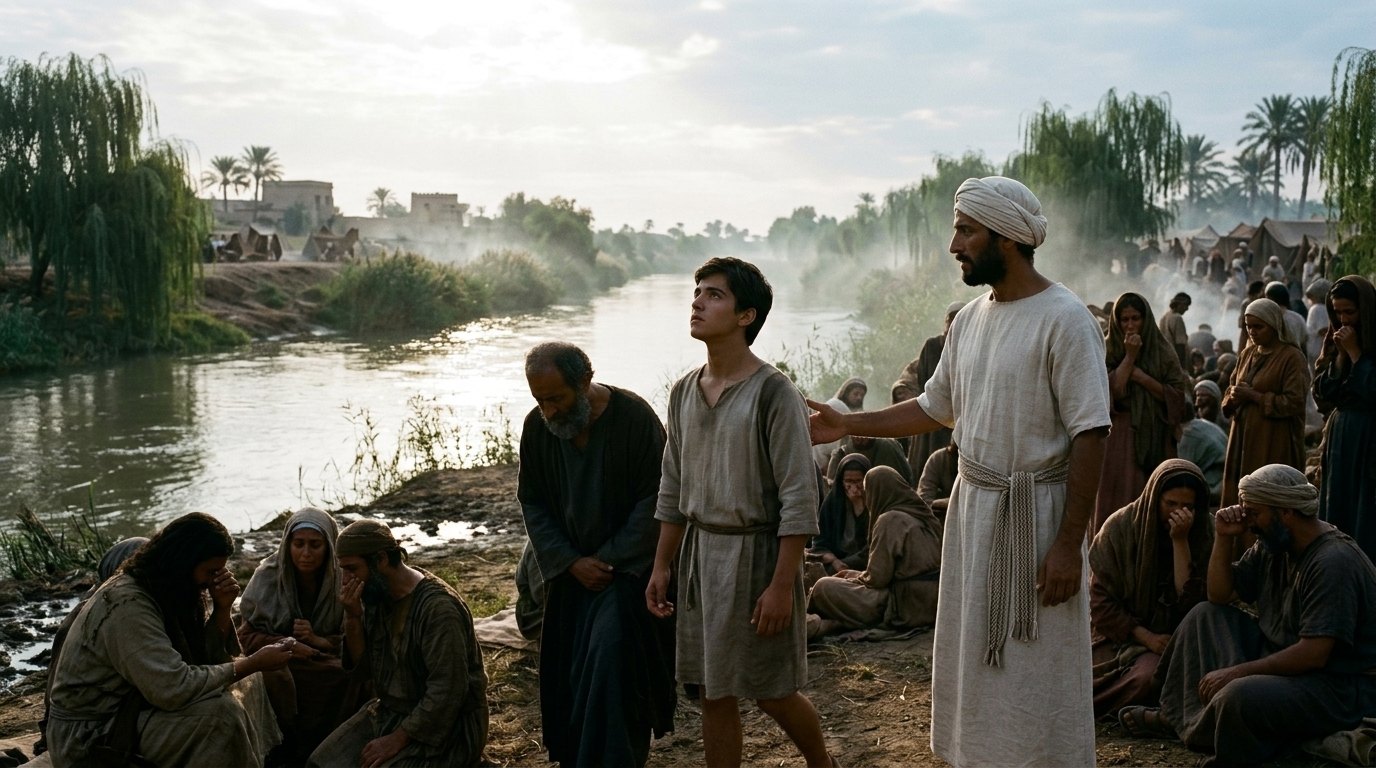
Ezekiel 18:19-20
19 “Yet you ask, ‘Why does the son not share the guilt of his father?’ Since the son has done what is just and right and has been careful to keep all my decrees, he will surely live.
20 The one who sins is the one who will die. The child will not share the guilt of the parent, nor will the parent share the guilt of the child. The righteousness of the righteous will be credited to them, and the wickedness of the wicked will be charged against them.
New International Version (NIV)
The answer
A “generational curse” usually means the idea that an ancestor’s sin places descendants under inherited guilt or unavoidable spiritual doom. Scripture teaches that sin can affect later generations, but it expressly denies that a child bears the father’s guilt. Yes—sinful family patterns and their bondage can be broken. God’s remedy is repentance and faith in Jesus Christ, who redeems sinners from the curse.
Consequences can affect a family without transferring guilt
At the giving of the commandments against idolatry, God warns of “visiting the iniquity of the fathers on the children” to the third and fourth generation “of those who hate me” (Exodus 20:5). This is a real warning about persistent rebellion and its effects on descendants. It is immediately set beside God’s covenant mercy: he shows “loving kindness to thousands of those who love me and keep my commandments” (Exodus 20:6). The warning is not that children are arbitrarily condemned for offences they did not commit.
Ezekiel 18 addresses the fatalistic proverb, “The fathers have eaten sour grapes, and the children’s teeth are set on edge” (Ezekiel 18:2). God rejects the conclusion that a righteous son must suffer his wicked father’s sentence: “The son shall not bear the iniquity of the father, neither shall the father bear the iniquity of the son” (Ezekiel 18:20). Deuteronomy 24:16 likewise declares, “Every man shall be put to death for his own sin.”
These passages fit together: children may inherit painful consequences, learned habits, or a place within a family or nation under judgment, but they are not personally guilty merely because an ancestor sinned. A son who sees his father’s sins and refuses to repeat them “shall surely live” (Ezekiel 18:14-17).
The decisive break comes through Christ
God first calls the sinner to turn: when the wicked forsake their sins and do what is right, “he shall surely live. He shall not die,” and former transgressions will not be remembered against him (Ezekiel 18:21-22). This is not permission to continue an inherited pattern of sin; it is a command to abandon it and live.
The ground of that hope is Christ’s finished work: “Christ redeemed us from the curse of the law, having become a curse for us” (Galatians 3:13). He bore the curse so that blessing and the promised Spirit would come through faith (Galatians 3:14). First Peter 1:18-19 speaks directly to an inherited way of life: believers were redeemed “from the useless way of life handed down from your fathers,” not with silver or gold, but with Christ’s precious blood.
Therefore, ancestry does not determine a person’s standing before God. Anyone in Christ is “a new creation” (2 Corinthians 5:17), and there is “no condemnation” for those in Christ Jesus who walk according to the Spirit (Romans 8:1-2). The response is to confess and forsake one’s own sin, reject inherited idolatry and sinful habits, and trust Christ; God faithfully forgives and cleanses those who confess their sins (1 John 1:9). Some earthly damage may remain and require patient healing, restitution, and changed habits, but lingering consequences are not proof that Christ’s redemption has failed.
Answered from Scripture · reviewed November 11, 2026
Scripture rejects the concept of transferred guilt: no soul inherits the moral culpability of its ancestors before God's judgment seat. While familial sin unleashes devastating temporal consequences across households, individual accountability stands absolute, and every bondage to ancestral patterns is decisively broken through repentance and faith in Jesus Christ.
Personal Accountability
Each Soul Answers Directly to God
The one who sins is the one who will die. The child will not share the guilt of the parent, nor will the parent share the guilt of the child. The righteousness of the righteous will be credited to them, and the wickedness of the wicked will be charged against them.
Ezekiel 18:20 (NIV)
This verse directly repudiates inherited spiritual guilt, stating that neither father nor son bears the moral iniquity of the other.
The decisive word on personal culpability rests in Ezekiel 18:20, where God declares with absolute clarity: "The soul who sins shall die. The son shall not suffer for the iniquity of the father, nor the father suffer for the iniquity of the son." With this statement, the Lord forcefully abolishes the cynical proverb cited in Ezekiel 18:2, which alleged that the fathers had eaten sour grapes and the children's teeth were set on edge. God establishes in Ezekiel 18:4 that all souls belong exclusively to Him, demolishing fatalistic notions of inherited spiritual debt. Righteous conduct, as underscored in Ezekiel 18:9, guarantees life regardless of ancestral wickedness. When a son turns from the perverse path of his forebears, Ezekiel 18:19 assures that he will not bear his father's guilt, for God evaluates every moral agent directly.
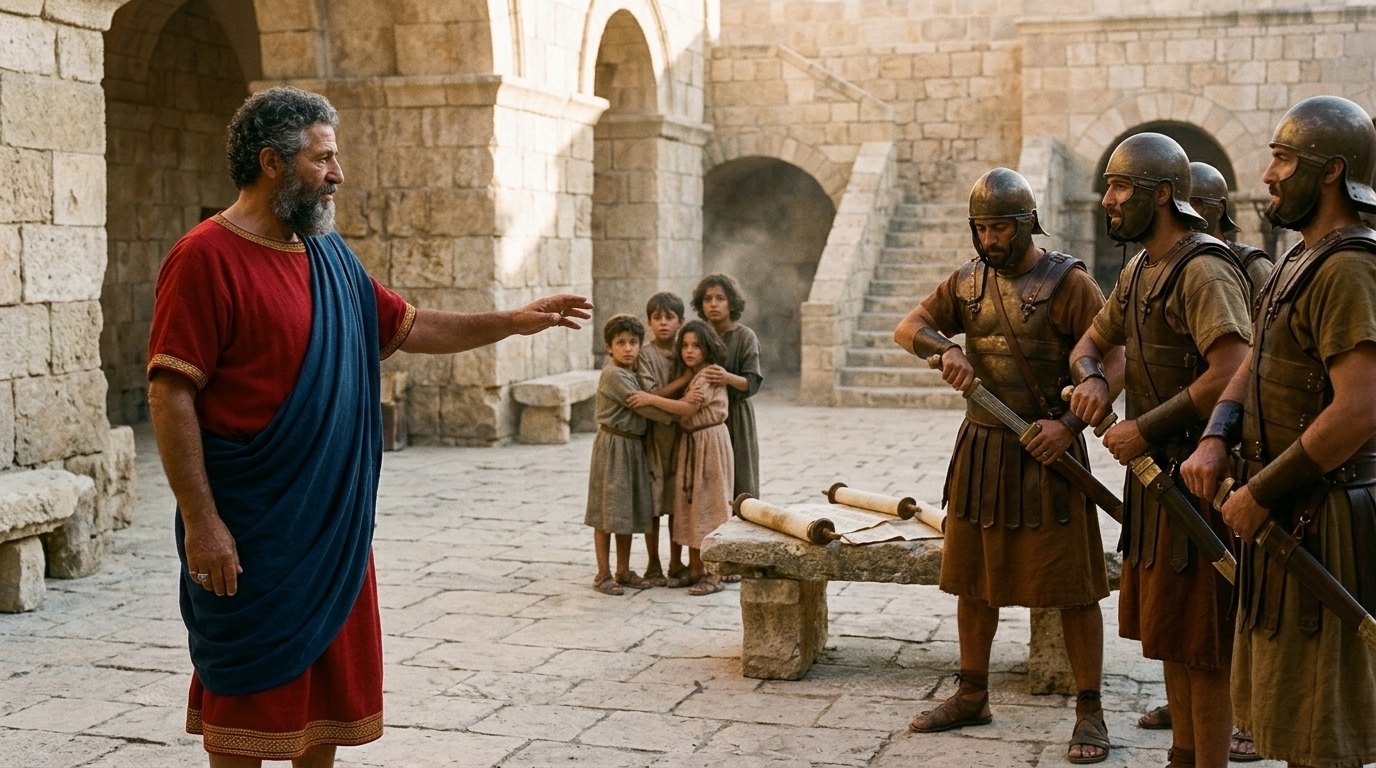
This principle was never a late theological revision; it was anchored in the civil and moral core of Mosaic legislation. Deuteronomy 24:16 strictly prohibits human courts from executing children for the crimes of their fathers, an injunction faithfully carried out in 2 Kings 14:6 and 2 Chronicles 25:4 when King Amaziah struck down his father's assassins while deliberately sparing their sons. The prophetic horizon confirms this perpetual reality. In Jeremiah 31:29-30, the prophet foretells an era when none will quote the sour-grape fatalism, for each individual will die solely for their own iniquity. No believer stands condemned under an ancestral curse before God's judgment seat.
| Passage | What it says |
|---|---|
| Ezekiel 18:2 | Rebukes the popular proverb claiming children suffer dental distress because their fathers ate sour grapes. |
| Ezekiel 18:4 | Affirms that all souls belong equally to God and that only the soul who sins shall die. |
| Ezekiel 18:9 | Promises life and righteousness to anyone who walks faithfully in God's statutes, regardless of ancestral conduct. |
| Ezekiel 18:19 | Clarifies that a righteous son will not bear his father's guilt when he obeys divine statutes. |
| Ezekiel 18:20 | Declares that moral guilt and righteousness remain solely upon the individual who acts. |
| Deuteronomy 24:16 | Forbids earthly execution of parents for children's crimes and children for parents' crimes. |
| 2 Kings 14:6 | Records King Amaziah sparing the sons of his father's murderers in accordance with the Mosaic law. |
| Jeremiah 31:29-30 | Foreshadows the end of sour-grape fatalism, affirming every person dies only for their own iniquity. |
| 2 Chronicles 25:4 | Amaziah obeys God's law by sparing the children of his father's murderers, upholding individual accountability. |
Generational Impact
Covenant Warning and Familial Consequences
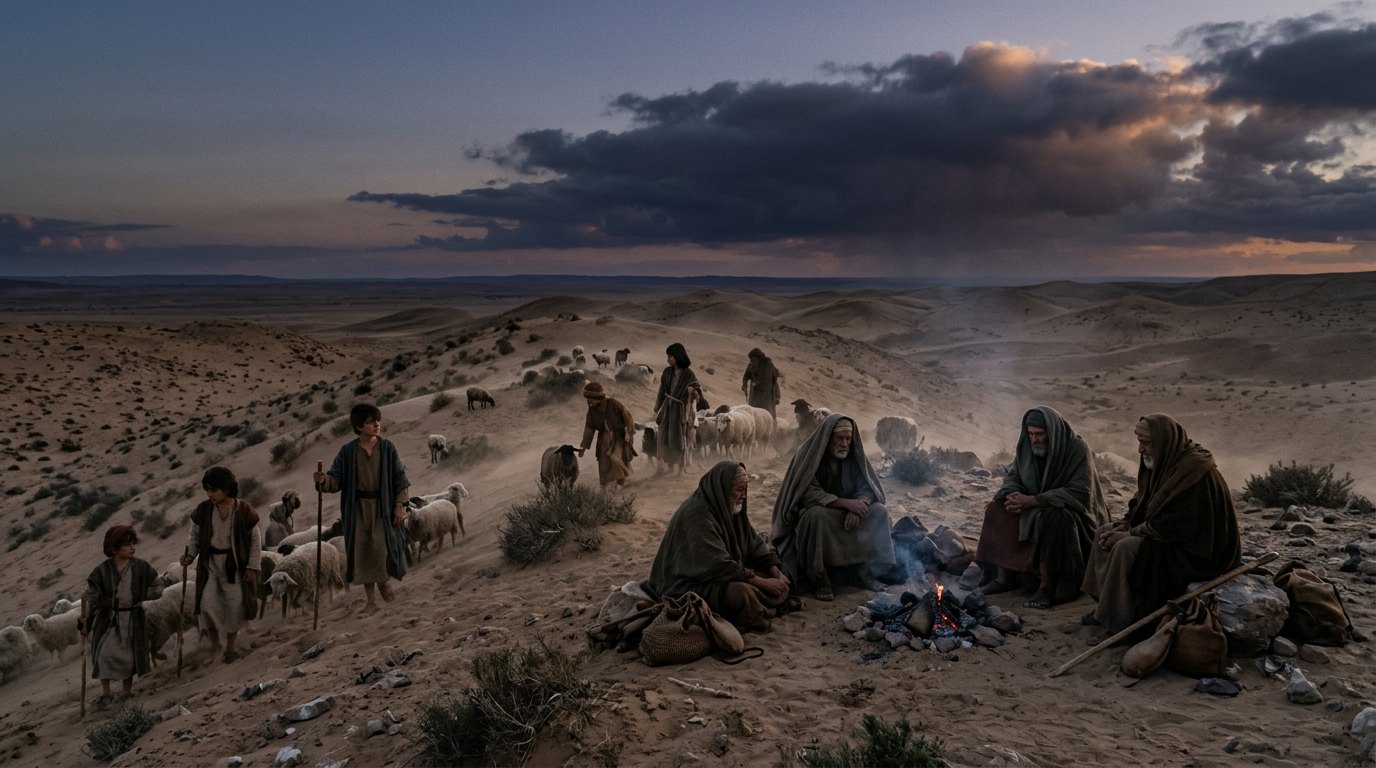
You shall not bow down to them or worship them; for I, the LORD your God, am a jealous God, punishing the children for the sin of the parents to the third and fourth generation of those who hate me,
Exodus 20:5 (NIV)
Crucially limits divine visitation of iniquity to the third and fourth generation of those who hate Him, tied to recurring rebellion.
While God never imputes parental guilt to an innocent child, Exodus 20:5 unveils the sobering reality of generational fallout: "visiting the iniquity of the fathers on the children to the third and the fourth generation of those who hate me." This divine visitation is explicitly directed toward those who hate Him, describing how idolatrous patterns, relational trauma, and systemic rebellion reproduce themselves in succeeding generations. The identical warning is affirmed during the revelation of God's character in Exodus 34:6-7 and reiterated in Moses' intercession in Numbers 14:18 and Deuteronomy 5:9, balancing the Lord's steadfast love with the unavoidable social reality that parents bequeath spiritual and moral environments to their offspring.
Scripture details the bitter earthly wreckage inherited by subsequent generations. In Numbers 14:33, the children of Israel were sentenced to wander forty years in the wilderness, suffering the temporal consequences of their parents' unbelief. Centuries later, Jeremiah 15:4 links the national catastrophe of exile to the brazen abominations committed by King Manasseh, prompting the exiles in Lamentations 5:7 to mourn that their fathers sinned and they must bear their iniquities. We witness generational consequences deferred through mercy in 1 Kings 21:29, where judgment upon Ahab's house was postponed until his son's reign, yet enacted severely in 2 Kings 5:27 when Gehazi's covetous deceit struck his lineage with leprosy. God indeed repays the iniquity of the fathers into the bosom of their children in Jeremiah 32:18, demonstrating that unrepented familial patterns yield compounding temporal ruin.
| Passage | What it says |
|---|---|
| Exodus 20:5 | Warns that idolatry's temporal devastation visits four generations of those who persist in hating God. |
| Exodus 34:6-7 | Proclaims God's immense mercy to thousands while visiting iniquity upon generations that perpetuate ancestral rebellion. |
| Numbers 14:18 | Moses appeals to God's patient nature while acknowledging the enduring social gravity of fathers' sins. |
| Numbers 14:33 | Sentences children to wander forty years in the desert bearing the practical fallout of parental faithlessness. |
| Deuteronomy 5:9 | Restates the Decalogue's solemn warning concerning idols and the lineage of those who hate God. |
| Jeremiah 15:4 | Points to King Manasseh's horrific idolatry as provoking national exile for Judah's subsequent generations. |
| Lamentations 5:7 | Expresses the exiles' lament over suffering hardship under the ruined commonwealth built by their fathers. |
| 1 Kings 21:29 | God defers temporal covenant judgment against Ahab's dynasty until his son's days because Ahab humbled himself. |
| 2 Kings 5:27 | Elisha pronounces that the leprosy of Naaman will cling to Gehazi and his descendants forever due to his deceit. |
| Jeremiah 32:18 | God repays the iniquity of the fathers into the bosom of their children after them while showing steadfast love. |
Breaking the Pattern
Repentance Dissolves the Ancestral Cycle
Therefore tell the people: This is what the LORD Almighty says: ‘Return to me,’ declares the LORD Almighty, ‘and I will return to you,’ says the LORD Almighty. Do not be like your ancestors, to whom the earlier prophets proclaimed: This is what the LORD Almighty says: ‘Turn from your evil ways and your evil practices.’ But they would not listen or pay attention to me, declares the LORD.
Zechariah 1:3-4 (NIV)
Summons the community to abandon their fathers' persistent sins and return to God for immediate restoration.
The generational cycle of sin is not an unbreakable mystical decree, for God rings out an urgent summons in Zechariah 1:3-4: "Return to me, says the Lord of hosts, and I will return to you... Do not be like your fathers, to whom the former prophets cried out." Repentance shatters the trajectory of inherited rebellion, instantly terminating God's temporal controversy with a lineage. In Leviticus 26:40-42, God had long promised that when an exiled people humble their uncircumcised hearts and confess both their personal sins and the ancestral iniquities of their fathers, He remembers His covenant and halts their affliction.
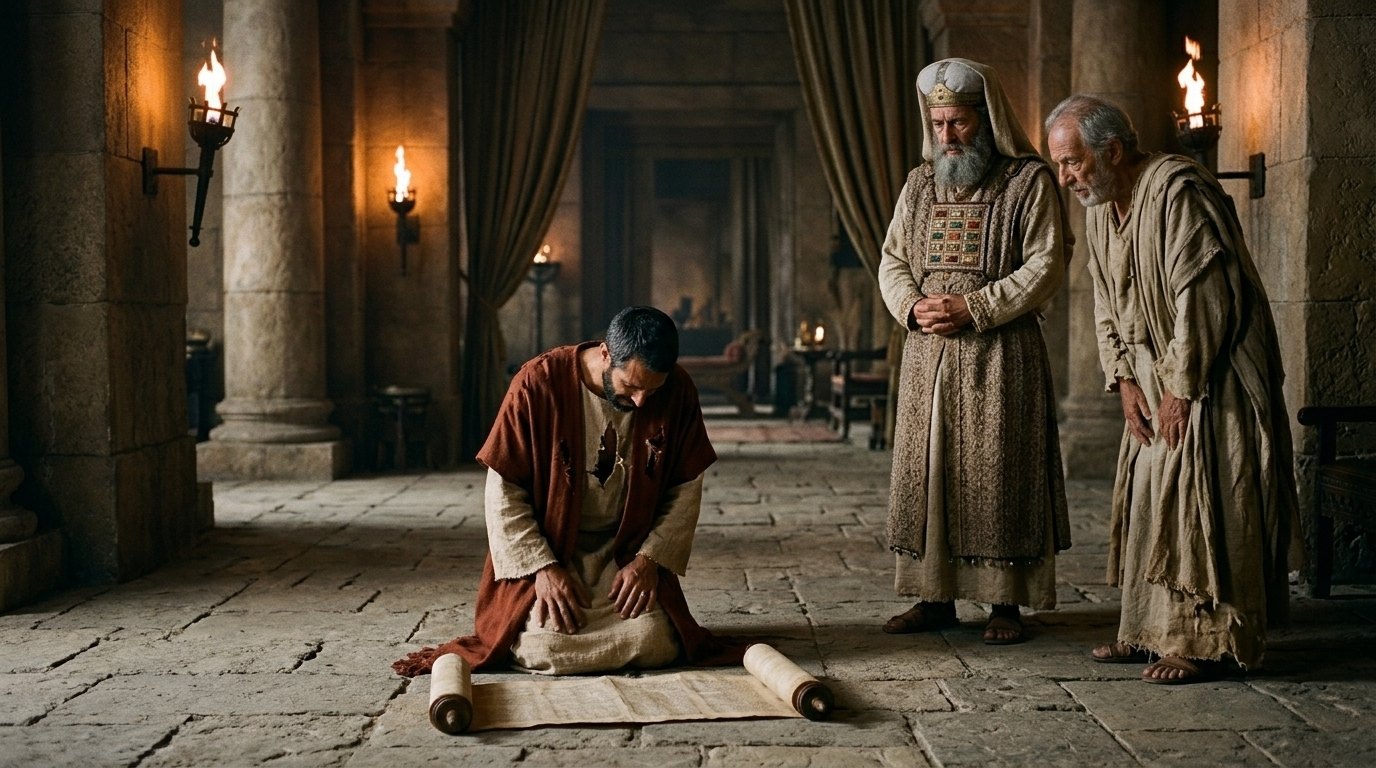
This principle fueled Israel's greatest revivals. In Nehemiah 9:2 and Daniel 9:16, the godly remnant openly confessed ancestral guilt alongside their own transgressions, unmasking the generational strongholds that had led to devastation and securing divine favor. King Hezekiah in 2 Chronicles 30:7-9 pleaded with his countrymen not to mimic their stiff-necked fathers, guaranteeing that returning to Yahweh would summon compassionate restoration. Similarly, in 2 Kings 22:18-20, young King Josiah tore his robes and humbled himself upon hearing the rediscovered law; because his heart was tender, God promised that covenant catastrophe would not fall in his days. As Ezekiel 18:14-17 decisively establishes, any son who observes his father's wicked ways, considers the cost, and walks uprightly will never perish for his forebear's iniquity, but shall surely live.
| Passage | What it says |
|---|---|
| Leviticus 26:40-42 | Promises restoration when descendants confess their iniquity and the iniquity of their unfaithful fathers. |
| Nehemiah 9:2 | Shows the remnant confessing their personal transgressions alongside their ancestral history of disobedience. |
| Zechariah 1:3-4 | Commands sons not to emulate their rebellious fathers but to return directly to the Lord. |
| Daniel 9:16 | Identifies both personal sins and ancestral iniquities as cause for distress, appealing for divine pardon. |
| 2 Chronicles 30:7-9 | Hezekiah urges Israel not to be like their stiff-necked fathers so that compassion will be shown. |
| 2 Kings 22:18-20 | Josiah humbles himself before God, averting covenant disaster in his own lifetime despite ancestral idolatry. |
| Ezekiel 18:14-17 | A son who sees all his father's sins and turns away in righteousness shall not die for his father's iniquity. |
The True Deliverer
Redemption from the Curse in Christ
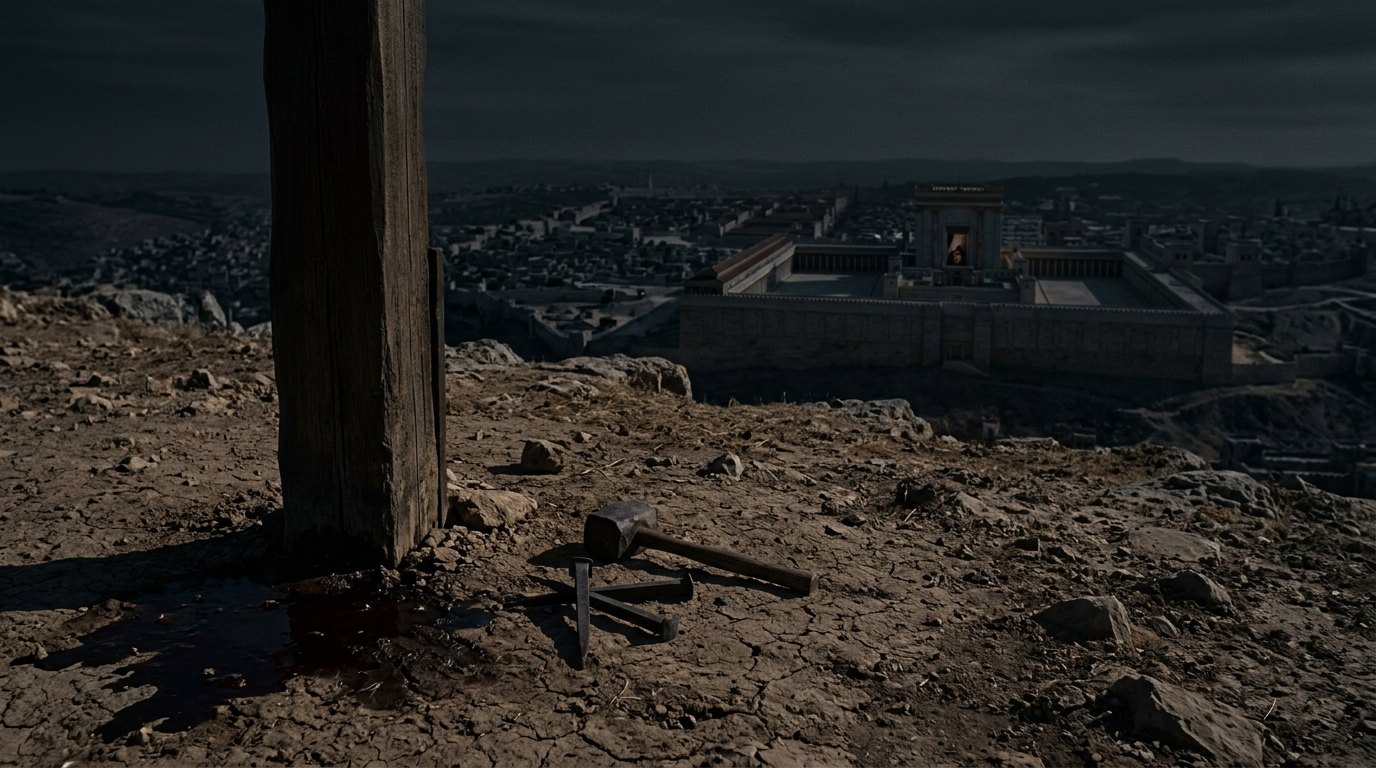
Christ redeemed us from the curse of the law by becoming a curse for us, for it is written: “Cursed is everyone who is hung on a pole.”
Galatians 3:13 (NIV)
Reveals that Christ redeemed believers from every legal curse by becoming a curse on the tree in our place.
Whatever residual power or legal curse once hung over the lineage of Adam has been shattered at Calvary, as declared in Galatians 3:13: "Christ redeemed us from the curse of the law by becoming a curse for us—for it is written, 'Cursed is everyone who is hanged on a tree.'" This supreme substitution directly fulfills the solemn declaration of Deuteronomy 21:23, which required the removal of an exposed body from the wood, proving that Christ took upon Himself the total divine sentence due to human rebellion. When the disciples in John 9:2-3 assumed that a man's congenital blindness was caused by parental or personal sin, Jesus dismantled their superstitious framework, demonstrating in John 9:6-7 that divine works were instead to be displayed through his miraculous healing.
Believers are forever emancipated from the futile traditions and spiritual bondage passed down from their forefathers. According to 1 Peter 1:18-19, this liberation was purchased not with silver or gold, but with the precious blood of Christ, fulfilling the portrait of the unblemished sacrificial Lamb drawn in Isaiah 53:7. In Colossians 2:14, the legal certificate of debt that stood opposed to us was erased and nailed irrevocably to the cross, realizing the corporate reconciliation prophesied in Ephesians 2:15-16. Consequently, Romans 8:1 stands inviolable: there is now no condemnation for those who are in Christ Jesus, fully realizing the promise of John 5:24 that the believer has passed from death to life. In 2 Corinthians 5:17, the old lineage is dissolved and the believer becomes a brand-new creation. Through Ephesians 1:7, full redemption is realized through His blood, and as Colossians 1:13-14 exults, God has transferred us entirely out of darkness and established us in the victorious kingdom of His beloved Son.
| Passage | What it says | Fulfilled |
|---|---|---|
| John 9:2-3 | Jesus rejects the assumption that a man's congenital blindness resulted from either parental or personal sin. | John 9:6-7 |
| Galatians 3:13 | Affirms Christ purchased our freedom from the law's curse by hanging upon the cross. | Deuteronomy 21:23 |
| 1 Peter 1:18-19 | Declares believers redeemed from futile ancestral ways by the precious blood of the spotless Lamb. | Isaiah 53:7 |
| Colossians 2:14 | Describes the cancellation of the record of debt that stood against us, nailed securely to the cross. | Ephesians 2:15-16 |
| Romans 8:1 | Promises that no condemnation remains for any soul positioned in Christ Jesus. | John 5:24 |
| 2 Corinthians 5:17 | Anyone who is in Christ becomes a new creation, where the old has passed away and new life begins. | |
| Ephesians 1:7 | Believers possess redemption through Christ's blood and forgiveness of trespasses according to the riches of grace. | |
| Colossians 1:13-14 | God has rescued believers from the domain of darkness and transferred them into the kingdom of His beloved Son. |
Where in the Bible
| Book | Passages |
|---|---|
| Exodus | 2 · Exodus 20:5, Exodus 34:6-7 |
| Leviticus | 1 · Leviticus 26:40-42 |
| Numbers | 2 · Numbers 14:18, Numbers 14:33 |
| Deuteronomy | 2 · Deuteronomy 24:16, Deuteronomy 5:9 |
| 1 Kings | 1 · 1 Kings 21:29 |
| 2 Kings | 3 · 2 Kings 14:6, 2 Kings 5:27, 2 Kings 22:18-20 |
| 2 Chronicles | 2 · 2 Chronicles 25:4, 2 Chronicles 30:7-9 |
| Nehemiah | 1 · Nehemiah 9:2 |
| Jeremiah | 3 · Jeremiah 31:29-30, Jeremiah 15:4, Jeremiah 32:18 |
| Lamentations | 1 · Lamentations 5:7 |
| Ezekiel | 6 · Ezekiel 18:2, Ezekiel 18:4, Ezekiel 18:9, Ezekiel 18:19, Ezekiel 18:20, Ezekiel 18:14-17 |
| Daniel | 1 · Daniel 9:16 |
| Zechariah | 1 · Zechariah 1:3-4 |
| John | 1 · John 9:2-3 |
| Romans | 1 · Romans 8:1 |
| 2 Corinthians | 1 · 2 Corinthians 5:17 |
| Galatians | 1 · Galatians 3:13 |
| Ephesians | 1 · Ephesians 1:7 |
| Colossians | 2 · Colossians 2:14, Colossians 1:13-14 |
| 1 Peter | 1 · 1 Peter 1:18-19 |
The story in order
- The Law Given (c. 1446 BC) · Exodus 20:5 · Warns of generational consequences for idolatry.
- Desert Wandering (c. 1446 BC) · Numbers 14:33 · Children bear fallout of parental faithlessness.
- Covenant Warning (c. 1406 BC) · Deuteronomy 5:9 · Restates warning about idols and lineage.
- King Amaziah's Reign (c. 796 BC) · 2 Kings 14:6 · Sparing sons of murderers shows individual accountability.
- Manasseh's Idolatry (c. 626 BC) · Jeremiah 15:4 · Provoked national exile for subsequent generations.
- Exile Lament (c. 586 BC) · Lamentations 5:7 · Exiles suffer hardship due to fathers' actions.
- Post-Exile Confession (c. 445 BC) · Nehemiah 9:2 · Remnant confesses personal and ancestral disobedience.
- Prophet Zechariah (c. 520 BC) · Zechariah 1:3-4 · Commands return to God, not emulating fathers.
- Daniel's Prayer (c. 538 BC) · Daniel 9:16 · Confesses personal and ancestral iniquities.
- Ezekiel's Vision (c. 592 BC) · Ezekiel 18:2 · Rejects proverb of children suffering for fathers' sins.
- Jesus Heals (c. AD 30) · John 9:2-3 · Rejects assumption of sin causing blindness.
- Apostle Paul's Ministry (c. AD 55) · Galatians 3:13 · Christ redeemed us from the curse of the law.
- Apostle Peter's Teaching (c. AD 64) · 1 Peter 1:18-19 · Redeemed from futile ancestral ways by Christ's blood.
Breaking the Cycle Through Repentance
| Ancestral Pattern | Repentant Action | Divine Response | Passage |
|---|---|---|---|
| Unfaithful fathers' iniquity. | Descendants confess their iniquity and fathers'. | Restoration promised. | Leviticus 26:40-42 |
| Ancestral history of disobedience. | Remnant confesses personal transgressions. | God shows compassion. | Nehemiah 9:2 |
| Rebellious fathers. | Sons not to emulate them, but return to the Lord. | Return to the Lord. | Zechariah 1:3-4 |
| Ancestral iniquities. | Appealing for divine pardon. | God's pardon sought. | Daniel 9:16 |
| Stiff-necked fathers. | Hezekiah urges Israel not to be like them. | Compassion shown. | 2 Chronicles 30:7-9 |
| Ancestral idolatry. | Josiah humbles himself. | Covenant disaster averted in his lifetime. | 2 Kings 22:18-20 |
Redemption from the Curse in Christ
| The Curse | Christ's Work | The Result | Passage |
|---|---|---|---|
| The law's curse. | Christ purchased freedom by hanging on the cross. | Freedom from the curse. | Galatians 3:13 |
| Record of debt against us. | Nailled to the cross, cancelled. | Debt cancelled. | Colossians 2:14 |
| Futile ancestral ways. | Redeemed by Christ's precious blood. | Redemption from futile ways. | 1 Peter 1:18-19 |
| Condemnation. | No condemnation for those in Christ Jesus. | Freedom from condemnation. | Romans 8:1 |
| Old life passed away. | In Christ, become a new creation. | New life begins. | 2 Corinthians 5:17 |
| Domain of darkness. | Rescued and transferred into Christ's kingdom. | Kingdom transfer. | Colossians 1:13-14 |
Key words
- Soul (nepeš, נֶפֶשׁ)
- The individual person, responsible for their own actions before God. · Ezekiel 18:4
- Sin (ḥāṭā'â, חַטָּאָה)
- Rebellion against God's statutes and commands. · Ezekiel 18:20
- Righteousness (ṣedāqâ, צְדָקָה)
- Walking faithfully in God's statutes and commands. · Ezekiel 18:9
- Iniquity ('āwōn, עָוֹן)
- Moral perversity, wickedness, the consequence of sin. · Exodus 20:5
- Repentance (šûḇ, שׁוּב)
- A turning away from sin and a turning towards God. · Zechariah 1:3
- Redemption (lūtrōsis, λύτρωσις)
- Being bought back or set free from bondage or a curse. · Galatians 3:13
- Curse ('ārâ, אָרָה)
- The penalty or judgment for breaking God's law. · Galatians 3:13
No believer walks beneath an unbreakable familial shadow or an inherited spiritual debt. In Christ, the vicious cycle of generational wickedness is wholly severed, transferring you from darkness into the everlasting covenant of God's steadfast mercy.
34 passages, each cited once.
How the major Christian traditions read this
All major Christian traditions agree that every person is personally accountable to God for their own sin rather than bearing the guilt of their ancestors, and that Jesus Christ decisively delivers believers from sin's power and condemnation (Ezekiel 18:20; Galatians 3:13).
Catholic
We hold that original sin is transmitted from Adam, but personal guilt is not inherited from earthly ancestors. While sins of parents can bring grave temporal consequences, trauma, or spiritual vulnerability upon a household, baptism cleanses original sin and makes the person a new creation in Christ (Romans 6:3-4). Any ongoing spiritual oppression or familial patterns are addressed through the normal life of grace—the sacraments of Reconciliation and the Eucharist, prayer, and, where genuine demonic attachment exists, the Church's formal ministry of healing and deliverance under pastoral authority (1 Peter 5:8-9).
Scripture: Romans 6:3-4, Ezekiel 18:20, 1 Peter 5:8-9
Orthodox
The Holy Orthodox Church teaches that we inherit the mortality and fallen condition of Adam's nature, yet no child inherits ancestral guilt (Ezekiel 18:20). While children frequently suffer the physical, emotional, and spiritual fallout of their forebears' sinful lives (Exodus 20:5), Christ has conquered death and crushed the power of the devil. Deliverance from ancestral patterns does not come through novel curse-breaking techniques, but through Holy Baptism, Holy Chrismation, frequent participation in the Holy Mysteries, and ascetical repentance within the body of Christ, who heals and renews human nature (Colossians 1:13-14).
Scripture: Ezekiel 18:20, Exodus 20:5, Colossians 1:13-14
Lutheran
We confess that original sin affects all humanity, leaving us dead in sin until regenerated by the Holy Spirit. Scripture strictly rejects the notion that God holds children guilty of their parents' personal transgressions (Ezekiel 18:19-20). The warning in the Law that God visits iniquity on later generations (Exodus 20:5) describes the severe earthly wages of persistent idolatry, not an unbreakable spiritual hex. Through Holy Baptism and faith in the Gospel, Christ has fully redeemed us from the curse of the Law (Galatians 3:13). The believer needs no rituals beyond resting in the promise of their baptism and God's absolution.
Scripture: Ezekiel 18:19-20, Exodus 20:5, Galatians 3:13
Reformed & Presbyterian
We hold that God deals with humanity covenantally. While Adam's guilt is imputed to all, individual ancestors do not transmit their personal guilt or legal curses to descendants (Ezekiel 18:20; Deuteronomy 24:16). God's visitation upon the children of those who hate Him (Exodus 20:5) shows the natural outworking of ungodly families walking in continued rebellion. For the elect, Christ has borne the full curse of the Law on the cross (Galatians 3:13). Believers are declared righteous and adopted; family habits of sin are put to death through lifelong sanctification by the Spirit and the Word, not by renouncing mystical curses (Romans 8:1-2).
Scripture: Ezekiel 18:20, Deuteronomy 24:16, Exodus 20:5, Galatians 3:13, Romans 8:1-2
Anglican & Episcopal
We affirm with Scripture that 'the soul who sins shall die' and that children are not held accountable before God's judgment for the sins of their parents (Ezekiel 18:20). Sins within a lineage often produce deep pastoral and moral damage across generations, yet Christ has broken the power of all darkness through His cross and resurrection (Colossians 2:14-15). Delivered from curse and damnation by grace through faith, believers are brought into freedom. Pastoral care, repentance, the reading of Scripture, and the regular receiving of the Holy Communion continually restore the Christian and break any entangling sinful heritage (1 Peter 1:18-19).
Scripture: Ezekiel 18:20, Colossians 2:14-15, 1 Peter 1:18-19
Baptist
We emphasize individual responsibility before God: each person stands or falls based on their own response to the Lord (Ezekiel 18:20; Jeremiah 31:29-30). Ideas of inherited, mystical 'generational curses' that bind believers are contrary to the sufficiency of the cross. When a person repents and trusts in Jesus, they are completely justified and made a new creation (2 Corinthians 5:17). Christ has fully redeemed us from the curse of the Law (Galatians 3:13). While ungodly family habits require intentional discipleship and biblical obedience to overcome, no demonic curse remains upon a born-again child of God (Romans 8:31-34).
Scripture: Ezekiel 18:20, Jeremiah 31:29-30, 2 Corinthians 5:17, Galatians 3:13, Romans 8:31-34
Methodist & Wesleyan
We believe that while fallen humanity suffers from total depravity, God's prevenient grace reaches every soul, calling each to repentance (Ezekiel 18:21-23). An ancestor's sins may heavily incline children toward destructive lifestyles and spiritual bondage through corrupt environment and example, but God judges each individual's heart and deeds (Ezekiel 18:20). Through the sanctifying grace of the Holy Spirit, believers can be delivered entirely from the power of inherited sin and unholy habits. By faith in Christ's redeeming blood, we are freed from condemnation and enabled to walk in holiness and love (Romans 6:18-22).
Scripture: Ezekiel 18:20, Ezekiel 18:21-23, Romans 6:18-22
Pentecostal & Charismatic
We affirm that Christ's atonement provides complete redemption (Galatians 3:13), but we recognize that demonic spirits and familial bondages frequently exploit ancestral sins—such as the occult, idolatry, or persistent immorality—until explicitly renounced (Exodus 20:5; Nehemiah 9:2). While our justification in Christ is complete, believers can still experience ongoing harassment or familiar spirits operating down family lines. Freedom comes through exercising the authority of Jesus' name: confessing ancestral sins, specifically renouncing generational ties, commanding spiritual oppression to break, and walking in the fullness and power of the Holy Spirit (Luke 10:19; 2 Corinthians 10:4-5).
Scripture: Galatians 3:13, Exodus 20:5, Nehemiah 9:2, Luke 10:19, 2 Corinthians 10:4-5
Non-denominational & Evangelical
We look directly to the Word of God, which states that whoever is in Christ is a new creation; the old has passed away and the new has come (2 Corinthians 5:17). Christ bore our curses upon the tree once for all (Galatians 3:13). While families certainly pass down toxic habits, trauma, and learned sinful behaviors that must be broken through biblical discipleship, Christians cannot be under an actual spiritual curse from their parents (Romans 8:1). Deliverance is found not in repetitive curse-breaking formulas, but in knowing our secure identity in Christ and renewing our minds through the Word (Romans 12:2).
Scripture: 2 Corinthians 5:17, Galatians 3:13, Romans 8:1, Romans 12:2
Where they differ
Whether Christians can remain under generational curses
- Catholic
- Christians cannot bear inherited guilt, though lingering spiritual vulnerabilities may require pastoral deliverance.
- Orthodox
- Believers are freed in Christ, needing holy mysteries rather than breaking inherited curses.
- Lutheran
- Baptism and faith entirely exclude believers from any remaining inherited spiritual curses.
- Reformed & Presbyterian
- The elect are entirely freed from all curses by Christ's finished atonement.
- Anglican & Episcopal
- Believers are redeemed from curses, dealing only with temporal and behavioral consequences.
- Baptist
- Believers are fully justified; generational curses cannot exist for the redeemed.
- Methodist & Wesleyan
- God's sanctifying grace breaks sin's power without lingering inherited legal curses.
- Pentecostal & Charismatic
- Believers may still suffer demonic harassment through unaddressed ancestral open doors.
- Non-denominational & Evangelical
- A Christian is a new creation and cannot remain spiritually cursed.
Scripture: Galatians 3:13, Romans 8:1, 2 Corinthians 5:17
The means of breaking family strongholds
- Catholic
- Through sacramental confession, the Eucharist, and formal Church deliverance prayers.
- Orthodox
- Through the Church's sacramental life, ascetical struggle, and ongoing repentance.
- Lutheran
- Through trusting in one's baptism, hearing the Word, and receiving absolution.
- Reformed & Presbyterian
- Through ordinary means of grace, Spirit-led mortification of sin, and biblical discipleship.
- Anglican & Episcopal
- Through pastoral care, Scripture, repentance, and receiving the Holy Communion.
- Baptist
- Through personal repentance, biblical obedience, and walking by the Spirit.
- Methodist & Wesleyan
- Through entire sanctification, means of grace, and disciplined holy living.
- Pentecostal & Charismatic
- Through verbal renunciation, spiritual warfare in Jesus' name, and Holy Spirit power.
- Non-denominational & Evangelical
- Through renewing the mind with Scripture and walking in gospel identity.
Scripture: Romans 12:2, 2 Corinthians 10:4-5, 1 Peter 1:18-19
Your pastor can tell you where your church stands.
Scripture cited
- Exodus 20:5
- Ezekiel 18:2
- Ezekiel 18:1-20
- Exodus 20:4-6
- Deuteronomy 24:16
- Galatians 3:13-14
- 2 Corinthians 5:17
- Ezekiel 18:21-23
- Ezekiel 18:30-32
- 1 Peter 1:18-19
- Romans 8:1-2
- 1 John 1:9