What is a pastor, and what does the Bible say about pastors?

1 Peter 5:1-4
1 To the elders among you, I appeal as a fellow elder and a witness of Christ’s sufferings who also will share in the glory to be revealed:
2 Be shepherds of God’s flock that is under your care, watching over them—not because you must, but because you are willing, as God wants you to be; not pursuing dishonest gain, but eager to serve;
3 not lording it over those entrusted to you, but being examples to the flock.
4 And when the Chief Shepherd appears, you will receive the crown of glory that will never fade away.
New International Version (NIV)
The answer
A pastor is a shepherd of God’s people: an elder entrusted with caring for the flock, exercising oversight, and setting an example, while serving under Jesus Christ, the chief Shepherd. Peter connects these responsibilities by exhorting elders to shepherd God’s flock and exercise oversight in 1 Peter 5:1-2.
1 Peter 5:1-4 gives several marks of faithful pastoral ministry:
- The flock belongs to God, not the pastor. Pastoral authority is stewardship over people entrusted to the pastor’s care, never ownership of them.
- Service must be willing, not forced. Pastors should oversee voluntarily and eagerly, not merely because they feel compelled. They must also reject dishonest gain; ministry must not become a means of exploiting people for money (1 Peter 5:2).
- Leadership must be exemplary, not domineering. Pastors are forbidden to lord their position over those entrusted to them. Instead, their conduct should give the flock an example to follow (1 Peter 5:3).
- Christ remains the chief Shepherd. Every human pastor serves beneath His authority. When Christ appears, faithful shepherds will receive the promised crown of glory that does not fade away (1 Peter 5:4).
Faithful pastoral ministry therefore involves genuine oversight joined to humility, willing service, financial integrity, and a godly example. A pastor’s reward is finally found in Christ’s approval, not in status, control, or profit.
Answered from Scripture · reviewed November 11, 2026
Scripture defines a pastor as an under-shepherd entrusted with the spiritual care, feeding, and protection of God's purchased flock. Far from being a corporate executive or an authoritarian ruler, a pastor is an elder and overseer called to reflect the sacrificial heart of the Chief Shepherd, Jesus Christ. Understanding this biblical office guards the local church against false teachers and grounds believers in faithful, godly leadership.
The One Office
Pastor, elder, and overseer describe the exact same office.

Keep watch over yourselves and all the flock of which the Holy Spirit has made you overseers. Be shepherds of the church of God, which he bought with his own blood.
Acts 20:28 (NIV)
Paul explicitly addresses the Ephesian elders as overseers appointed by the Holy Spirit to shepherd God's blood-bought church.
In Acts 20:28, the apostle Paul unveils the identity and dignity of the pastoral office, charging the Ephesian leaders to pay careful attention to themselves and to all the flock over which the Holy Spirit made them overseers. The terms pastor, elder, and overseer represent a single biblical office rather than separate tiers of ecclesiastical hierarchy. Paul had summoned the elders (presbyteroi) from Ephesus in Acts 20:17, yet when he addresses them in Acts 20:28, he explicitly calls them overseers (episkopoi) and commands them to shepherd (poimaino) the church of God. This pastoral duty is tethered directly to the cross: the flock does not belong to the minister, but remains God's treasured possession purchased with the blood of His own Son.
The same linguistic unity appears throughout the New Testament. In 1 Peter 5:1–2, Peter appeals to his fellow elders to exercise oversight willingly and shepherd the flock among them, binding the title of elder, the work of oversight, and the duty of shepherding into one breath. When instructing Titus to appoint elders in every town, Paul transitions seamlessly in Titus 1:5–7 from calling them elders to defining their qualifications as overseers. In Ephesians 4:11, the ascended Christ bestows shepherding teachers upon His bride to mature the saints for the work of ministry. The early church lived out this pattern through a plurality of pastoral care: Paul and Barnabas appointed elders in every congregation with prayer and fasting in Acts 14:23, and Paul addressed the local assembly at Philippi alongside its overseers and deacons in Philippians 1:1.
| Passage | What it says |
|---|---|
| Acts 20:17 | Paul calls together the elders of the church in Ephesus to deliver his farewell charge to them. |
| Acts 20:28 | The Holy Spirit appoints elders as overseers to shepherd the church of God purchased with His own blood. |
| 1 Peter 5:1-2 | Peter exhorts fellow elders to shepherd the flock of God and willingly exercise watchful oversight among them. |
| Titus 1:5-7 | Paul uses elder and overseer interchangeably when giving Titus instructions for establishing leaders in every town. |
| Ephesians 4:11 | The ascended Christ gives shepherds and teachers to equip the saints and build up His spiritual body. |
| Acts 14:23 | Paul and Barnabas appoint elders in every church with prayer and fasting. |
| Philippians 1:1 | Paul addresses the local church alongside its overseers and deacons. |
Pastoral Character
Scripture demands spotless character and faithful domestic life.

Now the overseer is to be above reproach, faithful to his wife, temperate, self-controlled, respectable, hospitable, able to teach,
1 Timothy 3:2 (NIV)
Paul sets blameless personal integrity and family faithfulness as the non-negotiable threshold for pastoral oversight.
In 1 Timothy 3:2, Scripture establishes the foundational prerequisite for spiritual leadership: an overseer must be above reproach, the husband of one wife, sober-minded, self-controlled, respectable, hospitable, and able to teach. The pastoral office demands a tested, blameless moral character that authenticates the gospel before the church and the watchful world. Paul opens 1 Timothy 3:1 by confirming that desiring the work of an overseer is aspiring to a noble task, but he immediately conditions that desire on strict ethical qualifications. An overseer must not be a drunkard, violent, or greedy, but gentle, peaceful, and free from the love of money, as 1 Timothy 3:3 commands.
Pastoral qualification begins within the domestic life of the home. In 1 Timothy 3:4–5, Paul warns that an elder must manage his household well and keep his children submissive, for failure to lead one's family exposes a total inability to shepherd the household of God. 1 Timothy 3:6–7 forbids the ordination of a recent convert, lest pride bring him under the devil's condemnation, while demanding an untarnished reputation among outsiders. Titus 1:6–8 repeats this standard, insisting on devout, upright, self-controlled men whose children do not walk in reckless dissipation. In 1 Timothy 3:8–10, Paul contrasts this pastoral calling with the diaconate, requiring thorough evaluation before any servant takes office. Consequently, 1 Timothy 4:12 urges Timothy to furnish an undeniable pattern of godly speech, conduct, love, faith, and moral purity.
| Passage | What it says |
|---|---|
| 1 Timothy 3:1 | Aspiring to the office of overseer is pursuing a noble and honorable task for Christ's church. |
| 1 Timothy 3:2-3 | An overseer must be blameless, faithful in marriage, temperate, self-controlled, hospitable, gentle, and free from greed. |
| 1 Timothy 3:4-5 | He must manage his own household well, since neglecting family reveals inability to care for God's church. |
| 1 Timothy 3:6-7 | He must not be a recent convert and must hold a respected reputation with those outside the faith. |
| Titus 1:6-8 | Pastors must be holy, self-controlled, upright, not arrogant or quick-tempered, and have faithful, orderly children. |
| 1 Timothy 3:8-10 | Distinguishes the testing and qualifications of leaders within the local household of God. |
| 1 Timothy 4:12 | Timothy is commanded to set believers an example in speech, conduct, love, faith, and purity. |
Pastoral Duties
Pastors feed sound doctrine and guard against savage wolves.
He must hold firmly to the trustworthy message as it has been taught, so that he can encourage others by sound doctrine and refute those who oppose it.
Titus 1:9 (NIV)
Pastoral authority rests on holding fast to the trustworthy word to teach sound doctrine and refute opponents.
Titus 1:9 defines the twin pillars of pastoral labor: an elder must hold firm to the trustworthy word as taught, so that he may be able to give instruction in sound doctrine and also to rebuke those who contradict it. The primary responsibility of a biblical pastor is feeding God's flock with sound doctrine while fiercely defending them against spiritual predators. When parting from Ephesus in Acts 20:29–31, Paul sounded an urgent alarm, warning that ferocious wolves would invade from the outside and perverse men would arise from within to draw away disciples. The pastor remains a vigilant sentry on the wall, guarding the sheep by wielding the uncompromised truth of God.
This guarding takes the form of relentless, faithful proclamation. In 2 Timothy 4:1–2, Paul solemnly charges Timothy in the presence of God and Christ Jesus to preach the word in season and out of season with complete patience and teaching. Elders who lead well and exhaust themselves in preaching and teaching are deemed worthy of double honor and support in 1 Timothy 5:17. In James 5:14, the elders are summoned to minister tender pastoral care through prayer and anointing for the sick. Jesus underscored this feeding ministry in John 21:15–17, commanding Peter to demonstrate his love for Christ by shepherding and feeding His lambs. Paul reinforces this in 1 Timothy 4:13–16 by enjoining devotion to public Scripture reading, exhortation, and sound doctrine, charging Timothy in 2 Timothy 2:2 to entrust that apostolic deposit to faithful men who will teach others, while 2 Timothy 2:24–26 commands gentle correction toward opponents.
| Passage | What it says |
|---|---|
| Titus 1:9 | Elders must hold firm to sound biblical doctrine to encourage believers and refute those who contradict truth. |
| Acts 20:29-31 | Paul charges overseers to remain alert against fierce wolves and perverse teachers seeking to tear the flock. |
| 2 Timothy 4:1-2 | Paul solemnly charges Timothy before God to preach the Word patiently and faithfully in every season. |
| 1 Timothy 5:17 | Elders who rule well and labor in preaching and teaching are worthy of honor and material support. |
| James 5:14 | The elders of the church are called to pray over the sick and anoint them in the Lord's name. |
| John 21:15-17 | Jesus charges Peter to prove his love by feeding and tending His sheep. |
| 1 Timothy 4:13-16 | Paul charges the minister to devote himself to reading, exhortation, and sound teaching. |
| 2 Timothy 2:2 | Paul charges Timothy to entrust the apostolic teaching to faithful men able to teach others. |
| 2 Timothy 2:24-26 | The Lord's servant must gently instruct opponents in hope that God grants repentance. |
The Under-Shepherd's Posture
Pastors lead by humble example, serving the Chief Shepherd.
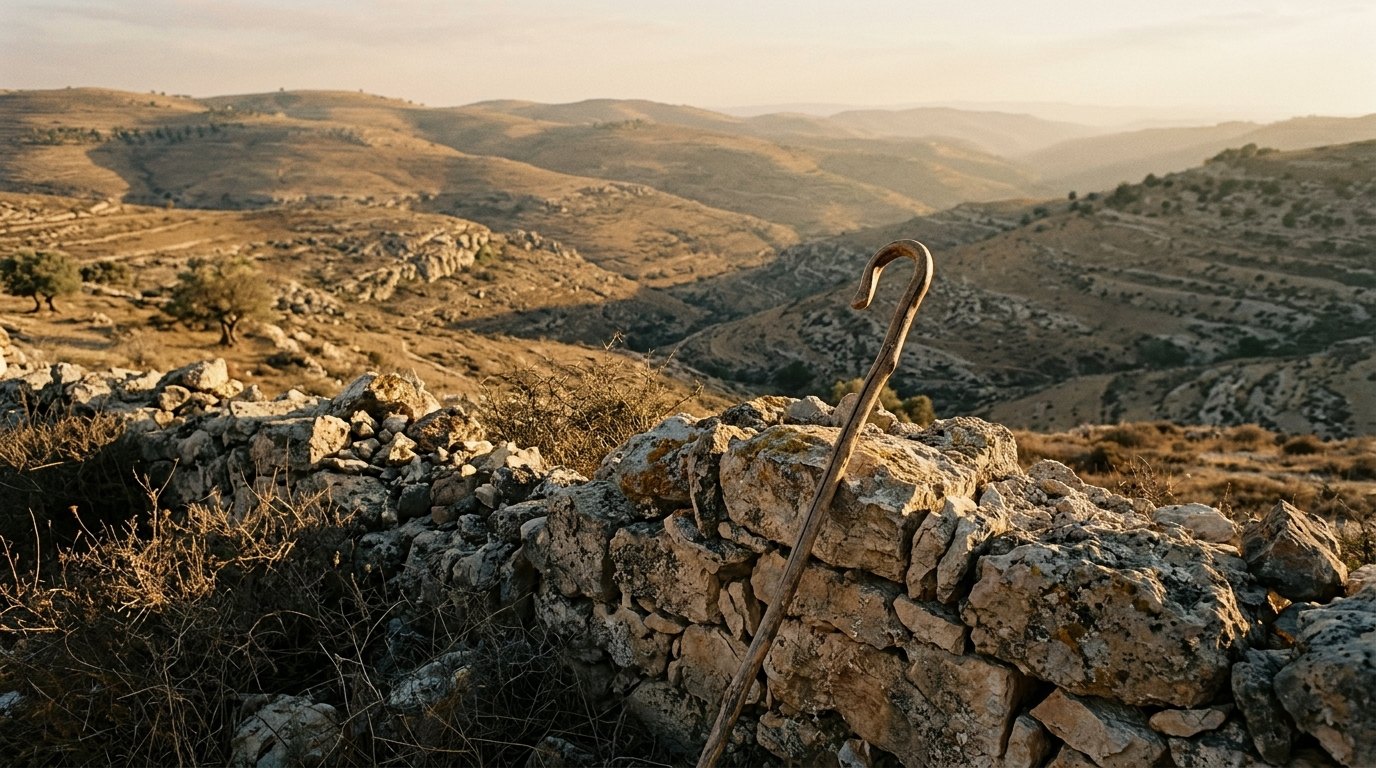
not lording it over those entrusted to you, but being examples to the flock.
1 Peter 5:3 (NIV)
Peter forbids domineering pastoral leadership, commanding elders to shepherd by sacrificial, humble personal example.
In 1 Peter 5:3, the apostle Peter forbids pastoral authoritarianism, commanding elders not to domineer over those in their charge, but to be examples to the flock. True pastoral authority is expressed through humble, sacrificial service that mirrors the gentle, self-giving posture of Jesus Christ. Peter clarifies in 1 Peter 5:2 that pastoral oversight must flow out of genuine willingness rather than compulsion or dishonest financial gain. The ultimate reward for such costly, humble devotion is promised in 1 Peter 5:4: when the Chief Shepherd appears, faithful under-shepherds will receive an unfading crown of everlasting glory.
The under-shepherd looks continually to Christ as the archetype of all pastoral ministry. In John 10:11–14, the Lord Jesus identifies Himself as the Good Shepherd who knows His own sheep intimately and voluntarily lays down His life for them, standing in stark contrast to self-seeking hirelings. Hebrews 13:20 anchors this pastoral reality in the blood of the eternal covenant, which raised our Lord Jesus from the dead as the Great Shepherd of the sheep. In Matthew 20:25–28, Jesus dismantles worldly notions of power, commanding His ministers to embrace the posture of a slave, just as the Son of Man came to give His life as a ransom for many. Paul exemplified this selflessness in Acts 20:33–35 by laboring with his hands to care for the weak, and in 1 Thessalonians 2:7–8 by loving the church with the tender affection of a nursing mother.
| Passage | What it says |
|---|---|
| 1 Peter 5:2-3 | Elders must shepherd willingly rather than for shameful gain, being examples to the flock rather than domineering. |
| 1 Peter 5:4 | Faithful under-shepherds will receive an unfading crown of glory when the Chief Shepherd appears in majesty. |
| John 10:11-14 | Jesus reveals Himself as the Good Shepherd who willingly lays down His life for His sheep. |
| Hebrews 13:20 | The Lord Jesus is the great Shepherd of the sheep through the blood of the eternal covenant. |
| Matthew 20:25-28 | Jesus forbids domineering leadership and calls leaders to be servants like the Son of Man. |
| Acts 20:33-35 | Paul demonstrates selfless labor to support the weak rather than seeking material gain. |
| 1 Thessalonians 2:7-8 | Paul describes pastoral gentleness like a nursing mother sharing her very life. |
Sober Warnings and Church Duty
God holds shepherds accountable and calls flocks to honor them.

Have confidence in your leaders and submit to their authority, because they keep watch over you as those who must give an account. Do this so that their work will be a joy, not a burden, for that would be of no benefit to you.
Hebrews 13:17 (NIV)
This verse presents the sober reality that pastors keep watch over souls as men who will give an account to God.
The sobering gravity of pastoral ministry is anchored in Hebrews 13:17, which reminds believers that leaders 'keep watch over your souls, as those who will give an account.' Pastoral leadership is never absolute license; it is an immense stewardship rendered directly before the living God. Scripture offers severe indictments to those who betray this sacred office. Through the prophet in Jeremiah 23:1-2, the Lord pronounces woe upon faithless shepherds who scatter and destroy His pasture, promising to attend to them for their evil deeds. In Ezekiel 34:2-4, God relentlessly condemns self-indulgent leaders who feed themselves while the weak are never strengthened, the diseased never healed, and the lost never sought. Because teachers face this divine scrutiny, James 3:1 cautions that not many should presume to teach, 'knowing that we shall receive a stricter judgment.'
In light of this heavy weight, Scripture outlines the reciprocal duty of the local church toward faithful shepherds. God calls His people in Hebrews 13:17 to obey and submit to godly oversight so that their leaders may watch over them 'with joy and not with grief.' Believers are urged in 1 Thessalonians 5:12-13 to acknowledge those who labor diligently among them and to 'esteem them very highly in love for their work's sake.' Furthermore, Hebrews 13:7 bids the congregation to remember those who spoke God’s word, considering the outcome of their lives and imitating their steadfast faith.
This honor encompasses practical and judicial care. According to 1 Timothy 5:18 and Galatians 6:6, the church must faithfully provide for elders who labor in teaching and preaching, recognizing that the laborer deserves his wages. Yet integrity remains non-negotiable: 1 Timothy 5:19-20 protects pastors from malicious gossip by requiring multiple witnesses, while commanding that persistent sin be rebuked publicly so that others may stand in holy reverence.
| Passage | What it says |
|---|---|
| Jeremiah 23:1-2 | The Lord pronounces judgment upon corrupt shepherds who scatter and destroy the sheep of His pasture. |
| Ezekiel 34:2-4 | God condemns self-serving shepherds who feed themselves while neglecting the sick, broken, and wandering sheep. |
| Hebrews 13:17 | Believers are commanded to obey their leaders and submit, so their watch over souls may be with joy. |
| 1 Thessalonians 5:12-13 | Christians are urged to respect and esteem highly in love those who labor and admonish them in the Lord. |
| 1 Timothy 5:19-20 | Charges against elders require two or three witnesses, and persistent sin must be rebuked publicly before all. |
| Hebrews 13:7 | Believers are instructed to remember and imitate the faith of their leaders who spoke God's word. |
| Galatians 6:6 | The one who is taught the word must share all good things with his teacher. |
| 1 Timothy 5:18 | Scripture insists the elder laboring in preaching and teaching is worthy of his financial support. |
| James 3:1 | James cautions against many becoming teachers, knowing they will be judged with greater strictness. |
Where in the Bible
| Book | Passages |
|---|---|
| Jeremiah | 1 · Jeremiah 23:1-2 |
| Ezekiel | 1 · Ezekiel 34:2-4 |
| Matthew | 1 · Matthew 20:25-28 |
| John | 2 · John 21:15-17, John 10:11-14 |
| Acts | 5 · Acts 20:17, Acts 20:28, Acts 14:23, Acts 20:29-31, Acts 20:33-35 |
| Galatians | 1 · Galatians 6:6 |
| Ephesians | 1 · Ephesians 4:11 |
| Philippians | 1 · Philippians 1:1 |
| 1 Thessalonians | 2 · 1 Thessalonians 2:7-8, 1 Thessalonians 5:12-13 |
| 1 Timothy | 10 · 1 Timothy 3:1, 1 Timothy 3:2-3, 1 Timothy 3:4-5, 1 Timothy 3:6-7, 1 Timothy 3:8-10, 1 Timothy 4:12, 1 Timothy 5:17, 1 Timothy 4:13-16, 1 Timothy 5:19-20, 1 Timothy 5:18 |
| 2 Timothy | 3 · 2 Timothy 4:1-2, 2 Timothy 2:2, 2 Timothy 2:24-26 |
| Titus | 3 · Titus 1:5-7, Titus 1:6-8, Titus 1:9 |
| Hebrews | 3 · Hebrews 13:20, Hebrews 13:17, Hebrews 13:7 |
| James | 2 · James 5:14, James 3:1 |
| 1 Peter | 3 · 1 Peter 5:1-2, 1 Peter 5:2-3, 1 Peter 5:4 |
The story in order
- Jesus calls Himself the Good Shepherd (c. AD 30) · John 10:11-14 · Establishes the ultimate model of sacrificial care for the flock.
- Jesus teaches servant leadership (c. AD 30) · Matthew 20:25-28 · Contrasts worldly rulers with the servant model for His followers.
- The Holy Spirit appoints overseers (c. AD 57) · Acts 20:28 · Highlights the divine origin and authority of pastoral leadership.
- Paul charges Ephesian elders (c. AD 57) · Acts 20:17 · Shows the pastoral role involves oversight and care for the church.
- Paul instructs Titus on appointing elders (c. AD 62) · Titus 1:5-7 · Defines qualifications for elders, linking them to overseers.
- Peter exhorts elders to shepherd (c. AD 64) · 1 Peter 5:1-2 · Emphasizes willing oversight and care for God's flock.
- Paul charges Timothy on ministry (c. AD 65) · 1 Timothy 3:1 · Sets high standards for character and qualifications for overseers.
- Paul charges Timothy to preach (c. AD 67) · 2 Timothy 4:1-2 · Stresses the importance of faithful proclamation of God's Word.
- Hebrews speaks of the Great Shepherd (c. AD 68) · Hebrews 13:20 · Identifies Jesus as the ultimate Shepherd through His covenant.
The Pastor as Shepherd and Overseer
| Office | Biblical Terms | Key Responsibilities | Passage |
|---|---|---|---|
| Elder | Shepherd | Feed and care for the flock (John 21:15-17) | 1 Peter 5:2 |
| Overseer | Watchful oversight | Guard against false teachers (Acts 20:28-31) | Titus 1:7 |
| Pastor | Teacher | Equip the saints with sound doctrine (Ephesians 4:11; Titus 1:9) | 1 Timothy 4:13-16 |
Qualifications for Pastoral Leadership
| Character Trait | Biblical Basis | Significance | Passage |
|---|---|---|---|
| Blameless and faithful in marriage | 1 Timothy 3:2 | Demonstrates integrity and commitment. | Titus 1:6 |
| Temperate and self-controlled | 1 Timothy 3:2 | Shows discipline and sound judgment. | Titus 1:7 |
| Hospitable and gentle | 1 Timothy 3:2-3 | Reflects Christ's kindness and welcome. | 1 Timothy 3:8 |
| Manages household well | 1 Timothy 3:4-5 | Proves ability to lead the church. | Titus 1:6 |
| Respected reputation | 1 Timothy 3:7 | Gains credibility with outsiders. | 1 Timothy 3:6 |
Duties of a Pastor
| Duty | Biblical Mandate | Purpose | Passage |
|---|---|---|---|
| Feed the flock | John 21:15-17 | Nourish believers with sound doctrine. | Titus 1:9 |
| Guard against false teachers | Acts 20:29-31 | Protect the church from error. | Titus 1:9 |
| Preach the Word | 2 Timothy 4:1-2 | Proclaim God's truth faithfully. | 1 Timothy 4:13-16 |
| Pray for the sick | James 5:14 | Seek God's healing touch. | James 5:14 |
| Entrust sound teaching | 2 Timothy 2:2 | Pass on truth to future generations. | 2 Timothy 2:24-26 |
Key words
- Pastor (poimḗn (ποιμήν))
- An under-shepherd entrusted with the spiritual care, feeding, and protection of God's flock. · Ephesians 4:11
- Elder (presbýteros (πρεσβύτερος))
- A mature leader within the church, often serving as an overseer. · Acts 20:17
- Overseer (epískopos (ἐπίσκοπος))
- One who watches over and directs the church, synonymous with elder and pastor. · Acts 20:28
- Shepherd (poimainō (ποιμαίνω))
- One who tends, feeds, and guards a flock, symbolizing Christ's care for believers. · 1 Peter 5:2
- Sound Doctrine (hygiainō (ὑγιαίνω))
- Biblical teaching that is true, healthy, and beneficial for spiritual growth. · Titus 1:9
Pastors carry a weighty stewardship, answering directly to Christ for how they tend the souls bought with His precious blood. As members of His flock, believers are called to honor, obey, and pray for their leaders while testing all teaching against God's inerrant Word. When godly shepherds lead by humble example and sound doctrine, the church flourishes under the abiding care of the Chief Shepherd.
39 passages, each cited once.
How the major Christian traditions read this
All Christian traditions agree that a pastor is an under-shepherd called to feed, guide, and protect the flock of God under the supreme authority of Jesus Christ, the Chief Shepherd (1 Peter 5:1-4; Acts 20:28).
Catholic
In the Catholic Church, pastoral leadership belongs to the sacrament of Holy Orders, rooted in the three distinct offices of bishop, priest (presbyter), and deacon. Christ established the apostles with ministerial priesthood to act in His person (in persona Christi), offering the Eucharistic sacrifice and shepherding souls (1 Peter 5:1-4; Luke 22:19). Pastors (parish priests) share in the bishop's apostolic ministry through the laying on of hands, exercising teaching authority, administering the sacraments, and governing the local parish in obedience to their bishop and the Pope (1 Timothy 4:14; 2 Timothy 1:6). Celibacy and sacramental ordination set the priest apart for lifelong sacred ministry.
Scripture: 1 Peter 5:1-4, Luke 22:19, 1 Timothy 4:14, 2 Timothy 1:6
Orthodox
Orthodoxy holds that the pastoral office is rooted in Holy Orders—bishops, presbyters, and deacons—preserved unbroken from the apostles through apostolic succession. The bishop is the chief pastor of the local church, the living icon of Christ, while the presbyter (priest or pastor) receives delegated authority to shepherd the parish, preach the Word, and administer the Holy Mysteries (Acts 20:28; 1 Peter 5:1-4). A pastor serves not as an isolated minister, but in direct communion with his bishop, leading the flock in worship and spiritual fatherhood, guiding souls toward theosis through repentance, prayer, and the Eucharist (Titus 1:5; Hebrews 13:17).
Scripture: Acts 20:28, 1 Peter 5:1-4, Titus 1:5, Hebrews 13:17
Lutheran
We confess that God instituted the public ministry of preaching the Gospel and administering the Sacraments so that faith may be obtained (Augsburg Confession V). A pastor is an ordained minister called through the church by God to this office (Augsburg Confession XIV; 1 Corinthians 4:1). Scripture uses elder, overseer, and pastor interchangeably for the same single public office (1 Peter 5:1-2; Titus 1:5-7). The pastor holds the authority of the Keys to preach, baptize, celebrate the Lord's Supper, and pronounce absolution (John 20:21-23). While all believers belong to the royal priesthood, no one should publicly teach or preach without a regular, divine call.
Scripture: 1 Peter 5:1-2, Titus 1:5-7, 1 Corinthians 4:1, John 20:21-23
Reformed & Presbyterian
In the Reformed tradition, Christ rules His Church through biblical offices, recognizing that bishop, elder, and pastor describe the same basic office in Scripture (Acts 20:28; 1 Peter 5:1-3). We distinguish between teaching elders (pastors/ministers of the Word) and ruling elders: pastors labor in preaching, teaching, and administering the sacraments, while ruling elders join them in oversight and discipline (1 Timothy 5:17). A pastor must have both an internal call from the Holy Spirit and an external, orderly call confirmed and examined by the presbytery and the congregation (1 Timothy 4:14). Church government is presbyterian—exercised jointly by councils of elders rather than a single prelate.
Scripture: Acts 20:28, 1 Peter 5:1-3, 1 Timothy 5:17, 1 Timothy 4:14
Anglican & Episcopal
Anglicans retain the historic three-fold order of ordained ministry: bishops, priests (presbyters), and deacons. A pastor is typically an ordained priest serving a parish under the episcopal oversight of a bishop (1 Peter 5:1-4; 1 Timothy 3:1-7). The pastor's calling is to preach the pure Word of God, administer the sacraments of Baptism and Holy Communion, shepherd the flock through pastoral care, and pronounce God's pardon to penitent sinners (John 20:22-23; Titus 1:5). Pastoral authority is balanced through diocesan leadership, synodical governance, and liturgical order established in the Book of Common Prayer.
Scripture: 1 Peter 5:1-4, 1 Timothy 3:1-7, John 20:22-23, Titus 1:5
Baptist
We believe the New Testament recognizes only two scriptural offices in the local church: pastors (also called elders or bishops) and deacons (Philippians 1:1; 1 Timothy 3:1-13). The terms presbuteros (elder), episkopos (overseer), and poimen (pastor) refer to the same office (Acts 20:17, 28; 1 Peter 5:1-2). Pastors are called by God and elected by the local congregation to shepherd the flock, preach the Word, oversee church discipline, and guard doctrine (Hebrews 13:17). We affirm the autonomy of each local church and the priesthood of all believers; pastors have spiritual authority to lead, but not to rule unilaterally as lords over the congregation.
Scripture: 1 Peter 5:1-2, Philippians 1:1, 1 Timothy 3:1-13, Hebrews 13:17, Acts 20:17
Methodist & Wesleyan
In the Methodist and Wesleyan heritage, pastoral ministry is a sacred calling to preach the Gospel, feed the flock, and guide believers into holiness and love (1 Peter 5:1-4; Hebrews 13:7). We recognize ordained elders (presbyters) and deacons, organized under a connectional system overseen by superintendents or bishops (Acts 15:2-6). A pastor is called by God, examined and appointed by the conference, and entrusted to lead a local congregation in discipleship, works of mercy, and the means of grace (the Word and Sacraments). Pastors do not labor in isolation; they are accountable to the wider connection of churches.
Scripture: 1 Peter 5:1-4, Hebrews 13:7, Acts 15:2-6
Pentecostal & Charismatic
Pentecostal and Charismatic churches see the pastor as an anointed shepherd empowered by the Holy Spirit to lead, feed, and equip the saints for ministry (Ephesians 4:11-12; 1 Peter 5:1-4). While valuing biblical qualifications and the laying on of hands (1 Timothy 3:1-7; 1 Timothy 4:14), we strongly emphasize the spiritual calling, prophetic gifting, and supernatural empowerment of the Spirit. A pastor preaches the Word with power, ministers healing and deliverance, and fosters the operation of the spiritual gifts in the congregation (1 Corinthians 12:7-11; Acts 20:28), pointing the church continually to the active presence of Jesus Christ.
Scripture: Ephesians 4:11-12, 1 Peter 5:1-4, 1 Timothy 3:1-7, 1 Corinthians 12:7-11, Acts 20:28
Non-denominational & Evangelical
Non-denominational and independent evangelical churches view a pastor as a biblically qualified leader called to teach Scripture, shepherd God's people, and provide spiritual direction (1 Timothy 3:1-7; Titus 1:5-9). Following the New Testament, we emphasize that the primary role of pastoral leadership is preaching the Word in-depth and equipping believers to do the work of ministry (Ephesians 4:11-13; 2 Timothy 4:1-2). Governance varies: many churches are led by a pastoral team alongside a plurality of lay elders, while others follow a senior pastor model, remaining independent of external denominational hierarchies.
Scripture: 1 Timothy 3:1-7, Titus 1:5-9, Ephesians 4:11-13, 2 Timothy 4:1-2
Where they differ
Number and structure of pastoral offices
- Catholic
- Three distinct orders: bishop, priest, and deacon in sacramental hierarchy.
- Orthodox
- Three distinct orders: bishop, presbyter, and deacon under apostolic succession.
- Lutheran
- One fundamental office of public ministry, with diverse historical titles.
- Reformed & Presbyterian
- Two elder classes: teaching elders (pastors) and ruling elders in parity.
- Anglican & Episcopal
- Historic threefold ministry of bishops, priests, and deacons.
- Baptist
- Two biblical offices only: pastor (elder/overseer) and deacon.
- Methodist & Wesleyan
- Two ordained orders (elders and deacons) under connectional episcopal superintendency.
- Pentecostal & Charismatic
- Part of Ephesians 4 fivefold ministry alongside local elder/deacon leadership.
- Non-denominational & Evangelical
- Local elder/pastor oversight with deacons, free from external hierarchy.
Scripture: Philippians 1:1, 1 Timothy 3:1-13, 1 Timothy 5:17, Titus 1:5-7
Source of pastoral ordination and authority
- Catholic
- Sacramental Holy Orders bestowed through historic episcopal apostolic succession.
- Orthodox
- Sacramental laying on of hands through unbroken apostolic succession.
- Lutheran
- Public divine call confirmed through the church's examination and ordination.
- Reformed & Presbyterian
- Holy Spirit's call confirmed by congregation and ordained by presbytery.
- Anglican & Episcopal
- Episcopal ordination tracing authority through historic apostolic succession.
- Baptist
- Congregational election and ordination based on autonomous local church authority.
- Methodist & Wesleyan
- Conference examination and episcopal ordination within the connectional covenant.
- Pentecostal & Charismatic
- Holy Spirit empowerment and spiritual calling confirmed by church leadership.
- Non-denominational & Evangelical
- Biblical qualification and internal calling recognized by the local congregation.
Scripture: Acts 14:23, 1 Timothy 4:14, 2 Timothy 1:6, Titus 1:5
Your pastor can tell you where your church stands.
Scripture cited
- 1 Peter 5:1-4
- 1 Peter 5:4