What is Ash Wednesday?
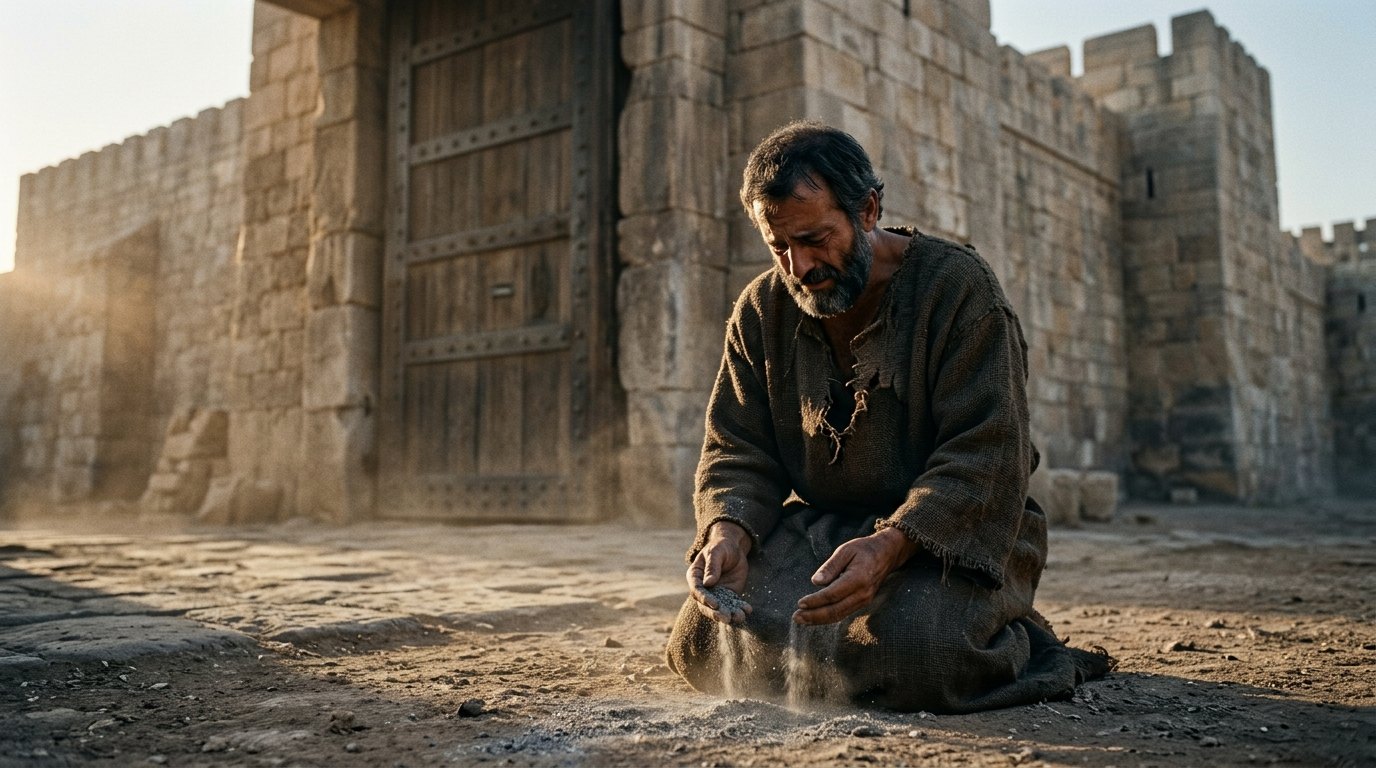
Joel 2:12-13
12 “Even now,” declares the LORD, “return to me with all your heart, with fasting and weeping and mourning.”
13 Rend your heart and not your garments. Return to the LORD your God, for he is gracious and compassionate, slow to anger and abounding in love, and he relents from sending calamity.
New International Version (NIV)
The answer
Ash Wednesday is the first day of Lent, a forty-day season of fasting, repentance, and preparation for Easter (Sundays are not counted in the forty). It falls forty-six days before Easter Sunday. The day takes its name from the ashes placed on worshippers' foreheads, usually in the shape of a cross, as a sign of mortality and sorrow for sin.
Why ashes? Ashes are a biblical picture of repentance. Job said, “Therefore I abhor myself, and repent in dust and ashes” (Job 42:6). They also recall humanity's frailty: “For you are dust, and you shall return to dust” (Genesis 3:19). The words spoken as the ashes are imposed commonly echo that verse.
Why forty days? The season reflects Jesus' forty days of fasting in the wilderness: “When he had fasted forty days and forty nights, he was hungry afterward” (Matthew 4:2). It prepares believers to remember His suffering and celebrate His resurrection.
Is Ash Wednesday commanded in Scripture? No. The day itself is a later church observance, not a biblical appointment. Scripture nowhere requires keeping a particular day, so observance is a matter of Christian freedom: “He who observes the day, observes it to the Lord; and he who does not observe the day, to the Lord he does not observe it” (Romans 14:6). Its value lies in the repentance it calls for, not in the calendar date or the ashes themselves.
What matters to God is the heart, not the outward sign. Joel's call captures the day's true purpose: “Tear your heart and not your garments, and turn to Yahweh, your God; for he is gracious and merciful, slow to anger, and abundant in loving kindness” (Joel 2:13). Jesus likewise warned against fasting to be noticed by others, teaching that it should be done before “your Father who is in secret” (Matthew 6:18). Ashes on the forehead mean nothing without the turning of the heart they represent; worn as a religious display, they contradict the very humility they are meant to express.
The call of the day, then, is the call of the gospel itself: “Repent, and believe in the Good News” (Mark 1:15). Repentance is not earning God's favour by fasting or ceremony; it is turning from sin to the God who is gracious and merciful, and trusting in Christ, who died for sinners and rose again. That turning is needed every day of the year, not only at the start of Lent.
Answered from Scripture · reviewed November 11, 2026
Ash Wednesday is a historic church tradition rather than a biblically mandated holy day, marking the opening of Lent with solemn calls to repentance and remembrance of human mortality. While Scripture never institutes an annual day of smearing ashes, it repeatedly summons believers to humble their hearts before God through genuine sorrow over sin, fasting, and sincere faith. Understanding what God's Word says about dust, sackcloth, and true repentance clarifies how believers should view outward rituals in light of the inward reality of Christ's redemption.
Dust and Mortality
Man Formed of Dust Returns to Dust
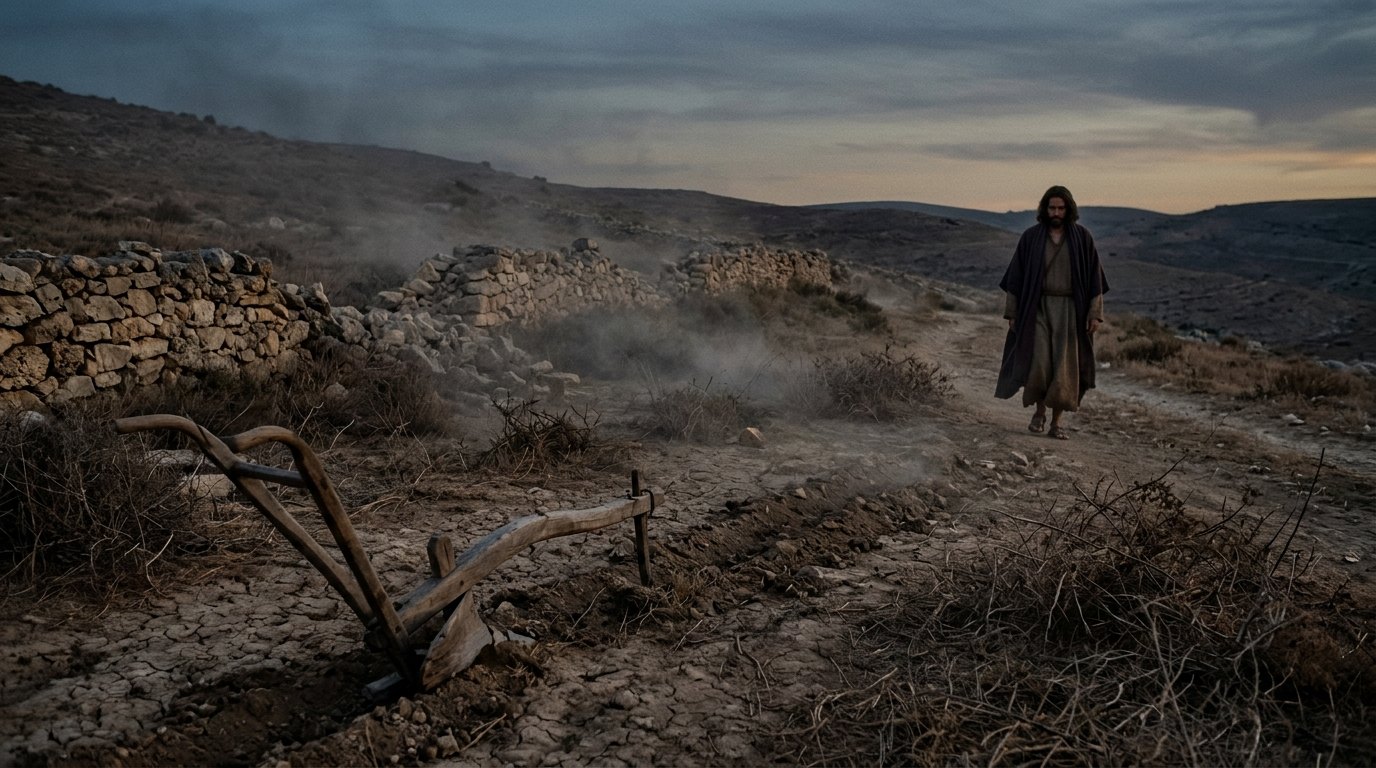
By the sweat of your brow you will eat your food until you return to the ground, since from it you were taken; for dust you are and to dust you will return.”
Genesis 3:19 (NIV)
This verse supplies the historic Ash Wednesday liturgy with its core reminder that physical death is the consequence of human rebellion.
The physical solemnity of ashes rests entirely upon God's verdict in Eden: "for dust you are, and to dust you shall return" (Genesis 3:19). When the Lord formed the first man, He took common clay from the earth before breathing life into his nostrils (Genesis 2:7). Physical death entered the world through Adam's transgression, turning that humble origin into an unavoidable appointment for every son and daughter of Adam. Job recognized this exact framework when contending with his frailties, lamenting that God had molded him like clay and would bring him back to dust (Job 10:9; Job 30:19). Abraham similarly acknowledged his creaturely frailty while pleading for Sodom, confessing that he was nothing more than "dust and ashes" before the sovereign Judge of all the earth (Genesis 18:27).
Scripture consistently confronts human pride by contrasting the eternal nature of God with our transient physical existence. Moses observed that the Lord turns man back to dust, demanding that the children of men return (Psalms 90:3). If God should withdraw His Spirit and breath, Elihu declared, all flesh would perish at once and humanity would revert to dust (Job 34:15), a reality echoed in the Psalms where the removal of divine breath brings immediate death (Psalms 104:29). Yet God's knowledge of this frame is paired with profound fatherly compassion: "He remembers that we are dust" (Psalms 103:14). When Solomon reflected on earthly existence apart from divine purpose, he warned that all journey to one final physical resting place (Ecclesiastes 3:20). At the end of earthly labor, the body dissolves into the soil while the spirit returns to God who gave it (Ecclesiastes 12:7). Beholding God in His holy majesty brought Job to that same end of self-sufficiency: he retracted his complaints and repented in dust and ashes (Job 42:6).
| Passage | What it says |
|---|---|
| Genesis 2:7 | The Lord God formed man of dust from the ground and breathed into his nostrils the breath of life. |
| Genesis 3:19 | God declares that man will eat bread by the sweat of his face until returning to dust. |
| Genesis 18:27 | Abraham acknowledges before the Lord that he is but dust and ashes as he intercedes. |
| Job 34:15 | Elihu reminds Job that all flesh would perish together and man would return to dust without God. |
| Job 42:6 | Job retracts his words and repents in dust and ashes after beholding God's majestic sovereignty. |
| Psalms 103:14 | The Lord knows our frame and remembers with compassionate mercy that we are dust. |
| Ecclesiastes 3:20 | All go to one place, all are from the dust, and all return to dust. |
| Ecclesiastes 12:7 | The dust returns to the earth as it was, and the spirit returns to God who gave it. |
| Job 10:9 | Job recalls that God made him like clay and will return him to the dust. |
| Job 30:19 | Job laments that he is cast into the mire, having become like dust and ashes. |
| Psalms 90:3 | Moses proclaims that God turns man back to dust, commanding the children of man to return. |
| Psalms 104:29 | When God takes away breath, living creatures die and return to their native dust. |
Ashes and Mourning
Sackcloth and Ashes as Biblical Signs of Grief
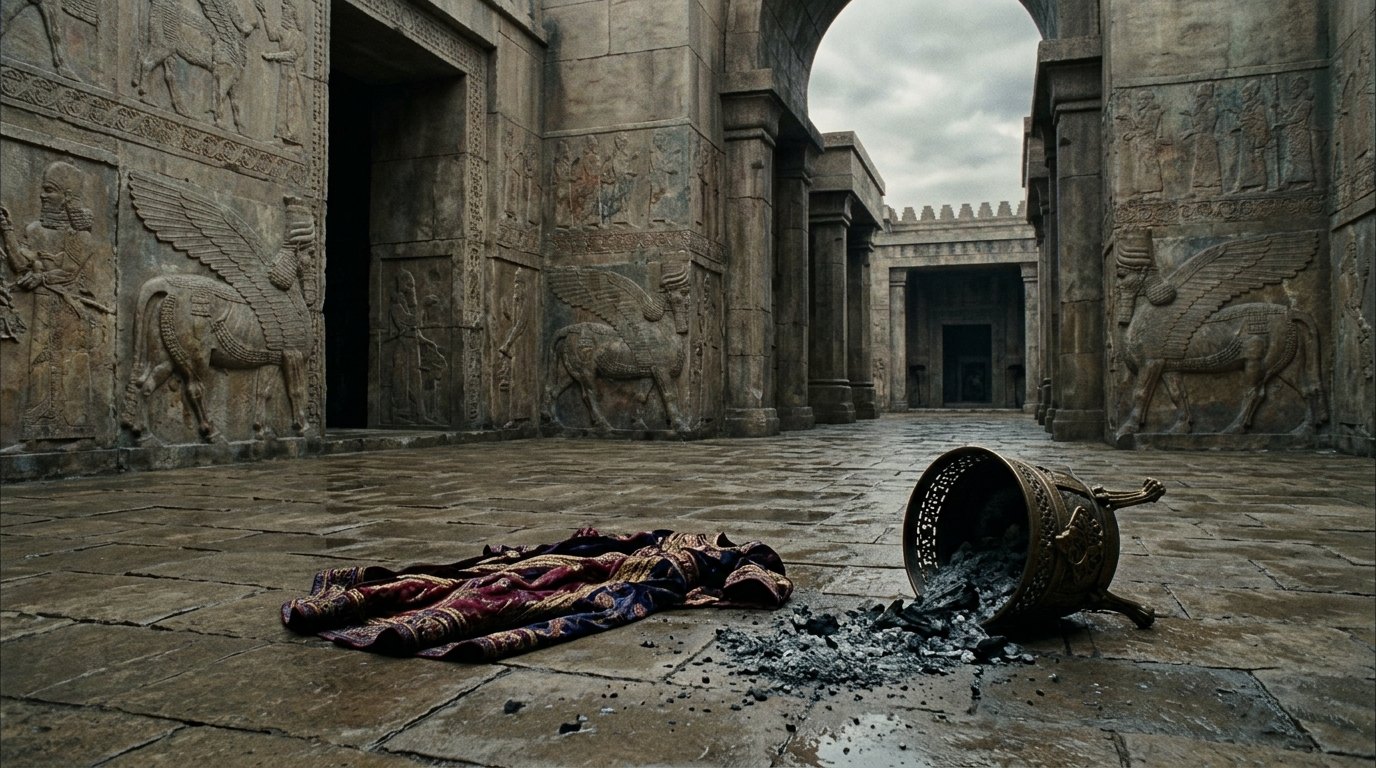
When Jonah’s warning reached the king of Nineveh, he rose from his throne, took off his royal robes, covered himself with sackcloth and sat down in the dust.
Jonah 3:6 (NIV)
The king of Nineveh models genuine national humiliation before God by stepping down from his throne into ashes.
When God's people in Scripture covered themselves in ashes, they were not performing an annual calendar ritual but expressing raw grief and severe repentance. The profound power of this posture appears when Jonah proclaimed divine judgment over Nineveh: the king of Nineveh rose from his throne, covered himself with sackcloth, and sat in ashes (Jonah 3:6). This monarch cast off royal splendor to humble himself before the God of heaven. Centuries earlier, Tamar had placed ashes on her head and torn her ornate robe as an involuntary cry of utter ruin and personal violation (2 Samuel 13:19). Similarly, when Haman's genocidal edict was decreed against the Jewish people, Mordecai rent his garments, donned sackcloth, and wept with ashes at the king's gate (Esther 4:1), setting off nationwide mourning where many lay down in ashes and weeping (Esther 4:3).
Ashes visibly dramatized the devastation wrought by sin and divine judgment. Jeremiah called the daughter of his people to put on sackcloth and wallow in ashes because the destroyer would come suddenly (Jeremiah 6:26), an image of desolation repeated in Ezekiel's lament over commercial pride (Ezekiel 27:30). In Babylon, the prophet Daniel sought the Lord's face with prayer, fasting, sackcloth, and ashes on behalf of his exiled nation (Daniel 9:3). When the remnant gathered under Ezra and Nehemiah, they assembled with fasting, sackcloth, and earth upon their heads to confess their covenant unfaithfulness (Nehemiah 9:1). Yet God never desired the outward sign as a substitute for true righteousness; He rebuked those who simply hung their heads like reeds and spread ashes without practicing justice (Isaiah 58:5). The promise of the coming Messiah was precisely that He would bestow "beauty instead of ashes" to those who mourn in Zion (Isaiah 61:3). Looking back on ancient cities destroyed by divine wrath, the Lord Jesus declared that if His mighty works had occurred in Tyre and Sidon, they would have repented long ago, sitting in sackcloth and ashes (Matthew 11:21; Luke 10:13).
| Passage | What it says |
|---|---|
| 2 Samuel 13:19 | Tamar puts ashes on her head and tears her robe in profound anguish and devastation. |
| Esther 4:1 | Mordecai tears his clothes, puts on sackcloth and ashes, and cries out bitterly over Haman's decree. |
| Esther 4:3 | The Jews in every province fast, weep, and mourn, with many lying in sackcloth and ashes. |
| Isaiah 58:5 | The Lord questions whether bowing down one's head like a reed and spreading sackcloth and ashes constitutes an acceptable fast. |
| Jeremiah 6:26 | Jeremiah urges God's people to gird themselves with sackcloth and roll in ashes in bitter lamentation. |
| Daniel 9:3 | Daniel turns to the Lord God with prayer, supplications, fasting, sackcloth, and ashes. |
| Jonah 3:6 | The king of Nineveh rises from his throne, lays aside his robe, covers himself with sackcloth, and sits in ashes. |
| Matthew 11:21 | Jesus rebukes unrepentant cities, saying Tyre and Sidon would have repented long ago in sackcloth and ashes. |
| Nehemiah 9:1 | The assembly of Israel gathers in fasting, sackcloth, and earth on their heads in repentance. |
| Isaiah 61:3 | The Lord promises to grant beauty instead of ashes to those who mourn in Zion. |
| Ezekiel 27:30 | Mourners cast dust on their heads and wallow in ashes over severe judgment. |
| Luke 10:13 | Jesus says Tyre and Sidon would have repented long ago, sitting in sackcloth and ashes. |
Heart Repentance
Tearing the Heart Rather than Garments
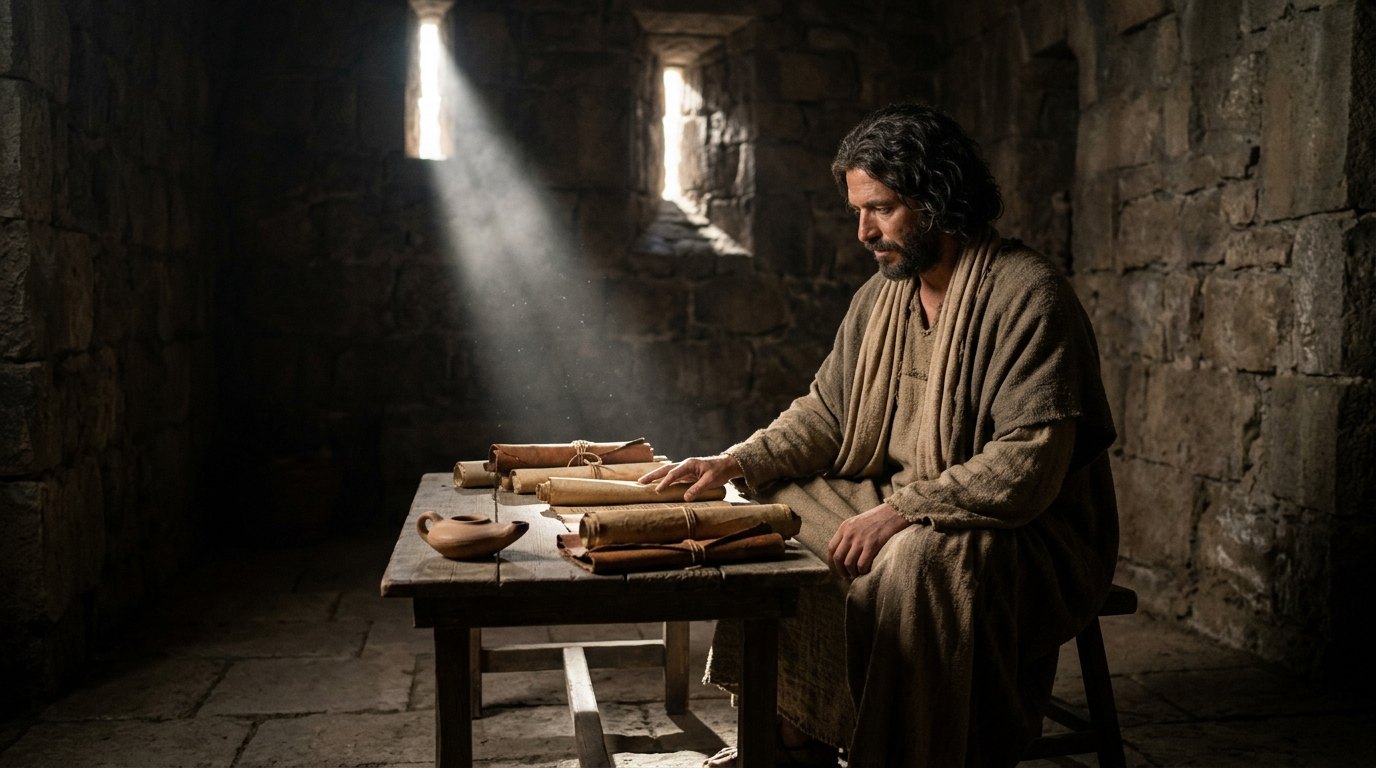
Rend your heart and not your garments. Return to the LORD your God, for he is gracious and compassionate, slow to anger and abounding in love, and he relents from sending calamity.
Joel 2:13 (NIV)
The prophet explicitly commands inward brokenness over empty outward rituals, grounding the appeal in God's abundant mercy.
Scripture warns relentlessly against mistaking outward tokens of sorrow for actual spiritual repentance. The prophet Joel cut straight through ceremonial performance with a divine command: "rend your hearts and not your garments, and return to the Lord your God" (Joel 2:13). God never seeks theatrical sorrow; He seeks total inward surrender. In that same oracle, the Lord summoned the nation to turn to Him with all their heart, weeping and fasting (Joel 2:12). David, broken over his adultery and bloodguilt, understood that ritual sacrifice cannot purchase pardon: the sacrifices of God are a broken spirit; a broken and contrite heart, O God, you will not despise (Psalms 51:17). David did not pray for ceremonial cleansing alone, but cried out, "Create in me a clean heart, O God, and renew a right spirit within me" (Psalms 51:10).
God makes His promises of restoration contingent upon an inward turning away from wickedness. He assured Solomon that if His people humble themselves, pray, seek His face, and turn from their wicked ways, He will hear from heaven and heal their land (2 Chronicles 7:14). Samuel instructed the Israelites that returning to the Lord meant directing their hearts unreservedly to Him and casting out their idols (1 Samuel 7:3). God called the exiles to search for Him with all their heart, promising that those who do so will surely find Him (Jeremiah 29:12-13). Through Jeremiah and Hosea, the Lord insisted that genuine repentance involves putting away abominations, practicing mercy, and waiting continually on God (Jeremiah 4:1; Hosea 12:6). Isaiah urged the wicked to forsake their way and their unrighteous thoughts, promising that the Lord will abundantly pardon those who seek Him while He may be found (Isaiah 55:6-7). Ezekiel recorded the divine plea to cast away transgressions and receive a new heart and spirit (Ezekiel 18:31). In the New Covenant, James echoed this urgent call, commanding sinners to cleanse their hands, purify their double minds, and mourn over their sins before God (James 4:8-9). Peter preached that very heart-turning at Solomon's portico: repent and turn back, so that sins may be blotted out by Christ (Acts 3:19).
| Passage | What it says |
|---|---|
| 2 Chronicles 7:14 | God promises to hear, forgive, and heal if His people humble themselves, pray, seek His face, and turn. |
| Psalms 51:17 | The sacrifices of God are a broken spirit; a broken and contrite heart God will not despise. |
| Isaiah 55:6 | Isaiah commands sinners to seek the Lord while He may be found and call while He is near. |
| Isaiah 55:7 | The wicked are called to forsake their way and return to the Lord, who will abundantly pardon. |
| Jeremiah 4:1 | The Lord calls Israel to return to Him and put away abominations so they will not be removed. |
| Jeremiah 29:12 | God promises that when His people call upon Him and pray, He will listen. |
| Jeremiah 29:13 | The Lord assures that seekers will find Him when they search for Him with all their heart. |
| Hosea 12:6 | Hosea instructs the people to return to God, observe justice and mercy, and wait continually on Him. |
| Joel 2:12 | The Lord calls His people to turn to Him with all their heart, fasting, weeping, and mourning. |
| Joel 2:13 | Joel commands tearing hearts instead of garments, returning to God who is gracious, slow to anger, and merciful. |
| James 4:8 | James commands sinners to draw near to God, cleanse their hands, and purify their double minds. |
| James 4:9 | Believers are instructed to lament, mourn, weep, and turn laughter into mourning before the Lord. |
| 1 Samuel 7:3 | Samuel commands the house of Israel to direct their hearts to the Lord and serve Him alone. |
| Psalms 51:10 | David prays for God to create in him a clean heart and renew a right spirit. |
| Ezekiel 18:31 | God commands His people to cast away transgressions and obtain a new heart and spirit. |
| Acts 3:19 | Peter calls the people to repent and turn back that their sins may be blotted out. |
Sincerity in Fasting
Rejecting the Public Display of Piety
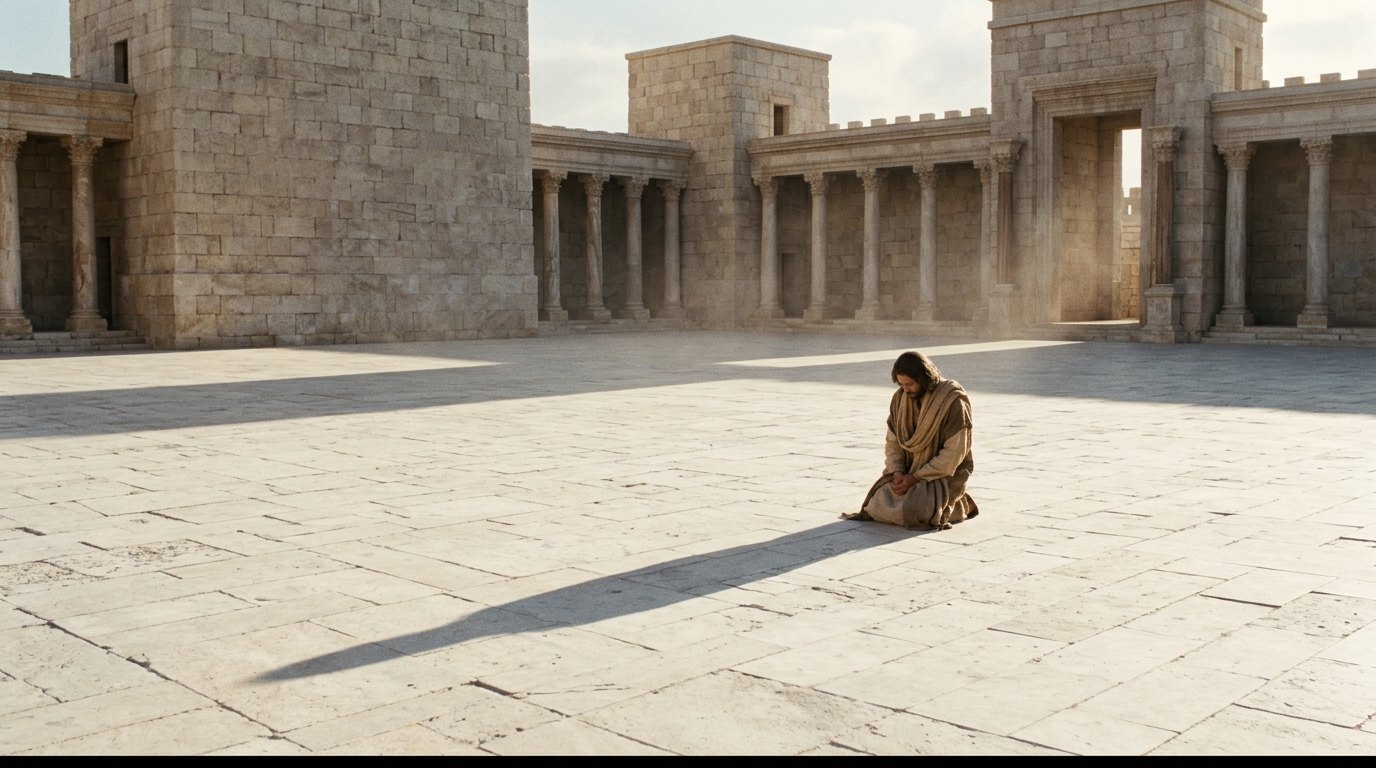
“When you fast, do not look somber as the hypocrites do, for they disfigure their faces to show others they are fasting. Truly I tell you, they have received their reward in full.
Matthew 6:16 (NIV)
Jesus directly forbids disfiguring one's face or broadcasting spiritual disciplines to win the esteem of men.
The decisive biblical warning regarding fasting and visible displays of penance came directly from Jesus Christ on the Mount. In clear, uncompromising language, the Lord commanded: "when you fast, do not look gloomy like the hypocrites, for they disfigure their faces that their fasting may be seen by others" (Matthew 6:16). Jesus warned that anyone who practices righteousness before men to win human approval has already received their full reward (Matthew 6:1). Instead of smearing soot or maintaining an unwashed countenance to broadcast self-denial, Christ gave opposite instructions: anoint your head and wash your face, so that your fasting may not be seen by others but by your Father who is in secret (Matthew 6:17-18). Fasting is intended as a private, God-directed discipline of humility, never a public emblem of personal sanctity.
Religious history demonstrates how quickly outward disciplines degrade into spiritual arrogance. Jesus dramatized this peril in the parable of the Pharisee and the tax collector. The Pharisee stood and prayed with himself, boasting, "I fast twice a week; I give tithes of all that I get" (Luke 18:11-12). But the tax collector stood far off, beat his breast, and cried, "God, be merciful to me, a sinner!" (Luke 18:13). It was the broken tax collector who went down to his house justified, not the ostentatious faster (Luke 18:14). Centuries prior, God spoke through Zechariah to question whether Israel's annual fasts were truly observed for Him or merely for their own religious satisfaction (Zechariah 7:5). The Apostle Paul carried this principle into the Gentile mission, warning the Colossian church to let no one pass judgment on them regarding festivals, new moons, or Sabbath days (Colossians 2:16). He pointed out that man-made religious regulations and harsh treatment of the body carry an appearance of wisdom in self-imposed piety, yet have no power whatsoever to conquer the sinful indulgences of the flesh (Colossians 2:23). True devotion in the New Covenant centers on inward reality: the kingdom of God is not food, drink, or calendar observances, but righteousness, peace, and joy in the Holy Spirit (Romans 14:17).
| Passage | What it says |
|---|---|
| Matthew 6:1 | Jesus warns against practicing righteousness before men to be seen by them, forfeiting reward from the Father. |
| Matthew 6:16 | Christ rebukes hypocrites who adopt gloomy faces so their fasting is recognized by others. |
| Matthew 6:17 | The Lord instructs that when fasting, one should anoint their head and wash their face. |
| Matthew 6:18 | Fasting is to be seen only by the Father in secret, who promises to reward openly. |
| Luke 18:11 | The self-righteous Pharisee boasts in prayer about his personal works, including fasting twice a week. |
| Luke 18:13 | The tax collector beats his breast, begging God for mercy, and goes home justified. |
| Colossians 2:16 | Paul commands believers to let no one pass judgment regarding food, drink, festivals, or new moons. |
| Colossians 2:23 | Self-imposed religion and ascetic severity have an appearance of wisdom but lack power against fleshly indulgence. |
| Zechariah 7:5 | The Lord questions whether their seventy years of fasting were truly done unto Him. |
| Luke 18:12 | The Pharisee boasts of fasting twice a week as an outward display of righteousness. |
| Luke 18:14 | Jesus declares the humble tax collector justified rather than the boastful faster. |
| Romans 14:17 | The kingdom of God is not eating and drinking, but righteousness, peace, and joy in the Holy Spirit. |
Where in the Bible
| Book | Passages |
|---|---|
| Genesis | 3 · Genesis 2:7, Genesis 3:19, Genesis 18:27 |
| 1 Samuel | 1 · 1 Samuel 7:3 |
| 2 Samuel | 1 · 2 Samuel 13:19 |
| 2 Chronicles | 1 · 2 Chronicles 7:14 |
| Nehemiah | 1 · Nehemiah 9:1 |
| Esther | 2 · Esther 4:1, Esther 4:3 |
| Job | 4 · Job 34:15, Job 42:6, Job 10:9, Job 30:19 |
| Psalms | 5 · Psalms 103:14, Psalms 90:3, Psalms 104:29, Psalms 51:17, Psalms 51:10 |
| Ecclesiastes | 2 · Ecclesiastes 3:20, Ecclesiastes 12:7 |
| Isaiah | 4 · Isaiah 58:5, Isaiah 61:3, Isaiah 55:6, Isaiah 55:7 |
| Jeremiah | 4 · Jeremiah 6:26, Jeremiah 4:1, Jeremiah 29:12, Jeremiah 29:13 |
| Ezekiel | 2 · Ezekiel 27:30, Ezekiel 18:31 |
| Daniel | 1 · Daniel 9:3 |
| Hosea | 1 · Hosea 12:6 |
| Joel | 2 · Joel 2:12, Joel 2:13 |
| Jonah | 1 · Jonah 3:6 |
| Zechariah | 1 · Zechariah 7:5 |
| Matthew | 5 · Matthew 11:21, Matthew 6:1, Matthew 6:16, Matthew 6:17, Matthew 6:18 |
| Luke | 5 · Luke 10:13, Luke 18:11, Luke 18:13, Luke 18:12, Luke 18:14 |
| Acts | 1 · Acts 3:19 |
| Romans | 1 · Romans 14:17 |
| Colossians | 2 · Colossians 2:16, Colossians 2:23 |
| James | 2 · James 4:8, James 4:9 |
The story in order
- Man formed from dust (c. 4000 BC) · Genesis 2:7 · Establishes the physical origin of humanity from dust.
- Return to dust (c. 4000 BC) · Genesis 3:19 · God decrees man's return to dust upon death.
- Abraham's humility (c. 2000 BC) · Genesis 18:27 · Abraham calls himself dust and ashes before God.
- Job's repentance (c. 1500 BC) · Job 42:6 · Job repents in dust and ashes after seeing God's power.
- Moses on mortality (c. 1450 BC) · Psalms 90:3 · Moses proclaims God turns man back to dust.
- David's plea for a clean heart (c. 1000 BC) · Psalms 51:10 · David prays for a new heart and spirit.
- Solomon on mortality (c. 950 BC) · Ecclesiastes 3:20 · All creatures return to dust.
- Isaiah calls for repentance (c. 700 BC) · Isaiah 58:5 · God questions fasting with sackcloth and ashes.
- Jeremiah calls for heart-rending (c. 600 BC) · Jeremiah 6:26 · Urges people to mourn in sackcloth and ashes.
- Daniel's prayer (c. 530 BC) · Daniel 9:3 · Daniel prays with fasting, sackcloth, and ashes.
- Jonah's message to Nineveh (c. 750 BC) · Jonah 3:6 · Nineveh's king sits in sackcloth and ashes.
- Jesus on repentance (c. AD 30) · Matthew 11:21 · Jesus notes cities would have repented in sackcloth and ashes.
- Paul on fasting (c. AD 60) · Colossians 2:16 · No judgment on religious observances like fasting.
- Peter calls to repent (c. AD 33) · Acts 3:19 · Calls for repentance and turning for sins to be blotted out.
Biblical Signs of Mourning
| Action | Context | Biblical Significance | Passage |
|---|---|---|---|
| Ashes on head, torn robe | Tamar's anguish | Profound grief and devastation | 2 Samuel 13:19 |
| Sackcloth and ashes | Mordecai's decree | Bitter mourning and outcry | Esther 4:1 |
| Fasting, weeping, mourning | Jews in provinces | Widespread grief and lamentation | Esther 4:3 |
| Sackcloth and ashes | Jeremiah's call | Bitter lamentation | Jeremiah 6:26 |
| Fasting, sackcloth, ashes | Daniel's prayer | Deep repentance and supplication | Daniel 9:3 |
| Sackcloth and ashes | Nineveh's king | Repentance and humility | Jonah 3:6 |
| Sackcloth and ashes | Jesus' rebuke | Sign of repentance | Matthew 11:21 |
True Repentance vs. External Ritual
| External Ritual | Internal Reality | Biblical Emphasis | Passage |
|---|---|---|---|
| Spreading sackcloth and ashes | Bowing head like a reed | Is this the fast I choose? | Isaiah 58:5 |
| Tearing garments | Tearing hearts | Return to the Lord | Joel 2:13 |
| Public display of piety | Secret prayer and fasting | Reward from the Father | |
| Gloomy faces | Washing face, anointing head | Fasting seen by the Father | Matthew 6:17-18 |
| Boasting in fasting | Begging for mercy | Justification | Luke 18:11-14 |
| Appearance of wisdom | Power against flesh | Not effective | Colossians 2:23 |
Key words
- Dust (עָפָר (ʿāp̄ār))
- The earth or soil from which man was formed and to which he returns. · Genesis 2:7
- Return to dust (שׁוּב אֶל־עָפָר (šûḇ ʾel-ʿāp̄ār))
- The inevitable physical decay and death of humanity. · Genesis 3:19
- Sackcloth (שַׂק (śaq))
- A coarse cloth worn as a sign of mourning, penitence, or distress. · 2 Samuel 13:19
- Ashes (אֵפֶר (ʾēp̄er))
- The powdery residue of burnt material, used as a symbol of mourning and repentance. · 2 Samuel 13:19
- Repentance (תְּשׁוּבָה (təšûḇâ))
- A change of mind and heart leading to a turning away from sin and toward God. · Joel 2:13
- Broken spirit (רוּחַ נִשְׁבָּרָה (rûaḥ nišbĕrāh))
- A contrite and humble heart that acknowledges sin and dependence on God. · Psalms 51:17
- Fasting (צוֹם (ṣōm))
- Abstaining from food for a period, often as an act of devotion, repentance, or seeking God. · Esther 4:3
Ash Wednesday serves as a stark reminder of human frailty and the absolute necessity of repentance, yet outward ashes can never substitute for a cleansed heart. True freedom and reconciliation are found not in external rites, but in the crucified and risen Christ who justifies all who turn to Him in faith.
52 passages, each cited once.
How the major Christian traditions read this
All major Christian traditions confess that repentance, mourning over sin, and remembering human mortality before God are vital to biblical discipleship (Genesis 3:19; Joel 2:12-13).
Catholic
We observe Ash Wednesday as the solemn universal fast inaugurating the forty days of Lent, recalling the Lord's fast in the desert (Matthew 4:2). Faithful receive blessed ashes upon their foreheads as an outward sign of penance, hearing the ancient words, 'Remember that you are dust, and to dust you shall return' (Genesis 3:19). The Church commands fasting and abstinence on this day, uniting bodily discipline with inward sorrow for sin as exhorted by the prophet (Joel 2:12-13). It is not an idle ceremony, but a sacramental call to enter the journey of repentance and conversion in preparation for Easter.
Scripture: Matthew 4:2, Genesis 3:19, Joel 2:12-13
Orthodox
In the Eastern Church, we do not observe Ash Wednesday or the imposition of ashes. Great Lent begins instead on Clean Monday, forty days before Lazarus Saturday and Palm Sunday. We enter this holy season of fasting and spiritual struggle not through an outward marking of ashes, but through the Rite of Forgiveness on Forgiveness Sunday, asking pardon of one another in obedience to Christ's teaching on mutual forgiveness (Matthew 6:14-15). We echo the call to turn to God with fasting and weeping (Joel 2:12-13), keeping our fast secretly before the Father rather than displaying outward signs of mourning before men (Matthew 6:16-18).
Scripture: Matthew 6:14-15, Joel 2:12-13, Matthew 6:16-18
Lutheran
We retain the historic observance of Ash Wednesday and the season of Lent as useful church customs that teach the people and call us to repentance, though we deny they merit grace or earn forgiveness. The imposition of ashes vividly declares our mortality under the curse of sin (Genesis 3:19) and our need for Christ's redemptive work. As Joel preached, true repentance is of the heart (Joel 2:13). While ceremony is kept for good order and instruction, Christian liberty remains clear: keeping holy days or bodily fasts cannot bind the conscience or make satisfaction for sins (Romans 14:5-6; Colossians 2:16).
Scripture: Genesis 3:19, Joel 2:13, Romans 14:5-6, Colossians 2:16
Reformed & Presbyterian
We hold that God alone institutes the elements of worship in His Word, and because Scripture nowhere commands Ash Wednesday, Lent, or the imposition of ashes, we do not require or historically practice them. Job repented in dust and ashes (Job 42:6), but the New Testament directs Christian worship by the regulative principle to what Christ explicitly commanded (Matthew 15:9). Repentance is an everyday spiritual reality—dying to sin and rising to new life in Christ—not a seasonal observance tied to human calendars. Where believers remember Christ's wilderness fast (Matthew 4:2), liberty of conscience is preserved without binding anyone to church-invented holy days (Colossians 2:16-17).
Scripture: Job 42:6, Matthew 15:9, Matthew 4:2, Colossians 2:16-17
Anglican & Episcopal
We observe Ash Wednesday as a principal day of fasting and humbleness of heart in our liturgical calendar. The Book of Common Prayer appoints a solemn service featuring the Litany of Penitence and the imposition of ashes, reminding us of our mortality and utter need of God's mercy: 'Dust you are, and to dust you shall return' (Genesis 3:19). This service summons us to a holy Lent alongside Joel's call to fast and rend our hearts (Joel 2:12-13). These historic rites are helpful aids to godly sorrow and devotion, keeping the mind stayed upon Christ's sacrifice without superseding Christian liberty in secondary matters.
Scripture: Genesis 3:19, Joel 2:12-13
Baptist
We do not regard Ash Wednesday as an ordinance or command of the New Testament church. Scripture alone governs our faith and practice, and nowhere did the apostles institute an annual imposition of ashes or liturgical calendar of Lent. While biblical figures repented in ashes during times of profound grief (Job 42:6), Jesus expressly warned against disfiguring one's face or making an outward show of fasting to be seen by men (Matthew 6:16-18). Every believer is called to daily, ongoing repentance and faith in Jesus Christ (Mark 1:15), enjoying Christian liberty without human traditions binding the conscience (Colossians 2:16).
Scripture: Job 42:6, Matthew 6:16-18, Mark 1:15, Colossians 2:16
Methodist & Wesleyan
We embrace Ash Wednesday as an invitation to self-examination, heartfelt repentance, and the means of grace. John Wesley strongly advocated fasting and keeping the historic church calendar to foster holy living and growth in grace. The ashes placed upon the forehead serve as a visible, physical reminder of our human weakness and mortality (Genesis 3:19), stirring our souls to true humility. Yet outward rites are empty without the inner work of the Spirit; we heed Joel's reminder to tear our hearts rather than merely outward garments (Joel 2:13), yielding ourselves afresh to the sanctifying work of Christ.
Scripture: Genesis 3:19, Joel 2:13
Pentecostal & Charismatic
We generally do not observe Ash Wednesday or the imposition of ashes, seeing them as later ecclesiastical traditions rather than biblical mandates. The New Testament teaches that believers are temples of the Holy Spirit, called to continuous repentance and daily walking in the Spirit (Galatians 5:16). While fasting and prayer are vital spiritual disciplines practiced under the leading of the Holy Ghost (Acts 13:2-3), Christ commanded that fasting be private before God rather than an outward mark upon the forehead (Matthew 6:16-18). Repentance is an inward transformation wrought by the Spirit, not a ritual season on a calendar.
Scripture: Galatians 5:16, Acts 13:2-3, Matthew 6:16-18
Non-denominational & Evangelical
We view Ash Wednesday through the lens of Christian freedom and biblical authority. Because Scripture does not command the day, believers are free either to participate in an Ash Wednesday service as a meaningful time of reflection or to omit it entirely without guilt (Romans 14:5-6). We affirm the biblical themes of human mortality (Genesis 3:19) and sorrow over sin (Joel 2:12-13), while cautioning against any ritual that becomes a mere external badge rather than genuine humility of heart (Matthew 6:1). Our focus remains on the gospel of grace and living in daily repentance toward God.
Scripture: Romans 14:5-6, Genesis 3:19, Joel 2:12-13, Matthew 6:1
Where they differ
The imposition of ashes on worshippers
- Catholic
- A required sacramental sign of penance beginning the Lenten fast.
- Orthodox
- Not practiced; Lent begins on Clean Monday with mutual forgiveness.
- Lutheran
- A beneficial historic ceremony reminding worshippers of mortality and sin.
- Reformed & Presbyterian
- Rejected as an uncommanded human ceremony in corporate worship.
- Anglican & Episcopal
- A recommended liturgical rite marking the start of a holy Lent.
- Baptist
- Generally avoided as an unscriptural outward display of repentance.
- Methodist & Wesleyan
- An optional visible sign to cultivate humility and self-examination.
- Pentecostal & Charismatic
- Rarely observed; emphasis is placed on inward spiritual transformation.
- Non-denominational & Evangelical
- A matter of Christian liberty without binding spiritual obligation.
Scripture: Genesis 3:19, Matthew 6:16-18
Binding authority of the church calendar
- Catholic
- Obligatory day of universal fasting established by Church authority.
- Orthodox
- Follows the historic Byzantine liturgical calendar without Ash Wednesday.
- Lutheran
- Useful human tradition retained for good order, never binding conscience.
- Reformed & Presbyterian
- Holy days outside the Lord's Day cannot bind believers' consciences.
- Anglican & Episcopal
- Appointed liturgical day of fasting guiding common public prayer.
- Baptist
- Scripture alone mandates ordinances; church calendars hold no authority.
- Methodist & Wesleyan
- A helpful liturgical season promoting holiness and spiritual discipline.
- Pentecostal & Charismatic
- Believers follow the Spirit's promptings rather than fixed calendars.
- Non-denominational & Evangelical
- Entirely voluntary; Christians may freely observe or disregard it.
Scripture: Romans 14:5-6, Colossians 2:16-17
Your pastor can tell you where your church stands.
Scripture cited
- Genesis 3:19
- Job 42:6
- Matthew 4:1-2
- Matthew 6:16-18
- Romans 14:5-6
- Mark 1:14-15