What is Mount Sinai?
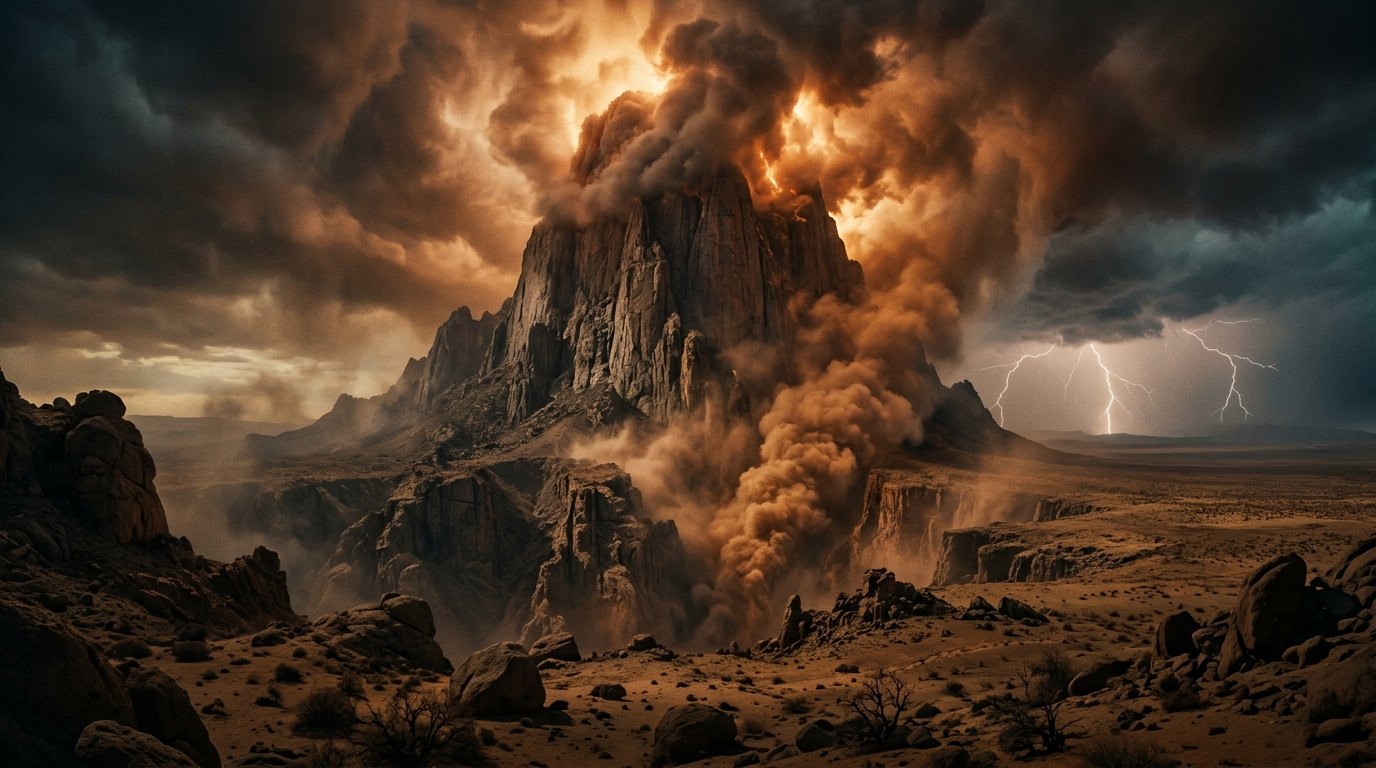
Exodus 19:16-20
16 On the morning of the third day there was thunder and lightning, with a thick cloud over the mountain, and a very loud trumpet blast. Everyone in the camp trembled.
17 Then Moses led the people out of the camp to meet with God, and they stood at the foot of the mountain.
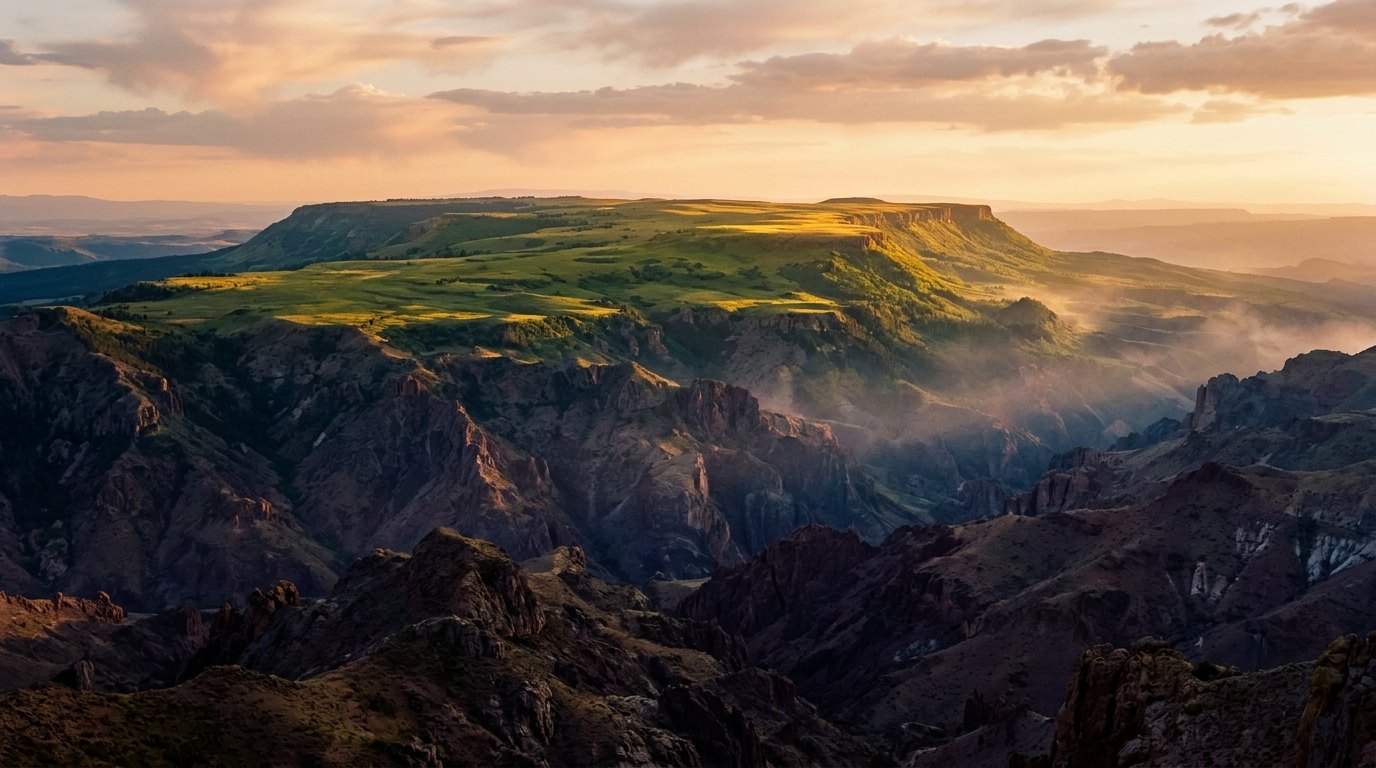
18 Mount Sinai was covered with smoke, because the LORD descended on it in fire. The smoke billowed up from it like smoke from a furnace, and the whole mountain trembled violently.
19 As the sound of the trumpet grew louder and louder, Moses spoke and the voice of God answered him.
20 The LORD descended to the top of Mount Sinai and called Moses to the top of the mountain. So Moses went up
New International Version (NIV)
The answer
Mount Sinai is the mountain in the peninsula east of the Red Sea where God descended in fire, gave the Law to Israel through Moses, and met His people.
Exodus 19:18 puts the scene plainly: "All of Mount Sinai smoked, because Yahweh descended on it in fire; and its smoke ascended like the smoke of a furnace, and the whole mountain quaked greatly." So Sinai is not just a peak on a map — it is the place where the Lord visibly came down to speak with His covenant people.
What Sinai is in the Bible
- A real mountain at the southern end of Israel's journey from Egypt. Israel camped before it (Exodus 19:2), and the Law was given there (Exodus 19:3-25; Exodus 24:12-18; Exodus 32:15-16; Exodus 34:2-4).
- The seat of God's presence in the giving of the covenant. Thick clouds, thunders, lightnings, a loud trumpet, fire, and smoke marked the descent of Yahweh (Exodus 19:16-19). Hebrews 12:18-19 echoes this: "ye are not come unto the mount that might be touched, and that burned with fire, nor unto blackness, and darkness, and tempest."
- A picture of the holy, unapproachable God. Moses himself said, "I exceedingly fear and quake" at the sight (Hebrews 12:21), and Psalm 68:8 / Psalm 77:18 recall the shaking of the mountain under God's voice.
- A pattern of both awe and access. The people stood at the lower part (Exodus 19:17) while Moses went up to the top to meet God (Exodus 19:20) — the mountain is the place where heaven and earth meet, with a mediator between them.
How the rest of Scripture reads Sinai
Revelation 4:1-5 borrows the same imagery — a voice like a trumpet, lightnings and thunderings from a throne — to show that the holy God who thundered on Sinai still reigns from His throne in heaven. Sinai marks the terror of approaching a holy God apart from a mediator; the Prophet like Moses, and ultimately Christ, is the One who brings His people to God.
Answered from Scripture · reviewed November 7, 2026
Mount Sinai is the historic mountain where the Lord descended in fire and smoke to meet Israel, institute His covenant, and deliver His holy Law through Moses. Across Scripture, Sinai stands as the awe-inspiring landmark of God's unapproachable holiness and righteousness, setting the stage for the true and better covenant established in Jesus Christ. Tracing its record reveals how the thunders of the mountain point directly to humanity's need for a mediator.
The Holy Mountain
God descends in consuming fire and smoke
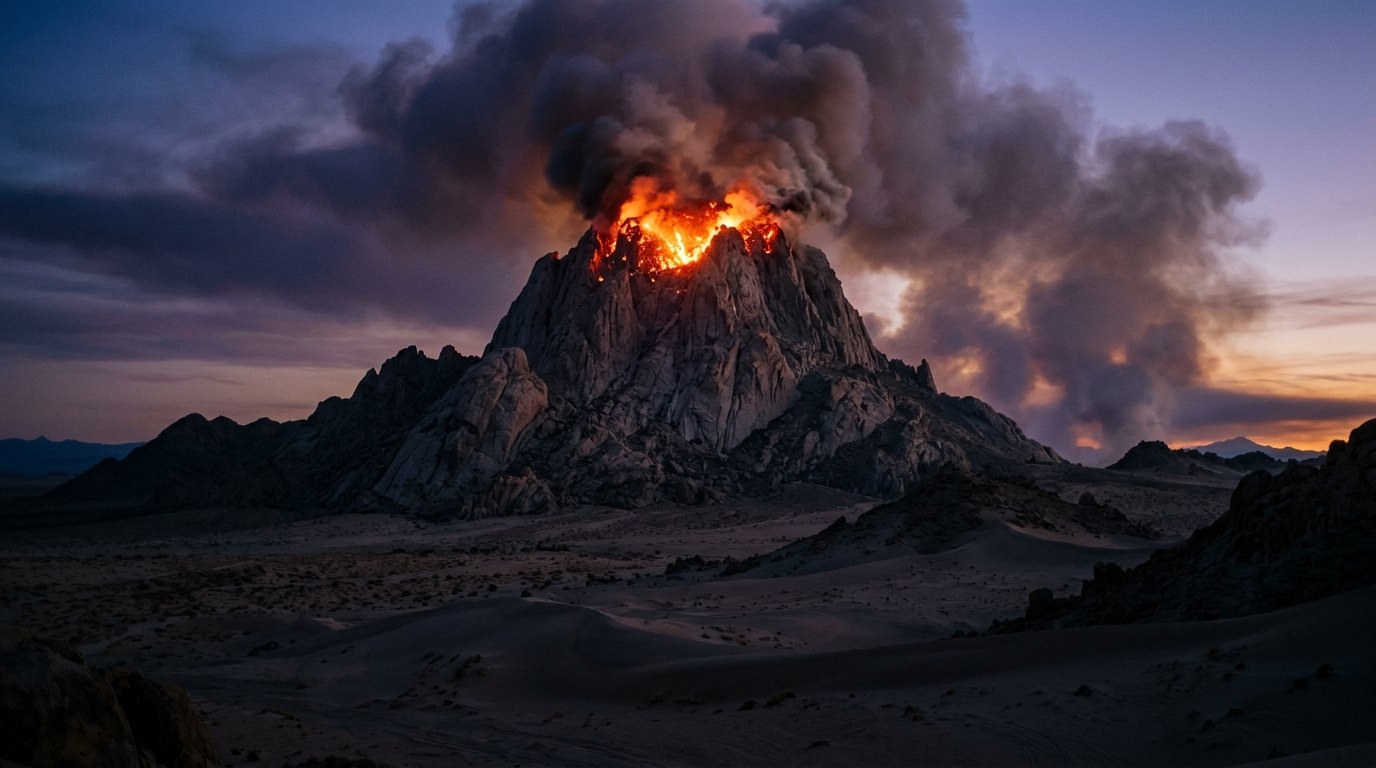
Mount Sinai was covered with smoke, because the LORD descended on it in fire. The smoke billowed up from it like smoke from a furnace, and the whole mountain trembled violently.
Exodus 19:18 (NIV)
This verse portrays God descending in visible fire and thick smoke, causing the entire mountain to tremble at His holy presence.
At Mount Sinai, God revealed His unapproachable majesty in a physical display that forever marked redemptive history. In Exodus 19:18, Scripture records that Mount Sinai was wrapped in smoke because the Lord had descended on it in fire, causing the entire mountain to tremble violently like a kiln. This awe-inspiring manifestation fulfilled what the Lord had spoken to Moses years earlier at the burning bush in Exodus 3:1-6 and Exodus 3:12, where God promised that after the deliverance from Egypt, Israel would worship Him on this very mountain of Horeb. Having brought the redeemed nation out of bondage, the Lord led them from Rephidim into the wilderness of Sinai, encamping directly in front of the rugged peak as recounted in Exodus 19:1-2.
Before God descended, strict boundaries were established to underscore the chasm between divine purity and human fallenness. In Exodus 19:10-15, the people were commanded to wash their garments and keep their distance, for any person or beast touching the border would surely die. In Exodus 19:3-6, God announced the supreme privilege of the covenant, offering to make Israel His treasured possession, a kingdom of priests, and a holy nation if they obeyed His voice. When the third day dawned, Exodus 19:16-17 records thunder, flashes of lightning, a dense cloud, and an ear-splitting trumpet blast that made the entire camp tremble with dread. As the blast grew louder and louder in Exodus 19:19-20, God called Moses to the smoking summit, establishing Sinai as the earthly meeting place where the holy Creator made His presence visibly known.
| Passage | What it says |
|---|---|
| Exodus 19:1-2 | Israel journeys from Rephidim into the wilderness of Sinai and camps directly before the mountain of God. |
| Exodus 19:10-15 | The Lord commands Moses to sanctify the people and set strict boundaries around the mountain lest they touch it and die. |
| Exodus 19:16-17 | Thunders, lightnings, a thick cloud, and an exceedingly loud trumpet sound cause all the people in the camp to tremble. |
| Exodus 19:18 | Mount Sinai smokes entirely because Yahweh descends on it in fire, billowing like a furnace as the mountain quakes greatly. |
| Exodus 19:19-20 | The trumpet sound grows louder, and the Lord calls Moses up to the top of Mount Sinai to speak with Him. |
| Exodus 3:1-6 | Moses encounters God at Horeb, the mountain of God, in the burning bush prior to the Exodus. |
| Exodus 3:12 | God promises Moses that after leading Israel out of Egypt, they will serve God on this mountain. |
| Exodus 19:3-6 | God speaks from the mountain declaring Israel to be His treasured possession and a kingdom of priests. |
Covenant and Law
The Lord delivers the Ten Commandments
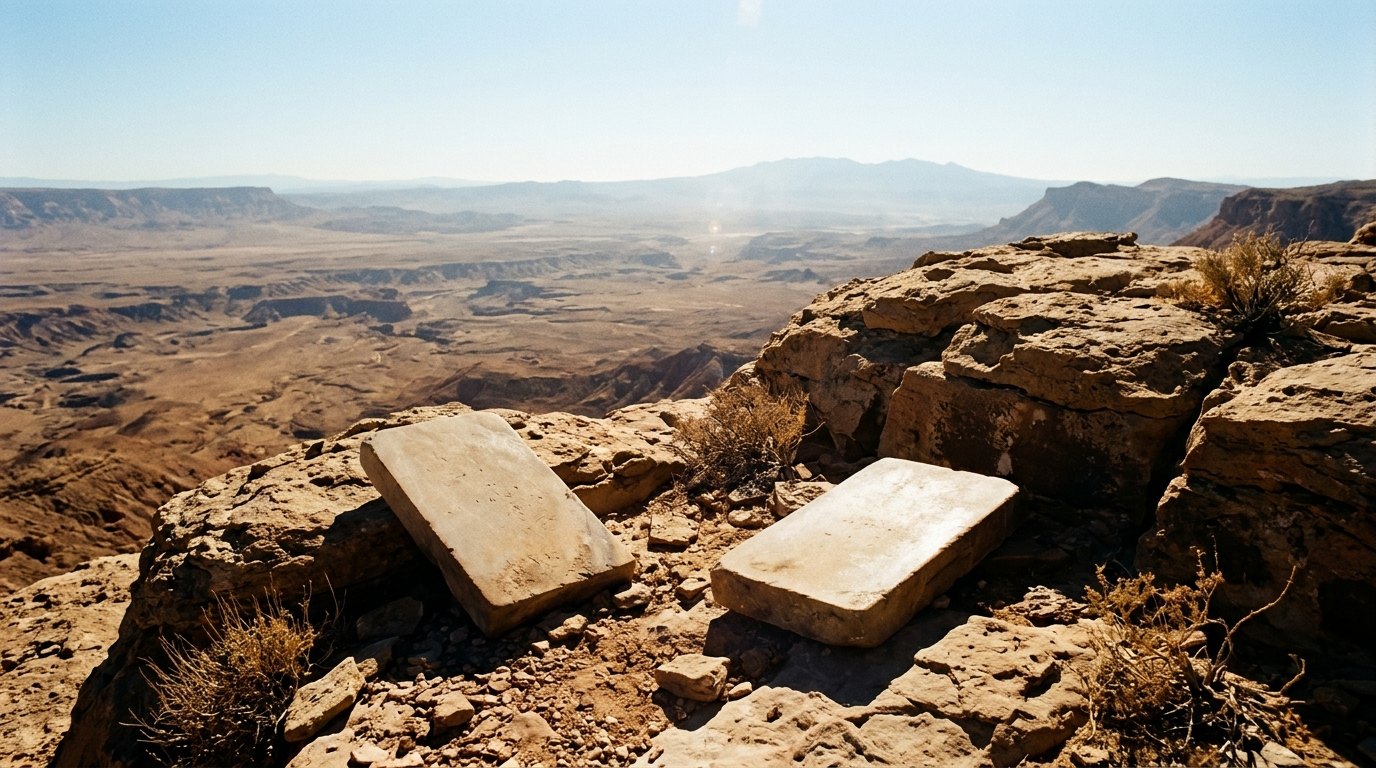
When the people saw the thunder and lightning and heard the trumpet and saw the mountain in smoke, they trembled with fear. They stayed at a distance and said to Moses, “Speak to us yourself and we will listen. But do not have God speak to us or we will die.”
Exodus 20:18-19 (NIV)
The people witness the thunder, lightning, and mountain smoking, begging Moses to mediate because they fear death from hearing God directly.
The primary significance of Mount Sinai lies in the delivery of the divine Law and the ratification of the old covenant. In Exodus 20:18-21, as the people saw the flashes of lightning and heard the deafening blasts, they stood afar off and begged Moses to speak with them lest they die, demonstrating humanity's innate terror before God's absolute holiness. Immediately prior, God had spoken the Ten Commandments aloud to the assembly in Exodus 20:1-17. The covenant was formally confirmed in Exodus 24:3-8 through the sprinkling of sacrificial blood, after which the elders ate and drank in God's presence on the mountain slopes in Exodus 24:9-11. Moses then ascended into the consuming fire for forty days in Exodus 24:12-18, receiving the heavenly patterns for the sanctuary in Exodus 25:8-9 and Exodus 25:40, as well as the stone tablets written by the finger of God in Exodus 31:18.
Sinai's history also recorded human failure and divine mercy. When Israel bowed to the golden calf, Moses shattered the initial tablets in Exodus 32:15-19, yet God commanded him to hew two new ones in Exodus 34:1-4. Following another forty-day communion in Exodus 34:28-35, Moses descended with a glowing face reflecting Yahweh's glory. The Sinai legislation was codified across Leviticus 26:46 and Leviticus 27:34, guiding Israel as the census was taken in Numbers 1:1, Aaron's priesthood ordered in Numbers 3:1-4, the second Passover kept in Numbers 9:1, and the daily offering instituted in Numbers 28:6, until the pillar of cloud finally led them away in Numbers 10:11-12. Moses later rehearsed these solemn assemblies of Horeb in Deuteronomy 4:10-15, Deuteronomy 5:2-5, and Deuteronomy 9:8-12, concluding in Deuteronomy 18:15-18 with the promise that God would one day raise up a greater Prophet like Moses—fulfilled when Jesus Christ came as the ultimate Mediator (Acts 3:22-23; Acts 7:37).
| Passage | What it says |
|---|---|
| Exodus 20:1-17 | God speaks the words of the Ten Commandments from Sinai directly into the hearing of the assembly of Israel. |
| Exodus 20:18-21 | Terrified by the smoke and noise, the people draw back and plead with Moses to hear God on their behalf. |
| Exodus 24:12-18 | Moses ascends Sinai into the cloud of the glory of the Lord, which rests like devouring fire for forty days. |
| Exodus 31:18 | The Lord gives Moses two stone tablets of testimony on Mount Sinai, written with the very finger of God. |
| Exodus 34:1-4 | After the golden calf idolatry, Moses cuts two new stone tablets and climbs Mount Sinai alone as commanded. |
| Exodus 34:28-35 | Moses spends forty days on Sinai receiving the renewed covenant, descending with his face shining from speaking with God. |
| Exodus 24:3-8 | Moses reads the Book of the Covenant and sprinkles the blood of the covenant on the altar and people. |
| Exodus 24:9-11 | The elders ascend Mount Sinai, behold the God of Israel, and eat and drink in His presence. |
| Exodus 25:8-9 | God commands the construction of the sanctuary according to the exact pattern revealed on the mountain. |
| Exodus 25:40 | God directs Moses to make all tabernacle furnishings according to the pattern shown on Mount Sinai. |
| Exodus 32:15-19 | Moses descends the mountain with the two tablets and shatters them at the sight of the golden calf. |
| Leviticus 26:46 | The statutes, rules, and laws given by the Lord through Moses are finalized at Mount Sinai. |
| Leviticus 27:34 | The commandments the Lord commanded Moses for the people of Israel are concluded at Mount Sinai. |
| Numbers 1:1 | The Lord speaks to Moses in the wilderness of Sinai from the tent of meeting for the census. |
| Numbers 3:1-4 | The lineage of Aaron and Moses is recorded, recounting Nadab and Abihu's unauthorized fire in Sinai. |
| Numbers 9:1 | The Passover is observed in the wilderness of Sinai in the first month of the second year. |
| Numbers 10:11-12 | The cloud lifts from the tabernacle, and Israel formally departs the wilderness of Sinai. |
| Numbers 28:6 | The regular daily burnt offering is specified as instituted on Mount Sinai for a pleasing aroma. |
| Deuteronomy 4:10-15 | Moses recounts the assembly at Horeb when Israel heard God's voice out of the fire without seeing a form. |
| Deuteronomy 5:2-5 | The covenant made at Horeb is reiterated, where the Lord spoke face-to-face out of the fire. |
| Deuteronomy 9:8-12 | Moses recalls Israel provoking God to wrath at Horeb while he received the stone tablets. |
| Deuteronomy 18:15-18 | God promises to raise up a prophet like Moses, answering Israel's fear of hearing God's voice at Horeb. |
Songs and Memories
Israel remembers the earth-shaking presence of God
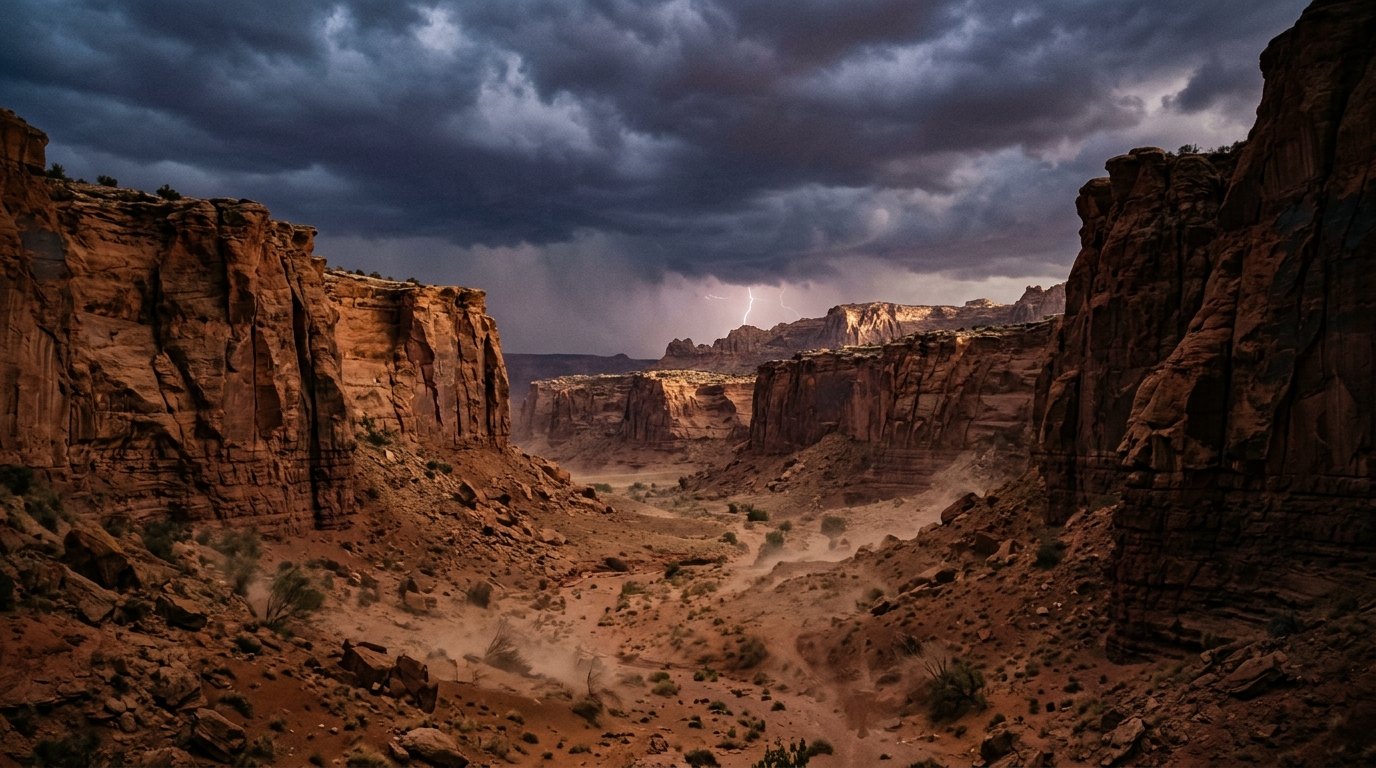
the earth shook, the heavens poured down rain, before God, the One of Sinai, before God, the God of Israel.
Psalms 68:8 (NIV)
David commemorates Mount Sinai shaking before the face of God, celebrating the Lord's historic redemption of His people.
Long after the camp departed, Israel's poets, prophets, and historians continually looked back to Sinai as the supreme benchmark of God's majesty and saving power. In Psalms 68:7-8, David sang of the wilderness march, declaring that the earth shook and the heavens dropped rain at the presence of God, the God of Sinai, celebrating how Yahweh rode forth to establish His people. Moses set the pattern in Deuteronomy 33:2, depicting the Lord dawning from Sinai with tens of thousands of holy ones bearing a fiery law. The song of Deborah in Judges 5:4-5 echoed this imagery, recalling the mountains melting before the Lord, even Sinai itself. Later, Psalms 68:17 described the Lord dwelling among His myriad chariots as in the holy sanctuary of Sinai, while Psalms 77:18 and Habakkuk 3:3-4 recalled His thundering voice, blinding lightning, and brilliant glory covering the southern desert ranges.
Sinai remained an anchor for covenant renewal and sobering warning. In Nehemiah 9:13, the post-exilic Levites praised the Lord for coming down onto Mount Sinai to give righteous rules, true laws, and good statutes. Yet Israel also remembered their rebellion, as Psalms 106:19 lamented how the fathers fashioned a calf at Horeb and worshipped a cast metal idol. It was to this very mountain of Horeb that Elijah fled in 1 Kings 19:8-14, sheltering in a cave for forty days until God revealed Himself not in the wind, earthquake, or fire, but in a gentle, low whisper. The Old Testament canon draws to a close in Malachi 4:4 with a direct command to remember the Law of Moses given at Horeb, cementing the mountain in the sacred memory of God's redemptive dealings.
| Passage | What it says |
|---|---|
| Deuteronomy 33:2 | Moses blesses Israel by declaring that the Lord came from Sinai with ten thousands of holy ones in fiery law. |
| Judges 5:4-5 | Deborah sings of the mountains melting before Yahweh, especially Mount Sinai before the God of Israel. |
| Psalms 68:7-8 | The earth shook, the heavens dropped rain, and Sinai quaked at the presence of God when He led His people. |
| Psalms 68:17 | The chariots of God are tens of thousands, and the Lord is among them as in Sinai in the holy place. |
| Psalms 77:18 | The psalmist recalls the thunder in the whirlwind, lightnings illuminating the world, and the earth trembling in praise. |
| Habakkuk 3:3-4 | God came from Teman and Mount Paran, His glory covering the heavens and His brightness appearing like the light. |
| Nehemiah 9:13 | The Levites recount how the Lord came down upon Mount Sinai and spoke right judgments and true laws from heaven. |
| 1 Kings 19:8-14 | Elijah travels forty days to Horeb, where God speaks to him in a gentle whisper in a cave. |
| Psalms 106:19 | The psalmist laments how Israel made a calf at Horeb and worshipped a metal image. |
| Malachi 4:4 | God closes the Old Testament canon urging remembrance of the law of Moses commanded at Horeb. |
Sinai and Zion
The contrast between condemnation and grace
You have not come to a mountain that can be touched and that is burning with fire; to darkness, gloom and storm; to a trumpet blast or to such a voice speaking words that those who heard it begged that no further word be spoken to them, because they could not bear what was commanded: “If even an animal touches the mountain, it must be stoned to death.” The sight was so terrifying that Moses said, “I am trembling with fear.” But you have come to Mount Zion, to the city of the living God, the heavenly Jerusalem. You have come to thousands upon thousands of angels in joyful assembly, to the church of the firstborn, whose names are written in heaven. You have come to God, the Judge of all, to…
Hebrews 12:18-24 (NIV)
This passage contrasts the terrifying physical mountain of Sinai with the heavenly joy of Mount Zion reached through Jesus' blood.
In the New Testament, Mount Sinai serves as the foundational type that illuminates the superior glory of the new covenant in Jesus Christ. The pivotal contrast is drawn in Hebrews 12:18-24, which declares that believers have not come to a blazing, untouchable mountain of darkness, whirlwind, and fear, but to Mount Zion and the city of the living God. The terrifying physical realities of Sinai—the trumpet blast, the storm, and the voice that made Moses quake with fear (Hebrews 12:18-21)—served to demonstrate the condemnation and barrier of the Law. By contrast, new covenant believers draw near through the sprinkled blood of Jesus, who mediates a better covenant of forgiveness and life (Hebrews 12:22-24; fulfilled in Revelation 14:1 and Revelation 21:2).
The apostle Paul developed this typology in Galatians 4:24-26, explaining that Mount Sinai in Arabia corresponds to the earthly Jerusalem in bondage under the law, whereas believers belong to the free, heavenly Jerusalem above through grace (fulfilled in Galatians 4:28-31). In Acts 7:30 and Acts 7:38, the martyr Stephen testified before the Sanhedrin that the Angel of the Lord spoke to Moses on Mount Sinai to deliver the living oracles, yet the people's stubborn hearts resisted the Holy Spirit. Even the apocalyptic vision of Revelation 4:1-5 carries forward Sinai's thunderings, lightnings, and trumpet calls (fulfilled in Revelation 11:19 and Revelation 16:18), proving that the sovereign holiness revealed on the desert mountain finds its eternal culmination around the heavenly throne of the Lamb.
| Passage | What it says | Fulfilled |
|---|---|---|
| Galatians 4:24-26 | Paul contrasts Mount Sinai in Arabia, which bears children into slavery under law, with the heavenly Jerusalem which is free. | Galatians 4:28-31 |
| Hebrews 12:18-21 | Believers have not come to a tangible mountain of fire, darkness, storm, and the fearful trumpet that made Moses quake. | Hebrews 12:22-24 |
| Hebrews 12:22-24 | New covenant believers come to Mount Zion, the heavenly city, angels, and Jesus the Mediator of the new covenant. | Revelation 14:1, Revelation 21:2 |
| Revelation 4:1-5 | The heavenly throne echoes Sinai's trumpet voice, thunderings, and lightning flashes, revealing the reigning holiness of God. | Revelation 11:19, Revelation 16:18 |
| Acts 7:30 | Stephen testifies that an angel appeared to Moses in the flame of a bush in the wilderness of Mount Sinai. | |
| Acts 7:38 | Stephen affirms Moses was with the assembly in the wilderness with the angel who spoke on Mount Sinai. |
Where in the Bible
| Book | Passages |
|---|---|
| Exodus | 19 · Exodus 19:1-2, Exodus 19:10-15, Exodus 19:16-17, Exodus 19:18, Exodus 19:19-20, Exodus 3:1-6, Exodus 3:12, Exodus 19:3-6, Exodus 20:1-17, Exodus 20:18-21, Exodus 24:12-18, Exodus 31:18, Exodus 34:1-4, Exodus 34:28-35, Exodus 24:3-8, Exodus 24:9-11, Exodus 25:8-9, Exodus 25:40, Exodus 32:15-19 |
| Leviticus | 2 · Leviticus 26:46, Leviticus 27:34 |
| Numbers | 5 · Numbers 1:1, Numbers 3:1-4, Numbers 9:1, Numbers 10:11-12, Numbers 28:6 |
| Deuteronomy | 5 · Deuteronomy 4:10-15, Deuteronomy 5:2-5, Deuteronomy 9:8-12, Deuteronomy 18:15-18, Deuteronomy 33:2 |
| Judges | 1 · Judges 5:4-5 |
| 1 Kings | 1 · 1 Kings 19:8-14 |
| Nehemiah | 1 · Nehemiah 9:13 |
| Psalms | 4 · Psalms 68:7-8, Psalms 68:17, Psalms 77:18, Psalms 106:19 |
| Habakkuk | 1 · Habakkuk 3:3-4 |
| Malachi | 1 · Malachi 4:4 |
| Acts | 2 · Acts 7:30, Acts 7:38 |
| Galatians | 1 · Galatians 4:24-26 |
| Hebrews | 2 · Hebrews 12:18-21, Hebrews 12:22-24 |
| Revelation | 1 · Revelation 4:1-5 |
The story in order
- Moses encounters God at Horeb (c. 1450 BC) · Exodus 3:1-6 · God appears to Moses in a burning bush on the mountain.
- Israel camps before Mount Sinai (c. 1450 BC) · Exodus 19:1-2 · The people arrive at the mountain where God will meet them.
- God's holy boundaries are set (c. 1450 BC) · Exodus 19:10-15 · Strict limits are placed around Sinai due to God's holiness.
- God descends in fire and smoke (c. 1450 BC) · Exodus 19:18 · Yahweh's awesome presence shakes the mountain.
- The Ten Commandments are given (c. 1450 BC) · Exodus 20:1-17 · God speaks His law directly to Israel.
- Moses receives the stone tablets (c. 1450 BC) · Exodus 31:18 · God writes the law with His finger.
- The covenant is ratified (c. 1450 BC) · Exodus 24:3-8 · Blood seals the covenant between God and Israel.
- Moses descends with shining face (c. 1450 BC) · Exodus 34:28-35 · Moses reflects God's glory after forty days.
- The Law is finalized (c. 1450 BC) · Leviticus 27:34 · All commandments given at Sinai are concluded.
- Israel departs Sinai (c. 1450 BC) · Numbers 10:11-12 · The people leave the mountain wilderness.
- Elijah travels to Horeb (c. 850 BC) · 1 Kings 19:8-14 · God speaks to Elijah in a gentle whisper.
- Paul contrasts the two covenants (c. AD 55) · Galatians 4:24-26 · Sinai represents slavery under law; Zion represents freedom.
- Hebrews contrasts Sinai and Zion (c. AD 65) · Hebrews 12:18-24 · Believers come to heavenly Zion, not the fearful Sinai.
Sinai and Zion: Law and Grace
| Sinai (Law) | Zion (Grace) | Passage |
|---|---|---|
| Produces slavery | Produces freedom | Galatians 4:24-26 |
| Tangible mountain, fire, storm, trumpet | Heavenly city, angels, Jesus | Hebrews 12:18-24 |
| Fearful trumpet sound | Joyful assembly | |
| Those who disobey die | Names written in heaven |
God's Presence on the Mountain
| Manifestation | Effect on Israel | Significance | Passage |
|---|---|---|---|
| Fire, smoke, earthquake, loud trumpet | Trembling, fear, drawing back | God's awesome holiness and power | |
| Glory cloud, consuming fire | Moses ascends, elders behold God | God's covenant presence | |
| Gentle whisper in a cave | Elijah seeks God | God's intimate communication | 1 Kings 19:8-14 |
| Heavenly throne room, thunders, lightning | Worship and awe | God's sovereign reign | Revelation 4:1-5 |
Key words
- Horeb (Horeb, חֹרֵב)
- Another name for Mount Sinai, meaning 'dryness' or 'desert'. · Exodus 3:1
- Yahweh (Yahweh, יַהְוֶה)
- The personal name of God, often translated 'LORD'. · Exodus 19:18
- Law (Torah, תּוֹרָה)
- The body of commandments and statutes given by God to Israel. · Exodus 20:1
- Covenant (Berit, בְּרִית)
- A solemn agreement or bond, often sealed by oath or blood. · Exodus 24:8
- Mediator (Mesites, μεσίτης)
- One who stands between two parties to reconcile them. · Hebrews 12:24
Mount Sinai reveals the absolute majesty, holiness, and justice of God, demonstrating that no sinner can approach His presence without a mediator. In Jesus Christ, believers are brought not to a mountain of terror, smoke, and quaking fear, but to Mount Zion, having peace with God through the blood of the everlasting covenant.
46 passages, each cited once.
Scripture cited
- Exodus 19:16-20
- Hebrews 12:18-19
- Hebrews 12:21
- Psalms 77:18
- Revelation 4:5