What is original sin?

Romans 5:12-19
12 Therefore, just as sin entered the world through one man, and death through sin, and in this way death came to all people, because all sinned—
13 To be sure, sin was in the world before the law was given, but sin is not charged against anyone’s account where there is no law.
14 Nevertheless, death reigned from the time of Adam to the time of Moses, even over those who did not sin by breaking a command, as did Adam, who is a pattern of the one to come.
15 But the gift is not like the trespass. For if the many died by the trespass of the one man, how much more did God’s grace and the gift that came by the grace of the one man, Jesus Christ, overflow to the many!
16 Nor can the gift of God be compared with the result of one man’s sin: The judgment followed one sin and brought condemnation, but the gift followed many trespasses and brought justification.
17 For if, by the trespass of the one man, death reigned through that one man, how much more will those who receive God’s abundant provision of grace and of the gift of righteousness reign in life through the one man, Jesus Christ!
18 Consequently, just as one trespass resulted in condemnation for all people, so also one righteous act resulted in justification and life for all people.
19 For just as through the disobedience of the one man the many were made sinners, so also through the obedience of the one man the many will be made righteous.
New International Version (NIV)
The answer
Original sin is the Bible's teaching that Adam's sin broke the human race, so every one of us is born with a fallen nature, is counted guilty because of Adam's trespass, and personally sins — and death comes to all because of it.
Scripture puts this plainly in Romans 5:12: "as sin entered into the world through one man, and death through sin, so death passed to all men because all sinned." One man, one act, one result for everyone downstream.
What original sin includes
- A guilt we inherit from Adam: Through one trespass, "all men were condemned" (Romans 5:18). Adam's single act of disobedience is charged against the race.
- A nature we inherit from Adam: "Through the one man's disobedience many were made sinners" (Romans 5:19). We come into the world as sinners, not morally neutral.
- A consequence we cannot escape: "Death reigned from Adam until Moses, even over those whose sins weren't like Adam's" (Romans 5:14). Infants and the morally unaware die — proof the problem runs deeper than personal choices.
- Sin we commit ourselves: "All have sinned, and come short of the glory of God" (Romans 3:23). Original sin does not excuse our actual sin; it explains why we cannot stop.
Why it matters
Original sin is why "the wages of sin is death" (Romans 6:23), and it is the foundation of the gospel's logic. As one man's disobedience made many sinners, one man's obedience — Christ's — makes many righteous (Romans 5:19; 1 Corinthians 15:21-22).
Where it began
God warned Adam: "in the day that thou eatest thereof thou shalt surely die" (Genesis 2:17). He ate; death entered; and with it, sin and condemnation for every descendant.
The hopeful flip side
The same passage that diagnoses original sin prescribes its cure: "much more did the grace of God and the gift by the grace of the one man, Jesus Christ, abound to the many" (Romans 5:15). What Adam lost, Christ restores — and more.
Answered from Scripture · reviewed November 7, 2026
Original sin is Scripture's truth that Adam's first rebellion plunged the entire human race into inherited guilt, a corrupt nature, and physical and spiritual death. We do not become sinners by committing our first wrong; we sin because we are born children of Adam, desperately needing the rescue found only in the obedience of Christ.
The Beginning
God Warned Adam That Disobedience Would Bring Death
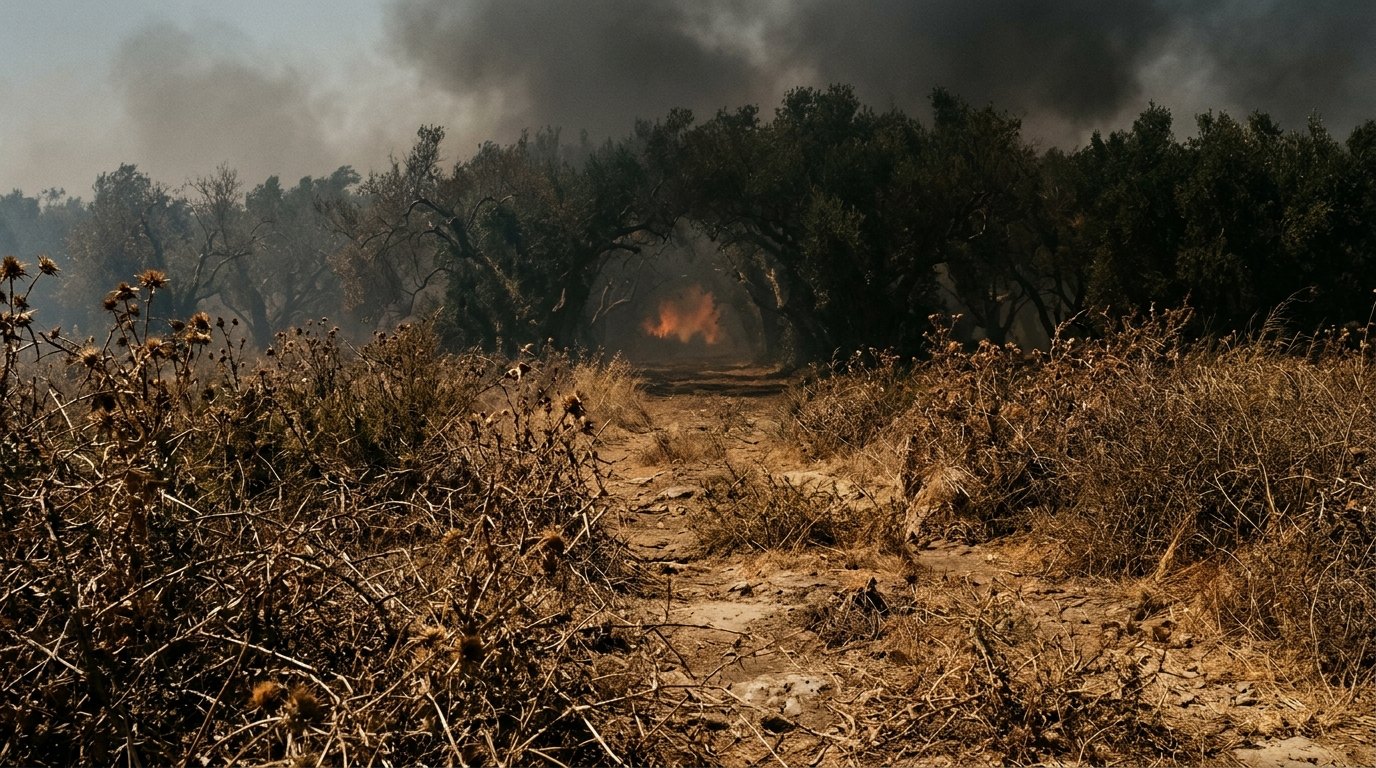
but you must not eat from the tree of the knowledge of good and evil, for when you eat from it you will certainly die.”
Genesis 2:17 (NIV)
This original command established life through obedience and death through transgression as the foundational law of human existence.
The foundational boundary of human history was drawn by a single divine command: "in the day that you eat of it you shall surely die" (Genesis 2:17). In Eden, God established man in fellowship with Himself, generously granting every tree for food except one (Genesis 2:16). Yet that sole restriction became the site of catastrophic rebellion. In Genesis 3:1-5, the serpent deceived Eve by casting doubt on God's truthfulness, provoking her to grasp at autonomy. When she ate and gave to her husband with her, Adam deliberately disobeyed his Creator (Genesis 3:6).
Instantly, the promised ruin took hold. Their eyes were opened not to divine majesty, but to sudden shame and nakedness (Genesis 3:7). Rather than running to their Maker, Adam and his wife fled from His presence among the trees (Genesis 3:8-10). When summoned to give account, fellowship gave way to self-justification: Adam blamed both his wife and God Himself, while the woman blamed the serpent (Genesis 3:11-13). As Hosea 6:7 later laments, humanity broke the covenant just as Adam did.
God met this mutiny with irrevocable judgment. He cursed the tempter, yet in sovereign mercy embedded the first gospel promise that the seed of the woman would ultimately crush the serpent's head (Genesis 3:14-15). Meanwhile, the immediate consequences fell heavily upon mankind: multiplied sorrow in childbearing, fractured marital harmony, and agonizing toil over an earth cursed with thorns and thistles (Genesis 3:16-18). The ultimate physical sentence followed inexorably: "dust you are, and to dust you shall return" (Genesis 3:19). Severing unholy man from eternal earthly existence in his fallen state, God drove Adam out of the garden and stationed cherubim with a flaming sword to bar access to the tree of life (Genesis 3:22-24).
| Passage | What it says |
|---|---|
| Genesis 2:16 | God generously permitted Adam freely to eat from every tree in the garden except one. |
| Genesis 2:17 | God warned that eating of the tree of the knowledge of good and evil brings certain death. |
| Genesis 3:6 | The woman took and ate the forbidden fruit and gave some to her husband with her, and he ate. |
| Genesis 3:19 | God pronounced that man would return to the ground as dust, bringing mortality upon humanity. |
| Genesis 3:1-5 | The serpent tempts Eve to doubt God's word and rebel against His sovereign authority. |
| Genesis 3:7 | The eyes of both Adam and Eve were opened, immediately producing shame and alienating self-awareness. |
| Genesis 3:8-10 | Guilt prompts Adam and Eve to hide from the presence of the Lord among the trees of the garden. |
| Genesis 3:11-13 | Under divine examination, Adam blames the woman and God, while the woman blames the serpent. |
| Genesis 3:14-15 | God curses the serpent and promises the seed of the woman will crush his head. |
| Genesis 3:16-18 | God pronounces sorrow in childbearing, marital friction, and painful toil over cursed ground. |
| Genesis 3:22-24 | Man is driven out from Eden and barred from the tree of life by cherubim and a flaming sword. |
| Hosea 6:7 | Israel is compared to Adam, who transgressed the covenant with God. |
The Inheritance
Sin and Condemnation Spread to Every Descendant

Therefore, just as sin entered the world through one man, and death through sin, and in this way death came to all people, because all sinned—
Romans 5:12 (NIV)
Paul pinpoints the single doorway through which both sin and universal mortality entered the world: the trespass of one man.
The disaster in Eden was never merely personal to Adam; it was a representative catastrophe for the whole human race. In Romans 5:12, the Apostle Paul articulates the precise mechanism of this ruin: "through one man sin entered the world, and death through sin, and thus death spread to all men, because all sinned." Adam stood as the federal head of humanity. Because we were in his loins, his singular act of defiance constituted the entire race as guilty before a holy God.
Paul proves this universal solidarity by pointing to the historical record. Sin was active in the world long before Moses received the written law at Sinai, even though individual trespasses were not yet legally codified (Romans 5:13). The undeniable evidence of this guilt was that "death reigned from Adam to Moses" (Romans 5:14), sweeping away generations who had never committed a specific infraction like Adam's command. Judgment followed a single offense, resulting in sweeping condemnation for every natural-born human being (Romans 5:16, 18). Through the disobedience of that one man, the many were fundamentally constituted sinners (Romans 5:19).
The Old Testament wisdom literature echoes this sobering reality of inherited pollution. Job asks in anguish, "Who can bring a clean thing out of an unclean? Not one!" (Job 14:4). Eliphaz similarly queries, "What is man, that he could be pure? And he who is born of a woman, that he could be righteous?" (Job 15:14), while Bildad declares it impossible for anyone born of woman to stand clean before God (Job 25:4). By ordinary generation, every human being enters history stamped with the fallen likeness of our earthly forefather (1 Corinthians 15:45-49).
| Passage | What it says |
|---|---|
| Romans 5:12 | Sin entered the world through one man, death entered through sin, and death passed to all because all sinned. |
| Romans 5:13 | Sin operated in the world before the Mosaic law was given, though it was not imputed as legal violation. |
| Romans 5:14 | Death reigned from Adam until Moses even over those who did not sin in the likeness of Adam's transgression. |
| Romans 5:16 | Judgment followed one single trespass, bringing condemnation upon the entire human race. |
| Romans 5:18 | Through one man's trespass, condemnation resulted for all people. |
| Romans 5:19 | Through the disobedience of the one man, the many were constituted sinners. |
| Job 14:4 | Job asks who can bring a clean thing out of an unclean person, declaring that no one can. |
| Job 15:14 | Eliphaz questions how man can be pure or one born of woman be righteous. |
| Job 25:4 | Bildad asks how man can be justified before God, or one born of a woman be clean. |
| 1 Corinthians 15:45-49 | As we have borne the image of the earthly man Adam, believers will bear the heavenly image of Christ. |
The Condition
Fallen Nature Produces Universal Guilt and Inevitable Sin

for all have sinned and fall short of the glory of God,
Romans 3:23 (NIV)
This sweeping declaration confirms that original sin inevitably bears fruit in personal, universal failure before God's holy standard.
Because original sin corrupts our nature at the root, personal transgression is the inevitable fruit of an infected fountain. Paul writes the definitive verdict: "for all have sinned and fall short of the glory of God" (Romans 3:23). Scripture leaves no room for human self-congratulation, declaring flatly that "there is none righteous, no, not one" (Romans 3:10). David traced this condition back to his very origin, confessing, "Behold, I was brought forth in iniquity, and in sin my mother conceived me" (Psalms 51:5). The ungodly do not merely stumble into error later in life; they "are estranged from the womb" and "go astray as soon as they are born, speaking lies" (Psalms 58:3).
This depravity touches every faculty of the soul. God saw before the flood that "every intent of the thoughts of his heart was only evil continually" (Genesis 6:5), a verdict reiterated after the waters receded (Genesis 8:21). The Lord looked down from heaven to see if any sought Him, only to find that all had turned aside and become corrupt (Psalms 14:1-3; Romans 3:11-18). Jeremiah unmasks the root cause: "The heart is deceitful above all things, and desperately wicked; who can know it?" (Jeremiah 17:9). Solomon confirms that though God made man upright, humanity went searching for many schemes, leaving not a single righteous soul who never sins (Ecclesiastes 7:20, 29).
Consequently, every descendant of Adam is born spiritually dead. Jesus warned Nicodemus that natural birth yields only flesh, utterly incapable of seeing God's kingdom without spiritual rebirth (John 3:3-6). In our natural condition, "the carnal mind is enmity against God" and cannot submit to His law (Romans 8:7-8). We were all "by nature children of wrath," enslaved to worldly lusts, sold under sin, and alienated from the divine life (Romans 7:14, 18; Ephesians 2:1-3; 4:17-19; Colossians 2:13; Titus 3:3). To deny this pervasive guilt is to deceive ourselves and brand the God of truth a liar (1 John 1:8, 10), sealing our doom under sin's rightful wage, which is death (Romans 6:23; James 1:15; Psalms 143:2).
| Passage | What it says |
|---|---|
| Psalms 51:5 | David confesses that he was brought forth in iniquity and conceived in sin from his mother's womb. |
| Romans 3:10 | Scripture declares that none is righteous, not even one individual. |
| Romans 3:23 | All have sinned and fall short of the glory of God. |
| Romans 6:23 | The wages earned by sin is death, but God's free gift is eternal life in Christ. |
| James 1:15 | Evil desire conceives and gives birth to sin, and sin when fully grown brings forth death. |
| Genesis 6:5 | Every intent of the thoughts of man's heart was only evil continually before the flood. |
| Genesis 8:21 | The Lord declares the intent of man's heart is evil from his youth. |
| Psalms 14:1-3 | The Lord observes from heaven that none does good, not even one, as all have turned aside. |
| Psalms 58:3 | The wicked are estranged from the womb and go astray speaking lies as soon as they are born. |
| Psalms 143:2 | David confesses that in God's sight no one living is righteous. |
| Ecclesiastes 7:20 | There is not a just man on earth who does good and does not sin. |
| Ecclesiastes 7:29 | God made man upright, but humans have sought out many schemes. |
| Jeremiah 17:9 | The human heart is deceitful above all things and desperately sick beyond understanding. |
| John 3:3-6 | Jesus teaches that that which is born of the flesh is flesh, requiring spiritual rebirth. |
| Romans 3:9 | Paul concludes that both Jews and Greeks are all under the power of sin. |
| Romans 3:11-18 | Paul quotes the Psalms to prove total lack of spiritual understanding and absence of fear of God. |
| Romans 7:14 | The apostle confesses that the law is spiritual, but fallen human nature is carnal and sold under sin. |
| Romans 7:18 | Paul acknowledges that in his flesh nothing good dwells. |
| Romans 8:7-8 | The carnal mind is hostile to God, cannot submit to His law, and cannot please Him. |
| Ephesians 2:1-3 | All people were dead in trespasses and sins and were by nature children of wrath. |
| Ephesians 4:17-19 | Gentiles walk in futility of mind, alienated from the life of God through ignorance and hardness of heart. |
| Colossians 2:13 | Believers were once dead in their trespasses and the uncircumcision of their flesh. |
| Titus 3:3 | We ourselves were once foolish, disobedient, deceived, and serving various lusts and pleasures. |
| 1 John 1:8 | If we say we have no sin, we deceive ourselves and the truth is not in us. |
| 1 John 1:10 | If we say we have not sinned, we make God a liar and His word is not in us. |
The Remedy
The Obedience of Christ Overcomes the Ruin of Adam

For as in Adam all die, so in Christ all will be made alive.
1 Corinthians 15:22 (NIV)
Paul contrasts the corporate heads of humanity, showing that resurrection life comes exclusively through union with the Second Adam.
The terrible reign of Adam's sin does not have the final word in redemptive history. In 1 Corinthians 15:22, the Apostle provides the glorious counterbalance to our original ruin: "For as in Adam all die, even so in Christ all shall be made alive." What Adam shattered as humanity's representative, the Lord Jesus Christ restored and surpassed as the Last Adam. Just as physical and spiritual death invaded creation through a man, so through the perfect obedience and bodily resurrection of a man came the defeat of the grave (1 Corinthians 15:21, fulfilled in 1 Corinthians 15:45-49).
Paul magnifies the infinite superiority of the remedy over the disease. Adam's trespass brought judgment and widespread condemnation, but the grace of God and the free gift through Jesus Christ abounded far beyond the breach (Romans 5:15, fulfilled in Romans 5:17). Where sin increased, superabundant grace overflowed, ensuring that righteousness now reigns unto eternal life (Romans 5:20-21). While natural birth binds us to Adam's guilt, faith unites us to Christ's triumph, clothing the believer in a status of complete justification.
This great exchange is the heartbeat of the gospel. On the cross, God "made Him who knew no sin to be sin for us, that we might become the righteousness of God in Him" (2 Corinthians 5:21). The curse that held us is broken: "There is therefore now no condemnation to those who are in Christ Jesus" (Romans 8:1-4). Having once been corpses in trespasses and sins, God in rich mercy made us alive together with Christ and raised us up with Him in heavenly places (Ephesians 2:4-6). We are saved not by any righteous deeds of our own, but solely through the washing of regeneration and renewing of the Holy Spirit (Titus 3:4-7).
| Passage | What it says | Fulfilled |
|---|---|---|
| Romans 5:15 | The grace of God and the gift by the grace of Jesus Christ abounded much more to many than Adam's trespass. | Romans 5:17 |
| Romans 5:17 | Those who receive the abundance of grace and the free gift of righteousness reign in life through Jesus Christ. | Romans 5:21 |
| 1 Corinthians 15:21 | Just as death came through a man, the resurrection of the dead also came through a man. | 1 Corinthians 15:45 |
| 1 Corinthians 15:22 | As in Adam all die, so also in Christ will all be made alive. | 1 Corinthians 15:49 |
| Romans 5:20-21 | Where sin abounded, grace abounded much more, so that grace reigns through righteousness to eternal life. | |
| Romans 8:1-4 | There is now no condemnation for those in Christ, as the law of the Spirit sets believers free. | |
| 2 Corinthians 5:21 | God made Him who knew no sin to be sin for us, so that we might become God's righteousness. | |
| Ephesians 2:4-6 | God made us alive together with Christ by grace, raising us up with Him. | |
| Titus 3:4-7 | God saved us not by works of righteousness, but through the washing of regeneration and renewal in the Holy Spirit. |
Where in the Bible
| Book | Passages |
|---|---|
| Genesis | 13 · Genesis 2:16, Genesis 2:17, Genesis 3:6, Genesis 3:19, Genesis 3:1-5, Genesis 3:7, Genesis 3:8-10, Genesis 3:11-13, Genesis 3:14-15, Genesis 3:16-18, Genesis 3:22-24, Genesis 6:5, Genesis 8:21 |
| Job | 3 · Job 14:4, Job 15:14, Job 25:4 |
| Psalms | 4 · Psalms 51:5, Psalms 14:1-3, Psalms 58:3, Psalms 143:2 |
| Ecclesiastes | 2 · Ecclesiastes 7:20, Ecclesiastes 7:29 |
| Jeremiah | 1 · Jeremiah 17:9 |
| Hosea | 1 · Hosea 6:7 |
| John | 1 · John 3:3-6 |
| Romans | 18 · Romans 5:12, Romans 5:13, Romans 5:14, Romans 5:16, Romans 5:18, Romans 5:19, Romans 3:10, Romans 3:23, Romans 6:23, Romans 3:9, Romans 3:11-18, Romans 7:14, Romans 7:18, Romans 8:7-8, Romans 5:15, Romans 5:17, Romans 5:20-21, Romans 8:1-4 |
| 1 Corinthians | 3 · 1 Corinthians 15:45-49, 1 Corinthians 15:21, 1 Corinthians 15:22 |
| 2 Corinthians | 1 · 2 Corinthians 5:21 |
| Ephesians | 3 · Ephesians 2:1-3, Ephesians 4:17-19, Ephesians 2:4-6 |
| Colossians | 1 · Colossians 2:13 |
| Titus | 2 · Titus 3:3, Titus 3:4-7 |
| James | 1 · James 1:15 |
| 1 John | 2 · 1 John 1:8, 1 John 1:10 |
The story in order
- God warns Adam about the tree (c. 4000 BC) · Genesis 2:17 · Disobedience would result in death.
- Adam and Eve disobey God (c. 4000 BC) · Genesis 3:6 · They ate the forbidden fruit.
- Humanity becomes mortal (c. 4000 BC) · Genesis 3:19 · Man returns to dust, signifying death.
- Adam and Eve hide from God (c. 4000 BC) · Genesis 3:8-10 · Guilt and shame alienate them from God.
- God curses the serpent (c. 4000 BC) · Genesis 3:14-15 · Promise of a redeemer to crush the serpent's head.
- Sin spreads to all humanity (AD 57) · Romans 5:12 · Sin and death entered the world through Adam.
- Condemnation for all people (AD 57) · Romans 5:18 · Adam's trespass brought condemnation.
- David confesses inherited sin (c. 970 BC) · Psalms 51:5 · Born in iniquity, conceived in sin.
- All have sinned (AD 57) · Romans 3:23 · All fall short of God's glory.
- Fallen nature is hostile to God (AD 57) · Romans 8:7-8 · Cannot please God or submit to His law.
- Christ's obedience overcomes Adam's sin (AD 57) · Romans 5:15 · Grace abounds more than Adam's trespass.
- In Christ, all are made alive (AD 55) · 1 Corinthians 15:22 · As in Adam all die, so in Christ all live.
- No condemnation in Christ (AD 57) · Romans 8:1-4 · The Spirit sets believers free from sin's penalty.
- Made alive by God's grace (AD 60) · Ephesians 2:4-6 · God raises believers with Christ.
The Wages of Sin
| Sin's Outcome | Scripture's Declaration | Passage |
|---|---|---|
| Death | The wages earned by sin is death. | Romans 6:23 |
| Condemnation | Judgment followed one trespass, bringing condemnation. | Romans 5:16 |
| Hostility to God | The carnal mind is hostile to God. | Romans 8:7 |
| Alienation from God | Alienated from the life of God through ignorance. | Ephesians 4:18 |
Key words
- Original Sin
- Adam's first rebellion plunged humanity into inherited guilt, a corrupt nature, and death. · Romans 5:12
- Sin (ḥaṭṭā'ṯ (חַטָּאת))
- Rebellion against God's authority and law; falling short of His glory. · Romans 3:23
- Death (māwĕṯ (מָוֶת))
- Physical separation from life, and spiritual separation from God. · Genesis 3:19
- Guilt
- The state of being responsible for wrongdoing, deserving condemnation. · Romans 5:18
- Nature (sarx (σάρξ))
- The inherent disposition and character of a person, corrupted by sin. · Romans 7:18
- Condemnation (katakrima (κατάκριμα))
- A judgment of guilt and deserved punishment. · Romans 8:1
- Righteousness (dikaiosynē (δικαιοσύνη))
- Being declared just and holy by God, through Christ's obedience. · 2 Corinthians 5:21
The diagnosis of original sin is severe, but Scripture never presents the ruin of Adam without holding out the far greater remedy in Christ. In the Second Adam, the inherited reign of condemnation and death is broken forever, granting every believer abundant grace, imputed righteousness, and eternal life.
56 passages, each cited once.
How the major Christian traditions read this
All major Christian traditions confess that through Adam's fall, humanity fell from its original state, bringing universal mortality and a corrupted inclination toward sin that requires the saving grace of Jesus Christ alone (Romans 5:12, 18).
Catholic
We teach that original sin is not a personal fault committed by Adam's descendants, but a deprivation of original holiness and justice transmitted through human propagation. As the Council of Trent affirmed, through Adam's disobedience all humanity contracted the guilt and state of sin (Romans 5:12, 19). This inherited condition leaves human nature wounded in its natural powers, subject to ignorance, suffering, and death, and inclined toward sin (concupiscence). In holy baptism, through the merits of Jesus Christ, the true and proper guilt of original sin is entirely remitted, and sanctifying grace is infused into the soul, though concupiscence remains as an inclination against which the baptized must struggle (Romans 6:3-4).
Scripture: Romans 5:12, Romans 5:19, Romans 6:3-4
Orthodox
We confess ancestral sin, teaching that Adam's transgression brought mortality, corruption, and an inclination toward passion upon all his descendants, rather than an inheritance of his personal moral guilt (Romans 5:12). Death is the reigning consequence through which sin enslaves humanity (Romans 5:14). As the Confession of Dositheus teaches, humanity inherited the burden, corruption, and mortality of the fall, yet the image of God and our natural free will were wounded rather than utterly obliterated. Each person bears responsibility for their own voluntary sins, while baptism incorporates the infant or adult into the life of Christ, cleansing ancestral corruption and uniting the believer to the divine life through the Holy Spirit.
Scripture: Romans 5:12, Romans 5:14
Lutheran
We confess in the Augsburg Confession that since Adam's fall, all persons naturally engendered are conceived and born in sin, completely lacking true fear of and trust in God, and full of concupiscence (Romans 5:12; Psalm 51:5). This origin sin is not merely a defect or wound, but is truly and properly condemning sin that brings eternal death upon everyone who is not reborn through Holy Baptism and the Holy Spirit (John 3:5). Left to ourselves, human nature is utterly bound in spiritual matters, incapable of moving toward God or cooperating with His grace without the regenerating power of the Gospel.
Scripture: Romans 5:12, Psalms 51:5, John 3:5
Reformed & Presbyterian
We hold to total depravity and the federal headship of Adam, as summarized in the Westminster Confession of Faith. When Adam sinned as our covenant head, the guilt of his first sin was imputed to all his natural posterity, and his corrupt nature was conveyed to all (Romans 5:18-19). Humanity is dead in trespasses and sins, wholly defiled in all faculties of soul and body, and completely disabled and indisposed toward any spiritual good (Ephesians 2:1-3; Romans 3:10-12). From this original corruption proceed all actual transgressions. Only the sovereign, unmerited regenerating grace of the Holy Spirit can resurrect the dead will to faith in Jesus Christ.
Scripture: Romans 5:18-19, Ephesians 2:1-3, Romans 3:10-12
Anglican & Episcopal
We profess in Article IX of the Thirty-Nine Articles that original sin is not the following or imitation of Adam, but the fault and corruption of nature in every person born of Adam's offspring. Man is very far gone from original righteousness and is of his own nature continually inclined to evil, so that the flesh lusts against the spirit (Romans 7:18; Galatians 5:17). In every person born into this world, this condition deserves God's wrath and damnation (Ephesians 2:3). In baptism, condemnation is taken away for those who believe, though the infection of nature remains even in the regenerate.
Scripture: Romans 7:18, Galatians 5:17, Ephesians 2:3
Baptist
We affirm, in line with the Second London Baptist Confession, that our first parents fell from communion with God, and through their covenant transgression, all humanity became dead in sin and entirely defiled in soul and body (Romans 5:12; Genesis 6:5). Because Adam stood as our head, his guilt and corrupt nature pass to every descendant, rendering us completely incapable of turning to God on our own strength (Romans 8:7-8). Every individual is guilty before God, personally accountable, and desperately in need of the new birth through the Holy Spirit and repentance and faith in Christ alone (John 3:3).
Scripture: Romans 5:12, Genesis 6:5, Romans 8:7-8, John 3:3
Methodist & Wesleyan
We affirm with Article VII of the Methodist Articles of Religion that original sin is the corruption of the nature of every descendant of Adam, whereby humanity is very far gone from original righteousness and continually bent toward evil (Romans 5:19). While original sin leaves humanity entirely ruined and unable of itself to seek God, God's universal prevenient grace, purchased on the cross, meets every person (Titus 2:11; John 1:9). This grace awakens the conscience, partially restores moral agency, and enables the sinner to freely respond to or resist the convicting call of the Gospel.
Scripture: Romans 5:19, Titus 2:11, John 1:9
Pentecostal & Charismatic
We stand with historic evangelical faith in confessing that humanity was created good, but by voluntary transgression fell, incurring not only physical death but spiritual separation from God (Romans 5:12; Genesis 3:6). Every person inherits a fallen nature that is prone to sin and under judgment (Ephesians 2:3). The answer to this deep-seated depravity is personal regeneration by the Holy Spirit through the blood of Christ (Titus 3:5). We emphasize that the Spirit does not merely pardon original and actual sin, but dynamically empowers the believer with power to overcome the sinful nature daily (Romans 8:13).
Scripture: Romans 5:12, Genesis 3:6, Ephesians 2:3, Titus 3:5, Romans 8:13
Non-denominational & Evangelical
We teach that Adam's disobedience fractured our relationship with God and brought spiritual and physical death upon the entire human race (Romans 5:12). Every human being is born with a sinful nature, alienated from God, and entirely unable to save themselves (Romans 3:23; Ephesians 2:1-3). We believe original sin explains why all people sin and fall short of God's glory. Deliverance comes solely through personal faith in the finished work of Jesus Christ on the cross, which justifies the sinner, gives new life, and frees us from the penalty and power of sin (Romans 5:1; 2 Corinthians 5:17).
Scripture: Romans 5:12, Romans 3:23, Ephesians 2:1-3, Romans 5:1, 2 Corinthians 5:17
Where they differ
Inheritance of Adam's guilt
- Catholic
- All inherit the state and guilt of original sin, washed away in baptism.
- Orthodox
- Descendants inherit mortality and corruption, not the personal moral guilt of Adam.
- Lutheran
- All inherit true, condemning guilt that warrants eternal death without regeneration.
- Reformed & Presbyterian
- Adam's legal guilt is immediately imputed to all his natural descendants.
- Anglican & Episcopal
- Inherited corruption in every newborn person deserves God's wrath and damnation.
- Baptist
- All inherit both Adam's legal guilt and a completely corrupted nature.
- Methodist & Wesleyan
- Universal guilt is inherited, but universally offset by Christ's prevenient grace.
- Pentecostal & Charismatic
- Guilt and fallenness pass to all, requiring individual repentance and new birth.
- Non-denominational & Evangelical
- All are born separated from God and guilty under sin's universal condemnation.
Scripture: Romans 5:12, Romans 5:18, Ephesians 2:3
Human will after the fall
- Catholic
- Free will is wounded and weakened, requiring actual grace to cooperate.
- Orthodox
- Free will remains active though wounded, able to synergistically cooperate with grace.
- Lutheran
- Free will in spiritual matters is entirely dead until reborn by grace.
- Reformed & Presbyterian
- Total depravity renders the fallen will utterly dead and opposed to good.
- Anglican & Episcopal
- Fallen human will cannot turn itself to faith without God's enabling grace.
- Baptist
- Sinful corruption leaves the human will unable to seek God on its own.
- Methodist & Wesleyan
- Prevenient grace restores enough freedom to accept or reject saving grace.
- Pentecostal & Charismatic
- The fallen will is powerless until drawn and enabled by the Holy Spirit.
- Non-denominational & Evangelical
- The sinful nature blinds humanity until the Gospel enables a personal decision.
Scripture: Romans 8:7-8, Ephesians 2:1, John 6:44
Remedy of original sin
- Catholic
- Water baptism sacramentally washes away all guilt and infuses sanctifying grace.
- Orthodox
- Holy baptism washes ancestral corruption, defeats death, and initiates life in Christ.
- Lutheran
- Baptism truly remits the condemning guilt of original sin through the Word.
- Reformed & Presbyterian
- Christ's imputed righteousness through sovereign regeneration alone overcomes our corruption.
- Anglican & Episcopal
- Regeneration in baptism removes condemnation, though the sinful infection remains.
- Baptist
- Spiritual regeneration by grace through personal faith remits sin; baptism symbolizes it.
- Methodist & Wesleyan
- Justifying faith through grace pardons original sin and begins entire sanctification.
- Pentecostal & Charismatic
- The blood of Jesus and the Spirit's regeneration cleanse and empower believers.
- Non-denominational & Evangelical
- Personal faith in Jesus Christ's sacrifice permanently forgives and redeems the sinner.
Scripture: Titus 3:5, Romans 6:3-4, 1 Corinthians 15:21-22
Your pastor can tell you where your church stands.
Scripture cited
- 1 Corinthians 15:21-22
- Romans 5:19
- Romans 6:23
- Romans 3:23
- Genesis 2:17