What is sanctification?

1 Thessalonians 5:23-24
23 May God himself, the God of peace, sanctify you through and through. May your whole spirit, soul and body be kept blameless at the coming of our Lord Jesus Christ.
24 The one who calls you is faithful, and he will do it.
New International Version (NIV)
The answer
Sanctification is God’s work of setting people apart for Himself and making them holy in heart, character, and conduct. The Greek verb translated “sanctify” in 1 Thessalonians 5:23 means “to make holy.” In Christ, believers are consecrated to God, progressively transformed by His Spirit and Word, and finally made fully like Christ. It is not salvation earned through self-improvement; it is God’s saving work producing holiness.
Set apart through Christ
When God brings someone to Christ, that person is washed, forgiven, and set apart for God. Paul tells formerly sinful believers, “You were washed. You were sanctified. You were justified in the name of the Lord Jesus, and in the Spirit of our God” (1 Corinthians 6:11).
This holiness rests first on Christ’s sacrifice, not human achievement: believers “have been sanctified through the offering of the body of Jesus Christ once for all” (Hebrews 10:10).
Sanctification is closely related to justification, but they are not identical. Justification is God declaring sinners righteous through faith in Christ, giving them peace with God (Romans 5:1). Sanctification is God making His people holy in their actual lives. These gifts can be distinguished, but they belong together, as 1 Corinthians 6:11 shows. Hebrews 10:14 holds the completed foundation and continuing work together: “For by one offering he has perfected forever those who are being sanctified.”
Transformed throughout life
Sanctification is also an ongoing transformation. Jesus prayed, “Sanctify them in your truth. Your word is truth” (John 17:17). God uses His Word to shape His people’s thinking, desires, and obedience.
The Holy Spirit produces the change: believers “are transformed into the same image from glory to glory, even as from the Lord, the Spirit” (2 Corinthians 3:18). The goal is increasing likeness to Christ, not merely outward respectability.
This does not make believers passive. Philippians 2:12-13 commands them to work out their salvation with fear and trembling, “For it is God who works in you both to will and to work for his good pleasure.” They obey and pursue holiness because God is working within them, not to persuade God to accept them.
Completed when Christ comes
Paul prays that God will sanctify believers completely and preserve their “whole spirit, soul, and body” blameless at Christ’s coming (1 Thessalonians 5:23). Sanctification therefore concerns the whole person, and its completion awaits Christ’s return, when His people “will be like him” because they will see Him as He is (1 John 3:2).
Present growth may be difficult and uneven, but its completion rests on God’s faithfulness: “He who calls you is faithful, who will also do it” (1 Thessalonians 5:24).
Answered from Scripture · reviewed November 11, 2026
Sanctification is God's sovereign work of setting His people apart from sin and transforming them entirely for Himself. Beginning at regeneration and culminating at the return of Christ, it reaches into every dimension of human life—spirit, soul, and body.
The Divine Author
God Himself Consecrates His People Wholly
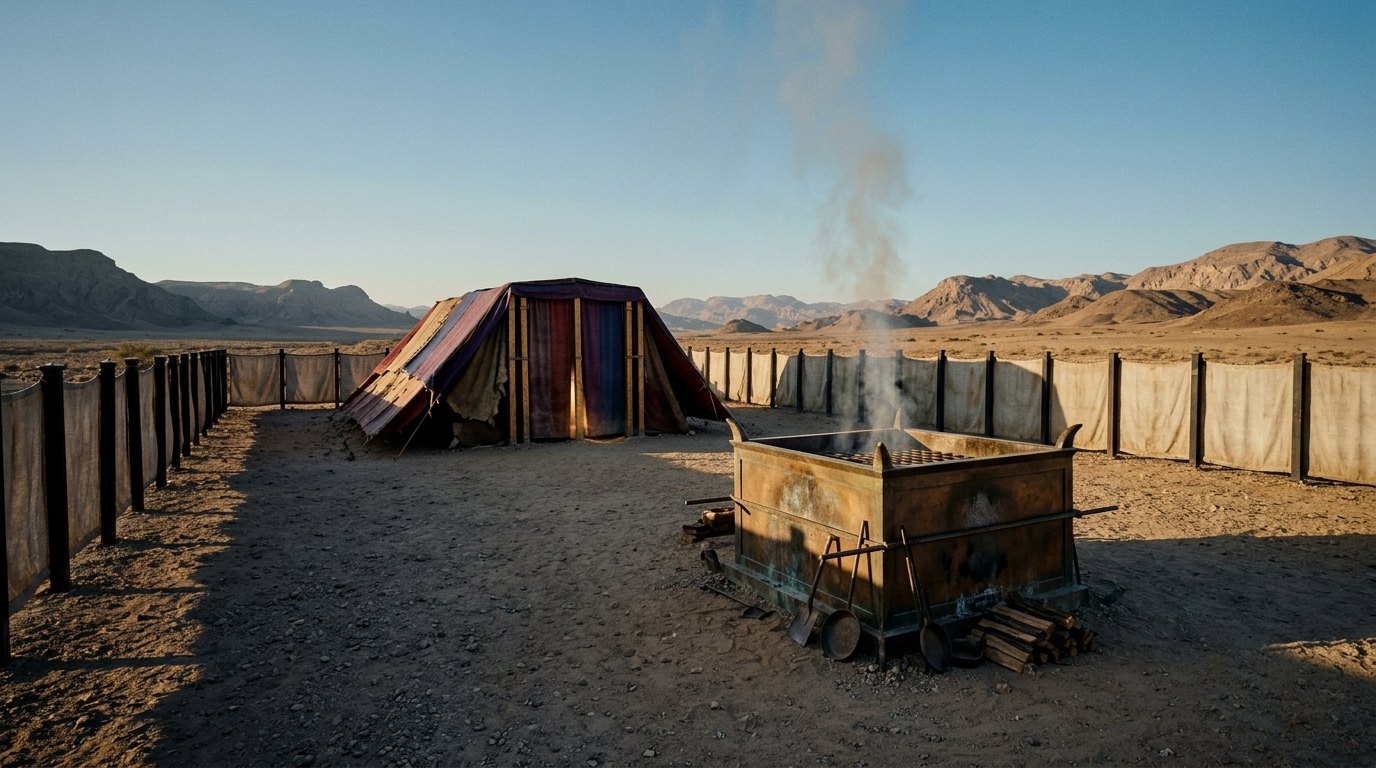
May God himself, the God of peace, sanctify you through and through. May your whole spirit, soul and body be kept blameless at the coming of our Lord Jesus Christ.
1 Thessalonians 5:23 (NIV)
It names the God of peace as the direct agent who sanctifies the believer completely in spirit, soul, and body.
Sanctification begins and ends with the sovereign action of God. In 1 Thessalonians 5:23, Paul directs the church away from self-reliance to the only source of genuine holiness: "Now may the God of peace himself sanctify you completely." Holiness is not a human achievement; it is a divine consecration. From the earliest days of the covenant, the Lord declared this truth to Israel. In Leviticus 20:8, He commanded obedience while grounding it in His nature: "I am the Lord who sanctifies you." He repeated this vital truth to Aaron's priesthood in Leviticus 21:8 and Leviticus 22:9, establishing that sacred service is initiated and sustained by the holy God who sets His people apart for His exclusive glory.
The entire Trinity works in perfect harmony to effect this separation from sin. Paul writes in 2 Thessalonians 2:13 that God chose His people "through sanctification by the Spirit and belief in the truth." 1 Peter 1:2 confirms that election unfolds "in the sanctification of the Spirit, for obedience to Jesus Christ and for sprinkling with his blood." This work is anchored in the finished redemption of the Son. According to Hebrews 10:10, "we have been sanctified through the offering of the body of Jesus Christ once for all," and Hebrews 13:12 reminds us that Jesus suffered outside the city gate to sanctify the people through His own blood. Therefore, Christ is our holiness; as 1 Corinthians 1:30 declares, He has become for us "wisdom from God, righteousness and sanctification and redemption." Writing to believers delivered from devastating patterns of sin, Paul rejoices in 1 Corinthians 6:11: "You were washed, you were sanctified, you were justified in the name of the Lord Jesus Christ and by the Spirit of our God." Sanctification is God's irrevocable claim upon His redeemed people.
| Passage | What it says |
|---|---|
| 1 Thessalonians 5:23 | Paul prays that the God of peace would sanctify believers completely and preserve them blameless for Christ's return. |
| Leviticus 20:8 | The Lord declares that He is the one who sanctifies His covenant people. |
| Leviticus 21:8 | God reaffirms His role as the holy Sanctifier of those set apart for sacred service. |
| Leviticus 22:9 | The Lord warns His servants to keep His charge, identifying Himself as the Lord who sanctifies them. |
| 2 Thessalonians 2:13 | Paul gives thanks that salvation is realized through sanctification by the Holy Spirit and belief in the truth. |
| Hebrews 10:10 | Believers are sanctified once for all through the single offering of the body of Jesus Christ. |
| Hebrews 13:12 | Jesus suffered outside the gate in order to sanctify the people through His own blood. |
| 1 Corinthians 1:30 | Christ Jesus has become for believers wisdom from God, including righteousness, sanctification, and redemption. |
| 1 Corinthians 6:11 | Believers were washed, sanctified, and justified in the name of the Lord Jesus Christ and by the Spirit. |
| 1 Peter 1:2 | Election unfolds according to the foreknowledge of God the Father through the sanctifying work of the Spirit. |
The Unfailing Promise
The Faithfulness That Calls Will Finish the Work

The one who calls you is faithful, and he will do it.
1 Thessalonians 5:24 (NIV)
It grounds the certainty of complete sanctification entirely in the unwavering faithfulness of the One who calls.
Believers are not abandoned to finish in the flesh what began in the Spirit. In 1 Thessalonians 5:24, immediately after praying for total sanctification, the apostle delivers a breathtaking guarantee: "He who calls you is faithful; he will surely do it." The ultimate success of the Christian life does not rest upon human fragility, but upon the unshakable character of God. The calling of God is an effectual summons that carries within it the divine pledge of completion.
This same assurance anchors Paul's encouragement to the Corinthian church. In 1 Corinthians 1:8-9, he affirms that Jesus Christ "will sustain you to the end, guiltless in the day of our Lord Jesus Christ," adding the foundational rock of that confidence: "God is faithful, by whom you were called into the fellowship of his Son." The God who initiated fellowship will not permit His redeemed to perish along the way. Because His covenant faithfulness never wavers, the believer's perseverance is held fast by divine preservation. Jude captures this certainty in a glorious doxology in Jude 1:24, praising the One "who is able to keep you from stumbling and to present you blameless before the presence of his glory with great joy." Sanctification is an enduring, unfailing work because God Himself guarantees the outcome.
| Passage | What it says |
|---|---|
| 1 Thessalonians 5:24 | God's calling carries the absolute pledge that He will faithfully accomplish the work of holiness. |
| 1 Corinthians 1:8-9 | Christ sustains believers blameless to the end because God is faithful in calling them into fellowship with His Son. |
| Jude 1:24 | God is declared able to keep believers from stumbling and present them faultless before His glory with exceeding joy. |
The Whole Person
Holiness Pierces Spirit, Soul, and Body
For the word of God is alive and active. Sharper than any double-edged sword, it penetrates even to dividing soul and spirit, joints and marrow; it judges the thoughts and attitudes of the heart.
Hebrews 4:12 (NIV)
It shows that God's living Word penetrates to the innermost division of a person's constituent parts and desires.
God's sanctifying purpose claims every part of human existence without exception. In Hebrews 4:12, Scripture reveals the surgical precision of God's work: "The word of God is living and active, sharper than any two-edged sword, piercing to the division of soul and of spirit, of joints and of marrow." True sanctification is never merely external; it penetrates the deepest recesses of the human heart, thoughts, and physical actions, consecrating spirit, soul, and body entirely to God.
Because the body has been redeemed, our physical members belong completely to the Lord. Paul appeals in Romans 12:1 to present our "bodies as a living sacrifice, holy and acceptable to God." Our physical frame is not an indifferent shell; as 1 Corinthians 6:19-20 asks, "Do you not know that your body is a temple of the Holy Spirit within you?" Having been bought with a price, believers are commanded to glorify God in their bodies. This bodily consecration demands decisive moral separation. In 1 Thessalonians 4:3-5, Paul writes plainly: "For this is the will of God, your sanctification: that you abstain from sexual immorality; that each one of you know how to control his own body in holiness and honor." In Romans 6:19, he commands believers to present their bodily members "as slaves to righteousness leading to sanctification," bearing fruit that leads to eternal life as those set free from sin (Romans 6:22). Therefore, 2 Corinthians 7:1 urges us to "cleanse ourselves from every defilement of body and spirit, bringing holiness to completion in the fear of God."
| Passage | What it says |
|---|---|
| Hebrews 4:12 | The Word of God discerns inner motives, piercing to the division of soul, spirit, joints, and marrow. |
| Romans 12:1 | Believers are urged to present their physical bodies as living, holy, and acceptable sacrifices to God. |
| 1 Corinthians 6:19-20 | The believer's body is the temple of the Holy Spirit, purchased by God to glorify Him. |
| 1 Thessalonians 4:3-5 | God wills sanctification, commanding believers to abstain from sexual immorality and control their bodies in holiness and honor. |
| Romans 6:19 | Believers are to yield their bodily members as slaves to righteousness leading to sanctification. |
| Romans 6:22 | Set free from sin and enslaved to God, believers reap fruit leading to sanctification and eternal life. |
| 2 Corinthians 7:1 | Believers are urged to cleanse themselves from every defilement of body and spirit, perfecting holiness in God's fear. |
The Divine Instruments
Purified by the Word and Tested Through Trials

to make her holy, cleansing her by the washing with water through the word, and to present her to himself as a radiant church, without stain or wrinkle or any other blemish, but holy and blameless.
Ephesians 5:26-27 (NIV)
It reveals that Christ cleanses His church through the water of the Word to present her without blemish.
God accomplishes this inward and outward transformation through specific, ordained means. In Ephesians 5:26-27, Christ's sanctifying love for His church is set forth: He gave Himself for her "that he might sanctify her, having cleansed her by the washing of water with the word," preparing a glorious church without spot, wrinkle, or blemish. The primary instrument of holiness is the truth of sacred Scripture. On the night before His crucifixion, the Lord Jesus prayed for His people in John 17:17: "Sanctify them in the truth; your word is truth." The Psalmist asked in Psalms 119:9, "How can a young man keep his way pure? By guarding it according to your word."
Yet the Word is also accompanied by the purifying crucible of providence. When believers face trials, God employs them as tools of spiritual growth. In 1 Peter 5:10, Scripture promises that "the God of all grace... will himself restore, confirm, strengthen, and establish you" after you have suffered a little while. This fatherly discipline is explained in Hebrews 12:10-11 as an act of love, given "for our good, that we may share his holiness." Christ describes this work as pruning: in John 15:2-3, the Father cuts back every fruitful branch so that it may bear more fruit, using the cleansing word Christ has spoken. As believers continually behold the glory of the Lord through these means, 2 Corinthians 3:18 reveals that we "are being transformed into the same image from one degree of glory to another." Purged from worldly compromise, the believer becomes what 2 Timothy 2:21 calls "a vessel for honorable use, set apart as holy, useful to the master of the house, ready for every good work."
| Passage | What it says |
|---|---|
| Ephesians 5:26-27 | Christ sanctifies the church by washing with water through the Word, preparing a glorious bride without spot or wrinkle. |
| John 17:17 | Jesus petitions the Father to sanctify His disciples through the truth of His inerrant Word. |
| 1 Peter 5:10 | The God of grace uses brief suffering to restore, confirm, strengthen, and establish His called people. |
| Hebrews 12:10-11 | God disciplines His children for their profit so that they may share in His holiness. |
| 2 Corinthians 3:18 | Beholding the glory of the Lord, believers are transformed into the same image from one degree of glory to another. |
| John 15:2-3 | The Father prunes every fruit-bearing branch through the cleansing word spoken by Christ. |
| 2 Timothy 2:21 | Anyone who cleanses himself from dishonorable things becomes a vessel set apart, useful to the Master for every good work. |
| Psalms 119:9 | A young person keeps their way pure by guarding it according to God's word. |
The Heavenly Goal
Preserved Blameless at the Coming of Christ

May he strengthen your hearts so that you will be blameless and holy in the presence of our God and Father when our Lord Jesus comes with all his holy ones.
1 Thessalonians 3:13 (NIV)
It points to the ultimate horizon of sanctification: hearts established unblamable in holiness when Christ returns.
In 1 Thessalonians 3:13, the apostle Paul fixes our gaze upon the eternal culmination of our spiritual growth: hearts established blameless in holiness before God when the Lord Jesus returns with all His holy ones. Sanctification is never merely an inward, private improvement; it is an onward march toward an impending, magnificent day of evaluation and consummation. We are sustained through every present trial by the sure promise of Philippians 1:6, where God guarantees that the glorious work He began at regeneration will not falter, but will be brought to full completion at the day of Jesus Christ. Through the cross, this ultimate presentation was secured from the beginning; Colossians 1:22 declares that Christ reconciled us in His physical body through death specifically to present us holy, blameless, and beyond reproach in His presence.
Yet this heavenly destiny demands an active, uncompromising focus in the present life. Hebrews 12:14 sounds a sobering warning: we must eagerly pursue peace with everyone and the holiness without which no one will see the Lord. There is no complacency in true hope. As 1 John 3:2-3 reveals, our future transformation into the likeness of Christ when we see Him face-to-face fuels an immediate moral duty: everyone who possesses this hope purifies himself, just as He is pure. Finally, Revelation 22:11 resounds at the edge of eternity, giving a solemn charge that rings across the ages: let the one who is holy continue to be kept holy. The final horizon of sanctification is nothing less than complete, spotless perfection in the eternal presence of our King.
| Passage | What it says |
|---|---|
| 1 Thessalonians 3:13 | Paul prays that God will establish believers' hearts unblamable in holiness at the return of Christ with His saints. |
| Philippians 1:6 | Paul expresses confidence that He who began a good work in believers will bring it to completion at Christ's day. |
| Colossians 1:22 | Christ reconciled believers through His death in order to present them holy, blameless, and above reproach before God. |
| Hebrews 12:14 | Believers must pursue holiness, without which no one will see the Lord. |
| 1 John 3:2-3 | Everyone who hopes to see Christ as He is purifies himself, just as He is pure. |
| Revelation 22:11 | The holy person is exhorted to continue keeping holy as the culmination of all things approaches. |
The Cooperative Pursuit
Putting Sin to Death and Walking by the Spirit

Therefore, my dear friends, as you have always obeyed—not only in my presence, but now much more in my absence—continue to work out your salvation with fear and trembling, for it is God who works in you to will and to act in order to fulfill his good purpose.
Philippians 2:12-13 (NIV)
It captures the divine and human synergy of progressive sanctification: God works in the believer to will and do, while the believer actively works out that salvation.
Philippians 2:12-13 unlocks the vital engine of daily growth, declaring that believers must work out their salvation with fear and trembling, because God is actively working within them both to will and to work for His good pleasure. Progressive sanctification is not passive drift; it is a fierce, cooperative calling wherein the sovereign, empowering grace of God awakens and sustains our diligent obedience. We are commanded to take up spiritual arms against remaining corruption. Romans 8:13 draws an unyielding line: if you live according to the flesh, you will die, but if by the Spirit you put to death the deeds of the body, you will live. This mortification of sin is achieved solely through the power of the indwelling Spirit.
To overcome the tug of our fallen nature, Galatians 5:16 commands us to walk consistently by the Spirit, promising that those who yield to His guidance will never gratify the destructive desires of the flesh. The outcome of this Spirit-led life is not sterile legalism, but abundant, flourishing life: Galatians 5:22-23 reveals the supernatural fruit of love, joy, peace, patience, kindness, goodness, faithfulness, gentleness, and self-control produced against all odds. Colossians 3:5-10 therefore calls us to decisive action, demanding that we put to death earthly passions like immorality, anger, and slander, and put on the new self, which is continually being renewed in true knowledge after the image of its Creator.
| Passage | What it says |
|---|---|
| Philippians 2:12-13 | Believers work out their salvation with fear and trembling, for God works in them to will and to act. |
| Romans 8:13 | Believers put to death the deeds of the body by the Holy Spirit in order to live. |
| Galatians 5:16 | Walking by the Spirit prevents believers from gratifying the desires of the flesh. |
| Galatians 5:22-23 | The fruit of the Spirit manifests Christlike virtues produced in the ongoing sanctification of believers. |
| Colossians 3:5-10 | Believers must put to death earthly practices and put on the new self being renewed in knowledge. |
Where in the Bible
| Book | Passages |
|---|---|
| Leviticus | 3 · Leviticus 20:8, Leviticus 21:8, Leviticus 22:9 |
| Psalms | 1 · Psalms 119:9 |
| John | 2 · John 17:17, John 15:2-3 |
| Romans | 4 · Romans 12:1, Romans 6:19, Romans 6:22, Romans 8:13 |
| 1 Corinthians | 4 · 1 Corinthians 1:30, 1 Corinthians 6:11, 1 Corinthians 1:8-9, 1 Corinthians 6:19-20 |
| 2 Corinthians | 2 · 2 Corinthians 7:1, 2 Corinthians 3:18 |
| Galatians | 2 · Galatians 5:16, Galatians 5:22-23 |
| Ephesians | 1 · Ephesians 5:26-27 |
| Philippians | 2 · Philippians 1:6, Philippians 2:12-13 |
| Colossians | 2 · Colossians 1:22, Colossians 3:5-10 |
| 1 Thessalonians | 4 · 1 Thessalonians 5:23, 1 Thessalonians 5:24, 1 Thessalonians 4:3-5, 1 Thessalonians 3:13 |
| 2 Thessalonians | 1 · 2 Thessalonians 2:13 |
| 2 Timothy | 1 · 2 Timothy 2:21 |
| Hebrews | 5 · Hebrews 10:10, Hebrews 13:12, Hebrews 4:12, Hebrews 12:10-11, Hebrews 12:14 |
| 1 Peter | 2 · 1 Peter 1:2, 1 Peter 5:10 |
| 1 John | 1 · 1 John 3:2-3 |
| Jude | 1 · Jude 1:24 |
| Revelation | 1 · Revelation 22:11 |
The story in order
- God calls Abraham (c. 2091 BC) · Genesis 12:1-3 · God sets apart Abraham for Himself and His purposes.
- Israel set apart at Sinai (c. 1446 BC) · Exodus 19:5-6 · God claims Israel as His own holy people.
- The Lord sanctifies His people (c. 1445 BC) · Leviticus 20:8 · God declares His role as the sanctifier.
- David's reign (c. 1000 BC) · 2 Samuel 7:12-16 · God promises a lasting dynasty, pointing to future holiness.
- Prophets call for holiness (c. 740 BC) · Isaiah 1:16-17 · Calls to wash, make yourselves clean, and cease to do evil.
- Jesus begins His ministry (AD 26) · Matthew 3:13-17 · Jesus is identified as God's Son, setting Him apart.
- Jesus' atoning sacrifice (AD 30) · Hebrews 13:12 · Jesus suffered to sanctify the people through His blood.
- The Holy Spirit indwells believers (AD 55) · 1 Corinthians 6:11 · Believers are sanctified by the Spirit.
- Paul's prayer for sanctification (AD 50-52) · 1 Thessalonians 5:23 · Paul prays for complete sanctification of spirit, soul, and body.
- The Word sanctifies (AD 30-33) · John 17:17 · Jesus prays for His disciples to be sanctified by the truth.
- Christ sustains believers (AD 60-62) · Philippians 1:6 · Confidence that God will complete the work until Christ's day.
- The final state of holiness (c. AD 95) · Revelation 22:11 · The holy will continue to be holy at the end.
Key words
- Sanctification (hagiasmos, ἁγιασμός)
- God's work of setting His people apart from sin and transforming them for Himself. · 1 Thessalonians 5:23
- Holiness (hagios, ἅγιος)
- The state of being set apart for God and free from sin. · Hebrews 12:14
- Regeneration (paliggenesia, παλιγγενεσία)
- The spiritual rebirth of a person by God. · Titus 3:5
- Consecrate (qadash, קָדַשׁ)
- To set apart for sacred use or service. · Leviticus 20:8
- Washed (louō, λούω)
- Cleansed from sin, referring to spiritual purification. · 1 Corinthians 6:11
- Righteousness (dikaiosynē, δικαιοσύνη)
- The quality of being morally right or justifiable; being in right relation with God. · 1 Corinthians 1:30
Sanctification is neither human self-reformation nor an uncertain hope, but the pledged work of the God of peace. Because He who calls you is faithful, believers can walk in joyful obedience, assured that God Himself will bring them blameless into His glorious presence.
39 passages, each cited once.
Scripture cited
- 1 Thessalonians 5:23-24
- 1 Corinthians 6:11
- Hebrews 10:10-14
- John 17:17
- 2 Corinthians 3:18
- Philippians 2:12-13
- 1 John 3:2-3
- Romans 5:1-2