What is speaking in tongues?

1 Corinthians 14:1-5
1 Follow the way of love and eagerly desire gifts of the Spirit, especially prophecy.
2 For anyone who speaks in a tongue does not speak to people but to God. Indeed, no one understands them; they utter mysteries by the Spirit.
3 But the one who prophesies speaks to people for their strengthening, encouraging and comfort.
4 Anyone who speaks in a tongue edifies themselves, but the one who prophesies edifies the church.
5 I would like every one of you to speak in tongues, but I would rather have you prophesy. The one who prophesies is greater than the one who speaks in tongues, unless someone interprets, so that the church may be edified.
New International Version (NIV)
The answer
Speaking in tongues is speech in a language enabled by the Holy Spirit, rather than ordinary speech in a language someone has learned. The Greek word glōssa means “tongue” or “language.” Paul calls the gift “different kinds of languages” and pairs it with “the interpretation of languages”; the Spirit distributes these gifts as he wills (1 Corinthians 12:10-11).
What Scripture shows
- At Pentecost, the languages were recognizable human languages. The disciples spoke as the Spirit enabled them, and visitors from many nations heard God’s mighty works declared in their own native languages (Acts 2:4-11).
- In Corinth, uninterpreted tongues were not understood by the listeners. The speaker addressed God, could pray, sing, or give thanks, and was personally built up, while others were not built up unless the message was interpreted (1 Corinthians 14:2-5; 1 Corinthians 14:14-17).
- Public worship requires understanding. Prophecy builds up the congregation directly because people understand it. Tongues can also benefit the congregation when interpreted, which is why Paul values prophecy more highly in the assembly (1 Corinthians 14:3-5; 1 Corinthians 14:19).
What speaking in tongues is not
- It is not the test of salvation or spiritual superiority. Paul’s question, “Do all speak with various languages?” expects the answer no (1 Corinthians 12:30). Believers are sealed with the Holy Spirit when they believe the gospel (Ephesians 1:13-14), and anyone without Christ’s Spirit does not belong to him (Romans 8:9). A Christian who never speaks in tongues is therefore not shown to be unsaved, spiritless, or spiritually inferior.
- It is not permission for disorder. Paul limits public messages to two or at most three, spoken in turn, with an interpreter. Without an interpreter, the speaker remains silent in the assembly and speaks privately to God (1 Corinthians 14:27-28). Everything must build others up and be done properly and orderly (1 Corinthians 14:26; 1 Corinthians 14:40).
- It is not a substitute for love. Even speaking the languages of men and angels without love is merely empty noise (1 Corinthians 13:1). The command is to pursue love while earnestly desiring spiritual gifts (1 Corinthians 14:1).
Has the gift ceased?
First Corinthians 13:8-12 says tongues will cease, but explains that cessation through the contrast between partial knowledge now and complete, face-to-face knowledge then. It does not say that tongues ended when the apostles died or when the biblical canon was completed. Meanwhile, Paul expressly says not to forbid speaking in tongues and to keep everything orderly (1 Corinthians 14:39-40). Claims of spiritual gifts must also be tested rather than accepted uncritically, without quenching the Spirit (1 Thessalonians 5:19-21).
Answered from Scripture · reviewed November 11, 2026
Speaking in tongues is a supernatural gift of the Holy Spirit, enabling a believer to speak in a language not naturally learned, as the Spirit gives utterance. Scripture presents it both as a sign of the Spirit's outpoured presence and as an instrument of prayer and praise, always designed to glorify God and edify the body of Christ under biblical order.
The Day of Pentecost
The Spirit empowers believers to speak known human languages.

All of them were filled with the Holy Spirit and began to speak in other tongues as the Spirit enabled them.
Acts 2:4 (NIV)
This verse marks the first historical outpouring of the Holy Spirit where disciples spoke in other tongues as the Spirit gave utterance.
In Acts 2:4, the promise of the Father arrived with unmistakable power: "And they were all filled with the Holy Ghost, and began to speak with other tongues, as the Spirit gave them utterance." This event fulfilled the Lord's word recorded in Mark 16:17, where Jesus declared that those who believe would speak with new tongues. In Jerusalem, as described in Acts 2:1-4, the sound of a rushing mighty wind filled the house, cloven tongues like as of fire sat upon each disciple, and the Holy Spirit immediately prompted miraculous speech in languages the disciples had never naturally acquired.
The crowd gathered for the feast discovered that these unlearned Galileans were speaking real, intelligible human dialects. As recorded in Acts 2:5-11, devout men from every nation under heaven heard these believers declaring the mighty works of God in their own native tongues. The miracle was not an incoherent ecstatic frenzy, but an authentic manifestation of the Holy Spirit reversing the linguistic fracture of Babel. Standing before the confounded multitude, the apostle Peter declared in Acts 2:14-18 that this was the direct fulfillment of God's promise through the prophet Joel. The Spirit had been poured out upon all flesh, enabling sons and daughters to prophesy and praise God openly, inaugurating the church age with a living demonstration of the gospel's universal reach.
| Passage | What it says |
|---|---|
| Mark 16:17 | Jesus promises that those who believe will cast out demons and speak with new tongues. |
| Acts 2:1-4 | The Holy Spirit descends at Pentecost, filling the believers and enabling them to speak in other tongues. |
| Acts 2:5-11 | Devout Jews from every nation hear the disciples declaring the wonderful works of God in their native languages. |
| Acts 2:14-18 | Peter explains the phenomenon as the fulfillment of Joel's prophecy concerning the outpoured Spirit. |
The Apostolic Witness
Tongues mark the Spirit's arrival across expanding boundaries.
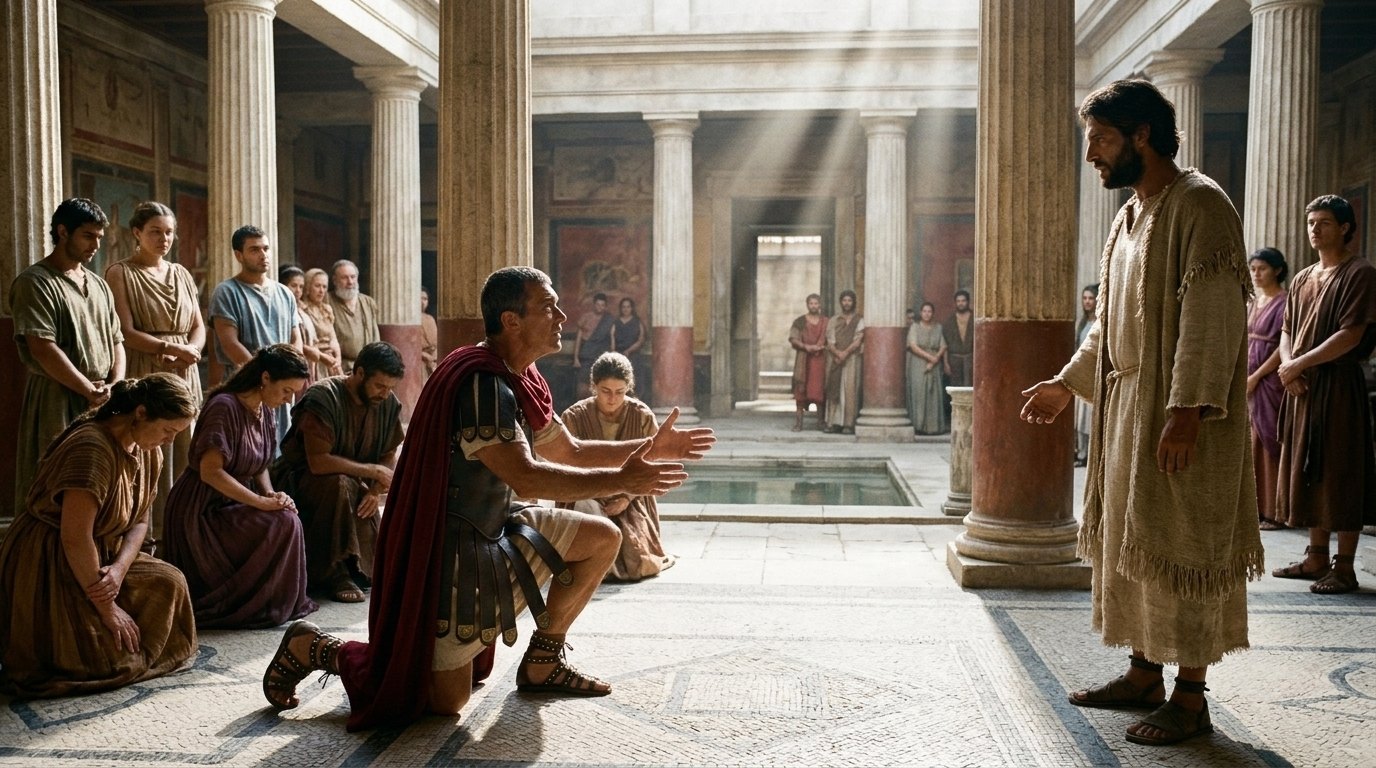
For they heard them speaking in tongues and praising God. Then Peter said,
Acts 10:46 (NIV)
Gentiles speaking in tongues convinced Jewish believers that God had poured out the Spirit without ethnic distinction.
The breakthrough recorded in Acts 10:46 shattered every traditional barrier dividing Jew from Gentile: "For they heard them speak with tongues, and magnify God." As Peter preached the gospel of Jesus Christ in the house of the Roman centurion, the Holy Spirit fell upon all who heard the word (Acts 10:44-46). The Jewish believers who accompanied Peter were utterly astonished because the gift of the Holy Spirit was poured out upon the Gentiles also. The undeniable sign confirming this sovereign work was that the Gentiles spoke in tongues, exalting God in precisely the same manner the apostles had experienced at Pentecost.
This apostolic precedent established that the indwelling and empowerment of the Holy Spirit belong equally to every believer who trusts in the Lord Jesus. Years later in the city of Ephesus, recorded in Acts 19:6, the apostle Paul encountered disciples who had only received John's baptism. After Paul instructed them concerning faith in Jesus and laid his hands upon them, the Holy Spirit came upon them, and they immediately spoke with tongues and prophesied. In both historical instances, tongues functioned as an unmistakable sign verifying that the gospel of grace had taken full root among new groups of believers, bringing Jew and Gentile into one body in Christ.
| Passage | What it says |
|---|---|
| Acts 10:44-46 | The Holy Spirit falls upon Cornelius's household, evidenced by them speaking in tongues and magnifying God. |
| Acts 19:6 | When Paul lays hands on disciples at Ephesus, the Holy Spirit comes and they speak in tongues and prophesy. |
Divergent Gifts
The Spirit distributes varied gifts according to His divine will.
All these are the work of one and the same Spirit, and he distributes them to each one, just as he determines.
1 Corinthians 12:11 (NIV)
The Holy Spirit sovereignly determines who receives which spiritual gift for the common good.
The sovereign distribution of spiritual gifts is anchored in 1 Corinthians 12:11: "But all these worketh that one and the selfsame Spirit, dividing to every man severally as he will." The Holy Spirit assigns gifts according to His divine purpose, ensuring that no individual possesses every gift and no believer is left empty-handed. As Paul writes in 1 Corinthians 12:4-7, there are diversities of gifts, administrations, and operations, but the same Spirit and the same Lord work through them all for the profit of the entire body of Christ.
Within this divine ordering, tongues and their interpretation are explicitly classified as gifts of grace. In 1 Corinthians 12:8-10, the Spirit gives the word of wisdom, knowledge, faith, gifts of healing, working of miracles, prophecy, and discerning of spirits, alongside divers kinds of tongues and the interpretation of tongues. Paul clarifies the diversity of the body in 1 Corinthians 12:28-30, asking rhetorically whether all are apostles, prophets, or teachers, or whether all speak with tongues. The clear biblical answer is that the Spirit grants different gifts to different believers. Tongues are neither a universal badge of salvation nor an exclusive measure of spiritual maturity, but a specific gift distributed by God's sovereign design.
| Passage | What it says |
|---|---|
| 1 Corinthians 12:4-7 | There are varieties of gifts given by the same Spirit for the common profit of all. |
| 1 Corinthians 12:8-10 | Kinds of tongues and the interpretation of tongues are listed alongside wisdom, faith, and healing. |
| 1 Corinthians 12:28-30 | Paul explains that not all believers occupy the same office or speak with tongues. |
Edification in Worship
Intelligibility and love govern all public spiritual speech.
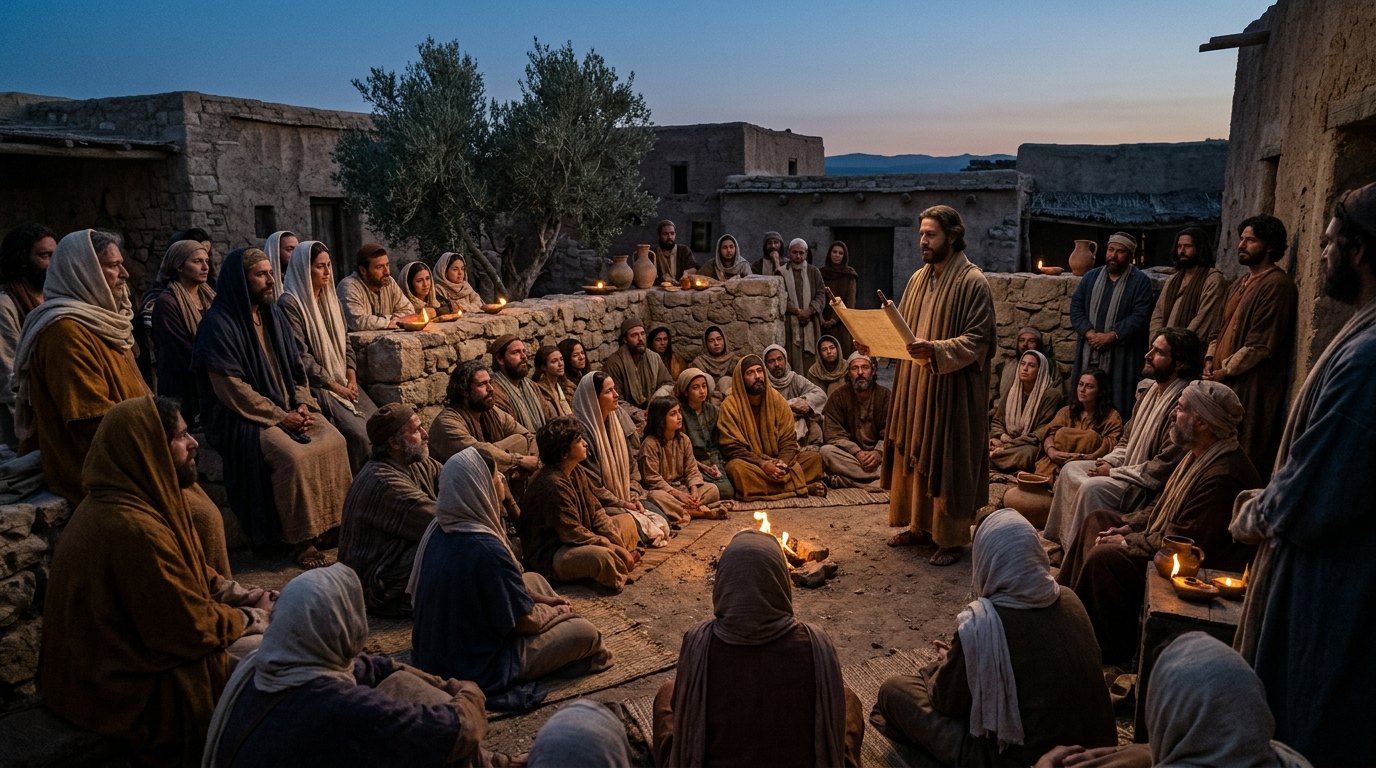
For anyone who speaks in a tongue does not speak to people but to God. Indeed, no one understands them; they utter mysteries by the Spirit.
1 Corinthians 14:2 (NIV)
Paul distinguishes between speaking to God in the Spirit and speaking understandable truth to people.
Addressing corporate worship, Paul writes in 1 Corinthians 14:2: "For he that speaketh in an unknown tongue speaketh not unto men, but unto God: for no man understandeth him; howbeit in the spirit he speaketh mysteries." This personal, devotional communication must be governed by Christian charity. As Paul warns in 1 Corinthians 13:1, even if a believer speaks with the tongues of men and of angels, without love that speech is reduced to sounding brass or a tinkling cymbal. Love prioritizes the spiritual health of others above personal expression.
Therefore, intelligible communication remains the rule in the gathered assembly. In 1 Corinthians 14:1-5, Paul explains that while tongues edify the individual, prophecy edifies the entire church, unless an interpretation is given so the congregation may receive building up. Using the illustration of musical instruments in 1 Corinthians 14:6-12, he notes that if a pipe or harp produces no distinction in tones, the melody remains unknown. In 1 Corinthians 14:13-19, Paul charges believers who speak in tongues to pray for the interpretation, affirming that he will pray with the spirit and with understanding also. In the public gathering of the saints, five words spoken with clarity to instruct others are far better than ten thousand words in an unknown tongue.
| Passage | What it says |
|---|---|
| 1 Corinthians 13:1 | Speaking in tongues of men and angels without love is merely noisy brass or a clanging cymbal. |
| 1 Corinthians 14:1-5 | Prophecy edifies the church, while uninterpreted tongues edify only the individual speaker. |
| 1 Corinthians 14:6-12 | Instruments and voices must sound distinct notes so hearers know what is being communicated. |
| 1 Corinthians 14:13-19 | Paul insists on praying with the spirit and with understanding, preferring five intelligible words in church. |
Orderly Worship
God calls for peace, restraint, and decency in assembly.
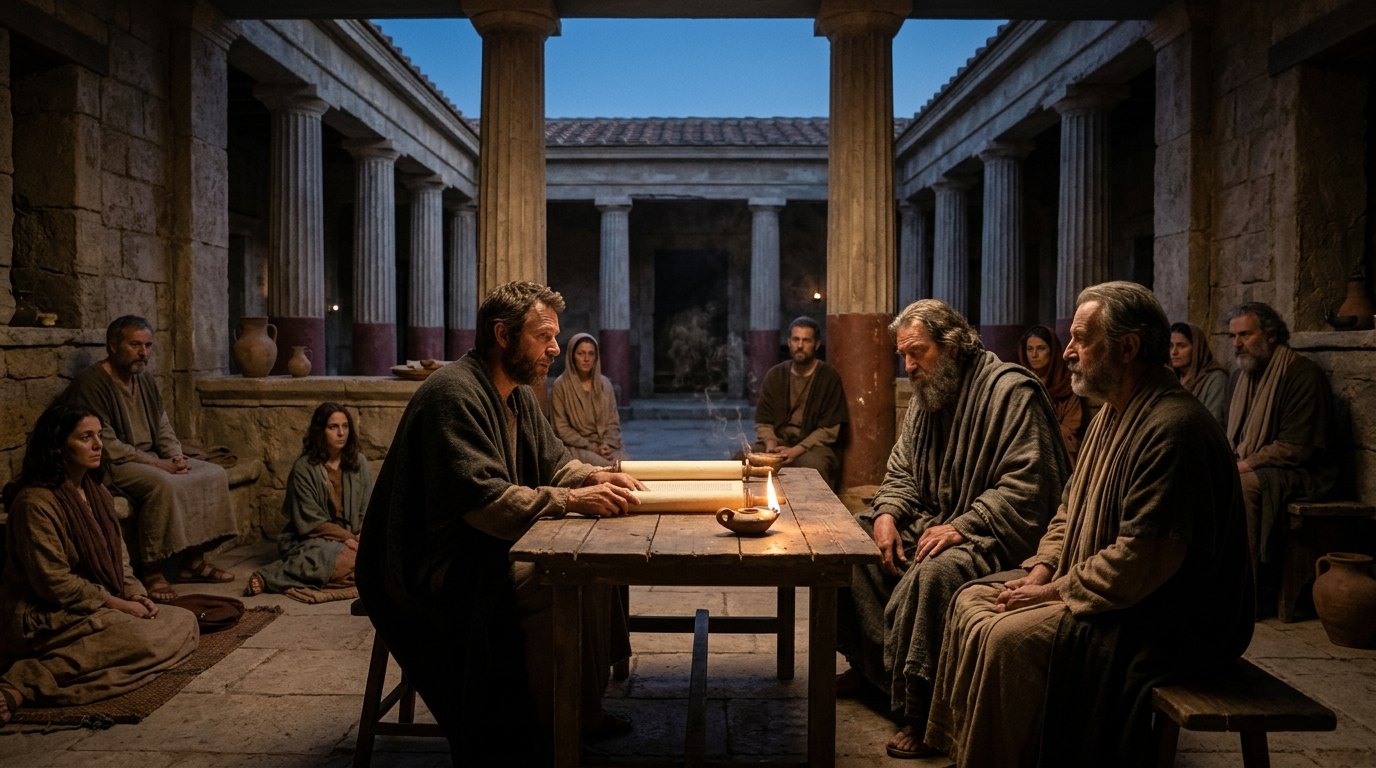
But everything should be done in a fitting and orderly way.
1 Corinthians 14:40 (NIV)
All gatherings of the church must be characterized by proper decorum and divine order.
The Holy Spirit never fosters frantic chaos, for all things must be done decently and in order (1 Corinthians 14:40). Writing to a Corinthian church prone to unchecked clamor, the apostle Paul grounds corporate worship in the very character of God, who is not the author of confusion but of peace (1 Corinthians 14:33). Genuine spiritual gifts never overwhelm human self-control; rather, the spirits of the prophets are subject to the prophets (1 Corinthians 14:32). When the church gathers, spiritual expression must serve corporate edification rather than personal display. Paul draws upon the solemn warning of Isaiah 28:11-12, noting in 1 Corinthians 14:20-22 that strange tongues can function as a sign of judgment to an unbelieving people who refuse to hear. If an outsider enters an assembly where everyone speaks uninterpreted tongues simultaneously, the visitor will conclude that believers are mad (1 Corinthians 14:23). But when intelligible truth is proclaimed, hearts are convicted, secrets are laid bare, and outsiders fall down to worship God (1 Corinthians 14:24-25). Therefore, the Scripture establishes clear, binding boundaries for the public assembly: tongues must be limited to two or at most three speakers, each taking turns one by one, and someone must interpret (1 Corinthians 14:26-27). If there is no interpreter present, the speaker must keep silence in the church and speak quietly between himself and God (1 Corinthians 14:28). The biblical verdict remains balanced and clear: believers are commanded not to forbid speaking in tongues, yet they must zealously prioritize understandable prophecy and govern every gathering with divine harmony (1 Corinthians 14:39-40).
| Passage | What it says |
|---|---|
| 1 Corinthians 14:20-25 | Tongues serve as a sign for unbelievers, yet uninterpreted speech in public leads outsiders to think believers mad. |
| 1 Corinthians 14:26-28 | Public tongues must be limited to two or three, spoken in turn, and interpreted or kept silent. |
| 1 Corinthians 14:32-33 | The spirits of prophets are subject to prophets, for God is the author of peace, not confusion. |
| 1 Corinthians 14:39-40 | Believers must earnestly desire prophecy, not forbid tongues, and ensure all things are done decently and in order. |
| Isaiah 28:11-12 | The prophetic sign of foreign lips through which God speaks to a rebellious people, cited regarding tongues in assembly. |
Where in the Bible
| Book | Passages |
|---|---|
| Isaiah | 1 · Isaiah 28:11-12 |
| Mark | 1 · Mark 16:17 |
| Acts | 5 · Acts 2:1-4, Acts 2:5-11, Acts 2:14-18, Acts 10:44-46, Acts 19:6 |
| 1 Corinthians | 11 · 1 Corinthians 12:4-7, 1 Corinthians 12:8-10, 1 Corinthians 12:28-30, 1 Corinthians 13:1, 1 Corinthians 14:1-5, 1 Corinthians 14:6-12, 1 Corinthians 14:13-19, 1 Corinthians 14:20-25, 1 Corinthians 14:26-28, 1 Corinthians 14:32-33, 1 Corinthians 14:39-40 |
The story in order
- Joel's prophecy of the Spirit (c. 800 BC) · Acts 2:17-18 · Foretells the outpouring of the Spirit on all flesh, enabling prophecy and visions.
- Jesus promises new tongues (c. AD 30) · Mark 16:17 · Sign for believers: they will speak with new tongues.
- Pentecost: Spirit empowers believers (AD 30) · Acts 2:4 · The Spirit enables believers to speak in other tongues.
- Tongues heard in Jerusalem (AD 30) · Acts 2:5-11 · Devout Jews hear the gospel in their own languages.
- Tongues at Cornelius's house (c. AD 35) · Acts 10:44-46 · The Spirit falls on Gentiles, evidenced by tongues.
- Tongues at Ephesus (c. AD 55) · Acts 19:6 · The Spirit comes upon disciples, they speak in tongues and prophesy.
- Paul addresses tongues in worship (c. AD 55) · 1 Corinthians 14:1-40 · Instructions for orderly worship, emphasizing edification and intelligibility.
Tongues as a sign of the Spirit's presence
| Event | Description | Significance | Passage |
|---|---|---|---|
| Pentecost | Spirit fills believers, they speak in tongues. | Fulfillment of Joel's prophecy, Spirit outpoured. | Acts 2:4 |
| Cornelius's Household | Spirit falls on them, they speak in tongues. | Inclusion of Gentiles, Spirit's work confirmed. | Acts 10:44-46 |
| Ephesus Disciples | Paul lays hands, Spirit comes, they speak in tongues. | Empowerment and confirmation of the Spirit's work. | Acts 19:6 |
Tongues in public worship: order and edification
| Principle | Application | Outcome | Passage |
|---|---|---|---|
| Edification | Uninterpreted tongues edify only the speaker. | Individual building up. | 1 Corinthians 14:4 |
| Intelligibility | Public tongues must be interpreted. | Church is edified. | |
| Order | Two or three, in turn, with interpretation. | Peace and decency, not confusion. | |
| Sign for unbelievers | Uninterpreted tongues may cause outsiders to think believers mad. | Potential for misunderstanding. | 1 Corinthians 14:23-25 |
Gifts of the Spirit
| Gift | Source | Purpose | Passage |
|---|---|---|---|
| Tongues | Same Spirit | Edification of the church (when interpreted) or individual. | |
| Prophecy | Same Spirit | Edification of the church. | 1 Corinthians 14:3-4 |
| Wisdom, Knowledge, Faith | Same Spirit | Spiritual understanding and service. | 1 Corinthians 12:8 |
| Healing, Miracles | Same Spirit | Demonstration of God's power. | 1 Corinthians 12:9-10 |
Key words
- Tongues (glōssais, γλώσσαις)
- Supernatural utterance in a language not learned, given by the Holy Spirit. · Acts 2:4
- Edification (oikodomē, οἰκοδομὴ)
- Building up or strengthening, especially of the church or an individual believer. · 1 Corinthians 14:4
- Interpretation (hermēneia, ἑρμηνεία)
- Making known the meaning of what was spoken in tongues. · 1 Corinthians 14:27
- Prophecy (prophēteia, προφητεία)
- Speaking forth God's message, often with foretelling or forth-telling. · 1 Corinthians 14:3
- Spirit (pneuma, πνεῦμα)
- The Holy Spirit, the third person of the Trinity, who empowers believers. · Acts 2:4
Scripture honors speaking in tongues as a genuine work of the Holy Spirit, while insisting that love and the building up of the congregation govern every manifestation of spiritual power. Believers are called neither to despise the gifts nor to parade them, but to seek the edification of the body of Christ in decency, order, and truth.
18 passages, each cited once.
How the major Christian traditions read this
All Christian traditions confess that speaking in tongues is a supernatural gift given by the Holy Spirit as recorded in the New Testament, first poured out openly upon the church at Pentecost (Acts 2:4; 1 Corinthians 12:7-11).
Catholic
In the Catholic Church, we recognize speaking in tongues (glossolalia) as one of the extraordinary charismatic gifts (charisms) of the Holy Spirit distributed for the building up of the faithful (1 Corinthians 12:7-10). The Church encountered this gift prominently at Pentecost as actual human languages proclaimed for the conversion of hearers (Acts 2:4-11), as well as in prayer addressed directly to God (1 Corinthians 14:2). Charisms are authentic graces from the Spirit, yet they remain subordinate to charity (1 Corinthians 13:1) and the sacramental life. In public worship, such gifts must submit to apostolic order and discernment, requiring interpretation so the whole body of Christ may be edified (1 Corinthians 14:27-28).
Scripture: Acts 2:4-11, 1 Corinthians 12:7-10, 1 Corinthians 13:1, 1 Corinthians 14:2, 1 Corinthians 14:27-28
Orthodox
The Orthodox Church regards speaking in tongues as an authentic gift given by the Holy Spirit to the early Church, seen most gloriously at Pentecost where the apostles spoke intelligible languages so the gathered nations could hear the wonders of God (Acts 2:4-8). St. Paul carefully regulated uninterpreted ecstatic utterances in the assembly because public worship must offer intelligible understanding, common prayer, and mutual edification (1 Corinthians 14:15-19). We receive the full gift of the Holy Spirit in Holy Chrismation, and the true measure of spiritual life is found in inner stillness, repentance, humility, and the fruit of love, rather than extraordinary outward vocal phenomena (1 Corinthians 13:1-2; Galatians 5:22-23).
Scripture: Acts 2:4-8, 1 Corinthians 13:1-2, 1 Corinthians 14:15-19, Galatians 5:22-23
Lutheran
In Lutheran theology, we understand speaking in tongues from the Scriptures as a miraculous sign given by the Spirit, displayed at Pentecost through known foreign languages to scatter the gospel across nations (Acts 2:6-11). In the gathered congregation, God encounters us through the clear proclamation of His Word and Sacraments. St. Paul firmly insists that all things in the congregation be done for edification and in good order (1 Corinthians 14:26, 40). Because a language not understood cannot impart faith or repentance, public preaching must be intelligible to all (1 Corinthians 14:9; Romans 10:17). We test all experiences by the external Word, seeking Christ rather than subjective spiritual signs.
Scripture: Acts 2:6-11, Romans 10:17, 1 Corinthians 14:9, 1 Corinthians 14:26, 1 Corinthians 14:40
Reformed & Presbyterian
In the Reformed tradition, we look to the witness of Scripture to see that tongues were genuine foreign languages given at Pentecost and the apostolic era as signs confirming the gospel message (Acts 2:4-11; Mark 16:20). St. Paul warns that uninterpreted speech leaves the mind unfruitful and fails to build up the church (1 Corinthians 14:14-19). Corporate worship must center upon the clear preaching of the Word of God and intelligible prayer, as public worship in an unknown tongue contradicts apostolic teaching. Tongues served as a specific sign to unbelievers, particularly regarding covenant judgment and the ingathering of the Gentiles (1 Corinthians 14:21-22; Isaiah 28:11-12).
Scripture: Isaiah 28:11-12, Mark 16:20, Acts 2:4-11, 1 Corinthians 14:14-19, 1 Corinthians 14:21-22
Anglican & Episcopal
Anglicans look to the apostolic pattern in Scripture, which affirms that the Spirit bestows diverse gifts according to His divine will (1 Corinthians 12:4-11). At Pentecost, tongues were heard as real, intelligible languages declaring God's mighty acts (Acts 2:5-11). In pastoral practice, our formularies explicitly require that public worship and common prayer be conducted in a tongue understood by the people, directly applying St. Paul’s insistence that uninterpreted utterances must not dominate corporate liturgy (1 Corinthians 14:9, 27-28). Where the gift of tongues is exercised in personal devotion or charismatic renewal, it must always remain governed by love, sobriety, biblical order, and mutual edification (1 Corinthians 14:39-40).
Scripture: Acts 2:5-11, 1 Corinthians 12:4-11, 1 Corinthians 14:9, 1 Corinthians 14:27-28, 1 Corinthians 14:39-40
Baptist
Baptists hold Scripture as our supreme authority, observing that speaking in tongues in the New Testament consisted of Spirit-prompted languages given to spread the gospel and validate the apostolic testimony (Acts 2:4-11; Hebrews 2:3-4). St. Paul explicitly states that not all believers possess this gift, demonstrating that tongues cannot be required as a sign of true salvation or spiritual fullness (1 Corinthians 12:29-30). In the local church, the clear, intelligible exposition of Scripture takes preeminence over private spiritual experiences (1 Corinthians 14:19). Any public manifestation must strictly follow Paul's biblical bounds—limited to two or three speakers, in turn, and only with an interpreter (1 Corinthians 14:27-28).
Scripture: Acts 2:4-11, 1 Corinthians 12:29-30, 1 Corinthians 14:19, 1 Corinthians 14:27-28, Hebrews 2:3-4
Methodist & Wesleyan
In the Wesleyan tradition, we recognize that the Holy Spirit imparts spiritual gifts for the common good and the work of ministry (1 Corinthians 12:7). Scripture shows tongues operating as both human languages for evangelism (Acts 2:6-8) and prayer spoken to God (1 Corinthians 14:2). We emphasize that the highest evidence of the Spirit's fullness is not extraordinary signs, but entire sanctification, holy living, and perfect love toward God and neighbor (Romans 5:5; 1 Corinthians 13:1-3). In community, all spiritual expressions must promote holiness and mutual edification, ensuring that corporate prayer remains fully understood by the congregation (1 Corinthians 14:15-16, 40).
Scripture: Acts 2:6-8, Romans 5:5, 1 Corinthians 12:7, 1 Corinthians 13:1-3, 1 Corinthians 14:15-16
Pentecostal & Charismatic
We believe according to the Scriptures that the baptism in the Holy Spirit is an empowering experience distinct from and subsequent to the new birth, accompanied by the initial physical evidence of speaking in tongues as the Spirit gives utterance (Acts 2:4; Acts 10:44-46; Acts 19:6). Speaking in tongues functions both as a private prayer language whereby the believer’s spirit communicates mysteries directly to God and builds itself up (1 Corinthians 14:2, 4, 14), and as a public gift of ministry. When exercised in the congregation, tongues must be paired with the gift of interpretation to edify the whole assembly (1 Corinthians 14:5, 27-28).
Scripture: Acts 2:4, Acts 10:44-46, Acts 19:6, 1 Corinthians 14:2-5, 1 Corinthians 14:27-28
Non-denominational & Evangelical
In non-denominational and evangelical churches, we turn directly to the Bible to understand tongues as a gift given by the Holy Spirit according to His sovereign choice (1 Corinthians 12:11). The New Testament records believers speaking in understandable earthly languages (Acts 2:6-8) and praying in the Spirit with unlearned utterances (1 Corinthians 14:2, 14). We emphasize that all believers are baptized into one body by the Spirit at conversion (1 Corinthians 12:13), meaning tongues is not required for all Christians (1 Corinthians 12:30). Wherever practiced, tongues must strictly conform to Scripture: done lovingly, limited in number, accompanied by interpretation, and conducted in an orderly manner (1 Corinthians 14:27, 40).
Scripture: Acts 2:6-8, 1 Corinthians 12:11-13, 1 Corinthians 12:30, 1 Corinthians 14:2, 1 Corinthians 12:11
Where they differ
Tongues as necessary evidence of Spirit baptism
- Catholic
- A charism given to some, not an obligatory evidence of Spirit baptism.
- Orthodox
- Not a required sign; the Spirit is fully given in Chrismation.
- Lutheran
- No; the Spirit is received through Word and Baptism, not ecstatic speech.
- Reformed & Presbyterian
- No; every true believer possesses the Spirit without needing tongues.
- Anglican & Episcopal
- No; the Spirit's presence does not depend on speaking in tongues.
- Baptist
- No; Paul explicitly teaches that not all believers speak in tongues.
- Methodist & Wesleyan
- No; holy love and the Spirit's fruit are the true evidence.
- Pentecostal & Charismatic
- Yes; tongues is the initial physical evidence of Spirit baptism.
- Non-denominational & Evangelical
- No; all Christians receive the Holy Spirit upon saving faith.
Scripture: Acts 2:4, 1 Corinthians 12:13, 1 Corinthians 12:29-30
The nature of tongues in practice
- Catholic
- Encompasses miraculous foreign languages as well as private prayer to God.
- Orthodox
- Understood historically as intelligible foreign languages for evangelistic mission.
- Lutheran
- Understood primarily as real foreign languages given to spread the gospel.
- Reformed & Presbyterian
- Understood historically as genuine human languages given for apostolic testimony.
- Anglican & Episcopal
- Recognized historically as human languages, though some permit devotional utterance.
- Baptist
- Biblically grounded as known human languages spoken without prior learning.
- Methodist & Wesleyan
- Regarded as human languages or Spirit-guided prayer submitted to intelligible worship.
- Pentecostal & Charismatic
- Both human languages and heavenly prayer tongues spoken in the Spirit.
- Non-denominational & Evangelical
- Understood as either known languages or a personal spiritual prayer language.
Scripture: Acts 2:6-8, 1 Corinthians 13:1, 1 Corinthians 14:2, 1 Corinthians 14:14
Your pastor can tell you where your church stands.
Scripture cited
- Acts 2:1-13
- 1 Corinthians 12:7-11
- 1 Corinthians 12:27-31
- 1 Corinthians 14:6-40
- 1 Corinthians 13:1-13
- Ephesians 1:13-14
- Romans 8:9-11
- 1 Thessalonians 5:19-22