What is the Bema seat judgment?
2 Corinthians 5:10
10 For we must all appear before the judgment seat of Christ, so that each of us may receive what is due us for the things done while in the body, whether good or bad.
New International Version (NIV)
The answer
The Bema seat judgment is the judgment seat of Christ, where lives are openly revealed, each person gives account, and Christ repays what has been done. The expression is commonly used especially for Christ’s evaluation of believers’ lives and service: enduring work receives reward, while worthless work results in loss. It is not a means of earning salvation by works.
What “Bema” means
Bēma is the Greek word translated “judgment seat” in 2 Corinthians 5:10. It denotes a step or raised platform and, by extension, a tribunal. The same word describes Roman judgment seats, such as Pilate’s in Matthew 27:19 and Caesar’s in Acts 25:10. “Bema seat” therefore means Christ’s tribunal, not merely an awards podium.
Paul writes, “For we must all be revealed before the judgment seat of Christ that each one may receive the things in the body according to what he has done, whether good or bad” (2 Corinthians 5:10). Being revealed means that nothing remains hidden: Ecclesiastes 12:14 says that God will bring every work into judgment, including every secret thing.
What happens before Christ’s judgment seat
- Each person gives an account. Romans 14:12 says, “So then each one of us will give account of himself to God.” No one answers through a church, family, leader or group.
- Christ tests the quality of each work. In 1 Corinthians 3:13, each work is revealed and tested by fire. Gold, silver and costly stones picture work that endures; wood, hay and straw picture work that does not.
- There is reward or loss. Enduring work receives a reward, but burned-up work brings loss: “If any man’s work is burned, he will suffer loss, but he himself will be saved, but as through fire” (1 Corinthians 3:15).
- Both good and bad are disclosed. The judgment is not limited to publicly visible ministry. Ephesians 6:8 promises that whatever good anyone does, whether bond or free, that person will receive from the Lord.
Why this is not salvation by works
The foundation is Jesus Christ, not personal performance (1 Corinthians 3:11). The person in 1 Corinthians 3:15 can lose his work’s reward yet still be saved. The Bema therefore does not teach that believers must achieve a sufficient score to enter heaven.
Revelation 20:11-15 separately describes the great white throne, the books, the book of life and the second death. Those not found written in the book of life are cast into the lake of fire. That solemn description should not be confused with 1 Corinthians 3:15, where the person whose work is burned is nevertheless saved.
How believers should live in light of it
Paul’s immediate conclusion is to make it his aim “to be well pleasing to him” (2 Corinthians 5:9). Romans 14:10 also uses Christ’s judgment seat to correct believers who judge or despise one another: the Lord is the judge, so His servants must not usurp His place.
The coming judgment is therefore both a warning against wasted, disobedient living and an encouragement to faithful service. Christ Himself promises in Revelation 22:12, “And, behold, I come quickly; and my reward is with me, to give every man according as his work shall be.”
Answered from Scripture · reviewed November 11, 2026
The Bema seat is the judgment seat of Christ where every redeemed believer must appear to give an account of their earthly life and stewardship. Scripture distinguishes this tribunal from the judgment of condemnation, presenting it instead as a solemn, loving evaluation of service and motives that issues in praise, loss of reward, or eternal crowns. Understanding this appointment rescues Christian liberty from carelessness and anchors daily obedience in the purifying hope of meeting Christ.
The Judgment Seat
Every Believer Will Appear Before Christ's Tribunal
For we must all appear before the judgment seat of Christ, so that each of us may receive what is due us for the things done while in the body, whether good or bad.
2 Corinthians 5:10 (NIV)
It defines the judgment seat of Christ as universal for believers, where everything done in the body is evaluated.
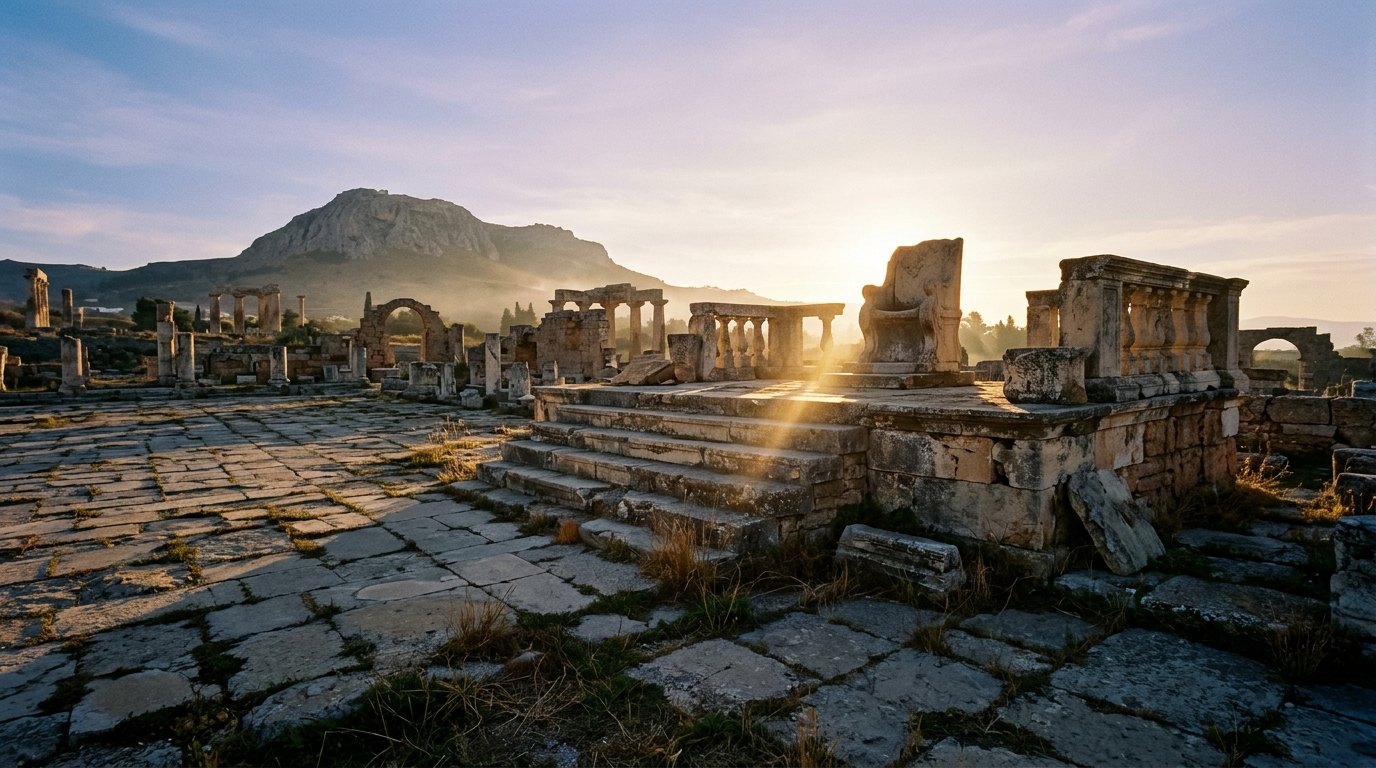
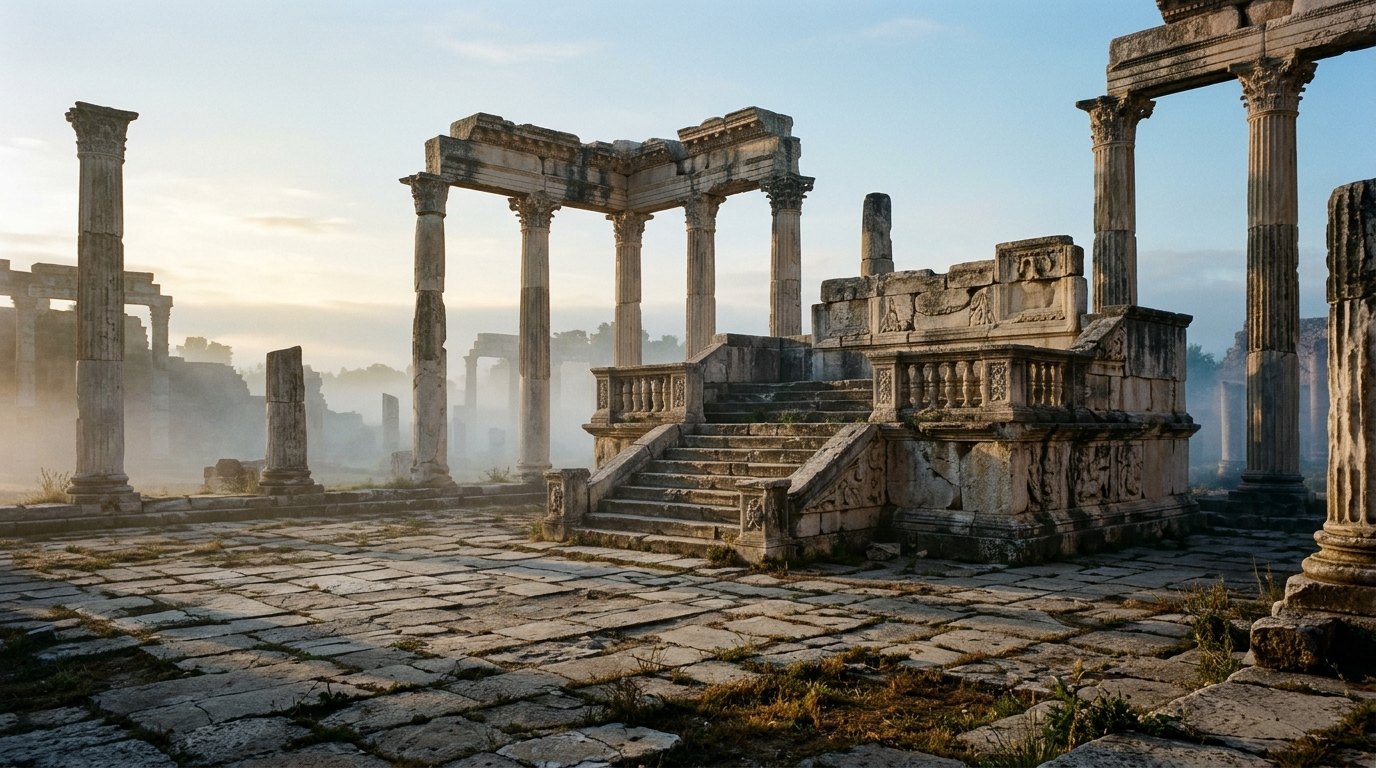
The appointment before Christ is personal, inescapable, and designed specifically for the household of faith. In 2 Corinthians 5:10, the apostle Paul declares, "For we must all appear before the judgment seat of Christ, so that each one may receive what is due for what he has done in the body, whether good or evil." The Greek word used here is bema, referring to the elevated judicial bench or tribunal where an official sat to hear cases, award prizes, and render authoritative verdicts. Paul knew this imagery intimately; in Acts 18:12, he had stood before the stone bema of the Roman proconsul Gallio in the public marketplace of Corinth. Yet the heavenly tribunal transcends all civil courts.
Because this judgment is certain, the believer's entire posture toward life shifts. Paul explains in 2 Corinthians 5:9 that we make it our aim to please him, whether we remain at home in the earthly body or depart to be with the Lord. This solemn expectation directly governs Christian relationships within the church. In Romans 14:10, Paul challenges those who sit in proud scrutiny over their brothers: "Why do you pass judgment on your brother? Or you, why do you despise your brother? For we will all stand before the judgment seat of God." Citing Isaiah, Romans 14:11 underscores that every knee will bow and every tongue confess. Therefore, as Romans 14:12 concludes, each of us will give an account of himself to God, answering directly for his own stewardship rather than the walk of his neighbor. This supreme authority is not delegated to an angel or an earthly court; as John 5:22 reminds us, the Father judges no one, but has given all judgment to the Son, making our Savior the final, discerning evaluator of our days.
| Passage | What it says |
|---|---|
| 2 Corinthians 5:9 | Declares that the believer makes it their aim to be pleasing to Christ whether present in body or absent. |
| 2 Corinthians 5:10 | States that all must appear before Christ's judgment seat to receive what is done in the body, good or bad. |
| Romans 14:10 | Warns against judging or despising a brother, since every believer will stand before God's judgment seat. |
| Romans 14:11 | Cites the prophecy that every knee will bow and every tongue will confess to God. |
| Romans 14:12 | Concludes that each individual believer will give an account of himself directly to God. |
| Acts 18:12 | Mentions the historical civil bema in Corinth where Paul stood before Gallio's tribunal. |
| John 5:22 | States that the Father has committed all judgment exclusively to the Son. |
The Judge and Standard
Christ Examines Every Secret Work and Motive

Therefore judge nothing before the appointed time; wait until the Lord comes. He will bring to light what is hidden in darkness and will expose the motives of the heart. At that time each will receive their praise from God.
1 Corinthians 4:5 (NIV)
It shows that the Lord will illuminate hidden things and expose heart counsels before distributing each one's praise.
No veneer of outward respectability can withstand the penetrating gaze of the Lord Jesus Christ. Highlighting this sobering reality, 1 Corinthians 4:5 commands believers not to pronounce premature judgment before the Lord comes, who "will bring to light the things now hidden in darkness and will disclose the purposes of the heart." At this tribunal, the question is not merely what we accomplished, but why we undertook it, for Christ values holy motives over external acclaim. Long before the New Testament epistles, Ecclesiastes 12:14 testified that God will bring every deed into judgment, with every secret thing, whether good or evil.
Human self-assessment is fundamentally insufficient. In 1 Corinthians 4:4, Paul admits that although his conscience is clear, that does not justify him: "It is the Lord who judges me." Our personal sincerity is never the ultimate standard of righteousness. As Hebrews 4:13 soberly affirms, no creature is hidden from His sight, but all are naked and exposed to the eyes of him to whom we must give account. Christ Himself warned in Luke 12:2 that nothing is covered up that will not be revealed, or hidden that will not be known. This total clarity belongs uniquely to the resurrected Son of God; in Revelation 2:23, He declares with unyielding majesty, "I am he who searches mind and heart", guaranteeing that He will repay each according to their works, just as Matthew 16:27 promises that the Son of Man will come in the glory of His Father with His angels to repay every person according to their deeds. Yet for the redeemed, this exposure culminates not in condemnation, but in authentic, Spirit-wrought commendation, as Paul notes that then each one will receive his praise from God.
| Passage | What it says |
|---|---|
| Ecclesiastes 12:14 | Affirms that God will bring every work into judgment, including every hidden thing, whether good or evil. |
| Matthew 16:27 | Promises that the Son of Man will come in glory and reward each person according to their deeds. |
| 1 Corinthians 4:4 | Explains that a clear personal conscience does not acquit, because the Lord alone judges justly. |
| 1 Corinthians 4:5 | Commands not judging before the time until the Lord reveals hidden counsels, bringing praise from God. |
| Hebrews 4:13 | States that no creature is hidden from His sight, but all are naked and exposed before His eyes. |
| Luke 12:2 | Affirms that nothing covered will remain hidden or undisclosed at the judgment. |
| Revelation 2:23 | Christ declares He searches minds and hearts to repay each according to works. |
Testing the Works
Fire Proves the Lasting Worth of Stewardship
their work will be shown for what it is, because the Day will bring it to light. It will be revealed with fire, and the fire will test the quality of each person’s work.
1 Corinthians 3:13 (NIV)
It identifies the testing agent as fire, which reveals whether a servant's work is perishable or enduring.
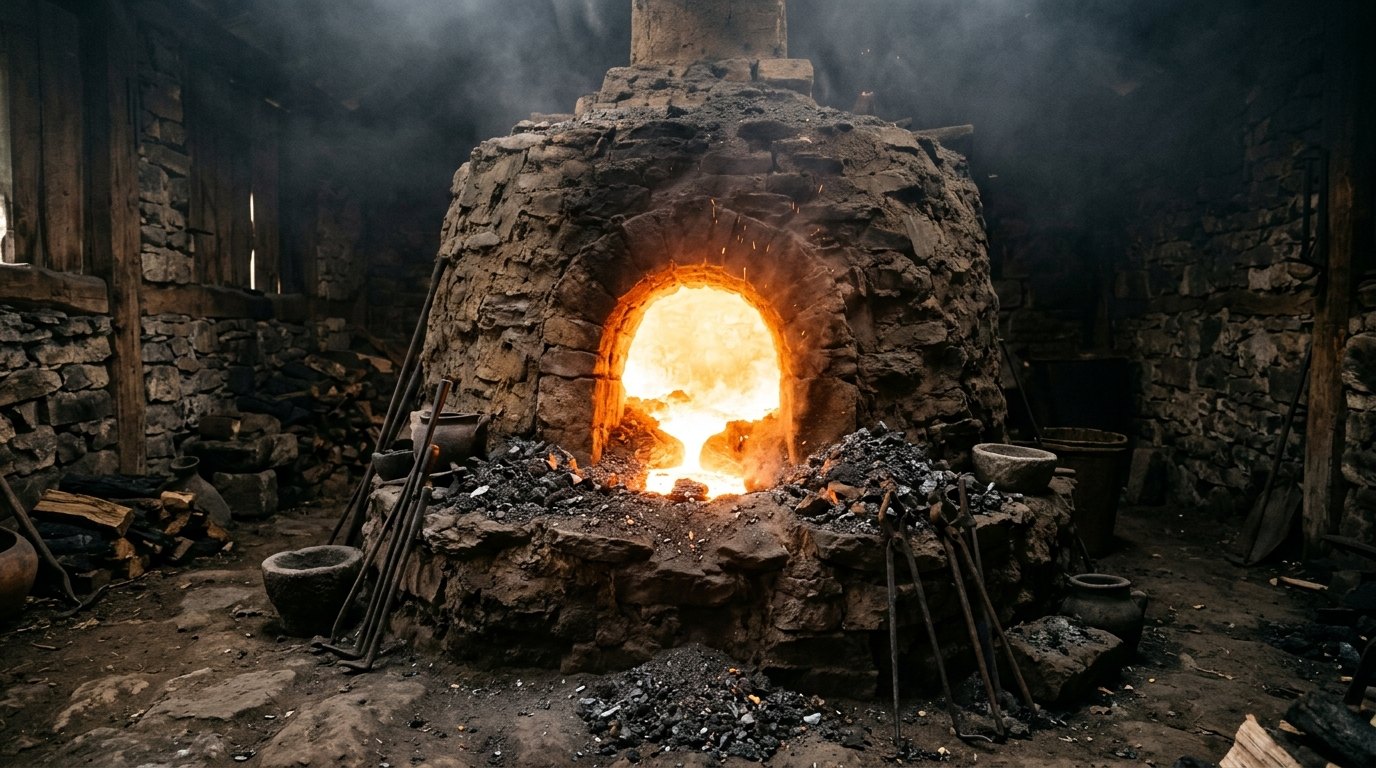
The evaluation at the bema seat is not a question of the believer's eternal salvation, but a fiery scrutiny of their earthly labor. The decisive principle is established in 1 Corinthians 3:13, where Paul writes that "each one's work will become manifest, for the Day will disclose it, because it will be revealed by fire, and the fire will test what sort of work each one has done." The believer's standing as a child of God is secure forever, firmly anchored upon the only true foundation identified in 1 Corinthians 3:11, which is Jesus Christ Himself. Salvation is a gift of sovereign grace, but the stewardship built upon that foundation is subject to divine examination.
Paul contrasts two distinct categories of building materials in 1 Corinthians 3:12: enduring treasures of gold, silver, and costly stones versus perishable debris of wood, hay, and straw. Enduring works are those performed in reliance upon the Holy Spirit, out of sincere love for Christ and obedience to His Word; perishable works are those produced through carnal ambition, pride, and self-glorification. When the testing fire sweeps through the structure, the outcome diverges dramatically. According to 1 Corinthians 3:14, if the work that anyone has built on the foundation survives, he will receive a reward. Conversely, 1 Corinthians 3:15 warns of profound, tragic loss: if anyone's work is burned up, he will suffer loss of reward, though he himself will be saved, but only as through fire. This reckoning mirrors the parabolic warnings of Jesus in Luke 19:15 and Matthew 25:19, where the master returns after a long journey to call his servants and settle accounts with them, inspecting how faithfully they traded with the talents entrusted to their care.
| Passage | What it says |
|---|---|
| 1 Corinthians 3:11 | Names Jesus Christ as the only foundation that can be laid for Christian labor. |
| 1 Corinthians 3:12 | Distinguishes enduring materials like gold, silver, and precious stones from perishable wood, hay, and straw. |
| 1 Corinthians 3:13 | Describes each person's work being revealed by fire on the Day to test its true quality. |
| 1 Corinthians 3:14 | Promises a reward to the servant whose built work endures the testing fire. |
| 1 Corinthians 3:15 | Explains that if work burns, the worker suffers loss, yet remains personally saved through fire. |
| Luke 19:15 | Describes the master summoning servants upon his return to examine their business stewardship. |
| Matthew 25:19 | The master returns after a long delay to settle accounts with his servants. |
Rewards and Crowns
Faithful Servants Receive Imperishable Honor from God

Now there is in store for me the crown of righteousness, which the Lord, the righteous Judge, will award to me on that day—and not only to me, but also to all who have longed for his appearing.
2 Timothy 4:8 (NIV)
Paul anticipates the crown of righteousness awarded by the righteous Judge to all who love His appearing.
The ultimate aim of the judgment seat of Christ is the gracious distribution of eternal honors to those who walked faithfully with their Lord. Writing from the threshold of martyrdom, Paul expresses this radiant confidence in 2 Timothy 4:8: "Henceforth there is laid up for me the crown of righteousness, which the Lord, the righteous judge, will award to me on that day, and not only to me but also to all who have loved his appearing." Having declared in 2 Timothy 4:7 that he had fought the good fight, finished the race, and kept the faith, Paul looked forward to receiving an imperishable reward from the Master's hand.
Scripture details various wreaths of glory promised to God's servants. In 1 Corinthians 9:25, Paul contrasts the wilting celery and pine wreaths given to victorious Corinthian athletes with an imperishable wreath won through self-control and disciplined devotion. James 1:12 pronounces blessed the one who remains steadfast under trial, for he will receive the crown of life, a promise reiterated by Christ in Revelation 2:10 to those faithful unto death. For elders who shepherd the flock without greed, 1 Peter 5:4 guarantees the unfading crown of glory when the Chief Shepherd appears. Ministry done in love also bears relational fruit; Paul describes the converts he nurtured as his "joy and crown" in Philippians 4:1 and his "crown of boasting" in 1 Thessalonians 2:19. Knowing that Psalm 62:12 praises God for rendering to each according to his work, and Ephesians 6:8 assures that every good thing will be repaid, believers heed Christ's warnings in Revelation 3:11 and Revelation 22:12 to hold fast so that no one seizes their crown. Ultimately, these rewards are never kept for self-exaltation; in Revelation 4:10, the elders cast their crowns before the throne, laying all honor at the feet of the Lamb.
| Passage | What it says |
|---|---|
| Psalms 62:12 | Praises God for His steadfast mercy in rendering to each person according to their work. |
| Ephesians 6:8 | Assures believers that the Lord repays any good deed done by slave or free. |
| 1 Corinthians 9:25 | Contrasts the perishable wreaths of earthly athletes with the imperishable crown believers run to receive. |
| 2 Timothy 4:7 | Records Paul's testimony of having fought the good fight, finished the race, and kept the faith. |
| 2 Timothy 4:8 | Declares that the crown of righteousness is laid up for all who long for Christ's appearing. |
| James 1:12 | Pronounces blessed the enduring believer who receives the crown of life promised by the Lord. |
| 1 Peter 5:4 | Promises undershepherds the unfading crown of glory when the Chief Shepherd appears. |
| Revelation 22:12 | Announces Jesus coming quickly with His reward to repay each one according to his deeds. |
| 1 Thessalonians 2:19 | Identifies believers won and discipled as a crown of boasting before Jesus. |
| Philippians 4:1 | Paul calls fellow believers his joy and crown in Christ. |
| Revelation 2:10 | Promises the crown of life to those faithful unto death. |
| Revelation 3:11 | Exhorts believers to hold fast so that no one seizes their crown. |
| Revelation 4:10 | Shows the elders casting their crowns before the throne in worship. |
Life in View of the Bema
The Fear of the Lord Inspires Holiness

Since, then, we know what it is to fear the Lord, we try to persuade others. What we are is plain to God, and I hope it is also plain to your conscience.
2 Corinthians 5:11 (NIV)
It links the holy awe of standing before Christ directly to urgent evangelism and clear integrity.
The expectation of the judgment seat is meant to purify the believer's daily walk rather than paralyze it with dread. As Paul writes in 2 Corinthians 5:11, “knowing therefore the terror of the Lord, we persuade men.” A proper awe of Christ's evaluation motivates a life of transparent integrity and earnest evangelism. This solemn prospect is not a threat of eternal perdition, for Romans 8:1 firmly establishes that there is now no condemnation for those who are in Christ Jesus. Instead, knowing that every private choice and stewardship matters transforms ordinary obedience into an act of worship.
Every believer carries out their daily tasks with an eye toward this day of reckoning. Paul charges workers in Colossians 3:23 to do whatever they do heartily, as to the Lord and not to men, because Colossians 3:24 reminds them that from the Lord they will receive the reward of the inheritance, for they serve Christ. In personal discipleship, 1 John 2:28 exhorts the faithful to abide in Him so that when He appears, they may have confidence and not shrink away from Him in shame at His coming. Similarly, 2 John 1:8 warns believers to watch themselves so that they do not forfeit what they worked for, but win a full reward.
Those given greater responsibility in the church bear a heightened accountability. In Hebrews 13:17, pastors and leaders are described as keeping watch over souls “as those who must give account.” James reinforces this gravity in James 3:1, cautioning that teachers will be judged with greater strictness. Across every calling, 1 Peter 1:17 bids believers to conduct themselves throughout their time of exile in holy fear, knowing that the Father judges each person's work impartially.
| Passage | What it says |
|---|---|
| Romans 8:1 | Guarantees there is no condemnation for those who are in Christ Jesus. |
| 2 Corinthians 5:11 | Explains that knowing the fear of the Lord motivates believers to persuade people honestly. |
| Colossians 3:23 | Directs believers to work heartily for the Lord rather than for human masters. |
| Colossians 3:24 | Reminds servants that their true inheritance comes from the Lord Christ whom they serve. |
| 1 John 2:28 | Urges abiding in Christ so as to have confidence and not shrink away in shame at His coming. |
| 2 John 1:8 | Exhorts believers to watch themselves so they do not lose their labor but receive a full reward. |
| Hebrews 13:17 | Reminds leaders they must give an account for the souls in their keeping. |
| James 3:1 | Warns that those who teach will be judged with greater strictness. |
| 1 Peter 1:17 | Calls believers to conduct themselves in fear before the Father who judges impartially. |
Contrast with Final Damnation
The Bema Rewards Saints While the Great White Throne Condemns

“Very truly I tell you, whoever hears my word and believes him who sent me has eternal life and will not be judged but has crossed over from death to life.
John 5:24 (NIV)
It secures believers from eternal condemnation, defining the Bema as an evaluation of life rather than destiny.
Scripture draws a sharp and eternal line between the Bema seat for believers and the final tribunal of the unregenerate. In John 5:24, the Lord Jesus provides ultimate assurance: whoever hears His word and believes Him who sent Him “shall not come into condemnation, but is passed from death unto life.” At the judgment seat of Christ, the believer’s eternal destiny is never in jeopardy. Their sins have been washed by the blood of Christ; what is evaluated is their stewardship, service, and faithfulness.
By stark contrast, the final evaluation of the lost occurs at the end of time before a different tribunal. In Revelation 20:11, the apostle John beholds “a great white throne, and him that sat on it, from whose face the earth and the heaven fled away.” Here, no believer stands. As Revelation 20:12 reveals, the dead stand before God, and the books are opened to judge them according to their works, exposing their guilt without an advocate. For those outside of Christ, there is no mercy at this tribunal. The tragic conclusion is declared in Revelation 20:15: “And whosoever was not found written in the book of life was cast into the lake of fire.” The Bema is a distribution of rewards to the family of God, whereas the Great White Throne is the final execution of divine justice upon an unrepentant world.
| Passage | What it says |
|---|---|
| John 5:24 | Assures believers that whoever hears and believes does not come into condemnation. |
| Revelation 20:11 | Depicts the great white throne from whose face earth and heaven flee away. |
| Revelation 20:12 | Describes the dead judged according to their deeds out of the books. |
| Revelation 20:15 | Declares that anyone not found written in the book of life is cast into hell. |
Where in the Bible
| Book | Passages |
|---|---|
| Psalms | 1 · Psalms 62:12 |
| Ecclesiastes | 1 · Ecclesiastes 12:14 |
| Matthew | 2 · Matthew 16:27, Matthew 25:19 |
| Luke | 2 · Luke 12:2, Luke 19:15 |
| John | 2 · John 5:22, John 5:24 |
| Acts | 1 · Acts 18:12 |
| Romans | 4 · Romans 14:10, Romans 14:11, Romans 14:12, Romans 8:1 |
| 1 Corinthians | 8 · 1 Corinthians 4:4, 1 Corinthians 4:5, 1 Corinthians 3:11, 1 Corinthians 3:12, 1 Corinthians 3:13, 1 Corinthians 3:14, 1 Corinthians 3:15, 1 Corinthians 9:25 |
| 2 Corinthians | 3 · 2 Corinthians 5:9, 2 Corinthians 5:10, 2 Corinthians 5:11 |
| Ephesians | 1 · Ephesians 6:8 |
| Philippians | 1 · Philippians 4:1 |
| Colossians | 2 · Colossians 3:23, Colossians 3:24 |
| 1 Thessalonians | 1 · 1 Thessalonians 2:19 |
| 2 Timothy | 2 · 2 Timothy 4:7, 2 Timothy 4:8 |
| Hebrews | 2 · Hebrews 4:13, Hebrews 13:17 |
| James | 2 · James 1:12, James 3:1 |
| 1 Peter | 2 · 1 Peter 5:4, 1 Peter 1:17 |
| 1 John | 1 · 1 John 2:28 |
| 2 John | 1 · 2 John 1:8 |
| Revelation | 8 · Revelation 2:23, Revelation 22:12, Revelation 2:10, Revelation 3:11, Revelation 4:10, Revelation 20:11, Revelation 20:12, Revelation 20:15 |
The story in order
- God's judgment of all things (c. 950 BC) · Ecclesiastes 12:14 · God will judge every hidden thing, good or evil.
- Jesus given authority to judge (c. AD 27) · John 5:22 · The Father has committed all judgment to the Son.
- Paul before Gallio at Corinth (c. AD 52) · Acts 18:12 · A historical example of a civil judgment seat.
- Believers will stand before God's seat (c. AD 57) · Romans 14:10 · All believers will appear before God's judgment seat.
- Christ searches minds and hearts (c. AD 95) · Revelation 2:23 · Christ examines motives and will repay according to works.
- The Lord repays good deeds (c. AD 62) · Ephesians 6:8 · The Lord will repay any good deed.
- Crown of righteousness laid up (c. AD 67) · 2 Timothy 4:8 · A crown awaits those who love Christ's appearing.
- Crown of life promised (c. AD 45) · James 1:12 · Blessed is the one who endures and receives the crown of life.
- Elders cast crowns before throne (c. AD 95) · Revelation 4:10 · An act of worship, giving glory to God.
- Jesus coming with reward (c. AD 95) · Revelation 22:12 · Jesus is coming quickly to repay each person.
Key words
- Bema seat (bēma, βῆμα)
- A raised platform for judgment or a tribunal. · Acts 18:12
- Judgment seat (bēma, βῆμα)
- The place where judgment is rendered. · Romans 14:10
- Reward (misthos, μισθός)
- Something given in recognition of service or merit. · 1 Corinthians 3:14
- Crown (stephanos, στέφανος)
- Symbol of honor, victory, or royal authority. · 1 Corinthians 9:25
- Condemnation (katakrima, κατάκριμα)
- The state of being judged guilty and deserving punishment. · Romans 8:1
The certainty of the Bema seat should fill believers not with dread, but with reverence, vigilance, and holy ambition. Because eternal life is securely anchored in the righteousness of Christ, our works are evaluated not to settle our salvation, but to glorify the Master we love. Remembering that our labors and hidden motives will soon meet His searching eyes invites us to live each day with eternity in view.
47 passages, each cited once.
Scripture cited
- 2 Corinthians 5:10
- Revelation 22:12
- Ecclesiastes 12:14
- Ephesians 6:8
- 1 Corinthians 3:10-15
- Romans 14:10-12
- Revelation 20:11-15
- 2 Corinthians 5:6-10