What is the difference between temptation and sin?

James 1:13-15
13 When tempted, no one should say, “God is tempting me.” For God cannot be tempted by evil, nor does he tempt anyone;
14 but each person is tempted when they are dragged away by their own evil desire and enticed.
15 Then, after desire has conceived, it gives birth to sin; and sin, when it is full-grown, gives birth to death.
New International Version (NIV)
The answer
Temptation is the pull toward evil; sin is yielding to it.
- Temptation: We are drawn and enticed by our own desires (James 1:14). Being tempted is not itself sinful. God does not tempt anyone to do evil (James 1:13).
- Sin: We act on the temptation and take the evil course. James says that when lust has conceived, it bears sin (James 1:15).
- Consequence: When sin grows fully, it produces death (James 1:15).
So, if a person is attracted to something sinful but refuses it and turns from it, that person has been tempted but has not sinned. If a person consents to the sinful desire and follows it, that person has committed sin.
Scripture calls us to endure temptation (James 1:12). When temptation has been yielded to, the biblical response is confession, repentance, and dependence on God for forgiveness and change (1 John 1:8-9; Romans 6:1-2).
Answered from Scripture · reviewed November 11, 2026
Scripture draws a clear line between the solicitation to evil and the evil act itself: temptation is the bait that pulls upon human weakness, while sin is the consent that conceives it. Being tempted is not a sin, but yielding our will to evil brings forth spiritual ruin, requiring watchful resistance and the cleansing power of Christ.
The Anatomy of Falling
Temptation Baits the Will, but Sin Consents
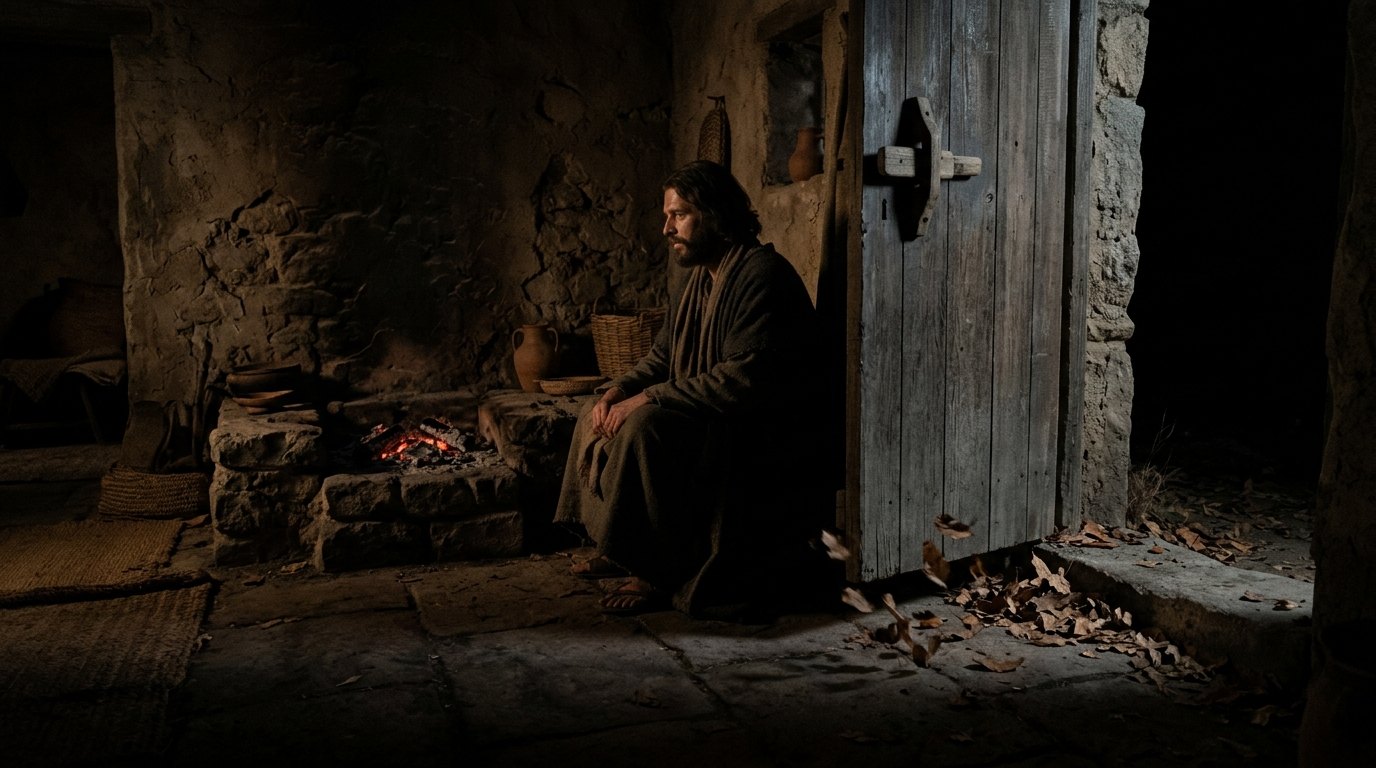
but each person is tempted when they are dragged away by their own evil desire and enticed. Then, after desire has conceived, it gives birth to sin; and sin, when it is full-grown, gives birth to death.
James 1:14-15 (NIV)
It outlines the distinct stages of the moral descent, separating the initial enticement from the conception of sin and its final harvest of death.
James 1:14-15 exposes the exact fault line where moral trial becomes moral failure: desire conceives to produce sin, and sin brings forth death. The passage dismantles any confusion between being solicited by evil and committing it. As James 1:13 makes plain, God cannot be tempted by evil, nor does He tempt anyone to sin. Instead, James 1:14 tracks the beginning of the trap: a person is lured and enticed by their own desire. The spark becomes a blaze only when the will welcomes the bait. James 1:15 reveals that sin is born not at the moment an evil suggestion knocks, but when unlawful desire receives the soul's inward embrace.
This tragic anatomy unfolded first in Eden. In Genesis 3:6, Eve looked upon the forbidden fruit, saw that it was pleasing to the eye and desirable for wisdom, and then reached out her hand to take and eat. The progression moved swiftly from observation to illicit delight, and from internal delight to outward rebellion. Before blood was shed in the next generation, God warned Cain of this precise threshold in Genesis 4:7: sin crouched at the door like a predatory beast seeking mastery, yet Cain was commanded to master it rather than yield. The Lord Jesus affirmed this interior boundary in Matthew 5:28, teaching that looking upon a woman with deliberate lustful intent has already crossed from mere sight into the adultery of the heart. The commandment exposes how fallen flesh operates, as Romans 7:7-8 explains that sinful cravings seize the opportunity given by the law to produce covetousness. Temptation knocks at the gate, but sin occurs the instant the gate is deliberately unbolted from within.
| Passage | What it says |
|---|---|
| James 1:13 | God cannot be tempted by evil and never tempts anyone to sin. |
| James 1:14 | Temptation occurs when an individual is drawn away and enticed by their own desire. |
| James 1:15 | Desire conceives to produce sin, and sin fully grown brings forth death. |
| Genesis 3:6 | Eve saw the tree, desired it to make one wise, and then took and ate. |
| Genesis 4:7 | Sin crouches at the door desiring mastery, but Cain was commanded to rule over it. |
| Matthew 5:28 | Looking with lustful intent crosses from mere external sight into the deliberate sin of heart adultery. |
| Romans 7:7-8 | Sin seizes opportunity through the commandment to stir up illicit covetous desire within fallen human flesh. |
The Sinless Standard
Jesus Was Severely Tempted yet Remained Without Sin

For we do not have a high priest who is unable to empathize with our weaknesses, but we have one who has been tempted in every way, just as we are—yet he did not sin.
Hebrews 4:15 (NIV)
It explicitly demonstrates that being tempted in every respect does not equal committing sin, since Christ experienced both fully human trial and absolute purity.
Hebrews 4:15 settles forever whether temptation itself constitutes sin: Christ was tempted in every respect as we are, yet without sin. Because our great High Priest endured every category of human testing without ever yielding His holy will, we know that external solicitation to evil carries no inherent guilt for the one who withstands it. In Matthew 4:1-11, the Lord confronted the devil in the Judean wilderness. Satan hurled direct enticements toward physical appetite, presumption, and worldly glory, yet Jesus extinguished each flaming arrow with the unyielding authority of Scripture. The assault was severe and real, yet it left no moral stain upon the spotless Son of God.
Because Jesus endured such trials, Hebrews 2:18 assures us that He is able to come to the aid of those who are currently being tempted. His sinlessness was not an untested abstraction; 1 Peter 2:22 records that He committed no sin, nor was any deceit found in His mouth, even under intense mockery and agony. Luke 4:13 notes that when the devil had ended every temptation, he departed from Jesus until an opportune time, demonstrating that an assault can exhaust its full fury while the believer stands utterly clean. As 2 Corinthians 5:21 declares, God made Him who knew no sin to be sin for us, so that we might become the righteousness of God in Him. Christ proved that temptation may surround the soul on every side, yet where there is no inward consent, there is no sin.
| Passage | What it says |
|---|---|
| Hebrews 4:15 | Christ was tempted in every way as we are, yet remained entirely without sin. |
| Matthew 4:1-11 | Jesus faced direct satanic solicitation to pride, self-reliance, and idolatry, rebuking each with Scripture. |
| Hebrews 2:18 | Because Christ suffered when tempted, He is able to help those who are being tempted. |
| 1 Peter 2:22 | He committed no sin, and no deceit was found in His mouth. |
| Luke 4:13 | The devil departs after Christ withstands every assault, showing temptation can be fully experienced without yielding to sin. |
| 2 Corinthians 5:21 | Christ knew no personal sin despite confronting all the fierce temptations of an ungodly world. |
The Blame Game
Passing Blame Cannot Dismiss Personal Moral Guilt

The man said, “The woman you put here with me—she gave me some fruit from the tree, and I ate it.”
Genesis 3:12 (NIV)
It captures humanity's primal instinct to blame God and others for the willful choice to yield to temptation.
Genesis 3:12 records fallen humanity's instinctive impulse when confronted with moral failure: the man blamed the woman God gave him, seeking to turn his guilt into an indictment of the Creator. Adam refused to confess his willful disobedience, choosing instead to argue that his environment and companions compelled his fall. This ancient deflection recurs in every human heart that yields to temptation and then resents the consequence. Proverbs 19:3 unmasks this hypocrisy, showing that when a person's own foolishness ruins their life, their heart rages against the Lord rather than weeping in godly sorrow.
Scripture refuses to tolerate any excuse that shifts responsibility away from the human will. In Romans 9:19-20, the apostle Paul silences the defiant question that attempts to charge God's sovereign governance with man's moral rebellion: who are you, a mere human being, to talk back to God? Likewise, Isaiah 63:17 gives voice to an afflicted people asking why God has hardened their hearts, a prayer that acknowledges their wandering condition while warning against treating divine judgment as an excuse for human unfaithfulness. We cannot blame our heritage, our circumstances, or God's sovereignty when we yield to the bait of evil. Temptation may arise from the world and the adversary, but our consent is our own, driving our desperate need to abandon all self-justification and flee directly to the cross of Christ for cleansing.
| Passage | What it says |
|---|---|
| Genesis 3:12 | Adam blamed the woman God gave him for his choice to eat forbidden fruit. |
| Romans 9:19-20 | Human creatures cannot fault God's sovereign justice or excuse their own wrongdoing by blaming His decree. |
| Isaiah 63:17 | Israel's plea acknowledges wandering hearts while warning against treating divine judgment as an excuse for rebellion. |
| Proverbs 19:3 | A person's folly ruins their way, yet their heart rages against the Lord. |
The Way Out
God Provides the Escape and Blesses the Steadfast
No temptation has overtaken you except what is common to mankind. And God is faithful; he will not let you be tempted beyond what you can bear. But when you are tempted, he will also provide a way out so that you can endure it.
1 Corinthians 10:13 (NIV)
It guarantees that no temptation is beyond endurance and that God actively opens an exit route for the faithful.
1 Corinthians 10:13 offers the believer an unshakable guarantee: God is faithful, and He will not let you be tempted beyond what you can bear, but will with the temptation provide the way of escape. Temptation is never an irresistible force that compels sin. James 1:12 promises that the man who remains steadfast under trial is blessed, for when he has stood the test he will receive the crown of life. Rather than despairing when trials press close, James 1:2-3 instructs believers to count it all joy, knowing that the testing of faith produces endurance.
Victory requires watchful preparation and decisive action. In Matthew 26:41, Jesus urged His disciples to watch and pray that they might not enter into temptation, warning that while the spirit is willing, the flesh is weak. When assault comes, 2 Peter 2:9 assures us that the Lord knows how to rescue the godly from trials while holding the unrighteous for judgment. Paul gives practical direction in 2 Timothy 2:22, commanding us to flee youthful passions and pursue righteousness, faith, love, and peace alongside those who call on the Lord from a pure heart. We are not left defenseless; Ephesians 6:11-13 commands us to take up the whole armor of God to withstand the schemes of the devil. As Hebrews 12:4 reminds us, resisting temptation demands blood-earnest resolve. Through the indwelling Spirit and the armor of God, every believer is equipped to lay hold of God's escape route and stand firm.
| Passage | What it says |
|---|---|
| 1 Corinthians 10:13 | God is faithful to limit testing and provide a way of escape so believers can endure. |
| James 1:12 | Blessed is the one who perseveres under trial, receiving the promised crown of life. |
| James 1:2-3 | Believers must count trials joy, knowing testing produces steadfast endurance. |
| Matthew 26:41 | Watch and pray that you may not enter into temptation, for the spirit is willing but the flesh is weak. |
| 2 Peter 2:9 | The Lord knows how to rescue the godly from trials while holding the unrighteous for judgment. |
| 2 Timothy 2:22 | Believers are commanded actively to flee youthful passions and pursue righteousness alongside a pure-hearted community. |
| Ephesians 6:11-13 | Putting on God's whole armor enables the believer to withstand the deceptive schemes and fiery darts of the devil. |
| Hebrews 12:4 | The struggle against temptation and sin requires vigorous, blood-earnest resistance rather than passive compromise. |
Repentance and Cleansing
When Desire Conceives Sin, Grace Restores the Penitent
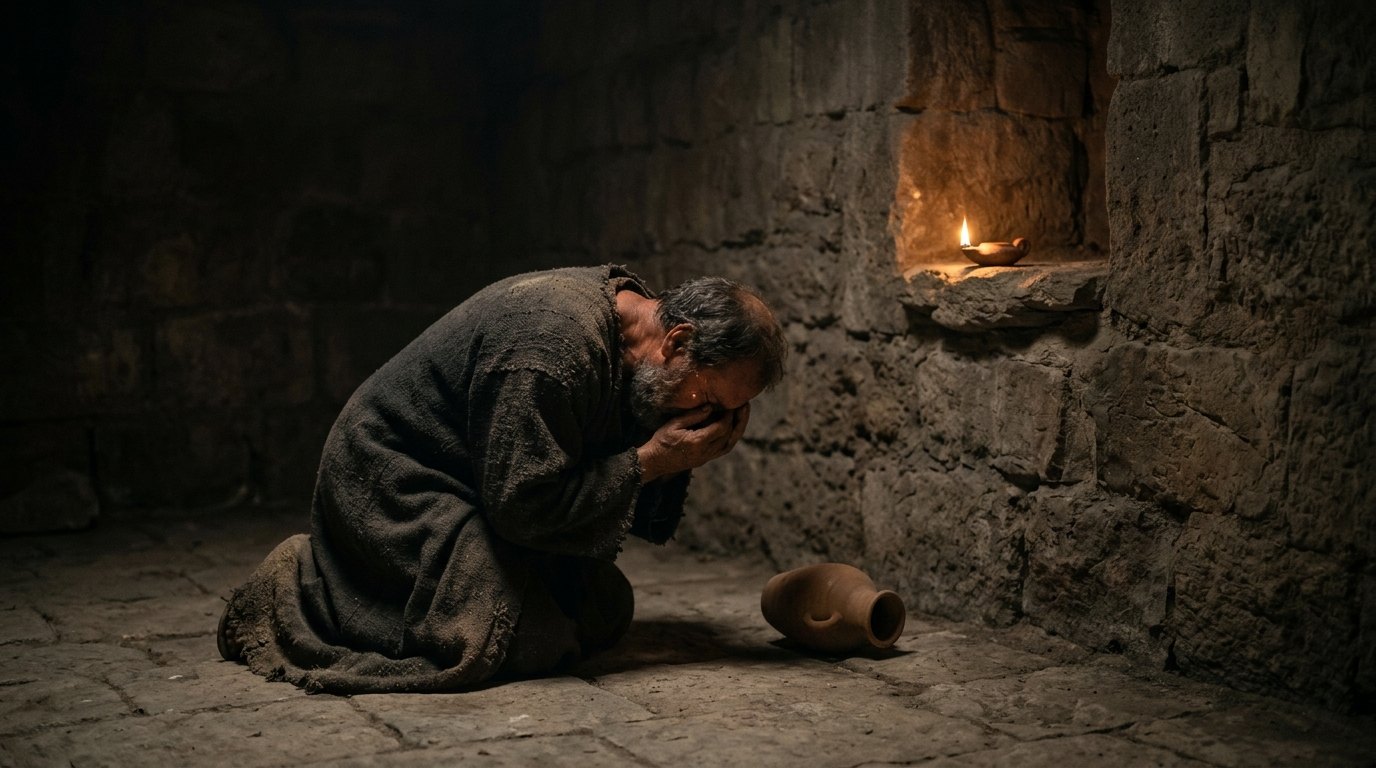
If we confess our sins, he is faithful and just and will forgive us our sins and purify us from all unrighteousness.
1 John 1:9 (NIV)
It declares God's unfailing promise of complete forgiveness and purification when confessed sin breaks our fellowship with Him.
The promise of 1 John 1:9 provides the sure ground for our restoration: when temptation has given way to transgression, God remains faithful and just to cleanse every stain. Temptation aims to draw the soul into rebellion, but when that enticement is embraced and carried out, the believer must not hide behind excuses or denial. As 1 John 1:8 warns, claiming we have no sin is self-deception and denies the truth of God's holy standard. Genuine spiritual health begins when we name our failure honestly before the Lord. Concealment only deepens the wound of guilt, whereas Proverbs 28:13 affirms that whoever confesses and forsakes sin finds boundless mercy. God does not merely overlook wrongdoing; He deals with it righteously through the atoning sacrifice of Christ, washing away unrighteousness and renewing unbroken communion. Yet this pardoning grace is never a license to compromise. Paul insists in Romans 6:1-2 that those who have died to sin cannot continue living under its sway. Forgiveness breaks the power of guilt so that the believer may rise up, purified and rearmed, to walk in genuine holiness.
| Passage | What it says |
|---|---|
| 1 John 1:8 | If we say we have no sin, we deceive ourselves and truth is not in us. |
| 1 John 1:9 | If we confess our sins, God is faithful and just to forgive and cleanse us from all unrighteousness. |
| Romans 6:1-2 | Believers cannot continue in sin that grace may abound, having died to its dominion. |
| Proverbs 28:13 | He who conceals his transgressions will not prosper, but whoever confesses and forsakes them finds mercy. |
Overcoming the Flesh
The Holy Spirit Empowers Believers to Mortify Enticement
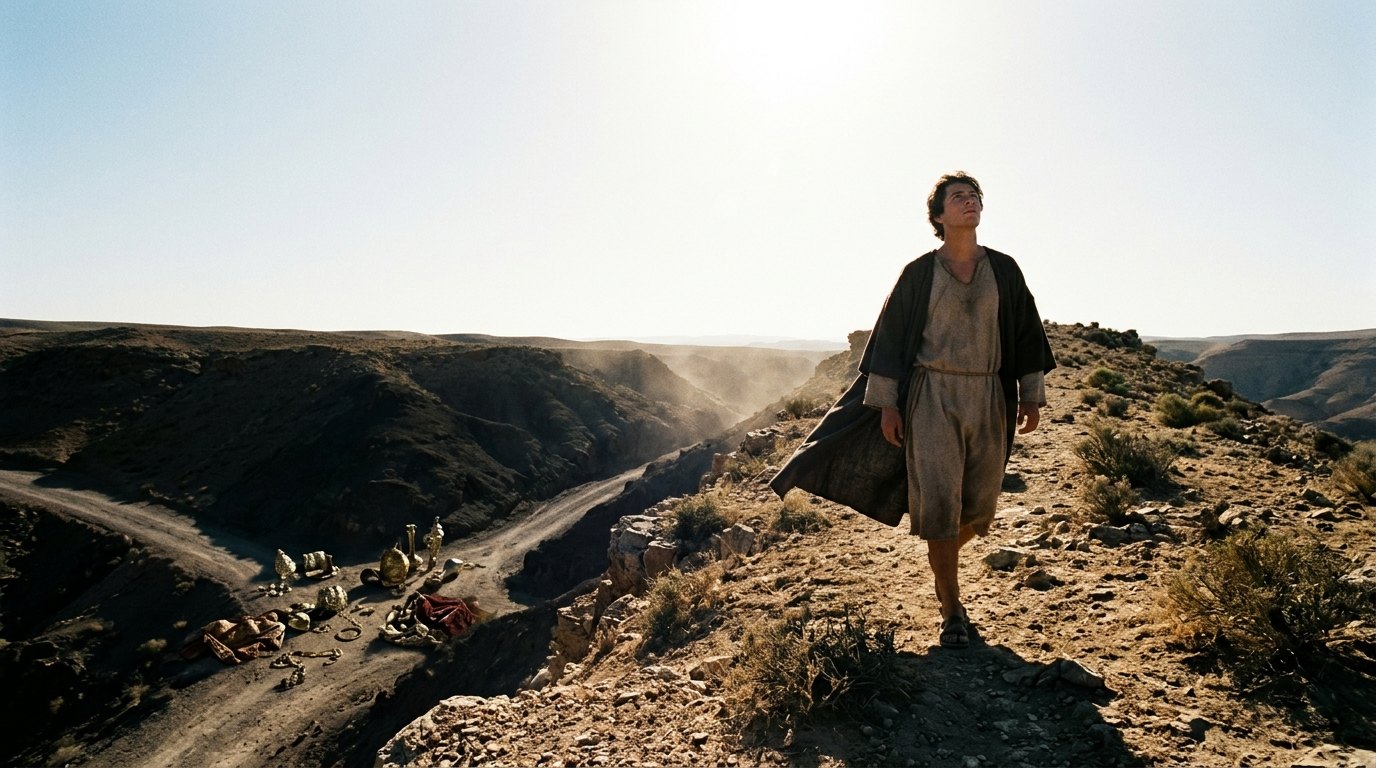
So I say, walk by the Spirit, and you will not gratify the desires of the flesh.
Galatians 5:16 (NIV)
Walking by the Spirit breaks the necessary progression from fleshly enticement to actual sinful deeds.
Victory over enticement is not won by willpower alone, but by yielding to the Spirit's governing rule, as Galatians 5:16 commands: walk by the Spirit, and you will not gratify the desires of the flesh. While temptation incessantly tugs at natural human appetites, Galatians 5:17 reveals the fierce conflict within: the flesh lusts against the Spirit, yet the Spirit's power is fully sufficient to arrest sinful desire before it matures into action. Believers are called to a decisive change of allegiance. In Romans 6:11-14, Scripture instructs us to reckon ourselves dead to sin and alive to God, refusing to yield our bodily members as instruments of wickedness. Instead of passively enduring the pull of corruption, Romans 8:12-13 summons the believer to active mortification, putting to death the deeds of the body through the Holy Spirit's power. This victory demands concrete, uncompromising action; as 1 Corinthians 6:18-20 commands, we must flee sexual immorality and every fleshly entrapment. Purchased at the infinite price of Christ's blood, our bodies are living temples, sanctified to glorify the God who redeemed us.
| Passage | What it says |
|---|---|
| Galatians 5:16-17 | The indwelling Holy Spirit opposes the desires of the flesh so that believers do not carry out sinful impulses. |
| Romans 6:11-14 | Believers must consider themselves dead to sin's reign, refusing to present bodily members as instruments for unrighteousness. |
| Romans 8:12-13 | Through the power of the Spirit, Christians put to death the sinful deeds of the body and live. |
| 1 Corinthians 6:18-20 | Fleeing sexual immorality honors God with the body, which is a temple purchased by Christ's blood. |
Where in the Bible
| Book | Passages |
|---|---|
| Genesis | 3 · Genesis 3:6, Genesis 4:7, Genesis 3:12 |
| Proverbs | 2 · Proverbs 19:3, Proverbs 28:13 |
| Isaiah | 1 · Isaiah 63:17 |
| Matthew | 3 · Matthew 5:28, Matthew 4:1-11, Matthew 26:41 |
| Luke | 1 · Luke 4:13 |
| Romans | 5 · Romans 7:7-8, Romans 9:19-20, Romans 6:1-2, Romans 6:11-14, Romans 8:12-13 |
| 1 Corinthians | 2 · 1 Corinthians 10:13, 1 Corinthians 6:18-20 |
| 2 Corinthians | 1 · 2 Corinthians 5:21 |
| Galatians | 1 · Galatians 5:16-17 |
| Ephesians | 1 · Ephesians 6:11-13 |
| 2 Timothy | 1 · 2 Timothy 2:22 |
| Hebrews | 3 · Hebrews 4:15, Hebrews 2:18, Hebrews 12:4 |
| James | 5 · James 1:13, James 1:14, James 1:15, James 1:12, James 1:2-3 |
| 1 Peter | 1 · 1 Peter 2:22 |
| 2 Peter | 1 · 2 Peter 2:9 |
| 1 John | 2 · 1 John 1:8, 1 John 1:9 |
The story in order
- Eve tempted and fell (c. 4000 BC) · Genesis 3:6 · Eve's desire led her to take and eat forbidden fruit, conceiving sin.
- Cain's sin crouches at the door (c. 4000 BC) · Genesis 4:7 · Sin desires mastery, but humans are commanded to rule over it.
- Adam blames Eve (c. 4000 BC) · Genesis 3:12 · Adam passed blame to the woman and God for his disobedience.
- Israel's wandering hearts (c. 700 BC) · Isaiah 63:17 · A plea acknowledging wandering hearts and warning against rebellion.
- Jesus tempted by Satan (AD 28) · Matthew 4:1-11 · Jesus resisted direct satanic solicitation with Scripture.
- Jesus' sinless perfection (c. AD 60) · Hebrews 4:15 · Christ was tempted in all ways, yet remained without sin.
- The believer's struggle (c. AD 55) · Galatians 5:16-17 · The Spirit opposes fleshly desires, preventing sinful impulses.
- God provides escape from testing (c. AD 55) · 1 Corinthians 10:13 · God limits testing and provides a way to endure.
- Confession and cleansing (c. AD 90) · 1 John 1:9 · Confessing sins leads to God's faithful forgiveness and cleansing.
- Fleeing youthful passions (c. AD 67) · 2 Timothy 2:22 · Command to flee passions and pursue righteousness with community.
Key words
- Temptation (peirasmos, πειρασμός)
- The solicitation to evil, drawing on human desire and weakness. · James 1:13
- Sin (hamartia, ἁμαρτία)
- The act of consenting to evil desire, leading to spiritual death. · James 1:15
- Desire (epithymia, ἐπιθυμία)
- The internal longing that, when enticed, conceives sin. · James 1:14
- Escape (ekbasis, ἔκβασις)
- God's provision for believers to endure trials without succumbing. · 1 Corinthians 10:13
- Confess (homologeō, ὁμολογέω)
- To agree with God about one's sin, leading to forgiveness. · 1 John 1:9
Knowing the difference between temptation and sin frees the believer from false guilt when assaulted by uninvited desires, while sharpening vigilance against yielding to them. Whenever temptation strikes, look immediately to Christ, who endured every trial without sin and provides the faithful way of escape.
33 passages, each cited once.
Scripture cited
- James 1:12