What is the Exodus?

Exodus 14:21-31
21 Then Moses stretched out his hand over the sea, and all that night the LORD drove the sea back with a strong east wind and turned it into dry land. The waters were divided,
22 and the Israelites went through the sea on dry ground, with a wall of water on their right and on their left.
23 The Egyptians pursued them, and all Pharaoh’s horses and chariots and horsemen followed them into the sea.
24 During the last watch of the night the LORD looked down from the pillar of fire and cloud at the Egyptian army and threw it into confusion.
25 He jammed the wheels of their chariots so that they had difficulty driving. And the Egyptians said, “Let’s get away from the Israelites! The LORD is fighting for them against Egypt.”
26 Then the LORD said to Moses, “Stretch out your hand over the sea so that the waters may flow back over the Egyptians and their chariots and horsemen.”
27 Moses stretched out his hand over the sea, and at daybreak the sea went back to its place. The Egyptians were fleeing toward it, and the LORD swept them into the sea.
28 The water flowed back and covered the chariots and horsemen—the entire army of Pharaoh that had followed the Israelites into the sea. Not one of them survived.
29 But the Israelites went through the sea on dry ground, with a wall of water on their right and on their left.
30 That day the LORD saved Israel from the hands of the Egyptians, and Israel saw the Egyptians lying dead on the shore.
31 And when the Israelites saw the mighty hand of the LORD displayed against the Egyptians, the people feared the LORDand put their trust in him and in Moses his servant.
New International Version (NIV)
The answer
The Exodus: God's Deliverance of Israel from Egypt
The Exodus is the great act by which God brought the Israelites out of slavery in Egypt, fulfilling promises made to Abraham, Isaac, and Jacob. The word itself means "going out" (Greek exodos; Hebrew yetzi'at Mitzrayim), and in Jewish tradition the Second Passover/Pentecost is Shavuot — the festival marking the giving of the Law at Sinai, fifty days after the Exodus redemption (Leviticus 23:15–21). Jews refer to this event as yetziat Mitzrayim ("the going-forth from Egypt"), the foundational moment of their history as a covenant people, celebrated each spring during Passover (Pesach) and again at Shavuot. The English word "passover" translates the Hebrew pesach, which refers to God "passing over" the houses marked with blood at the death of the firstborn.
Who Led Them
Moses, raised in Pharaoh's house (Exodus 2:1–10) and later a shepherd in Midian, was called by God at the burning bush (Exodus 3:1–10) to demand Israel's release. After ten plagues culminating in the Passover (Exodus 11–12), Pharaoh drove the people out, and the long walk to Sinai began.
The Core Events
- The Passover (Exodus 12): Each household killed a lamb and put its blood on the doorposts. The plague struck every Egyptian firstborn; Israelite homes marked with blood were "passed over."
- The departure (Exodus 13): Some 600,000 men, plus women, children, and a "mixed multitude," set out from Rameses into the wilderness.
- The crossing of the Red Sea (Exodus 14): Pharaoh's army pursued. Moses stretched out his hand; the sea fled; Israel crossed on dry ground; the waters returned and destroyed Pharaoh's host.
Why It Matters for the Whole Bible
The Exodus grounds several massive themes:
- Redemption: The Lamb's blood sparing the firstborn foreshadows Christ as "our Passover" (1 Corinthians 5:7); at the Last Supper, Jesus linked His death directly to this sacrifice.
- Covenant: God declares at Sinai, "You shall be my treasured possession" (Exodus 19:5); Israel becomes a covenant nation at Mount Sinai.
- Witness: The plagues were so that Egypt would "know that I am Yahweh" (Exodus 7:5); this carries through to the plagues of Revelation.
- The journey to the Land: From Sinai, Israel moves toward the Promised Land of Canaan (Exodus 12:25; Deuteronomy 1:8).
A Few Key Passages to Pair It With
- Passage — What It Shows
- Exodus 12:14 — Passover becomes a permanent memorial feast
- Exodus 14:22 — Israel passes through the sea on dry land
- Exodus 20:2 — "I am Yahweh your God, who brought you out of the land of Egypt"
- John 8:36 — "If the Son sets you free, you will be free indeed"
- 1 Corinthians 5:7 — Christ, our Passover Lamb
The short answer: the Exodus is the Passover and Passover-night departure that made Israel a nation, with the Red Sea crossing as its climactic redemption (Exodus 14:22) — the hinge event of the Old Testament and the standard image for salvation in the rest of Scripture.
Answered from Scripture · reviewed November 7, 2026
The Exodus is God's foundational act of historical redemption, delivering the children of Israel from centuries of brutal Egyptian bondage and forging them into His covenant people. Spanning the shed blood of the Passover lamb to the miraculous deliverance through the divided waters of the Red Sea, it defines biblical salvation. Above all, the Exodus serves as the overarching type and pattern of the eternal rescue accomplished by Jesus Christ, who delivers His people from the slavery of sin and death.
The Covenant Promise
God Remembers His Ancient Oath to Abraham
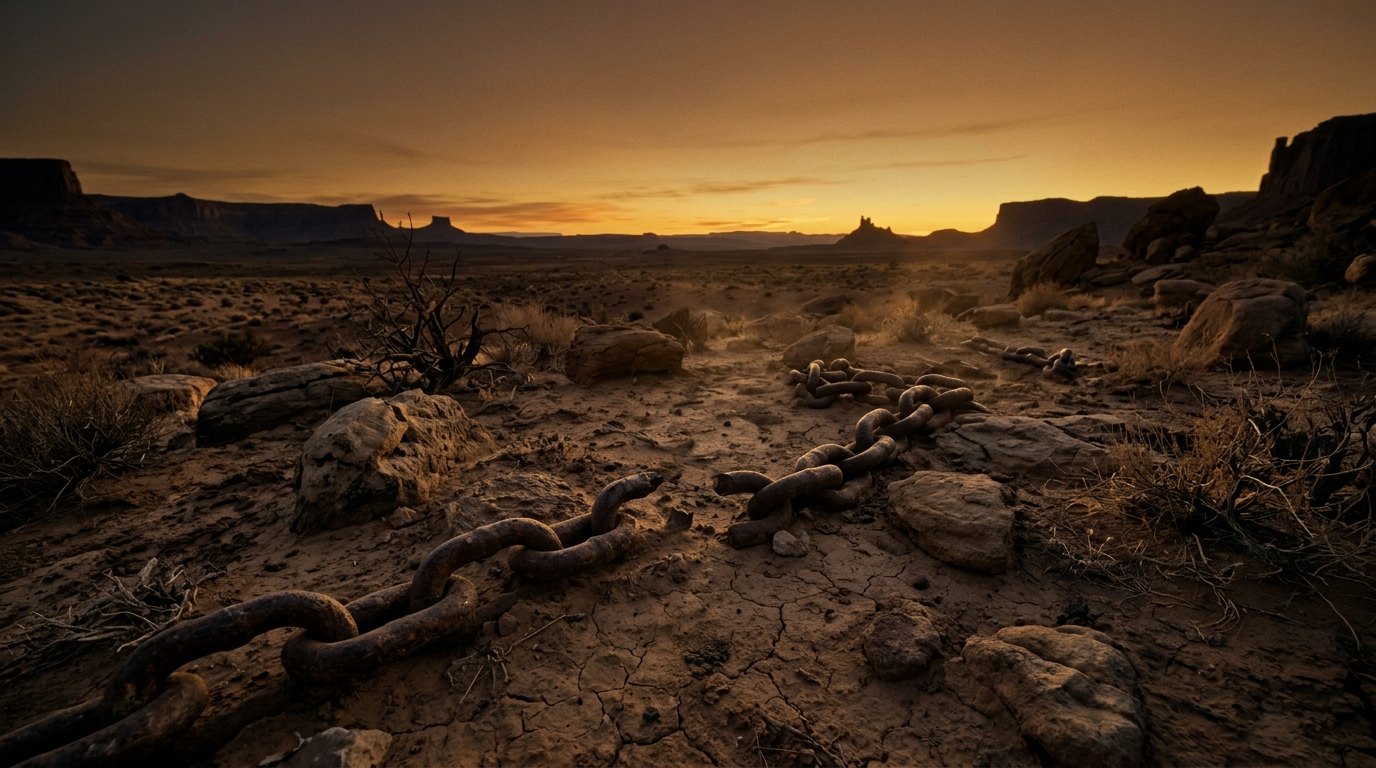
Then the LORD said to him, “Know for certain that for four hundred years your descendants will be strangers in a country not their own and that they will be enslaved and mistreated there. But I will punish the nation they serve as slaves, and afterward they will come out with great possessions.
Genesis 15:13-14 (NIV)
God explicitly foretold the four-hundred-year Egyptian affliction and the subsequent exodus with great wealth centuries before Moses was born.
Long before the chains of Egyptian bondage clanked in the brickyards of the Nile, God had already scripted both Israel's affliction and their triumphant deliverance. In Genesis 15:13-14, the Lord entered into a unilateral, smoking-pot covenant with Abraham, declaring with sovereign certainty that his seed would dwell as strangers in an alien land, suffering severe affliction for four centuries before going out with substantial substance. Centered in this foundational decree, the entire narrative of the Exodus unfurls not as an unforeseen humanitarian emergency, but as the deliberate, scheduled unfolding of divine purpose. The closing chapter of Genesis underlines this expectant faith: in Genesis 50:24-25, the dying patriarch Joseph charged his brethren that God would assuredly visit them, demanding that his embalmed bones be carried along into the Promised Land when that day arrived.
Generations passed, and the historical reality deepened precisely as foretold. Exodus 1:8-14 chronicles how a new dynastic ruler arose over Egypt who knew not Joseph, ruthlessly crushing the proliferating Israelites beneath oppressive taskmasters, mud brick labor, and rigorous field service. Yet this affliction was never hidden from Heaven. In Exodus 2:23-25, God heard their groaning and remembered His holy covenant with Abraham, Isaac, and Jacob, gazing upon the sons of Israel with omnipotent resolve. Finally, in Exodus 6:6-8, Yahweh articulated His unwavering commitment to Moses through four progressive redemption pledges, swearing by His outstretched arm and monumental judgments to bring them out, rid them of servitude, redeem them as His own chosen people, and establish them securely in the land He had sworn to their fathers.
| Passage | What it says |
|---|---|
| Genesis 15:13-14 | God promises Abram that his descendants will serve in a strange land but depart with great possessions after divine judgment. |
| Exodus 1:8-14 | A new king arises over Egypt who ruthlessly oppresses and enslaves the rapidly multiplying descendants of Jacob. |
| Exodus 2:23-25 | Israel groans under bitter slavery, and God hears their cries, remembering His covenant with Abraham, Isaac, and Jacob. |
| Genesis 50:24-25 | Joseph prophesies God will bring Israel out of Egypt and commands his bones be carried up. |
| Exodus 6:6-8 | The Lord declares His fourfold redemption promise by an outstretched arm. |
The Chosen Deliverer
The Calling of Moses at the Burning Bush

The LORD said, “I have indeed seen the misery of my people in Egypt. I have heard them crying out because of their slave drivers, and I am concerned about their suffering. So I have come down to rescue them from the hand of the Egyptians and to bring them up out of that land into a good and spacious land, a land flowing with milk and honey—the home of the Canaanites, Hittites, Amorites, Perizzites, Hivites and Jebusites. And now the cry of the Israelites has reached me, and I have seen the way the Egyptians are oppressing them. So now, go. I am sending you to Pharaoh to bring my people the Israelites out of Egypt.”
Exodus 3:7-10 (NIV)
The Lord reveals His intent to come down, rescue Israel, and commission Moses as His appointed mediator.
Deliverance requires a qualified mediator, and God sovereignly fashioned Moses for that singular calling through miraculous providence and holy encounter. In Exodus 3:7-10, Yahweh spoke out of the burning, unconsumed bush on Horeb, proclaiming, 'I have surely seen the affliction of My people,' announcing that He had come down to deliver them and commission Moses as His personal emissary to Pharaoh, a divine intervention Stephen celebrated centuries later in Acts 7:34-35. This commission marked the culmination of eighty years of divine preparation. In Exodus 2:1-10, an infant Moses was preserved in a reed basket amidst Pharaoh's murderous decree, taken into Pharaoh's own household to be reared in royal wisdom, just as Acts 7:20-22 affirms his providential equipping before his wilderness exile.
When Moses trembled at the magnitude of this confrontation, the Almighty unveiled the ultimate bedrock of his authority: in Exodus 3:14-15, God revealed His transcendent covenant name, I AM WHO I AM, identifying Himself as the self-existent, eternal God who sends forth His servants with invincible warrant. To alleviate Moses' natural stammering, God ordained Aaron as his official prophet and mouthpiece in Exodus 4:10-17, uniting them as a unified prophetic voice before the throne of Egypt. Thus commissioned, Moses and Aaron were positioned to display the unmatched glory of Yahweh. In Exodus 7:1-5, God revealed that He would harden Pharaoh's proud heart so that Egypt would undeniably know that He alone is the Lord—an eternal display of sovereign mercy and righteous judgment that the Apostle Paul confirms in Romans 9:17 as Yahweh's eternal design to proclaim His majesty through the earth.
| Passage | What it says | Fulfilled |
|---|---|---|
| Exodus 2:1-10 | Moses is preserved from Pharaoh's decree of death and raised within Pharaoh's royal household. | Acts 7:20-22 |
| Exodus 3:7-10 | God appears in the burning bush, declaring His compassionate purpose to deliver Israel through Moses. | Acts 7:34-35 |
| Exodus 7:1-5 | The Lord equips Moses and Aaron to confront Pharaoh so Egypt will know that He is Yahweh. | Romans 9:17 |
| Exodus 3:14-15 | God reveals His eternal covenant name, I AM WHO I AM, to Moses. | |
| Exodus 4:10-17 | The Lord appoints Aaron as spokesman alongside Moses for the rescue of Israel. |
The Judgments of God
The Ten Plagues Overthrow the Gods of Egypt
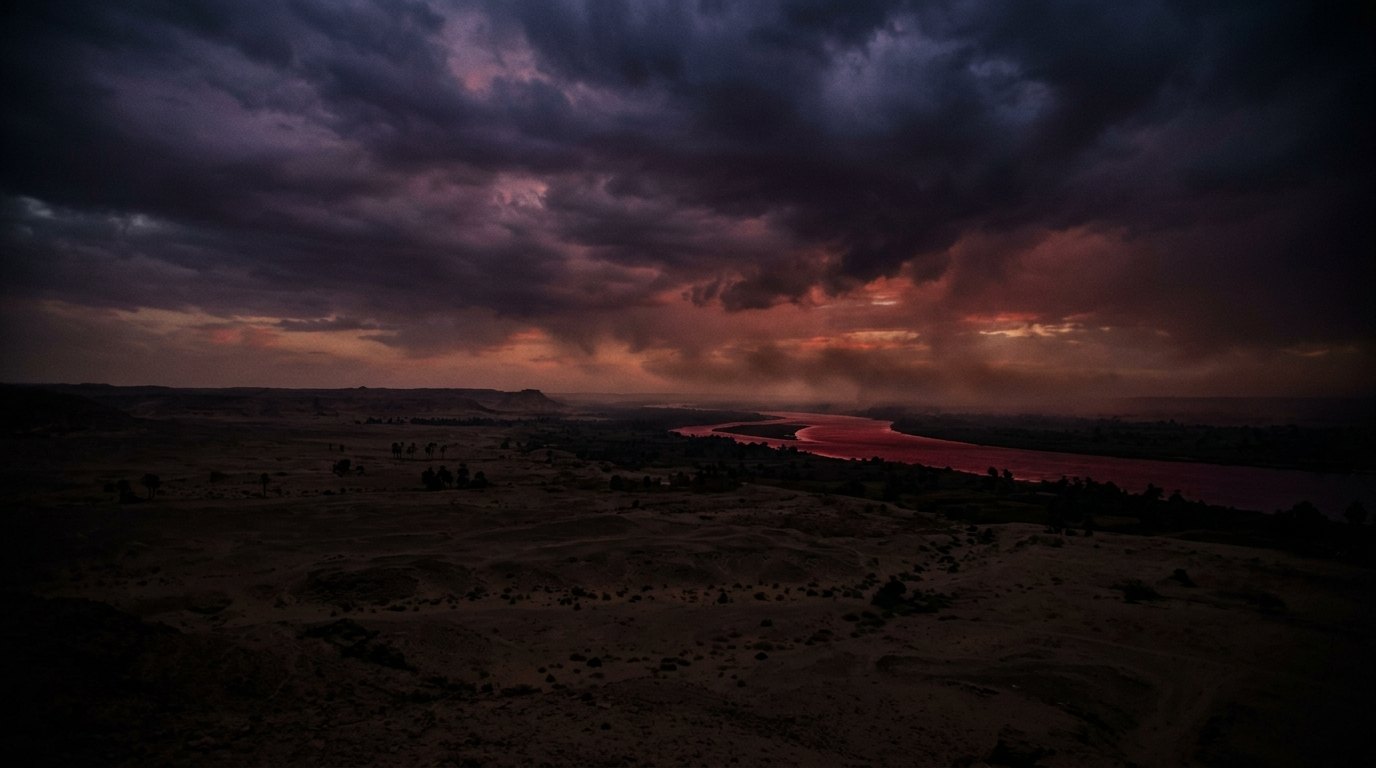
“On that same night I will pass through Egypt and strike down every firstborn of both people and animals, and I will bring judgment on all the gods of Egypt. I am the LORD.
Exodus 12:12 (NIV)
The Lord declares that His final strike against Egypt will execute sovereign judgment against all its false deities.
The plagues sent upon Egypt were not random climatic catastrophes, but targeted cosmic judgments aimed directly against the entrenched pantheon of false deities. In Exodus 12:12, Yahweh issued His ultimate theological ultimatum: 'Against all the gods of Egypt I will execute judgment: I am the Lord.' Every sign struck down a prominent idol that claimed authority over nature, the Nile, the sun, and human fertility, proving that Pharaoh and his gods were completely powerless before the true Creator. As Numbers 33:3-4 later recalls in Israel's desert journey, the children of Israel marched out with high hands while the crushed Egyptians buried their dead, struck down because the Lord had executed decisive retribution on their helpless idols.
The devastating sequence opened in Exodus 7:14-25, when the life-giving Nile and every pool in Egypt were supernaturally turned to stagnant blood, turning the revered river god Hapi into a stinking channel of putrefaction and death. Through wave after wave of miraculous devastation, Pharaoh hardened his resolve, prompting the divine indictment recorded in Exodus 9:13-16, where God told the proud monarch that he had been raised up precisely to showcase the Lord's supreme power across the whole earth. The cosmic confrontation escalated in Exodus 10:21-23, when an impenetrable, palpable darkness smothered the entire land for three full days, humiliating the exalted solar deity Ra, while the dwellings of Israel remained bathed in supernatural light. The stage was set for the final, terrible visitation that would shatter Egypt's remaining pride and set God's chosen free.
| Passage | What it says |
|---|---|
| Exodus 7:14-25 | The waters of the Nile are turned to blood, initiating the righteous plagues against Egypt's land and idols. |
| Exodus 10:21-23 | Thick darkness covers Egypt for three days, while the children of Israel have light in their dwellings. |
| Exodus 12:12 | God executes judgment against all the gods of Egypt through the smiting of every firstborn in the land. |
| Exodus 9:13-16 | God explains to Pharaoh that He raised him up to display His power. |
| Numbers 33:3-4 | A historical summary recording that the Lord executed judgments upon the Egyptian gods. |
Redemption by Blood
The Passover Lamb and the Great Departure
The blood will be a sign for you on the houses where you are, and when I see the blood, I will pass over you. No destructive plague will touch you when I strike Egypt.
Exodus 12:13 (NIV)
The applied blood of the slain lamb is established as the sole shelter from divine wrath.
The climax of the Exodus and the foundation of all biblical redemption is the shedding and application of innocent blood. In Exodus 12:13, the Lord established the enduring principle of substitutionary atonement: 'When I see the blood, I will pass over you.' The judgment of death was coming upon the land, and the only refuge from holy wrath was not ethnic lineage or personal morality, but the blood of the sacrifice. In Exodus 12:1-6, God commanded each household to take an unblemished, yearling male lamb, examine it until the fourteenth day, and slay it at twilight—a spotless pattern explicitly fulfilled when Christ offered Himself as a lamb without blemish or spot in 1 Peter 1:19.
The household heads were then directed in Exodus 12:7-13 and Exodus 12:21-27 to apply the blood using a bunch of hyssop to the lintel and two side posts of their doorways, staying behind that crimson border while the destroying angel passed through. Paul draws directly on this truth in 1 Corinthians 5:7, declaring, 'For indeed Christ, our Passover, was sacrificed for us,' while Hebrews 11:28 honors Moses' faith in keeping the Passover and the sprinkling of blood. Furthermore, Exodus 12:46 stipulated that not a single bone of the sacrificial victim should be broken, an ordinance fulfilled down to the letter at Golgotha when the soldiers refrained from breaking Jesus' legs, as recorded in John 19:36. When midnight struck, Pharaoh summoned Moses and released Israel unconditionally; Exodus 12:31-38 records six hundred thousand men, alongside women, children, and a great mixed company, marching out of Rameses in sovereign triumph. Immediately, God claimed every firstborn male as His consecrated possession in Exodus 13:1-3, fulfilled when Jesus was presented at the temple in Luke 2:22-23. The Lord then led His redeemed hosts day and night by a pillar of cloud and fire in Exodus 13:21-22, guiding them toward the sea, a sign of perpetual spiritual preservation that 1 Corinthians 10:1 recognizes as a shadow of New Testament grace.
| Passage | What it says | Fulfilled |
|---|---|---|
| Exodus 12:1-6 | Each household is instructed to select an unblemished yearling lamb and keep it until the fourteenth day. | 1 Peter 1:19 |
| Exodus 12:7-13 | The lamb's blood placed on doorposts causes the destroyer to pass over the homes of God's people. | 1 Corinthians 5:7, John 19:36 |
| Exodus 12:31-38 | Pharaoh releases Israel during the night, and six hundred thousand men depart Rameses with a mixed multitude. | Hebrews 11:28 |
| Exodus 13:21-22 | Yahweh leads His departing people continuously by a pillar of cloud by day and fire by night. | 1 Corinthians 10:1 |
| Exodus 12:21-27 | The instruction to apply the lamb's blood with hyssop so the destroyer passes over. | Hebrews 11:28 |
| Exodus 12:46 | The regulation that not a single bone of the Passover lamb shall be broken. | John 19:36 |
| Exodus 13:1-3 | The consecration of every firstborn male in Israel in remembrance of the Exodus. | Luke 2:22-23 |
The Sea of Deliverance
Parting the Waters and Overthrowing Pharaoh's Host

Then Moses stretched out his hand over the sea, and all that night the LORD drove the sea back with a strong east wind and turned it into dry land. The waters were divided, and the Israelites went through the sea on dry ground, with a wall of water on their right and on their left.
Exodus 14:21-22 (NIV)
Moses stretches out his hand, dividing the sea so Israel walks through the midst on dry ground.
When Moses stretched out his hand over the sea, the waters were divided and Israel went through on dry ground, walled by towering waves on either side (Exodus 14:21-22). This magnificent miracle fulfilled Moses' urgent exhortation to a terrified congregation trapped between Pharaoh's army and the crashing waves: stand still, and see the salvation of the Lord (Exodus 14:13-14), a posture of unwavering faith echoed across Scripture, such as in 2 Chronicles 20:17.
As day broke, God commanded Moses to stretch his hand again over the deep; the returning waters utterly engulfed Pharaoh's chariots and horsemen, leaving not a single survivor of the host that pursued them (Exodus 14:26-28). Upon the opposite shore, Israel beheld the mighty work of God, feared Yahweh, and believed His servant (Exodus 14:30-31), though later generations would be cautioned against subsequent unbelief (Jude 1:5). This triumph drew from the delivered multitude the triumphant Song of the Sea, exalting the Lord who has triumphed gloriously (Exodus 15:1-18), a song that anticipates the final victory of the saints in Revelation 15:2-3.
Psalm 106:7-12 looks back on this decisive day, recounting how the waters covered Israel's adversaries until His people believed His promises and sang His praise. Centuries later, the apostle Paul reveals the rich spiritual antitype of this historical crossing: all our fathers were baptized into Moses in the cloud and in the sea (1 Corinthians 10:1-2; Hebrews 11:29). The Red Sea was not merely a physical escape route, but the boundary stone of a new life under God's saving reign.
| Passage | What it says | Fulfilled |
|---|---|---|
| Exodus 14:13-14 | Moses commands the fearful people to stand still and see the salvation of Yahweh, who fights for them. | 2 Chronicles 20:17 |
| Exodus 14:21-22 | The strong east wind divides the sea, providing a walled dry path for Israel to cross safely. | 1 Corinthians 10:1-2, Hebrews 11:29 |
| Exodus 14:26-28 | The returning waters engulf Pharaoh's pursuing chariots and cavalry, leaving not a single Egyptian survivor. | Revelation 15:2-3 |
| Exodus 14:30-31 | Israel sees the great deliverance of Yahweh, reveres the Lord, and puts their trust in Him and Moses. | Jude 1:5 |
| Exodus 15:1-18 | Moses and Israel sing the song of deliverance, exalting Yahweh as a warrior and king forever. | Revelation 15:3 |
| Psalms 106:7-12 | A rehearsal of the miraculous sea crossing and Israel's resultant praise. | |
| 1 Corinthians 10:1-2 | Paul explains that the fathers were all baptized into Moses in the cloud and sea. |
The Covenant Nation
Arrival at Sinai and the Law of the Kingdom
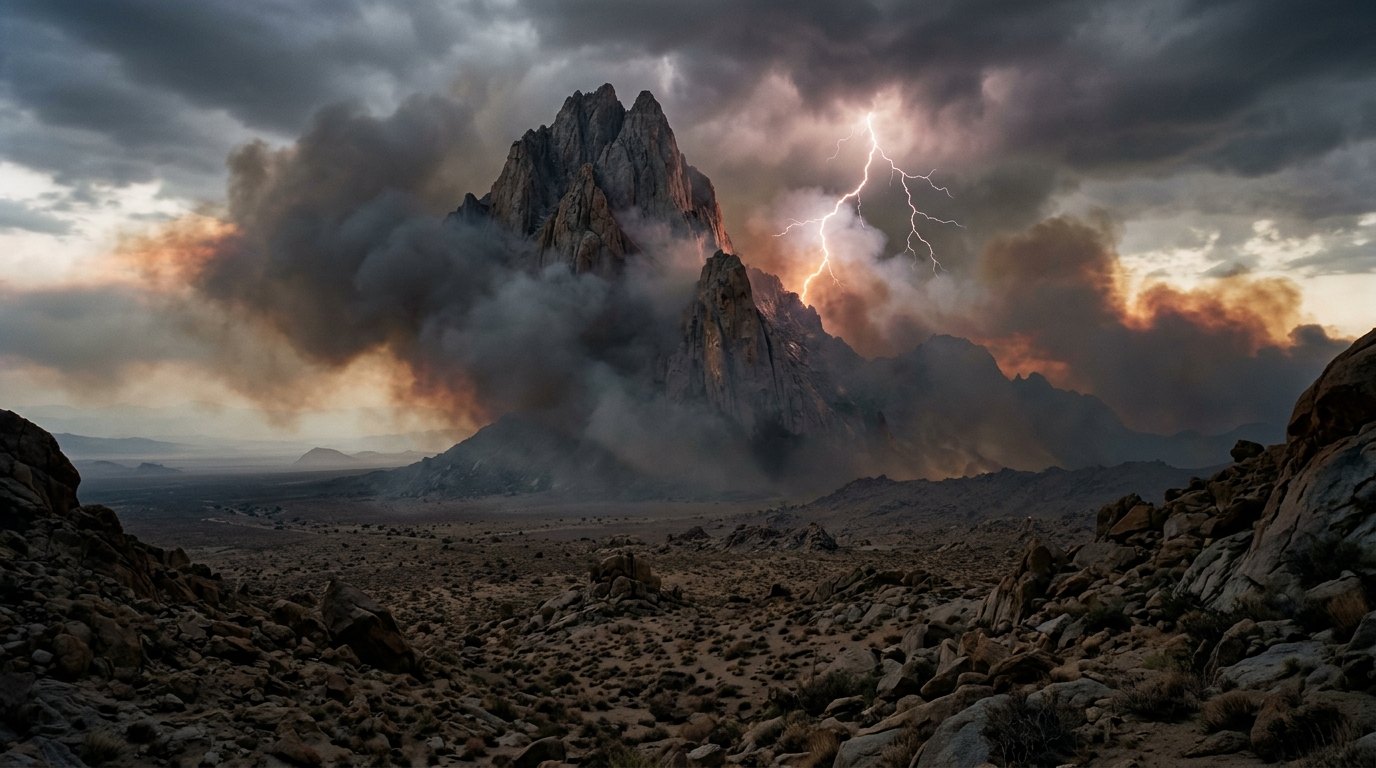
‘You yourselves have seen what I did to Egypt, and how I carried you on eagles’ wings and brought you to myself. Now if you obey me fully and keep my covenant, then out of all nations you will be my treasured possession. Although the whole earth is mine, you will be for me a kingdom of priests and a holy nation.’ These are the words you are to speak to the Israelites.”
Exodus 19:4-6 (NIV)
God declares that the goal of the Exodus was to bring Israel to Himself as a holy nation.
At Mount Sinai, God revealed the ultimate objective of the entire rescue from Egypt: He bore His people on eagles' wings to bring them to Himself, constituting them as His treasured possession, a kingdom of priests, and a holy nation (Exodus 19:4-6). Deliverance was never an end in itself, but the doorway into fellowship with the living God. The Apostle Peter directly applies these sovereign titles to the church of Jesus Christ, who have been called out of darkness into His marvelous light to proclaim His excellencies (1 Peter 2:9; Revelation 1:6).
When Yahweh proclaimed His law from the fire, the Ten Commandments opened not with an abstract rule of duty, but with the identity of the Redeemer: 'I am the Lord your God, who brought you out of the land of Egypt, out of the house of slavery' (Exodus 20:1-2). Grace precedes obedience; redemption is the foundation of holy living, just as believers in the New Covenant are freed from the tyranny of sin to become slaves of righteousness (Romans 6:17-18).
This solemn relationship was sealed in blood at the foot of the mountain when Moses dashed half the blood of the sacrifices against the altar and sprinkled the rest upon the assembly, declaring, 'Behold the blood of the covenant that the Lord has made with you' (Exodus 24:6-8). This shadow met its true substance in the Upper Room and at Calvary, where Christ inaugurated the New Covenant in His own blood for the remission of sins (Matthew 26:28; Hebrews 9:19-20).
| Passage | What it says | Fulfilled |
|---|---|---|
| Exodus 19:4-6 | God explains that He bore Israel on eagles' wings to make them a kingdom of priests and a holy nation. | 1 Peter 2:9, Revelation 1:6 |
| Exodus 20:1-2 | The Ten Commandments open with God's identity as the Redeemer who brought Israel out of Egyptian bondage. | Romans 6:17-18 |
| Exodus 24:6-8 | The covenant between Yahweh and Israel is ratified by the sprinkling of sacrificial blood. | Matthew 26:28, Hebrews 9:19-20 |
The Enduring Pattern
The Exodus as the Blueprint for Eternal Salvation

Two men, Moses and Elijah, appeared in glorious splendor, talking with Jesus. They spoke about his departure, which he was about to bring to fulfillment at Jerusalem.
Luke 9:30-31 (NIV)
At the Transfiguration, Moses and Elijah speak directly of Jesus' coming 'departure' (exodus) in Jerusalem.
On the Mount of Transfiguration, Moses and Elijah appeared in glory to speak with Jesus regarding His departure—His true 'exodus'—which He was about to accomplish at Jerusalem (Luke 9:30-31). This deliberate language establishes that the physical deliverance under Moses was the blueprint for Christ's supreme redemption at the cross, where He conquered the devil and shattered the power of death (Hebrews 2:14-15).
The Old Testament prophets constantly pointed toward this greater rescue. Isaiah foresaw a highway for the remnant of God's people like the day Israel came up from Egypt (Isaiah 11:15-16). Hosea recalled God's fatherly love in calling His son out of Egypt (Hosea 11:1), a historical reality that found prophetic fulfillment when the young Christ returned from Egypt to Nazareth (Matthew 2:15). Jeremiah prophesied that God would establish a New Covenant far greater than the Sinai pact, writing His law directly upon their hearts and forgiving their iniquities forever (Jeremiah 31:31-34; Hebrews 8:8-12).
The apostles saw this blueprint fully realized in the gospel. Paul proclaims that Christ, our Passover lamb, has been sacrificed, calling us to walk in sincerity and truth (1 Corinthians 5:7-8; John 1:29). By His blood, the Father has delivered us from the domain of darkness and transferred us to the kingdom of His beloved Son (Colossians 1:13-14). We were ransomed not with corruptible silver or gold, but with the precious blood of Christ (1 Peter 1:18-19), joining that triumphant multitude who sing the song of Moses and the Lamb beside the crystal sea (Revelation 15:2-3; Revelation 19:1).
| Passage | What it says | Fulfilled |
|---|---|---|
| Isaiah 11:15-16 | The prophets anticipate a future highway of redemption for God's remnant like the day Israel left Egypt. | Matthew 2:15 |
| Luke 9:30-31 | Moses and Elijah converse with Jesus regarding His approaching departure or exodus that He would fulfill at Jerusalem. | Hebrews 2:14-15 |
| 1 Corinthians 5:7-8 | Christ is identified as our sacrificial Passover, calling believers to live in sincerity and truth. | John 1:29 |
| Revelation 15:2-3 | The saints who conquer stand beside the sea of glass singing the song of Moses and of the Lamb. | Revelation 19:1 |
| Jeremiah 31:31-34 | Prophecy of a New Covenant distinct from the covenant made after coming out of Egypt. | Hebrews 8:8-12 |
| Hosea 11:1 | God recalls calling His son out of Egypt as an act of fatherly love. | Matthew 2:15 |
| Colossians 1:13-14 | Believers are delivered from the dominion of darkness and transferred into the Son's kingdom. | |
| 1 Peter 1:18-19 | Believers are redeemed from futile living not with silver or gold, but with Christ's precious blood. |
Where in the Bible
| Book | Passages |
|---|---|
| Genesis | 2 · Genesis 15:13-14, Genesis 50:24-25 |
| Exodus | 27 · Exodus 1:8-14, Exodus 2:23-25, Exodus 6:6-8, Exodus 2:1-10, Exodus 3:7-10, Exodus 7:1-5, Exodus 3:14-15, Exodus 4:10-17, Exodus 7:14-25, Exodus 10:21-23, Exodus 12:12, Exodus 9:13-16, Exodus 12:1-6, Exodus 12:7-13, Exodus 12:31-38, Exodus 13:21-22, Exodus 12:21-27, Exodus 12:46, Exodus 13:1-3, Exodus 14:13-14, Exodus 14:21-22, Exodus 14:26-28, Exodus 14:30-31, Exodus 15:1-18, Exodus 19:4-6, Exodus 20:1-2, Exodus 24:6-8 |
| Numbers | 1 · Numbers 33:3-4 |
| Psalms | 1 · Psalms 106:7-12 |
| Isaiah | 1 · Isaiah 11:15-16 |
| Jeremiah | 1 · Jeremiah 31:31-34 |
| Hosea | 1 · Hosea 11:1 |
| Luke | 1 · Luke 9:30-31 |
| 1 Corinthians | 2 · 1 Corinthians 10:1-2, 1 Corinthians 5:7-8 |
| Colossians | 1 · Colossians 1:13-14 |
| 1 Peter | 1 · 1 Peter 1:18-19 |
| Revelation | 1 · Revelation 15:2-3 |
The story in order
- God remembers His covenant (c. 1446 BC) · Exodus 2:23-25 · Israel groans in slavery, God hears and remembers Abraham's oath.
- Moses is called (c. 1446 BC) · Exodus 3:7-10 · God appears in the burning bush to deliver Israel through Moses.
- Plagues begin (c. 1446 BC) · Exodus 7:14-25 · Judgment falls on Egypt and its gods, starting with the Nile.
- Passover instituted (c. 1446 BC) · Exodus 12:7-13 · Lamb's blood protects Israel from the destroyer.
- Israel departs Egypt (c. 1446 BC) · Exodus 12:31-38 · Pharaoh releases Israel; 600,000 men and a mixed multitude leave.
- Red Sea crossing (c. 1446 BC) · Exodus 14:21-22 · The sea divides, allowing Israel to cross on dry ground.
- Pharaoh's army destroyed (c. 1446 BC) · Exodus 14:26-28 · The returning waters engulf and destroy the Egyptian army.
- Song of Deliverance (c. 1446 BC) · Exodus 15:1-18 · Moses and Israel praise Yahweh as a warrior and king.
- Covenant at Sinai (c. 1446 BC) · Exodus 24:6-8 · The covenant is ratified by blood, establishing Israel as God's people.
- Jesus' Exodus (AD 30) · Luke 9:30-31 · Jesus speaks of His coming death and resurrection in Jerusalem.
Key words
- Redemption (Hebrew: ga'al (גָּאַל))
- God's act of delivering His people from bondage and sin. · Exodus 6:6
- Covenant (Hebrew: berit (בְּרִית))
- A solemn agreement between God and His people, established by oath and ratified by blood. · Exodus 2:24
- Passover (Hebrew: pesach (פֶּסַח))
- The night God passed over Israelite homes marked with lamb's blood, sparing them from judgment. · Exodus 12:11
- Yahweh (Hebrew: YHWH (יהוה))
- The personal, covenant name of God, signifying His eternal presence and faithfulness. · Exodus 3:14-15
- Exodus (Greek: exodos (ἔξοδος))
- The departure of Israel from Egypt, a foundational act of salvation and a pattern for Christ's work. · Luke 9:31
To understand the Exodus is to behold the very heart of the gospel: God hears the groaning of the helpless, judges the powers of darkness, and redeems His people by substitutionary blood and outstretched power. Just as Israel walked out of Egypt into covenant freedom, every believer in Christ has been brought from death to life to serve the living God forever.
40 passages, each cited once.
Scripture cited
- Exodus 14:21-31
- Exodus 12:29-42
- Exodus 13:1-16