What is the judgment day?
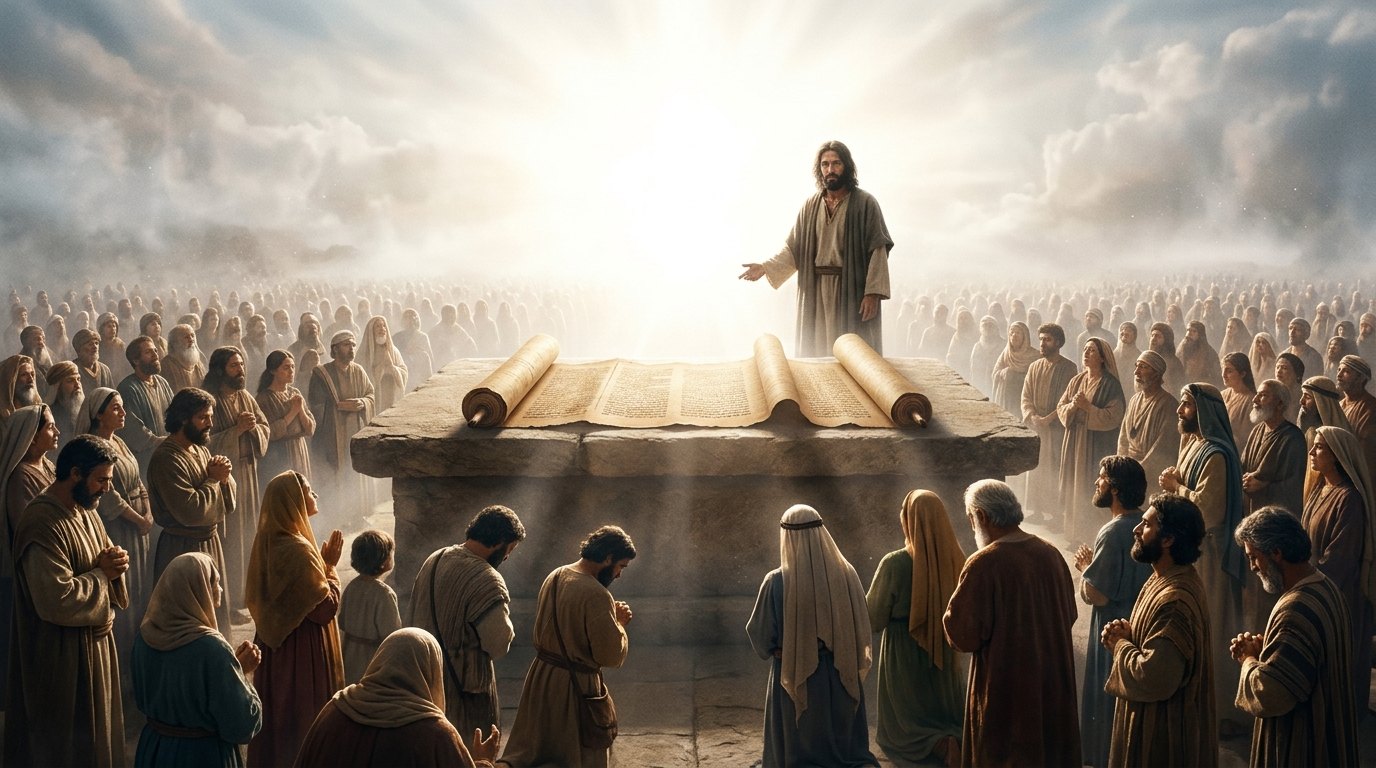
Revelation 20:11-15
11 Then I saw a great white throne and him who was seated on it. The earth and the heavens fled from his presence, and there was no place for them.
12 And I saw the dead, great and small, standing before the throne, and books were opened. Another book was opened, which is the book of life. The dead were judged according to what they had done as recorded in the books.
13 The sea gave up the dead that were in it, and death and Hades gave up the dead that were in them, and each person was judged according to what they had done.
14 Then death and Hades were thrown into the lake of fire. The lake of fire is the second death.
15 Anyone whose name was not found written in the book of life was thrown into the lake of fire.
New International Version (NIV)
The answer
The judgment day is the future day God has appointed to judge the whole world in righteousness through Jesus Christ. The dead will be raised, everyone will stand before Christ, and each person will be judged according to his works. Those not written in the book of life will be cast into the lake of fire, while those who hear Christ’s word and believe have eternal life (Acts 17:31; John 5:24,28-29; Revelation 20:11-15).
What will happen?
- Christ will sit as Judge. The Son of Man will come in glory and sit on His throne (Matthew 25:31). God has fixed this day and confirmed its certainty by raising Jesus from the dead (Acts 17:31).
- All the dead will be raised. Jesus says that all who are in the tombs will hear His voice and come out, some to “the resurrection of life” and others to “the resurrection of judgment” (John 5:28-29).
- Everyone will give an account. Both the great and the small will stand before God’s great white throne. All will be revealed before Christ’s judgment seat and receive according to what they have done, whether good or bad (Revelation 20:11-13; 2 Corinthians 5:10).
- The sentence will be final. Death and Hades will be thrown into the lake of fire, which is the second death. Revelation 20:15 warns, “If anyone was not found written in the book of life, he was cast into the lake of fire.”
Judgment according to works does not mean that salvation is earned by works. Salvation is God’s gift, received through faith, not something anyone can boast about earning; good works are the fruit of the new life God creates in Christ (Ephesians 2:8-10).
The present heavens and earth will also pass away with intense heat and fire, and God will bring in a new heaven and a new earth (2 Peter 3:10-12; Revelation 21:1).
The command now is to repent and believe in Christ. God “commands that all people everywhere should repent” because this day is appointed (Acts 17:30). Jesus gives this promise: “he who hears my word and believes him who sent me has eternal life, and doesn’t come into judgment, but has passed out of death into life” (John 5:24).
Answered from Scripture · reviewed November 11, 2026
Scripture reveals the day of judgment as the appointed culmination of human history, when God summons all people before the exalted Lord Jesus Christ to give an account of every deed. In that hour, secret things will be exposed, the dead will be raised, and Christ will execute an irreversible, righteous separation between the redeemed and the lost. Understanding this day underscores both the absolute holiness of God's justice and the urgent necessity of finding refuge in Christ alone.
The Divine Appointment
God Has Fixed a Day of Universal Accountability
For he has set a day when he will judge the world with justice by the man he has appointed. He has given proof of this to everyone by raising him from the dead.”
Acts 17:31 (NIV)
Paul declares that God has marked a specific day on His calendar to judge the world in absolute righteousness through the risen Christ.
Paul stood upon the Areopagus and proclaimed that God has fixed a day on which he will judge the world in righteousness by a man whom he has appointed (Acts 17:31). This appointed day is not an abstract metaphor or an indefinite horizon; it is an immovable decree established upon the calendar of divine justice, guaranteed to all humanity by the bodily resurrection of Jesus Christ. For those who persist in stubbornness and unrepentant rebellion, every passing hour compounds their guilt, storing up wrath against that dreadful day of divine revelation (Romans 2:5). On that day, human pretense vanishes completely, for God will judge the deepest secrets of men through Christ Jesus according to the apostolic gospel (Romans 2:16). Scripture establishes that human existence is neither a cycle of reincarnation nor an escape into annihilation; rather, it is appointed for man to die once, and after that comes judgment (Hebrews 9:27). The present cosmos—the heavens and earth that now exist—is explicitly reserved by God's word for fire, kept for the day of judgment and the perdition of ungodly men (2 Peter 3:7). No human being will evade this reckoning or hide within a collective identity, for each individual must give an account of himself directly to God (Romans 14:12). The ancient prophets sounded this alarm with unsparing clarity, warning that the Day of the Lord is not light, but sheer darkness without a single ray of brightness (Amos 5:18-20). It is a bitter day of distress, anguish, and consuming fire upon all the inhabitants of the earth (Zephaniah 1:14-18). The wicked will burn like stubble in an oven, while for those who fear the Lord's name, the Sun of Righteousness rises with healing in His wings (Malachi 4:1-2). Yet for the secure and worldly-minded, this cosmic intervention will strike suddenly, like a thief in the night, cutting off any hope of escape (1 Thessalonians 5:2-3). Even fallen spiritual powers are not exempt: rebel angels remain bound in eternal chains under gloomy darkness, awaiting the sentence of that great day (Jude 1:6).
| Passage | What it says |
|---|---|
| Acts 17:31 | God has appointed a day on which He will judge the world in righteousness by Jesus Christ, proven by His resurrection. |
| Romans 2:5 | The impenitent store up wrath for the day of wrath and revelation of God's righteous judgment. |
| Romans 2:16 | God will judge the secrets of men through Christ Jesus according to the gospel. |
| Hebrews 9:27 | It is appointed for man to die once, and after that comes the judgment. |
| 2 Peter 3:7 | The present heavens and earth are stored up and reserved for fire against the day of judgment and perdition of ungodly men. |
| Romans 14:12 | Affirms that each individual will personally give an account of himself to God. |
| Amos 5:18-20 | Warns that the Day of the Lord brings darkness and unsparing divine reckoning rather than light. |
| Zephaniah 1:14-18 | Declares the great Day of the Lord as a day of wrath, distress, and righteous jealousy against sin. |
| Malachi 4:1-2 | Contrasts the burning furnace of judgment for the arrogant with the rising sun of righteousness for those who fear God. |
| 1 Thessalonians 5:2-3 | Teaches that the Day of the Lord comes unexpectedly like a thief, bringing sudden destruction upon the unprepared. |
| Jude 1:6 | Notes that even fallen angels are kept in eternal chains under gloomy darkness for the judgment of the great day. |
The Judge and His Throne
The Son of Man Sits in Glorious Majesty
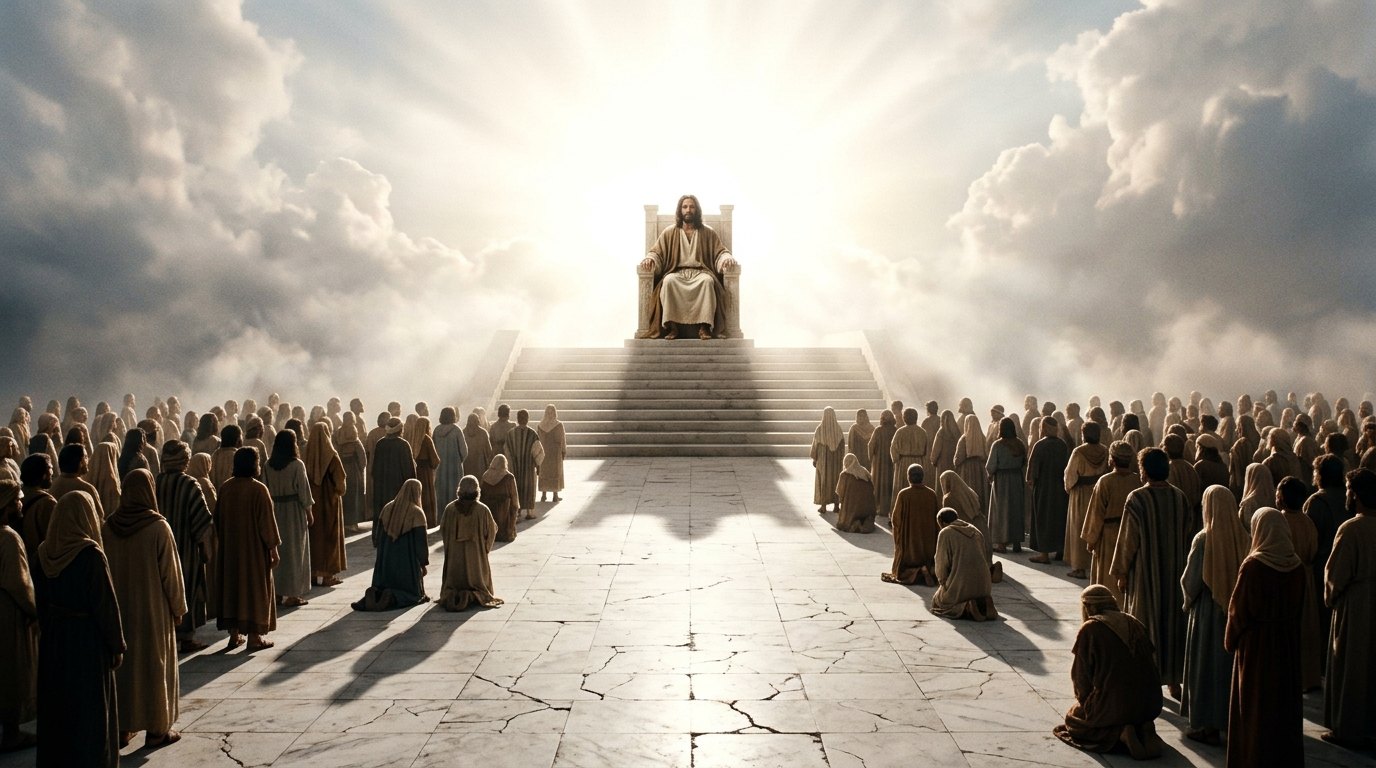
Then I saw a great white throne and him who was seated on it. The earth and the heavens fled from his presence, and there was no place for them.
Revelation 20:11 (NIV)
The overwhelming holiness of the enthroned Judge causes the present earth and heaven to flee from His presence.
John beheld a vision of absolute majesty: a great white throne and him who was seated on it, from whose presence earth and heaven fled away (Revelation 20:11). The sheer purity and holiness of the Judge leave no place for corrupted creation to hide. This supreme Judge is none other than Jesus Christ Himself. The Lord declared that the Son of Man will come in His royal glory, escorted by all the holy angels, to sit upon His glorious throne (Matthew 25:31). God the Father judges no one directly, but the Father has entrusted all judgment entirely to the Son so that all may honor the Son even as they honor the Father (John 5:22). Christ possesses this judicial prerogative because He is the incarnate Son of Man who entered human history and overcame sin (John 5:27). The apostles uniformly preached that Jesus is the one ordained by God to judge the living and the dead (Acts 10:42), an unshakeable charge Paul set before Timothy in view of Christ's appearing and His kingdom (2 Timothy 4:1). This matches the prophetic vision granted to Daniel, who saw thrones placed and the Ancient of Days seated, His throne blazing with flames of fire and wheels of burning flame (Daniel 7:9). To Him came the Son of Man on the clouds of heaven, receiving an everlasting dominion and a kingdom that shall never pass away (Daniel 7:13-14). When the Son of Man arrives in the glory of His Father with His mighty angels, He will repay every person strictly according to their deeds (Matthew 16:27). The ungodly, who indulge the lusts of the flesh and blaspheme the truth, must give a solemn account to Him who stands ready to execute judgment upon all the living and the dead (1 Peter 4:5).
| Passage | What it says |
|---|---|
| Revelation 20:11 | John beholds a great white throne and Him who sits upon it, from whose face earth and heaven flee away. |
| Matthew 25:31 | The Son of Man comes in His glory with the angels to sit upon His glorious throne. |
| John 5:22 | The Father judges no one, but has committed all judgment entirely to the Son. |
| John 5:27 | The Father has given the Son authority to execute judgment because He is the Son of Man. |
| Acts 10:42 | Jesus is ordained by God to be the Judge of the living and the dead. |
| 2 Timothy 4:1 | Christ Jesus will judge the living and the dead at His appearing and His kingdom. |
| Daniel 7:9 | Envisions the Ancient of Days seated upon a flaming throne as the heavenly court convenes for judgment. |
| Daniel 7:13-14 | Presents the Son of Man approaching the Ancient of Days to receive everlasting dominion, glory, and an indestructible kingdom. |
| Matthew 16:27 | Promises that the Son of Man will come in the glory of His Father with angels to repay each according to his deeds. |
| 1 Peter 4:5 | Declares that the ungodly must give account to Christ, who stands ready to judge the living and the dead. |
The Resurrection and the Books
Every Grave Empties and Every Life Is Examined
And I saw the dead, great and small, standing before the throne, and books were opened. Another book was opened, which is the book of life. The dead were judged according to what they had done as recorded in the books.
Revelation 20:12 (NIV)
All humanity stands before the throne as the records of deeds and the book of life are laid open.
Before the throne of the Lamb, human concealment ends forever: the dead, great and small, stand before the throne, and books were opened (Revelation 20:12). No status, earthly power, or obscurity can shield anyone from this comprehensive summons. The physical realm cannot retain its prisoners, for the sea, Death, and Hades deliver up every body they hold so each soul may be judged according to its deeds (Revelation 20:13). Daniel likewise beheld this court seated and the records laid open as a river of fire flowed from the presence of the Lord (Daniel 7:10). Christ confirmed this bodily reality, declaring that all who are in the tombs will hear his voice and come out—those who have done good to the resurrection of life, and those who have done evil to the resurrection of judgment (John 5:28-29). Paul reiterates that every person must stand before the judgment seat of God (Romans 14:10-12), and that every believer must appear before the judgment seat of Christ to receive what is due for what has been done in the body (2 Corinthians 5:10). Nothing escapes divine scrutiny: God will bring every single deed into judgment, including every hidden thought and motive, whether good or evil (Ecclesiastes 12:14). Even words thoughtlessly uttered will be examined, for men will give an account on the day of judgment for every careless word spoken (Matthew 12:36). The sleep of the dust will be broken, some awakening to everlasting life and others to shame and everlasting contempt (Daniel 12:2; Acts 24:15). In that hour, fire will test the substance of every believer's service to determine what endures (1 Corinthians 3:12-15). The Lord will bring to light what is hidden in darkness and disclose the heart's true purposes (1 Corinthians 4:5), and whatever was whispered in secret rooms will be broadcast upon the housetops (Luke 12:2-3).
| Passage | What it says |
|---|---|
| Revelation 20:12 | The dead, great and small, stand before the throne as books of works and the book of life are opened. |
| Revelation 20:13 | The sea, Death, and Hades yield up their dead to be judged, each according to their works. |
| Daniel 7:10 | The fiery stream issues from the Ancient of Days, the court sits in judgment, and the books are opened. |
| John 5:28-29 | All who are in the graves will hear His voice and come out to a resurrection of life or of judgment. |
| Romans 14:10-12 | All shall stand before the judgment seat of God, and each person must give account of himself to God. |
| 2 Corinthians 5:10 | All must appear before the judgment seat of Christ to receive what is due for things done in the body. |
| Ecclesiastes 12:14 | God will bring every work into judgment, including every secret thing, whether good or evil. |
| Matthew 12:36 | People will give an account on the day of judgment for every careless word they speak. |
| Daniel 12:2 | Foretells the bodily resurrection of the dead, some to everlasting life and others to shame and everlasting contempt. |
| Acts 24:15 | Asserts the certain resurrection of both the just and the unjust before the judgment of God. |
| 1 Corinthians 3:12-15 | Explains that the Day will test every believer's work with fire, revealing its enduring quality and determining reward. |
| 1 Corinthians 4:5 | Instructs not to judge before the Lord comes to disclose the hidden darkness and expose the heart's motives. |
| Luke 12:2-3 | Warns that whatever is concealed or whispered in secret will be uncovered and proclaimed upon the housetops. |
The Separation and Sentence
The Irreversible Division Between the Righteous and the Wicked

All the nations will be gathered before him, and he will separate the people one from another as a shepherd separates the sheep from the goats.
Matthew 25:32 (NIV)
Christ decisively separates humanity into two groups, just as a shepherd separates sheep from goats.
When all nations are assembled before the exalted King, he will separate people one from another as a shepherd separates the sheep from the goats (Matthew 25:32). This division is absolute, perfect, and irreversible. To those on His right, the King extends gracious entrance: 'Come, you who are blessed by my Father, inherit the kingdom prepared for you from the foundation of the world' (Matthew 25:34). But to those on His left, He pronounces eternal condemnation: 'Depart from me, you cursed, into the eternal fire prepared for the devil and his angels' (Matthew 25:41). The verdict carries finality, for the wicked go into eternal punishment, while the righteous enter into eternal life (Matthew 25:46). At the end of the age, holy angels will gather all causes of sin and lawbreakers out of Christ's kingdom, throwing them into the fiery furnace of weeping and gnashing of teeth, while the redeemed righteous shine like the sun in the kingdom of their Father (Matthew 13:40-43, 49-50). The Lord Jesus will appear from heaven with His mighty angels in flaming fire, inflicting vengeance on those who do not know God and do not obey the gospel, punishing them with everlasting destruction away from the presence of the Lord (2 Thessalonians 1:7-10). The demonic powers will share this fate: the beast and false prophet are captured and hurled alive into the lake of fire (Revelation 19:20), followed by the devil himself, to be tormented day and night forever (Revelation 20:10). Death and Hades themselves are cast into this lake of fire, which is the second death (Revelation 20:14). And if anyone's name is not found written in the Book of Life, he is cast into the lake of fire (Revelation 20:15)—a stark truth demonstrating that salvation belongs solely to those sheltered in the blood of the Lamb.
| Passage | What it says |
|---|---|
| Matthew 25:32 | All the nations will be gathered before the King, and He will separate them as a shepherd separates sheep from goats. |
| Matthew 25:34 | The King invites the blessed to inherit the kingdom prepared for them from the foundation of the world. |
| Matthew 25:41 | The King commands the cursed to depart into the eternal fire prepared for the devil and his angels. |
| Matthew 25:46 | The wicked go away into eternal punishment, but the righteous into eternal life. |
| Revelation 20:14 | Death and Hades are thrown into the lake of fire, which is the second death. |
| Revelation 20:15 | Anyone whose name is not found written in the book of life is cast into the lake of fire. |
| Matthew 13:40-43 | Describes angels removing lawbreakers into the fiery furnace while the righteous shine like the sun in the Father's kingdom. |
| Matthew 13:49-50 | Illustrates the close of the age when angels separate the evil from the righteous and throw them into the fire. |
| 2 Thessalonians 1:7-10 | Proclaims Christ's coming in flaming fire to punish the disobedient with eternal destruction away from His glorious presence. |
| Revelation 19:20 | Records the capture and casting of the beast and false prophet alive into the lake of fire. |
| Revelation 20:10 | Records the devil being cast into the lake of fire and sulfur to be tormented day and night forever. |
The Cosmic Transformation
The Dissolution of the Old and Dawn of the New
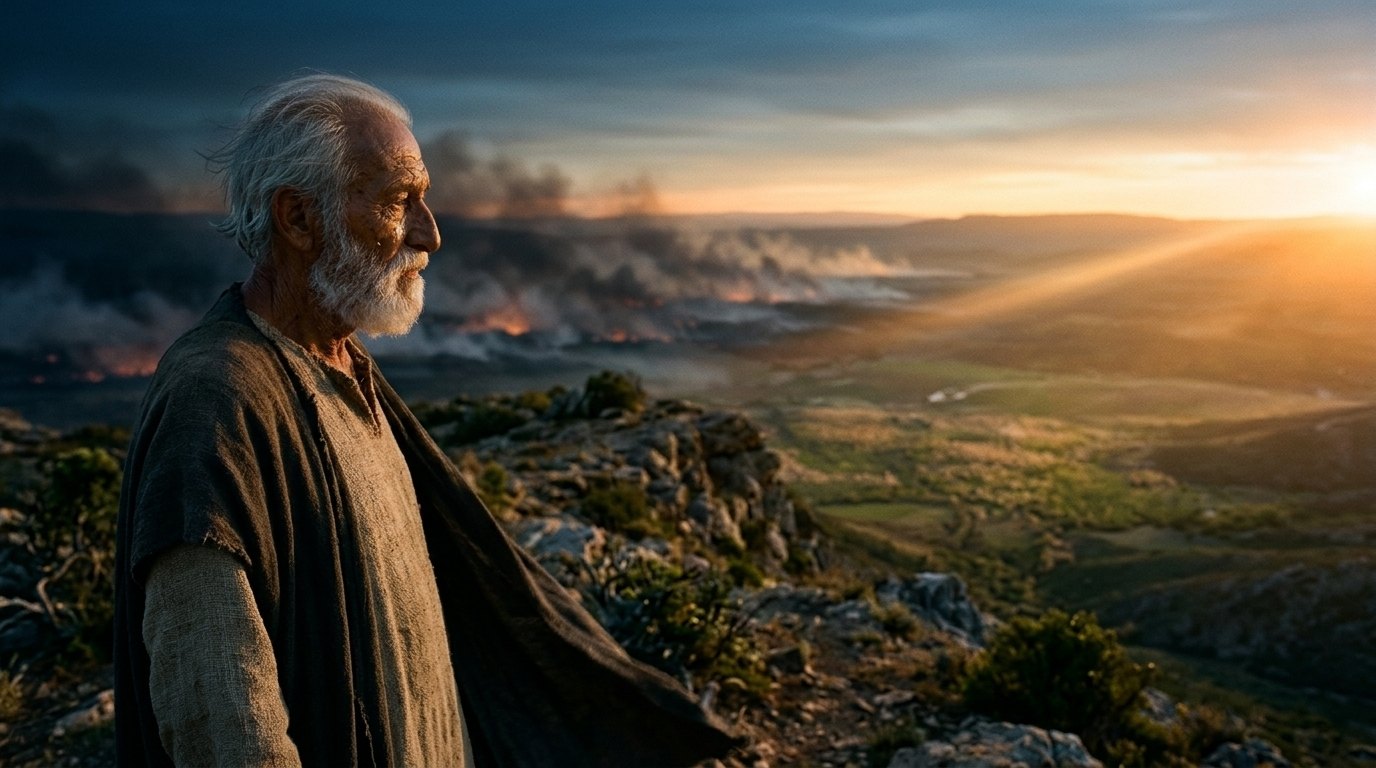
But the day of the Lord will come like a thief. The heavens will disappear with a roar; the elements will be destroyed by fire, and the earth and everything done in it will be laid bare.
2 Peter 3:10 (NIV)
The day of the Lord arrives suddenly like a thief, melting the created order with fervent heat to purge all unrighteousness.
The day of judgment extends beyond personal accountability to encompass the sweeping renovation of the entire cosmos. In 2 Peter 3:10, the Apostle Peter warns that the day of the Lord will come unexpectedly like a thief in the night, a moment when the heavens pass away with a mighty roar and the earthly elements melt with fervent heat. Far from annihilating God's purpose for creation, this fiery purge dismantles the dominion of sin and decay to make way for everlasting renewal. Because all material structures will be dissolved in this manner, Peter calls believers in 2 Peter 3:11-12 to live lives characterized by holy conduct and godliness, eagerly anticipating and hastening the arrival of God's day.
This fiery cleansing yields a magnificent hope, for according to His ancient promise, believers wait for new heavens and a new earth in which righteousness dwells (2 Peter 3:13). Centuries before Peter wrote, the prophet foresaw this divine recreation in Isaiah 65:17, announcing that former griefs and sins would vanish from memory, an enduring reality confirmed in Isaiah 66:22 where the redeemed abide forever before the Lord. The Apostle John beheld the ultimate realization of this vision in Revelation 21:1, watching the first heaven and earth pass away as the pristine new creation emerged.
Within this restored cosmos stands the holy city, strictly guarded against every defilement: Revelation 21:27 affirms that nothing unclean, detestable, or false can ever set foot inside, but only those whose names are inscribed in the Lamb’s book of life. Here, redemption reaches its glorious zenith as God Himself tabernacles among humanity, wiping away every bitter tear and abolishing death, mourning, and sorrow forever (Revelation 21:3-4). In this eternal home, Revelation 22:3-5 reveals that the curse is utterly removed, the throne of God and the Lamb shines unhindered, and His servants behold His face, reigning in unclouded light throughout all ages.
| Passage | What it says |
|---|---|
| 2 Peter 3:10 | The day of the Lord comes as a thief, bringing the roar of passing heavens and elements melting with fervent heat. |
| 2 Peter 3:11-12 | Believers are urged to live in holy conduct and godliness while looking for and hastening the coming day of God. |
| 2 Peter 3:13 | According to God's promise, believers look for new heavens and a new earth in which righteousness dwells. |
| Revelation 21:1 | John sees a new heaven and a new earth, for the first heaven and first earth have passed away. |
| Revelation 21:27 | Nothing unclean or practice of abomination will enter the Holy City, but only those written in the Lamb's book of life. |
| Isaiah 65:17 | Promises the creation of new heavens and a new earth, where the former troubles and pain are remembered no more. |
| Isaiah 66:22 | Declares that the new heavens and new earth shall endure perpetually before the Lord alongside His redeemed people. |
| Revelation 21:3-4 | Foretells God dwelling directly with His people, wiping every tear away and ending death, sorrow, and pain forever. |
| Revelation 22:3-5 | Describes the throne of God and the Lamb in the city, where no curse remains and the saints reign forever. |
Where in the Bible
| Book | Passages |
|---|---|
| Ecclesiastes | 1 · Ecclesiastes 12:14 |
| Isaiah | 2 · Isaiah 65:17, Isaiah 66:22 |
| Daniel | 4 · Daniel 7:9, Daniel 7:13-14, Daniel 7:10, Daniel 12:2 |
| Amos | 1 · Amos 5:18-20 |
| Zephaniah | 1 · Zephaniah 1:14-18 |
| Malachi | 1 · Malachi 4:1-2 |
| Matthew | 9 · Matthew 25:31, Matthew 16:27, Matthew 12:36, Matthew 25:32, Matthew 25:34, Matthew 25:41, Matthew 25:46, Matthew 13:40-43, Matthew 13:49-50 |
| Luke | 1 · Luke 12:2-3 |
| John | 3 · John 5:22, John 5:27, John 5:28-29 |
| Acts | 3 · Acts 17:31, Acts 10:42, Acts 24:15 |
| Romans | 4 · Romans 2:5, Romans 2:16, Romans 14:12, Romans 14:10-12 |
| 1 Corinthians | 2 · 1 Corinthians 3:12-15, 1 Corinthians 4:5 |
| 2 Corinthians | 1 · 2 Corinthians 5:10 |
| 1 Thessalonians | 1 · 1 Thessalonians 5:2-3 |
| 2 Thessalonians | 1 · 2 Thessalonians 1:7-10 |
| 2 Timothy | 1 · 2 Timothy 4:1 |
| Hebrews | 1 · Hebrews 9:27 |
| 1 Peter | 1 · 1 Peter 4:5 |
| 2 Peter | 4 · 2 Peter 3:7, 2 Peter 3:10, 2 Peter 3:11-12, 2 Peter 3:13 |
| Jude | 1 · Jude 1:6 |
| Revelation | 11 · Revelation 20:11, Revelation 20:12, Revelation 20:13, Revelation 20:14, Revelation 20:15, Revelation 19:20, Revelation 20:10, Revelation 21:1, Revelation 21:27, Revelation 21:3-4, Revelation 22:3-5 |
The story in order
- God appoints a day of judgment (AD 50) · Acts 17:31 · God has set a day for judging the world through Christ.
- The Day of the Lord brings darkness (c. 750 BC) · Amos 5:18-20 · The Day of the Lord is not light but divine reckoning.
- Wrath for the day of judgment (AD 55) · Romans 2:5 · The impenitent store up wrath for God's righteous judgment.
- Judgment of secrets (AD 55) · Romans 2:16 · God will judge hidden things through Christ according to the gospel.
- Judgment seat of Christ (AD 56) · 2 Corinthians 5:10 · All must appear before Christ to receive judgment for deeds.
- Son of Man receives dominion (c. 550 BC) · Daniel 7:13-14 · The Son of Man receives everlasting authority and kingdom.
- Christ will judge the living and dead (AD 40) · Acts 10:42 · Jesus is ordained by God to judge all people.
- Resurrection of the just and unjust (AD 60) · Acts 24:15 · There will be a resurrection of both righteous and unrighteous.
- Books opened, dead judged (c. AD 95) · Revelation 20:12 · The dead are judged according to their works and the book of life.
- Separation of sheep and goats (c. AD 30) · Matthew 25:32 · Nations will be gathered and separated before the King.
- Eternal punishment and life (c. AD 30) · Matthew 25:46 · The wicked receive eternal punishment, the righteous eternal life.
- New heavens and new earth (AD 65) · 2 Peter 3:13 · We look for new heavens and a new earth where righteousness dwells.
- God dwells with His people (c. AD 95) · Revelation 21:3-4 · God will dwell with His people, ending all sorrow and pain.
Key words
- Day of the Lord (Yom Adonai (Hebrew))
- A future day of divine judgment and reckoning. · Amos 5:18
- Judgment (krisis (Greek))
- The divine assessment of deeds and character. · John 5:22
- Resurrection (anastasis (Greek))
- The act of rising from the dead. · Acts 24:15
- Eternal punishment (kolasis aionios (Greek))
- A penalty that lasts forever. · Matthew 25:46
- Book of life (biblion tes zoes (Greek))
- A record of those chosen by God for salvation. · Revelation 20:12
- Lake of fire (limne tou pyros (Greek))
- The place of final, eternal judgment and torment. · Revelation 20:14
The certainty of judgment day reminds every reader that our earthly lives possess immense, eternal significance and that no hidden thought escapes God's notice. While the day brings terror to those who persist in impenitence, it holds profound comfort for believers whose names are written in the Lamb's book of life. Receive the grace offered in Jesus Christ today, turning from sin to live in watchful holiness and joyful hope.
54 passages, each cited once.
Scripture cited
- Revelation 20:11-15
- Revelation 21:1
- Matthew 25:31
- 2 Peter 3:10-12
- John 5:24-29
- Acts 17:30-31
- 2 Corinthians 5:10
- Ephesians 2:8-10