What is the new covenant?

Jeremiah 31:31-34
31 “The days are coming,” declares the LORD, “when I will make a new covenant with the people of Israel and with the people of Judah.
32 It will not be like the covenant I made with their ancestors when I took them by the hand to lead them out of Egypt, because they broke my covenant, though I was a husband to them,” declares the LORD.
33 “This is the covenant I will make with the people of Israel after that time,” declares the LORD. “I will put my law in their minds and write it on their hearts. I will be their God, and they will be my people.
34 No longer will they teach their neighbor, or say to one another, ‘Know the LORD,’ because they will all know me, from the least of them to the greatest,” declares the LORD. “For I will forgive their wickedness and will remember their sins no more.”
New International Version (NIV)
The answer
The new covenant is the saving arrangement God promises in Jeremiah 31:31-34 and brings in through the blood of Jesus (Luke 22:20). It is "better" than the old covenant, mediated by Christ Himself (Hebrews 8:6), and its great difference is what God does inside His people: He writes His law on their hearts, gives them all true knowledge of Him, and forgives their sin and remembers it no more (Jeremiah 31:33-34; Hebrews 8:10-12).
What makes it "new"
- New mediator: Christ is "the mediator of a better covenant, which on better promises has been given as law" (Hebrews 8:6).
- New inward work: God's law moves from stone tablets to the heart — "I will put my law in their inward parts, and I will write it in their heart" (Jeremiah 31:33).
- New knowledge of God: "They will all know me, from their least to their greatest," says Yahweh (Jeremiah 31:34) — no more needing each man to teach his brother, "Know the Lord."
- New forgiveness: "I will forgive their iniquity, and I will remember their sin no more" (Jeremiah 31:34).
What it replaces
It is not the Mosaic covenant made at Sinai, which Israel broke ("although I was a husband to them, says Yahweh," Jeremiah 31:32). The author of Hebrews reads the very name "new" as God's word that the first covenant is "obsolete... near to vanishing away" (Hebrews 8:13). Yet the new covenant does not throw out the covenant family God made with Abraham (Acts 3:25); it is the covenant Christ, the Messenger, brings (Malachi 3:1) and Mediates (Hebrews 8:6), now "an everlasting covenant" (Jeremiah 32:40; Ezekiel 37:26).
When and how it was brought in
Jesus instituted it at the Last Supper: "This cup is the new covenant in my blood, which is shed for you" (Luke 22:20). By His death and resurrection He becomes the guarantee of an everlasting covenant (Jeremiah 32:40), and those who serve it serve "not of the letter, but of the spirit: for the letter killeth, but the spirit giveth life" (2 Corinthians 3:6).
Old vs. new — at a glance
- Old (Sinai) — New (in Christ)
- Law written on stones — Law written on the heart (Jeremiah 31:33)
- Each taught his neighbor, "Know the Lord" — All, from least to greatest, know God (Jeremiah 31:34)
- Repeated sacrifices for sin — Sin forgiven and remembered no more (Jeremiah 31:34)
- Broken by the people (Jeremiah 31:32) — Mediated by Christ (Hebrews 8:6)
- Ministry of the letter that kills — Ministry of the Spirit that gives life (2 Corinthians 3:6)
A verse to carry
"I will put my law in their inward parts, and I will write it in their heart... for I will forgive their iniquity, and I will remember their sin no more." — Jeremiah 31:33-34
Answered from Scripture · reviewed November 7, 2026
The new covenant is God's eternal arrangement of grace, promised through the prophets and ratified by the precious blood of Jesus Christ. Replacing the broken Sinai covenant, it writes God's law directly upon human hearts, grants immediate personal knowledge of the Lord to all His people, and pardons sin once and for all. Tracing this promise across Scripture reveals how God transformed external religion into an everlasting, Spirit-given relationship.
The Prophetic Promise
God promises a heart-transforming, unbreakable covenant.

“This is the covenant I will make with the people of Israel after that time,” declares the LORD. “I will put my law in their minds and write it on their hearts. I will be their God, and they will be my people.
Jeremiah 31:33 (NIV)
This verse reveals the core difference of the new covenant: the law moves from external stone tablets into the inward affections of the human heart.
In Jeremiah 31:33, the Lord strikes to the core of what makes this coming arrangement revolutionary: "I will put my law within them, and I will write it on their hearts. And I will be their God, and they shall be my people." Under the older administration inaugurated at Sinai, the divine commands were engraved on cold stone tablets outside the sinner, pronouncing righteous demands that fallen human flesh consistently failed to keep. God therefore declared days were coming when He would enact a new covenant with the house of Israel and Judah (Jeremiah 31:31), explicitly unlike the broken covenant of the Exodus (Jeremiah 31:32). In this new bond, universal inward knowledge of God replaces external instruction, accompanied by the unconditional pardon of sins (Jeremiah 31:34), an unbreakable decree guaranteed by an everlasting pledge of reverent fear (Jeremiah 32:40).
This inward renewal echoes through the exile in Ezekiel's prophecy, where God promises to surgically extract the stubborn stony heart and grant an obedient heart of flesh (Ezekiel 11:19; Ezekiel 36:26). By planting His own Spirit within His people (Ezekiel 36:27), God Himself causes them to walk in His statutes, confirming an everlasting covenant of peace and establishing His sanctuary among them forever (Ezekiel 37:26). Malachi foresaw that the Messenger of this covenant would arrive suddenly at His temple to execute divine purification (Malachi 3:1).
Isaiah presents the personal embodiment of this bond: God gives His Servant as a covenant for the people and a light to the nations (Isaiah 42:6; Isaiah 49:8). This order rests upon an immovable covenant of peace like the waters of Noah (Isaiah 54:10), extending the sure mercies of David to all who thirst (Isaiah 55:3; Isaiah 61:8), preserved by the perpetual indwelling of God's Spirit and words (Isaiah 59:21). Hosea celebrates this reunion as an eternal betrothal in righteousness, mercy, and intimate faithfulness (Hosea 2:18-20), while Joel foretells the widespread pouring out of the Holy Spirit upon all flesh, breaking down every former barrier of status, gender, and age (Joel 2:28-29).
| Passage | What it says | Fulfilled |
|---|---|---|
| Jeremiah 31:31 | The Lord announces coming days when He will enact a new covenant with Israel and Judah. | Hebrews 8:8 |
| Jeremiah 31:32 | This covenant contrasts with the Exodus covenant at Sinai, which Israel repeatedly broke despite God's husbandly care. | Hebrews 8:9 |
| Jeremiah 31:33 | God promises to write His law upon their hearts, pledging to be their God and make them His people. | Hebrews 8:10, Hebrews 10:16 |
| Jeremiah 31:34 | All covenant members will know God personally, enjoying absolute forgiveness with their sins remembered no more. | Hebrews 8:11-12, Hebrews 10:17 |
| Jeremiah 32:40 | The Lord pledges an everlasting covenant, putting reverent fear in their hearts so they will never turn away. | Hebrews 13:20 |
| Ezekiel 11:19 | God promises to remove the stony heart from their flesh and give them a responsive heart of flesh. | 2 Corinthians 3:3 |
| Ezekiel 36:26 | A prophecy of a new heart and a new spirit given to God's restored covenant people. | Titus 3:5 |
| Ezekiel 36:27 | God promises to put His Spirit within them to cause them to walk in His statutes and obey. | Romans 8:4, Galatians 5:16 |
| Ezekiel 37:26 | God establishes an everlasting covenant of peace, placing His permanent sanctuary in the midst of His people. | John 14:27, 2 Corinthians 6:16 |
| Malachi 3:1 | The messenger of the covenant is promised to come suddenly to His temple. | Mark 1:2, Luke 2:27 |
| Isaiah 42:6 | God promises the Servant as a covenant for the people and a light to the nations. | Luke 2:32 |
| Isaiah 49:8 | The Lord establishes the Servant as a covenant to restore the land and release the captives. | 2 Corinthians 6:2 |
| Isaiah 54:10 | God pledges an unshakable covenant of peace that will never be removed from His people. | Romans 5:1 |
| Isaiah 55:3 | God invites the thirsty to enter an everlasting covenant founded on the sure mercies of David. | Acts 13:34 |
| Isaiah 59:21 | God promises His Spirit and words will never depart from the mouths of His Redeemer's offspring. | Romans 11:26-27 |
| Isaiah 61:8 | The Lord makes an everlasting covenant with His afflicted people, clothing them in righteousness. | Luke 4:18-19 |
| Hosea 2:18 | The Lord promises a future covenant ending violence and betrothing His people to Himself in faithfulness. | Romans 9:25-26 |
| Hosea 2:19 | God pledges to betroth His bride forever in righteousness, justice, steadfast love, and mercy. | 2 Corinthians 11:2 |
| Hosea 2:20 | God pledges to betroth His people in faithfulness, granting them intimate knowledge of the Lord. | John 17:3 |
| Joel 2:28 | God promises to pour out His Spirit on all flesh in the last days. | Acts 2:16-17 |
| Joel 2:29 | The Spirit will be poured out even on male and female servants. | Galatians 3:28 |
Ratification in Blood
Jesus inaugurates the new covenant at the Last Supper and the cross.
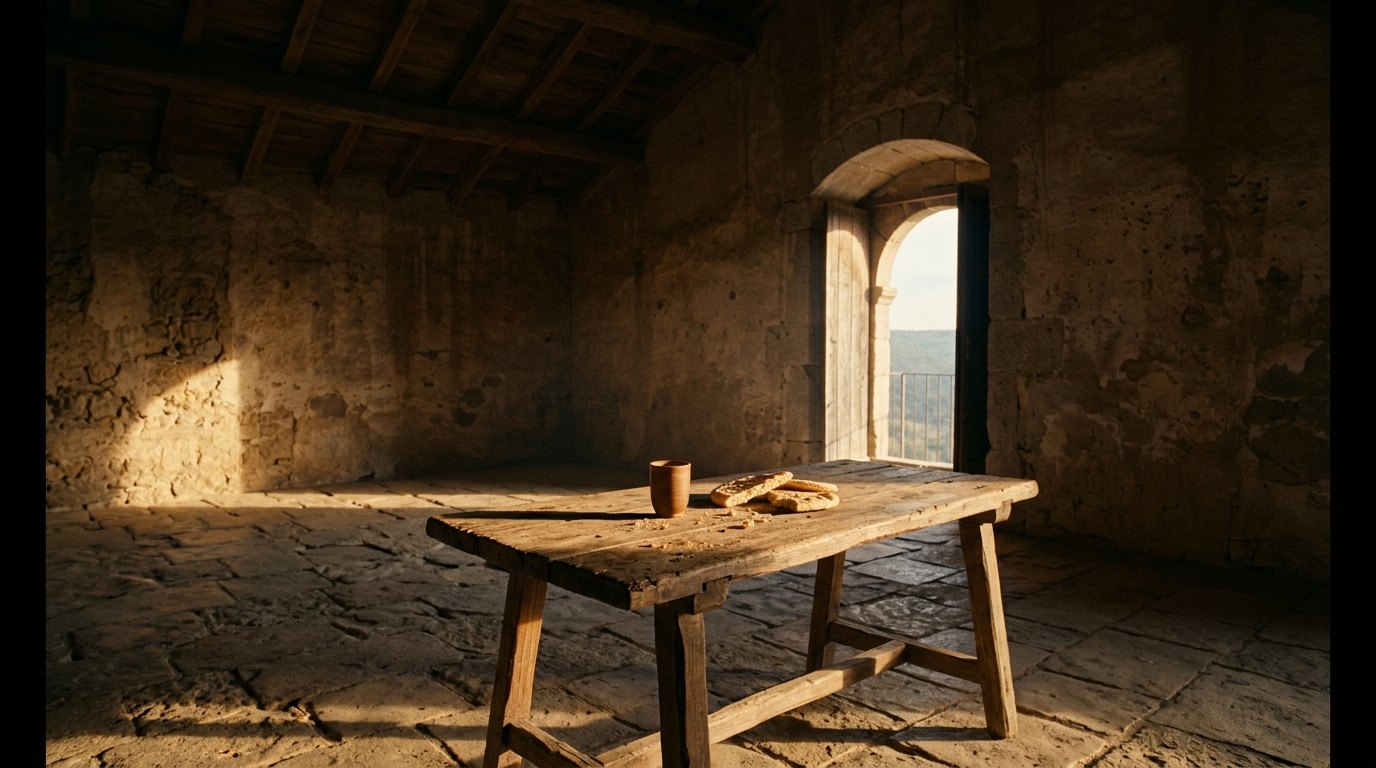
In the same way, after the supper he took the cup, saying, “This cup is the new covenant in my blood, which is poured out for you.
Luke 22:20 (NIV)
Jesus explicitly names the cup of communion as the new covenant established through His poured-out blood.
Holding up the cup in the upper room, Jesus declared the purpose of His impending death in Luke 22:20: "This cup that is poured out for you is the new covenant in my blood." Every ancient covenant was ratified by blood, and the new covenant demanded nothing less than the infinite worth of the Son of God. Matthew records that this cup represents His blood poured out for many for the forgiveness of sins (Matthew 26:28; Mark 14:24), a sacred commemoration that Paul instructs the church to observe continually until the Lord returns (1 Corinthians 11:25). Moses brought the written law, but grace and truth entered history through the incarnate Christ (John 1:17).
Jesus explained the absolute necessity of internal union with His sacrifice, teaching that whoever feeds on His flesh and drinks His blood possesses eternal life and will be raised up on the last day (John 6:53-54). On the cross of Calvary, that sacrificial purchase reached absolute finality when Christ announced, "It is finished" (John 19:30). The soldier's spear confirmed His actual physical death as water and blood poured from His pierced side (John 19:34).
By this blood, Gentiles who were once alienated from the commonwealth of Israel are brought near into the family of God (Ephesians 2:13). Christ tore down the legal barrier, abolishing in His flesh the hostility of legal ordinances (Ephesians 2:15) and canceling our crushing debt by nailing the record of charges directly to the cross (Colossians 2:14). Believers are chosen and sprinkled with this sacrificial blood (1 Peter 1:2), redeemed not with corruptible silver or gold, but with the unblemished blood of Christ as of a lamb without spot (1 Peter 1:18-19). This cleansing stream washes away all sin (1 John 1:7), freeing us from our transgressions (Revelation 1:5) and ransoming a multitude from every tribe, tongue, people, and nation (Revelation 5:9).
| Passage | What it says |
|---|---|
| Matthew 26:28 | Jesus identifies the cup as His blood of the new covenant, poured out for many for the remission of sins. |
| Mark 14:24 | Jesus declares the cup to be His blood of the covenant, shed on behalf of many. |
| Luke 22:20 | Jesus presents the post-supper cup as the new covenant enacted in His sacrificial blood. |
| 1 Corinthians 11:25 | Paul records Jesus commanding perpetual remembrance of the cup as the new covenant in His blood. |
| John 1:17 | John contrasts the law given through Moses with grace and truth realized through Jesus Christ. |
| John 6:53 | Jesus declares that eternal life comes only by eating His flesh and drinking His blood. |
| John 6:54 | Whoever feeds on Christ's flesh and drinks His blood has eternal life and will be raised up. |
| John 19:30 | Jesus cries 'It is finished' as He secures redemption on the cross. |
| John 19:34 | Water and blood flow from the pierced side of Jesus, verifying the sacrificial death. |
| Ephesians 2:13 | Believers who were once far off are brought near by the blood of Christ. |
| Ephesians 2:15 | Christ abolished the law of commandments in ordinances to create one new man from both groups. |
| Colossians 2:14 | God cancelled the record of debt that stood against us, nailing it to the cross. |
| 1 Peter 1:2 | Elect believers are sprinkled with the blood of Jesus Christ in the new covenant fellowship. |
| 1 Peter 1:18 | Believers were ransomed from their empty way of life not with silver or gold. |
| 1 Peter 1:19 | Redemption was purchased with the precious blood of Christ, like that of an unblemished lamb. |
| 1 John 1:7 | The blood of Jesus cleanses believers from all sin as they walk in the light. |
| Revelation 1:5 | Jesus loved us and freed us from our sins by His own blood. |
| Revelation 5:9 | The Lamb was slain and ransomed people for God from every tribe, language, people, and nation. |
The Spirit and the Letter
The new covenant operates by the life-giving Holy Spirit.

He has made us competent as ministers of a new covenant—not of the letter but of the Spirit; for the letter kills, but the Spirit gives life.
2 Corinthians 3:6 (NIV)
Paul contrasts the killing letter of the old law with the life-giving ministry of the Holy Spirit in the new covenant.
Paul captures the profound operational contrast between the covenants in 2 Corinthians 3:6, asserting that God "has made us competent to be ministers of a new covenant, not of the letter but of the Spirit. For the letter kills, but the Spirit gives life." The Mosaic code commanded righteousness but supplied no inward power to produce it, serving as a ministry of death and condemnation written on stones (2 Corinthians 3:7-9). In radical contrast, the new covenant is written with the Spirit of the living God on tablets of human hearts (2 Corinthians 3:3; Romans 7:6). The law of the Spirit of life in Christ Jesus completely frees the believer from the paralyzing grip of sin and death (Romans 8:2).
True membership in God's covenant has therefore never been a matter of external physical circumcision, but an inward work of the Spirit circumcising the heart (Romans 2:28-29; Philippians 3:3; Colossians 2:11). Justification comes entirely by faith apart from legal works (Romans 3:27-28; Galatians 3:24-25). Through Christ, the blessing promised to Abraham extends to the Gentiles through the promised indwelling Spirit (Galatians 3:14), fulfilling the ancient pledge to take away our sins (Romans 11:27).
Paul contrasts these administrations through Hagar and Sarah: Sinai produces slaves, but the heavenly Jerusalem above produces free sons and daughters (Galatians 4:24-26). Where the Spirit of the Lord is, there is authentic liberty (2 Corinthians 3:17). The old veil of legal blindness is lifted in Christ (2 Corinthians 3:14), permitting believers to gaze upon the glory of the Lord with unveiled face and undergo continuous transformation into His image from one degree of glory to another (2 Corinthians 3:18). In Christ, each believer is a completely new creation; the old has passed away and the new has come (2 Corinthians 5:17). Led by the Spirit rather than bound under the law (Galatians 5:18), the believer naturally produces the supernatural fruit of holiness against which there is no condemnation (Galatians 5:22-23; 1 John 2:27).
| Passage | What it says |
|---|---|
| Romans 7:6 | Believers are discharged from the law to serve in the newness of the Spirit, not oldness of the letter. |
| Romans 8:2 | The law of the Spirit of life in Christ Jesus sets believers free from the law of sin and death. |
| 2 Corinthians 3:3 | Believers are Christ's letter, written not with ink but with the Spirit of the living God on tablets of human hearts. |
| 2 Corinthians 3:6 | God equips ministers of a new covenant, marked not by the killing letter, but by the life-giving Spirit. |
| Galatians 3:14 | Through Christ, the Abrahamic blessing reaches the Gentiles, enabling all who believe to receive the promised Holy Spirit. |
| Galatians 4:24 | Paul illustrates the two covenants allegorically through Hagar, representing Sinai bondage, and Sarah, representing heavenly freedom. |
| Romans 2:28 | True covenant identity is not outward or physical in the flesh. |
| Romans 2:29 | True circumcision is a matter of the heart, by the Spirit rather than the letter. |
| Romans 3:27 | Boasting is excluded by the law of faith rather than works. |
| Romans 3:28 | A person is justified by faith apart from the deeds of the Mosaic law. |
| Romans 11:27 | Paul quotes Isaiah and Jeremiah confirming God's covenant when He takes away their sins. |
| 2 Corinthians 3:7 | The ministry of death was carved in stone with fading glory. |
| 2 Corinthians 3:8 | The ministry of the Spirit possesses far greater glory. |
| 2 Corinthians 3:9 | The ministry of righteousness far exceeds the ministry of condemnation. |
| 2 Corinthians 3:14 | The old covenant veil is removed only in Christ. |
| 2 Corinthians 3:17 | Now the Lord is the Spirit, and where the Spirit of the Lord is, there is freedom. |
| 2 Corinthians 3:18 | Beholding the glory of the Lord, believers are transformed into the same image from glory to glory. |
| 2 Corinthians 5:17 | Anyone in Christ is a new creation; the old has passed away and the new has come. |
| Galatians 3:24 | The law was a guardian until Christ came, so that we might be justified by faith. |
| Galatians 3:25 | Now that faith has come, believers are no longer under the legal guardian. |
| Galatians 4:26 | The Jerusalem above is free, and she is the mother of all new covenant believers. |
| Galatians 5:18 | Those led by the Spirit are not under the Mosaic law. |
| Galatians 5:22 | The fruit of the Spirit manifests the inward life of the new covenant. |
| Galatians 5:23 | Against virtues produced by the Spirit there is no law. |
| Philippians 3:3 | True circumcision belongs to those who worship by God's Spirit and glory in Christ Jesus. |
| Colossians 2:11 | Believers receive a spiritual circumcision made without hands, in the putting off of the flesh. |
| 1 John 2:27 | The anointing received from Him abides in believers, teaching them concerning all things. |
A Better Mediator
Hebrews proves the superiority, permanence, and completeness of Christ's covenant.

But in fact the ministry Jesus has received is as superior to theirs as the covenant of which he is mediator is superior to the old one, since the new covenant is established on better promises.
Hebrews 8:6 (NIV)
This verse presents Christ as the mediator of a far better covenant established upon vastly superior promises.
The epistle to the Hebrews exalts the supremacy of Christ's priestly work, summarizing in Hebrews 8:6: "Christ has obtained a ministry that is as much more excellent than the old as the covenant he mediates is better, since it is enacted on better promises." Jesus is the permanent guarantor and surety of this superior covenant (Hebrews 7:22). Because the Levitical law was weak, unprofitable, and unable to bring anyone to spiritual perfection, it was formally set aside to introduce a better hope through which we draw near to God (Hebrews 7:18-19). If that Sinai administration had been faultless, no place would have been sought for a second (Hebrews 8:7). By explicitly naming it "new," God declared the old obsolete, aging, and destined to disappear (Hebrews 8:8-13).
Christ ministers not in an earthly copy, but in the true heavenly tabernacle (Hebrews 9:11). He entered the Holy Place not with the blood of goats and calves, but once for all by His own blood, having secured eternal redemption (Hebrews 9:12). Just as a will requires the death of the testator to take effect, Christ died as mediator to redeem believers from transgressions committed under the first covenant, securing their eternal inheritance (Hebrews 9:15-17). While the law required blood for almost every cleansing (Hebrews 9:22), the blood of bulls and goats could never actually take away sins; it was merely a repetitive shadow (Hebrews 10:1-4).
Consequently, Christ abolished the first sacrifices to establish God's will (Hebrews 10:9). By this single offering of His body, believers have been sanctified once for all (Hebrews 10:10, 14). The Holy Spirit confirms this by quoting Jeremiah: God writes His laws on their hearts and promises to remember their sins and lawless deeds no more (Hebrews 10:15-17). Where total forgiveness reigns, repeated animal offerings cease entirely (Hebrews 10:18). Believers now possess bold, unhindered access to enter the Holiest through the veil of His flesh (Hebrews 10:19-20, 22). To despise this sacrifice invites terrifying judgment for trampling the blood of the covenant (Hebrews 10:29). Instead, we look to Jesus, whose sprinkled blood speaks a better word than Abel's (Hebrews 12:24), equipped by the God of peace who brought back our Lord Jesus through the blood of the everlasting covenant (Hebrews 13:20).
| Passage | What it says |
|---|---|
| Hebrews 7:22 | Jesus has become the guaranteed surety of a distinctly better covenant. |
| Hebrews 8:6 | Christ holds a superior priestly ministry as mediator of a better covenant founded on superior promises. |
| Hebrews 8:13 | By calling this covenant new, God has made the Sinai covenant obsolete, growing old and vanishing away. |
| Hebrews 9:15 | Christ is mediator of the new covenant so that called believers receive the promised eternal inheritance through His redeeming death. |
| Hebrews 10:19 | Believers possess boldness to enter the Holiest of All by the blood of Jesus through a new and living way. |
| Hebrews 12:24 | Christians have come to Jesus, mediator of the new covenant, and to His sprinkled blood speaking better than Abel's. |
| Hebrews 13:20 | The God of peace brought up the great Shepherd through the blood of the everlasting covenant. |
| Hebrews 7:18 | The former commandment is set aside because of its weakness and uselessness. |
| Hebrews 7:19 | The law made nothing perfect, but a better hope is introduced through which we draw near. |
| Hebrews 8:7 | If that first covenant had been faultless, no place would have been sought for a second. |
| Hebrews 8:8 | God finds fault with the people and promises to make a new covenant with Israel and Judah. |
| Hebrews 8:9 | The new covenant is not like the Sinai covenant which the people broke and God disregarded. |
| Hebrews 8:10 | God promises to write His laws on their minds and hearts, being their God. |
| Hebrews 8:11 | None will need to teach his neighbor to know the Lord, for all will know Him. |
| Hebrews 8:12 | God promises to be merciful toward their unrighteousness and remember their sins no more. |
| Hebrews 9:11 | Christ came as high priest of the good things that have come, entering the greater tabernacle. |
| Hebrews 9:12 | Christ entered the holy places once for all by His own blood, securing eternal redemption. |
| Hebrews 9:16 | Where a covenant or will is involved, the death of the one who made it must be established. |
| Hebrews 9:17 | A covenant takes effect only at death, having no force while the testator lives. |
| Hebrews 9:22 | Under the law almost everything is purified with blood, and without shedding of blood there is no forgiveness. |
| Hebrews 9:28 | Christ was offered once to bear the sins of many and will appear a second time for salvation. |
| Hebrews 10:1 | The law is only a shadow of the good things to come, unable to make worshipers perfect. |
| Hebrews 10:4 | It is impossible for the blood of bulls and goats to take away sins. |
| Hebrews 10:9 | Christ sets aside the first covenantal order in order to establish the second. |
| Hebrews 10:10 | Believers are sanctified through the offering of the body of Jesus Christ once for all. |
| Hebrews 10:14 | By a single offering Christ has perfected for all time those who are being sanctified. |
| Hebrews 10:15 | The Holy Spirit bears witness to the finality and inner reality of the new covenant. |
| Hebrews 10:16 | The Spirit testifies that God will put His laws on their hearts and write them on their minds. |
| Hebrews 10:17 | The Holy Spirit adds that their sins and lawless deeds God will remember no more. |
| Hebrews 10:18 | Where there is forgiveness of these, there is no longer any offering for sin. |
| Hebrews 10:20 | Jesus opened a new and living way for us through the veil, that is, through His flesh. |
| Hebrews 10:22 | Believers may draw near with hearts sprinkled clean from an evil conscience. |
| Hebrews 10:29 | Severe judgment awaits anyone who profanes the blood of the covenant by which he was sanctified. |
Where in the Bible
| Book | Passages |
|---|---|
| Isaiah | 6 · Isaiah 42:6, Isaiah 49:8, Isaiah 54:10, Isaiah 55:3, Isaiah 59:21, Isaiah 61:8 |
| Jeremiah | 5 · Jeremiah 31:31, Jeremiah 31:32, Jeremiah 31:33, Jeremiah 31:34, Jeremiah 32:40 |
| Ezekiel | 4 · Ezekiel 11:19, Ezekiel 36:26, Ezekiel 36:27, Ezekiel 37:26 |
| Hosea | 3 · Hosea 2:18, Hosea 2:19, Hosea 2:20 |
| Joel | 2 · Joel 2:28, Joel 2:29 |
| Malachi | 1 · Malachi 3:1 |
| Matthew | 1 · Matthew 26:28 |
| Mark | 1 · Mark 14:24 |
| Luke | 1 · Luke 22:20 |
| John | 5 · John 1:17, John 6:53, John 6:54, John 19:30, John 19:34 |
| Romans | 7 · Romans 7:6, Romans 8:2, Romans 2:28, Romans 2:29, Romans 3:27, Romans 3:28, Romans 11:27 |
| 1 Corinthians | 1 · 1 Corinthians 11:25 |
| 2 Corinthians | 9 · 2 Corinthians 3:3, 2 Corinthians 3:6, 2 Corinthians 3:7, 2 Corinthians 3:8, 2 Corinthians 3:9, 2 Corinthians 3:14, 2 Corinthians 3:17, 2 Corinthians 3:18, 2 Corinthians 5:17 |
| Galatians | 8 · Galatians 3:14, Galatians 4:24, Galatians 3:24, Galatians 3:25, Galatians 4:26, Galatians 5:18, Galatians 5:22, Galatians 5:23 |
| Ephesians | 2 · Ephesians 2:13, Ephesians 2:15 |
| Philippians | 1 · Philippians 3:3 |
| Colossians | 2 · Colossians 2:14, Colossians 2:11 |
| Hebrews | 33 · Hebrews 7:22, Hebrews 8:6, Hebrews 8:13, Hebrews 9:15, Hebrews 10:19, Hebrews 12:24, Hebrews 13:20, Hebrews 7:18, Hebrews 7:19, Hebrews 8:7, Hebrews 8:8, Hebrews 8:9, Hebrews 8:10, Hebrews 8:11, Hebrews 8:12, Hebrews 9:11, Hebrews 9:12, Hebrews 9:16, Hebrews 9:17, Hebrews 9:22, Hebrews 9:28, Hebrews 10:1, Hebrews 10:4, Hebrews 10:9, Hebrews 10:10, Hebrews 10:14, Hebrews 10:15, Hebrews 10:16, Hebrews 10:17, Hebrews 10:18, Hebrews 10:20, Hebrews 10:22, Hebrews 10:29 |
| 1 Peter | 3 · 1 Peter 1:2, 1 Peter 1:18, 1 Peter 1:19 |
| 1 John | 2 · 1 John 1:7, 1 John 2:27 |
| Revelation | 2 · Revelation 1:5, Revelation 5:9 |
The story in order
- God makes a covenant with Abraham (c. 2000 BC) · Genesis 15:18 · Foundation for future covenants and God's people.
- God gives the Law at Sinai (c. 1450 BC) · Exodus 19:1 · The old covenant, broken by Israel.
- Jeremiah prophesies a new covenant (c. 600 BC) · Jeremiah 31:31 · God promises an internal, unbreakable covenant.
- Ezekiel foretells a new heart and Spirit (c. 570 BC) · Ezekiel 36:26 · God will give a new heart and His Spirit.
- Isaiah promises the Servant as covenant (c. 740 BC) · Isaiah 42:6 · The Servant is a covenant for the people.
- Jesus institutes the new covenant (AD 30) · Luke 22:20 · The cup represents the new covenant in His blood.
- Jesus' blood secures redemption (AD 30) · John 19:34 · Water and blood signify His sacrificial death.
- Paul explains the Spirit vs. Letter (AD 55) · Romans 7:6 · Freedom in the Spirit, not the old letter.
- Hebrews details Christ's superior covenant (AD 65) · Hebrews 8:6 · Christ is mediator of a better covenant.
- The new covenant is everlasting (AD 65) · Hebrews 13:20 · God seals the everlasting covenant by Christ's blood.
The Old Covenant vs. The New Covenant
| Old Covenant (Sinai) | New Covenant (Christ) | Passage |
|---|---|---|
| Written on stone tablets | Written on human hearts | 2 Corinthians 3:3 |
| Ministry of condemnation | Ministry of righteousness and life | 2 Corinthians 3:7-9 |
| Repeatedly broken by Israel | Everlasting and unbreakable | |
| Required external obedience | Involves internal transformation by the Spirit | |
| Sacrifices for sin | Christ's one sacrifice perfects forever |
Key words
- New Covenant
- God's eternal arrangement of grace, promised through prophets and ratified by Christ's blood, writing His law on hearts. · Jeremiah 31:31
- Covenant
- A solemn agreement or bond, often initiated by God, establishing relationship and obligations. · Genesis 15:18
- Spirit (pneuma, πνεῦμα)
- The Holy Spirit, God's presence and power enabling believers to live according to the new covenant. · Ezekiel 36:27
- Blood
- Symbolic of Christ's sacrificial death, which ratified the new covenant and provides forgiveness of sins. · Matthew 26:28
- Law
- God's commands and statutes, contrasted between the old covenant (letter) and the new (written on hearts). · Jeremiah 31:33
- Forgiveness
- Pardon for sin, a key benefit of the new covenant through Christ's atoning sacrifice. · Jeremiah 31:34
For every believer, the new covenant is not merely a theological doctrine but the very ground of daily peace with God. Because Christ sealed it with His own blood, your sins are completely forgiven and remembered no more. You walk today with His Spirit inside you and His holy law inscribed on your heart, held fast by an everlasting promise that will never fail.
99 passages, each cited once.
How the major Christian traditions read this
All major Christian traditions confess together that the new covenant was promised through the prophets, established through the blood of Jesus Christ, and brings inward renewal and the complete forgiveness of sins (Jeremiah 31:31-34; Luke 22:20; Hebrews 8:6-13).
Catholic
We teach that the new covenant is the definitive, eternal covenant instituted by Jesus Christ through His sacrificial death, fulfilling and surpassing the Old Law (Hebrews 9:15). In this new covenant, Christ gives the "new law" of grace and love, written on the heart by the Holy Spirit (Jeremiah 31:33). This covenant is dispensed and made present to us principally through the seven sacraments of the Church, supremely in the Holy Eucharist, where Christ's actual blood of the covenant is offered and received for the remission of sins (Luke 22:20; Matthew 26:28). Through the Church, the new covenant incorporates believers into Christ's mystical body, conferring sanctifying grace.
Scripture: Jeremiah 31:33, Luke 22:20, Matthew 26:28, Hebrews 9:15
Orthodox
In the Orthodox Church, the new covenant is the fullness of divine revelation and communion between God and man, realized in the incarnation, death, and resurrection of our Lord Jesus Christ (Hebrews 8:6). Christ is our sole mediator who reconciles humanity to God through His own blood (1 Timothy 2:5). The new covenant is not merely a legal pact or forensic declaration, but an ontological reality of union with God—theosis—where the Holy Spirit writes the divine life upon our hearts (Jeremiah 31:33). We participate in this eternal covenant through the sacramental mysteries of the Church, preeminently the Divine Liturgy, tasting the life of the age to come (Luke 22:20).
Scripture: Jeremiah 31:33, Luke 22:20, 1 Timothy 2:5, Hebrews 8:6
Lutheran
We confess that the new covenant is God's unconditional promise of grace and the free forgiveness of sins for Christ's sake, received through faith alone apart from the works of the law (Romans 3:28). While the old covenant at Sinai demanded obedience and brought condemnation, the new covenant is the gospel itself: the proclamation that Christ has fulfilled the law on our behalf (2 Corinthians 3:6). This covenant is delivered and sealed to us externally through the Means of Grace—the preached Word, Holy Baptism, and the Lord's Supper, wherein Christ gives us His true body and blood "shed for you for the remission of sins" (Matthew 26:28; Jeremiah 31:34).
Scripture: Jeremiah 31:34, Matthew 26:28, Romans 3:28, 2 Corinthians 3:6
Reformed & Presbyterian
We understand the new covenant as the gospel administration of the one eternal Covenant of Grace, under which God saves His elect by faith in Jesus Christ (Westminster Confession 7.6; Hebrews 8:10-12). While the Old Testament administered this same grace through types, shadows, and sacrifices pointing forward to Christ, the new covenant exhibits the substance Himself with greater spiritual efficacy, clarity, and fullness across all nations (Galatians 3:14-16). Initiated by the blood of Christ (Luke 22:20), its sign and seal are given to believers and their children in Baptism, bringing us into covenantal fellowship with God, who promises to be our God and the God of our offspring (Genesis 17:7; Acts 2:38-39).
Scripture: Jeremiah 31:31-34, Luke 22:20, Acts 2:38-39, Hebrews 8:10-12, Galatians 3:14-16
Anglican & Episcopal
We confess that the Old Testament is not contrary to the New, because in both covenants everlasting life is offered to mankind through Christ, the only Mediator between God and man (Thirty-Nine Articles 7; 1 Timothy 2:5). The new covenant supersedes the ceremonial rites and civil ordinances of Moses, fulfilling the moral law and writing it upon our hearts by the Holy Spirit (Jeremiah 31:33). Ratified by Christ's one, complete sacrifice on the cross (Hebrews 10:14-16), this covenant is communicated through the ministry of the Word and the two gospel sacraments—Baptism and the Holy Communion—whereby God confirms His promises of mercy, remission of sins, and eternal life.
Scripture: Jeremiah 31:33, Luke 22:20, 1 Timothy 2:5, Hebrews 10:14-16
Baptist
We hold that the new covenant is the covenant of grace established in the blood of Christ, which actually accomplishes the regeneration and forgiveness of everyone who is truly in it (Jeremiah 31:34; Hebrews 8:11). Unlike the old covenant, which included physical descendants who did not know the Lord, the new covenant is made only with those who are born again: all in it know God, have His law written on their hearts, and enjoy everlasting remission of sins (Hebrews 10:16-17). Therefore, its covenant sign—believer's baptism—belongs exclusively to those who make a credible, personal profession of saving faith in Jesus Christ (Baptist Confession 1689 7.3; Matthew 28:19).
Scripture: Jeremiah 31:33-34, Matthew 28:19, Hebrews 8:11, Hebrews 10:16-17, Jeremiah 31:34
Methodist & Wesleyan
We view the new covenant as the dispensation of universal redeeming grace revealed in Jesus Christ, who tasted death for everyone (Hebrews 2:9). In this covenant, God does not merely impute righteousness or pardon guilt, but transforms the believer inwardly, pouring His love into our hearts through the Holy Spirit (Romans 5:5; Jeremiah 31:33). The new covenant enables true holiness and Christian perfection—loving God with all our heart, soul, and mind (Matthew 22:37). God offers this covenant grace to all persons, enabling free human response through prevenient grace, calling us to walk faithfully in faith working through love (Galatians 5:6; Luke 22:20).
Scripture: Jeremiah 31:33, Luke 22:20, Romans 5:5, Hebrews 2:9, Matthew 22:37
Pentecostal & Charismatic
We rejoice that the new covenant is the ministry of the Spirit in power, bringing dynamic life, regeneration, and spiritual empowerment to every believer (2 Corinthians 3:6). Christ mediated this covenant through His blood and then poured out the promised Holy Spirit at Pentecost, fulfilling the promise that all will know Him and prophesy (Joel 2:28-29; Acts 2:33). The new covenant is marked by the presence of the Spirit writing God's will upon our hearts (Jeremiah 31:33), manifesting supernatural gifts, physical healing, and power for witness (Acts 1:8). It restores intimate, active fellowship with God through the indwelling and empowering of the Spirit.
Scripture: Jeremiah 31:33, Acts 2:33, 2 Corinthians 3:6, Hebrews 8:6, Joel 2:28-29
Non-denominational & Evangelical
We understand the new covenant as God's unconditional promise of salvation through personal faith in Jesus Christ, who paid our sin debt in full on the cross (Luke 22:20; Ephesians 2:8-9). Replacing the Old Testament system of animal sacrifices and legal rituals, the new covenant brings an intimate, direct relationship with God where every believer is permanently forgiven and indwelt by the Holy Spirit (Jeremiah 31:33-34; Hebrews 9:12). It is a covenant of pure grace: we enter it not by lineage, church membership, or ritual, but by trusting in Christ as our personal Lord and Savior (Hebrews 10:16-18).
Scripture: Jeremiah 31:33-34, Luke 22:20, Ephesians 2:8-9, Hebrews 10:16-18, Hebrews 9:12
Where they differ
Who is included in the covenant community
- Catholic
- All baptized persons, including infants, incorporated into the sacramental Church.
- Orthodox
- All baptized and chrismated members, including infants, within the Church body.
- Lutheran
- All who receive the Means of Grace, including baptized infants.
- Reformed & Presbyterian
- Believers and their children, who receive the covenant sign of baptism.
- Anglican & Episcopal
- Believers and their offspring admitted through the sacrament of Holy Baptism.
- Baptist
- Exclusively regenerate believers who personally repent and trust in Jesus Christ.
- Methodist & Wesleyan
- Believers and their children welcomed through baptism and prevenient grace.
- Pentecostal & Charismatic
- Regenerate believers who have exercised personal faith in Christ.
- Non-denominational & Evangelical
- Born-again individuals who have personally accepted Christ as Savior.
Scripture: Jeremiah 31:34, Acts 2:38-39, Hebrews 8:11
Relationship to previous biblical covenants
- Catholic
- Fulfills, elevates, and completes the Old Law through the sacraments.
- Orthodox
- Fulfills the prophetic types, bringing humanity into direct divine communion.
- Lutheran
- Distinguished sharply as Gospel of grace against the condemning Sinai Law.
- Reformed & Presbyterian
- The final, fullest administration of the one eternal Covenant of Grace.
- Anglican & Episcopal
- Fulfills the moral covenant while retiring Mosaic ceremonial and civil ordinances.
- Baptist
- A radically distinct covenant that replaces the breakable, mixed Mosaic covenant.
- Methodist & Wesleyan
- Fulfills God's redemptive purpose, releasing universal grace and inward holiness.
- Pentecostal & Charismatic
- Replaces legal shadows with the promised supernatural outpouring of the Spirit.
- Non-denominational & Evangelical
- Replaces the conditional Mosaic law system with an unconditional covenant of grace.
Scripture: Jeremiah 31:31-32, 2 Corinthians 3:6, Hebrews 8:13
Your pastor can tell you where your church stands.
Scripture cited
- Jeremiah 31:31-34
- Ezekiel 37:26
- Jeremiah 32:40
- 2 Corinthians 3:6
- Luke 22:20
- Hebrews 8