Who was Jeremiah?

Jeremiah 1:4-10
4 The word of the LORD came to me, saying,
5 “Before I formed you in the womb I knew you, before you were born I set you apart; I appointed you as a prophet to the nations.”
6 “Alas, Sovereign LORD,” I said, “I do not know how to speak; I am too young.”
7 But the LORD said to me, “Do not say, ‘I am too young.’ You must go to everyone I send you to and say whatever I command you.
8 Do not be afraid of them, for I am with you and will rescue you,” declares the LORD.
9 Then the LORD reached out his hand and touched my mouth and said to me, “I have put my words in your mouth.
10 See, today I appoint you over nations and kingdoms to uproot and tear down, to destroy and overthrow, to build and to plant.”
New International Version (NIV)
The answer
Jeremiah was a priest whom God called to be His prophet, and the man through whom God gave the Old Testament book bearing his name. He was the son of Hilkiah and belonged to a priestly family in Anathoth, in the territory of Benjamin. His ministry began during King Josiah’s reign and continued through the final years of Judah and Jerusalem’s capture (Jeremiah 1:1-3).
His call from God
God told Jeremiah that He knew him and set him apart before his birth, appointing him as a prophet to the nations (Jeremiah 1:4-5). When Jeremiah objected that he was too young and did not know how to speak, God promised to be with him, placed His words in Jeremiah’s mouth, and commissioned him to proclaim both judgment and restoration—uprooting and tearing down, but also building and planting (Jeremiah 1:6-10).
His message and ministry
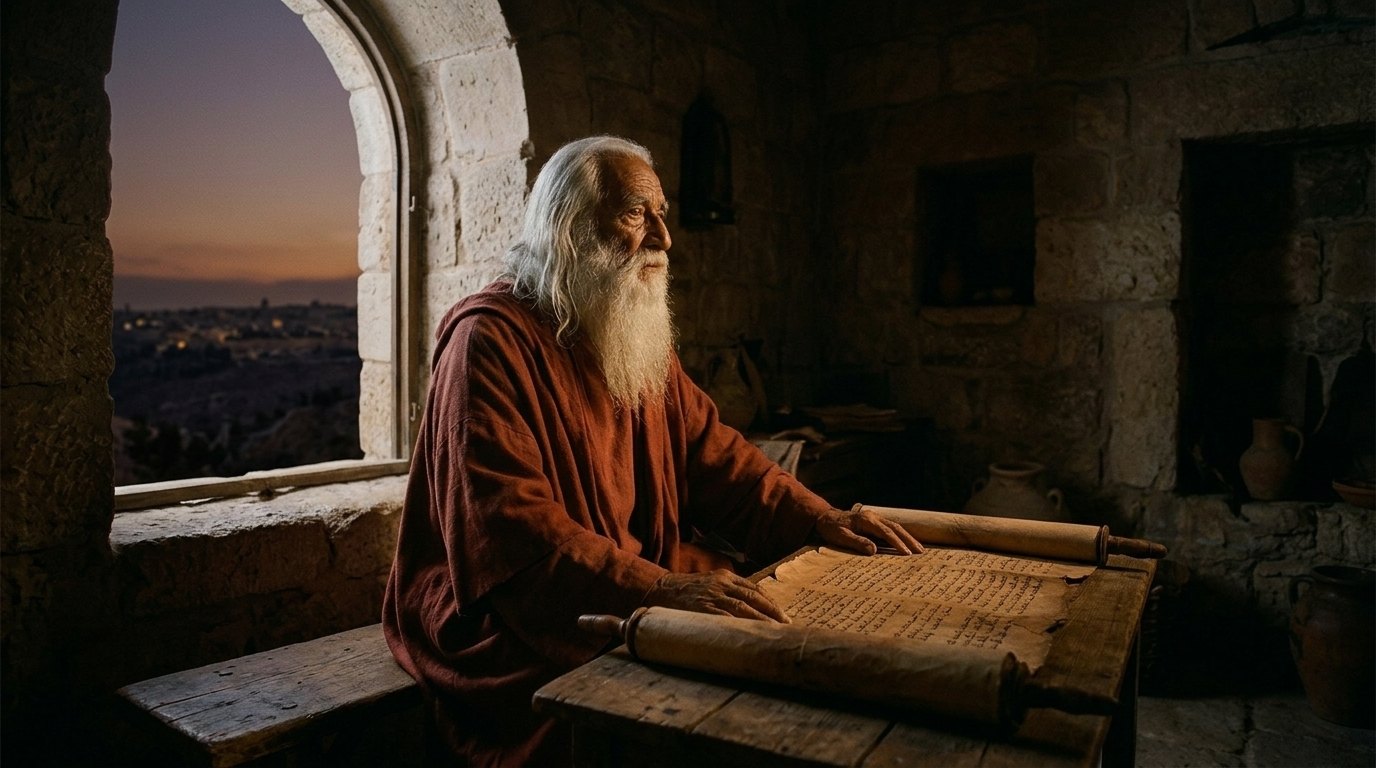
Jeremiah faithfully proclaimed God’s word to a people who needed to repent. God commanded that His messages be written on a scroll so that the people might hear, turn from their evil ways, and receive forgiveness. Jeremiah dictated these words to Baruch, who wrote them down and read them publicly (Jeremiah 36:2-8).
His ministry combined solemn warnings of judgment with calls to repentance and promises of hope. He also grieved deeply over his people’s suffering. Jeremiah 9:1 records his wish that he could weep continually for them, which is why he is often called the “weeping prophet.”
One of Jeremiah’s greatest prophecies concerns the new covenant: God promised to write His law on His people’s hearts, be their God, make Himself known to them, and forgive their sins completely (Jeremiah 31:31-34). The New Testament quotes this promise in Hebrews 8:8-12, showing its importance in God’s saving purpose.
Answered from Scripture · reviewed November 11, 2026
Jeremiah was a priest from Anathoth called before birth to be God's prophet to Judah and the nations during Jerusalem's final tragic decades. Known as the weeping prophet, he endured intense persecution, witnessed the destruction of the temple, and yet proclaimed the unshakable promise of an everlasting new covenant written on the heart.
The Priestly Prophet
Called Before Birth to Speak for God
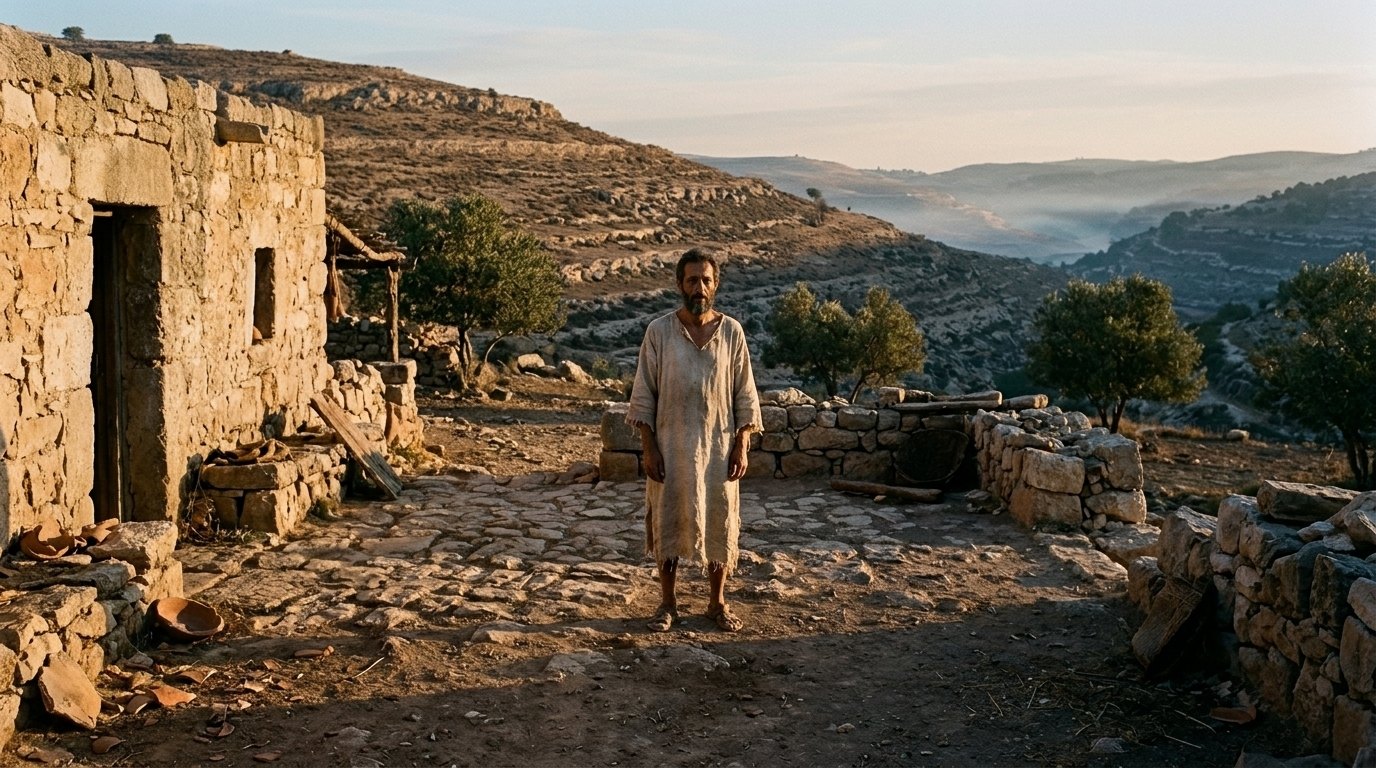
“Before I formed you in the womb I knew you, before you were born I set you apart; I appointed you as a prophet to the nations.”
Jeremiah 1:5 (NIV)
It shows that God sovereignly chose, consecrated, and appointed Jeremiah to his prophetic office before he was ever formed in the womb.
Before Jeremiah drew his first breath, God had already established his identity, office, and destiny. In Jeremiah 1:5, the Lord declares the foundational truth of his existence: "Before I formed you in the womb I knew you, and before you were born I consecrated you; I appointed you a prophet to the nations." Born into a priestly lineage in the village of Anathoth within the territory of Benjamin, Jeremiah's life spanned the tumultuous reigns of Josiah, Jehoiakim, and Zedekiah until Jerusalem's tragic fall (Jeremiah 1:1–3). When the divine summons arrived, Jeremiah felt wholly inadequate, protesting his youth and inability to speak, yet the Lord stretched out His hand to touch his mouth, placing His words directly upon his lips and investing him with divine authority over nations and kingdoms "to pluck up and to break down, to destroy and to overthrow, to build and to plant" (Jeremiah 1:6–10).
God never concealed the cost of this calling. He warned Jeremiah that the kings, officials, priests, and people of Judah would wage war against him, yet promised to make him an impenetrable bronze wall and a fortified city (Jeremiah 1:17–19). His entire personal existence was conscripted as a living sermon. In Jeremiah 16:1–4, God commanded him never to take a wife or raise children in that place, turning his deliberate bachelorhood and solitary life into an ominous sign of the catastrophic devastation coming upon Judah's households.
| Passage | What it says |
|---|---|
| Jeremiah 1:1-3 | Identifies Jeremiah as a priest from Anathoth in Benjamin, dating his ministry through Josiah, Jehoiakim, and Zedekiah until the exile. |
| Jeremiah 1:4-5 | God declares that He knew, consecrated, and appointed Jeremiah as a prophet to the nations before his birth. |
| Jeremiah 1:6-10 | Jeremiah protests his youth, but God touches his mouth and commissions him over kingdoms to uproot, tear down, build, and plant. |
| Jeremiah 1:17-19 | God commands Jeremiah to speak without fear, promising to make him a fortified city against Judah's kings, princes, priests, and people. |
| Jeremiah 16:1-4 | God commands Jeremiah not to marry or raise children, setting his solitary life as a prophetic sign of coming disaster. |
A Ministry of Tears
Weeping Over a Broken and Unrepentant People
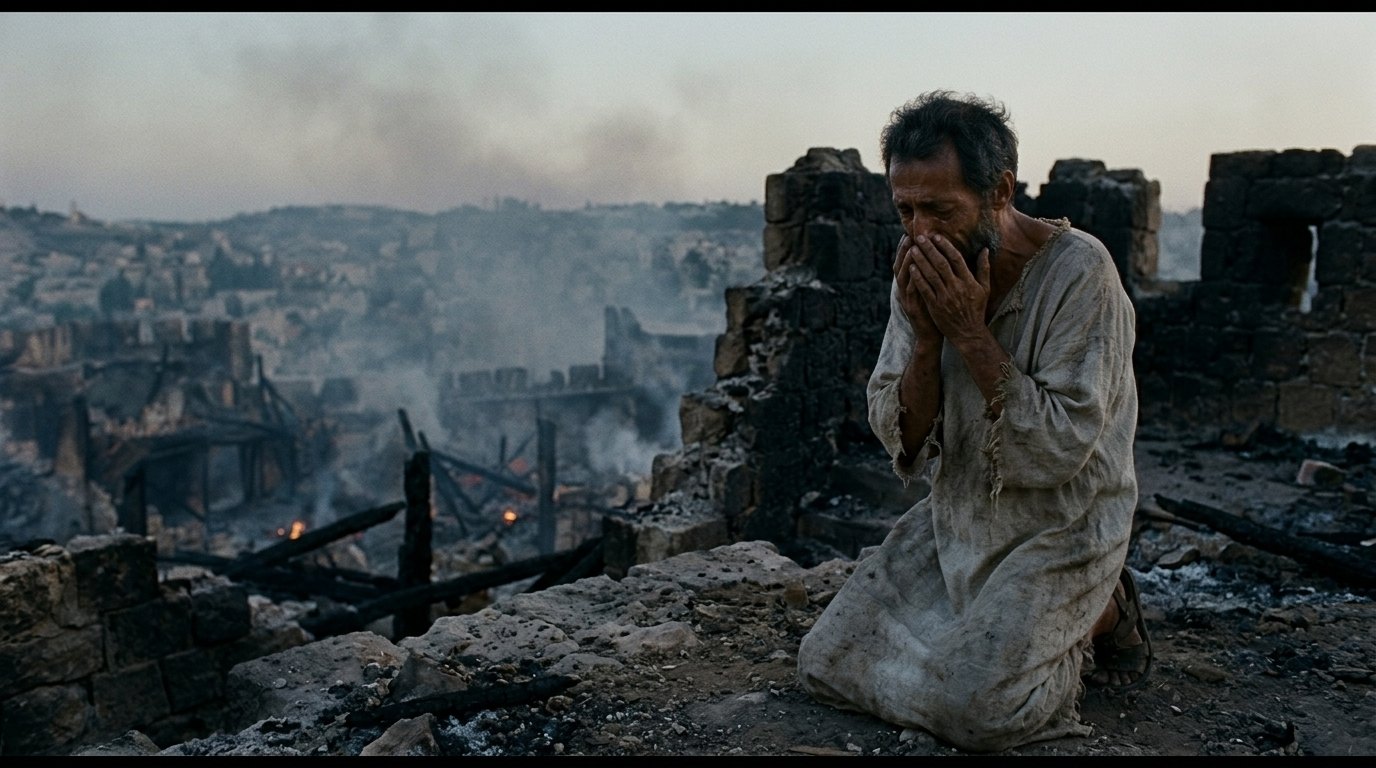
Oh, that my head were a spring of water and my eyes a fountain of tears! I would weep day and night for the slain of my people.
Jeremiah 9:1 (NIV)
It reveals the deep pastoral grief that earned Jeremiah the title of the weeping prophet as he mourned Judah's spiritual ruin.
Jeremiah carried God's terrifying message of judgment not with detached stoicism, but with an agonizing, broken heart. In Jeremiah 9:1, the prophet pours out the uncontainable sorrow that gave him his title: "Oh that my head were waters, and my eyes a fountain of tears, that I might weep day and night for the slain of the daughter of my people!" He did not merely scold his brethren; their spiritual blindness cut him to the core. Mourning the catastrophic wound of his nation, he cried out in bitter dismay, "Is there no balm in Gilead? Is there no physician there?" (Jeremiah 8:21–22). The Lord Himself urged this weeping, calling Jeremiah to pour out unceasing tears because the virgin daughter of Judah had been crushed with an incurable blow (Jeremiah 14:17–18).
Proclaiming God's uncompromising truth made Jeremiah an object of daily derision and contempt, tempting him to silence his own voice. Yet whenever he resolved never to mention God or speak in His name again, the message became a burning fire shut up in his bones, exhausting him until he could no longer hold it in (Jeremiah 20:8–9). This deep grief reached its zenith after Jerusalem collapsed. Sitting amid the smoking ruins, Jeremiah penned his lamentations, weeping over the desolate city that once reigned as a princess among provinces (Lamentations 1:1–2). Yet even in the darkest ash heap of history, the prophet anchored his soul to sovereign hope: "The steadfast love of the Lord never ceases; his mercies never come to an end; they are new every morning; great is your faithfulness" (Lamentations 3:21–24).
| Passage | What it says |
|---|---|
| Jeremiah 8:21-22 | Jeremiah laments the wound of his people, asking if there is no balm in Gilead or physician to heal them. |
| Jeremiah 9:1-2 | Jeremiah wishes his eyes were a fountain of tears to weep day and night for the slain of his people. |
| Jeremiah 14:17-18 | The Lord instructs Jeremiah to weep ceaselessly because the virgin daughter of His people is struck with a devastating blow. |
| Jeremiah 20:8-9 | Jeremiah admits that proclaiming God's word brought reproach, yet withholding it became like a burning fire shut up in his bones. |
| Lamentations 1:1-2 | Jeremiah grieves over desolate Jerusalem, once full of people but now sitting alone as a weeping widow. |
| Lamentations 3:21-24 | In the midst of ruin, Jeremiah confesses that the Lord's mercies never cease and His faithfulness is great. |
Faithful Under Persecution
Enduring Rejection, Confinement, and the Pit
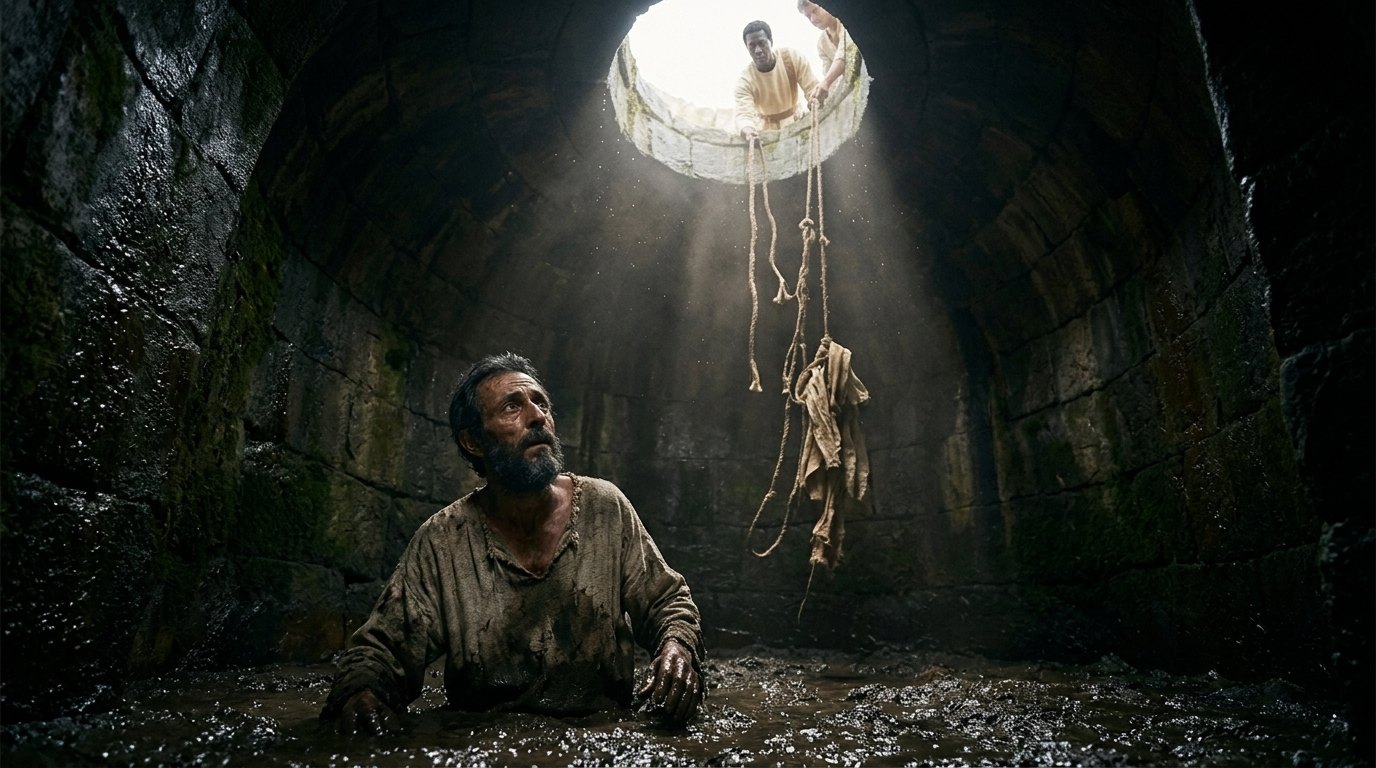
So they took Jeremiah and put him into the cistern of Malkijah, the king’s son, which was in the courtyard of the guard. They lowered Jeremiah by ropes into the cistern; it had no water in it, only mud, and Jeremiah sank down into the mud.
Jeremiah 38:6 (NIV)
It captures the depth of Jeremiah's physical suffering when princes cast him into a muddy cistern to die for preaching God's truth.
Faithfulness to God brought Jeremiah unrelenting persecution from the very institutions and communities meant to guard His law. The depths of this physical ordeal are laid bare in Jeremiah 38:6, when Judah's princes took Jeremiah and cast him into the cistern of Malchiah the king's son: "And they let Jeremiah down by ropes. And there was no water in the cistern, but only mud, and Jeremiah sank in the mud." Left there to starve in the suffocating mire, he was rescued only through the compassion of Ebed-melech the Ethiopian, who secured royal permission to draw him out with ropes cushioned by old rags (Jeremiah 38:7–13).
Every quarter of society opposed him. His own kin and neighbours from Anathoth conspired to murder him so that his name would be remembered no more (Jeremiah 11:18–21). Pashhur, the chief officer in the house of the Lord, struck Jeremiah and locked him in stocks at the upper Benjamin Gate (Jeremiah 20:1–2). Jerusalem's religious leaders seized him at the temple, demanding his execution because he announced that the sanctuary would fall like Shiloh (Jeremiah 26:8–11). When King Jehoiakim heard Jeremiah's scroll read aloud, the brazen monarch sliced it column by column with a scribe's knife and burned it in his winter fire (Jeremiah 36:21–24). Falsely accused of treason, beaten, and cast into vaulted cells (Jeremiah 37:15–16; 18:18), Jeremiah refused to alter a single syllable of God's counsel, ultimately being dragged into Egypt against his prophetic warning by an unrepentant remnant (Jeremiah 43:1–7).
| Passage | What it says |
|---|---|
| Jeremiah 20:1-2 | Pashhur the priest strikes Jeremiah and puts him in stocks for prophesying the destruction of Jerusalem. |
| Jeremiah 26:8-11 | Priests, prophets, and people seize Jeremiah demanding his death because he prophesied that the temple would become like Shiloh. |
| Jeremiah 36:21-24 | King Jehoiakim cuts up and burns Jeremiah's scroll of warnings in his brazier, completely unmoved by God's words. |
| Jeremiah 37:15-16 | The officials beat Jeremiah and imprison him in a vaulted cell under false accusations of defecting to the Chaldeans. |
| Jeremiah 38:6-13 | Jeremiah is lowered into Malchiah's miry dungeon to sink into the mud, until Ebed-melech rescues him with ropes and rags. |
| Jeremiah 11:18-21 | The men of Jeremiah's hometown of Anathoth plot against his life to silence his prophetic warnings. |
| Jeremiah 18:18 | Jerusalem's leaders plot to attack Jeremiah with their tongues and disregard his prophetic words. |
| Jeremiah 43:1-7 | The remnant rebels against God's word and forces Jeremiah into Egypt after Jerusalem falls. |
Judgment and Hope
The Certainty of Exile and the Promise of Restoration
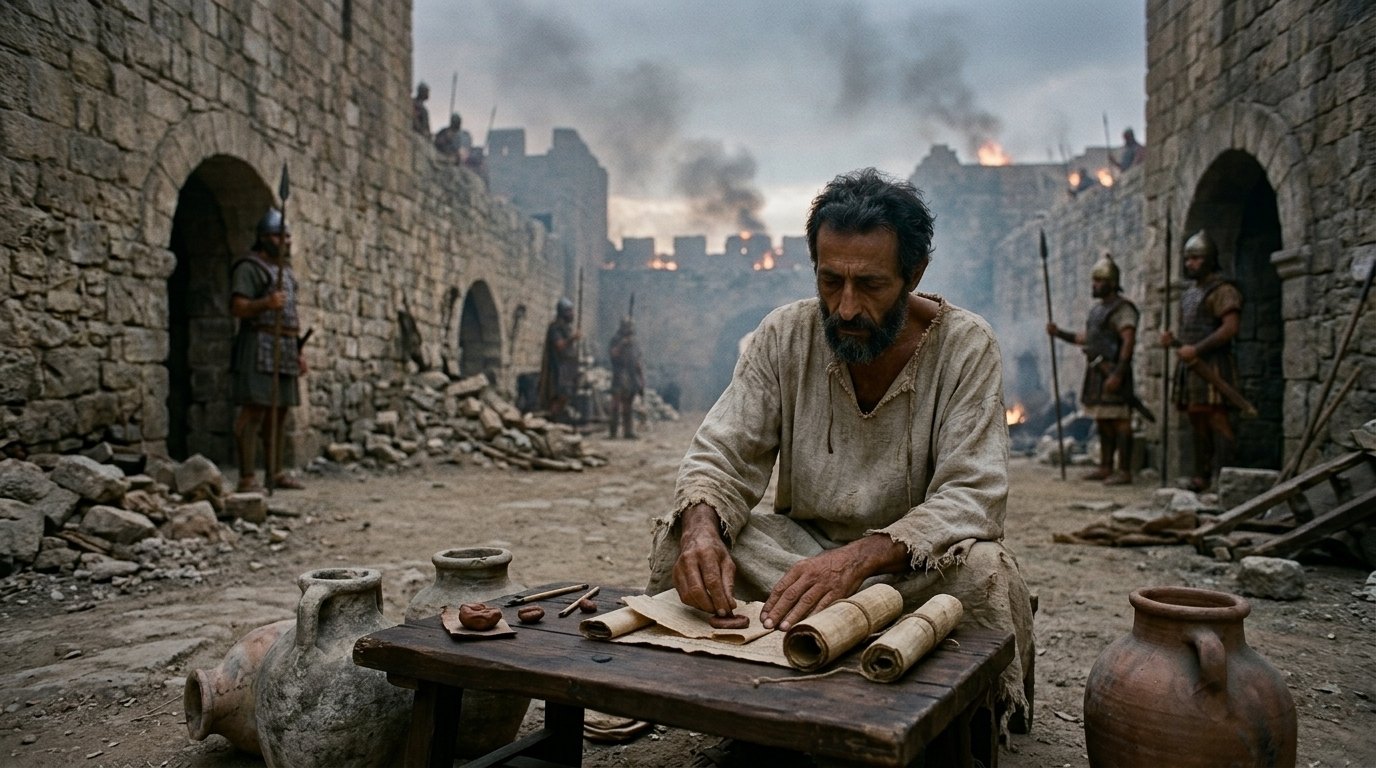
This is what the LORD says: “When seventy years are completed for Babylon, I will come to you and fulfill my good promise to bring you back to this place. For I know the plans I have for you,” declares the LORD, “plans to prosper you and not to harm you, plans to give you hope and a future.
Jeremiah 29:10-11 (NIV)
It shows God's purposeful plan to visit His people after seventy years in Babylon to restore them with a future and a hope.
Jeremiah preached the absolute necessity of repentance while proclaiming that divine judgment was now fixed and certain. At the gate of the Lord's house, he warned the people against deceitful slogans—"This is the temple of the Lord, the temple of the Lord"—urging genuine justice and holiness instead of superstitious security (Jeremiah 7:1–7). When Judah persisted in rebellion, Jeremiah shattered a potter's earthen flask in the Valley of Ben-hinnom to demonstrate that Jerusalem would be broken beyond repair (Jeremiah 19:1–11). He then walked the streets strapped into a wooden yoke, warning kings and foreign envoys that God had sovereignly appointed Babylon to rule the earth (Jeremiah 27:1–7). When the false prophet Hananiah broke the wooden bars, the Lord commanded Jeremiah to replace them with an unbreakable yoke of iron (Jeremiah 28:10–17).
Yet God's judgment was never His final word. The heart of Jeremiah's prophetic message contained an unwavering promise of sovereign restoration, highlighted in Jeremiah 29:10–11: "For thus says the Lord: When seventy years are completed for Babylon, I will visit you, and I will fulfill to you my promise and bring you back to this place. For I know the plans I have for you, declares the Lord, plans for welfare and not for evil, to give you a future and a hope." Though exile was inevitable and set for seventy years (Jeremiah 25:11–12), God's covenant faithfulness ensured the ultimate renewal of His people. While under arrest during Jerusalem's final siege, Jeremiah exercised his right of redemption to purchase a field at Anathoth, sealing the deeds in an earthenware jar to guarantee that fields, houses, and vineyards would once more be bought and sold in the land (Jeremiah 32:6–15). Looking beyond the exile to God's eternal redemptive design, Jeremiah foresaw a righteous Branch sprouting from David's line to execute justice, the glorious Messiah who would be called "The Lord is our righteousness" (Jeremiah 33:14–16).
| Passage | What it says |
|---|---|
| Jeremiah 25:11-12 | Prophesies that the land will lie desolate and serve the king of Babylon for exactly seventy years. |
| Jeremiah 29:10-14 | Promises that after seventy years God will gather the exiles back to their land when they seek Him wholeheartedly. |
| Jeremiah 32:6-15 | Jeremiah buys a field in Anathoth as an acted sign that houses, fields, and vineyards will again be bought in Judah. |
| Jeremiah 33:14-16 | The Lord promises to execute justice through a righteous Branch sprouted from David who will bring salvation and peace. |
| Jeremiah 7:1-7 | Jeremiah preaches at the temple gate, demanding true repentance rather than false trust in the building. |
| Jeremiah 19:1-11 | Jeremiah smashes a potter's jar at the Valley of Hinnom to dramatize the irreversible destruction of Jerusalem. |
| Jeremiah 27:1-7 | Jeremiah wears wooden yokes to illustrate the divine requirement to submit to Babylon's rule. |
| Jeremiah 28:10-17 | Jeremiah confronts Hananiah's false peace, replacing the broken wooden yoke with an unbreakable yoke of iron. |
The Everlasting Promise
A New Covenant Written Upon the Heart
“The days are coming,” declares the LORD, “when I will make a new covenant with the people of Israel and with the people of Judah.
Jeremiah 31:31 (NIV)
It introduces the explicit promise of a brand new covenant unlike the broken Mosaic covenant, bringing internal renewal and total pardon.
In Jeremiah 31:31, the Lord declares through His weeping prophet that days are coming when He will make a new covenant with the house of Israel and Judah. This promise stands as one of the towering peaks of Old Testament revelation, foretelling an arrangement fundamentally distinct from the covenant made at Sinai which the people repeatedly broke. As detailed in Jeremiah 31:31-34, God pledges that under this new covenant, He will put His law within His people, writing it directly upon their hearts rather than on stone tablets. Every member of this community will know the Lord intimately, and God gives the supreme assurance: "I will forgive their iniquity, and I will remember their sin no more." This glorious promise finds its ultimate fulfilment in Jesus Christ, who at the Last Supper took the cup and declared it to be "the new covenant in my blood" (Luke 22:20). The author of Hebrews quotes this entire oracle at length to establish that Christ is the mediator of a far better covenant based on superior promises (Hebrews 8:8-12; Hebrews 10:16-17).
This transformation is neither temporary nor fragile. In Jeremiah 32:38-40, while Jerusalem lies besieged by the Babylonian armies, God reiterates His pledge by promising an "everlasting covenant." He promises to give His redeemed people one heart and one way, putting the reverent fear of God within them so that they will never turn away from Him. Through this sovereign work of regeneration, the Lord ensures the enduring fidelity of His flock. The New Testament celebrates this eternal security, concluding with a benediction to the God of peace who brought back from the dead our Lord Jesus through "the blood of the eternal covenant" (Hebrews 13:20-21).
| Passage | What it says | Fulfilled |
|---|---|---|
| Jeremiah 31:31-34 | God promises a new covenant where He writes His law on their hearts, forgives their iniquity, and remembers their sin no more. | Hebrews 8:8-12, Hebrews 10:16-17, Luke 22:20 |
| Jeremiah 32:38-40 | God promises an everlasting covenant, putting His fear in their hearts so they will never turn away from Him. | Hebrews 13:20-21 |
His Lasting Witness
Scripture honors Jeremiah as God's faithful messenger whose words endure.
in the first year of his reign, I, Daniel, understood from the Scriptures, according to the word of the LORD given to Jeremiah the prophet, that the desolation of Jerusalem would last seventy years.
Daniel 9:2 (NIV)
Daniel's earnest prayer rests directly on his trust in the precise timeline revealed through Jeremiah.
In Daniel 9:2, the prophet Daniel records how he discerned from the sacred scrolls the precise duration of Jerusalem's desolation, resting his urgent intercession entirely on the reliable word given through Jeremiah. This profound reliance illustrates the enduring authority Jeremiah's ministry possessed among the faithful who survived the exile. Decades before the fall of Jerusalem, Jeremiah had ministered with deep pastoral affection, as seen in 2 Chronicles 35:25, where he composed heartfelt laments for the godly King Josiah, mourning the righteous leader whose death hastened the nation's spiritual collapse.
God verified His prophet's words with historical precision. In 2 Chronicles 36:21-22 and Ezra 1:1, the chronicler notes that the proclamation of King Cyrus permitting the exiles to return and rebuild the temple took place specifically to fulfil the Lord's word spoken through Jeremiah, ensuring the land enjoyed its Sabbath rest for seventy years as predicted (Daniel 9:1-2).
The New Testament further honors Jeremiah's prophetic voice. Matthew records that the bitter grief of the Bethlehem mothers whose infants were slain by Herod fulfilled Jeremiah's poignant lamentation over Rachel weeping for her children (Matthew 2:17-18). Later, the Jewish crowds were so struck by the profound authority, sorrow, and prophetic power of Jesus that some speculated He might be Jeremiah returned from the dead (Matthew 16:13-14). Ultimately, the epistle to the Hebrews anchors its central theological argument in Jeremiah's covenant prophecy, demonstrating that Christ has inaugurated the promised eternal redemption (Hebrews 8:8-12).
| Passage | What it says |
|---|---|
| 2 Chronicles 35:25 | Jeremiah utters a lamentation for King Josiah, recorded in the laments of Israel. |
| 2 Chronicles 36:21-22 | Cyrus's decree fulfills Jeremiah's prophecy that the land would keep its Sabbaths for seventy years. |
| Ezra 1:1 | The Lord stirs Cyrus of Persia to rebuild the temple to fulfill the word spoken by Jeremiah. |
| Daniel 9:1-2 | Daniel understands from Jeremiah's writings that Jerusalem's desolation would last seventy years. |
| Matthew 2:17-18 | Herod's slaughter of the infants in Bethlehem fulfills Jeremiah's prophecy of Rachel weeping for her children. |
| Matthew 16:13-14 | The crowds speculate that Jesus might be Jeremiah or one of the prophets resurrected. |
| Hebrews 8:8-12 | The author quotes Jeremiah's new covenant to show Christ as mediator of a better covenant. |
Where in the Bible
| Book | Passages |
|---|---|
| 2 Chronicles | 2 · 2 Chronicles 35:25, 2 Chronicles 36:21-22 |
| Ezra | 1 · Ezra 1:1 |
| Jeremiah | 27 · Jeremiah 1:1-3, Jeremiah 1:4-5, Jeremiah 1:6-10, Jeremiah 1:17-19, Jeremiah 16:1-4, Jeremiah 8:21-22, Jeremiah 9:1-2, Jeremiah 14:17-18, Jeremiah 20:8-9, Jeremiah 20:1-2, Jeremiah 26:8-11, Jeremiah 36:21-24, Jeremiah 37:15-16, Jeremiah 38:6-13, Jeremiah 11:18-21, Jeremiah 18:18, Jeremiah 43:1-7, Jeremiah 25:11-12, Jeremiah 29:10-14, Jeremiah 32:6-15, Jeremiah 33:14-16, Jeremiah 7:1-7, Jeremiah 19:1-11, Jeremiah 27:1-7, Jeremiah 28:10-17, Jeremiah 31:31-34, Jeremiah 32:38-40 |
| Lamentations | 2 · Lamentations 1:1-2, Lamentations 3:21-24 |
| Daniel | 1 · Daniel 9:1-2 |
| Matthew | 2 · Matthew 2:17-18, Matthew 16:13-14 |
| Hebrews | 1 · Hebrews 8:8-12 |
The story in order
- Jeremiah called before birth (c. 627 BC) · Jeremiah 1:4-5 · God's sovereign choice of Jeremiah to be a prophet to the nations.
- Jeremiah commissioned as prophet (c. 627 BC) · Jeremiah 1:6-10 · Despite his youth, Jeremiah is empowered to speak God's word.
- Jeremiah prophesies temple destruction (c. 609 BC) · Jeremiah 26:8-11 · Jeremiah faces persecution for proclaiming judgment on Jerusalem.
- Jeremiah's scroll burned (c. 605 BC) · Jeremiah 36:21-24 · King Jehoiakim rejects God's word, showing the people's hard hearts.
- Jeremiah imprisoned in the pit (c. 589 BC) · Jeremiah 38:6-13 · Jeremiah suffers greatly for obedience to God's word.
- Seventy years of exile prophesied (c. 605 BC) · Jeremiah 25:11-12 · God's judgment through Babylon for seventy years.
- New covenant promised (c. 587 BC) · Jeremiah 31:31-34 · God's promise of forgiveness and an internal law.
- Jeremiah buys a field (c. 587 BC) · Jeremiah 32:6-15 · An acted sign of future hope and restoration.
- Jerusalem falls (586 BC) · 2 Chronicles 36:21-22 · Fulfillment of Jeremiah's prophecy of seventy years of desolation.
- Daniel understands seventy years (c. 539 BC) · Daniel 9:1-2 · Jeremiah's prophecy guides Daniel's prayer for restoration.
- Cyrus's decree (538 BC) · Ezra 1:1 · Fulfillment of Jeremiah's prophecy of return from exile.
- New covenant cited (AD 60-70) · Hebrews 8:8-12 · The new covenant in Christ fulfills Jeremiah's prophecy.
Key words
- Prophet (nabi, נָבִיא)
- One who speaks God's message, often including foretelling future events. · Jeremiah 1:4-5
- Covenant (berit, בְּרִית)
- A solemn agreement or promise, often between God and His people. · Jeremiah 31:31
- Repentance (shuv, שׁוּב)
- A turning away from sin and toward God. · Jeremiah 7:1-7
- Exile (galut, גָּלוּת)
- Forced removal from one's homeland, particularly the Babylonian exile. · Jeremiah 25:11-12
- New Covenant (berit hadashah, בְּרִית חֲדָשָׁה)
- God's promised future covenant, fulfilled in Christ, with internal transformation. · Jeremiah 31:31
Jeremiah's life stands as a testament to unflinching fidelity in the face of widespread rebellion and personal sorrow. Through his tears and steadfast obedience, God revealed that worldly collapse cannot undo His redemptive purposes, which culminate in the eternal forgiveness of the new covenant in Christ.
36 passages, each cited once.
Scripture cited
- Jeremiah 1:4-10
- Jeremiah 1:1-3
- Jeremiah 31:31-34
- Jeremiah 36:1-8
- Jeremiah 9:1
- Hebrews 8:8-12