What is the oldest book of the Bible?

Job 1:1
1 In the land of Uz there lived a man whose name was Job. This man was blameless and upright; he feared God and shunned evil.
New International Version (NIV)
The answer
Job is traditionally considered the oldest book of the Bible by date of composition, although Scripture does not explicitly state when it was written. Its early, patriarchal setting supports that conclusion: Job’s wealth is measured in livestock (Job 1:3), he offers burnt offerings for his family (Job 1:5), and he lives another 140 years after his trials (Job 42:16-17).
Genesis answers a different question: it is the first book in biblical order and records the earliest events, not necessarily the events first written about. It opens, “In the beginning, God created the heavens and the earth” (Genesis 1:1).
Answered from Scripture · reviewed November 11, 2026
While Genesis chronicles the earliest events of cosmic and human history, the Book of Job is widely recognized as the oldest book written in the biblical canon. Internal clues embedded throughout Job point to an ancient patriarchal setting that predates the exodus, the giving of the Law, and the Levitical priesthood. Examining these biblical witnesses reveals how God preserved timeless wisdom and pure faith long before the tabernacle was raised.
Patriarchal Setting
The World of Job Reflects Life Before Sinai
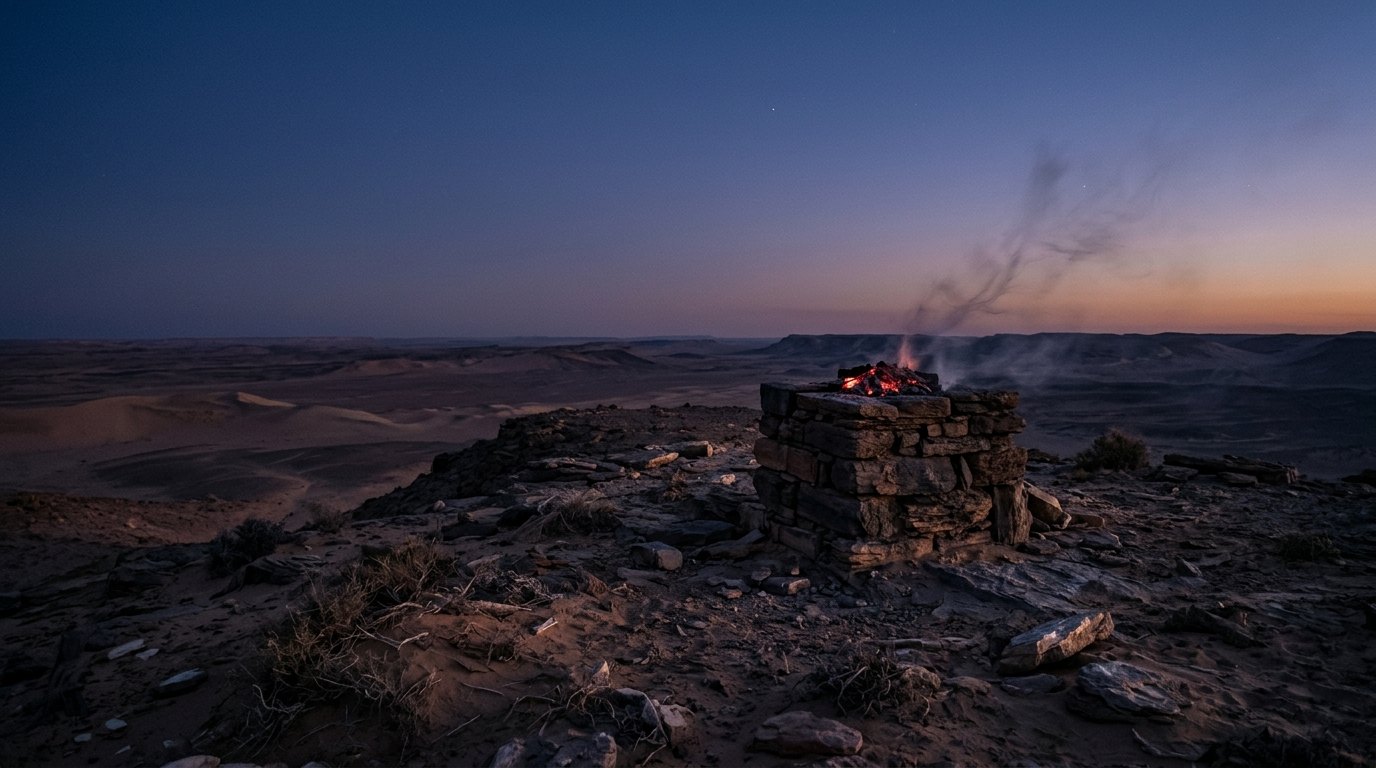
When a period of feasting had run its course, Job would make arrangements for them to be purified. Early in the morning he would sacrifice a burnt offering for each of them, thinking, “Perhaps my children have sinned and cursed God in their hearts.” This was Job’s regular custom.
Job 1:5 (NIV)
Job acts as the family priest offering burnt offerings, reflecting the patriarchal worship pattern that existed prior to the Levitical priesthood.
In Job 1:5, the ancient patriarch rises early in the morning to offer burnt offerings for his children, interceding as the priestly head of his household long before the tabernacle stood or the tribe of Levi was consecrated at Sinai. Job lives in the land of Uz (Job 1:1), outside the covenant boundaries of later Israel, functioning in the same spiritual landscape as Abraham, Isaac, and Jacob. The narrative contains no hint of the Mosaic Law, the exodus, or the Levitical priesthood; instead, the social and religious patterns belong entirely to the patriarchal dawn. After his trials, Job survives another 140 years (Job 42:16), suggesting a total lifespan exceeding two centuries—a longevity found only in the generations following the flood and during the era of Abraham (Genesis 11:28). Furthermore, when his relatives console him, each gives him a piece of silver known as a qesitah (Job 42:11), an archaic unit of currency mentioned elsewhere in Scripture only during Jacob's purchase of land near Shechem (Genesis 33:19). The geography and genealogies confirm this era: Eliphaz hails from Teman, an early Edomite clan descended from Esau (Genesis 36:11), while Uz is linked with the early Horite clans of Seir (Genesis 36:28). Even the Chaldeans who seize his camels appear not as the mighty imperial army of later Babylonian history, but as wandering desert raiding bands (Job 1:17). Every historical marker woven into the text points backward past the exodus to an age when God spoke directly to patriarchal families who walked uprightly in His sight.
| Passage | What it says |
|---|---|
| Job 1:1 | Job lives in Uz as a blameless and upright man who fears God and shuns evil, outside the covenant boundaries of later Israel. |
| Job 1:5 | Job offers regular sacrifices for his children as the priestly head of his household, with no mention of tabernacle, temple, or Levitical law. |
| Job 42:16 | Job lives an additional 140 years after his restoration, a lifespan characteristic of the early patriarchal period seen in Genesis. |
| Job 42:11 | Friends bring Job a piece of silver known as a qesitah, an archaic currency referenced elsewhere only in the days of Jacob. |
| Genesis 11:28 | Ur of the Chaldees is identified, framing the ancestral patriarchal geography alongside the Chaldean raiders in Job. |
| Genesis 36:11 | Teman is named as a grandson of Esau, locating the homeland of Eliphaz the Temanite in Edomite patriarchal antiquity. |
| Genesis 36:28 | Uz is listed among the early Horite clans of Seir, matching the setting of Job's ancestral homeland. |
| Job 1:17 | Chaldean bands raid Job's camels as nomadic clans before the rise of the later Babylonian empire. |
The Divine Witness
God Numbers Job Among the Ancient Righteous

even if these three men—Noah, Daniel and Job—were in it, they could save only themselves by their righteousness, declares the Sovereign LORD.
Ezekiel 14:14 (NIV)
The Lord places Job alongside Noah, pairing him with the ancient fathers of faith rather than later covenant leaders.
When God confronts the rebellious nation of Judah in Ezekiel 14:14, He binds Job's memory directly to Noah, declaring that even if these three men—Noah, Daniel, and Job—were in it, they could deliver only their own souls by their righteousness. The Lord repeats this solemn oath in Ezekiel 14:20, holding Job up as an authentic historical titan of righteousness whose personal piety stood as a standard across generations. Long before Ezekiel's day, God Himself testified to Satan that there was none like Job in all the earth: a blameless, upright man who feared God and shunned evil (Job 2:3). This divine appraisal matches the sacred description of Noah in Genesis 6:9, who was likewise described as righteous, blameless in his generation, and one who walked faithfully with God. By linking Job with Noah rather than with Moses, David, or the Levitical kings, Scripture consistently numbers Job among the primeval and patriarchal fathers. His righteousness was not defined by external adherence to the Mosaic ceremonies of the tabernacle, but by personal, wholehearted faith in the living God. The divine witness thus affirms the reality, antiquity, and moral stature of Job, setting him in sacred history as an enduring pattern of blameless living in a fallen world.
| Passage | What it says |
|---|---|
| Genesis 6:9 | Noah is described as righteous and blameless in his generation, mirroring the distinct moral language God uses of Job. |
| Job 2:3 | The Lord declares to Satan that there is none like Job on the earth, blameless and upright, maintaining integrity without cause. |
| Ezekiel 14:14 | The sovereign Lord names Noah, Daniel, and Job as three exemplars whose righteousness could deliver only themselves. |
| Ezekiel 14:20 | God repeats the solemn oath that Noah, Daniel, and Job could not save son or daughter from impending judgment. |
Enduring Wisdom
A Monument of Patience and Faith for the Church

As you know, we count as blessed those who have persevered. You have heard of Job’s perseverance and have seen what the Lord finally brought about. The Lord is full of compassion and mercy.
James 5:11 (NIV)
The New Testament looks back to Job as the supreme historical example of patient endurance under affliction.
Writing to believers scattered across the Roman world, the apostle declares in James 5:11 that we count them blessed who endure, explicitly setting forth the endurance of Job and the merciful outcome planned by the Lord. Job's ancient trial was never a localized tragedy lost to memory; it was preserved by the Holy Spirit as a permanent monument of faith for the people of God. In the depths of bodily anguish and societal rejection, Job uttered one of the most astonishing confessions in the canon: his absolute assurance that his Redeemer lives, and that in the end He will stand upon the earth (Job 19:25). Even through bitter darkness, Job anchored his soul in the divine reality that the fear of the Lord is wisdom, and to turn away from evil is understanding (Job 28:28). The New Testament draws directly upon this ancient record to show that suffering in the life of a believer is neither purposeless nor unseen. The trial of Job proves that God is deeply compassionate and full of mercy, vindicating the righteous and establishing His redemptive purpose across the ages. This ancient testimony continues to comfort and steady the church, assuring every afflicted saint that the sovereign Lord reigns over all things.
| Passage | What it says |
|---|---|
| Job 19:25 | Job professes his unshakable conviction that his Redeemer lives and that He shall stand at last upon the earth. |
| Job 28:28 | The fear of the Lord is defined as true wisdom, and departing from evil is understanding, anchoring the core of biblical wisdom. |
| James 5:11 | Believers are reminded of Job's endurance and the compassionate, merciful outcome brought about by the Lord. |
The Mosaic Canon
Moses Authored the Foundational Written Canon

And beginning with Moses and all the Prophets, he explained to them what was said in all the Scriptures concerning himself.
Luke 24:27 (NIV)
Jesus explicitly names Moses as the primary, foundational author at the head of the written Old Testament canon.
On the road to Emmaus, the risen Christ walked with His disciples and, beginning with Moses and all the Prophets, expounded to them in all the Scriptures the things concerning Himself (Luke 24:27). While the historical events of Job took place in the patriarchal era, Moses was chosen by God to inaugurate and commit to writing the foundational canon of holy Scripture. In Genesis 1:1, Moses was carried along by the Spirit to record the primeval creation of the world, and in Exodus 24:4, he wrote down all the words of the Lord after receiving them on Mount Sinai. Before his death, Moses completed the writing of the book of the law until it was finished (Deuteronomy 31:24), commanding that the sacred scroll be placed beside the Ark of the Covenant as an enduring witness (Deuteronomy 31:26). Jesus repeatedly affirmed this foundational Mosaic authorship, reminding His hearers that Moses wrote of Him (John 5:46) and structuring the canonical witness around the Law of Moses, the Prophets, and the Psalms (Luke 24:44). Whether Moses transcribed the ancient patriarchal history of Job during his forty years in Midian—as ancient Jewish tradition held—or Job recorded his own testimony that was later gathered into the canon, Scripture presents Moses as the great architect of written revelation. Together, these earliest texts anchor God's covenantal promises from the dawn of creation.
| Passage | What it says |
|---|---|
| Genesis 1:1 | Moses records the primeval beginning of the heavens and the earth under divine inspiration. |
| Exodus 24:4 | Moses commits the words of Yahweh to writing, inaugurating the foundational written canon of Scripture. |
| Deuteronomy 31:24 | Moses completes writing the book of the law in its entirety for Israel. |
| Deuteronomy 31:26 | The written book of the law is placed beside the Ark of the Covenant as a witness. |
| Luke 24:27 | Jesus begins with Moses and all the prophets to expound the Scriptures concerning Himself. |
| Luke 24:44 | Jesus affirms the threefold canon of Moses, the Prophets, and the Psalms testifying of Him. |
| John 5:46 | Jesus testifies that Moses wrote of Him, confirming Moses as the historic human author of the Torah. |
Where in the Bible
| Book | Passages |
|---|---|
| Genesis | 5 · Genesis 11:28, Genesis 36:11, Genesis 36:28, Genesis 6:9, Genesis 1:1 |
| Exodus | 1 · Exodus 24:4 |
| Deuteronomy | 2 · Deuteronomy 31:24, Deuteronomy 31:26 |
| Job | 8 · Job 1:1, Job 1:5, Job 42:16, Job 42:11, Job 1:17, Job 2:3, Job 19:25, Job 28:28 |
| Ezekiel | 2 · Ezekiel 14:14, Ezekiel 14:20 |
| Luke | 2 · Luke 24:27, Luke 24:44 |
| John | 1 · John 5:46 |
| James | 1 · James 5:11 |
The story in order
- Creation of the heavens and earth (c. 4000 BC) · Genesis 1:1 · Moses records the beginning of all things under divine inspiration.
- Noah's righteousness (c. 2400 BC) · Genesis 6:9 · Noah is described as righteous and blameless, mirroring language used for Job.
- Ur of the Chaldees identified (c. 2000 BC) · Genesis 11:28 · Frames patriarchal geography, linking to Job's setting.
- Jacob's era and the qesitah (c. 1700 BC) · Genesis 36:11 · The archaic currency 'qesitah' is referenced, linking to Job's time.
- Job lives in Uz (c. 1700 BC) · Job 1:1 · Job lives outside later Israel, before the Law and priesthood.
- Job offers sacrifices (c. 1700 BC) · Job 1:5 · Job acts as priest for his household, without Levitical law.
- Chaldean raids (c. 1700 BC) · Job 1:17 · Nomadic raids occur before the later Babylonian empire.
- Moses writes the Law (c. 1450 BC) · Exodus 24:4 · Moses commits God's words to writing, forming the foundational canon.
- Teman's homeland (c. 1400 BC) · Genesis 36:28 · Locates Eliphaz's homeland in ancient Edom.
- Job's extended lifespan (c. 1560 BC) · Job 42:16 · A long lifespan characteristic of the patriarchal period.
- Jesus expounds the Scriptures (AD 30) · Luke 24:27 · Jesus affirms the authority of Moses and the prophets.
- Job's endurance is noted (c. AD 45) · James 5:11 · James reminds believers of Job's endurance and God's mercy.
Key words
- Qesitah (קְשִׂיטָה (qəśîṭâ))
- An archaic unit of currency, a piece of silver. · Job 42:11
- Redeemer (גּוֹאֵל (gō'êl))
- One who buys back or rescues; specifically, Christ. · Job 19:25
- Fear of the Lord (יִרְאַ֣ת יְ֭הוָה (yir'at YHWH))
- Reverential awe and obedience to God. · Job 28:28
- Wisdom (חָכְמָה (ḥokmâ))
- Skill and insight in living according to God's ways. · Job 28:28
- Understanding (בִּינָה (bînâ))
- Discernment and the ability to grasp truth. · Job 28:28
Discovering Job as Scripture's earliest voice grounds our faith in God's eternal sovereignty across the earliest chapters of human history. Long before the Law was engraved on stone, God revealed Himself to faithful souls who walked blamelessly in reverence and trust. For believers today, Job reminds us that enduring hope under suffering does not depend on outward circumstance, but on the living Redeemer who reigns through every generation.
22 passages, each cited once.
Scripture cited
- Job 1:1-5
- Job 42:12-17
- Genesis 1:1