What is the Pentateuch?
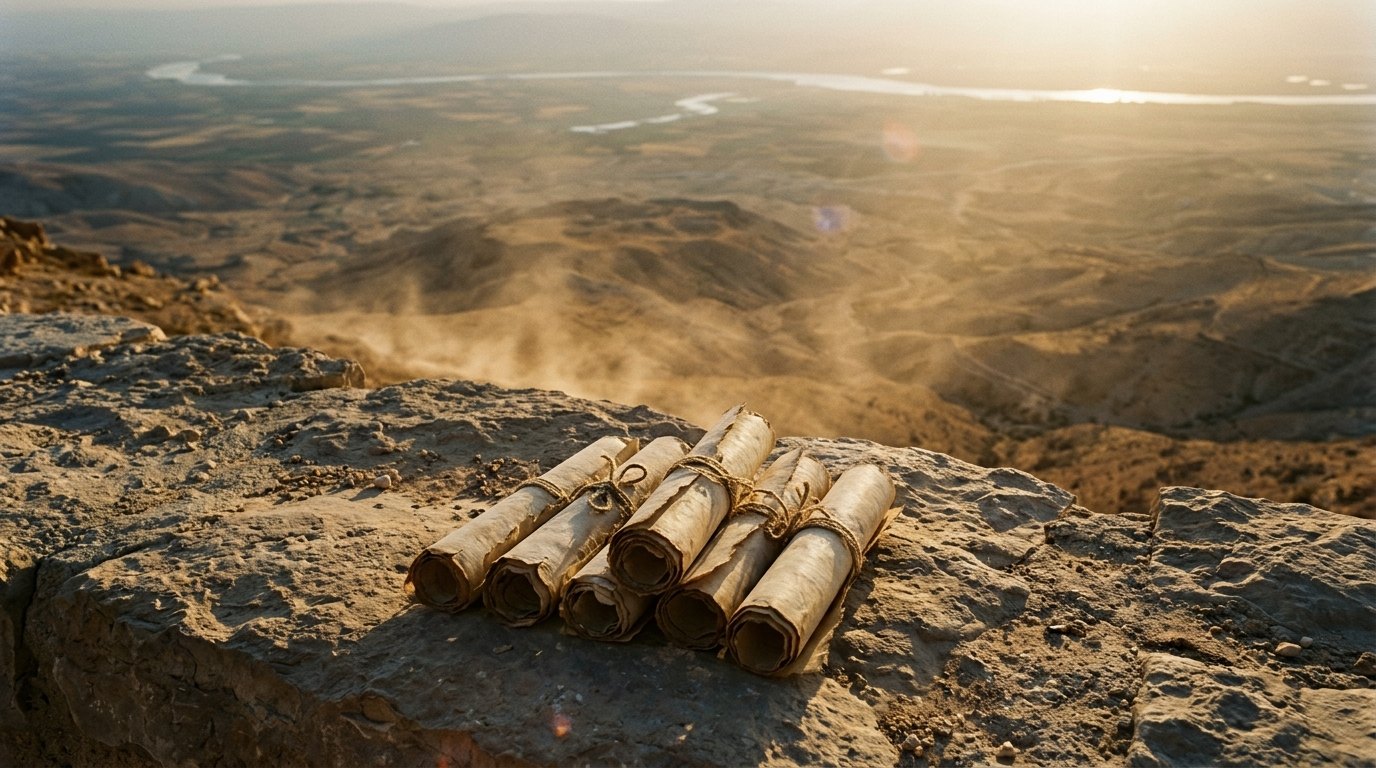
Deuteronomy 31:24-26
24 After Moses finished writing in a book the words of this law from beginning to end,
25 he gave this command to the Levites who carried the ark of the covenant of the LORD:
26 “Take this Book of the Law and place it beside the ark of the covenant of the LORD your God. There it will remain as a witness against you.
New International Version (NIV)
The answer
The Pentateuch is the first five books of the Bible: Genesis, Exodus, Leviticus, Numbers, and Deuteronomy. Its name refers to this five-part form; the word itself does not occur in Scripture. These books are also called the Torah—Hebrew for “law” or “instruction”—and the Law of Moses.
Together, they recount creation and the fall, God’s covenant with Abraham, Israel’s deliverance from Egypt, the giving of God’s law, and Israel’s wilderness journey to the edge of the Promised Land. They establish the history, covenant, and teachings on which the rest of Scripture builds.
Deuteronomy explicitly connects these writings with Moses: “Moses wrote this law” (Deuteronomy 31:9). When he had finished writing its words in a book, he commanded the Levites to place it beside the ark of the covenant as a witness (Deuteronomy 31:24-26).
Answered from Scripture · reviewed November 11, 2026
The Pentateuch comprises the first five books of the Bible—Genesis, Exodus, Leviticus, Numbers, and Deuteronomy—forming the foundational core of divine revelation. Known in Scripture as the Torah or the Law of Moses, this single fivefold work establishes the history of creation, the patriarchs, the Exodus, and God's covenant with Israel.
Names and Structure
The Fivefold Book of Divine Law

After Moses finished writing in a book the words of this law from beginning to end, he gave this command to the Levites who carried the ark of the covenant of the LORD: “Take this Book of the Law and place it beside the ark of the covenant of the LORD your God. There it will remain as a witness against you.
Deuteronomy 31:24-26 (NIV)
Moses completes the written record of God's covenant law and commands that it be preserved permanently beside the ark of the covenant.
Deuteronomy 31:24-26 marks a decisive milestone in redemptive history: Moses finished writing the words of this law in a book to the very end, commanding the Levites to place the completed scroll beside the ark of the covenant as an enduring witness. This fivefold work—known historically as the Pentateuch, from the Greek term denoting a five-volumed scroll, and in Hebrew as the Torah or instruction—was never a loose assortment of oral legends. It was delivered as an integrated, authoritative literary corpus. Earlier in Deuteronomy 31:9, Moses formally committed this legal and historical revelation to writing, entrusting it to the Levitical priests and the elders of Israel for perpetual public reading.
From its inception, this text served as the foundational constitution of Israel's national and spiritual life. In Deuteronomy 4:8, Moses asked the gathered assembly what other nation possessed righteous statutes and judgments comparable to this whole law set before them. Israel's civil leadership was strictly tethered to its sacred pages; according to Deuteronomy 17:18, any future king was required to transcribe a personal copy of this law directly from the Levitical scroll, reading it all the days of his life. Upon crossing the Jordan into Canaan, the nation was commanded in Deuteronomy 27:3 to write all the words of this law upon plastered stones at Mount Ebal, establishing God's written standard openly in the land.
Following Moses' death, God charged his successor in Joshua 1:8 to keep this "Book of the Law" continually on his lips and to meditate upon it day and night, ensuring unswerving obedience to everything written therein. Joshua fulfilled this mandate, ultimately inscribing covenant stipulations within the Book of the Law of God at Shechem (Joshua 24:26). Centuries later, during the reign of Josiah, Hilkiah the high priest recovered this very "Book of the Law of the Lord given through Moses" within the temple chambers (2 Chronicles 34:14), sparking sweeping covenant reform. In the New Testament, the Lord Jesus Christ Himself recognized this exact three-part Hebrew canon, explicitly naming "the Law of Moses" alongside the Prophets and the Psalms as the authoritative Scriptures that testify of Him (Luke 24:44).
| Passage | What it says |
|---|---|
| Deuteronomy 31:9 | Moses records the words of this law in writing and delivers the scroll to the Levitical priests and elders of Israel. |
| Deuteronomy 17:18 | Israel's future king is commanded to write for himself a personal copy of this law taken from the Levitical scroll. |
| Deuteronomy 27:3 | The people are commanded to write all the words of this law clearly on plastered stones upon entering Canaan. |
| Deuteronomy 4:8 | Moses asks what great nation has statutes and righteous judgments like the entire law set before Israel that day. |
| Joshua 1:8 | Joshua is instructed to keep this Book of the Law constantly on his lips and meditate on it day and night. |
| Joshua 24:26 | Joshua records the covenant renewal words in the Book of the Law of God and sets up a memorial stone. |
| Deuteronomy 31:24-26 | Moses finishes writing the words of this law in a book to completion and commands it placed beside the ark. |
| 2 Chronicles 34:14 | Hilkiah the priest finds the Book of the Law of the Lord given through Moses in the temple. |
| Luke 24:44 | Jesus defines the Hebrew canon starting with the Law of Moses alongside the Prophets and the Psalms. |
Mosaic Authorship
Written by Moses as God Commanded
Moses then wrote down everything the LORD had said. He got up early the next morning and built an altar at the foot of the mountain and set up twelve stone pillars representing the twelve tribes of Israel.
Exodus 24:4 (NIV)
Moses explicitly writes down all the words and judgments spoken by the Lord at Mount Sinai before building the altar.
In Exodus 24:4, the text plainly records that Moses wrote down all the words of the Lord before building an altar at the foot of Mount Sinai and sealing the covenant with sacrificial blood. Scripture everywhere attributes the composition of the Pentateuch to Moses acting under direct divine authority. God repeatedly commanded Moses to record both historical deeds and divine legislation in writing. After the defeat of the desert raiders, the Lord commanded him in Exodus 17:14 to write the memorial against Amalek in a book and rehearse it in the hearing of Joshua. Following the renewal of the broken tablets, God commanded Moses in Exodus 34:27 to write down the covenant terms by which the Lord bound Himself to Israel. Similarly, Numbers 33:2 notes that Moses recorded the starting places and stages of Israel's forty-year wilderness journeys by the explicit command of the Lord.
The historical and prophetic books uniformly receive this fivefold corpus as the authentic work of Moses. Before his death, David charged Solomon in 1 Kings 2:3 to walk in God's ways and keep His statutes "as it is written in the Law of Moses." When Josiah cleansed the land of idolatry, he was commended in 2 Kings 23:25 for turning to the Lord with all his heart "according to all the Law of Moses." After the return from the Babylonian exile, Jeshua and Zerubbabel rebuilt the altar of burnt offering "as it is written in the Law of Moses the man of God" (Ezra 3:2), and the gathered remnant in Jerusalem pleaded with Ezra the scribe to bring out "the Book of the Law of Moses" (Nehemiah 8:1).
Christ and His apostles confirmed this Mosaic authorship without qualification. In Mark 12:26, Jesus challenged the Sadducees regarding the resurrection by citing the narrative of the burning bush directly from "the book of Moses." In John 7:19, the Lord confronted the religious authorities with the foundational fact: "Did not Moses give you the law?" To receive the Pentateuch is to receive God's inspired word given through Moses His servant.
| Passage | What it says |
|---|---|
| Exodus 17:14 | The Lord commands Moses to write the memorial against Amalek in a book and rehearse it before Joshua. |
| Exodus 34:27 | The Lord instructs Moses to write down the covenant words, establishing the renewed covenant with Israel. |
| Numbers 33:2 | Moses records the starting points and stages of Israel's wilderness journeys by the explicit command of the Lord. |
| 1 Kings 2:3 | David charges Solomon to keep the Lord's statutes and commandments as written in the Law of Moses. |
| 2 Kings 23:25 | Josiah is commended for turning to the Lord with all his heart according to all the Law of Moses. |
| Ezra 3:2 | The returned exiles build the altar of God to offer burnt offerings as prescribed in the Law of Moses. |
| Nehemiah 8:1 | The assembly gathers as one man, telling Ezra the scribe to bring the Book of the Law of Moses. |
| Exodus 24:4 | Moses writes down all the words of the Lord before building an altar at Sinai. |
| Mark 12:26 | Jesus explicitly cites the passage at the burning bush as recorded in the book of Moses. |
| John 7:19 | Jesus affirms that Moses gave Israel the law. |
Foundational Narrative
From Creation to the Plains of Moab

The LORD had said to Abram, “Go from your country, your people and your father’s household to the land I will show you. “I will make you into a great nation, and I will bless you; I will make your name great, and you will be a blessing. I will bless those who bless you, and whoever curses you I will curse; and all peoples on earth will be blessed through you.”
Genesis 12:1-3 (NIV)
God's unilateral covenant with Abraham establishes the redemptive thread uniting all five books from the fall to the promised inheritance.
Genesis 12:1-3 provides the structural hinge upon which the entire Pentateuch turns, as the Lord called Abram out of pagan darkness to establish an everlasting covenant, promising him a land, a great nation, and that through his seed all families of the earth would be blessed. The narrative begins in Genesis 1:1 with God creating the heavens and the earth out of nothing by His sovereign word. After humanity's tragic fall into sin, God immediately pronounced the protoevangelium in Genesis 3:15, promising that the seed of the woman would ultimately crush the head of the serpent. Genesis traces this seed through Abraham, Isaac, and Jacob, concluding in Genesis 50:24-25 with Joseph's dying confession of faith that God would visit Israel and carry their bones up to the promised land.
Exodus opens with Israel enslaved in Egypt, crying out to the God of their fathers. God redeemed them with a mighty hand, instituting the Passover where the blood of the slain lamb on doorposts spared their firstborn from judgment (Exodus 12:13). At Mount Sinai, God gave His moral law in the Ten Commandments (Exodus 20:1-2), and the book culminates in Exodus 40:34-35 with the cloud of glory filling the newly erected tabernacle, signifying God's holy dwelling in the midst of His redeemed people. Leviticus follows by unfolding how an unholy people can approach a holy God: Leviticus 19:2 summons Israel to "be holy, for I the Lord your God am holy," and Leviticus 16:15 establishes the Day of Atonement, where sacrificial blood cleanses the sanctuary from the people's uncleanness.
Numbers documents Israel's wilderness wanderings, their unbelief at Kadesh-barnea resulting in forty years of judgment (Numbers 14:34), alongside God's faithful preservation and the Aaronite blessing of peace (Numbers 6:24-26). Finally, on the plains of Moab, Deuteronomy presents Moses' farewell covenant exhortations, headlined by the great Shema in Deuteronomy 6:4-5 commanding Israel to love the Lord with all their heart, soul, and might. The Pentateuch concludes solemnly with Moses' death on Mount Nebo, recording that no prophet had yet arisen in Israel like Moses, whom the Lord knew face to face (Deuteronomy 34:10).
| Passage | What it says |
|---|---|
| Genesis 1:1 | God creates the heavens and the earth out of nothing in the absolute beginning of time and space. |
| Genesis 3:15 | The first gospel promise declares that the seed of the woman will crush the serpent's head. |
| Exodus 12:13 | The blood of the slain lamb marks the houses of Israel, shielding them from divine judgment upon Egypt. |
| Exodus 20:1-2 | The Lord proclaims His Ten Commandments to Israel after redeeming them out of the house of bondage. |
| Leviticus 16:15 | The high priest slaughters the goat of the sin offering to make atonement for the holy place. |
| Numbers 14:34 | Israel is sentenced to wander forty years in the wilderness bearing their iniquity for their unbelieving rebellion. |
| Deuteronomy 34:10 | The closing obituary records that no prophet arose in Israel like Moses, whom the Lord knew face to face. |
| Genesis 12:1-3 | God establishes the covenant with Abraham to bless all families of the earth. |
| Genesis 50:24-25 | Joseph dies in faith that God will visit Israel and bring them to the promised land. |
| Exodus 40:34-35 | The glory of the Lord fills the completed tabernacle, concluding Exodus with God dwelling among His people. |
| Leviticus 19:2 | The Lord commands the whole congregation of Israel to be holy as He is holy. |
| Numbers 6:24-26 | The Lord provides Aaron and his sons the priestly blessing for Israel. |
| Deuteronomy 6:4-5 | The Shema commands Israel to love the Lord their God with all their heart, soul, and might. |
Witness of Christ
Fulfilled by Jesus in the New Covenant

And beginning with Moses and all the Prophets, he explained to them what was said in all the Scriptures concerning himself.
Luke 24:27 (NIV)
The risen Christ demonstrates that the books of Moses testify directly concerning His person, suffering, and resurrection.
On the road to Emmaus, the risen Christ interpreted in all the Scriptures the things concerning Himself, beginning with Moses and all the Prophets (Luke 24:27). The Pentateuch is not an isolated legal code of an ancient near-eastern tribe; it is the grand, Christ-centred foundation of God's redemptive plan. Jesus explicitly warned His contemporaries in John 5:46, "If you believed Moses, you would believe me; for he wrote of me." The entire Mosaic economy was carefully designed by the Holy Spirit to prefigure the person, offices, and saving work of Jesus Christ.
This typological witness saturates the Torah's promises and institutions. In Deuteronomy 18:15, Moses promised that God would raise up a Prophet like him from among their brothers; Peter and Stephen proclaimed that this promise found its exact fulfilment in Jesus (Acts 3:22-24, John 6:14). When Israel lay dying in the wilderness, Moses erected a bronze serpent on a pole so that whoever looked lived (Numbers 21:9); Jesus identified this event as a direct type of His own crucifixion, whereby whoever believes in the Son of Man lifted up receives eternal life (John 3:14-15). The tabernacle commanded in Exodus 25:8 pointed directly to Christ becoming flesh and tabernacling among us (John 1:14), serving as the true heavenly sanctuary (Hebrews 8:1-2). Leviticus 17:11 established that life is in the blood to make atonement upon the altar, finding fulfilment in the precious blood of Christ offered once for all (Hebrews 9:22; 1 Peter 1:18-19).
Furthermore, the doctrine of justification by faith was established early in Genesis 15:6, where Abram believed the Lord and it was counted to him as righteousness, the very foundation of the gospel explained in Romans 4:3 and Galatians 3:6. Jesus affirmed in Matthew 5:17-18 that He did not come to abolish the Law but to fulfill every letter and stroke. Paul affirms that Christ is the end and goal of the law for righteousness to everyone who believes (Romans 10:4). The law functioned as a guardian to lead us to Christ that we might be justified by faith (Galatians 3:24), for its ceremonies were shadows of the good things to come, while the true substance belongs to Christ (Hebrews 10:1).
| Passage | What it says | Fulfilled |
|---|---|---|
| Deuteronomy 18:15 | Moses prophesies that the Lord will raise up a prophet like him from among their brothers to whom they must listen. | Acts 3:22-24, John 6:14 |
| Genesis 15:6 | Abram believes the Lord, and his faith is counted to him as righteousness before the covenant of circumcision. | Romans 4:3, Galatians 3:6 |
| Numbers 21:9 | Moses crafts a bronze serpent and sets it upon a pole so that anyone bitten lives when looking at it. | John 3:14-15 |
| Exodus 25:8 | God commands Israel to construct a sanctuary according to the heavenly pattern so that He may dwell among them. | John 1:14, Hebrews 8:1-2 |
| Leviticus 17:11 | God declares that the life of the flesh is in the blood, given upon the altar to make atonement for souls. | Hebrews 9:22, 1 Peter 1:18-19 |
| Matthew 5:17-18 | Jesus affirms that He did not come to abolish the Law or Prophets but to fulfill every stroke and letter. | Romans 10:4 |
| John 5:46 | Jesus warns His opponents that if they believed Moses, they would believe Him, because Moses wrote of Him. | Luke 24:44 |
| Luke 24:27 | Beginning with Moses and all the Prophets, Jesus interprets in all the Scriptures the things concerning Himself. | |
| Romans 10:4 | Christ is the end and goal of the law for righteousness to everyone who believes. | |
| Galatians 3:24 | The law served as a guardian to bring God's people to Christ, that they might be justified by faith. | |
| Hebrews 10:1 | The law has only a shadow of the good things to come rather than the true form of those realities. |
Where in the Bible
| Book | Passages |
|---|---|
| Genesis | 5 · Genesis 1:1, Genesis 3:15, Genesis 12:1-3, Genesis 50:24-25, Genesis 15:6 |
| Exodus | 7 · Exodus 17:14, Exodus 34:27, Exodus 24:4, Exodus 12:13, Exodus 20:1-2, Exodus 40:34-35, Exodus 25:8 |
| Leviticus | 3 · Leviticus 16:15, Leviticus 19:2, Leviticus 17:11 |
| Numbers | 4 · Numbers 33:2, Numbers 14:34, Numbers 6:24-26, Numbers 21:9 |
| Deuteronomy | 8 · Deuteronomy 31:9, Deuteronomy 17:18, Deuteronomy 27:3, Deuteronomy 4:8, Deuteronomy 31:24-26, Deuteronomy 34:10, Deuteronomy 6:4-5, Deuteronomy 18:15 |
| Joshua | 2 · Joshua 1:8, Joshua 24:26 |
| 1 Kings | 1 · 1 Kings 2:3 |
| 2 Kings | 1 · 2 Kings 23:25 |
| 2 Chronicles | 1 · 2 Chronicles 34:14 |
| Ezra | 1 · Ezra 3:2 |
| Nehemiah | 1 · Nehemiah 8:1 |
| Matthew | 1 · Matthew 5:17-18 |
| Mark | 1 · Mark 12:26 |
| Luke | 2 · Luke 24:44, Luke 24:27 |
| John | 2 · John 7:19, John 5:46 |
| Romans | 1 · Romans 10:4 |
| Galatians | 1 · Galatians 3:24 |
| Hebrews | 1 · Hebrews 10:1 |
The story in order
- Creation of the heavens and earth (c. 4000 BC) · Genesis 1:1 · God establishes the foundational reality of all existence.
- The first gospel promise (c. 4000 BC) · Genesis 3:15 · God promises redemption through the seed of the woman.
- Covenant established with Abraham (c. 2000 BC) · Genesis 12:1-3 · God promises to bless all nations through Abraham's descendants.
- The Exodus from Egypt (c. 1446 BC) · Exodus 12:13 · God redeems Israel from slavery through the Passover.
- The Ten Commandments given (c. 1446 BC) · Exodus 20:1-2 · God establishes His law for Israel at Sinai.
- The Tabernacle is filled with glory (c. 1445 BC) · Exodus 40:34-35 · God's presence dwells among His redeemed people.
- Sin offering and atonement (c. 1445 BC) · Leviticus 16:15 · The High Priest makes atonement for the people's sins.
- Wilderness wandering sentenced (c. 1445 BC) · Numbers 14:34 · Israel faces forty years of judgment for unbelief.
- Moses records the Law (c. 1406 BC) · Deuteronomy 31:9 · The Law is written and entrusted to the priests.
- Joshua enters the Promised Land (c. 1406 BC) · Joshua 1:8 · Joshua is commanded to meditate on the Book of the Law.
- Book of the Law found (c. 622 BC) · 2 Chronicles 34:14 · The Law is rediscovered during Josiah's reign.
- Jesus fulfills the Law (c. AD 30) · Matthew 5:17-18 · Jesus affirms His mission to fulfill every aspect of the Law.
- Jesus explains Himself in the Law (AD 30) · Luke 24:27 · Jesus shows how Moses and the Prophets testified about Him.
The Law as a Guardian to Christ
| The Law's Function | Its Purpose | Its Fulfillment | Passage |
|---|---|---|---|
| Points to sin | Reveals God's holiness | Shows our need for a Savior | Leviticus 19:2 |
| Points to sacrifice | Provides atonement for sin | Foreshadows Christ's sacrifice | Leviticus 17:11 |
| Points to a Prophet | God promises a prophet like Moses | Jesus is the Prophet to obey | Deuteronomy 18:15 |
| Points to a Savior | The bronze serpent saves | Jesus is lifted up to save | Numbers 21:9 |
| Points to God's dwelling | The Tabernacle is God's dwelling | Christ is God dwelling with us | Exodus 25:8 |
| A shadow of reality | The Law's rituals are shadows | Christ is the true reality | Hebrews 10:1 |
| A guardian to Christ | The Law leads us to Christ | Justification comes by faith in Christ | Galatians 3:24 |
The Law and the Prophets Point to Christ
| Old Testament Witness | New Testament Fulfillment | Passage |
|---|---|---|
| Moses wrote of Christ | Jesus is the Prophet like Moses | John 5:46 |
| The Law points to Christ | Christ is the end of the Law for righteousness | Romans 10:4 |
| Jesus fulfills the Law | He did not come to abolish but to fulfill | Matthew 5:17-18 |
| Jesus interprets Himself in the Law | Beginning with Moses, He explained all things concerning Himself | Luke 24:27 |
Key words
- Torah (Torah, תּוֹרָה)
- The Hebrew name for the Pentateuch, meaning 'law' or 'instruction'. · Deuteronomy 31:9
- Law of Moses
- The divine instruction given through Moses, comprising the Pentateuch. · 1 Kings 2:3
- Book of the Law
- The written record of God's commands and statutes given through Moses. · Joshua 1:8
- Covenant
- A solemn agreement or promise between God and His people. · Genesis 12:1-3
- Atonement
- The act of making amends or reconciliation for sin, often through sacrifice. · Leviticus 16:15
- Righteousness
- Being in right standing with God, often through faith. · Genesis 15:6
Understanding the Pentateuch is essential for grasping the entire arc of Scripture, as every prophet, psalmist, and New Testament writer builds upon its foundation. By pointing relentlessly to God's holiness, human need, and the promise of redemption, these five books direct the believer to Jesus Christ, who fulfilled the Law completely.
43 passages, each cited once.
Scripture cited
- Deuteronomy 31:24-26
- Deuteronomy 31:9