What is the sovereignty of God?

Daniel 4:34-35
34 At the end of that time, I, Nebuchadnezzar, raised my eyes toward heaven, and my sanity was restored. Then I praised the Most High; I honored and glorified him who lives forever. His dominion is an eternal dominion; his kingdom endures from generation to generation.
35 All the peoples of the earth are regarded as nothing. He does as he pleases with the powers of heaven and the peoples of the earth. No one can hold back his hand or say to him: “What have you done?”
New International Version (NIV)
The answer
The sovereignty of God is His absolute right and power to rule all creation according to His own will. He has no superior, answers to no creature, and cannot be overruled. Nebuchadnezzar came to confess exactly this: God “does according to his will in the army of heaven, and among the inhabitants of the earth; and no one can stop his hand” (Daniel 4:35).
His reign is universal and everlasting
- He rules heaven and earth: Jeremiah 10:10 calls the Lord “the true God,” “the living God, and an everlasting king.” His authority is not limited to one nation or age.
- He rules human kingdoms: Daniel 4:32 says that the Most High “ruleth in the kingdom of men, and giveth it to whomsoever he will.” Even the most powerful ruler holds authority only under God.
- His kingdom never ends: Nebuchadnezzar praises God because “his dominion is an everlasting dominion, and his kingdom from generation to generation” (Daniel 4:34). Daniel 2:44 adds that God’s kingdom will never be destroyed or handed over to another people.
His rule includes human decisions
God’s sovereignty does not make human choices unreal, but it does mean those choices are never ultimate. Proverbs 16:9 places both truths together: “A man’s heart plans his course, but Yahweh directs his steps.” People genuinely plan and act, yet they never become independent of God’s government. Ephesians 1:11 describes God as the one “who does all things after the counsel of his will.”
His sovereignty includes mercy and judgment
God is not obliged to distribute mercy according to human merit or effort. Romans 9:15-16 concludes that mercy depends on God rather than on human willing or running. Romans 9:18 states plainly, “he has mercy on whom he desires, and he hardens whom he desires.” When someone objects that this is unfair, the answer is that the creature has no right to put the Creator on trial: the potter has authority over the clay (Romans 9:20-21).
The proper response
- Humility: No person can rightly accuse God or call Him to account (Romans 9:20).
- Worship: The elders in heaven cast their crowns before God’s throne, acknowledging that every honour belongs to Him (Revelation 4:10).
- Confidence and obedience: Because no one can stop God’s hand, His purposes are secure (Daniel 4:35). That security does not excuse passivity: people still plan and act, but they do so humbly and dependently under His direction (Proverbs 16:9).
Answered from Scripture · reviewed November 11, 2026
The sovereignty of God is His absolute, supreme authority and power to govern all creation, accomplish His holy will, and reign without rival or restraint. Far from an impersonal or fatalistic force, Scripture reveals God's sovereignty as the personal, righteous dominion of the living King over heaven, earth, history, and every human heart.
Supreme Rule
God exercises absolute and irresistible authority over creation
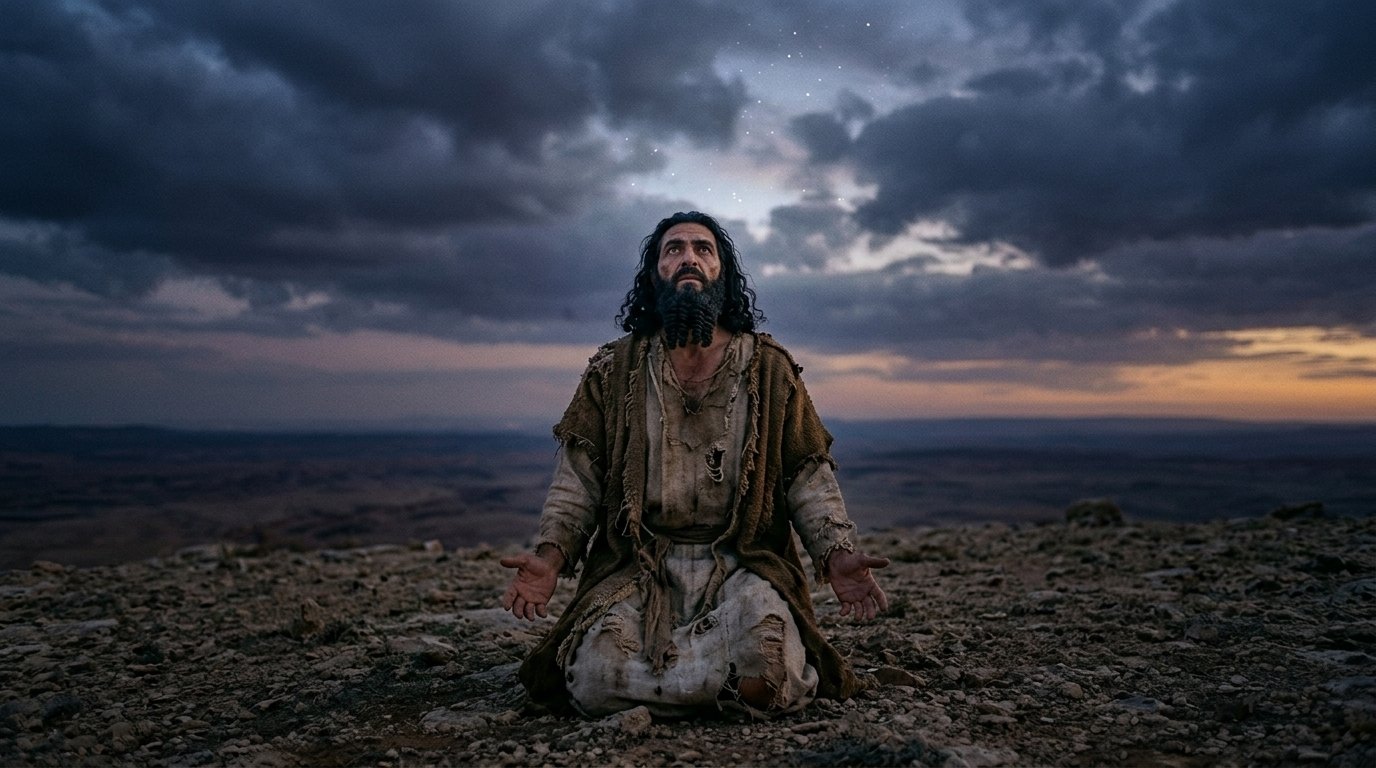
All the peoples of the earth are regarded as nothing. He does as he pleases with the powers of heaven and the peoples of the earth. No one can hold back his hand or say to him: “What have you done?”
Daniel 4:35 (NIV)
It affirms that God accomplishes His purpose in both heaven and earth without any creature able to restrain His hand.
Daniel 4:35 declares that God does according to His will among the heavenly host and earthly dwellers, and none can restrain His hand or question His deeds. This bold confession arose from Nebuchadnezzar after his pride was shattered, when his sanity returned and he lifted his eyes to heaven to bless the Most High whose dominion endures across every generation (Daniel 4:34). God is not a passive observer of human affairs, but the unhindered King over all existence. The Scriptures establish this foundational truth from the opening phrase of Genesis 1:1, where God summons the heavens and the earth out of nothing merely by the power of His authoritative word. Because He is the supreme Creator, He owns and commands all that He has made, as Psalm 115:3 affirms: "Our God is in the heavens; He does whatever He pleases."
Nothing in the physical or spiritual cosmos escapes this active governance. In Psalm 135:6, the psalmist echoes that the Lord accomplishes whatever He desires across the skies, the earth, the seas, and the bottomless ocean deeps. Isaiah 46:9–10 reveals that the Lord declares the end from the beginning, guaranteeing with unerring certainty that His counsel will stand and His good pleasure will be accomplished. Even the extremes of nature and providence belong to His domain; as Isaiah 45:7 states, He forms light, creates darkness, makes well-being, and permits calamity as the sovereign Lord. When faced with this immense majesty, human arrogance collapses. Job confessed in Job 42:2 that God can do all things, and that no divine purpose can ever be thwarted. Far from arbitrary, this rule executes a holy, eternal plan; as Ephesians 1:11 teaches, God continually works all things according to the wise counsel of His own will.
| Passage | What it says |
|---|---|
| Daniel 4:34 | Nebuchadnezzar praises the Most High whose dominion is an everlasting dominion extending through every generation. |
| Daniel 4:35 | God does according to His will among heavenly hosts and earthly inhabitants, and none can challenge His actions. |
| Psalms 115:3 | The God of heaven does whatever pleases Him across all realms. |
| Isaiah 46:9-10 | God declares the end from the beginning and guarantees that His counsel shall stand and His pleasure will be done. |
| Job 42:2 | Job confesses that God can do all things and that no purpose of His can be thwarted. |
| Genesis 1:1 | God creates the heavens and the earth out of nothing by His authoritative command. |
| Psalms 135:6 | The Lord does whatever pleases Him across the heavens, earth, seas, and deeps. |
| Isaiah 45:7 | God forms light, creates darkness, causes peace, and creates calamity as supreme Lord. |
| Ephesians 1:11 | God works all things according to the counsel of His sovereign will. |
Ruler of Nations
Earthly thrones and empires stand under God's sovereign decree
You will be driven away from people and will live with the wild animals; you will eat grass like the ox. Seven times will pass by for you until you acknowledge that the Most High is sovereign over all kingdoms on earth and gives them to anyone he wishes.”
Daniel 4:32 (NIV)
It shows that earthly rulers receive their authority solely by the sovereign appointment and pleasure of the Most High.
Daniel 4:32 reveals that the Most High rules in the kingdom of men and gives it to whomever He wills. Earthly potentates frequently boast of their self-made power, yet Scripture relentlessly shows that human thrones operate entirely under the permissive decree and active appointment of the living God. Daniel 2:21 underscores that God changes times and seasons, unseating kings and installing new ones according to His eternal timetable. In Daniel 2:44, Daniel foretells the coming of a divine kingdom that will shatter and consume all transient human empires, standing undefeated forever. True sovereignty belongs exclusively to God, for as Psalm 22:28 proclaims, kingship belongs to the Lord, and He rules over all the nations of the earth.
No monarch or parliament acts outside God's overarching governance. Proverbs 21:1 notes that the heart of the king is like channels of water in the Lord's hand, turned wherever He wishes. Psalm 33:10–11 reminds believers that while the Lord easily frustrates the proud schemes of the nations, His own counsel endures forever, the thoughts of His heart to all generations. The prophet Jeremiah celebrated this unstoppable authority in Jeremiah 10:10, declaring the Lord as the true God, the living God, and the everlasting King before whose indignation the earth quakes. In the New Testament, the apostle Paul reaffirms that this divine control spans all geography and governance. In Acts 17:26, he teaches that God determined the allotted periods and boundaries of every nation's dwelling place, while Romans 13:1 establishes that every existing authority has been instituted under God's ultimate decree.
| Passage | What it says |
|---|---|
| Daniel 4:32 | The Most High rules in the kingdom of men and gives authority to whomever He wills. |
| Daniel 2:44 | God sets up an indestructible kingdom that consumes all earthly realms and stands forever. |
| Jeremiah 10:10 | The Lord is the true and living God whose indignation and everlasting reign shake the nations. |
| Proverbs 21:1 | The king's heart is like streams of water in the hand of the Lord, directed wherever He chooses. |
| Romans 13:1 | Every earthly governing authority is instituted by God and subject to His ultimate decree. |
| Daniel 2:21 | God changes times and seasons, removing earthly kings and establishing new ones. |
| Psalms 22:28 | Kingship belongs entirely to the Lord, and He rules over all earthly nations. |
| Psalms 33:10-11 | The Lord frustrates national schemes while His eternal counsel stands forever. |
| Acts 17:26 | God determines the exact times and boundaries of all dwelling places on earth. |
Eternal Dominion
God's kingdom outlasts every generation and fulfills His covenant
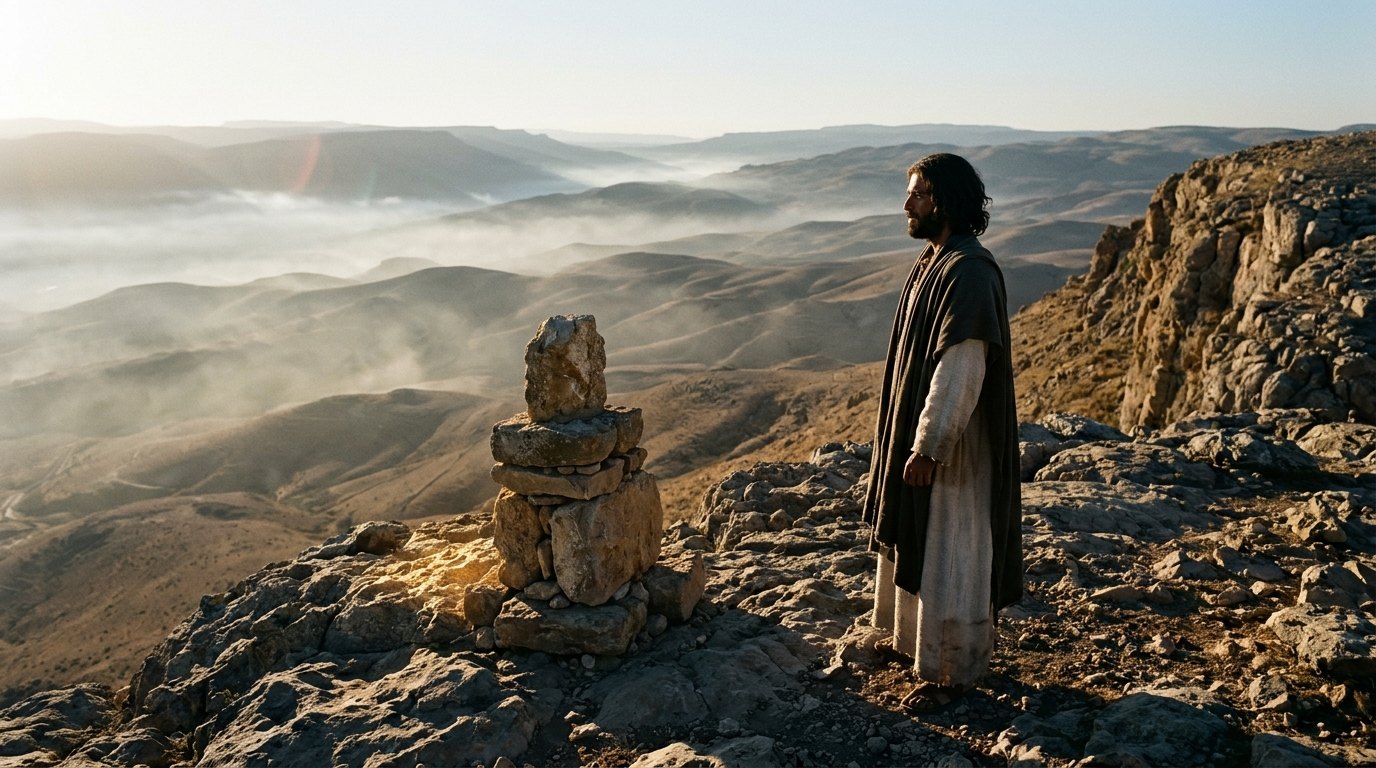
Your kingdom is an everlasting kingdom, and your dominion endures through all generations. The LORD is trustworthy in all he promises and faithful in all he does.
Psalms 145:13 (NIV)
It emphasizes the unending duration of God's dominion across all generations of history.
Psalm 145:13 anchors our hope in the truth that God's kingdom is an everlasting kingdom, and His dominion endures throughout all generations. Earthly dynasties collapse, dictators fall, and borders crumble, but the throne of God remains untouched by the passage of time. Long before creation was framed, God reigned in complete self-sufficiency; as Psalm 90:1–2 testifies, before the mountains were brought forth or the earth was formed, from everlasting to everlasting, He is God. Following the deliverance of Israel at the Red Sea, the redeemed community lifted their voices in Exodus 15:18 to sing that the Lord will reign forever and ever. His eternal sovereignty guarantees that His covenant promises cannot fail, because His power never wanes and His life never ends.
This unending rule is centered firmly in the heavenly sanctuary. Psalm 103:19 proclaims that the Lord has established His throne in the heavens, and His sovereignty rules over all without interruption. In Daniel 12:7, the holy oath sworn by Him who lives forever provides absolute assurance that every prophetic judgment and restoration will reach its appointed consummation. The New Testament magnifies this glorious reality through the exaltation of Jesus Christ. Daniel 7:14 prophesied that the Son of Man would receive an everlasting dominion and an indestructible kingdom, a vision fulfilled when the triumphant shout of Revelation 11:15 rings out: the kingdom of the world has become the kingdom of our Lord and of His Christ, and He shall reign forever and ever. As Paul writes in 1 Timothy 6:15–16, God is the blessed and only Sovereign, the King of kings and Lord of lords, who alone possesses immortality and dwells in unapproachable light.
| Passage | What it says |
|---|---|
| Psalms 145:13 | God's kingdom is an everlasting kingdom, and His dominion endures throughout every age. |
| Daniel 12:7 | The oath sworn by Him who lives forever guarantees the ultimate completion and victory of His prophetic purpose. |
| 1 Timothy 6:15-16 | God is described as the blessed and only Sovereign, the King of kings and Lord of lords. |
| Psalms 103:19 | The Lord has established His throne in heaven, and His sovereignty rules over all. |
| Exodus 15:18 | The Lord reigns as absolute King forever and ever throughout every generation. |
| Psalms 90:1-2 | Before mountains were brought forth, God is everlasting Lord from eternity past. |
| Daniel 7:14 | The Son of Man receives an everlasting dominion that shall not pass away. |
| Revelation 11:15 | Earthly kingdoms become Christ's kingdom, and He shall reign forever and ever. |
The Fitting Response
God's sovereignty commands humble worship, submission, and trust
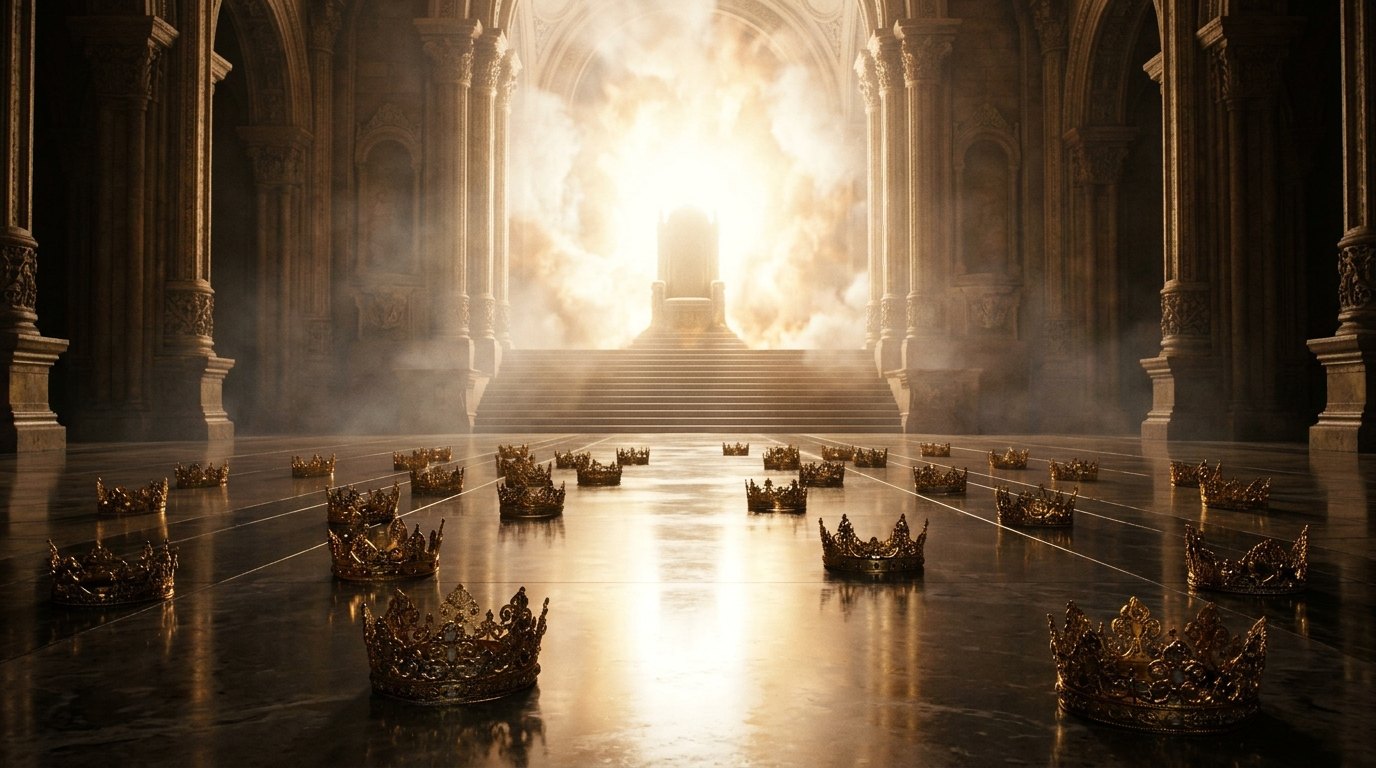
the twenty-four elders fall down before him who sits on the throne and worship him who lives for ever and ever. They lay their crowns before the throne and say:
Revelation 4:10 (NIV)
It captures the ultimate posture of all creatures, casting their crowns in adoration before the eternal King.
Revelation 4:10 portrays the only fitting creaturely posture before the sovereign God: the twenty-four elders fall down and cast their crowns before the throne in ceaseless worship. True knowledge of God’s absolute rule never leads to cold speculation or proud fatalism; it drives the heart to wonder, gratitude, and radical submission. In Revelation 4:11, the heavenly worshipers proclaim that the Lord is worthy to receive glory, honor, and power because He created all things, and by His will they existed and were created. King David modeled this spirit of humble praise in 1 Chronicles 29:11–12, exclaiming that greatness, power, glory, victory, and majesty belong to the Lord alone, who is exalted as head over all. Psalm 95:3–6 calls all people to come, bow down, and kneel before the Lord our Maker, the great King above all gods.
This reverent awe reshapes how believers live each day. In Romans 11:33–36, after tracing God's unfathomable purposes of redemption, Paul erupts in doxology: "For from Him and through Him and to Him are all things. To Him be glory forever." Because God controls tomorrow, James 4:13–15 warns believers against presumptuous planning, instructing them instead to declare, "If the Lord wills, we will live and do this or that." Furthermore, God's supreme authority provides unshakable comfort in affliction. In 1 Peter 5:6–7, Christians are commanded to humble themselves under the mighty hand of God, casting all anxieties on Him because He cares for them. Ultimately, every rebel will yield to this sovereignty, for Philippians 2:9–11 promises that at the name of Jesus every knee shall bow and every tongue confess that Jesus Christ is Lord, to the glory of God the Father.
| Passage | What it says |
|---|---|
| Revelation 4:10 | The twenty-four elders fall before the enthroned Lord, casting their crowns and worshiping Him who lives forever. |
| Revelation 4:11 | The Lord is worthy of glory and honor because He created all things according to His sovereign will. |
| Romans 11:33-36 | Paul offers doxology to the unsearchable depth of God's wisdom, through whom and to whom are all things. |
| James 4:13-15 | Believers are instructed to submit daily plans to the sovereign will of the Lord. |
| 1 Chronicles 29:11-12 | David praises God as head over all, possessing greatness, power, glory, and victory. |
| Psalms 95:3-6 | The Lord is a great King above gods, commanding worship and bowing down. |
| Philippians 2:9-11 | Every knee bows and tongue confesses Jesus Christ as Lord to God's glory. |
| 1 Peter 5:6-7 | Believers humble themselves under God's mighty hand, casting all anxieties on Him. |
Providence and Salvation
God directs all circumstances, human actions, and salvation toward His redemptive purpose
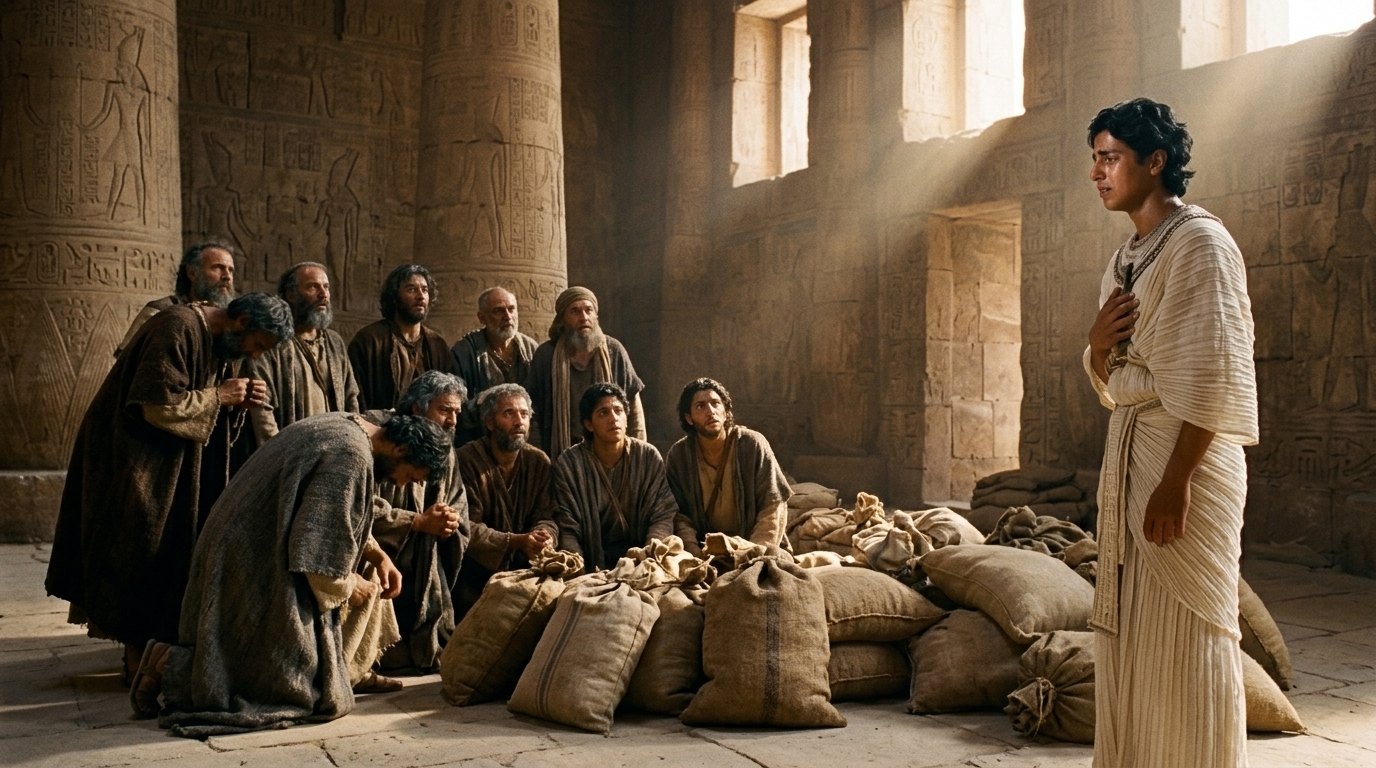
And we know that in all things God works for the good of those who love him, who have been called according to his purpose.
Romans 8:28 (NIV)
This verse reveals that God's absolute sovereignty actively works through all events for the ultimate good of His people.
In Romans 8:28, the Apostle Paul provides one of the most comforting assurances in all of Scripture: God works all things together for good to those who love Him and are called according to His purpose. This promise does not say every circumstance itself is pleasant, but that God's supreme authority actively governs every event, trial, and sorrow so that none escape His redemptive purpose.
This sovereign providence is visible across the entire biblical narrative. When Joseph stood before the very brothers who betrayed him, he declared in Genesis 50:20 that while they meant evil against him, God meant it for good to preserve many lives. Human beings make real plans and carry moral responsibility, yet Proverbs 16:9 reminds us that while a person plans his way, the Lord firmly directs his steps.
Nowhere is this divine sovereignty more critical than in salvation and the cross itself. In Romans 9:15-18, the Lord proclaims His supreme right to show mercy and compassion according to His holy will, proving that redemption rests ultimately on His grace rather than human striving. This sovereign design culminated at Calvary: as the early believers prayed in Acts 4:27-28, Herod, Pontius Pilate, the Gentiles, and Israel gathered against Jesus only to carry out what God's hand and counsel predetermined to occur. The greatest injustice in history became, under God's sovereign hand, the very means of the world's salvation.
| Passage | What it says |
|---|---|
| Genesis 50:20 | Human malice meant for evil is sovereignly directed by God to save lives. |
| Proverbs 16:9 | A man's heart plans his course, but the Lord sovereignly establishes his steps. |
| Romans 8:28 | God sovereignly works all things together for good for those called by Him. |
| Romans 9:15-18 | God shows sovereign mercy and compassion according to His supreme choice. |
| Acts 4:27-28 | The crucifixion occurred precisely as God's hand and plan predetermined to happen. |
Where in the Bible
| Book | Passages |
|---|---|
| Genesis | 2 · Genesis 1:1, Genesis 50:20 |
| Exodus | 1 · Exodus 15:18 |
| 1 Chronicles | 1 · 1 Chronicles 29:11-12 |
| Job | 1 · Job 42:2 |
| Psalms | 8 · Psalms 115:3, Psalms 135:6, Psalms 22:28, Psalms 33:10-11, Psalms 145:13, Psalms 103:19, Psalms 90:1-2, Psalms 95:3-6 |
| Proverbs | 2 · Proverbs 21:1, Proverbs 16:9 |
| Isaiah | 2 · Isaiah 46:9-10, Isaiah 45:7 |
| Jeremiah | 1 · Jeremiah 10:10 |
| Daniel | 7 · Daniel 4:34, Daniel 4:35, Daniel 4:32, Daniel 2:44, Daniel 2:21, Daniel 12:7, Daniel 7:14 |
| Acts | 2 · Acts 17:26, Acts 4:27-28 |
| Romans | 4 · Romans 13:1, Romans 11:33-36, Romans 8:28, Romans 9:15-18 |
| Ephesians | 1 · Ephesians 1:11 |
| Philippians | 1 · Philippians 2:9-11 |
| 1 Timothy | 1 · 1 Timothy 6:15-16 |
| James | 1 · James 4:13-15 |
| 1 Peter | 1 · 1 Peter 5:6-7 |
| Revelation | 3 · Revelation 11:15, Revelation 4:10, Revelation 4:11 |
The story in order
- God creates all things (c. 4000 BC) · Genesis 1:1 · God's authoritative command establishes the universe.
- God establishes covenant with Abraham (c. 2000 BC) · Genesis 12:1-3 · God's sovereign plan for redemption begins.
- God delivers Israel from Egypt (c. 1450 BC) · Exodus 15:18 · The Lord reigns as King forever.
- David praises God's eternal reign (c. 1000 BC) · 1 Chronicles 29:11-12 · God possesses greatness, power, and glory.
- God directs the king's heart (c. 950 BC) · Proverbs 21:1 · Human rulers are subject to God's direction.
- God's counsel stands (c. 700 BC) · Isaiah 46:9-10 · God declares the end from the beginning.
- God rules in kingdoms of men (c. 600 BC) · Daniel 4:32 · God gives authority to whomever He wills.
- God establishes an indestructible kingdom (c. 600 BC) · Daniel 2:44 · God's kingdom consumes all earthly realms.
- God determines times and boundaries (AD 49) · Acts 17:26 · God determines the exact times and places of nations.
- God works all things for good (AD 60) · Romans 8:28 · God sovereignly directs circumstances for believers.
- Earthly kingdoms become Christ's (c. AD 95) · Revelation 11:15 · Christ shall reign forever and ever.
God's Sovereign Will and Human Plans
| Human Plan | God's Establishment | Passage |
|---|---|---|
| A man's heart plans his course | The Lord establishes his steps | Proverbs 16:9 |
| Believers' plans for the future | Submission to the Lord's will | James 4:13-15 |
God's Sovereignty in Salvation
| Human Action | God's Sovereign Purpose | Passage |
|---|---|---|
| Joseph's brothers meant evil | God meant it for good to save lives | Genesis 50:20 |
| Pilate and Herod acted | God's hand and plan predetermined | Acts 4:27-28 |
| God shows mercy | According to His supreme choice | Romans 9:15-18 |
The Progression of God's Kingdom
| Earthly Kingdoms | God's Eternal Kingdom | Passage |
|---|---|---|
| Nebuchadnezzar's dominion | Everlasting dominion | Daniel 4:34 |
| Earthly rulers and nations | God rules over all | Psalms 22:28 |
| Frustrated national schemes | God's eternal counsel stands | Psalms 33:10-11 |
| Earthly kingdoms | Christ's kingdom, reigning forever | Revelation 11:15 |
Key words
- Sovereignty
- God's absolute, supreme authority and power to govern all creation and accomplish His will. · Daniel 4:35
- Dominion
- God's supreme rule and authority over all things, extending through every generation. · Daniel 4:34
- Counsel
- God's eternal plan and purpose, which He declares from the beginning and ensures will stand. · Isaiah 46:10
- Kingdom
- God's reign and rule, both in heaven and on earth, ultimately established in Christ. · Daniel 2:44
- Providence
- God's direction of all circumstances, human actions, and salvation toward His redemptive purpose. · Genesis 50:20
Resting in God's absolute sovereignty frees the believer from anxiety and pride, grounding our hope in an unshakable kingdom. Because the living God reigns over every circumstance and ruler, we are summoned to bow before His throne in reverent trust, humble worship, and joyful obedience.
39 passages, each cited once.
How the major Christian traditions read this
All Christian traditions confess that God is the supreme King and Creator of the universe, ruling all things with almighty power according to His perfect will (Daniel 4:35; Psalm 103:19).
Catholic
We confess that God's almighty power governs all creation according to His divine providence, as Psalm 115:3 proclaims. God is the sovereign master of His plan, yet in His infinite wisdom He created humans as free, rational creatures capable of voluntary cooperation. His grace initiates, prepares, and assists human choice without destroying genuine creaturely free will (Philippians 2:12-13; Sirach 15:14). God permits moral evil through the abuse of freedom, yet sovereignly draws good out of every evil (Romans 8:28).
Scripture: Psalms 115:3, Philippians 2:12-13, Romans 8:28, Sirach 15:14
Orthodox
We revere God as the Pantokrator—the Almighty Ruler of heaven and earth whose dominion endures across all ages (Psalm 145:13). God's sovereignty is expressed not through rigid determinism, but through holy love and relational providence. In the divine economy, God genuinely respects human self-determination, calling humanity into free synergy (cooperation) with His uncreated energies (1 Corinthians 3:9; 2 Peter 1:4). He desires all people to be saved (1 Timothy 2:4), ordaining life and goodness while never being the author of sin or death.
Scripture: Psalms 145:13, 1 Corinthians 3:9, 1 Timothy 2:4, 2 Peter 1:4
Lutheran
We teach that God exercises total, almighty sovereignty over the cosmos, preserving creation and working all things for His glory (Ephesians 1:11). In spiritual matters, fallen human will possesses no freedom toward God and is entirely in bondage to sin until delivered by grace alone (Romans 8:7-8). God's sovereignty in salvation is purely gracious: He elects believers in Christ before the foundation of the world (Ephesians 1:4-5). Yet we firmly reject that God predestines anyone to damnation, for Christ died genuinely for all (1 Timothy 2:4-6).
Scripture: Ephesians 1:11, Romans 8:7-8, Ephesians 1:4-5, 1 Timothy 2:4-6
Reformed & Presbyterian
We confess that God has most sovereign dominion over all creatures, working all things after the counsel of His own immutable will (Ephesians 1:11; Daniel 4:35). From eternity, God freely and unchangeably ordained whatsoever comes to pass, without being the author of sin or doing violence to creaturely secondary causes (Proverbs 16:33; Acts 4:27-28). In redemption, His sovereignty is absolute and unconditional: He extends unmerited mercy to His elect and passes by others according to His sovereign pleasure and glorious justice (Romans 9:15-18).
Scripture: Ephesians 1:11, Daniel 4:35, Acts 4:27-28, Romans 9:15-18, Proverbs 16:33
Anglican & Episcopal
We uphold God's sovereign rule as Maker and Governor of all things, whose eternal purpose guides human history and the church (Ephesians 1:11). Article XVII of our historic Articles confesses predestination unto life as the everlasting purpose of God, whereby He freely chooses in Christ those whom He delivers from curse and damnation. We balance God's comprehensive sovereignty with our call to active obedience and repentance, trusting His revealed promises in Holy Scripture and walking faithfully in good works (Romans 8:29-30; Colossians 1:16-17).
Scripture: Ephesians 1:11, Romans 8:29-30, Colossians 1:16-17
Baptist
We believe God is the supreme Ruler of the universe, having absolute authority over all created things (Psalm 103:19; Daniel 4:34-35). Historic Baptist confessions affirm that God ordains all events by His holy providence while holding humans genuinely accountable for their moral choices (Romans 9:19-21; Acts 2:23). While Reformed Baptists emphasise God's unconditional election and particular decree in salvation, General Baptists understand God's sovereign decree as encompassing genuine human response to the gospel call (John 3:16). All Baptists rejoice that God's purpose cannot be thwarted.
Scripture: Psalms 103:19, Daniel 4:34-35, Romans 9:19-21, Acts 2:23, John 3:16
Methodist & Wesleyan
We proclaim God's supreme sovereignty, yet we believe His sovereignty is defined above all by His holy love (1 John 4:8). God's universal reign does not mean He determines every human action; rather, in His sovereignty He chose to grant genuine moral agency to humanity. Through prevenient grace, God sovereignly frees fallen human wills to accept or reject His gracious offer of salvation in Christ (John 1:9; Titus 2:11). God desires the salvation of every person and foreknows, but does not unconditionally predetermine, our response (Romans 8:29).
Scripture: 1 John 4:8, John 1:9, Titus 2:11, Romans 8:29
Pentecostal & Charismatic
We rejoice in the active, dynamic sovereignty of the living God who exercises supernatural authority over nature, demonic powers, sickness, and human history (Matthew 28:18; Acts 10:38). God's sovereign Spirit moves powerfully in the church today, dispensing gifts as He wills (1 Corinthians 12:11). While largely sharing an Arminian-Wesleyan view that God's sovereignty invites willing human response and persistent prayer (Luke 18:1; James 5:16), we affirm that God intervenes directly in human affairs to accomplish His glorious kingdom purposes.
Scripture: Matthew 28:18, Acts 10:38, 1 Corinthians 12:11, James 5:16, Luke 18:1
Non-denominational & Evangelical
We look directly to Scripture to affirm that God is the almighty King over heaven and earth, working out His divine plan without fail (Isaiah 46:9-10; Job 42:2). Within evangelical fellowship, some of us understand sovereignty through a Calvinistic lens where God unconditionally ordains all things including salvation, while others see sovereignty through an Arminian lens where God permits human choice. Across both perspectives, we stand united in the truth that God reigns supreme, answers to no one, and commands our full trust and obedience (Proverbs 3:5-6).
Scripture: Isaiah 46:9-10, Job 42:2, Proverbs 3:5-6
Where they differ
Divine decree and human freedom
- Catholic
- God's providence cooperates with real, created human free will.
- Orthodox
- God's sovereignty works synergistically with authentic human self-determination.
- Lutheran
- God governs all things, while fallen will cannot choose God.
- Reformed & Presbyterian
- God immutably ordains all things that come to pass.
- Anglican & Episcopal
- God sovereignly directs history while calling humans to obedient response.
- Baptist
- God sovereignly rules all, with views divided between compatibilism and free will.
- Methodist & Wesleyan
- God sovereignly self-limits to allow humans genuine moral freedom.
- Pentecostal & Charismatic
- God actively intervenes while leaving salvation as a genuine human choice.
- Non-denominational & Evangelical
- Evangelicals embrace either divine determinism or sovereignly permitted free choice.
Scripture: Proverbs 16:9, Ephesians 1:11, Acts 2:23
Sovereignty in election to salvation
- Catholic
- God's election includes grace and foreseen human cooperation.
- Orthodox
- Election reflects God's foreknowledge of free synergy with His grace.
- Lutheran
- Unconditional election to salvation alone; no decree of reprobation.
- Reformed & Presbyterian
- Unconditional election of some and sovereign reprobation of others.
- Anglican & Episcopal
- Predestination unto life in Christ, leaving reprobation largely unstated.
- Baptist
- Reformed Baptists hold unconditional election; General Baptists hold conditional election.
- Methodist & Wesleyan
- Conditional election grounded in God's foreknowledge of faith.
- Pentecostal & Charismatic
- Salvation is offered to all and received by free faith.
- Non-denominational & Evangelical
- Views vary between unconditional selection and election based on foreknowledge.
Scripture: Romans 8:29-30, Romans 9:15-18, 1 Timothy 2:4
Your pastor can tell you where your church stands.
Scripture cited
- Revelation 4:10
- Jeremiah 10:10
- Daniel 2:44
- Daniel 4:32
- Romans 9:15-23
- Ephesians 1:11
- Proverbs 16:9