What is the story of Daniel in the lions' den about?
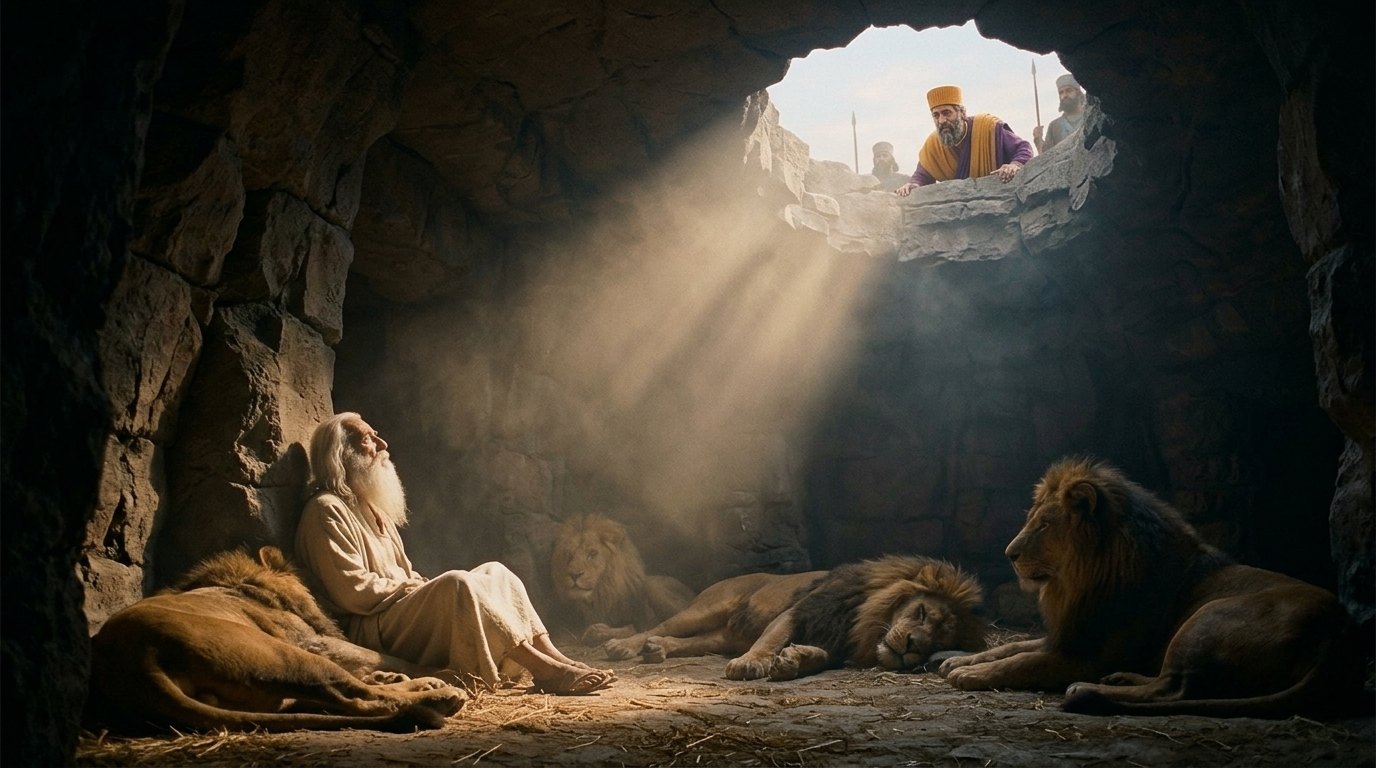
Daniel 6:16-23
16 So the king gave the order, and they brought Daniel and threw him into the lions’ den. The king said to Daniel, “May your God, whom you serve continually, rescue you!”
17 A stone was brought and placed over the mouth of the den, and the king sealed it with his own signet ring and with the rings of his nobles, so that Daniel’s situation might not be changed.
18 Then the king returned to his palace and spent the night without eating and without any entertainment being brought to him. And he could not sleep.
19 At the first light of dawn, the king got up and hurried to the lions’ den.
20 When he came near the den, he called to Daniel in an anguished voice, “Daniel, servant of the living God, has your God, whom you serve continually, been able to rescue you from the lions?”
21 Daniel answered, “May the king live forever!
22 My God sent his angel, and he shut the mouths of the lions. They have not hurt me, because I was found innocent in his sight. Nor have I ever done any wrong before you, Your Majesty.”
23 The king was overjoyed and gave orders to lift Daniel out of the den. And when Daniel was lifted from the den, no wound was found on him, because he had trusted in his God.
New International Version (NIV)
The answer
Daniel in the lions' den is the story of God publicly vindicating a man who refused to let a pagan law silence his prayers. Daniel had served faithfully under two kingdoms (Darius made him one of three top administrators over the empire, Daniel 6:1-3), and his rivals, jealous of him, tricked the king into signing a decree that for thirty days no one could pray to any god or man except the king. Daniel's response is the hinge of the whole story: he kept on praying three times a day to his God, just as he had done before (Daniel 6:10). They caught him, and the king — who realised he had been used — had to throw Daniel into the den anyway, because a Persian king's written law could not be changed. Daniel 6:16 shows Darius doing it with a confession on his lips: "Your God whom you serve continually, he will deliver you."
The night of the trial is told with three small details that carry the weight: a stone rolled over the mouth, the king sealing it with his own signet and his lords' signet so no plot could tamper with Daniel, and Darius passing the night fasting while "his sleep fled from him" (Daniel 6:17-18). At dawn he hurries to the den and asks, "Daniel, servant of the living God, is your God, whom you serve continually, able to deliver you from the lions?" (Daniel 6:20). Daniel's reply settles the question in the simplest terms: "My God has sent his angel, and has shut the lions' mouths" (Daniel 6:22). The reason matters — "because innocence was found in me before him; and also before you, O king, I have done no harm" — and Daniel 6:23 closes the story with the verdict: "no kind of harm was found on him, because he had trusted in his God."
What the story is about
- Faithfulness under pressure. Daniel's test was not whether he would survive but whether he would keep praying. He did, and God honoured it.
- God's faithfulness to deliver. The same God who sent an angel to walk in the furnace with Shadrach, Meshach and Abed-nego (Daniel 3:28) sent an angel to shut the lions' mouths. Angels are His ministering spirits sent to serve those who inherit salvation (Hebrews 1:14).
- God's eyes on the innocent. Daniel 6:22 names innocence and Daniel 6:23 names trust — the two halves of why Daniel came out whole. "The salvation of the righteous is of the LORD: he is their strength in the time of trouble" (Psalms 37:39-40).
- Human plots overruled. The king's signet sealed the den to keep schemers out; God used it to keep the lions in. What looked like a death sentence became a public testimony before the whole empire, the same way the furnace in Daniel 3 became Nebuchadnezzar's confession.
Carrying it
"Because he had set his love upon me, therefore will I deliver him" (Psalms 91:14) is the line to hold next to Daniel 6:23 — God's deliverance and His servants' trust belong to the same sentence.
Answered from Scripture · reviewed November 7, 2026
The account of Daniel in the lions' den reveals God openly vindicating a steadfast servant whose devotion to prayer could not be compromised by imperial decree. Rather than a tale of mere survival, it demonstrates God's absolute sovereignty over earthly kings, corrupt plots, and natural predators. Through unbroken trust and divine deliverance, Daniel's trial became an enduring testimony to the living God before an entire pagan empire.
Integrity and Opposition
Righteous Service Provokes the Jealousy of Wicked Men
At this, the administrators and the satraps tried to find grounds for charges against Daniel in his conduct of government affairs, but they were unable to do so. They could find no corruption in him, because he was trustworthy and neither corrupt nor negligent.
Daniel 6:4 (NIV)
It shows that Daniel's unblemished character forced his enemies to target his devotion to God as their only leverage.
When a believer lives with untarnished integrity in public service, the hostility of the world often intensifies rather than abates. As Daniel 6:4 establishes, Daniel's political adversaries searched rigorously for evidence of corruption, negligence, or administrative failure, yet they could find no ground of accusation against him. In establishing the administrative structure of the newly conquered Medo-Persian realm, Darius set one hundred twenty satraps throughout the empire, as recorded in Daniel 6:1. Over these satraps, the king placed three chief administrators—among whom Daniel was preeminent—specifically to safeguard the imperial treasury and ensure that the king suffered no loss (Daniel 6:2). Daniel distinguished himself above all his peers because an extraordinary spirit was in him, prompting the monarch to plan Daniel's promotion over the entire empire (Daniel 6:3).
This rapid ascent provoked deep jealousy among the court officials, who began scrutinizing Daniel's official conduct for any pretext to ruin him. When their exhaustive investigation yielded nothing immoral or negligent, the conspirators recognized that Daniel's uncompromising devotion was the only handle they could exploit. As they conceded in Daniel 6:5, their only possibility of an indictment lay in manufacturing a conflict between imperial policy and the law of his God. The dynamic mirrors the lament of David in 2 Samuel 3:39, where an earthly ruler acknowledges his profound vulnerability before ruthless, scheming men within his own court. The narrative thereby unmasks the nature of worldly opposition: when a righteous servant walks blamelessly before God, wicked men must make obedience to God itself a legal crime.
| Passage | What it says |
|---|---|
| Daniel 6:1 | Darius sets one hundred twenty satraps over the kingdom to manage imperial affairs. |
| Daniel 6:2 | Daniel is appointed as one of three chief administrators over the satraps to prevent loss. |
| Daniel 6:3 | Daniel distinguishes himself through an extraordinary spirit, prompting the king to consider promoting him over all. |
| Daniel 6:4 | The administrators seek ground for complaint against Daniel but find no corruption or negligence in him. |
| Daniel 6:5 | The officials conclude they will find no charge against him unless it concerns the law of his God. |
| 2 Samuel 3:39 | A king acknowledges his weakness before powerful, ruthless schemers operating within his royal court. |
Unshakable Devotion
Daniel Refuses to Silence His Daily Communion with God

Now when Daniel learned that the decree had been published, he went home to his upstairs room where the windows opened toward Jerusalem. Three times a day he got down on his knees and prayed, giving thanks to his God, just as he had done before.
Daniel 6:10 (NIV)
It highlights Daniel's immediate return to prayer in the face of death, continuing his lifelong spiritual rhythm unchanged.
Faced with imperial coercion, true devotion to the Lord does not waver, compromise, or hide in fear. In the defining moment of the crisis, Daniel 6:10 reveals that when Daniel learned the decree had been signed into law, he went to his house and prayed three times a day just as he had done previously. The conspirators engineered their trap by assembling before King Darius and appealing to his vanity, as recounted in Daniel 6:6. They urged the monarch to enact a thirty-day injunction forbidding any citizen from petitioning any deity or human being except Darius himself, establishing execution in the lions' den as the punishment (Daniel 6:7).
To ensure their snare could not be dismantled, the officials demanded that the prohibition be set down in writing according to the irrevocable law of the Medes and Persians (Daniel 6:8). Flattered and unwitting, King Darius signed the document into binding imperial law (Daniel 6:9). Daniel’s response was immediate and quiet. He did not stage a political revolt, nor did he close his windows to pray in secret. With his upper chambers open toward Jerusalem, Daniel knelt, prayed, and gave thanks before his God, refusing to let an earthly decree interrupt his lifelong covenant communion. His predictable obedience walked him straight into the plotters' sight, as Daniel 6:11 notes that the men gathered together and found him openly praying and making supplication before his God.
| Passage | What it says |
|---|---|
| Daniel 6:6 | The administrators and satraps assemble by agreement to approach the king with a cunning proposal. |
| Daniel 6:7 | They urge a thirty-day decree forbidding petitions to any god or man except Darius, on penalty of the den. |
| Daniel 6:8 | They demand an unchangeable written decree in accordance with the law of the Medes and Persians. |
| Daniel 6:9 | King Darius signs the written injunction into immutable imperial law. |
| Daniel 6:10 | Daniel continues praying three times daily toward Jerusalem, giving thanks as he had always done. |
| Daniel 6:11 | The conspirators gather and find Daniel petitioning and pleading before his God. |
Imperial Constraint
Human Decrees Condemn but Acknowledge God's Power
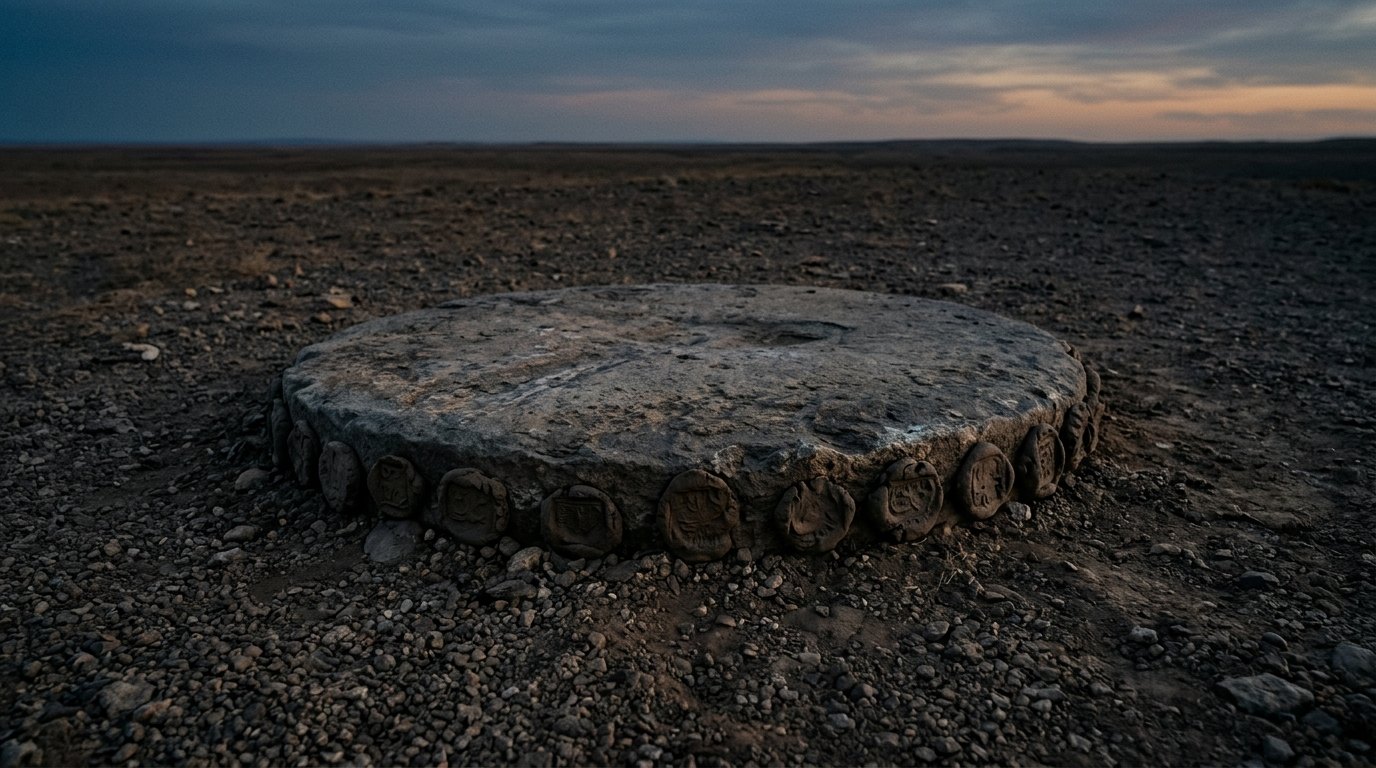
So the king gave the order, and they brought Daniel and threw him into the lions’ den. The king said to Daniel, “May your God, whom you serve continually, rescue you!”
Daniel 6:16 (NIV)
It captures the pagan emperor's helpless submission to his own law alongside his spoken hope in God's saving power.
Human legal systems can pronounce condemnation, yet earthly rulers remain utterly powerless before both their own hubris and God’s sovereign purposes. In Daniel 6:16, as the execution is carried out, Darius is forced to acknowledge the limits of his imperial authority, declaring to Daniel, "May your God, whom you continually serve, Himself rescue you." The conspirators had seized upon their victory, confronting the king with his signed injunction in Daniel 6:12. They quickly pressed their charge in Daniel 6:13, framing Daniel not as a valued statesman, but merely as one of the exiles from Judah who held contempt for both the king and the royal statute.
Upon hearing the accusation, Darius was overcome with distress and labored diligently until sunset to find a legal mechanism to deliver his prime minister (Daniel 6:14). His efforts failed because the conspirators reminded him of the unyielding Medo-Persian legal code: no statute or injunction enacted by the crown could ever be repealed (Daniel 6:15). Trapped by his own decree, Darius had Daniel cast into the cavernous pit of predatory beasts (Daniel 6:16). A heavy stone was brought and placed over the mouth of the den, sealed with the king's own signet ring and those of his nobles so that nothing regarding Daniel's sentence could be altered (Daniel 6:17). While Daniel remained enclosed in the pit, the king spent a sleepless night in his palace, fasting and rejecting all entertainment in bitter grief (Daniel 6:18).
| Passage | What it says |
|---|---|
| Daniel 6:12 | The men confront the king regarding the decree Daniel has knowingly violated. |
| Daniel 6:13 | They accuse Daniel, an exile from Judah, of disregarding both the king and the signed decree. |
| Daniel 6:14 | The king is deeply distressed and labors until sunset to rescue Daniel from the law's penalty. |
| Daniel 6:15 | The conspirators remind the king that no royal decree or statute can be revoked. |
| Daniel 6:16 | Daniel is cast into the lions' den as the king confesses Daniel's God will deliver him. |
| Daniel 6:17 | A stone seals the den with royal signets to ensure nothing can alter Daniel's situation. |
| Daniel 6:18 | Darius spends the night fasting without sleep or entertainment in grief over Daniel. |
Angelic Deliverance
God Sends His Angel to Shut the Lions' Mouths

My God sent his angel, and he shut the mouths of the lions. They have not hurt me, because I was found innocent in his sight. Nor have I ever done any wrong before you, Your Majesty.”
Daniel 6:22 (NIV)
It explains that divine intervention silenced the predators because of Daniel's moral innocence before God and king.
The deliverance of Daniel demonstrates that God exercises absolute dominion over the natural creation to protect His servants. At dawn, Daniel called out from the darkness of the pit, declaring in Daniel 6:22 that "My God sent His angel and shut the lions' mouths, and they have not harmed me." The drama culminated at daybreak when the distraught king rushed to the pit, as recorded in Daniel 6:19. Standing at the opening, Darius called out with an anguished voice, asking whether the living God, whom Daniel served continually, had been able to rescue him from the lions (Daniel 6:20).
Daniel's clear voice rang out in respectful greeting, confirming his survival and honoring the earthly monarch (Daniel 6:21). Daniel explained that his preservation was not random chance, but divine intervention: the Lord's angel had muzzled the carnivores because Daniel was found blameless before God and had committed no treason against the throne (Daniel 6:22). Overjoyed, the king ordered Daniel lifted from the pit, and upon inspection, not a single scratch was found upon his body, because he had placed his full trust in his God (Daniel 6:23). This miraculous salvation echoes the deliverance of Shadrach, Meshach, and Abednego in Daniel 3:28, where God sent His angel to rescue men who yielded their bodies rather than serve an idol. As Hebrews 11:33 records, Daniel stands among the great cloud of witnesses who through faith conquered kingdoms and stopped the mouths of lions.
| Passage | What it says |
|---|---|
| Daniel 6:19 | The king rises at daybreak and rushes anxiously to the lions' den. |
| Daniel 6:20 | Darius calls out in anguish, asking if the living God was able to rescue Daniel. |
| Daniel 6:21 | Daniel answers the king from within the pit with greetings of honor. |
| Daniel 6:22 | Daniel declares that God's angel shut the lions' mouths because innocence was found in him. |
| Daniel 6:23 | Daniel is lifted unharmed from the den because he trusted entirely in his God. |
| Daniel 3:28 | Nebuchadnezzar praises God for sending His angel to deliver faithful servants who yielded their bodies. |
| Hebrews 11:33 | The writer recalls those who through faith stopped the mouths of lions. |
Divine Sovereignty
Righteous Vindications Yield Praise Across the Earth
“I issue a decree that in every part of my kingdom people must fear and reverence the God of Daniel. “For he is the living God and he endures forever; his kingdom will not be destroyed, his dominion will never end.
Daniel 6:26 (NIV)
It records the pagan ruler's worldwide decree declaring Daniel's God as the enduring, living sovereign.
The public climax of Daniel's trial comes when King Darius decrees reverence for the living God throughout his global empire, stating in Daniel 6:26 that His kingdom shall never be destroyed, and His dominion shall be to the end. The sovereign God who shut the beasts' mouths is declared not as a localized tribal deity, but as the enduring King whose rule transcends every human dynasty. Before this proclamation went out, strict divine retribution fell on the conspirators; in Daniel 6:24, the malicious accusers suffered the exact fate they engineered for the righteous, proving that wickedness cannot ultimately triumph over God's people.
Following their judgment, Darius addressed all peoples, nations, and languages across the earth in Daniel 6:25. His royal testimony continues in Daniel 6:27, extolling the God who delivers, works signs in heaven and earth, and rescued Daniel from the power of the predators. Rather than diminishing in exile, Daniel flourished under divine favor, as Daniel 6:28 notes that Daniel prospered during the reign of Darius and the reign of Cyrus the Persian.
This miraculous vindication harmonizes with the broader witness of Scripture concerning the trials of the godly. Psalm 37:39 reminds believers that the salvation of the righteous is from the Lord, their stronghold in times of trouble. God's tender commitment in Psalm 91:14 promises rescue and honor to those who hold fast in love to Him and know His name. Eliphaz observed in Job 5:19 that God delivers from repeated calamities so that no harm touches the faithful, while Isaiah 43:2 offers the enduring pledge that when God's servants pass through waters and walk through fire, the flame shall not consume them.
| Passage | What it says |
|---|---|
| Daniel 6:24 | The malicious accusers, along with their families, are cast into the den and immediately devoured. |
| Daniel 6:25 | King Darius writes to every people, nation, and language throughout the earth. |
| Daniel 6:26 | Darius decrees reverence for Daniel's God, whose kingdom and dominion endure without end. |
| Daniel 6:27 | The decree proclaims that God rescues, works signs, and delivered Daniel from the lions' power. |
| Daniel 6:28 | Daniel continues to prosper during the reigns of Darius and Cyrus the Persian. |
| Psalms 37:39 | Scripture declares that the salvation of the righteous comes from the Lord during distress. |
| Psalms 91:14 | The Lord promises deliverance to the one who sets love upon Him and knows His name. |
| Job 5:19 | The righteous are promised rescue in repeated troubles so that evil does not touch them. |
| Isaiah 43:2 | God promises His presence through deep waters and fierce trials so that flames cannot consume. |
Where in the Bible
| Book | Passages |
|---|---|
| 2 Samuel | 1 · 2 Samuel 3:39 |
| Job | 1 · Job 5:19 |
| Psalms | 2 · Psalms 37:39, Psalms 91:14 |
| Isaiah | 1 · Isaiah 43:2 |
| Daniel | 29 · Daniel 6:1, Daniel 6:2, Daniel 6:3, Daniel 6:4, Daniel 6:5, Daniel 6:6, Daniel 6:7, Daniel 6:8, Daniel 6:9, Daniel 6:10, Daniel 6:11, Daniel 6:12, Daniel 6:13, Daniel 6:14, Daniel 6:15, Daniel 6:16, Daniel 6:17, Daniel 6:18, Daniel 6:19, Daniel 6:20, Daniel 6:21, Daniel 6:22, Daniel 6:23, Daniel 3:28, Daniel 6:24, Daniel 6:25, Daniel 6:26, Daniel 6:27, Daniel 6:28 |
| Hebrews | 1 · Hebrews 11:33 |
The story in order
- Darius establishes kingdom administration (c. 538 BC) · Daniel 6:1 · Sets the stage for Daniel's position and the ensuing plot.
- Daniel distinguished among administrators (c. 538 BC) · Daniel 6:3 · Highlights Daniel's integrity and the jealousy he provoked.
- Conspirators plot against Daniel (c. 538 BC) · Daniel 6:6 · Shows the wicked scheme to ensnare Daniel.
- Unchangeable decree against prayer (c. 538 BC) · Daniel 6:9 · Illustrates human laws attempting to usurp divine authority.
- Daniel prays despite the decree (c. 538 BC) · Daniel 6:10 · Demonstrates Daniel's unwavering devotion to God.
- Daniel cast into the lions' den (c. 538 BC) · Daniel 6:16 · The consequence of Daniel's faithfulness to God.
- God's angel shuts the lions' mouths (c. 538 BC) · Daniel 6:22 · Divine intervention to protect the faithful.
- Daniel delivered unharmed (c. 538 BC) · Daniel 6:23 · Proof of God's power and Daniel's trust.
- Accusers devoured by lions (c. 538 BC) · Daniel 6:24 · God's judgment on the wicked plotters.
- Darius proclaims God's sovereignty (c. 538 BC) · Daniel 6:26 · Pagan king acknowledges the true God's eternal rule.
- Daniel prospers under Darius and Cyrus (c. 538-530 BC) · Daniel 6:28 · Daniel's continued service and God's blessing.
Key words
- Sovereignty (מַלְכוּת (malkut))
- Supreme power or authority; God's absolute rule over all creation. · Daniel 6:26
- Integrity (נִקְיוֹן (niqyon))
- The quality of being honest and having strong moral principles; incorruptibility. · Daniel 6:4
- Deliverance (פְּלֵיטָה (peliṭah))
- The action of being rescued or set free from harm or danger. · Psalms 37:39
- Trust (בָּטַח (baṭaḥ))
- Firm belief in the reliability, truth, ability, or strength of someone or something. · Daniel 6:23
- Decree (דָּת (dat))
- An official order issued by a legal authority. · Daniel 6:9
Daniel's deliverance demonstrates that true security rests not in imperial favor or human compromise, but in unyielding reliance on the living God. When trials threaten and the world demands silence, God preserves those who anchor their hearts in His righteousness and call on Him without fear.
35 passages, each cited once.
Scripture cited
- Daniel 6:16-23
- Psalms 37:39-40
- Daniel 3:28