What is the story of Jonah and the whale about?

Jonah 2:1-10
1 From inside the fish Jonah prayed to the LORD his God.
2 He said: “In my distress I called to the LORD, and he answered me. From deep in the realm of the dead I called for help, and you listened to my cry.
3 You hurled me into the depths, into the very heart of the seas, and the currents swirled about me; all your waves and breakers swept over me.
4 I said, ‘I have been banished from your sight; yet I will look again toward your holy temple.’
5 The engulfing waters threatened me, the deep surrounded me; seaweed was wrapped around my head.
6 To the roots of the mountains I sank down; the earth beneath barred me in forever. But you, LORD my God, brought my life up from the pit.
7 “When my life was ebbing away, I remembered you, LORD, and my prayer rose to you, to your holy temple.
8 “Those who cling to worthless idols turn away from God’s love for them.
9 But I, with shouts of grateful praise, will sacrifice to you. What I have vowed I will make good. I will say, ‘Salvation comes from the LORD.’ ”
10 And the LORDcommanded the fish, and it vomited Jonah onto dry land.
New International Version (NIV)
The answer
Jonah's story is about a prophet who runs from God, hits bottom inside a great fish, and is then sent to preach mercy to a foreign city — only to be angry that God forgives them. The whole book unfolds in four short chapters and reads like a God‑pursued runaway.
The plot
- The call and the flight. God tells Jonah, "go to Nineveh, that great city, and preach against it" (Jonah 1:2). Nineveh was the capital of Israel's enemy Assyria. Instead, "Jonah rose up to flee to Tarshish from the presence of Yahweh" and boarded a ship going the opposite direction (Jonah 1:3).
- The storm and the sea. God "sent out a great wind on the sea" (Jonah 1:4). The pagan sailors, fearing death, cast lots — and the lot falls on the sleeping Hebrew prophet (Jonah 1:5-7). Jonah tells them, "Take me up, and throw me into the sea. Then the sea will be calm for you" (Jonah 1:12). They throw him overboard, and immediately the sea goes still (Jonah 1:15).
- The fish and the prayer. "Yahweh prepared a huge fish to swallow up Jonah, and Jonah was in the belly of the fish three days and three nights" (Jonah 1:17). From inside, Jonah prays: "Out of the belly of Sheol I cried. You heard my voice" (Jonah 2:2). The fish vomits him onto dry land (Jonah 2:10).
- Nineveh repents. Jonah finally obeys. He preaches one line — "In forty days, Nineveh will be overthrown!" — and the entire city, from the king down, fasts, puts on sackcloth, and turns from violence (Jonah 3:4-9). "God saw their works, that they turned from their evil way. God relented" (Jonah 3:10).
- The angry prophet. Jonah is furious (Jonah 4:1-2). He admits the real reason he ran: "I knew that you are a gracious God and merciful, slow to anger" — he did not want them saved. God teaches him with a vine, a worm, and a scorching wind, and closes the book with a question: "Shouldn't I be concerned for Nineveh… in which are more than one hundred twenty thousand persons who can't discern between their right hand and their left hand?" (Jonah 4:11).
What it is about
- You cannot outrun God. Jonah fled to the farthest port he could reach, and still ended up exactly where God wanted him — only after three days in the dark.
- Affliction drives people back to prayer. From the belly of the fish Jonah says, "When my soul fainted within me, I remembered Yahweh" (Jonah 2:7). The trouble was the cure, not the punishment (Psalm 130:1; Psalms 50:15).
- God's mercy reaches Israel's enemies. The book's surprise ending is that the Assyrians repent and the Hebrew prophet resents it. The last word in the book is God's compassion for a non‑Israelite city.
- The heart of the prophet is exposed. Jonah loved his comfort and his tribe more than God's character. Israel was supposed to take God's mercy to the nations; instead, the pagan sailors and the pagan Ninevites do exactly that, and the called prophet is asleep or sulking.
A note on the "whale"
The text says "great fish" (Hebrew dag gadol, Jonah 1:17), not specifically a whale. Older English translations like the KJV render it "whale," and that is what the popular name stuck with. The point of the verse is that an ordinary sea creature, prepared by God, swallowed and preserved a man alive for three days — a miracle of preservation, not a zoological claim.
How Jesus read it
Jesus himself tied the story to His own death and resurrection: "For as Jonah was three days and three nights in the belly of the huge fish, so will the Son of Man be three days and three nights in the heart of the earth" (Matthew 12:40). Jonah's descent into the fish and rising onto dry land is, in Christ's mouth, a sign of His burial and resurrection.
Answered from Scripture · reviewed November 7, 2026
The story of Jonah is far more than a seafaring tale about a great fish; it is a profound historical account of a runaway prophet confronted by the boundary-breaking mercy of God. Through rebellion, judgment, repentance, and resentful obedience, the book exposes the human heart's resistance to grace and displays the Lord's relentless pursuit of both wayward servants and pagan nations.
The Flight
A Prophet Flees from the Divine Commission
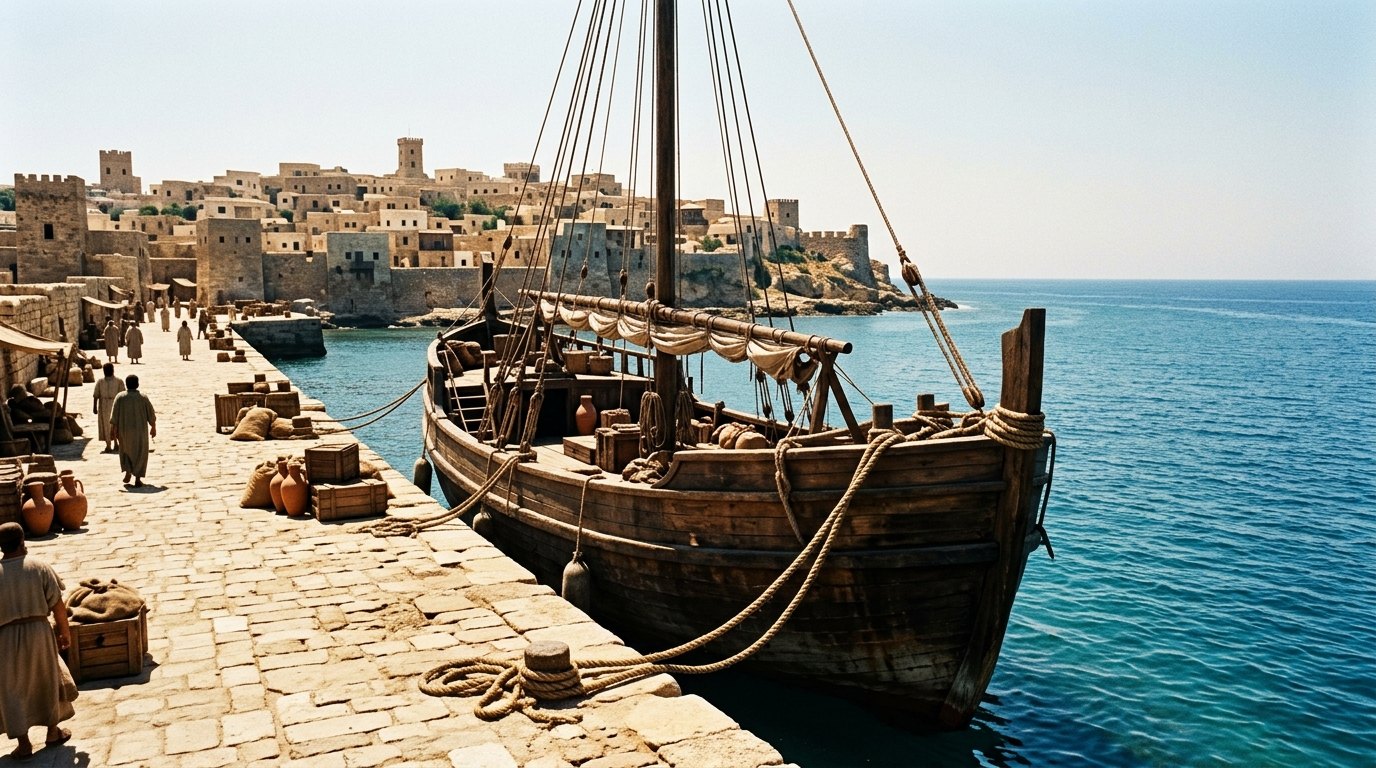
But Jonah ran away from the LORD and headed for Tarshish. He went down to Joppa, where he found a ship bound for that port. After paying the fare, he went aboard and sailed for Tarshish to flee from the LORD.
Jonah 1:3 (NIV)
It captures the root of Jonah's rebellion as he seeks the impossible: fleeing from the omnipresent Creator's face.
The narrative begins not with a mythical character, but with an established historical prophet of Israel. In Jonah 1:3, we witness the astonishing impulse of a servant of God attempting the impossible: "Jonah arose to flee to Tarshish from the presence of Yahweh." The prophet buys passage on a ship sailing westward across the Mediterranean, heading in the diametrically opposite direction from Nineveh, the brutal capital of Assyria located far to the east.
Scripture anchors Jonah's life firmly in history. According to 2 Kings 14:25, Jonah son of Amittai was a real prophet from Gath-hepher whose prophecies of territorial expansion came to pass during the reign of King Jeroboam II of Israel. When the word of the Lord comes to Jonah in Jonah 1:1, it arrives with divine authority. God issues a direct and urgent mandate in Jonah 1:2: "Arise, go to Nineveh, that great city, and call out against it, for their evil has come up before me." Nineveh was renowned for terrifying imperial violence, yet God's concern reached even there. Jonah's sudden flight down to the port city of Joppa exposes a deep spiritual crisis. Jonah does not doubt whether God has spoken; rather, he actively resists the divine commission, seeking to place geographic distance between himself and the God whose sovereignty knows no geographic boundary.
| Passage | What it says |
|---|---|
| Jonah 1:1 | The word of Yahweh comes directly to Jonah son of Amittai. |
| Jonah 1:2 | God commands Jonah to arise, go to Nineveh, and preach against its evil. |
| Jonah 1:3 | Jonah flees toward Tarshish to escape the presence of Yahweh on a ship. |
| 2 Kings 14:25 | Identifies Jonah son of Amittai as a historical prophet from Gath-hepher who prophesied during the reign of Jeroboam II. |
The Tempest
God Pursues His Runaway Across the Stormy Sea

“Pick me up and throw me into the sea,” he replied, “and it will become calm. I know that it is my fault that this great storm has come upon you.”
Jonah 1:12 (NIV)
Jonah acknowledges his guilt and directs the sailors to cast him into the sea to stop God's wrath.
No rebel escapes the reach of the Creator. In Jonah 1:12, Jonah finally faces the truth of his guilt, telling the terrified sailors: "Pick me up and hurl me into the sea; then the sea will quiet down for you, for I know it is because of me that this great tempest has come upon you." God is not indifferent to His servant's desertion; in Jonah 1:4, Yahweh hurls a furious gale upon the Mediterranean, battering the wooden hull until the vessel threatens to break apart.
While experienced pagan mariners cry out to their respective deities and jettison cargo into the depths (Jonah 1:5), Jonah lies sound asleep below deck. The ship's captain rouses him in Jonah 1:6, pleading with him to invoke his God. Seeking the supernatural cause of the tempest, the crew casts lots in Jonah 1:7, and the sovereign hand of God causes the lot to fall squarely on Jonah. Pressed with rapid questions about his nationality, trade, and homeland (Jonah 1:8), Jonah gives a confession that condemns his own flight: "I am a Hebrew, and I fear Yahweh, the God of heaven, who made the sea and the dry land" (Jonah 1:9). The crew is seized with terror knowing he is fleeing this almighty Creator (Jonah 1:10) and asks how to pacify the sea (Jonah 1:11). Though they labor heroically at the oars to spare Jonah's life (Jonah 1:13), the tempest only surges higher. Crying to Yahweh for mercy lest innocent blood be charged against them (Jonah 1:14), the mariners lift Jonah and cast him overboard (Jonah 1:15). Instantly the sea halts its raging fury. Confronted by this terrifying demonstration of absolute holiness and power, the pagan crew fears Yahweh exceedingly, offering sacrifices and making solemn vows (Jonah 1:16).
| Passage | What it says |
|---|---|
| Jonah 1:4 | Yahweh hurls a great wind upon the sea, threatening to break the ship. |
| Jonah 1:5 | Pagan mariners cry to their gods while Jonah sleeps in the hold. |
| Jonah 1:6 | The captain wakes Jonah, urging him to call upon his God for rescue. |
| Jonah 1:7 | The sailors cast lots to determine guilt, and the lot falls upon Jonah. |
| Jonah 1:8 | The crew interrogates Jonah concerning his occupation, origin, and people. |
| Jonah 1:9 | Jonah identifies himself as a Hebrew fearing Yahweh, Maker of sea and land. |
| Jonah 1:10 | The men are terrified upon discovering that Jonah is fleeing from Yahweh. |
| Jonah 1:11 | The sailors ask Jonah what they must do to calm the surging sea. |
| Jonah 1:12 | Jonah commands them to throw him overboard to still the tempest. |
| Jonah 1:13 | The crew rows desperately to reach land, but the raging storm prevails. |
| Jonah 1:14 | The mariners plead with Yahweh not to charge them with innocent blood. |
| Jonah 1:15 | They cast Jonah into the sea, and its fury ceases immediately. |
| Jonah 1:16 | The sailors fear Yahweh greatly, offering a sacrifice and making vows. |
The Depths
Deliverance Prepared Inside the Belly of Death

Now the LORDprovided a huge fish to swallow Jonah, and Jonah was in the belly of the fish three days and three nights.
Jonah 1:17 (NIV)
God appoints a great sea creature to rescue Jonah, establishing a vivid type of Christ's burial and resurrection.
Thrown into the churning abyss, Jonah meets not final destruction, but astonishing sovereign deliverance. In Jonah 1:17, Yahweh appoints a great fish to swallow Jonah, sheltering him alive within its belly for three days and three nights—a miraculous sign that our Lord Jesus Christ explicitly named as the primary type of His own death, burial, and third-day resurrection (Matthew 12:40). Deep in the interior darkness of the sea creature, Jonah lifts up an impassioned psalm of thanksgiving (Jonah 2:1).
Jonah recounts how he cried out from the very belly of Sheol, and God heard his voice (Jonah 2:2). He recognizes that the sailors were merely secondary instruments; it was God Himself who hurled him into the churning heart of the ocean (Jonah 2:3). Engulfed by roaring currents, Jonah felt cast out from the Lord's sight, yet fixed his hope toward God's holy dwelling (Jonah 2:4). The suffocating waters closed over him, with sea vegetation entangled around his head (Jonah 2:5). Sinking downward to the roots of the submarine mountains where death's iron bars seemed locked forever, Yahweh brought up his life from corruption (Jonah 2:6)—prefiguring the prophetic assurance fulfilled when Christ was not abandoned to the grave (Acts 2:27). In the extremity of faintness, Jonah remembered Yahweh and prayed (Jonah 2:7). He recognized that those who cling to empty, worthless idols abandon the steadfast covenant love available to them (Jonah 2:8). With the voice of praise, Jonah pledges his sacrificial vows, proclaiming the grand summary of biblical revelation: "Salvation belongs to Yahweh!" (Jonah 2:9; fulfilled in the heavenly chorus of Revelation 7:10). His prayer completed, Yahweh commands the creature, and it deposits the prophet unharmed onto dry ground (Jonah 2:10).
| Passage | What it says | Fulfilled |
|---|---|---|
| Jonah 1:17 | Yahweh appoints a great fish to swallow Jonah for three days and nights. | Matthew 12:40 |
| Jonah 2:1 | Jonah prays to Yahweh his God from within the belly of the fish. | |
| Jonah 2:2 | Jonah cries out of affliction and the belly of Sheol, finding divine hearing. | |
| Jonah 2:3 | Jonah acknowledges God threw him into the heart of the seas. | |
| Jonah 2:4 | Though driven from God's sight, Jonah looks toward His holy temple. | |
| Jonah 2:5 | Waters engulf Jonah to his soul with seaweed wrapped around his head. | |
| Jonah 2:6 | Jonah sinks to mountain foundations, yet God brings up his life from corruption. | Acts 2:27 |
| Jonah 2:7 | As his soul faints, Jonah remembers Yahweh and sends his prayer upward. | |
| Jonah 2:8 | Jonah confesses that those trusting worthless idols forsake their own steadfast love. | |
| Jonah 2:9 | Jonah vows sacrifice with thanksgiving, declaring that salvation belongs entirely to Yahweh. | Revelation 7:10 |
| Jonah 2:10 | Yahweh speaks to the fish, and it vomits Jonah onto dry ground. | Matthew 12:40 |
The Preaching
Nineveh Turns from Violence and Finds Mercy

When God saw what they did and how they turned from their evil ways, he relented and did not bring on them the destruction he had threatened.
Jonah 3:10 (NIV)
God sees the genuine repentance of the pagan empire and relents from destroying them.
Spit onto the shore, the chastened prophet is met by uninterrupted divine purpose. In Jonah 3:10, the supreme revelation of the chapter unfolds: "When God saw what they did, how they turned from their evil way, God relented of the disaster that he had said he would do to them, and he did not do it." Yahweh does not discard His flawed messenger; the word of the Lord comes to Jonah a second time (Jonah 3:1), repeating the solemn mandate to go to Nineveh and preach the divine proclamation (Jonah 3:2).
This time, Jonah obeys. He enters the sprawling metropolis of Nineveh, an imperial center of immense size requiring three full days to traverse (Jonah 3:3). One day's walk into the city, Jonah proclaims his uncompromising message: "Yet forty days, and Nineveh shall be overthrown!" (Jonah 3:4). The response of this pagan capital is unprecedented. The people of Nineveh believe God immediately, proclaiming a citywide fast and clothing themselves in coarse sackcloth from the highest noble to the lowest beggar (Jonah 3:5). When the proclamation reaches the palace, the king of Assyria steps down from his throne, strips off his royal garments, covers himself in sackcloth, and sits down in ashes (Jonah 3:6). The king issues a royal decree demanding that neither man nor beast taste food or drink water (Jonah 3:7). Every inhabitant is commanded to cry out urgently to God and turn decisively from their violent deeds (Jonah 3:8), clinging to the desperate hope that God might relent and spare them from wrath (Jonah 3:9). God observes their sincere, humble repentance and graciously holds back the promised judgment.
| Passage | What it says |
|---|---|
| Jonah 3:1 | The word of Yahweh comes to Jonah a second time. |
| Jonah 3:2 | God commands Jonah to proclaim the message He gives him to Nineveh. |
| Jonah 3:3 | Jonah obeys and enters Nineveh, an exceedingly great city requiring three days' journey. |
| Jonah 3:4 | Jonah proclaims that Nineveh will be overthrown in forty days. |
| Jonah 3:5 | The people of Nineveh believe God, proclaim a fast, and don sackcloth. |
| Jonah 3:6 | The king hears the word, removes his robe, and sits in ashes. |
| Jonah 3:7 | The king issues a decree commanding fasting for all people and beasts. |
| Jonah 3:8 | Everyone is ordered to cover in sackcloth, cry mightily, and abandon wickedness. |
| Jonah 3:9 | The king hopes God may turn, relent, and spare them from wrath. |
| Jonah 3:10 | God sees their turning from evil and relents from sending calamity. |
The Rebuke
God Questions the Bitterness of His Servant
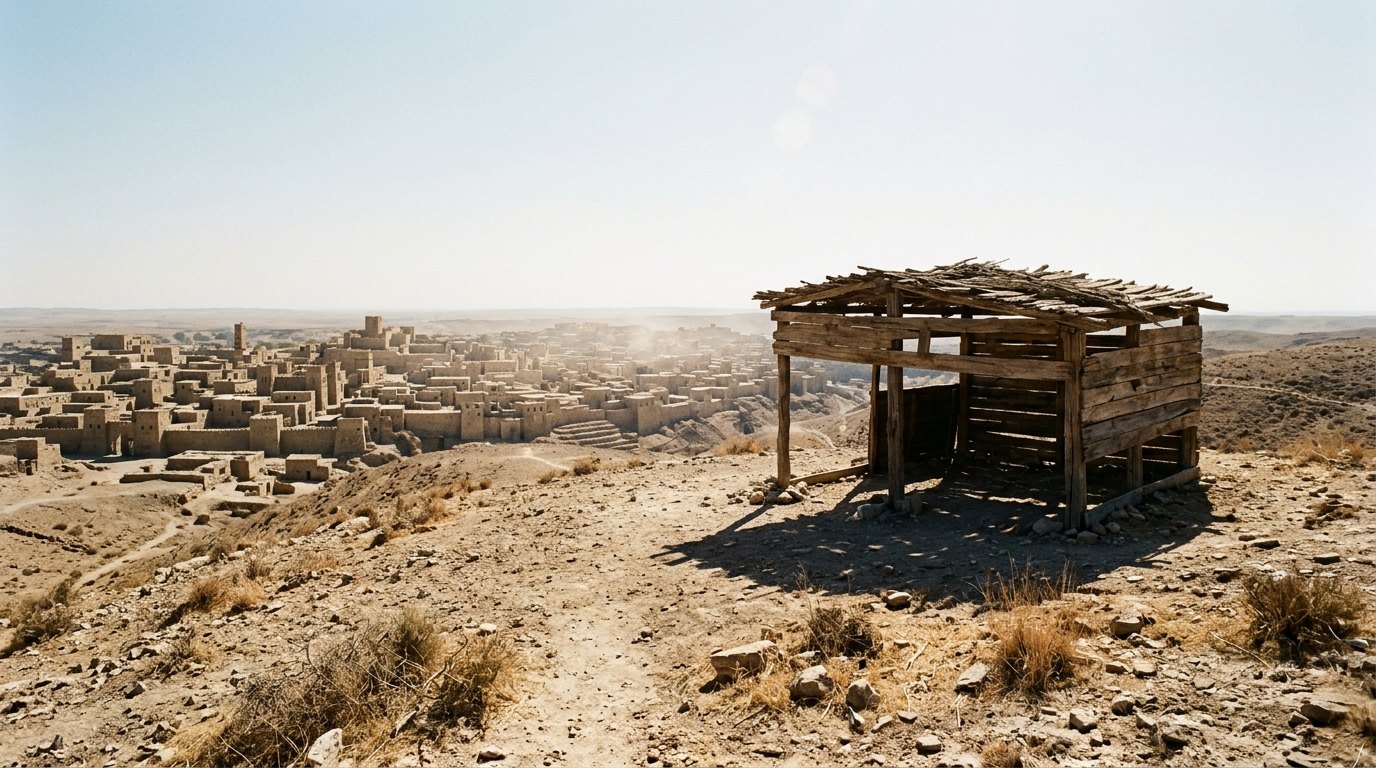
And should I not have concern for the great city of Nineveh, in which there are more than a hundred and twenty thousand people who cannot tell their right hand from their left—and also many animals?”
Jonah 4:11 (NIV)
The book ends unresolved with God's profound rhetorical question defending His compassion for ignorant people and helpless animals.
The book of Jonah concludes with a piercing, unanswered question in Jonah 4:11, where God defends His sovereign right to extend pity to over one hundred and twenty thousand spiritually blind people and their cattle. This tender interrogation exposes the grotesque distortion in the prophet's heart. When Nineveh repented and was spared, Jonah 4:1 records that it displeased Jonah exceedingly and made him furious. In Jonah 4:2, he confessed the bitter root of his original rebellion: he had fled to Tarshish not because he feared failure, but because he knew God's unyielding character as gracious, merciful, slow to anger, and abounding in steadfast love. The thought of Israel's brutal Assyrian enemy receiving mercy so sickened him that in Jonah 4:3 he begged God to take his life. God responded with gentle conviction in Jonah 4:4, asking, 'Do you do well to be angry?'
Rather than softening, Jonah retreated to a vantage point east of the city in Jonah 4:5, constructing a flimsy booth to see whether fire might still consume Nineveh. God continued His pastoral pursuit through physical object lessons. In Jonah 4:6, Yahweh appointed a broad-leafed plant to shade Jonah from the blazing sun, an act of unmerited kindness that caused the petulant prophet great joy. Yet the divine lesson required pain: at dawn, God sent a worm that withered the vine (Jonah 4:7), followed by a scorching east wind and intense heat that left Jonah fainting and clamoring once more for death (Jonah 4:8).
When God asked again in Jonah 4:9 whether Jonah did well to rage over the plant, the prophet brazenly insisted he did. The divine verdict followed immediately in Jonah 4:10-11. Jonah wept over a short-lived gourd he did not plant, water, or nurture; yet he harbored nothing but murderous wrath toward a great city filled with eternal souls. The silence that follows God's final question hangs over every reader, challenging self-righteous religious pride with the staggering depth of divine mercy.
| Passage | What it says |
|---|---|
| Jonah 4:1 | Nineveh's deliverance displeases Jonah exceedingly, stirring his deep anger. |
| Jonah 4:2 | Jonah admits he fled because he knew God is gracious, merciful, and slow to anger. |
| Jonah 4:3 | Jonah begs Yahweh to take his life, preferring death over life. |
| Jonah 4:4 | Yahweh asks Jonah whether he has any right to be angry. |
| Jonah 4:5 | Jonah sits east of the city under a shelter to watch its fate. |
| Jonah 4:6 | Yahweh prepares a plant to shade Jonah, giving him great joy. |
| Jonah 4:7 | At dawn God appoints a worm that attacks the plant, causing it to wither. |
| Jonah 4:8 | God sends a scorching east wind, leading faint Jonah to wish for death. |
| Jonah 4:9 | God asks if Jonah does well to be angry about the plant; Jonah insists he does. |
| Jonah 4:10 | Yahweh notes Jonah pitied an unearned, overnight plant. |
| Jonah 4:11 | God asks if He should not pity Nineveh's massive population and its many cattle. |
The Sign
Christ Identifies Jonah as a Historical Type
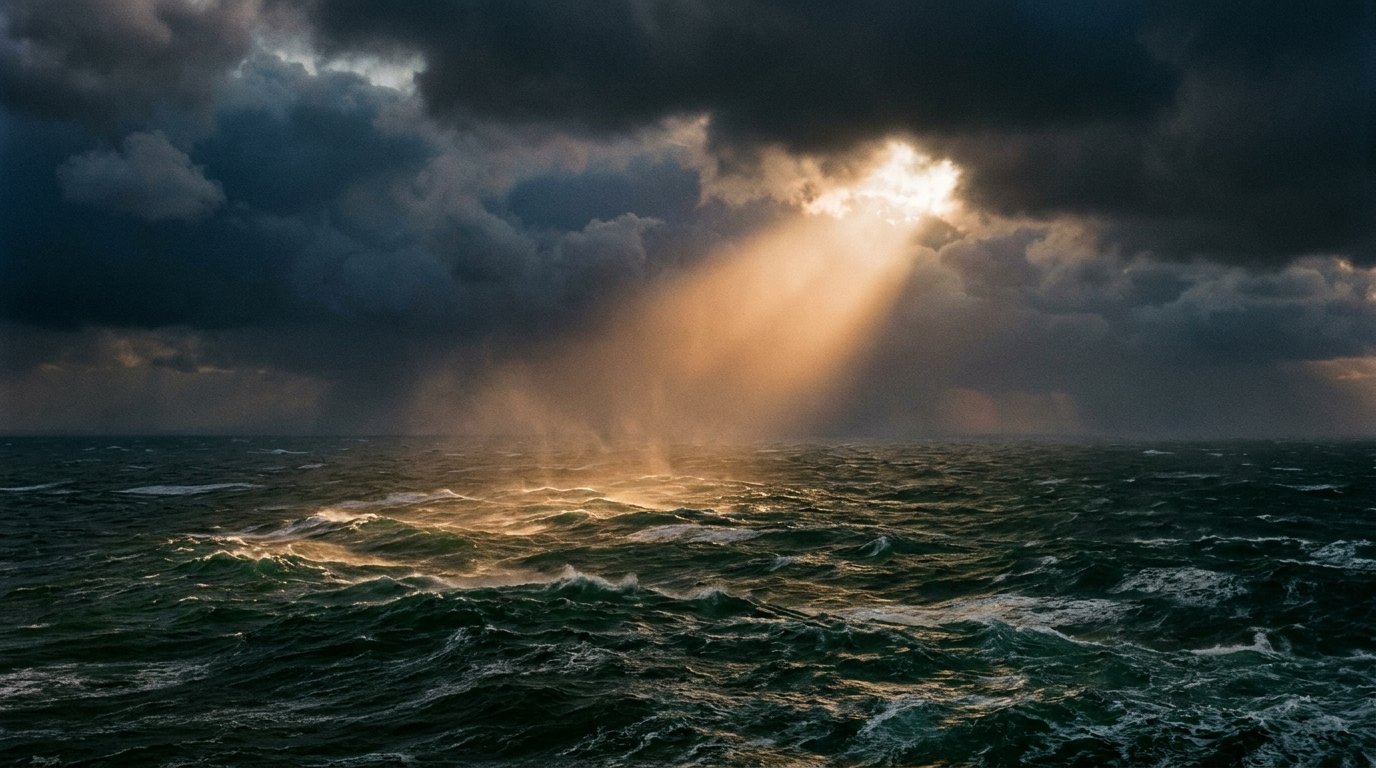
For as Jonah was three days and three nights in the belly of a huge fish, so the Son of Man will be three days and three nights in the heart of the earth.
Matthew 12:40 (NIV)
Jesus explicitly treats Jonah's three days in the fish as a direct historical pattern for His own bodily burial and resurrection.
Jesus Christ confirmed the absolute historicity of Jonah's deliverance, making it the central prophetic pattern of His own triumph over the grave in Matthew 12:40. Rebuking the religious leaders who demanded an arbitrary miraculous spectacle, the Lord declared in Matthew 12:39 and Matthew 16:4 that an evil and adulterous generation receives no sign except the sign of the prophet Jonah. Just as Jonah spent three days and three nights entombed in the belly of the sea monster (Jonah 1:17; Jonah 2:10), so the Son of Man would enter the heart of the earth in bodily death and rise victorious on the third day.
In both Luke 11:29 and Luke 11:30, Jesus affirmed that Jonah himself became a sign to the Ninevites. A prophet spat out of the jaws of death appeared in their streets as living proof of God's sovereign power and impending judgment (Jonah 3:3). By contrast, Christ brought something infinitely greater than Jonah's reluctant sermon. The pagan Ninevites possessed neither the Law nor the covenants, yet Matthew 12:41 and Luke 11:32 issue an arresting warning: the men of Nineveh will rise up at the final judgment and condemn Christ's generation, because they repented immediately at the preaching of Jonah (Jonah 3:5, Jonah 3:10).
The ultimate tragedy of unbelief is spurning the One who surpassed Jonah in every way. Where Jonah was a bitter, disobedient servant cast into the storm for his own sins, Christ was the willing, sinless Savior plunged into the storm of divine wrath for the redemption of the world. Jonah went outside the city hoping for its destruction; Christ went outside the city to offer His own life upon the cross so that enemies of God might be rescued and reconciled forever.
| Passage | What it says | Fulfilled |
|---|---|---|
| Matthew 12:39 | Jesus refuses an evil generation any sign except the sign of Jonah. | Jonah 1:17 |
| Matthew 12:40 | Jonah's three days in the sea monster prefigure the Son of Man in the earth. | Jonah 1:17, Jonah 2:10 |
| Matthew 12:41 | Ninevites will judge this generation, having repented at Jonah's preaching. | Jonah 3:5 |
| Luke 11:29 | Jesus repeats that no sign will be given to a wicked generation except Jonah. | Jonah 1:17 |
| Luke 11:30 | As Jonah became a sign to the Ninevites, so is the Son of Man to His generation. | Jonah 3:3 |
| Luke 11:32 | Nineveh repented at Jonah, but someone greater than Jonah is present. | Jonah 3:10 |
| Matthew 16:4 | Jesus repeats to the Pharisees and Sadducees that an evil generation seeks a sign, but none will be given except Jonah. |
Where in the Bible
| Book | Passages |
|---|---|
| 2 Kings | 1 · 2 Kings 14:25 |
| Jonah | 48 · Jonah 1:1, Jonah 1:2, Jonah 1:3, Jonah 1:4, Jonah 1:5, Jonah 1:6, Jonah 1:7, Jonah 1:8, Jonah 1:9, Jonah 1:10, Jonah 1:11, Jonah 1:12, Jonah 1:13, Jonah 1:14, Jonah 1:15, Jonah 1:16, Jonah 1:17, Jonah 2:1, Jonah 2:2, Jonah 2:3, Jonah 2:4, Jonah 2:5, Jonah 2:6, Jonah 2:7, Jonah 2:8, Jonah 2:9, Jonah 2:10, Jonah 3:1, Jonah 3:2, Jonah 3:3, Jonah 3:4, Jonah 3:5, Jonah 3:6, Jonah 3:7, Jonah 3:8, Jonah 3:9, Jonah 3:10, Jonah 4:1, Jonah 4:2, Jonah 4:3, Jonah 4:4, Jonah 4:5, Jonah 4:6, Jonah 4:7, Jonah 4:8, Jonah 4:9, Jonah 4:10, Jonah 4:11 |
| Matthew | 4 · Matthew 12:39, Matthew 12:40, Matthew 12:41, Matthew 16:4 |
| Luke | 3 · Luke 11:29, Luke 11:30, Luke 11:32 |
The story in order
- Jonah called to Nineveh (c. 780 BC) · Jonah 1:1-2 · God commissions Jonah, a historical prophet, to preach judgment.
- Jonah flees to Tarshish (c. 780 BC) · Jonah 1:3 · Jonah rebels, attempting to escape God's presence and command.
- Storm and divine judgment (c. 780 BC) · Jonah 1:4-16 · God sends a storm; sailors cast lots, revealing Jonah as the cause.
- Jonah cast into the sea (c. 780 BC) · Jonah 1:15 · Jonah is thrown overboard, and the sea calms.
- Swallowed by a great fish (c. 780 BC) · Jonah 1:17 · God appoints a fish to swallow Jonah for three days and nights.
- Jonah's prayer from the depths (c. 780 BC) · Jonah 2:1-10 · Jonah prays from the fish, acknowledging God's sovereignty and deliverance.
- Vomited onto dry land (c. 780 BC) · Jonah 2:10 · God commands the fish, and Jonah is spewed out.
- Jonah preaches in Nineveh (c. 780 BC) · Jonah 3:1-4 · God's word comes to Jonah again; he preaches judgment to Nineveh.
- Nineveh repents (c. 780 BC) · Jonah 3:5-10 · The city believes God, fasts, and repents, leading God to relent.
- Jonah's anger and God's lesson (c. 780 BC) · Jonah 4:1-11 · Jonah is displeased; God teaches him about His mercy on Nineveh.
- Jesus' sign of Jonah (c. AD 30) · Matthew 12:39-41 · Jesus identifies His death and resurrection as a sign like Jonah's experience.
Jonah's Experience as a Sign
| Jonah's Sign | Christ's Sign | Significance | Passage |
|---|---|---|---|
| Swallowed by a great fish, three days and nights | Buried in the earth, three days and nights | Prefigures Christ's death and resurrection | Matthew 12:40 |
| Preached repentance to Nineveh | Preached the kingdom of God | Led to repentance of pagan nation | |
| A sign to the Ninevites | A sign to His generation | Demonstrates divine authority and message | Luke 11:30 |
God's Mercy vs. Human Resistance
| God's Action | Human Response | Outcome | Passage |
|---|---|---|---|
| Calls Jonah to preach judgment | Flees from God's presence | God pursues Jonah with a storm | Jonah 1:1-3 |
| Saves Jonah from the sea | Prays from the fish's belly | God hears Jonah's prayer and delivers him | |
| Sends Jonah to preach to Nineveh | Preaches judgment reluctantly | Nineveh repents and is spared | Jonah 3:1-10 |
| Shows mercy to Nineveh | Becomes angry and bitter | God teaches Jonah about His compassion | Jonah 4:1-11 |
Key words
- Yahweh (YHWH, יהוה)
- The covenant name of God, emphasizing His personal relationship with His people. · Jonah 1:1
- Nineveh (Nînweh, נִינְוֵה)
- The capital city of the Assyrian empire, known for its wickedness. · Jonah 1:2
- Tarshish (Tarshish, תַּרְשִׁישׁ)
- A distant port, likely in modern Spain, representing the furthest point from Israel. · Jonah 1:3
- Mercy (ḥesed, חֶסֶד)
- God's compassionate kindness and willingness to forgive and spare. · Jonah 4:2
- Repentance (shuv, שׁוּב)
- A turning away from sin and a turning toward God. · Jonah 3:8
Jonah’s narrative stands as a perpetual mirror for believers, challenging tribal self-righteousness and urging us to share the Father's heart for the lost. It reminds us that no one can outrun the presence of God, that salvation belongs entirely to the Lord, and that Christ alone provides the ultimate deliverance foreshadowed in the belly of the deep.
56 passages, each cited once.
Scripture cited
- Lamentations 3:53-56
- Psalms 91:15
- Psalms 130:1-2
- Job 13:15
- Psalms 50:15
- Isaiah 26:16
- Jonah 1
- Jonah 3
- Jonah 4
- Matthew 12:40