What is the story of the walls of Jericho?
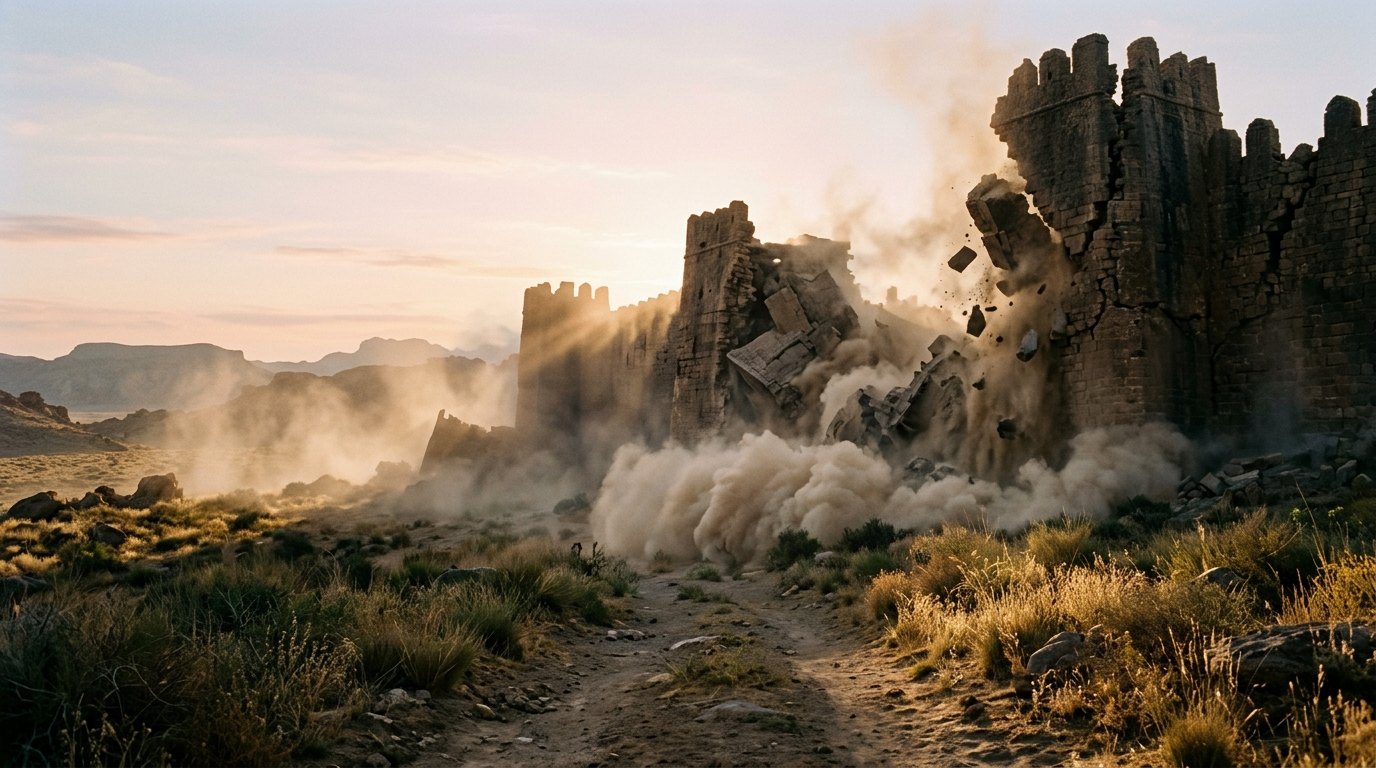
Joshua 6:1-20
1 Now the gates of Jericho were securely barred because of the Israelites. No one went out and no one came in.
2 Then the LORD said to Joshua, “See, I have delivered Jericho into your hands, along with its king and its fighting men.
3 March around the city once with all the armed men. Do this for six days.
4 Have seven priests carry trumpets of rams’ horns in front of the ark. On the seventh day, march around the city seven times, with the priests blowing the trumpets.
5 When you hear them sound a long blast on the trumpets, have the whole army give a loud shout; then the wall of the city will collapse and the army will go up, everyone straight in.”
6 So Joshua son of Nun called the priests and said to them, “Take up the ark of the covenant of the LORD and have seven priests carry trumpets in front of it.”
7 And he ordered the army, “Advance! March around the city, with an armed guard going ahead of the ark of the LORD.”
8 When Joshua had spoken to the people, the seven priests carrying the seven trumpets before the LORD went forward, blowing their trumpets, and the ark of the LORD’s covenant followed them.
9 The armed guard marched ahead of the priests who blew the trumpets, and the rear guard followed the ark. All this time the trumpets were sounding.
10 But Joshua had commanded the army, “Do not give a war cry, do not raise your voices, do not say a word until the day I tell you to shout. Then shout!”
11 So he had the ark of the LORD carried around the city, circling it once. Then the army returned to camp and spent the night there.
12 Joshua got up early the next morning and the priests took up the ark of the LORD.
13 The seven priests carrying the seven trumpets went forward, marching before the ark of the LORD and blowing the trumpets. The armed men went ahead of them and the rear guard followed the ark of the LORD, while the trumpets kept sounding.
14 So on the second day they marched around the city once and returned to the camp. They did this for six days.
15 On the seventh day, they got up at daybreak and marched around the city seven times in the same manner, except that on that day they circled the city seven times.
16 The seventh time around, when the priests sounded the trumpet blast, Joshua commanded the army, “Shout! For the LORD has given you the city!
17 The city and all that is in it are to be devoted to the LORD. Only Rahab the prostitute and all who are with her in her house shall be spared, because she hid the spies we sent.
18 But keep away from the devoted things, so that you will not bring about your own destruction by taking any of them. Otherwise you will make the camp of Israel liable to destruction and bring trouble on it.
19 All the silver and gold and the articles of bronze and iron are sacred to the LORD and must go into his treasury.”
20 When the trumpets sounded, the army shouted, and at the sound of the trumpet, when the men gave a loud shout, the wall collapsed; so everyone charged straight in, and they took the city.
New International Version (NIV)
The answer
The walls of Jericho fell by Yahweh’s power after Israel obeyed His command to march around the city for seven days. The account joins together God’s judgment on Jericho, Israel’s faith and obedience, and His mercy toward Rahab and her family.
Rahab and the spies
Before the attack, Joshua sent two men to spy out the land and Jericho, and they entered the house of Rahab, a prostitute (Joshua 2:1). When Jericho’s king searched for them, Rahab hid them beneath stalks of flax on her roof and helped them escape (Joshua 2:4-6, 15-16).
Rahab had heard how Yahweh dried up the Red Sea and gave Israel victory over Sihon and Og. She therefore confessed that He is God in heaven above and on earth beneath (Joshua 2:9-11). She asked the spies to spare her family, and they promised protection if she gathered her relatives into her house and marked its window with a scarlet line (Joshua 2:12-21). The spies returned to Joshua with the news that the land’s inhabitants were melting in fear before Israel (Joshua 2:24).
The march around the city
Jericho was tightly shut, with no one going out or coming in (Joshua 6:1). Yet before Israel did anything, Yahweh told Joshua, “Behold, I have given Jericho into your hand” (Joshua 6:2). The victory was God’s gift before it became visible.
His instructions were specific: the fighting men were to circle the city once each day for six days. Seven priests carrying trumpets of rams’ horns went before the ark of the covenant, while the people remained silent until Joshua commanded them to shout. On the seventh day, they were to march around Jericho seven times; then the priests would blow the trumpets and all the people would shout (Joshua 6:3-10).
The walls fall
Israel followed those instructions. On the seventh day, after the seventh circuit, the trumpets sounded and the people shouted. The wall fell down flat, and the Israelites went straight into the city and captured it (Joshua 6:15-20). Israel did not overthrow Jericho through siegecraft; Yahweh kept His promise and brought the walls down.
Jericho was devoted to Yahweh for destruction. Its inhabitants were killed, the city was burned, and its silver, gold, bronze and iron were placed in Yahweh’s treasury rather than taken as ordinary plunder (Joshua 6:17-24). This was God’s judgment, not an invitation for Israel to seize whatever it wanted.
Rahab and her relatives, however, were brought out alive just as the spies had sworn. She was subsequently allowed to live among Israel because she had hidden Joshua’s messengers (Joshua 6:22-25). Joshua also pronounced a curse on anyone who rebuilt Jericho, involving the loss of his firstborn and youngest sons (Joshua 6:26).
Hebrews 11:30 explains the central spiritual reality: “By faith the walls of Jericho fell down after they had been encircled for seven days.” The next verse adds that Rahab did not perish with the disobedient because she received the spies in peace by faith (Hebrews 11:31). The marching and shouting were not a technique for forcing God to remove obstacles; they were obedience to His particular command, and both the victory and Rahab’s rescue were His work.
Answered from Scripture · reviewed November 11, 2026
The fall of Jericho's towering walls was neither an engineering marvel nor a conventional military triumph, but an act of direct divine deliverance. Before a single stone moved, Yahweh had already declared the fortified Canaanite stronghold handed over to Israel, demanding an obedience that looked utterly foolish to human eyes. Exploring the narrative reveals how liturgical procession, priestly trumpets, patient silence, and radical faith dismantled insurmountable defenses.
The Impregnable Fortress
Jericho Shuts Its Gates Tight Against Israel
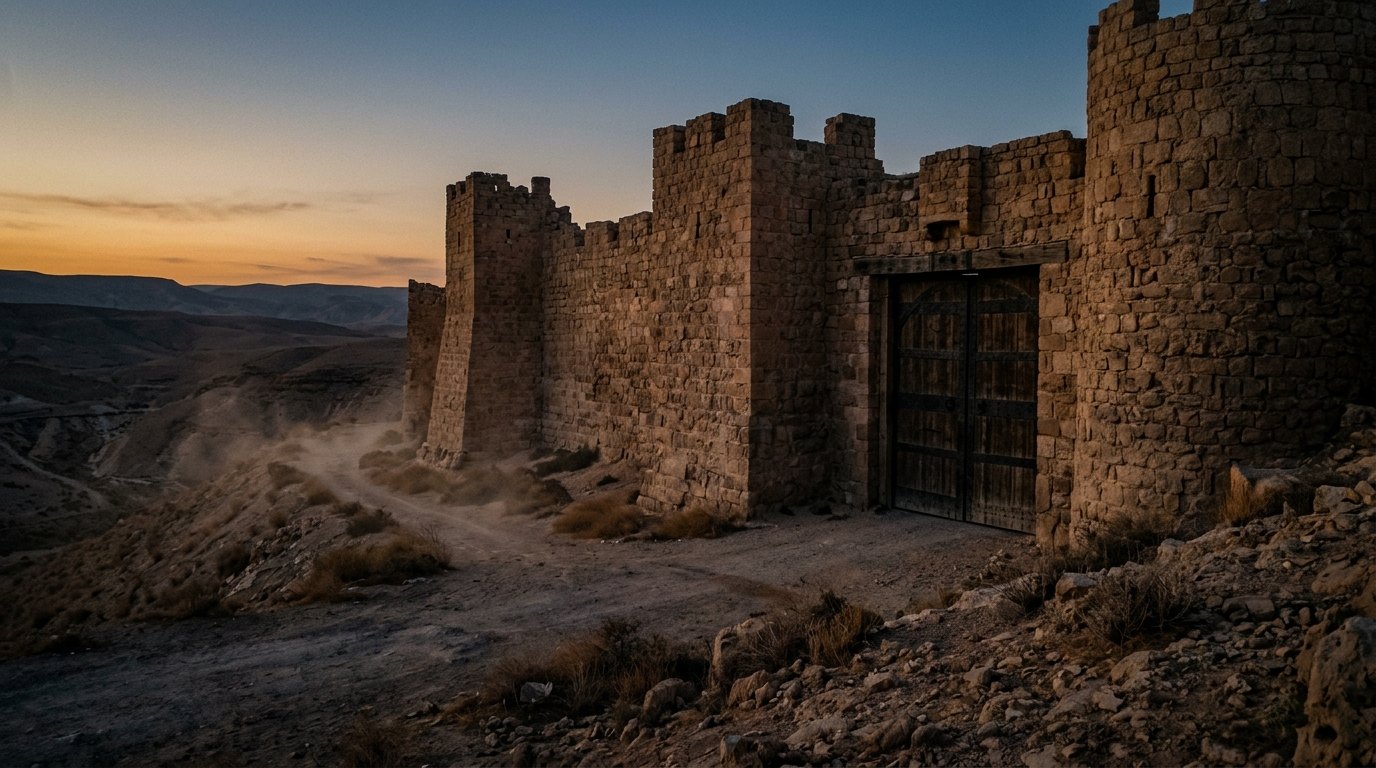
Now the gates of Jericho were securely barred because of the Israelites. No one went out and no one came in.
Joshua 6:1 (NIV)
This verse establishes the human impossibility of the siege, presenting a city locked and barricaded in terror against the advancing Israelites.
Humanly speaking, Jericho was an impenetrable obstacle standing directly in the pathway of the promise. As Joshua 6:1 establishes, Jericho was shut up tight inside and outside because of the people of Israel; none went out, and none came in. The fortress stood barred and vigilant, yet beneath this outward show of strength lay sheer terror. Earlier, Joshua had sent two spies from Shittim into the city (Joshua 2:1), where they found shelter with Rahab. Rahab's own home was built into the outer wall (Joshua 2:15), placing her at the frontier of the fortress. She disclosed that an overwhelming dread had fallen upon the Canaanite inhabitants ever since news arrived of the Red Sea crossing (Joshua 2:9-11). The spies returned with full assurance that Yahweh had already melted the hearts of the land (Joshua 2:24). Before Israel advanced, Joshua met the Commander of the Lord's army with a drawn sword (Joshua 5:13-15), learning that this battle was not an earthly contest but a holy campaign directed by God. Ultimately, Jericho's reinforced barricades proved completely futile, proving the ancient truth of Psalm 127:1: unless the Lord guards a city, the watchman keeps awake in vain.
| Passage | What it says |
|---|---|
| Joshua 2:9-11 | Rahab reveals to the Israelite spies that overwhelming dread had seized all Jericho after hearing what Yahweh did at the Red Sea. |
| Joshua 2:24 | The spies return to Joshua with the confident report that the Lord has already delivered the faint-hearted land into their hands. |
| Joshua 6:1 | Jericho shuts its gates securely against the Israelites so that none go out and none come in. |
| Psalms 127:1 | The psalmist declares that unless the Lord guards a city, the human watchman stays awake in vain. |
| Joshua 2:1 | Joshua sends two spies secretly from Shittim to view the land, especially Jericho. |
| Joshua 2:15 | Rahab's house was built into the city wall, showing her vulnerable location upon the fortification. |
| Joshua 5:13-15 | The Commander of the Lord's army confronts Joshua before Jericho, claiming divine leadership of the battle. |
The Divine Plan
Yahweh Gives the City and Orders the March
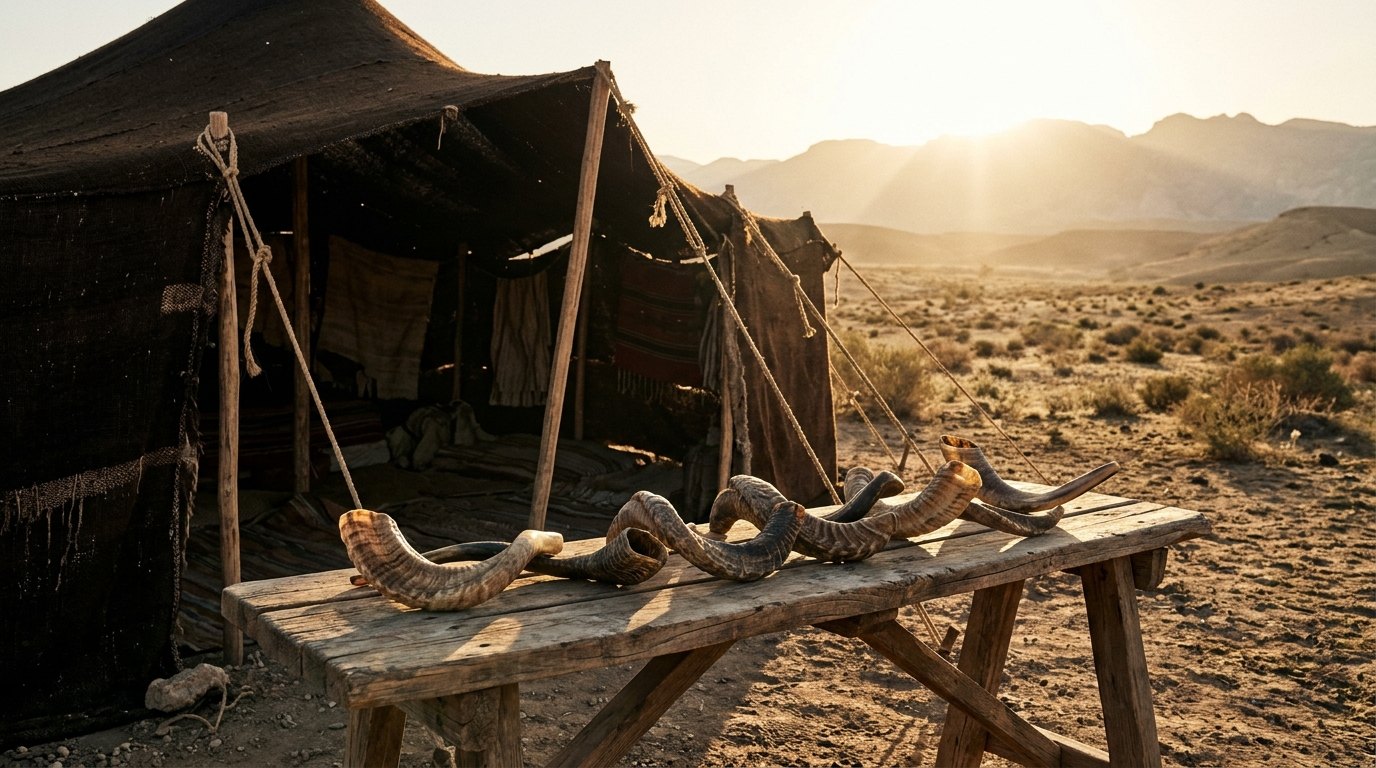
Then the LORD said to Joshua, “See, I have delivered Jericho into your hands, along with its king and its fighting men.
Joshua 6:2 (NIV)
God declares the fortified city and its king already given to Joshua before a single soldier takes a step.
Before a single soldier marched toward the stronghold, the Lord settled the outcome in the heavenly council. In Joshua 6:2, Yahweh declared to Joshua: See, I have given Jericho into your hand, with its king and mighty men of valor. Divine sovereign promise preceded human obedience; victory was not a contingency awaiting Israel's military prowess, but an accomplished gift of grace. God then gave instructions that defied conventional siegecraft (Joshua 6:3). Rather than erecting ramps, battering rams, or siege towers, all the armed men were to march around the city once a day for six consecutive days. On the seventh day, the rhythm was to intensify: seven priests carrying seven ram's-horn trumpets before the ark of the covenant were to circle the walls seven times (Joshua 6:4). God promised that when they blew a long blast on the ram's horn and the entire congregation let out a great shout, the wall of the city would fall down flat, allowing Israel to charge straight forward (Joshua 6:5). The plan made it undeniable that deliverance belonged exclusively to Yahweh.
| Passage | What it says |
|---|---|
| Joshua 6:2 | Yahweh announces to Joshua that He has already given Jericho, its king, and its mighty men of valor into Israel's hand. |
| Joshua 6:3 | God commands all Israelite men of war to march around the city once a day for six days. |
| Joshua 6:4 | Seven priests bearing seven ram's-horn trumpets before the ark are commanded to march around seven times on the seventh day. |
| Joshua 6:5 | Yahweh promises that upon a long trumpet blast and a people's great shout, the city walls will fall down flat. |
The Silent Procession
Priests, Ark, and Army Circle in Silence
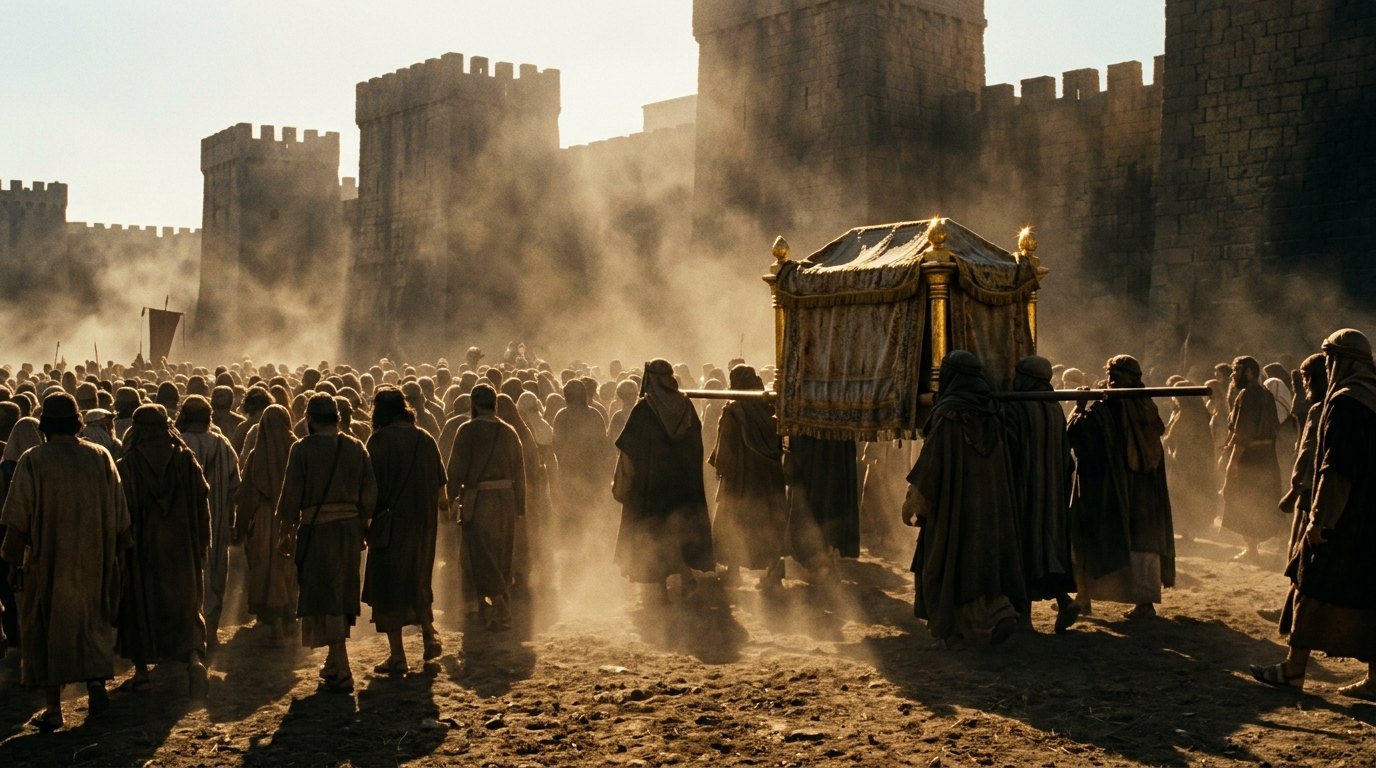
But Joshua had commanded the army, “Do not give a war cry, do not raise your voices, do not say a word until the day I tell you to shout. Then shout!”
Joshua 6:10 (NIV)
Joshua binds the entire army to absolute silence until the appointed day, testing their discipline and faith before the enemy.
The daily march of Israel around the fortress was an exercise in solemn, liturgical reverence and deep self-restraint. Joshua commanded the host, as recorded in Joshua 6:10: You shall not shout or make your voice heard, neither shall any word go out of your mouth, until the day I bid you shout; then you shall shout. Obeying this strict mandate, Joshua summoned the priests to shoulder the ark of the covenant behind seven priests carrying shofars (Joshua 6:6), with armed men marching ahead (Joshua 6:7). The priests blew the trumpets continually while the ark of God's presence followed closely behind them (Joshua 6:8). The vanguard marched in front, and a rear guard followed the ark, surrounded by the piercing blast of horns and the complete silence of Israel's voices (Joshua 6:9). Each day, the procession circled the city once and returned to rest in the camp (Joshua 6:11). For six straight mornings, Joshua rose early to lead this identical ritual (Joshua 6:12-14), demonstrating quiet reliance upon God's word before the mocking watchmen on the walls.
| Passage | What it says |
|---|---|
| Joshua 6:6 | Joshua summons the priests to take up the ark of the covenant preceded by seven priests with ram's horns. |
| Joshua 6:7 | The armed men receive the command to advance and march before the ark of Yahweh. |
| Joshua 6:8 | The seven priests blow the trumpets continually as the ark of the covenant follows behind them. |
| Joshua 6:9 | Armed men march before the trumpeters, while the rear guard follows behind the ark of the Lord. |
| Joshua 6:10 | Joshua commands the people not to speak, shout, or make any sound until the day he bids them shout. |
| Joshua 6:11 | The ark circles the city once, after which the entire host returns to lodge in camp. |
| Joshua 6:12-14 | For six consecutive mornings, Joshua rises early and leads this identical silent circuit, returning each evening to camp. |
The Seventh Day
Seven Circuits, the Great Shout, and the Fall
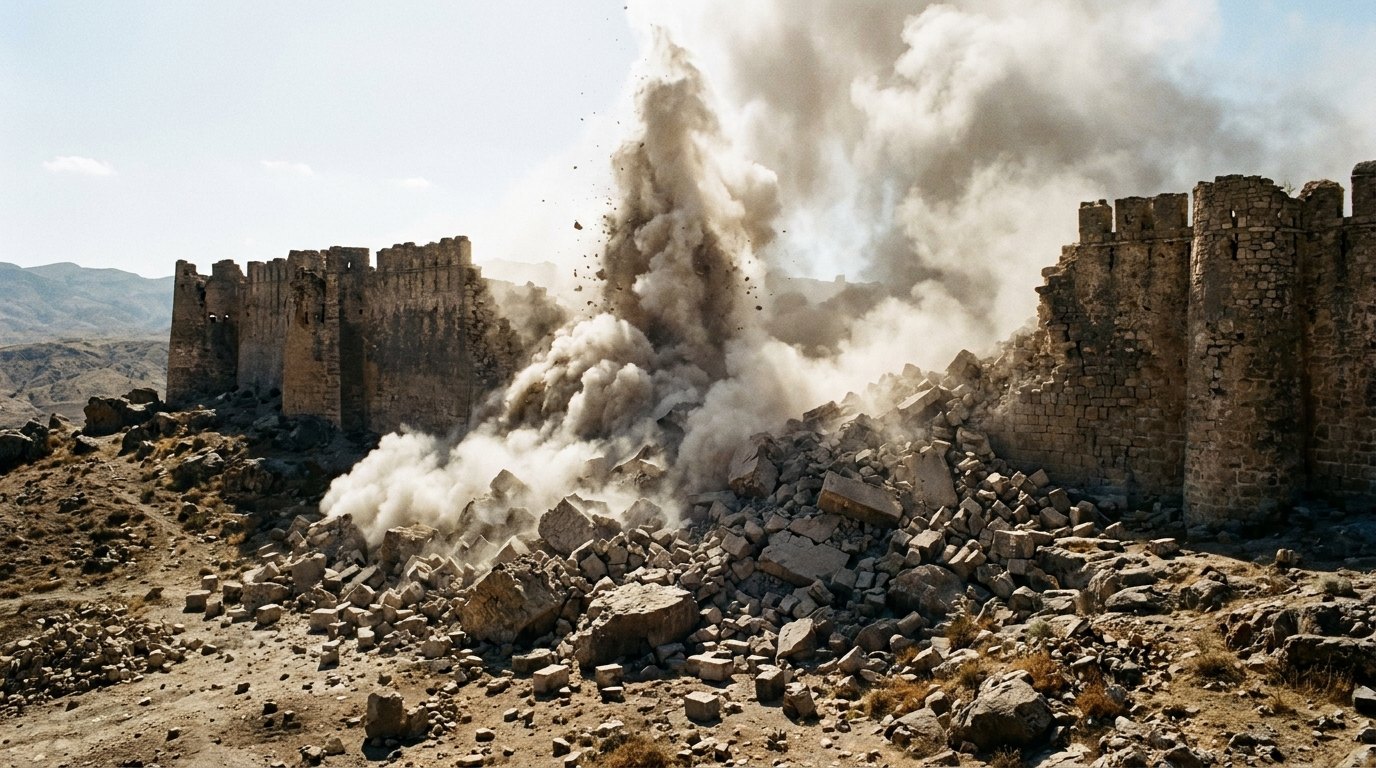
When the trumpets sounded, the army shouted, and at the sound of the trumpet, when the men gave a loud shout, the wall collapsed; so everyone charged straight in, and they took the city.
Joshua 6:20 (NIV)
The culmination of the miracle occurs as the sound of the trumpet and the great shout cause the walls to collapse completely.
On the seventh day, the patient obedience of God's people met His miraculous intervention. Rising at the break of dawn, the host compassed Jericho seven times in the exact prescribed order (Joshua 6:15). On the seventh lap, as the priests blew a long horn blast, Joshua cried out to the army to shout, for Yahweh had given them the city (Joshua 6:16). Joshua 6:20 records the supernatural climax: So the people shouted, and the trumpets were blown. As soon as the people heard the sound of the trumpet, the people shouted a great shout, and the wall fell down flat, so that the people went up into the city, every man straight before him, and they captured the city. The New Testament looks back on this event in Hebrews 11:30, affirming that by faith the walls of Jericho collapsed after they had been encircled for seven days. Israel then executed Yahweh's judgment upon the devoted city (Joshua 6:21), leaving an enduring witness that faith in God's bare word shatters the greatest strongholds.
| Passage | What it says |
|---|---|
| Joshua 6:15 | At dawn on the seventh day, Israel marches around Jericho seven times in the very same order. |
| Joshua 6:16 | On the seventh lap, as the horns sound, Joshua commands the people to shout because Yahweh has given them the city. |
| Joshua 6:20 | At the trumpet blast and the great shout, the wall collapses flat, allowing every Israelite soldier to charge straight inside. |
| Hebrews 11:30 | The New Testament affirms that by faith the walls of Jericho fell down after being encircled for seven days. |
| Joshua 6:21 | Israel destroys everything in the city by the edge of the sword once the walls collapse. |
Devoted to Yahweh
Complete Destruction, Holy Spoil, and Rahab's Deliverance
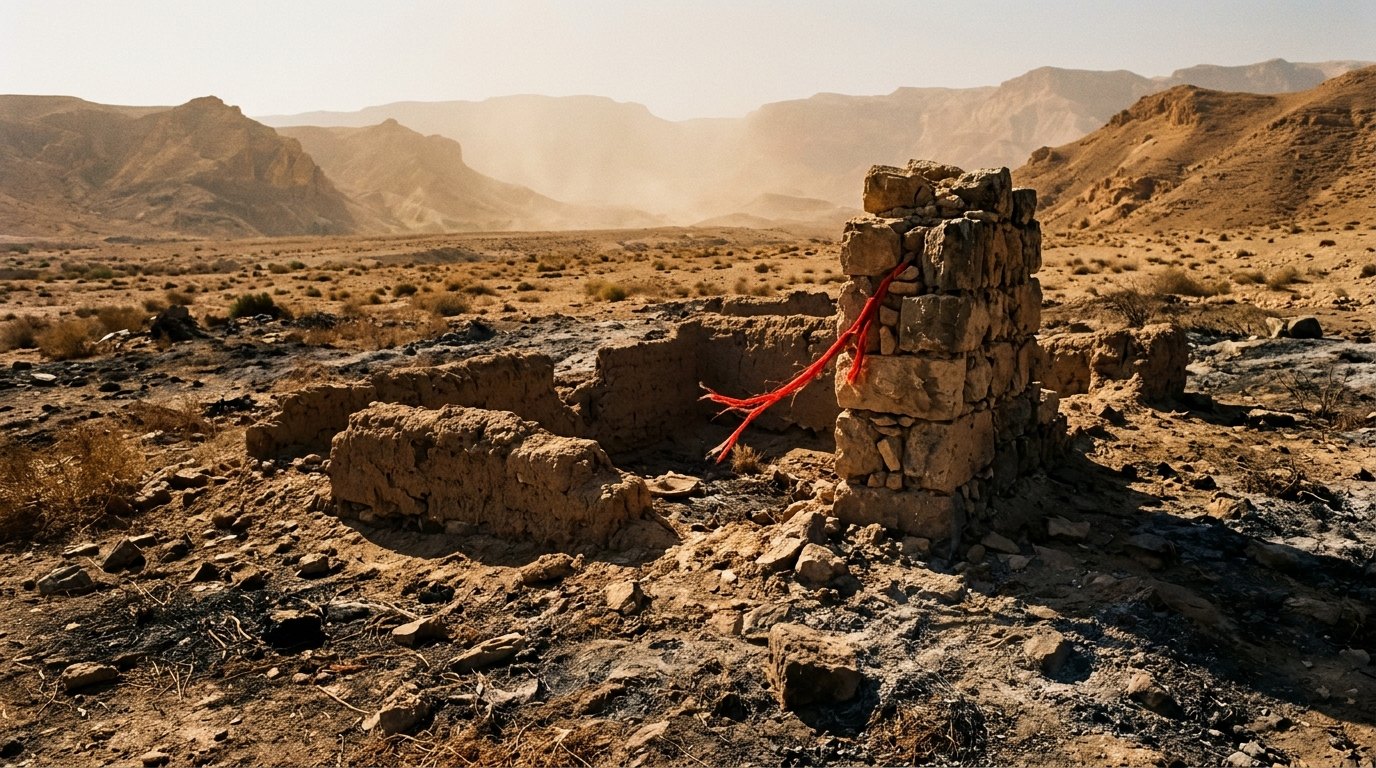
The city and all that is in it are to be devoted to the LORD. Only Rahab the prostitute and all who are with her in her house shall be spared, because she hid the spies we sent.
Joshua 6:17 (NIV)
This verse designates Jericho as entirely devoted to destruction while setting apart Rahab and her household for mercy.
In Joshua 6:17, the conquest of Jericho reaches its ultimate moral and spiritual boundary: the entire city and all that is within it are declared herem, wholly devoted to Yahweh for destruction, save for Rahab the prostitute and everyone sheltered within her house. This absolute devotion underscored that Jericho was an offering of firstfruits from the Promised Land, completely set apart to God rather than taken as common plunder. Therefore, Joshua 6:18 explicitly warned every soldier not to covet or lay hands on the accursed things, lest they bring a devastating curse upon the entire camp of Israel. The precious metals—silver, gold, bronze, and iron—were consecrated as holy in Joshua 6:19, designated exclusively for the treasury of the house of the Lord.
Yet amidst sweeping divine judgment, covenant mercy shone bright. In Joshua 6:22–25, the young spies honored their oath, escorting Rahab and her entire family safely out before the fortress was burned, giving her a lasting inheritance among the people of God. The New Testament reflects on her deliverance with profound reverence: Hebrews 11:31 celebrates that by faith Rahab did not perish alongside the disobedient, while James 2:25 shows that her living faith was vindicated when she received the messengers and sent them out another way. Even more marvelously, Matthew 1:5 weaves this Canaanite woman directly into the earthly lineage of Jesus Christ, making her a mother in the Messianic line.
Jericho itself was condemned to remain a barren ruin of judgment. In Joshua 6:26, Joshua bound the nation with a prophetic curse over anyone who dared rebuild the fallen stronghold. Centuries later, 1 Kings 16:34 soberly records how Hiel of Bethel laid Jericho's foundations at the cost of his firstborn son Abiram and hung its gates at the loss of his youngest son Segub, precisely verifying the infallible word spoken by Joshua.
| Passage | What it says |
|---|---|
| Joshua 6:17 | The city and all within it are devoted to Yahweh, except Rahab the prostitute and her household who hid the messengers. |
| Joshua 6:18 | Israel is strictly warned to touch none of the devoted things, lest they bring a curse and trouble upon the camp. |
| Joshua 6:19 | All silver, gold, bronze, and iron are declared holy to Yahweh, reserved solely for the divine treasury. |
| Joshua 6:22-25 | The spies bring out Rahab and her entire family alive, settling them in Israel because she welcomed the messengers. |
| Hebrews 11:31 | Scripture honors Rahab for not perishing with the disobedient because she received the spies in peace by faith. |
| Joshua 6:26 | Joshua pronounces a solemn curse on anyone who rises up and rebuilds the city of Jericho. |
| 1 Kings 16:34 | Hiel of Bethel rebuilds Jericho at the cost of his firstborn and youngest sons, fulfilling Joshua's curse. |
| Matthew 1:5 | Rahab is preserved in the genealogy of Jesus Christ, uniting the survivor of Jericho to the Messiah. |
| James 2:25 | Rahab is justified by works when she welcomed the messengers and sent them out another way. |
Where in the Bible
| Book | Passages |
|---|---|
| Joshua | 26 · Joshua 2:9-11, Joshua 2:24, Joshua 6:1, Joshua 2:1, Joshua 2:15, Joshua 5:13-15, Joshua 6:2, Joshua 6:3, Joshua 6:4, Joshua 6:5, Joshua 6:6, Joshua 6:7, Joshua 6:8, Joshua 6:9, Joshua 6:10, Joshua 6:11, Joshua 6:12-14, Joshua 6:15, Joshua 6:16, Joshua 6:20, Joshua 6:21, Joshua 6:17, Joshua 6:18, Joshua 6:19, Joshua 6:22-25, Joshua 6:26 |
| 1 Kings | 1 · 1 Kings 16:34 |
| Psalms | 1 · Psalms 127:1 |
| Matthew | 1 · Matthew 1:5 |
| Hebrews | 2 · Hebrews 11:30, Hebrews 11:31 |
| James | 1 · James 2:25 |
The story in order
- Rahab hears of Yahweh's power (c. 1406 BC) · Joshua 2:9-11 · Fear of Israel's God grips Jericho.
- Spies report Jericho is doomed (c. 1406 BC) · Joshua 2:24 · God has already given the land.
- Jericho's gates shut tight (c. 1406 BC) · Joshua 6:1 · The city is sealed against Israel.
- Commander of the Lord's army appears (c. 1406 BC) · Joshua 5:13-15 · Divine leadership is assured.
- Yahweh commands the march (c. 1406 BC) · Joshua 6:3 · Israel marches around the city.
- Priests circle with trumpets (c. 1406 BC) · Joshua 6:6-8 · A silent, liturgical procession.
- People commanded to be silent (c. 1406 BC) · Joshua 6:10 · No shouting until ordered.
- Six days of silent marching (c. 1406 BC) · Joshua 6:11 · The routine is followed daily.
- Seventh day: seven circuits (c. 1406 BC) · Joshua 6:15 · The final, repeated march.
- The great shout and walls fall (c. 1406 BC) · Joshua 6:20 · Divine intervention brings collapse.
- City devoted to Yahweh (c. 1406 BC) · Joshua 6:17 · Total destruction, except Rahab.
- Rahab and family saved (c. 1406 BC) · Joshua 6:22-25 · Faith rewarded with deliverance.
- Curse on rebuilding Jericho (c. 1406 BC) · Joshua 6:26 · A future judgment is pronounced.
- Jericho rebuilt, curse fulfilled (c. 875 BC) · 1 Kings 16:34 · Hiel's disobedience brings ruin.
Key words
- Yahweh (YHWH, יהוה)
- The covenant name of God, emphasizing His faithfulness and redemptive actions. · Joshua 6:2
- Devoted (ḥērem, חֵרֶם)
- Set apart for God's exclusive use, often involving complete destruction for enemies. · Joshua 6:17
- Faith (pistis, πίστις)
- Trust and belief in God's promises and power, leading to obedience. · Hebrews 11:30
- Shout (teru'ah, תְּרוּעָה)
- A loud cry of victory or praise, instrumental in the fall of Jericho. · Joshua 6:5
- Spies (meraglim, מְרַגְּלִים)
- Messengers sent to gather intelligence, whose safety was Rahab's act of faith. · Joshua 2:1
Jericho stands as an enduring monument to the principle that God's victories are won by trusting His word rather than relying on human strength. When believers walk in patient obedience through impossible circumstances, the barriers crumble before the Lord of hosts. The calling of God's people remains the same: listen carefully, walk faithfully, and trust that He brings down every stronghold in His appointed time.
32 passages, each cited once.
Scripture cited
- Joshua 6:1-20
- Joshua 2:24
- Joshua 2:1-24
- Joshua 6:21-27
- Hebrews 11:30-31