What miracles did Jesus perform?

John 20:30-31
30 Jesus performed many other signs in the presence of his disciples, which are not recorded in this book.
31 But these are written that you may believethat Jesus is the Messiah, the Son of God, and that by believing you may have life in his name.
New International Version (NIV)
The answer
Jesus performed many signs, and the Gospels only record a fraction of them.
What the Gospels show
Jesus himself summarized the pattern of His miracles in Matthew 11:5 (and Luke 7:22) when answering John the Baptist: "the blind receive their sight, the lame walk, the lepers are cleansed, the deaf hear, the dead are raised up, and the poor have good news preached to them." That is the shape of His ministry: healing, restoration, and raising the dead — signs that the reign of God promised by Isaiah 35:5-6 had arrived. In Luke 4:18-21, Jesus read Isaiah 61 in the synagogue and declared, "Today, this Scripture has been fulfilled in your hearing," tying His miracles to that same mission.
Categories of miracles
- Healing the sick: the centurion's servant (Matthew 8:5-13), Peter's mother-in-law's fever (Matthew 8:14-15), the paralytic lowered through the roof (Mark 2:1-12), the man at the pool of Bethesda (John 5), the ten lepers (Luke 17:11-19), the blind man in John 9.
- Giving sight to the blind: the man born blind in John 9, and the two blind men of Matthew 9:27-31.
- Casting out demons: the man of the Gerasenes (Mark 5:1-20), the boy with an unclean spirit (Mark 9:14-29), and many others — Mark 1:34 says "He cast out many demons."
- Raising the dead: Jairus's daughter (Mark 5:21-43), the widow's son at Nain (Luke 7:11-17), and Lazarus (John 11:1-44) — dead four days, called out of the tomb.
- Authority over nature: calming the storm (Mark 4:35-41), walking on water (Matthew 14:22-33), and the miraculous catch of fish (Luke 5:1-11; John 21:1-14).
- Provisioning food: feeding the 5,000 (Matthew 14:13-21) and the 4,000 (Matthew 15:32-39).
- Turning water into wine: at Cana in Galilee — the "beginning of his signs" — in John 2:1-11.
- Walking through the crowd / other unique signs: including the withered hand restored (Mark 3:1-6), the ear of Malchus healed (Luke 22:50-51), and the coin in the fish's mouth (Matthew 17:24-27).
After His resurrection He ate broiled fish and honeycomb (Luke 24:42-43) to show He was truly risen, not a spirit.
Why it matters: signs are recorded for faith
The Gospel writers make their purpose plain. John 20:30-31 says the signs are "written that you may believe that Jesus is the Christ, the Son of God, and that believing you may have life in his name." And John 21:25 adds, "There are also many other things which Jesus did, which if they would all be written, I suppose that even the world itself wouldn't have room for the books that would be written." The miracles we have were never meant as a complete catalog but as trustworthy evidence pointing to who He is — and to call us to trust Him and receive the life He gives.
Where to read more
For a fuller list, walk through the Gospels in this order: Matthew 8–9, Mark 1–6, Luke 4–8 and 17, and John 2, 5, 6, 9, and 11.
Carry this with you
Mark 2:10-11 — "But that you may know that the Son of Man has authority on earth to forgive sins… 'I tell you, arise, take up your mat, and go to your house.'" The healing is real; the greater miracle is the One who does it.
Answered from Scripture · reviewed November 7, 2026
The Gospels record dozens of specific miracles performed by Jesus Christ, alongside sweeping summaries of entire crowds healed in a single evening. Far from mere displays of power, each miracle was an intentional sign demonstrating His divine identity, fulfilling ancient prophecy, and inaugurating the kingdom of God. Walking through this catalogue reveals a Savior who possesses absolute authority over disease, demons, death, and creation itself.
Power Over Disease
Jesus restores broken bodies to wholeness
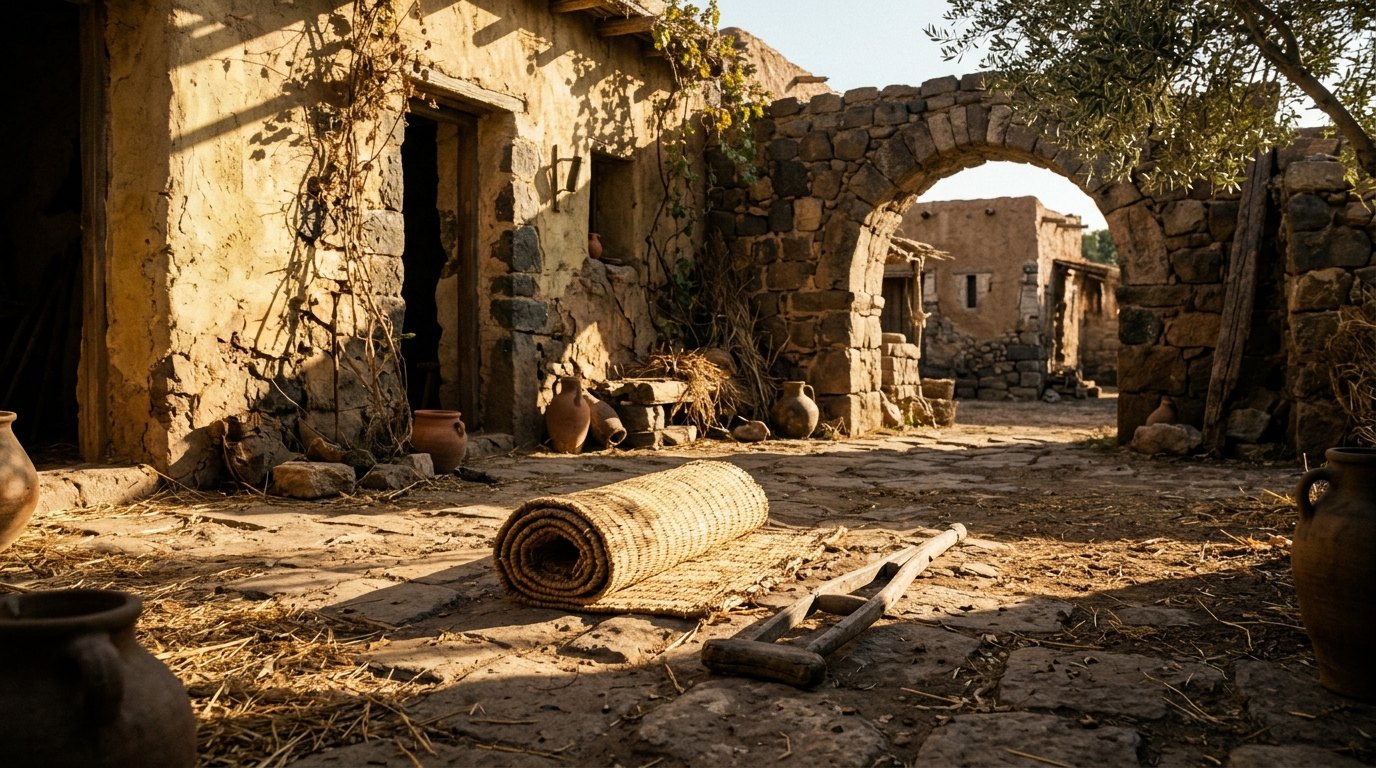
This was to fulfill what was spoken through the prophet Isaiah: “He took up our infirmities and bore our diseases.”
Matthew 8:17 (NIV)
It declares that Christ's healings fulfilled Isaiah's prophecy that the Messiah would take our infirmities and bare our sicknesses.
In Matthew 8:17, the Evangelist explains that the miracles of Christ were not random acts of benevolence, but the direct fulfillment of Isaiah's ancient prophecy that the Messiah would Himself take our infirmities and carry our diseases. Christ exercised instantaneous, sovereign authority over every kind of human malady. In Matthew 8:1-4, Jesus reached out His hand and touched a man full of leprosy—a disease requiring strict isolation under the Law—instantly restoring clean skin where decay had ruled. Immediately following, in Matthew 8:5-13, He healed the centurion's paralyzed servant entirely at a distance, proving that His spoken decree transcends geographic space, a reality seen again in John 4:46-54 when a royal official's dying son revived at the exact hour Jesus spoke in Cana. In Matthew 8:14-15, He laid His hand upon Peter's mother-in-law, quenching a severe fever so completely that she rose and served them. Jesus' healings openly declared His divine prerogative; in Mark 2:1-12, He commanded a paralytic lowered through a roof to walk specifically to establish His divine authority to forgive sins. No human condition proved beyond His reach: He healed the withered hand on the Sabbath (Mark 3:1-6; Matthew 12:9-14), halted a twelve-year hemorrhage when a woman touched His garment (Mark 5:25-34), opened deaf ears and loosened a tied tongue (Mark 7:31-37), straightened an eighteen-year spinal infirmity (Luke 13:10-17), and cured dropsy (Luke 14:1-6). At the pool of Bethesda (John 5:1-15), He made a thirty-eight-year invalid leap to his feet. Along the border of Samaria (Luke 17:11-19), He cleansed ten lepers as they walked, and even amid His arrest in Gethsemane (Luke 22:50-51), He touched the severed ear of Malchus and made it whole. As Matthew 15:29-31 summarizes, entire mountainsides of the lame, crippled, and diseased were healed at His feet, leaving the crowds marveling at the God of Israel.
| Passage | What it says |
|---|---|
| Matthew 8:1-4 | Jesus reaches out and touches a man full of leprosy, cleansing him instantly and sending him to the priest. |
| Matthew 8:5-13 | Jesus heals the centurion's paralyzed servant from afar upon witnessing the Roman soldier's remarkable faith. |
| Matthew 8:14-15 | Jesus touches the hand of Peter's mother-in-law, rebuking her severe fever so she rises to serve them. |
| Mark 2:1-12 | Jesus forgives and heals a paralytic lowered through the roof, proving His divine authority on earth to forgive sins. |
| Mark 3:1-6 | Jesus commands a man with a withered hand to stretch it out on the Sabbath, restoring it completely. |
| Mark 5:25-34 | A woman suffering twelve years with an issue of blood touches His garment's hem and is immediately made whole. |
| Mark 7:31-37 | Jesus puts His fingers into a deaf and mute man's ears, says Ephphatha, and restores his hearing and speech. |
| Luke 13:10-17 | Jesus lays hands on a woman bent double for eighteen years, instantly straightening her spine on the Sabbath. |
| Luke 14:1-6 | Jesus takes hold of a man suffering with dropsy on the Sabbath, heals him, and lets him go. |
| Luke 17:11-19 | Ten lepers are cleansed as they go show themselves to priests; one Samaritan returns praising God. |
| Luke 22:50-51 | In Gethsemane Jesus touches the severed right ear of Malchus, the high priest's servant, and heals him. |
| John 4:46-54 | Jesus speaks the word from Cana, and a royal official's dying son in Capernaum recovers at that exact hour. |
| John 5:1-15 | Jesus commands an invalid of thirty-eight years by the pool of Bethesda to take up his bed and walk. |
| Matthew 12:9-14 | Jesus heals a man's withered hand in the synagogue on the Sabbath, revealing His lordship and mercy. |
| Matthew 15:29-31 | Crowds bring the lame, blind, crippled, and mute to Jesus on a mountain, and He heals them all. |
Sight to the Blind
The Light of the world opens closed eyes
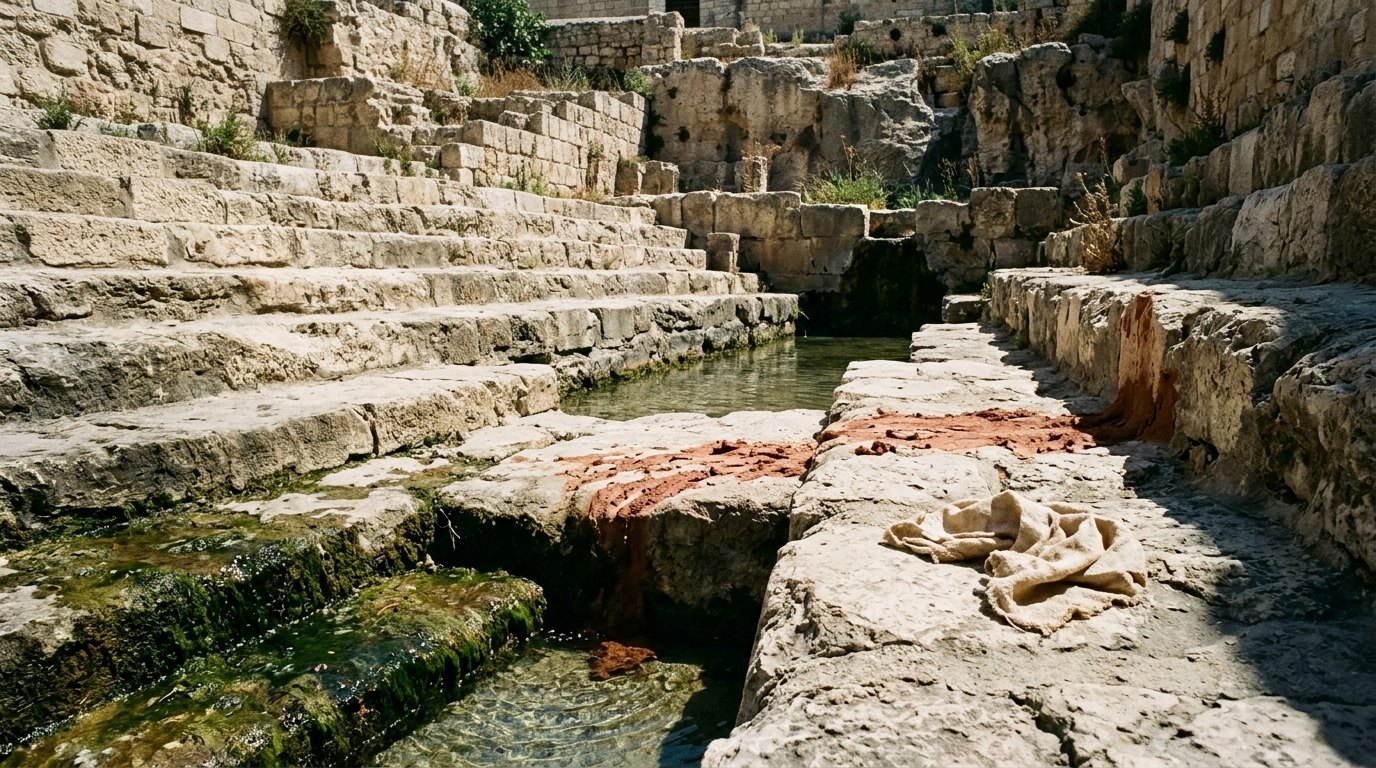
While I am in the world, I am the light of the world.” After saying this, he spit on the ground, made some mud with the saliva, and put it on the man’s eyes. “Go,” he told him, “wash in the Pool of Siloam” (this word means “Sent”). So the man went and washed, and came home seeing.
John 9:5-7 (NIV)
Jesus declares Himself the Light of the world before giving sight to a man blind from birth.
In John 9:5-7, Jesus proclaimed, "As long as I am in the world, I am the light of the world," before anointing the eyes of a man blind from birth with clay and commanding him to wash in the pool of Siloam. The giving of sight to the blind was explicitly foretold as a unique Messianic signature, a wonder never recorded of any Old Testament prophet or king. Throughout His ministry, Christ repeatedly dispelled lifelong darkness with sovereign mercy. In Matthew 9:27-31, two blind men followed Him through the streets pleading for mercy; touching their eyes, Jesus opened them according to their faith. At Bethsaida, as recounted in Mark 8:22-26, Jesus led a blind man outside the village, spitting on his eyes and laying hands on him in a two-stage demonstration of His power that brought crystal-clear vision. On the road outside Jericho, described in Mark 10:46-52 and Matthew 20:29-34, blind beggars, including Bartimaeus, refused to be silenced, crying out to the "Son of David"; Jesus stopped in His tracks, touched their sightless eyes, and instantly flooded them with light, prompting them to follow Him along the way. The prolonged trial of the man born blind in John 9:1-38 demonstrated that Christ's miracle not only restored organic physical sight, but granted radiant spiritual perception, leading the healed man to worship the Son of God while his examiners remained trapped in self-inflicted spiritual blindness.
| Passage | What it says |
|---|---|
| Matthew 9:27-31 | Two blind men follow Jesus crying for mercy, and He touches their eyes according to their faith. |
| Mark 8:22-26 | Jesus spits on a blind man's eyes at Bethsaida, laying hands on him twice until his vision is completely restored. |
| Mark 10:46-52 | Blind Bartimaeus cries out to the Son of David outside Jericho; Jesus grants his sight, and he follows Him. |
| Matthew 20:29-34 | Jesus touches the eyes of two blind men seated beside the road leaving Jericho, restoring their sight immediately. |
| John 9:1-38 | Jesus anoints a congenital blind man's eyes with clay and sends him to wash in Siloam, imparting sight. |
Authority Over Spirits
Demonic powers tremble and submit to Christ
But if I drive out demons by the finger of God, then the kingdom of God has come upon you.
Luke 11:20 (NIV)
It shows that Christ cast out demons by the finger of God to prove the kingdom of God had arrived.
In Luke 11:20, Jesus declared the spiritual reality behind His exorcisms: "If I with the finger of God cast out devils, no doubt the kingdom of God is come upon you." The arrival of Christ brought the powers of darkness into direct collision with their Creator, and they crumbled before His word. In the synagogue at Capernaum (Mark 1:21-28; Luke 4:33-36), an unclean spirit shrieked in terror at His presence, yet at Christ's sharp rebuke, the demon departed instantly without harming the man. In the desolate region of the Gadarenes (Mark 5:1-20), a legion of demons that had driven a man into nakedness, self-mutilation, and graveyard isolation begged for mercy before Jesus cast them into a herd of swine, leaving the tormented man fully clothed and in his right mind. Distance posed no barrier to His command; in Mark 7:24-30, Jesus rewarded the persistent faith of a Syrophoenician mother by expelling a demon from her daughter while remaining miles away. In Mark 9:14-29, where the disciples had failed, Jesus rebuked a violent spirit that had thrown a child into fire and water from infancy, commanding it to leave and never return. Again and again, whether addressing muteness caused by oppression (Matthew 9:32-34; Luke 11:14-20) or liberating a man who was both blind and mute (Matthew 12:22-28), Christ proved that Satan's house was utterly plundered by the One stronger than the strong man.
| Passage | What it says |
|---|---|
| Mark 1:21-28 | Jesus rebukes an unclean spirit in the Capernaum synagogue, commanding it with authority to come out of the man. |
| Mark 5:1-20 | Jesus delivers the Gerasene demoniac possessed by Legion, sending the unclean spirits into a herd of swine. |
| Mark 7:24-30 | Because of the Syrophoenician woman's persistent faith, Jesus casts an unclean demon out of her distant daughter. |
| Mark 9:14-29 | Jesus rebukes a deaf and mute spirit that threw a boy into fire and water, casting it out permanently. |
| Matthew 9:32-34 | Jesus casts a demon out of a mute man, enabling him to speak immediately to the crowd's amazement. |
| Matthew 12:22-28 | Jesus delivers a demon-possessed man who was both blind and mute, healing him so he speaks and sees. |
| Luke 4:33-36 | Jesus commands an unclean demon to leave a man in the Capernaum synagogue, displaying absolute authority. |
| Luke 11:14-20 | Jesus casts out a mute demon, declaring that God's kingdom has arrived through the finger of God. |
Dominion Over Nature
Creation obeys its Creator's voice and will

He got up, rebuked the wind and said to the waves, “Quiet! Be still!” Then the wind died down and it was completely calm. He said to his disciples, “Why are you so afraid? Do you still have no faith?” They were terrified and asked each other, “Who is this? Even the wind and the waves obey him!”
Mark 4:39-41 (NIV)
It reveals Christ exercising God's sole prerogative to still the raging of the sea with a single command.
In Mark 4:39-41, Jesus arose from sleep in a tempest, rebuked the wind, and said to the raging waves, "Peace, be still." The gale ceased immediately, producing a dead calm and forcing His disciples to ask in terror and wonder, "What manner of man is this, that even the wind and the sea obey him?" Christ repeatedly exercised the prerogative belonging solely to the Creator who formed the universe by His word. At a wedding feast in Cana (John 2:1-11), He bypassed natural viticulture to transmute six massive stone jars of plain water into rich, mature wine, manifesting His divine glory to His first disciples. On the Sea of Galilee, as recorded in Matthew 14:22-33, Mark 6:47-52, and Luke 8:22-25, He trampled chaotic waters underfoot, walking atop the crests in the dark of night and stilling the howling storm the moment He stepped into the boat. On two separate occasions, He multiplied meager provisions: transforming five loaves and two small fish into a banquet for over five thousand men (Matthew 14:13-21), and later multiplying seven loaves for four thousand (Matthew 15:32-39; Mark 8:1-10), filling large wicker baskets with the remaining fragments. He commanded the sea's creatures, providing miraculous draughts of fish that nearly tore empty nets (Luke 5:1-11; John 21:1-14) and placing a temple tax coin in the mouth of a specific fish for Peter to catch (Matthew 17:24-27). Finally, in Mark 11:12-21, His spoken curse upon a barren fig tree caused it to wither overnight to its very roots, displaying absolute authority over all natural life.
| Passage | What it says |
|---|---|
| John 2:1-11 | Jesus turns six stone jars of water into prime wine at the wedding in Cana, manifesting His glory. |
| Mark 4:35-41 | Jesus rebukes the wind and waves on Galilee, bringing immediate calm and prompting the disciples' awe. |
| Matthew 14:13-21 | Jesus multiplies five loaves and two fish to feed five thousand men besides women and children, gathering twelve baskets. |
| Matthew 14:22-33 | Jesus walks across the wind-tossed sea toward His disciples in the fourth watch of the night. |
| Matthew 15:32-39 | Jesus multiplies seven loaves and a few small fish to feed four thousand men, taking up seven large baskets. |
| Matthew 17:24-27 | Jesus directs Peter to catch a fish containing a four-drachma coin to pay the temple tax for both. |
| Mark 11:12-21 | Jesus curses a barren, leafy fig tree on the road to Jerusalem, causing it to wither from the roots. |
| Luke 5:1-11 | At Jesus' word, Simon lets down nets after an empty night and catches fish breaking the nets. |
| John 21:1-14 | Post-resurrection, Jesus directs disciples to cast right of the boat, hauling in one hundred fifty-three large fish. |
| Mark 6:47-52 | Jesus walks across the wind-tossed sea toward the disciples' boat, revealing His authority over nature. |
| Mark 8:1-10 | Jesus feeds four thousand men beside women and children with seven loaves and a few small fish. |
| Luke 8:22-25 | Jesus commands the raging storm and waves to be calm, prompting awe at His identity. |
Victory Over Death
The Lord of life summons the dead
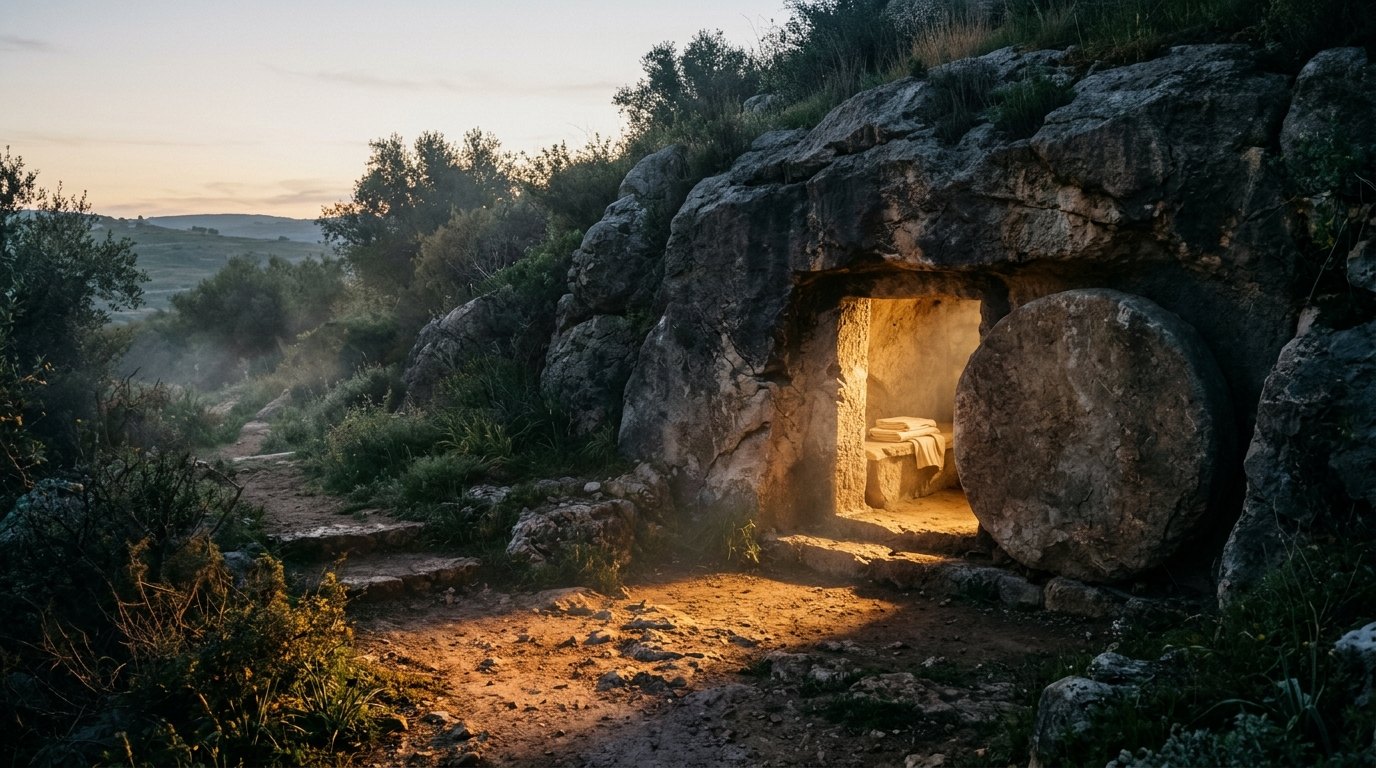
Jesus said to her, “I am the resurrection and the life. The one who believes in me will live, even though they die; and whoever lives by believing in me will never die. Do you believe this?”
John 11:25-26 (NIV)
Jesus reveals Himself as the resurrection and the life prior to raising a man dead four days.
Before standing before a sealed tomb, Jesus uttered the climactic declaration of His ministry in John 11:25-26: "I am the resurrection, and the life: he that believeth in me, though he were dead, yet shall he live: and whosoever liveth and believeth in me shall never die." Throughout His earthly ministry, Christ demonstrated that death has no final claim before the Son of God. When approaching the city of Nain in Luke 7:11-17, Jesus encountered a widow's sorrowful procession, touched the open bier, and commanded the young man to arise, restoring him immediately to his mother. In the home of a synagogue ruler recorded in Mark 5:35-43, Jesus dismissed the mocking mourners, grasped the cold hand of a twelve-year-old child, and commanded, "Talitha cumi"; her spirit instantly returned, and she walked.
Yet the climactic public demonstration occurred in Bethany in John 11:38-44. Faced with a tomb sealed for four full days, where physical decay had already set in, Jesus cried with a loud voice, "Lazarus, come forth!" The bound man walked out into the light, proving that Christ exercises sovereign authority over the grave.
Every resurrecion miracle pointed toward the ultimate triumph: Jesus' own bodily rising on the third day. In Luke 24:1-7, angels challenged the grieving women with the glorious truth, "He is not here, but is risen." Matthew 28:1-10 describes the dramatic descent of the angel who rolled away the stone, revealing an empty grave rather than releasing a captive. As recorded in Mark 16:1-8 and John 20:1-18, the grave clothes lay undisturbed, and the risen Lord stood alive in the garden, having abolished death forever.
| Passage | What it says |
|---|---|
| Luke 7:11-17 | Jesus stops a funeral bier at Nain, commanding a deceased widow's only son to arise, returning him alive. |
| Mark 5:35-43 | Jesus takes Jairus's twelve-year-old deceased daughter by the hand, says Talitha cumi, and raises her. |
| John 11:38-44 | Jesus calls Lazarus out from the tomb after four days, demonstrating sovereign authority over death and decay. |
| Luke 24:1-7 | The bodily resurrection of Jesus Christ from the dead on the third day, the supreme sign of His victory. |
| Matthew 28:1-10 | An angel rolls back the tomb stone, announcing that Jesus is risen bodily from the dead. |
| Mark 16:1-8 | Women visit the sepulchre and find the stone rolled away and Christ risen as promised. |
| John 20:1-18 | Mary Magdalene and the disciples find the empty tomb, and the risen Jesus appears to Mary. |
Where in the Bible
| Book | Passages |
|---|---|
| Matthew | 14 · Matthew 8:1-4, Matthew 8:5-13, Matthew 8:14-15, Matthew 12:9-14, Matthew 15:29-31, Matthew 9:27-31, Matthew 20:29-34, Matthew 9:32-34, Matthew 12:22-28, Matthew 14:13-21, Matthew 14:22-33, Matthew 15:32-39, Matthew 17:24-27, Matthew 28:1-10 |
| Mark | 16 · Mark 2:1-12, Mark 3:1-6, Mark 5:25-34, Mark 7:31-37, Mark 8:22-26, Mark 10:46-52, Mark 1:21-28, Mark 5:1-20, Mark 7:24-30, Mark 9:14-29, Mark 4:35-41, Mark 11:12-21, Mark 6:47-52, Mark 8:1-10, Mark 5:35-43, Mark 16:1-8 |
| Luke | 10 · Luke 13:10-17, Luke 14:1-6, Luke 17:11-19, Luke 22:50-51, Luke 4:33-36, Luke 11:14-20, Luke 5:1-11, Luke 8:22-25, Luke 7:11-17, Luke 24:1-7 |
| John | 7 · John 4:46-54, John 5:1-15, John 9:1-38, John 2:1-11, John 21:1-14, John 11:38-44, John 20:1-18 |
The story in order
- Jesus begins His ministry (c. AD 27) · Mark 1:21-28 · Jesus casts out an unclean spirit, showing His authority over demons.
- Jesus heals the sick (c. AD 27) · Matthew 8:1-4 · Jesus touches and cleanses a leper, demonstrating power over disease.
- Jesus calms the storm (c. AD 28) · Mark 4:35-41 · Jesus rebukes the wind and waves, showing dominion over nature.
- Jesus feeds the crowds (c. AD 28) · Matthew 14:13-21 · Jesus miraculously multiplies loaves and fish to feed thousands.
- Jesus gives sight to the blind (c. AD 28) · Mark 8:22-26 · Jesus restores sight to a blind man, demonstrating His power.
- Jesus raises the dead (c. AD 28) · Luke 7:11-17 · Jesus raises the widow's son at Nain, showing victory over death.
- Jesus raises Lazarus (c. AD 30) · John 11:38-44 · Jesus calls Lazarus from the tomb, demonstrating supreme authority over death.
- Jesus' Triumphal Entry (AD 30) · Mark 11:12-21 · Jesus curses a fig tree, showing His authority over creation.
- Jesus' Resurrection (AD 30) · Luke 24:1-7 · The resurrection of Jesus is the ultimate sign of His victory over death.
Key words
- Miracle
- An extraordinary event attributed to divine intervention. · Mark 1:21-28
- Authority
- The power or right to give orders and enforce obedience. · Mark 1:21-28
- Kingdom of God
- God's sovereign reign and rule, inaugurated by Jesus' ministry. · Luke 11:14-20
- Heal
- To make whole or sound; to restore to health. · Matthew 8:1-4
- Faith
- Complete trust or confidence in someone or something. · Matthew 8:5-13
- Resurrection
- The act of rising from the dead. · Luke 24:1-7
These miracles were not written down merely to satisfy historical curiosity, but to bring us to living faith in the Son of God. Every storm silenced and every disease cleansed testifies that Jesus is the Christ, who has authority to forgive sins and restore creation. In trusting Him, we enter into the eternal life His mighty works so clearly herald.
47 passages, each cited once.
Scripture cited
- John 20:30-31
- John 21:25
- Matthew 11:2-6
- Luke 7:18-23
- Mark 1:34
- Luke 4:16-21
- Isaiah 35:1-6
- Matthew 8:1-17
- John 2:1-11
- Matthew 14:13-21
- John 11:1-44
- Mark 4:35-41