What was Solomon's temple?
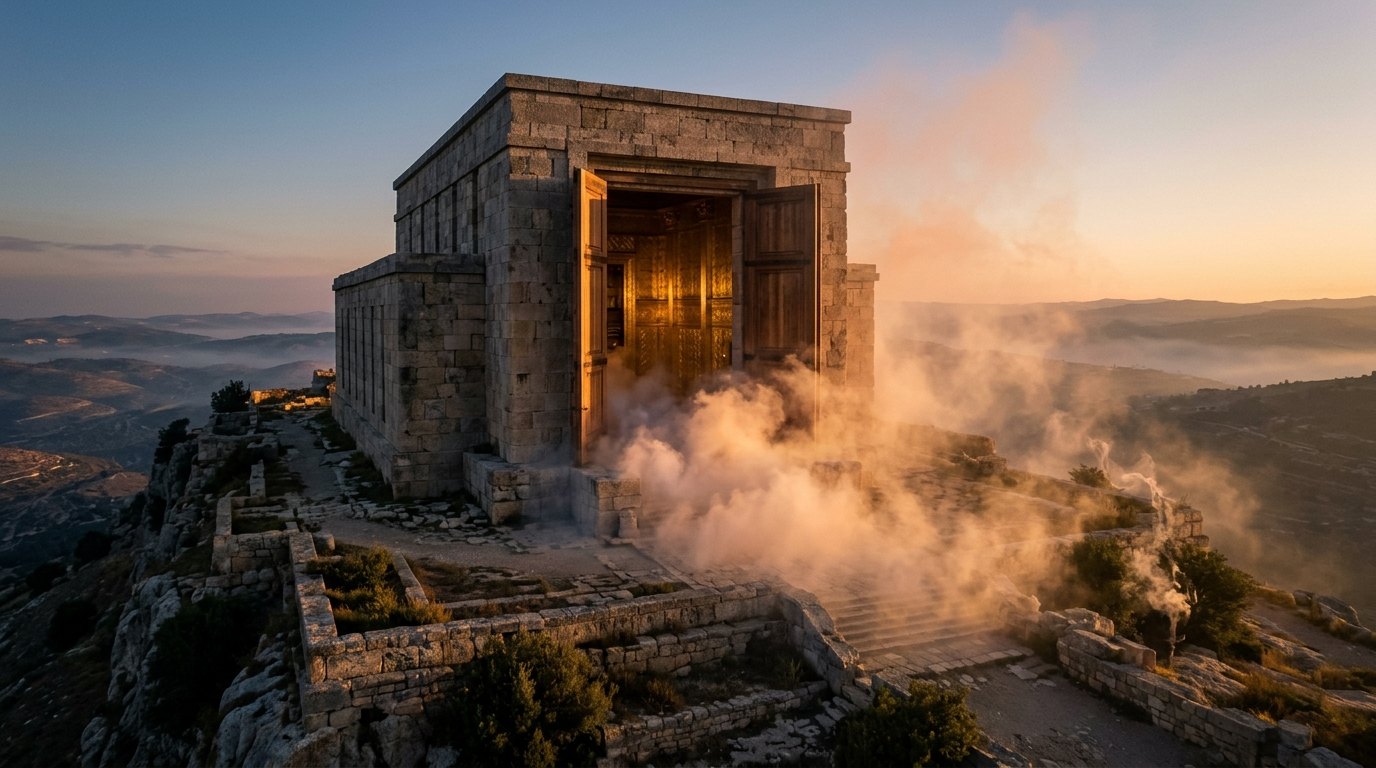
1 Kings 8:10-13
10 When the priests withdrew from the Holy Place, the cloud filled the temple of the LORD.
11 And the priests could not perform their service because of the cloud, for the glory of the LORD filled his temple.
12 Then Solomon said, “The LORD has said that he would dwell in a dark cloud;
13 I have indeed built a magnificent temple for you, a place for you to dwell forever.”
New International Version (NIV)
The answer
Solomon's temple was the permanent stone-and-cedar house of worship that King Solomon built in Jerusalem to replace the portable tabernacle (Tent of Meeting) Moses had set up in the wilderness. It was the central place where Israel met God through sacrifice and prayer for nearly four hundred years, until the Babylonians destroyed it in 586 BC (2 Kings 25:9).
What it looked like
- Size: about 60 cubits long, 20 wide, and 30 high (roughly 90 × 30 × 45 feet), with a porch across the front (1 Kings 6:2-3).
- Two rooms: an outer "holy place" and an inner "most holy place" (the debir), a perfect cube of about 20 cubits, overlaid with pure gold (1 Kings 6:16-22).
- Two giant gold cherubim: olive-wood figures ten cubits high, with outstretched wings that overshadowed the ark of the covenant in the most holy place (1 Kings 6:23-28; 8:6-7).
- Walls and floor: lined inside with cedar carved with cherubim, palm trees and flowers, then plated with gold from floor to ceiling (1 Kings 6:15, 18, 30).
- Built quietly: stone was dressed at the quarry so no hammer or iron tool was heard inside the house (1 Kings 6:7).
When and how it was built
Work began in the fourth year of Solomon's reign, 480 years after the Exodus, in the month of Ziv, and was finished seven years later in the eighth month, Bul (1 Kings 6:1, 37-38). The builder later assembled the elders of Israel and brought up the ark of the covenant and the old Tent of Meeting out of Zion into the new house (1 Kings 8:1-6).
What happened at its dedication
When the priests emerged from the holy place, the cloud of Yahweh's glory filled the temple so that the priests could not stand to minister (1 Kings 8:10-11). The same glory had filled the tabernacle at its dedication (Exodus 40:34-35), and fire from heaven later came down at a later celebration of the temple (2 Chronicles 7:1-2). Solomon then declared that Yahweh had said he would dwell in thick darkness, but Solomon had built him a house of habitation to dwell in forever (1 Kings 8:12-13).
Why it mattered
God's word to Solomon at the start of the build made the temple's purpose plain: "I will dwell among the children of Israel, and will not forsake my people Israel" (1 Kings 6:13). The temple was where heaven met earth in a fixed location, where blood was offered for sin, where the covenant with Israel was renewed, and where the whole nation gathered three times a year. It pointed forward to Christ, who said of his own body, "Destroy this temple, and I will raise it up in three days" (John 2:19), showing that the true dwelling of God is not a building but the person and people of the Son.
A note for the road
- After Solomon's temple fell to Babylon (586 BC), a smaller second temple rose under Zerubbabel (finished 516 BC, Ezra 6:15) and was later expanded by Herod. Solomon's temple is sometimes called "the first temple," and Jesus is still sometimes spoken of in those terms as the place of true worship.
- Read 1 Kings 6-8 in one sitting for the full account of its building and dedication, and 2 Chronicles 3-7 for the parallel record with the fire from heaven.
Answered from Scripture · reviewed November 7, 2026
Solomon's temple was the stone-and-cedar sanctuary erected on Mount Moriah in Jerusalem, replacing the mobile wilderness tabernacle as the permanent earthly seat of Yahweh's presence. Built with unmatched splendor and consecrated by the descent of the divine glory cloud, it stood for four centuries as the central altar of sacrifice and prayer for Israel. Understanding its architecture, dedication, and ultimate shadow points directly to the true and lasting dwelling of God in Jesus Christ and His people.
David's Vision and Preparation
A Father Prepares the Materials for His Son
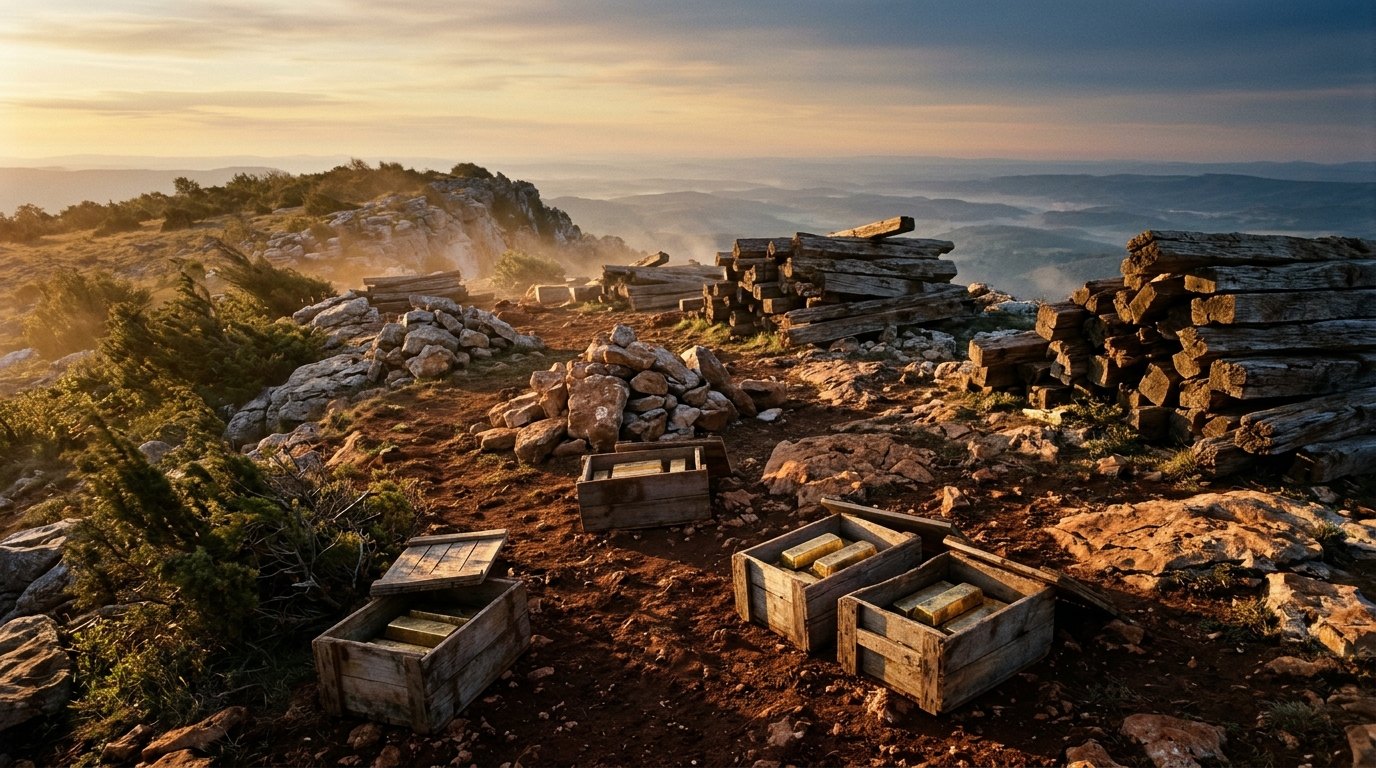
David said, “My son Solomon is young and inexperienced, and the house to be built for the LORD should be of great magnificence and fame and splendor in the sight of all the nations. Therefore I will make preparations for it.” So David made extensive preparations before his death.
1 Chronicles 22:5 (NIV)
David explains that the house to be built for the Lord must be exceedingly magnificent, famous, and glorious throughout all lands.
King David set the trajectory for the sanctuary when he observed that the house to be built for the Lord must be exceedingly magnificent, famed throughout all nations (1 Chronicles 22:5). Though David earnestly yearned to construct a permanent house of cedar for the ark, Yahweh sent Nathan the prophet to restrain him, promising instead that an offspring from David's own body would build the dwelling and enjoy an established throne forever (2 Samuel 7:1-13; 1 Chronicles 17:1-15). God preserved David's calling as the royal architect and provider rather than the actual builder.
David spent his declining years amassing breathtaking resources, gathering vast reserves of iron, bronze, cedar logs, and refined gold (1 Chronicles 22:1-19). He did not devise the structure from human imagination; rather, the Spirit gave David the precise architectural pattern and blueprint for the vestibule, rooms, courts, and sacred utensils, which he handed over to his son Solomon (1 Chronicles 28:11-19). Moved by their king's dedication, the tribal leaders and families offered immense personal treasures of silver, precious stones, and gold willingly to Yahweh's treasury (1 Chronicles 29:1-9).
Even the geographical ground beneath the sanctuary was consecrated through David's obedience. Following the judgment after the census, David purchased the threshing floor of Araunah (or Ornan) the Jebusite, erecting an altar where wrath was turned away by sacrificial fire (2 Samuel 24:18-25; 1 Chronicles 21:18-28). That exact plot of elevated bedrock became the designated platform for the altar of burnt offering and the future house of God.
| Passage | What it says |
|---|---|
| 2 Samuel 7:1-13 | David desires to build God a house, but God promises instead to establish David's royal offspring to build the temple. |
| 1 Chronicles 22:1-19 | David gathers vast quantities of stone, cedar, iron, bronze, and gold for Solomon to begin the work. |
| 1 Chronicles 28:11-19 | David delivers the God-given architectural pattern and floor plan for the temple and all its furnishings to Solomon. |
| 1 Chronicles 29:1-9 | David and the leaders of Israel offer their personal treasures willingly and generously for the construction. |
| 1 Chronicles 17:1-15 | Nathan delivers the covenant promise that David's offspring will build God's house and establish His throne forever. |
| 2 Samuel 24:18-25 | David purchases Araunah's threshing floor and builds an altar, securing the precise site where the temple will be erected. |
| 1 Chronicles 21:18-28 | David identifies the threshing floor of Ornan as the place for the altar and future house of the Lord. |
Location and Silent Construction
Mount Moriah and Stone Prepared at the Quarry
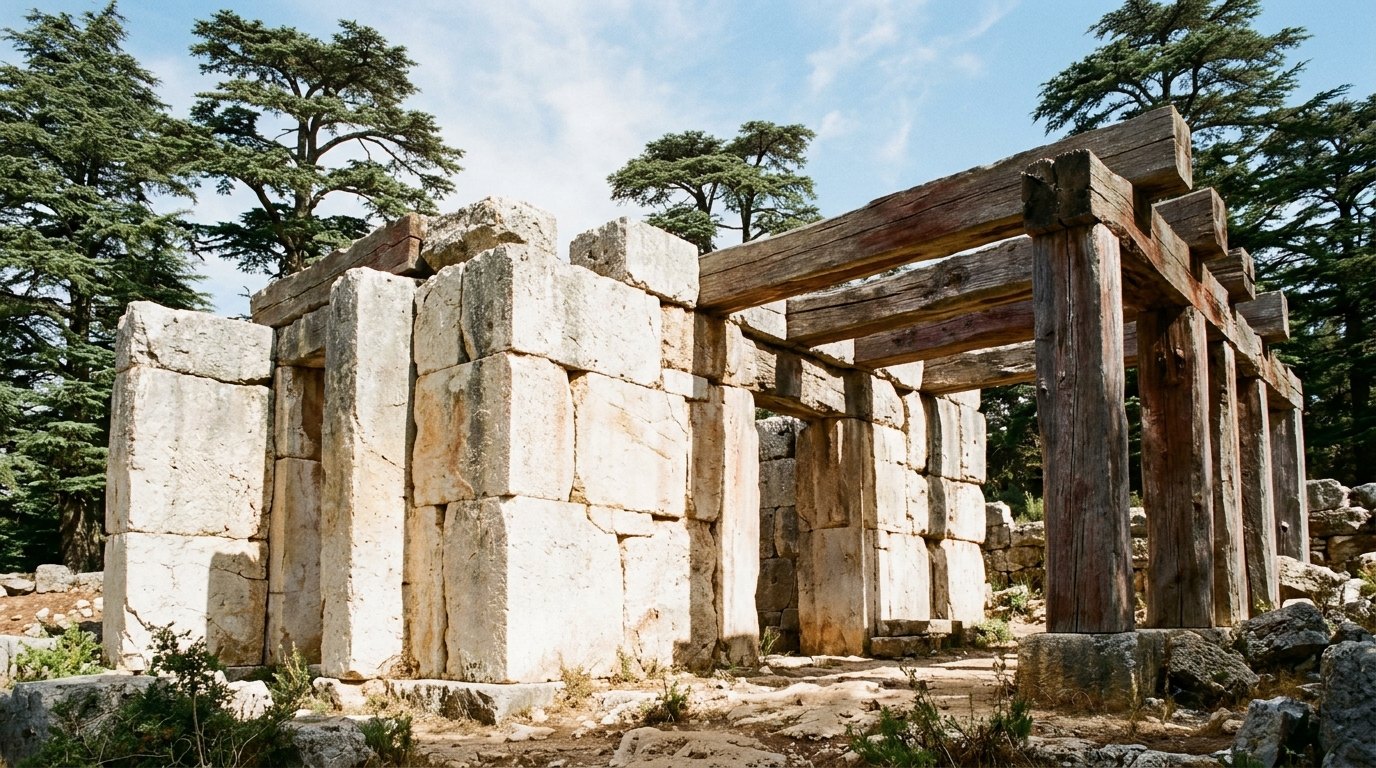
In building the temple, only blocks dressed at the quarry were used, and no hammer, chisel or any other iron tool was heard at the temple site while it was being built.
1 Kings 6:7 (NIV)
The stones were finished completely at the quarry so that no iron tool or hammer was heard on the temple site.
The construction of the temple was characterized by a profound, reverent stillness: the house was built with stone finished at the quarry, ensuring that no hammer, axe, or iron tool echoed across the holy mount during assembly (1 Kings 6:7). Solomon broke ground on Mount Moriah in Jerusalem, the very summit where the Lord had appeared to David at the threshing floor of Ornan, and where centuries before Abraham had bound Isaac (2 Chronicles 3:1-2). This monumental work commenced in Solomon's fourth year of reign, exactly four hundred and eighty years after the children of Israel were delivered out of Egypt (1 Kings 6:1).
To achieve such architectural perfection, Solomon partnered with Hiram (or Huram), the Phoenician king of Tyre, exchanging agricultural provisions of wheat, barley, wine, and oil for Lebanon's towering cedar and cypress timber (1 Kings 5:1-18; 2 Chronicles 2:1-18). Phoenician lumberjacks felled the ancient trees, floated them as rafts down the Mediterranean coast to Joppa, and hauled them uphill to Jerusalem, while seasoned masons squared the megalithic foundation stones.
For seven continuous years, thousands of conscripted laborers and master artisans fitted the pre-cut, polished blocks into place with mortar and precision. The foundation was laid in the spring month of Ziv, and the sanctuary stood fully finished down to every detail in the autumn month of Bul (1 Kings 6:37-38). The silent assembly created an atmosphere of holy awe, reflecting a house assembled by divine order rather than chaotic human toil.
| Passage | What it says |
|---|---|
| 2 Chronicles 3:1-2 | Solomon begins construction on Mount Moriah, where the Lord appeared to David at the threshing floor of Ornan. |
| 1 Kings 5:1-18 | Solomon contracts with Hiram king of Tyre for cedar and cypress timber from Lebanon and skilled stonemasons. |
| 1 Kings 6:1 | Building begins in Solomon's fourth year, four hundred and eighty years after Israel left Egypt. |
| 1 Kings 6:7 | The house is built of pre-cut stone so that no hammer, axe, or iron tool echoes during construction. |
| 1 Kings 6:37-38 | The foundation is laid in Ziv and the entire structure is completed seven years later in the month of Bul. |
| 2 Chronicles 2:1-18 | Solomon requests timber and skilled craftsmen from Huram king of Tyre to begin the massive temple project. |
Design and Golden Furnishings
A Cedar Sanctuary Overlaid with Pure Gold
Solomon covered the inside of the temple with pure gold, and he extended gold chains across the front of the inner sanctuary, which was overlaid with gold. So he overlaid the whole interior with gold. He also overlaid with gold the altar that belonged to the inner sanctuary.
1 Kings 6:21-22 (NIV)
Solomon overlaid the entire interior of the house with pure gold, leaving no stone visible within the holy place.
Upon stepping inside the temple, a visitor stood surrounded by blinding radiance, because Solomon overlaid the entire interior of the house with pure gold, completely concealing the underlying masonry (1 Kings 6:21-22). The edifice measured sixty cubits long, twenty cubits wide, and thirty cubits high, flanked by a stately eastern portico and three tiers of peripheral storage chambers (1 Kings 6:2-6; 2 Chronicles 3:3-4). The interior cedar paneling was carved with intricate bas-reliefs of cherubim, lush palm trees, and budding flowers, evoking an Edenic sanctuary restored to earth (1 Kings 6:15-18, 29-36).
At the western end rested the inner sanctuary, the Most Holy Place, a perfect cube of twenty cubits overlaid in fine gold (1 Kings 6:19-20). Within stood two ten-cubit-tall cherubim carved from wild olive wood and plated in gold, their outstretched wings spanning twenty cubits from wall to wall over the place where the ark would rest, sheltered behind an embroidered veil of blue, purple, and crimson linen (1 Kings 6:23-28; 2 Chronicles 3:10-14).
At the entrance, master bronzeworker Huram cast two colossal bronze pillars named Jachin and Boaz, crowned with decorative pomegranates and lilies (1 Kings 7:15-22; 2 Chronicles 3:15-17). In the outer courtyard rested the bronze Sea, an immense basin resting upon twelve bronze oxen, alongside ten movable wheeled bronze water carriages for washing sacrifices (1 Kings 7:23-45; 2 Chronicles 4:1-15). Inside the Holy Place stood ten golden lampstands, ten tables of showbread, and the golden altar of incense, filling the interior with divine light, sustenance, and fragrant intercession (1 Kings 7:48-50; 2 Chronicles 4:16-22).
| Passage | What it says |
|---|---|
| 1 Kings 6:2-6 | The dimensions specify sixty cubits in length, twenty in width, thirty in height, with a front vestibule and side chambers. |
| 1 Kings 6:15-18 | The inner walls are paneled with cedar carved with gourds and open flowers, concealing the structural stone. |
| 1 Kings 6:19-28 | The inner sanctuary houses the ark beneath two ten-cubit-high olive-wood cherubim covered in pure gold. |
| 1 Kings 7:15-22 | Hiram of Tyre casts two massive bronze pillars, Jachin and Boaz, standing at the temple's entrance. |
| 1 Kings 7:23-45 | The courtyard receives the bronze Sea on twelve oxen, ten bronze basins, and all required holy vessels. |
| 1 Kings 7:48-50 | Solomon manufactures the golden altar of incense, ten golden lampstands, the tables of showbread, and temple accessories. |
| 1 Kings 6:29-36 | Carvings of cherubim, palm trees, and flowers line the walls, and the inner court is built with cedar. |
| 2 Chronicles 3:3-17 | Details the building dimensions, the most holy place, the golden cherubim, the veil, and the pillars Jachin and Boaz. |
| 2 Chronicles 4:1-22 | Describes the bronze altar, sea, basins, golden lampstands, showbread tables, courts, and holy vessels fashioned by Huram. |
The Divine Covenant
God's Conditional Promise During the Build
“As for this temple you are building, if you follow my decrees, observe my laws and keep all my commands and obey them, I will fulfill through you the promise I gave to David your father. And I will live among the Israelites and will not abandon my people Israel.”
1 Kings 6:12-13 (NIV)
God declares that His dwelling among Israel depends upon royal obedience to His statutes and commandments.
While the temple was being erected in radiant beauty, God spoke directly to Solomon to ground the physical stone in moral reality: His dwelling among Israel depended entirely upon royal obedience to His commandments (1 Kings 6:12-13). Yahweh made clear that no amount of gold, Lebanese cedar, or artistic splendor could substitute for a heart surrendered to His covenant. If the king and people walked in His statutes, the Lord would keep His word given to David and never abandon His inheritance (1 Kings 6:11-13).
Following the temple's dedication, the Lord appeared to Solomon a second time by night to confirm the sanctuary as His chosen house of sacrifice. He assured him that when disaster, drought, or pestilence struck, if My people who are called by My name humble themselves and pray, He would hear from heaven, forgive their sin, and heal their land (2 Chronicles 7:12-16).
Yet this comfort was paired with a sobering, prophetic warning. If Solomon or his sons turned aside to serve other gods, Yahweh warned that He would uproot Israel from the soil and make this temple a desolate ruin and a proverb among the nations (1 Kings 9:1-9; 2 Chronicles 7:17-22). Passersby would gaze at the blackened heap and recognize that disaster had fallen because the people abandoned the Lord who delivered them from Egypt. The temple was never a mechanical talisman; it was the visible seal of a living covenant between a holy God and His people.
| Passage | What it says |
|---|---|
| 1 Kings 6:11-13 | The word of the Lord comes to Solomon promising to dwell among Israel if he walks faithfully in God's law. |
| 1 Kings 9:1-9 | God warns that if Israel turns to idols, the temple will be cast out of His sight as a desolate proverb. |
| 2 Chronicles 7:17-22 | The Lord repeats that unfaithfulness will lead to Israel's uprooting and the destruction of this magnificent house. |
| 2 Chronicles 7:12-16 | The Lord appears by night promising to hear prayer made in this place if His people humble themselves and turn. |
The Glory of Dedication
Fire and the Cloud of Yahweh Fill the House
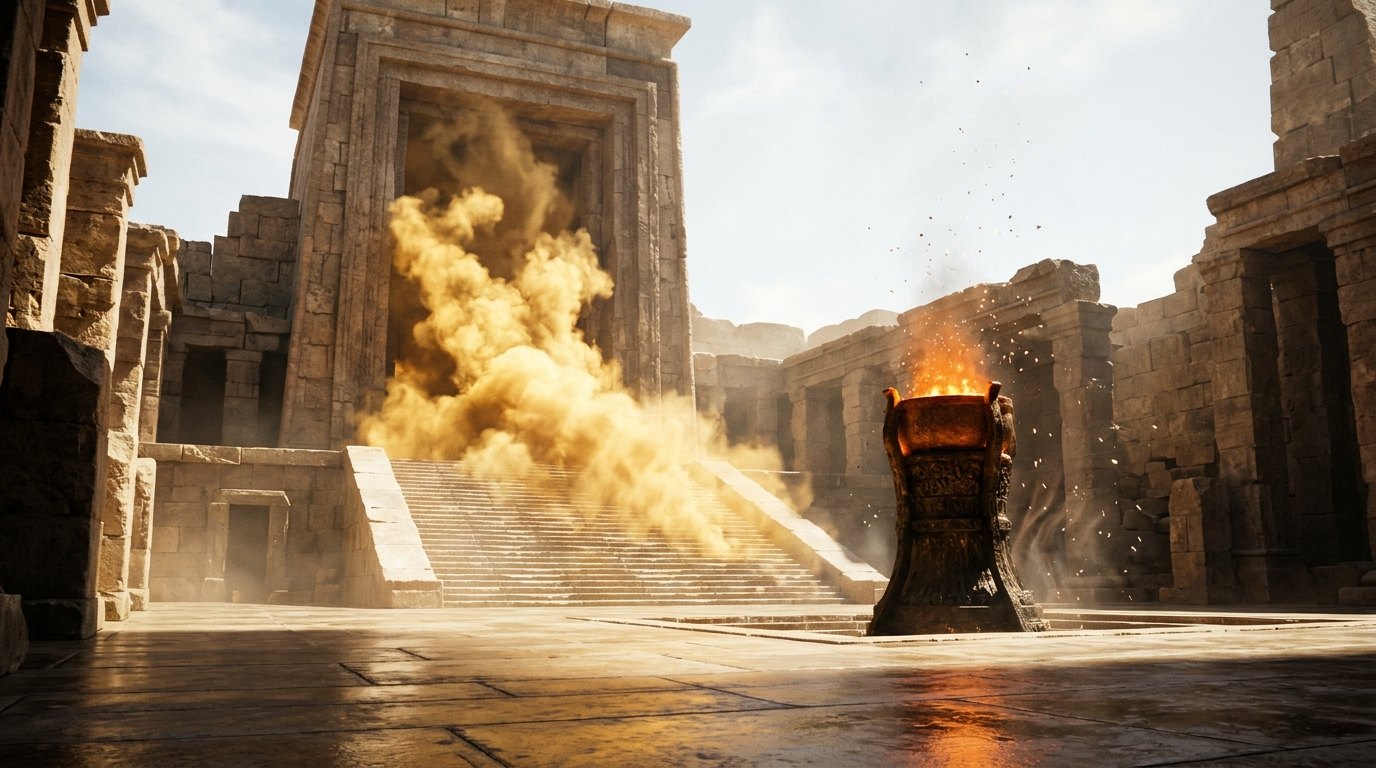
When the priests withdrew from the Holy Place, the cloud filled the temple of the LORD. And the priests could not perform their service because of the cloud, for the glory of the LORD filled his temple.
1 Kings 8:10-11 (NIV)
The glory cloud filled Yahweh's house so overwhelmingly that the priests could not remain inside to minister.
When Solomon completed the construction on Mount Moriah, the glory cloud filled Yahweh's house so overwhelmingly that the priests could not stand to minister (1 Kings 8:10-11). The dedication began as the elders of Israel brought the ark of the covenant from the City of David into the Most Holy Place beneath the carved wings of the cherubim (1 Kings 8:1-9; 2 Chronicles 5:1-14). As the Levitical musicians sounded trumpets, cymbals, and harps, declaring Yahweh’s eternal mercy, the divine Shekinah visibly engulfed the sanctuary, proving that God had chosen to set His earthly presence in this dedicated house (1 Kings 8:12-13).
Solomon then knelt before the altar of the Lord, spread his hands toward heaven, and offered an extraordinary prayer of intercession (1 Kings 8:22-53; 2 Chronicles 6:1-42). He knew that even the highest heavens cannot contain God, yet he pled that the Lord's eyes would remain open toward this place night and day. He asked for divine hearing and forgiveness whenever Israel sinned, when famine or drought arose, when enemies laid siege, and even when a foreigner prayed toward the house in reverent faith. God confirmed Solomon’s prayer with immediate power: fire fell from heaven and consumed the burnt offerings as the glory of the Lord filled the house, causing the congregation to bow face-down upon the stone pavement in adoration (2 Chronicles 7:1-3).
For two full weeks, Israel celebrated with an immense multitude of peace offerings and joyful praise (1 Kings 8:62-66; 2 Chronicles 7:4-11). The Lord accepted the sanctuary as a house of prayer, confirming that He would hear the cries of His covenant people whenever they turned their faces toward His holy dwelling.
| Passage | What it says |
|---|---|
| 1 Kings 8:1-9 | Solomon brings the ark of the covenant from Zion and places it beneath the wings of the cherubim. |
| 1 Kings 8:10-13 | The cloud of glory fills the temple as Solomon proclaims God's chosen dwelling in thick darkness. |
| 1 Kings 8:22-53 | Solomon prays toward the temple, interceding for forgiveness, foreign seekers, drought, battle, and eventual captivity. |
| 2 Chronicles 7:1-3 | Fire descends from heaven to consume the sacrifices, and Israel falls prostrate in worship seeing the Lord's glory. |
| 1 Kings 8:62-66 | Solomon and Israel offer thousands of peace offerings and celebrate a joyful fourteen-day feast before returning home. |
| 2 Chronicles 5:1-14 | The ark is brought up, priests and Levites praise the Lord in unison, and the cloud of glory fills the house. |
| 2 Chronicles 6:1-42 | Solomon's extensive prayer of dedication asking God to hear both Israel and the foreigner who prays toward this house. |
| 2 Chronicles 7:4-11 | The king and people offer massive sacrifices and keep the feast of dedication with great gladness of heart. |
Fall, Shadow, and True Substance
From Physical Ruins to the Living Temple
Jesus answered them, “Destroy this temple, and I will raise it again in three days.” They replied, “It has taken forty-six years to build this temple, and you are going to raise it in three days?” But the temple he had spoken of was his body.
John 2:19-21 (NIV)
Jesus identifies His own bodily death and resurrection as the ultimate reality pointed to by the earthly temple building.
Though built with magnificent stone and cedar, Solomon's sanctuary was an earthly copy designed to point to an incorruptible reality: the true temple is Jesus Christ Himself, who said, 'Destroy this temple, and in three days I will raise it up' (John 2:19-21). Israel continually made the mistake of treating the physical building as an automatic talisman, prompting Jeremiah to warn that divine presence would never sanction unrepented wickedness (Jeremiah 7:1-15). In 586 B.C., God withdrew His hand, and Babylon under Nebuzaradan burned the temple, tore down its walls, and carried off the storied bronze pillars Jachin and Boaz (2 Kings 25:8-15; Jeremiah 52:12-23; fulfilled in John 2:19-21).
Yet this loss made way for the promised substance. The eternal Word became flesh and tabernacled among us, displaying the fullness of the divine glory (John 1:14; fulfilled in Colossians 2:9). Christ spoke of His own crucified and risen body as the enduring temple (John 2:22; fulfilled in Matthew 26:61, Mark 14:58), entering the heavenly sanctuary with His own blood to secure eternal redemption once for all (Hebrews 9:1-12).
Through this resurrection, God established His permanent earthly dwelling within His redeemed people. United to Christ the cornerstone, believers are 'living stones' built into a holy temple in the Lord where the Spirit dwells (1 Corinthians 3:16-17; Ephesians 2:19-22; 1 Peter 2:4-5). This redemptive progression reaches its climax in the New Jerusalem, where no stone temple stands at all, because the Lord God Almighty and the Lamb are its temple, illuminating the eternal city forever (Revelation 21:22; fulfilled in Revelation 22:3-5).
| Passage | What it says | Fulfilled |
|---|---|---|
| 2 Kings 25:8-15 | Nebuchadnezzar's forces burn Solomon's temple, demolish its walls, and carry off all remaining bronze and gold. | John 2:19-21 |
| John 1:14 | The Word became flesh and tabernacled among us, displaying the true glory of God full of grace and truth. | Colossians 2:9 |
| John 2:19-22 | Jesus declares that if this temple is destroyed, He will raise it in three days, referring to His bodily resurrection. | Matthew 26:61, Mark 14:58 |
| 1 Corinthians 3:16-17 | Paul explains that the gathered church of believers is God's temple where His Spirit dwells. | Ephesians 2:19-22 |
| Revelation 21:22 | The New Jerusalem contains no temple building, for the Lord God the Almighty and the Lamb are its temple. | Revelation 22:3-5 |
| Jeremiah 7:1-15 | The prophet warns that trusting in the physical temple building will not avert judgment without true repentance. | |
| Jeremiah 52:12-23 | Nebuzaradan burns the house of the Lord and strips its bronze pillars, stands, and vessels for Babylon. | |
| Ephesians 2:19-22 | Believers are built together into a holy temple in the Lord, growing into a dwelling place for God by His Spirit. | |
| Hebrews 9:1-12 | The earthly sanctuary and its furnishings served as a copy until Christ entered the greater and more perfect tent. | |
| 1 Peter 2:4-5 | Believers come to Christ as living stones, being built up as a spiritual house to offer spiritual sacrifices. |
Where in the Bible
| Book | Passages |
|---|---|
| 2 Samuel | 2 · 2 Samuel 7:1-13, 2 Samuel 24:18-25 |
| 1 Kings | 17 · 1 Kings 5:1-18, 1 Kings 6:1, 1 Kings 6:7, 1 Kings 6:37-38, 1 Kings 6:2-6, 1 Kings 6:15-18, 1 Kings 6:19-28, 1 Kings 7:15-22, 1 Kings 7:23-45, 1 Kings 7:48-50, 1 Kings 6:29-36, 1 Kings 6:11-13, 1 Kings 9:1-9, 1 Kings 8:1-9, 1 Kings 8:10-13, 1 Kings 8:22-53, 1 Kings 8:62-66 |
| 2 Kings | 1 · 2 Kings 25:8-15 |
| 1 Chronicles | 5 · 1 Chronicles 22:1-19, 1 Chronicles 28:11-19, 1 Chronicles 29:1-9, 1 Chronicles 17:1-15, 1 Chronicles 21:18-28 |
| 2 Chronicles | 10 · 2 Chronicles 3:1-2, 2 Chronicles 2:1-18, 2 Chronicles 3:3-17, 2 Chronicles 4:1-22, 2 Chronicles 7:17-22, 2 Chronicles 7:12-16, 2 Chronicles 7:1-3, 2 Chronicles 5:1-14, 2 Chronicles 6:1-42, 2 Chronicles 7:4-11 |
| Jeremiah | 2 · Jeremiah 7:1-15, Jeremiah 52:12-23 |
| John | 2 · John 1:14, John 2:19-22 |
| 1 Corinthians | 1 · 1 Corinthians 3:16-17 |
| Ephesians | 1 · Ephesians 2:19-22 |
| Hebrews | 1 · Hebrews 9:1-12 |
| 1 Peter | 1 · 1 Peter 2:4-5 |
| Revelation | 1 · Revelation 21:22 |
The story in order
- David prepares for the temple (c. 1000 BC) · 1 Chronicles 22:1-19 · David gathers materials and receives the temple plans from God.
- Temple construction begins (c. 966 BC) · 1 Kings 6:1 · Solomon starts building the temple 480 years after the Exodus.
- Temple structure completed (c. 959 BC) · 1 Kings 6:38 · The temple is finished in seven years with pre-cut stones.
- Dedication and divine glory (c. 959 BC) · 1 Kings 8:10-13 · The cloud of glory fills the temple upon its dedication.
- God's conditional promise (c. 959 BC) · 1 Kings 6:11-13 · God promises to dwell with Israel if they obey His law.
- Temple's destruction (586 BC) · 2 Kings 25:8-15 · Nebuchadnezzar burns and demolishes the temple.
- Jesus speaks of His body (AD 27-30) · John 2:19-22 · Jesus refers to His resurrection as the temple's rebuilding.
- The church as God's temple (c. AD 55) · 1 Corinthians 3:16-17 · Paul teaches believers are the temple where God's Spirit dwells.
- Christ's sacrifice fulfills the temple (c. AD 67) · Hebrews 9:11-12 · Jesus entered the true sanctuary, not made by hands.
- New Jerusalem has no temple (c. AD 95) · Revelation 21:22 · God and the Lamb are the temple in the eternal city.
Solomon's Temple as a Shadow
| Shadow (Earthly Temple) | Substance (Christ & Church) | Passage |
|---|---|---|
| Physical dwelling of God's presence | Jesus, the Word made flesh (John 1:14) | John 1:14 |
| Built by Solomon on Moriah | The church, built on Christ (Ephesians 2:20) | Ephesians 2:19-22 |
| Ark of covenant housed within | Christ's body contains God's fullness (Colossians 2:9) | Colossians 2:9 |
| Destroyed by fire and men | Jesus' body raised by God (John 2:19-22) | John 2:19-22 |
| Central place of worship | Believers offer spiritual sacrifices (1 Peter 2:5) | 1 Peter 2:4-5 |
| No temple in New Jerusalem | God Himself is the temple (Revelation 21:22) | Revelation 21:22 |
God's Promise and Israel's Faithfulness
| God's Promise | Condition | Outcome | Passage |
|---|---|---|---|
| I will dwell among you | Walk in my statutes and keep them | I will dwell among the people of Israel (1 Kings 6:13) | 1 Kings 6:11-13 |
| I will hear your prayers | Humble yourselves and pray | I will hear from heaven (2 Chronicles 7:14) | 2 Chronicles 7:12-16 |
| I will establish my covenant | If your sons forsake me | They will be cast out (1 Kings 9:6-7) | 1 Kings 9:1-9 |
| I will not cast them away | If they turn from idols | I will not destroy them (Jeremiah 7:5-7) | Jeremiah 7:1-15 |
Key words
- Temple (bayit, בַּיִת)
- The house of God on Mount Moriah, housing His presence. · 1 Kings 6:1
- Glory of the Lord (kavod YHWH, כְּבוֹד יְהוָה)
- The visible manifestation of God's presence and majesty. · 1 Kings 8:11
- Tabernacle (mishkan, מִשְׁכָּן)
- The portable sanctuary used in the wilderness. · John 1:14
- Cherubim (kərūḇ, כְּרוּב)
- Angelic beings guarding God's presence, depicted in the temple. · 1 Kings 6:23
- Spiritual house (neuter, πνευματικός οἶκος)
- The church, the living temple of God's Spirit. · 1 Peter 2:5
The earthly temple in Jerusalem revealed both God's magnificent condescension to dwell among sinners and the strict holiness required to approach Him. What once resided within walls of stone and cedar now dwells permanently within the redeemed through the Holy Spirit. Looking back at Solomon's sanctuary stirs grateful wonder for Christ, our everlasting temple, priest, and sacrifice.
44 passages, each cited once.
Scripture cited
- Exodus 40:34-35
- 2 Chronicles 7:1-2
- 1 Kings 6
- 1 Kings 8:1-13