Where was Jesus between his death and resurrection?

1 Peter 3:18-20
18 For Christ also suffered once for sins, the righteous for the unrighteous, to bring you to God. He was put to death in the body but made alive in the Spirit.
19 After being made alive, he went and made proclamation to the imprisoned spirits—
20 to those who were disobedient long ago when God waited patiently in the days of Noah while the ark was being built. In it only a few people, eight in all, were saved through water,
New International Version (NIV)
The answer
Jesus’ body lay in Joseph of Arimathea’s tomb, while His spirit was consciously alive with the Father in Paradise. He truly died, but He was not abandoned to Hades, and God raised Him bodily. Scripture gives these certainties without providing a detailed timetable of every event between the cross and the resurrection.
What Scripture states plainly
- His body was in the tomb. Joseph wrapped Jesus’ body in linen and laid it in his own new, rock-cut tomb (Matthew 27:59-60).
- His spirit was committed to the Father. At death Jesus cried, “Father, into your hands I commit my spirit!” (Luke 23:46). He had also assured the repentant criminal, “Assuredly I tell you, today you will be with me in Paradise” (Luke 23:43). Jesus therefore did not cease to exist or enter unconscious nothingness.
- He was not abandoned to Hades. Peter says of the Christ that “his soul wasn’t left in Hades, and his flesh didn’t see decay” (Acts 2:31). Hades is the realm of the dead, but it is not simply another name for the lake of fire: Revelation 20:13-14 distinguishes Hades from the lake of fire. These verses do not teach that Jesus spent those days suffering final punishment in the lake of fire.
- Death could not keep Him. God raised Jesus, freeing Him from death’s agony, “because it was not possible that he should be held by it” (Acts 2:24).
What about “the spirits in prison”?
Peter writes that Christ “went and preached to the spirits in prison,” connecting them with those who were disobedient while God waited patiently in Noah’s days (1 Peter 3:19-20). This is a genuinely difficult passage, and its main readings are:
- Christ preached through Noah: By the Spirit, Christ addressed Noah’s disobedient contemporaries through Noah’s ministry; those people are now dead and imprisoned.
- Christ proclaimed to departed human spirits: After His death, Christ made a proclamation to spirits associated with Noah’s generation.
- Christ announced victory to evil spiritual beings: The imprisoned spirits are rebellious spiritual powers, with Christ’s exaltation over “angels and authorities and powers” following in 1 Peter 3:22.
The verb translated “preached” means to herald or proclaim; it does not itself specify an invitation to repent. Peter does not say that these spirits believed, were forgiven, or were released. The passage therefore cannot establish a second opportunity for salvation after death. Hebrews 9:27 states plainly, “it is appointed for men to die once, and after this, judgment.”
Peter’s saving emphasis is certain: Christ suffered for sins once, “the righteous for the unrighteous,” to bring sinners to God (1 Peter 3:18). The call is to trust the crucified and risen Christ now, not to presume upon another opportunity after death.
Answered from Scripture · reviewed November 11, 2026
When Jesus died on the cross, his physical body rested in the tomb of Joseph of Arimathea, but his human soul entered the unseen realm of the dead. Scripture reveals that Christ did not cease to exist or suffer further punishment, but entered Hades and Paradise as a triumphant victor who broke the power of death. Tracing every biblical passage on these three days anchors our assurance that Jesus has conquered death entirely and holds the keys of the grave.
The Final Breath
Body in the Tomb, Spirit in the Father's Hands
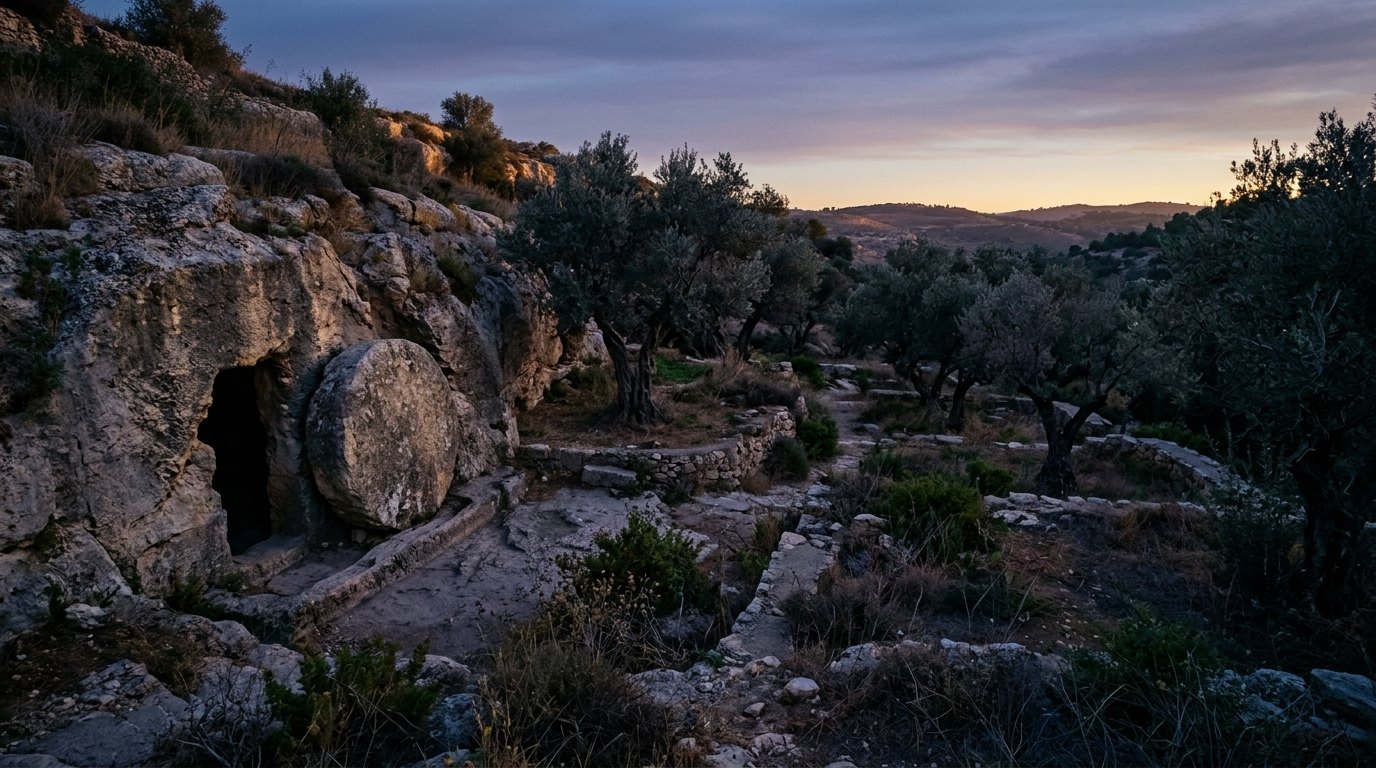
Jesus called out with a loud voice, “Father, into your hands I commit my spirit.” When he had said this, he breathed his last.
Luke 23:46 (NIV)
Jesus consciously commits his human spirit directly into the Father's care at the precise moment of physical death.
In Luke 23:46, Jesus cries out with a loud voice, "Father, into your hands I commit my spirit!" and having said this, he breathes his last. His physical demise was not an accidental tragedy or an involuntary succumbing to exhaustion; it was a deliberate, sovereign act of self-surrender. John 19:30 records that after drinking the sour wine, Christ proclaimed, "It is finished," bowed his head, and yielded up his spirit. At that definitive moment of death, a real separation occurred between his human soul and his physical body. While his soul departed directly into the presence and care of the Father, his earthly body required the customary dignities of burial.
The Gospels trace the reverent care given to that physical body with meticulous historical detail. In Matthew 27:59-60, Joseph of Arimathea takes the body, wraps it in a clean linen shroud, and lays it in his own newly carved rock tomb, rolling a great stone against the entrance. John 19:38-42 adds that Nicodemus joined Joseph, bringing a massive mixture of myrrh and aloes—about seventy-five pounds—to bind the body in linen cloths with the spices according to Jewish custom, laying him in an unused garden sepulchre near the site of crucifixion. Mark 15:46 confirms Joseph's purchase of fine linen and the placement of the Lord in the rock-hewn vault, while Luke 23:52-53 notes that this tomb had never before held a corpse. Throughout these three days, Christ's body remained genuinely dead and resting in the grave, kept from decay by divine decree, while his spirit dwelt in the Father's sovereign keeping.
| Passage | What it says |
|---|---|
| Luke 23:46 | Jesus cries out with a loud voice and commits his spirit into his Father's hands before breathing his last breath. |
| John 19:30 | Declaring 'it is finished,' Jesus bows his head and voluntarily gives up his spirit. |
| Matthew 27:59-60 | Joseph of Arimathea wraps Jesus' physical body in clean linen and lays it in his own new rock-hewn tomb. |
| John 19:38-42 | Nicodemus brings spices to prepare Jesus' body for burial before placing him in a nearby garden tomb. |
| Mark 15:46 | Joseph of Arimathea wraps Jesus in linen and lays his body inside a tomb cut out of rock. |
| Luke 23:52-53 | Joseph takes down Jesus' body and places it in a newly cut rock tomb where no one had lain. |
Paradise Promised
Meeting the Repentant Thief in Abraham's Bosom

Jesus answered him, “Truly I tell you, today you will be with me in paradise.”
Luke 23:43 (NIV)
Jesus promises conscious, immediate fellowship with the dying thief in Paradise on that very day.
Before he yielded up his spirit, Jesus offered an astounding promise to the penitent criminal dying beside him, recorded in Luke 23:43: "Truly, I say to you, today you will be with me in paradise." This word reveals precisely where the human soul of Jesus went upon leaving his body. He did not pass into unconsciousness, soul-sleep, or purgatorial torment; rather, he entered immediate, conscious bliss in Paradise. In the Jewish understanding of the intermediate state, Paradise was associated with the realm of the righteous dead, the place of comfort in the presence of God.
Our Lord had previously illustrated this unseen world in Luke 16:22-26 through the account of the rich man and Lazarus. There, the righteous dead are carried by angels to "Abraham's bosom," a realm of comfort and peace completely separated by a great chasm from the place of torment. Jesus assured the dying thief that their fellowship would begin that very day in that place of blessing. Later, in 2 Corinthians 12:3-4, the apostle Paul speaks of being caught up into "Paradise," equating it with the third heaven where divine glory and inexpressible words dwell. Between his Friday expiration and his Sunday resurrection, Jesus walked in joyful, conscious communion with redeemed souls in the heavenly Paradise, sharing immediate comfort with the thief whose faith had laid hold of him on the cross.
| Passage | What it says |
|---|---|
| Luke 23:43 | Jesus assures the penitent thief that today he will be with him in Paradise. |
| Luke 16:22-26 | Jesus describes the realm of the dead prior to his resurrection, showing Abraham's bosom separated by a great gulf. |
| 2 Corinthians 12:3-4 | Paul speaks of being caught up into Paradise, identifying it as the dwelling place of blessed divine presence. |
The Heart of the Earth
Fulfilling the Prophetic Sign of Jonah

For as Jonah was three days and three nights in the belly of a huge fish, so the Son of Man will be three days and three nights in the heart of the earth.
Matthew 12:40 (NIV)
Christ explicitly ties his intermediate state between death and resurrection to Jonah's three days in the deep.
In Matthew 12:40, the Lord Jesus points back to the Hebrew Scriptures to frame his approaching burial: "For just as Jonah was three days and three nights in the belly of the great fish, so will the Son of Man be three days and three nights in the heart of the earth." Christ took the historical experience of the prophet Jonah as a true prophetic type of his own descent into the realm of the dead. In Jonah 1:17, the prophet was swallowed into the dark depths of the sea, remaining inside the fish three days and three nights, an event fulfilled directly in Christ's three days in the tomb.
Jonah recounted that terrifying descent in Jonah 2:2, praying out of the belly of Sheol as the waters closed over him to the roots of the mountains, which foreshadowed the Messiah's genuine entry into the territory of death. When an unbelieving generation demanded a miraculous display, Jesus reiterated in Matthew 16:4 that no sign would be granted except the sign of Jonah. His sojourn in "the heart of the earth" signified that he underwent the full reality of human death. The apostle Paul draws on this same biblical language in Romans 10:7 when he asks, "'Who will descend into the abyss?' (that is, to bring Christ up from the dead)." Christ truly descended into death's domain, entering the depths of Sheol and the grave, before rising in triumph as the undisputed conqueror of the pit.
| Passage | What it says | Fulfilled |
|---|---|---|
| Jonah 1:17 | Jonah remains inside the belly of the great fish three days and three nights. | Matthew 12:40 |
| Jonah 2:2 | Jonah cries out from the belly of Sheol, describing his descent to the roots of the mountains. | Matthew 12:40 |
| Matthew 12:40 | Jesus declares the Son of Man will be three days and three nights in the heart of the earth. | |
| Matthew 16:4 | Jesus repeats that no sign will be given to an evil generation except the sign of Jonah. | |
| Romans 10:7 | Paul speaks of descending into the abyss as bringing Christ up from the dead. |
Not Abandoned to Hades
David's Prophecy of Christ's Soul Unforsaken

because you will not abandon me to the realm of the dead, you will not let your holy one see decay.
Acts 2:27 (NIV)
Peter proclaims that God did not leave Christ's soul in Hades nor let his body rot.
Preaching on the day of Pentecost, Peter proclaims the core apostolic testimony in Acts 2:27: "For you will not abandon my soul to Hades, or let your Holy One see corruption." Peter was expounding Psalms 16:9-10, where King David had prophesied by the Holy Spirit that the Messiah's soul would not be left behind in Sheol—the realm of the dead—nor would his holy flesh rot in the tomb. In Acts 2:31, Peter explains that David spoke not of his own remains, which lay decayed in a known sepulchre, but of the bodily resurrection of the Christ: "he was not abandoned to Hades, nor did his flesh see corruption."
Paul preaches this identical truth in Acts 13:34-37, demonstrating to the synagogue at Pisidian Antioch that while David fell asleep and saw corruption, the One whom God raised up saw no corruption whatsoever. In Acts 2:24, Peter grounds the entire reality in the sovereign purpose of God, who "raised him up, loosing the pangs of death, because it was impossible for him to be held by it." These passages explain that Christ's soul genuinely entered Hades—the unseen habitation of departed spirits—yet he was never trapped there as a victim. Hades could not detain the Lord of life, and the grave could not decay his flesh. When the appointed third day dawned, Christ's human soul reunited with his glorified physical body, vacating the underworld forever.
| Passage | What it says | Fulfilled |
|---|---|---|
| Psalms 16:9-10 | David prophesies that the Holy One's soul will not be abandoned to Sheol or suffer corruption. | Acts 2:27, Acts 2:31, Acts 13:35 |
| Acts 2:27 | Peter quotes Psalm 16 at Pentecost, asserting that Christ's soul was not left in Hades. | |
| Acts 2:31 | Peter explicitly interprets David's words as a prophecy of the resurrection of the Messiah. | |
| Acts 13:34-37 | Paul explains in Antioch that David saw corruption, but Christ, raised from the dead, saw none. | |
| Acts 2:24 | God raised Jesus up, loosing the pangs of death, because it was impossible for death to hold him. |
Proclamation of Triumph
Heralding Victory to the Spirits in Prison
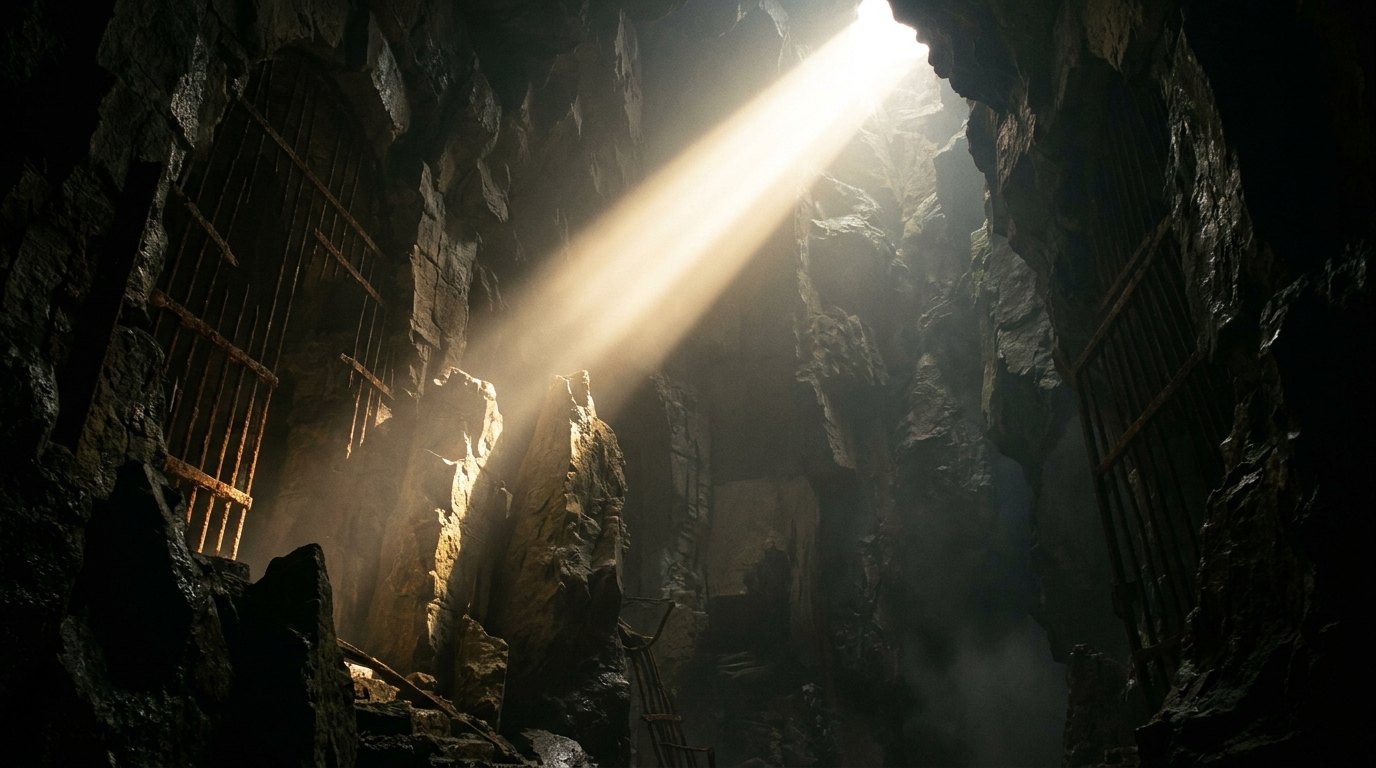
For Christ also suffered once for sins, the righteous for the unrighteous, to bring you to God. He was put to death in the body but made alive in the Spirit. After being made alive, he went and made proclamation to the imprisoned spirits— to those who were disobedient long ago when God waited patiently in the days of Noah while the ark was being built. In it only a few people, eight in all, were saved through water,
1 Peter 3:18-20 (NIV)
Scripture describes Christ being made alive in the Spirit and heralding his triumph to imprisoned spirits.
In 1 Peter 3:18-20, the Apostle Peter provides an extraordinary glimpse into the activity of Christ between his crucifixion and resurrection. Peter writes that Jesus, after dying as the righteous substitute for the unrighteous, was "put to death in the flesh but made alive in the spirit" (1 Peter 3:18). In that spiritual state, Jesus did not lie dormant; he "went and proclaimed to the spirits in prison" (1 Peter 3:19). This proclamation was not a second chance of salvation or an offer of repentance, but an imperial heraldic announcement (ekēryxen) of sovereign triumph over the rebellious fallen entities who defied God during the days of Noah (1 Peter 3:20).
Christ's mission during those three days manifested his complete mastery over every realm of creation. By heralding his triumph to these imprisoned spirits, Jesus signaled that their rebellion had failed and that the cross was the decisive undoing of evil. Peter reinforces the scope of Christ's redemptive vindication in 1 Peter 4:6, noting that the gospel was proclaimed to those who are now physically dead, so that while they were judged according to men in the flesh, they might live to God in the spirit. In the intermediate realm, Christ walked as an absolute sovereign, demonstrating that even the darkest strongholds of cosmic rebellion must bow to his finished sacrifice.
| Passage | What it says |
|---|---|
| 1 Peter 3:18 | Christ suffered once for sins, put to death in the flesh but made alive in the Spirit. |
| 1 Peter 3:19 | In the Spirit, Christ went and proclaimed victory to the spirits held in prison. |
| 1 Peter 3:20 | Peter identifies these spirits as those who were disobedient during God's patience in Noah's days. |
| 1 Peter 4:6 | The good news was preached to those who are now dead, that they might live in the Spirit. |
Conqueror of the Grave
Captivity Led Captive and Keys of Death Claimed

I am the Living One; I was dead, and now look, I am alive for ever and ever! And I hold the keys of death and Hades.
Revelation 1:18 (NIV)
The risen Lord announces that he was dead, is alive forever, and holds the keys of Death and Hades.
The glorious climax of Christ's descent is captured in Revelation 1:18, where the risen Lord declares, "I died, and behold I am alive forevermore, and I have the keys of Death and Hades." Far from being conquered by the grave, Jesus stormed the domain of mortality and stripped death of its power. This glorious triumph was typologically prefigured in Psalm 68:18, which pictured God ascending on high leading a host of captives in his train. The Apostle Paul applies this psalm directly to Christ in Ephesians 4:8-10, arguing that the one who ascended is the very one who first descended into the lower earthly regions, plundering the enemy's kingdom and giving gifts to men.
Through his physical death and subsequent vindication, Jesus disarmed the rulers and authorities, putting them to open shame and triumphing over them (Colossians 2:15). The author of Hebrews confirms that by tasting death, Jesus shattered the devil's authority over mortality and delivered believers from a lifelong slavery to the fear of dying (Hebrews 2:14-15). When Christ rose, he carried the legitimate authority over the underworld, ensuring that Death and Hades no longer have final jurisdiction over the redeemed.
| Passage | What it says | Fulfilled |
|---|---|---|
| Psalms 68:18 | The victor ascends on high, leading a host of captives in his train. | Ephesians 4:8-10 |
| Ephesians 4:8-10 | Paul explains that ascending on high implies Christ first descended into the lower regions of the earth. | |
| Colossians 2:15 | Through the cross, Christ disarmed the principalities and powers, triumphing over them openly. | |
| Hebrews 2:14-15 | Through death Christ destroyed the devil's power over death and delivered those held in lifelong bondage. | |
| Revelation 1:18 | Jesus declares he is the Living One who died, lives forevermore, and possesses the keys of Death and Hades. |
Deliverance from the Pit
Prophetic Foreshadowings of Deliverance From the Realm of Death
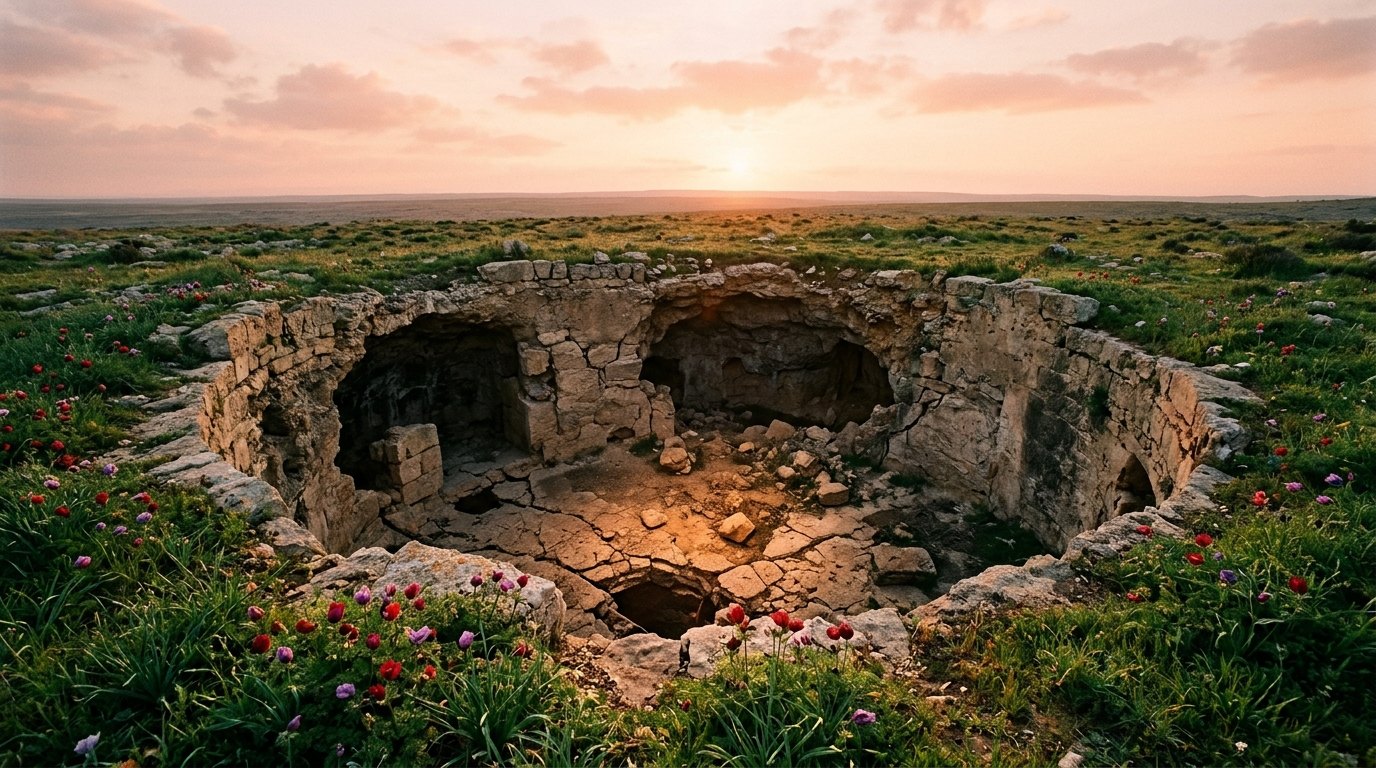
As for you, because of the blood of my covenant with you, I will free your prisoners from the waterless pit.
Zechariah 9:11 (NIV)
This prophecy roots the release of prisoners from the depths directly in the blood of God's covenant.
Long before the incarnation, the Old Testament prophets foretold the day when God's King would empty the pit and dismantle the dominion of the grave. In Zechariah 9:11, the prophet heralds this magnificent promise: "As for you also, because of the blood of my covenant with you, I will set your prisoners free from the waterless pit." The ancient world understood the waterless pit as a vivid figure of the dark underworld of Sheol—a place of confinement and separation. Yet God pledged that the blood of the eternal covenant would penetrate even that dry subterranean prison, releasing his people from the grasp of mortality.
This theme of covenant deliverance resonates equally in Hosea 13:14, where the Lord asks with righteous defiance, "Shall I ransom them from the power of Sheol? Shall I redeem them from Death? O Death, where are your plagues? O Sheol, where is your sting?" What Hosea asked in prophetic anticipation, Christ enacted in historical reality through his death and resurrection. By shedding the covenant blood of redemption, Jesus fulfilled these ancient promises, purchasing our full ransom from the clutches of Sheol and ensuring that the waterless pit could never hold his people captive.
| Passage | What it says |
|---|---|
| Zechariah 9:11 | God promises by the blood of the covenant to set prisoners free from the waterless pit. |
| Hosea 13:14 | The Lord declares ransom from the power of Sheol and redemption from death itself. |
Where in the Bible
| Book | Passages |
|---|---|
| Psalms | 2 · Psalms 16:9-10, Psalms 68:18 |
| Hosea | 1 · Hosea 13:14 |
| Jonah | 2 · Jonah 1:17, Jonah 2:2 |
| Zechariah | 1 · Zechariah 9:11 |
| Matthew | 3 · Matthew 27:59-60, Matthew 12:40, Matthew 16:4 |
| Mark | 1 · Mark 15:46 |
| Luke | 4 · Luke 23:46, Luke 23:52-53, Luke 23:43, Luke 16:22-26 |
| John | 2 · John 19:30, John 19:38-42 |
| Acts | 4 · Acts 2:27, Acts 2:31, Acts 13:34-37, Acts 2:24 |
| Romans | 1 · Romans 10:7 |
| 2 Corinthians | 1 · 2 Corinthians 12:3-4 |
| Ephesians | 1 · Ephesians 4:8-10 |
| Colossians | 1 · Colossians 2:15 |
| Hebrews | 1 · Hebrews 2:14-15 |
| 1 Peter | 4 · 1 Peter 3:18, 1 Peter 3:19, 1 Peter 3:20, 1 Peter 4:6 |
| Revelation | 1 · Revelation 1:18 |
The story in order
- Jesus commits his spirit to the Father (AD 30) · Luke 23:46 · Jesus' last breath and entrustment of his spirit.
- Jesus' body laid in the tomb (AD 30) · Matthew 27:59-60 · Joseph of Arimathea prepares and buries Jesus' physical body.
- Jesus in Paradise with the thief (AD 30) · Luke 23:43 · Jesus promises the repentant thief immediate entry into Paradise.
- Jonah in the belly of the fish (c. 750 BC) · Jonah 1:17 · Foreshadows Jesus being in the heart of the earth.
- Jesus in the heart of the earth (AD 30) · Matthew 12:40 · Jesus' sign of being dead for three days and nights.
- David's prophecy of the Holy One's soul (c. 1000 BC) · Psalms 16:10 · Foretells the Messiah's soul not being left in Sheol.
- Peter explains Christ's soul in Hades (AD 30) · Acts 2:27 · Interprets Psalm 16 as Christ's soul not abandoned to Hades.
- Christ proclaims to spirits in prison (AD 30) · 1 Peter 3:19 · Christ's victorious spirit declares triumph to imprisoned spirits.
- Christ ascends, leading captivity captive (c. 1000 BC) · Psalms 68:18 · Prophecy of Christ's victory and ascension after descent.
- Christ disarms powers through the cross (AD 30) · Colossians 2:15 · Christ's triumph over spiritual enemies through his death.
- Jesus holds keys of Death and Hades (c. AD 95) · Revelation 1:18 · Jesus' ultimate authority over death and the grave.
Key words
- Paradise (paradeisos (παράδεισος))
- The dwelling place of blessed divine presence, a part of the unseen realm. · Luke 23:43
- Hades (haidēs (ᾅδης))
- The realm of the dead; the grave; the unseen world. · Acts 2:27
- Sheol (sheol (שְׁאוֹל))
- The Hebrew term for the realm of the dead, similar to Hades. · Jonah 2:2
- Abyss (abyssos (ἄβυσσος))
- A deep, immeasurable space, gulf, or cavity; the lowest parts of the earth. · Romans 10:7
- Spirit (pneuma (πνεῦμα))
- The immaterial part of a human being; Christ's living essence. · Luke 23:46
Because Christ descended into the depths of death and rose triumphant, no believer needs to fear the grave. Death is no longer an inescapable prison, but an entrance into Paradise where we await bodily resurrection. In Christ's finished work, the realm of the dead has been disarmed, and its keys rest securely in his nail-pierced hands.
30 passages, each cited once.
How the major Christian traditions read this
All Christians confess that Jesus truly died and was buried, remaining under the power of death until His bodily resurrection on the third day, His soul resting consciously in the Father's presence (Luke 23:46; Acts 2:31).
Catholic
The Church teaches that our Lord’s soul, separated from His sacred body, descended into the realm of the dead—the limbo of the fathers. As the Apostles' Creed professes, He descended into hell not to suffer, but to proclaim His redemption to the holy souls who awaited Him from the beginning of the world (1 Peter 3:19). Christ freed the righteous patriarchs and prophets who could not enter the beatific vision until their Redeemer had paid the ransom, leading captivity captive into the glory of heaven (Ephesians 4:8-10; Luke 23:43).
Scripture: 1 Peter 3:19, Ephesians 4:8-10, Luke 23:43
Orthodox
We celebrate in our holy liturgy that Christ descended into Hades to trample down death by death. Hades could not hold the Author of Life; by entering the netherworld, His divine presence shattered its gates and broke the ancient chains holding Adam, Eve, and all the righteous dead (Acts 2:24; Acts 2:31). Christ preached the Good News to all who were held captive there (1 Peter 3:19; 1 Peter 4:6), rescuing the souls of the faithful into the uncreated light of His kingdom.
Scripture: Acts 2:24, Acts 2:31, 1 Peter 3:19, 1 Peter 4:6
Lutheran
We confess the descent into hell as a real, personal victory of the whole Christ, occurring in conjunction with His triumph over death. As taught in the Formula of Concord, Christ descended into hell not to suffer further punishment, but to demonstrate His complete victory over Satan, sin, death, and hell itself (Colossians 2:15). He destroyed the devil's power and displayed His dominion to the condemned spirits (1 Peter 3:19), showing that hell has no claim on those who trust in His atonement.
Scripture: Colossians 2:15, 1 Peter 3:19, Luke 23:43
Reformed & Presbyterian
We understand Christ's descent primarily through the lens of Scripture's clear declarations. Upon death, Jesus committed His spirit to the Father and entered Paradise that very day (Luke 23:43; Luke 23:46). His body lay in the grave while His human soul went immediately into heaven. As the Westminster standards teach, the creedal phrase 'descended into hell' denotes that He remained under the power of death for three days, as well as expressing the agonizing, hellish wrath of God He bore on the cross for our sins (Matthew 27:46).
Scripture: Luke 23:43, Luke 23:46, Matthew 27:46, Acts 2:31
Anglican & Episcopal
Our Thirty-Nine Articles declare in Article 3 that as Christ died for us and was buried, so also it is to be believed that He went down into hell. Following the apostolic witness in Acts 2:31, Christ entered the intermediate state of the dead (Hades or Sheol). In this intermediate realm, His soul remained alive and triumphant, resting in Paradise with the Father (Luke 23:43) while proclaiming the completion of His redemptive sacrifice across the unseen realms of the departed (1 Peter 3:18-19).
Scripture: Acts 2:31, Luke 23:43, 1 Peter 3:18-19
Baptist
We hold strictly to what Scripture explicitly reveals: Christ's body was in Joseph’s tomb, and His spirit was immediately with God in Paradise, just as He promised the thief on the cross (Luke 23:43; Luke 23:46). Acts 2:31 uses 'Hades' simply as the grave or the realm of the dead, showing He truly underwent physical death. We do not believe Christ suffered after the cross, where He cried 'It is finished' (John 19:30). First Peter 3:19 refers to Christ preaching in Spirit through Noah to the ancient disobedient generation.
Scripture: Luke 23:43, Luke 23:46, Acts 2:31, John 19:30, 1 Peter 3:19
Methodist & Wesleyan
We affirm that Christ truly died, His body resting in the tomb while His soul was commended into the Father's hands (Luke 23:46). Wesley removed the clause 'He descended into hell' from the Sunday Service to prevent misunderstandings of post-mortem suffering or second chances for salvation. Christ was in Paradise (Luke 23:43), having fully accomplished our redemption once for all upon the cross (Hebrews 9:26; Hebrews 9:28). He was under death's domain only in that He was genuinely dead until Sunday morning.
Scripture: Luke 23:43, Luke 23:46, Hebrews 9:26, Hebrews 9:28
Pentecostal & Charismatic
We emphasize the finished work of the cross and Christ’s supreme triumph over demonic powers. When Jesus died, He entered Paradise in communion with the Father (Luke 23:43; Luke 23:46). At the same time, through His death and resurrection, He openly disarmed principalities and rulers of darkness, taking away the keys of death and Hades (Colossians 2:15; Revelation 1:18). He was not tormented by Satan in hell; rather, He proclaimed absolute victory over every evil spirit that held humanity in fear of death.
Scripture: Luke 23:43, Luke 23:46, Colossians 2:15, Revelation 1:18
Non-denominational & Evangelical
We look directly to the plain words of the text: Jesus told the dying thief, 'Today you will be with me in Paradise' (Luke 23:43), and cried, 'Father, into your hands I commit my spirit' (Luke 23:46). His spirit was with the Father, while His body remained in the tomb until the third day. Passage like 1 Peter 3:19 describe either Christ speaking through Noah to that ancient generation or His proclamation of victory over fallen powers, not an offer of salvation to the dead (Hebrews 9:27).
Scripture: Luke 23:43, Luke 23:46, Hebrews 9:27, 1 Peter 3:19
Where they differ
The meaning of descending into hell
- Catholic
- Christ entered the underworld to deliver the righteous souls of the Old Covenant.
- Orthodox
- Christ destroyed the power of Hades and liberated the captive dead by His presence.
- Lutheran
- Christ manifested His victory over Satan and demonic forces in the realm of hell.
- Reformed & Presbyterian
- It describes remaining under death's power and enduring God's wrath upon the cross.
- Anglican & Episcopal
- It means His human soul entered the intermediate state of departed spirits.
- Baptist
- It means only that He truly died and His body lay in the grave.
- Methodist & Wesleyan
- It refers to the state of the dead, having finished all suffering on the cross.
- Pentecostal & Charismatic
- It highlights His triumph over principalities and the seizure of the keys of Hades.
- Non-denominational & Evangelical
- It refers to death's realm, while His spirit went directly to the Father.
Scripture: Acts 2:31, Ephesians 4:9, 1 Peter 3:19
Where Jesus' spirit went at death
- Catholic
- To the limbo of the fathers to liberate the holy souls awaiting Him.
- Orthodox
- To Hades to triumph over death and raise the ancient righteous with Himself.
- Lutheran
- To hell as conqueror to display His triumph, and to Paradise with the Father.
- Reformed & Presbyterian
- Directly into Paradise and the Father's presence in heaven, His body buried.
- Anglican & Episcopal
- To Paradise in Hades, resting consciously with the Father until the third day.
- Baptist
- Directly into Paradise with the Father, with no departure to a netherworld.
- Methodist & Wesleyan
- Directly to the Father in Paradise, resting from His finished earthly work.
- Pentecostal & Charismatic
- To Paradise in heaven, while His finished cross triumphed over dark powers.
- Non-denominational & Evangelical
- Directly into the hands of the Father in Paradise as Scripture plainly states.
Scripture: Luke 23:43, Luke 23:46
Your pastor can tell you where your church stands.
Scripture cited
- Luke 23:39-46
- Acts 2:22-32
- Matthew 27:57-60
- 1 Peter 3:18-22
- Hebrews 9:24-28
- Revelation 20:11-15