Who decided which books went in the Bible?
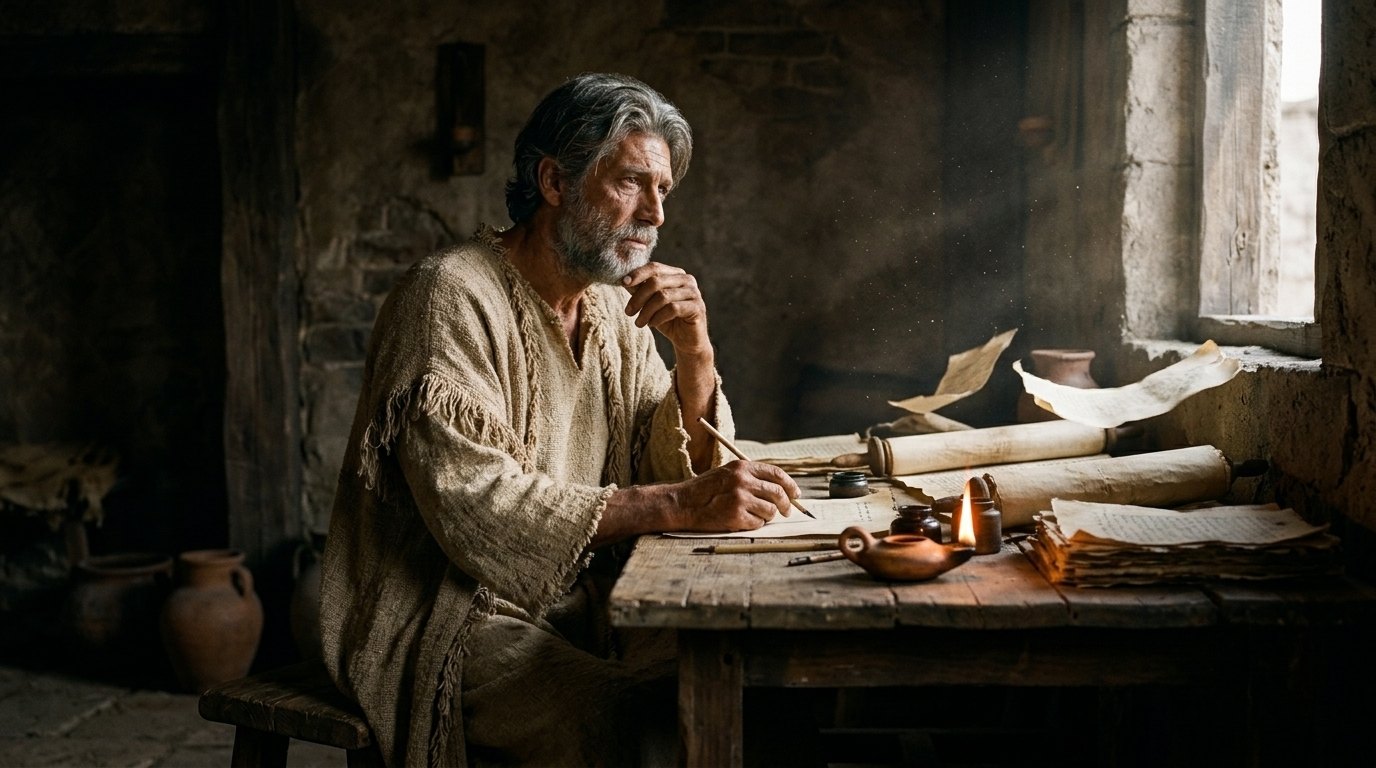
2 Peter 1:20-21
20 Above all, you must understand that no prophecy of Scripture came about by the prophet’s own interpretation of things.
21 For prophecy never had its origin in the human will, but prophets, though human, spoke from God as they were carried along by the Holy Spirit.
New International Version (NIV)
The answer
No single person or council decided which books became God’s Word. God gave the books their authority by inspiring them; God’s people then recognized, preserved, and gathered the writings He had given. As 2 Timothy 3:16 says, “Every Scripture is God-breathed.” Likewise, 2 Peter 1:20-21 places prophecy’s origin with the Holy Spirit rather than human will. A church council could acknowledge Scripture, but it could not make an uninspired book inspired.
How the books were recognized
- The Old Testament was already Scripture when Jesus came. Jesus spoke of “the law of Moses, the prophets, and the psalms” as writings that must be fulfilled (Luke 24:44). He did not create their authority; He affirmed the Scriptures God’s people had already received.
- The New Testament writings were received because they came from Christ’s apostles and their close associates. Even while the apostles were still alive, their writings were being treated as Scripture. In 2 Peter 3:16, Peter places Paul’s letters alongside “the other Scriptures.”
- The churches gradually gathered and acknowledged these writings. Apostolic origin and agreement with apostolic teaching were especially important, alongside the churches’ reception and use of the books. This was a process of recognition, not a vote that conferred divine authority.
What Athanasius and the councils did
The first known list naming exactly the 27 books of the New Testament appears in Athanasius’s Easter letter of AD 367. Regional councils at Hippo in 393 and Carthage in 397 later endorsed the established New Testament collection in the West; they were confirming a broad recognition that had already developed among the churches.
The often-repeated claim that Constantine or the Council of Nicaea chose the Bible’s books is historically wrong: Nicaea in 325 did not address the biblical canon.
Traditions do differ over part of the Old Testament. Catholic and Eastern Orthodox Bibles recognize additional Old Testament writings beyond the Protestant 39-book Old Testament, while sharing the same 27-book New Testament. Those differences concern the historical recognition of particular writings, not whether inspiration comes from God or from an ecclesiastical decision.
Answered from Scripture · reviewed November 12, 2026
No human emperor, ecclesiastical committee, or church council decided which books belong in the Bible. Authority belongs inherently to Scripture because God inspired it, leaving His people to recognize, receive, and guard what He had already spoken.
Divine Origin
God Gave Scripture Its Authority by Breathing It Out

All Scripture is God-breathed and is useful for teaching, rebuking, correcting and training in righteousness,
2 Timothy 3:16 (NIV)
It defines the origin of all Scripture as God-breathed rather than an invention of human councils.
The authoritative nature of Scripture begins with its divine Author, as all Scripture is breathed out by God (2 Timothy 3:16). Paul makes plain to Timothy that the written words are profitable for doctrine, reproof, correction, and instruction in righteousness because their origin is entirely divine, not human. The Bible does not derive its authority from any human convocation, bishop, or empire; its authority is intrinsic to its very nature as God's speech.
Peter confirms this reality by explaining that no true prophecy ever came by the will of man, but men spoke from God as they were carried along by the Holy Spirit (2 Peter 1:20-21). God did not dictate mechanical words to passive instruments, nor did men invent holy stories on their own initiative; rather, the Holy Spirit moved the human authors so that what they penned was precisely the inerrant word of God. When the Thessalonians heard the apostolic preaching, they accepted it not as the word of men, but as what it really is, the word of God working effectively in those who believe (1 Thessalonians 2:13).
This communication culminated in the person and work of Jesus Christ. While God spoke long ago to the fathers by the prophets in many portions and ways, in these last days he has spoken to us by his Son (Hebrews 1:1-2). Because it comes from the living God, His revelation stands completely untouched by the fading nature of human institutions. The grass withers and the flower fades, but the word of our God will stand forever (Isaiah 40:8). Councils did not grant life or inspiration to these texts; they simply bowed before the books God had already breathed into existence.
| Passage | What it says |
|---|---|
| 2 Timothy 3:16 | All Scripture is breathed out by God and profitable for teaching, reproof, correction, and training in righteousness. |
| 2 Peter 1:20-21 | Prophecy never came by human will, but men spoke from God as they were carried along by the Holy Spirit. |
| 1 Thessalonians 2:13 | The believers received the apostolic message not as human words, but as the actual Word of God at work within them. |
| Hebrews 1:1-2 | God spoke progressively through prophets and decisively through His Son, defining the locus of divine revelation. |
| Isaiah 40:8 | The word of God endures forever, establishing the permanence and inviolability of divine scripture. |
The Old Testament
Jesus Confirmed the Established Hebrew Canon
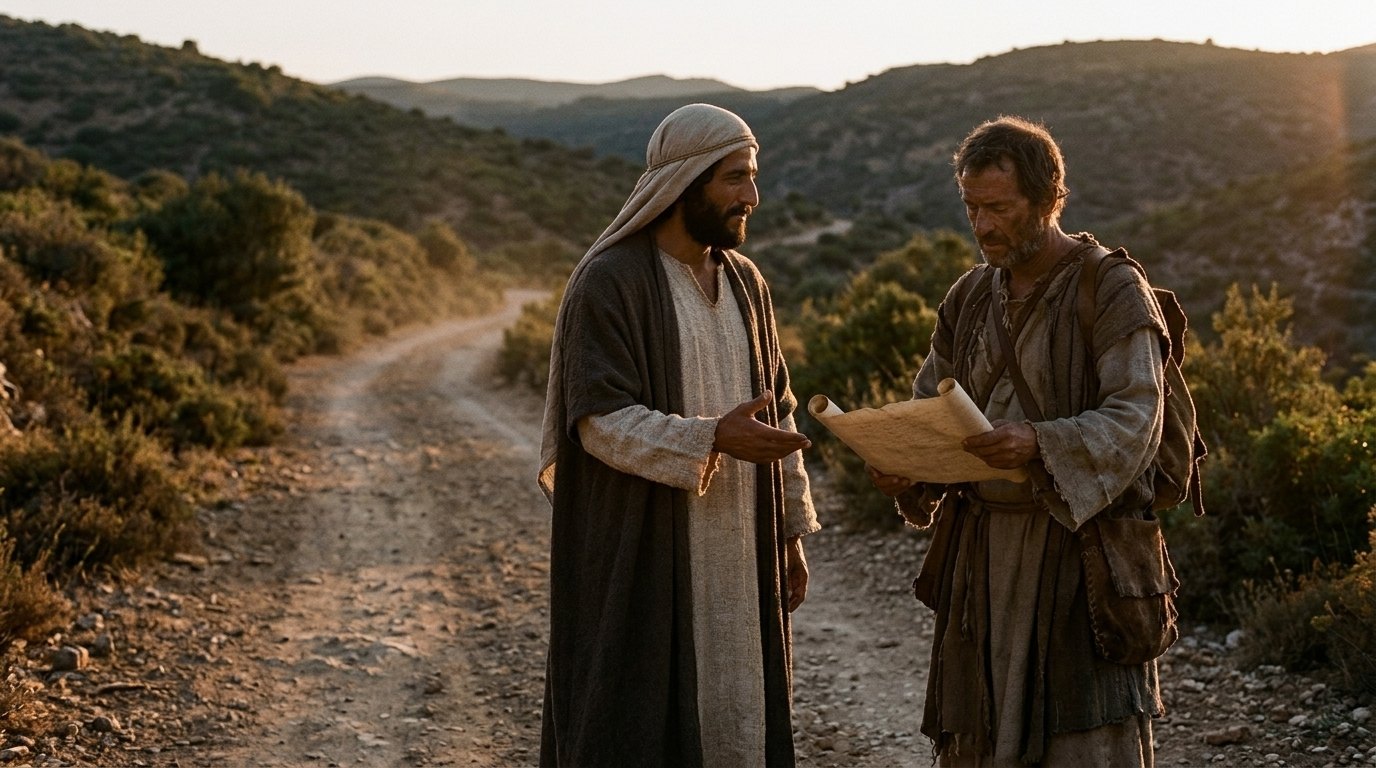
He said to them, “This is what I told you while I was still with you: Everything must be fulfilled that is written about me in the Law of Moses, the Prophets and the Psalms.”
Luke 24:44 (NIV)
Jesus explicitly names the threefold division of the Hebrew Scriptures as divinely binding.
Jesus Christ Himself settled the boundaries of the Old Testament canon for His people. Walking with the disciples on the road to Emmaus, our Lord stated that all things written about me in the Law of Moses and the Prophets and the Psalms must be fulfilled (Luke 24:44). In naming these three traditional divisions, Jesus placed His divine seal of approval directly onto the recognized Hebrew Scriptures, confirming their authority and historical integrity without hesitation.
Furthermore, Christ highlighted the exact historical bookends of that established Hebrew collection when rebuking the religious leaders. He charged their generation with guilt spanning from the blood of righteous Abel to the blood of Zechariah (Matthew 23:35; Luke 11:51). In the Jewish arrangement of the Scriptures, Genesis stood as the first book (recording the martyrdom of Abel) and Chronicles stood as the final book (recording the martyrdom of Zechariah in 2 Chronicles 24). Jesus clearly recognized a closed, fixed body of canonical literature.
This agrees with Paul's affirmation in Romans 3:2 that the Jewish people were entrusted with the very oracles of God. Israel had received, guarded, and recognized these writings as divine from the moment they were delivered. From the wilderness, Moses warned the people not to add to or take away from the commandments (Deuteronomy 4:2), and Joshua immediately preserved and meditated upon this written Book of the Law as the infallible rule of faith and life (Joshua 1:8). The Old Testament canon was never left open to human speculation; it was preserved by God's providence through His covenant people.
| Passage | What it says |
|---|---|
| Luke 24:44 | Jesus affirms that everything written about Him in the Law of Moses, the Prophets, and the Psalms must be fulfilled. |
| Matthew 23:35 | Jesus spans Old Testament martyr history from Abel to Zechariah, matching the scope of the Hebrew canonical order. |
| Romans 3:2 | Paul records that the Jewish people were entrusted with the very oracles and spoken words of God. |
| Luke 11:51 | Jesus defines the historical bounds of the Old Testament martyrs from Abel to Zechariah. |
| Deuteronomy 4:2 | Moses strictly forbids adding to or taking away from the written divine commandments. |
| Joshua 1:8 | The book of the law was preserved and recognized as canonical rule immediately upon reception. |
Apostolic Authority
The New Testament Was Recognized as It Appeared
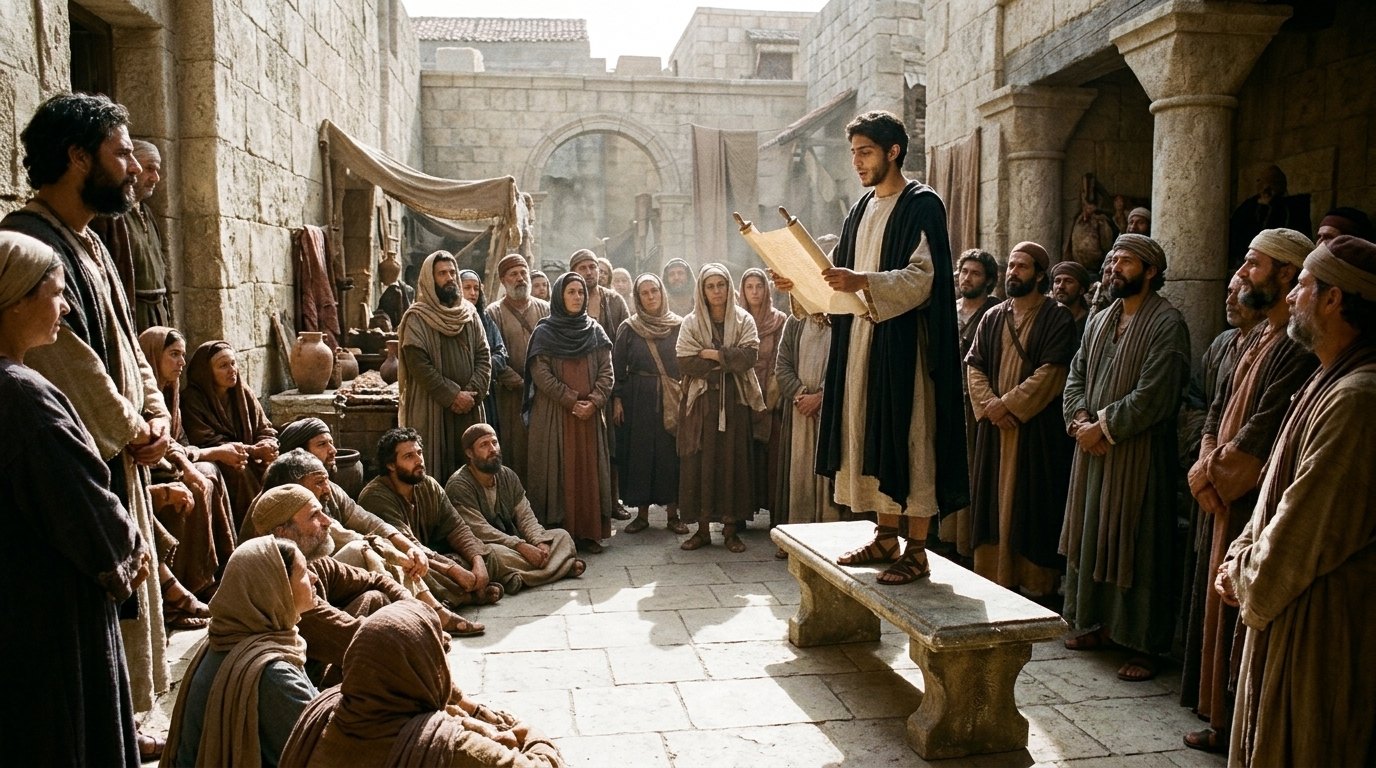
Bear in mind that our Lord’s patience means salvation, just as our dear brother Paul also wrote you with the wisdom that God gave him. He writes the same way in all his letters, speaking in them of these matters. His letters contain some things that are hard to understand, which ignorant and unstable people distort, as they do the other Scriptures, to their own destruction.
2 Peter 3:15-16 (NIV)
Peter places the letters of Paul on equal footing with the rest of the inspired Scriptures.
The New Testament books were recognized as authoritative Scripture from the very hour they were written. Peter, writing to believers spread across Asia Minor, warned that unstable people twist the writings of the apostle Paul just as they do the rest of the Scriptures (2 Peter 3:15-16). By placing Paul's epistles on the exact same footing as the Old Testament, the apostle Peter demonstrated that the church already received contemporary apostolic writings as the infallible Word of God.
This early canonical recognition is equally visible when Paul writes to Timothy, explicitly uniting Deuteronomy and Luke under a singular heading: for the Scripture says, 'You shall not muzzle an ox' and 'The laborer is worthy of his wages' (1 Timothy 5:18). Paul quotes Deuteronomy 25:4 alongside Luke 10:7, labeling both texts as divine Scripture without distinction. The household of faith was established on this foundation: built on the foundation of the apostles and prophets, Christ Jesus himself being the cornerstone (Ephesians 2:20).
This immediate recognition fulfilled Christ's explicit promise that the Holy Spirit would teach the apostles and guide them into all truth (John 14:26; John 16:13). Because these texts bore apostolic authority, the earliest local assemblies were strictly commanded to read them publicly and exchange them across congregations (Colossians 4:16; 1 Thessalonians 5:27). The New Testament books did not wait centuries for a church synod to declare them canonical; they functioned as the binding rule of the church from the moment the ink dried on the parchment.
| Passage | What it says |
|---|---|
| 2 Peter 3:15-16 | Peter classifies Paul's letters alongside the other Scriptures, warning against those who distort them. |
| 1 Timothy 5:18 | Paul cites Deuteronomy and Luke together under the single authoritative heading of Scripture. |
| Ephesians 2:20 | The household of God is built upon the foundation of the apostles and prophets, with Christ Jesus as the cornerstone. |
| Colossians 4:16 | Apostolic letters were deliberately circulated and read aloud across multiple local congregations from the beginning. |
| John 14:26 | Jesus promises the Spirit will guide the apostles in recalling and recording all truth. |
| John 16:13 | The Spirit of truth will guide the apostolic witnesses into all the truth. |
| 1 Thessalonians 5:27 | Paul charges that his apostolic letter be read aloud to all the brethren. |
Church Recognition
Councils Merely Acknowledged What God Had Given
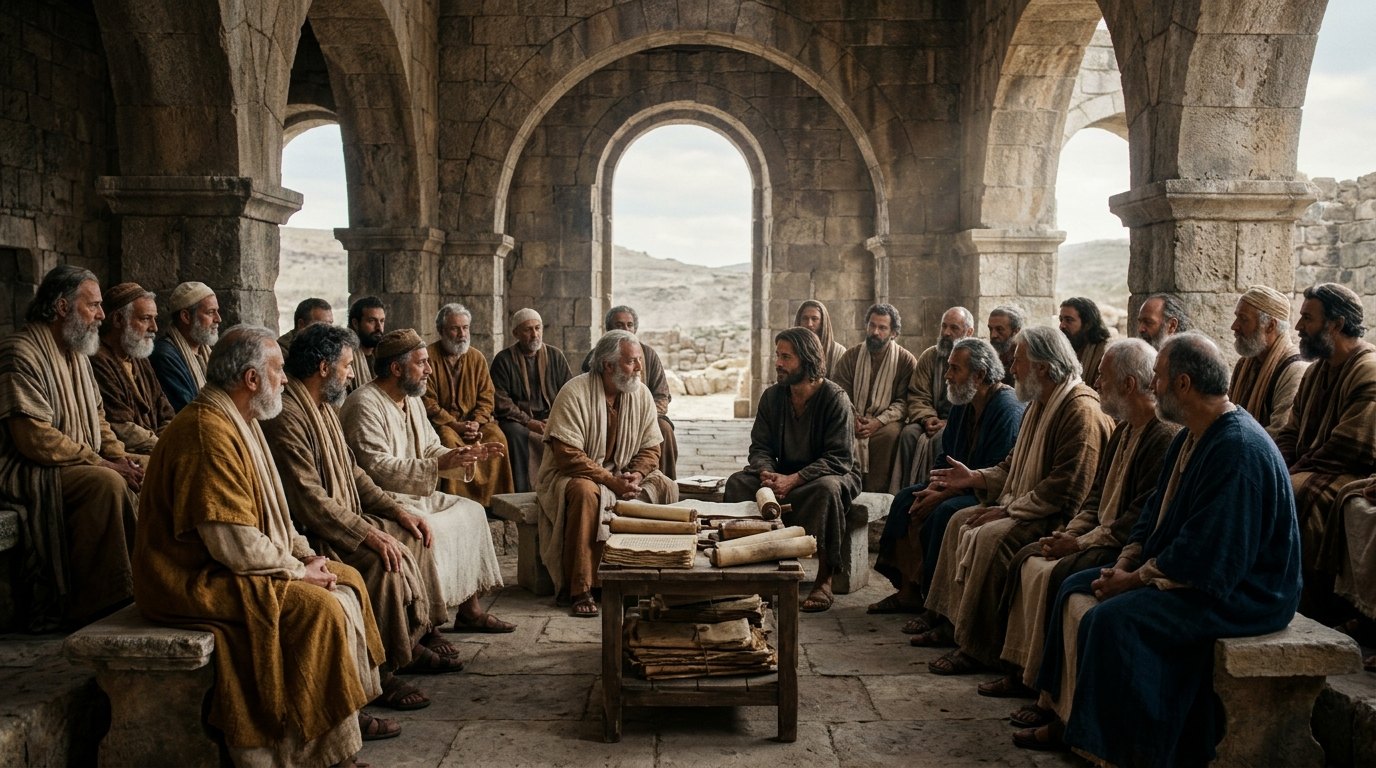
My sheep listen to my voice; I know them, and they follow me.
John 10:27 (NIV)
Christ's sheep inherently recognize the voice of their Shepherd in His Word.
The role of historical church councils was never to create Scripture, but simply to confess what the Holy Spirit had already made plain to the church. As Jesus declared plainly, my sheep hear my voice, and I know them, and they follow me (John 10:27). Just as a child recognizes the voice of a parent without needing an official committee to certify it, the body of Christ universally recognized the authentic, self-authenticating voice of the Shepherd in the twenty-seven books of the New Testament.
The apostolic writers themselves provided the exact theological criteria by which true Scripture was discerned. Paul instructed the Corinthians that if anyone thinks he is a prophet or spiritual, he must acknowledge that the things I write to you are a command of the Lord (1 Corinthians 14:37). John similarly taught that whoever knows God listens to the apostolic testimony, while whoever does not know God rejects it, thereby revealing the spirit of truth and the spirit of error (1 John 4:6).
Any document that contradicted the apostolic gospel was immediately exposed and rejected: even if we or an angel from heaven should preach a gospel contrary to the one we preached to you, let him be accursed (Galatians 1:8-9). The canon is protected by solemn divine boundaries, with God warning that anyone who adds to or takes away from His words will forfeit their share in the tree of life (Revelation 22:18-19). Fourth-century councils like Hippo and Carthage did not decide the canon; they merely recognized and published the list of books the Spirit-led church had received from the very beginning.
| Passage | What it says |
|---|---|
| John 10:27 | Jesus states that His sheep hear His voice, He knows them, and they follow Him. |
| 1 Corinthians 14:37 | Paul instructs that anyone claiming spiritual gifts must acknowledge the apostolic commands as the Lord's command. |
| Revelation 22:18-19 | A strict warning is pronounced against anyone who adds to or takes away from the words of divine prophecy. |
| 1 John 4:6 | Whoever knows God listens to the apostolic teaching, discerning the spirit of truth. |
| Galatians 1:8-9 | Any teaching contrary to the received apostolic gospel is accursed, setting the standard for canonicity. |
Where in the Bible
| Book | Passages |
|---|---|
| Deuteronomy | 1 · Deuteronomy 4:2 |
| Joshua | 1 · Joshua 1:8 |
| Isaiah | 1 · Isaiah 40:8 |
| Matthew | 1 · Matthew 23:35 |
| Luke | 2 · Luke 24:44, Luke 11:51 |
| John | 3 · John 14:26, John 16:13, John 10:27 |
| Romans | 1 · Romans 3:2 |
| 1 Corinthians | 1 · 1 Corinthians 14:37 |
| Galatians | 1 · Galatians 1:8-9 |
| Ephesians | 1 · Ephesians 2:20 |
| Colossians | 1 · Colossians 4:16 |
| 1 Thessalonians | 2 · 1 Thessalonians 2:13, 1 Thessalonians 5:27 |
| 1 Timothy | 1 · 1 Timothy 5:18 |
| 2 Timothy | 1 · 2 Timothy 3:16 |
| Hebrews | 1 · Hebrews 1:1-2 |
| 2 Peter | 2 · 2 Peter 1:20-21, 2 Peter 3:15-16 |
| 1 John | 1 · 1 John 4:6 |
| Revelation | 1 · Revelation 22:18-19 |
The story in order
- God breathes out Scripture (c. AD 60) · 2 Timothy 3:16 · Scripture's authority comes from God's inspiration.
- Moses forbids altering the Law (c. 1400 BC) · Deuteronomy 4:2 · Establishes the fixed nature of divine revelation.
- Joshua receives the Law (c. 1370 BC) · Joshua 1:8 · The Law was recognized as canonical immediately.
- Jesus affirms the OT canon (AD 30) · Luke 24:44 · Jesus recognized the Law, Prophets, and Psalms.
- Jesus spans OT martyr history (c. AD 30) · Matthew 23:35 · Confirms the scope of the Hebrew canon.
- Jewish people entrusted with oracles (c. AD 50) · Romans 3:2 · The OT was God's revealed word to Israel.
- Apostles guided into all truth (c. AD 30) · John 16:13 · The Spirit guided apostles to record truth.
- Paul's letters classed as Scripture (c. AD 65) · 2 Peter 3:16 · Apostolic writings were recognized as Scripture.
- Apostles and prophets as foundation (c. AD 60) · Ephesians 2:20 · NT foundation laid by apostles and prophets.
- Apostolic commands as Lord's (c. AD 55) · 1 Corinthians 14:37 · Apostolic teaching was recognized as divine.
- Warning against altering prophecy (c. AD 95) · Revelation 22:18-19 · Strict warning against changing divine words.
- Accursed be any contrary teaching (c. AD 49) · Galatians 1:8-9 · Canonicity determined by faithfulness to apostolic gospel.
Divine Words: Never Add To or Take Away
| Command | Consequence of Violation | Example | Passage |
|---|---|---|---|
| Do not add to or take away from commandments | May prolong days in the land | Moses' Law | Deuteronomy 4:2 |
| Do not add to or take away from words of prophecy | God will add plagues, life taken from Tree of Life | Revelation | Revelation 22:18-19 |
| Distorting apostolic letters | Perish | Paul's letters | 2 Peter 3:16 |
| Teaching contrary to apostolic gospel | Accursed | Galatian gospel | Galatians 1:8-9 |
Key words
- Scripture (graphe, γραφή)
- The divinely inspired and authoritative Word of God. · 2 Timothy 3:16
- Breathed out by God (theopneustos, θεόπνευστος)
- Originating directly from God's own inspiration. · 2 Timothy 3:16
- Holy Spirit (pneuma hagion, πνεῦμα ἅγιον)
- The divine agent who guided the human authors of Scripture. · 2 Peter 1:21
- Oracles of God (logia theou, λογία θεοῦ)
- The divine utterances and revelations entrusted to the Jewish people. · Romans 3:2
- Apostles (apostolos, ἀπόστολος)
- Those directly commissioned by Christ to spread the gospel and establish the church. · Ephesians 2:20
- Foundation (themelios, θεμέλιος)
- The foundational teaching and authority established by the apostles and prophets. · Ephesians 2:20
The Bible is not an authoritative collection of human books, but a collection of authoritative divine books. Resting on Christ and His apostles, the church did not create the Word of God, but submitted to the voice of its Shepherd.
23 passages, each cited once.
How the major Christian traditions read this
All Christians confess that Scripture is fully inspired by God, who spoke through human authors moved by the Holy Spirit, and that God's people received and recognized His Word rather than inventing its authority (2 Timothy 3:16; 2 Peter 1:21).
Catholic
We hold that God gave His written Word through the Holy Spirit to the Church, which Christ founded on the apostles (Matthew 16:18). The Church did not confer divine authority on Scripture, but under the guidance of the Holy Spirit, the universal Magisterium discerned and definitively affirmed the full canon of sacred books, both Old and New Testaments, as witnessed in historic councils like Rome, Hippo, Carthage, and Trent (1 Timothy 3:15). This includes the deuterocanonical Old Testament writings handed down in the Septuagint and ancient liturgy. Scripture and Sacred Tradition together form one sacred deposit of faith.
Scripture: Matthew 16:18, 1 Timothy 3:15, 2 Thessalonians 2:15
Orthodox
We confess that the Holy Scriptures were born within the living life of the Holy Spirit in the Church, the pillar and ground of the truth (1 Timothy 3:15). God inspired the holy prophets and apostles, and through continuous liturgical use and holy tradition, the Church recognized and received these books (2 Thessalonians 2:15). The Church has historically accepted the fuller Greek Septuagint canon for the Old Testament alongside the twenty-seven books of the New Testament. No isolated council decided the Bible's contents; rather, the mind of the Church (phronema), guided through centuries of prayer, worship, and conciliar witness, preserves the complete apostolic deposit.
Scripture: 1 Timothy 3:15, 2 Thessalonians 2:15, 2 Peter 1:21
Lutheran
We teach that Scripture has its authority entirely from God, who inspired it, not from the church's decree (2 Timothy 3:16). The canonical books shine by their own light and center upon Christ our Savior, through whom we have justification by faith (John 5:39). While the historical church recognized the twenty-seven New Testament books, Martin Luther observed a distinction between the universally received canonical books and those occasionally disputed in the early church (antilegomena). The Old Testament canon consists of the thirty-nine Hebrew books; other ancient Jewish books (Apocrypha) are helpful and good to read, but not equal to the Holy Scriptures for establishing doctrine.
Scripture: 2 Timothy 3:16, John 5:39, 2 Peter 1:20-21
Reformed & Presbyterian
We confess that the authority of Holy Scripture depends not upon the testimony of any man or church, but wholly upon God, who is truth itself (2 Timothy 3:16; Westminster Confession 1.4). The early church did not authorize the canon; the sheep simply hear the Shepherd's voice (John 10:27). Our full persuasion of its infallible truth comes from the inward work of the Holy Spirit bearing witness by and with the Word in our hearts. The thirty-nine books of the Old Testament and twenty-seven of the New Testament alone constitute the inspired canon; the Apocrypha, being of merely human origin, has no divine authority (Luke 24:44).
Scripture: 2 Timothy 3:16, John 10:27, Luke 24:44
Anglican & Episcopal
We receive the canonical books of the Old and New Testaments as containing all things necessary for salvation, whose authority was never doubted in the historic Church (Article 6 of the Thirty-Nine Articles; 2 Timothy 3:15-17). Holy Scripture does not borrow its truth from ecclesiastical assemblies, yet the Church serves as a witness and keeper of Holy Writ. Following the ancient Hebrew canon confirmed by Christ's references to the law and prophets, we hold to the thirty-nine Old Testament books and twenty-seven New Testament books, reading the other ancient books for example of life and instruction of manners, but not to establish any doctrine.
Scripture: 2 Timothy 3:15-17, Luke 24:44
Baptist
We believe that God alone established the canon through divine inspiration, moving holy men to write His infallible Word (2 Peter 1:20-21). Councils and regional bodies did not grant divine authority to the Bible; the local churches, indwelt by the Spirit, simply recognized the books that bore the marks of apostolic origin and divine authority. As the 1689 London Baptist Confession affirms, only the sixty-six books of the Old and New Testaments are inspired Scripture, our sole sufficient and final rule for faith and practice (2 Timothy 3:16-17). The Apocrypha lacks inspiration and holds no divine authority for the Lord's people.
Scripture: 2 Timothy 3:16-17, 2 Peter 1:20-21
Methodist & Wesleyan
We affirm with our historic Articles of Religion that Holy Scripture contains all things necessary for salvation, given by the inspiration of God (2 Timothy 3:16). Like the broader Protestant heritage, we receive the sixty-six books of the Hebrew Old Testament and Greek New Testament of whose authority there was never any authentic doubt in the Church. Christ Himself recognized the Hebrew Scriptures (Luke 24:44). Church leaders did not decide or manufacture the canon; through the witness of the Spirit and the ongoing life of the Christian community, believers acknowledged God's true Word, using non-canonical ancient writings only for moral example, never for doctrine.
Scripture: 2 Timothy 3:16, Luke 24:44
Pentecostal & Charismatic
We hold firmly that all sixty-six books of the Bible are the verbally inspired Word of God, given by the Holy Spirit as our all-sufficient rule for faith and conduct (2 Peter 1:21; 2 Timothy 3:16). The canon was established by the Spirit of God when He inspired the biblical writers, not by human political power or church councils. Believers in the early centuries, guided by that same Spirit, recognized Christ's voice in these specific apostolic writings (John 10:27). The sixty-six books of the Old and New Testaments are the complete, authoritative revelation of God's counsel to humanity.
Scripture: 2 Timothy 3:16, 2 Peter 1:21, John 10:27
Non-denominational & Evangelical
We believe that God Himself decided the contents of the Bible the moment He breathed out the text through human authors (2 Timothy 3:16). The canon is not an authorized list of books created by church decree; it is a list of authorized books recognized by God's people over time. The early churches tested writings by their apostolic authorship, doctrinal consistency, and the testimony of the Holy Spirit (1 Thessalonians 5:21). The sixty-six books of the Protestant canon represent the completed, inerrant Word of God, which remains fully sufficient for all matters of life and godliness (2 Peter 1:3).
Scripture: 2 Timothy 3:16, 1 Thessalonians 5:21, 2 Peter 1:3
Where they differ
The authority that identifies the canon
- Catholic
- The Church's Magisterium authoritatively discerned and defined the canon.
- Orthodox
- The Church discerned the canon through liturgical tradition and holy councils.
- Lutheran
- Scripture is self-authenticating, centering on Christ and received by faith.
- Reformed & Presbyterian
- Scripture authenticates itself; the Holy Spirit witnesses to its authority.
- Anglican & Episcopal
- The Church is witness to the canon, not source of its authority.
- Baptist
- God alone gave authority; churches simply recognized the Spirit's voice.
- Methodist & Wesleyan
- The Spirit and early church recognized the canonical books.
- Pentecostal & Charismatic
- The Holy Spirit directly authenticated the books to the early church.
- Non-denominational & Evangelical
- The books carried inherent authority; believers simply recognized them.
Scripture: 1 Timothy 3:15, John 10:27, 2 Timothy 3:16
Scope of the Old Testament canon
- Catholic
- Includes the deuterocanonical books as fully inspired, canonical Scripture.
- Orthodox
- Includes the broader Greek Septuagint books within Holy Scripture.
- Lutheran
- Limits inspired canon to thirty-nine Hebrew books; Apocrypha is profitable reading.
- Reformed & Presbyterian
- Strictly thirty-nine books; Apocrypha possesses no divine authority.
- Anglican & Episcopal
- Thirty-nine canonical books; Apocrypha read only for moral example.
- Baptist
- Only thirty-nine Old Testament books; rejects the Apocrypha entirely.
- Methodist & Wesleyan
- Thirty-nine Hebrew books; Apocrypha is not used to establish doctrine.
- Pentecostal & Charismatic
- Thirty-nine books only; Apocrypha is excluded as uninspired human writing.
- Non-denominational & Evangelical
- Only the thirty-nine books of the Hebrew Old Testament are inspired.
Scripture: Luke 24:44, Romans 3:2
Your pastor can tell you where your church stands.
Scripture cited
- 2 Peter 1:20-21
- 2 Timothy 3:16-17
- Luke 24:44
- 2 Peter 3:14-16