Who was David?

1 Samuel 16:1-13
1 The LORD said to Samuel, “How long will you mourn for Saul, since I have rejected him as king over Israel? Fill your horn with oil and be on your way; I am sending you to Jesse of Bethlehem. I have chosen one of his sons to be king.”
2 But Samuel said, “How can I go? If Saul hears about it, he will kill me.” The LORD said, “Take a heifer with you and say, ‘I have come to sacrifice to the LORD.’
3 Invite Jesse to the sacrifice, and I will show you what to do. You are to anoint for me the one I indicate.”
4 Samuel did what the LORD said. When he arrived at Bethlehem, the elders of the town trembled when they met him. They asked, “Do you come in peace?”
5 Samuel replied, “Yes, in peace; I have come to sacrifice to the LORD. Consecrate yourselves and come to the sacrifice with me.” Then he consecrated Jesse and his sons and invited them to the sacrifice.
6 When they arrived, Samuel saw Eliab and thought, “Surely the LORD’s anointed stands here before the LORD.”
7 But the LORD said to Samuel, “Do not consider his appearance or his height, for I have rejected him. The LORD does not look at the things people look at. People look at the outward appearance, but the LORD looks at the heart.”
8 Then Jesse called Abinadab and had him pass in front of Samuel. But Samuel said, “The LORD has not chosen this one either.”
9 Jesse then had Shammah pass by, but Samuel said, “Nor has the LORD chosen this one.”
10 Jesse had seven of his sons pass before Samuel, but Samuel said to him, “The LORD has not chosen these.”
11 So he asked Jesse, “Are these all the sons you have?” “There is still the youngest,” Jesse answered. “He is tending the sheep.” Samuel said, “Send for him; we will not sit down until he arrives.”
12 So he sent for him and had him brought in. He was glowing with health and had a fine appearance and handsome features. Then the LORD said, “Rise and anoint him; this is the one.”
13 So Samuel took the horn of oil and anointed him in the presence of his brothers, and from that day on the Spirit of the LORD came powerfully upon David. Samuel then went to Ramah.
New International Version (NIV)
The answer
David was the shepherd whom God chose and anointed to become king of Israel, a man after God’s own heart, and an ancestor of Jesus Christ. His life reveals both God’s gracious choice of unlikely people and the need for a greater, perfect King.
From Bethlehem’s sheepfolds to Israel’s throne
David was the youngest of Jesse’s eight sons and came from Bethlehem in Judah (1 Samuel 17:12-14). His genealogy runs through Obed and Boaz to Jesse: “Obed became the father of Jesse, and Jesse became the father of David” (Ruth 4:22).
While David was tending sheep, God sent Samuel to Bethlehem to anoint one of Jesse’s sons as Saul’s successor. David’s older brothers appeared more impressive, but God told Samuel, “Man looks at the outward appearance, but Yahweh looks at the heart” (1 Samuel 16:7). When David was finally brought in, God said, “Arise! Anoint him, for this is he” (1 Samuel 16:12). Samuel anointed him, and “Yahweh’s Spirit came mightily on David from that day forward” (1 Samuel 16:13).
David’s courage rested in God rather than in his own strength. He had protected his father’s flock from a lion and a bear, and he trusted the same God to deliver him from Goliath (1 Samuel 17:34-37). Facing the Philistine champion, David declared, “The battle is Yahweh’s,” then defeated him with a sling and a stone (1 Samuel 17:47-50).
David eventually became king over all Israel. He began reigning at thirty and ruled for forty years—seven and a half years over Judah in Hebron, then thirty-three years over Israel and Judah in Jerusalem (2 Samuel 5:3-5). God described the significance of his calling: “He also chose David his servant, and took him from the sheepfolds … to be the shepherd of Jacob, his people” (Psalms 78:70-71).
A faithful servant, but not a sinless savior
God testified concerning David, “I have found David the son of Jesse, a man after my heart, who will do all my will” (Acts 13:22). This did not mean David never sinned. He committed adultery with Bathsheba and was responsible for Uriah’s death. When confronted, however, David confessed, “I have sinned against Yahweh,” and received God’s forgiveness (2 Samuel 12:13). His prayer in Psalms 51:1-4 shows genuine repentance as he asked God to wash him thoroughly and cleanse him from his sin.
David was also a musician and psalmist. Psalms 51 is explicitly identified as “A Psalm by David,” and many other psalms likewise bear his name.
Why David matters beyond his own lifetime
God promised David an enduring house, kingdom, and throne: “Your house and your kingdom will be made sure forever before you. Your throne will be established forever” (2 Samuel 7:16). David himself died, so the promise reached beyond him to his offspring.
The New Testament opens by identifying Jesus Christ as “the son of David” (Matthew 1:1). Acts 13:23 explains that God brought salvation to Israel from David’s offspring according to His promise. David was therefore an important king and servant of God, but Jesus is the promised King in whom David’s everlasting kingdom finds its fulfillment.
Answered from Scripture · reviewed November 11, 2026
David was the youngest son of Jesse of Bethlehem, chosen by God from the pastures to shepherd Israel as its greatest earthly king. He was a sweet psalmist, a valiant warrior, a flawed sinner redeemed by grace, and the covenant head whose eternal royal throne is fulfilled forever in Jesus Christ.
Chosen by God
Anointed from the Sheepfolds of Bethlehem
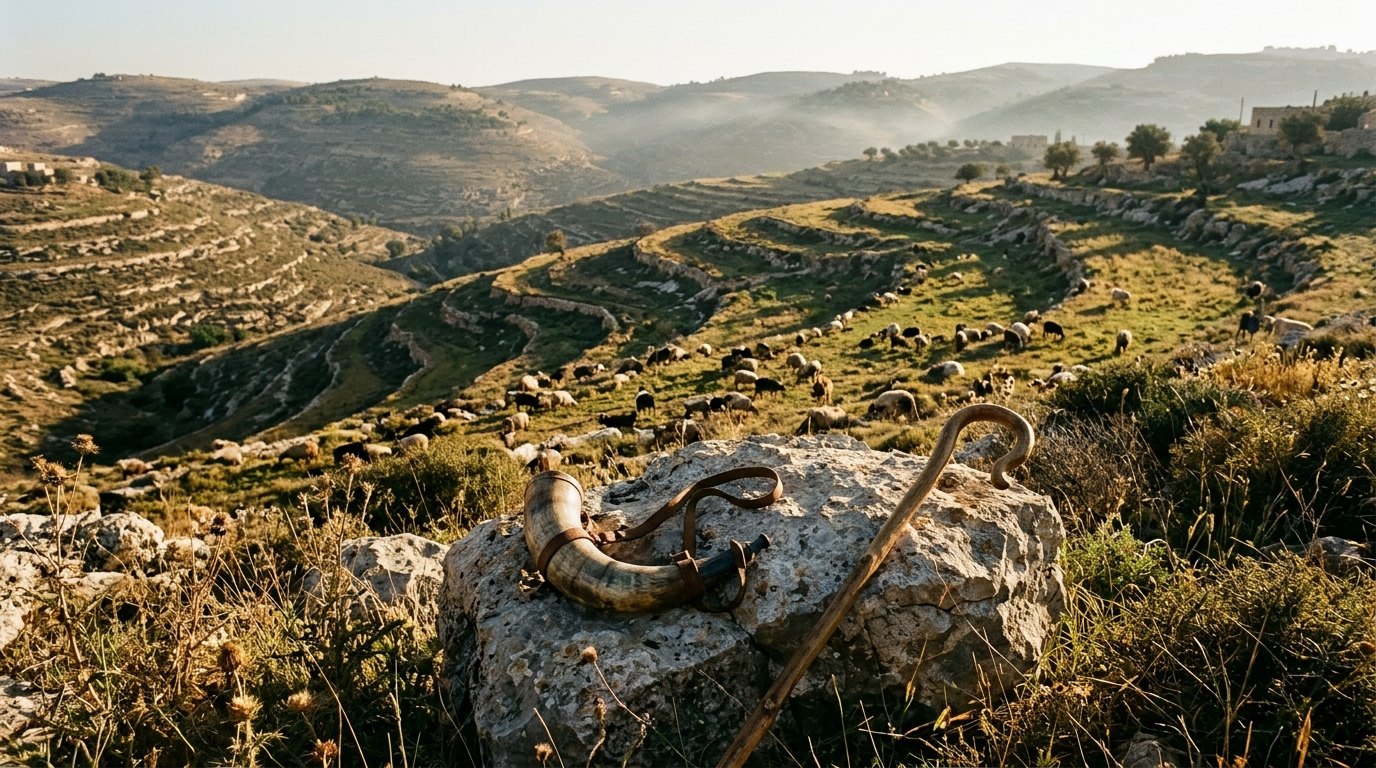
But the LORD said to Samuel, “Do not consider his appearance or his height, for I have rejected him. The LORD does not look at the things people look at. People look at the outward appearance, but the LORD looks at the heart.”
1 Samuel 16:7 (NIV)
The Lord reveals His standard of sovereign grace, looking past outward stature to choose David based on the heart.
When God sought a shepherd for His people, He looked beyond human metrics of stature and royal bearing. In 1 Samuel 16:7, the Lord delivers the central principle of divine election: while mortals look on outward appearances, God peers into the hidden recesses of the heart. The search began when the Lord commissioned Samuel to journey to Bethlehem, declaring that He had already provided Himself a king among Jesse’s sons (1 Samuel 16:1), a lineage rooted in the providence of Boaz and Ruth (Ruth 4:18-22). Saul had forfeited his crown through pride, prompting the sober judgment of 1 Samuel 13:14 that God was seeking a man after His own heart—a character confirmed by the apostolic testimony in Acts 13:22.
Yet when Samuel arrived, seven older brothers passed before him, each rejected in turn. God called for the youngest, David, who was keeping the flock out in the open pasture (1 Samuel 16:11-13). Upon him the horn of oil was poured, and the Holy Spirit rushed upon the shepherd youth from that day forward. This anointing established David as the quintessential type of the Messiah. Just as David was chosen in obscurity from the sheepfolds to guide Israel with integrity of heart (Psalm 78:70-72), so Christ would emerge from Bethlehem (John 7:42), anointed by the Holy Spirit at His baptism (Matthew 3:16-17; Acts 10:38), to shepherd His flock as the Good Shepherd who lays down His life (John 10:11; Luke 16:15).
| Passage | What it says | Fulfilled |
|---|---|---|
| 1 Samuel 16:1 | God sends Samuel to Jesse in Bethlehem, declaring He has provided a king for Himself. | John 7:42 |
| 1 Samuel 16:7 | The Lord reminds Samuel that man looks on the outward appearance, but God looks on the heart. | Luke 16:15 |
| 1 Samuel 16:11-13 | Samuel anoints the youngest son David, and the Spirit of the Lord rushes upon him. | Matthew 3:16-17, Acts 10:38 |
| Psalms 78:70-72 | God takes David from the sheepfolds to shepherd Israel with integrity of heart. | John 10:11 |
| Ruth 4:18-22 | Traces the genealogy from Perez to Obed, Jesse, and David. | |
| 1 Samuel 13:14 | Samuel announces that the Lord sought a man after His own heart. | |
| Acts 13:22 | God testifies that David was a man after His own heart. |
Warrior of Faith
Champion in the Valley of Elah

David said to the Philistine, “You come against me with sword and spear and javelin, but I come against you in the name of the LORD Almighty, the God of the armies of Israel, whom you have defied.
1 Samuel 17:45 (NIV)
David confronts Goliath not with sword or spear, but in the name of the Lord of hosts.
Before David ever wore a crown or commanded an army, he entered public memory as a champion armed solely with faith. He had served in Saul's royal court, using his harp to soothe the troubled monarch (1 Samuel 16:21-23). But when the Philistines menaced the army of Israel in the Valley of Elah, David perceived a spiritual insult where others saw only martial dread. Rejecting the king’s heavy bronze armor, he recalled how the Lord delivered him from the claw of the lion and the bear while guarding the family flock (1 Samuel 17:34-37), confident that the uncircumcised giant would share their fate.
David's victory stood upon a theology of divine deliverance. Facing the taunts of Goliath, David declared the foundation of his courage in 1 Samuel 17:45-47: he came not with sword, spear, or javelin, but in the name of the Lord of hosts, for the battle belongs entirely to God. With a single smooth stone launched from his sling, David brought down the blaspheming champion and beheaded him with his own blade (1 Samuel 17:50-51). This historical victory served as an unmistakable type of the cross. Where an entire people stood paralyzed by terror and condemnation, God's chosen representative stood in the gap alone, disarming the strong man and destroying the power of death by the enemy's own weapon (Colossians 2:15; Hebrews 2:14).
| Passage | What it says | Fulfilled |
|---|---|---|
| 1 Samuel 16:21-23 | David enters Saul's court to soothe the king's troubled spirit with his harp. | |
| 1 Samuel 17:34-37 | David recounts slaying the lion and the bear as evidence that God will deliver Goliath into his hands. | |
| 1 Samuel 17:45-47 | David proclaims to Goliath that the battle belongs to the Lord. | Colossians 2:15 |
| 1 Samuel 17:50-51 | David strikes down the Philistine champion with a sling and a stone, freeing Israel. | Hebrews 2:14 |
The Wilderness Years
Hunted Fugitive and Loyal Servant

He said to his men, “The LORD forbid that I should do such a thing to my master, the LORD’s anointed, or lay my hand on him; for he is the anointed of the LORD.”
1 Samuel 24:6 (NIV)
David refuses to harm Saul in the cave, revereing God's anointed despite unjust persecution.
The road between David’s anointing and his coronation wound through bitter trials and harsh wilderness strongholds. Saul’s mounting envy flared when Israel’s women danced and sang that Saul had struck his thousands, but David his ten thousands (1 Samuel 18:7-9). Amid the king’s murderous hostility, the Lord provided sweet consolation through Prince Jonathan, who stripped himself of his royal robe and bound his soul to David in an everlasting covenant of friendship (1 Samuel 18:1-4; 1 Samuel 20:16-17). Even when David fled into the crags, Jonathan sought him out in the woods of Horesh to strengthen his hand in God (1 Samuel 23:16-18).
David's wilderness years forged him into a ruler characterized by mercy and patience. At the cave of Adullam, he gathered society's broken, distressed, and indebted men, fashioning them into a disciplined, loyal company (1 Samuel 22:1-2). Twice David had his mortal enemy within easy reach—first in the shadowy limestone recesses of En-gedi and later in the wilderness of Ziph (1 Samuel 24:4-7; 1 Samuel 26:9-11). In 1 Samuel 24:6, David refused to lift his blade against Saul, declaring that he would never stretch out his hand against the Lord's anointed, leaving all vengeance entirely to God. Even when his men spoke of stoning him after Ziklag was burned, David strengthened himself in the Lord his God (1 Samuel 30:6), proving that his trust rested solely in divine timing.
| Passage | What it says |
|---|---|
| 1 Samuel 18:7-9 | Saul envies David after the women sing that David has struck down ten thousands. |
| 1 Samuel 18:1-4 | Jonathan enters into a deep covenant of love and friendship with David. |
| 1 Samuel 22:1-2 | David gathers the distressed, indebted, and discontented men at the cave of Adullam. |
| 1 Samuel 24:4-7 | David spares Saul's life at En-gedi, refusing to lift a hand against the Lord's anointed. |
| 1 Samuel 26:9-11 | David spares Saul a second time in the wilderness of Ziph, leaving vengeance to God. |
| 1 Samuel 20:16-17 | Jonathan makes an everlasting covenant of friendship and loyalty with David. |
| 1 Samuel 23:16-18 | Jonathan strengthens David in God while David hides in the wilderness. |
| 1 Samuel 30:6 | In deep distress at Ziklag, David strengthens himself in the Lord. |
The King of Israel
Crowned King over God's People
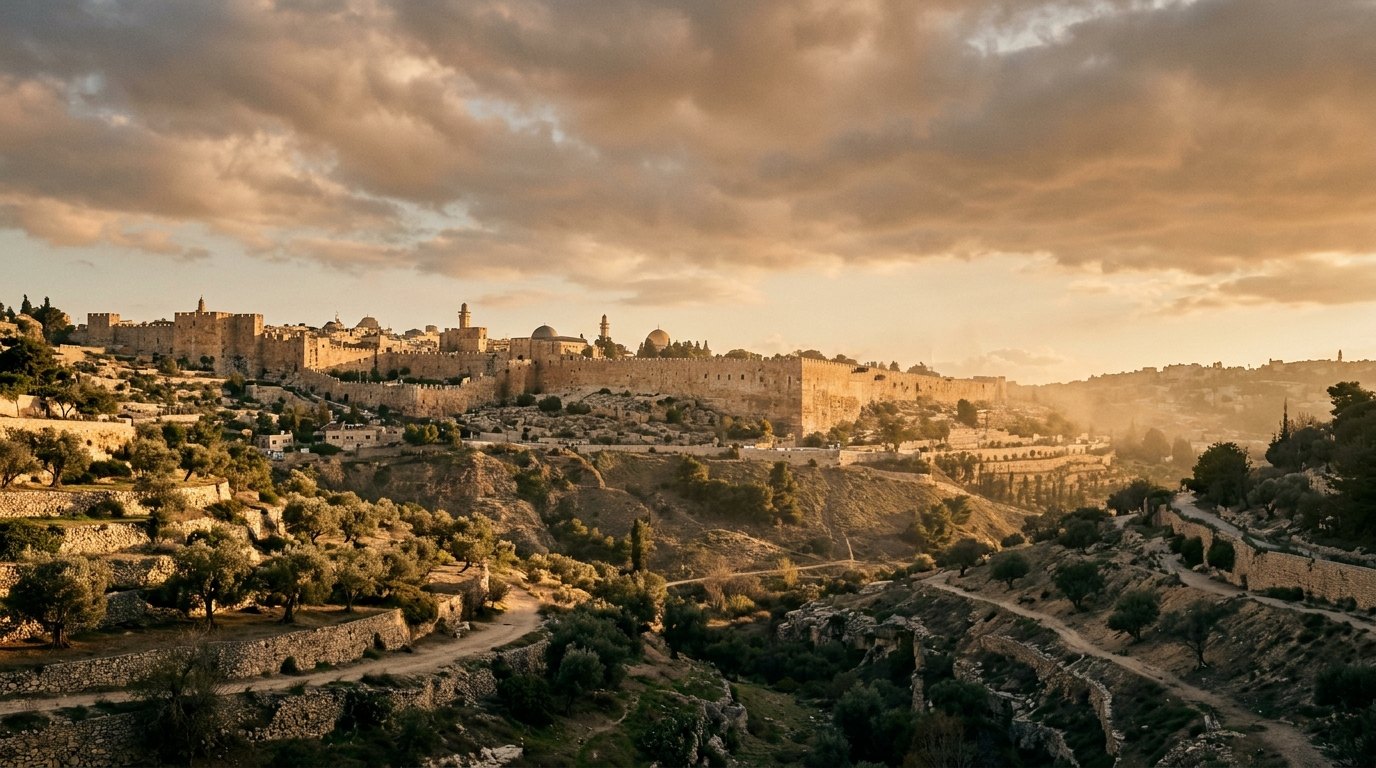
When all the elders of Israel had come to King David at Hebron, the king made a covenant with them at Hebron before the LORD, and they anointed David king over Israel.
2 Samuel 5:3 (NIV)
All the elders of Israel come to Hebron to make a covenant and anoint David as king.
Following the deaths of Saul and Jonathan on Mount Gilboa, David inquired of the Lord and went up to Hebron, where the men of Judah anointed him as their king (2 Samuel 2:1-4). Seven years later, after the collapse of the house of Saul, all the tribes gathered at Hebron to proclaim him ruler over the united nation (2 Samuel 5:1-5). In 2 Samuel 5:3, the elders of Israel entered into a solemn covenant before the Lord, anointing David to sit upon the royal throne over all God’s redeemed people—a historical reality pointing forward to the day when the kingdoms of this world become the kingdom of our Lord and of His Christ (Revelation 11:15).
David’s reign was marked by spiritual zeal and righteous governance. He swiftly captured the Jebusite stronghold of Mount Zion, transforming Jerusalem into the city of David and the capital of Israel (2 Samuel 5:6-10), the prophetic shadow of the heavenly Jerusalem (Hebrews 12:22). With holy abandon, David brought up the ark of the covenant into the capital with shouting, trumpets, and joyful dance (2 Samuel 6:12-15). His administration stood upon righteous foundations, administering justice and equity to all his subjects (2 Samuel 8:14-15). He honored his covenant with Jonathan by restoring Saul's royal lands to the lame Mephibosheth (2 Samuel 9:1-7), and spent his final years amassing gold, cedar, and stone for the magnificent temple his son Solomon would erect (1 Chronicles 22:1-5).
| Passage | What it says | Fulfilled |
|---|---|---|
| 2 Samuel 2:1-4 | The men of Judah come to Hebron and anoint David king over the house of Judah. | |
| 2 Samuel 5:1-5 | All Israel unites under David at Hebron, where he begins his forty-year reign. | Revelation 11:15 |
| 2 Samuel 5:6-10 | David conquers the Jebusite fortress of Zion, establishing Jerusalem as his royal capital. | Hebrews 12:22 |
| 2 Samuel 6:12-15 | David brings the ark of God up to Jerusalem with rejoicing, shouting, and dancing. | |
| 2 Samuel 8:14-15 | David reigns over all Israel, administering justice and equity to his people. | |
| 2 Samuel 9:1-7 | David shows covenant kindness to Mephibosheth for the sake of Jonathan. | |
| 1 Chronicles 22:1-5 | David makes extensive preparations of materials for building the future temple. |
The Everlasting Covenant
An Eternal Dynasty and Throne
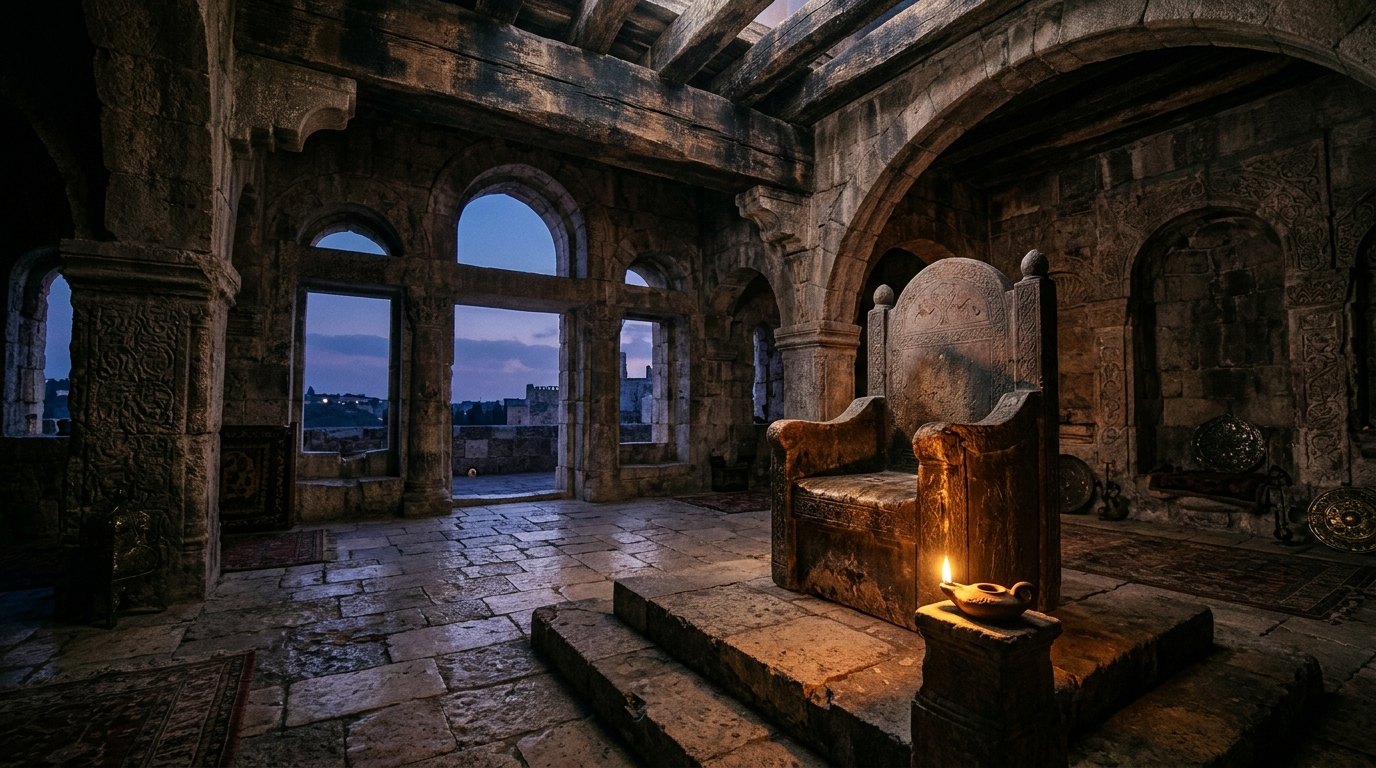
Your house and your kingdom will endure forever before me; your throne will be established forever.’ ”
2 Samuel 7:16 (NIV)
God promises David an enduring house, kingdom, and throne established forever.
In 2 Samuel 7:16, God delivers an unconditional promise that anchors redemptive history: your house and your kingdom shall be made sure forever before me; your throne shall be established forever. This Davidic covenant transformed Israel’s monarchy from a temporary political experiment into the vehicle of God’s eternal redemptive purpose.
When David sought to build a cedar temple for the ark, God reversed the initiative through the prophet Nathan. In 2 Samuel 7:12-13, the Lord promised to raise up his seed to build a house and reign over an everlasting kingdom—a promise fulfilled when the angel Gabriel declared that Jesus would reign over the house of Jacob without end (Luke 1:32-33). God reconfirmed this covenant with an inviolable oath in Psalm 89:3-4, swearing to build up David’s throne to all generations, which the apostle Peter applied directly to Christ’s resurrection and ascension (Acts 2:30). In Psalm 132:11, the Lord swore in truth that He would place the fruit of David's body on his royal seat, an unshakeable oath echoed by Paul when preaching Christ's incorruptible rising from the dead (Acts 13:34).
As David faced his final days, his dying confession looked not to his military triumphs, but to this singular grace: God had made an everlasting covenant with him, ordered in all things and sure (2 Samuel 23:5). Centuries later, Isaiah extended this regal pledge to every weary soul, inviting the nations to partake in the sure mercies of David through repentance and faith (Isaiah 55:3). What began as a promise given to a shepherd-king in Jerusalem culminated in the exaltation of the Son of God, whose royal throne stands forever (Hebrews 1:8).
| Passage | What it says | Fulfilled |
|---|---|---|
| 2 Samuel 7:12-13 | God promises to raise up David's offspring, establish his kingdom, and build a house for His name. | Luke 1:32-33 |
| 2 Samuel 7:16 | The Lord covenants that David's house and throne shall be established forever. | Hebrews 1:8 |
| Psalms 89:3-4 | God confirms by oath that He will build up David's throne to all generations. | Acts 2:30 |
| Psalms 132:11 | The Lord swears an immutable oath to set the fruit of David's body on his throne. | Acts 13:34 |
| 2 Samuel 23:5 | David confesses God has made an everlasting covenant ordered in all things. | |
| Isaiah 55:3 | God promises the sure mercies of David to all who come. |
Fall and Repentance
Broken Bones and a Clean Heart

Create in me a pure heart, O God, and renew a steadfast spirit within me.
Psalms 51:10 (NIV)
David cries out for a clean heart and a renewed steadfast spirit after his grievous sin.
In Psalm 51:10, David lays bare the deepest cry of a broken sinner: create in me a clean heart, O God, and renew a right spirit within me. The shepherd-king, though chosen and favored, was capable of devastating moral failure, revealing that even God’s anointed rulers stand in desperate need of sovereign grace.
The descent began in leisure and neglect. During the season when kings went forth to war, David remained in Jerusalem and surrendered to lust, committing adultery with Bathsheba, the wife of Uriah (2 Samuel 11:1-5). To conceal his transgression, he orchestrated the battlefield murder of Uriah the Hittite by the hand of the Ammonites (2 Samuel 11:14-17). Yet the Lord dispatched Nathan the prophet, whose cutting parable exposed the royal hypocrisy and delivered the divine indictment: 'You are the man!' (2 Samuel 12:1-7). Crushed in spirit, David confessed his guilt immediately, receiving Nathan's pardon that the Lord had put away his sin so he would not die (2 Samuel 12:13).
David's personal penitence is recorded in Psalm 51:1-4, where he appeals entirely to God's steadfast love and acknowledges that his rebellion was against God alone. In Psalm 32:1-5, he testifies to the agony of unconfessed sin and the joyful liberation of divine forgiveness. Though pardoned, David endured painful temporal consequences: he wept bitterly while fleeing Jerusalem during the uprising of his son Absalom (2 Samuel 15:13-14) and mourned inconsolably over Absalom’s violent demise (2 Samuel 18:33). Later, when he pridefully numbered the fighting men of Israel, David again threw himself upon the mercy of God (2 Samuel 24:10-14), purchasing the threshing floor of Araunah to build an altar that stayed the plague (2 Samuel 24:24-25).
| Passage | What it says |
|---|---|
| 2 Samuel 11:1-5 | David remains in Jerusalem and falls into adultery with Bathsheba, the wife of Uriah. |
| 2 Samuel 11:14-17 | David conspires to have Uriah the Hittite killed on the front lines of battle. |
| 2 Samuel 12:1-7 | Nathan confronts David with a parable of a rich man, declaring, 'You are the man!' |
| 2 Samuel 12:13 | David confesses his sin to Nathan, and the prophet declares the Lord has put away his sin. |
| Psalms 51:1-4 | David appeals to God's steadfast love and confesses that against God alone he has sinned. |
| Psalms 32:1-5 | David rejoices in the blessedness of the person whose transgression is forgiven. |
| 2 Samuel 15:13-14 | David flees Jerusalem in sorrow during the rebellion of his son Absalom. |
| 2 Samuel 18:33 | David weeps bitterly over the death of his rebellious son Absalom. |
| 2 Samuel 24:10-14 | David confesses his sin in numbering Israel and falls on God's mercy. |
| 2 Samuel 24:24-25 | David buys the threshing floor of Araunah, offering sacrifices that stay the plague. |
The Sweet Psalmist
Voice of Worship and Prophecy
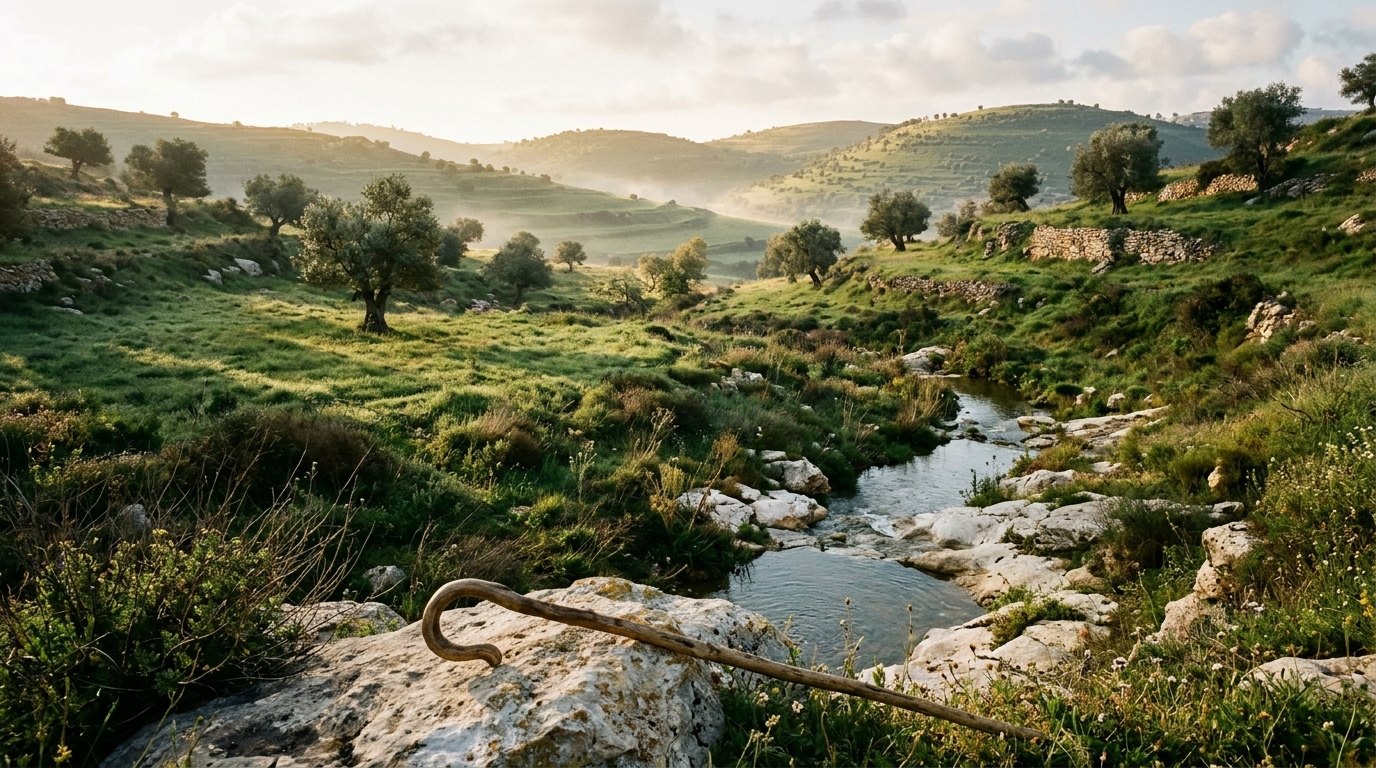
The LORD is my shepherd, I lack nothing.
Psalms 23:1 (NIV)
David sings of Yahweh as his personal shepherd who supplies every need in green pastures.
In Psalm 23:1, David sings the quintessential hymn of absolute trust in divine providence: the Lord is my shepherd; I shall not want. Before he wore a royal crown, David tended his father's flocks in the wilderness, learning that Yahweh alone feeds, guides, preserves, and restores His people across every shadowed valley.
David was not merely a musician; he was the sweet psalmist of Israel whose tongue was moved by the Holy Spirit (2 Samuel 23:1-2; Mark 12:36). Under divine inspiration, his personal sorrows and royal anthems became prophetic templates of the coming Messiah. In Psalm 22:1-18, David lamented his abandonment and detailed the agony of pierced hands and feet and divided garments—words fulfilled when Roman soldiers crucified Jesus and cast lots for His tunic (Matthew 27:35-46; John 19:23-24). In Psalm 16:8-11, David rejoiced that his soul would not be left in Sheol nor his flesh see corruption, an utterance that could not apply to David himself, whose tomb remained in Jerusalem, but pointed explicitly to the bodily resurrection of Jesus Christ (Acts 2:25-31; Acts 13:35-37).
Furthermore, in Psalm 110:1-2, David revealed the divine nature of the coming King, calling his descendant 'Lord' who sits exalted at God’s right hand until His enemies become His footstool (Matthew 22:41-45; Acts 2:34-36). As the apostle Peter confirmed at Pentecost, David was a prophet who foresaw and spoke of the resurrection and heavenly reign of the Christ (Acts 2:29-31). Through both pasture tranquility (Psalm 23:1-6) and prophetic suffering, David's harp sang the gospel.
| Passage | What it says | Fulfilled |
|---|---|---|
| 2 Samuel 23:1-2 | David is remembered as the sweet psalmist of Israel through whom the Spirit spoke. | Mark 12:36 |
| Psalms 22:1-18 | David describes deep suffering and pierced hands and feet, depicting crucifixion. | Matthew 27:35-46, John 19:23-24 |
| Psalms 16:8-11 | David rejoices that his soul will not be abandoned to Sheol nor see corruption. | Acts 2:25-31, Acts 13:35-37 |
| Psalms 110:1-2 | David calls his descendant Lord, who sits at God's right hand. | Matthew 22:41-45, Acts 2:34-36 |
| Psalms 23:1-6 | David sings of the Lord as his shepherd who leads and restores. | |
| Acts 2:29-31 | Peter identifies David as a prophet who foresaw the resurrection of Christ. |
The Greater Son
Christ, the Root and Offspring of David

“I, Jesus, have sent my angel to give you this testimony for the churches. I am the Root and the Offspring of David, and the bright Morning Star.”
Revelation 22:16 (NIV)
Jesus identifies Himself as the sovereign Root and earthly Offspring of David.
In Revelation 22:16, the exalted Lord declares His supreme identity: I am the root and the offspring of David, the bright morning star. In this definitive self-revelation, Jesus Christ explains the entire Davidic lineage, demonstrating that He is both the divine Creator who gave David life and the human descendant who inherited his throne.
The prophets continually looked beyond the fallen kings of Judah to this singular Redeemer. Isaiah foretold that a shoot would come up from the stump of Jesse and a righteous Branch from his roots, resting under the full power of the Spirit (Isaiah 11:1-2; Romans 15:12). Jeremiah promised that God would raise up for David a righteous Branch who would reign wisely as King and execute justice, named 'The Lord Our Righteousness' (Jeremiah 23:5-6; 1 Corinthians 1:30). Ezekiel similarly spoke of the future day when the Lord would set over His scattered flock one shepherd, His servant David, to feed them (Ezekiel 34:23-24).
The New Testament opens by asserting that this prophetic hope has arrived: Matthew 1:1 presents Jesus Christ as the son of David and son of Abraham. The angel Gabriel confirmed that the Lord God would give Jesus the throne of His father David to reign over an eternal kingdom (Luke 1:31-33). In the days of His flesh, blind men cried out to Him as the Son of David for mercy (Matthew 9:27), and Jerusalem’s crowds shouted 'Hosanna to the Son of David!' as He entered the holy city (Matthew 21:9). As Paul wrote in Romans 1:3, Jesus was descended from David according to the flesh, fulfilling every covenant promise as King of kings.
| Passage | What it says | Fulfilled |
|---|---|---|
| Isaiah 11:1-2 | Isaiah foretells a Branch growing out of the root of Jesse, anointed with the Spirit. | Romans 15:12 |
| Jeremiah 23:5-6 | Jeremiah promises a righteous Branch raised up for David who will reign as king. | 1 Corinthians 1:30 |
| Matthew 1:1 | Matthew opens the New Testament identifying Jesus Christ as the Son of David. | Matthew 1:1 |
| Luke 1:31-33 | Gabriel announces to Mary that the Lord will give Jesus the throne of His father David. | Luke 1:32-33 |
| Revelation 22:16 | The exalted Christ reveals Himself as the Root and the Offspring of David. | Revelation 22:16 |
| Ezekiel 34:23-24 | The Lord promises to set up one shepherd, His servant David. | |
| Matthew 9:27 | Two blind men cry out to Jesus as the Son of David. | |
| Matthew 21:9 | The crowds shout Hosanna to the Son of David at His triumphal entry. | |
| Romans 1:3 | Jesus Christ was descended from David according to the flesh. |
Where in the Bible
| Book | Passages |
|---|---|
| Ruth | 1 · Ruth 4:18-22 |
| 1 Samuel | 16 · 1 Samuel 16:1, 1 Samuel 16:7, 1 Samuel 16:11-13, 1 Samuel 13:14, 1 Samuel 16:21-23, 1 Samuel 17:34-37, 1 Samuel 17:45-47, 1 Samuel 17:50-51, 1 Samuel 18:7-9, 1 Samuel 18:1-4, 1 Samuel 22:1-2, 1 Samuel 24:4-7, 1 Samuel 26:9-11, 1 Samuel 20:16-17, 1 Samuel 23:16-18, 1 Samuel 30:6 |
| 2 Samuel | 18 · 2 Samuel 2:1-4, 2 Samuel 5:1-5, 2 Samuel 5:6-10, 2 Samuel 6:12-15, 2 Samuel 8:14-15, 2 Samuel 9:1-7, 2 Samuel 7:12-13, 2 Samuel 7:16, 2 Samuel 23:5, 2 Samuel 11:1-5, 2 Samuel 11:14-17, 2 Samuel 12:1-7, 2 Samuel 12:13, 2 Samuel 15:13-14, 2 Samuel 18:33, 2 Samuel 24:10-14, 2 Samuel 24:24-25, 2 Samuel 23:1-2 |
| 1 Chronicles | 1 · 1 Chronicles 22:1-5 |
| Psalms | 9 · Psalms 78:70-72, Psalms 89:3-4, Psalms 132:11, Psalms 51:1-4, Psalms 32:1-5, Psalms 22:1-18, Psalms 16:8-11, Psalms 110:1-2, Psalms 23:1-6 |
| Isaiah | 2 · Isaiah 55:3, Isaiah 11:1-2 |
| Jeremiah | 1 · Jeremiah 23:5-6 |
| Ezekiel | 1 · Ezekiel 34:23-24 |
| Matthew | 3 · Matthew 1:1, Matthew 9:27, Matthew 21:9 |
| Luke | 1 · Luke 1:31-33 |
| Acts | 2 · Acts 13:22, Acts 2:29-31 |
| Romans | 1 · Romans 1:3 |
| Revelation | 1 · Revelation 22:16 |
The story in order
- God chooses David (c. 1000 BC) · 1 Samuel 16:1 · God selects David from his brothers to be king.
- David anointed king (c. 1000 BC) · 1 Samuel 16:11-13 · The Spirit of God comes upon David.
- David defeats Goliath (c. 1000 BC) · 1 Samuel 17:50-51 · David wins a decisive victory for Israel.
- David flees Saul (c. 1000 BC) · 1 Samuel 22:1-2 · David gathers followers in the cave of Adullam.
- David spares Saul (c. 1000 BC) · 1 Samuel 24:4-7 · David refuses to harm the Lord's anointed.
- David crowned king of Judah (c. 990 BC) · 2 Samuel 2:1-4 · David begins his reign in Hebron.
- David crowned king of Israel (c. 990 BC) · 2 Samuel 5:1-5 · David unites all Israel under his rule.
- David brings Ark to Jerusalem (c. 990 BC) · 2 Samuel 6:12-15 · David celebrates with great rejoicing.
- God's covenant with David (c. 990 BC) · 2 Samuel 7:12-13 · God promises an eternal dynasty through David.
- David's sin with Bathsheba (c. 990 BC) · 2 Samuel 11:1-5 · David commits adultery and conspiracy.
- David repents (c. 990 BC) · 2 Samuel 12:13 · David confesses his sin and receives forgiveness.
- David flees Absalom (c. 980 BC) · 2 Samuel 15:13-14 · David shows sorrow during his son's rebellion.
- Jesus Christ, Son of David (c. 4 BC - AD 30) · Matthew 1:1 · Jesus is identified as the promised descendant.
Key words
- Anointed (māšîaḥ (Hebrew))
- Consecrated or set apart for a special purpose, often by the application of oil. · 1 Samuel 16:13
- Shepherd (rōʿeh (Hebrew))
- One who tends, feeds, and guards sheep; metaphorically, a leader or ruler. · Psalms 78:70
- Heart (lēḇ / lēḇāḇ (Hebrew))
- The inner person, seat of emotions, will, and intellect; the core of one's being. · 1 Samuel 16:7
- Covenant (bərît (Hebrew))
- A solemn agreement or promise, often sealed by a ritual or oath. · 1 Samuel 20:16
- Sin (ḥāṭāʾ (Hebrew))
- An act or thought that transgresses God's law or will. · 2 Samuel 12:13
- Repentance (šûḇ (Hebrew))
- A change of mind and heart leading to a turning away from sin. · 2 Samuel 12:13
- Mercies (ḥesed (Hebrew))
- Kindness, compassion, and steadfast love, especially from God. · Isaiah 55:3
David's life shows that God looks past outward stature to the heart, redeeming brokenness into enduring praise. Above all, his life points beyond itself to his greater Son, Jesus Christ, who reigns eternally on David's throne.
57 passages, each cited once.
Scripture cited
- 1 Samuel 16:1-13
- Psalms 78:68-71
- Ruth 4:18-22
- 1 Samuel 17:12-14
- Psalms 78:70-72
- 2 Samuel 7:8-16
- Matthew 1:1
- 1 Samuel 17:34-37
- 1 Samuel 17:45-50
- 2 Samuel 5:1-5
- Acts 13:22-23
- Psalms 51:1-4