Who was Elijah?
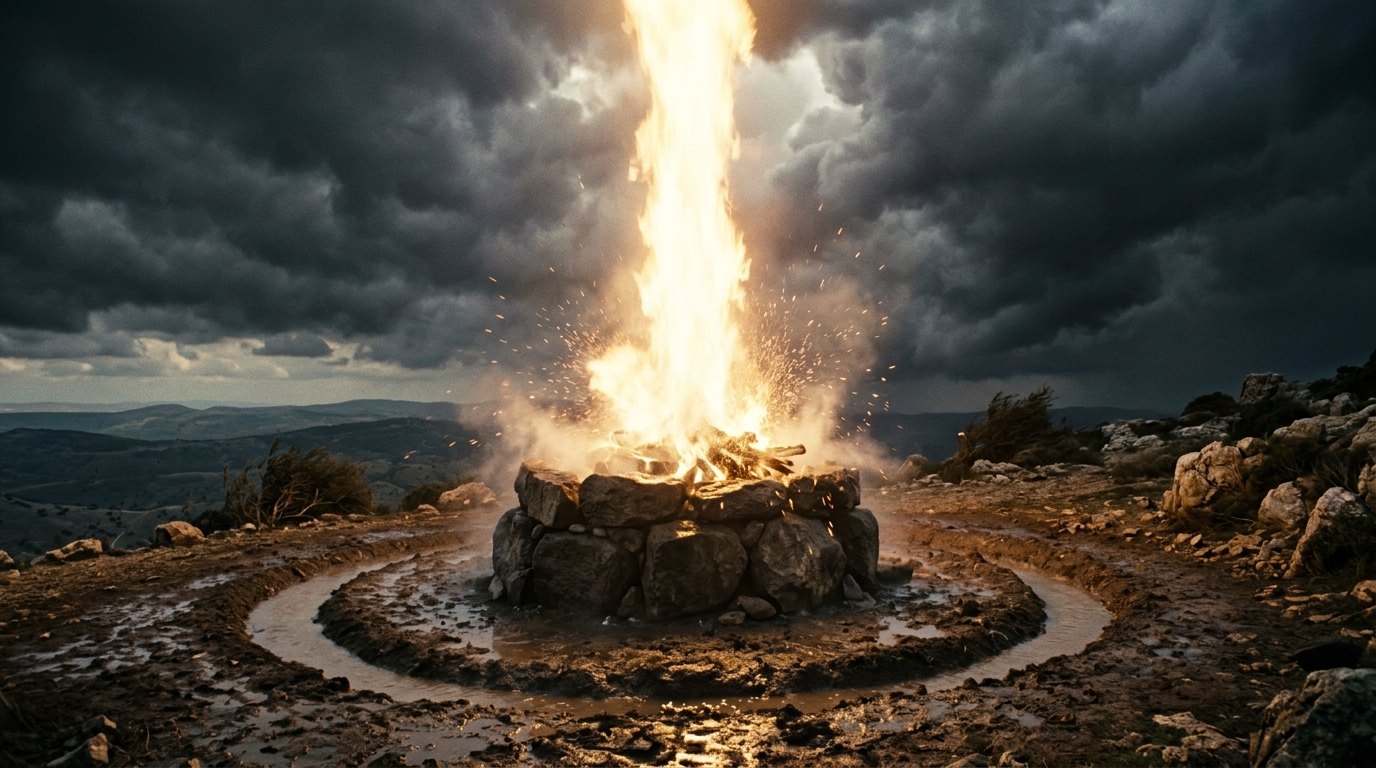
1 Kings 18:20-39
20 So Ahab sent word throughout all Israel and assembled the prophets on Mount Carmel.
21 Elijah went before the people and said, “How long will you waver between two opinions? If the LORD is God, follow him; but if Baal is God, follow him.” But the people said nothing.
22 Then Elijah said to them, “I am the only one of the LORD’s prophets left, but Baal has four hundred and fifty prophets.
23 Get two bulls for us. Let Baal’s prophets choose one for themselves, and let them cut it into pieces and put it on the wood but not set fire to it. I will prepare the other bull and put it on the wood but not set fire to it.
24 Then you call on the name of your god, and I will call on the name of the LORD. The god who answers by fire—he is God.” Then all the people said, “What you say is good.”
25 Elijah said to the prophets of Baal, “Choose one of the bulls and prepare it first, since there are so many of you. Call on the name of your god, but do not light the fire.”
26 So they took the bull given them and prepared it. Then they called on the name of Baal from morning till noon. “Baal, answer us!” they shouted. But there was no response; no one answered. And they danced around the altar they had made.
27 At noon Elijah began to taunt them. “Shout louder!” he said. “Surely he is a god! Perhaps he is deep in thought, or busy, or traveling. Maybe he is sleeping and must be awakened.”
28 So they shouted louder and slashed themselves with swords and spears, as was their custom, until their blood flowed.
29 Midday passed, and they continued their frantic prophesying until the time for the evening sacrifice. But there was no response, no one answered, no one paid attention.
30 Then Elijah said to all the people, “Come here to me.” They came to him, and he repaired the altar of the LORD, which had been torn down.
31 Elijah took twelve stones, one for each of the tribes descended from Jacob, to whom the word of the LORD had come, saying, “Your name shall be Israel.”
32 With the stones he built an altar in the name of the LORD, and he dug a trench around it large enough to hold two seahs of seed.
33 He arranged the wood, cut the bull into pieces and laid it on the wood. Then he said to them, “Fill four large jars with water and pour it on the offering and on the wood.”
34 “Do it again,” he said, and they did it again. “Do it a third time,” he ordered, and they did it the third time.
35 The water ran down around the altar and even filled the trench.
36 At the time of sacrifice, the prophet Elijah stepped forward and prayed: “LORD, the God of Abraham, Isaac and Israel, let it be known today that you are God in Israel and that I am your servant and have done all these things at your command.
37 Answer me, LORD, answer me, so these people will know that you, LORD, are God, and that you are turning their hearts back again.”
38 Then the fire of the LORD fell and burned up the sacrifice, the wood, the stones and the soil, and also licked up the water in the trench.
39 When all the people saw this, they fell prostrate and cried, “The LORD—he is God! The LORD—he is God!”
New International Version (NIV)
The answer
Elijah was a prophet of Yahweh who ministered during the reign of Ahab, king of the northern kingdom of Israel, around the 9th century BC. He is introduced in 1 Kings 17:1 with no genealogy or background — just his name, his hometown (Tishbe in Gilead), and his message: “As Yahweh, the God of Israel, lives, before whom I stand, there shall not be dew nor rain these years, but according to my word.” That sudden entrance tells you something about him right away: he spoke for God and answered to God alone.
His ministry arc
- Prophet of judgment. Elijah announced a drought, was fed by ravens at the brook Cherith, then lived with a widow at Zarephath whose son he raised from the dead (1 Kings 17:17-22).
- Confrontation with Baal on Carmel. After three years of drought, he met Ahab and challenged the 450 prophets of Baal to a duel on Mount Carmel. Baal stayed silent; the God of Abraham, Isaac, and Israel answered with fire from heaven, and the people fell on their faces and said, “Yahweh, he is God!” (1 Kings 18:38-39).
- The low point. When Jezebel threatened his life, Elijah fled into the wilderness, sat under a juniper tree, and prayed that he might die (1 Kings 19:4). At Horeb he met God not in the wind, the earthquake, or the fire, but in “a still small voice” (1 Kings 19:12), and was given three tasks: anoint Hazael king of Syria, anoint Jehu king of Israel, and anoint Elisha as his own successor (1 Kings 19:15-16).
- His end. Elijah never died. He went up to heaven in a whirlwind, riding a chariot of fire, while his mantle fell to Elisha (2 Kings 2:11).
What kind of man he was
Elijah was fierce in his zeal for God — he killed the prophets of Baal with the sword (1 Kings 18:40) — and just as human in his discouragement. James uses him as an example of a man of like passions with us, whose prayer was powerful because it worked (James 5:17). He wore a hairy garment and a leather belt (2 Kings 1:8), lived in wild places, and stood before kings without fear. Yet he also grew weary, ran for his life, and needed an angel's touch and a hot meal to keep going.
Why he still matters
The New Testament treats Elijah as a hinge figure between the old and the new. Jesus said Elijah “must first come” and the people understood that as the forerunner of the Messiah (Matthew 11:14, 17:10-13), so John the Baptist ministered “in the spirit and power of Elijah” (Luke 1:17). Elijah himself appeared with Moses at the Transfiguration, standing with Christ in glory (Matthew 17:3).
Answered from Scripture · reviewed November 7, 2026
Elijah bursts into Scripture without pedigree or preface, a prophet from Tishbe in Gilead who confronted the northern kingdom of Israel at the height of its apostasy under King Ahab and Queen Jezebel. Standing alone before monarchs, false prophets, and a wavering nation, he called God's people back to the covenant with fiery zeal and fervent prayer. Yet he was also a man of like passions, tenderly sustained by God in deep exhaustion and translated alive into heaven as an enduring sign of the prophetic office.
The Solitary Voice
A Prophet Appears to Shut the Heavens
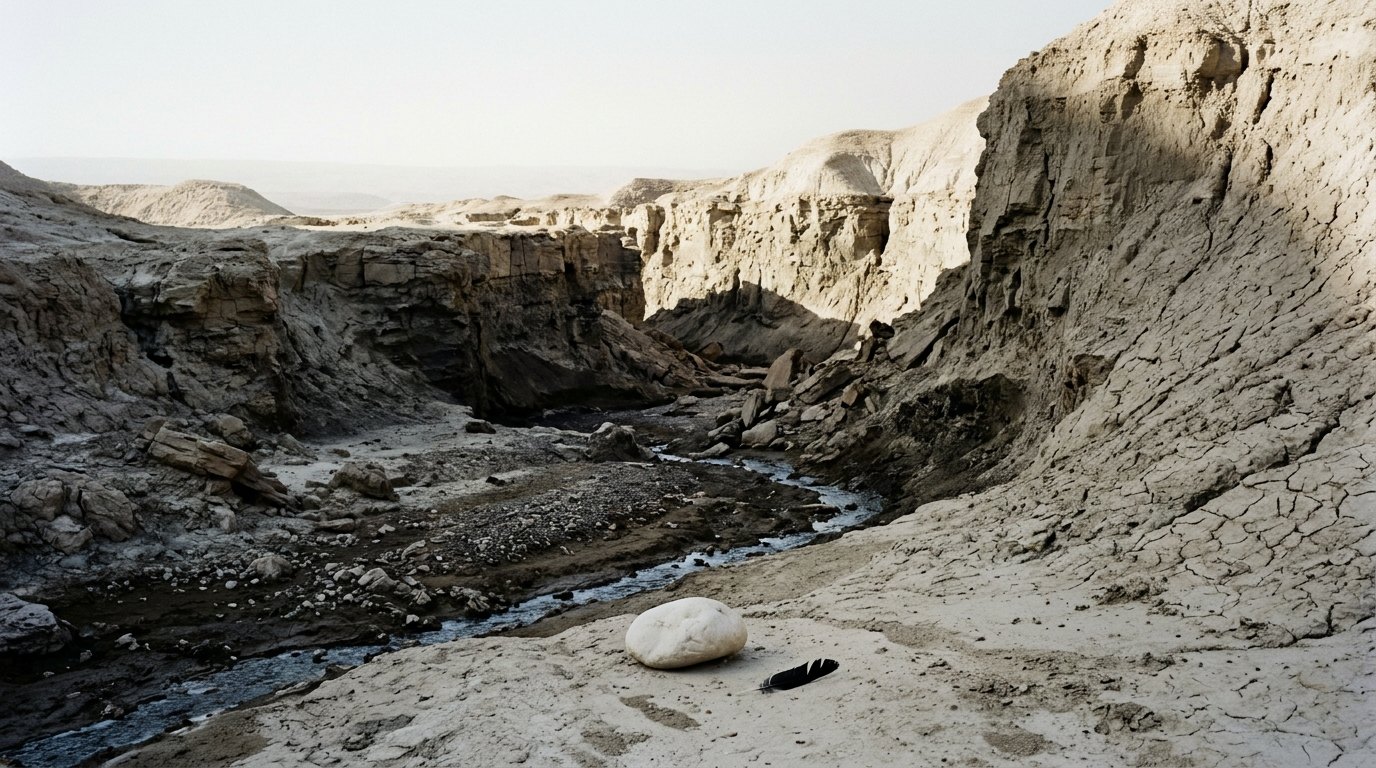
Now Elijah the Tishbite, from Tishbe in Gilead, said to Ahab, “As the LORD, the God of Israel, lives, whom I serve, there will be neither dew nor rain in the next few years except at my word.”
1 Kings 17:1 (NIV)
Elijah introduces himself solely by the living God before whom he stands, locking the sky with his word.
Elijah steps onto the pages of redemptive history without preamble, lineage, or human introduction in 1 Kings 17:1, declaring with fearless authority that no dew or rain would fall upon the apostate kingdom except by his word. Facing King Ahab, whose Phoenician bride Jezebel had established state-sponsored Baal worship, Elijah stood consciously before the living God of Israel. Baal was worshipped precisely as the storm god who brought fertility and rain, yet Yahweh instantly locked the skies at the word of His solitary servant, exposing the utter impotence of the false deity.
God immediately withdrew His prophet from public view, preserving him through quiet, supernatural provision. In 1 Kings 17:2-7, Yahweh commanded Elijah to hide eastward by the brook Cherith, where wild ravens brought him bread and meat morning and evening, until the drought dried the watercourse entirely. God then sent him across the border into Gentile territory, the very heartland of Baalism, to be sustained by a destitute Phoenician woman (1 Kings 17:8-16). Because she yielded her remaining meal and oil to God's messenger first, her jar and jug were miraculously multiplied day after day throughout the famine, demonstrating that Yahweh's covenant mercy extends beyond Israel's borders.
This domestic seclusion culminated in an unprecedented display of resurrection power in 1 Kings 17:17-24. When the widow's son took ill and stopped breathing, the grieving mother feared Elijah had come to bring her past guilt into judgment. Elijah carried the boy into his upper chamber, stretched himself over the child three times, and cried out to Yahweh with passionate intercession. When the Lord restored the boy's life, the woman confessed the foundational truth that authenticated the prophetic office: that the word of Yahweh in Elijah's mouth was true.
| Passage | What it says |
|---|---|
| 1 Kings 17:1 | Elijah confronts Ahab, pronouncing a multi-year drought across Israel according to his word. |
| 1 Kings 17:2-7 | Yahweh commands Elijah to hide at the brook Cherith, where ravens feed him until the brook dries up. |
| 1 Kings 17:8-16 | A poor widow at Zarephath feeds Elijah; her jar of flour and jug of oil do not fail. |
| 1 Kings 17:17-24 | Elijah stretches himself over the widow's dead son and prays, and Yahweh restores the boy to life. |
Contest on Carmel
Yahweh Answers by Fire on the Mount

Then the fire of the LORD fell and burned up the sacrifice, the wood, the stones and the soil, and also licked up the water in the trench.
1 Kings 18:38 (NIV)
God's fire consumes the sacrifice, the stones, the dust, and the water, proving Yahweh alone is God.
The dramatic climax of Elijah's confrontation with Baalism occurred on the heights of Carmel, where God openly vindicated His supremacy in 1 Kings 18:38 by sending supernatural fire that consumed the drenched offering, the altar stones, the soil, and every drop of water in the surrounding trench. Elijah had summoned King Ahab and the four hundred and fifty prophets of Baal through Obadiah, demanding that the wavering nation cease limping between two opinions and choose either Yahweh or Baal (1 Kings 18:1-19).
Throughout the long morning, Baal's frantic prophets performed ritual dances, slashed their bodies with knives, and shouted till their voices broke, but 1 Kings 18:20-29 records the solemn, devastating verdict: there was neither voice, nor answer, nor any paying attention. In sharp contrast, at the time of the evening sacrifice, Elijah rebuilt the ruined altar of the Lord with twelve stones, deliberately signifying the unbroken unity of the twelve tribes under God's covenant (1 Kings 18:30-37). He had four large water jars poured over the sacrifice three times to remove every possibility of natural ignition, and then offered a calm, sixty-word prayer that Yahweh would reveal Himself as God in Israel.
When Yahweh's celestial fire fell with terrifying completeness, the spectators fell prostrate on their faces, crying out that Yahweh alone is God (1 Kings 18:38-40). Executing the righteous penalties of the Mosaic law against false prophets who led Israel into apostasy, Elijah had Baal's priests slain at the Kishon brook. He then ascended the summit of Carmel to bow toward the earth with his head between his knees in persistent prayer, until a tiny cloud like a man's hand rose over the Mediterranean, ushering in torrential rain while God's hand empowered Elijah to outrun Ahab's royal chariot to Jezreel (1 Kings 18:41-46).
| Passage | What it says |
|---|---|
| 1 Kings 18:1-19 | Elijah confronts Obadiah and Ahab, demanding an assembly of all Israel and Baal's prophets on Mount Carmel. |
| 1 Kings 18:20-29 | The prophets of Baal cry out and cut themselves until evening, but no voice or fire answers. |
| 1 Kings 18:30-37 | Elijah repairs the altar of Yahweh with twelve stones, drenches the sacrifice in water, and prays. |
| 1 Kings 18:38-40 | Fire falls from heaven, the people confess Yahweh is God, and Elijah executes the prophets of Baal. |
| 1 Kings 18:41-46 | Elijah bows on the mountain to pray for rain, and the hand of Yahweh outruns Ahab's chariot. |
Whisper at Horeb
Despair, Sustenance, and the Gentle Voice

After the earthquake came a fire, but the LORD was not in the fire. And after the fire came a gentle whisper.
1 Kings 19:12 (NIV)
God reveals His presence not in the wind, earthquake, or fire, but in a low, gentle whisper.
Following the triumph on Mount Carmel, the prophet was plunged into severe spiritual and physical collapse, finding God not in spectacular outward forces but in a gentle, low whisper in 1 Kings 19:12. Terrified by Queen Jezebel's oath to slaughter him, Elijah fled south beyond Beersheba into the desolate Judean wilderness, collapsed beneath a solitary broom tree, and prayed for death, exhausted by loneliness and the apparent failure of Carmel to produce lasting national repentance (1 Kings 19:1-4).
God dealt with His weary servant not with rebuke, but with tender physical nourishment and quiet rest. In 1 Kings 19:5-9, an angel woke Elijah twice to feed him baked bread over coals and fresh water, providing supernatural sustenance that carried the prophet across forty days of travel to Mount Horeb, the very mountain of God where the covenant had been ratified with Moses. There, inside a dark cave, Elijah voiced his deep lament: he had been intensely jealous for the Lord of hosts, yet Israel had abandoned the covenant, torn down the altars, slain the prophets, and left him entirely alone (1 Kings 19:10-14).
The Lord passed by, demonstrating His sovereignty over a violent wind that shattered rocks, a massive earthquake, and a raging fire, but Yahweh was in none of those catastrophic forces; He spoke in a sheer, hushed silence. God then commissioned Elijah to return through the wilderness to anoint Hazael as king over Aram, Jehu as king over Israel to execute judgment, and Elisha as prophet in his place (1 Kings 19:15-18). God gently shattered the prophet's perceived isolation by revealing seven thousand faithful believers in Israel who had never bent the knee to Baal. Elijah departed immediately, casting his mantle upon Elisha as a sign of calling and succession (1 Kings 19:19-21).
| Passage | What it says |
|---|---|
| 1 Kings 19:1-4 | Fleeing Jezebel's death threat, Elijah flees into the wilderness and asks that he might die. |
| 1 Kings 19:5-9 | An angel ministers food and water twice, sustaining Elijah for a forty-day journey to Mount Horeb. |
| 1 Kings 19:10-14 | Elijah laments his isolation, and God passes by in wind, earthquake, fire, and a still small voice. |
| 1 Kings 19:15-18 | God commissions Elijah to anoint Hazael, Jehu, and Elisha, revealing seven thousand who have not bowed to Baal. |
| 1 Kings 19:19-21 | Elijah casts his mantle on Elisha, who slaughters his oxen and follows him as servant. |
Confronting Royal Sin
Righteous Judgment Against Ahab and Ahaziah

Ahab said to Elijah, “So you have found me, my enemy!” “I have found you,” he answered, “because you have sold yourself to do evil in the eyes of the LORD.
1 Kings 21:20 (NIV)
Elijah meets King Ahab in Naboth's vineyard as an unyielding enemy to royal wicked greed.
Elijah was not merely a performer of miraculous signs, but the living conscience of the covenant, fearlessly confronting royal greed, murder, and idolatry as shown in 1 Kings 21:20, where Ahab greeted him as his enemy. When Ahab coveted the hereditary vineyard of Naboth the Jezreelite and sulked when Naboth refused to sell his ancestral inheritance, Queen Jezebel orchestrated a sham trial using corrupt witnesses to stone Naboth to death. Yahweh sent Elijah directly into the confiscated vineyard to declare that dogs would lick Ahab's blood where Naboth fell and that his dynasty would be entirely wiped out (1 Kings 21:17-26).
Even in that dark confrontation, God's astonishing grace appeared when Ahab tore his clothes, put on sackcloth, and fasted. In 1 Kings 21:27-29, the Lord acknowledged Ahab's temporary self-humiliation and postponed the dynastic destruction until the days of his son. Yet royal apostasy persisted when Ahab's successor, King Ahaziah, fell through a palace lattice and sent messengers to inquire of Baal-Zebub, the god of Ekron, instead of Yahweh (2 Kings 1:1-8). Elijah intercepted the king's men on the road, identifiable by his distinctive garment of hair and leather belt around his waist, rebuking the house of Israel for acting as though there were no God in Israel.
When Ahaziah dispatched two successive squads of fifty soldiers to arrest the prophet, heavenly fire consumed them, proving that the word of Yahweh cannot be intimidated by human military force (2 Kings 1:9-18). A third captain begged for his life, and Elijah went down to pronounce the sovereign judgment directly to the dying king's face. Elijah's prophetic ministry extended even in writing to the southern kingdom of Judah, as 2 Chronicles 21:12-15 records an unyielding prophetic letter warning King Jehoram of devastating judgment and incurable disease for leading Judah into the abominations of the house of Ahab.
| Passage | What it says |
|---|---|
| 1 Kings 21:17-26 | Elijah confronts Ahab for murdering Naboth, declaring judgment on Ahab's house and Jezebel's demise. |
| 1 Kings 21:27-29 | Because Ahab humbles himself in sackcloth, God postpones the total destruction of his dynasty to his son's days. |
| 2 Kings 1:1-8 | Elijah intercepts King Ahaziah's messengers seeking Baal-Zebub, wearing a garment of hair and leather belt. |
| 2 Kings 1:9-18 | Fire from heaven consumes two captains and their fifties before Elijah delivers judgment directly to the king. |
| 2 Chronicles 21:12-15 | A written letter from Elijah warns King Jehoram of Judah of severe plague for leading Judah into idolatry. |
Chariot of Fire
Taken Up Alive into the Whirlwind
As they were walking along and talking together, suddenly a chariot of fire and horses of fire appeared and separated the two of them, and Elijah went up to heaven in a whirlwind.
2 Kings 2:11 (NIV)
A chariot of fire and horses of fire divide the prophets, and Elijah ascends into heaven without dying.
The conclusion of Elijah's earthly pilgrimage stands among the most wondrous events recorded in Scripture. In 2 Kings 2:11, as Elijah and his disciple Elisha walk together, a chariot of fire and horses of fire suddenly divide them, and Elijah ascends by a whirlwind into heaven. This extraordinary translation into the presence of God underscores that death does not possess the final word over the faithful servants of Yahweh. The journey leading to this parting moment in 2 Kings 2:1-6 traces a path of tested devotion, as Elijah repeatedly urges Elisha to remain behind at Gilgal, Bethel, Jericho, and the Jordan, yet Elisha steadfastly refuses to depart from his master's side. Arriving at the river in 2 Kings 2:7-8, Elijah takes his mantle, rolls it up, and strikes the waters, causing the Jordan to part so both prophets cross over on dry ground, echoing the ancient redemptive acts at the Red Sea and the river crossing under Joshua. Sensing his departure, Elijah asks what he might do for his protege in 2 Kings 2:9-10, prompting Elisha to request a double portion of his spirit—the inheritance belonging to a firstborn spiritual heir—a petition conditioned upon whether Elisha witnesses his master's departure. When the fiery chariot sweeps Elijah upward in 2 Kings 2:11-12, Elisha cries out in reverent sorrow, beholding his father and the true defense of Israel. Taking up the fallen mantle of Elijah in 2 Kings 2:13-15, Elisha strikes the Jordan once more, dividing the waters and demonstrating that the prophetic authority and Spirit of Yahweh now rest upon him. Elijah's legacy immediately marks subsequent events: in 2 Kings 3:11, Elisha is remembered as the one who poured water on Elijah's hands, affirming his faithful apprenticeship. Later, the grim judgments pronounced by Elijah against the idolatrous house of Omri reach exact historical fulfillment. In 2 Kings 9:36-37, Jehu recalls Elijah's word concerning Jezebel's gruesome demise in Jezreel, while 2 Kings 10:10 and 2 Kings 10:17 celebrate that not a single word spoken by Yahweh through Elijah concerning Ahab's line has fallen to the ground without coming to pass.
| Passage | What it says |
|---|---|
| 2 Kings 2:1-6 | Elijah tests Elisha's fidelity from Gilgal to Bethel, Jericho, and the Jordan; Elisha refuses to leave him. |
| 2 Kings 2:7-8 | Elijah strikes the waters of the Jordan with his mantle, parting them so both cross on dry land. |
| 2 Kings 2:9-10 | Elisha asks for a double portion of Elijah's spirit, conditioned on seeing him when he is taken. |
| 2 Kings 2:11-12 | Elijah ascends to heaven in a whirlwind by a chariot of fire, leaving his fallen mantle to Elisha. |
| 2 Kings 2:13-15 | Elisha takes up Elijah's fallen mantle, parts the Jordan, and receives recognition that Elijah's spirit rests upon him. |
| 2 Kings 3:11 | Elisha is identified before kings as the servant who poured water on the hands of Elijah. |
| 2 Kings 9:36-37 | Jehu remembers and confirms the fulfillment of Elijah's prophecy concerning Jezebel's death in Jezreel. |
| 2 Kings 10:10 | Jehu declares that not one word spoken by Yahweh through Elijah against the house of Ahab has failed. |
| 2 Kings 10:17 | The wiping out of Ahab's descendants in Samaria fulfills the judgment spoken by Yahweh to Elijah. |
The Prophetic Horizon
The Forerunner and the Witness of the Law

“See, I will send the prophet Elijah to you before that great and dreadful day of the LORD comes. He will turn the hearts of the parents to their children, and the hearts of the children to their parents; or else I will come and strike the land with total destruction.”
Malachi 4:5-6 (NIV)
The Old Testament closes with the promise that Elijah will return before the great and dreadful day of Yahweh.
The Old Testament canon closes with an enduring promise that casts Elijah's ministry forward across centuries into redemptive history. In Malachi 4:5-6, Yahweh announces that He will send Elijah the prophet before the coming of the great and dreadful day of the Lord, turning the hearts of fathers to their children and children to their fathers. This prophetic expectation frames the New Testament dawn. In Luke 1:16-17, the angel Gabriel proclaims that John the Baptist will go before the Lord in the spirit and power of Elijah to prepare a people for the Messiah, a truth later affirmed by the Lord Jesus Himself in Matthew 11:13-15 and Matthew 17:10-13 (parallel with Mark 9:11-13), declaring that John is indeed the Elijah who was to come, having suffered rejection just as Elijah suffered persecution. Though John clarifies in John 1:19-21 and John 1:24-25 that he is not Elijah resurrected in bodily person, his office perfectly fulfills Malachi's heraldic prophecy. Popular wonderings about Jesus often invoked Elijah's name, as seen in Herod's court in Mark 6:14-15 and Luke 9:7-9, among the crowds at Caesarea Philippi in Matthew 16:13-14 and Mark 8:27-28, and even among bystanders mocking Christ's cry upon the cross in Matthew 27:46-49 and Mark 15:34-36. When Jesus ascends the holy mountain in Matthew 17:1-4, Mark 9:2-8, and Luke 9:28-36, Elijah visibly appears in glory alongside Moses, speaking with the Savior of His approaching departure in Jerusalem, bearing witness that the Law and the Prophets find their summit and fulfillment in Christ. Yet the New Testament also warns against misapplying his mantle: in Luke 9:51-56, Jesus rebukes His disciples when they ask to call down fire from heaven upon Samaritan villagers. Elsewhere, Christ appeals to Elijah's mission to the widow of Zarephath in Luke 4:25-26 to rebuke unbelief, Paul cites Elijah's lonely plea in Romans 11:2-5 to demonstrate that God ever preserves a remnant chosen by grace, and James 5:17-18 holds up Elijah as a man of like nature whose earnest prayers wielded extraordinary power.
| Passage | What it says | Fulfilled |
|---|---|---|
| Malachi 4:5-6 | Yahweh promises to send Elijah the prophet before the great day of the Lord to turn hearts back. | Matthew 11:14, Luke 1:17 |
| Matthew 17:1-4 | Elijah appears with Moses in radiant glory beside Jesus during His Transfiguration on the high mountain. | Mark 9:2-4, Luke 9:30-31 |
| Matthew 17:10-13 | Jesus explains that Elijah has already come in the ministry and suffering of John the Baptist. | Mark 9:11-13 |
| Luke 4:25-26 | Jesus cites Elijah being sent only to the widow of Zarephath in Sidon to warn an unbelieving hometown. | |
| Romans 11:2-5 | Paul quotes Elijah's complaint to prove God has preserved a remnant chosen by grace in every generation. | |
| James 5:17-18 | James points to Elijah as a man of like nature whose fervent prayers stopped and released the rain. | |
| Matthew 11:13-15 | Jesus identifies John the Baptist as the Elijah who was promised to come. | |
| Matthew 16:13-14 | The crowds speculate about Jesus' identity, with some supposing Him to be Elijah returned. | |
| Matthew 27:46-49 | Onlookers at the cross mistake Jesus' cry of Eli for a call to Elijah to rescue Him. | |
| Mark 6:14-15 | King Herod hears rumors that Jesus is Elijah appearing before the great Day of the Lord. | |
| Mark 8:27-28 | The disciples report that the people wonder whether Jesus is Elijah. | |
| Mark 9:2-8 | Mark's account of the Transfiguration where Elijah and Moses appear talking with Jesus. | |
| Mark 9:11-13 | Jesus explains that Elijah has indeed come first in John the Baptist, who suffered at their hands. | |
| Mark 15:34-36 | Bystanders at the crucifixion offer vinegar while waiting to see if Elijah will come down to take Jesus. | |
| Luke 1:16-17 | The angel Gabriel announces John the Baptist will minister in the spirit and power of Elijah. | |
| Luke 9:7-9 | Herod hears the popular theory that Elijah has appeared among the people. | |
| Luke 9:28-36 | Luke records Elijah and Moses speaking with Christ at His Transfiguration about His departure in Jerusalem. | |
| Luke 9:51-56 | James and John ask Jesus if they should command fire to come down from heaven as Elijah did. | |
| John 1:19-21 | Priests and Levites explicitly question John the Baptist as to whether he is Elijah himself. | |
| John 1:24-25 | The Pharisees ask why John baptizes if he is neither the Christ nor Elijah nor the Prophet. |
Where in the Bible
| Book | Passages |
|---|---|
| 1 Kings | 16 · 1 Kings 17:1, 1 Kings 17:2-7, 1 Kings 17:8-16, 1 Kings 17:17-24, 1 Kings 18:1-19, 1 Kings 18:20-29, 1 Kings 18:30-37, 1 Kings 18:38-40, 1 Kings 18:41-46, 1 Kings 19:1-4, 1 Kings 19:5-9, 1 Kings 19:10-14, 1 Kings 19:15-18, 1 Kings 19:19-21, 1 Kings 21:17-26, 1 Kings 21:27-29 |
| 2 Kings | 11 · 2 Kings 1:1-8, 2 Kings 1:9-18, 2 Kings 2:1-6, 2 Kings 2:7-8, 2 Kings 2:9-10, 2 Kings 2:11-12, 2 Kings 2:13-15, 2 Kings 3:11, 2 Kings 9:36-37, 2 Kings 10:10, 2 Kings 10:17 |
| 2 Chronicles | 1 · 2 Chronicles 21:12-15 |
| Malachi | 1 · Malachi 4:5-6 |
| Matthew | 5 · Matthew 17:1-4, Matthew 17:10-13, Matthew 11:13-15, Matthew 16:13-14, Matthew 27:46-49 |
| Mark | 5 · Mark 6:14-15, Mark 8:27-28, Mark 9:2-8, Mark 9:11-13, Mark 15:34-36 |
| Luke | 5 · Luke 4:25-26, Luke 1:16-17, Luke 9:7-9, Luke 9:28-36, Luke 9:51-56 |
| John | 2 · John 1:19-21, John 1:24-25 |
| Romans | 1 · Romans 11:2-5 |
| James | 1 · James 5:17-18 |
The story in order
- Elijah appears and pronounces drought (c. 870 BC) · 1 Kings 17:1 · Elijah confronts Ahab, initiating a drought by his word.
- Elijah fed by ravens (c. 870 BC) · 1 Kings 17:2-7 · God miraculously sustains Elijah during the drought.
- Widow's flour and oil do not fail (c. 870 BC) · 1 Kings 17:8-16 · God provides for Elijah and a widow through miraculous provision.
- Elijah raises widow's son (c. 870 BC) · 1 Kings 17:17-24 · Elijah demonstrates God's power over death.
- Contest on Mount Carmel (c. 860 BC) · 1 Kings 18:20-40 · Elijah challenges and defeats the prophets of Baal.
- Elijah prays for rain (c. 860 BC) · 1 Kings 18:41-46 · God answers Elijah's prayer with abundant rain.
- Elijah flees to Horeb (c. 860 BC) · 1 Kings 19:1-9 · Elijah despairs but is sustained by God's angel.
- God speaks to Elijah at Horeb (c. 860 BC) · 1 Kings 19:10-18 · God commissions Elijah and reveals His faithful remnant.
- Elijah confronts Ahab and Jezebel (c. 853 BC) · 1 Kings 21:17-26 · Elijah pronounces judgment on Ahab for injustice.
- Elijah confronts Ahaziah (c. 852 BC) · 2 Kings 1:1-16 · Elijah demonstrates God's authority over kings.
- Elijah taken up to heaven (c. 852 BC) · 2 Kings 2:11-12 · Elijah ascends in a whirlwind, a sign of prophetic continuity.
- John the Baptist ministry begins (c. AD 27) · Luke 1:16-17 · John the Baptist prepares the way in the spirit of Elijah.
- Elijah appears at the Transfiguration (AD 30) · Matthew 17:1-8 · Elijah appears with Moses, confirming Jesus' identity.
Key words
- Prophet (navi, נָבִיא)
- One who speaks for God, often delivering His message of judgment or hope. · 1 Kings 17:1
- Yahweh (YHWH, יַהְוֶה)
- The covenant name of God, the LORD. · 1 Kings 17:2
- Ahab
- King of Israel who provoked God's anger with his wickedness. · 1 Kings 17:1
- Jezebel
- Wife of Ahab, a Phoenician princess who promoted Baal worship. · 1 Kings 19:1
- Baal
- A Canaanite fertility god, worshipped by Israel during Elijah's time. · 1 Kings 18:21
- Mantle (me'il, מְעִיל)
- A cloak or robe, symbolizing prophetic authority and office. · 1 Kings 19:13
- Spirit (ruach, רוּחַ)
- The divine power and presence of God. · 1 Kings 18:12
Elijah's life stands as a living demonstration of the power of wholehearted allegiance to God in a culture turned entirely toward idols. He was neither a mythical hero nor an untouchable saint, but a servant whose desperate prayers and human frailty were met by the sovereign, relentless grace of Yahweh. His enduring witness reminds us that the God who answers by fire and speaks in the still small voice is the same yesterday, today, and forever.
48 passages, each cited once.
Scripture cited
- 1 Kings 17:1
- 1 Kings 19:1-18