Who was Esther?

Esther 4:12-17
12 When Esther’s words were reported to Mordecai,
13 he sent back this answer: “Do not think that because you are in the king’s house you alone of all the Jews will escape.
14 For if you remain silent at this time, relief and deliverance for the Jews will arise from another place, but you and your father’s family will perish. And who knows but that you have come to your royal position for such a time as this?”
15 Then Esther sent this reply to Mordecai:
16 “Go, gather together all the Jews who are in Susa, and fast for me. Do not eat or drink for three days, night or day. I and my attendants will fast as you do. When this is done, I will go to the king, even though it is against the law. And if I perish, I perish.”
17 So Mordecai went away and carried out all of Esther’s instructions.
New International Version (NIV)
The answer
Esther was the Jewish queen of Persia whom God used to save His people from Haman’s plot to destroy them. She is the central figure of the biblical book bearing her name.
Her Hebrew name was Hadassah. Orphaned as a child, she was raised by her cousin Mordecai as his own daughter (Esther 2:7). She was later taken to the royal court, where King Ahasuerus loved her, crowned her, and made her queen instead of Vashti (Esther 2:15-17).
When Haman arranged for the Jews to be killed, Esther risked her life by approaching the king without being summoned. She first asked the Jews in Susa to fast for three days, declaring, “if I perish, I perish” (Esther 4:14-16). She then pleaded for her life and the lives of her people and exposed Haman as their enemy (Esther 7:3-6).
Esther is remembered for her courage, wisdom, and willingness to sacrifice her safety and position to protect others. Mordecai’s question—whether she had come to the kingdom “for such a time as this”—highlights God’s providential purpose in placing her where she could act (Esther 4:14).
Answered from Scripture · reviewed November 11, 2026
Esther was a faithful Jewish orphan raised in Persian exile whom the sovereign providence of God elevated to queen of the Persian Empire. When an edict sought the annihilation of her people, she risked her royal position and life to intercede before King Ahasuerus, securing the deliverance of the Jews and establishing the annual feast of Purim.
Orphan and Exile
Hadassah's Humble Beginnings in the Citadel of Susa
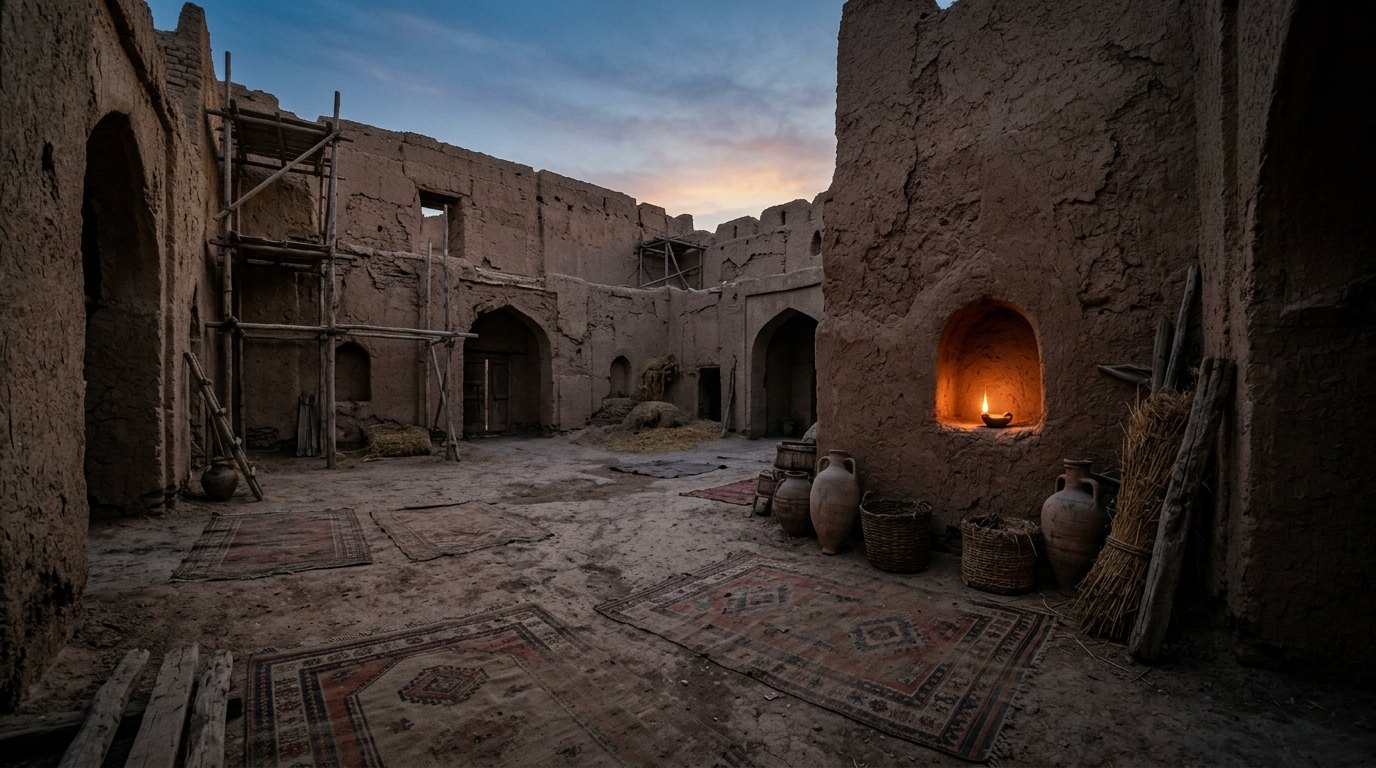
Mordecai had a cousin named Hadassah, whom he had brought up because she had neither father nor mother. This young woman, who was also known as Esther, had a lovely figure and was beautiful. Mordecai had taken her as his own daughter when her father and mother died.
Esther 2:7 (NIV)
It introduces her Hebrew heritage, her loss of parents, and her adoption by Mordecai before she entered the imperial palace.
Before she ever wore a crown or walked the polished corridors of the Persian empire, Esther was known simply as Hadassah, a Hebrew orphan growing up among the displaced covenant people. Esther 2:7 introduces her humble beginning, recording that Mordecai had taken in the daughter of his uncle because she had neither father nor mother, rearing her tenderly as his own daughter. Her lineage was marked by historical dislocation: Esther 2:5 identifies Mordecai as a Benjamite living within the fortified citadel of Susa, a descendant of Kish. His ancestral family had been carried into captivity from Jerusalem, as Esther 2:6 reminds us, during the devastating Babylonian deportation under Nebuchadnezzar alongside King Jeconiah of Judah. The girl's life thus opened under the heavy shadow of imperial conquest, bereavement, and exile. Yet the sovereign hand of God was silently preparing this young woman of Israel. Her dual identity—Hadassah, meaning 'myrtle,' and Esther, likely derived from the Persian word for 'star'—symbolized a life suspended between the ancient promises given to Abraham and the foreign power structures of the Persian world. Even in an imperial fortress far from Zion, the unseen providence of the Lord preserved her, ordering the steps of an orphaned captive toward an extraordinary destiny that would alter the course of redemptive history.
| Passage | What it says |
|---|---|
| Esther 2:5 | Mordecai is identified as a Benjamite living in the citadel of Susa whose ancestors were carried away from Jerusalem. |
| Esther 2:6 | Mentions the exile carried away with Jeconiah king of Judah by Nebuchadnezzar king of Babylon. |
| Esther 2:7 | Mordecai raised Hadassah, also called Esther, as his own daughter after her father and mother died. |
Chosen as Queen
God Grants Her Favor in the Persian Court
Now the king was attracted to Esther more than to any of the other women, and she won his favor and approval more than any of the other virgins. So he set a royal crown on her head and made her queen instead of Vashti.
Esther 2:17 (NIV)
Ahasuerus sets the royal crown on Esther, marking her official rise from exile to queen of Persia.
The dramatic transformation of Esther's status unfolded through imperial summons and the gracious favor God bestowed upon her. Following the deposition of Queen Vashti, Esther 2:8 records that Esther was taken into the royal palace and entrusted to Hegai, the custodian of the women. She quickly won his kindness, as Esther 2:9 describes, receiving immediate beauty preparations, special rations, and seven chosen royal maids. Esther exhibited remarkable poise and restraint throughout this trial; Esther 2:10 notes that she kept her family background secret, faithfully honoring Mordecai's charge. Unlike other contenders who demanded extensive adornment, Esther 2:15 reveals her humility, for she asked for nothing beyond what the king's custodian advised, winning the admiration of everyone who saw her. When she was brought before King Ahasuerus in the seventh year of his reign, Esther 2:17 records that the king loved Esther above all other women, setting the royal crown upon her head and naming her queen. Her coronation was marked by imperial celebration in Esther 2:18, as the monarch granted a tax holiday across all provinces and gave royal gifts. Even amidst royal splendor, Esther 2:20 shows her steadfast character: she continued to obey Mordecai just as when she was reared by him. That loyalty bore fruit in Esther 2:22, when Esther uncovered a deadly conspiracy plotted by two royal officers, alerting the king in Mordecai's name and saving the monarch's life.
| Passage | What it says |
|---|---|
| Esther 2:8 | Esther was taken into the king's palace under the custody of Hegai, custodian of the women. |
| Esther 2:9 | Esther found favor with Hegai, who quickly provided her beauty preparations and royal maidens. |
| Esther 2:10 | Esther obediently followed Mordecai's counsel and did not disclose her people or family heritage. |
| Esther 2:17 | The king loved Esther more than all other women and made her queen instead of Vashti. |
| Esther 2:20 | Even while crowned queen, Esther kept her heritage concealed in continuing obedience to Mordecai. |
| Esther 2:22 | Esther faithfully notified the king in Mordecai's name about the assassination plot plotted by two royal officers. |
| Esther 2:15 | Esther requests nothing beyond what the king's eunuch advises, winning favor in the eyes of all who see her. |
| Esther 2:18 | The king gives a great banquet, Esther's feast, proclaiming a holiday across the provinces and distributing gifts. |
Crisis and Resolve
Answering the Call for Such a Time as This

For if you remain silent at this time, relief and deliverance for the Jews will arise from another place, but you and your father’s family will perish. And who knows but that you have come to your royal position for such a time as this?”
Esther 4:14 (NIV)
Mordecai confronts Esther with the certainty of God's deliverance and the purpose behind her royal position.
The comfort of the royal palace was shattered when Haman the Agagite unleashed a genocidal plot against the covenant nation. Enraged by Mordecai's refusal to bow, Esther 3:6 records Haman's vow to annihilate all Jews throughout the hundred and twenty-seven provinces, culminating in Esther 3:13 with royal letters ordering their destruction and plunder on a single designated day. The crisis reached Esther through her maids in Esther 4:4, prompting her to send clothes to her mourning guardian, before dispatching Hathach in Esther 4:5 to discover the cause of his anguish. When Mordecai urged her to intercede, Esther 4:11 highlighted the peril: Persian law dictated immediate execution for anyone entering the inner court unsummoned, unless the king extended his golden scepter. Mordecai's response dismantled every pretense of self-preservation, warning in Esther 4:13 that she would not escape the edict simply because she dwelled in the king's house. Esther 4:14 sounds the theological heartbeat of the entire narrative: Mordecai declared that if she kept silent, deliverance would arise from another place, asking whether she had come to royal dignity for precisely such a time as this. Esther embraced the divine assignment with holy courage. In Esther 4:16, she commanded a strict three-day fast for all Susa's Jews, uttering the immortal words of surrender, 'If I perish, I perish.' In Esther 4:17, Mordecai departed to fulfill her instructions, uniting the remnant in urgent prayer.
| Passage | What it says |
|---|---|
| Esther 3:6 | Haman plotted to destroy all the Jews throughout the entire empire of Ahasuerus. |
| Esther 3:13 | Letters were dispatched throughout the provinces commanding the slaughter and plunder of all Jews on a single day. |
| Esther 4:11 | Esther pointed out the Persian law decreeing death for anyone approaching the king's inner court unsummoned. |
| Esther 4:13 | Mordecai warned Esther that she would not escape the empire-wide edict inside the palace. |
| Esther 4:14 | Mordecai stated that if she stayed silent, deliverance would arise elsewhere, asking if she was elevated for this exact moment. |
| Esther 4:16 | Esther called for a three-day fast among all Susa's Jews, declaring she would approach the king despite the law. |
| Esther 4:4 | Esther's maids and eunuchs inform her of Mordecai's mourning, and she sends garments to clothe him. |
| Esther 4:5 | Esther summons Hathach to learn what is happening and why Mordecai is in distress. |
| Esther 4:17 | Mordecai obeys all of Esther's instructions, gathering the Jews of Susa to fast. |
Courage and Intercession
Unmasking the Enemy at the Royal Banquets
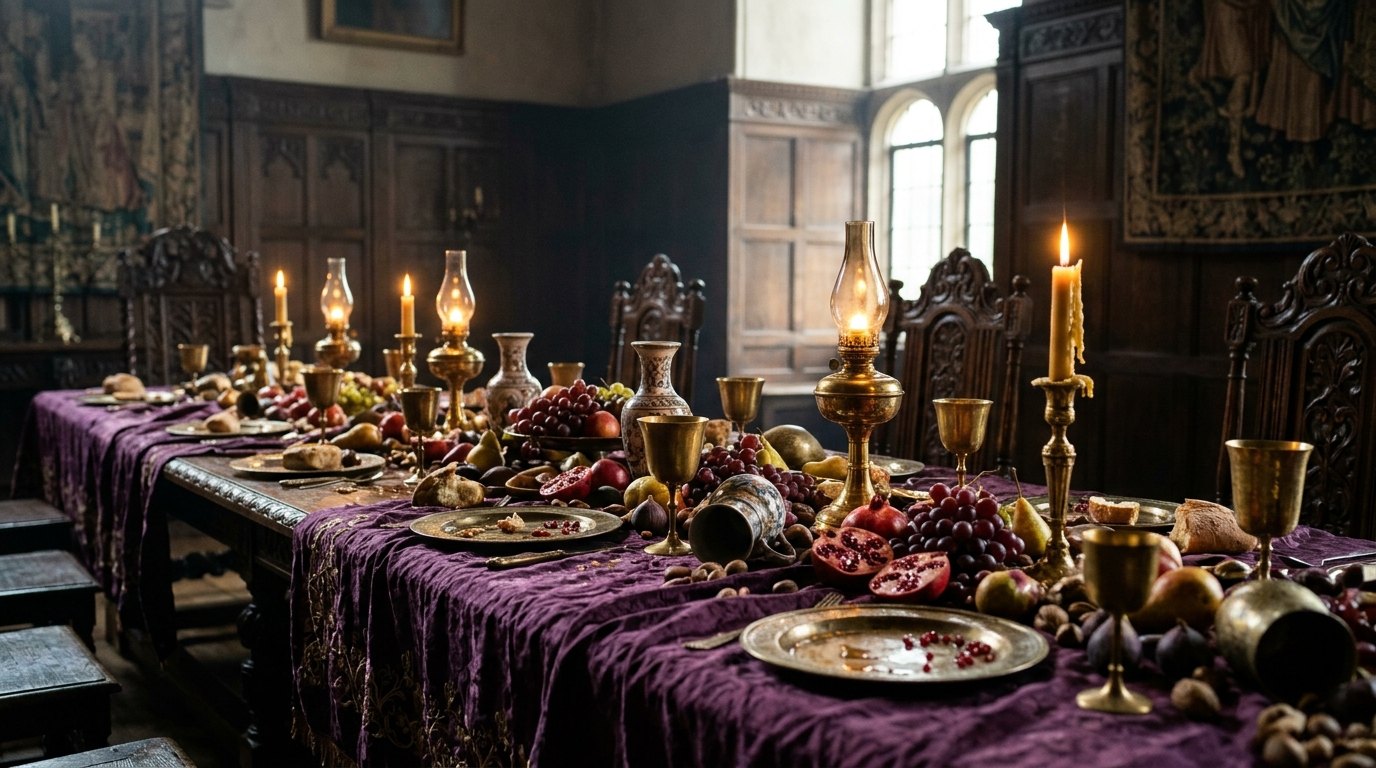
Then Queen Esther answered, “If I have found favor with you, Your Majesty, and if it pleases you, grant me my life—this is my petition. And spare my people—this is my request.
Esther 7:3 (NIV)
Esther reveals her identity and petitions the king directly for her life and the survival of her people.
Clothed in royal robes and fortified by three days of fasting, Esther took her life in her hands. Esther 5:1 records her standing in the inner court directly opposite the king's hall. In an act of divine favor, Esther 5:2 reveals that the king held out the golden scepter, welcoming her into his presence. When the monarch pledged in Esther 5:3 to grant her request up to half the empire, Esther exercised profound tactical wisdom; rather than blurting out her plea, Esther 5:4 invited the king and Haman to a private banquet. The king summoned Haman quickly in Esther 5:5, yet at that initial gathering, Esther 5:8 deferred her petition once more, inviting them both to a second banquet the following evening. At that climactic feast, as the king renewed his royal pledge in Esther 7:2, Esther 7:3 broke her silence with heartfelt intercession, pleading for her own life and the life of her people. She exposed the horror in Esther 7:4, explaining that they had been sold for absolute destruction and slaughter. When an astonished Ahasuerus demanded in Esther 7:5 to know who would dare commit such an atrocity, Esther 7:6 pointed directly to the prime minister, proclaiming that the adversary and enemy was this wicked Haman. Imperial justice fell swiftly: Esther 7:10 records that Haman was hanged on the very gallows he had erected for Mordecai, turning the tide of extermination into decisive victory and everlasting praise for God's preserving power.
| Passage | What it says |
|---|---|
| Esther 5:2 | The king extended the golden scepter to Esther as she stood in the inner court, sparing her life. |
| Esther 5:4 | Esther invited the king and Haman to attend a banquet she had prepared. |
| Esther 5:8 | Esther prudently invited the king and Haman to a second banquet before presenting her request. |
| Esther 7:3 | Esther requested that her life and the lives of her people be spared from destruction. |
| Esther 7:6 | Esther identified Haman as the adversary and enemy who had orchestrated the death decree. |
| Esther 7:10 | Haman was hanged on the gallows he had prepared for Mordecai, and the king's wrath subsided. |
| Esther 5:1 | Esther puts on her royal robes and stands courageously in the inner court before the king. |
| Esther 5:3 | The king promises Esther her petition up to half his kingdom. |
| Esther 5:5 | The king commands Haman to hurry so they may attend the banquet Esther prepared. |
| Esther 7:2 | The king reiterates his promise to grant Esther's request at the second banquet. |
| Esther 7:4 | Esther reveals that she and her people have been sold for destruction and slaughter. |
| Esther 7:5 | King Ahasuerus demands to know who dared presume in his heart to do such a thing. |
Deliverance and Remembrance
Securing the Defense and the Feast of Purim
These days should be remembered and observed in every generation by every family, and in every province and in every city. And these days of Purim should never fail to be celebrated by the Jews—nor should the memory of these days die out among their descendants.
Esther 9:28 (NIV)
Esther establishes that God's great deliverance of the Jews must be remembered through all generations.
The book turns permanently from sorrow to celebration in Esther 9:28, establishing that these days of Purim should be remembered and kept throughout every generation, family, province, and city. God’s sovereign deliverance of His covenant people was never intended to fade into a forgotten chapter of history, but to stand as an enduring testimony of His faithfulness. That rescue began to unfold when King Ahasuerus handed over the enemy's estate: according to Esther 8:1, the king gave the house of Haman to Queen Esther, and Mordecai appeared before him after his relation to the queen was revealed. Esther immediately appointed Mordecai over Haman's house (Esther 8:2), reversing the fortunes of the oppressor.
Yet Haman's wicked decree still hung over the empire. In Esther 8:3, Esther fell at the king’s feet with weeping, pleading to avert the calamity devised against her people. Once more, the king extended the golden scepter (Esther 8:4), permitting Esther to stand and plead that letters be dispatched to reverse Haman’s deadly plot (Esther 8:5). Because an edict sealed with the Persian king’s signet could not be revoked, Ahasuerus granted Esther and Mordecai royal authority to write a new, binding counter-edict in Esther 8:8. This proclamation, recorded in Esther 8:11, granted the Jews throughout every province the legal right to assemble, defend their lives, and destroy any armed force that attacked them.
When the appointed thirteenth day of Adar arrived, the very reverse occurred: the enemies who had planned to slaughter the Jews were utterly overthrown (Esther 9:1). Hearing the initial report of victory in the citadel, the king asked Esther what further request she harbored (Esther 9:12), prompting her to ask for one additional day of defense in Susa and the public impalement of Haman's ten sons (Esther 9:13). To solidify this deliverance for future generations, Queen Esther joined Mordecai in issuing letters of full authority to establish Purim (Esther 9:29), instituting permanent commemorations of fasting, lamentation, and joy (Esther 9:31). By Esther’s royal decree, these practices were confirmed and inscribed in the public record forever (Esther 9:32).
| Passage | What it says |
|---|---|
| Esther 8:3 | Esther fell at the king's feet with tears, begging to counter the evil decree against her people. |
| Esther 8:8 | The king authorized Esther and Mordecai to write an irrevocable royal decree permitting the Jews to defend themselves. |
| Esther 8:11 | The decree granted Jews in every city the right to assemble, defend their lives, and destroy attackers. |
| Esther 9:1 | On the day the enemies hoped to overpower the Jews, the reverse occurred and the Jews prevailed. |
| Esther 9:28 | The days of Purim were ordained to be remembered and celebrated by every generation of the Jewish people. |
| Esther 9:32 | The decree of Queen Esther confirmed these customs of Purim, recorded permanently in the book. |
| Esther 8:1 | King Ahasuerus gives the house of Haman to Queen Esther, and Mordecai comes before the king. |
| Esther 8:2 | Esther sets Mordecai over the estate and house of Haman. |
| Esther 8:4 | The king holds out the golden scepter toward Esther as she rises to plead for her people. |
| Esther 8:5 | Esther petitions for letters to revoke the decree engineered by Haman. |
| Esther 9:12 | The king asks Esther what further petition she has after the Jews' initial victory. |
| Esther 9:13 | Esther asks that the Jews in Susa be allowed one more day to defend themselves and hang Haman's sons. |
| Esther 9:29 | Queen Esther and Mordecai write with full authority to confirm the second letter about Purim. |
| Esther 9:31 | The decrees of Mordecai and Queen Esther establish the times of fasting and lamentation for Purim. |
Where in the Bible
| Book | Passages |
|---|---|
| Esther | 46 · Esther 2:5, Esther 2:6, Esther 2:7, Esther 2:8, Esther 2:9, Esther 2:10, Esther 2:17, Esther 2:20, Esther 2:22, Esther 2:15, Esther 2:18, Esther 3:6, Esther 3:13, Esther 4:11, Esther 4:13, Esther 4:14, Esther 4:16, Esther 4:4, Esther 4:5, Esther 4:17, Esther 5:2, Esther 5:4, Esther 5:8, Esther 7:3, Esther 7:6, Esther 7:10, Esther 5:1, Esther 5:3, Esther 5:5, Esther 7:2, Esther 7:4, Esther 7:5, Esther 8:3, Esther 8:8, Esther 8:11, Esther 9:1, Esther 9:28, Esther 9:32, Esther 8:1, Esther 8:2, Esther 8:4, Esther 8:5, Esther 9:12, Esther 9:13, Esther 9:29, Esther 9:31 |
The story in order
- Mordecai raises Esther (c. 483 BC) · Esther 2:7 · Esther becomes an orphan and is raised by her cousin Mordecai.
- Esther taken to the palace (c. 483 BC) · Esther 2:8 · Esther is brought into the king's harem for preparation.
- Esther chosen as queen (c. 482 BC) · Esther 2:17 · The king loves Esther and makes her queen, replacing Vashti.
- Esther conceals her heritage (c. 482 BC) · Esther 2:10 · Esther obeys Mordecai and does not reveal her Jewish identity.
- Plot against the king revealed (c. 482 BC) · Esther 2:22 · Esther informs the king of an assassination plot, acting in Mordecai's name.
- Haman plots against the Jews (c. 474 BC) · Esther 3:6 · Haman devises a plan to annihilate all Jews in the empire.
- Edict for Jewish destruction (c. 474 BC) · Esther 3:13 · A decree is sent out for the slaughter of all Jews.
- Esther resolves to intercede (c. 474 BC) · Esther 4:16 · Esther agrees to approach the king, calling for a fast.
- Esther's first banquet (c. 474 BC) · Esther 5:4 · Esther invites the king and Haman to a banquet.
- Esther's second banquet (c. 474 BC) · Esther 5:8 · Esther invites the king and Haman to another banquet.
- Esther reveals Haman's plot (c. 474 BC) · Esther 7:6 · Esther exposes Haman as the enemy plotting their destruction.
- Haman is punished (c. 474 BC) · Esther 7:10 · Haman is hanged on the gallows he prepared for Mordecai.
- New decree issued (c. 474 BC) · Esther 8:8 · Jews are permitted to defend themselves against their enemies.
- Jews prevail over enemies (c. 474 BC) · Esther 9:1 · The Jews defeat those who intended to destroy them.
Esther's Courageous Intercession
| Esther's Action | Motivation/Context | Outcome | Passage |
|---|---|---|---|
| Obeyed Mordecai and concealed heritage | To remain safe in the palace | Gained favor with Hegai and the king | |
| Informed the king of a plot | Acting in Mordecai's name | Saved the king's life | Esther 2:22 |
| Approached the king unsummoned | To save her people from destruction | King extended the golden scepter | |
| Invited king and Haman to banquets | To reveal Haman's plot strategically | Gained opportunity to present her plea | |
| Pled for her life and her people's | Revealing they were sold for destruction | Secured the reversal of Haman's decree | Esther 7:3-4 |
Key words
- Exile (גלות (galut))
- The state of being barred from one's native country, often due to punishment or political circumstances. · Esther 2:6
- Favor (חן (ḥen))
- Approval, liking, or special kindness shown by someone in authority. · Esther 2:9
- Decree (דָּת (dat))
- An official order issued by a legal authority. · Esther 3:13
- Intercede (פָּגַע (paga))
- To intervene or plead on behalf of another. · Esther 7:3
- Deliverance (יְשׁוּעָה (yeshu'ah))
- The action of being rescued or set free from danger or oppression. · Esther 4:14
- Purim (פּוּר (Pur))
- The Jewish feast commemorating the salvation of the Jewish people from Haman's plot. · Esther 9:32
Esther's life bears witness to the unseen providence of God, who places His servants in precise times and stations to accomplish His redemptive purposes. Her courageous resolution reminds every believer that trusting God often means risking safety and speaking truth when obedience requires it.
46 passages, each cited once.
Scripture cited
- Esther 4:12-17
- Esther 2:5-18
- Esther 7:1-6