Who was Hannah?
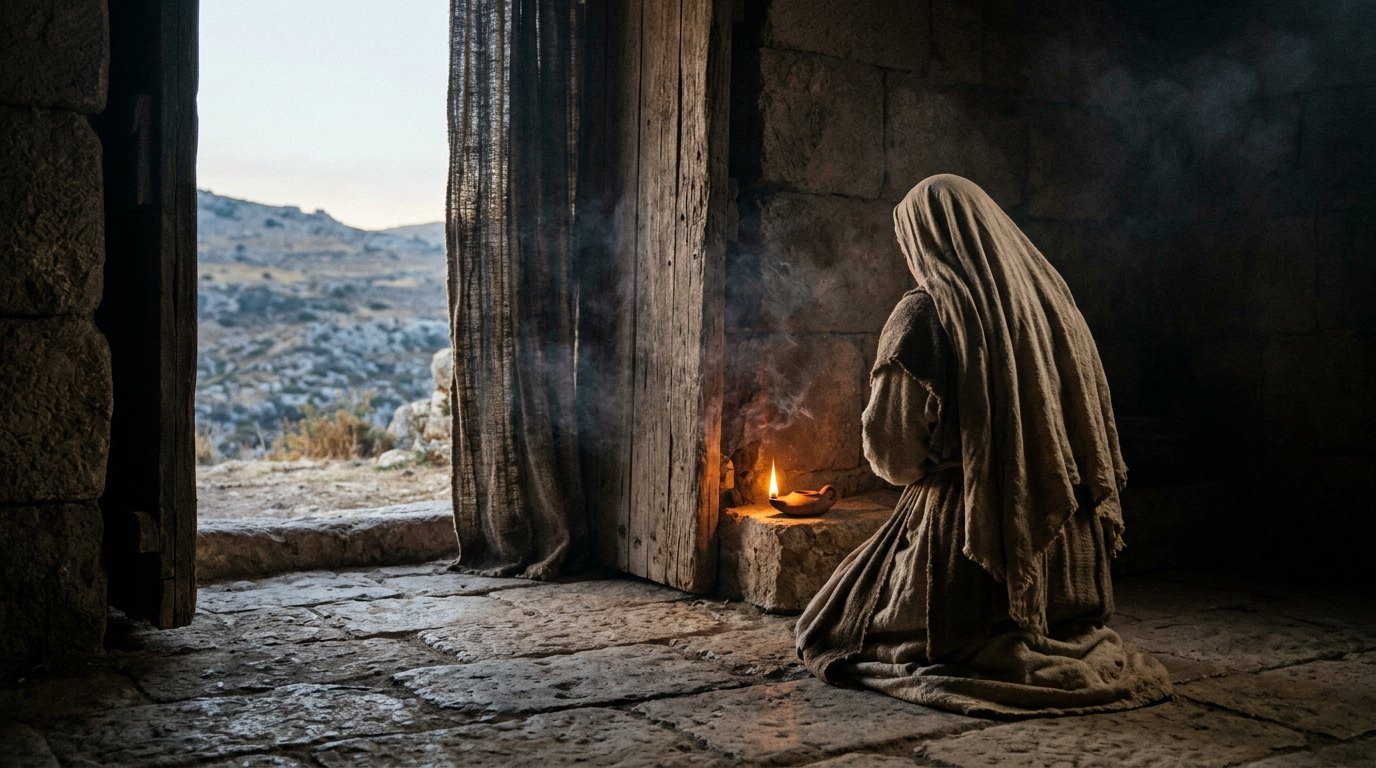
1 Samuel 1:9-20
9 Once when they had finished eating and drinking in Shiloh, Hannah stood up. Now Eli the priest was sitting on his chair by the doorpost of the LORD’s house.
10 In her deep anguish Hannah prayed to the LORD, weeping bitterly.
11 And she made a vow, saying, “LORD Almighty, if you will only look on your servant’s misery and remember me, and not forget your servant but give her a son, then I will give him to the LORD for all the days of his life, and no razor will ever be used on his head.”
12 As she kept on praying to the LORD, Eli observed her mouth.
13 Hannah was praying in her heart, and her lips were moving but her voice was not heard. Eli thought she was drunk
14 and said to her, “How long are you going to stay drunk? Put away your wine.”
15 “Not so, my lord,” Hannah replied, “I am a woman who is deeply troubled. I have not been drinking wine or beer; I was pouring out my soul to the LORD.
16 Do not take your servant for a wicked woman; I have been praying here out of my great anguish and grief.”
17 Eli answered, “Go in peace, and may the God of Israel grant you what you have asked of him.”
18 She said, “May your servant find favor in your eyes.” Then she went her way and ate something, and her face was no longer downcast.
19 Early the next morning they arose and worshiped before the LORD and then went back to their home at Ramah. Elkanah made love to his wife Hannah, and the LORD remembered her.
20 So in the course of time Hannah became pregnant and gave birth to a son. She named him Samuel, saying, “Because I asked the LORD for him.”
New International Version (NIV)
The answer
Hannah was one of the two wives of Elkanah, an Ephraimite from Ramathaim Zophim, and the mother of the prophet Samuel. Scripture introduces her with one sentence that sets up her whole story: "He had two wives. The name of one was Hannah, and the name of the other Peninnah. Peninnah had children, but Hannah had no children" (1 Samuel 1:2).
She is defined first by her barrenness, which the text treats as the Lord's doing: "Yahweh had shut up her womb" (1 Samuel 1:5). Her husband loved her and gave her a double portion, but her rival Peninnah provoked her year after year because of her childlessness, so that "she wept, and didn't eat" (1 Samuel 1:7).
She is then defined by her prayer and vow at the temple in Shiloh, where in bitterness of soul she asked the Lord for a son and promised to give him back to God for life: "Yahweh of Armies, if you will indeed look at the affliction of your servant... give to your servant a boy, then I will give him to Yahweh all the days of his life, and no razor shall come on his head" (1 Samuel 1:11). Eli the priest at first mistook her silent praying for drunkenness, heard her reply, and blessed her: "Go in peace; and may the God of Israel grant your petition" (1 Samuel 1:17).
The Lord remembered her, and she named the son she bore Samuel, "Because I have asked him of Yahweh" (1 Samuel 1:20). She kept her vow: after weaning him she brought him to Eli at the house of the Lord, "and the boy was ministering to Yahweh before Eli the priest" (1 Samuel 2:11).
So in the Bible, Hannah is the woman the Lord answered after years of barrenness and grief, whose son Samuel became the last judge of Israel and the prophet who anointed both Saul and David.
Answered from Scripture · reviewed November 7, 2026
Hannah stands in Scripture as a devoted woman of faith whose persistent prayers in deep anguish shaped the course of Israel's redemptive history. Barren, provoked, and misunderstood, she poured out her heart to the Lord at Shiloh, receiving a son whom she faithfully dedicated to divine service. Her life and prophetic song demonstrate how God honors humble trust, overturns human distress, and raises up leaders to accomplish His sovereign purposes.
Barrenness and Grief
A Heart Weighed Down by Provocation
This went on year after year. Whenever Hannah went up to the house of the LORD, her rival provoked her till she wept and would not eat.
1 Samuel 1:7 (NIV)
This verse exposes the relentless domestic heartbreak Hannah endured year after year as her barrenness was used to torment her.
Hannah's domestic sorrow is captured in the sobering reality that her rival provoked her severely year after year (1 Samuel 1:7). In the hill country of Ephraim lived an upright man named Elkanah, introduced in 1 Samuel 1:1, who had two wives: Peninnah and Hannah (1 Samuel 1:2). While Peninnah had children, Hannah remained barren because the Lord had closed her womb, a profound cultural and personal affliction in ancient Israel. Each year, Elkanah made a religious pilgrimage with his entire household to worship and sacrifice to the Lord of hosts at the tabernacle in Shiloh (1 Samuel 1:3). There, sacrificial meat was distributed to family members; Peninnah and all her sons and daughters received their designated portions, while Elkanah gave Hannah a double portion because he loved her deeply (1 Samuel 1:4-5). Yet Elkanah’s affection could not shield Hannah from cruelty. Rather than sharing in worship with gratitude, Peninnah used the festive occasions to taunt Hannah relentlessly, mocking her empty arms and driving her to continuous tears (1 Samuel 1:6). As 1 Samuel 1:7 notes, this mockery repeated every single year until Hannah wept openly and refused to eat. Sensing her profound misery, Elkanah sought to console his wife, asking why her heart was grieved and gently inquiring whether his devotion was not better to her than ten sons (1 Samuel 1:8). Human comfort, however, could not mend the wound of her barren soul.
| Passage | What it says |
|---|---|
| 1 Samuel 1:1 | Introduces Elkanah, an Ephraimite residing in Ramathaim-zophim in the hill country of Ephraim. |
| 1 Samuel 1:2 | Identifies Elkanah's two wives, recording that Peninnah had children while Hannah had none. |
| 1 Samuel 1:3 | Describes Elkanah's annual pilgrimage to worship and sacrifice to the Lord of hosts at Shiloh. |
| 1 Samuel 1:4 | Relates how Elkanah gave portions of sacrificial meat to Peninnah and all her sons and daughters. |
| 1 Samuel 1:5 | Shows Elkanah gave Hannah a double portion because he loved her, though the Lord had closed her womb. |
| 1 Samuel 1:6 | Records how Hannah's rival provoked her severely to irritate her because of her closed womb. |
| 1 Samuel 1:7 | Recounts how this harassment occurred year after year, causing Hannah to weep and refuse food. |
| 1 Samuel 1:8 | Records Elkanah comforting Hannah, asking why she wept and whether he was not better to her than ten sons. |
The Shiloh Vow
Pouring Out the Soul in Faith

And she made a vow, saying, “LORD Almighty, if you will only look on your servant’s misery and remember me, and not forget your servant but give her a son, then I will give him to the LORD for all the days of his life, and no razor will ever be used on his head.”
1 Samuel 1:11 (NIV)
Hannah's solemn vow commits her requested son to lifelong Nazirite service to God, placing His kingdom above personal comfort.
Hannah's anguish drove her directly to the presence of God, culminating in a solemn covenant where she consecrated her future son entirely to the Lord's service (1 Samuel 1:11). After the sacrificial feast at Shiloh had ended, Hannah rose and quietly approached the tabernacle, where Eli the aged high priest sat on a chair beside the doorpost (1 Samuel 1:9). In profound bitterness of spirit, she wept freely and directed her desperate plea toward heaven (1 Samuel 1:10). In 1 Samuel 1:11, she vowed that if the Lord of hosts would look on the affliction of His maidservant and grant her a male child, she would return him to Yahweh for the entirety of his life, with no razor ever touching his head, placing him under a lifelong Nazirite dedication. As she continued pouring out her heart, her lips moved in silent, fervent supplication while no sound escaped her throat (1 Samuel 1:12-13). Observing her silent trembling, Eli mistook her brokenness for drunkenness and sharply commanded her to put away her wine (1 Samuel 1:14). Hannah respectfully defended her character, answering in 1 Samuel 1:15 that she was not an unruly woman but a deeply sorrowful servant pouring out her soul before God. Urging him not to count her as worthless, she explained the sheer magnitude of her prolonged grief (1 Samuel 1:16). Discerning the truth, Eli offered a pastoral benediction, praying that the God of Israel would grant her request (1 Samuel 1:17). Believing the promise in faith, Hannah departed, ate her meal, and her face was no longer sorrowful (1 Samuel 1:18).
| Passage | What it says |
|---|---|
| 1 Samuel 1:9 | Notes Hannah rising after eating in Shiloh while Eli the priest sat near the temple doorpost. |
| 1 Samuel 1:10 | Describes Hannah praying to the Lord in deep bitterness of soul and weeping bitterly. |
| 1 Samuel 1:11 | Records Hannah vowing to give a son to Yahweh all his days with no razor touching his head. |
| 1 Samuel 1:12 | States that as she continued praying before the Lord, Eli observed her moving lips. |
| 1 Samuel 1:13 | Explains that Hannah spoke in her heart, leading Eli to assume she was intoxicated. |
| 1 Samuel 1:14 | Shows Eli rebuking Hannah and commanding her to put away her wine. |
| 1 Samuel 1:15 | Records Hannah answering that she was not drunk, but pouring out her sorrowful soul before God. |
| 1 Samuel 1:16 | Appeals to Eli not to view her as worthless, explaining her long grief and provocation. |
| 1 Samuel 1:17 | Records Eli blessing her and praying that the God of Israel grant her petition. |
| 1 Samuel 1:18 | Recounts Hannah receiving the blessing in faith, eating food, and no longer looking downcast. |
The Promise Given
God Remembers and Grants Samuel
So in the course of time Hannah became pregnant and gave birth to a son. She named him Samuel, saying, “Because I asked the LORD for him.”
1 Samuel 1:20 (NIV)
The naming of Samuel captures the essence of Hannah's testimony that life and salvation come by asking the Lord.
Faith bore its miraculous fruit when the Lord remembered Hannah in mercy and gave her a son (1 Samuel 1:20). Rising early the following morning, Elkanah and Hannah worshiped before Yahweh one final time at Shiloh before traveling back to their family home at Ramah, where the Lord graciously answered her humble petition (1 Samuel 1:19). In the course of time, Hannah conceived and brought forth a son, naming him Samuel—a name declaring that she had asked him of the Lord (1 Samuel 1:20). When the appointed season arrived for the next annual feast at Shiloh, Elkanah and all his house prepared to go up to offer the yearly sacrifice and perform his vow (1 Samuel 1:21). Hannah, however, chose to remain in Ramah during Samuel's infancy, explaining to her husband that once the child was weaned, she would bring him to the sanctuary so that he might appear before the Lord and dwell there permanently (1 Samuel 1:22). Elkanah fully concurred with his wife's devotion, urging her to do what seemed best to her and praying that the Lord would establish His word (1 Samuel 1:23). Hannah remained at home nurturing the gift God had provided, preparing her own heart to fulfill the costly vow she had made in her season of barrenness.
| Passage | What it says |
|---|---|
| 1 Samuel 1:19 | Relates the family rising early to worship before returning home, where the Lord remembered Hannah. |
| 1 Samuel 1:20 | Records Hannah conceiving and naming the child Samuel, because she asked him of Yahweh. |
| 1 Samuel 1:21 | Notes Elkanah and all his household going up to Shiloh for the annual sacrifice and vow. |
| 1 Samuel 1:22 | Shows Hannah remaining home until the boy was weaned, to present him before the Lord permanently. |
| 1 Samuel 1:23 | Records Elkanah supporting her plan and praying that the Lord establish His word. |
The Vow Fulfilled
Dedication of Samuel at Shiloh
So now I give him to the LORD. For his whole life he will be given over to the LORD.” And he worshiped the LORDthere.
1 Samuel 1:28 (NIV)
This verse seals Hannah's surrender, giving her long-desired son to the Lord for the whole of his earthly life.
Hannah demonstrated radical faithfulness when she surrendered the child she had prayed for into the hands of God for lifelong service (1 Samuel 1:28). Once young Samuel was safely weaned, Hannah made the pilgrimage back to Shiloh, carrying offerings of great value: a three-year-old bull, an ephah of fine flour, and a skin of wine (1 Samuel 1:24). Together they slaughtered the sacrificial bull and presented the boy directly to Eli the priest (1 Samuel 1:25). Addressing the aged leader, Hannah identified herself with quiet dignity, stating that she was the very woman who had stood praying in bitter anguish beside him years prior (1 Samuel 1:26). In 1 Samuel 1:27, she pointed to the boy and declared that for this child she had prayed, and Yahweh had granted the precise petition she asked of Him. Therefore, as recorded in 1 Samuel 1:28, she actively lent him back to the Lord as long as he lived. Having surrendered her treasured son into the perpetual custody of the tabernacle, she bowed in reverent worship before the God who had turned her sorrow into enduring praise.
| Passage | What it says |
|---|---|
| 1 Samuel 1:24 | Describes Hannah bringing the weaned boy to Shiloh with a bull, flour, and a skin of wine. |
| 1 Samuel 1:25 | Records the slaughter of the bull and the bringing of the child to Eli the priest. |
| 1 Samuel 1:26 | Shows Hannah reminding Eli that she was the woman who had stood praying beside him years earlier. |
| 1 Samuel 1:27 | Affirms that she prayed for this specific boy and that the Lord granted her petition. |
| 1 Samuel 1:28 | Declares that she has lent him to the Lord for life, after which they worshiped there. |
Hannah's Song
Praise for God's Sovereign Deliverance

those who oppose the LORD will be broken. The Most High will thunder from heaven; the LORD will judge the ends of the earth. “He will give strength to his king and exalt the horn of his anointed.”
1 Samuel 2:10 (NIV)
Hannah prophesies the exaltation of Yahweh's Anointed King, anticipating the Davidic covenant and the reign of Christ.
Hannah concludes her magnificent hymn in 1 Samuel 2:10 by declaring that the Lord will judge the ends of the earth, give strength to His King, and exalt the horn of His Anointed. Long before Israel ever appointed a monarch, Hannah’s Spirit-directed prayer introduced the messianic title Mashiach into the scriptural record, looking past earthly kings to the ultimate reign of Jesus Christ (Luke 1:32-33; Revelation 11:15). Her opening burst of praise in 1 Samuel 2:1 exults in God's salvation, echoing directly in the Magnificat when Mary rejoices in God her Savior (Luke 1:46-47). She proclaims in 1 Samuel 2:2 that there is none holy like Yahweh, a confession perfected when the nations worship the King of the saints (Revelation 15:4). In 1 Samuel 2:3, she cautions the arrogant against boasting before the God who weighs all deeds, anticipating the apostolic command not to think more highly of oneself than one ought (Romans 12:3).
The hymn unfolds the great divine reversal that characterizes the kingdom of God. In 1 Samuel 2:4, the bows of warriors snap while the feeble receive supernatural strength, foreshadowing how God’s power is perfected in human weakness (2 Corinthians 12:9). The self-satisfied starve while the barren mother flourishes in 1 Samuel 2:5, prefiguring Christ filling the hungry with good things while sending the rich away empty (Luke 1:53). Hannah acknowledges Yahweh's absolute authority over mortality in 1 Samuel 2:6, who kills and restores life, a reality realized when the Son gives life to whom He will (John 5:21). Whether in poverty or wealth (1 Samuel 2:7), God sovereignly casts down the proud and lifts the humble (James 4:10). He raises the destitute from ash heaps to sit with nobles (1 Samuel 2:8; Luke 1:52) and preserves the feet of His godly ones while silencing the wicked (1 Samuel 2:9; Jude 1:24). Hannah's song thus maps the entire architecture of redemptive triumph.
| Passage | What it says | Fulfilled |
|---|---|---|
| 1 Samuel 2:1 | Celebrates Hannah's heart exulting in Yahweh, whose horn is exalted and whose mouth speaks boldly against enemies. | Luke 1:46-47 |
| 1 Samuel 2:2 | Declares there is none holy or beside the Lord, nor is there any rock like our God. | Revelation 15:4 |
| 1 Samuel 2:3 | Warns against pride and arrogance, because Yahweh is a God of knowledge who weighs actions. | Romans 12:3 |
| 1 Samuel 2:4 | Proclaims that the bows of the mighty are broken while the feeble are clothed with strength. | 2 Corinthians 12:9 |
| 1 Samuel 2:5 | Depicts the satisfied hiring out for bread, while the barren has borne seven and the fertile languishes. | Luke 1:53 |
| 1 Samuel 2:6 | Affirms that the Lord kills and brings to life, bringing down to Sheol and raising up. | John 5:21 |
| 1 Samuel 2:7 | States that Yahweh makes poor and rich, bringing low and exalting high according to His will. | James 4:10 |
| 1 Samuel 2:8 | Praises God for raising the poor from the dust to sit with princes and inherit honor. | Luke 1:52 |
| 1 Samuel 2:9 | Testifies that God guards the feet of His saints while the wicked perish in darkness. | Jude 1:24 |
| 1 Samuel 2:10 | Announces that Yahweh's adversaries will be shattered, while He gives strength to His King and exalts His Anointed. | Luke 1:32-33, Revelation 11:15 |
Faithful Motherhood
A Mother's Care and Greater Blessing
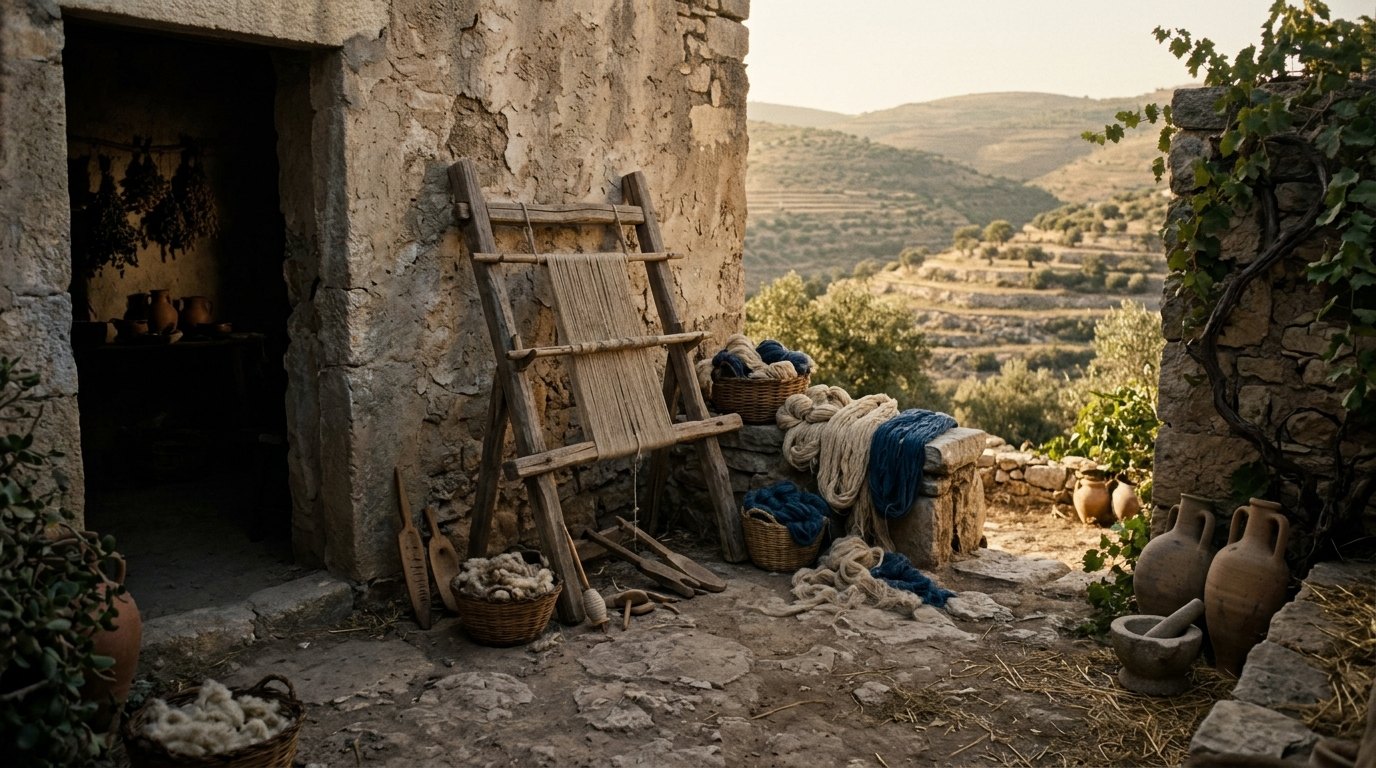
And the LORD was gracious to Hannah; she gave birth to three sons and two daughters. Meanwhile, the boy Samuel grew up in the presence of the LORD.
1 Samuel 2:21 (NIV)
The Lord's visit to Hannah with five additional children confirms that God richly repays sacrifices made for Him.
The divine reward for Hannah’s unreserved dedication shines clearly in 1 Samuel 2:21, where the Lord visited Hannah, and she conceived and bore three sons and two daughters, while the boy Samuel grew before the Lord. Hannah did not merely surrender her firstborn and walk away; her devotion matured into enduring, covenantal motherhood. After the boy was presented at Shiloh, Elkanah and his household returned to Ramah while the child began his lifelong service under Eli the priest (1 Samuel 2:11). Even as a youth, Samuel ministered faithfully before Yahweh, girded in the sacred linen ephod (1 Samuel 2:18).
Each year, as Hannah journeyed with Elkanah to offer the annual sacrifice, she brought a small woven robe she had crafted with her own hands for her growing son (1 Samuel 2:19). This tender, recurring gift testified to an unbroken maternal bond held in sacred balance with her dedicated vow. Witnessing her selfless piety year after year, Eli pronounced a priestly blessing over the couple, praying that Yahweh would grant Hannah offspring to replace the child lent to the sanctuary (1 Samuel 2:20). God answered Eli’s petition abundantly. In giving back to the Lord the very son she had wept for, Hannah experienced the overflowing bounty of God's grace, receiving five additional children while her firstborn grew in stature and spiritual stature before the presence of the Lord.
| Passage | What it says |
|---|---|
| 1 Samuel 2:11 | States that Elkanah returned to Ramah while the boy Samuel ministered to the Lord before Eli. |
| 1 Samuel 2:18 | Describes young Samuel ministering before Yahweh, girded with a linen ephod. |
| 1 Samuel 2:19 | Records Hannah making Samuel a little robe and bringing it to him each year during the sacrifice. |
| 1 Samuel 2:20 | Relates Eli blessing Elkanah and Hannah, praying for more children in place of the one loaned to God. |
| 1 Samuel 2:21 | Affirms the Lord visited Hannah so she bore three sons and two daughters, while Samuel grew before Yahweh. |
Where in the Bible
| Book | Passages |
|---|---|
| 1 Samuel | 43 · 1 Samuel 1:1, 1 Samuel 1:2, 1 Samuel 1:3, 1 Samuel 1:4, 1 Samuel 1:5, 1 Samuel 1:6, 1 Samuel 1:7, 1 Samuel 1:8, 1 Samuel 1:9, 1 Samuel 1:10, 1 Samuel 1:11, 1 Samuel 1:12, 1 Samuel 1:13, 1 Samuel 1:14, 1 Samuel 1:15, 1 Samuel 1:16, 1 Samuel 1:17, 1 Samuel 1:18, 1 Samuel 1:19, 1 Samuel 1:20, 1 Samuel 1:21, 1 Samuel 1:22, 1 Samuel 1:23, 1 Samuel 1:24, 1 Samuel 1:25, 1 Samuel 1:26, 1 Samuel 1:27, 1 Samuel 1:28, 1 Samuel 2:1, 1 Samuel 2:2, 1 Samuel 2:3, 1 Samuel 2:4, 1 Samuel 2:5, 1 Samuel 2:6, 1 Samuel 2:7, 1 Samuel 2:8, 1 Samuel 2:9, 1 Samuel 2:10, 1 Samuel 2:11, 1 Samuel 2:18, 1 Samuel 2:19, 1 Samuel 2:20, 1 Samuel 2:21 |
The story in order
- Barrenness and provocation (c. 1100 BC) · 1 Samuel 1:6 · Hannah's rival provoked her severely due to her barrenness.
- Hannah's prayer and vow (c. 1100 BC) · 1 Samuel 1:10-11 · Hannah poured out her soul to God and vowed to give her son to the Lord.
- Eli's misunderstanding and blessing (c. 1100 BC) · 1 Samuel 1:13-17 · Eli rebuked Hannah, then blessed her, praying God would grant her petition.
- God remembers Hannah (c. 1100 BC) · 1 Samuel 1:19 · The Lord remembered Hannah, and she conceived a son.
- Samuel is born and named (c. 1100 BC) · 1 Samuel 1:20 · Hannah named her son Samuel, meaning 'asked of the Lord'.
- Samuel is dedicated (c. 1093 BC) · 1 Samuel 1:24-28 · Hannah brought the weaned Samuel to Shiloh to serve the Lord.
- Hannah's song of praise (c. 1093 BC) · 1 Samuel 2:1-10 · Hannah praised God for His power, justice, and deliverance.
- Samuel ministers before the Lord (c. 1093 BC) · 1 Samuel 2:11 · Samuel ministered to the Lord before Eli in Shiloh.
- Hannah blessed with more children (c. 1091 BC) · 1 Samuel 2:21 · Hannah bore three more sons and two daughters.
Key words
- Yahweh (YHWH, יהוה)
- The covenant name of God, the Lord. · 1 Samuel 1:3
- Lord of hosts (YHWH tseba'ot, יהוה צבאות)
- God as the commander of heavenly armies. · 1 Samuel 1:3
- Anointed (mashiach, מָשִׁיחַ)
- One consecrated and appointed by God for a special task. · 1 Samuel 2:10
- Sheol (Sheol, שְׁאוֹל)
- The abode of the dead, the grave. · 1 Samuel 2:6
Hannah's story assures every believer that no sorrow is invisible to God and no faithful prayer is forgotten before His throne. In her surrender, she demonstrated that the deepest gifts we receive are meant to be placed gladly back into the hands of the Giver. Her enduring witness calls the church to earnest prayer, quiet faith under provocation, and joyful praise in the sovereign mercy of the Lord.
43 passages, each cited once.
Scripture cited
- 1 Samuel 1:1-8