Who was Lazarus?
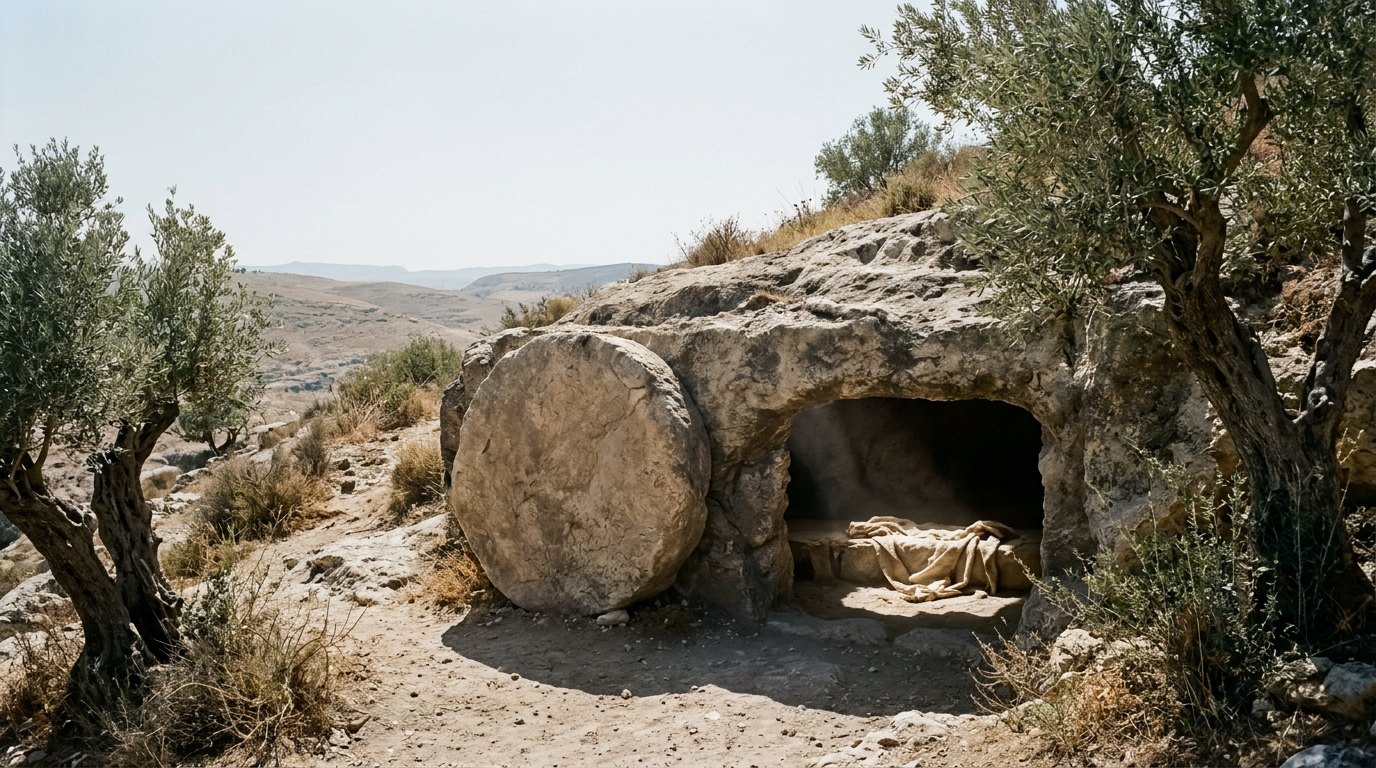
John 11:38-44
38 Jesus, once more deeply moved, came to the tomb. It was a cave with a stone laid across the entrance.
39 “Take away the stone,” he said. “But, Lord,” said Martha, the sister of the dead man, “by this time there is a bad odor, for he has been there four days.”
40 Then Jesus said, “Did I not tell you that if you believe, you will see the glory of God?”
41 So they took away the stone. Then Jesus looked up and said, “Father, I thank you that you have heard me.
42 I knew that you always hear me, but I said this for the benefit of the people standing here, that they may believe that you sent me.”
43 When he had said this, Jesus called in a loud voice, “Lazarus, come out!”
44 The dead man came out, his hands and feet wrapped with strips of linen, and a cloth around his face. Jesus said to them, “Take off the grave clothes and let him go.”
New International Version (NIV)
The answer
Lazarus of Bethany was the brother of Mary and Martha, a friend whom Jesus loved, and the man Jesus raised from the dead after he had been dead for four days. John 11:1-5 introduces his family and says plainly, “Now Jesus loved Martha, and her sister, and Lazarus.”
When Lazarus became sick, his sisters sent word to Jesus. Jesus said that the sickness would serve God’s glory and the glorification of God’s Son, yet he remained where he was for two more days before going to Bethany (John 11:3-6). By then, Lazarus had died and been laid in a cave-like tomb closed by a stone. Martha told Jesus, “Lord, by this time there is a stench, for he has been dead four days” (John 11:38-39).
After praying to the Father, Jesus cried out, “Lazarus, come out!” The dead man came out, still bound in his burial wrappings, and Jesus instructed the people to free him (John 11:41-44). This was a genuine raising of a dead man, displaying Jesus’ authority over death. Jesus had already told Martha, “I am the resurrection and the life. He who believes in me will still live, even if he dies” (John 11:25).
Lazarus was subsequently alive and sitting at the table with Jesus in Bethany. Crowds came to see him, and many believed in Jesus because of him. The chief priests consequently plotted to kill Lazarus as well, because his life was drawing people to faith in Christ (John 12:1-11).
The New Testament also names Lazarus the beggar in Jesus’ account of the rich man and Lazarus. He was covered with sores and laid at the rich man’s gate; after death, angels carried him to Abraham’s side, while the rich man was in torment in Hades (Luke 16:19-25). That account does not identify him with Mary and Martha’s brother.
Answered from Scripture · reviewed November 11, 2026
Lazarus of Bethany was a beloved friend of Jesus Christ, the brother of Martha and Mary, and the historical man whom Jesus summoned out of the grave after four days in the tomb. In the Scriptures, his name also belongs to the beggar in Jesus' account of the rich man in Luke 16, pointing together to the reality of eternity and Christ's supreme power over death.
Friend of Christ
Lazarus was deeply loved by the Lord
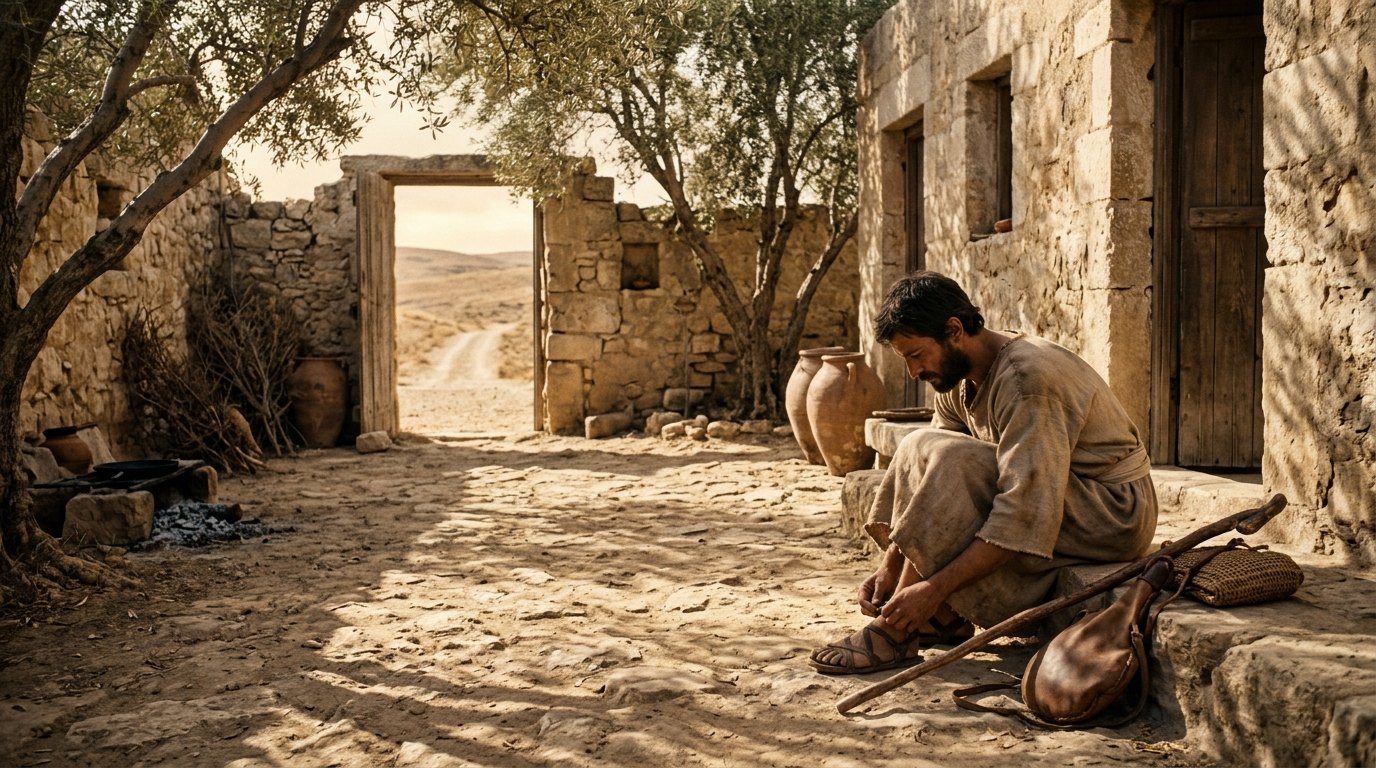
So the sisters sent word to Jesus, “Lord, the one you love is sick.”
John 11:3 (NIV)
The sisters' urgent appeal reveals that Lazarus was recognized primarily by his close personal bond with Jesus.
When Mary and Martha sent word to the Master, they used no formal titles or elaborate claims; they simply called their brother 'he whom you love' in John 11:3. Lazarus was a real resident of Bethany, a small Judean village situated on the eastern slope of the Mount of Olives, just two miles outside Jerusalem (John 11:1). Scripture specifically introduces him through his family ties: he was the brother of Martha and Mary, the same Mary who later anointed the Lord with costly ointment and wiped His feet with her hair (John 11:2). The Holy Spirit deliberately records in John 11:5 that 'Jesus loved Martha and her sister and Lazarus,' establishing that Christ entered genuine human relationships and harbored deep personal affection for this household. When sickness struck down Lazarus, the sisters rested their hope entirely on that known affection. Christ shared this intimacy with His inner circle, speaking of Lazarus in John 11:11 as 'our friend' who had fallen asleep, using gentle language to describe the temporary grip of physical death before waking him. When Jesus arrived at the burial site and saw the weeping family, John 11:35 records the shortest and one of the most poignant verses in all of Scripture: 'Jesus wept.' Standing beside the grave, even the skeptical onlookers observed the Lord's profound sorrow and were compelled to marvel, 'See how he loved him!' (John 11:36). Lazarus was not merely a passive recipient of a public miracle; he was a cherished friend whose home offered refuge and hospitality to the Savior during His earthly ministry.
| Passage | What it says |
|---|---|
| John 11:1 | Identifies Lazarus as an inhabitant of Bethany, the village of his sisters Mary and Martha, who fell gravely ill. |
| John 11:2 | Connects Lazarus to his sister Mary, who famously anointed the Lord with ointment and wiped His feet. |
| John 11:3 | Records the message sent by Martha and Mary to Jesus stating that the one He loves is sick. |
| John 11:5 | States explicitly that Jesus loved Martha, her sister Mary, and their brother Lazarus. |
| John 11:11 | Shows Jesus referring to Lazarus as 'our friend' who had fallen asleep, indicating his physical death. |
| John 11:35-36 | Records Jesus weeping openly at the tomb, leading onlookers to exclaim how deeply He loved him. |
The Sickness and Death
Lazarus died for the glory of God
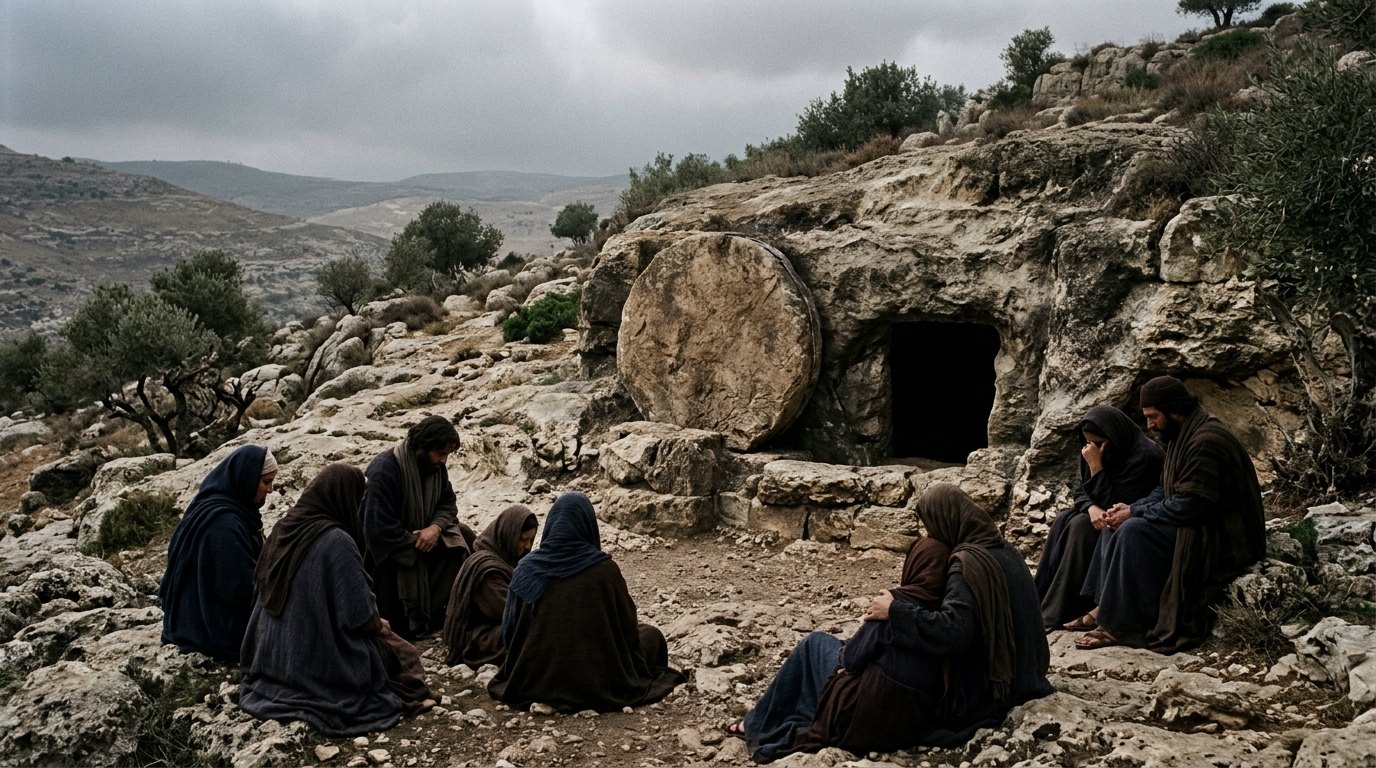
When he heard this, Jesus said, “This sickness will not end in death. No, it is for God’s glory so that God’s Son may be glorified through it.”
John 11:4 (NIV)
Jesus declares that Lazarus's illness is not unto permanent death, but to display the glory of God through His Son.
When the devastating news of Lazarus's illness reached Jesus across the Jordan, the Lord announced a divine purpose that transcended immediate human understanding: 'This illness does not lead to death. It is for the glory of God,' so that the Son of God might be glorified through it (John 11:4). Rather than rushing immediately to heal his friend, Jesus deliberately remained two full days in the place where He was staying (John 11:6). This purposeful delay was not born of indifference, but of a sovereign design to eliminate any doubt concerning the miracle to follow. By the time Jesus told the disciples plainly, 'Lazarus has died' (John 11:14), the tragedy had run its course. When Christ finally approached Bethany, He found that Lazarus had already lain in the rock-hewn sepulcher for four days (John 11:17). In Jewish burial practice, a four-day duration signified that physical corruption had fully set in, leaving zero room for claims that the deceased had merely swooned or entered a coma. Arriving at the burial ground, Jesus was deeply moved in spirit as He approached the cave tomb, which was sealed shut by a heavy stone rolled against its entrance (John 11:38). When Jesus commanded that the stone be rolled away, Martha protested out of sheer practicality, warning in John 11:39 that after four days 'there will be an odor, for he has been dead four days.' God allowed the physical reality of death to appear total and irremediable so that His resurrecting power would be manifested without dispute.
| Passage | What it says |
|---|---|
| John 11:4 | Jesus explains that the illness will reveal God's glory and glorify the Son of God. |
| John 11:6 | Notes that Jesus deliberately stayed two more days where He was after hearing of the illness. |
| John 11:14 | Jesus tells His disciples plainly and directly that Lazarus has died. |
| John 11:17 | Records that when Jesus arrived at Bethany, Lazarus had already lain in the tomb four days. |
| John 11:38-39 | Describes the cave tomb closed with a stone and Martha's note of the four-day decay. |
The Resurrection Sign
Jesus called Lazarus forth from the tomb
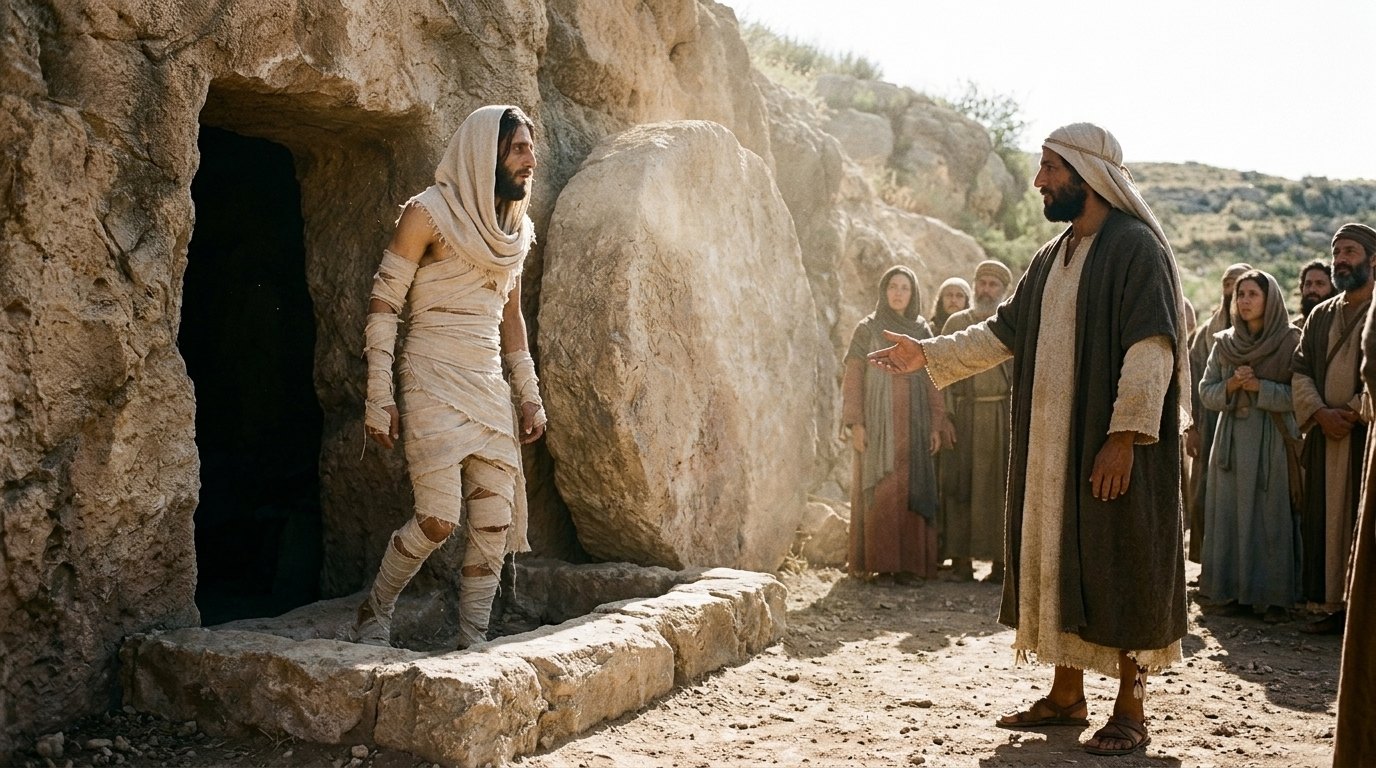
When he had said this, Jesus called in a loud voice, “Lazarus, come out!” The dead man came out, his hands and feet wrapped with strips of linen, and a cloth around his face. Jesus said to them, “Take off the grave clothes and let him go.”
John 11:43-44 (NIV)
Christ's authoritative voice commands the dead man by name to step out from four days in the grave.
Before moving to the mouth of the tomb, Jesus confronted Martha with the foundational truth of the gospel: 'I am the resurrection and the life,' promising that whoever believes in Him, though he die, yet shall he live (John 11:25-26). Standing before the opened grave, the Lord lifted up His eyes toward heaven in John 11:41-42 and prayed aloud, thanking the Father that He had heard Him, speaking openly so that the surrounding multitude would believe that the Father had truly sent the Son into the world. Having ended His prayer, Christ 'cried out with a loud voice, "Lazarus, come out!"' (John 11:43). The sovereign command of the Son of God penetrated the realm of the dead; calling Lazarus by his distinct name, He summoned life back into decaying tissue and restored breath to silent lungs. Instantly, in John 11:44, the man who had been dead four days walked forth from the dark chamber, his hands and feet bound tight with linen graveclothes and his face covered with a burial napkin. Faced with this astonishing display of raw omnipotence, Jesus instructed the stunned bystanders, 'Unbind him, and let him go' (John 11:44). This public miracle stood as the climactic sign of John's Gospel, confirming Christ's absolute authority over the grave and providing a foretaste of His own resurrection and the final resurrection of all who belong to Him on the last day.
| Passage | What it says |
|---|---|
| John 11:25-26 | Jesus reveals Himself to Martha as the resurrection and the life prior to raising Lazarus. |
| John 11:41-42 | Jesus prays aloud to the Father so the surrounding crowd may believe the Father sent Him. |
| John 11:43 | Jesus shouts with a loud voice, commanding Lazarus to come out of the tomb. |
| John 11:44 | Lazarus emerges alive, bound in graveclothes, and Jesus orders him unbound and set free. |
A Living Witness
Lazarus faced death plots as living proof
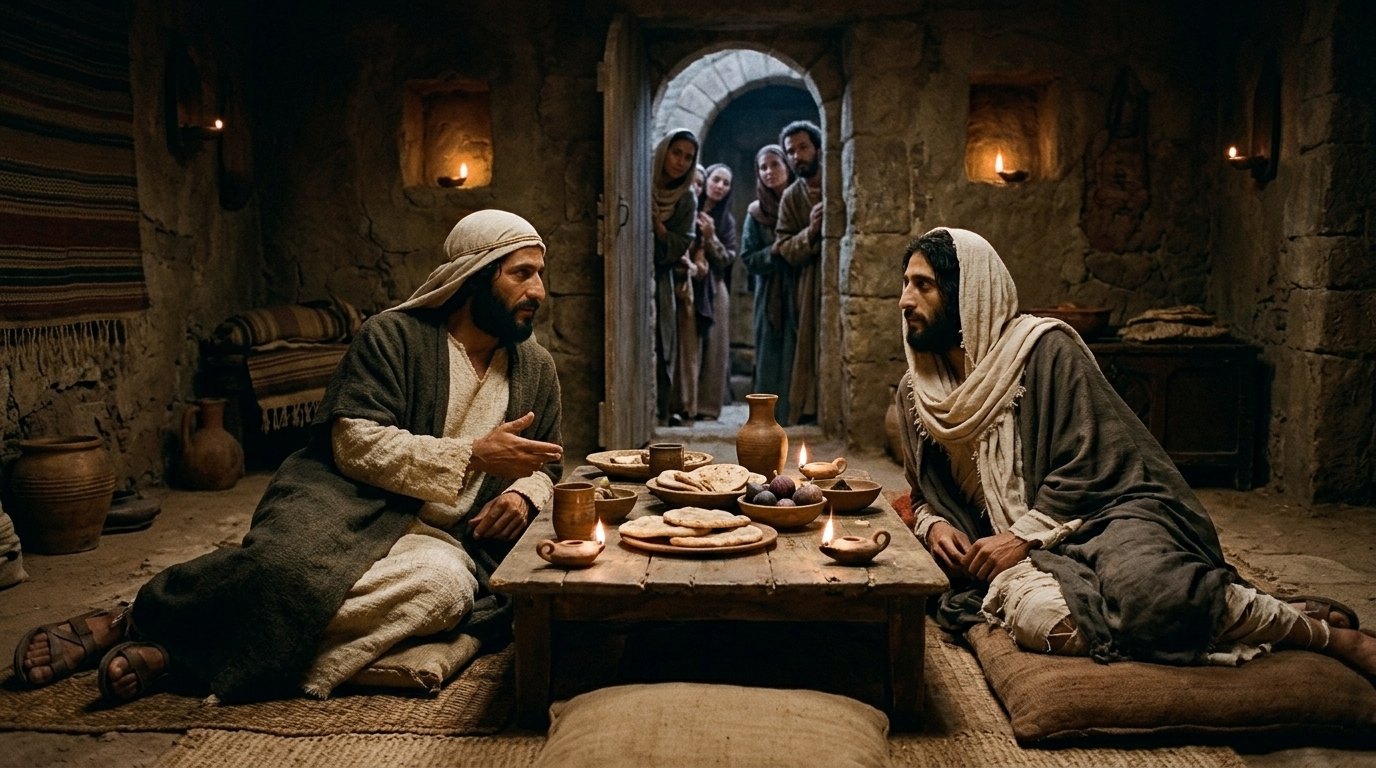
So the chief priests made plans to kill Lazarus as well, for on account of him many of the Jews were going over to Jesus and believing in him.
John 12:10-11 (NIV)
The miraculous raising of Lazarus was so undeniable that the religious authorities resolved to murder him too.
Following his resurrection, Lazarus became an undeniable, living monument to the divine authority of Jesus Christ. Six days before the Passover, Jesus returned to the village of Bethany, where a feast was held in His honor in John 12:1-2; Lazarus reclined at the banquet table among the guests, eating and conversing with his Deliverer. His restoration was not a momentary vision or private illusion, but a tangible, physical reality evident to all who shared a meal with him. When news spread through Jerusalem that Jesus was in Bethany, an immense crowd of pilgrims traveled to the village, driven not only to see Christ, 'but also to see Lazarus, whom he had raised from the dead' (John 12:9). The living testimony of Lazarus proved entirely fatal to the pretensions of the religious rulers; unable to explain away or deny the four-day miracle, the chief priests conspired to put Lazarus to death as well (John 12:10). His very existence in the flesh was causing many of the Jews to abandon their allegiance to the corrupt temple establishment and place their faith in Jesus (John 12:11). As Jesus made His triumphal entry into Jerusalem, the eyewitnesses who had stood by when Lazarus was summoned out of the tomb continued to bear public record (John 12:17). The dramatic testimony of Lazarus's life compelled the city crowds to seek out Christ, fulfilling its divine design as an unassailable witness to the power of God in the face of violent opposition.
| Passage | What it says |
|---|---|
| John 12:1-2 | Lazarus reclines at the dinner table with Jesus in Bethany six days before the Passover. |
| John 12:9 | A large crowd of Jews gathers not only to see Jesus, but also to see Lazarus raised alive. |
| John 12:10-11 | The chief priests conspire to put Lazarus to death because many believed in Jesus on his account. |
| John 12:17-18 | The people who witnessed Lazarus called out of the tomb bear continuous testimony, drawing the city crowd. |
Lazarus the Beggar
A distinct Lazarus in Christ's teaching

“The time came when the beggar died and the angels carried him to Abraham’s side. The rich man also died and was buried.
Luke 16:22 (NIV)
In Jesus' account of the afterlife, the poor beggar named Lazarus is received directly into Abraham's bosom.
In Luke 16:22, Jesus introduces the only named character in any of His spoken accounts, revealing that the poor man died and was carried by the angels to Abraham's side. While distinct from Lazarus of Bethany, this beggar bears the name Eleazar—meaning "God has helped"—and his earthly condition could not have looked more abandoned. In Luke 16:19-21, Christ depicts him covered in sores, laid helplessly at the gate of a lavishly clothed rich man, longing merely to feed on the crumbs falling from the feasting table while street dogs licked his wounds.
Yet earthly standing never dictates eternal reality. Following bodily death, the divine reckoning reverses their conditions completely. As Luke 16:23-25 records, the rich man found himself in conscious torment in Hades, looking up to see Lazarus resting in tender fellowship and consolation at Abraham's bosom. The chasm between them was fixed, absolute, and uncrossable. When the condemned man begged that Lazarus might be sent back to warn his five surviving brothers, Abraham delivered the climactic verdict in Luke 16:30-31: if they do not hear Moses and the Prophets, neither will they be convinced if someone should rise from the dead. God's written Word remains sufficient and authoritative, rendering unbelief without excuse even before the miracle of resurrection.
| Passage | What it says |
|---|---|
| Luke 16:19-21 | Introduces Lazarus as a sore-covered beggar laid outside the rich man's gate longing for scraps. |
| Luke 16:22 | Records that Lazarus died and was carried by the angels to Abraham's side in comfort. |
| Luke 16:23-25 | Contrasts the rich man's torment in Hades with the eternal comfort granted to Lazarus. |
| Luke 16:30-31 | Declares that if people will not hear Moses and the Prophets, they will not be convinced even if one rises from the dead. |
Where in the Bible
| Book | Passages |
|---|---|
| Luke | 4 · Luke 16:19-21, Luke 16:22, Luke 16:23-25, Luke 16:30-31 |
| John | 19 · John 11:1, John 11:2, John 11:3, John 11:5, John 11:11, John 11:35-36, John 11:4, John 11:6, John 11:14, John 11:17, John 11:38-39, John 11:25-26, John 11:41-42, John 11:43, John 11:44, John 12:1-2, John 12:9, John 12:10-11, John 12:17-18 |
The story in order
- Lazarus of Bethany is sick (c. AD 30) · John 11:1 · Jesus' friend Lazarus falls gravely ill in Bethany.
- Jesus delays going to Lazarus (c. AD 30) · John 11:6 · Jesus deliberately waits two days after hearing of Lazarus' illness.
- Lazarus dies and is buried (c. AD 30) · John 11:14 · Jesus informs disciples that Lazarus has died.
- Jesus arrives at Bethany (c. AD 30) · John 11:17 · Lazarus has been in the tomb for four days.
- Jesus raises Lazarus (c. AD 30) · John 11:43 · Jesus calls Lazarus forth from the tomb alive.
- Lazarus dines with Jesus (c. AD 30) · John 12:1-2 · Lazarus is present at a dinner in Bethany.
- Plot to kill Lazarus (c. AD 30) · John 12:10-11 · Chief priests plot to kill Lazarus due to his testimony.
- Parable of Rich Man and Lazarus (c. AD 30) · Luke 16:19-22 · Jesus tells a parable featuring a beggar named Lazarus.
Key words
- Friend (philos, φίλος)
- One held in deep affection and love. · John 11:11
- Resurrection (anastasis, ἀνάστασις)
- The act of rising from the dead. · John 11:25
- Life (zoe, ζωή)
- The state of existence, especially eternal life. · John 11:25
- Tomb (mnemeion, μνημεῖον)
- A place of burial, a grave. · John 11:17
- Graveclothes (othonia, ὀθόνια)
- Linens in which a dead body was wrapped. · John 11:44
The historical account of Lazarus shows that Jesus Christ holds total authority over physical and spiritual death. For everyone who trusts in Him, Christ remains the resurrection and the life, securing our eternal hope and calling us to walk in newness of life.
23 passages, each cited once.
Scripture cited
- John 11:1-14
- John 12:1-11
- John 12:17-18
- Luke 16:19-31
- John 11:25-26