Who was Mary Magdalene?

John 20:11-18
11 Now Mary stood outside the tomb crying. As she wept, she bent over to look into the tomb
12 and saw two angels in white, seated where Jesus’ body had been, one at the head and the other at the foot.
13 They asked her, “Woman, why are you crying?” “They have taken my Lord away,” she said, “and I don’t know where they have put him.”
14 At this, she turned around and saw Jesus standing there, but she did not realize that it was Jesus.
15 He asked her, “Woman, why are you crying? Who is it you are looking for?” Thinking he was the gardener, she said, “Sir, if you have carried him away, tell me where you have put him, and I will get him.”
16 Jesus said to her, “Mary.” She turned toward him and cried out in Aramaic, “Rabboni!” (which means “Teacher”).
17 Jesus said, “Do not hold on to me, for I have not yet ascended to the Father. Go instead to my brothers and tell them, ‘I am ascending to my Father and your Father, to my God and your God.’ ”
18 Mary Magdalene went to the disciples with the news: “I have seen the Lord!” And she told them that he had said these things to her.
New International Version (NIV)
The answer
Mary Magdalene was a devoted follower of Jesus whom He delivered from seven demons, and she was the first person to whom He appeared after His resurrection. The name “Magdalene” identifies her with Magdala and distinguishes her from the other Marys in the Gospels.
- Jesus delivered her, and she supported His ministry. Luke 8:1-3 introduces “Mary who was called Magdalene, from whom seven demons had gone out.” She accompanied Jesus and the Twelve, and she was among the women who served them from their possessions.
- She remained faithful through Jesus’ death and burial. John 19:25 places her near the cross alongside Jesus’ mother and other women. Matthew 27:57-61 records that she was present when Joseph of Arimathea laid Jesus’ body in the tomb.
- She met the risen Jesus and announced His resurrection. In John 20:11-18, Mary was weeping outside the empty tomb when Jesus called her by name: “Mary.” Recognizing Him, she answered, “Rabboni!”—meaning “Teacher!” Jesus then sent her to tell His disciples that He was ascending to His Father, and she reported that she had seen the Lord. Mark 16:9 states plainly that the risen Jesus “appeared first to Mary Magdalene.”
- Scripture never calls her a prostitute. She is sometimes identified with the unnamed sinful woman who anointed Jesus in Luke 7:36-50, but that passage never names the woman. Mary Magdalene is introduced separately in Luke 8:2, and the Gospel accounts describe her through her deliverance, discipleship and witness—not through a sexual history they never record.
Answered from Scripture · reviewed November 11, 2026
Scripture presents Mary Magdalene not as the fallen woman of later folklore, but as a devoted disciple delivered by Jesus from seven demons. Delivered from severe spiritual bondage, she faithfully supported Christ's earthly ministry with her own resources, stood near His cross when others fled, and received the peerless honor of being the first witness sent to proclaim His resurrection.
Deliverance and Ministry
Set Free from Demons to Serve the Lord

and also some women who had been cured of evil spirits and diseases: Mary (called Magdalene) from whom seven demons had come out;
Luke 8:2 (NIV)
It defines Mary Magdalene by Christ's miraculous deliverance rather than by any immoral past, noting that seven demons went out of her.
In Luke 8:2, Scripture defines Mary Magdalene not through the sensational legends of later centuries, but by the miraculous power of Jesus Christ who cast seven demons out of her. Later church traditions frequently conflated Mary Magdalene with the unnamed sinful woman in Luke 7 or with Mary of Bethany, yet the biblical record never identifies her as a former harlot. Her epithet Magdalene links her to Magdala, a prosperous fishing town on the western shore of the Sea of Galilee, pointing to her geographic origin rather than a moral stain. Luke 8:1–3 reveals that her encounter with Jesus completely transformed her existence. Freed from horrific spiritual affliction, Mary did not merely admire Christ from a distance; she joined a devoted band of women traveling alongside Him and the twelve apostles. Possessing personal financial independence, she actively ministered to Jesus and His disciples out of her private means, financing the proclamation of the kingdom of God. Mark 16:9 corroborates this profound spiritual deliverance, emphasizing that the Lord who later honored her as the first witness of His resurrection was the very One who had broken her chains of demonic oppression. Her early service stands as a striking testament to genuine gratitude: having received total liberty through Christ, she joyfully consecrated her wealth, time, and life to His advancing work.
| Passage | What it says |
|---|---|
| Luke 8:1-3 | Luke records that Mary Magdalene, freed from seven demons, traveled with Jesus and the twelve, supporting His ministry out of her private means. |
| Luke 8:2 | The text explicitly names Mary called Magdalene as a woman out of whom seven demons had been driven by Jesus. |
| Mark 16:9 | Mark reaffirms that Jesus had cast seven demons out of Mary Magdalene before appearing to her first after His resurrection. |
Faithful at Calvary
Unflinching Loyalty at the Foot of the Cross
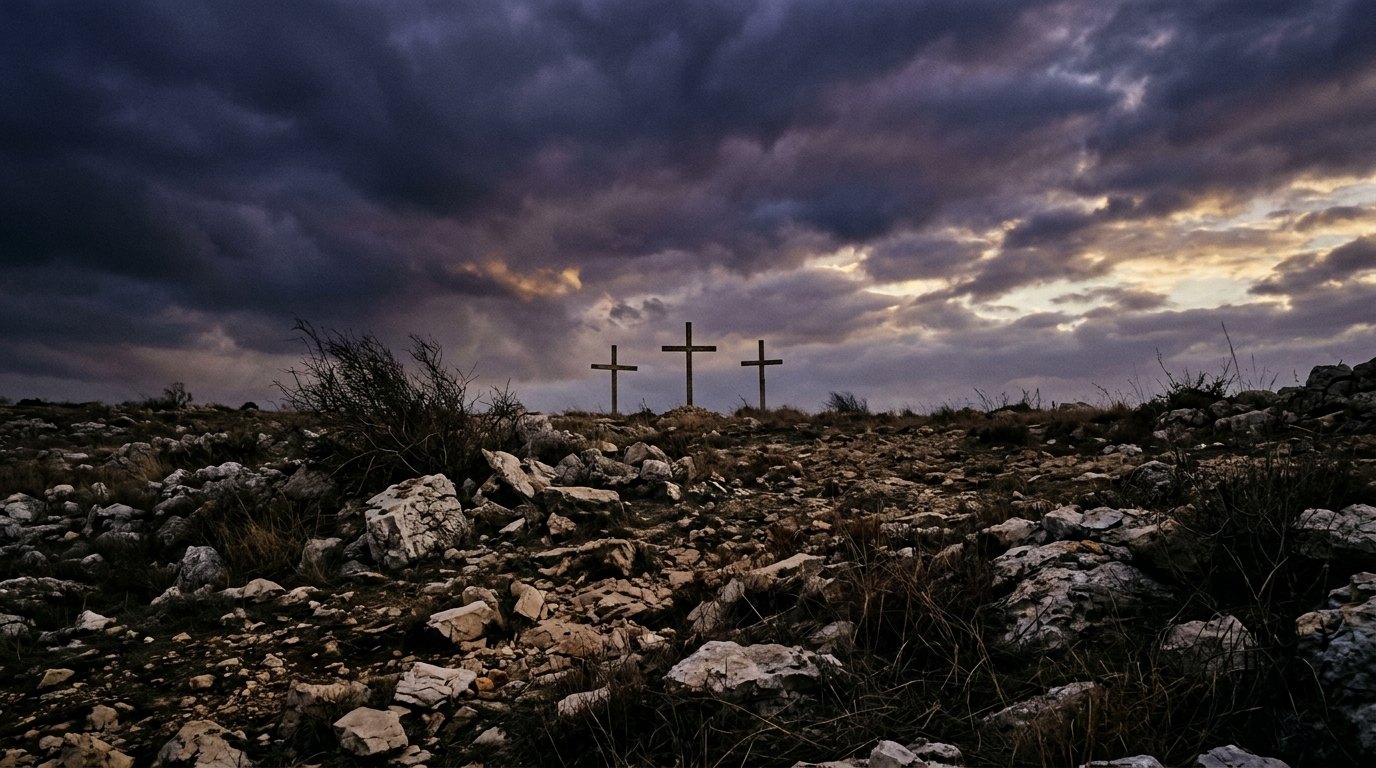
Near the cross of Jesus stood his mother, his mother’s sister, Mary the wife of Clopas, and Mary Magdalene.
John 19:25 (NIV)
It places Mary Magdalene in intimate proximity to the dying Savior alongside His mother Mary and Mary the wife of Clopas.
When Christ hung dying on the cross, John 19:25 records that Mary Magdalene stood faithfully beside the cross of Jesus, undeterred by the shame and terror of Roman execution. While most of the male disciples scattered and fled into hiding, Mary Magdalene demonstrated fearless, unwavering devotion to her Master. Matthew 27:55–56 notes that many women who had followed Jesus from Galilee ministering to Him were watching Calvary, and Mary Magdalene is placed at the very head of the list. Mark 15:40–41 similarly highlights her enduring presence among the women who had accompanied Him throughout His Galilean ministry and now attended His final agony. Whether standing directly beneath the cross with Jesus’ mother and the apostle John, or gazing upon the suffering Savior alongside her companions across the grim hill of Golgotha, her loyalty never wavered in the hour of darkness. She did not abandon Jesus when His worldly popularity vanished. Instead, she bore public witness to His sacrificial death, willingly identifying herself with a condemned King in the presence of hostile Roman soldiers and mocking religious rulers.
| Passage | What it says |
|---|---|
| Matthew 27:55-56 | Matthew lists Mary Magdalene among the Galilean women watching the crucifixion from afar after following and ministering to Jesus. |
| Mark 15:40-41 | Mark records Mary Magdalene looking on from a distance at Calvary, having followed and served Christ during His ministry in Galilee. |
| John 19:25 | John places Mary Magdalene standing right by the cross of Jesus alongside His mother and His mother's sister. |
Witness of the Tomb
Watching the Burial and Arriving at Dawn
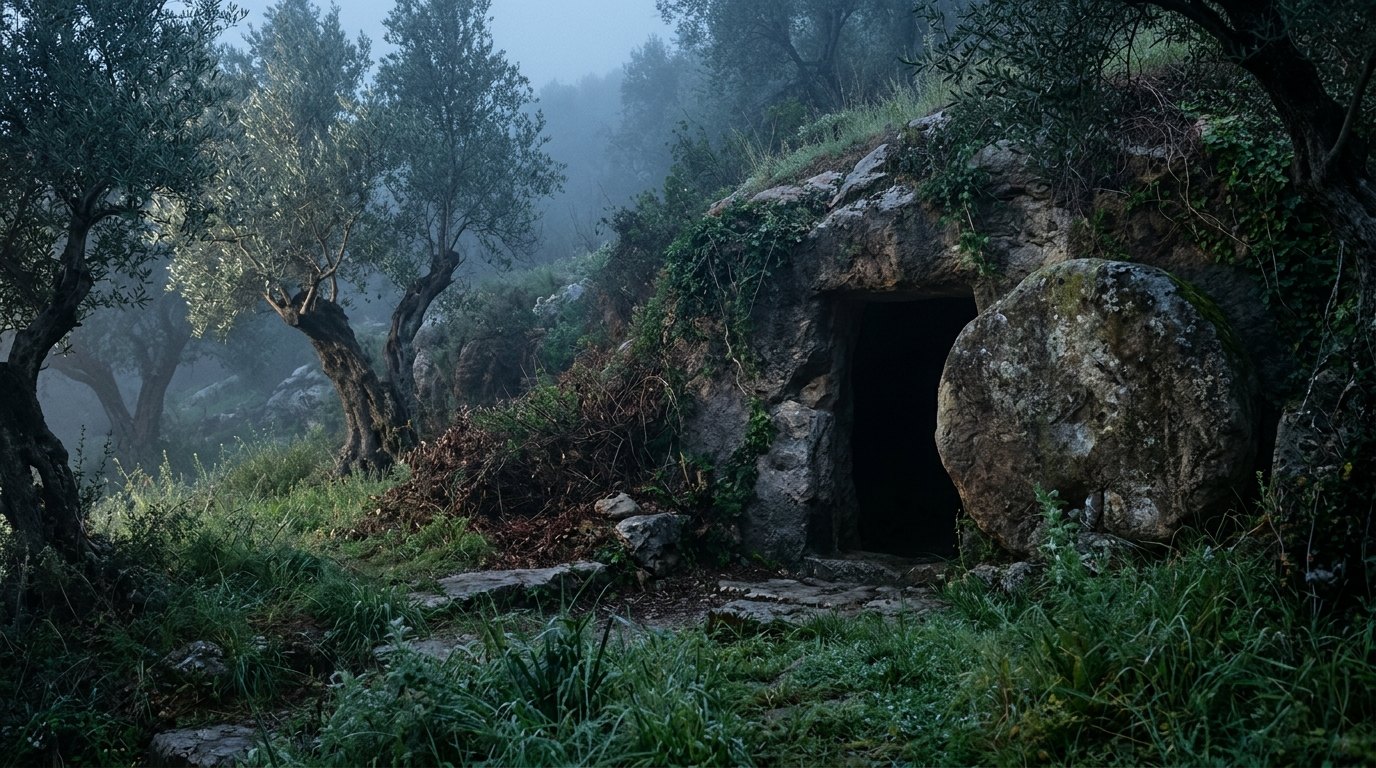
Mary Magdalene and the other Mary were sitting there opposite the tomb.
Matthew 27:61 (NIV)
It records Mary Magdalene sitting opposite the sealed tomb, keeping quiet vigil over the buried body of Christ.
Matthew 27:61 records that Mary Magdalene sat opposite the sepulcher, keeping a solemn vigil as Jesus' body was sealed in the tomb. Her devotion did not end with His final breath. Mark 15:47 records that Mary Magdalene and Mary the mother of Joses observed with meticulous care precisely where Joseph of Arimathea laid the Lord's wrapped body. In Luke 23:55–56, the Galilean women took note of the tomb, returned to prepare rich spices and ointments, and then strictly observed the Sabbath according to the commandment. As soon as the Sabbath passed, Mary Magdalene's love compelled her to return. Matthew 28:1 records that at the very break of dawn on the first day of the week, Mary Magdalene came with the other Mary to see the sepulcher. Mark 16:1–3 adds that she and her companions brought sweet spices to perform the final loving rites of anointing, wondering along the way who would roll away the massive stone for them. Luke 24:1–10 describes how they found the great stone already rolled back, met two dazzling angels announcing Christ's triumph, and carried the report back to the disbelieving apostles. John 20:1–2 captures the raw urgency of that morning: Mary Magdalene arrived while it was still dark, discovered the open entrance, and sprinted immediately to find Simon Peter and John.
| Passage | What it says |
|---|---|
| Matthew 27:61 | Matthew describes Mary Magdalene and the other Mary sitting directly opposite the sepulcher after Joseph of Arimathea sealed it. |
| Mark 15:47 | Mark notes that Mary Magdalene and Mary the mother of Joses carefully observed where the body of Jesus was laid. |
| Luke 23:55-56 | The Galilean women saw how Jesus' body was laid, then returned to prepare spices and ointments before resting on the Sabbath. |
| Matthew 28:1 | As dawn broke on the first day of the week, Mary Magdalene and the other Mary came to view the tomb. |
| Mark 16:1-3 | Mary Magdalene, Mary the mother of James, and Salome brought sweet spices to anoint Jesus early on Sunday morning. |
| Luke 24:1-10 | Mary Magdalene and the other women found the stone rolled away, met two angels, and reported the empty tomb to the apostles. |
| John 20:1-2 | Mary Magdalene arrived while it was still dark, saw the removed stone, and ran to alert Peter and the beloved disciple. |
The First Witness
First Herald of the Resurrected King

Jesus said to her, “Mary.” She turned toward him and cried out in Aramaic, “Rabboni!” (which means “Teacher”).
John 20:16 (NIV)
The dramatic personal turning point occurs when the risen Jesus speaks Mary's name, transforming her grief into immediate recognition and worship.
In John 20:16, the deepest sorrow in human history is shattered when the risen Savior speaks: 'Mary!'—and she instantly turns in worship, crying out 'Rabboni!'. Having returned to the garden weeping after alerting the disciples, Mary stooped to peer into the sepulcher in John 20:11–13, where two angels in white asked why she wept. Her broken heart could only utter her longing to find where her Lord had been carried. Turning around in John 20:14–15, she saw Jesus standing before her but assumed He was the gardener, desperately pleading to know where He had moved the body. The moment Christ called her by her own name, her eyes were opened to the resurrected King. In John 20:17, Jesus commanded her not to cling to Him, commissioning her as the very first apostle to the apostles to announce His ascension to His Father and their Father. In John 20:18, Mary Magdalene fulfilled this holy commission without delay, proclaiming to the shattered disciples: 'I have seen the Lord!' Matthew 28:8–10 confirms that as she and the women departed with mingled fear and joy, Jesus met them on the road, where they grasped His feet in reverent worship. Mark 16:9–11 crowns her biblical legacy, declaring that Christ appeared first to Mary Magdalene, cementing her perpetual place as the first herald of the empty tomb.
| Passage | What it says |
|---|---|
| John 20:11-13 | Mary wept outside the tomb, stooped in to see two angels in white, and voiced her distress that her Lord was taken. |
| John 20:14-15 | Turning around, Mary saw Jesus standing but mistook Him for the gardener, asking where He had carried the body. |
| John 20:16 | Jesus called her by name, and she immediately turned and cried out in Aramaic, 'Rabboni!' recognizing her Teacher. |
| John 20:17 | Jesus instructed Mary not to cling to Him, commissioning her instead to carry the message of His ascension to His brothers. |
| John 20:18 | Mary Magdalene obeyed, announcing directly to the disciples: 'I have seen the Lord,' relaying all He commanded. |
| Matthew 28:8-10 | As Mary Magdalene and the women departed with fear and great joy, Jesus met them, and they grasped His feet in worship. |
| Mark 16:9-11 | Mark confirms Jesus appeared first to Mary Magdalene, who then reported His resurrection to those who had been with Him. |
Where in the Bible
| Book | Passages |
|---|---|
| Matthew | 4 · Matthew 27:55-56, Matthew 27:61, Matthew 28:1, Matthew 28:8-10 |
| Mark | 5 · Mark 16:9, Mark 15:40-41, Mark 15:47, Mark 16:1-3, Mark 16:9-11 |
| Luke | 4 · Luke 8:1-3, Luke 8:2, Luke 23:55-56, Luke 24:1-10 |
| John | 7 · John 19:25, John 20:1-2, John 20:11-13, John 20:14-15, John 20:16, John 20:17, John 20:18 |
The story in order
- Jesus delivers Mary Magdalene (c. AD 28) · Luke 8:1-3 · Freed from seven demons, she began to serve Jesus.
- Mary ministers to Jesus (c. AD 28-30) · Luke 8:2 · She supported His ministry with her own resources.
- Mary watches the crucifixion (AD 30) · John 19:25 · She stood faithfully at the foot of the cross.
- Mary witnesses the burial (AD 30) · Matthew 27:61 · She observed where Jesus' body was laid.
- Mary comes to the tomb (AD 30) · Matthew 28:1 · She arrived early on Sunday morning.
- Mary sees the empty tomb (AD 30) · Luke 24:1-3 · She found the stone rolled away and the tomb empty.
- Jesus appears to Mary (AD 30) · Mark 16:9 · She was the first to see the resurrected Christ.
- Mary proclaims the resurrection (AD 30) · John 20:18 · She announced to the disciples, 'I have seen the Lord.'
From Bondage to Freedom in Christ
| Condition | Deliverance | Service | Passage |
|---|---|---|---|
| Possessed by seven demons | Jesus drives out seven demons | Travels with Jesus, supporting His ministry | Luke 8:2 |
| Devoted disciple | Jesus' resurrection appearance | First witness to the resurrection | John 20:14-18 |
Loyalty Through Ministry and Suffering
| Ministry | Suffering | Witness | Passage |
|---|---|---|---|
| Followed and ministered to Jesus | Watched the crucifixion from a distance | Observed the burial | Mark 15:40-41 |
| Followed and ministered to Jesus | Stood by the cross | Came to the tomb | John 19:25 |
| Supported His ministry with own resources | Present at the cross | First to see the risen Lord |
Key words
- Demons (daimonion, δαιμόνιον)
- Fallen angels who oppose God and His people. · Luke 8:2
- Disciple (mathētēs, μαθητής)
- A follower or learner, especially of Jesus Christ. · Luke 8:1
- Resurrection (anastasis, ἀνάστασις)
- The act of rising from the dead. · Mark 16:9
- Witness (martys, μάρτυς)
- One who testifies to a fact or event. · John 20:18
Mary Magdalene’s life stands as a living monument to sovereign grace and unwavering devotion to Jesus Christ. Delivered from darkness, she followed her Lord through His public work, His brutal death, and His burial, and was chosen to carry the very first news of His victory over the grave. For every believer, her story demonstrates that a life redeemed by Christ becomes a bold, unshakable herald of His resurrection.
20 passages, each cited once.
Scripture cited
- John 20:11-18
- Luke 8:1-3
- Mark 16:9-11
- Matthew 27:55-61
- John 19:25
- Luke 7:36-50