Who was Nicodemus?
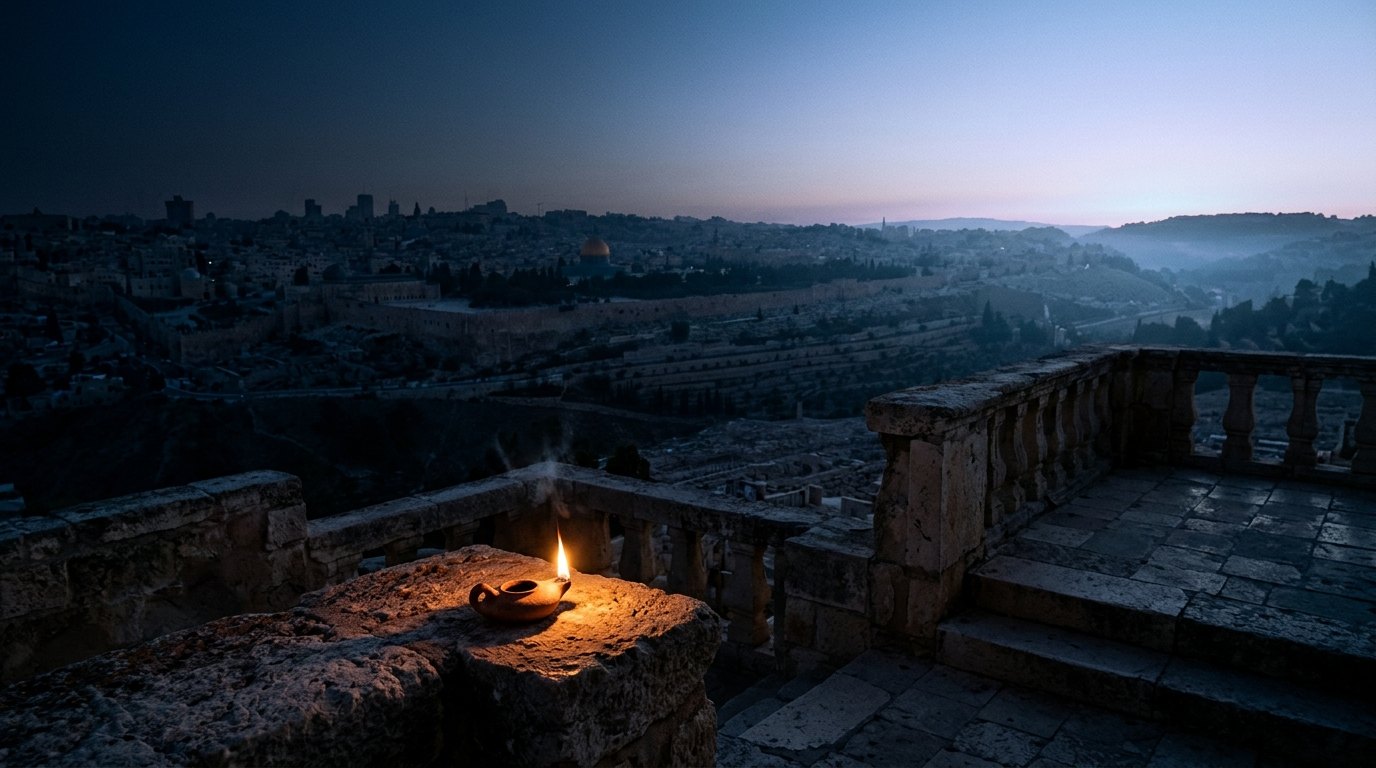
John 3:1-15
1 Now there was a Pharisee, a man named Nicodemus who was a member of the Jewish ruling council.
2 He came to Jesus at night and said, “Rabbi, we know that you are a teacher who has come from God. For no one could perform the signs you are doing if God were not with him.”
3 Jesus replied, “Very truly I tell you, no one can see the kingdom of God unless they are born again.”
4 “How can someone be born when they are old?” Nicodemus asked. “Surely they cannot enter a second time into their mother’s womb to be born!”
5 Jesus answered, “Very truly I tell you, no one can enter the kingdom of God unless they are born of water and the Spirit.
6 Flesh gives birth to flesh, but the Spirit gives birth to spirit.
7 You should not be surprised at my saying, ‘You must be born again.’
8 The wind blows wherever it pleases. You hear its sound, but you cannot tell where it comes from or where it is going. So it is with everyone born of the Spirit.”
9 “How can this be?” Nicodemus asked.
10 “You are Israel’s teacher,” said Jesus, “and do you not understand these things?
11 Very truly I tell you, we speak of what we know, and we testify to what we have seen, but still you people do not accept our testimony.
12 I have spoken to you of earthly things and you do not believe; how then will you believe if I speak of heavenly things?
13 No one has ever gone into heaven except the one who came from heaven—the Son of Man.
14 Just as Moses lifted up the snake in the wilderness, so the Son of Man must be lifted up,
15 that everyone who believes may have eternal life in him.”
New International Version (NIV)
The answer
Nicodemus was a Pharisee and a ruler of the Jews — a member of the Jewish ruling council, the Sanhedrin — who came to Jesus by night (John 3:1-2). He first appears in John 3, drawn by the signs Jesus was doing, where he called Jesus "a teacher who has come from God, for no one can do these signs that you do, unless God is with him" (John 3:2). There Jesus answered him with the teaching about being "born anew" by water and the Spirit (John 3:3-8).
He appears twice more in the Gospel:
- John 7:50-51, in the Sanhedrin, where he pushes back against the council's rush to condemn Jesus, reminding them that "the law does not judge a man unless it first hears from him and knows what he does."
- John 19:39, after the crucifixion, where he brought about a hundred pounds of myrrh and aloes to anoint Jesus' body for burial (John 19:39).
The picture Scripture paints is of a man who moved from cautious curiosity to costly, public devotion. He came secretly at first, hesitant because of his standing among the Pharisees (John 3:2). By the end of the Gospel he is no longer hiding — he stands openly with Joseph of Arimathea at the cross, giving an expensive burial gift to the Lord (John 19:39-40).
Answered from Scripture · reviewed November 7, 2026
Nicodemus was a prominent Pharisee and member of the Sanhedrin whose encounters with Jesus trace a profound pilgrimage of faith. Appearing uniquely across three pivotal scenes in John's Gospel, he moves from nighttime hesitation to bold, costly devotion at the foot of the cross.
The Nighttime Inquiry
A Master of Israel Learns of the New Birth

Jesus replied, “Very truly I tell you, no one can see the kingdom of God unless they are born again.”
John 3:3 (NIV)
Jesus lays down the foundational necessity of spiritual rebirth to perceive the kingdom of God.
In John 3:3, Jesus cuts through polite greeting to deliver a staggering decree: unless one is born again, he cannot see the kingdom of God. Nicodemus, introduced in John 3:1-2 as a Pharisee and a ruler of the Jews, sought Christ under cover of night. He recognized that Jesus must be a teacher come from God because of the miraculous signs attending His ministry. Yet outward recognition was not enough. In John 3:3-8, the Lord unveiled the absolute necessity of supernatural regeneration, contrasting natural human birth with the sovereign, unseen breathing of the Holy Spirit. Stunned by such doctrine, Nicodemus asked in John 3:9-12 how these things could possibly be. Jesus gently reproved him for being the recognized teacher of Israel while remaining blind to the foundational truth of spiritual renewal promised in the Scriptures. Moving from earthly illustrations to heavenly realities, Jesus declared in John 3:13-15 that the Son of Man had descended from heaven and would be lifted up like Moses' bronze serpent, so that whoever believes in Him should not perish but have eternal life. This nocturnal encounter planted the seeds of divine truth into a searching Pharisee's heart.
| Passage | What it says |
|---|---|
| John 3:1-2 | Nicodemus approaches Jesus by night, acknowledging His signs as divine proof of His teaching authority. |
| John 3:3-8 | Jesus explains the sovereign work of the Spirit and the absolute necessity of being born anew. |
| John 3:9-12 | Nicodemus questions how spiritual rebirth occurs, prompting Jesus to gently rebuke his lack of understanding. |
| John 3:13-15 | Jesus reveals His heavenly origin and foretells that the Son of Man must be lifted up for eternal life. |
The Council Defense
A Lawful Voice Confronts the Hostile Sanhedrin
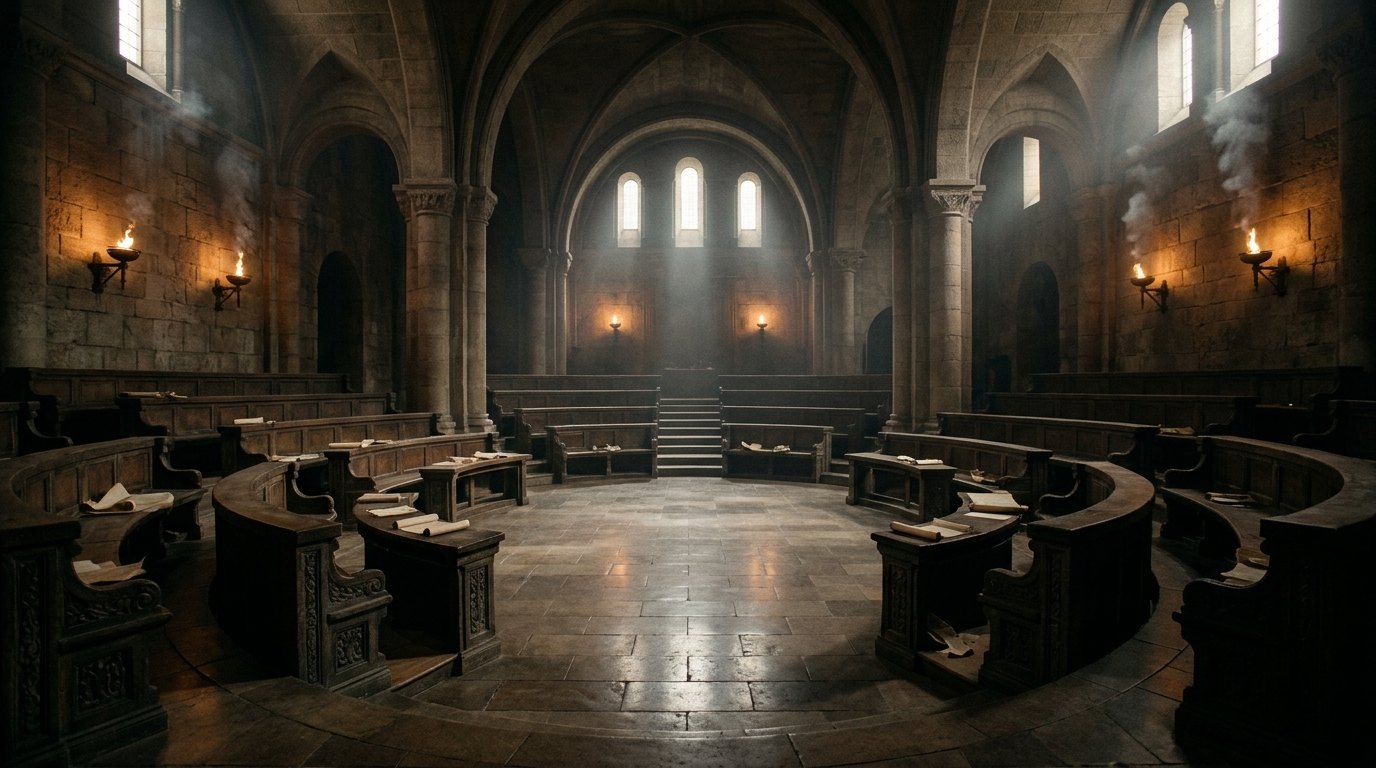
“Does our law condemn a man without first hearing him to find out what he has been doing?”
John 7:51 (NIV)
Nicodemus appeals to the Mosaic law to restrain the council's unlawful rush to judgment against Jesus.
When the ruling authorities gathered in furious frustration over Jesus, Nicodemus stood up in John 7:51 to demand basic righteousness: “Does our law judge a man without first giving him a hearing and learning what he does?” During the Feast of Booths, the chief priests and Pharisees had sent temple officers to arrest Christ, but the guards returned empty-handed, astounded by His authoritative speech. Enraged by the perceived failure, the Sanhedrin began cursing the crowds for following a Galilean. In John 7:50-51, Nicodemus dared to interrupt this unanimous wave of venom. While not yet an overt declaration of his personal faith, his appeal to Mosaic jurisprudence challenged the illegal, prejudiced haste of the council. His colleagues immediately turned on him in John 7:52-53, asking mockingly if he too was from Galilee, insisting that no prophet arises from such humble soil. Nicodemus had placed his reputation and standing on the line, forcing the council to disperse without accomplishing their murderous intent.
| Passage | What it says |
|---|---|
| John 7:50-51 | Nicodemus reminds his fellow council members that Jewish law requires a hearing before rendering judgment. |
| John 7:52-53 | The Pharisees deride Nicodemus for defending a Galilean before dispersing from their contentious meeting. |
The Royal Burial
Open Allegiance and Honor for the Crucified King
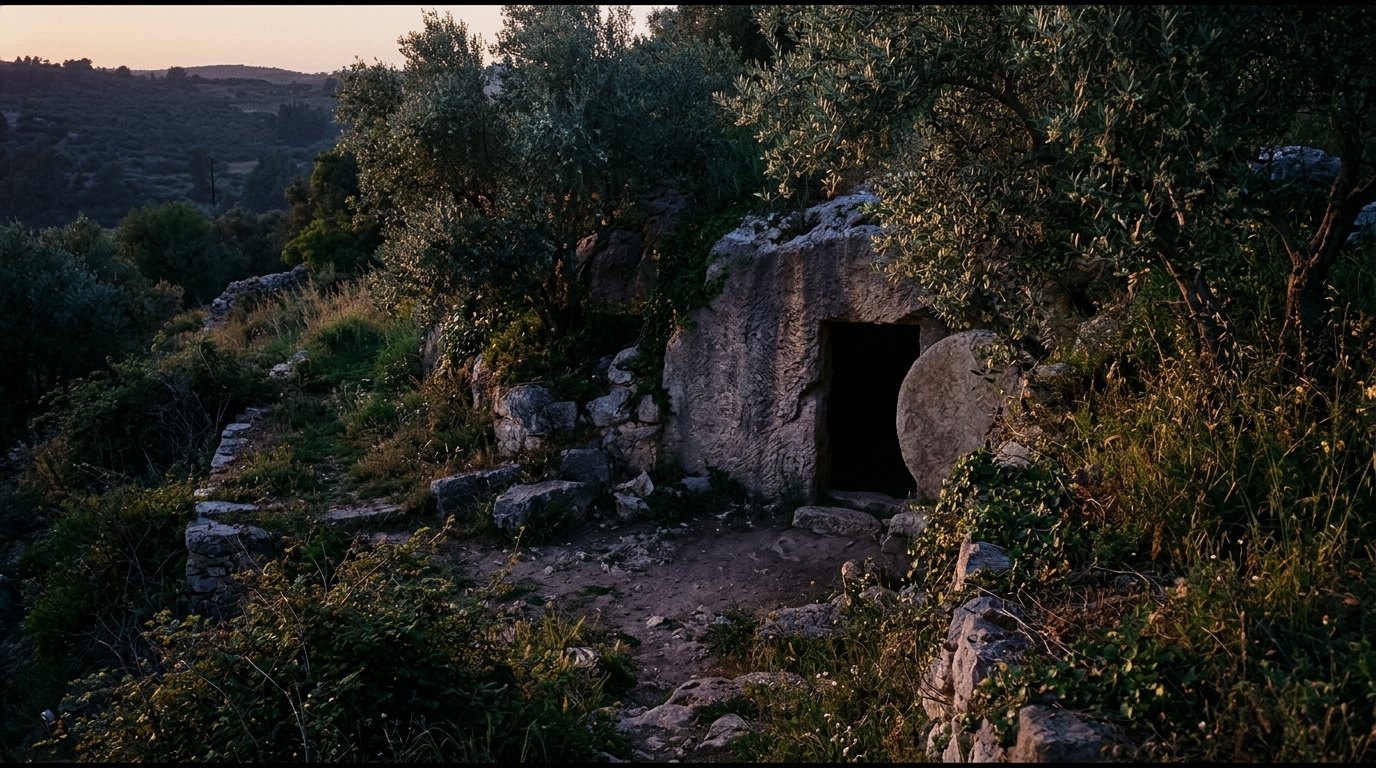
He was accompanied by Nicodemus, the man who earlier had visited Jesus at night. Nicodemus brought a mixture of myrrh and aloes, about seventy-five pounds.
John 19:39 (NIV)
Nicodemus steps into the daylight with a lavish offering of spices fit for the burial of a king.
The definitive turning point in Nicodemus' pilgrimage comes in John 19:39, where he emerges into the public eye carrying about seventy-five pounds of myrrh and aloes to honor his crucified Lord. No longer cloaked in nighttime secrecy or hiding behind procedural questions, he stepped forward while the twelve apostles were scattered in fear. Joining Joseph of Arimathea—another secret disciple who had boldly petitioned Pilate for the body—Nicodemus arrived at Golgotha with an extravagant quantity of fragrant resins typically reserved for royal funerals. As John 19:39-40 records, the two men tenderly took down the battered body of Jesus and bound it in clean linen shrouds with the spices, observing Jewish burial customs. In John 19:41-42, they laid their Savior in an unused tomb carved into the stone of a quiet garden nearby before sundown. The master of Israel who once wondered how a man could be born when he was old now openly confessed the King of Kings at the place of His death.
| Passage | What it says |
|---|---|
| John 19:39-40 | Nicodemus brings seventy-five pounds of myrrh and aloes, joining Joseph of Arimathea to wrap Jesus' body. |
| John 19:41-42 | Jesus is reverently laid in a new garden tomb before the Sabbath begins. |
Where in the Bible
| Book | Passages |
|---|---|
| John | 8 · John 3:1-2, John 3:3-8, John 3:9-12, John 3:13-15, John 7:50-51, John 7:52-53, John 19:39-40, John 19:41-42 |
The story in order
- Nicodemus meets Jesus (c. AD 27) · John 3:1-2 · A Pharisee and ruler seeks Jesus, acknowledging His divine authority.
- Jesus explains new birth (c. AD 27) · John 3:3-8 · Jesus teaches Nicodemus about the necessity of spiritual regeneration by the Spirit.
- Jesus foretells His lifting up (c. AD 27) · John 3:13-15 · Jesus speaks of His heavenly origin and atoning sacrifice for salvation.
- Nicodemus defends Jesus (c. AD 30) · John 7:50-51 · Nicodemus appeals to Jewish law to prevent unjust condemnation of Jesus.
- Pharisees reject Nicodemus (c. AD 30) · John 7:52-53 · Nicodemus faces ridicule from his peers for his defense of Jesus.
- Nicodemus honors Jesus' body (AD 30) · John 19:39-40 · Nicodemus openly joins Joseph in preparing Jesus for burial.
- Jesus laid in tomb (AD 30) · John 19:41-42 · Jesus is placed in a new tomb before the Sabbath.
Night vs. Day in Nicodemus's Encounters
| Night | Day | Passage |
|---|---|---|
| Nicodemus approaches Jesus by night | Represents spiritual darkness and hesitation | John 3:1-2 |
| Jesus explains the new birth | Jesus speaks of His heavenly origin | John 3:3-15 |
| Nicodemus questions Jesus' teaching | Jesus reveals the Son of Man must be lifted up | John 3:9-15 |
| Nicodemus defends Jesus before the Sanhedrin | Nicodemus joins in honoring Jesus' body |
Key words
- Born anew (anōthen, ἄνωθεν)
- To be regenerated by the Holy Spirit, signifying a spiritual transformation. · John 3:3
- Lifted up (hypsōthēnai, ὑψωθῆναι)
- Refers to the crucifixion of Jesus, which brings salvation. · John 3:14
- Eternal life (zōēn aiōnion, ζωὴν αἰώνιον)
- Life with God, beginning now and continuing into eternity. · John 3:15
- Sanhedrin
- The high court of Jewish elders, priests, and scribes. · John 7:50
Nicodemus demonstrates how the sovereign wind of the Holy Spirit transforms cautious inquiry into unashamed loyalty. His journey invites every believer to leave the shadows of social approval and publicly honor the crucified and risen King.
8 passages, each cited once.
Scripture cited
- John 19:39