Who was Rahab?
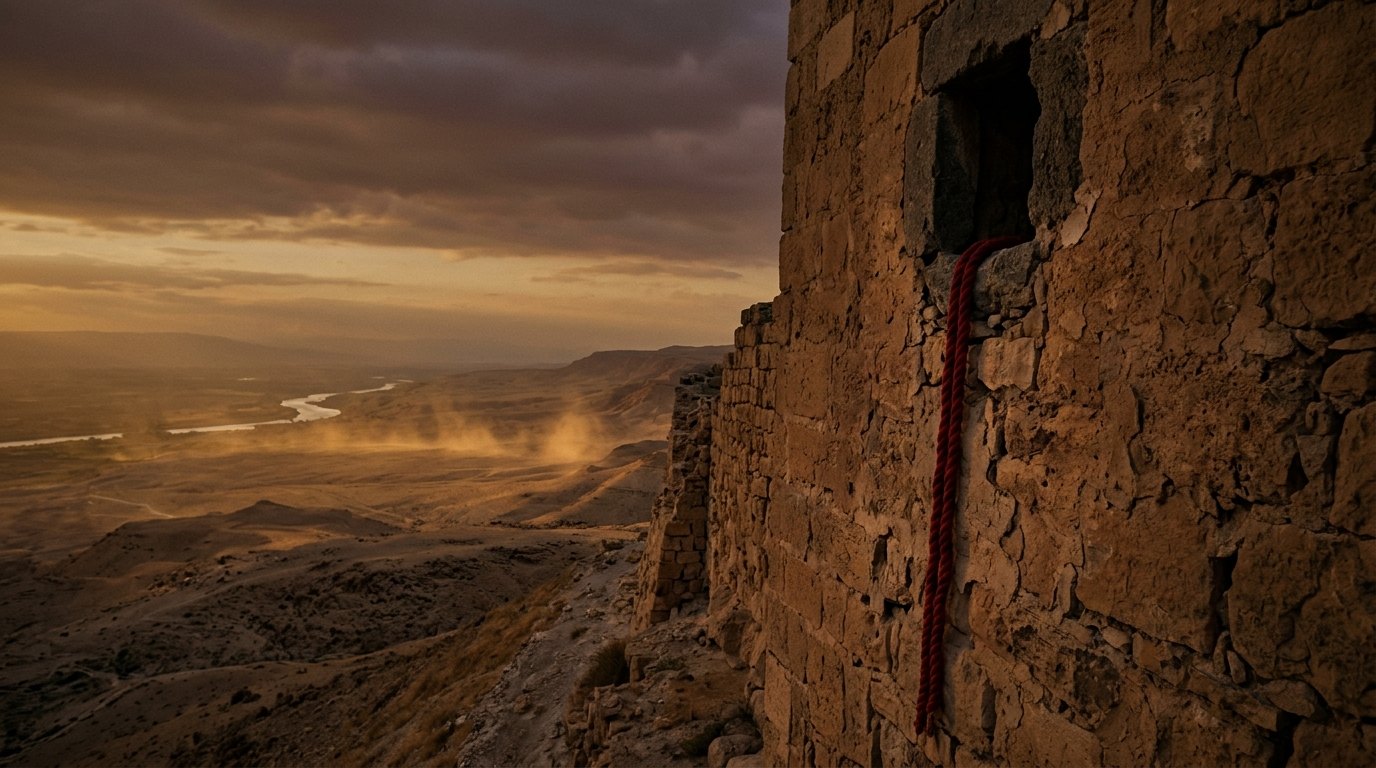
Joshua 2:8-14
8 Before the spies lay down for the night, she went up on the roof
9 and said to them, “I know that the LORD has given you this land and that a great fear of you has fallen on us, so that all who live in this country are melting in fear because of you.
10 We have heard how the LORD dried up the water of the Red Sea for you when you came out of Egypt, and what you did to Sihon and Og, the two kings of the Amorites east of the Jordan, whom you completely destroyed.
11 When we heard of it, our hearts melted in fear and everyone’s courage failed because of you, for the LORD your God is God in heaven above and on the earth below.
12 “Now then, please swear to me by the LORD that you will show kindness to my family, because I have shown kindness to you. Give me a sure sign
13 that you will spare the lives of my father and mother, my brothers and sisters, and all who belong to them—and that you will save us from death.”
14 “Our lives for your lives!” the men assured her. “If you don’t tell what we are doing, we will treat you kindly and faithfully when the LORD gives us the land.”
New International Version (NIV)
The answer
Rahab was a prostitute living in Jericho who trusted Israel’s God, protected Joshua’s two spies, and was saved when the city fell. She later became part of God’s people and an ancestress of Jesus Christ.
- She protected the spies. Rahab hid the two Israelites on her roof beneath stalks of flax and helped them escape from Jericho’s king. She then lowered them through a window in the city wall and directed them to safety (Joshua 2:1-7, 15-16).
- She confessed faith in Yahweh. Reports of the Red Sea crossing and Israel’s victories had convinced her that God was giving the land to Israel. She declared, “Yahweh your God, he is God in heaven above, and on earth beneath” (Joshua 2:9-11).
- She sought salvation for her household. Rahab asked the spies to spare her parents, brothers, sisters, and their families. They instructed her to gather them into her house and mark its window with a scarlet cord (Joshua 2:12-21). When Jericho was destroyed, the Israelites kept their oath: Rahab and her family were brought out alive, and she came to live among Israel (Joshua 6:22-25).
- She entered the family line of Christ. Rahab became the mother of Boaz by Salmon. Boaz was an ancestor of King David, and Matthew’s genealogy traces this line forward to Jesus (Matthew 1:5-6, 16).
The New Testament remembers Rahab not for her former sinful occupation but for her faith. Hebrews 11:31 says that she did not perish with the disobedient because she received the spies in peace. James 2:25-26 points to those same actions as evidence of living faith: her trust in God was not merely words; it moved her to act. Her life therefore displays both God’s grace toward a sinner and the reality that genuine faith produces obedience.
Answered from Scripture · reviewed November 11, 2026
Rahab was a Canaanite woman living in doomed Jericho who chose to cast her lot with the God of Israel, shielding Joshua's spies and securing deliverance for her entire family. Though born outside the covenant and marked by a disreputable past, her bold faith brought her into Israel and into the royal ancestral line of Jesus Christ.
The Condemned City
An outcast in a city marked for ruin
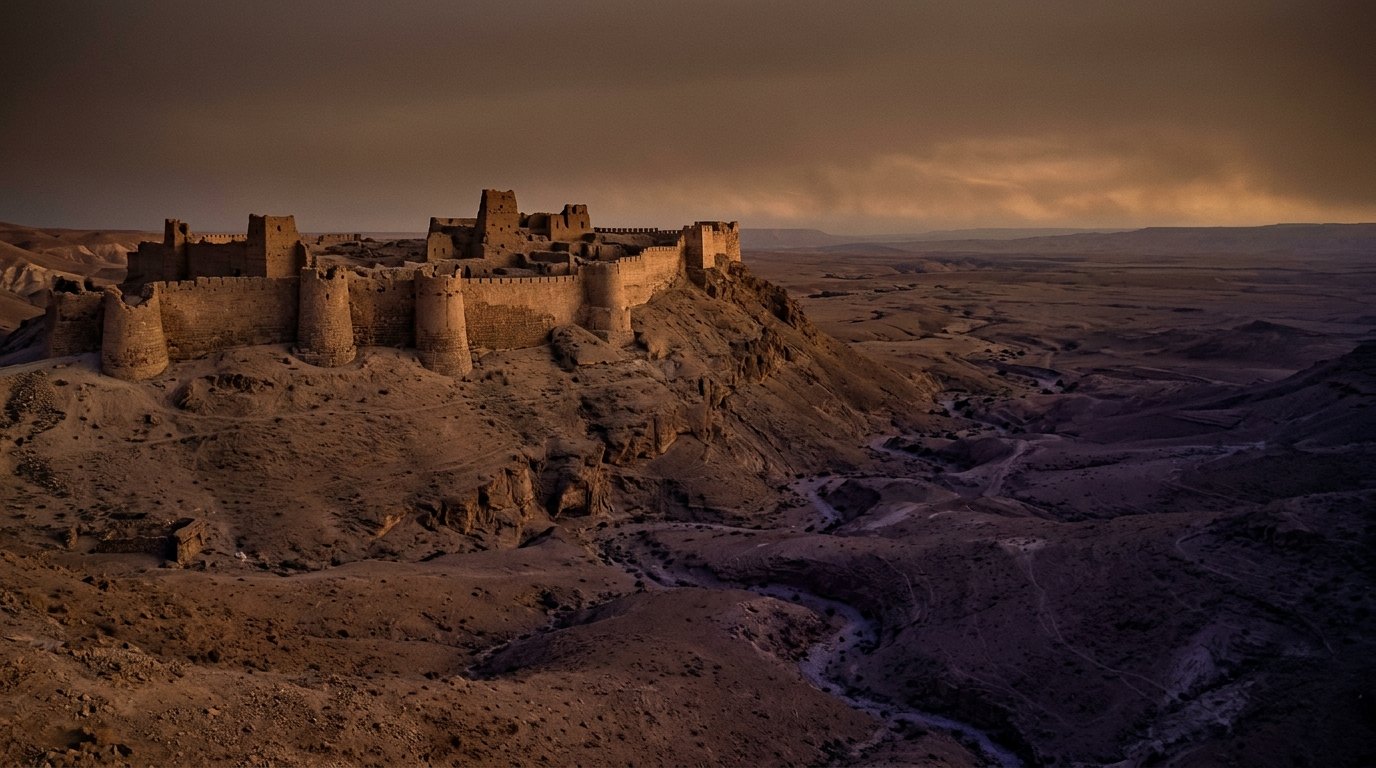
Then Joshua son of Nun secretly sent two spies from Shittim. “Go, look over the land,” he said, “especially Jericho.” So they went and entered the house of a prostitute named Rahab and stayed there.
Joshua 2:1 (NIV)
It introduces Rahab by name and trade in the pagan stronghold of Jericho just as Israel prepares to cross the Jordan.
In Joshua 2:1, Joshua sends two men out from Shittim to scout the land secretly, and they come into the house of a prostitute named Rahab in Jericho. Her name enters the sacred record linked with a trade and a city under divine sentence. Centuries earlier, God told Abraham in Genesis 15:16 that his descendants would return to Canaan only after four generations, because the iniquity of the Amorites was not yet complete. By the time Israel stood poised at the Jordan, that long-suffering patience had reached its term.
The moral pollution of the Canaanite nations was absolute. Leviticus 18:24-25 warns that the land itself had become defiled through abominations and would vomit out its inhabitants. Jericho was the fortified gatekeeper of this condemned region. Consequently, Deuteronomy 7:1-2 and Deuteronomy 20:16-18 commanded Israel to devote the inhabitants of Canaan to complete destruction without making a covenant or showing mercy, lest their idolatries corrupt God's people. Rahab lived at the very epicentre of this judgment. By birth, culture, and profession, she possessed every earthly disadvantage: an outsider alienated from the commonwealth of Israel and dwelling in a fortress marked for holy wrath. Yet right against the dark horizon of Jericho's impending doom, divine providence directed the feet of Israel's messengers to her threshold.
| Passage | What it says |
|---|---|
| Genesis 15:16 | God tells Abraham that judgment on Canaan would come when the iniquity of the Amorites was complete. |
| Deuteronomy 7:1-2 | Israel is commanded to devote the seven nations of Canaan, including Jericho's inhabitants, to complete destruction. |
| Joshua 2:1 | Joshua sends two spies from Shittim who lodge in the house of Rahab the prostitute in Jericho. |
| Leviticus 18:24-25 | God warns that the Canaanite land was defiled by depravity and would vomit out its inhabitants. |
| Deuteronomy 20:16-18 | Israel is commanded to devote the Canaanite cities to complete destruction to guard against idolatry. |
Confession and Risk
A bold declaration of the living God
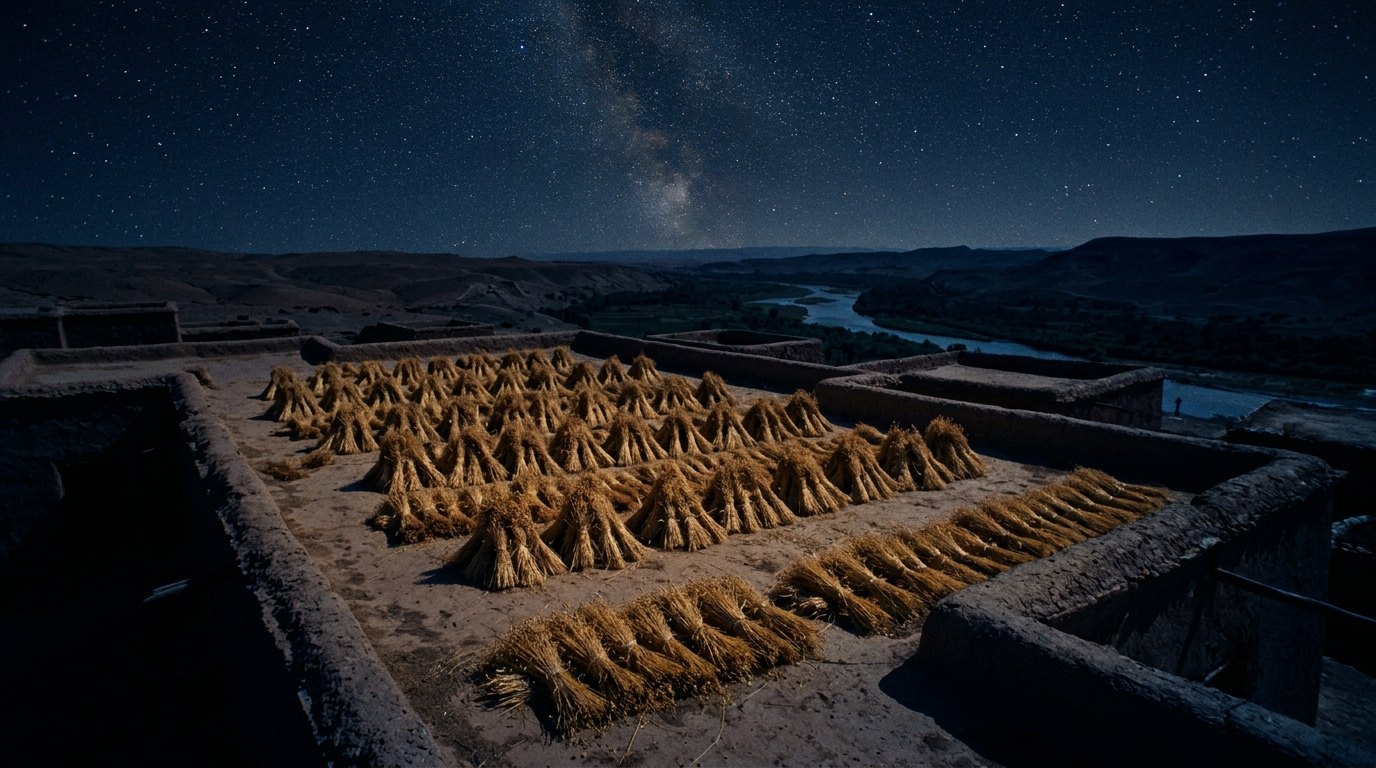
When we heard of it, our hearts melted in fear and everyone’s courage failed because of you, for the LORD your God is God in heaven above and on the earth below.
Joshua 2:11 (NIV)
Rahab unequivocally proclaims Yahweh as the supreme God over heaven above and earth beneath.
Joshua 2:11 records Rahab's astonishing confession: 'for the LORD your God, he is God in heaven above, and in earth beneath.' Her words represent one of the purest statements of monotheism found in the entire Old Testament, spoken by a pagan woman in a doomed stronghold. When the king of Jericho caught wind of strangers and commanded her to surrender them in Joshua 2:2-3, Rahab acted with decisive courage. In Joshua 2:4-7, she hid the two Hebrew spies beneath stalks of drying flax on her flat roof, deliberately defying the royal mandate and sending the pursuers on a wild chase toward the Jordan fords.
She was not acting out of political calculation, but out of holy fear. In Joshua 2:8-10, Rahab told the spies that terror had fallen upon Jericho because the inhabitants had heard how Yahweh dried up the Red Sea forty years before, and how Israel had utterly destroyed Sihon and Og, kings of the Amorites. Her account confirmed word for word the ancient prophecy of Exodus 15:14-16, sung on the shores of the sea, that the inhabitants of Canaan would melt away. The citizens of Jericho responded to this terror with hardened defiance, but Rahab responded with saving faith. When the spies returned safely to Joshua in Joshua 2:22-24, her confession became Israel's battle cry: 'Truly the LORD hath delivered into our hands all the land.'
| Passage | What it says |
|---|---|
| Joshua 2:2-3 | The king of Jericho learns of the spies and orders Rahab to bring them forth. |
| Joshua 2:4-7 | Rahab hides the men beneath stalks of flax on her roof and misdirects the king's pursuers toward the Jordan. |
| Joshua 2:8-10 | Rahab recounts how Jericho melted in dread after hearing of the Red Sea crossing and the defeat of Sihon and Og. |
| Joshua 2:11 | Rahab confesses that Yahweh, Israel's God, is God in heaven above and on earth beneath. |
| Exodus 15:14-16 | The Song of the Sea foretells that dread of Yahweh would fall upon all the inhabitants of Canaan. |
| Joshua 2:22-24 | The spies return to Joshua reporting Rahab's witness: the Lord has delivered the entire land into their hands. |
The Scarlet Cord
A covenant of life amid coming judgment
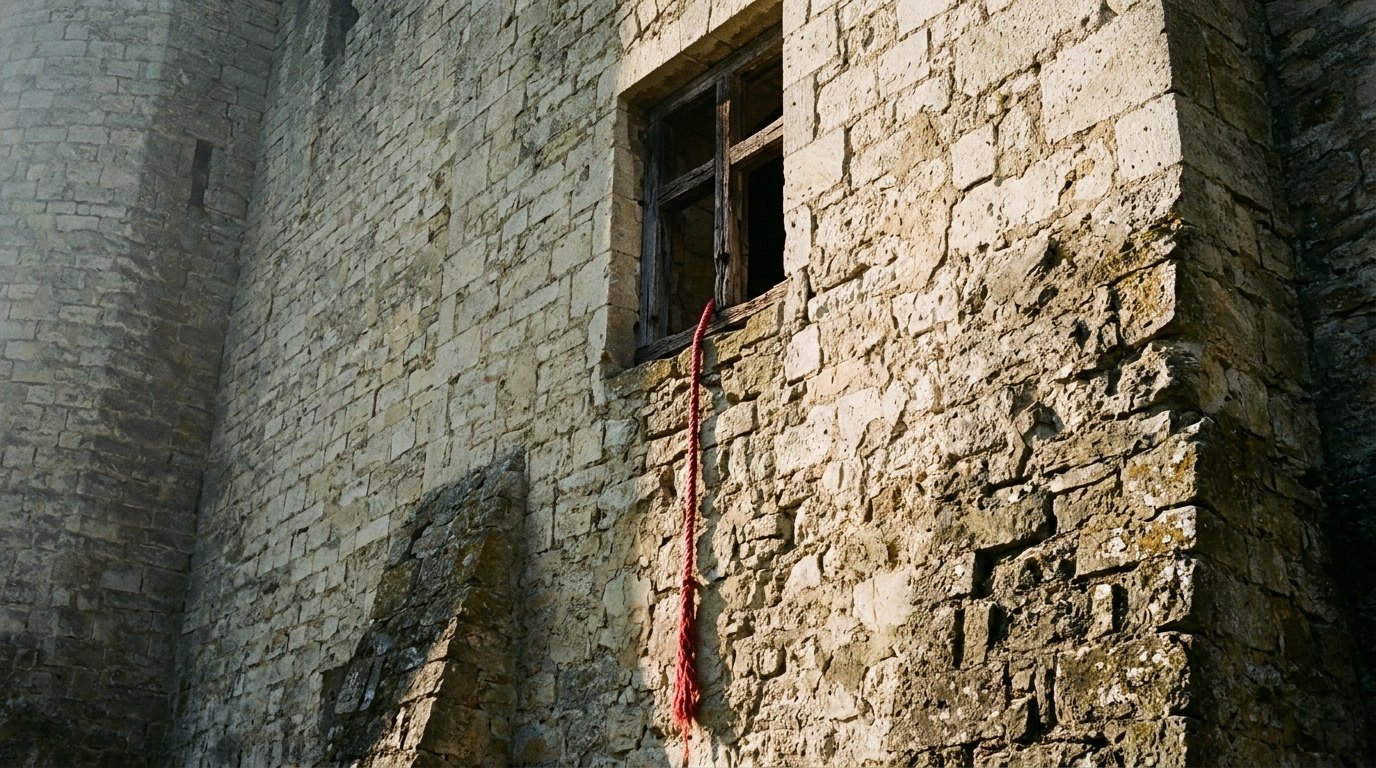
unless, when we enter the land, you have tied this scarlet cord in the window through which you let us down, and unless you have brought your father and mother, your brothers and all your family into your house.
Joshua 2:18 (NIV)
The scarlet cord tied in the window was the unmistakable token that spared Rahab's household from slaughter.
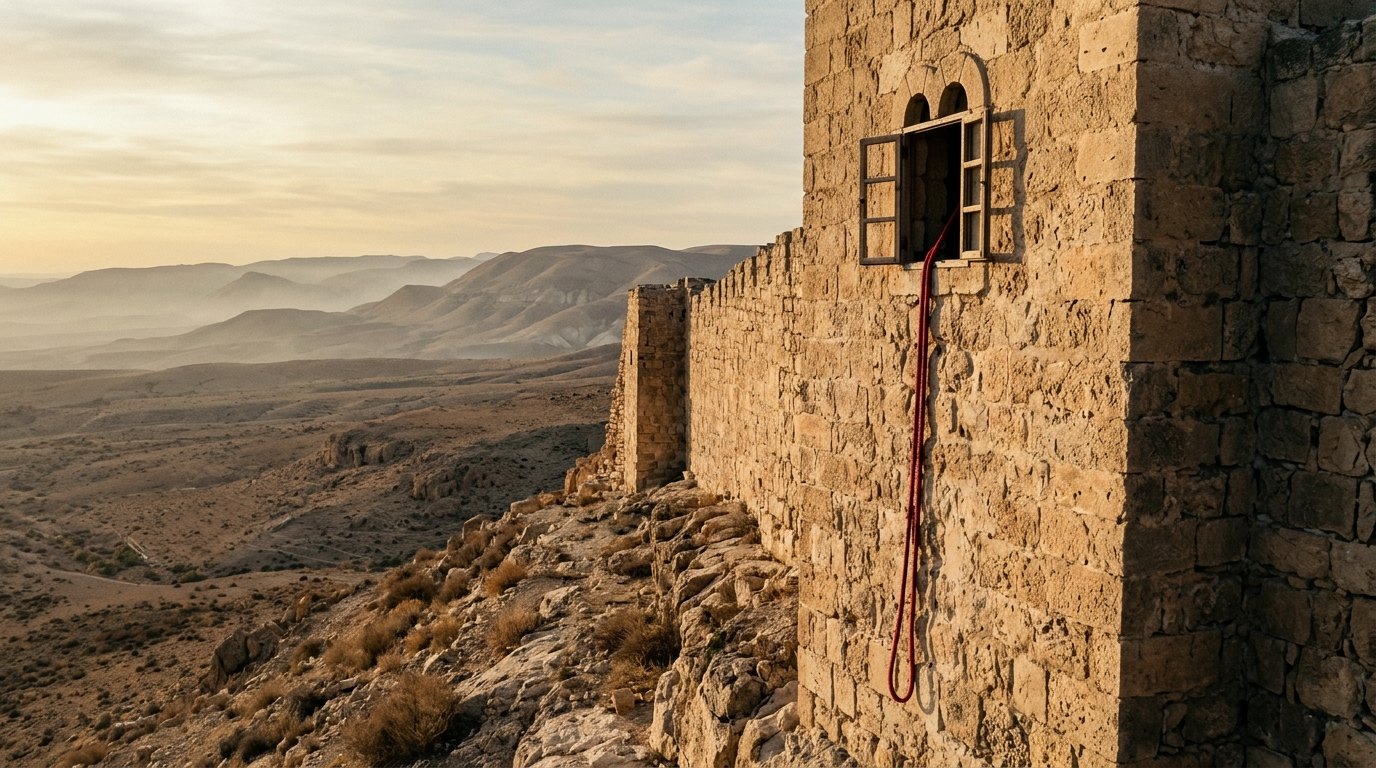
In Joshua 2:18, the spies instruct Rahab to bind a line of scarlet thread in the window through which she lowered them. This brilliant red cord hanging from the city wall served as the outward sign of an inviolable covenant of preservation. In Joshua 2:12-13, Rahab begged for a true token of mercy, pleading that her father, mother, brothers, and sisters be delivered from death when the judgment struck. The spies bound themselves to her in Joshua 2:14, pledging their own lives for hers on the condition that her secret remained secure.
In Joshua 2:15-16, she helped them escape down the outer rampart by a rope and gave them wisdom to elude capture. Before departing, the messengers fixed the exact conditions in Joshua 2:17-21: the scarlet thread must remain tied in the window, and every member of her household had to be gathered inside her house. Anyone found in the streets would bear their own blood, but all sheltered under her roof would live. This arrangement strikingly echoes Exodus 12:13, where the blood of the Passover lamb sprinkled on the doorposts marked the only safe ground in Egypt. As later pointed out in Hebrews 9:19-22 and 1 Corinthians 5:7, scarlet wool and the shed blood of Christ establish the true shield against wrath. Rahab trusted the promise completely, tied the crimson cord in her window, and waited.
| Passage | What it says | Fulfilled |
|---|---|---|
| Joshua 2:12-13 | Rahab asks the spies for a reliable pledge of mercy to preserve her parents, siblings, and household from death. | Joshua 6:22-23 |
| Joshua 2:14 | The spies pledge their lives for hers if she keeps their mission secret. | Joshua 6:25 |
| Joshua 2:15-16 | Rahab lowers the spies down the city wall through her window and gives them instructions for evasion. | Joshua 2:22-23 |
| Joshua 2:17-21 | The spies set the conditions for safety, requiring a scarlet thread bound in her window and her household gathered inside. | Hebrews 11:31 |
| Exodus 12:13 | The blood of the Passover lamb on the doorpost delivers households from death, prefiguring Rahab's scarlet cord. | 1 Corinthians 5:7, Hebrews 9:19-22 |
Spared from the Ban
Deliverance granted when the city fell
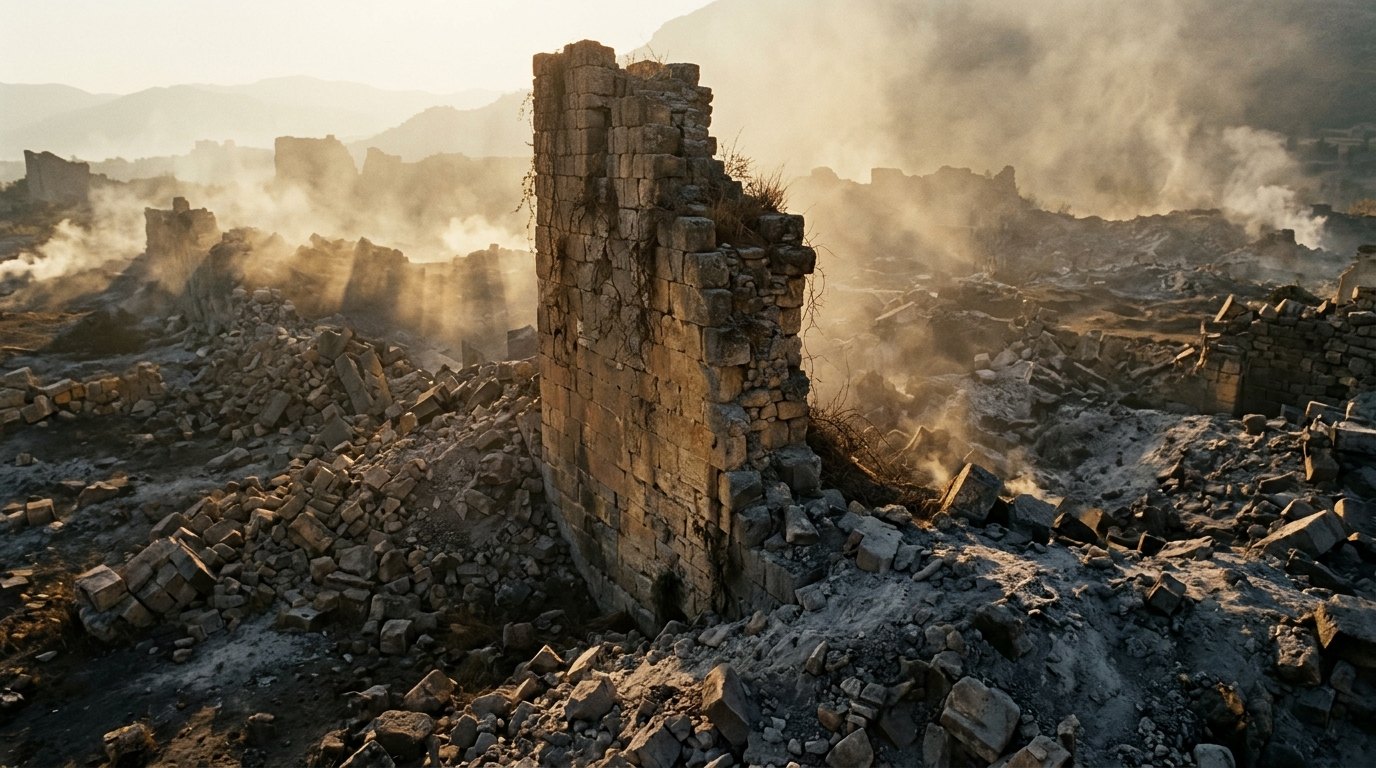
But Joshua spared Rahab the prostitute, with her family and all who belonged to her, because she hid the men Joshua had sent as spies to Jericho—and she lives among the Israelites to this day.
Joshua 6:25 (NIV)
Scripture explicitly records that Joshua kept faith with Rahab, delivering her household to live within Israel permanently.
Joshua 6:25 declares the enduring vindication of Rahab's trust: 'And Joshua saved Rahab the harlot alive, and her father's household, and all that she had; and she dwelleth in Israel even unto this day.' God proved faithful to the pledge made to an outcast, preserving her entire family while the surrounding fortress collapsed in ruin. When the seventh day of the siege arrived, Joshua commanded the people to shout, reminding them in Joshua 6:17 that while the city was devoted to destruction, Rahab and all who were with her must live because she received the messengers.
In Joshua 6:20-21, the trumpet blast sounded, the great walls crashed flat, and Israel's warriors took the city, executing righteous judgment with the edge of the sword. The entire stronghold was consumed by fire according to Joshua 6:24, its treasures placed into the treasury of the Lord's house. Yet before the flames engulfed the rubble, Joshua sent the very two spies she had sheltered back to her home in Joshua 6:22-23. They brought out Rahab, her parents, her brethren, and all her kindred, setting them safely outside the camp of Israel until they were formally received into the covenant community. Her deliverance was complete, her redemption total, and her new home permanent.
| Passage | What it says |
|---|---|
| Joshua 6:17 | Joshua commands that Jericho be devoted to destruction, excepting Rahab and those in her house because she hid the messengers. |
| Joshua 6:22-23 | The two spies enter Rahab's home as Jericho falls and bring out Rahab and all her family safely. |
| Joshua 6:25 | Rahab and her father's household are saved alive, and she dwells in Israel from that day forward. |
| Joshua 6:20-21 | The walls of Jericho collapse and the city is struck with the edge of the sword under the ban. |
| Joshua 6:24 | The city and all within it are burned with fire, except the dedicated silver, gold, bronze, and iron. |
Into the Royal Seed
Grafted into the genealogy of the Messiah
Salmon the father of Boaz, whose mother was Rahab, Boaz the father of Obed, whose mother was Ruth, Obed the father of Jesse,
Matthew 1:5 (NIV)
Matthew names Rahab as the mother of Boaz, placing a Canaanite directly into the ancestral royal line of Christ.
In Matthew 1:5, the Holy Spirit preserves an astonishing record: Rahab was grafted into the royal ancestry of Jesus Christ. By ancient standards, a genealogy omitted women almost entirely, yet the Gospel writer intentionally names this former Canaanite innkeeper as the mother of Boaz. Her presence in the genealogy is an undeniable monument of sovereign grace, demonstrating that the God of Abraham welcomes the outsider and redeems the broken into His covenant family.
Centuries earlier, Ruth 4:21-22 documented the domestic line leading from the wilderness wandering into the Davidic monarchy: Salmon fathered Boaz, Boaz fathered Obed, and Obed fathered Jesse, the father of David. What the Old Testament historical record left unspoken regarding Boaz's mother, Matthew 1:5-6 makes explicit. Salmon, an Israelite prince of Judah, took Rahab into his home and heart, continuing the messianic line through their son Boaz, who would himself exhibit astonishing redemptive kindness to Ruth the Moabitess.
This chain of redemption moves unbroken across the generations until Matthew 1:16, where the record culminates in Jesus, "who is called the Christ," alongside the genealogical testimony preserved in Luke 3:31-32. The scarlet cord that once hung from the wall of doomed Jericho found its ultimate antitype in the precious blood of the cross. Through faith, Rahab was not merely spared physical destruction; she became a physical mother to the promised King of kings.
| Passage | What it says | Fulfilled |
|---|---|---|
| Ruth 4:21-22 | Salmon fathers Boaz, who fathers Obed, the father of Jesse, who fathers King David. | Matthew 1:5-6 |
| Matthew 1:5-6 | Matthew records Salmon fathering Boaz by Rahab, continuing the lineage directly down to David the king. | Matthew 1:16 |
| Matthew 1:16 | The genealogy culminates in Jesus, who is called the Christ, the seed promised through David's line. | Luke 3:31-32 |
Faith in Action
A permanent pattern for the Christian life
By faith the prostitute Rahab, because she welcomed the spies, was not killed with those who were disobedient.
Hebrews 11:31 (NIV)
Hebrews counts her among the great exemplars of faith because she welcomed the spies in peace rather than perishing.
The New Testament looks back at the deliverance of Jericho and sees in Rahab a lasting monument of true devotion. According to Hebrews 11:31, by faith the prostitute Rahab did not perish alongside the disobedient population of Jericho, because she received the Hebrew scouts in peace. Her faith was not a passive intellectual agreement, but a courageous conviction that the God of Israel was the one true Lord of heaven and earth, worthy of risking her life to follow.
James 2:25 takes up her story to illustrate the essential fruit of authentic trust. In asking whether a person is justified by faith alone, the apostle points directly to Rahab, demonstrating that saving faith always demonstrates itself in practical deeds of obedience. She hid the messengers and aided their escape down the city wall, verifying her heart's allegiance by tangible action.
Her experience vividly anticipates the gospel pattern outlined in Romans 10:9-10, where salvation belongs to those who believe in their heart and confess with their mouth that Jesus is Lord. Rahab heard the reports of God's mighty acts, believed His power, and confessed Him openly to the spies. As Ephesians 2:12-13 declares, those who were once foreigners to the covenants of promise, having no hope and without God in the world, have been brought near. Rahab stands as an enduring beacon to every believer, proving that no background is too dark for God's mercy to redeem.
| Passage | What it says |
|---|---|
| Hebrews 11:31 | By faith Rahab the prostitute did not perish with those who were disobedient, having welcomed the spies with peace. |
| James 2:25 | James cites Rahab the prostitute as justified by works when she received the messengers and sent them out another way. |
| Romans 10:9-10 | Confession with the mouth that Jesus is Lord and belief in the heart results in salvation, mirroring Rahab's confession. |
| Ephesians 2:12-13 | Gentiles once alienated from the commonwealth of Israel are brought near by the blood of Christ. |
Where in the Bible
| Book | Passages |
|---|---|
| Genesis | 1 · Genesis 15:16 |
| Exodus | 2 · Exodus 15:14-16, Exodus 12:13 |
| Leviticus | 1 · Leviticus 18:24-25 |
| Deuteronomy | 2 · Deuteronomy 7:1-2, Deuteronomy 20:16-18 |
| Joshua | 15 · Joshua 2:1, Joshua 2:2-3, Joshua 2:4-7, Joshua 2:8-10, Joshua 2:11, Joshua 2:22-24, Joshua 2:12-13, Joshua 2:14, Joshua 2:15-16, Joshua 2:17-21, Joshua 6:17, Joshua 6:22-23, Joshua 6:25, Joshua 6:20-21, Joshua 6:24 |
| Ruth | 1 · Ruth 4:21-22 |
| Matthew | 2 · Matthew 1:5-6, Matthew 1:16 |
| Romans | 1 · Romans 10:9-10 |
| Ephesians | 1 · Ephesians 2:12-13 |
| Hebrews | 1 · Hebrews 11:31 |
| James | 1 · James 2:25 |
The story in order
- God promises judgment on Canaan (c. 2000 BC) · Genesis 15:16 · Sets the stage for Jericho's destruction.
- Israel commanded to destroy Canaanites (c. 1400 BC) · Deuteronomy 7:1-2 · Includes Jericho's inhabitants in the ban.
- Spies lodge with Rahab in Jericho (c. 1400 BC) · Joshua 2:1 · Rahab's house becomes a place of refuge.
- Rahab hides the spies (c. 1400 BC) · Joshua 2:4-7 · Rahab risks her life for God's messengers.
- Rahab confesses faith in Yahweh (c. 1400 BC) · Joshua 2:11 · Declares Yahweh is God in heaven and earth.
- Pledge of safety for Rahab's family (c. 1400 BC) · Joshua 2:12-13 · A covenant of life is made.
- Jericho's walls fall (c. 1400 BC) · Joshua 6:20 · The city is devoted to destruction.
- Rahab and family are saved (c. 1400 BC) · Joshua 6:23 · Deliverance granted due to her faith and actions.
- Rahab dwells in Israel (c. 1400 BC) · Joshua 6:25 · Grafted into the people of God.
- Salmon fathers Boaz by Rahab (c. 1100 BC) · Ruth 4:21-22 · Rahab enters the lineage of David.
- David the king is born (c. 1040 BC) · Matthew 1:6 · Rahab's descendant becomes Israel's greatest king.
- Jesus Christ is born (c. 4 BC) · Matthew 1:16 · Rahab is in the ancestry of the Messiah.
Rahab's Faith and Salvation
| Rahab's Action | Biblical Principle | Result | Passage |
|---|---|---|---|
| Hid the spies and lied to the king | Welcoming God's messengers | Spies' lives spared | Joshua 2:4-7 |
| Confessed Yahweh as God | Confessing Jesus as Lord | Her life and family spared | |
| Bound scarlet cord in window | Blood of Christ applied | Household saved from destruction | |
| Received messengers and sent them out | Works demonstrating faith | Justified by works | James 2:25 |
From Outcast to Ancestor
| Status | Action | Outcome | Passage |
|---|---|---|---|
| Canaanite prostitute in doomed city | Believed God and hid spies | Saved from Jericho's destruction | Joshua 2:1-25 |
| Foreigner outside covenant | Joined Israel | Dwelt among God's people | Joshua 6:25 |
| Disobedient lineage | Married Salmon | Became ancestor of David | |
| Not in the royal line | Mother of Boaz | In the genealogy of Jesus Christ | Matthew 1:5-6 |
Key words
- Faith (pistis, πίστις)
- Trust and belief in God, demonstrated by action. · Hebrews 11:31
- Works (erga, ἔργα)
- Actions that demonstrate and confirm genuine faith. · James 2:25
- Confession (homologia, ὁμολογία)
- Public declaration of belief in God's identity and power. · Romans 10:9-10
- Ban (ḥērem, חֵרֶם)
- Complete destruction devoted to God, often of enemies. · Deuteronomy 20:16-18
- Deliverance (yasha, יָשַׁע)
- Rescue from danger or destruction by God's intervention. · Joshua 6:23
Rahab's life testifies that God's grace reaches across every barrier of nationality, heritage, and personal sin. Whoever turns in living, active faith to the Lord of heaven and earth is spared from judgment and given an enduring home among His people.
28 passages, each cited once.
Scripture cited
- Joshua 2
- Joshua 6:22-25
- Matthew 1:5-6
- Hebrews 11:31
- James 2:25-26
- Matthew 1:1-17