Who was Ruth?
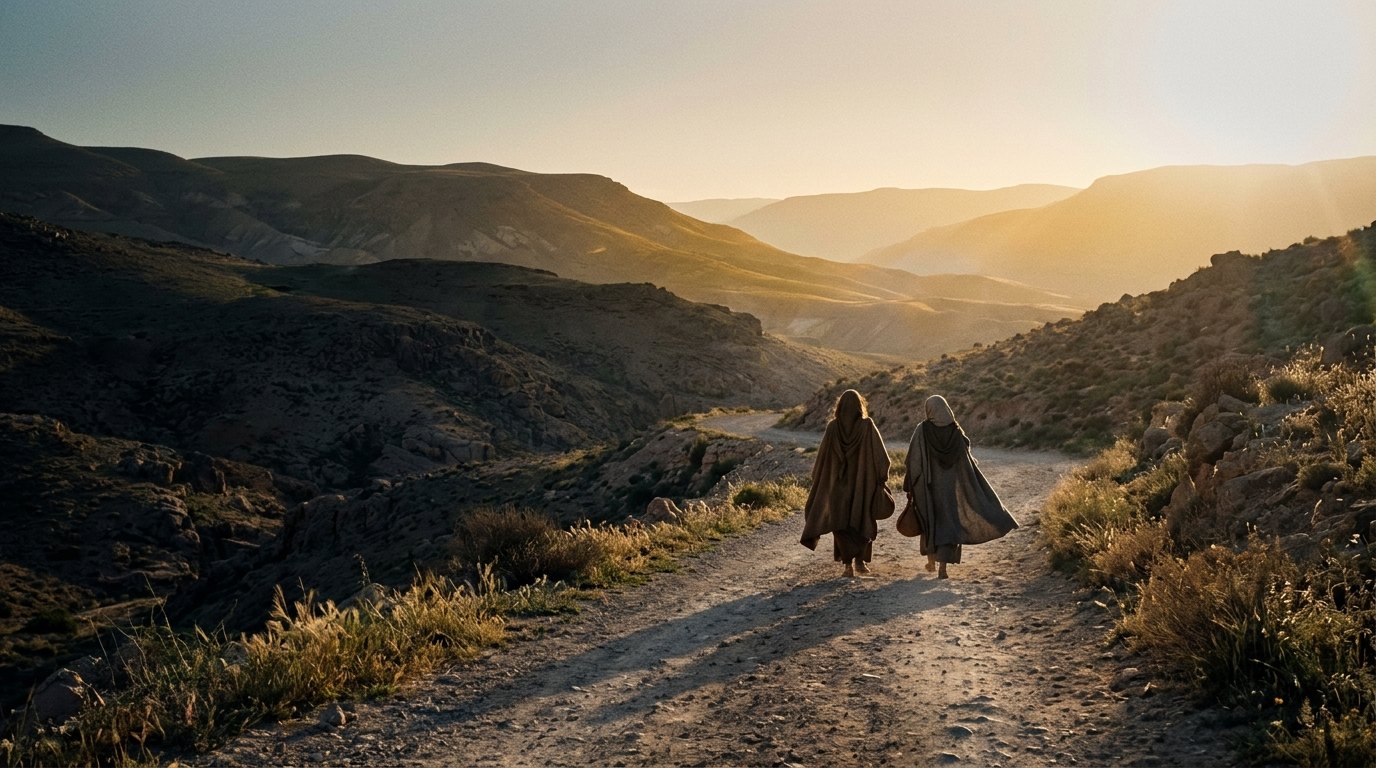
Ruth 1:15-18
15 “Look,” said Naomi, “your sister-in-law is going back to her people and her gods. Go back with her.”
16 But Ruth replied, “Don’t urge me to leave you or to turn back from you. Where you go I will go, and where you stay I will stay. Your people will be my people and your God my God.
17 Where you die I will die, and there I will be buried. May the LORD deal with me, be it ever so severely, if even death separates you and me.”
18 When Naomi realized that Ruth was determined to go with her, she stopped urging her.
New International Version (NIV)
The answer
Ruth was a Moabite widow whose faith and loyal love brought her from Moab to Israel. She became the wife of Boaz, the great-grandmother of King David, and an ancestor of Jesus Christ. Her story, told in the book of Ruth, shows God's faithful care for a foreigner who took refuge in Him.
Ruth lived in the days of the judges, when a famine led Elimelech and Naomi to move from Bethlehem to Moab with their sons. Ruth married their son Mahlon, while Orpah married the other son. After Elimelech and both sons died, Naomi, Ruth, and Orpah were left as widows (Ruth 1:1-5; Ruth 4:10).
When Naomi decided to return to Bethlehem, Orpah went back to her people, but Ruth refused to abandon Naomi. She declared, “Your people will be my people, and your God my God,” and bound herself with an oath that only death would separate them (Ruth 1:15-18). This was not merely loyalty to Naomi: Ruth was leaving Moab's god and committing herself to Yahweh. Boaz later recognized that she had come to take refuge under the wings of Yahweh, the God of Israel (Ruth 2:11-12).
In Bethlehem, Ruth worked humbly and diligently, gleaning grain to provide for herself and Naomi. She came to the field of Boaz, a relative of Elimelech, who protected her, provided for her, and praised her care for Naomi (Ruth 2:2-12). Boaz subsequently married Ruth to preserve Mahlon's name and inheritance. God enabled her to bear a son named Obed, who became the father of Jesse and the grandfather of David (Ruth 4:9-17; Ruth 4:21-22).
Matthew's genealogy names Ruth as Obed's mother and Boaz's wife. It identifies Jesus Christ as the son of David and concludes its opening genealogy with His birth, giving this Moabite widow an honored place in the family line through which Christ came (Matthew 1:1; Matthew 1:5; Matthew 1:16).
Answered from Scripture · reviewed November 11, 2026
Ruth was a widowed Moabite woman who chose covenant loyalty to Naomi and faith in Yahweh over the pagan security of her homeland. Her steadfast love and redemptive marriage to Boaz wove a Gentile outsider directly into the royal lineage of King David and Jesus Christ.
A Foreign Daughter-in-Law
Sorrow in Moab Prepares a Costly Choice
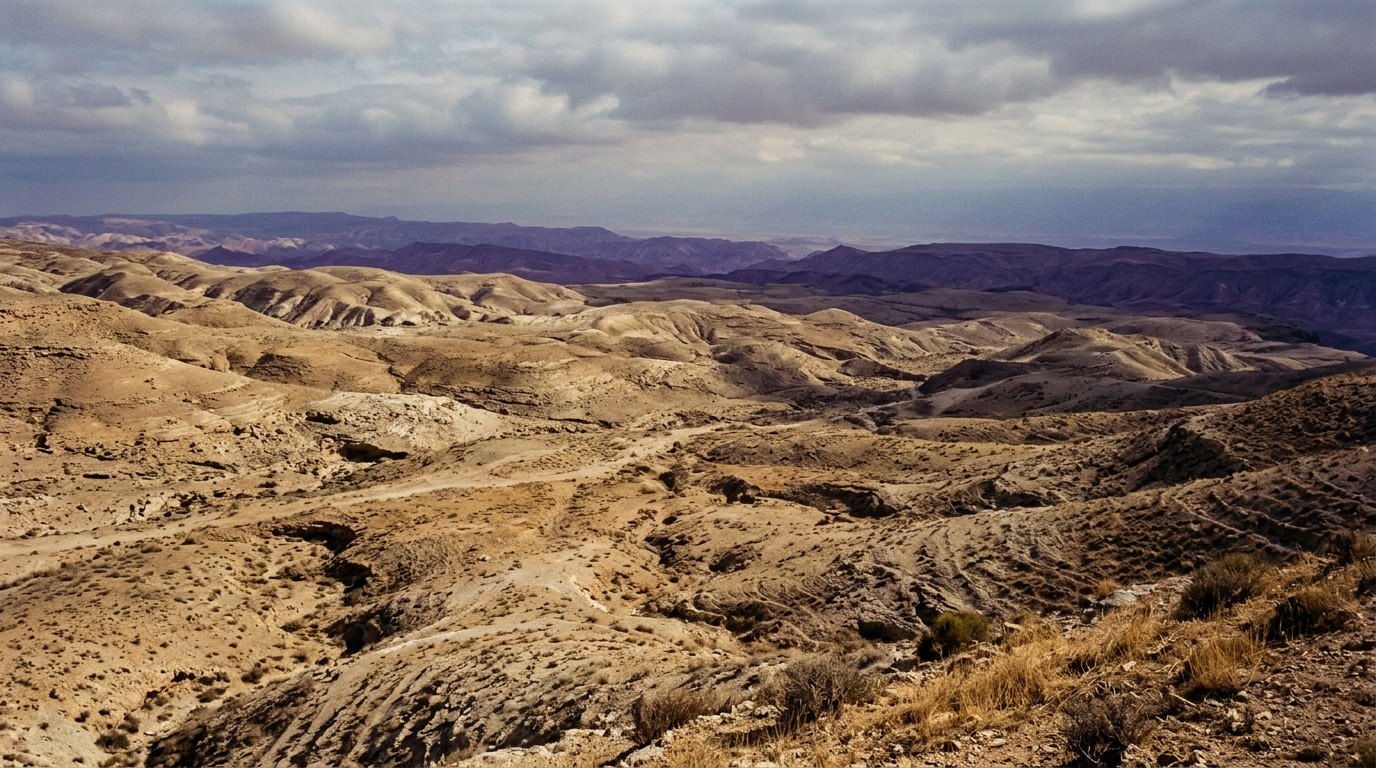
They married Moabite women, one named Orpah and the other Ruth. After they had lived there about ten years,
Ruth 1:4 (NIV)
It records the marriage of Naomi's sons to foreign women in Moab, setting up the entire drama of family grief and redemption.
The entire redemptive arc of Ruth’s life emerges from the ashes of severe bereavement recorded in Ruth 1:4, where two young Moabite women enter the covenant family of an exiled house from Judah. The historical backdrop opens in Ruth 1:1-2 during the dark period of the judges, when a severe famine drives Elimelech, his wife Naomi, and their two sons Mahlon and Chilion away from Bethlehem—the very "house of bread"—to seek refuge across the Jordan River in the pagan highlands of Moab. This temporary sojourn turns into a prolonged displacement marked by profound catastrophe.
Tragedy strikes swiftly in Ruth 1:3-5 when Elimelech dies, leaving Naomi alone with her sons in a strange land. The sons take Moabite wives, Orpah and Ruth, yet after approximately ten years in Moab, both young men die without leaving heirs. In the ancient world, this sequence of losses stripped a household of every economic safety net, social status, and ancestral future. Ruth enters the biblical canvas not as an empress or prophetess, but as a destitute foreign widow bound to an aging, bitter mother-in-law. Yet God’s sovereign providence was already operating within these bitter circumstances, orchestrating from human sorrow the beginning of a lineage that would ultimately bridge Bethlehem, Jerusalem, and the throne of Christ.
| Passage | What it says |
|---|---|
| Ruth 1:1-2 | Elimelech and his family leave Bethlehem during a famine to sojourn in the fields of Moab. |
| Ruth 1:3-5 | Elimelech dies, his sons marry Moabite women Orpah and Ruth, and both sons later die childless. |
Covenant Loyalty
A Moabite Forsakes Her Gods for Yahweh

But Ruth replied, “Don’t urge me to leave you or to turn back from you. Where you go I will go, and where you stay I will stay. Your people will be my people and your God my God. Where you die I will die, and there I will be buried. May the LORD deal with me, be it ever so severely, if even death separates you and me.”
Ruth 1:16-17 (NIV)
Ruth's solemn vow to follow Naomi and worship Yahweh stands as one of Scripture's most radiant confessions of conversion.
Ruth’s confession in Ruth 1:16-17 represents one of the most sublime declarations of personal faith and covenant fidelity found anywhere in holy Scripture. When Naomi hears that the Lord has visited His people by giving them bread, she prepares to return to Judah and commands her daughters-in-law to remain in Moab to find rest among their own kin, as seen in Ruth 1:6-14. Orpah weeps and obeys Naomi’s counsel, returning home; Ruth 1:15 notes that Orpah returned not only to her people but to her ancestral gods, specifically Chemosh. In contrast, Ruth "clung to her," refusing to measure her future by earthly calculation or familiar comforts.
Instead, Ruth utters her magnificent vow: "Where you go I will go, and where you lodge I will lodge. Your people shall be my people, and your God my God." She binds herself by an oath to Yahweh, invoking His sacred name to seal a lifelong bond that only death could break. This was not mere sentimental affection, but a radical conversion that renounced the idolatrous heritage of Moab to seek shelter in the God of Israel. Seeing her unshakable determination, Naomi ceases urging her to turn back, and in Ruth 1:18-22, the two solitary widows complete the arduous journey back to Bethlehem, arriving just as the golden heads of the barley harvest began to wave in the fields.
| Passage | What it says |
|---|---|
| Ruth 1:6-14 | Naomi urges her daughters-in-law to remain in Moab; Orpah weeps and departs, but Ruth clings to Naomi. |
| Ruth 1:15 | Naomi points out that Orpah has returned to her people and to her national god Chemosh. |
| Ruth 1:16-17 | Ruth pledges lifelong devotion to Naomi and swears by Yahweh that only death will divide them. |
| Ruth 1:18-22 | Naomi sees Ruth's resolve, and the two women travel together to Bethlehem at the barley harvest. |
Under His Wings
Gleaning Grace in the Fields of Boaz
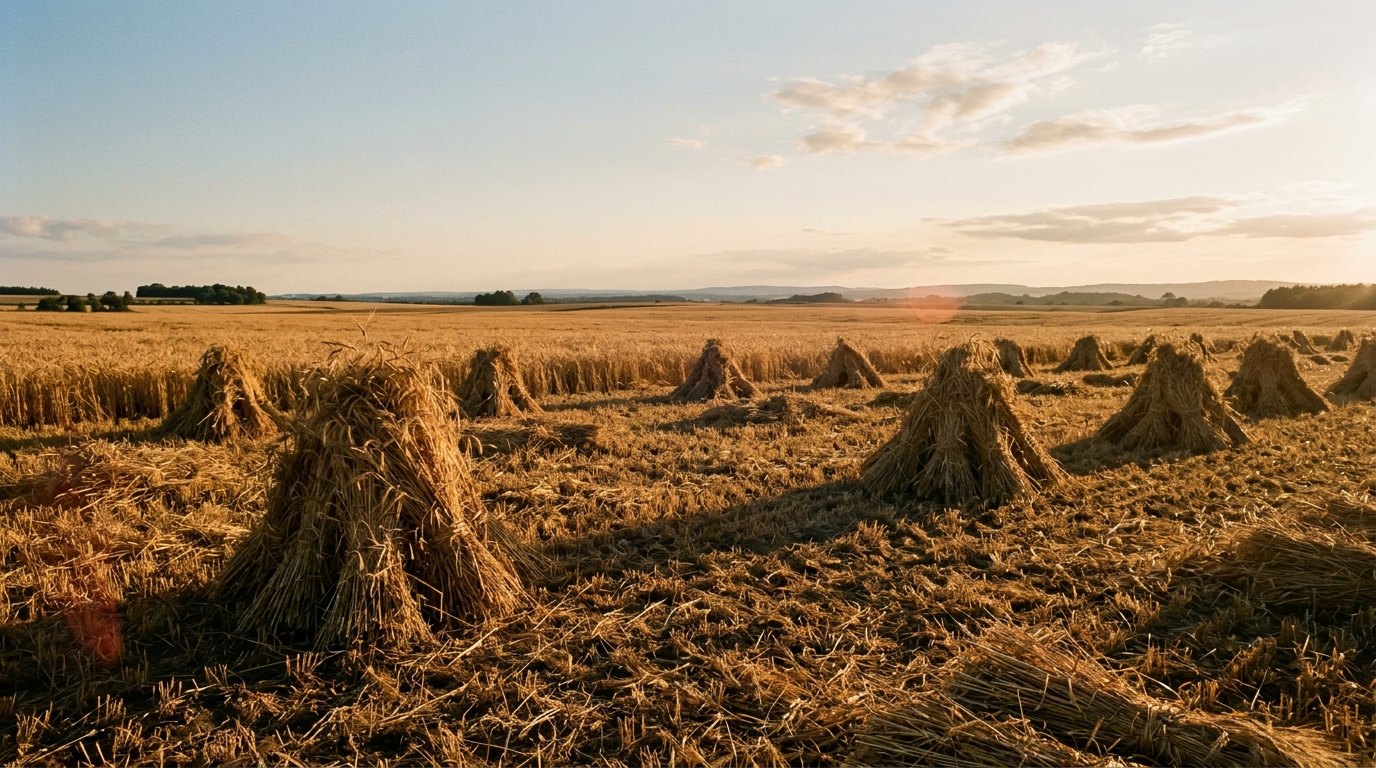
May the LORD repay you for what you have done. May you be richly rewarded by the LORD, the God of Israel, under whose wings you have come to take refuge.”
Ruth 2:12 (NIV)
Boaz invokes Yahweh's full reward upon Ruth for coming to trust under the protective wings of Israel's God.
In Ruth 2:12, Boaz speaks a benediction over the young foreigner that penetrates to the heart of her faith: "The Lord repay you for what you have done, and a full reward be given you by the Lord, the God of Israel, under whose wings you have come to take refuge!" Ruth’s daily survival began humbly in Ruth 2:1-3, where she takes the initiative to glean behind the reapers according to the Mosaic provision for the poor and the stranger. By what human eyes call chance, she happens upon the parcel of ground belonging to Boaz, a wealthy and righteous man from the clan of Elimelech.
Their meeting unfolds with breathtaking grace in Ruth 2:4-11. When Boaz arrives from Bethlehem and greets his laborers in the name of the Lord, he immediately notices Ruth’s diligent, humble work and learns of her steadfast devotion to Naomi. He extends royal kindness, commanding that she drink freely from the workers’ jars and forbidding his men from mistreating her. Following his benediction in Ruth 2:12-16, Boaz invites her to eat roasted grain at his table and privately commands his harvesters to pull out sheaves purposefully for her to gather. When she returns to the city with an ephah of barley in Ruth 2:17-23, Naomi rejoices upon hearing the protector’s name, praising Yahweh whose kindness had not forsaken the living or the dead, and revealing that Boaz was one of their close kinsman-redeemers.
| Passage | What it says |
|---|---|
| Ruth 2:1-3 | Ruth sets out to glean ears of grain and happens upon the field of Elimelech's kinsman Boaz. |
| Ruth 2:4-11 | Boaz inquires about Ruth, grants her protection, and commends her kindness toward her mother-in-law. |
| Ruth 2:12-16 | Boaz blesses Ruth's faith in Yahweh, invites her to mealtime, and orders grain left deliberately for her. |
| Ruth 2:17-23 | Ruth brings her abundant gleanings to Naomi, learning that Boaz is a close family redeemer. |
The Threshing Floor
Claiming the Kinsman-Redeemer's Wing

“Who are you?” he asked. “I am your servant Ruth,” she said. “Spread the corner of your garment over me, since you are a guardian-redeemer of our family.”
Ruth 3:9 (NIV)
Ruth asks Boaz to spread his garment over her, boldly appealing to his duty as a kinsman-redeemer.
The dramatic nocturnal petition in Ruth 3:9 captures the courage of faith, as Ruth whispers into the dark: "I am Ruth, your servant. Spread your wings over your servant, for you are a redeemer." Knowing the season of gleaning was ending and desiring permanent security for her daughter-in-law, Naomi instructs Ruth in Ruth 3:1-5 to wash, anoint herself, put on her best mantle, and go down quietly to the threshing floor where Boaz winnowed his harvest in the evening breeze.
Following these instructions faithfully, Ruth approaches the threshing floor in Ruth 3:6-9, uncovers Boaz’s feet while he sleeps, and lies down. When he awakes startled at midnight, her request that he spread his "wing"—the corner of his garment—directly echoes Boaz’s earlier blessing concerning the protective wings of Yahweh, formally calling upon him to execute the duties of the go'el, the family redeemer. In Ruth 3:10-13, Boaz does not rebuke her boldness; rather, he blesses her for showing even greater loyalty now than at first, noting that all the townspeople knew she was a woman of noble character. He pledges to fulfill the kinsman’s role unless a closer relative exercises his prior right. Before dawn broke, in Ruth 3:14-18, he loads her mantle with six measures of barley, sending her home with tangible assurance while Naomi counsels quiet patience until the matter is decided.
| Passage | What it says |
|---|---|
| Ruth 3:1-5 | Naomi instructs Ruth to wash, dress, and go down to Boaz at the threshing floor. |
| Ruth 3:6-9 | Ruth uncovers Boaz's feet at night and requests that he spread his wing over his maidservant. |
| Ruth 3:10-13 | Boaz praises her noble character and promises to redeem her if a nearer kinsman does not. |
| Ruth 3:14-18 | Boaz sends Ruth home with six measures of barley, while Naomi tells her to wait for the outcome. |
Redemption Accomplished
Boaz Marries Ruth at the Gate
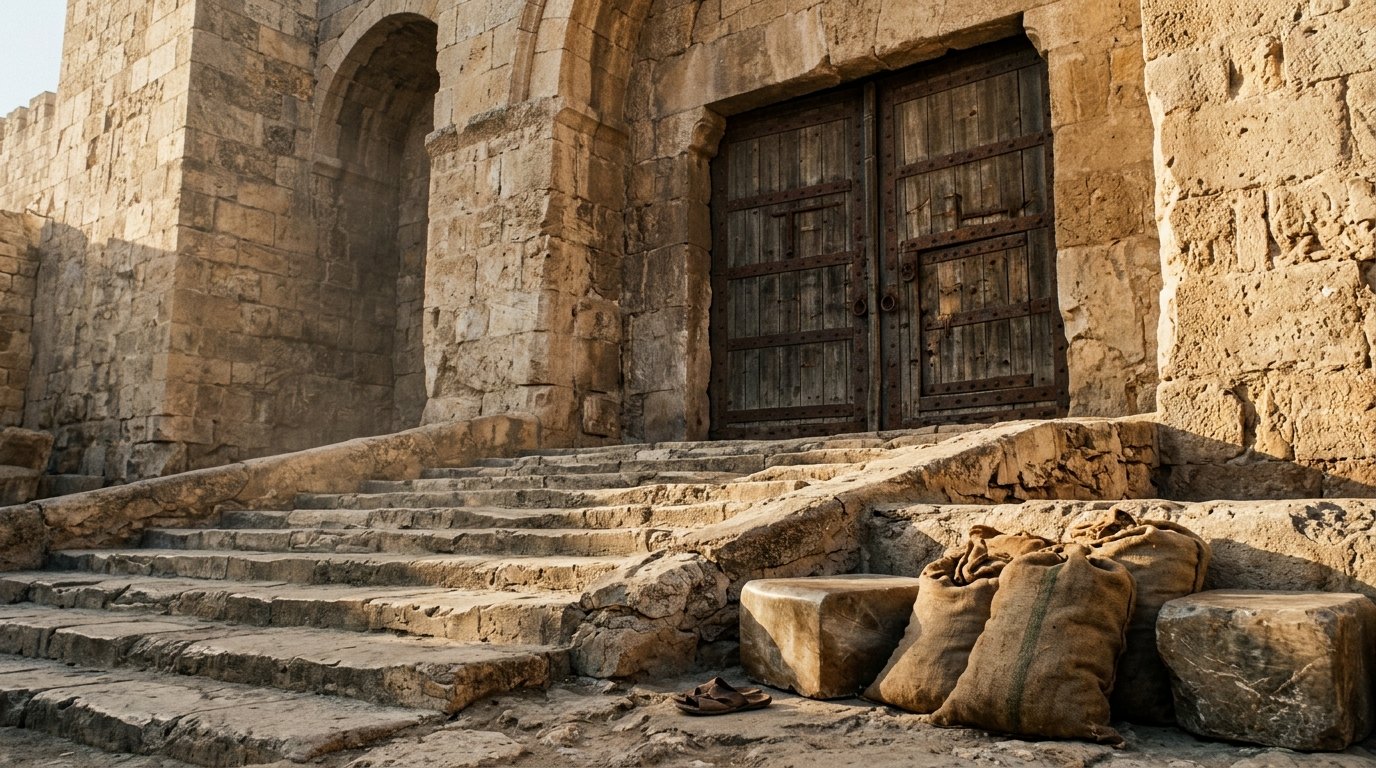
I have also acquired Ruth the Moabite, Mahlon’s widow, as my wife, in order to maintain the name of the dead with his property, so that his name will not disappear from among his family or from his hometown. Today you are witnesses!”
Ruth 4:10 (NIV)
Boaz publicly buys back Elimelech's land and takes Ruth as wife to perpetuate the name of the dead.
In Ruth 4:10, Boaz steps into the open city gate to proclaim that he has acquired Ruth the Moabitess to be his wife, raising up the name of the dead upon his inheritance. The formal proceedings open in Ruth 4:1-8, where Boaz convenes ten elders of Bethlehem and confronts a nearer redeemer. While that kinsman is willing to purchase the family plot of Elimelech, he draws back the moment he learns that acquiring the soil means marrying Ruth to perpetuate the line of Mahlon; fearing the impairment of his own estate, he removes his sandal and yields his legal right. Taking immediate action, Boaz announces in Ruth 4:9-12 before the assembled town elders that he has redeemed both the land and the widow, drawing down a sweeping prophetic benediction from the witnesses, who pray that Ruth might be like Rachel and Leah, who together built the house of Israel. The narrative reaches its quiet domestic climax in Ruth 4:13, where Boaz takes Ruth into his home, Yahweh grants her conception, and she brings forth a son, turning years of barren grief into covenant harvest.
| Passage | What it says |
|---|---|
| Ruth 4:1-8 | The nearer kinsman refuses to redeem Elimelech's land once he learns he must also marry Ruth. |
| Ruth 4:9-12 | Boaz redeems the inheritance, marries Ruth, and receives a blessing comparing Ruth to Rachel and Leah. |
| Ruth 4:13 | Yahweh gives Ruth conception, and she bears a son to Boaz in Bethlehem. |
An Ancestress of Christ
A Gentile Included in the Royal Seed

Salmon the father of Boaz, whose mother was Rahab, Boaz the father of Obed, whose mother was Ruth, Obed the father of Jesse,
Matthew 1:5 (NIV)
The Gospel of Matthew names Ruth directly in the genealogy tracing the legal line of the Messiah Jesus.
The Gospel opens by establishing Christ's legal royal lineage, and Matthew 1:5 names Ruth as the mother of Obed, demonstrating that Gentile faith is woven into the very genealogy of the King of kings. This generational trajectory begins in Bethlehem's courtyard in Ruth 4:14-17, where the local women rejoice over Naomi, declaring that the newborn child is a restorer of life whose mother loves her more than seven sons, naming him Obed, who fathered Jesse, the father of David; this local promise reaches its ultimate scope in the royal advent of Jesus (Matthew 1:5-6; Luke 3:31-32). The inspired book concludes in Ruth 4:18-22 with a formal ten-generation genealogy running from Perez down through Boaz, Obed, and Jesse to David, an unbroken royal chain explicitly ratified in Matthew 1:3-6. In Matthew 1:5, the evangelist deliberately highlights Ruth alongside Rahab and Tamar to showcase the breadth of divine mercy, culminating in Jesus Christ (Matthew 1:1). Finally, Luke 3:32 records the biological descent through Boaz and Obed, anchoring the promise given to a humble Moabite gleaner directly into the salvation of all humanity (Luke 3:23).
| Passage | What it says | Fulfilled |
|---|---|---|
| Ruth 4:14-17 | The Bethlehem women bless Naomi as Obed is born to Ruth, the father of Jesse, father of David. | Matthew 1:5-6, Luke 3:31-32 |
| Ruth 4:18-22 | The closing genealogy traces the messianic line from Perez through Boaz and Obed to King David. | Matthew 1:3-6 |
| Matthew 1:5 | Matthew explicitly includes Ruth as the mother of Obed in the genealogy of Jesus the Messiah. | Matthew 1:1 |
| Luke 3:32 | Luke traces the lineage of Jesus through Boaz, Obed, and Jesse back to Adam. | Luke 3:23 |
The Law and Origins
Covenant Backgrounds that Frame Ruth's Story
No Ammonite or Moabite or any of their descendants may enter the assembly of the LORD, not even in the tenth generation.
Deuteronomy 23:3 (NIV)
This exclusion statute makes Boaz's redemption and God's covenant welcome of Ruth astonishingly gracious.
The legal and historical backdrop of Ruth's reception turns upon Deuteronomy 23:3, which excluded Moabites from the congregation of Yahweh to the tenth generation, making her covenant welcome a breathtaking triumph of sovereign grace. The dark origins of her people are recounted in Genesis 19:36-37, where Lot's elder daughter conceives in a mountain cave and names her son Moab, establishing an ancestral line long estranged from Israel's tabernacle. In Deuteronomy 23:3-6, the Mosaic code codified that perpetual exclusion because Moab refused hospitality in the wilderness and hired Balaam to curse the nation, yet Ruth's resolute confession of Yahweh inverted that ancient hostility into covenant blessing. God's providential care operates throughout her journey via specific Torah ordinances: Leviticus 25:25 demands that a kinsman redeem property lost by an impoverished brother, while Deuteronomy 25:5-10 establishes the principle of levirate marriage to prevent a family's name from being blotted out. Undergirding her daily survival, Leviticus 19:9-10 forbade harvesters from reaping to the extreme edges of their fields, opening the margins to the resident foreigner and the poor.
| Passage | What it says |
|---|---|
| Genesis 19:36-37 | Moab originates from Lot's elder daughter, establishing the lineage from which Ruth later emerges. |
| Deuteronomy 23:3-6 | Moabites are forbidden from entering the assembly of Yahweh to the tenth generation, framing the wonder of Ruth's reception. |
| Leviticus 25:25 | The law provides that a close relative must buy back property that an impoverished kinsman has sold. |
| Deuteronomy 25:5-10 | The law commands a surviving brother or relative to marry a childless widow to perpetuate the deceased brother's name. |
| Leviticus 19:9-10 | God commands Israel to leave gleanings in field corners for the poor and the sojourner, allowing Ruth to glean. |
Where in the Bible
| Book | Passages |
|---|---|
| Genesis | 1 · Genesis 19:36-37 |
| Leviticus | 2 · Leviticus 25:25, Leviticus 19:9-10 |
| Deuteronomy | 2 · Deuteronomy 23:3-6, Deuteronomy 25:5-10 |
| Ruth | 19 · Ruth 1:1-2, Ruth 1:3-5, Ruth 1:6-14, Ruth 1:15, Ruth 1:16-17, Ruth 1:18-22, Ruth 2:1-3, Ruth 2:4-11, Ruth 2:12-16, Ruth 2:17-23, Ruth 3:1-5, Ruth 3:6-9, Ruth 3:10-13, Ruth 3:14-18, Ruth 4:1-8, Ruth 4:9-12, Ruth 4:13, Ruth 4:14-17, Ruth 4:18-22 |
| Matthew | 1 · Matthew 1:5 |
| Luke | 1 · Luke 3:32 |
The story in order
- Lot's daughters conceive Moab and Ammon (c. 2000 BC) · Genesis 19:36-37 · Establishes the lineage from which Ruth later emerges.
- The Law of the Kinsman-Redeemer (c. 1450 BC) · Leviticus 25:25 · Provides for buying back property sold by an impoverished kinsman.
- The Law of Levirate Marriage (c. 1450 BC) · Deuteronomy 25:5-10 · Commands marriage to a childless widow to perpetuate a name.
- Law for the Poor and Sojourner (c. 1450 BC) · Leviticus 19:9-10 · Allows gleaning in fields for the poor and sojourner.
- Moabites excluded from assembly (c. 1450 BC) · Deuteronomy 23:3-6 · Frames the wonder of Ruth's later reception into Israel.
- Elimelech's family flees famine (c. 1100 BC) · Ruth 1:1-2 · A family from Bethlehem sojourns in Moab.
- Ruth pledges loyalty to Naomi (c. 1100 BC) · Ruth 1:16-17 · Ruth forsakes her gods and homeland for Yahweh and Naomi.
- Ruth gleans in Boaz's field (c. 1100 BC) · Ruth 2:1-3 · Ruth finds favor and protection under Boaz's wings.
- Ruth requests redemption (c. 1100 BC) · Ruth 3:6-9 · Ruth asks Boaz to spread his wing over her.
- Boaz redeems Ruth and inheritance (c. 1100 BC) · Ruth 4:9-12 · Boaz marries Ruth, fulfilling the kinsman-redeemer role.
- Obed, father of Jesse, is born (c. 1100 BC) · Ruth 4:13 · Ruth bears a son who becomes grandfather to King David.
- Ruth included in Jesus' genealogy (c. 4 BC) · Matthew 1:5 · Matthew highlights Ruth's place in the messianic line.
Key words
- Kinsman-Redeemer (go'el, גֹּאֵל)
- A close relative with the right and duty to redeem property or a person. · Ruth 4:1-14
- Loyalty (ḥesed, חֶסֶד)
- Steadfast devotion and commitment, especially to God and covenant. · Ruth 1:16
- Sojourner (ger, גֵּר)
- A temporary resident foreigner in the land of Israel. · Ruth 1:1
- Redemption (padah, פָּדָה)
- The act of buying back or setting free, often through a kinsman. · Ruth 4:3-6
Ruth's journey shows that God's covenant grace extends far beyond national borders to welcome any who seek refuge under His wings. In her quiet faithfulness, God accomplished a cosmic redemption, demonstrating how devoted everyday obedience serves His eternal promises.
26 passages, each cited once.
Scripture cited
- Ruth 1:15-18
- Ruth 1:1-5
- Ruth 2:1-13
- Ruth 4:9-22
- Matthew 1:5-6
- Matthew 1:1-16