Who was Samson?
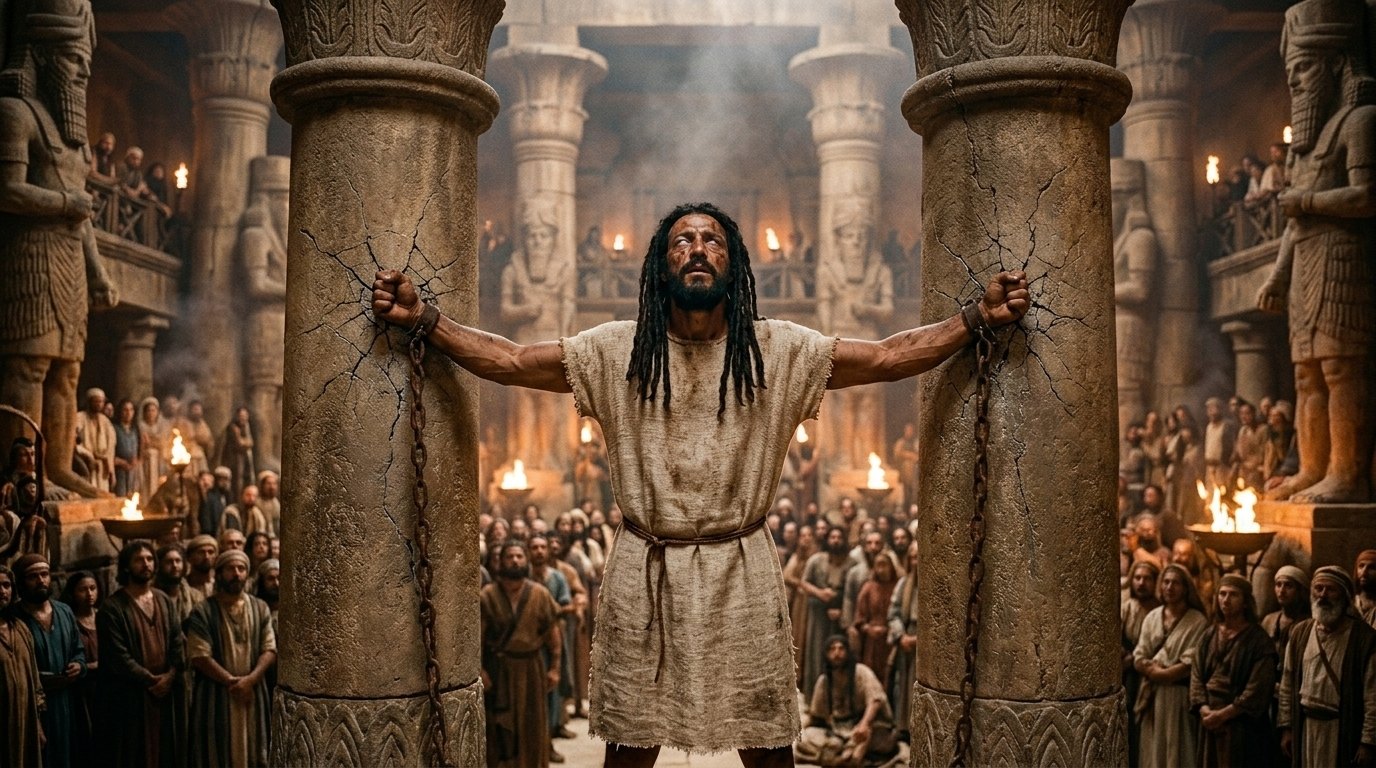
Judges 16:28-30
28 Then Samson prayed to the LORD, “Sovereign LORD, remember me. Please, God, strengthen me just once more, and let me with one blow get revenge on the Philistines for my two eyes.”
29 Then Samson reached toward the two central pillars on which the temple stood. Bracing himself against them, his right hand on the one and his left hand on the other,
30 Samson said, “Let me die with the Philistines!” Then he pushed with all his might, and down came the temple on the rulers and all the people in it. Thus he killed many more when he died than while he lived.
New International Version (NIV)
The answer
Samson was an Israelite judge and deliverer from the tribe of Dan, whose extraordinary strength God used against the Philistines. His story appears in Judges 13–16, and he judged Israel for twenty years (Judges 15:20; Judges 16:31).
- His birth and calling were miraculous. Samson was the son of Manoah and his formerly barren wife, who lived at Zorah. Yahweh’s angel announced his birth and declared that he would be a Nazirite—specially consecrated to God—from the womb and would “begin to save Israel out of the hand of the Philistines” (Judges 13:2-5). Samson grew, Yahweh blessed him, and the Spirit began to move him (Judges 13:24-25).
- His strength was a gift of God’s Spirit. He tore a lion apart with his bare hands when the Spirit came mightily upon him (Judges 14:5-6). On another occasion, he broke his bonds and struck down a thousand Philistines with a donkey’s jawbone (Judges 15:14-15). His uncut hair signified his Nazirite consecration; it was not independently magical. After his hair was shaved and his strength departed, Scripture explains that Yahweh had departed from him (Judges 16:17-20).
- His life included grave sin and compromise. Alongside his exploits, Scripture records his visit to a prostitute in Gaza (Judges 16:1) and his disastrous relationship with Delilah, who persistently pressured him and betrayed him to the Philistines (Judges 16:4-21). His physical strength did not equal spiritual faithfulness.
- His life ended in prayer and one final act of strength. After being blinded and imprisoned, Samson was brought out to entertain the Philistines as they celebrated their god Dagon. He prayed for strength once more, brought down the building’s central pillars, and died with the Philistines; those killed at his death were more than those he had killed during his life (Judges 16:23-30).
The New Testament names Samson among those who acted “through faith” (Hebrews 11:32-34). That commendation does not approve everything he did. His life displays God’s power to deliver His people while also giving a sober warning about sin, compromise, and squandered consecration.
Answered from Scripture · reviewed November 11, 2026
Samson was the twelfth and final judge recorded in the book of Judges, set apart from conception as a Nazirite to begin delivering Israel from Philistine oppression. Endowed by the Holy Spirit with superhuman strength, his life was marked by fierce single-handed exploits, tragic personal compromise, and a final, redemptive act of faith.
Miraculous Birth
An Angel Announces a Nazirite Deliverer
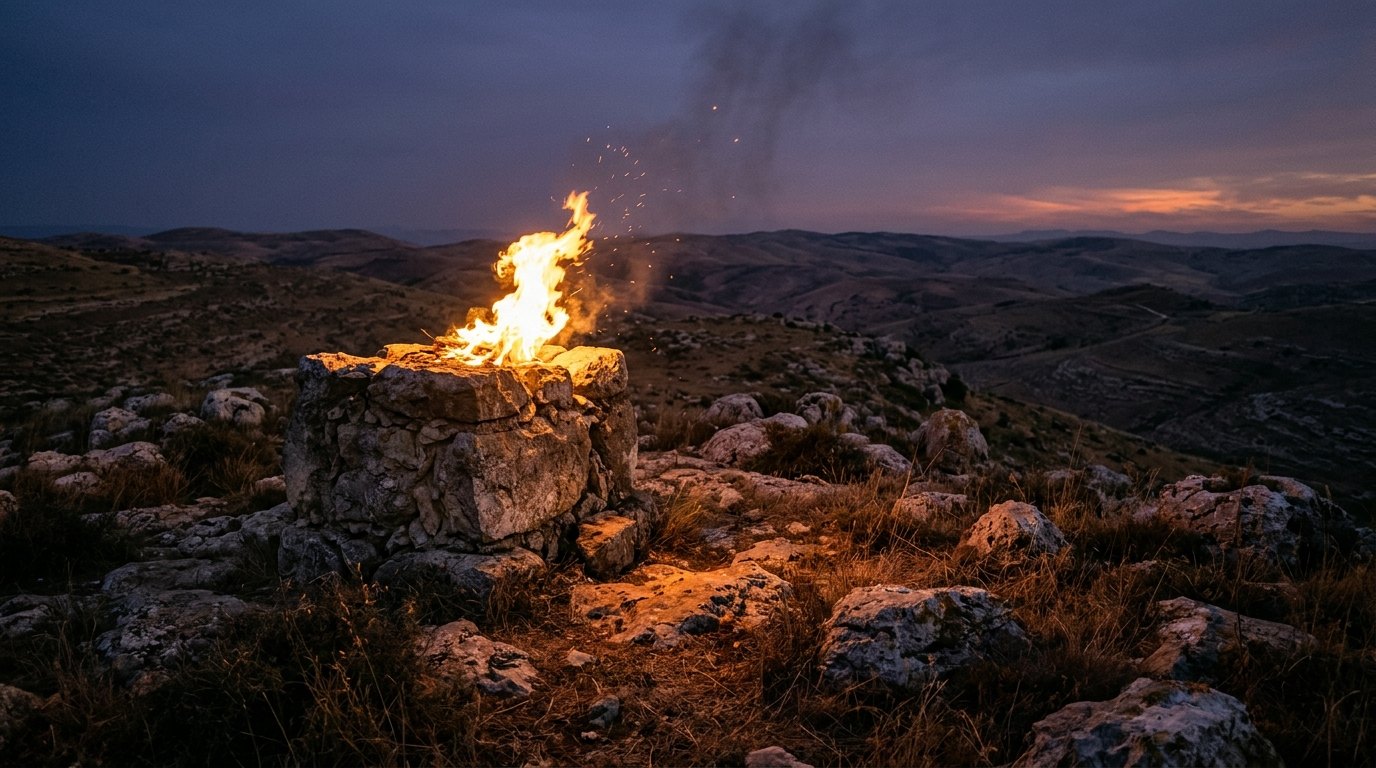
You will become pregnant and have a son whose head is never to be touched by a razor because the boy is to be a Nazirite, dedicated to God from the womb. He will take the lead in delivering Israel from the hands of the Philistines.”
Judges 13:5 (NIV)
The angel specifies Samson's lifelong Nazirite consecration and his divine mission to begin rescuing Israel.
Judges 13:5 establishes the entire course of Samson's life before his conception: no razor was to touch his head, for the child was to be a lifelong Nazirite to God, appointed to begin Israel's rescue from Philistine hands. The account opens in Judges 13:1 amidst a tragic cycle where Israel sinned, leading to forty years of crushing Philistine subjugation. Into this dark era, the Angel of the Lord appeared to Manoah's barren wife in Judges 13:2-3, promising her a son. In Judges 13:4-5, the heavenly messenger placed the mother under strict Nazirite dietary restrictions, forbidding wine, strong drink, or any unclean food to safeguard the consecrated infant. Manoah prayed earnestly for further instruction in Judges 13:8-14, prompting the Angel to reappear and confirm His divine commands. When Manoah asked the Visitor His name in Judges 13:17-23, the Angel revealed it was beyond understanding, then ascended heavenward within the altar's flame, causing the terrified parents to realize they had seen the Lord. In due time, Judges 13:24-25 records the birth of Samson; God blessed him, and the Spirit of the Lord began to stir him in the camp of Dan.
| Passage | What it says |
|---|---|
| Judges 13:2-3 | The Angel of the Lord appears to Manoah's barren wife and announces she will conceive a son. |
| Judges 13:4-5 | The mother is forbidden wine or unclean food, and no razor may touch the child's head. |
| Judges 13:24-25 | Samson is born, blessed by the Lord, and stirred by the Spirit of the Lord at Mahaneh-dan. |
| Judges 13:1 | Israel does evil again, and the Lord hands them over to the Philistines for forty years before Samson is born. |
| Judges 13:8-14 | Manoah prays for guidance, and the Angel of the Lord appears again to reiterate the Nazirite instructions. |
| Judges 13:17-23 | The Angel reveals His name as wonderful, ascends in the sacrificial flame, and Manoah realizes they have seen God. |
Early Exploits
The Spirit Empowers Samson Against Philistia
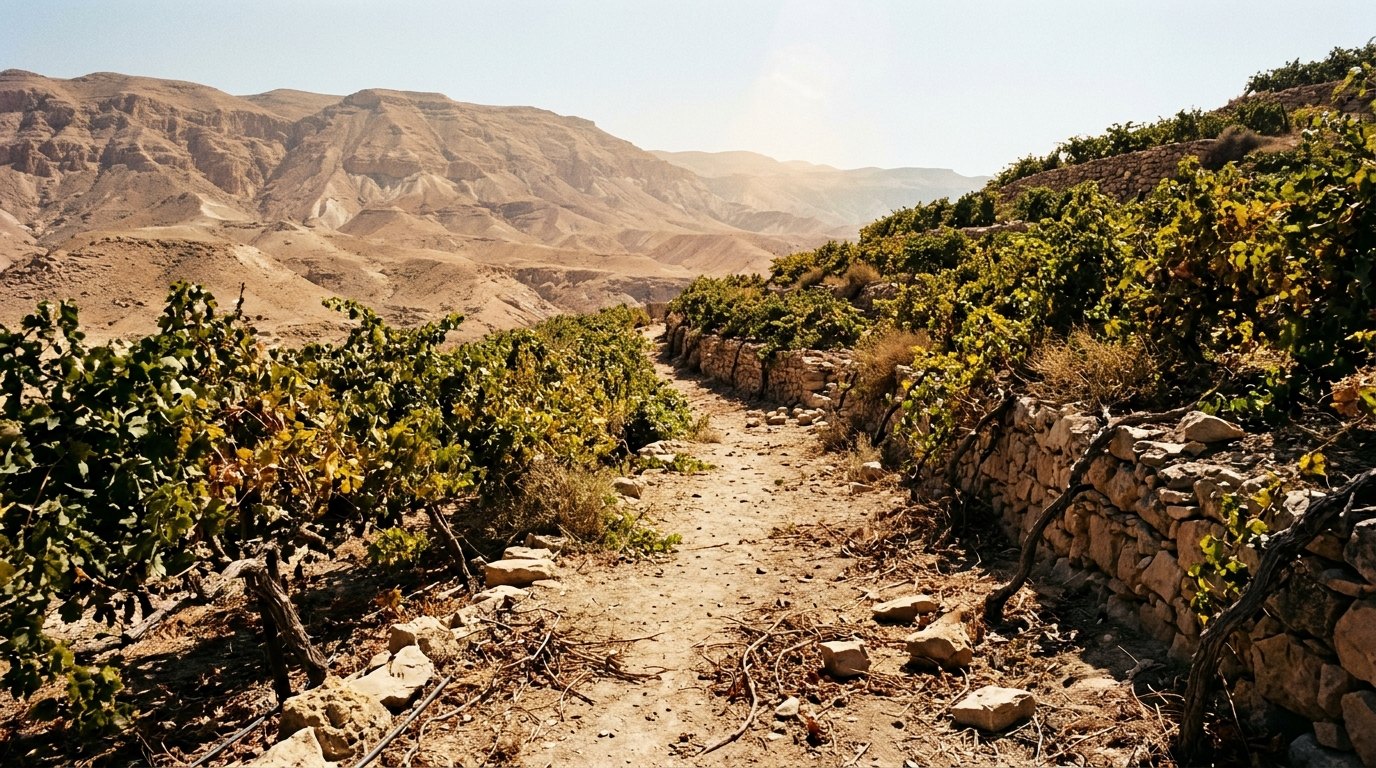
The Spirit of the LORD came powerfully upon him so that he tore the lion apart with his bare hands as he might have torn a young goat. But he told neither his father nor his mother what he had done.
Judges 14:6 (NIV)
The Spirit of the Lord rushes upon Samson, enabling him to tear a lion apart with bare hands.
The public life of Samson began with astonishing power, encapsulated in Judges 14:6 when the Spirit of the Lord rushed upon him, enabling him to tear a roaring young lion apart with bare hands. This event occurred on the way to Timnah, where, according to Judges 14:1-4, Samson had demanded a Philistine woman as his wife; though his parents protested, Scripture notes God was seeking an occasion against the oppressors. Later, returning for the marriage in Judges 14:8-9, Samson turned aside to inspect the carcass and scooped out wild honey, eating it along the way and violating the strict Nazirite prohibition against dead bodies. During the customary wedding feast in Judges 14:10-13, Samson posed a riddle based on this encounter to thirty Philistine companions for thirty linen garments. Threatened with death, the bride enticed the solution from Samson and betrayed it to her countrymen in Judges 14:14-19; furiously, Samson slew thirty Philistines in Ashkelon to pay the debt before departing in anger, leaving his wife to be given to his best man in Judges 14:20.
| Passage | What it says |
|---|---|
| Judges 14:1-4 | Samson seeks a Timnite wife, which the Lord uses as an occasion against the Philistines. |
| Judges 14:5-6 | Samson tears a roaring young lion apart with his bare hands by the Spirit's power. |
| Judges 14:14-19 | After his wedding riddle is betrayed, Samson slays thirty men of Ashkelon to pay the wager. |
| Judges 14:8-9 | Samson returns and takes honey from the lion's carcass, eating it and giving some to his parents. |
| Judges 14:10-13 | Samson holds a wedding feast in Timnah and proposes a riddle to thirty Philistine companions for linen garments. |
| Judges 14:20 | Samson's wife is given to his companion who had served as his best man. |
Mighty Deliverance
A Thousand Fall Before a Donkey's Jawbone
As he approached Lehi, the Philistines came toward him shouting. The Spirit of the LORD came powerfully upon him. The ropes on his arms became like charred flax, and the bindings dropped from his hands. Finding a fresh jawbone of a donkey, he grabbed it and struck down a thousand men.
Judges 15:14-15 (NIV)
Bound with new ropes, Samson breaks them like charred flax and strikes down a thousand Philistines.
When Samson discovered his wife had been given away, Judges 15:1-3 records his vow to bring vengeance upon the Philistines. He captured three hundred foxes, bound torches between their tails in Judges 15:4-5, and burned the Philistines' standing grain, vineyards, and olive orchards. In retaliation, the Philistines burned his former wife and father-in-law, prompting Samson to strike them ruthlessly before retreating to the rock of Etam in Judges 15:6-8. Pressured by Philistine raiders, three thousand men of Judah went to Etam in Judges 15:9-13, binding Samson with two new ropes to appease their overlords. Yet in Judges 15:14-15, the Spirit of the Lord fell mightily upon him, causing the ropes to melt like charred flax as he took a fresh donkey's jawbone and struck down a thousand warriors. Naming the site Ramath-lehi in Judges 15:16-17, Samson cried out in intense thirst; Judges 15:18-20 records how God split the hollow rock, bringing forth life-giving water to revive the judge who would lead Israel for twenty years. Samson's supernatural prowess was demonstrated again in Judges 16:1-3, when trapped at Gaza, he ripped out the city's massive gateposts and carried them away to the hill facing Hebron.
| Passage | What it says |
|---|---|
| Judges 15:4-5 | Samson burns the standing grain and vineyards of the Philistines using three hundred foxes. |
| Judges 15:14-15 | The Spirit empowers Samson to snap his bonds and slay a thousand men with a fresh jawbone. |
| Judges 15:18-20 | God cleaves the hollow place at Lehi to revive Samson, who judges Israel for twenty years. |
| Judges 16:1-3 | Samson lifts the city gates, posts, and bar of Gaza and carries them to Hebron. |
| Judges 15:1-3 | Samson visits his wife with a goat, learns she was given away, and vows to do the Philistines harm. |
| Judges 15:6-8 | Philistines burn Samson's wife and father-in-law; Samson strikes them ruthlessly and retreats to the rock of Etam. |
| Judges 15:9-13 | Three thousand men of Judah bind Samson with two new ropes to hand him over to the Philistines. |
| Judges 15:16-17 | Samson chants over slaying a thousand men with a fresh donkey's jawbone and names the place Ramath-lehi. |
Betrayal and Capture
Delilah Discovers the Secret of His Strength
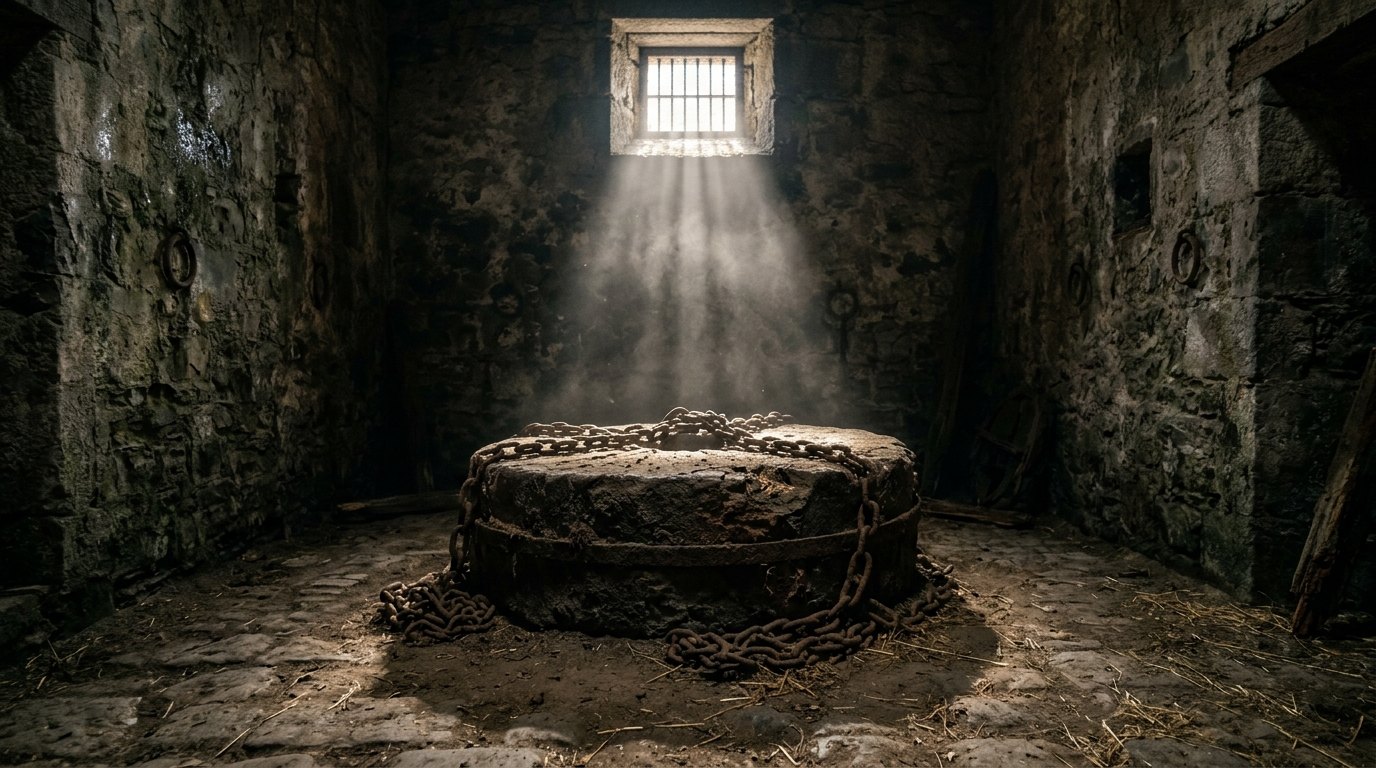
Then she called, “Samson, the Philistines are upon you!” He awoke from his sleep and thought, “I’ll go out as before and shake myself free.” But he did not know that the LORD had left him.
Judges 16:20 (NIV)
Samson does not realize that the Lord has departed from him after his vow is severed.
Samson's downfall came through his relationship with Delilah in the Valley of Sorek, where Philistine rulers bribed her with vast silver in Judges 16:4-5 to discover the secret of his strength. Three times Samson mocked her queries with deceitful remedies: fresh bowstrings in Judges 16:6-9, new unused ropes in Judges 16:10-12, and weaving his hair into a weaver's loom in Judges 16:13-15. Each time Philistine ambushes struck, Samson effortlessly snapped the bindings. Yet Judges 16:16-17 reveals that after she pressed him daily with tears, Samson gave in and revealed his lifelong Nazirite consecration, admitting his hair had never been cut. In Judges 16:18, recognizing he had opened his entire heart, she summoned the rulers with the silver. Delilah lulled him to sleep on her lap in Judges 16:19-21, and a barber sheared his seven sacred locks. Awakening, Samson thought to shake himself free as before, not knowing that the Lord had departed from him; the Philistines seized him, gouged out his eyes, dragged him in bronze shackles to Gaza, and forced the mighty judge to grind grain in the prison house.
| Passage | What it says |
|---|---|
| Judges 16:4-5 | Philistine lords bribe Delilah with silver to discover where Samson's great strength lies. |
| Judges 16:16-17 | Pressed daily, Samson tells Delilah that his strength is tied to his Nazirite consecration. |
| Judges 16:19-21 | His locks shaved, the Lord departs; the Philistines seize him, gouge his eyes, and bind him. |
| Judges 16:6-9 | Samson deceives Delilah by saying seven fresh bowstrings will bind him, but he snaps them when ambushed. |
| Judges 16:10-12 | Samson claims new unused ropes will hold him, but he breaks them like thread when the ambush strikes. |
| Judges 16:13-15 | Samson tells Delilah to weave his seven locks into a loom, but he awakens and pulls away the pin. |
| Judges 16:18 | Delilah sees Samson has told her all his heart and summons the Philistine lords with the promised silver. |
Final Victory
Vindicated Faith in the House of Dagon
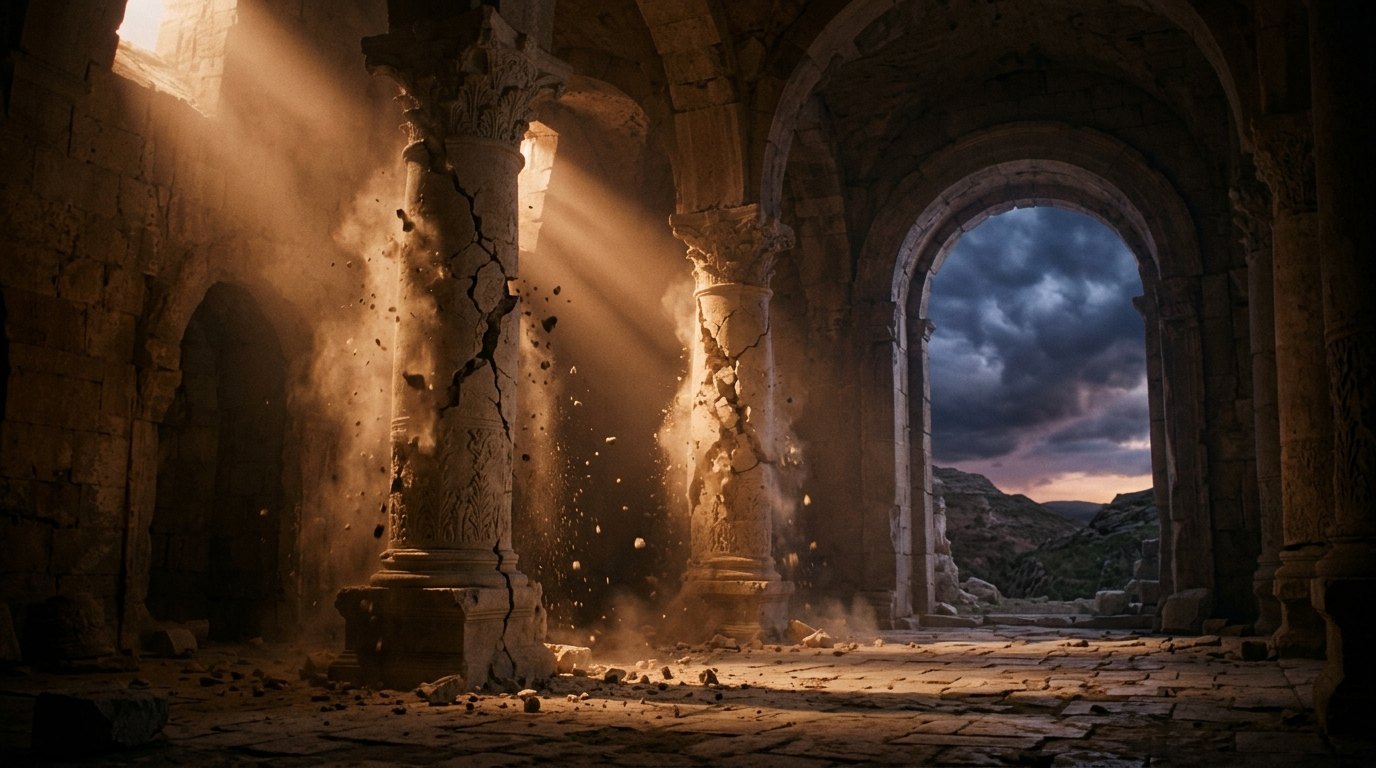
Then Samson prayed to the LORD, “Sovereign LORD, remember me. Please, God, strengthen me just once more, and let me with one blow get revenge on the Philistines for my two eyes.” Then Samson reached toward the two central pillars on which the temple stood. Bracing himself against them, his right hand on the one and his left hand on the other, Samson said, “Let me die with the Philistines!” Then he pushed with all his might, and down came the temple on the rulers and all the people in it. Thus he killed many more when he died than while he lived.
Judges 16:28-30 (NIV)
Samson prays for God's remembrance and strength, collapsing the temple pillars upon Philistine lords.
The dramatic climax of Samson’s life turns on Judges 16:28-30, where the blinded, humbled champion prays one final prayer, asking the Sovereign Lord to remember him and grant him strength so that he might die striking a decisive blow against Israel's oppressors. His captivity began in dark ignominy, yet quietly in the prison house at Gaza, Judges 16:22 notes that the hair of his head began to grow again—a subtle, physical token of renewed covenant consecration and divine mercy that foreshadowed what was to come.
That renewal confronted the pagan arrogance recorded in Judges 16:23-25, where thousands of Philistine lords and citizens gathered to offer a sacrifice to their fish-god Dagon, boasting that their deity had delivered Samson into their hands. To mock the fallen judge, they summoned him to entertain the cheering crowd. Guided into the temple courtyard, Samson took calculated action in Judges 16:26-27, requesting the young attendant who led him by the hand to position him directly between the two central, weight-bearing pillars that upheld the vast edifice.
Braced between the stones, Samson cried out to God in faith and bowed with all his might, bringing the massive temple down upon the rulers and thousands gathered on its roof and within its courts. In his self-sacrificial death, he killed far more enemies of God than he had in all his days of life. Afterward, as recorded in Judges 16:31, his family descended into Gaza, retrieved his fallen body, and buried him with honor in the tomb of his father Manoah between Zorah and Eshtaol. While history might see only tragedy, the Holy Spirit provides the final inspired verdict in Hebrews 11:32-34, immortalizing Samson among the heroes of faith who, out of brokenness and utter human weakness, were made strong through their trust in the living God.
| Passage | What it says |
|---|---|
| Judges 16:22 | The hair of Samson's head begins to grow again while he grinds in the prison house. |
| Judges 16:28-30 | Samson calls upon God, bends the temple pillars, and kills more in death than in life. |
| Judges 16:31 | His brothers retrieve his body and bury him in the tomb of Manoah between Zorah and Eshtaol. |
| Hebrews 11:32-34 | Samson is commended among the heroes of faith who through faith won strength out of weakness. |
| Judges 16:23-25 | Philistine lords offer a great sacrifice to Dagon and bring out blinded Samson from prison to entertain them. |
| Judges 16:26-27 | Samson asks the servant guiding him to place his hands against the pillars that support the crowded temple. |
Where in the Bible
| Book | Passages |
|---|---|
| Judges | 32 · Judges 13:2-3, Judges 13:4-5, Judges 13:24-25, Judges 13:1, Judges 13:8-14, Judges 13:17-23, Judges 14:1-4, Judges 14:5-6, Judges 14:14-19, Judges 14:8-9, Judges 14:10-13, Judges 14:20, Judges 15:4-5, Judges 15:14-15, Judges 15:18-20, Judges 16:1-3, Judges 15:1-3, Judges 15:6-8, Judges 15:9-13, Judges 15:16-17, Judges 16:4-5, Judges 16:16-17, Judges 16:19-21, Judges 16:6-9, Judges 16:10-12, Judges 16:13-15, Judges 16:18, Judges 16:22, Judges 16:28-30, Judges 16:31, Judges 16:23-25, Judges 16:26-27 |
| Hebrews | 1 · Hebrews 11:32-34 |
The story in order
- Israel's sin and Philistine oppression (c. 1100 BC) · Judges 13:1 · Sets the stage for Samson's birth and ministry.
- Angel announces Samson's birth (c. 1100 BC) · Judges 13:2-3 · God's plan for a Nazirite deliverer begins.
- Nazirite vows given (c. 1100 BC) · Judges 13:4-5 · Instructions for Samson's unique consecration.
- Samson is born and blessed (c. 1100 BC) · Judges 13:24-25 · The promised deliverer arrives, empowered by the Spirit.
- Samson's early exploits (c. 1070 BC) · Judges 14:5-6 · Superhuman strength demonstrated against a lion.
- Samson slays thirty Philistines (c. 1070 BC) · Judges 14:14-19 · First direct action against Philistine oppression.
- Samson's vengeance on Philistines (c. 1070 BC) · Judges 15:4-8 · Retaliation for his wife's betrayal.
- Samson slays a thousand men (c. 1070 BC) · Judges 15:14-17 · Mighty deliverance using a donkey's jawbone.
- Samson captures Gaza's gates (c. 1070 BC) · Judges 16:1-3 · Demonstration of strength and escape from Philistine city.
- Delilah betrays Samson (c. 1070 BC) · Judges 16:16-18 · His strength's secret revealed, leading to capture.
- Samson's eyes gouged and imprisoned (c. 1070 BC) · Judges 16:19-21 · Humiliation and servitude after betrayal.
- Samson's final act of faith (c. 1070 BC) · Judges 16:28-30 · Destroys Dagon's temple, killing many Philistines.
- Samson's burial (c. 1070 BC) · Judges 16:31 · Laid to rest in his family tomb.
- Samson commended in faith (AD 1st Century) · Hebrews 11:32-34 · Recognized for faith despite flaws.
Samson's Strength and its Source
| Source of Strength | Manifestation | Consequence | Passage |
|---|---|---|---|
| The Spirit of the Lord | Tearing a lion apart | Israel delivered from Philistines | |
| The Spirit of the Lord | Slaying a thousand men with a jawbone | Philistines struck down | Judges 15:14-17 |
| Nazirite consecration (hair) | Lifting Gaza's gates | Escape from Philistine city | Judges 16:1-3 |
| Nazirite consecration (hair) | Destroying the temple of Dagon | More killed in death than life | Judges 16:28-30 |
Samson's Personal Compromise
| Compromise | Consequence | Scripture Reference | Passage |
|---|---|---|---|
| Marrying a Philistine woman | His wife given to another | Judges 14:1-3, 15-20 | |
| Vengeance against Philistines | Burning their crops and people | Judges 15:4-8 | Judges 15:4-8 |
| Revealing his secret to Delilah | Loss of strength, capture, blinding | Judges 16:4-21 | Judges 16:4-21 |
Key words
- Nazirite (nāzîr (Hebrew))
- One consecrated to God, often with specific vows like abstaining from wine and not cutting hair. · Judges 13:4-5
- Spirit of the Lord (rûaḥ YHWH (Hebrew))
- The divine power enabling Samson for extraordinary feats of strength and deliverance. · Judges 13:25
- Deliverer (môšîaʿ (Hebrew))
- One sent by God to rescue His people from oppression. · Judges 13:5
- Philistines (Plištim (Hebrew))
- A seafaring people who were frequent oppressors of ancient Israel. · Judges 13:1
- Faith (pistis (Greek))
- Belief and trust in God, leading to action, even in weakness. · Hebrews 11:32
Samson's life demonstrates that human weakness cannot thwart God's sovereign purposes to rescue His people. Though he faltered repeatedly, Samson turned back to the Lord in humble reliance at his death, earning an enduring place in Scripture's great roll call of faith.
33 passages, each cited once.
Scripture cited
- Judges 13
- Judges 14
- Judges 15
- Judges 16
- Hebrews 11:32-34