Why did God choose Israel?

Deuteronomy 7:6-8
6 For you are a people holy to the LORD your God. The LORD your God has chosen you out of all the peoples on the face of the earth to be his people, his treasured possession.
7 The LORD did not set his affection on you and choose you because you were more numerous than other peoples, for you were the fewest of all peoples.
8 But it was because the LORD loved you and kept the oath he swore to your ancestors that he brought you out with a mighty hand and redeemed you from the land of slavery, from the power of Pharaoh king of Egypt.
New International Version (NIV)
The answer
God chose Israel because He loved them and because He was keeping the oath He swore to their fathers, not because they were great or numerous. Deuteronomy 7:7-8 makes this plain — the reason was not their size (they were the fewest of all peoples), but the Lord's love and His faithfulness to His promise.
The heart of the reason
- God's love: "because Yahweh loves you" (Deuteronomy 7:8). Election rests in the affections of God, not in qualities He found in the people. The contrast with verse 7 is deliberate — left to themselves, Israel had no claim; the choosing comes from His heart.
- God's sworn oath to the fathers: "because he desires to keep the oath which he swore to your fathers." This oath points back to Abraham, Isaac, and Jacob — the covenant God cut with them (Genesis 12:1-3, 15:5-7). He chose Israel to be the people through whom that promise would be kept and finally fulfilled in Christ (Galatians 3:16).
What they were chosen to be
The choosing was not a reward; it was a calling. Deuteronomy 7:6 names the purpose: "a holy people… a people for his own possession, above all peoples who are on the face of the earth." Exodus 19:5-6 adds the shape of that calling — a treasured possession, a kingdom of priests, a holy nation. Deuteronomy 14:2 repeats the language so the church cannot miss it: chosen to belong to the Lord, set apart for Him.
Why this still matters
The same electing love that took Israel is the love that has now taken the church: "you are a chosen generation, a royal priesthood, a holy nation, a peculiar people" (1 Peter 2:9). The ground is the same — not our size, merit, or goodness, but God's mercy and His promise kept in Jesus Christ.
Answered from Scripture · reviewed November 7, 2026
Scripture explicitly reveals that God did not choose Israel because of their numerical greatness, inherent power, or moral righteousness, but solely out of His unmerited love and His faithfulness to the covenant oath sworn to Abraham, Isaac, and Jacob. This sovereign election set them apart not as a badge of privilege, but as a treasured possession and a priestly nation through whom God's redeeming purposes would culminate in Jesus Christ.
Sovereign Love
Chosen not for greatness, but because the Lord loved them.

The LORD did not set his affection on you and choose you because you were more numerous than other peoples, for you were the fewest of all peoples. But it was because the LORD loved you and kept the oath he swore to your ancestors that he brought you out with a mighty hand and redeemed you from the land of slavery, from the power of Pharaoh king of Egypt.
Deuteronomy 7:7-8 (NIV)
This passage directly answers why God chose Israel, eliminating human strength or size and establishing His free love and sworn oath as the sole grounds.
In Deuteronomy 7:7-8, Moses confronts every human assumption regarding status and privilege, declaring plainly that the Lord did not set His affection on Israel because of their size or might, for they were the fewest of all peoples. Instead, the sovereign choice of Israel rested entirely upon God's uncaused love and His unshakeable faithfulness to the oath He swore to their fathers. As Moses reminds them in Deuteronomy 7:6, Israel was set apart as a holy people and a treasured possession above every nation on earth, yet this distinction was neither earned nor inherent.
Lest Israel imagine that moral superiority had won their inheritance, Deuteronomy 9:4-6 strips away all self-righteous boasting. Moses warns them not to say that the Lord brought them in because of their righteousness, insisting repeatedly that they were a stubborn and stiff-necked people. God gave them the land not because they were upright, but to fulfill His sworn word and execute judgment upon the wicked nations dwelling there. Deuteronomy 10:14-15 broadens the scope of this astonishing mercy: though the highest heavens and the entire earth belong to the Lord, He chose to delight only in their fathers, electing their offspring after them.
This deliberate, covenantal choice traces back through Deuteronomy 4:37, where God's deliverance of Israel from Egypt is grounded in His love for the patriarchs. The prophets echo this foundational truth down through the centuries of Israel's rebellion. In Jeremiah 31:3, the Lord assures His people that He has loved them with an everlasting love and therefore drawn them with unfailing kindness. Similarly, Hosea 11:1 looks back to the exodus with tender paternal affection, reminding Israel that when the nation was a child, God loved him and called His son out of Egypt. Israel's election began and endured solely in the sovereign, gracious heart of God.
| Passage | What it says |
|---|---|
| Deuteronomy 7:6 | Declares Israel to be a holy people, chosen by the Lord as His treasured possession above all peoples on earth. |
| Deuteronomy 7:7 | Explicitly refutes the idea that God chose Israel for their numbers, noting they were the fewest among all nations. |
| Deuteronomy 7:8 | States the twin grounds of their redemption: the Lord's uncaused love and His determination to keep the oath sworn to their fathers. |
| Deuteronomy 9:4-6 | Reminds Israel that God gives them the promised land not because of their righteousness, for they were a stiff-necked people. |
| Deuteronomy 10:14-15 | Affirms that while the heavens and earth belong to the Lord, He delighted only in their fathers to love them and their offspring. |
| Deuteronomy 4:37 | Because the Lord loved the patriarchs, He chose their descendants after them and brought them out of Egypt. |
| Jeremiah 31:3 | The Lord declares His everlasting love for Israel, drawing them with unfailing, covenantal lovingkindness. |
| Hosea 11:1 | God loved Israel in his youth and called His son out of the land of Egypt. |
The Patriarchal Oath
Faithful to the unconditional covenant cut with the fathers.
The LORD had said to Abram, “Go from your country, your people and your father’s household to the land I will show you. “I will make you into a great nation, and I will bless you; I will make your name great, and you will be a blessing. I will bless those who bless you, and whoever curses you I will curse; and all peoples on earth will be blessed through you.”
Genesis 12:1-3 (NIV)
God's foundational covenant promise to Abraham inaugurates the nation of Israel as the conduit of blessing to all the families of the earth.
The divine election of Israel is anchored in the unilateral covenant inaugurated in Genesis 12:1-3, where the Lord calls Abraham to leave his homeland, promising to make him a great nation, bless his name, and make him a channel of blessing to all the families of the earth. This foundational promise was fulfilled when the gospel went forth to all peoples through Christ, as proclaimed in Acts 3:25-26 and Galatians 3:8, which declares that Scripture foresaw God justifying the Gentiles by faith through Abraham. In Genesis 15:5-7, God cuts an unconditional covenant with Abraham, counting his faith as righteousness, a declaration fulfilled in the justification of believers shown in Romans 4:3.
The Lord then establishes an everlasting covenant in Genesis 17:7-8, pledging to be God to Abraham and his seed forever, a promise celebrated in Zechariah's song of redemption in Luke 1:72-73. God reiterates this binding oath to Isaac in Genesis 26:3-4, promising to multiply his offspring and bless all nations, fulfilled in Hebrews 11:18 through the lineage of promise. At Bethel, the Lord confirms the same patriarchal blessing to Jacob in Genesis 28:13-14, ensuring that through his seed the nations would be blessed, a sovereign choice highlighted in Romans 9:10-13.
This generational fidelity is sung in Psalm 105:8-10, which celebrates God's perpetual remembrance of His covenant sworn to Abraham, Isaac, and Jacob, echoed in Luke 1:54-55 as Mary rejoices that God has helped His servant Israel in remembrance of His mercy. Even when judgment threatened, Leviticus 26:44-45 guarantees that God will never utterly break His covenant. As Luke 1:72-75 affirms, God remembered His holy covenant and swore by Himself to rescue His people, demonstrating that Israel's election stands securely on God's sworn word.
| Passage | What it says | Fulfilled |
|---|---|---|
| Genesis 12:1-3 | God promises to make Abraham a great nation, bless his name, and bless all the families of the earth through him. | Acts 3:25-26, Galatians 3:8 |
| Genesis 15:5-7 | The Lord counts Abraham's faith as righteousness and binds Himself by covenant oath to grant his offspring the land. | Romans 4:3 |
| Genesis 17:7-8 | God establishes an everlasting covenant with Abraham and his seed to be their God and give them Canaan. | Luke 1:72-73 |
| Genesis 26:3-4 | The Lord confirms the oath sworn to Abraham with Isaac, promising countless offspring and blessing to the nations. | Hebrews 11:18 |
| Genesis 28:13-14 | The Lord reiterates the covenant promise to Jacob, naming him the inheritor of the land and blessing. | Romans 9:10-13 |
| Psalms 105:8-10 | Recounts God's remembrance of His covenant with Abraham, His oath to Isaac, and His confirmed statute to Jacob forever. | Luke 1:54-55 |
| Genesis 22:16-18 | God swears by Himself to multiply Abraham's seed, through whom all nations of the earth will be blessed. | |
| Leviticus 26:44-45 | God will not break His covenant with Israel even in exile, remembering the covenant with their ancestors. | |
| Luke 1:72-75 | God remembers His holy covenant and the solemn oath sworn to Abraham our father. |
Treasured Calling
Set apart as a royal priesthood and holy nation.

Now if you obey me fully and keep my covenant, then out of all nations you will be my treasured possession. Although the whole earth is mine, you will be for me a kingdom of priests and a holy nation.’ These are the words you are to speak to the Israelites.”
Exodus 19:5-6 (NIV)
Identifies the core purpose of election at Sinai: to be God's treasured possession, a kingdom of priests, and a holy nation before the world.
At Mount Sinai, God revealed the glorious vocation of His chosen people in Exodus 19:5-6, declaring that if Israel obeyed His voice and kept His covenant, they would be His treasured possession, a kingdom of priests, and a holy nation before all the earth. This holy calling was not meant for self-contained isolation, but to reflect God's character to a watching world, an identity fulfilled in the church as described in 1 Peter 2:9 and Revelation 1:6, where believers are consecrated as priests to God. Moses repeats this distinct status in Deuteronomy 14:2, declaring Israel a holy people chosen out of all nations, a purpose realized in Titus 2:14 where Christ purifies for Himself a people zealous for good works.
In Deuteronomy 26:18-19, the Lord establishes Israel as His treasured people to be set high in praise, fame, and honor, anticipating Ephesians 1:4-6, where God chooses His people in Christ to the praise of His glorious grace. Isaiah 43:21 defines this corporate purpose with sharp clarity: God formed this people for Himself that they might declare His praise, directly fulfilled in 1 Peter 2:9-10 as the redeemed proclaim the excellencies of Him who called them out of darkness into light. In Malachi 3:17, the Lord reaffirms that those who revere Him will be His prized possession on the day He acts, a truth that shapes New Testament identity in 1 Corinthians 6:19-20.
From the very beginning in Exodus 4:22, Israel was named God's firstborn son, separated in Leviticus 20:26 from all peoples to belong exclusively to the Lord. Psalm 135:4 praises God for choosing Jacob for Himself and Israel as His treasured inheritance, confirming that Israel was chosen to display God's holy glory to the ends of the earth.
| Passage | What it says | Fulfilled |
|---|---|---|
| Exodus 19:5-6 | God declares that obedient Israel will be His peculiar treasure, a kingdom of priests, and a holy nation. | 1 Peter 2:9, Revelation 1:6 |
| Deuteronomy 14:2 | Reiterates that Israel is a holy people chosen out of all nations to be the Lord's special possession. | Titus 2:14 |
| Deuteronomy 26:18-19 | Declares that the Lord has chosen Israel to be His treasured people and set them in praise, name, and honor. | Ephesians 1:4-6 |
| Isaiah 43:21 | Affirms that God formed this people for Himself specifically to declare and show forth His praise. | 1 Peter 2:9 |
| Malachi 3:17 | The Lord promises that those who fear Him will be His treasured possession on the day He acts. | 1 Corinthians 6:19-20 |
| Exodus 4:22 | The Lord identifies Israel as His firstborn son among the nations of the earth. | |
| Leviticus 20:26 | Israel is summoned to be holy to the Lord, who separated them from the peoples to be His. | |
| Psalms 135:4 | The Lord has chosen Jacob for Himself, and Israel as His treasured possession. | |
| 1 Peter 2:9-10 | The titles of chosen race, royal priesthood, and holy nation find their fullness in God's redeemed people. |
Redemptive Purpose
Electing a people to bear the Seed who saves the world.

the people of Israel. Theirs is the adoption to sonship; theirs the divine glory, the covenants, the receiving of the law, the temple worship and the promises. Theirs are the patriarchs, and from them is traced the human ancestry of the Messiah, who is God over all, forever praised! Amen.
Romans 9:4-5 (NIV)
Summarizes the rich spiritual privileges given to Israel, culminating in the supreme purpose of election: the human lineage of Christ.
The ultimate purpose behind the election of Israel is set forth in Romans 9:4-5, which catalogs their divine gifts: the adoption, the glory, the covenants, the giving of the law, the temple worship, the promises, and the patriarchs. Yet towering above all these honors is the climax of election itself: from the physical lineage of Israel came Jesus Christ, the Messiah, who is God over all, blessed forever. As Paul confirms in Romans 1:3-4, the gospel centers on God's Son, who was descended from David according to the flesh and declared to be the Son of God in power through His resurrection.
This singular messianic focus clarifies the entire patriarchal narrative. In Galatians 3:16, Scripture emphasizes that the promises were spoken to Abraham and to his Seed—not to many seeds, but to one, who is Christ. Through Him, Gentiles are brought into the inheritance as Abraham's true heirs, as demonstrated in Galatians 3:29. Jesus Himself confirmed this divine architecture to the Samaritan woman in John 4:22, declaring unequivocally that salvation is from the Jews, a reality recognized in Luke 2:30-32 when Simeon held the Christ child as a light of revelation to the Gentiles and the glory of Israel.
This redemptive thread stretches back to Genesis 3:15, where the promised seed of the woman was foretold to crush the serpent's head. It runs through Genesis 49:10, which foretells that the royal scepter would not depart from Judah until Shiloh comes, and Numbers 24:17, which envisions a star and scepter rising out of Jacob to rule the nations. Even amidst their historical unbelief, Romans 11:28-29 assures that Israel remains beloved for the sake of the patriarchs, for the gifts and calling of God are irrevocable.
| Passage | What it says | Fulfilled |
|---|---|---|
| Romans 9:4-5 | Details Israel's adoption, glory, covenants, law, worship, promises, and the human lineage of Christ who is God over all. | Romans 1:3-4 |
| Galatians 3:16 | Clarifies that the promises made to Abraham and his offspring refer not to many, but to one: Jesus Christ. | Galatians 3:29 |
| John 4:22 | Jesus affirms to the Samaritan woman that salvation is from the Jews according to God's covenant design. | Luke 2:30-32 |
| Romans 11:28-29 | Explains that regarding election, Israel is beloved for the sake of the patriarchs, for God's gifts and calling are irrevocable. | Romans 11:25-27 |
| Genesis 3:15 | The initial promise of the seed of the woman who will crush the serpent's head. | |
| Genesis 49:10 | The scepter will not depart from Judah until Shiloh comes, receiving the obedience of the nations. | |
| Numbers 24:17 | A star shall come out of Jacob and a scepter shall rise out of Israel. | |
| Romans 1:3-4 | The gospel concerns God's Son, descended from David according to the flesh. |
Witness to the Nations
God entrusted Israel to testify to the world.
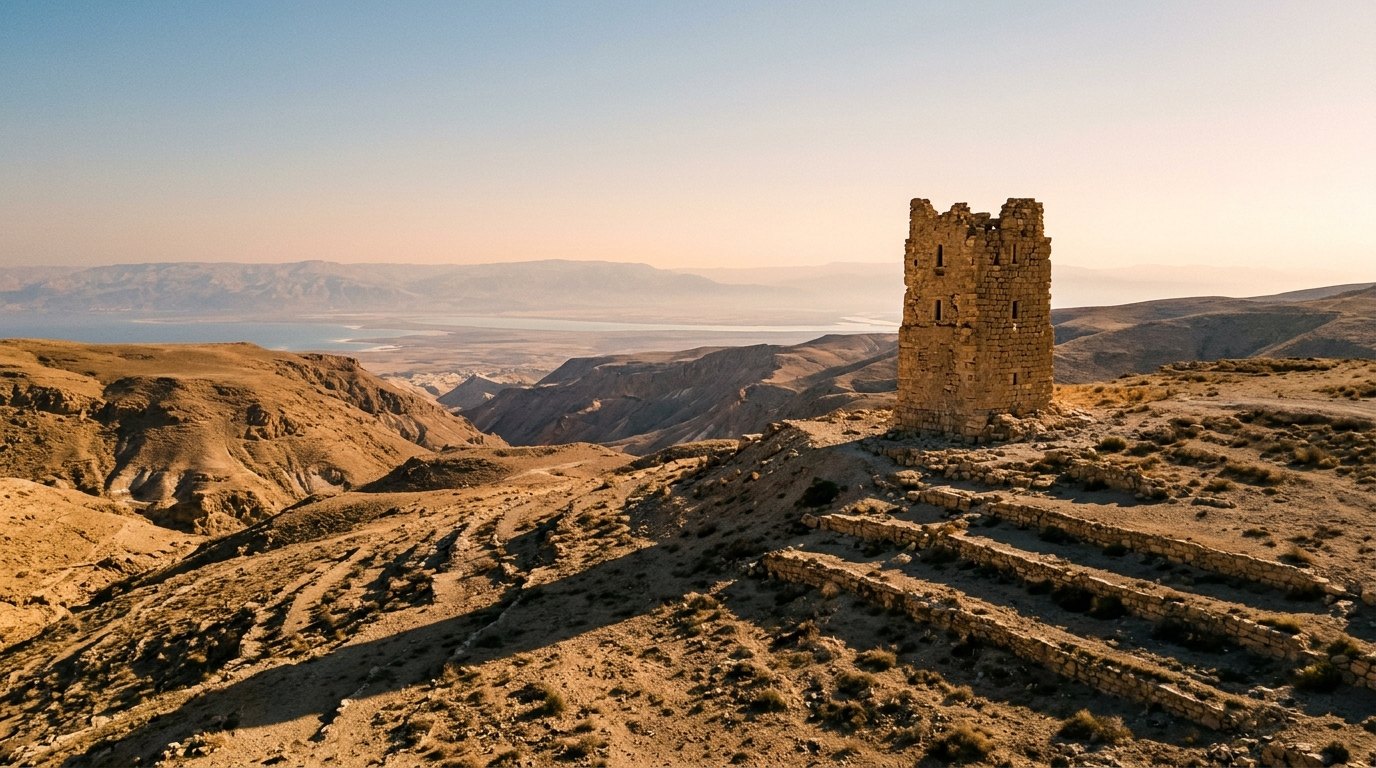
“You are my witnesses,” declares the LORD, “and my servant whom I have chosen, so that you may know and believe me and understand that I am he. Before me no god was formed, nor will there be one after me.
Isaiah 43:10 (NIV)
It defines Israel's election as a public calling to bear witness that the Lord alone is God.
In Isaiah 43:10, God addresses His people with the definitive purpose of their corporate calling: “You are my witnesses,” declares the Lord, “and my servant whom I have chosen, that you may know and believe me and understand that I am he.” God did not elect Israel to become an isolated reservoir of privilege, but a public conduit of revelation before a watching world. Surrounded by pagan polytheism, Israel’s lived testimony was to declare that Yahweh alone is the living God, beside whom there is no savior.
This global mandate appears explicitly in the Servant songs of Isaiah. In Isaiah 42:6, the Lord speaks to His servant: “I have called you in righteousness; I will take you by the hand and keep you; I will give you as a covenant for the people, a light for the nations.” Israel’s corporate identity foreshadows the ultimate Servant, Jesus Christ, who embodies Israel's true destiny to bring illumination to darkness. Isaiah 49:6 intensifies this divine scope, declaring it too small a thing merely to raise up the tribes of Jacob; rather, God makes His Servant “a light for the nations, that my salvation may reach to the end of the earth.”
The New Testament confirms this immense stewardship in Romans 3:1-2. When the apostle Paul asks what advantage the Jew possesses, he answers decisively: “Much in every way. To begin with, the Jews were entrusted with the oracles of God.” Israel was chosen to preserve, record, and steward the inspired Scriptures, guarding the promise of redemption until the arrival of the Messiah who brings salvation to every tribe, tongue, and nation.
| Passage | What it says |
|---|---|
| Isaiah 42:6 | The Lord called His servant to be a covenant for the people and a light to the nations. |
| Isaiah 43:10 | Israel is appointed as the Lord's witness and chosen servant, that the world may know and believe. |
| Isaiah 49:6 | The chosen Servant is given as a light to the Gentiles, carrying salvation to the ends of the earth. |
| Romans 3:1-2 | The primary advantage of the Jew is being entrusted with the very oracles of God. |
The Lord's Own Glory
Chosen to display the glory of His name.

For the sake of his great name the LORD will not reject his people, because the LORD was pleased to make you his own.
1 Samuel 12:22 (NIV)
It grounds Israel's preservation and chosenness entirely in God's delight to glorify His own great name.
In 1 Samuel 12:22, the prophet Samuel reminds the congregation of Israel of the ultimate ground of their security: “For the Lord will not forsake his people, for his great name’s sake, because it has pleased the Lord to make you a people for himself.” The bedrock foundation of Israel's election does not lie in the worthiness of human subjects, but in the unfailing reputation and sovereign delight of the Almighty. God pledged His own name to their preservation.
Throughout the prophets, God continually underscores that His saving actions are motivated by zeal for His own renown. In Isaiah 48:9-11, the Lord proclaims, “For my own sake, for my own sake, I do it, for how should my name be profaned? My glory I will not give to another.” Even divine forbearance and discipline serve to prevent His holy name from being compromised among the nations. Jeremiah 13:11 illustrates this closeness with the vivid image of a linen waistcloth: God bound the house of Israel to Himself so that “they might be for me a people, a name, a praise, and a glory.”
When Israel fell under judgment and exile, God’s restorative mercy remained tethered to this single supreme purpose. Ezekiel 36:22-23 announces that their restoration was not earned by their righteousness: “It is not for your sake, O house of Israel, that I am about to act, but for the sake of my holy name.” The New Testament epistles show that this supreme principle undergirds all divine election. In Ephesians 1:5-6, the ultimate end of God’s predestining love in Christ Jesus is summarized in one resounding phrase: “to the praise of his glorious grace.”
| Passage | What it says |
|---|---|
| 1 Samuel 12:22 | The Lord will not abandon His people for His great name's sake, having pleased Him to make them His. |
| Isaiah 48:9-11 | God preserves and redeems His people for His own sake and glory, refusing to yield His praise to another. |
| Jeremiah 13:11 | God bound Israel to Himself like a sash, that they might be for Him a people, a name, a praise, and a glory. |
| Ezekiel 36:22-23 | The Lord acts to gather and restore Israel not for their sake, but to vindicate His holy name. |
| Ephesians 1:5-6 | Election unfolds according to the good pleasure of God's will, to the praise of His glorious grace. |
Where in the Bible
| Book | Passages |
|---|---|
| Genesis | 8 · Genesis 12:1-3, Genesis 15:5-7, Genesis 17:7-8, Genesis 26:3-4, Genesis 28:13-14, Genesis 22:16-18, Genesis 3:15, Genesis 49:10 |
| Exodus | 2 · Exodus 19:5-6, Exodus 4:22 |
| Leviticus | 2 · Leviticus 26:44-45, Leviticus 20:26 |
| Numbers | 1 · Numbers 24:17 |
| Deuteronomy | 8 · Deuteronomy 7:6, Deuteronomy 7:7, Deuteronomy 7:8, Deuteronomy 9:4-6, Deuteronomy 10:14-15, Deuteronomy 4:37, Deuteronomy 14:2, Deuteronomy 26:18-19 |
| 1 Samuel | 1 · 1 Samuel 12:22 |
| Psalms | 2 · Psalms 105:8-10, Psalms 135:4 |
| Isaiah | 5 · Isaiah 43:21, Isaiah 42:6, Isaiah 43:10, Isaiah 49:6, Isaiah 48:9-11 |
| Jeremiah | 2 · Jeremiah 31:3, Jeremiah 13:11 |
| Ezekiel | 1 · Ezekiel 36:22-23 |
| Hosea | 1 · Hosea 11:1 |
| Malachi | 1 · Malachi 3:17 |
| Luke | 1 · Luke 1:72-75 |
| John | 1 · John 4:22 |
| Romans | 4 · Romans 9:4-5, Romans 11:28-29, Romans 1:3-4, Romans 3:1-2 |
| Galatians | 1 · Galatians 3:16 |
| Ephesians | 1 · Ephesians 1:5-6 |
| 1 Peter | 1 · 1 Peter 2:9-10 |
The story in order
- God's covenant with Abraham (c. 2000 BC) · Genesis 12:1-3 · God promises to make Abraham a great nation and bless all families through him.
- God confirms covenant with Isaac (c. 1900 BC) · Genesis 26:3-4 · The Lord confirms the oath sworn to Abraham with Isaac.
- God reiterates covenant with Jacob (c. 1850 BC) · Genesis 28:13-14 · The covenant promise is renewed, naming Jacob the inheritor of the land and blessing.
- Israel becomes God's firstborn son (c. 1446 BC) · Exodus 4:22 · The Lord identifies Israel as His firstborn son among the nations.
- Israel chosen as a holy nation (c. 1446 BC) · Exodus 19:5-6 · Israel is declared God's treasured possession, a kingdom of priests, and a holy nation.
- God reminds Israel of His love (c. 1406 BC) · Deuteronomy 7:7-8 · God chose Israel not for their numbers, but out of love and faithfulness to His oath.
- Israel's purpose to declare God's praise (c. 730 BC) · Isaiah 43:21 · God formed Israel for Himself to show forth His praise.
- Promise of the Seed of David (c. 1450 BC) · Genesis 49:10 · The scepter will not depart from Judah until Shiloh comes.
- Israel's exile and God's remembrance (c. 1406 BC) · Leviticus 26:44-45 · God will not break His covenant with Israel, even in exile.
- Jesus affirms salvation is from the Jews (c. AD 30) · John 4:22 · Jesus tells the Samaritan woman that salvation is from the Jews.
- Paul explains election and promises (c. AD 55) · Romans 9:4-5 · Details Israel's unique privileges and Christ's lineage.
- The Church as new Israel (c. AD 65) · 1 Peter 2:9-10 · The redeemed are called a chosen race, royal priesthood, and holy nation.
God's Unconditional Covenant Love
| God's Action | Reason | Result | Passage |
|---|---|---|---|
| Loved the patriarchs | His unmerited love | Chose their descendants | Deuteronomy 7:8 |
| Swore an oath to Abraham | Faithfulness to His word | Established an everlasting covenant | Genesis 15:5-7 |
| Confirms oath with Isaac | Faithfulness to Abraham | Countless offspring and blessing | Genesis 26:3-4 |
| Remembers His covenant | Faithfulness to ancestors | Will not break covenant even in exile | Leviticus 26:44-45 |
| Everlasting love for Israel | Unfailing covenantal kindness | Draws them to Himself | Jeremiah 31:3 |
Israel's Identity: From Nation to People of God
| Old Title | New Title | Purpose | Passage |
|---|---|---|---|
| Fewest among nations | Treasured possession | To be the Lord's special possession | |
| Descendants of Abraham | Holy people | To be holy to the Lord | |
| His firstborn son | Kingdom of priests | To mediate God's blessings | |
| Chosen people | Holy nation | To be set in praise, name, and honor | Deuteronomy 26:19 |
| Jacob | His treasured possession | To declare and show forth His praise |
The Seed of Promise
| Promise | Fulfillment | Significance | Passage |
|---|---|---|---|
| Seed of the woman crushes serpent | Jesus Christ | Redemption from sin | Genesis 3:15 |
| Scepter from Judah | Jesus Christ | Receiving obedience of nations | Genesis 49:10 |
| Star from Jacob | Jesus Christ | Ruler over Israel and nations | Numbers 24:17 |
| Offspring of Abraham | Jesus Christ | Blessing to all nations | Galatians 3:16 |
| Son of David | Jesus Christ | Lord over all, God blessed forever | Romans 1:3-4 |
Key words
- Chosen (bāḥar (Hebrew))
- Selected by God for a specific purpose, not based on merit. · Deuteronomy 7:6
- Love (aheb (Hebrew))
- Unmerited, covenantal affection and faithfulness from God. · Deuteronomy 7:8
- Covenant (berît (Hebrew))
- A solemn, binding agreement established by God. · Genesis 15:18
- Oath (šāwāʿ (Hebrew))
- A solemn promise, often invoking God as witness. · Genesis 26:3
- Treasured possession (segûllâ (Hebrew))
- Highly valued and set apart by God. · Exodus 19:5
- Holy nation (gôy qāḏôš (Hebrew))
- Set apart by God for His purposes and presence. · Exodus 19:6
- Seed (zeraʿ (Hebrew))
- Descendant, specifically referring to the promised offspring through whom salvation comes. · Genesis 3:15
- Praise (tĕhillâ (Hebrew))
- The act of glorifying and exalting God. · Isaiah 43:21
Understanding why God chose Israel strips away all human boasting and anchors our security entirely in His sovereign grace. The very electing love and unwavering covenant faithfulness that redeemed Israel from Egyptian bondage now embraces every believer in Christ, calling us to live as His holy and treasured people.
43 passages, each cited once.
Scripture cited
- Deuteronomy 14:2
- Exodus 19:5-6
- 1 Peter 2:9